
News
Catch up on what’s happening in the world of global citizenship education.
1,668 results found
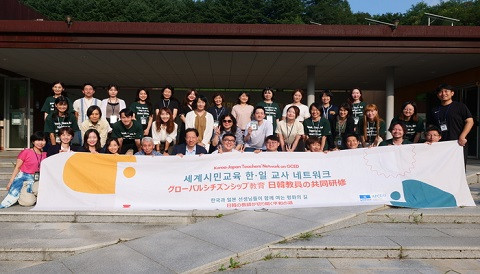 Korea-Japan Teachers’ Network Workshop on GCED 2024 Successfully Held 2024-10-09 The Asia-Pacific Centre of Education for International Understanding (APCEIU) successfully hosted the "Korea-Japan Teachers' Network Workshop on GCED 2024" from August 10 to 13, 2024. The workshop took place at APCEIU in Seoul and the DMZ Peace-Life Valley in Gangwon State. A total of 29 teachers from Korea and Japan participated, aiming to deepen their understanding of GCED, strengthen mutual exchange, and share plans for implementing GCED in their classrooms. As the fourth annual workshop, this year’s event featured enriching discussions and meaningful exchanges, further strengthening the collaborative network between the two countries. Expanding Teachers' Understanding of GCED One of the main objectives of this workshop was to broaden teachers' perspectives on GCED. Participants explored the latest global discussions on GCED, including the "Recommendation on Education for Peace and Human Rights, International Understanding, Cooperation, Fundamental Freedoms, Global Citizenship and Sustainable Development,”(2023 Recommendation) adopted at the 42nd session of the General Conference of UNESCO. This Recommendation emphasizes GCED as a transformative approach to education, prompting in-depth discussions on practical strategies for its implementation. In addition, the workshop provided opportunities for hands-on experiences related to climate change education, as highlighted in the 2023 Recommendation. Teachers engaged in activities utilizing natural energy, deepening their understanding of climate change and its educational significance. Given the Korea-Japan context, participants also explored the importance of promoting peace in Northeast Asia through the introduction of the 'Common Curriculum Guide for Peace Education in Northeast Asia’. This guide sparked lively debates among Korean and Japanese teachers on how to apply the curriculum in their respective classrooms. The teachers appreciated the opportunity to expand their knowledge of various GCED topics, particularly those relevant to the international and sub-regional contexts. Strengthening Teacher Networks through GCED Experiences Another key focus of the workshop was to strengthen the teachers' network by sharing practical experiences related to GCED. It became clear that teachers’ networks flourish most when centered on practical GCED activities shared between classrooms. The workshop began with a poster session showcasing the teachers' own GCED initiatives, followed by theme-based breakout sessions on topics such as ‘Primary Education,’ ‘Secondary Education,’ and ‘International Exchange.’ Additionally, cultural exchange sessions deepened mutual understanding between the two countries, further solidifying the network and fostering stronger connections. According to a survey conducted after the workshop, teachers found the greatest value in the opportunity to learn from each other’s practical experiences. They gained valuable insights into how GCED can be immediately applied in their own classrooms and felt motivated to take action, knowing they were supported by like-minded peers. The sense of solidarity among participants played a key role in encouraging their commitment to continue implementing GCED. Developing and Applying Practical GCED Strategies The final goal of the workshop was to develop concrete strategies for implementing GCED in classrooms and to share these plans with colleagues. While the four-day workshop has concluded, all participants agreed that it marked only the beginning of their journey toward GCED implementation. Teachers from Korea and Japan reaffirmed their commitment to ongoing collaboration through the network, actively engaging in Teachers' Club Activities aligned with their areas of interest, and planning joint lessons. Moreover, participants committed to applying what they learned during the workshop to their own teaching practices and sharing their results through an online platform later in the year. This will allow them to continue advancing GCED and exchanging successful practices. Since 2021, APCEIU has been organizing the 'Korea-Japan Teachers' Network' to foster global citizenship among educators in both countries. To date, 77 teachers have collaborated through this network, engaging in joint lesson development and actively participating in Teachers' Club activities focused on six key areas, including Media and Information Literacy (MIL), language, and books. These efforts have fostered meaningful exchanges and strengthened the integration of GCED principles in classrooms across both nations.Looking ahead, the Korea-Japan Teachers' Network is anticipated to play an increasingly important role, not only in deepening collaboration between Korea and Japan but also in contributing to the broader educational landscape of Northeast Asia. APCEIU remains committed to promoting and expanding GCED from classrooms to sub-regional, regional, and global levels, ensuring its continued impact on advancing global citizenship education. URL: https://www.unescoapceiu.org/post/5181
 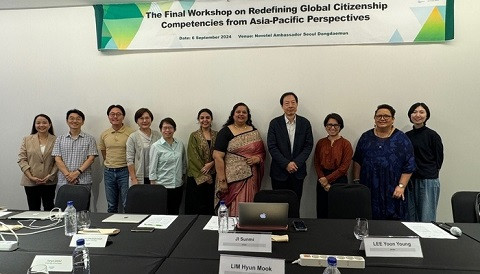 The Final Workshop on Redefining Global Citizenship Competencies Asia-Pacific Perspectives 2024-10-09 The Asia-Pacific Centre of Education for International Understanding (APCEIU) held its final workshop on Redefining Global Citizenship Competencies Asia-Pacific Perspectives on 6 September. The workshop was organised ahead of the publication of an academic book introducing new approaches to reconceptualising global citizenship competencies that reflect the Asia-Pacific context. Researchers from Pakistan, India, Thailand, Singapore, China, Japan, South Korea, New Zealand, and Kazakhstan gathered in Seoul to share the contents of their draft manuscripts and to discuss the finalisation of the project. The researchers also participated as moderators, speakers, and attendees in the 9th International Conference on Pedagogy and Practice for Global Citizenship Education, held on 4-5 September. They shared their experiences and research on global citizenship education contributing to the revitalisation of multilateralism and peace in various regions of Asia and the Pacific. The workshop began with opening remarks from Director LIM Hyun Mook of the APCEIU, followed by participant introductions, presentations, and discussions. The researchers proposed new possibilities for defining global citizenship based on traditional Asian religions and cultures such as Confucianism, Buddhism, and Islam, as well as Pacific wisdom and the philosophy of Tagore. They presented specific examples of how Global Citizenship Education (GCED) has been interpreted and implemented in East Asia (China, Japan, and Korea) and Central Asia, exploring the potential for fostering global citizenship through national policies and educational reforms. They also discussed methods for integrating local and universal perspectives and the role of national citizenship in global citizenship education. The researchers delivered presentations on the following topics: - Professor Aigul KULNAZAROVA (Tama University, Japan) presented on “Global Citizenship in Central Asia: Contested, Transformed, and Challenged”, addressing the historical context and current trends of GCED in the region;- Professor Kyujoo SEOL (Gyeongin National University of Education, Korea) introduced the direction of global citizenship education using the example of Korea's "Statue of Peace", reflecting local history and universal values;- Professor Mousumi MUKHERJEE (O.P. Jindal Global University, India) introduced her chapter, which explores Tagore’s philosophy of education and pedagogic praxis, as well as three dimensions of GCED competencies relating to his ideas;- Dr. Sicong CHEN (Kyushu University, Japan) presented on “The Direction of Global Citizenship Education in Asia: Beginning with Locality and Expanding to Universality”, defining global citizenship as “taking actions based on an ethical concern for humanity and a political consciousness of criticality”;- Dr. Suzanne CHOO (Nanyang Technological University, Singapore) emphasised the significance of Confucian cosmopolitanism as a virtue in global citizenship competencies, particularly in response to political wokism, post-truth, and postmodernism of the 21st century;- Dr. Tania SAEED (Lahore University of Management Sciences, Pakistan) illuminated the relationship between Sufism and global citizenship education in her presentation titled "Identity, Rituals, and Religion: Reflections on Sufism and the Quest for Global Citizenship Education from a South Asian Perspective.";- Dr. Tanya SAMU (University of Auckland, New Zealand) introduced her manuscript "Global Citizenship Competencies and Indigenous Pacific Ways of Being, Knowing, and Doing: Exploring the Possibility of New Starpaths," focusing on Tapasā cultural competencies for teachers in New Zealand;- Dr. Thippapan CHUOSAVASDI (Chulalongkorn University, Thailand) proposed a redefinition of GCED based on Buddhist concepts in her presentation titled "Tolerance, Interdependence, and GCED". In the discussion that followed the presentations, the researchers continued their dialogue on the overall tone and direction of the book. They emphasised the need to critically review and clearly define the meanings of terms that are repeatedly used throughout the research in the introduction. They also decided to clarify that the study is not intended to reinforce the “East-West” binary or promote self-orientalisation, but rather to equally address the Asia-Pacific perspectives on Global Citizenship Education (GCED). APCEIU plans to publish the research findings on the redefinition of global citizenship competencies from Asia-Pacific perspectives in November. In connection with this, a webinar will be held to introduce the results of the research and explore original ways to define global citizenship competencies that reflect the diverse histories, cultures, and contexts of the Asia-Pacific region. URL: https://www.unescoapceiu.org/post/5175
 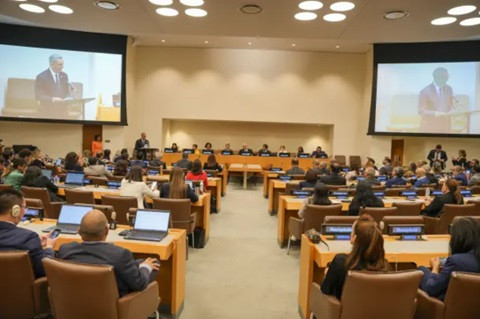 Latin American and Caribbean governments and international cooperation urge more investment in education 2024-10-07 Dominican Republic, Chile and multilateral organizations highlighted education as a catalytic investment for the region's sustainable future On the sidelines of the 79th session of the United Nations General Assembly and the Summit of the Future, the governments of the Dominican Republic and Chile, together with multilateral organizations, made an urgent call to increase financing for education in Latin America and the Caribbean. The call to action, supported by UNICEF, UNESCO, ECLAC, the Inter-American Development Bank (IDB), the World Bank, the Development Bank of Latin America and the Caribbean (CAF), the Organization of Ibero-American States (OEI), the Latin American Campaign for the Right to Education (CLADE), and the Varkey Foundation, calls on countries to invest now to achieve Sustainable Development Goal 4, which seeks to ensure inclusive, equitable and quality education. “Education is the driver of development and the key to transforming our societies; therefore, in the Dominican Republic we are determined to make schools the centre of development and public policies, where the future of our nation is forged,” said Luis Rodolfo Abinader Corona, President of the Dominican Republic. “We invite all sectors of society to join this effort. It is a commitment we must make together to ensure that education is, essentially, the pillar of equitable and sustainable development in our region.” Nicolás Cataldo, Minister of Education of Chile, said, “As co-chairs of the SDG 4 High-Level Steering Committee, we believe that it is essential to participate in and promote initiatives like these to amplify decisions taken at the global and regional levels related to education. Reflecting on the enabling conditions for educational processes, and above all, sustainable financing, is crucial to move from commitment to action and ultimately to achieve the SDG 4 targets.” In Latin America and the Caribbean, 75 per cent of students in the region do not achieve basic skills in mathematics and 50 per cent in reading. The limited realization of the right to education in the region has deepened in recent years due to prolonged crises, the impact of multiple emergencies, including the COVID-19 pandemic, and persistent inequalities. "If you want economic success, if you want jobs, if you want growth, if you want investments, make sure your education system is delivering. There is no other way, right now," said economist Jeffrey Sachs. Although countries have made significant efforts to reach the agreed minimum funding for education, at least 4 per cent of GDP and 15 per cent of total public expenditure, the sustainability of funding remains a challenge and the region is lagging behind. Currently, on average, Organisation for Economic Co-operation and Development (OECD) countries invest about five times more per student than the average for Latin America and the Caribbean. For this reason, the Dominican Republic and Chile, together with the coalition of multilateral organizations, urge all governments in the region, international cooperation, civil society and the private sector to ensure enabling conditions and adequate, sustainable, equitable and efficient financing for education. In particular to: Increase public investment in education, prioritizing the allocation of resources in areas where evidence shows higher returns and for students in situations of greater vulnerability. Enhance sustainable financing strategies for education, increasing the mobilization of resources for education through instruments such as progressive fiscal policies. In addition, complement these efforts with innovative measures such as the Global Partnership for Education (GPE) multiplier fund, debt swaps, blended financing, among others. Increase the share of official development assistance allocated to education, fostering long-term investments in public education systems. Strengthen management and information systems to plan investments and monitor the impact of financing in education, ensuring that it is sufficient, equitable, effective, efficient and transparent. Stefania Giannini, UNESCO Assistant Director-General for Education, during her presentation. Naciones Unidas "Education serves as an engine of inclusion, growth, and sustainable development. Through their Call to Action on Education Finance, Latin American countries have established a bold political and social pact to transform education,” said Stefania Giannini, UNESCO Assistant Director-General for Education. She invited all ministers and stakeholders to join the Call to Action. Regarding this call to the countries, the Director of UNESCO’s Regional Office for Latin America and the Caribbean, Esther Kuisch Laroche, emphasized: "It is crucial that all stakeholders commit to mobilizing national and international resources, reforming their fiscal systems, and prioritising education on their political agendas. Only in this way can we ensure that no boy or girl is left behind, and that Latin America and the Caribbean can become a leading region in fulfilling the Sustainable Development Goals, especially SDG 4. This is our moment to act decisively and with a forward-looking vision, because investing in education is investing in a more just, peaceful, and sustainable world."*** URL: https://www.unesco.org/en/articles/latin-american-and-caribbean-governments-and-international-cooperation-urge-more-investment
  世卫组织将在联合国大会上呼吁采取高级别紧急行动以消除全球抗微生物药物耐药性危害 2024-10-04 The World Health Organization (WHO) and partners will call on world leaders to address critical global health challenges, and invest in global public health, at meetings throughout the high-level week of the 79th session of the United Nations General Assembly (UNGA79), to be held in New York from 20 to 30 September 2024. The second High-Level Meeting on Antimicrobial Resistance (AMR) on 26 September 2024 will be the principal official, health-focused event during the UNGA high-level week. Without decisive action, such as that outlined in the final text of the draft political declaration for the meeting, AMR will cause even more global suffering, particularly in low- and middle-income countries. Antimicrobial resistance (AMR) occurs when bacteria, viruses, fungi and parasites no longer respond to medicines, making people sicker and increasing the spread of infections that are difficult to treat, leading to illness and deaths. The intergovernmental negotiations for the declaration were co-facilitated by Malta and Barbados. The first UN High-level Meeting on AMR took place in 2016. “Antimicrobial resistance threatens a century of medical progress and could return us to the pre-antibiotic era, where infections that are treatable today could become a death sentence,” said Dr Tedros Adhanom Ghebreyesus, WHO Director-General, who will address the high-level meeting on AMR. “This is a threat for all countries at all income levels, which is why a strong, accelerated and well-coordinated global response is needed urgently.” UNGA79 takes place at a crucial moment as the world continues to recover from the COVID-19 pandemic and accelerates efforts to meet the 2030 Sustainable Development Goals (SDGs). Despite significant strides, progress towards health targets remains off track, exacerbated by ongoing humanitarian, social, and climate crises. Millions of people still lack access to life-saving health services, highlighting the link between health and sustainable development. The Summit of the Future, which will take place on 22 and 23 September, will bring together world leaders to forge a new international consensus on how to deliver better in the present, including ensuring global decision making is guided by science, achieving the SDGs and safeguarding the future. During the Summit, Heads of State and high-ranking government officials are expected to endorse the Pact for the Future, which will include a Global Digital Compact and a Declaration on Future Generations. Health priorities are well-reflected in the outcomes, including the importance of access to health services and achieving universal health coverage. During the week, WHO officials will participate in official and informal health-focused events ranging from digital health, maternal, child and adolescent health, communicable and noncommunicable diseases, and mental health, to action on climate change, advancing progress toward Universal Health Coverage, and pandemic preparedness and response. “Strong health systems, equitable access to health services, and robust pandemic preparedness are vital for a safer and healthier world,” Dr Tedros said. “We must harness the power of digital technologies to bridge gaps in access to health services and build resilient systems that can meet the multiple overlapping health challenges of our world, from outbreaks, epidemics and pandemics to climate change and the burden of noncommunicable diseases.” The UN General Assembly takes place during WHO’s first Investment Round, a series of engagements and ongoing efforts to secure sustainable financing for WHO’s core work for the period of 2025-2028. Dr Tedros and WHO representatives will be conveying the importance of investing in global health and of a robust and fully funded WHO to work with countries in advancing health for all. On 23 September, Dr Tedros and European Investment Bank President Nadia Calviño will hold a live-streamed fireside chat moderated by Suzanne Lynch of Politico on why investing in primary healthcare is critical at a time of increased shocks caused by disease outbreaks like mpox. This will be followed later in the day by the European Investment Bank and WHO co-hosting a high-level roundtable under the new Health Impact Investment Platform, which will spotlight country level action to boost vaccination and community-based health. Both meetings will be streamed via WHO and Dr Tedros’ social media channels. On 24 September, WHO will host the Third Annual Gathering of the Heads of State and Government for the prevention and control of Noncommunicable Diseases (NCDs), to catalyze commitment at the highest levels of Government, and bolster engagement by partners ahead of the UNGA high-level meeting on NCDs and Mental Health in 2025. From 22-29 September, 2024, WHO will participate in key events, panels and initiatives during Climate Week NYC. Bringing together world leaders, businesses, policymakers and activists, the events will consider solutions to urgent climate challenges ahead of critical international summits. WHO experts will make it a priority to ensure that the health argument for climate action takes centre stage in global discussions. They will underscore how climate change is not only an environmental issue but also a pressing health crisis, directly affecting millions of people worldwide. Rising temperatures, poor air quality, and disrupted ecosystems are contributing to the spread of infectious diseases, respiratory illnesses, and malnutrition. During UNGA, WHO will engage in a number of events and discussions focusing on pandemic preparedness and response, even as Member States continue their negotiations for a new convention, agreement or international instrument or accord. URL: https://www.who.int/news/item/19-09-2024-who-at-unga-call-for-urgent--high-level-action-to-address-global-scourge-of-antimicrobial-resistance
 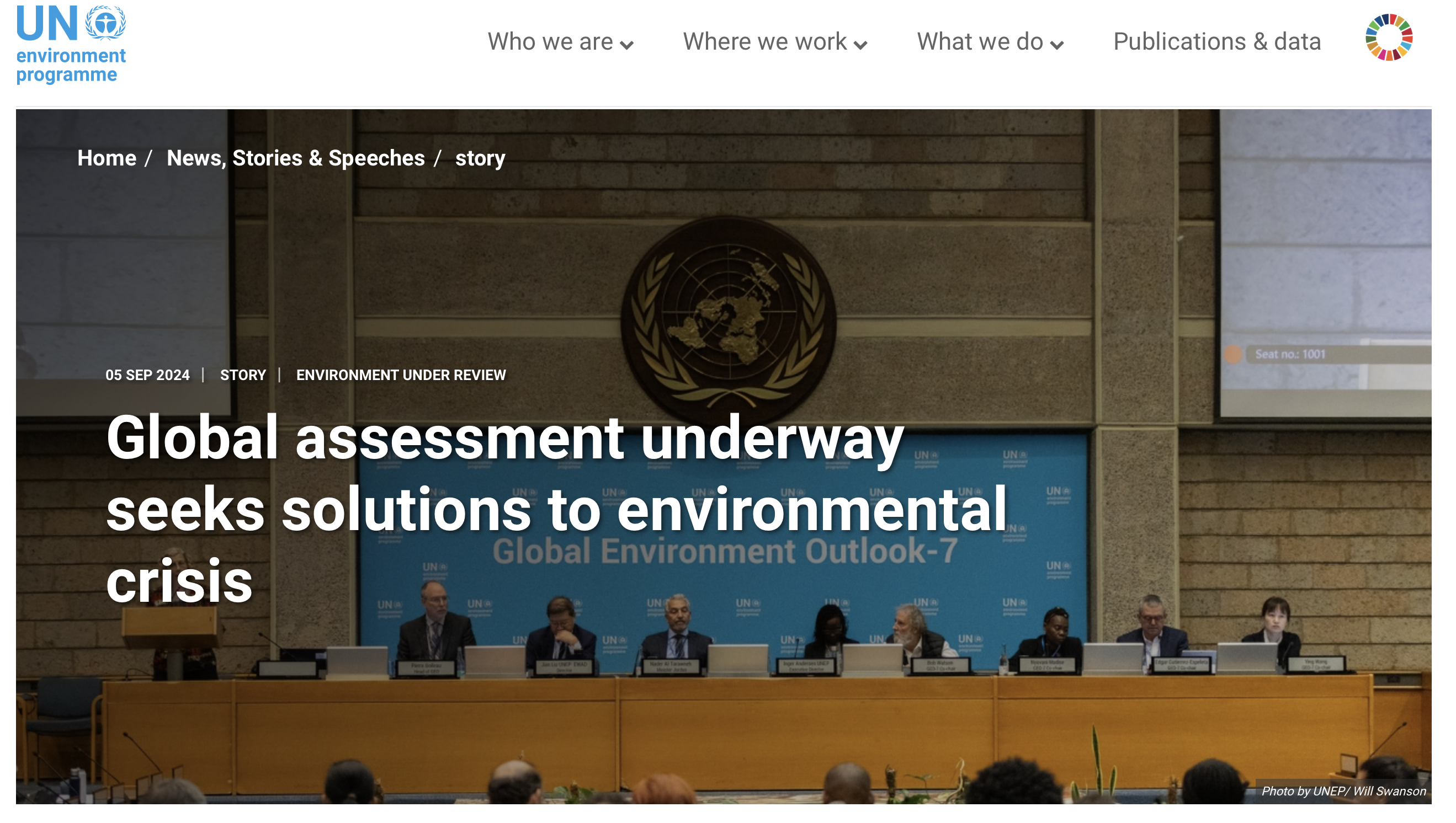 Global assessment underway seeks solutions to environmental crisis 2024-10-04 About 250 environmental scientists are gathering this week in Nairobi, Kenya, to discuss an advanced draft of the latest Global Environment Outlook, a landmark report expected to showcase solutions to some of the planet’s most-pressing environmental challenges. The United Nations Environment Programme (UNEP) has issued a call to enlist reviewers from around the world, and ensure the report presents robust science and peer-reviewed evidence and data. This will be the seventh edition of the report, known as GEO-7, since 1995. The series has become a go-to scientific resource for policymakers, providing them with peer-reviewed data and evidence-based analysis on everything from pollution to climate change. GEO-7 is produced by hundreds of experts from around the world under the stewardship of UNEP. The United Nations Environment Assembly, the world’s top decision-making body on the environment, requested the latest edition in 2022. Expected to be published in December 2025, it will be the first report in the series to focus on solutions to the triple planetary crisis of climate change, nature and biodiversity loss, and pollution and waste. Its long-term goal is to help humanity live more sustainably. Putting together such a wide-ranging report is an immense undertaking and the GEO-7 drafting process has not been without its fair share of challenges. One has been enlisting the expertise of reviewers from around the globe. We recently sat down with Nyovani Madise, the GEO-7 co-chair and a director at the African Institute for Development Policy, to discuss the importance of GEO-7 and the vital role that reviewers play in the drafting process. What is the Global Environment Outlook and why is it important? Nyovani Madise (NM): This is a truly global assessment of the state of the environment. It takes stock of where we are now and how the triple planetary crisis of climate change, nature and biodiversity loss, and pollution and waste are impacting our lives, our livelihoods and the world’s ability to achieve the Sustainable Development Goals. When we look at where things are, especially with respect to the triple planetary crisis, we are not where we should be. And more worryingly, we are not moving in the right direction if we want to live in peace with nature. How will GEO-7 help countries be more sustainable? NM: GEO-7 will be a solution-focused report. It will say to governments and policymakers: here are the range of options that you can adopt to achieve agreed targets as well as socio-economic goals. Yes, we need more energy. Yes, we need more development. Yes, we need more natural resources. But here are ways we can provide all those more efficiently and more sustainably, and not at the expense of nature and not by continuing business as usual, which is how we got ourselves into this mess. Hundreds of scientists and experts have gathered in Nairobi this week. What are they doing? And can you give us a peek into the report drafting process? NM: What is taking place in Nairobi is the third writers’ workshop where they are working not only on their respective chapters but also working together. They are discussing and responding to the comments and questions from a first set of reviewers. The same way that the environmental crises facing us are interdependent, the report will be made up of chapters that are interconnected, so that the solutions the report proposes will be holistic. What has been the biggest challenge so far in putting together the GEO-7 report? NM: It takes time and a great deal of effort to bring together this team of more than 250 scientists and experts to author one document that is innovative and solutions-oriented. Another big challenge has been the availability of new and fresh empirical research. We are using existing models that need to be updated. The Global Environment Outlook is traditionally peer-reviewed by experts from across the globe. Where does that process stand? NM: Right now, we need more expert reviewers from around the world that can ask: “Is this document scientifically sound? Does this resonate with me given what I know about this subject?” The more diverse the pool of reviewers, the better the report will be. Are there groups of reviewers you need more of? NM: I would like to encourage scientists, especially women and those who are in universities and think tanks in the Global South, to heed our call for reviewers and participate. As the co-chair of GEO-7 and as a scientist, the reason why I accepted to be part of this process is because I wanted to know that there is representation from my part of the world. Why is it important to have expert feedback from around the globe? NM: The document is advocating for specific solutions and the reviewers will tell us if the solutions being proposed will work in their specific contexts. That evidence is important because we can incorporate it into the final report. If we are going to encourage policymakers to adopt a set of solutions, they need the assurance that the science is robust and peer-reviewed. The Global Environment Outlook is UNEP's flagship report. It is an integrated assessment that looks at environmental themes holistically, examines the effectiveness of policy responses to date and provides an outlook for the medium to longer term. The next round of expert reviews for the report’s seventh edition will take place from November 2024 to January 2025. It will be the last chance for reviewers to offer their insights ahead of the report’s publication. Those interested in participating in the review process should apply through this website by 15 October. URL: https://www.unep.org/news-and-stories/story/global-assessment-underway-seeks-solutions-environmental-crisis
 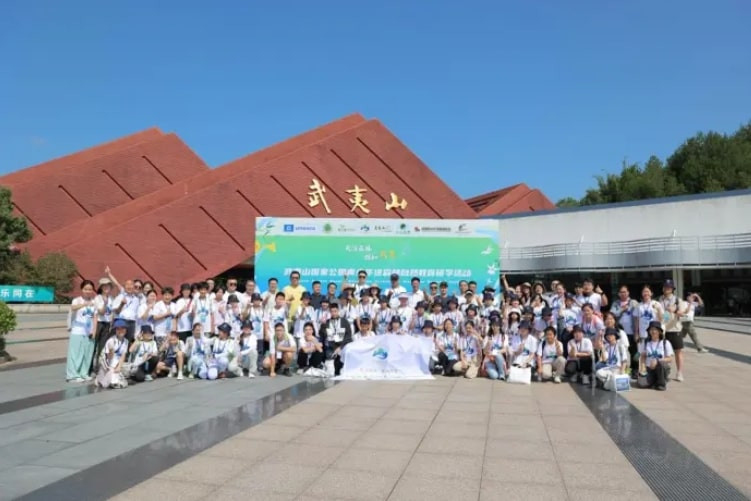 2024 "Focusing on Forest, Exploring Mount Wuyi" Youth Forest Nature Education Activity was successfully held in the Wuyishan National Park 2024-10-02 To promote the implementation of the 300 million Youth Forest Research and Education activities, and improve their understanding of forest ecosystems and biodiversity. 23 August 2024 On the morning of 16th August, the launching ceremony was held at the south entrance of Wuyishan National Park. Professor Shahbaz Khan, Director of UNESCO Regional Office for East Asia and UNESCO Representative to China, DPRK, Japan Mongolia, and ROK, attended the launching ceremony and delivered a speech. He said that UNESCO is committed to promoting international cooperation in education, science, and culture among member states, and to forest protection through the Man and Biosphere Reserve Program. By carrying out nature education activities for young people in forests, we aim to enable them to understand the importance of forest conservation through immersive field visits and indoor courses, acquire the knowledge, skills, and experience needed to become effective forest ambassadors, and establish connections and collaborations, gradually involving young people in practical actions to promote science, enhance scientific awareness, and pursue sustainable development. At the launching ceremony, the relevant officials of the National Forestry and Grassland Administration, Wuyishan National Park Administration, the Green Camp, as well as students' parents and student representatives made speeches respectively. Wuyishan National Park is one of the first five national parks and the only national park that is not only a World Biosphere Reserve but also a mixed World Cultural and Natural Heritage Site. This national park boasts stunning landscapes of Danxia landforms and the most complete, typical, and largest subtropical forest ecosystem in the same latitude zone as Earth. It is a gene bank for rare and unique wildlife and plants and is known as the "paradise of birds," "kingdom of snakes," "world of insects," and "key to studying Asian amphibians and reptiles. The good ecological environment, long history and culture, and rich species diversity make Wuyishan National Park the most beautiful classroom and the ideal place to carry out the youth forest nature education activities.Wuyishan National Park is one of the first five national parks and the only national park that is not only a World Biosphere Reserve but also a mixed World Cultural and Natural Heritage Site. This national park boasts stunning landscapes of Danxia landforms and the most complete, typical, and largest subtropical forest ecosystem in the same latitude zone as Earth. It is a gene bank for rare and unique wildlife and plants and is known as the "paradise of birds," "kingdom of snakes," "world of insects," and "key to studying Asian amphibians and reptiles. The good ecological environment, long history and culture, and rich species diversity make Wuyishan National Park the most beautiful classroom and the ideal place to carry out the youth forest nature education activities.During the activity, under the guidance of the nature education tutors, the students inspected the representative Danxia landform landscape scroll of Mount Wuyi along the way, climbed the Xianfeng Ridge watchtower, looked down on the spectacular geological fracture zone of the Wuyi Grand Canyon, visited the National Park Propaganda Hall, learned about the biodiversity of Wuyishan National Park. During field nature observation, nature tutors vividly introduced to the students the arduous and lengthy process of cicadas transforming into adults in a sit-up posture; The students tasted the flavors of tea, Houttuynia cordata, Baijiang Grass and Drinking Grass, touched the fuzz of loquat leaves and purple pearls, and the rich diversity of plant species and their unique characteristics aroused many students' curiosity and exploration. From deciphering insects to interesting stories about plants, the nature education tutors' brilliant answers have greatly benefited the students. The encounters and visits of Tibetan macaques, as well as different types of birds and insects, have excited the students. In Taoyuan Valley, students embark on a journey to explore the secrets of nature with the Nine Palace Grid Nature Notes task assigned by their mentor, Professor Li Zhenji. “Teacher, I found two oval-shaped golden turtles, their color is as beautiful as jade! ", " We only walked a short distance and found many 'little cuties'. Nature is really interesting”, exclaimed the “Egret” student from Yichang City, exclaiming in amazement. Arriving at Dazhulan, the birthplace of the world's biological type specimen, students encountered different types of insects and were deeply impressed. They expressed their desire to record them in their nature notes. What I recorded is the Wangshi silk moth discovered in Dazhulan. This is the first time I have seen such a large moth with such beautiful wing patterns. The bean lily that I recorded was also discovered in Dazhulan. After crawling over its skin, it becomes red, swollen, and blistered. When encountering it in the wild, special attention should be paid, "shared" Peach "from Beijing and" Clear Dew "from Kunming. A student named "Bamboo" from Beijing said, "What I recorded is the bamboo sea of Dazhulan, because I really like bamboo. They are upright and symbolize the integrity of iron bones, and are deeply loved by ancient literati. This is also the reason why I chose 'Bamboo' as my natural name. In the outdoor experience class of bamboo raft drifting in Jiuqu River, the cultural heritage of "military fish", "white striped fish", and "jade spotted snake" in the stream, as well as cliff carvings and hanging coffins along the river, left a deep impression on students. However, the most eye-catching thing was the white egret parked by the stream. I saw the process of the egret catching fish! ". They flew too fast, I only captured their backs. ". " The still water and flat pool were lonely and leisurely, fishing alone in the streams and fields with graceful movements. The visitors were lonely, afraid of startling the immortals on the river. "A student named" Cold Abyss " from Beijing even wrote a short poem for the egret. During the five-day education activity, the students' understanding of Wuyishan National Park's biodiversity, Wuyi tea culture, Danxia landform, spectacular geological fault zone, and smart management of national parks was enhanced. They not only learned ecological knowledge, and planted seeds of green hope, but also further established their awareness of respecting and loving nature in the "dialogue" with nature.The final stage of the event is the closing ceremony. Prof. Mu Jianxin, Senior Consultant of the UNESCO Regional Office for East Asia, Ms. Zhou Yi, Project Assistant of the UNESCO Regional Office for East Asia, as well as Mr. Huang Hai, Deputy Director of the Forestry Information Center of Fujian Forestry Administration, and Mr. Xiao Fangyi, official of the Wuyishan National Park Administration, attended the closing ceremony and presented completion certificates to the students. Prof. Mu Jianxin said at the closing ceremony that our green journey does not end here, it is just the beginning of a lifelong commitment to environmental protection and sustainable living. She urged the students to share the knowledge and experience gained from this study and their passion for forests with others when they return to schools and communities, to inspire a new generation of forest guardians, protect our natural heritage, and benefit everyone.This is the second activity conducted in Wuyishan National Park after the first Youth Forest Nature Education Activity last October. The event was jointly hosted by the UNESCO Regional Office for East Asia and the Fujian Forestry Administration, organized by the Fujian Forestry Society and the Green Camp, co-organized by the Wuyishan National Park Administration and Wuyishan Culture and Tourism Group Co., Ltd., and funded by the China Youth Development Foundation Mercedes-Benz Star Fund Fund-in-Trust. It was guided by the Office of the Executive Committee of National Forest Activities and the Propaganda Center of the National Forestry and Grassland Administration, and has positive significance for promoting young people to practice the concept of "Lucid Waters and Lush Mountains are Invaluable Assets" and jointly promote the building of ecological civilization. Read more: UNESCO “Accelerating Carbon Neutrality: Innovative Actions for Sustainable Development” Project Launched in 2022 with financial support from China Youth Development Foundation Mercedes-Benz Star Fund, this project seeks to promote the practical actions of ecological civilization and build a sustainable future for all through innovative actions. Yearly, the project empowers stakeholders, particularly youth, with knowledge, skills, values and attitudes to contribute to climate change mitigation, carbon footprint reduction, ecological protection and biodiversity conservation. URL: https://www.unesco.org/en/articles/2024-focusing-forest-exploring-mount-wuyi-youth-forest-nature-education-activity-was-successfully?hub=701
 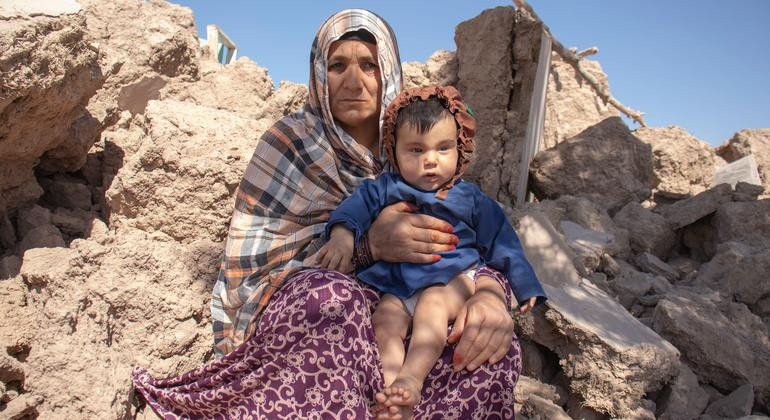 Afghanistan: No Future without Women’s Participation 2024-09-24 23 September 2024 Afghan women earned the right to vote more than a century ago. Today, under Taliban rule, they are practically erased from public life and even banned from singing.These were just some of the chilling observations and testimony from Afghan women, together with supporters from around the world, who convened at UN Headquarters on Monday to discuss inclusion and women’s rights going forward. “Now, more than ever, it's crucial to include women in all matters concerning Afghanistan's future meaningfully,” said former Afghan diplomat Asila Wardak of the Women’s Forum on Afghanistan. Stressing that the country’s future “cannot be built on the exclusion of half of the population,” she said that “women must be part of the solution, not sidelined.” UN expresses solidarityThe meeting was co-hosted by Ireland, Indonesia, Switzerland and Qatar, in partnership with the Women’s Forum on Afghanistan, which works to ensure that Afghan women are included in any dialogue and decision-making at the international level on the future of their country. It came on the eve of the annual debate in the General Assembly, and UN Secretary-General António Guterres took time out of his packed schedule to uphold international solidarity with Afghan women. “We will continue to amplify the voices of Afghan women and call for them to play a full role in the country’s life, both inside its borders and on the global stage,” he said. Mr. Guterres vowed that the UN “will never allow gender-based discrimination to become normalized anywhere in the world,” adding “what is happening in Afghanistan can be compared with some of the most egregious systems of oppression in recent history.” Invisible womenThe Taliban have been slashing away at women’s and girls’ rights since returning to power in August 2021. The de facto authorities have issued more than 70 edicts, directives and decrees, including limiting girls to primary-level education, banning women from most professions and prohibiting them from using parks, gyms and other public places. “We meet in perilous times, and it is heart wrenching to be a woman and never as much as now in Afghanistan,” said Margot Wallström, a former Swedish foreign minister and chair of the Women’s Forum on Afghanistan who served as the moderator. “The latest Taliban edict wants to silence women, including singing, and make them invisible. Not here at the UN though. Today, we will let their voices and their concerns be heard.” A cautionary tale for the world: Meryl StreepAcademy Award-winning actress Meryl Streep introduced a short version of the documentary film ‘The Sharp Edge of Peace’, which follows the only woman on the Afghan Government team negotiating with the Taliban in talks held in Doha, Qatar, in 2020. She recalled that Afghan women received the right to vote in 1919, well before their counterparts in her homeland, the United States. “The way that this culture, this society, has been upended, is a cautionary tale for the rest of the world,” said Ms. Streep noting that even animals in Afghanistan’s capital, Kabul, have more freedom than women and girls there. “A cat may go sit on her front stoop and feel the sun on her face. She may chase a squirrel into the park. A squirrel has more rights than a girl in Afghanistan today because the public parks have been closed to women and girls by the Taliban. “A bird may sing in Kabul, but a girl may not, and a woman may not in public. This is extraordinary. This is a suppression of the natural law. This is odd,” she remarked. During a panel discussion about the film, Ms. Wallström asked what more can the international community do for the women of Afghanistan. Uphold and unite Habiba Sarabi, Afghanistan’s Former Minister of Women’s Affairs, urged the international community to “please apply” UN Security Council resolution 1325 (2000), which reaffirms women’s role in peace and security efforts, and to uphold the UN Convention on the Elimination of All Forms of Discrimination against Women (CEDAW), among other recommendations. Meanwhile, the former Deputy Speaker of the Afghan Parliament, Fawzia Koofi relayed a message to the women of Afghanistan. “It’s a battle. We will win it,” she said, drawing applause. Ms. Koofi called for the UN Security Council to “unite around the issue of Afghanistan” urging countries to “leave aside your political differences, because what's happening in Afghanistan could have security implications, if not human rights implications, in your own capitals.” ‘Engagement is key’: UN political chiefThe head of UN political affairs, Rosemary DiCarlo, gave an overview of the Organization’s long-standing engagement with Afghanistan, including an initiative endorsed by the Security Council known as the Doha process. It “entails a step-for-step approach” with the de facto authorities, requiring them to, for example, make governance more inclusive, and to respect women’s and girl’s rights. In exchange, the international community would then incrementally ease restrictions and provide development support. Ms. DiCarlo said the situation has been complicated by the Taliban’s new morality law. “We had Member States willing to engage, willing to go forward with a step-for-step project. However, I think we risk right now of ending this process,” she warned. “At this point, those who've been participating in our process want to continue, but they really expect the Taliban to take part in good faith, and they've got to start abiding by their international obligations.” She emphasized that “engagement is key”, stressing that “we cannot let Afghan women and men down.” URL: https://news.un.org/en/story/2024/09/1154721
 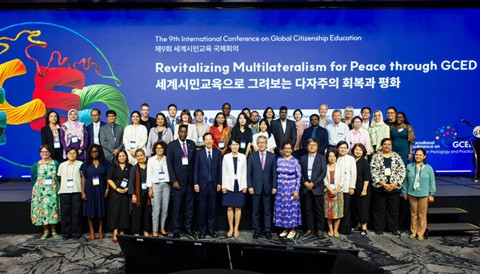 제9회 세계시민교육 국제회의, 세계시민교육으로 다자주의 회복과 평화의 가능성을 그려보다 2024-09-21 The Asia-Pacific Centre of International Understanding under the auspices of UNESCO (hereafter APCEIU) co-organized the 9th International Conference on Global Citizenship Education (IConGCED) with the Ministry of Education and the Ministry of Foreign Affairs of the Republic of Korea, in collaboration with UNESCO and Chungnam National University BK21 Four Center for GCER. Held from September 4th (Wednesday) to 5th (Thursday), 2024, the Conference was centred around the theme "Revitalizing Multilateralism for Peace through GCED". Over these two days, approximately 300 policymakers, educators, researchers, and practitioners gathered to engage in diverse and insightful discussions. The opening ceremony on September 4 began with opening remarks by OH Seok Hwan, Vice-Minister of Education of the Republic of Korea, and HONG Seok-in, Ambassador and Deputy Minister for Public Diplomacy of the Ministry of Foreign Affairs of the Republic of Korea. This was followed by congratulatory remarks from Stefania GIANNINI, UNESCO Assistant Director-General for Education, and a welcoming speech by LIM Hyun Mook, Director of APCEIU. The keynote speech was delivered by Professor Audrey OSLER, Professor Emerita at the University of Leeds, UK, on the topic “Hope, Justice, and Compassion in a Fractured World: Reviewing Our Role as Global Citizenship Educators.” The first plenary session focused on "Navigating Current Challenges Where Multilateral Efforts Are Most Required." Panelists included Assistant Professor Rawan ARAR from the University of Washington, Ambassador Extraordinary and Plenipotentiary Peter NGURUE of the Republic of Kenya to UNESCO representing the ‘Group of Friends for Solidarity and Inclusion with Global Citizenship Education’ initiated by the Republic of Korea, Professor Kihara AI from the University of Tokyo, and Professor LEE Sang-wook from Hanyang University. They presented and discussed the intersection of emerging topics such as ‘Humanitarian Crisis Focusing on Refugees and Forced Migration,’ ‘Racism and Hate Speech,’ "Sustainable Peace and Human Security,’ and ‘Ethical Dilemmas of Generative AI’ and their implications in the educational field. The second plenary session was facilitated by Dylan WRAY, High Resolves Learning, at the Human Responsibility Accelerator, South Africa. In this session, Associate Professor Ludivina BORJA-DEKIT from Western Mindanao State University, Philippines, and Associate Professor Tania SAEED from Lahore University of Management Sciences, Pakistan, engaged in an interactive dialogue on “Storytelling for Peace”. On the second day, the plenary session featured youth activists from diverse fields and regional backgrounds discussing the changes they are creating for peace. Noora ELKENAWI, a GCED Activist; Oshani GUNATHILAKE, an Education, Sustainability and Development Practitioner; and KIMHAN Minyoung, Manager of the Peace Momo Action Research team, shared their challenges as youth activists and their hopes for stakeholders in global citizenship education, receiving much encouragement and support. Additionally, various breakout sessions such as “Transformative Learning for Collaboration: From ME to WE,” “GCED in Action across Borders,” and “All Hands on Deck: Unlocking the Potentials of Multilateral Efforts” drew the attention of participants and stakeholders alike. The 9th IConGCED was successfully concluded, providing a platform to reflect on the importance and necessity of multilateral cooperation for peace. Related content can be accessed on the official conference website (icongced.unescoapceiu.org) and the YouTube channel (@International Conference on GCED). URL: https://www.unescoapceiu.org/post/5171
 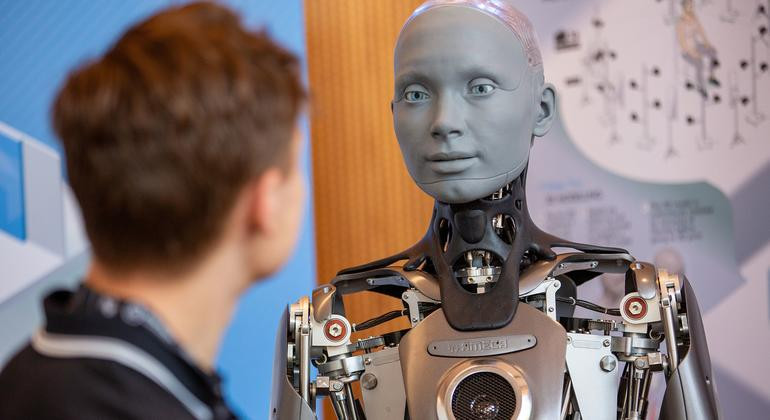 ‘Irrefutable’ Need for Global Regulation of AI: UN Experts 2024-09-20 19 September 2024The imperative for global regulation of the booming artificial intelligence field, or AI, is “irrefutable”, a new report from a UN expert group said on Thursday, adding that development and use of such a technology “cannot be left to the whims of markets alone”. “The very nature of the technology itself – transboundary in structure and application – necessitates a global approach,” the final report from the UN Secretary-General appointed panel concludes. Artificial intelligence (AI) is transforming our world, from opening new areas of scientific inquiry and optimizing energy grids, to improving public health and agriculture and promoting progress on the 17 Sustainable Development Goals (SDGs). However, while there is tremendous potential for good, left ungoverned, the benefits of AI could be limited to only a handful of pioneering States, companies and individuals, widening the digital divide and inequality. In an effort to mitigate these risks, the report proposes several recommendations to establish a framework for AI global governance. Growing human rights concernsThere is also utmost concern expressed in the report about the ways in which AI may be used to infringe on human rights. The very raw materials needed for AI technologies – including critical minerals – are globally sourced, leading to a battle for power and wealth over these rare commodities on a global scale. Further, autonomous weapons systems could make decisions without human intervention, raising ethical and legal questions about accountability and the protection of civilians during conflicts. Increasing potential for an arms race driven by advancements in AI technology could also endanger human security. AI bias and surveillance is yet another area of concern, with the creation and dissemination of disinformation potentially harming civilians. Gaps already appearingDisparities are already begininning to appear. In terms of representation, whole parts of the world have been left out of international AI governance conversations. For instance, just seven countries (Canada, France, Germany, Italy, Japan, UK and US) are parties to seven prominent non-UN AI initiatives, whereas 118 countries, primarily in the Global South, are parties to none. “Equity demands that more voices play meaningful roles in decisions about how to govern technology that affects us,” the report states. “The concentration of decision-making in the AI technology sector cannot be justified; we must also recognize that historically many communities have been entirely excluded from AI governance conversations that impact them,” it added. Globally inclusive architectureTo address these concerns, the UN expert group is proposing several recommendations for regulating the use of AI. The recommendations of the report include an independent international scientific panel on AI, a twice-yearly intergovernmental and multi-stakeholder policy dialogue on AI governance to share best practices and a global fund for AI to bridge the digital divide. The group also stressed that any deployment of AI in military settings must comply with international humanitarian law and human rights standards and recommended that states establish robust legal frameworks and oversight mechanisms. Taken together, these recommendations call on UN Member States to lay the foundations for the first globally inclusive architecture for AI governance based on international cooperation and transparency. URL: https://news.un.org/en/story/2024/09/1154541
 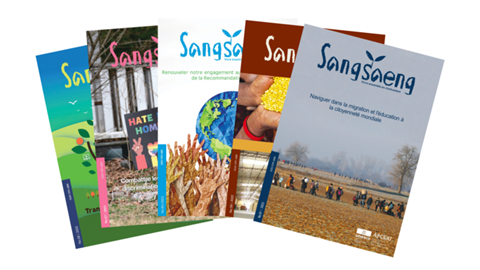 Publishing Sangsaeng French Edition to Broaden the Readership Base 2024-09-12 Since 2017, in collaboration with the UNESCO's Multisectoral Regional Office for West Africa in Dakar, the specialized magazine on GCED, SangSaeng, has been publishing a French edition to expand its readership base. From Issue 49 (Winter 2017) to issue 61 (Winter 2023), the French edition has been published online in digital file format, making it more accessible to readers, including younger audiences, interested in GCED. The online French edition can be downloaded from the website via the following path: APCEIU website -> Top Menu ‘Resources’ -> ‘Serials’ -> ‘SangSaeng’ (You can find out English and French editions here) https://www.unescoapceiu.org/board/k411_en Meanwhile, the latest French edition of 61st issue focuses on the relationship between migration and GCED, exploring the challenges and opportunities related to migration and the role of education in addressing them. Contact and Subscription Requests: sangsaeng@unescoapceiu.org URL: https://www.unescoapceiu.org/post/5165