
News
Catch up on what’s happening in the world of global citizenship education.
1,668 results found
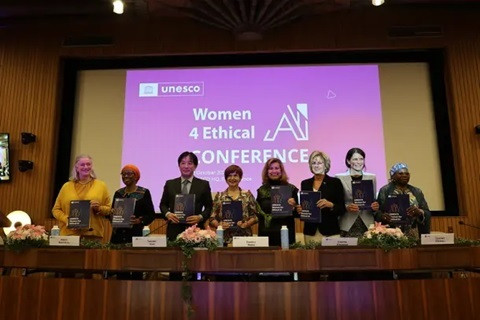 Women4Ethical AI Conference: Advancing Gender Equality in Artificial Intelligence 2024-11-11 This event was a vital component of UNESCO's mission to implement the gender chapter of the Recommendation on the Ethics of AI, the only international framework that includes a dedicated chapter on gender. The focus was on integrating gender perspectives into all aspects of AI systems, ensuring that ethical AI development supports gender equality. Co-chaired by Alessandra Sala and UNESCO's Assistant Director-General for Social and Human Sciences, Gabriela Ramos, the W4EAI platform has convened a diverse group of female experts and has been at the forefront of advocating for gender equality in technology since its inception during CSW63. The W4EAI Conference featured in-depth discussions on how AI technologies can either reinforce or dismantle existing gender biases, including sessions on: boosting female representation in AI; addressing gender stereotypes in generative AI; tackling data inequality and understanding how gender biases in data sets can skew AI outcomes; and breaking barriers for women in tech, among many other topics. A dedicated session highlighted UNESCO’s Readiness Assessment Methodology (RAM) and how it integrates a gender perspective to ensure that AI policies and strategies are inclusive and equitable. Experts shared insights on the development of RAM in different regional contexts, exploring how aligning readiness assessments with ethical AI guidelines could contribute to closing gender gaps and fostering more inclusive digital ecosystems. This session demonstrated how a gender-focused RAM can guide nations toward more equitable AI frameworks that prioritize ethical and inclusive practices. A highlight of the event was the presentation of the W4EAI Gender Outlook Study, which offered fresh insights and actionable data on the intersection of gender and AI development. The outlook revealed a significant gap: current AI policy frameworks often fail to prioritize gender. While AI governance has been a hot topic in recent years, most global analyses don’t fully consider gender dimensions. The study showed that most countries haven’t addressed gender equality in their AI policies—and those that have are often only scratching the surface. "Without a robust, cross-cutting gender focus, AI policies are unlikely to make significant progress in supporting equitable AI development for all. Improving gender equality in and through AI is far more complex than simply applying technical solutions. It requires a solid political commitment from governments and organizations, along with targeted efforts, concrete actions, and dedicated budgets to drive the structural changes necessary for true gender equality in the AI field."Gabriela Ramos, Assistant Director-General for Social and Human Sciences During the event, Gabriela Ramos also signed a letter of intent with The Adecco Group, establishing a strategic collaboration to advance gender inclusion and equality in the labor market, particularly through the responsible use of artificial intelligence. This partnership seeks to address persistent challenges faced by women in the workforce, promoting an ethical and human-centered approach to integrating emerging technologies. The Women4Ethical AI Conference was more than just a one-day event. It laid the foundation for an ongoing, transformative effort under the W4EAI platform to ensure that gender equality becomes an integral part of AI development and governance. This initiative aligns with UNESCO's larger commitment to the ethical development of AI and represents a crucial step toward creating technologies that serve everyone equally. It paved the way for a future where AI not only promotes gender equality but also empowers women worldwide. Stay tuned for impactful, forward-thinking solutions as we build a more inclusive and gender-balanced future in AI. URL: https://www.unesco.org/en/articles/women4ethical-ai-conference-advancing-gender-equality-artificial-intelligence
 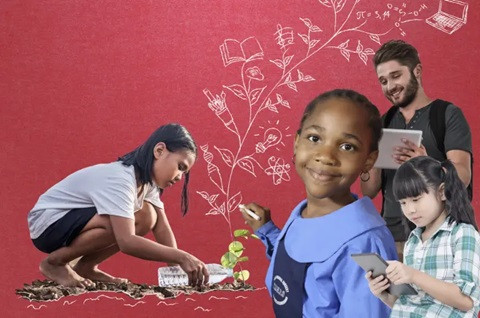 7 Ways Countries Are Transforming Education 2024-11-01 UNESCO capitalizes on the G20 meeting in Brazil to deliver the message that more investment is needed for education. There is a global crisis in the quality and equity of education, but transformation is possible, leading to economic growth and a path to peace. Last update: 31 October 2024 This article provides insight into how countries are accelerating progress towards the global Sustainable Development Goal on education (SDG 4). It highlights specific examples of countries’ actions to transform their education systems, based on the findings of the Transforming education towards SDG 4: Report of a global survey on country actions to transform education, published ahead of the 2024 Global Education Meeting. This event is organized back-to-back with the G20 Education Ministers Meeting in Brazil, emphasizing common priorities of the Brazilian G20 Presidency and UNESCO, such as inclusion, equity and education financing. The report highlights seven ways that are important for countries to transform their education systems. 1. Explore multiple paths to transforming education The survey report underscores the necessity of a multifaceted, context-specific approach to transforming education. It is essential to recognize that countries are in different places in their education transformation journeys and are taking various approaches to support what is needed most in their unique contexts. Transformative action encompasses gradual or small-scale improvements and larger systemic changes that better align with the evolving learning needs within a new social contract. Transforming education needs to be contextualized within each country’s unique realities. Not only do countries have different priority areas but they also have different economic and socio-cultural conditions that factor into decision making. 2. Secure consistent funding to education Financing must be prioritized and sustained, and innovative measures must be adopted to accelerate transformation. Without sufficient funding, the quality of education can decline, adversely impacting the future of countless learners. Countries must increase investments in education from all sources, including international aid and innovative financing, to meet their SDG 4 targets while ensuring efficient and effective use of resources. Achieving effective education financing requires cutting inefficiencies, enhancing governance, and linking investments to education outcomes, focusing on maximizing impact and accountability. 3. Prioritize inclusion, equity and gender equality in education Inclusion, equity and gender equality are at the heart of SDG 4. In the face of challenges, countries are guided by these principles as they transform their education systems. All countries have reported actions towards inclusion, equity and gender equality in education. Still, significant challenges remain, particularly for refugee and displaced children and youth, who are at high risk of educational exclusion. Achieving inclusion requires targeted strategies and systemic transformation to ensure all learners have equal access to quality education, essential for meeting the 2030 Sustainable Development Goals. 4. Embrace digital transformation to drive educational changes Digital transformation is essential to transforming education, with countries focusing on enhancing connectivity, digital resources and educator training. While many countries have committed to expanding internet access and integrating digital tools to promote equity and inclusion, there remains a need to address the quality of digital content and ensure that digital platforms are both accessible and secure. The effort is guided by principles of inclusion, equity, quality, and accessibility, emphasizing the need to prevent digital transformation from exacerbating existing inequalities in access to technology. 5. Invest in teachers to transform education Investing in the teaching profession is crucial for transforming education. This investment includes enhancing professional development, equipping teachers with new pedagogical skills, digital tools, and updated curricula. As the backbone of educational transformation, teachers need systemic support to address the global shortage and meet evolving educational demands. Improving working conditions, fostering professional autonomy and ensuring adequate training are essential to making the teaching profession more attractive and sustainable, with many countries already taking transformative actions in these areas. 6. Adopt a holistic, lifelong approach to transform education and support individual and societal well-being Transforming education requires a comprehensive and integrated approach that reimagines curricula, teaching methods, and lifelong learning opportunities. Central to this transformation is the renewal of educational practices to cultivate diverse knowledge through interdisciplinary and intercultural perspectives. This includes embedding environmental sustainability and socio-emotional skills into the curriculum, preparing learners to meet future challenges as resilient, well-rounded individuals. The transformation also emphasizes the integration of digital tools to support personalized learning, innovative pedagogical strategies, and the development of critical thinking, creativity, and problem-solving skills. By fostering an environment that nurtures autonomous and lifelong learning, education can effectively bridge the gap between traditional methods and the evolving needs of the future. 7. Engage stakeholders, especially youth and students, to transform education meaningfully. Many countries increasingly recognize the importance of embedding youth engagement within their governance frameworks, ensuring that policies and decision-making processes include the voices of those directly impacted by transforming education. Genuine and meaningful youth engagement is inclusive, rights-based, and accountable. It creates spaces for youth and students to access transparent information and opportunities to express their views, receive the necessary support to succeed and actively participate in decision-making. By fostering a sense of ownership among those impacted by education, these approaches ensure that educational change is more likely to be embraced by those they affect the most. The global survey on country actions to transform education is not just about showcasing good practices and transformative actions. It’s about encouraging collaboration among countries and joint actions. Sharing and learning from each other’s successes and challenges propel countries toward achieving SDG 4 by 2030. URL: https://www.unesco.org/en/articles/7-ways-countries-are-transforming-education
  [APCEIU] Webinar on “Innovative Approaches to Global Citizenship Education in the Asia-Pacific: A Dialogue between Theory and Practice” 2024-10-30 BackgroundWhile many international organisations and bodies have defined the concept of global citizenship and global citizenship education, there remains a scarcity of attempts to integrate diverse cultural perspectives into these concepts from multiple viewpoints. With the aim of reinterpreting global citizenship and GCED in light of the historical, religious, and the social contexts and political and economic conditions of the Asia-Pacific region, the Asia-Pacific Centre of Education for International Understanding (APCEIU) launched the project titled ‘Rethinking Global Citizenship Education from Asia-Pacific Perspectives’ in April 2024. APCEIU has invited experts from the Asia-Pacific region to contribute to reimagining GCED in line with their local perspectives and contexts. The project seeks to present innovative approaches to GCED informed by the rich cultural and philosophical landscapes of the Asia-Pacific region. The project will highlight how various countries are reinterpreting GCED in light of their unique contexts. The Office of Research and Development will be hosting a webinar leading up to the book launch in November, to disseminate the meaningful findings of the research. Webinar ObjectivesThis webinar aims to: 1) introduce outcomes of the project “Rethinking Global Citizenship Education from Asia-Pacific Perspectives”; and 2) to discuss key insights derived from this process with researchers. Global citizenship and GCED will be interpreted based on diverse traditions of thought in the Asia-Pacific region, spanning from the Pacific and East Asia and to India and Central Asia, as well as its religious and cultural traditions, including Buddhism, Islam, and Confucianism. Through the webinar, APCEIU seeks to facilitate discussions on the meaning of the reconceptualised global citizenship education contextualised to the Asia-Pacific realities and their implications compared to the existing definitions. Event Details Date and time: Friday, 1 November 2024, 14:00 - 16:00 (GMT+9, Seoul) Type of event: Online webinar (Zoom) Language: English Register now: https://iexco-co-kr.zoom.us/webinar/register/WN_QHatz3xWSACPotkSEPN3Fg#/registration ProgrammePanel Discussion 1 : “How Is GCED Shaped by Local Contexts in Asia-Pacific Countries?” Performing Global Citizenship through National Citizenship: Humanity, Politics and CompetencySicong CHEN (Associate Professor, Kyushu University) Global Citizenship in Central Asia: Contested, Transformed, and ChallengedAigul KULNAZAROVA (Professor, Tama University) The Direction of GCED in Asia-Pacific Region: Starting from Locality and Aiming for UniversalitySEOL Kyujoo (Professor, Gyeongin National University of Education) Panel Discussion 2 : “How Can GCED Be Reimagined through Asia-Pacific Cultural and Philosophical Perspectives?” Home and the World: Redefining GCED from Tagore's PerspectiveMousumi MUKHERJEE (Associate Professor, O.P. Jindal Global University) Global Citizenship Competencies and Indigenous Pacific Ways of Being, Knowing and Doing: Exploring the Possibility of New StarpathsTanya SAMU (Senior Lecturer, University of Auckland) Tolerance, Interdependence, and GCEDThippapan CHUOSAVASDI (Lecturer, Chulalongkorn University) Contact us E-mail: rnd@unescoapceiu.org Tel: +82-(0)70-4185-8529 URL: https://www.unescoapceiu.org/post/5193
 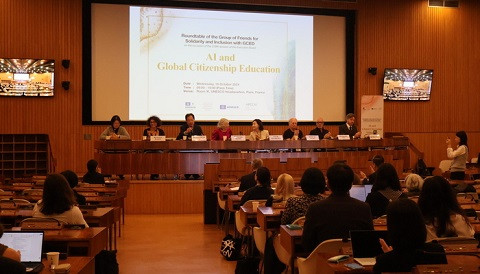 APCEIU and Permanent Delegation of ROK to UNESCO Co-organized Roundtable on 'AI and Global Citizenship Education' 2024-10-30 The Asia-Pacific Centre of Education for International Understanding (APCEIU) under the auspices of UNESCO and the Permanent Delegation of the Republic of Korea to UNESCO jointly organized a roundtable discussion on "AI and Global Citizenship Education" on 16 October 2024 at UNESCO Headquarters in Paris, France, on the occasion of the 220th Session of the UNESCO Executive Board. The event was held in partnership with the Group of Friends for Solidarity and Inclusion with GCED and UNESCO. H.E. Ms. Sang Mee Bak, Ambassador and Permanent Delegate of the Republic of Korea to UNESCO, emphasized in her opening remarks that "Education plays a crucial role in understanding how this world is closely interconnected and respecting diverse cultures and values in today's rapidly changing world". She particularly highlighted the UNESCO's '2023 Recommendation on Education for Peace, Human Rights and Sustainable Development,' stressing the need to incorporate international solidarity and global perspectives into educational policies. Ms. Stefania Giannini, Assistant Director-General for Education at UNESCO, emphasized that "While the role of technology in education systems becomes increasingly important with digitalization, maintaining a human-centered approach is essential." She announced that UNESCO would support the development of specific skills, aptitudes, and values through its 'AI Competency Framework.' She also expressed gratitude to the Korean government for supporting the GCED Prize, highlighting UNESCO's role as a platform for identifying and valorizing good practices at national and regional levels. Professor Wayne Holmes from University College London presented two dimensions of approach: 'AI in education' and 'education about AI.' He pointed out that current AI educational tools focus solely on knowledge and skills transfer, emphasizing the need to consider 'individuation' and 'socialization' aspects crucial in Global Citizenship Education. He particularly highlighted concerns about AI's environmental impact through energy and water consumption, the exploitation of 'ghost workers' in AI development, and the potential loss of democratic control due to corporate AI dominance. Professor Emmanuel Goffi from Paris Institute of Digital Technology emphasized that "responsible people" are more important than "responsible AI." He stressed the importance of critical thinking about AI and highlighted the significance of soft skills, including human interaction, effective communication, time management, and conflict management. He warned against the potential loss of these abilities through excessive AI use and called for genuine ethical considerations deeply rooted in cultural values. Mr. Mark West, UNESCO Education Specialist, analyzed the digital transformation of education post-COVID-19, noting significant changes in traditional understanding of the right to education. He particularly emphasized the need to redefine concepts of attendance and participation in digital environments, and raised questions about the 'right to disconnected education.' He shared research findings suggesting that EdTech and digital-centered education could hinder development in very young learners, advocating for age-appropriate technology use approaches. Dr. Hyun Mook Lim, Director of APCEIU emphasized in his closing remarks that "As AI technologies are raising serious concerns, global citizenship, values and principles have to be rigorously protected and promoted in all areas, especially in education." He highlighted the need to strengthen citizenship education, or Global Citizenship Education, not only for general learners but also for AI developers and users, calling for continued collaboration to find effective ways to learn and practice citizenship and global citizenship values and principles in and through education in relation to AI technologies. The roundtable attracted approximately 60 participants, including representatives from numerous UNESCO Member States such as Austria, Argentina, Lao PDR, Canada, United States, Kenya, Chile, Italy, Serbia, and Japan, as well as GCED and AI practitioners and education professionals. The active participation of numerous UNESCO Member State representatives demonstrated the international community's high interest in the intersection of AI and education, with participants engaging in in-depth discussions about the role and direction of Global Citizenship Education in the era of AI. The event served as a significant opportunity to reaffirm the importance of Global Citizenship Education in maintaining human-centered values and ethical principles in an era of accelerating technological advancement. URL: https://www.unescoapceiu.org/post/5192
 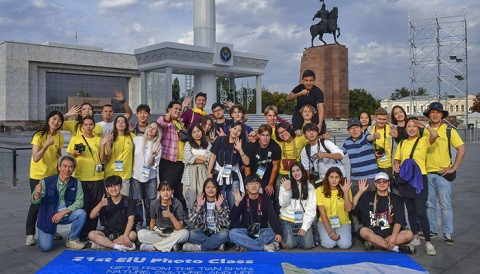 Completion of the 21st EIU Photo Class 'Gifts from the Tian Shan: Nature, Culture, and Life' 2024-10-30 The Asia-Pacific Centre of Education for International Understanding (APCEIU) under the auspices of UNESCO and the National Commission of the Kyrgyz Republic for UNESCO successfully co-organized the 21st EIU Photo Class at Ilim Educational Complex in Bishkek, Kyrgyz Republic from 22 to 29 September 2024. Under the theme "Gifts from the Tian Shan: Nature, Culture, and Life", the programme brought together 8 Korean secondary school students and 20 students from the Kyrgyz Republic to promote youth exchange and cultural understanding between the two countries. Under the guidance of professional photographers Jae Hoon KANG, Yongye YU, and Artur AKHMETCHIN, the participating students captured the diverse cultural heritage and natural landscapes of the Kyrgyz Republic through their lenses. They conducted field photography sessions at various locations, including the Burana Tower of the medieval city of Balasagun, the majestic Ala-Archa National Park in the Tian Shan mountains, and the Supara Ethno-Complex, where traditional lifestyle can be experienced. The students had the opportunity to directly experience the unique living culture of the Kyrgyz Republic through intangible cultural heritage activities, particularly traditional felt craft making. By beating and rolling wool using traditional methods to create felt, students gained firsthand insight into the wisdom and artistry of nomadic life that has existed in harmony with nature. This hands-on experience allowed students to move beyond observation to active participation, providing them with a deeper understanding of Kyrgyz traditional culture. In addition to field activities, the programme included various indoor sessions such as cultural exchange activities and workshop on Global Citizenship Education. Participants went beyond merely acquiring photography skills, fostering qualities as global citizens through communication with students from different cultural backgrounds. The week-long programme culminated in a photo exhibition at the Gapar Aitiev Kyrgyz National Museum of Fine Arts on 29 September 2024. The exhibition was attended by esteemed organizers and distinguished guests including Dr. Hyun Mook Lim, Director of APCEIU, Ms. Sabira Soltongeldieva, Secretary-General of the National Commission of the Kyrgyz Republic for UNESCO, H.E. Mr. Kwang Jae Kim, Ambassador of the Republic of Korea to the Kyrgyz Republic and Ms. Aigul Mamytkazieva, Director of the National Museum of Fine Arts. The exhibited works, capturing the Kyrgyz Republic's nature, culture, and people through the fresh perspective of young photographers, received enthusiastic responses from visitors. To further disseminate the outcomes of this Photo Class, APCEIU plans to publish a photo book featuring selected works and make them available on its online archive (photoclass.unescoapceiu.org) as educational resources.The EIU Photo Class, which has been conducted in 20 countries since its inception in the Philippines in 2006, has established itself as APCEIU's flagship youth exchange programmes. APCEIU will continue its efforts to promote understanding of cultural diversity in the Asia-Pacific region and foster global citizenship among youth through the medium of photography. URL: https://www.unescoapceiu.org/post/5188
  Climate Change: Ozone Layer Still Well on Track for Full Recovery 2024-10-30 16 September 2024New evidence in the World Meteorological Organization’s (WMO) annual Ozone and UV Bulletin published on Monday reveals strong evidence that the ozone layer is well on track for a long-term recovery. The Ozone and UV Bulletin’s release coincides with World Ozone Day which celebrates the implementation of the Montreal Protocol and the later amendment to the pact, known as the Kigali Agreement. That key international agreement saw an end to the production of “damaging ozone-depleting substances.” Noting that the ozone layer is on the road to recovery, the UN Secretary-General, António Guterres, said further protection measures are essential. “The Protocol’s Kigali Amendment, which focuses on phasing down hydrofluorocarbons (HFCs) – powerful climate-warming gases – can contribute to advancing climate mitigation efforts, protecting people and planet,” the Secretary-General said. “And that is needed more than ever, as temperature records continue to shatter.” Ozone layer recovery The UN weather agency said ozone could recover to 1980 levels - before any hole in the ozone layer appeared - by around 2066 over the Antarctic if current policies remain. This could also lead to full recovery of the layer by 2045 over the Arctic and 2040 for the rest of the world. Matt Tully, Chair of WMO’s Scientific Advisory Group on Ozone and Solar UV Radiation, said the organization’s Global Atmosphere Watch (GAW) Programme is continuously providing crucial support for ozone science by means of observations, analysis, modelling, data stewardship and capacity-building. “It is critical that observations of ozone, ozone-depleting substances and ultraviolet (UV) radiation are maintained with the quality, resolution and global coverage necessary to account for changes in ozone over the coming decades,” Mr. Tully said. “Many factors will influence the expected recovery of ozone, which must be fully measured and understood.” Other findings WMO’s bulletin also provided details on strategies to protect human health and the environment from ultraviolet radiation while exploring the impact of weather patterns and a significant volcanic eruption, on the Antarctic ozone hole in 2023. It states that the “total column ozone values in 2023 were within the range observed in previous years and in line with expectations, owing to the beginning of the decline of ozone-depleting chlorine and bromine in the stratosphere.” While the bulletin details positive changes to the Antarctic ozone hole, it found that are atmospheric events can have a big impact on how the ozone hole develops periodically. WMO says scientists still have some gaps in understanding these variables and will continue to monitor the ozone layer closely to explain any unexpected changes. URL: https://news.un.org/en/story/2024/09/1154366
 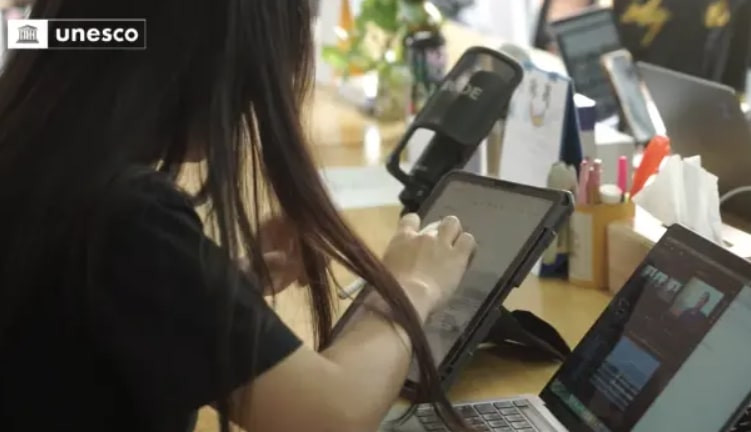 Climate Change in News Media, South-East Asia 2024-10-30 Last update: 30 September 2024 South-East Asia is among the regions most vulnerable to the effects of climate change, where rising sea levels and intensifying natural hazards affect millions of people in densely populated areas and coastal zones. As the extreme weather events increasingly impact livelihoods and cause displacement in the region, information for making decisions on climate change mitigation and adaptation is becoming all the more important. UNESCO implemented the “Climate Change in News Media” training project for news organizations in Indonesia, Malaysia, the Philippines, Thailand and Timor-Leste. The programme, which ran from March to September 2023, reinforced the climate change and environmental reporting by broadcast and online media outlets by strengthening the use of key online sources, fact-checking, data visualization, satellite imagery, cartographic regression and the like. "We use data from open sources, which allows us to create stories about environmental issues. We also use artificial intelligence and the latest technologies to help make these environmental stories resonate with the young audience."Participating media from Malaysia Enhancing Climate Change and Environmental Reporting in South-East AsiaDiscover In 2024-2025, UNESCO continues its efforts through targeted programmes in the region, including in Cambodia and Timor-Leste, to strengthen media capacity for climate reporting and disaster management. URL: https://www.unesco.org/en/climate-change/news-media/south-east-asia
 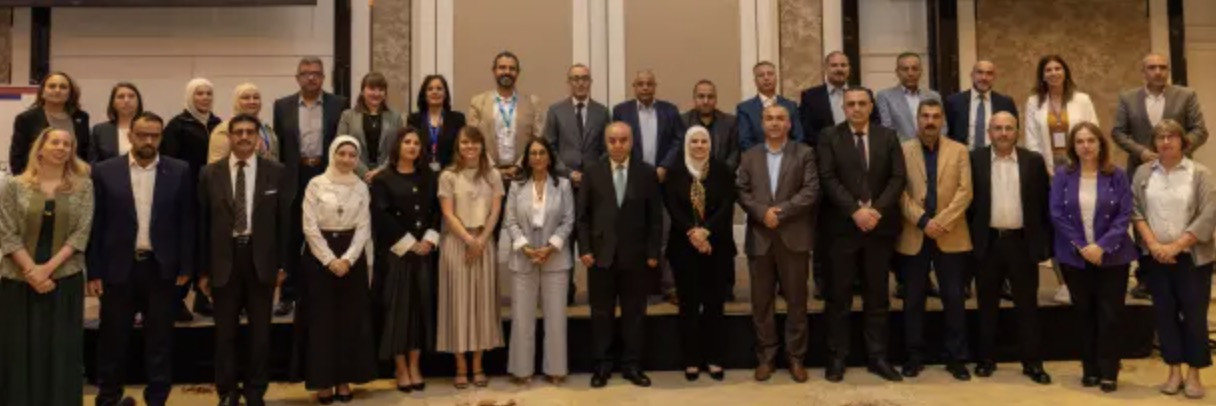 Ministry of Education holds Joint Annual Review Meeting (JARM) with Partners on the Education Strategic Plan 2024-10-16 30 September 2024Under the Patronage of the Minister of Education, H.E. Prof. Azmi Mahafzah, the Ministry of Education (MoE) kicked-off a two-day joint review of the progress made in 2023 for the implementation of its Education Strategic Plan (ESP) with education stakeholders and partners.Ahead of the JARM, the MoE has released its annual ESP report for 2023. The report aims to inform strategic planning for 2024/2025 and serves as the foundation for discussions during the two-day event, outlining progress, challenges and recommendations across all six ESP domains (Early Childhood Education and Development, Access and Equity, System Strengthening, Quality, Human Resources, and Vocational Education). It also addresses education financing, partnership and coordination, and gender.In His Excellency’s opening remarks, the Minister of Education, Dr. Azmi Muhafza, stressed that the ESP is well in line with the vision of His Majesty King Abdullah II bin Al Hussein, and aims at improving educational outcomes, quality, and competitiveness in Jordan to ensure sustainability, development, and modernization of the educational system.The JARM brings together key education stakeholders and partners, including representatives from the Royal Hashemite Court, the Prime Ministry, the Ministry of Education, the Ministry of Planning and International Coordination, education sector partners and stakeholders.MoE staff and education stakeholders are expected to discuss the progress made so far towards the ESP goals and targets, and collaboratively identify actions to achieve the Kingdom’s educational objectives, in line with the Economic Modernization Vision, and ongoing public sector reform. Among those are the need to expand access to KG2 through expansion of current infrastructure, increased focus on inclusion in education, enhanced teacher training, improved learning outcomes through examination reforms, and pursue the ongoing restructuring of TVET for better learning to earning outcomes.The co-chairs of the Education Development Partners Group commended the MoE for its efforts under the ESP, particularly emphasizing the importance of evidence-based planning and policy making, stating that they “remain committed to working alongside the Ministry to achieve shared goals and priorities of the Education Strategic Plan and the Economic Modernization Vision, particularly in strengthening the coordination structure.”The JARM also marked the reaffirmation of joint commitments by the MoE and its partners to the right to education for all, in alignment with Sustainable Development Goal 4, which emphasizes inclusive and equitable quality education and lifelong learning opportunities. The support provided to the MoE for the 2023 ESP annual review is part of ongoing technical assistance from UNESCO, implemented through a Multi-partner Trust Fund supported by Canada, the Italian Agency for Development and Cooperation (AICS), Norway, and Switzerland in support of system strengthening for the education sector. URL: https://www.unesco.org/ar/articles/wzart-altrbyt-waltlym-tqd-ajtma-almrajt-alsnwyt-almshtrkt-m-alshrka-bshan-alkhtt-alastratyjyt-lltlym
 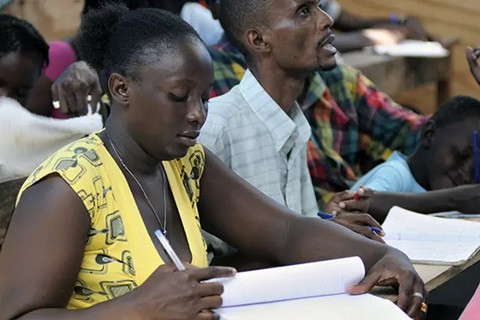 Literacy for Empowerment and Transformation: New Report of UNSG Outlines Progress and Ways Forward 2024-10-12 The new report provides an overview of the global literacy landscape, highlighting progress and challenges, and major activities implemented by Member States and partners. Last update: 4 October 2024 Prepared in cooperation with UNESCO in pursuance of General Assembly Resolution 77/192, the new report of the UN Secretary-General on “Literacy for empowerment and transformation” (A/79/155) provides an overview of the global literacy landscape, highlighting progress and challenges, and major activities implemented by Member States and partners. It also offers recommendations for further promotion of literacy as part of the 2030 Agenda for Sustainable Development and the follow-up to the Transforming Education Summit towards more peaceful, just and sustainable societies. The new report of the UN Secretary-General was presented by Mr Eliot Minchenberg, Director of the UNESCO New York Office, to the Third Committee of the UN General Assembly at its 79th session on 3 October 2024. This report arrives at a critical moment after the adoption of the Pact of the Future at the Summit of the Future organized by the UN Secretary-General (New York, from 22 to 23 September 2024) and in the lead to the 2024 Global Education Meeting (GEM), scheduled for 31 October and 1 November 2024, in Fortaleza, Brazil. At the 2024 GEM, Literacy will be one of the main topics. Global education leaders will take stock of progress toward Sustainable Development Goal 4 on education and lifelong learning and identify transformative actions through an inclusion and equity lens. Progress and challenges in literacyDespite a decade of steady progress, nearly one in ten young people and adults (754 million) lacked basic literacy skills in 2023, two-third of whom were women (1). Today, four in ten students do not meet minimum proficiency levels in reading by the end of primary education, while 244 million children, adolescents and young people are not in school. Behind these lie the twin challenges of equity and quality, which have resulted in millions of children failing to acquire basic literacy skills, and the relative neglect of youth and adult literacy, as reflected in its chronic underfunding. Emerging issues and concernsAt a time of profound transformation, the report calls for a holistic approach to literacy not only for achieving learning and development outcomes, but also for fostering critical thinking, citizenship, peace, pluralism and social transformation. Literacy learning should involve a process of meaning-making and a joy for reading, writing and learning, in addition to mastering literacy as a technical skill. There has been renewed focus on literacy educators, integrated and intergenerational approaches to literacy, and the role of the learner’s first language in literacy development and linguistic and epistemic diversity. Attention is drawn to opportunities and potential risks associated with digitalization, emphasizing literacy’s critical role to enable people to better navigate in an increasingly digitalized world. Call for coordinated and sustained literacy efforts for empowerment and transformationThe report also stresses the importance of coordinated and sustained literacy efforts for greater impact through major mechanisms and partnerships. The UNESCO-coordinated Global Education Cooperation Mechanism for the Education 2030 Agenda and its apex body, the SDG 4-Education 2030 High-level Steering Committee, remain core global education mechanisms, linking literacy efforts with the broader education 2030 agenda. In addition, literacy is also integral to the follow-up to the Seventh International Conference on Adult Education (CONFINTEA VII) in 2022, at which the Marrakech Framework of Action was adopted, and other platforms, including the UNESCO Institute for Lifelong Learning-led Global Alliance for Literacy within the Framework of Lifelong Learning. The Secretary-General calls upon Member States and partners to accelerate progress in literacy as part of the right to education to empower people, transform society, and foster inclusive and sustainable development. URL: https://www.uil.unesco.org/en/articles/literacy-empowerment-and-transformation-new-report-unsg-outlines-progress-and-ways-forward
 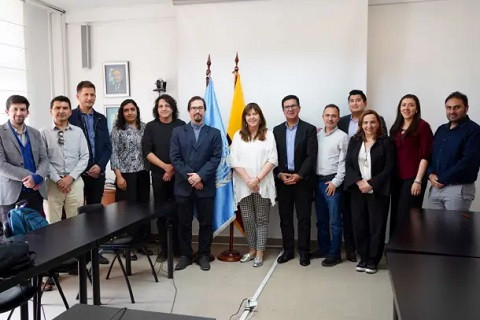 UNESCO and Ecuador Make Progress in Measuring Socio-Emotional Skills and Comprehensive Educational Development 2024-10-09 The Latin American Laboratory for the Assessment of the Quality of Education (LLECE) of UNESCO presented in Ecuador the results of the measurement of socio-emotional skills in students from the MYRP Programme. Additionally, future collaborations in educational assessment were discussed, and results from the ERCE Schools pilot project were shared. 2 October 2024 Between 23 and 25 September, the LLECE Laboratory team from the UNESCO Regional Office for Latin America and the Caribbean visited Ecuador to deliver a report on the main analyses and results of the technical support provided to the Multi-Year Resilience Programme for Educational Inclusion (MYRP). This initiative, driven by the global fund Education Cannot Wait (ECW) and led by UNESCO's office in Quito, focuses on strengthening education in emergency situations and prolonged crises. During this first phase, Ecuador requested technical support from LLECE to measure socio-emotional skills in students from MYRP schools, such as empathy, openness to diversity, and self-regulation in school. These skills were also assessed in the latest Regional Comparative and Explanatory Study (ERCE 2019). Moreover, the LLECE team met with officials from Ecuador's Ministry of Education and the National Institute for Educational Assessment (INEVAL) to discuss educational topics within the framework of the 2030 Agenda, the application of the upcoming ERCE in 2025, and the incorporation of socio-emotional skills into the Ecuadorian curriculum. New opportunities for collaboration in educational assessment for improvement were also explored. Additionally, during the visit, the results of the ERCE Schools pilot project were presented to the five participating educational centres. This tool assessed third-grade students to gauge their learning in Reading and Mathematics both at the beginning and end of the school year. The initial results showed significant progress, and this initiative is expected to expand to other regions of the country. "The visit to Ecuador allowed us to continue advancing an educational agenda that generates evidence and data to inform decision-making in each school. Teachers knowing the state of students' learning creates opportunities for interventions that impact educational equity and quality," said Carlos Henríquez, General coordinator of UNESCO's LLECE Laboratory. URL: https://www.unesco.org/en/articles/unesco-and-ecuador-make-progress-measuring-socio-emotional-skills-and-comprehensive-educational?hub=87862