
News
Catch up on what’s happening in the world of global citizenship education.
1,668 results found
 Advancing Adult Learning and Skills Development Across the Arab Region 2024-07-03 Last update: 18 June 2024 Launch of capacity-building programme to implement the Marrakech Framework for Action The UNESCO Institute for Lifelong Learning (UIL), in cooperation the UNESCO Regional Centre for Adult Education (ASFEC), has launched a comprehensive capacity-building programme to strengthen adult learning and skills development across the Arab region. Through a series of capacity-building meetings both Institutions will support UNESCO Member States in the region in implementing the Marrakech Framework for Action (MFA), adopted at the Seventh International Conference on Adult Learning and Education (CONFINTEA VII). Government officials, educators, managers, trainers and representatives of civil society organizations working in the field of adult education in Arab countries will gain valuable knowledge and skills in adult learning and education concepts, policies, programme design, teaching techniques, monitoring and evaluation, gender-responsive curriculum design, and andragogy, among other topics. At the first capacity-building meeting, H.E. Mr Reda Hegazy, Minister of Education and Technical Education of Egypt, said: ‘We all recognize the important role of adult learning and education in overall development. It enables learners to exercise their rights and provides opportunities for active participation in their larger and smaller communities. Developing capacities in adult education across all fields has become an urgent necessity to meet the changing needs of our societies, the rapidly evolving labor market, the health and environmental challenges, and the crises that some of our Arab countries are facing.’ The capacity-building programme forms part of the community of practice (CoP) dedicated to follow-up actions to the Seventh International Conference on Adult Learning and Education (CONFINTEA VII). It is managed by UIL in cooperation with the Arab Bureau of Education for the Gulf States (ABEGS). The community brings together representatives of UNESCO Member States from the Arab region to work jointly on translating the Marrakech Framework for Action into strategies and action plans. With a shared commitment to lifelong learning and inclusive education, the CoP aims to foster collaboration among Arab countries, facilitate peer learning, share best practice, and develop innovative and inclusive strategies to address the challenges facing adult learning in the region. Aligned with the Marrakech Framework for Action, the CoP focuses on three main action topics: redesigning systems for adult learning and education, promoting participation and equity, and ensuring quality adult learning and education. Background With the adoption of the Marrakech Framework for Action at the Seventh International Conference on Adult Education on 17 June 2022, representatives of over 140 countries committed to translating the vision of a right to lifelong learning into reality. They undertook to significantly increase adult participation in learning and recognized the need for increased financial investment in adult learning and education.
 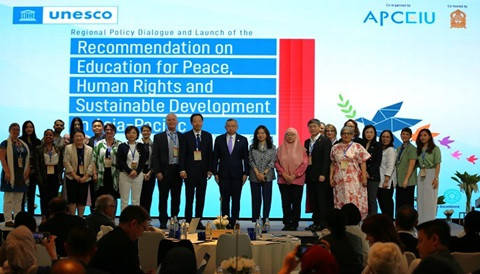 유네스코-아태교육원, 2023 권고 이행을 위한 아태지역 정책회의 공동 개최 2024-07-01 Regional Policy Dialogue and Launch of the Recommendation on Education for Peace, Human Rights and Sustainable Development in Asia-Pacific was held from 5 to 7 June 2024 in Bangkok, Thailand. This landmark event was co-organized by UNESCO and APCEIU, with support from the Centres of Asia-Pacific Excellence (CAPEs), the New Zealand Centre for Global Studies, and Sophia University, Japan, and hosted by the Ministry of Education of Thailand. The overarching goal of the event was to raise awareness on The Recommendation on Education for Peace and Human Rights, International Understanding, Cooperation, Fundamental Freedoms, Global Citizenship and Sustainable Development (hereafter referred to as the Recommendation) and facilitate discussions on implementation priorities at the regional level. On Day One, the event began with opening remarks from Soo Hyun Kim, Director of the UNESCO Regional Office in Bangkok, and welcoming remarks from Hyun Mook Lim, Director of APCEIU, and Police General Permpoon Chidchob, Minister of Education, Thailand. They expressed hope that the regional roadmap, to be developed at the event, will inspire policymakers, educators, and communities to implement impactful initiatives that enhance education's role in shaping a more just, peaceful and sustainable future. In the first session, Christopher Castle, Director of the Division for Peace and Sustainable Development at UNESCO, emphasised the comprehensive nature of the Recommendation and the necessity for a holistic approach. He also outlined upcoming milestones aimed at supporting its effective implementation, including the launch of the Global Implementation Guide. Following this, Miki Sugimura, Professor at Sophia University, presented research findings to enable participants to grasp the current landscape of education for peace, human rights, and sustainable development in the region, including its challenges and opportunities. In the second session, youth representatives engaged in gender, mother tongue education, environmental, and peace initiatives illuminated the room by sharing diverse proposals on the future direction of education as they envision it. The parallel sessions facilitated in-depth discussions on key action areas outlined in the Recommendation, such as Policy, Capacity Development, and Monitoring; Curriculum, Pedagogy, and Assessment; Teacher Development, Teaching and Learning Materials; and Life-wide Learning and the Learning Ecosystem. These sessions inspired participants to connect current issues with their own contexts, forming the basis for the development process of a draft regional roadmap. On the second day, all participants were grouped for field visits into three themes: 1) Health and Wellbeing, 2) ESD, and 3)GCED. Participants observed how these topics are applied and practiced in real-life settings. With all the insights and information gathered, participants convened around the table to identify priorities for each action area in the Recommendation and to explore existing resources to support its implementation. They discussed crucial issues within their respective contexts and shared ideas on how to compose the draft regional roadmap. On the last day, all participants reviewed the collated draft regional roadmap and provided feedback. Faryal Khan, Programme Specialist for Education at UNESCO Bangkok, concluded the event by highlighting the importance of upcoming global and regional platforms, emphasising the need for local and national-level actions to advance these critical dialogues. Developed collaboratively through the wisdom and participatory process of over 100 participants from 27 countries in the Asia-Pacific region, the draft regional roadmap will be further reviewed and agreed upon by UNESCO and the Asia-Pacific Member States, with the final version scheduled for future sharing. While anticipating regional launches in Africa, MENA, and LAC, alongside the launch of the Global Implementation Guide in November this year, this inaugural regional roadmap will set an example as a powerful tool for policymakers, educators, and grassroots activists to implement the new Recommendation. APCEIU remains committed to continuing support for the implementation of the Recommendation, the sole global standard-setting instrument outlining how education can promote lasting peace and advance human development at national, sub-regional, regional, and international levels. URL: https://www.unescoapceiu.org/post/5101
 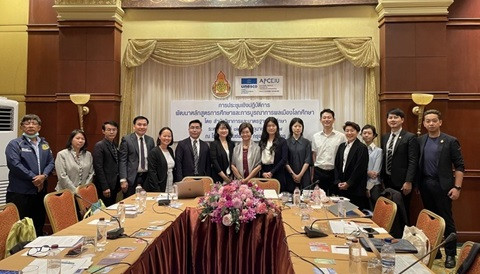 GCED Curriculum Development and Integration in Thailand (2024-2026) - Moving Forward with the Capacity Building Workshop 2024-07-01 In partnership with APCEIU, the Office of the Basic Education Commission of Thailand (OBEC) has taken their first step in the 3-year project of Global Citizenship Education Curriculum Development and Integration (GCED CDI), following up on its official launch in May, by organizing the Capacity Building Workshop on GCED for the Curriculum Development Committee (CDC) members from 13 to 14 June 2024 in Bangkok, Thailand. Launched in 2016, the Global Citizenship Education Curriculum Development and Integration (GCED CDI) project is one of the APCEIU’s flagship projects, and in 2024, Thailand, alongside Morocco, Pakistan and Nepal, is participating in the 5th Round (2024-2026) of the GCED Curriculum Development and Integration project. This workshop was organized by the Office of the Basic Education of Thailand, the implementing agency of the project, in support of APCEIU, for providing the overview of the conceptual framework of GCED, its application to Thai context, and the orientation of the GCED CDI project, including the practical resources to the Curriculum Development Committee members who will be the main bodies of implementing this project. Around 24 participants from the various Bureau and departments at the Office of the Basic Education, stakeholders from universities and schools, GCC-ESD at Chulalongkorn University (Thailand), UNESCO Bangkok Office, and APCEIU participated in the workshop. The first day of the workshop consisted of two main themes: Introductory sessions on GCED and the GCED CDI Project provided by APCEIU and Contextualization of GCED in Thai Education and its application for the curriculum mapping by the GCC-ESD at Chulalongkorn University, the 1st Round partner of APCEIU’s GCED Cooperation Centres (GCC) programme. Following the introductory sessions, active discussions including the QnA went on among the participants for the efficient and successful implementation of the project in Thailand. As Thailand is currently preparing the competence-based curriculum, strategies to link the Project to this process and make mutual contributions were also discussed. The second day of the workshop started with the introduction of the useful GCED resources and materials on GCED by APCEIU and sharing of the examples and publications in Thailand by various stakeholders from GCC-ESD at Chulalongkorn University, UNESCO Bangkok Office and OBEC. Then, the sessions further introducing and discussing the details of the GCED CDI Project in Thailand, followed, discussing strategies, human resources, and practical issues. The workshop concluded with practical suggestions for the next steps while identifying a number of broader challenges to be further discussed and resolved throughout the project implementation process. URL: https://www.unescoapceiu.org/post/5090
 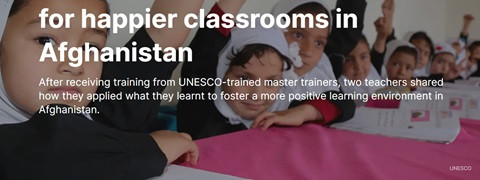 Social and Emotional Learning for Happier Classrooms in Afghanistan 2024-06-20 Last update: 20 June 2024 Ms. Aziza, a teacher from Takhar province in Afghanistan, has been living her childhood dream of becoming a teacher. She enjoys teaching and interacting with children more than anything. Every day, she goes to work with a purpose and strives to help students become productive members of the community. Her classes are usually smooth, but she noticed some of her students have confidence issues; they struggled to speak in front of a class when asked. Ms. Aziza tried multiple methods to encourage them but could not succeed. “I did not know what to do. They were recluse and got intimidated by other students’ attention.” Ms. Aziza recalled. Things took a turn after she attended the UNESCO training on Social and Emotional Learning (SEL). Based on the UNESCO SEL Teacher’s Guide for Afghanistan: Empower Healing Classroom from Inside Out, the UNESCO training on SEL equipped teachers with skills to establish a positive and inclusive classroom climate where students feel supported. They also learnt to respond to the social and emotional needs of individual students and offer personalized support as needed. Defined as the process through which learners understand and manage emotions, develop and show empathy for others, and maintain positive relationships, SEL helps children and youth to make responsible decisions and achieve positive goals. “The classroom activities we learnt from the training were very effective in helping children identify and express their feelings. The students were very active in the games we adapted from the training, including those who struggled with confidence. They become more engaged in these activities and laughed a lot more.” Ms. Aziza said with a smile. Mr. Hussain, also a teacher from Takhar province, shared similar sentiments as Ms. Aziza. “I became a teacher because I wanted to serve my community and support children so that they can have a better future. Some students in my class were emotionally distant from others. I could not find an effective way to motivate them, until I attended the SEL training.” "They become more engaged in these activities and laughed a lot more."Ms. Aziza said with a smile Applying what he learnt from the training, Mr. Hussain refrained from using negative phrases when talking with his students. He used activities focused on sympathy to help children trust and support each other. “Although they are not old enough to elaborate on their opinion of SEL, I see on their faces that they have become a lot happier ever since the SEL sessions. "They are now excited to attend class."Mr. Hussain added SEL is the key to building both emotional and intellectual intelligence in learners and can play a pivotal role in achieving sustainable communities. Studies have found that social and emotional competencies in children and youth are far more consequential for major adult outcomes than traditional metrics of academic success. Both Ms. Aziza and Mr. Hussain believed that SEL training was crucial to their teaching. They recognized the immediate and positive impact of SEL components inside classrooms, as students quickly demonstrated an increased level of social awareness and understanding. “All other workshops we received were talking about us, but this one is about the students. It helped us create a classroom for students to take equal part, rather than as passive listeners.” Ms. Aziza said. “I think 90% of the teachers are not familiar with the concept of SEL. They would teach in traditional methods and approaches without paying attention to the social and emotional needs of students. I know this because I used to be one of them.” Mr. Hussain added. He suggested increasing the provision of SEL training to benefit more teachers and students in Afghanistan. With support from Swedish International Development Cooperation Agency (Sida), UNESCO Kabul Office developed the SEL Teacher’s Guide for Afghanistan in 2023. Based on the guidebook, SEL training was provided to nearly 100 master trainers (43 women), who then cascaded the training to 490 teachers and community workers (244 women) across 20 provinces. URL: https://www.unesco.org/en/articles/social-and-emotional-learning-happier-classrooms-afghanistan?hub=66923
 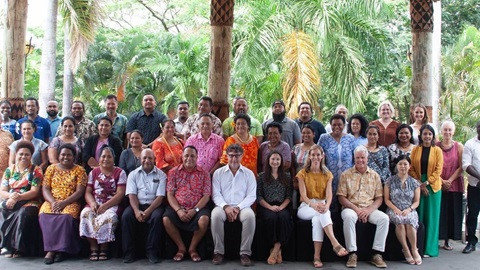 Building Momentum for World Heritage in the Pacific 2024-06-16 With large ocean spaces and customary land tenures, UNESCO World Heritage sites in the Pacific region link culture and nature with people and communities through their unique values and management systems. However, Pacific Island countries are underrepresented on the UNESCO World Heritage List. This is not due to the lack of globally significant natural and cultural heritage places but to the limited funding and technical expertise available to these nations to follow the nomination process. Pacific Island countries are also highly vulnerable to the impacts of climate change and increasing demands for natural resources, and their unique attributes are at risk without suitable protection and adaptation measures. The UNESCO Office for the Pacific States partnered with the Department of Climate Change, Energy, the Environment and Water of the Australian Government to support Pacific Island Countries in identifying potential sites for World Heritage nomination and developing skills and mechanisms to protect and preserve them. More than 40 national stakeholders representing all Pacific States, representatives from regional organizations and the Council of Regional Organisations of the Pacific (CROP Agencies) engaged in the 3-day regional workshop (1-3 November 2023, Nadi, Fiji). It marked a pivotal step in addressing the underrepresentation of Pacific Island Countries on the World Heritage List and signified a commitment to preserving natural and cultural heritage. The workshop also provided the opportunity to present the outcomes of the 3rd cycle of the Periodic Reporting exercise for the APA and its Regional Framework Action Plan (2023-2030). "Work towards the objectives we set with the Pacific Regional World Heritage Workplan 2021-2025, but also to connect and create a community working together for the protection of Pacific natural and cultural heritage"Dr. Shamila Nair-Bedouelle, Director UNESCO Office for the Pacific States The workshop was arranged to maximize technical capacity building and sharing of local and regional experiences through talanoa (“talk” or “discussion” in Fijian, Samoan and Tongan), which is a Pacific Island form of dialogue that brings people together to share opposing views without any predetermined expectations for agreement. The workshop sessions encouraged dialogue and a participatory approach, embracing the Pacific cultural contexts where communities learn effectively through storytelling and sharing experiences. For many participants, the workshop marked the first time they met face-to-face with colleagues from other Pacific States, and the exchanges were lively and fruitful. Pacific World Heritage workshop 2023 © UNESCO Y.Han A post-workshop webinar was convened in December 2023, allowing participants to be actively engaged in finalizing the Outcomes Report. This comprehensive document and the Workshop Overview encapsulate the diverse insights and priorities identified throughout the discussions. The documents identify different priorities in areas of funding, regional coordination, awareness, national coordination, regional-level leadership, community engagement, World Heritage processes, capacity development, regional discourse and networking, and national legislative frameworks.The UNESCO Office for the Pacific States has also been working with the Pacific Tourism Organization (SPTO) and carried out a comprehensive assessment of the sustainable tourism potential of UNESCO World Heritage Sites in the Pacific in 2023. The Sustainable Tourism Assessment for World Heritage Sites in the Pacific examines various factors influencing tourism, including socio-political contexts, management strategies, and stakeholder dynamics; it also sets out recommendations and priority areas for support.In the coming biennium, partnerships between UNESCO, the Australian Government, and SPTO will continue to implement selected recommendations and offer ongoing assistance through training and mentorship to Pacific Island countries. Capacity-building programmes and specifically designed tools will support countries in better preserving the region’s unique cultural and natural heritage. URL: https://whc.unesco.org/en/news/2689
 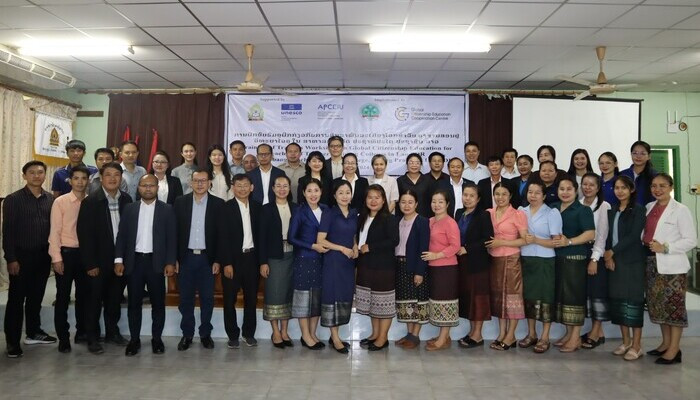 2024 Activities of GCC-Lao PDR Started: Stepping Forward the Enhancement of the Capacity on GCED for Teacher Educators in Lao PDR 2024-06-16 The GCED Cooperation Centre for Lao PDR (GCC-Lao PDR) has started its 2024 activities by organizing the first Training of Trainers Workshop on Global Citizenship Education from 15 May to 17 May 2024 at Luang Prabang Teachers Training College, Luang Prabang Province, Lao PDR. The GCED Cooperation Centre (GCC) Programme is one of the APCEIU’s flagship Programmes, currently operating in 6 countries, with 2 more countries expected to join this year. Hosted at SEAMEO CED, the GCC-Lao PDR was launched in 2023. This year, starting from Luang Prabang Teacher Training College, the GCC-Lao PDR is planning to enhance the understanding and the capacity of the teacher educators through the Training of Trainers Workshop on GCED for teacher educators at 8 Teacher Training Colleges (TCCs) in Lao PDR. Co-organized by the GCC-Lao PDR and Luang Prabang Teacher Training College, and sponsored and in partnership with APCEIU, the Workshop was participated by 48 trainees, who are teacher educators at the Luang Prabang TTC, and resource persons from APCEIU, the National University of Laos, the Research Institute for Education Science (RIES), the Lao National Commission for UNESCO, and the Ministry of Education and Sports of Lao PDR. The first day of the workshop sessions started with participants sharing their understanding of GCED and their expectations of this workshop. This was followed by various activities for understanding interconnectedness and diversity, as well as introductory sessions on the GCED Framework, GCED as a global agenda, and its promotion in the Asia-Pacific region. The second day of the workshop consisted of the introduction of GCED practices in Schools, including the case from the Republic of Korea, the case from Lao Secondary education, higher education, and teacher education by diverse experts from APCEIU, National University of Laos, Research Institute for Education Science, Lao National Commission for UNESCO, and the Ministry of Education and Sports. On the last day, all the participants were divided into 5 groups to make action plans on the topics they had chosen. These 5 groups presented the GCED content and Teaching techniques on themes such as world heritage, climate change, sustainable tourism, etc. The workshop provided the opportunity to enhance the comprehensive understanding of GCED, case studies, and its application and integration into their teaching and learning curricula in the local context by engaging the schools and local communities in the activities. URL: https://www.unescoapceiu.org/post/5075?&page=2
 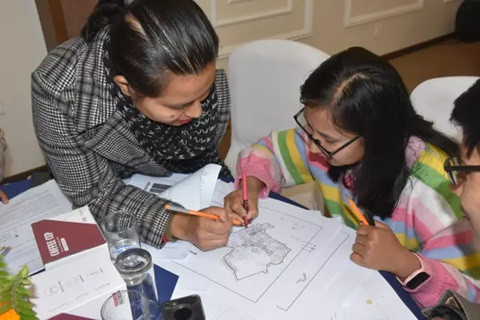 Conservation and Management of Heritage Sites: Strengthening the Capacity of Heritage Managers 2024-06-15 A two-day capacity-building workshop was organized on 22 and 23 March to support the Department of Archaeology and heritage site authorities in effectively implementing the results and recommendations derived from the ISC-KV meetings and subsequently implementing the World Heritage Committee decisions. The workshop was aligned with one of the six recommendations: capacity building provided by The International Scientific Committee for the Kathmandu Valley World Heritage Property (ISC-KV) in 2023. ISC-KV is established to assist the Government of Nepal in the recovery and management of the Kathmandu Valley World Heritage Property. The first day of the workshop provided guidance on six sector strategies – (i) Conservation Management Plan, (ii) Urban Planning, (iii) Subsurface Archaeology, (iv) Community and Sustainable Development, (v) Disaster Risk Management, and (vi) Visitor Management. Ms. Himanchuli Gurung, Chief of the Asia and the Pacific Unit at UNESCO World Heritage Centre, shared knowledge on the Regional Framework Action Plan for Asia and the Pacific (2023 – 2030) (APA Framework), which was adopted in the extended session of the 45th Session of the World Heritage Committee (Riadh, 2023), encouraging Nepal to disseminate the main outcomes of the periodic reporting exercise to the world heritage stakeholders and integrate them into national and local heritage policies and strategies, ensuring proper implementation of the World Heritage Convention. "This workshop has taught me various aspects of cultural heritage that need to be considered while working in heritage conservation and management. Earlier, we used to focus only on monuments. Public awareness, engaging various stakeholders including community and youth, and raising awareness are equally important."Maju Singh Bhandari, Heritage Site Manager, CWC Member and Chief of Monument Conservation and Palace Maintenance Office of the Department of Archaeology at Patan Durbar Square The second day focused on key concepts - value-based heritage assessment, conservation management plans, socio-economic revitalization for long-term conservation and management of Kathmandu Valley World Heritage Property. Moderated by International Expert, Ms. Catherine Forbes, this was complemented by group works and case studies, including a site-wise (monument zone level) mapping exercise on priority setting of relevant and applicable actions of the Regional APA framework, while focusing on sustainable development strategy. Facilitated by two International experts - Prof. Yukio Nishimura and Ms. Catherine Forbes - and two national experts - Dr. Kai Weise and Mr. Bhim Nepal, the workshop was attended by 39 participants [18 male and 21 female] representing site managers of the seven component sites of Kathmandu Valley World Heritage Property; the local authorities (4 municipalities), Guthi Corporation under the Ministry of Land Management, Cooperatives, and Poverty; the Department of Urban Development and Building Construction under the Ministry of Urban Development and Planning as well as several members of ICOMOS Nepal. "Our cultural heritage is our identity; we must not forget it. This workshop has enhanced my understanding of the importance of heritage, its values, and conservation needs."Dhirendra Yadav, Engineer, Department of Urban Development and Building Construction, Ministry of Urban Development In the post-event survey, over fifty percent of the respondents expressed their expectations toward future follow-up trainings. This noteworthy response underscores the enthusiasm and commitment demonstrated by participants in enhancing their capacity for the conservation and management of World Heritage sites. Supported by the Oriental Cultural Heritage Protection Alliance, the workshop was organized by UNESCO in close collaboration with the Department of Archaeology. URL: https://www.unesco.org/en/articles/conservation-and-management-heritage-sites-strengthening-capacity-heritage-managers?hub=66942
 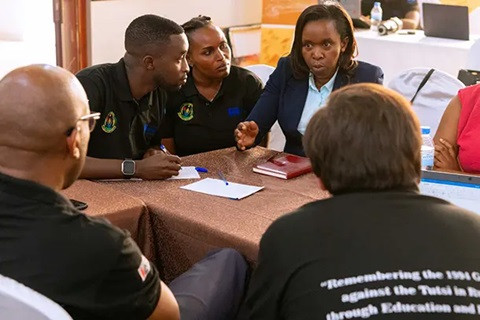 UNESCO Supports a Culture of Peace in Rwanda Thirty Years after the Genocide against the Tutsi 2024-06-10 On 22 and 23 May, UNESCO organized Remembering the 1994 Genocide against the Tutsi in Rwanda through Education and Dialogue in partnership with the Rwandan National Commission for UNESCO and Aegis Trust. Last update: 5 June 2024 Held in Nyamata, Rwanda, this consultation marked the thirtieth anniversary of the genocide and initiated a collaboration to address its lasting impacts. In light of the recent inscription of the serial property of the Memorial Sites of the Genocide – including the Kigali Genocide Memorial, Murambi Genocide Memorial, Nyamata Genocide Memorial and Bisesero Gencoide Memorial – in the UNESCO World Heritage List, the meeting served as a space to develop an interdisciplinary approach for commemoration and reconciliation leveraging dialogue and education in sites of memory. Government officials, civil society, memorial site managers, youth leaders, and educators were brought together for two days of discussion, experience sharing and commemoration. The meeting included breakout groups led by experts from the Rwandan Ministry of National Unity and Civic Engagement (MINUBUNWE), Rwanda Basic Education Board, AHEZA Healing and Careers Center, Aegis Trust, and United States Holocaust Memorial Museum. © Aegis Trust "Let us transform the pain of our past into a beacon of hope for the future. Together, let us ensure the memory of the genocide is never forgotten and that it never happens again."Pascal Gatabazi (Chief Technical Advisor, Ministry of Education, Rwanda) Participants noted the progress made over the past thirty years. They also highlighted the need to tackle distortion of history and false narratives, promote intergenerational dialogue, strengthen capacities of teachers, develop the educational dimension of memorial sites, engage youth in commemoration and leverage innovative mediums. Moving into this next phase of commemoration, it was also emphasized that memorial sites must be recognized as not only sites of mourning and meditation, but also places to ensure sensitive commemoration and remembrance through dialogue and education. © Aegis Trust "Memorial sites are not only a home of commemoration and meditation, but also a school of true dialogue, of peace and reconciliation."Jerome Kajuga (Rwandan National Commission for UNESCO) The consultation was guided by UNESCO’s Initiative for Enabling Intercultural Dialogue, created by the UNESCO Social and Human Sciences Sector, which aims to support more effective dialogue through data-led guidance. The Initiative has organized consultations globally leveraging the data of the Framework for Enabling Intercultural Dialogue to support countries in building policies and programs to enhance dialogue and achieve outcomes related to peace and inclusion. The consultation also built upon the learnings of UNESCO’s International Program on Holocaust and Genocide Education, which seeks to support Member States in addressing violent pasts of atrocity crimes. Rwanda is currently participating in the current program cycle through a project led by the Kigali Genocide Memorial and Never Again Rwanda, supported by MINUBUNWE, to develop opportunities for intergenerational dialogue about the genocide against the Tutsi, with a particular focus on out-of-school youth and rural regions that may have less access to informed knowledge about the genocide and its history. Moving forward, UNESCO is committed to continue its collaboration with the Rwandan National Commission and Aegis Trust, as well as with the participants of the meeting, to develop a new initiative for supporting a peace-oriented culture of remembrance in Rwanda through dialogue and education, by leveraging the role of the sites of memory for peace and social cohesion. URL: https://www.unesco.org/en/articles/unesco-supports-culture-peace-rwanda-thirty-years-after-genocide-against-tutsi
 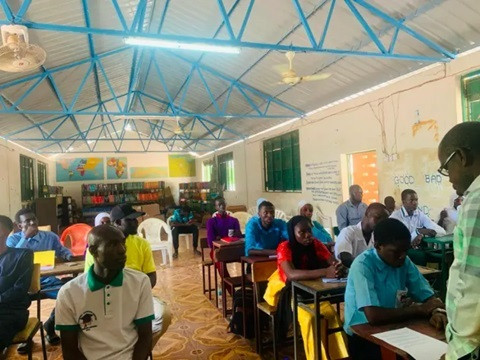 UNESCO Continues to Support Youth in Combating Hate Speech, Misinformation and Disinformation in The Gambia 2024-06-09 Through our support to Open Media Centre, UNESCO continues to support youth trainings across The Gambia to build their media and information literacy. Last update: 5 June 2024 Following a successful two-day training of youth in media and information literacy in October 2023, UNESCO reiterates its firm belief in youth as key players in the fight against hate speech, mis/dis information. Through our support to Open Media Centre, UNESCO continues to support youth trainings across The Gambia to build their media and information literacy. The youth trainings were held in various regions in The Gambia from North Bank Region to Upper River Region. The trainings featured 15 – 20 students and focused on empowering them with the much-needed competencies to help them critically analyse and engage with media both online and offline. According to Open Media Centre’s Kebba Jeffang, the trainings will go a long way and changing the fabric of The Gambia by making sure young people are aware of the risks and dangers of hate speech mis/disinformation. More importantly, he highlights that the trainings will not just ensure young people are competent but that they will go back into their communities and serve as agents of change. According to the principal of Brikamaba Upper and Senior Secondary School, “The training is important for the students to learn about hate speech as it brings division in our country and we need to work very hard to eradicate it.” A student from Kaiaf Senior Secondary School, Abubacarr Fatty highlighted that many youth are using the internet without knowing the dangers associated with it. He further stated that they learnt a lot about hate speech and why it must not be promoted and that they will take steps to share what was learnt with more students. With sessions on privacy, data protection, cyber security, digital tools and fact checking, the trainings fall within our strategic objective of building and enhancing infrastructures for peace which youth are stakeholders to. Participants of the trainings are equipped to effectively contribute towards Agenda 2030 as well as SDG 16 on peace, justice and strong institutions. URL: https://www.unesco.org/en/articles/unesco-continues-support-youth-combating-hate-speech-misinformation-and-disinformation-gambia
 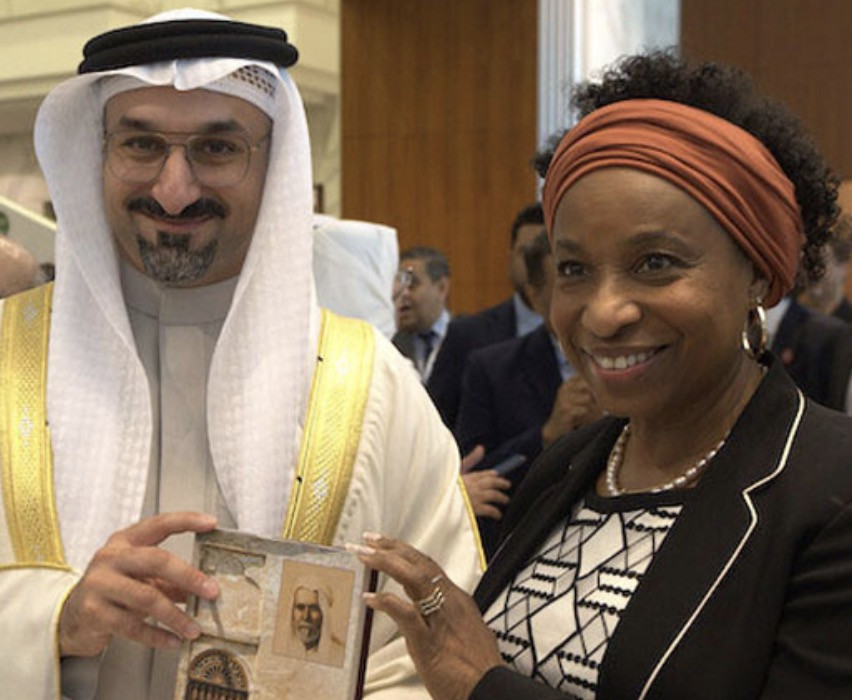 الابتكار يتصدى للتحديات: افتتاح المنتدى العالمي لرواد الأعمال والاستثمار في البحرين 2024-06-07 The Forum* is held under the supervision of the General Secretariat of the Investment and Technology Promotion Office of the United Nations Industrial Development Organization (UNIDO) in the Kingdom of Bahrain.Through a strong coalition of stakeholders driving the agenda, the International Forum paves the way for dialogue and action-oriented initiatives aimed at reshaping the global economic landscape while advancing the Sustainable Development Goals. Critical roleIn an interview with UN News, Ms. Fatou Haidara, Deputy Director-General of UNIDO and Director-General of the Department of Global Partnerships and External Relations, emphasized the pivotal role of the private sector in economic development, especially in the developing world.She stressed that “the private sector has a critical role when it comes to economic development and small, micro, and medium enterprises, especially in the developing world. This demonstrates the importance of the Forum not only for the private sector, but also for all actors, policy makers, academia, investment and financial institutions to come together and consider how "We can accelerate the achievement of the Sustainable Development Goals."Haidara stressed the need for collective action, stressing that "the challenges we face today cannot be addressed by one entity or group. We need a collective effort."By focusing on strengthening partnerships, the Global Entrepreneurship and Investment Forum aims to stimulate international cooperation and unite Arab and African stakeholders to promote investment and entrepreneurship development. Six transitional paths for investmentDuring the opening session of the forum, Rula Dashti, Executive Secretary of the United Nations Economic and Social Commission for Western Asia (ESCWA), explained the forum’s commitment to translating sustainable development goals into tangible results.“Our forum’s theme, Six Transitional Investment Pathways to Achieve the Sustainable Development Goals, challenges us to rethink and reshape our approaches across policy sectors, such as energy and digital connectivity,” she said.Dashti urged stakeholders to benefit from digital transformation and strengthen education systems to combat climate change and create inclusive job opportunities, stressing the urgent need for strategic partnerships to confront pressing global challenges."Architects of the next revolution"Dashti highlighted the pivotal role of young leaders and entrepreneurs in advancing global development. She explained that they are "the architects of the next revolution in global development. Let us be inspired by the collaborative spirit of this forum and remember that our work does not end here."She encouraged participants to harness their ideas to bridge the digital divide, create sustainable environments, and formulate pathways out of poverty. The role of academiaThe Global Entrepreneurship and Investment Forum emphasizes the importance of partnerships across sectors, including academia.Dr. Lydia Taki, Professor at Akinten Abia-Minka University (Ghana), emphasized the importance of the forum’s timing in addressing the employment challenges faced by graduates, and highlighted the university’s investment in entrepreneurship and skills training.She stressed the importance of providing students with entrepreneurship skills, access to smart financing, and networking opportunities, also emphasizing the role of academic institutions in promoting innovation and economic growth.The Global Forum also calls on academic institutions to step up investment in research and development, as such a strategic move could generate new technologies capable of tackling some of the world's most difficult challenges. Tanzanian experienceSokwene University of Agriculture in Tanzania is doing this because it has found ways to empower its students even before they graduate. It established a cooperative association for graduate entrepreneurs, which serves as an incubator for them.In an interview with UN News on the sidelines of the forum, Refukatos Kimariu, Executive Director of the cooperative, said, “We want to commercialize agriculture; we have the students. Now we are providing them with entrepreneurship skills in addition to technology.”Currently, the Sokoin University Graduate Entrepreneurship Cooperative has established a solar-powered irrigation system. This technology allows the association's members to farm sustainably, and this has enabled them to secure a market for sweet lemons in Dubai, United Arab Emirates.“We want to make agriculture the first choice and not the last choice for university graduates,” said Kimario, who attended the forum in his capacity as a businessman.Benefit from African resourcesPromoting entrepreneurship by providing access to smart finance and networking opportunities is another approach cited by UNIDO as a way to advance the Sustainable Development Goals.Olive Olive Kigongo, president of the Uganda Chamber of Commerce, says what African countries are doing now is sending their resources abroad.She added during a panel discussion on building sustainable partnerships and creating a brighter future for Arab and African entrepreneurs, “We give our resources to developed countries, and we export jobs and resources. Many Ugandans work abroad because they cannot be employed in Uganda.”She stressed, "We must add value to our resources. Without that, small and medium enterprises will never grow. Let us join hands, because two minds are better than one. You have the money and we have the resources." Bahrain's roleKhaled Al-Maqoud, the United Nations Resident Coordinator in Bahrain, said, “The timing of holding the forum this year coincides with the Arab League summit, which will be attended by the Secretary-General of the United Nations, António Guterres.” He explained that "the coincidence of the two events reflects the increasing role played by Bahrain in the multilateral platform and its positioning as an active player," adding that "holding the Global Entrepreneurship and Investment Forum this year coincides with the formulation of the United Nations framework for cooperation in the field of sustainable development for the period from 2025 to 2029." “What we did this year was to hold a series of consultations and negotiations with the government and national stakeholders at different levels so that we could formulate the new cooperation framework.”Al-Muqod said that this year is the first time that civil society has been included as part of national stakeholders, in addition to the private sector and other development partners in Bahrain.He added, "National ownership was reflected in the discussions as the Government of Bahrain embraced consultations and negotiations, and we reached the basic pillars of the new cooperation framework, which will be the cooperation framework for Bahrain."Message to women entrepreneursReem Siam, President of the Economic Businesswomen Council of the Federation of Egyptian Chambers of Commerce and a member of the Board of Directors of the World Federation of Chambers, is among the beneficiaries of UNIDO’s training programmes.Speaking to UN News, Siam said, “I am one of the female entrepreneurs who have benefited from UNIDO programs. I received UNIDO training in 2015 here in Bahrain, through the organization’s Investment and Technology Promotion Office. I really benefited from this training. It helped me a lot in My work opened doors to financial institutions and banks. My message to female entrepreneurs is to believe in yourself.”Orange economyThe second day of the forum focuses - among other things - on how to harness agricultural technology to achieve food security, and the role of the orange economy, also known as the creative economy, to accelerate the achievement of the Sustainable Development Goals.Felipe Buitrago, former Minister of Culture of Colombia, also known as the founding father of the Orange Economy, will be among the keynote speakers on the second day's events.According to the United Nations, the creative economy is an evolving concept that relies on the contribution and potential of creative assets to achieve economic growth and development.The orange economy includes economic, cultural and social aspects that interact with technology, intellectual property and tourism objectives. It is a group of economic activities based on knowledge and of a more local nature, and has a development dimension and comprehensive links at the macro and micro levels of the overall economy.*The Global Entrepreneurship and Investment Forum received the support of a group of influential partners, including the League of Arab States, the Union of Arab Chambers, the Arab Bank for Economic Development in Africa, and the Schengen Union for the Promotion of Entrepreneurship, in addition to many local, regional and international entities. URL: https://news.un.org/ar/story/2024/05/1130956