
News
Catch up on what’s happening in the world of global citizenship education.
1,668 results found
 Sierra Leone: Discriminatory ban on pregnant girls attending school is lifted 2020-03-31 Following today’s ministerial statement to overturn with immediate effect the ban on pregnant girls attending schools, Marta Colomer, Amnesty International’s Acting Deputy Regional Director for West and Central Africa said: “Today we have cause to celebrate as thousands of pregnant girls across Sierra Leone will be allowed back into classes nationwide when schools reopen after COVID-19. This inherently discriminatory ban which was formalized for almost five years now has already deprived too many young women of their right to education, and the choice as to what future they want for themselves. It has now rightly been consigned to the history books. Marta Colomer, Amnesty International’s Acting Deputy Regional Director for West and Central Africa “This inherently discriminatory ban which was formalized for almost five years now has already deprived too many young women of their right to education, and the choice as to what future they want for themselves. It has now rightly been consigned to the history books. “Indeed, pregnant girls are given back their dignity and we welcome the government announcement to overturn with immediate effect the ban on them attending school. It’s a victory for all those who campaigned tirelessly to make such a great change happen. “We now hope that authorities in Sierra Leone will develop strategies to address the negative societal attitudes and stigmatization that pregnant girls have been facing for years. This decision gives also hope to other pregnant girls in Africa who have been stigmatized, discriminated against and, in some countries, also banned from school.” Background Today, Sierra Leone’s Minister of Basic and Senior Secondary Education issued a statement announcing that the 2010 government decision preventing pregnant girls from attending school and sitting exams was overturned with immediate effect. It is to be replaced by two new policies focused on the 'Radical Inclusion' and 'Comprehensive Safety' of all children in the education system. President Julius Maada Bio made it clear that his 'New Direction' Government makes decisions based on both evidence and constitutional due process. On 12 December 2019 the regional Economic Community of West African States’ (ECOWAS) Community Court of Justice ruled that the ban should be revoked. The case challenging the ban was brought by Sierra Leonean NGO (WAVES) in partnership with Equality Now and the Institute for Human Rights and Development in Africa (IHRDA). Amnesty International intervened as an amicus curiae (“friend of the court”). The organization has previously documented how the ban put the rights of thousands of girls under threat. The ban was formally issued in April 2015 during the Ebola crisis. Due to Ebola, there was a sharp increase in teenage pregnancies and government should put measures in place to ensure this doesn’t happen in this time of COVID-19. URL:https://www.amnesty.org/en/latest/news/2020/03/sierra-leone-discriminatory-ban-on-pregnant-girls/
  Nic.br/Cetic.br and UNESCO offer the Portuguese version of the online course on digital technologies for sustainable development 2020-03-31 From home, those interested can access the modules from free until 23 SeptemberNow, the online course Tech for Good: the role of ICT in achieving the SDGs is also available in Portuguese. The course comprises 10 modules offered for free that investigate opportunities and challenges that digital technologies can bring to sustainable development. The modules discuss themes such as Artificial Intelligence, Internet privacy and safety, data management, ICT for financial inclusion, ICT and health, among many others. The sessions start today, 30 March 2020. Those who are interested can register at https://www.edx.org/course/tech-for-good-the-role-of-ict-in-achieving-the-sdgs-2 Developed by the Regional Center for Studies on the Development of the Information Society (NIC.br/Cetic.br) in partnership with UNESCO and the SDG Academy, the course will be available until 23 September 2020. Among the instructors, are authorities from governments, academy, outstanding specialists from UNESCO, NIC.br, ITU, UN Sustainable Development Solutions Network, the University of Columbia, among other partner institutions. URL:https://en.unesco.org/news/nicbrceticbr-and-unesco-offer-portuguese-version-online-course-digital-technologies-sustainable
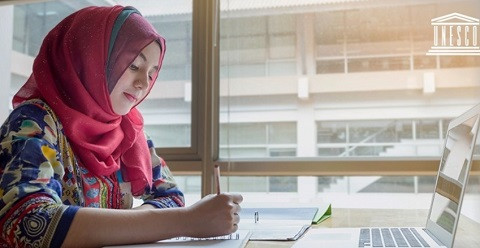
  Motivating children during remote learning: Tips for Teachers and Parents 2020-03-31 As schools have closed due to COVID-19, the majority of children are learning remotely. Motivating children during remote learning is central to their success. Motivation means ensuring they are interested, involved and confident in their learning. Parents and teachers have an important role to play by providing children with encouragement and feedback.UNESCO Beirut offers parents and teachers tips to support and motivate children during remote learning. The documents are downloadable below. URL:https://en.unesco.org/news/motivating-children-during-remote-learning-tips-teachers-and-parents
 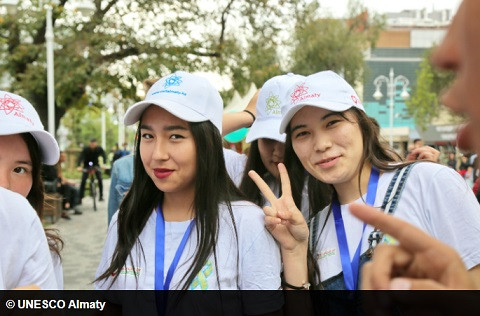 Call for Volunteers to Become a Part of UNESCO's Project on Empowerment of Rural Youth in Kazakhstan 2020-03-31 The UNESCO Almaty Cluster Office is looking for volunteers who will be trainers in five functional areas and will improve the knowledge and skills of young people in remote and rural areas of Kazakhstan. The number of youth in Kazakhstan exceeds 4 million. According to statistics, in early 2018, 56.5% of young people lived in urban areas and 43.5% in rural areas. As a result, the high proportion of rural youth in Kazakhstan also indicates the need to ensure that both groups have equal access to quality education, science, culture and social life to avoid discrimination, marginalization and radicalization.Despite the effort, there is sufficient evidence today to show that there is a significant difference in the development potential of young people from rural areas, which can be explained by: lower level of education, lack of development skills and abilities to succeed urbanization and access to urban labour market, lack of textbooks for self-study in the mother tongue (usually Kazakh), and limited opportunities for rural teachers to improve their skills and knowledge outside of general education programmes. All this has led to severe imbalances between and unequal socio-economic opportunities between the two groups. According to national and international estimates, rural youth are more than six months behind urban youth due to lack of training.Therefore, in the light of these issues, the UNESCO Almaty Office with the support of the Ministry of Foreign Affairs of the Republic of Kazakhstan, is implementing a programme to develop the skills and key capabilities of youth in Kazakhstan, with a focus on young people in remote and rural areas.As a part of this program, UNESCO consultants developed a training manuals kit in five areas:• Global citizenship education;• Education on ecology and biodiversity within the framework of the ‘Man and the Biosphere’ programme;• Youth for cultural heritage;• The foundation of youth entrepreneurship and project planning;• Media and information literacy, with a focus on digital literacy and related competencies;The next step in project implementation will be the integration of teaching aids into the informal education process.The key concept of the training program is to create a team of young volunteers in five areas based on the developed modules. Based on the successful completion of the training , volunteer trainers will be able to conduct the same trainings independently for young girls and boys aged 16 to 25 in remote and rural areas.To implement the project, UNESCO Almaty Office will provide technical and financial support to volunteer trainers from different regions of the country. Funds will be allocated for preparing training materials, rental of premises, office supplies, transportation costs and meals for participants.Young people can participate in the project, provided that:• 23 - 35 years old;• Experienced in volunteer and teaching activities;• Fluent in Kazakh and / or Russian language;• Have good communication skills and hope to bring positive changes in their communities.To participate, you must fill out an application form by May 10, 2020.Interviews with candidates will be held from May 11 to May 15, 2020. URL: http://en.unesco.kz/call-for-volunteers-to-become-a-part-of-unesco-s-project-on-empowerment-of-rural-youth-in
  COVID-19 Webinar: A new world for teachers, education’s frontline workers 2020-03-31 From one day to the next, teachers around the world have found themselves managing virtual classrooms, communicating with their students over social media platforms and learning by doing as they provide education from a distance to over 1.5 billion students affected by school closures due to the Covid-19 pandemic. On 27 March, UNESCO dedicated its second Covid-19 education response webinar to those on the frontlines of ensuring learning continuity: some 63 million affected teachers in 165 countries, along with education personnel. Bringing together participants from all regions, the seminar shed light on a wide range of issues, from the provision of training and support for teachers to the challenge of distance teaching in remote or rural areas with weak or no internet connectivity. Chairing the webinar attended by 159 participants from 33 countries, Ms Yumiko Yokozeki, Director of the UNESCO Institute for Capacity Building in Africa framed the entirely new context in a positive light, while underscoring the importance for governments to support their teachers. “As necessity is the mother of invention, this situation may become an opportunity for teachers and learners to become more empowered, creative and innovative,” she said. Participants related how the suddenness of school closures took most by surprise. In Uganda, teachers prepared take home packages for students in a day. In the Netherlands, the entire curriculum went digital in 48 hours. In the Philippines, the Department of Education launched its DepEd Commons platform ahead of the planned date. Delivering quality education despite many challenges “One of the biggest challenges we are facing is how to keep children on board,” said Ms Anne-Fleur Lurvink, who teaches at a school in Rotterdam (Netherlands) where students come from very diverse backgrounds. “Teaching children at a disadvantage runs the risk of losing many. Home situations don’t always allow them to participate in lessons,” she said. The government has put in place measures to provide laptops and wifi for families without digital access while teachers from her school call parents on a weekly basis to keep in touch. The experience has been a steep learning curve: “We have accomplished something with digital education that would have taken years,” said Ms Lurvink. “Teachers are being very supportive of each other and creating strong networks, and societies are pitching in to support teachers,” she said, while emphasizing that nothing can replace what schools bring beyond transmitting information, from safety to emotional well-being. Governments are all stepping up efforts to provide training and resources to support teachers in adapting to this new learning environment. In France, Réseau Canopé(link is external), the national education operator, provides free content for teachers, parents, and learners, including animated films, apps and user friendly tools, as well as tutorials and other resources to support teachers, reported Ms Marie-Caroline Missir, Managing Director of Canopé. Mr Miguel Cruzado Silverii, Director-General for Teacher Development at the Ministry of Education in Peru, indicated that the government released three Massive Open Online Courses (MOOCs) to train teachers to shift to online teaching. Are teachers ready to move instruction online? Turning teaching materials into digital format at short notice has been a challenge as few teachers have strong digital and ICT skills. In many countries in South West Asia and sub-Saharan Africa only about 20% or often fewer households have internet connectivity at home, let alone personal computers. In Peru, Mr Cruzado Silverii reported that just “35% of teachers have access to a computer and internet connectivity.” The ministry therefore chose to use low-tech solutions such as television and radio channels to provide classes and content to students as well as online platforms such as Aprendo en casa(link is external). In Cameroon, Dr Michael Nkwenty Ndonfack, Pedagogical Inspector for Computer Science and ICTs at the Ministry of Basic Education, reported that only 20-25% of teachers have internet access and that the majority of teachers lack ICT skills. A national government Task Force was set up to establish the Protective Learning Routine to enable teachers and learners to access education through platforms they are already familiar with, such as radio and TV. In Uganda, the government is relying on the UNESCO-Chinese Funds-in-Trust programme which has established a robust teacher training system country-wide. Teacher training institutions have been deployed to deliver capacity-building workshops for teachers without ICT skills via one of the programme’s three ICT hubs. Teacher wellbeing is key In such unprecedented and uncertain times, it is normal for people to experience higher levels of stress and anxiety, teachers included. Teachers need socio-emotional support to face the extra pressure being put on them to deliver learning in a time of crisis as well as support their students’ emotional needs. In the Philippines, Ms Jennifer Lopez from the Department of Education reported that salaries for March and April were being released early and that all teacher performance reviews have been suspended while under the emergency state. Teaching staff and education personnel still in schools will receive a bonus hazard pay and clothing allowance. In Uganda, Dr Jane Egau Okou, Commissioner for Teacher Instructor Education and Training, reported that the ministry ensured timely payment of salaries so that teachers can stock essentials and focus on their mission with no additional worries. Protect, support and recognize teachers In her concluding remarks, Ms Gerd-Hanne Fosen, the Co-Chair of the International Task Force on Teachers for Education 2030(link is external) emphasized the need for policies to remain focused on the most marginalized, those who do not have access to technology or who do not have a supportive home environment. The Teacher Task Force has launched a “Call for Action” on all governments, education providers and funders – public and private – to protect teachers in this difficult time and to recognise the critical roles they play in the COVID-19 response and recovery. All participants are encouraged to support the six action points highlighted in the call. UNESCO has also launched a Global Education Coalition to facilitate inclusive learning opportunities for children and youth during this period of sudden and unprecedented educational disruption. URL:https://en.unesco.org/news/covid-19-webinar-new-world-teachers-educations-frontline-workers
 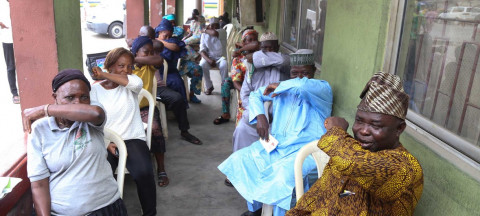 UNFPA advocates for women, girls suffering unseen impacts of COVID-19 pandemic 2020-03-28 The United Nations Population Fund (UNFPA) is pledging support for those suffering from invisible impacts of the ongoing COVID-19 pandemic, including women and girls whose access to life-saving sexual and reproductive health care may be disrupted. In a statement on Friday, Executive Director of the UN sexual and reproductive health agency, Natalia Kanem, said the Fund’s work is ramping up even as the novel coronavirus continues to test health care systems around the world. "As we continue responding to the #coronavirus outbreak, @UNFPA is calling for renewed action to provide life-saving sexual and reproductive health for the world's most vulnerable.See @Atayeshe's statement: https://t.co/2ELQc2ClIx#COVID19 pic.twitter.com/iWppYYdJsl" — UNFPA (@UNFPA) March 27, 2020 She warned that women, girls and health workers must not be overlooked as the world responds to the greatest health crisis in a century. Women and girls most vulnerable As in most crises, the COVID-19 pandemic has disrupted access to critical sexual and reproductive health services and hampered authorities’ ability to respond to gender-based violence, at a time when women and girls need these services most. UNFPA is helping governments prioritize the special needs of women and girls – often the most vulnerable in times of crises – in line with the Fund’s goals of ending unmet need for family planning, preventable maternal deaths, gender-based violence and harmful practices by 2030. In his appeal for a global ceasefire amid the COVID-19 pandemic earlier this week, Secretary-General António Guterres emphasized that women and children are among the most vulnerable in times of war and face the highest risk of suffering devastating losses from the pandemic. UNFPA has appealed to donors to fund its response plan, which targets countries with weak public health systems including countries in fragile and humanitarian situations. It is provisionally projecting that it will need $187.5 million. Efforts will focus on bolstering health systems, procuring and delivering essential supplies to protect health workers, ensuring access to reproductive health and gender-based violence services, and promoting risk communication and community engagement. Invisible impacts of COVID-19 As communities around the globe grapple with the most immediate effects of the pandemic, overwhelmed healthcare systems and populations in quarantine can also suffer a ripple of additional impacts. “Now is a time for solidarity, resolve and selflessness. We must not forget that there are people we may not immediately see, who are at great risk as a result of the consequences of the crisis,” said Dr. Kanem. Those can include pregnant women who require antenatal care but are unsure whether it is safe to go to the clinic, as well as women in abusive relationships trapped at home for the foreseeable future and fearing for their safety. Meeting ‘intimate, yet essential’ needs UNFPA is working to support affected health systems, in particular by distributing material support to protect health workers and midwives. In China, Iran and the Philippines, it has distributed essential hygiene and other items to the most vulnerable and personal protective equipment to health workers. In the Republic of Moldova, it has launched an online dashboard which disaggregates the country’s current caseload by location, sex, age and pregnancy status. However, Dr. Kanem stressed that more work is needed to ensure that the most intimate – yet essential – needs of women and girls are met as the world continues to battle COVID-19 in the months ahead. “This global scourge requires a global response,” she said, urging the international community to stand up for the dignity and health of women as part of its efforts. For more information on UNFPA’s response to COVID-19, please visit www.UNFPA.org. URL:https://news.un.org/en/story/2020/03/1060512
  Distance learning solutions 2020-03-27 The list of educational applications, platforms and resources below aim to help parents, teachers, schools and school administrators facilitate student learning and provide social care and interaction during periods of school closure. Most of the solutions curated are free and many cater to multiple languages. While these solutions do not carry UNESCO’s explicit endorsement, they tend to have a wide reach, a strong user-base and evidence of impact. They are categorized based on distance learning needs, but most of them offer functionalities across multiple categories. Digital learning management systems Blackboard – Resources and tools to transition and deliver quality teaching and learning online. CenturyTech – Personal learning pathways with micro-lessons to address gaps in knowledge, challenge students and promote long-term memory retention. ClassDojo – Connects teachers with students and parents to build classroom communities. Edmodo – Tools and resources to manage classrooms and engage students remotely. Edraak (link is external) – Arabic language online education with resources for school learners and teachers. EkStep (link is external) – Open learning platform with a collection of learning resources to support literacy and numeracy. Google Classroom (link is external) – Helps classes connect remotely, communicate and stay-organized. Moodle (link is external) – Community-driven and globally-supported open learning platform. Nafham (link is external) – Arabic language online learning platform hosting educational video lessons that correspond with Egyptian and Syrian curricula. Schoology (link is external) – Tools to support instruction, learning, grading, collaboration and assessment. Seesaw (link is external) – Enables the creation of collaborative and sharable digital learning portfolios and learning resources. Skooler (link is external) – Tools to turn Microsoft Office software into an education platform. Study Sapuri (link is external) – Japanese language online learning platform for middle school students. Systems purpose-built for mobile phones Cell-Ed (link is external) – Learner-centered, skills-based learning platform with offline options. Eneza Education (link is external) - Revision and learning materials for basic feature phones. Funzi (link is external) – Mobile learning service that supports teaching and training for large groups. KaiOS (link is external) – Software that gives smartphone capabilities to inexpensive mobile phones and helps open portals to learning opportunities. Ubongo (link is external) – Uses entertainment, mass media, and the connectivity of mobile devices to deliver localized learning to African families at low cost and scale. Ustad Mobile (link is external) – Access and share educational content offline. Systems with strong offline functionality Can’t wait to Learn (link is external) – Gaming technology to deliver quality education to children, including those in conflict contexts. Kolibri (link is external) – Learning application to support universal education. Rumie (link is external) – Education tools and content to enable lifelong learning for underserved communities. Ustad Mobile (link is external) – Access and share educational content offline. Massive Open Online Course (MOOC) Platforms Alison (link is external) – Online courses from experts. Canvas (link is external)– Lifelong learning and professional development for educators. Coursera (link is external) – Online courses taught by instructors from well-recognized universities and companies. EdX (link is external) – Online courses from leading educational institutions. University of the People (link is external) - Online university with open access to higher education. Icourses (link is external) – Chinese language courses for university students. Future Learn (link is external) – Online courses to help learners study, build professional skills and connect with experts. Self-directed learning content Byju’s (link is external) – Learning application with large repositories of educational content tailored for different grades and learning levels. Discovery Education (link is external) – Free educational resources and lessons about viruses and outbreaks for different grade levels. Geekie (link is external) – Portuguese language web-based platform that provides personalized educational content using adaptive learning technology. Khan Academy (link is external) – Free online lessons and practice in math, sciences and humanities, as well as free tools for parents and teachers to track student progress. Available in 40+ languages, and aligned to national curriculum for over 10 countries. KitKit School (link is external) - Tablet-based learning suite with a comprehensive curriculum spanning early childhood through early primary levels. LabXchange (link is external) – Curated and user-created digital learning content delivered on an online platform that enables educational and research experiences. Mindspark (link is external) – Adaptive online tutoring system that helps students practice and learn mathematics. Mosoteach (link is external) – Chinese language application hosting cloud classes. OneCourse (link is external) – Child-focused application to deliver reading, writing and numeracy education. Quizlet (link is external) – Learning flashcards and games to support learning in multiple subjects. Siyavula (link is external) – Mathematics and physical sciences education aligned with South African curriculum. YouTube (link is external) – Huge repository of educational videos and learning channels. Mobile reading applications African Storybook (link is external) - Open access to picture storybooks in African languages. Global Digital Library (link is external) – Digital storybooks and other reading materials easily accessible from mobile phones or computers. Lezioni sul sofà – A collection of Italian language books for children, complemented with read-aloud features as well as videos discussing books and art. StoryWeaver (link is external) – Digital repository of multilingual stories for children. Worldreader (link is external) – Digital books and stories accessible from mobile devices and functionality to support reading instruction. Collaboration platforms that support live-video communication Dingtalk (link is external) – Communication platform that supports video conferencing, task and calendar management, attendance tracking and instant messaging. Lark (link is external) – Collaboration suite of interconnected tools, including chat, calendar, creation and cloud storage. Hangouts Meet (link is external) – Video calls integrated with other Google’s G-Suite tools. Teams (link is external) – Chat, meet, call and collaboration features integrated with Microsoft Office software. Skype (link is external) – Video and audio calls with talk, chat and collaboration features. Zoom (link is external) – Cloud platform for video and audio conferencing, collaboration, chat and webinars. Tools to create of digital learning content Thinglink (link is external) – Tools to create interactive images, videos and other multimedia resources. Buncee (link is external) – Supports the creation and sharing visual representations of learning content, including media-rich lessons, reports, newsletters and presentations. EdPuzzle (link is external) – Video lesson creation software. Kaltura (link is external) – Video management and creation tools with integration options for various learning management systems. Nearpod (link is external) – Software to create lessons with informative and interactive assessment activities. Pear Deck (link is external) – Facilitates the design of engaging instructional content with various integration features. Squigl (link is external) – Content creation platform that transforms speech or text into animated videos. URL:https://en.unesco.org/themes/education-emergencies/coronavirus-school-closures/solutions
 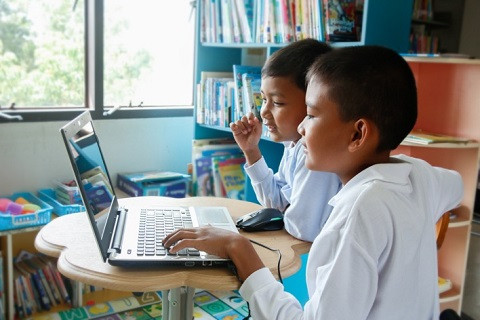 UNESCO’s education measures in response to COVID-19 2020-03-27 UNESCO observes that over 100 countries have implemented nationwide closures, impacting over half of world’s student population. Several other countries have implemented localized school closures. In our sub-region, in 3 countries (Kazakhstan, Kyrgyzstan and Uzbekistan) schools and education institutions have been closed and moved to distant learning. UNESCO is currently looking on closely working with ministries of education in affected and concerned countries to ensure continued learning for all children and youth through alternative channels.UNESCO’s response to COVID-19 in education sector includes:* Technical assistance to quickly prepare and deploy inclusive distant learning solutions, utilizing hi-tech, low-tech and no-tech approaches.* Webinars for minister of education officials and other stakeholders to share information about country efforts to maintain the provision of inclusive education in different contexts.* A selection of digital learning resources that governments, schools, teachers, parents can use to open opportunities for learners unable to attend to school, some of these resources are also available in Russian.* A repository of national learning platforms designed to support the continuity of curriculum-based study, including in Uzbekistan.Examples of selected National learning platforms for Kazakhstan are found here , while for Kyrgyzstan they are posted here.In addition, the UNESCO Institute for Information Technologies in Education (UNESCO IITE) has launched a new online platform COVID-19. Reducing the impact on education. Partners of this initiative are IITE, UNESCO institutes and bureaus, leading universities, major social networks, search engines and IT companies, as well as international non-profit organizations and associations dealing with ICT in education. ©UNESCO IITE The platform provides numerous partner resources – educational courses, webinars, distance learning portals, communities and technology solutions that allow you to organize training through social networks, as well as instructions and guides that allow schools, universities and individual teachers to switch to remote learning and interact with students. The materials include examples of practical solutions to support the educational process in the context of the COVID-19 epidemic.A separate section contains digital solutions for distance learning from Eastern Europe and Central Asia.On March 20 this year, UNESCO IITE in partnership with the Google for Education team have launched a new Teach From Home platform to help teachers in different parts of the world affected by the coronavirus epidemic support the educational process through online learning. ©UNESCO IITE Teach From Home is a temporary hub of information and tools for educators to organize interaction with students through video calls that allow them to invite entire class, get real time questions from students and livestream the lessons. The platform also provides learning opportunities and effective teacher-student interaction without video calls through making a special website to host lesson information, worksheets and videos, creating online quizzes and providing real-time feedback in Google Docs.Furthermore, there are ideas how to keep students engaged and sites for teachers to interact and share valuable resources and tips. Last but not the least, Teach From Home platform fully incorporates principles of inclusion and equity as it ensures equal access to education for all students with the use of assistive technology and accessibility features.As for digital learning solutions in the sub-region, UNESCO is planning to support cluster countries to deploy ICT Competencies Framework for Teachers (Kyrgyzstan, Tajikistan) and has been implementing the project on development of online modules for teachers to teach Education for Sustainable Development for 5-6 grades in Kyrgyzstan. The modules are expected to be piloted at selected schools in the second half of 2020.For more information please see UNESCO’s regular updates on the impact of COVID-19 on education and UNESCO Almaty’s webpage. URL: http://en.unesco.kz/unesco-s-education-measures-in-response-to-covid-19
  How are countries addressing the Covid-19 challenges in education? A snapshot of policy measures 2020-03-27 By Gwang-Chol Chang and Satoko Yano, UNESCO’s Section of Education Policy Close to 80% of the world’s student population – 1.3 billion children and youth – is affected by school closures in 138 countries. Taken as a measure to contain the spread of the Covid-19 pandemic, some of these closures are recent, in others they have already been in place for months. In all cases, closures are placing unprecedented challenges on governments to ensure learning continuity, and on teachers, students, caregivers and parents. Image: Ivan Flores UNESCO has been monitoring school closures since early March and documenting national responses, including through virtual ministerial meetings and webinars bringing together a community of practice. This blog provides a snapshot of some of the measures taken by countries to address their immediate challenges. The information is based on various sources, including government announcements, official documents, decrees, circulars and guidelines available online, as well as media reports. As education is decentralized in many of the countries reviewed, the examples presented below may be implemented locally and not nation-wide – they are by no means exhaustive. Countries have focused on ensuring continuation of learning For all countries, avoiding the disruption of learning to the extent possible is the first priority. All countries are introducing or scaling up existing distance education modalities based on different mixes of technology. Most countries are using the internet, providing online platforms for continued learning (e.g., Argentina, Croatia, China, Cyprus, Egypt, France, Greece, Italy, Japan, Mexico, Portugal, Republic of Korea, Saudi Arabia, United Arab Emirates and United States). In almost all countries, teachers and school administrators are encouraged to use applications to support communication with learners and parents as well as deliver live lesson or record massive open online course (MOOC) styled lessons. Learning content is also delivered through TV and other media (e.g., Argentina, Croatia, China, Costa Rica, France, Islamic Republic of Iran, Republic of Korea, Mexico, Rwanda, Saudi Arabia, Senegal, Spain, Peru, Thailand, and Viet Nam). Existing apps are being employed to maintain communication between teachers and learners (e.g., Costa Rica, Islamic Republic of Iran and Thailand). To communicate the plan of distance learning programmes and mobilize all stakeholders, government agencies are launching awareness campaigns or communication strategies on distance education for all targeted groups, including parents, students, teachers and administrators (e.g., United Arab Emirates). Saudi Arabia uses its official Twitter account to regularly disseminate the information on online learning. Equity in access to ICT-based learning is a major concern, as learners from under-privileged backgrounds tend to have less access to computers and other devices outside the schools. In some cases, they live in areas with no electricity and poor or no internet connectivity. Various actions are taken to address this challenge. For instance, China is providing computers to students from low-income families and offering mobile data packages and telecommunication subsidies for students. In France, efforts are being made to lend devices and provide printed assignments to the 5% of learners who do not have access to the internet or computers. To ease the disruption, the United Arab Emirates created a hotline for teachers and students to seek technical support if they face any difficulties. In Washington State, United States, the schools are not encouraged to provide online learning services unless equitable access is ensured. In Portugal, to tackle the fact that not all students may have access to internet at home, the government suggested a partnership with the post office services to deliver working sheets to be done at home. Adjusting the school and exam calendar is a priority Prolonged school closures are significantly affecting the school calendar in certain countries, in several cases coinciding with the period of university entrance exams. Several have rescheduled examinations and assessments for all levels of schooling, including universities (e.g., Chile, China, France, Japan, Spain and Viet Nam). China also provided some exams online. When exam dates cannot be changed, special arrangements (e.g., limited number of students who can take the exam at one time) have been introduced to ensure the safety of the exam-takers (e.g., Japan and Thailand). The school calendar is also being adjusted to accommodate lost days of learning (e.g., Spain, Republic of Korea and Viet Nam). In some cases in the United States all state testing has been cancelled for the 2019-2020 school year (e.g. Florida and Washington). The school closure is also affecting the schedule for teacher training and teacher licensing. China has made some teacher training courses available online. In Japan, temporary teacher licenses are being issued, on a case-by-case basis, for teachers who could not participate in the license renewal training. In China, teacher qualification exams have been postponed. Administrative and teaching staff in the United Arab Emirates started receiving continuous specialized training remotely, using a new technological system for the first time. Chile has also adopted this initiative, sharing good practices with teaching staff and organizing webinars on teaching and administration online to those who most require digital skills training. Ensuring access to nutritious meals is a major concern Many children and youth, especially those coming from disadvantaged backgrounds, rely on free or discounted school meals for healthy nutrition. In Japan, families are receiving a refund for school fees while closures are underway and school lunches are being delivered to families in several school districts. Argentina and Washington State (United States) have also taken measures to continue school meal programmes despite closures. California (United States) has allowed schools to provide meals on a “pick-up and go” basis, and some districts are allowing families to pick up meals in bulk so they don’t have to return daily. In China, measures are taken to guarantee continued food supply for students staying or under isolation at school. The Autonomous Community of Catalonia (Spain) is ensuring nutritious meals for vulnerable children by issuing redeemable credit cards for any commercial food establishment. Alleviating the burden on parents and caregivers has emerged as a challenge Distance and home learning invariably places a heavy burden on parents and caregivers. Many are struggling to support children in their new learning environment, often juggling between supervision, their own work and house chores. In China, online pedagogical support is provided to parents/caregivers. Italy is also offering them online courses on how to manage the relationship with learners during confinement. Similarly, in Spain diverse communication platforms and apps are available (e.g. Edugestio) through which teachers and parents/caregivers share and co-build the learning process. Some countries, like Guatemala, are providing teaching guidelines and learning materials to parents/caregivers to ensure the continuation of learning offline. Countries are keeping a small number of schools open to accommodate children who cannot be cared for at home (e.g., France, Japan, and Republic of Korea). In countries where citizens are not put under home-based confinement, regular visits by teachers to families are also organized to monitor the progress and well-being of students and to advise parents/caregivers (e.g., Japan and Thailand). Social isolation of children needs to be addressed Schools are hubs of social activity and human interaction. When schools close, many children and youth miss out on social contact that is essential to learning and development. Online communication apps (e.g., WhatsApp) are used to ensure communication between teachers and students as well as among students in many countries (e.g., Thailand). Interactive online classes also provide opportunities for social interaction. In many countries, such as China, Japan, Spain and the United States, psychological assistance is provided for those in need, including a 24h hotline and monitoring calls to avoid the isolation feeling. What’s next? With the situation evolving day by day, countries are employing a multiplicity of approaches to minimize the impact of the pandemic on learning. As this snapshot illustrates, policies go beyond rolling out distance learning modalities. They encompass measures to address the social dimensions of this crisis, which is affecting the lives of children in a myriad of ways. Due to prolonged confinement, children are being separated from their peers and teachers and deprived of socializing activities, including sports. As the confinement continues, it is critical to protect their well-being and mental health, and to increase support to families, teachers and caregivers. UNESCO will continue collecting, analyzing, and sharing policy measures being taken by countries but also encouraging and advising others who are less prepared for this exceptional period. Such cooperation will support Member States in making critical decisions to ensure learning continuity, guided by principles of equity and inclusion. URL:https://gemreportunesco.wordpress.com/2020/03/24/how-are-countries-addressing-the-covid-19-challenges-in-education-a-snapshot-of-policy-measures/
  COVID-19 : UNESCO convenes Education Webinar on equity in schooling 2020-03-27 It takes a village to educate a child, and even more so in times of distance learning, when schooling goes virtual. A whole community approach and stronger partnerships are needed to make distance learning inclusive: this was one of the key takeaways from UNESCO’s first webinar on the educational response to Covid-19, which drew government officials, practitioners and experts from over 50 countries on 20 March 2020. “Scientific knowledge and global collaboration are evolving more rapidly than we have ever seen,” said Ms Catherine Kane from the World Health Organization (WHO) who set the stage for the webinar. “We cannot emphasize enough the importance of partnerships, especially between education, labour and health to keep our population healthy, educated and active.” To address equity challenges, she recommended learning from approaches used in emergency situations, including measures to ensure that students who rely on school meals do not go hungry when schools close. Restore a sense of communityIn light of the gravity of the situation, Italy’s advisor to the Minister of Education, Professor Alberto Melloni, highlighted the importance of a whole community approach. “We are working with a real tragedy. Teachers are the ones who can connect online and offline to restore a sense of community”. With over 8 million students out of school, the country is using a mix of approaches to leave no one behind and support families. To ensure that learning continues for all, the Ministry of Education announced an 85 million euro investment to deliver e-learning devices to the most disadvantaged students. In Rwanda, where schools have been closed for a week, the Government is grappling with the surge in demand for e-learning platforms and connectivity problems. “We are dealing with issues of equity and have introduced zero-rate bandwidth fees so parents don’t have to pay,” said Ms. Christine Niyizamwiyitira, Head of Department of ICT in Education at the Rwanda Education Board. “We are also using different tools, from on-line platforms to radio and television broadcasting, including on STEM subjects.” The Board is developing learning guides to support students, parents, and teachers. No substitute for a good teacherThe teacher’s central role in guaranteeing education continuity was stressed by the Director-General of France’s National Center for Distance Education (CNED), Mr Michel Reverchon-Billot. CNED’s national digital learning platform, My Class at Home is being used across the country, while the government is also providing devices and support to the 5% of students without internet access. The role of the Ministry of Education in promoting collaboration between government, enterprises, universities, and schools was highlighted also by China’s Director-General of Department of Science and Technology, Ministry of Education, Mr Chaozi Lei, and Co-Dean of the Smart Learning Institute of Beijing Normal University, Mr Ronghuai Huang. In this regard, the Ministry of Education has worked with education companies to provide free services and online curriculum resources for K12 students, universities, and the public. Training is also provided to help teachers adapt to the new learning environment and to master online teaching skills. Through a recent study, the Ministry of Education found that 80% of teachers are ready to use more ICT s in their work going forward. Integrating different digital solutions to ensure a seamless learning experience was emphasized by Mr Hwansun Yoon from the Republic of Korea’s Education & Research Information Service (KERIS). KERIS runs a thematic e-portal that provides open educational content, an e-classroom space (E-Hakseupteo) where students receive personalized assistance, a platform for teachers to exchange on lesson plans and activities (School-On), as well as a Digital Textbook platform. Content is aligned with the national curriculum across all platforms from on-line to TV and radio. Furthermore, students are learning how to recognize fake news on the pandemic as part of their school activities via both digital and radio platforms. The role of multilateralismThe webinar series is part of UNESCO’s COVID-19 Education Response to enable peer learning and sharing of experiences among all countries. “Against a global pandemic, we all realize the value of international cooperation, and the need to come together to share best practices and lessons learnt – across the globe, in Belgium, in Finland, in the Seychelles, countries are putting in place solutions to ensure learning continuity for all. Ministers have to address very specific situation and there is no “one size fits all” approach. We all need to learn from each other, and we can build a stronger education system out of this crisis” said Ms Stefania Giannini, UNESCO Assistant Director General for Education. URL:https://en.unesco.org/news/covid-19-unesco-convenes-education-webinar-equity-schooling