
News
Catch up on what’s happening in the world of global citizenship education.
1,668 results found
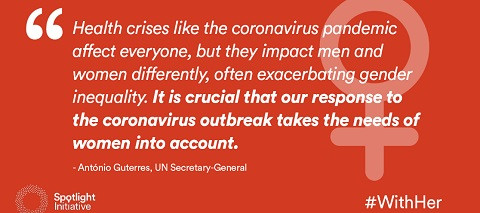 The EU-UN Spotlight Initiative in Nigeria is working against gender-based violence during the COVID-19 2020-04-15 Within in the context of the COVID-19, several factors are lending themselves to a heightened risk of violence for women and grils. These include increased isolation due to social distancing and quarantine, a shift in priorities among frontline services including rule of law and health facilities, and a possible shift in resources for example throough the repurporsing of shelters for health facilities. The EU-UN Spotlight Initiative in Nigeria where UNESCO Abuja Office is one of participating UN agencies, is working innovatively in response to violence against women and girls during the COVID-19 pandemic. Key MessagesFrom the EU-UN Spotlight Initiative in Nigeria URL:https://en.unesco.org/news/eu-spotlight-initiative-nigeria-working-against-gender-based-violence-during-covid-19
 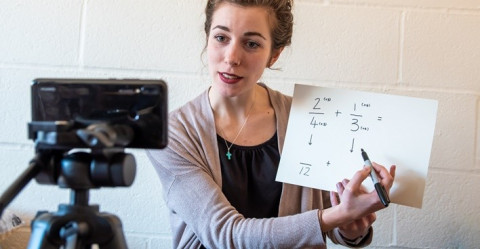 Teacher Task Force calls to support 63 million teachers touched by the COVID-19 crisis 2020-04-15 Around 63 million primary and secondary teachers around the world are affected by school closures in 165 countries due to the Covid-19 pandemic. They are on the frontlines of the response to ensure that learning continues for nearly 1.5 billion students, a number that is predicted to rise. Everywhere, together with school leaders, they have been rapidly mobilising and innovating to facilitate quality distance learning for students in confinement, with or without the use of digital technologies. They are playing a key role also in communicating measures that prevent the spread of the virus, ensuring that children are safe and supported. This unprecedented situation is putting teachers, students and families under stress. In some cases, teachers who may already be exposed to the virus themselves are trying to manage the anxiety of being told to work in situations where the COVID-19 risk is spreading. Others are dealing with the stress of of delivering quality learning with tools for which they have received little or no training or support. In many countries, contract teachers, substitute teachers and education support personnel risk seeing their contracts broken and their livelihoods disappear. The Teacher Task Force, an international alliance working for teachers and teaching, has issued a Call for Action on Teachers to ensure that teachers are protected, supported and recognised during the crisis. Leadership and financial and material resources for teachers are necessary to make sure that quality teaching and learning can continue at a distance during the crisis, and that recovery is rapid. The Task Force is calling on governments, education providers and funders – public and private – and all relevant partners to: Preserve employment and wages: This crisis cannot be a pretext to lower standards and norms, or push aside labour rights. The salaries and benefits of the entire teaching and education support staff must be preserved. Prioritise teachers’ and learners’ health, safety and well-being: Teachers need socio-emotional support to face the extra pressure being put on them to deliver learning in a time of crisis as well as provide support to their students in these anxious circumstances. Include teachers in developing COVID-19 education responses: Teachers will have a crucial role in the recovery phase when schools reopen. They must be included at all steps of education policy-making and planning. Provide adequate professional support and training: Little attention has been given to providing teachers with adequate training on how to ensure that learning continues. We must move swiftly to ensure that teachers receive the necessary professional support. Put equity at the heart of education responses: Greater support and flexibility will be needed for teachers who work in remote areas or with low-income or minority communities, to ensure that disadvantaged children are not left behind. Include teachers in aid responses: The Teacher Task Force urges financing institutions to help governments support education systems, particularly the teaching workforce’s professional development. Such support is particularly urgent in some of the world’s poorest countries, which are already struggling to meet education needs because of critical shortages of trained teachers. For more information, download the call in English, French, Spanish and Arabic. *** The International Task Force on Teachers for Education 2030 is a global network of over 90 governments and some 50 international and regional organisations (including UN organisations, civil society organisations, the teaching profession and foundations) working to promote teachers and teaching issues. Its Secretariat is hosted by UNESCO at its headquarters in Paris. URL:https://en.unesco.org/news/teacher-task-force-calls-support-63-million-teachers-touched-covid-19-crisis
  Education Progress online tool, January 2020 2020-04-14 The new Global Education Monitoring Report online interactive tool Education Progress is available in seven major languages, the site brings together data from various producers, notably the UNESCO Institute for Statistics (UIS), to explore the progress made towards SDG4.It shows the progress being made by each country, as well as the bottlenecks and policy priorities from now until 2030 in five key themes: access, quality, learning, equality and finance. URL:https://sdg4education2030.org/education-progress-online-tool-january-2020
 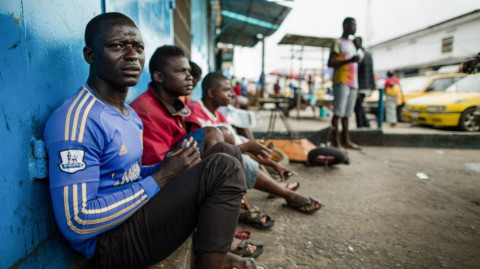 Protecting human rights amid COVID-19 crisis 2020-04-13 《 Unemployed taxi drivers during the Ebola crisis, Liberia 2014. The COVID-19 crisis threatens to disproportionately hit developing countries – income losses are expected to exceed $220 billion. 》 As concerns grow about how the coronavirus crisis might threaten human rights around the world, the United Nations is calling on countries to adopt a more cooperative, global and human rights-based approach to the pandemic, which Secretary-General António Guterres has called “a human crisis”. Since the start of the COVID-19 outbreak, United Nations human rights officials and UN-appointed independent experts have been stressing the importance of protecting the rights of people. In an informal briefing to the Human Rights Council on 9 April, UN High Commissioner for Human Rights Michelle Bachelet called for urgent and detailed action to prevent COVID-19 from creating “even wider inequalities” amid extensive suffering. She said that many States in every region – especially in Europe – have taken unprecedented measures to protect the rights of workers and minimize the numbers of those made unemployed. “All States with sufficient resources should be encouraged to do the same,” she said. She went on to note that last week the African Development Bank raised the world's largest social bond – a $3 billion fund – to assist African Governments to expand access to health and to other essential services and goods. “This is precisely the kind of innovative thinking we need,” she stressed. She said her Office is currently compiling good economic and social practices adopted by countries in every region – many of them developing countries – and will bring these to the attention of members of the Human Rights Council. Her Office will also be working to integrate human rights into all the work of the UN’s economic and social programs. Here are some voices of UN human rights experts on COVID-19 response. “Everyone, without exception, has the right to life-saving interventions and this responsibility lies with thegovernment. The scarcity of resources or the use of public or private insurance schemes should never be a justification to discriminate against certain groups of patients. Everybody has the right to health.” – a joint statement of UN human rights experts “It is very likely that rates of widespread domestic violence will increase, as already suggested by initial police and hotline reports. For too many women and children, home can be a place of fear and abuse. That situation worsens considerably in cases of isolation such as the lockdowns imposed during the COVID-19 pandemic. All States should make significant efforts to address the COVID-19 threat, but they should not leave behind women and children victims of domestic violence.” - Dubravka Simonovic the UN Special Rapporteur on violence against women “Everyone, without exception, has the right to life-saving interventions and this responsibility lies with the government. The scarcity of resources or the use of public or private insurance schemes should never be a justification to discriminate against certain groups of patients. Everybody has the right to health." “Reports of abandoned older persons in care homes or of dead corpses found in nursing homes are alarming. This is unacceptable. We all have the obligation to exercise solidarity and protect older persons from such harm.” – Rosa Kornfeld-Matte, UN Independent Expert on the enjoyment of all human rights by older persons “Internally displaced persons are at heightened risk of exposure to COVID-19 due to limited access to healthcare, water, sanitation, food and adequate housing, and often face discrimination. Those in camps or collective sites often find themselves living in overcrowded conditions, with emergency shelters not physically and structurally adequate for mitigation of COVID-19 transmission. Governments must ensure that all internally displaced persons have access to water, sanitation, facilities for personal hygiene, adequate housing and food.” – Cecilia Jimenez-Damary, the UN Special Rapporteur on the human rights of internally displaced persons. Nour, 16, stands in her war-ravaged and now partially inhabited neighbourhood of Karm Al-zaitoun in Homs city, Syria. © UNICEF/Abdulaziz Al-Droubi “COVID-19 is not just a health issue; it can also be a virus that exacerbates xenophobia, hate and exclusion. Reports of Chinese and other Asians being physically attacked; of hate speech blaming minorities including Roma, Hispanics and others for the spread of the virus; and of politicians calling for migrants to be denied access to medical services, all show that States need to urgently emphasise that the human rights of everyone, in particular of the most vulnerable and marginalized, must be protected.” – Fernand de Varennes, UN Special Rapporteur on minority issues. The Office of the United Nations High Commissioner for Human Rights (OHCHR) has provided guidance on a people-centred COVID-19 response. Amid the #COVID19 pandemic, @UN4Indigenous is calling for more health information in indigenous languages, greater efforts to protect indigenous elders & more. https://t.co/6vldQPNf5S #WeAreIndigenous pic.twitter.com/KnWuhKUQHC— United Nations (@UN) April 9, 2020 Health strategies should address not only the medical dimensions of the pandemic but also the human rights and gender-specific consequences of measures taken as part of the health response. Emergency powers must be used for legitimate public health goals, not used as basis to quash dissent or silence the work of human rights defenders or journalists. Containment measures, such as social distancing and self-isolation, need to take account of the needs of people who rely on the support of others to eat, dress and bathe. Many persons, including persons with disabilities, rely on home and community services. It is also vital that any tightening of border controls, travel restrictions or limitations on freedom of movement do not prevent people who may be fleeing from war or persecution. Fiscal stimulus and social protection packages aimed directly at those least able to cope with the crisis are essential to mitigating the devastating consequences of the pandemic. Immediate economic relief measures such as guaranteed paid sick leave, extended unemployment benefits, food distribution, and universal basic income can help safeguard against the acute effects of the crisis. LGBTI people also face heightened risks during this pandemic, and specific measures should be incorporated into response plans to address these impacts. States should take into account indigenous peoples’ distinctive concepts of health, including their traditional medicine, consult and consider the free prior and informed consent of indigenous peoples in the development of preventive measures on COVID-19. People deprived of their liberty, including in prisons, pre-trial detention, immigration detention, institutions, and other places of detention are at heightened risk of infection in the case of an outbreak. Their situation should be specifically addressed in crisis planning and response. Medical professionals and relevant experts, including scientists, must be able to speak freely and share information with each other and the public. URL:https://www.un.org/en/un-coronavirus-communications-team/protecting-human-rights-amid-covid-19-crisis
 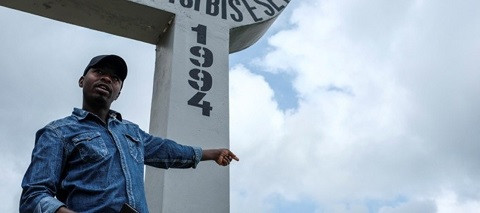 Critical thinking and learning about the past are key to preventing future genocides 2020-04-10 On the occasion of the International Day of Reflection on the 1994 Genocide against the Tutsi in Rwanda (April 7), UNESCO Chairholders specialised in genocide prevention and education have spoken about the importance of education in drawing lessons from the past and preventing the seeds of hatred from being sown for the future. Each year UNESCO commemorates the Day established by the United Nations General Assembly in 2003 which marks the beginning of the genocide perpetrated against members of the Tutsi minority by the Hutu extremist-led government. In just over 100 days, more than a million Tutsi were systematically murdered. Moderate Hutu and others who opposed the massacres were also killed during this period. Three members of the UNITWIN/UNESCO Chair programme, which promotes inter-university co-operation and knowledge sharing, have highlighted the need to continue teaching about all genocides including the 1994 genocide against the Tutsi in Rwanda to combat further atrocities. Alex Hinton Alex Hinton, Distinguished Professor of Anthropology at Rutgers University in the US and UNESCO Chair in Genocide Prevention said: 'The well-worn phrase 'lessons from the past' is key. To combat genocide, we need to understand it -- what happened, how it happened, what the consequences were, and, critically, why more wasn’t done to prevent it.' He said it was important to understand the specificities of such atrocities while teaching comparatively. Building critical thinking was an important educational tool and vital prevention mechanism. 'Each genocide is unique. But each case also shares patterns and dynamics with other genocide and offers us lessons about the present. The genocide against the Tutsi is revealing about how socially constructed and historically formed identities can be politically mobilized to catastrophic ends. The use of media and propaganda during the 1994 genocide in Rwanda, for example, shares commonalities with what has taken place during other instances of genocide. It also offers us lessons about a key risk factor today -- the proliferation of hate speech and incitement in many parts of the world.' Critical thinking and the 1994 genocide were at the centre of all learning at Rutgers Centre for the Study of Genocide and Human Rights, Professor Hinton. 'Our UNESCO Chair in Genocide Prevention has undertaken initiatives related to transitional justice, peace studies, atrocity crimes prevention, and bigotry and hate. The 1994 genocide against the Tutsi in Rwanda has figured prominently in our discussions -- as it does in my own classroom teaching on these topics.' Stephen D. Smith Stephen D. Smith, UNESCO Chair for Genocide Education and Executive Director of the University of Southern California (USC) Shoah Foundation emphasized the importance of validating and remembering the lives of victims of genocide. 'At the heart of the work of USC Shoah Foundation – The Institute for Visual History and Education is the understanding that victims of genocide are ordinary people with ordinary lives. In documenting the life histories of survivors and witnesses of the genocide against the Tutsi in Rwanda, we acknowledge the right of each person to tell, and the importance of providing the opportunity for people to listen. Indeed, testimony provides a sense of hope that can be carried forward into the viewer’s own life circumstances and challenges,' he said. The USC Shoah Foundation’s Visual History Archive provides learners, educators and researchers with 55,000 powerful testimonies, representing nine genocidal events that can serve as a primary source for deeply understanding the context of genocide at the human level. For more than a decade, USC Shoah Foundation, the Aegis Trust and the Kigali Genocide Memorial have worked together with other Rwandan partners on programmes to support the recording of testimony from survivors and witnesses of the genocide against the Tutsi for research and education. The Institute’s IWitness in Rwanda programme with its partners of Aegis Trust and Kigali Genocide Memorial introduce secondary school teachers and students to testimony of survivors of the 1994 Genocide. More specifically, the programme was designed to develop students’ ICT skills using the IWitness platform, critical thinking capacities, and responsible citizenship through engagement with testimonies of survivors of the Holocaust and the 1994 genocide against the Tutsi. This work has led to the integration of testimony into the Rwandan National Curriculum. Testimonies of survivors and other witnesses of the 1994 genocide are also accessible to students and teachers at the Kigali Genocide Memorial. Bernard Mossé Bernard Mossé, Head of training and scientific content at the Foundation of Camp des Milles at the University of Aix-Marseille and coordinator of the UNESCO Chair in Education for Citizenship, Human Sciences and Shared Memories, said the immediacy of the genocide against the Tutsi was important. 'The genocide against the Tutsi in Rwanda is one of the closest to us in time and testifies, after the Shoah and the genocide perpetrated by the Khmer Rouge regime in Cambodia, to the recurrence of the genocidal process and the difficulty that men have in learning from their past.’ He reiterated the importance of comparison in teaching. 'The genocide against the Tutsi is singular by its density, by the number of murders in a very short time on a small territory and by the fact it was often perpetrated by neighbours on neighbours. But it has many points in common with other genocides: similar human mechanisms - passivity, especially on the part of the international community, submission to authority, the power of militias and propaganda, etc. This common process was the subject of a dozen years of research at Camp des Milles. It is disseminated to the general public in a unique way in a place of memory. 'Our aim is clearly to encourage young people and those in positions of authority, the multiplicators, to react and take action against racism, anti-Semitism and extremism. Our memorial site receives 120,000 visitors a year and trains more than 5,000 trainees,' he said. UNESCO is committed to promote education about genocides as a means to sensitize learners for the causes, dynamics and consequences of such crimes and to strengthen their resilience against all forms of discrimination. Learn more about UNESCO’s related activities and the commemoration of the International Day. URL:https://en.unesco.org/news/critical-thinking-and-learning-about-past-are-key-preventing-future-genocides
 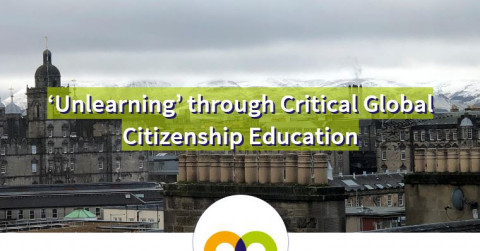 ‘Unlearning’ through Critical Global Citizenship Education 2020-04-09 On 24th and 25th February, Bridge 47 hosted a training workshop in Edinburgh, Scotland. Led by Dr Karen Pashby (Manchester Metropolitan University), the focus was on Critical Global Citizenship Education within the context of the climate emergency. Participants came together to discuss how to harness critical learnings for their work on climate action in the run up to COP26 this November. With a view of the snow-capped hills of Edinburgh, we spent a wonderful two days tackling complexities and engaging with critical methods. Here is some food for thought inspired by our discussions, from Communications Trainee Kate Lesenger. An aim of GCE At the beginning of our training workshop, Karen Pashby showed us this image of a world map. It got us thinking about how we see and understand the world within the parameters of our own experiences. What we view as the norm is dependent on our own geographies, communities, and upbringings. How we are educated plays an important role in moulding how we view the world. Yet often, our formal education systems perpetuate a discriminatory narrative, which can lead to preconceived assumptions and problematic approaches to global issues. As key to framing our discussions, Karen highlighted the following aim of GCE from UNESCO: to “support learners to revisit assumptions, world views and power relations in mainstream discourses and consider people/groups that are systematically underrepresented/ marginalized”. But if this is what GCE sets out to achieve, then what does it mean to be ‘critical’ in GCE? What is critical GCE? Karen emphasised to us the importance of nuanced reflection, describing that in critical GCE we can provide the space to deeply reflect and engage with complexities, questioning the histories of our own cultures and settings. In this way we can confront our pre-existing assumptions, as well as the unequal power relations that are often not immediately apparent. If we don’t do this, we run the risk of jumping to offer quick fixes to real life problems, sweeping the conflicts and intricacies right back under the rug. ‘In these complex times, we need students to know there are solutions. But just focusing on action may step over an engagement with complexities. We need reflexivity. Critical reflection is not negative, but presents a nuanced approach, instead of a forced positive one.’ A crisis in learning As Karen said, while letting students know there are solutions to global problems, teachers should not avoid the complexities. In recent research co-led by Karen, it was found that there was a tendency among secondary teachers to focus on uncomplicated, simple solutions to global issues. Karen argued this to be a “crisis in learning” – when teachers offer a kind of comfort and consolation, rather than equipping their students with the critical and ethical tools to respond to complex problems, such as the climate emergency. Critical GCE & the climate emergency From this research, Karen and Louise Sund (Örebro University & Mälardalen University) created a teaching resource for secondary teachers. In it they outline some guiding principles for bridging GCE with Education for Sustainable Development. One principle is as follows: “Environmental issues are deeply tied to social, political, cultural and economic inequalities; it is essential to link such issues to historical and present day colonial systems of power.” Here in the UK, the core broadcasted narrative has a habit of glossing over how the causes and effects of climate change are linked to inequality, discrimination, and Britain’s colonialist past. Thinking about these links sparked discussions in our group surrounding complicity; there is a need for Scotland and other countries in the Global North to grow comfortable with the fact that we are a part of the problem we are trying to solve. Unlearning through critical GCE A key takeaway from the workshop was that when translated into practice, being critical in GCE requires what Karen describes as ‘unlearning’. Thinking back to that world map, can we unlearn the way we have been taught to view something? This practice of unlearning must allow for a shared dialogue with marginalised voices, while recognising complexities and our own complicity. Being critical in GCE gives us a flexible space to do this: a space within which we can look at problems more inclusively and lean into the process of unlearning. Right now, we are facing an unprecedented global crisis in the form of COVID-19. At Bridge 47, we believe that Global Citizenship Education carries the most value as a vehicle for dealing with complexities and uncertainties. Perhaps now more than ever, it could really help to guide us. Thank you to Karen Pashby for leading our training, and to Carrie Karsgaard (University of Alberta) for her virtual visit and thought-provoking insights on her work with Indigenous youth at COP. For further reflections on the COVID-19 crisis, read our project manager Nora Forsbacka’s blogpost on ‘Navigating the Storm' here. Useful resources from our training: United Nations Educational, Scientific and Cultural Organization (UNESCO). 'Global Citizenship Education: Preparing learners for the challenges of the twenty-first century.' (2014)Karen Pashby & Louise Sund. 'Teaching for sustainable development through ethical global issues pedagogy: A resource for secondary teachers.' (2019)Karen Pashby, Louise Sund & Su Lyn Corcoran. 'Teaching for sustainable development through ethical global issues pedagogy: participatory research with teachers.' (2018-2019)#Decarbonize #Decolonize COP23: A Global Youth White Paper (2017)Tracking Change project, Canada (2018)International Youth White Paper on Global Citizenship (2017)Vanessa Andreotti on her critical tool ‘HEADS UP' (video) Author: Kate Lesenger, Events and Communications Trainee (kate.lesenger@bridge47.org) URL:https://www.bridge47.org/blog/03/2020/unlearning-through-critical-global-citizenship-education
  WHO and Global Citizen announce: 'One World: Together at home' Global Special to support healthcare workers in the fight against the COVID-19 pandemic 2020-04-09 ‘One World: Together At Home’ global special to air on Saturday, 18 April 2020 in celebration and support of healthcare workers, broadcast to feature real experiences from doctors, nurses and families around the world. Powered by commitments from supporters and corporate partners in benefit of the COVID-19 Solidarity Response Fund, Broadcast special to also benefit local and regional charities that provide food, shelter and healthcare to those that need help most. Historic broadcast to be hosted by Jimmy Fallon of ‘The Tonight Show,’ Jimmy Kimmel of ‘Jimmy Kimmel Live’ and Stephen Colbert of ‘The Late Show with Stephen Colbert,’ Friends from Sesame Street Also on hand to help unify and inspire people around the world to take meaningful actions that increase support for the global COVID-19 response. Curated in collaboration with Lady Gaga, broadcast to include Alanis Morissette, Andrea Bocelli, Billie Eilish, Billie Joe Armstrong of Green Day, Burna Boy, Chris Martin, David Beckham, Eddie Vedder, Elton John, FINNEAS, Idris and Sabrina Elba, J Balvin, John Legend, Kacey Musgraves, Keith Urban, Kerry Washington, Lang Lang, Lizzo, Maluma, Paul McCartney, Priyanka Chopra Jonas, Shah Rukh Khan and Stevie Wonder.------------------------------------------ Geneva/New York - International advocacy organization Global Citizen and the World Health Organization today announced the One World: Together At Home -- a globally televised and streamed special in support of the fight against the COVID-19 pandemic. One World: Together At Home will be broadcast live on Saturday, 18 April 2020 at 5:00 p.m. PDT/8:00 p.m. EDT/12:00 a.m. GMT airing on ABC, NBC, ViacomCBS Networks, iHeartMedia and Bell Media networks and platforms in Canada. Internationally, BBC One will run the program on Sunday 19 April 2020. Additional international broadcasters include beIN Media Group, MultiChoice Group and RTE. The virtual broadcast will show unity among all people who are affected by COVID-19 and will also celebrate and support brave healthcare workers doing life-saving work on the front lines. Hugh Evans, Co-Founder and CEO of Global Citizen, said “As we honor and support the heroic efforts of community health workers, ‘One World: Together At Home’ aims to serve as a source of unity and encouragement in the global fight to end COVID-19. Through music, entertainment and impact, the global live-cast will celebrate those who risk their own health to safeguard everyone else’s.” One World: Together At Home will also be a multi-hour digital broadcast streaming online on multiple global platforms, including: Alibaba, Amazon Prime Video, Apple, Facebook, Instagram, LiveXLive, Tencent, Tencent Music Entertainment Group, TIDAL, TuneIn, Twitch, Twitter, Yahoo and YouTube. This digital special will include additional artists and performances from all over the globe as well as unique stories from the world's healthcare heroes. For information about how to tune in and take action, visit www.globalcitizen.org/togetherathome. “The World Health Organization is committed to defeating the coronavirus pandemic with science and public health measures, and supporting the health workers who are on the frontlines of the response,” said Dr Tedros Adhanom Ghebreyesus, Director-General of WHO. “We may have to be apart physically for a while, but we can still come together virtually to enjoy great music. The ‘One World: Together At Home’ concert represents a powerful show of solidarity against a common threat.” “The United Nations system is fully mobilized: supporting country responses, placing our supply chains at the world’s disposal and advocating for a global cease-fire. We are proud to join forces with ‘One World: Together At Home’ to help suppress the transmission of the virus, minimize social-economic impacts on the global community and work together now to advance Global Goals for the future,” said António Guterres, Secretary-General of the United Nations. “There is no greater case for collective action than our joint response to COVID-19 – we are in this together and we will get through this together." Last month in response to the global pandemic, Global Citizen launched an urgent campaign in support of the COVID-19 Solidarity Response Fund for WHO, powered by the UN Foundation. Calling on individuals to take action, and asking world leaders and corporations to support the response with sufficient resources, Global Citizens from over 130 countries around the world have taken tens of thousands of actions in support of the response fund. At this critical moment in history, Global Citizen is also calling on philanthropists to join and support immediate COVID-19 response efforts as part of the organization’s Give While You Live effort. Investors, changemakers and foundation leaders are being urged to actualize their giving and invest quickly in related efforts like stronger health systems and vaccine development. Over the past three weeks, the Together At Home series has featured performances from artists including, Chris Martin, John Legend, Charlie Puth, Common, Shawn Mendes, Camila Cabello, Ryan Tedder of OneRepublic, Niall Horan, Steve Aoki, Jennifer Hudson, Miguel, H.E.R., Anthony Hamilton, Rufus Wainwright, Hozier and Julianne Hough, among others in support of WHO and Global Citizen’s campaign. Commitments from supporters and corporate partners will go to the COVID-19 Solidarity Response Fund for WHO to support and equip frontline healthcare workers around the world, with masks, gowns and other vital equipment, and to local charities that provide food, shelter, and healthcare to those that need it most. These local groups have been verified to ensure that they are helping communities impacted by COVID-19. For more information about Global Citizen and the campaign to support the WHO’s Solidarity Response Fund, please visit globalcitizen.org and follow @GlblCtzn Twitter, Facebook and Instagram using #GlobalCitizen. To learn more about WHO’s response to the pandemic and the COVID-19 Solidarity Response Fund, please go to www.who.int/COVID-19 and follow @WHO on Twitter, Facebook, Instagram, LinkedIn and TikTok. ### About Global Citizen:Global Citizen is the world's largest movement of action takers and impact makers dedicated to ending extreme poverty by 2030. With over 10 million monthly advocates, our voices have the power to drive lasting change around sustainability, equality, and humanity. We post, tweet, message, vote, sign, and call to inspire those who can make things happen to act — government leaders, businesses, philanthropists, artists, and citizens — together improving lives. By downloading our app, Global Citizens learn about the systemic causes of extreme poverty, take action on those issues, and earn rewards, which can be redeemed for tickets to concerts, events, and experiences all over the world. To date, the actions of our community, along with high-level advocacy efforts and work with partners, has resulted in commitments and policy announcements from leaders valued at over $48 billion, affecting the lives of more than 2.25 billion people by 2030. For more information, visit www.GlobalCitizen.org. About the World Health Organization:The World Health Organization (WHO) is the United Nations’ specialized agency for health. It is an inter-governmental organization and works in collaboration with its Member States usually through the Ministries of Health. The World Health Organization is responsible for providing leadership on global health matters, shaping the health research agenda, setting norms and standards, articulating evidence-based policy options, providing technical support to countries and monitoring and assessing health trends. Learn more at www.who.int. About the United Nations Foundation:The UN Foundation brings together the ideas, people, and resources the United Nations needs to drive global progress and tackle urgent problems. To support the work of the World Health Organization (WHO) in its global work on COVID-19, UN Foundation helped launch the COVID-19 Solidarity Response Fund that has raised more than $100 million in less than two weeks for lifesaving work around the world. Learn more about the COVID-19 Solidarity Response Fund at www.covid19responsefund.org. Learn more about the UN Foundation at www.unfoundation.org. Follow @unfoundation on Twitter and Instagram, and @United Nations Foundation on Facebook. URL:https://www.who.int/news-room/detail/06-04-2020-who-and-global-citizen-announce-one-world-together-at-home-global-special-to-support-healthcare-workers-in-the-fight-against-the-covid-19-pandemic
 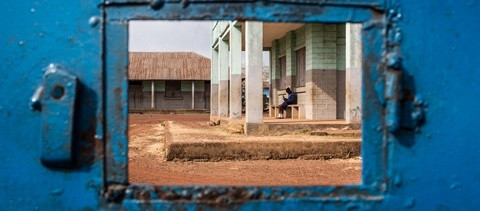 COVID-19 Webinar #3: Addressing the gender dimensions of COVID-related school closures 2020-04-09 ‘We are living a period of high uncertainty during which we know that COVID-19 related school closures will exacerbate gender inequalities,’ said Ms Suzanne Grant-Lewis, Director of UNESCO’s International Institute for Educational Planning (IIEP), opening the webinar. ‘This is a universal issue. All countries must take actions to address these inequalities.’ On 3 April, UNESCO convened its third webinar as part of the COVID-19 education response drawing over 150 government officials, practitioners and experts from numerous countries around the world. The webinar examined the gender dimensions of COVID-related school closures, and exchanged knowledge on how countries can ensure gender-responsive, evidence-based actions during and after this educational disruption. COVID-related school closures across 188 countries have the potential to exacerbate existing gender inequalities in education or create new ones unless measures are taken to address the gender dimensions. As of today, 1.57 billion or 91% of enrolled learners are out of school due to the COVID-19 pandemic, out of which 743 million girls. This adds on to the girls who were already more likely to remain excluded from an education. What are the gendered impacts of COVID-19 school closures? In the wake of school closures, we know that girls and women may be more exposed to the virus as health care workers and caregivers. At home, they may be overburdened by unpaid work, unable to continue their learning at a distance and facing growing domestic violence. These risks jeopardize their return to education. Tinuola Oladebo, Nigerian youth activist from the non-governmental organization OneAfricanChild, noted that this crisis is underlining existing challenges, particularly the gender digital divide. ‘Young activists, advocates and informal educators in Nigeria are collaborating and co-creating responses to ensure that girls continue to access education at home,’ she said. There is also a risk of boys’ disengagement from education. In Nepal for example, ‘the economic hardships caused by outbreaks may lead boys to turn to income-generating activities, leaving school behind’ explained Dr Tulashi Prasad Thapaliya, Director General of the Centre for Education and Human Resource Development at Nepal’s Ministry of Education, Science and Technology. Evidence confirms that both gender and education are neglected in health outbreak responses. ‘We must learn from Ebola, Zika and other outbreaks to understand the education dimension and how we address gender equality in these contexts,’ said Justine Sass, Chief of the Section of Education for Inclusion and Gender Equality at UNESCO. School, a lifeline for girls Chernor Bah, keynote speaker and co-founder of Purposeful, recounted the story of Dorcas, an adolescent girl aged 17 who lived through the Ebola crisis in 2014. Her mother, a community health volunteer, was infected by Ebola. As the eldest, Dorcas took on the responsibility to provide for her two younger siblings at home. However, with the community on lockdown and her school closed, she felt isolated and helpless. For girls, school is so much more than a place of learning. Dorcas’ school was her social safety net. A place where she could socialize, share experience and access vital services such as food through school feeding programmes. ‘As we think about gender dimensions, our instinct is that we need to shut down schools,’ said Chernor. ‘Our experience from the Ebola crisis says that if we do not think about girls now, we will suffer serious consequences. For girls, every day counts.’ What are some of the measures to take? ‘Without focused action, we will lose the momentum we already gained in advancing education and gender equality, and risk going backwards,’ said Maki Hayashikawa, Chief of the Section for Inclusive Quality Education at UNESCO’s Asia-Pacific Regional Bureau for Education. Speakers offered insights into measures to be taken to ensure every learner has the opportunity to continue their education path during and after the crisis. They were joined by participants who chimed in during the online discussion moderated by Nora Fyles from the United Nations Girls’ Education Initiative (UNGEI). A concern shared by all was that swift responses often do not integrate gender implications. ‘To date, much of the education analysis on COVID-19 has been gender blind,’ stressed Yona Nestel from Plan International. ‘For example, the move to distance learning, such as digital solutions, but also low-tech approaches like radio, are not considering the lived realities and inequalities facing girls.’ Measures put forward during the webinar included the equitable representation of women and men in decision-making and planning; the engagement of parents and communities, especially in support of girls’ education; holistic and adapted approaches considering the gender digital divide, privileging accessible solutions and women’s ownership; and the promotion of partnerships to address cross-cutting health, social and education issues that impact on continuity of learning. Dr Thapaliya highlighted the need for additional learning financing for girls and the role of local governments in designing appropriate support programmes that improve learning. He also explained Nepal’s plans to track students within a week of schools reopening to ensure they are reintegrated into the system. ‘Engage youth in the development of responses to manage the impact of the crisis. This is critical to ensure relevancy and sustainability,’ stressed Tinuola. Youth voices must be included to shape decisions made about their education. Many noted the importance of community sensitization as part of distance learning programmes. ‘The key in times of crisis is to strengthen networks in communities so they can become advocates for the needs and rights of children,’ said Somaye Sarvarzade from Education Cannot Wait in Afghanistan. Her colleague, Aida Orgocka, highlighted that sex-disaggregated data should be collected and carefully examined as it often indicates that women are less affected when in reality, they are the most marginalized. As Chernor said, ‘it is time to double down on girls…it’s time to think about how we reach girls in innovative ways beyond giving them information.’ UNESCO launched a Global Education Coalition to facilitate inclusive learning opportunities for girls and boys, and youth during this period of sudden and unprecedented educational disruption. The webinar series is part of UNESCO’s COVID-19 Education Response to enable peer learning and sharing of experiences among all countries. More information Recording of the webinar COVID-19 school closures around the world will hit girls hardest UNESCO’s response to the COVID-19 crisis UNESCO’s work on education and gender equality URL:https://en.unesco.org/news/covid-19-webinar-3-addressing-gender-dimensions-covid-related-school-closures
 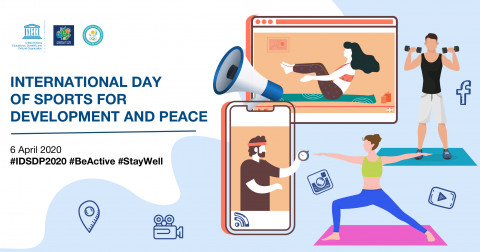 Международный день спорта на благо развития и мира, 6 апреля 2020-04-09 2020 International Day of Sport for Development and Peace will encourage people to be active while experiencing containment measures,foster solidarity, community and team spirit and raise awareness about COVID-19.The COVID-19 pandemic is spreading to more countries, territories and regions of the world at an alarming rate and physical and social distancing practices are becoming commonplace to stop the spread of the disease. The closure of gyms, sport facilities and stadiums, public pools, dance studios, and playgrounds mean that many of us are not able to actively participate in individual or group sporting or physical activities, nor watch live sporting events. As a result, the global sporting community is facing serious challenges due to measures imposed in countless countries around the world.On 6 April 2020, the IDSDP will be a moment when UNESCO will join the global efforts to encourage everyone to be active, stay well and demonstrate solidarity during this period of physical and social distancing. This team spirit will help us all get through the current challenges together.UNESCO Almaty Cluster Office in cooperation with the National Olympic Committee of the Republic of Kazakhstan intends to launch an online information campaign in the framework of the International Day of Sports for Development and Peace, which emphasizes the importance of physical activity and sports in conjunction with a healthy lifestyle to limit the impact of COVID-19.In response to global developments concerning the COVID-19 pandemic, this year the International Day of Sport for Development and Peace will focus on the health benefits of participating in sporting and physical activity, especially in this time of uncertainty and social distancing.Sport has the power to change the world; it is a fundamental right, a powerful tool to strengthen social ties and promote sustainable development and peace and well as solidarity, and respect. Through our unique individual skills and collective power, we can come together and share creative ways to improve our health and well-being through sport and physical activity - even from the confines of our own homes.For the International Day of Sport this year, let’s #BeActive and healthy to beat #COVID19.General tips for staying active and latest information of COVID-19. URL:http://en.unesco.kz/international-day-of-sport-for-development-and-peace-6-april
  Rights experts warn against discrimination in COVID-19 response 2020-04-07 Fearing a needless increase in COVID-19 deaths due to discrimination, UN independent human rights experts on Monday called for Governments to commit to racial equity and equality in their response to the pandemic. The Working Group of Experts on People of African Descent said that structural discrimination could worsen inequalities surrounding access to healthcare and treatment, which could lead to a rise in disease and death rates among people of African descent. “Despite robust responses, States have not recognised the specific health risks faced by people of African descent or how racial discrimination and implicit bias and racial stereotypes may pervade policy”, chair Ahmed Reid said in a statement. Members highlighted two other areas of concern in the current crisis: lack of representation of people of African descent at high levels, and the link between discretion in data collection and risk. “Interventions that appear neutral on their face may license or facilitate racial bias, without care and attention. Thus far, no protection efforts have focused the public health response on the specific vulnerabilities of people of African descent”, said Mr. Reid. Research, care solutions impacted “This also raises the parallel concern that even research and knowledge production in response to this crisis may overlook specific barriers to care or the racially discriminatory impact of policy.” The statement underlined the need for “stressed and overwhelmed healthcare workers and local leadership” to be given more guidance to prevent racial discrimination at this critical time. This includes having disaggregated data to ensure equitable treatment. The Working Group also pointed out that “disproportionate numbers” of people of African descent are employed in service industries, live in densely populated communities, or face difficulties in accessing food and water, all of which impact risk and vulnerability. “In many States, people of African descent disproportionately serve as home health aides, carers and delivery personnel who help hospitals and health care systems focus on the most serious cases, despite no public efforts to ensure their safety and protection”, said Mr. Reid. ‘Disproportionate presence’ in jails, refugee camps The expert group also is concerned about the “disproportionate presence” of people of African descent in locations such as jails and refugee camps across the world, where contagion risk is higher. “The ongoing availability of people of African descent to serve in this crisis should not be construed as disposability”, Mr. Reid said. “States using this pandemic to suspend or roll back human rights relating to affirmative action, the environment, public health, criminal justice, and governance, generally disproportionately impair people of African descent in ways that will persist, long after the crisis is resolved”. The Working Group was appointed by the UN Human Rights Council in line with a declaration adopted at the global conference on racism, racial discrimination and xenophobia, held in South Africa in 2001. Its five members are not UN staff, nor are they paid by the Organization. URL:https://news.un.org/en/story/2020/04/1061122