
News
Catch up on what’s happening in the world of global citizenship education.
1,668 results found
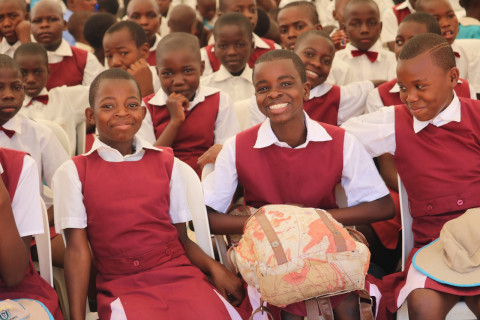 Southern African countries converge to review SDG 4 implementation 2019-12-18 40 participants, primarily officials from Ministries of education including policy makers, planners and statisticians from southern African countries are meeting in Johannesburg, South Africa from 9-11 December 2019 to review implementation of Sustainable Development Goal 4 (SDG 4). While last year’s SDG4 review meeting focused on countries’ needs, challenges, and sharing of best practices, this year the focus is on examining how to reach SDG 4 commitments through coherent and targeted policies; examining existing mechanisms to coordinate and bring education stakeholders towards achieving SDG4 including partners’ support to specific identified areas; and strengthening monitoring mechanisms and institutionalising reporting through effective quality data production cycle (collection, management and analysis). At the end of the meeting, countries are expected to have a shared understanding of the alignment of policies, coordination, monitoring and reporting mechanisms for SDG4 as well as a renewed, enhanced and sustained commitment in effectively harmonizing SDG4 and Continental Education Strategy for Africa (CESA) into their national policies, plans and programmes as well as coordinating, monitoring and reporting. UNESCO has the mandate to lead SDG4 implementation and coordination through supporting its member states in policy guidance, capacity development, monitoring and advocacy. UNESCO Regional Office for Southern Africa thus supports the annual review meetings in Southern Africa. This year’s meeting is also attended by other partners including the SADC secretariat, UNAIDS, UNICEF and UNFPA. For more information please contact: Ms Julia Heiss at J.Heiss@unesco.org. URL:https://en.unesco.org/news/southern-african-countries-converge-review-sdg-4-implementation
 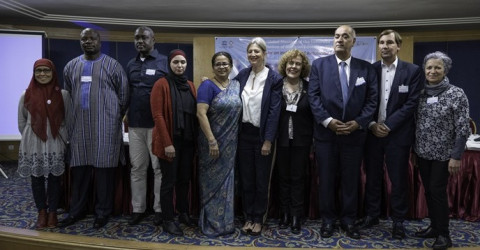 Civil society: Social and political action to prioritize education on political agendas 2019-12-17 Civil society advocates from all regions called upon governments to give systematic priority to ensuring that the most vulnerable and marginalized groups have access to quality education and to respect financing benchmarks, during the 9th global meeting of the Collective Consultation of NGOs (CCNGO) for Education 2030 that gathered in Hammamet, Tunisia, on 3 and 4 December 2019. “Clearly, we have an education crisis, fueled by lack of political will, low prioritization of education and inadequate financing as well as a rising trend in education commercialization, contributing to increasing inequality,” said the 100 plus participating organizations in their outcome statement. “To different degrees, education systems worldwide are not responding to the 2030 Agenda’s commitment to ‘leave no one behind.’” Wrapping up eight panel sessions on all aspects of inclusion and equity, members recommended specific political attention to the following areas: Strengthen evidence-based policy dialogue to raise awareness and influence government policy through dedicated mechanisms; Ensure that legal, policy and planning frameworks adopt an inclusive rights-based approach; Guarantee education and psycho-social support for refugee, displaced and migrant children and ensure that teachers are trained to be sensitive to their cultural identities; Support teachers with training to promote a culture of inclusion and to help students open their minds through critical pedagogies. Adequate salaries, decent working conditions and more autonomy are essential to support and value the profession; Allocate dedicated budgets to adult learning, the least supported part of the lifelong learning; Invest in disaggregated data to capture the full reality of exclusion and to hold governments accountable; Encourage citizen monitoring of public budgets on education to ensure resources are directed to support equity and inclusion. Supporting capacity building Members committed to build the capacity of civil society organizations to engage with other stakeholders and lead collective action to defend the right to education as a human right, public good and State responsibility. They expressed deep concern about the growth in education privatization and commercialization and affirmed that all private provision must be well regulated and aligned with human rights principles. They stressed the need to strengthen partnerships with other social sectors, parliamentarians and the media to promote inclusion and equity. They also highlighted the importance of building the capacity of civil society actors to collect and analyze evidence-based data on the most marginalized groups. Members acknowledged UNESCO’s leadership in coordinating the SDG4 agenda and the Education 2030 architecture and reaffirmed that the CCNGO is a key mechanism for increased information-sharing, capacity building and collaboration amongst CSOs in the pursuit of SDG4. The meeting was opened by UNESCO’s Assistant Director-General for Education Stefania Giannini, Tunisia’s Minister of Education Hatem Ben Salem and the President of the Global Campaign for Education, Refat Sabbah. During the Global Meeting, members elected their representatives to the Coordinating Group in the international and at large categories, while the regional focal points were agreed by consensus. Members of the Coordinating Group appointed for two years are: World Organisation for Early Childhood Education and Care (Organisation Mondiale pour l’Education Préscolaire - OMEP), represented by its President Mercedes Mayol Lassalle; Global Campaign for Education (GCE), represented by its President Refat Sabbah; Campaign for Popular Education (CAMPE), represented by its Executive Director Rasheda K. Choudhury; Ivorian Network for the Promotion of Education for All, represented by its Executive Secretariat Coordinator Kouame Paulin Junior; Africa Network Campaign on Education For All (ANCEFA), represented by its Chair Samuel Ndembele; Teacher creativity center (TCC) represented by its Inclusion Coordinator Rawan shwaikeh; European Association for the Education of Adults (DVV International), represented by its Director Christoph Jost; Asia South Pacific Association for Basic and Adult Education (ASPBAE), represented by its Secretary General Maria Lourdes Almazan Khan; Campaña Latinoamericana por el Derecho a la Educación (CLADE), represented by its Colombian Coalition member Blanca Cecília Gomez; Ex officio UNESCO NGO liaison Committee represented, by its President Marie-Claude Machon Honore. URL:https://en.unesco.org/news/civil-society-social-and-political-action-prioritize-education-political-agendas
 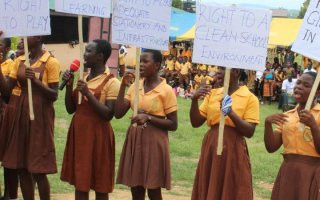 Human rights: universal, inalienable and indivisible 2019-12-17 I’m writing this blog on the eve of Human Rights Day, following celebrations of the 30th anniversary of the Convention of the Rights of the Child. On 10 December 1948 the United Nations General Assembly adopted the Universal Declaration of Human Rights (UDHR). This declaration was an effort to ensure that the abuses and atrocities against human dignity – such as those perpetrated by the Nazis – would never take place again. Human rights are universal, inherent to every individual without discrimination; inalienable, meaning that no one can take them away; indivisible and interrelated, with all rights having equal status and being necessary to protect human dignity. Drafted at the onset of the Cold War, it was a fruitful historical compromise between the Western bloc, that pushed for civil and political rights – generally freedom from government interference such as freedom of religion, freedom from torture or equality before the law – and the Eastern bloc and countries under colonial rule - who championed economic, social and cultural rights. They are enabling rights that need the provision of services to be fulfilled, such as the right to an adequate standard of living, right to education or right to work. Human rights are based on the principles of equality, non-discrimination and dignity, transforming moral claims into rights to confront abuses and tyranny. ActionAid follows a rights-based approach supporting rights holders – individuals – to organise and claim their rights and to hold the duty bearers – state, government – to account. We analyse and confront power imbalances while supporting groups and individuals to fight poverty and social exclusion at local, national, regional and international levels. The Promoting Rights in School Framework is an innovative and participatory approach which focuses on strengthening public education following ten rights derived from international human rights law. Over the past ten years this framework has been used across Africa and Asia, supporting the transformation of children and local communities into agents and leaders of change, which I’ve been able to witness in the project I coordinate. Education is a right and a multiplier of other rights. Broadly speaking and following not only the Universal Declaration of Human Rights, but also the International Covenant on Economic, Social and Cultural Rights (1966) and the Convention on the Rights of the Child (1989) – both binding instruments, unlike the Universal Declaration – the right to education requires that states: Provide free and compulsory education of good quality, at least at elementary stage, using the maximum available resources Respect the freedom of parents to choose and providers to establish alternative education institutions that meet human rights Protect individuals, particularly children, from violations of their rights (such as families, schools or private providers impairing or hindering the enjoyment of their rights). Therefore, the state is the duty bearer and has the ultimate obligation to provide education. Private providers can offer a complementary or alternative option, as long as this complies with human rights, but they cannot supplant the role of the state – something which is happening in areas such as Accra or Lagos where private schools outnumber public ones. The state is also responsible for the adequate regulation of private education providers – which they largely fail to do. The Abidjan Principles, adopted in February this year, explain the human rights obligations of states to provide public education and to regulate private involvement in education. Its Article 25 refers to the obligation to prevent or redress direct or indirect discrimination in or through education, including systemic disparities in educational opportunities or outcomes, highlighting socio-economic disadvantage. Our study in Ghana, Kenya and Uganda, which used the Abidjan Principles to understand the impact of privatisation on the right to education, concluded that these states are not meeting their obligations to provide free and quality education. This is partly due to the underfunding of the sector in these three countries, and the subsequent growth of the private sector. This growth is causing and entrenching social inequalities, leading to stratification and huge disparities of education opportunities. Ghana, Kenya and Uganda must fulfil their obligations to provide free public education of the highest attainable quality. Increasing the size, share, sensitivity and scrutiny of the budget is necessary to give the necessary resources to public schools and to adequately regulate private providers. The right to education is a multiplier of other rights, enabling individuals to participate in society, to learn about healthy habits that can save their lives and the lives of those around them or to learn to live with others, enhancing the enjoyment of all other rights and freedoms (K Tomasevski, 2003). We need to ensure that education is available, there are enough schools, teachers and education resources at reasonable distance; accessible, free of social, cultural and physical barriers; acceptable, good quality education that enables every child to flourish; adaptable, child-centred and reflecting human diversity (K Tomasevski, 2003). Let’s celebrate Human Rights Day by holding governments to account to fulfil their obligations.--Dr. Maria Ron Balsera, Research and Advocacy Coordinator for ActionAid International. She works on Tax Privatisation and the Right to Education: influencing education financing policy.--This blog post was orginally posted on ActionAid and has been cross-posted with the permission of the author. URL:https://www.right-to-education.org/blog/human-rights-universal-inalienable-and-indivisible-0
  ROSA countries review SDG 4 implementation 2019-12-16 Nine countries covered by the UNESCO Regional Office for Southern Africa (ROSA) met in Johannesburg, South Africa from 9 to 11 December 2019 to review implementation of Sustainable Development Goal 4 (SDG 4). 40 representatives from Ministries of education’s education management information systems (EMIS), planning, and coordination units from Botswana, Eswatini, Lesotho, Malawi, Mozambique, Namibia, South Africa, Zambia and Zimbabwe attended the three-day working session that focused on monitoring and coordinating the implementation of SDG4, whose targets reach far beyond the improvement of access envisaged through Education For All, to considerations of equity, quality and relevance of education. Since 2015, a key challenge to the development of country implementation plans for SDG4 has been the integration, alignment and coordination of SDG4 indicators with the strategy and indicators of SADC’s regional industrialisation strategy, as well as with individual country initiatives, policies, plans and national development indicators. Internal coordination and alignment between individual country Ministries and departments is also a challenge. Presentations by UNESCO and SADC colleagues provided background information and guidance on the structure of SDG4 and its targets and sub-targets, how these relate to the more recent Continental Education Strategy for Africa (CESA), and achievements and challenges experienced to date. Countries reported their progress in implementation, and challenges experienced in monitoring their achievements. Implementation modalities were discussed, with individual countries, particularly Botswana, demonstrating how they aligned national and regional policies into comprehensive SDG4 implementation plans. South Africa appreciated the role UNESCO is playing, especially in building capacity in the member states by bringing them together to share best practices. Through groupwork sessions, participants identified their countries’ key legislation and policy frameworks related to SDG4 and CESA, and corresponding gaps; as well as coordinating mechanisms operating in individual countries, where institutionalisation of SDG4 and CESA processes were generally found to need strengthening, advocacy and awareness. A presentation on the data landscape from the perspective of the Namibian education sector explained some of the processes, gaps and challenges in this area, which was the third main axis of the workshop. The lively discussion on data processes, quality and challenges reflected the primacy of this interest among the delegates, with observations that country internal colleagues from other departments do not necessarily have equivalent capacity. Technological possibilities for obtaining real time data were held up as an ideal, with recommendations for innovative strategies for use in underdeveloped and rural contexts. For more information, please contact: J.Heiss@unesco.org URL:https://en.unesco.org/news/rosa-countries-review-sdg-4-implementation
  Human Development Report Looks to Solutions to Rising Inequality 2019-12-16 Story Highlights The 2019 Human Development Report analyzes inequality in three steps: beyond income, beyond averages, and beyond today. The 2019 Human Development Index and the 2019 Inequality-Adjusted Human Development Index, which measure the unequal distribution of education, health and living standards, find that 20% of human development progress was lost through inequalities in 2018. The publication also includes a new “social norms index” according to which gender bias has grown recently in half of the countries assessed. The 2019 edition of the UN’s Human Development Report challenges the idea that economic growth will automatically lead to development and wellbeing, explaining how systemic inequalities are deeply damaging society. The publication notes that, as the gap in basic living standards is narrowing for millions of people, inequalities related to education, technology and climate change have sparked demonstrations across the globe as the necessities to thrive have evolved. The report titled, ‘Beyond income, beyond averages, beyond today: inequalities in human development in the 21st Century,’ was launched by the UN Development Programme (UNDP) on 9 December 2019, in Bogota, Colombia. What used to be “nice-to-haves” – attending university, or access to broadband – are increasingly important for success. The 2019 Human Development Index (HDI) and the 2019 Inequality-Adjusted Human Development Index, which measure the unequal distribution of education, health and living standards, find that 20% of human development progress was lost through inequalities in 2018. SDG 10 calls to reduce inequality within and among countries. Per the report’s findings, in countries with very high levels of human development, subscriptions to fixed broadband are growing 15 times faster, and the proportion of adults with tertiary education is growing over six times faster than in countries with low levels of human development. Therefore, UNDP notes, what used to be “nice-to-haves,” such as attending university or access to broadband, are increasingly important for success. The 2019 edition of the annual publication includes a new index on social norms. According to the Social Norms Index, in half of the countries assessed, gender bias has grown recently. For example, around 50% of people interviewed across 77 countries declared that they think men make better political leaders than women, and more than 40% believe that men make better business executives. Under SDG 5 on gender equality, target 5.1 calls to “end all forms of discrimination against all women and girls everywhere,” and target 5.5 calls to “ensure women’s full and effective participation and equal opportunities for leadership at all levels of decision-making in political, economic and public life.” The report also looks into the future, analyzing the prospects of future inequality in relation to “two seismic shifts that will shape the next century,” namely the climate crisis, and the technological transformation that includes renewables and energy efficiency, digital finance and digital health solutions. The 2019 Human Development Report analyzes inequality in three steps: beyond income, beyond averages, and beyond today. Highlighting that the problem of inequality is “not beyond solutions,” the publication proposes tackling it through, inter alia: Early childhood and lifelong investment, making the case for investing in young children’s learning, health and nutrition; Productivity, supported by antitrust and other policies to address the imbalances of market power; Public spending and fair taxation, with taxation needing to be part of a system of policies that include public spending on health, education and alternatives to a carbon-intensive lifestyle; Advancing gender equality, including through policies that address underlying biases, social norms and power structures, such as policies to balance the distribution of care, particularly for children; Social protection policies that would ensure fair compensation for “crowdwork”; International consensus on how to tax digital activities; and Recycling revenues from carbon pricing to benefit taxpayers, as part of a broader social policy package. [UNDP Press Release][UN Press Release][UNDP Administrator Remarks][Publication: The 2019 Human Development Report] URL:http://sdg.iisd.org/news/human-development-report-looks-to-solutions-to-rising-inequality/
 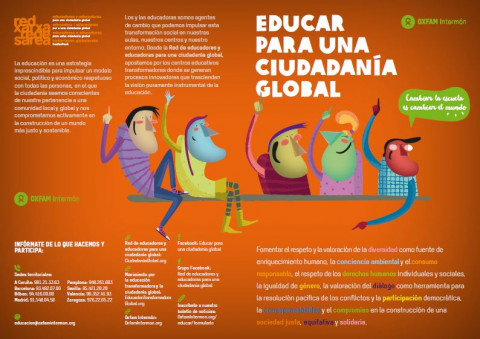 Educating for a Global Citizenship 2019-12-16 The Connecting worlds project is part of Oxfam Intermon’s education program, which aims to boost the implementation of an Education for a Global Citizenship in the classroom. Global Citizenship is an education perspective that fosters a new model of citizenship actively engaged and committed to making the world a more equitable and sustainable place, promoting respect and appreciation for diversity, defense of the environment, responsible consumption and respect for individual and social human rights. This education trend is currently part of the World Agenda thanks to the Sustainable Development Goals and, more specifically, outlined in Target 4.7, Sustainable Development and Global Citizenship, which touches on the social, humanistic and moral purposes of education. According to UNESCO we need to …”By 2030, ensure that all learners acquire the knowledge and skills needed to promote sustainable development, including, among others, through education for sustainable development and sustainable lifestyles, human rights, gender equality, promotion of a culture of peace and non-violence, global citizenship and appreciation of cultural diversity and of culture’s contribution to sustainable development”. Following the same line, the Organization for Economic Co-operation and Development (OECD) Programme for International Student Assessment (PISA) included Global Competence in its metrics for quality, equity and effectiveness in education. This competence aims to assess the individual’s capacity to face global, local and intercultural issues and situations, interacting successfully and respectfully with others and taking responsible action toward sustainability and collective well-being. In order to boost this global competence, Connecting worlds articulates itself within the framework of Education for a Global Citizenship, understanding that a global citizenship consists in individuals who: Are aware of the wider world and the challenges we face in today’s world. Recognise themselves and others as people with dignity, with responsibilities to fulfil and rights that can be claimed, and with the power to bring about change. Take responsibility for their actions, are outraged by injustice and by any form of human rights abuses. Respect and appreciate gender equality, diversity and the multiple identities and sense of belonging of people and communities as a source of human enrichment. Are interested in knowing and critically analyzing and disseminating how the world works at economic, politic, social, cultural, technological and environmental levels. Participate and are committed to the community at a range of levels – from the local to the global – with the aim of making the world a more equitable and sustainable place. Contribute to building an active citizenship that fights against inequality by focusing on the redistribution of power, opportunities and resources. For further information please visit: Oxfam Intermón URL:http://www.conectandomundos.org/en/ciudadaniaglobal#
 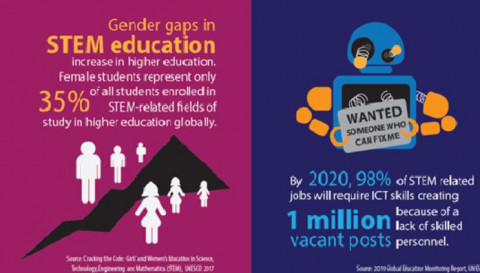 Promover la igualdad de género en las vías CTIM de la EFTP 2019-12-13 Technical and vocational education and training (TVET) has the potential to promote the productive participation of women in the labour market, equipping them with the necessary skills to undertake the jobs of the future. However, this potential remains largely unfulfilled in certain occupational sectors, particularly those requiring training in science, technology, engineering and mathematics (STEM). In the majority of developing countries, women are much less likely than men to enrol in TVET, with even lower enrolment numbers in STEM fields. Female participation in some of the key occupational TVET groups, remains lower than male.The UNESCO-UNEVOC International Centre is giving particular attention to this issue as it aligns with UNESCO’s Strategy for TVET (2016-2021) and its Priority Gender Equality Action Plan, as well as UNESCO-UNEVOC’s Medium-Term Strategy II. Consequently, on March 21st–22nd, UNESCO-UNEVOC hosted an experts’ workshop in Bonn, Germany on Gender equality in STEM-related fields in TVET. The workshop sought to better understand the root causes of gender disparities in STEM-related TVET through discussions with experts from ten UNEVOC Centres across the globe, namely Ghana, Chile, the Netherlands, Australia, Germany, Costa Rica, Philippines, Jamaica, Lebanon, and South Africa. Gender inequalities in access to STEM related fields in TVET can affect the access to and participation of women in specific occupational areas, while the low female representation in those STEM-related occupations in turn affects the choice of fields in TVET by girls and parents, as well as the learning environment. The workshop experts addressed the key factors that are contributing to inequality in STEM-related TVET, such as inadequate policy frameworks, societal attitudes, the nature of STEM in the classroom and workplace, and how they affect the mindset of girls and women to pursue education and training in STEM subjects. Through the sharing of insights and interactive sessions on the underlying causes of gender inequality in STEM, the experts were able to better understand what research is needed and how to address the current challenges related to gaps in indicators and data collection.The workshop served as the basis of an upcoming study to improve the understanding of issues related to gender equality in STEM in TVET and present global perspectives of the measures that have been taken to promote gender equality in the respective fields. UNESCO has previously conducted a study on STEM education and gender equality, but there exists a knowledge gap in this field in the TVET sector. The UNESCO-UNEVOC study is expected to contribute to strengthening an evidence-based approach to promotion of gender equality in STEM-related TVET. URL:https://unevoc.unesco.org/go.php?q=Gender_STEM_Workshop
  New international day against violence and bullying at school including cyberbullying 2019-12-12 UNESCO Member States have declared the first Thursday of November of every year, the International Day against Violence and Bullying at School Including Cyberbullying, recognising that school-related violence in all its forms is an infringement of children and adolescents’ rights to education and to health and well-being. It calls for the strengthening of partnerships and initiatives that accelerate progress to prevent and eliminate violence and bullying at school including cyberbullying. All 193 UNESCO Member States approved the International Day against Violence and Bullying at School Including Cyberbullying at the 40th Session of the UNESCO General Conference in November, following its proposal at the 207th session of the UNESCO Executive Board in October, by France, Mexico and Morocco. UNESCO Assistant Director-General for Education, Stefania Giannini, said: “This International Day calls for a major step up in ambition to prevent and eliminate violence and bullying at school including cyberbullying. We know what works; from strong political leadership and collaboration between partners and the community, to better data, teacher training and positive school environments. It’s time for these to be fully applied, so we can put an end to the devastating issue of school violence.” The proposal for the international day from France, Mexico and Morocco notes the need to genuinely address the root causes of violence and promote a culture of respect for students’ rights and of zero tolerance to violence. It calls upon Member States, UN partners, other relevant international and regional organizations, as well as civil society, including non-governmental organizations, individuals and other stakeholders to help promote, celebrate and facilitate the international day. Addressing school violence and bullying is essential in order to achieve the Sustainable Development Goals (SDGs), in particular SDG 4, which aims to ensure inclusive and equitable quality education and promote lifelong learning opportunities for all, and SDG 16, which aims to promote peaceful and inclusive societies. How bad is the problem of school violence and bullying including cyberbullying? According to UNESCO’s report, Behind the numbers: Ending school violence and bullying, which presents the most up to date and comprehensive evidence on the issue, almost one in three students has been bullied by their peers at school at least once in the last month, and a similar proportion are affected by physical violence. Online and mobile phone bullying is also on the rise, with evidence showing a strong connection and continuum between offline and online bullying. Most students who are victims of cyberbullying have been bullied in school first, and a large percentage of victims of bullying have been bullied both online and offline. The consequences of violence and bullying at school including cyberbullying are far-reaching. This includes children and youth finding it difficult to concentrate in class, missing classes, avoiding school activities, playing truant or dropping out of school altogether. This has an adverse impact on academic achievement and future education and employment prospects. An atmosphere of anxiety, fear and insecurity is incompatible with learning and unsafe learning environments can undermine the quality of education for all learners. Partners welcome the news The international day is a contribution to Safe to Learn, a five-year global campaign to end violence in schools so children are free to learn, thrive and pursue their dreams. It brings together partners from the education, child protection and violence-prevention communities, ensuring that these groups connect their efforts and build on each other’s strengths to make schools safer. UNESCO is an official partner in the Safe to Learn campaign, and a member of the Global Partnership to End Violence Against Children. Dr Howard Taylor, Executive Director of the End Violence Partnership welcomed the International Day against Violence and Bullying at School Including Cyberbullying as an important step towards ensuring all children are safe to learn. He said, “Without addressing violence in schools - and online - we are undermining broader investments in the education system. Children are agents of change within their own schools and communities, and continue to demand more urgent action. The international day is an important opportunity to galvanise the strength of partnerships to bring focus and attention to end all forms of violence, including bullying within schools and online. Ending violence against children is possible. The time to end it is now.” Magnus Loftsson, Chair of Scientific committee, World Anti-Bullying Forum, added: “The World Anti-Bullying Forum gladly welcomes the news of an international day that highlights children's rights not to be subjected to the type of violence that bullying entails. Since bullying is a global problem we must look globally together for solutions and jointly focus on the issue, which the International Day against Violence and Bullying at School Including Cyberbullying enables.” Behind the numbers: Ending school violence and bullying Safe to Learn UNESCO’s work in school violence and bullying URL:https://en.unesco.org/news/new-international-day-against-violence-and-bullying-school-including-cyberbullying
  Promoting SDG Implementation through Data: The Arab Region SDG Index and Dashboards Report 2019 2019-12-11 Story Highlights The Arab Region SDG Index and Dashboards Report 2019 is the first regional study to track country-level progress on the 17 Sustainable Development Goals (SDGs) in the 22 Arab countries. In the Index ranking, five countries emerge as regional leaders with a total index score of 65 or more: Algeria, the United Arab Emirates (UAE), Morocco, Tunisia and Jordan. Several countries are also on track to achieving targets related to clean water and sanitation, as well as climate action, and there are moderate improvements in performance across several SDGs. At the same time, Arab countries suffering from poverty and conflict remain far from achieving the SDGs. Also, significant gaps remain in data necessary to measure sustainable development performance in the region, particularly relating to income and wealth distribution. Measure to Manage, Track to Implement In order to manage something, it first needs to be measured. With a little over a decade left to achieve the SDGs, there are still important gaps in availability of data to help governments and other stakeholders evaluate where they stand in implementation and how fast they are progressing towards the Goals. Worldwide, major data-related challenges still hinder efforts to implement the SDGs: as of November 2019, only half of the official 232 SDG indicators have an internationally-established methodology and data for at least 50% of countries in every region where the indicator is relevant. Moreover, almost half of the 169 SDG targets are not quantified, which greatly complicates measuring progress. In their political declaration from the SDG Summit held in September 2019 under the UN High-level Political Forum on Sustainable Development, world leaders stressed the urgency of accelerating efforts on the SDGs and launched “an ambitious and accelerated response to reach our common vision by 2030”. The leaders also stressed that “in this endeavour, we must come together in durable partnerships between governments at all levels, and with all relevant stakeholders, including civil society, the private sector, academia and youth”. As the regional hub of the UN Sustainable Development Solutions Network (SDSN), the mandate of the SDG Centre of Excellence for the Arab Region, hosted since 2018 at the Emirates Diplomatic Academy, includes supporting SDG implementation in the region through research collaborations with regional and global knowledge networks. Among our first projects, we partnered with SDSN to develop a regional Index to track SDG implementation in the Arab region’s 22 countries. The study is based on a well-tested and thoroughly-vetted methodology developed by the SDSN and the Bertelsmann Stiftung, which have together published global SDG Index reports since 2016. Compared to the global Index, the Arab Region Index introduces new indicators that reflect regional priorities and challenges. It also omits indicators that are not useful or relevant for the region or where data coverage is currently insufficient. The intention of the SDG Indices is not to replace the work done by the UN or national governments, but to enrich understanding with readily available, high-quality data and analysis. The SDG Indices seek to help fill some of the existing data gaps because time is running out: the fourth year of implementation of the 2030 Agenda is closing in and we are still far from achieving the Goals. The 2019 Arab Region SDG Index The result of our collaboration is the Arab Region SDG Index and Dashboards Report 2019, launched at a high-level event in Abu Dhabi, UAE, on 18 November 2019. The report is the first regional study to track country-level progress on the 17 SDGs in the 22 Arab countries. Its purpose is both to measure progress and identify gaps in implementation and data. The report also includes case studies from regional experts that dive deeper into key areas of relevance for the region, including water, food, energy, stabilization, policy, capacity building and data. The report also benefited from the inputs of dozens of experts from the region and beyond, who provided inputs in two stages, with ideas for new indicators and comments on the final indicator selection and thresholds. This first edition of the Arab Region SDG Index contains 105 indicators, each of which have an assigned score between 0 and 100, and a traffic light color to indicate performance or distance to SDG achievement – e.g. green indicating Goal achievement and red indicating major challenges. In addition, for several indicators where time series data are available, the Index assigns arrows to illustrate trends in progress towards achieving the Goals. Main findings The main findings of the 2019 Arab Region SDG Index report are the following: The region displays a wide range of sustainable development outcomes: there is significant variation between the 22 countries in performance, which reflects differences in their socioeconomic situations. Common challenges are found around sustainable food production systems (SDG 2) and gender equality (SDG 5), in particular. Overall, the report highlights major challenges in implementation: collectively, the 22 Arab countries receive a red score for 51% of the 17 SDGs. In the Index ranking, five countries emerge as regional leaders with a total index score of 65 or more out of 100. These are Algeria, the UAE, Morocco, Tunisia and Jordan. Three countries have achieved less than 50% of the SDGs: Comoros, Yemen and Somalia. The region’s average Index score is 58. Arab countries suffering from poverty and conflict remain far from achieving the SDGs. The region’s six Least Developed Countries (LDCs) and two other countries suffering from conflict, Syria and Iraq, each have more than 10 SDGs in “red” in the SDG Dashboard. These countries will require tremendous efforts to ensure they are not left behind. Regional and international partners will also need to step up support to these countries. There is positive momentum in two important areas relating to environmental sustainability: many of region’s countries show positive trends on the Goals related to water (SDG 6) and climate change (SDG 13). Data for measuring trends on these Goals, however, has only been available for indicators on drinking water and sanitation services and per capita carbon dioxide emissions, and not, for example, freshwater depletion, water management or climate change vulnerability. Significant gaps remain in data necessary to measure sustainable development performance in the region, particularly relating to income and wealth distribution. The most significant data gaps are currently found on SDG 1 (No Poverty) and SDG 10 (Reduced Inequalities). In both areas, the gaps are the result of lack of data on income and wealth distribution. No publicly-available regional datasets were identified in the process of developing the Index. Arab countries should urgently invest more attention and resources to generating and making available data in the areas outlined above. This will be essential not only for tracking SDG performance but also to enable data-driven, science-based planning and decision-making. The 2019 Arab Region SDG Index and Dashboards Report and underlying data are available on the SDSN’s SDG Index website in English and Arabic, as well as on the Emirates Diplomatic Academy’s sustainable development research publications page, similarly in English and Arabic. URL:http://sdg.iisd.org/commentary/guest-articles/promoting-sdg-implementation-through-data-the-arab-region-sdg-index-and-dashboards-report-2019/
 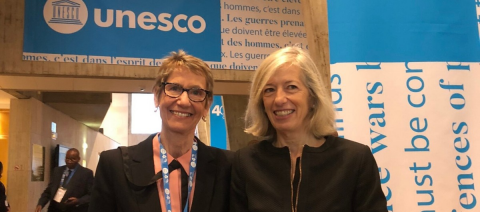 Teachers and UNESCO team up to define professionalism for teaching and learning across the world 2019-12-11 Education International (EI) and UNESCO launch a joint framework that will define what quality teaching means, now and in the future. The Global Framework of Professional Teaching Standards was launched today in front of education ministers, EI member organisations and policy experts at UNESCO’s headquarters in Paris. With quality teaching high on the global education agenda, educators and their unions have taken the lead to create a set of standards that defines the new benchmark for quality teaching and that will contribute to the achievement of Sustainable Development Goal 4. The Global Framework of Professional Teaching Standards was developed in close cooperation with UNESCO. At the UNESCO General Conference, Education International President Susan Hopgood took the floor to introduce the new tool and stressed that this was the result of a participatory process that responds to the wish and the right of educators to be at the table when education policy decisions are made. “We care deeply about the status of our profession and about the quality of the education provided to our students,” she said, adding that the recognition of teaching as a profession implies taking professional standards and working conditions seriously. UNESCO Assistant Director General for Education, Stefania Giannini, added that “professional teaching standards designed with the aim to define what quality teaching means for delivering quality education are a powerful instrument in the hands of educators. Their development is one of the critical steps in order to increase the supply of qualified and trained teachers necessary to ensure quality education for all children and adolescents by 2030.” Why the world needs a standards framework for teachers The Professional Teaching Standards Framework complements existing UN normative instruments, in particular the ILO/UNESCO Recommendation concerning the Status of Teachers (1966) and the UNESCO Recommendation concerning the Status of Higher Education Teaching Personnel (1997) which aim to protect and promote the status of teachers. It lays out ten standards covering three domains: Teaching Knowledge and Understanding, Teaching Practice and Teaching Relations. Hopgood stated that the Professional Teaching Standards Framework would help raise the teaching and learning bar in many countries, schools and classrooms. The professional competences and capabilities defined in the framework would also help to strengthen teacher education and development programmes and propel teachers to a higher level of professional practice and excellence. Quality before surveillance The framework as it has been developed by EI and UNESCO is a tool to ensure quality, not “a managerial tool for controlling or punishing teachers. [It is] a fireguard against deprofessionalisation and a catalyst for improving teacher professionalism and practice,” Hopgood pointed out. It has been developed with the input of teachers, drawing on professional insights and vast experience from a wide variety of educational contexts. The framework was adopted by the EI World Congress in July. Education unions and governments are encouraged to use the Framework in their national contexts. URL:https://ei-ie.org/en/detail/16541/teachers-and-unesco-team-up-to-define-professionalism-for-teaching-and-learning-across-the-world