
News
Catch up on what’s happening in the world of global citizenship education.
1,668 results found
 Network Stories #1: Shermaine Barrett of ICAE on Transformative Education in Jamaica 2020-04-20 State and Civil Society Partnering Against Crime and Violence in Jamaica This week on Bridge 47's Network Stories Series, Shermaine Barrett of ICAE talks about the projects taking place in Jamaica on Transformative Education in schools in order to facilitate dialogue around peace issues. As part of its National Development Plan, Vision 2030, Jamaica articulated a vision of being a place to live, work raise families and do business. One of the four goals of the National Plan aims for a Jamaican society that is safe, cohesive and just. But the country continues to be dogged by a persistent problem with crime and violence. This is a phenomenon that belies a country that is beautiful in both its natural resources: scenic white beaches, rivers, mountains and plains and its people: effervescent and exuberant; friendly and innately hospitable. Often described as a monster among the locals crime and violence is seen as the main public safety issue for Jamaicans and a significant threat to the country’s human and economic development. Against this background efforts to address the issue of crime and violence is considered a high priority to many Jamaicans and so there are many and varied interventions that aim to address the issue at all levels of the society. Two of these interventions are the Peace and Love in Schools (PALS) initiative and the Peace Management Initiative (PMI). PALS Jamaica is a not-for-profit foundation dedicated to changing attitudes towards violence and promoting conflict resolution in the Jamaican society. It is a non-governmental organization (NGO) involving a cross-sectoral group that gives leadership at the Board Level. This entity was established in response to the state of rampant indiscipline in the Jamaican society that had pervaded the schools. The aim of this initiative is to manage conflict and violence in schools through understanding and resolving conflict. The main focus of the entity is to teach the young people who will be the adults of tomorrow to be at peace with themselves, their fellowmen and with God. One key activity of the organization is the coordination of a Peace Day which takes place on the first Tuesday of each year. The objective of this day is to create awareness among schools and the public of the need for peace. On this day the public is encouraged to wear something blue and to fly a blue ribbon from their cars. The day is celebrated with activities in schools and communities such as concerts, exhibits; art and poetry competition; art and craft; banner competition; film shows and marches against violence and the promotion of peace. The Peace Management Initiative is a State and Civil Society alliance which involves persons from churches, academics, Dispute Resolution Foundation, political party leaders and is funded by the Ministry of National Security. The aim of this initiative is to establish a sustainable mechanism of preventing and controlling organized and community violence. The interventions of this entity seek to address the crime issue through dialogue, mediation, counseling and community development and transformation. Some of its measures include training for youths in skills and academic subjects, training in the resolution of conflict; the provision of small grants for income generating projects; working with employment agencies and cultural activities. Author: Shermaine Barrett - ICAE URL:https://www.bridge47.org/blog/04/2020/network-stories-1-shermaine-barrett-icae-transformative-education-jamaica
 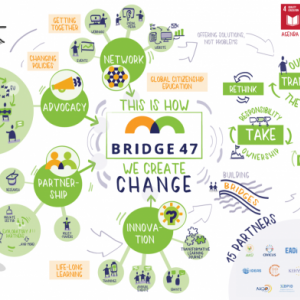 Envisioning More 4.7 Webinar 2020-04-20 In November 2019, Bridge 47’s ‘Envision 4.7’ event brought together 200 transformative education practitioners, civil servants, academics and civil society representatives from around the world to create a collaborative policy roadmap for the future implementation of Target 4.7 in Europe. The Roadmap featured six key target areas and 17 recommendations. Following up on this, last week Bridge 47 hosted a webinar on ‘Envisioning More 4.7’, to present the activities and measures that have been taken to forward the Envision 4.7 Roadmap. Joined by over 80 participants, this webinar was an opportunity to welcome back many familiar faces of those who attended Envision 4.7., as well as to meet and collaborate with new participants and organizations. Facilitated by Bridge 47 Network Officer Ricarda Motschilnig, the webinar featured four key speakers: Rilli Lappalainen, Director of FINGO and Chair of Bridge 47’s steering group; Ralph Carstens, Senior Research Advisor at the International Association for the Evaluation of Education; Elena Zacharenko and Adreia Oliviera, International Development consultants working for Bridge 47 and Brikena Xhomaqi, Director of LifeLong Learning Platform and part of Roadmap drafting group. The Roadmap The Roadmap’s creation was rooted, according to Rilli Lappalainen, in the existence of a space and need for holistic European action, specifically towards target 4.7. He emphasised the need for all types of education in the implementation of the SDGs, especially in today’s climate and circumstances. During the webinar, he introduced the key aspects of the Roadmap, stressing that: “How you measure the progress is the point. Not everything that is measured counts, but not everything that counts is measured. When discussing the Roadmap and its relevance, Ralph Carstens brought up the parallels between the current COVID-19 situation and the purpose of the Bridge 47 network, as well as the Roadmap, when it comes to global education and education for sustainable development. In terms of finding new ways to do things, Ralph highlighted that “the world feels like an educational laboratory right now. A lot of rapid learning, not just how webinars work, but also for schools. It’s a big catalyst for digitalization and extended cooperation.” However, he also brought attention to the obstacles for equity and equality, pointing out that not everyone has the same resources to participate. Brikena Xhomaqi, Director of LifeLong Learning Platform and part of Roadmap drafting group, discussed her experience at Envision 4.7, and explained the need to value lifelong learning beyond its economic value, seeing it as an opportunity to empower learns of all ages and to encourage personal growth and development. Echoing this sentiment, when asked what might bring us closer to the realization of target 4.7, Ralph pointed to how the role of teachers and the open classroom climate in discussing controversial, contested but also confusing issues really has a benefit to how students’ attitudes and their knowledge about these issues develop. These could easily be issues of global relevance such as health, environment and wellbeing. Where are we now? In the wake of Envision 4.7 and the creation of the Roadmap, Ralph Carstens says the Roadmap is key in bringing to life the rather abstract categories of target 4.7 and acting as a resource to bring greater clarity to the dimensions in the ways we discuss it. He stated that Bridge 47 could act as an excellent repository for the indicator work of target 4.7, recording what is going on both at the global and local level. Building on this observed potential, Elena Zacharenko and Adreia Oliviera, who have been working closely with Bridge 47, presented their EU policy area mapping report, which outlines main policy areas that offer entry points for 4.7 advocacy. They have produced a mapping which follows the relevant areas for promoting this target in accordance with the priorities of the EU commission. The mapping aims to go beyond well-known policy areas with clear links, focusing rather on find ways to identify and promote proactive action. The matrix, which is divided into priority levels, outlines which EU policy areas complement the Roadmap’s six categories. Questions and Discussion Throughout the webinar, participants were able to submit questions for each speaker to answer. The quality of participant questions and the depth of discussion from each speaker made for an interesting and valuable discussion. Now more than ever, it is important to know collaboration and learning from one another is still possible in uncertain times. Watch the full webinar: Click hereRelated files: Click here URL:https://www.bridge47.org/index.php/news/04/2020/envisioning-more-47-webinar
  Step it up G7: An extraordinary time requires extraordinary solidarity 2020-04-20 Editorial published in French in Libération on April 4 and signed by members of the G7 Gender Advisory Councils, including Alice Albright, GPE CEO. Desperate times require bold and determined leadership. The COVID-19 virus represents a common challenge to the whole world and, like never before, reminds us of our interdependence. We are experiencing an unprecedented health crisis that can now affect anyone and exposes the most vulnerable to additional risks. Because of deep-rooted gender inequality, girls and women worldwide will also experience the COVID-19 pandemic differently. We, members of the 2018 and 2019 G7 Gender Equality Advisory Councils, urgently call on G7 member states for joint emergency action to respond to the particular challenges facing women and to prevent the deterioration of gender equality and women's rights worldwide. We call on all governments to take into account the gendered dimensions of this crisis. While men are so far slightly more affected, women make up seventy percent of healthcare and social service workers worldwide, putting them at the forefront of the crisis and at greater risk of exposure. They also hold the majority of low-paid and shut-down retail and service jobs, and are therefore even more economically vulnerable during - and after - this crisis. The COVID-19 pandemic and the imposed confinement measures have already resulted in a significant rise of domestic abuse, especially against women and children worldwide. Women's fundamental sexual and reproductive rights and services have been dramatically reduced. Progress in ensuring education for all girls has been set back. Women in conflict zones and living in camps for refugees and displaced people are facing the virus in the worst conditions. They need protection. All of us need more solidarity. Supporting healthcare and social workers Firstly, the G7 Gender Equality Advisory Council insists on the responsibility of G7 leaders to take special measures to support healthcare and social workers and to provide proper working conditions during the crisis, including all the necessary equipment and social housing near hospitals. Secondly, it is urgent and vital to adopt special measures to protect those experiencing domestic violence. Governments should ensure efficient training of all first responders, create additional emergency shelter spaces, ensure immediate removal of abusers from homes and provide support for helplines. Thirdly, governments should ensure that gender equality is front and centre of their education response. School closures will exacerbate existing gender inequalities, particularly for the poorest girls. Governments must keep all girls engaged in learning, factor in gender considerations when planning for school resumption and make good on aid commitments. Men should take on 50% of housework Fourthly, we demand that governments guarantee access to sexual and reproductive health services, including abortion, maternal health, and pre- and post-natal care. At this time of crisis, high unemployment and economic despair for millions, we also call for free menstrual and modern contraception products for girls and women. Fifth, government public service messaging is needed to encourage men to do fifty percent of care and housework traditionally carried out by women. Finally, governments should also provide disaggregated gender data on the crisis to give healthcare professionals and policy makers the information needed to develop effective health and socio-economic responses. As the crisis intensifies around the world, it is clear that if we truly want to save lives and deliver health, wellbeing, and dignity for all, girls and women must be front and center of, and included in the decision making of local, national and global emergency responses, in social and economic recovery efforts, and in how we strengthen our health systems post-pandemic – just as women are on the frontlines of the fight right now. Without international coordination and solidarity, especially with the most vulnerable in our societies, this deadly pandemic will take a tremendous toll - not least in places where health systems are weak, unevenly distributed and where poverty paralyzes. This challenging moment is not only a call to protect people's lives and preserve their rights, it is also an opportunity to face our common failures, learn from them and build a better, more gender equal world that is healthier, more prosperous and more peaceful. This extraordinary time requires extraordinary humanistic leadership, free from xenophobia, sexism and economic mercantilism. It requires everybody's action - women and men, young and old, public, private, and civil society sector. Our humanity must light up these darkest times. Signed by the following members of the 2018 and 2019 G7 Gender Equality Advisory Councils: Alice P. Albright, CEO, Global Partnership for EducationLisa Azuelos, FilmmakerBochra Bel Haj Hmida, Lawyer, Nobel Peace Prize Laureate 2015Emma Bonino, Italian senatorDillon Black, they/themOuided Bouchamaoui, Nobel Peace Prize Laureate 2015Winnie Byanyima, Executive director of UNAIDS and former executive director of Oxfam InternationalMarie Cervetti, Director, Une femme et un toitDiane Elson Professor, University of EssexMercedes Erra, Founder and President of BETCCaroline Fourest, Writer and FilmmakerRosemary Ganley, JournalisteLeymah Gbowee, Nobel Peace Prize Laureate 2011Gargee Ghosh, Bill et Melinda Gates FoundationBrigitte Gresy , President of the Haut conseil à l'égalité FranceDayle Haddon, Founder of WomenOneYoko Hayashi , Lawyer et former president of CEDAWIsabelle Hudon , Ambassador of Canada in FranceMuriel Ighmouracène WriterKatja Iversen, President of Women DeliverRoberta Jamieson, President of IndspireAranya Johar, poet and activistFarrah Khan, she/herMichael Kaufman, author and activistAīssata Lam, President Youth Chamber of Commerce of MauritaniaPhumzile Mlambo-Ngcuka, Executive director of UN WomenVirginie Morgon, CEO of EurazeoVanessa Moungar, Director for Gender, Women and Civil Society at the African Development BankDenis Mukwege, Nobel Peace Prize Laureate 2018Nadia Murad, Nobel Peace Prize Laureate 2018Irene Natividad President of Global Summit of WomenAlexandra Palt, General Manager of L'Oreal FoundationNatalia Ponce de León, activistInna Shevchenko, Journalist and activist FEMENKareen Rispal, Ambassador of France in CanadaMaya Roy, CEO of YWCA Canada)Grégoire Théry, Co-Founder of CAP internationalEmma Watson, actress and activistMalala Yousafzai, Nobel Peace Prize Laureate 2014 URL:https://www.globalpartnership.org/news/step-it-g7-extraordinary-time-requires-extraordinary-solidarity
  10 steps for solving the global learning crisis 2020-04-19 Yesterday, at the Learning for All Symposium organised by the World Bank, global players came together to find some answers to two major questions: How can we solve the global learning crisis and how do we prepare young people for the 21st century marketplace? The second of these two questions was tackled in the 2012 EFA Global Monitoring Report: Putting education to work. The first was addressed in the 2013/4 EFA Global Monitoring Report: Achieving quality for all. This blog lays out the 10 strategies from that Report, which are based on the evidence of successful policies, programmes, strategies from a wide range of countries and educational environments. By implementing these reforms, countries can ensure that all children and young people, especially the disadvantaged, receive the good quality education they need to realize their potential and lead fulfilling lives. 1 Fill teacher gapsOn current trends, some countries will not even be able to meet their primary school teacher needs by 2030. The challenge is even greater for other levels of education. Thus, countries need to activate policies that begin to address the vast shortfall. At this primary school in the Eastern Cape, South Africa, there are 174 learners in one class. Many children don’t turn up to school because the learning conditions are so poor. Photo: Eva-Lotta Jansson 2 Attract the best candidates to teachingIt is important for all children to have teachers with at least a good secondary-level qualification. Therefore, governments should invest in improving access to quality secondary education to enlarge the pool of good teacher candidates. Policy-makers need to focus their attention on hiring and training teachers from under-represented groups, such as ethnic minorities. A sense of vocation: Bonafice, a teacher in Lodwar, Turkana, Kenya, says ‘Teaching is more than just a profession, it’s also a calling. Photo: Karel Prinsloo/ARETE/UNESCO 3 Train teachers to meet the needs of all childrenAll teachers need to receive training to enable them to meet the learning needs of all children. Before teachers enter the classroom, they should undergo good quality pre-service teacher education programmes and they need ongoing training so as to develop and strengthen their teaching skills and adapt to changes such as new curriculum. Teachers should be trained to teach multiple grades and ages in one classroom, in multi-lingual classrooms, and to understand how teachers’ attitudes to gender differences can affect learning outcomes. Hadiza is a teacher in Maradi, Niger. “As soon as I got my secondary school certificate I started teaching. I was trained in 45 days and then started my career as a teacher. When I started teaching I quickly understood that the training I received was not sufficient for me to teach well. There are many challenges in teaching and I think without good capacities and some experience we are not able to handle the challenges. Hadiza teaching in Maradi, Niger. Credit: Tagaza Djibo/UNESCO 4 Prepare teacher educators and mentors to support teachersTo ensure that teachers have the best training to improve learning for all children, it is important for those who train teachers to have knowledge and experience of real classroom teaching challenges and how to tackle them. Policy-makers should thus make sure teacher educators are trained and have adequate exposure to the classroom learning requirements facing those teaching in difficult circumstances. To enable newly qualified teachers to translate teaching knowledge into activities that improve learning for all children, policy-makers should provide for trained mentors to help them achieve this transition. Marianne is a teacher coach at a primary school in Alexandra township, Johannesburg. “The Minister of Education calls us coaches ‘a critical friend’: Critical in that we give guidance and problem solve with the teachers. And friend because we build up trust. And sometimes we are a disciplinarian, in a nice way.” Photo: Eva-Lotta Jansson 5 Get teachers to where they are needed mostGovernments need to ensure that the best teachers are not only recruited and trained, but also deployed to the areas where they are most needed. Adequate compensation, bonus pay, good housing and support in the form of professional development opportunities should be used to encourage trained teachers to accept positions in rural or disadvantaged areas. Local recruitment can also ensure that quality teachers reach children in remote areas. Terezinha, a 5th year teacher at a school in a favela in Rio de Janeiro, Brazil, said:” Schools located in hard neighbourhoods find it difficult to keep teachers on the job, as not all can stand the level of abuse they receive especially from older students. So teachers need an extra encouragement.” Photo: Eduardo Martino 6 Use a competitive career and pay structure to retain the best teachersGovernments should ensure that teachers earn at least enough to lift their families above the poverty line and make their pay competitive with comparable professions. An attractive career and pay structure should be used as an incentive for all teachers to improve their performance. These incentives can also be used to recognize and reward teachers in remote areas and those who support the learning of disadvantaged children. Ewesit, 28, teaches under a tree in a mobile school in Turkana, Kenya“I have 115 students. They all live the nomadic life. I love my people and I don’t want them to continue being illiterate. In 2008 to 2010, we were paid. And then since 2010 up until now, we haven’t been paid. We still have hope. Maybe we are going to be paid. We just continue with our teaching because we want to assist our people. I love my people and I don’t want them to continue being illiterate.” Ewesit, teaching under a tree in a mobile school in Turkana, Kenya. Photo credit:UNESCO/Karel Prinsloo 7 Improve teacher governance to maximize impactGovernments should improve governance policies to address the problems of teacher misconduct such as absenteeism, tutoring their students privately and gender-based violence in schools. Governments can also do more to address teacher absenteeism by improving teachers’ working conditions, making sure they are not overburdened with non-teaching duties. Strong school leadership is required to ensure that teachers show up on time, work a full week and provide equal support to all. School leaders also need training in offering professional support to teachers. Anjaneyulu, a teacher at a government school in Andhra Pradesh. ‘We have to shut the school for the day if two teachers are absent. When we combine students of different grades, it causes a disturbance in the schedule. We have to alternate between one grade and the other, and whilst doing so, one grade that is not being taught loses interest.” Anjaneyulu teaching at a government school in Andhra Pradesh. Credit: UNESCO/Poulomi Basu 8 Equip teachers with innovative curricula to improve learningTeachers need the support of inclusive and flexible curriculum strategies designed to meet the learning needs of children from disadvantaged groups. Policy-makers should ensure that early grade curricula focus on securing strong foundation skills for all and are delivered in a language children understand. It is important for curriculum expectations to match learners’ abilities, as overambitious curricula limit what teachers can achieve in helping children progress. It is not sufficient for children to learn foundation skills in school. A curriculum that promotes interdisciplinary and participatory learning is vital for teachers to help children develop transferable skills. Nomvuyo, a teacher at a primary school in Alexandra township, Johannesburg “Most of the teachers are applauding the Gauteng Primary Literacy and Mathematics Strategy programme. They have seen some positive changes in the weak learners, even if there’re still some who are struggling. The lessons are planned for us, so the teacher only need prepare. The learners, I think they are changing, because now they’re eager. Before, we would sometimes be lenient if they hadn’t done their homework, we’d give them extra time to do it. Now they know they have to do their homework because tomorrow it will be maths, and tomorrow it’s different work.” Nomvuyo, a teacher at a primary school in Alexandra township, Johannesburg. Photo: Eva-Lotta Jansson 9 Develop classroom assessments to help teachers identify and support students at risk of not learningClassroom-based assessments are vital tools to identify and help learners who are struggling. Teachers need to be trained to use them so that they can detect learning difficulties early and use appropriate strategies to tackle these difficulties. Providing children with learning materials to evaluate their own progress, and training teachers to support their use, can help children make great strides in learning. Targeted additional support via trained teaching assistants or community volunteers is another key way of improving learning for students at risk of falling behind. This primary school teacher, M. Yadiah, is using an ‘activity based learning’ method that has been mainstreamed in all government and government-aided primary schools in the Indian state of Tamil Nadu. The method works by generating internal feedback to improve learning. There are no examinations and no classroom rankings, lessening possible damage to self-esteem and motivation to drop out. Its success shows that it can be effective on a large scale. Mr. B Yadiah teaching at the Government school in Medipalli, Andhra Pradesh. Credit: UNESCO/Poulomi Basu 10 Provide better data on trained teachersCountries should invest in collecting and analysing annual data on the number of trained teachers available throughout the country, including characteristics such as gender, ethnicity and disability, at all levels of education. These data should be complemented by information on the capacity of teacher education programmes, with an assessment of the competencies teachers are expected to acquire. Internationally agreed standards need to be established for teacher education programmes so that their comparability is ensured. More and better data on teacher salaries in low and middle income countries are also needed to enable national governments and the international community to monitor how well teachers are paid and to raise global awareness of the need to pay them well. URL:https://gemreportunesco.wordpress.com/2014/04/11/10-steps-for-solving-the-global-learning-crisis/
  UNESCO Futures of Education Commission urges planning ahead against increased inequalities in the aftermath of the Covid-19 2020-04-18 The COVID-19 health crisis has resulted in school and university closures affecting over 90% of the world’s students. Even more drastic disruptions loom on the horizon, according to an independent International Commission on the Futures of Education appointed by UNESCO Director-General Audrey Azoulay in September 2019. Even when schools reopen, the emerging economic recession threatens to exacerbate inequalities and could rollback progress made in expanding educational access and improving the quality of learning globally, the commission warned during an online meeting on 9 April. Chaired by the President of Ethiopia Sahle-Work Zewde, the International Commission for the Futures of education brings together thought leaders from the worlds of politics, academia, civil society, education, and business. The COVID-19 crisis has underscored the importance of the Commission’s mandate to reflect on how knowledge and learning need to be rethought in an increasingly uncertain and fragile world. During its special meeting dedicated to the COVID-19 crisis, the Commission issued a Joint Statement on how education needs to be protected and transformed for our shared future and common humanity. In her remarks to the Commission, UNESCO Director-General Audrey Azoulay noted that “We now see that online distance learning cannot be the sole solution, as it tends to exacerbate already existing inequalities that are partly levelled in school settings. This will be of interest for this Commission whose task is rethinking the future of education, including appropriate articulation between distance and classroom learning”. President Sahle-Work said, “At my age, I have seen a multitude of effects caused by various crises. But with the current global pandemic, I am not sure we have drawn the pivotal lessons from the past required to mitigate the ill-effects of the disruptions caused to our lives. COVID-19 does not discriminate and is redefining our reality. We should respond with humility, solidarity and empathy.” According to the Commission, as humanity looks for ways to transform the world for the better after the worst health crisis in a century, we must rethink social policies, including education, and address long-standing issues of structural inequality, poverty and exclusion. An impending global recession is likely to have drastic consequences for the funding of education and other public services as well as for individuals’ lives and livelihoods. During this time, global commitments to education must be maintained and resources directed to those who have been hardest hit socially, economically and educationally. The Commission urges that crises—in global health and education—be addressed through solidarity, empathy and appreciation for our common humanity. See Statement by the Futures of Education URL:https://en.unesco.org/news/unesco-futures-education-commission-urges-planning-ahead-against-increased-inequalities
  How to Leave No One Behind as out of school becomes the norm – thoughts from Civil Society 2020-04-18 by the Collective Consultation of NGOs on Education 2030 (CCNGO-Ed2030) In just three months, the number of global COVID-19 cases has rapidly increased to almost 2 million as of April 16. It has gone beyond a health crisis, affecting all sectors from social to financial. With more than 1.5 billion learners out of school across 191 countries, the full ramifications of COVID-19 on education and learning are still unfolding. Civil society and NGOs are the eyes and ears on the ground during this COVID-19 learning crisis and highlight five needs post-crisis: Education needs everyone: The whole community approach and strengthened partnership with governments, non-governmental organizations, civil society, teachers, parents, youth and the private sector is the only way forward for sustainable quality education solutions. The community approach starts with concerted effort during the crisis to support parents and teachers. Students need relevant curricular adapted to these uncertain times: Including social and emotional learning as well as global citizenship. Learners needs safe, accessible communication/IT solutions which protect the user’s data: The International Telecommunication Union (ITU) indicates 3.6 billion people remain offline, with the majority of the unconnected living in least developed countries where just two out of ten people are online. Edtech solutions need global mapping and country context categorisation: Quality, free online courses can alleviate the impact of potential future school closures and targeting quality digital education opportunities for the most vulnerable will accelerate progress to SDG4. Education budgets must be protected: Budgets towards education must be protected through this financial crisis and where possible, increased for adequate solutions to be deployed and sustained. The CCNGO-Ed2030 members raise the flag on school closures causing: Shrinking opportunities for education in refugee camps and for the poorest: Education Cannot Wait terms this the ‘pile-on effect’ of the coronavirus. Heightening mental and physical health problems: The World Food Programme (WFP) states that more than 320 million children around the world are now missing out on school meals due to school closures because of COVID-19. Many of these children are from poor families and depend on the daily meals they receive at school. Social safety nets, food security in this period of emergency are essential for continued learning for poor students. Growing inequalities: Many students are not benefiting from any form of education (online, TV, radio or paper) nor academic monitoring and risk not returning to school. Strengthening of shadow education post-COVID-19 to “catch up”. Increasing vulnerability: According to UN Women every day, on average, 137 women are killed by a member of their own family and domestic violence againts women and children spike when households are placed under increased strains from insecurity, ill health, money worries, cramped or confined living conditions. In addition increasing children's exposure to online communities augments cyberbullying, risky behavior and sexual exploitation. On the employment front, the International Labour Organisation’s (ILO) estimates working hours will decline by 6.7 per cent in the second quarter of 2020, which is equivalent to 195 million full-time workers and is likely to affect women disproportionately. About the CCNGO-Ed2030 The Collective Consultation of NGOs on Education 2030 (CCNGO-Ed2030), made up of partners from all regions, is UNESCO’s key mechanism for dialogue, reflection and partnership with NGOs. Its Coordinating Group is comprised of 10 elected members: Mercedes Mayol Lassalle, World Organisation for Early Childhood Education and Care (OMEP), Refat Sabbah, Global Campaign for Education (GCE), Rasheda Choudhury, Campaign for Popular Education (CAMPE), Kouame Paulin Jr., Ivorian Network for the Promotion of Education for All, Samuel Ndembele, Africa Network Campaign on Education For All (ANCEFA), Hala Gubbaj, Teacher creativity center (TCC), Christoph Jost, European Association for the Education of Adults (DVV International), Maria Khan, Asia South Pacific Association for Basic and Adult Education (ASPBAE), Blanca Cecília Gomez, Campaña Latinoamericana por el Derecho a la Educación (CLADE), Marie-Claude Machon Honore, UNESCO NGO liaison Committee. See the CCNGO-Ed2030's working procedures and if interested in joining the network apply via this form (available in French and English). Related links: Civil society: Social and political action to prioritize education on political agendas - information and links about the Collective Consultation of NGOs on Education 2030's Global Meeting of December 2019. URL:https://en.unesco.org/news/how-leave-no-one-behind-out-school-becomes-norm-thoughts-civil-society
  "My Hero is You": Children's book to cope with COVID-19 2020-04-17 A new story book that aims to help children understand and come to terms with COVID-19 has been produced by a collaboration of more than 50 organizations working in the humanitarian sector, including the World Health Organization, the United Nations Children’s Fund, the United Nations High Commissioner for Refugees, the International Federation of Red Cross and Red Crescent Societies and Save the Children. News release of the Inter-Agency Standing Committee With the help of a fantasy creature, Ario, “My Hero is You, How kids can fight COVID-19!” explains how children can protect themselves, their families and friends from coronavirus and how to manage difficult emotions when confronted with a new and rapidly changing reality. The book – aimed primarily at children aged 6-11 years old – is a project of the Inter-Agency Standing Committee Reference Group on Mental Health and Psychosocial Support in Emergency Settings, a unique collaboration of United Nations agencies, national and international nongovernmental organizations and international agencies providing mental health and psychosocial support in emergency settings. During the early stages of the project, more than 1700 children, parents, caregivers and teachers from around the world shared how they were coping with the COVID-19 pandemic. The input was invaluable to script writer and illustrator Helen Patuck and the project team in making sure that the story and its messages resonated with children from different backgrounds and continents. In order to reach as many children as possible, the book will be widely translated, with six language versions released today and more than 30 others in the pipeline. It is being released as both an online product and audio book. My Hero is You - How kids can fight COVID-19Download the book (English version): Click hereMy Hero is You: all language versions Quotes from collaborating partners World Health OrganizationDr Tedros Adhanom Ghebreyesus, Director-General“Previous humanitarian emergencies have shown us how vital it is to address the fears and anxiety of young people when life as they know it gets turned upside down. We hope that this beautifully-illustrated book, which takes children on a journey across time zones and continents, will help them to understand what they can do to stay positive and keep safe during the coronavirus outbreak.” UNICEFHenrietta Fore, Executive Director“All over the world, children’s lives have been completely upended – the majority of them living in countries with some form of restricted movement or lockdown. This wonderful book helps children understand and navigate this new landscape and learn how they can take small actions to become the heroes in their own stories.” UNHCRFilippo Grandi, United Nations High Commissioner for Refugees.“This is an important resource for children around the world with a strong message of inclusion at its heart – that this pandemic can only be beaten if everyone is included in its prevention and response. Children, including those who are refugees, displaced and stateless, can help too. No-one is protected unless we are all protected”. UNESCOAudrey Azoulay, Director General“Sharing facts and reliable information is vital to respond to COVID-19, and I wish to commend the creativity and passion of all artists, writers and publishers who find compelling ways to translate and craft stories and artwork so they can reach children and families to comfort and guide them through a distressing situation. UNESCO is proud to support this initiative and we see this as an example of the contribution of the artistic community to the well-being and resilience of all." Media Contacts:Alison Brunier, Communications Officer World Health Organization+41 22 791 4468, +41 79 701 9480bruniera@who.int URL:https://en.unesco.org/news/my-hero-you-childrens-book-cope-covid-19
 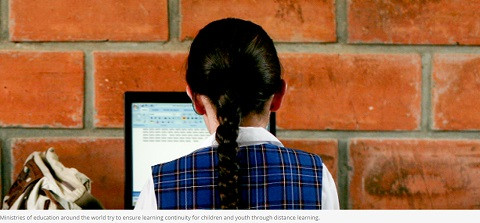 Schools’ readiness for digital learning in the eyes of principals. An analysis from PISA 2018 and its implications for the COVID19 (Coronavirus) crisis response 2020-04-15 by Juan Manuel, Morenolucas Gortazar Across more than 170 countries, some 1.5 billion students have seen schools close as part of their governments’ response to the coronavirus (COVID-19). Now, ministries of education around the world try to ensure learning continuity for children and youth through distance learning. In most cases, efforts involve the use of various digital platforms featuring educational content, and a variety of educational technology (EdTech) solutions to keep communication and learning spaces as open and stimulating as possible. The paradox facing all countries is that. Thus, if the digital gap in education were to increase while schools are closed, learning inequality and learning poverty would also inevitably increase. Learning continuity would then be ensured for some but denied to others. This would allow all students to access online learning materials and digital platforms with educational content. However, even in rich countries where Internet connectivity is all but universal and there is little gap in access, the COVID-19 crisis has illuminated two more dimensions to the digital gap. The second dimension is the digital use gap: without direction, engagement with online content is less sophisticated and less learning-oriented for students from poorer socioeconomic backgrounds. The third dimension is the school digital gap: the capacities and capabilities of each school to provide individualized, or suitably levelled and sequenced, digital learning for students; to promote and monitor engagement with these materials; and provide to feedback that helps maximize learning outcomes. For example, one school might be sending printed materials only or suggesting that students watch videos aimed at the general public, while another school is able to continue classes virtually or initiate creative ways of using digital apps for collaborative learning and individualized student support. The vast disparity in schools’ capabilities makes it easy to see why this is the most relevant digital gap for ensuring that students can keep learning during the pandemic. Since nobody knows more about schools than their principals, we have looked at the Principals’ Questionnaire in the Programme for International Student Assessment (PISA) 2018 to see what they said about the readiness of their schools and teachers to create and manage digital learning experiences for students. Their responses bring some hope, but also a realistic and somewhat disappointing picture. Do principals agree that there is an effective online learning support platform available to their students? Principals in slightly more than half of education systems surveyed said that most 15-year-old students are in a school without an effective online learning support platform. This is the case in all participating countries from Latin America and the Caribbean (LAC), most of those from Europe and Central Asia (ECA) (not the Baltics, Turkey, and Kazakhstan) and all of those from the Middle East and North Africa (MENA), except Qatar, plus a considerable number of high-income and OECD member countries (France and Portugal had 35 percent of students with no access, Germany 34 percent, and Japan 25 percent). While most countries are in the range of 35 to 70 percent, universal access to such platforms is within reach only for a few countries, including all the Nordic countries, Singapore, Qatar, and the four Chinese provinces participating in PISA 2018, and to a lesser extent Australia, New Zealand, Thailand and the United States. Overall, most countries are in the range of 35 to 70 percent of students attending schools in which the principal reports the availability of effective online learning support platforms. Hence the world’s education systems remain very far from universal availability of effective online platforms for student learning. Figure 1. An Effective Online Learning Support Platform is AvailablePercentage of 15-year-old students whose school principal agreed or strongly agreed Do teachers have the necessary technical and pedagogical skills to integrate digital devices in instruction? Principals had a much more positive opinion on this question. With just a few outliers (most notably, Japan), most countries have around two-thirds of 15-year old students in schools whose principals think their teachers have the technical and pedagogical skills for digital learning. High-income OECD members, again, do not fare better than middle-income countries. Differences between regions are comparatively small, although LAC and MENA lag behind ECA and East Asia and Pacific (EAP). In the COVID-19 crisis, the responses on this question offer some hope, though two-thirds seems low for teachers while at the same time raises concerns about the remaining third, whose teachers do not have skills that are now indispensable for successful digital learning during the school closures. Figure 2. Teachers Have the Necessary Technical and Pedagogical Skills to Integrate Digital Devices in InstructionPercentage of 15-year-old students whose school principal agreed or strongly agreed Are there effective professional resources to learn how to use the digital devices that are available to teachers? Principals were reasonably positive in their views on this question. For most countries, between 45 and 80 percent of students are in schools whose principal considers that effective resources exist for teachers to use the digital devices available, with quite a few countries reaching 90 percent and higher. Here again, rich countries are not particularly different from middle-income countries across LAC, MENA, EAP, and ECA. The two outliers are Japan and Hungary, where principals report a lack of such resources (affecting 19 and 29 percent of students, respectively). With close to a third of students having teachers who lack access to these professional resources, the COVID-19 crisis increases the urgency for ministries of education and private sector providers around the world to create and make available more and better resources for teachers (and now parents as well). Figure 3. Effective Professional Resources for Teachers to Learn How to Use Digital Devices are AvailablePercentage of 15-year-old students whose school principal agreed or strongly agreed Conclusion: Digital gaps in education are important to address in response to COVID-19 and future crises When it comes to education inequalities, the digital paradox is inescapable. In most of the 82 education systems participating in PISA, there is a positive correlation between the three variables described above and student socioeconomic status (a positive and statistically significant correlation is found in 46, 47 and 56 countries for each of the three variables described respectively). Thus, during COVID-19 and any future need for intermittent school closures, digital learning has the potential both to avoid widening learning inequalities and, paradoxically, to exacerbate them. The good news is that most school principals are quite confident about the pedagogical skills of their teachers and the availability of resources to help them use digital learning while students remain at home. It is critical now to ensure universal access to the Internet, as this can enable schools to use EdTech effectively, in age-appropriate ways, as part of their regular instruction. The aim is a smooth transition to distance learning, to allow continuity of learning during any future disruption in school operations. URL:https://blogs.worldbank.org/education/schools-readiness-digital-learning-eyes-principals-analysis-pisa-2018-and-its
 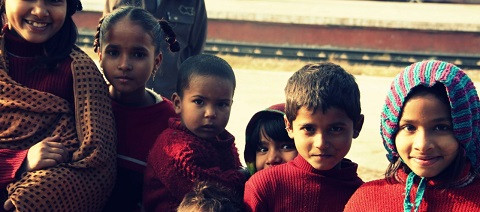 COVID-19 crisis sheds light on the need for a new education model 2020-04-15 by Mame Omar Diop and Tarush Jain To read the published version in the Education Times click here In no time, the COVID-19 crisis has brought the Indian society to a painful halt. To be fair, the more prosperous societies across the west are also facing a similar crisis. Social distancing has become an imperative in this fight against a mighty, invisible enemy. In a country with cultural norms and economic systems like ours, this is indeed a massive inconvenience not only socially but also economically. At the same time, the success of such a step depends not only on an individual but also all those around him. A tiny act of error or adventurism by a single individual can prove to be severe for scores of people. The question then is whether the Indian society is prepared for such discipline and empathy. More importantly, this will not be the last such crisis where one’s welfare will depend on the person next door. Tough questions need to be asked of our current institutions and systems. Amongst the most crucial of these is India’s education system. An aggregate shockAs per a research conducted by Brainwiz, across India, the last two academic years have witnessed some unfortunate disruptions. For instance, since the abrogation of Article 370 in August 2019, schools across Jammu and Kashmir lost over 60 working days. Extreme weather conditions and pollution levels forced a loss of 120 days across states such as Delhi, Puducherry, Punjab and West Bengal. Furthermore, political rallies and bandhs accounted for over 30 lost days. Yet, as one might notice, all these events, or ‘shocks’ were largely local in nature. A student in Karnataka was not too affected by the lockdown in Jammu and Kashmir. Even as students did not attend school in Delhi due to air pollution, students in Nagaland did not face any such issues. Furthermore, students across different states could have hardly made a difference to mitigate the hardships of other affected students. However, something is fundamentally different about the COVID-19 crisis. The key difference between the current crisis and the other aforementioned crises is the former’s aggregate nature. The crisis, for instance, has impacted (or has the potential to impact) Madhya Pradesh as much as Punjab. There are no safe havens. The last such ‘aggregate’ shock that comes to mind in the Indian context is demonetisation. Yet, in that case, we knew that an active government was working behind the scenes to ameliorate concerns at the earliest possible. However, in the current scenario, the government is depending on social awareness as much as the society is banking on the government’s preparedness. On the bright side, that also means that as a community, we broadly know what is to be done to ensure that one’s neighbour does not contract the disease, or that a young student does not infect an older relative. As a citizenry though, are we mentally conditioned to face such challenges? Is the Indian education system promoting a value system that promotes compassion, empathy and discipline aimed at public welfare? To our mind, the sad answer to both these questions might well be negative. In such a case then, is there a case for an alternate approach to education to instil the intent to act selflessly in the interest of the society at large? The case for Education for Sustainable DevelopmentIn November 2019, the 40th UNESCO General Conference adopted the new global framework on Education for Sustainable Development (ESD for 2030) for the period of 2020-2030. The global framework for implementation of ESD is the follow up to the Global Action Programme on ESD (GAP, 2015-2019). ESD for 2030 aims to build a more just and sustainable world through strengthening ESD and contributing to the achievement of the 17 Sustainable Development Goals. The framework will focus on integrating ESD and the 17 SDGs into policies, learning environments, capacity building of educators, empowerment and mobilisation of youth, and local level action. Furthermore, UNESCO also plans to host a ‘UNESCO World Conference on Education for Sustainable Development’, after the world recovers from this ongoing crisis. The Conference will raise awareness of these challenges, highlight the crucial role of Education for Sustainable Development (ESD) as a key enabler for the successful achievement of all SDGs, and create momentum for strengthening ESD in policy and practice. ESD is aimed at internalising the unintended effects of one’s actions on others. By introducing subjects such as gender studies and environmental sustainability, education systems across the world are trying to ingrain among their students these concepts at a very young age. Through multidisciplinary, inter-disciplinary and multidimensional approaches, the overall objective of the exercise hinges around the idea of translating academic concepts into relatable real-life challenges and finding their solutions. ESD’s focus on often ignored soft skills such as critical thinking, problem-solving, leadership and communication equip students with the right toolkit to deal with these challenges. These assertions are also backed by evidence. Evidence from across the world suggests that ESD curricula help students develop a deeper understanding of real-life challenges that the global community is facing. These include but are not limited to- climate change, socio-economic inequality, gender bias and peace-building. Through such a holistic approach, ESD seems to have not only developed virtues such as empathy and compassion, but is also correlated with better grades and a wider range of future academic and professional opportunities for students. It is, therefore, not surprising that UNESCO is pursuing this objective very rigorously and is working with policy-makers and educational institutions across the world to scale these efforts up. However, a lot still remains to be done. As much as we may want to wish, the COVID-19 crisis will not be the last such aggregate shock. By not focusing on skills aimed at sustainable cohabitation, we have already produced several generations of adults who may not be psychologically equipped to deal with such challenges. Our best hope, in such a case, is to begin as soon as possible and churn out the next generation of community leaders who can think not only for themselves but also for those around them. COVID-19 might just be a trailer for several such challenges that await us. (Mame Omar DIOP is the chief of Education Sector at UNESCO New Delhi Office and Tarush Jain, TEDx speaker and founder, Brainwiz ) URL:https://en.unesco.org/news/covid-19-crisis-sheds-light-need-new-education-model
  Learning continues online: Facebook launches with UNESCO resources for educators to collaborate & continue learning process 2020-04-15 Guide to also provide authentic information on COVID-19 To ensure continuity in the process of learning in the wake of COVID-19, Facebook has launched an online resource guide titled, ‘Supporting Education Communities: An Online Learning Resources Guide’. The online resource will guide education communities on how to collaborate and continue the learning process using Facebook products, tools and programs while also providing information related to COVID-19 from authentic sources. Currently, the guide is available in English, Hindi, Marathi, Gujarati and Kannada. In its first phase, Facebook has partnered with UNESCO who will support in ensuring the guide reaches learners, educational institutions and teachers across India besides supporting with the updation and curation of the guide with relevant learning resources. The online resource will help and guide education communities on how to collaborate by using Facebook’s products and tools like Facebook Pages, Facebook Groups, Facebook Live, Messenger, WhatsApp and Instagram. The guide will also provide vital information about COVID-19 from authoritative and credible sources such as Government of India’s advisory, WHO India Situation Report Page, Ministry of Health and Family Welfare, Coronavirus Resource Hub on Facebook, and Guidance from UNICEF on COVID-19 prevention and control in schools and help them in dealing with anxiety and bust misinformation surrounding the ongoing pandemic. In these difficult times, there is certainly low level of engagement, decline in social life and disruption in daily routines. It is therefore even more important for people to stay connected and have access to credible information about COVID-19. Through this online learning resource guide, we aim to equip teachers, parents and relevant government officials with ample resources and tools of Facebook family of apps and help them stay connected and collaborate digitally to facilitate remote learning. We sincerely hope they are able to leverage these resources and continue the learning process. Manish Chopra, Director and Head of Partnerships, Facebook India The COVID-19 outbreak has caused not only a health crisis but also a learning crisis. More than 90% of the world’s learners are affected by the school and university closures. In line with the global efforts, UNESCO New Delhi will focus on mobilizing the national and state level actors and resources in order to develop an effective and unified response avoiding overlaps for maximum impact. Eric Falt, UNESCO New Delhi Director Further, the on-ground needs will be matched with context-appropriate solutions to provide education remotely, leveraging hi-tech, low-tech and no-tech approaches with a special focus on ensuring access for women learners. Technology will be the key enabler for all such efforts. The partnership between UNESCO New Delhi and Facebook will therefore play an important role in providing an online platform for all stakeholders to come together and act in tandem to end the learning disruption.” As more and more schools are advised to transition to a virtual model, Facebook remains committed to supporting communities and users to ease this process of virtual learning and enable educators with information about COVID-19. Meanwhile, Facebook also launched its Information Centre last week to provide accurate information about the ongoing pandemic. URL:https://en.unesco.org/news/learning-continues-online-facebook-launches-unesco-resources-educators-collaborate-continue