
News
Catch up on what’s happening in the world of global citizenship education.
1,668 results found
 UNESCO Chair is launching an online course to counter the rise of violent extremism and hate speech 2020-04-30 A UNESCO Chair is launching an open access online course, Hate to Hope, to address messages of hate and intolerance. The world is experiencing an unprecedented crisis due to the COVID-19 pandemic. While initiatives and actions of solidarity and dialogue are numerous, messages of hate and intolerance are spreading. Fake news, misinformation and disinformation are being used to target people, communities, countries, and research institutions. While part of an established global trend, hate speech and violent extremist ideologies are currently on the rise. To help address these issues, the UNESCO Chair on the Prevention of Radicalization and Violent Extremism (Canada) is launching the free Massive Open Online Course (MOOC) ‘From Hate to Hope: Building Understanding and Resilience’. The MOOC starts on 4 May 2020 and will be available in English, French and Arabic. To register. The 10-hour course is designed for a wide range of stakeholders and offers many perspectives on the theme including from global experts in violent extremism and hate speech and former violent extremists. It explores the difference between hate speech and free speech, the dynamics of hate including ways in which people are manipulated to feel and express hatred, offers ways to build resilience to hate dialogue, and looks at how social media can be used to both traffic and challenge hateful messages, with concrete examples. Tangible solutions for prevention, resilience and advocacy, online and offline, are also presented. More information UNESCO Chair on the Prevention of Radicalization and Violent Extremism (Canada) UNESCO’s work and resources on the Prevention of Violent Extremism URL:https://en.unesco.org/news/unesco-chair-launching-online-course-counter-rise-violent-extremism-and-hate-speech
 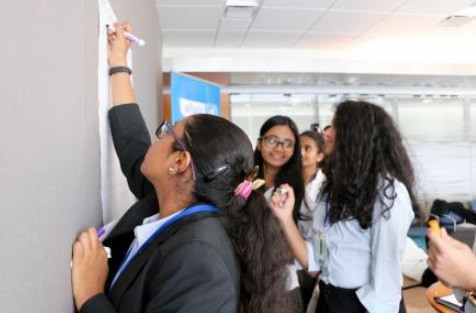 WFUNA Launches Online Programs 2020-04-29 With schools and borders closed amidst the COVID-19 pandemic, WFUNA has been working hard the past few months to implement and launch several online programs for a range of age groups. The safety and wellbeing of our participants is extremely important, however we want to give the chance to remain engaged in WFUNA programs while remaining socially responsible. Mission Possible is offering two online programs that challenge high school students across the globe to connect virtually, collaborate across cultures and engage in meaningful action! More info here. WIMUN is offering online Model UN simulations and training sessions. WIMUN Online is for all high school and university students aged 14-30, with high school and university students being split into different sessions. Each session will go ahead once a minimum amount of students has registered in order to ensure proper and productive debate and negotiations. Teachers will be able to participate as observers for a reduced fee. More info here. Expanding its reach beyond physical trainings, WFUNA now offers a unique new online Training Program allowing students a fully immersive virtual learning experience about the UN. UN Spotlight brings the world of multilateral diplomacy directly to students. Through an efficient and customizable system of online events, classes, and interactive sessions, WFUNA focuses on relevant international issues with the help of experienced professionals from all over the world. The online format combined with WFUNA’s expertise and broad network offer a wide range of exclusive opportunities that students cannot access anywhere else. UN Spotlight provides students with hands-on training, practical knowledge and guidance on constructively and effectively participating with the UN. More info here. URL:https://wfuna.org/posts/wfuna-launches-online-programs
 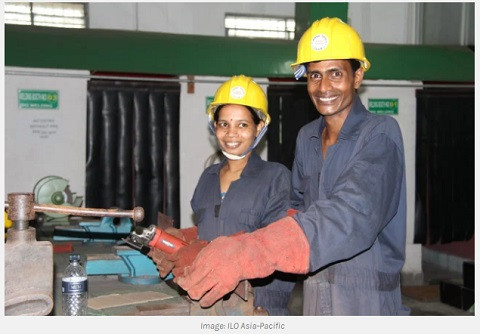 TVET and skills development in the time of Covid-19 2020-04-28 By Paul Comyn, ILO With less than 5 months since the first official reporting of a Coronavirus (COVID-19) case, we have almost arrived at a global paralysis of regular education and training provision. This unprecedented situation is affecting learning at all levels but especially initial and continuing TVET, adult education and work-based learning, which have come to a stop as we know them. The situation has upturned course schedules and attendance, disrupted teaching and learning, frustrated examinations and assessments, delayed certification and will likely affect the immediate and future careers of millions of learners. But TVET and skills programs do not easily migrate to distance and online learning. Despite these challenges, in some contexts, it is clear that the crisis also provides an opportunity for the development of more flexible learning solutions that make better use of distance learning and digital tools. However, the shift to online or distance learning in TVET and skills development during the pandemic should be seen first and foremost as an emergency response and not a rapid and permanent migration of programs. Short term solutions can be and have been found but we must seize this opportunity to create long-term positive impacts and develop greater resilience. Mobilising human and financial resources during this crisis is fundamental to ensure universal access to digital tools and modern learning technologies in the TVET and skills sector. The training of teachers and instructors, managers and learners to ensure their readiness to engage in digital learning must be addressed, and education and training providers have to revise teaching and learning models to make the best use of digital resources and tools. As of April 14, 2020, according to UNESCO, nearly 1.6 billion or 91.3% of school students have been affected by system closures in 188 countries. Other countries have also implemented localized closures affecting millions of additional learners. Whilst these figures may capture TVET students enrolled in secondary education systems, comprehensive international data on the impact on TVET students is not yet available. In the Latin America and Caribbean region however, we know from ILO CINTEFOR that 85% of TVET institutions are completely closed. In the TVET and skills sector, there is evidence that the major challenge for institutions has been to remain operational, to establish and maintain communications with and between teachers and students, and to continue to provide their services to the community, despite having suspended face-to-face classes. An additional challenge to TVET institutions trying to remain operational is that some are also supporting national crisis response measures. For example, in the Philippines and Costa Rica they are using their workshops to manufacture personal protective equipment and hand sanitizer for healthcare personnel, or to 3D print medical devices. In addition to the closure of colleges, work-based learning is being maintained in very few countries and in sectors like finance and ICT where commercial activities continue through teleworking. This element of TVET programmes is the most affected by the pandemic, and its impact is highest in countries where it is a compulsory part of the curricula. Despite recent advances in technology, distance learning, be it online or offline, is not a long-term substitute for face-to-face teaching and practical skills training. In low- and middle-income countries, there are many issues impeding the wider and permanent diffusion of distance learning. These involve socio-economic and cultural aspects beside the limited ICT infrastructure that contributes to the digital divide. While new solutions for teaching and learning could bring much needed innovation to education and training systems, the shifts we are seeing have the potential to exacerbate existing inequalities for those who already face disadvantages in trying to access and engage in learning. We cannot ignore the digital divide and the uneven access to equipment, tools and skills it implies and we cannot allow the rush to go online to widen existing inequalities. We need to recognise the significant challenges that distance and online learning presents for teachers and trainers, working in institutions and systems that are underfunded and neglected compared to general and university education. If we want to ensure that the shift to distance and online learning both meets immediate learning needs and prepares us for more effective TVET and skill systems in the future, a number of key measures need to be taken now and in the months ahead. Decision makers need to: improve internet infrastructure and access to the internet; expand access for learners to online digital application and platforms; utilise inclusive digital and analogue technologies for distance learning and support lo learners; support teachers and trainers to operate in the new environment; provide support, career guidance and digital skills development for learners; increase distance and short course learning options for core, entrepreneurial and employability skills to vulnerable groups and individuals; strengthen systems for the recognition and validation of digital learning; increase investment in digital solutions for practical skills development; and improve social dialogue and coordination amongst education and training institutions, employment services and local authorities. URL:https://gemreportunesco.wordpress.com/2020/04/28/tvet-and-skills-development-in-the-time-of-covid-19/
 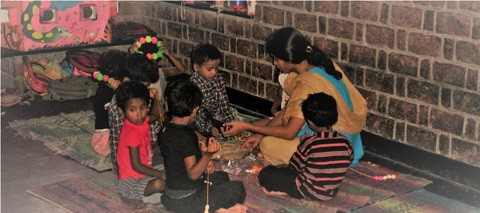 Take a Survey: COVID-19 and Early Childhood Education Workforce 2020-04-28 According to UNESCO Institute for Statistics, the COVID-19 pandemic has led to the closure of schools in 188 countries, affecting more than 1.5 billion students and 63 million primary and secondary teachers worldwide. While all levels and types of education are facing serious challenges, it was noticed that there has been insufficient discussion on the impact of COVID-19 on the early childhood education (ECE) workforce. Thus, UNESCO, UNICEF, Asia-Pacific Regional Network for Early Childhood (ARNEC), the Early Childhood Workforce Initiative (ECWI) and International Step by Step Association (ISSA) and designed a joint Survey for ECE centre managers, heads of pre-primary/preschool, and ECE teachers and practitioners. The survey aims to: Advocate and raise awareness on the impact of COVID-19 on ECE workforce – to be shared at the upcoming webinar organized by ARNEC as part of its webinar series on “Young children amidst COVID-19” and in future advocacy efforts of partners; Devise policy recommendations for governments - to be shared and endorsed at the 4th Asia-Pacific Regional Policy Forum on ECE; Identify practical solutions for providers to support the ECE workforce; and Contribute to the five year progress review of SDG4 and understand the implications of the status of ECE workforce on progress toward SDG4. The survey consists of three parts: Part A: For everyonePart B: For ECE centre managers/ heads of pre-primary/preschool Part C: For ECE teachers and practitioners You can choose to answer the section that is applicable to your context. However, we encourage everyone to provide as much information as possible so that we can better analyze the situation. Completing the survey should take about 20 minutes. All information collected in this survey will be treated with strict confidentiality. While results will be made available by country and, for example, by the type of ECE centre/school within a country, neither you, the ECE centre/pre-primary school, nor any centre/school personnel will be identified in any report of the survey results. Participation in this survey is voluntary and any individual may withdraw from participation at any time. The information you have provided is vital and will be put to immediate use. To take the Survey in English, Hindi. The deadline for the survey is 8 May 2020. URL:https://en.unesco.org/news/take-survey-covid-19-and-early-childhood-education-workforce
  How is the current crisis changing Slovak education for the better 2020-04-28 One of the leading experts on (Global Citizenship) education in Slovakia Juraj Hipš writes about the unexpected development that is taking place in the Slovak education system. Innovation that is long overdue in Slovakia is not only about the use of technological means but also about the evolution of thinking and employment of teaching methods in line with the tenets of Global Citizenship Education. How many arguments have there been over the years about how the curriculum was impossible to reduce? Nothing could be omitted. Children have to know what is paronomasia and epizeuxis. How could they live without it? They had to be able to define in which forest layer polypodiopsidas and casuarinas were found, and whether Mother Earth was closer to the Sun in aphelion or perihelion. It does not matter that they could break their tongue on these terms at the age of ten. How many scientific disputes were there about the way the school system will collapse without grades? What would an eight-grader do if he didn't see digits on the report card? This has to be verified for years, measured, assessed at pedagogical symposiums, and incorporated into guidelines. Giving only verbal reviews? God, you want a pedagogical revolution! How much debate there was about how we have to make some pupils repeat the school year? The worthless do not deserve better. We will slam them with a failing grade, and they will understand how important the school is. Never mind that it had never worked as a motivation for learning. And then the virus came. In a month, it had succeeded in what no minister was able to do in decades. Suddenly, the curriculum can be reduced, and no one shouts how stupid our children will become. Nobody protests what will children do without the paronomasia. Suddenly, we are publicly talking about how we cannot take the grades dead-seriously. It is no longer the holy grail of education. An instrument to keep those naughty children alert enough to learn. No one will fail and repeat this year. And everybody understands it somehow, and nobody really knows why it has never been possible before. The verbal evaluation is suddenly not a fad of looney alternativists, but a serious recommendation of the state. If we will one day talk about who initiated the reform of education in Slovakia, teams of pedagogical experts, well-known professors, or long-term reforms were not enough. A virus helped them. It did what seemed impossible a few weeks ago. It is strange, but we will eventually applaud Minister Corona for real changes in education. We should not forget these changes, even after we dethrone it. About the Author Juraj Hipš: Juraj Hipš is a Slovak teacher, expert in the field of education and teaching methodology, and a community worker. In 2000, he founded NGO Živica, which is now one of the largest GCE and education-focused NGOs in Slovakia. Marek Kakaščík (Innovation and Communications Trainee, marek.kakascik@bridge47.org): Marek assists Bridge 47 with the national work in Slovakia and with communications of our sug-granting mechanism. URL:https://www.bridge47.org/blog/04/2020/how-current-crisis-changing-slovak-education-better
 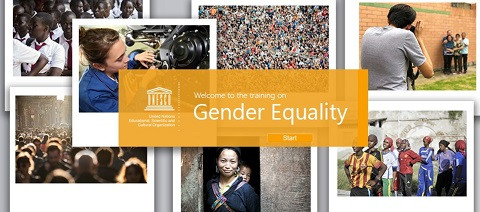 Launch of e-Learning course on Gender Equality at UNESCO 2020-04-28 The Division for Gender Equality is glad to announce the launch of the new e-learning course on Gender Equality at UNESCO. This training builds on content developed by the Division for Gender Equality to enhance the capacity of UNESCO staff in gender mainstreaming both in face-to-face training sessions as well as in the first version of the e-Learning tool launched in 2008. This training has been developed in close consultation with different sectors at UNESCO. Through this training, participants will get familiar with the key terms and concepts used in the area of Gender Equality and will learn how to use the main tools available to ensure successful Gender Mainstreaming in their daily work. The training includes concrete examples to help understand what we should all do to uphold the Organization's Global Priority Gender Equality. We have accelerated the launch of this course due to the coronavirus situation and the training is currently in its Beta version, only available to UNESCO staff members. As soon as the training becomes available to the general public we will announce it on this webpage. For questions on the content of the course, or other questions on Gender Equality at UNESCO, please contact ge.elearning@unesco.org(link sends e-mail) For questions on accessing the course, or other questions on MyLearning, please contact learning@unesco.org(link sends e-mail) URL:https://en.unesco.org/news/launch-e-learning-course-gender-equality-unesco
  UN supports education authorities in Lebanon to ensure continuity of education, inclusion and equity for children and young people 2020-04-28 The COVID-19 outbreak has translated into a major education crisis. Nearly 190 countries have imposed school closures, affecting 1.5 billion children and young people, according to a UN report launched by Secretary-General Antonio Guterres last week. While many countries, including Lebanon, switched to distance teaching and learning to mitigate the effects of such disruption, challenges related to preparedness, infrastructure and capacity, as well as the digital gaps, have put additional strains on students, parents, teachers, principals and the educational authorities. School closure has widened learning inequalities, affecting the most vulnerable children and youth disproportionately. In this context, the UN urged collective action to mitigate the impact of the pandemic on children and youth and is providing support to the Ministry of Education and Higher Education (MEHE) and the Ministry of Agriculture, among other partners in Lebanon, by developing alternative solutions to school closure to ensure that learning never stops. In close collaboration with MEHE, UN agencies are assisting in preparing and deploying inclusive distance learning solutions, utilizing hi-tech, low-tech and no-tech approaches. Distance learning support includes activities for the production of pre-primary and basic education lessons, as well as well-being materials, the Gender-Based Violence approach and health awareness for students and parents. The UN is also providing assistance for developing communication learning materials and special TV episodes, targeting teachers and parents, to raise their awareness on addressing the stress and psychosocial needs of children during remote learning. “Never before have we witnessed educational disruption at this scale. Despite the crisis, learning should never stop. While Lebanon is developing alternative solutions for school closure, we have a special responsibility to ensure inclusion and equity for all learners, so that no one is left behind. Our collective actions not only can help ensure continuity of education but can also contribute to building a more resilient education system for the future”.- Dr Hamed Al Hamami, UNESCO's Regional Director for Education in the Arab States “From school closures, to isolation, to a persistent sense of fear and anxiety, the effects of this pandemic are impacting children worldwide. We need to come together and explore every avenue to keep children learning and help them through this difficult time. The Ministry of Education and Higher Education has been able to swiftly deploy innovative, scalable solutions for children and youth. The adaptations made are a powerful reminder of what we can achieve together for children as the crisis is far from its end”.- Yukie Mokuo, UNICEF Representative in Lebanon The school closures have also affected youth enrolled in vocational and technical education and training. The UN in Lebanon, with its partners, is supporting the Ministry of Agriculture (MoA) in upgrading the agriculture education system in Lebanon, which offers Lebanese and displaced Syrian youth the opportunity of acquiring necessary technical skills to access improved career opportunities in agriculture and agribusiness in Lebanon or Syria upon their return. The assistance provided by the UN and its partners also includes distance online learning for students enrolled in the Technical Baccalaureate programs (BTA) at the seven agricultural technical schools in Lebanon. Teaching Programs are posted on the Ministry’s website for students’ access at this link and taken further with schoolteachers through virtual education. “FAO has always played an important role in the production, and dissemination of knowledge and technical educational materials to face the challenges of food security, sustainable agricultural and rural development. FAO is committed to provide continued support to the Ministry of Agriculture in upgrading the agricultural education system and in expanding distance learning opportunities for both Lebanese and Syrian students enrolled in agricultural schools". - Dr Maurice Saade, FAO Representative in Lebanon UN support to school children includes the extension of distance learning to the second shift and non-formal education programmes, aiming at reaching the most vulnerable communities, including the refugee communities. UN teams in the Bekaa developed remote learning solutions and created a virtual learning community (WhatsApp, Skype) contributing to guarantee children’s continued access to education. In Palestinian camps, UN-paid teachers and education cadres are currently implementing a Self-Learning Programme and using educational materials that the UN developed specifically to support student learning during this COVID-19 emergency. A Learning Readiness Rapid Assessment has been completed with the UN support and the participation of over 10,000 Syrian families with children enrolled in suspended non-formal and formal education programs. This assessment provides critical information to determine the ability of these families to access and manage distance learning opportunities. With this information, education providers will be able to tailor content and implementation modalities given the current lockdown. The UN has also developed a series of regional webinars to strengthen teachers’ capacities in distance/online teaching and build their skills to use ICTs in education. Several awareness raising information materials, including flyers and infographics have been prepared targeting teachers and parents. Since the outbreak of the pandemic, the UN has been monitoring the impact of the crisis on the sector and providing MEHE with technical expertise, sharing of information and good practices. Monitoring support is also focused on the progress of remote learning, identifying gaps and providing technical support. With a chief aim to keep children and their families safe and informed about how to protect themselves, the UN engaged in a series of preventative actions that included the development of Cleaning and Disinfection Protocol for schools, the provision of hygiene and medical kits to schools and health clinics. As schools are expected to re-open at one point, the UN is providing advice and recommendations for education planners and decision makers who are anticipating the reopening of schools after lockdown measures are lifted. URL:https://en.unesco.org/news/supports-education-authorities-lebanon-ensure-continuity-education-inclusion-and-equity
  Adverse consequences of school closures 2020-04-24 More on UNESCO's COVID-19 Education Response School closures carry high social and economic costs for people across communities. Their impact however is particularly severe for the most vulnerable and marginalized boys and girls and their families. The resulting disruptions exacerbate already existing disparities within the education system but also in other aspects of their lives. These include: Interrupted learning: Schooling provides essential learning and when schools close, children and youth are deprived opportunities for growth and development. The disadvantages are disproportionate for under-privileged learners who tend to have fewer educational opportunities beyond school. Poor nutrition: Many children and youth rely on free or discounted meals provided at schools for food and healthy nutrition. When schools close, nutrition is compromised. Confusion and stress for teachers: When schools close, especially unexpectedly and for unknown durations, teachers are often unsure of their obligations and how to maintain connections with students to support learning. Transitions to distance learnign platforms tend to be messy and frustrating, even in the best circumstances. In many contexts, school closures lead to furloughs or seperations for teachers. Parents unprepared for distance and home schooling: When schools close, parents are often asked to facilitate the learning of children at home and can struggle to perform this task. This is especially true for parents with limited education and resources. Challenges creating, maintaining, and improving distance learning: Demand for distance learning skyrockets when schools close and often overwhelms existing portals to remote education. Moving learning from classrooms to homes at scale and in a hurry presents enormous challenges, both human and technical. Gaps in childcare: In the absence of alternative options, working parents often leave children alone when schools close and this can lead to risky behaviours, including increased influence of peer pressure and substance abuse. High economic costs: Working parents are more likely to miss work when schools close in order to take care of their children. This results in wage loss and tend to negatively impact productivity. Unintended strain on health-care systems: Health-care workers with children cannot easily attend work because of childcare obligations that result from school closures. This means that many medical professionals are not at the facilities where they are most needed during a health crisis. Increased pressure on schools and school systems that remain open: Localized school closures place burdens on schools as governments and parents alike redirect children to schools that remain open. Rise in dropout rates: It is a challenge to ensure children and youth return and stay in school when schools reopen after closures. This is especially true of protracted closures and when economic shocks place pressure on children to work and generate income for financially distressed families. Increased exposure to violence and exploitation: When schools shut down, early marriages increase, more children are recruited into militias, sexual exploitation of girls and young women rises, teenage pregnancies become more common, and child labour grows. Social isolation: Schools are hubs of social activity and human interaction. When schools close, many children and youth miss out of on social contact that is essential to learning and development. Challenges measuring and validating learning: Calendared assessments, notably high-stakes examinations that determine admission or advancement to new education levels and institutions, are thrown into disarry when schools close. Strategies to postpone, skip or adminsiter examinations at a distance raise serious concerns about fairness, especialy when access to learning becomes variable. Disruptions to assessments results in stress for students and their families and can trigger disengagement. URL:https://en.unesco.org/covid19/educationresponse/consequences
  Rethinking Education Post-Coronavirus: Lessons from Spain to Avoid Widening the Socioeconomic Achievement Gap 2020-04-23 By Ana Capilla, Organización de Estados Iberoamericanos (OEI) and UFV; Jorge Sainz, Universidad Rey Juan Carlos (URJC), Madrid (Spain) and IPR (University of Bath, UK); and Ismael Sanz, URJC, Madrid (Spain) In a recent post, UNESCO reminded us of the similarity between the learning challenges that fourteenth century societies confronted during the Black Death and the current COVID-19 pandemic. Back then, as William Courtenay remembers, the plague helped develop new ways of teaching and the beginning of the substitution of Latin with popular languages as vehicles to communicate science. Just as that global pandemic marked the beginning of a new world in education, so could the current one if policymakers respond thoughtfully to this education crisis. School closures are happening all over the world and learning is being disrupted. At the time this post was written, more than 1.5 billion learners have been displaced – more than 91% of all students. Those few countries where schools have remained open are moving towards a total lockdown as an important response to contain the spread of COVID-19. Beyond these numbers, however, countries face many risks to recent gains in education opportunities, especially for students from vulnerable families. In a recent OEI report, we reviewed the empirical evidence of the impact of school closures on educational attainment. We surmise, based on the estimates from experiences of previous crises throughout history, that the effect of school closures from the official Declaration of Alarm in Spain (March the 15th) for this academic year will reduce the instructional time of a regular course by about 30%. In terms of OECD’s Programme for International Student Assessment (PISA), this reduction is the difference between Spain and the OECD average (8 points).The solution is not without challenges Yet, these findings need not define the final outcome of this pandemic. For the first time in history, we have a tool that may serve as a large-scale remedy for the loss of classroom-based education and enable the continuity of learning programmes: distance learning. Since the beginning of the closures, educational authorities across the world are turning to distance teaching and learning where possible, but there are several notable challenges to this policy. First – aside from internet connectivity – online education requires a greater commitment and discipline from learners and teachers. If this can be achieved, academic performance could be at least as good as traditional formats. Second, at lower educational levels (pre-primary and primary), families are responsible for enabling teaching, motivating their children (and themselves) and promoting learning. Parents must ensure that students remain in touch with their teachers and carry out the recommended lessons and activities provided. The role of parents is fundamental in distance learning and can be the cause of significant differences in learning outcomes among students. Generally, students whose parents have a higher educational attainment could possibly provide more support during quarantines which, in turn, may increase the learning gap between students of different socioeconomic groups. This outcome of course is conditional on many factors, including if both parents are teleworking full time or are deemed part of essential services. Third, the effectiveness of distance education depends on the involvement of the teacher, her or his training in the use of distance learning methodologies, the interaction of teachers and students as they engage in learning, and the use of a practical methodology that is attractive to students. This can be readily examined and remedied by authorities through training the trainer to increase the effectiveness of teachers and distance learning platforms and should be immediately addressed by governments. Fourth, as alluded to earlier, a fundamental matter that cannot be solved in a matter of weeks or months is access to and quality of the digital platform and physical network. The difference between synchronous or asynchronous methodologies (i.e. interactive classrooms, downloading content, etc.) affects the teacher/student and student/student interaction and the continuous evaluation of knowledge, which is also a relevant issue. In this instance, the level and quality of student access to computers/digital technology and high-speed networks is largely determined by family income. Vulnerable learner populations will need more support Ultimately, a country’s ability to mitigate the prevalence and severity of these four challenges will determine the impact of school closures and confinement on student learning. In fact, we estimate that distance learning can compensate for half of the lost face-to-face education time. In this case, the impact of school closures could be halved and the negative impact on student learning/attainment will be reduced. The final impact will depend on the effectiveness of distance learning compared to face-to-face traditional methods for all learners. Specifically, lower socioeconomic groups are most at risk during this period of COVID-19 school closures if education policies do not target their particular challenges with regards to distance learning. In general, students from families with high educational attainment, higher incomes, living in urban areas and in high-income countries will fare better and their academic performance may not be as negatively affected by school closures. As a result, the education disparities between rich and poor, urban and rural or northern and southern students may broaden. Also, the effects of an expected post-COVID economic crisis, with a great recession in sight and an uncertain economic recovery will mean a surge of unemployment and deepening levels of poverty. Evidence from previous recessions suggests that students from vulnerable families will confront the increasing likelihood of not graduating from compulsory education on time or dropping out altogether. Supportive education policy action is urgently needed To avoid these consequences, we believe that governments have to take rapid action based on existing evidence. Some countries, like Italy, are moving towards a general pass for the academic year. Such measures are risky as they tend to perpetuate the gap between students’ socioeconomic backgrounds unless accompanied by remedial measures. For example, the Italian Government has opted for an early start to the next academic year and agreed to the provision of additional classes to those students who need extra help. The Spanish experience with the PROA programme (Plan de Refuerzo, Orientación y Apoyo en centros de Educación Primaria y Educación Secundaria) a decade ago provides some relevant evidence to guide the COVID-19 response. During the Great Recession, the PROA programme provided extra support to disadvantaged students who would have been most affected by school closures and in so doing, improved academic performance in reading and learning by 8.5%. Regions like Galicia or Murcia, which tailored the programme by signing school-based contracts for schools that needed more support had better learning outcomes and a long-lasting impact. Other regional governments offered different measures, such as a fiscal stimulus to provide laptops and subsidize home connectivity for low-income students. In periods of crisis, history reminds us that much is at stake. Governments have the ability to reduce the negative impacts of school closures by attending specifically to those students who are most at risk. Many countries are home to the same type of students who are already vulnerable (i.e. those living in rural areas and from lower socioeconomic groups) and who need supportive education policies to succeed. Improving distance learning policies with these students in mind as the PROA programme has done – can provide a strong remedy to the current crisis in education. URL:http://uis.unesco.org/en/blog/rethinking-education-post-coronavirus-lessons-spain-avoid-widening-socioeconomic-achievement
 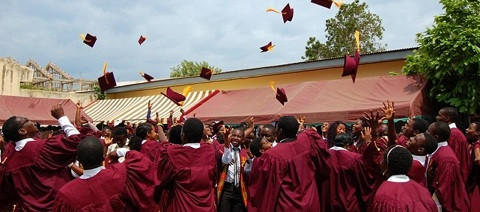 How young women are leading change in attitudes from Zimbabwe’s universities 2020-04-22 When Evernice Munando founded the Female Students Network Trust (FSNT) in 2005, it was almost unheard of for young women to be elected to Zimbabwe’s influential Student Unions, considered to be the training ground for the country’s future political leaders. Evernice explains that sexual harassment and discrimination are the greatest challenges facing young women at universities in Zimbabwe. Traditional gender norms and gender-based discrimination are still pervasive, especially in rural areas according to recent research carried out by FSNT and the Zimbabwe National Commission to UNESCO. Progressively though, there are signs that patriarchal attitudes and stereotypes keeping girls and women behind are beginning to shift in urban centers. In 2019 FSNT, laureate of the UNESCO Prize for Girls’ and Women’s Education, celebrated the election of three women as Student Union Presidents, and the election of many more to various leadership positions in student-led organizations. Meet Abiona, a young leader Abiona Mataranyika, a 22-year-old student, made history when she was elected as the first woman President of the Student Representative Council at the University of Zimbabwe, the country’s oldest and most prestigious institution. “I was the happiest person on the planet because I proved society wrong. It felt like a door of possibility was opening and I was the first to walk through it.” Abiona, recalling the day she won the election Like other female student leaders, Abiona was subjected to a multitude of personal attacks, threats, rumors and cyber bullying as well as violence on voting day, which saw eight people arrested for rioting outside the Student Union building. Abiona explains: “While we have many organizations advocating for women’s empowerment in Zimbabwe, we still experience a lot of resistance from men. Despite women having the same qualifications and achievements, we are perceived to be less capable than our male counterparts. This is what motivated me to stand for President. I wanted to bust this myth that women cannot hold these positions.” Shift in attitudes For Evernice, the increasing number of young women being elected to leadership positions in universities is a sign that the hard work of FSNT and other organizations is paying off. “We are seeing, for example, a much better understanding by young men of what sexual harassment is,” says Evernice. This is leading to a more supportive environment for young women in universities. Abiona’s candidacy was endorsed and supported by one of the biggest student political movements in the country, with many male members actively campaigning for her election. “We cannot deny there has been a paradigm shift in the attitudes of men towards female leadership”, she says. Today, Abiona is determined to use her unique position as the first female President of the Student Representative Council at her university to represent the views of all students. She is eager to find innovative solutions to change governing policies and improve life on campus for women, who make up 60% of the student body. As part of this work, Abiona is planning to hold seminars on women’s empowerment in partnership with FSNT for all interested students once the university reopens following the COVID-19 pandemic related closure. Abiona’s leadership is encouraging other young women to follow in her footsteps. This shows the importance of role models and the progressive shift in attitudes taking place on university campuses around the country. “Until girls and women are able to fully participate in leadership, the transformational changes that are desperately needed in Zimbabwe and elsewhere will remain elusive.”Abiona More information: Nominations for the 2020 UNESCO Prize for Girls’ and Women’s Education close on May 26, 2020. Check eligibility criteria and learn more here. In 2016, FSNT was awarded the Prize for its work on empowering tertiary education female students through leadership development and mentorship programs in Zimbabwe. Created in 2015 with funding from the Government of the People’s Republic of China, the Prize honors outstanding and innovative contributions that advance girls’ and women’s education. Read more on UNESCO’s response to COVID-19 education disruptions. This article was first published on the Education for All blog. URL:https://en.unesco.org/news/how-young-women-are-leading-change-attitudes-zimbabwes-universities