
News
Catch up on what’s happening in the world of global citizenship education.
1,668 results found
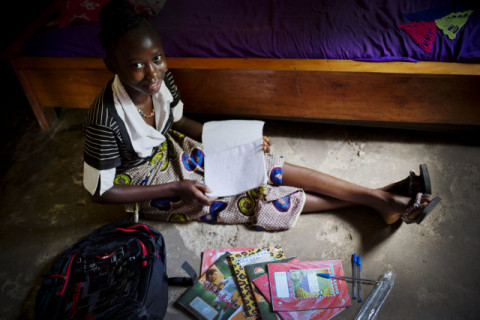 Three ways to plan for equity during the coronavirus school closures 2020-03-26 By Stefania Giannini, UNESCO Assistant Director-General for Education and Suzanne Grant Lewis, UNESCO-IIEP Director From school closures and home confinement to travel bans, countries and municipalities are ramping up efforts to slow the spread of the novel coronavirus, COVID-19. For education, the ramifications have resulted in a record number of children, youth and adults not attending schools or universities. UNESCO estimates that, as of 24 March, 138 countries have closed schools nationwide, impacting over 1.3 billion children and youth. A further 11 countries have implemented localized school closures. In the ensuing weeks, this will raise major challenges around equity: how will the most vulnerable students fare when schools are closed? Understanding the risks of school closures for the most vulnerable School closures in the context of this rapidly-spreading virus have been deemed necessary by health authorities across the globe, to both slow the spread of the disease and to mitigate the effects on health systems that will not be able to cope with potentially massive numbers of critically ill patients. In some contexts, confinement is becoming not only an act of civil solidarity, but an imperative measure for protecting public health. However, confinement and school closures often have longer-term consequences, especially for the most vulnerable and marginalized, magnifying already-existing disparities within the education system. In addition to the missed opportunities for learning, many children and youth lose access to healthy meals, and are subjected to economic and social stress. Planning school closures with attention to equity It is essential to take into consideration the risks of exacerbating disparities, and there are already lessons from the global COVID-19 crisis: Tackle the digital divide As many school systems are now offering online learning modalities while schools are closed, it is imperative to tackle the digital divide in moving forward. This includes looking at issues related to access, teacher preparedness, and school-family communication. Before and after school closures, public-private partnerships could help ensure that all students have access to information technology, or to radio and television modalities that are also relevant in some contexts and have been used successfully in crisis settings. Training teachers to use digital learning management systems and online learning pedagogy – before crises – is essential to transitioning to an online learning modality during a time of crisis. However, for teachers who are finding themselves in unchartered territory, a brief livestreamed training session could be organized. Establishing communication lines between teachers and parents before crises and maintaining them as children learn from home is also key to support the most at risk children. Ensure healthy meals beyond schools Solutions to reach students who rely on school meals are also important. Many lessons can be provided from the blog UNESCO wrote yesterday about different countries’ approaches. Strategies can include mobilizing school buses to deliver school meals and establishing partnerships with food delivery services could be another. Working with food and nutrition authorities to provide daily prepared meals that can be distributed via drive-thru or walk-up is another inventive solution used currently in San Diego, United States. Plan for inclusive learning solutions Education authorities must also take special care in planning for the diverse needs of all learners during school closures. This is paramount for students with learning difficulties, who may struggle to work autonomously and at a distance. It may be desirable to maintain minimum opportunities for classroom learning, with small groups of special needs learners. Providing direct individual online learning through daily check-ins with teachers and videoconferencing with other learners may also be necessary, as is the provision of resources to parents and caregivers taking on the role of teacher during school closures. UNESCO’s support to governments as they implement school closures UNESCO provides guidance to support education systems during this crisis as they move from traditional learning to digital learning, and provides free digital educational resources and a repository of national learning platforms designed to support the continuity of curriculum-based study. More information on UNESCO’s response to the COVID-19 crisis is available here. Through its International Institute for Educational Planning (IIEP), it also provides education authorities with technical cooperation for crisis-sensitive planning. This can help address all of these challenges related to the equitable provision of education during times of crisis. Such planning not only helps save lives; it can reduce recovery costs, as education officials and partners anticipate risks and act in advance. However, such planning must not get stuck with short-term fixes. It should move towards a systematic practice of prevention and preparedness for crisis. For school systems, this means not only responding to the day’s challenges, but also working to prevent, anticipate, mitigate, and recover from crisis, both in and through education. URL: https://gemreportunesco.wordpress.com/2020/03/25/three-ways-to-plan-for-equity-during-the-coronavirus-school-closures/
 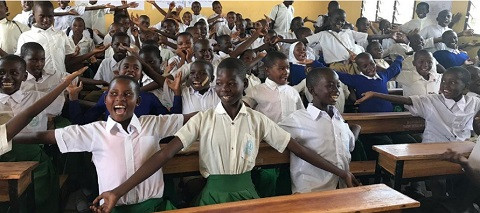 Youth-driven initiatives promotes safe learning environment for girls in Tanzanian schools 2020-03-26 At Ngweli Secondary School in Sengerema district of Tanzania, safe space-TUSEME (“Let’s speak out” in Swahili) youth club members are running a school cafeteria. ‘It was for us to have safe food’, shared student leader Said Ramadhan Rashid. When the school did not have a cafeteria, students used to go out to find food vendors in the neighborhood. Food from street vendors was often not clean enough. ‘Now, we are serving safe food for our peers. To set up this cafeteria, club members raised funds through a fundraising event. Bringing together peers, teachers, and community members, they collected enough fund to build a space and hire a community member to cook and serve the food in addition to the seed money provided by UNESCO. Milk tea, doughnuts, and some snacks are among the items being served now. As the rainy season is coming in Tanzania, students plan to set up a plastic roof to protect the cafeteria from rain. They are also looking into expanding their business into vegetable gardening. Youth club members also run weekly peer-to-peer campaigns encouraging studying and promoting a safe learning environment. Changes have taken place in school life. ‘We are happier to come to school. Violence has decreased between students, from teachers and parents because we have been empowered to speak out. And we are motived to study hard’, said a form three student (third year at lower secondary school), Ested Omary Ramadhani. ‘Club activities provide an important opportunity for students to achieve specific goals through their own initiatives’, said Amani Mbeyale, a Geography teacher mentoring the TUSEME club members. ‘From initiating an entrepreneurship project to running peer-to-peer support campaigns, girls and boys learn how to collaborate, communicate and solve problems while gaining confidence and improving their academic performance.’ Safe Space-TUSEME youth club encourages student-led activities to enhance adolescent girls' self-confidence and determination in remaining in school. The club is based on the combined concepts of Safe Space developed by UNESCO and TUSEME (Let’s Speak Out in Swahili) by Forum for African Women Educationalist. Students identify challenges in their school and discuss ways to address them. Similar initiatives were seen in other participating schools where peer support groups were created. For example, the youth club in Nyampulukano Secondary School discusses corporal punishment with teacher and parents. The Kilabela Secondary School club is piloting a school dormitory to address the long commute to school, often affecting girls’ attendance and increasing truancy in schools. Since May 2019, about 165 clubs were established in four districts of Tanzania – Sengerema, Mkoani, Ngorongoro, and Kasulu engaging more than 6,000 students as part of the UN Joint Programme project in Tanzania, Empowering Adolescent Girls and Young Women through Education. In partnership with UNFPA and UN Women, the project is supported by the Korean International Cooperation Agency (KOICA). URL:https://en.unesco.org/news/youth-driven-initiatives-promotes-safe-learning-environment-girls-tanzanian-schools-0
 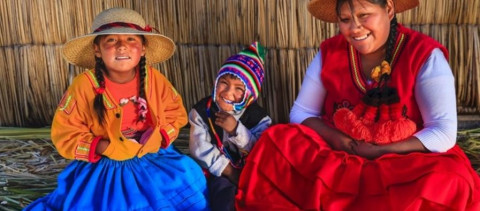 Mother language day 2020: Celebrating cross-border languages for peaceful dialogue 2020-03-25 UNESCO is celebrating ‘Languages without borders’ for International Mother Language Day 2020 on 21 February. Local, cross-border languages can promote peaceful dialogue and help to preserve indigenous heritage. Cultural and linguistic diversity are key for sustainable societies and help preserve the differences in cultures and languages that foster tolerance and respect for others. Around the world, some local languages, rather than vanishing, are in fact flourishing. Many of these fast-evolving languages are cross-border languages. For example, both regional variants of Maori – spoken in New Zealand, in the Cook Islands, and Sami, spoken across Northern Europe, have benefitted from efforts on the part of governments to revitalize these languages, which started in the 1980s. Borders in many parts of the world have been artificially imposed. From sub-Saharan Africa, to the Middle East to Latin America, many borders were negotiated and drawn arbitrarily splitting communities, which had existed for centuries. This process has contributed to conflict all over the world. Linguists specializing in cross border languages have pointed out that for such communities very often official borders do not ‘exist’. They continue to trade, share cultural practices and communicate in a common local language. Cross-border languages are naturally dynamic because they are cross-fertilized by people from two or more countries. Among many other cross-border languages, Kiswahili is one such example. This sub-Saharan African language is spoken by 120 to 150 million people. It is a hybrid tongue composed of linguistic elements from Southern Africa, Arabia, Europe and India. Its evolution tells a rich story of migration, trade, slavery, colonialism. Today, it is both sub-Saharan Africa’s most important lingua franca, and an enabling force promoting African unity and diplomacy. It is a national and official language in the United Republic of Tanzania, a national language in Kenya and in the Democratic Republic of Congo. It is a cross-border lingua franca in Uganda, Rwanda, Burundi, northern Mozambique and southern Somalia, and to a lesser extent, Malawi, Zambia and southern Sudan. Quechua is another example. The language of the ancient Incan Empire has now evolved to become a family of related indigenous languages, spoken by some 8 to 10 million people in Peru, Bolivia, Ecuador, Chile, Colombia and Argentina. The dynamism of cross-border languages means that they can provide space for indigenous culture and traditions to thrive. In the right circumstances, they can also be powerful tools for the promotion of peace between neighbouring countries. Bonds of empathy and shared heritage on either side of a border and among several countries in a region increase solidarity among neighbouring peoples and allow people to celebrate the complexity of their multi-layered identities. The development of Multilingual Education based on Mother Tongue Instruction, not only improves learning outcomes, but also helps to maintain linguistic diversity and multilingualism, a key element of inclusion. Cross-border languages have the potential to foster powerful emotional and cultural ties between neighbouring communities often living on either side of international borders. International Mother Language Day Learn more about UNESCO’s work in languages URL:https://en.unesco.org/news/mother-language-day-2020-celebrating-cross-border-languages-peaceful-dialogue
  Sexuality education is about respect and equality 2020-03-20 Comprehensive sexuality education (CSE) goes beyond education about reproduction, risks and disease, also teaching about love and relationships based on mutual respect and equality. This was the message from the Zentano family from Santiago, Chile, who spoke to UNESCO about their experiences of sexuality education for the Foundation of Life and Love campaign. Sebastian Zentano told UNESCO that responsible CSE should include messages about respect, and equality. His mother, Maria Valeska Gatica, said she had tried to impart this to her sons from an early age. “I believe comprehensive sexuality education is a very important component of human development,” she said. “It promotes a world that is more peaceful, happier, more integrated, and more of a human community.” The Foundation of Life and Love campaign highlights intergenerational stories from families across the world to show why it is so important for young people to learn about health, relationships, gender, sex and sexuality. It also includes interviews from Ghana, Thailand, China, and the UK. CSE is based on universal human rights, including the rights of all people to health, education, information equality and non-discrimination. Through CSE, young people are able to recognise their own rights, to respect the rights of others, and help those whose rights are violated. It also respects a young person’s right to a high standard of health, including safe, responsible and respectful sexual choices. Débora Solis Martinez, Director of the Chilean Association for the Protection of the Family, who was also interviewed for the Foundation of Life and Love campaign, said all young people should have access to quality CSE. “We do not want young girls getting pregnant, we do not want young people affected by sexually transmitted infections or with HIV, but in order to achieve that, young people need to be able to obtain the information needed to make the right choice,” she said. “Beyond that, one of the greatest strengths of comprehensive sexuality education is that girls learn from the beginning that the condition of being a woman does not imply a relationship of subordination with man,” she said. Join the conversation at #CSEandMe. More on Education for health and well-being URL:https://en.unesco.org/news/sexuality-education-about-respect-and-equality
  过去25年间小学入学性别差距减半 2020-03-20 UNESCO unveils a new fact sheet on girls’ education today ahead of International Women’s Day. The data is published as part of the #HerEducationOurFuture initiative which focuses on the progress achieved over the past 25 years. It shows that girls’ enrolment rates in primary and secondary education have almost doubled in low-income countries, and that the gender gap in primary enrolment has been halved. But it also shows that the pace of change is not fast enough. At the present rate, getting every girl into primary school will only happen in 2050. The fact sheet is published on the occasion of the 25th anniversary of the Fourth World Conference on Women (Beijing in 1995), which culminated with the Beijing Declaration and Platform for Action, a key global policy document on gender equality and the most ambitious roadmap for the empowerment of girls and women. “Ignoring girls’ education is akin to ignoring one of the most effective solutions for development,” said the Director-General for UNESCO, Audrey Azoulay. “When girls access quality education, it emboldens them to break the social stereotypes that hold back gender equality. It also gives them the tools to better navigate future life-altering choices on pregnancy, childbirth, and health challenges claiming millions of children’s lives around the world. We cannot achieve the world we want without the education and empowerment of all girls and women.” The Global Education Monitoring (GEM) Report at UNESCO shows that if all women completed primary education, maternal deaths would be reduced by two-thirds. If they had a secondary education, child deaths would be cut by half, saving 3 million lives, and there would be two-thirds fewer child marriages. If all girls in sub-Saharan Africa, and in South and West Asia had a secondary education, the number of pregnancies among girls younger than 17 would fall by close to 60%. But slow progress is preventing girls from reaping these benefits. As the new interactive website, https://www.education-progress.org/en/ illustrates, the primary enrolment rate of girls over the past 25 years has only increased by ten percentage points from 78% to 88%, less than half a point per year. The new fact sheet shows progress since 1995 in global commitment to girls’ right to an education through international Conventions as drawn from UNESCO’s HerAtlas, and areas where improvements are still needed. In 1995, the Beijing Platform for Action urged countries to eliminate gender discrimination in education, which is now prohibited by the constitutions of 90 countries. Since the Beijing Platform for Action, the number of States that have ratified the UNESCO Convention against Discrimination in Education (CADE) has increased from 82 to 105. However, this still means almost half have not signed it. By 1995, 150 States had ratified the UN Convention on the Elimination of All Forms of Discrimination against Women, which provides for equal rights for men and women. It has now been ratified by 189 States Parties, but 27 countries signed it with objections to particular articles on child marriage and discrimination policy. A new social media campaign, under #HerEducationOurFuture, is being launched in partnership with multiple education organizations to help advance the commitments made on education in the Beijing Declaration. The campaign calls on girls and teachers to add their voices to call for change by saying what they would want to improve for the next generation. It is launched on International Women’s Day and the Commission for the Status of Women, which will feed inputs into The Generation Equality Forum. This is a global gathering for gender equality, convened by UN Women and co-chaired by France and Mexico, with civil society as a leader and partner. The Forum will kick-off in Mexico City, Mexico, (7-8 May 2020) and be concluded over three days in Paris, France (from 7 to 10 July 2020). ****For more information and interviews, contact Kate Redman k.redman@unesco.org +33(0)671786234 URL: https://en.unesco.org/news/gender-gap-primary-school-enrolment-halved-over-past-25-years
  Quality Education for All – “It always seems impossible until it is done” 2020-03-18 By Jo Besford (Director, Green Shoots) Stark inequalities continue to confront South Africa. According to the World Bank, it is currently one of the most economically unequal countries in the world. There is universal agreement that QUALITY education for ALL is one of the major strategies to break the vicious cycle of poverty and inequality! But actually delivering QUALITY education to the ALL is monumentally challenging in practice. The complexity of achieving both QUALITY and ALL is shown in the 2020 Amnesty International report ‘Broken and Unequal: The State of Education in South Africa’. The report highlights that although major progress has been made in improving access to education (ALL), access to QUALITY EDUCATION still eludes many South African children. The road to ‘quality education for all’ can be filled with potholes, diversions and many flat tires. So how do we, as a South African based education organization, plan and then navigate our part of the route in providing QUALITY education for ALL? Do not dilute the quality. In trying to stretch to reach the ALL, the temptation is to dilute the quality of the offering to ‘good enough’ to make it more achievable. This approach can penalize those who are currently succeeding by not stretching them to achieve even more. The fact the journey to quality education (see point below) may be longer or need more support for many, should not lead to us reducing our expectations of what quality education looks like. WITH not FOR. Delivering ‘Quality education for all’ requires supporting stakeholders to overcome the (many) barriers that are currently preventing QUALITY reaching the ALL. For example, barriers can be socio-economic or contextual; infrastructure; lack of resources; staffing availability; or required capacity building. Often programs at a local, provincial or even national level determine the barriers and decide on the solutions FOR the stakeholders who are facing these issues day in and day out. As mentioned below, the impact of quality education is not seen in the access but in the adoption. Engaging WITH stakeholders in the prioritization of resources or in the design of new practices often produces greater innovation, improved insight into those barriers and their solutions, and ultimately in greater levels of ownership. Building the pool is not enough; you need swimming lessons. When aiming to produce gold medal-winning swimmers from novices, it is not enough to build a pool and hand over the keys! A comprehensive and ongoing program of training is needed to reach that gold. Plus, the pool needs to be maintained. Too often, the focus of delivering ‘Quality education for all’ is in providing the access to new infrastructure, resources, curricula, technology or provision of new staff. But this approach totally misses that ‘new’ must be ‘adopted’ in order for such access to quality education to show impact in the lives of learners (and schools). Planned support pathways and robust processes ensure ‘new’ becomes ‘adopted’ as accepted practice and is sustainable. ‘Quality education for all’ cannot stop with simply providing the keys. It’s a journey, not a race. The urgency, rightly so, with which inequality needs to be tackled in South Africa, unfortunately, can translate into unrealistic, uniform timescales for achieving quality education in ALL contexts. Although we do not dilute the quality of education expected for ALL contexts, we do understand the length of the journey to get there is not the same for all. To see quality education being delivered in ALL contexts will mean that some will need more support and will take longer to get there. Understanding that money is not THE solution. For many years South Africa has spent a sizable amount of its budget on education. Currently, the spending on education is at 6.2% of its GDP (Kenya 5.2%, US 5.0%). But allocating more money does not automatically equate to the wider delivery of higher quality education at any level, national or local. Yes, there needs to be sufficient funding to address previous barriers, but as shown above, money alone is not the solution! The road to ‘Quality education for all’ is still challenging. But the cumulative successes in achieving both QUALITY and ALL along the route ensure that the journey itself, not just reaching the destination, can change lives in an unequal society. “It is through education that the daughter of a peasant can become a doctor, that the son of a mine worker can become the head of the mine, that a child of farm workers can become the president of a great nation.” – Nelson Mandela URL:https://www.wise-qatar.org/quality-education-for-all-it-always-seems-impossible-until-it-is-done/
 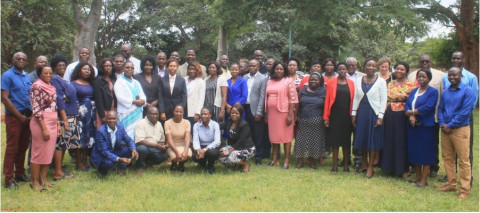 Zambia kick-starts implementation of UNESCO CAP-ESD 2020-03-18 Delegates at the launch in Lusaka Zambia has kick-started the Capacity Building Programme for Teacher Educators on Education for Sustainable Development (CAP-ESD) with a national workshop in Lusaka from 16-17 March 2020. Funded by the Swedish International Development Cooperation Agency (SIDA), the CAP-ESD will strengthen implementation of Sustainable Development Goals (SDGs) in teacher education institutions for teacher educators from Early Childhood Care and Education (ECCE), primary, secondary and Technical Vocational Education and Training (TVET). Speaking at the launch, Permanent Secretary in the Ministry of Higher Education, Kayula Siame stressed the importance of teacher educators owning and believing in the programme. "ESD requires real transformation in how people think and act and that change must start on a personal level."- Kayula Siame More than 40 participants from various teacher education and technical, vocational and entrepreneurship training (TVET) institutions across Zambia, including ESD experts and representatives from the Ministries of Education attended the launch. Speaking at the same occasion, UNESCO Regional Office for Southern Africa (ROSA) Programme Specialist for Education, Julia Heiss said there has been a long tradition of ESD in the region through institutional changes. She stated that this process of change in the teaching of teachers requires policy support to have impact and that UNESCO was expectant of continued political support. CAP-ESD is intended to strengthen implementation of Target 4.7 of the Sustainable Development Goals which requires all governments by 2030 to: ensure that all learners acquire the knowledge and skills needed to promote sustainable development, including, among others, through education for sustainable development and sustainable lifestyles, human rights, gender equality, promotion of a culture of peace and non-violence, global citizenship and appreciation of cultural diversity and of culture’s contribution to sustainable development. Zambia is the fifth country in Southern Africa where CAP-ESD is being implemented to strengthen ESD professional networks. The two-day kick start meeting focused on developing shared understanding of the context for ESD in Zambia and initiating change projects in target institutions. It also facilitated understanding of partner roles and commitments in the programme. URL:https://en.unesco.org/news/zambia-kick-starts-implementation-unesco-cap-esd
  发出你的声音:你对未来女童教育有何期待? 2020-03-16 2020 is a pivotal year as the global community comes together to mark the 25th anniversary of the Beijing Declaration and Platform for Action. Adopted unanimously by 189 countries, the Beijing Declaration is considered as the key global policy document on gender equality and the most ambitious roadmap for the empowerment of girls and women everywhere. As we reflect on the past 25 years, we also look forward to actions that can empower girls and women to go to school, learn, apply their education and thrive in their communities and societies. UNESCO and the Global Education Monitoring Report have produced a joint factsheet on gender equality in education with the latest facts and stats. It provides information on the bottom ten countries for girls’ education from the WIDE database, managed jointly with the UNESCO Institute for Statistics. It also draws on data from UNESCO’s Her Atlas, which measures the status of national legal frameworks related to girls’ and women’s right to education. In an effort to raise the profile of girls’ education, UNESCO has launched a campaign leveraging the collective force of education advocates. The campaign seeks the input of girls, women, boys, men, youth, teachers and all stakeholders around the world. Tell us what your wish is for the next generation of girls. Girls and women, how has education transformed your life? How do you see gender equality in education progressing in the next 25 years? Add your voice through this online survey. Your input will help shape decisions to advance action on girls’ education and gender equality in the next 25 years and beyond. Help us to ensure girls’ education is at the forefront of discussion. We count on you, so don’t wait and take part in this campaign. These efforts directly contribute to UNESCO’s initiative, Her education, our future, launched last year and calling for accelerated collective action in favour of girls’ and women’s education. More information Opinion: The road to gender equality is through quality education Gender gap in primary school enrollment halved over past 25 years UNESCO’s work on gender equality in education URL:https://en.unesco.org/news/share-your-voice-what-do-you-wish-education-next-generation-girls
  Asian universities promote learning through environmental and sustainability assessment 2020-03-15 Akin to small-scale cities, university campuses can reflect society at large. In addition to occupying large areas of land, many campuses also consist of sizeable populations and numerous buildings amply equipped with facilities for their residents. This means that, just like cities, higher education institutions have significant environmental impacts both on campus and in the surrounding community. In order to ensure that such impacts are more helpful than harmful, an increasing number of universities are integrating sustainability into their operations and infrastructure in what many refer to as “green campus” initiatives. Addressing environmental and sustainability-related issues is now high on many universities’ agendas, from boosting rigorous waste-management practices to enforcing stricter energy conservation measures and executing Greta Thunberg-inspired advocacy campaigns. Some universities are employing environmental and sustainability assessment tools that provide standardized approaches for analyzing the impacts of their institutional practices. This leads them to revise their existing operations, which then in turn improves their environmental performance. While an environmentally conscious campus can improve the quality of education, it also raises the question: how can the assessment process also provide opportunities to enhance learning for everyone – students, staff and communities alike? As campus-greening efforts continue to gain traction, it is crucial to promote education and learning for sustainable development for the whole community within and beyond the campus grounds. A variety of environmental assessment tools are used by universities across Asia, such as the International Organization for Standardization (ISO) 14001 standard on environmental management systems and the Eco Action 21 certification developed in Japan. One of the most prominent tools is the UI GreenMetric World University Ranking, an initiative of the University of Indonesia. It was launched in 2010 to draw the attention of higher education institutions to address sustainability issues, including establishing relevant university-wide policies and bringing about behavioural change in the academic community. To participate in the UI GreenMetric ranking system, institutions are asked to provide numerical data based on criteria that comprehensively indicate their commitment to greening their campuses and enforcing sustainability-related policies. The criteria include not only physical information about the campus such as size, population and the amount of green space, but also information on education and research, water and energy use, transportation, and recycling and waste management. In any assessment process, many institutions are apprehensive for various reasons, including competition. Chanita Rukspollmuang, professor emeritus and Vice President of Siam University, an institution that has participated in UI GreenMetric’s annual ranking since 2017, said just the sheer volume of applicants made university staff hesitate at first. “At the time, we saw that around 600 universities had joined the UI ranking,” Chanita said. “I thought our university would be at the rank of about 200, but I couldn’t say. I told my colleagues that, okay, we’ll do our best.” That first year, Siam University ranked 168th in the world ranking and came in 7th nationwide, the highest among private Thai universities. After the institution received their scores in each criteria, Chanita and her colleagues were able to identify what they were lacking and areas that required more attention. Under the direction of the current president, Prof Pornchai Mongkhonvanit, Siam University set out to become a sustainable university, putting into place policies and measures that enabled them to improve education and learning on campus. These new initiatives included curriculum development, revision of academic and quality assurance policies, and sustainability awareness campaigns and activities for student and community engagement. In addition, in order to ensure students’ understandings on sustainable development, Siam University also revised the general education programme to include courses related to sustainability that are mandatory for all students, offering subjects such as “King Rama IX’s Sufficiency Economy Philosophy for Sustainable Development”. Chanita does admit, however, that it has been an uphill battle at times. “Some people still don’t understand sustainability,” she said. “They don’t understand SDGs. They don’t understand sustainable development. So, I think campaigns for awareness-raising are very important.” She added that the most important thing in education was the mindset of those involved, whether staff, students or the surrounding community. Despite the challenges, in the following year Siam University was able to improve its status from 168 of 619 participating institutions to 162 out of 712. It maintains its place as the 7th most sustainable Thai university out of 32 institutions. Chanita recently shared Siam University’s experience at a panel on “Education and Learning in and through Environmental Assessment: Experiences from Higher Education Institutions in Asia”, a side event organized by UNESCO Bangkok during the 10th World Environmental Education Congress (WEEC) held in Bangkok. In addition to Chanita, Riri Fitri Sari, chairperson of UI GreenMetric, Gliceria Arlyn G Garancho, from Philippine Normal University (PNU) Visayas, and Arun Kansal, from TERI School of Advanced Studies in India, discussed how environmental assessment could contribute to promoting campus-wide environmental and sustainability education and learning. They also deliberated on why some universities are hesitant to undergo environmental assessment. One of the reasons is that some have an aversion to rankings. Universities today are in a seemingly never-ending race for students, status, and resources, both human and financial. Institutional leaders and staff may see environmental assessment and ranking as just another consideration they have to worry about. A question from the audience during the session inquired: how are environmental assessments different from the usual academic rankings, and how can we convince higher education institutions to take part in them? Siam University holds a different perspective on this issue. Although the university did not see a large leap in its ranking from the first to second year, staff remain undeterred in their sustainability assessment journey. If anything, Chanita sees the process more as an opportunity for learning and self-improvement than a competition. “UI GreenMetric is more than a ranking,” she said. “To me, it’s a learning process. It’s the whole institution continuously working together on sustainability, including the environment, economy and society, from the individual to the international level.” Ms Garancho, Executive Director of PNU Visayas, agreed that the university’s ISO 14001 certification was not just about maintaining standards. “We don’t only focus on whether we’ve obtained the objectives,” she said. “Our main purpose is that there should be environmental literacy as well as advocacy.” It is clear that environmental and sustainability assessment goes beyond simply “greening the campus”. The process triggers the transformation of education and learning in and around the university, leading to a change in mindsets and behaviours for the whole institution. Higher education is an important platform to serve as the catalyst of change for sustainable development. While there is no such thing as an education panacea to make societies more sustainable, it is also up to all of us to follow the lead of these institutions in pursuing progress and action for our collective sustainable future. To read the report of the WEEC 2019 panel discussion, click here. By Chariya Chiumkanokchai, Programme Assistant for Future of Learning, UNESCO Bangkok. * A version of this article was first published in The Bangkok Post. URL:https://bangkok.unesco.org/content/asian-universities-promote-learning-through-environmental-and-sustainability-assessment