
News
Catch up on what’s happening in the world of global citizenship education.
1,668 results found
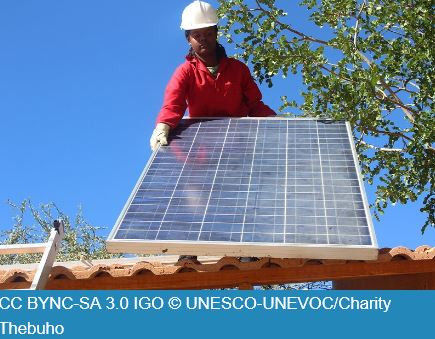 Greening TVET through strategic partnerships 2019-12-02 Greening technical and vocational education and training (TVET) is an emerging concept that has gathered momentum in the international community in recent years. TVET is directly linked to the labour market and hence plays a key role in providing knowledge and skills to facilitate the transition to greener economies and societies. “The greening of TVET could be the missing link that can connect school and society, and link society and employment,” said UNESCO Assistant Director-General for Education, Ms. Stefania Giannini, at a high-level breakfast meeting organized by the Permanent Delegation of Denmark to UNESCO on 14 November 2019 during the Organization’s 40th General Conference. As outlined by the Ambassador and Permanent Delegate of Denmark to the OECD and UNESCO, Mr. Carsten Staur, during his opening remarks, the meeting focused on strategic partnerships between TVET institutions and the private sector for greening TVET and was inspired by the guidance framework of UNESCO on Education for Sustainable Development and UNESCO-UNEVOC’s Greening TVET: a practical guide for institutions. A report commissioned by the Danish National Commission for UNESCO and presented by His Excellency Mr. Søren Hartmann Hede, Deputy Minister of Education for Denmark, concluded that “more than ever before, networking and partnerships are essential to overcoming these barriers”. The report shows that – based on research conducted in Denmark – teaching students about sustainability makes them agents of change and increases their motivation to contribute to developing solutions. It also stresses that partnerships, and especially involvement of the private sector, is key. UNESCO’s global networks, including the UNEVOC Network, can help to reinforce the efforts of the technical and vocational education. Examples of successful partnerships The Association of TVET Providers in Denmark, Danske Erhvervsskoler og –Gymnasier DEG, through Ms. Nina Olsen, Deputy Director, also provided remarks during the event. “We in Denmark are building a network of schools to work on Greening TVET.” She highlighted that “Greening TVET is a global agenda. It helps create a new narrative for TVET, make TVET more attractive.” In one of the showcase sessions, Mr. Lone Peterson, Director of Human Resources at the Danish Food Service Company Hørkram, highlighted an example of successful cooperation between businesses and schools to promote sustainability in the private sector. By establishing partnerships with local schools, the company is working towards educating and equipping new generations with the in-demand skills needed to be successful in the global green economy. During his keynote speech, His Excellency Mr. George Magoha, Minister of Education of Kenya, explained the importance of TVET for Kenya and offered his reflections on promoting greening TVET at the global level. He emphasized the need for investment in research and the development of innovative solutions to the issue of plastic waste - an escalating problem that Kenya is trying to counteract through new production methods. UNESCO’s work on Greening TVET contributes to its Global Action Programme on Education for Sustainable Development (ESD), which aims to transform society by reorienting education and training to help people develop knowledge, skills, values and practices needed for sustainable development. The greening TVET concept encourages stakeholders to reflect on how they can integrate sustainability in curricula and training standards, solve local issues through applied research projects, and engage communities, industries and enterprises to reduce their environmental impact through greener practices. UNESCO-UNEVOC’s Greening TVET Guide has steered members of its global network on how they can embed sustainability in their practices and curricula. Experiences from implementing the guide show that TVET institutions in different countries face similar challenges: a lack of awareness about sustainability, limited capacity of stakeholders, and a shortage of resources to take action. Head of UNESCO-UNEVOC, Mr. Shyamal Majumdar, explained the concept behind the Greening TVET Guide and shared examples of greening initiatives from UNEVOC Centres: RVTTI Kenya; Cégep Canada; and Seychelles Institute of Technology. More than 100 participants attended the meeting, including ministers, member state representatives and key TVET stakeholders. They also discussed the possibility of developing a concept for UNESCO’s recognition of “Green TVET Champions”. URL:https://unevoc.unesco.org/go.php?q=Greening%20TVET%20UNESCO
 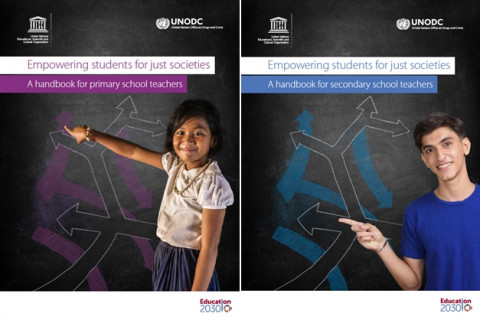 La UNESCO y la UNODC lanzan nuevos recursos didácticos para formar estudiantes en la construcción de un sistema más justo para todas y todos 2019-11-26 In early 2019, teacher manuals were piloted in schools in 10 countries. People all over the world are losing trust in leaders and in public institutions. According to the Edelman Trust Barometer, only one in five people feel that ‘the system’ is working for them [1], while polls by Transparency International [2] show that across Latin America, 85 per cent of people think Government corruption is a big problem, with only 21 per cent expressing trust and confidence in leadership. In a 2016 global study [3], in the five Latin American countries sampled, 69 per cent of 13-14 year olds approved of dictatorial governments if they bring order and stability, and 53 per cent supported nepotistic practices such as public servants awarding jobs to their friends. UNESCO and UNODC are partnering on the project ‘Global Citizenship Education for the rule of law’, aimed at promoting democratic values and the principles of justice in schools. The project engages policy-makers and teacher educators, and links efforts towards Sustainable Development Goals 4 (in particular 4.7 [4] on quality, inclusive and equitable education and 16, calling for the building of peace, justice and strong institutions. Today sees the launch of two new teachers’ handbooks in Latin America and the Caribbean. (Empowering students for just societies: a handbook for primary school teachers and Empowering students for just societies: a handbook for secondary school teachers), designed to anchor values of fairness and integrity in students. Activities make use of role-play and storytelling to build empathy and understanding of how societies learn to live together. Cecilia Barbieri, Head of UNESCO’s Global Citizenship Education Section said: ‘Schools must be at the heart of educating for democratic values, fundamental rights and the rule of law. Global Citizenship Education gives students the confidence to navigate our institutions and hold leaders to account.’ Many school curricula do not explore the process by which laws evolve, nor how the rule of law protects people from authoritarian regimes. The teacher handbooks were piloted in schools in 10 countries earlier this year. A secondary-school pupil from Nigeria drew this lesson: ‘I thought that anyone in the leadership could just make a law and force others to obey. I didn’t know that rules have process’. UNESCO and UNODC’s Global Programme for the Implementation of the Doha Declaration recently held a capacity-building workshop in Mexico attended by representatives from education ministries as well as representatives from teacher training institutes from the region. Participants discussed the role that the education sector can play a role in promoting fairer societies and developed regional and national action plans to initiate the change. Download Empowering students for just societies: a handbook for primary school teachers Empowering students for just societies: a handbook for secondary school teachers *****[1] Edelman Trust Barometer 2019 [2] Transparency International Global Corruption Barometer Latin America and the Caribbean, 2019[3] International Civic and Citizenship Education Study (ICCS), 2016. The study was conducted in 30 countries including Chile, Colombia, the Dominican Republic, Mexico and Peru.[4] SDG 4, target 7 ‘By 2030 ensure all learners acquire knowledge and skills needed to promote sustainable development, including among others through education for sustainable development and sustainable lifestyles, human rights, gender equality, promotion of a culture of peace and non-violence, global citizenship, and appreciation of cultural diversity and of culture’s contribution to sustainable development’. https://www.un.org/sustainabledevelopment/es/education/
 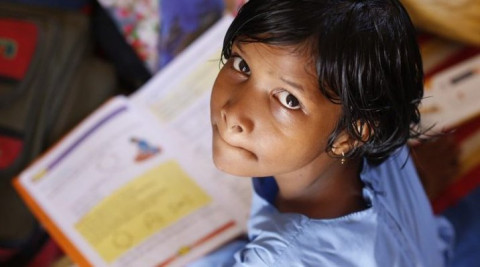 How Can Education Help A Girl Make Her Dreams Come True? – OpEd 2019-11-21 By Oxfam India Education is important for holistic development of girls and the society as a whole. 59 million children and 65 million adolescents are out of school, across the world, and more than 120 million children do not complete primary education. Education is a human right and policy makers must ensure that each child, especially girl child, is given the education they deserve. Education helps an individual think critically, understand their environment and the people around them. Education gives women and girls a chance to lead a healthier and happier life. An educated girl is aware of her rights, has the ability to make informed decision for herself, and can stand up against violence and discrimination. She can enter the labour force and contribute towards the development of the country. Girl child education is also the key to control India’s ever-growing population. Almost a third of India’s population is the result of adolescent pregnancies. As stated above, educating girls delays child birth, which could reduce India’s projected 2050 population of 1.7 billion by more than a quarter. For example, an educated woman is more likely to marry at a later age and have fewer children as compared to an uneducated woman. In India, 12 years or more of education for girls reduces the chances of teenage pregnancy and shorter intervals between children. According to the National Family Health Survey, 2015-16 (NFHS-4), a woman with 12 years or more of education has her first child at an approximate at of 24.7 years. Studies show that educated mothers are usually healthier, give birth to healthier babies and later on provide better healthcare to their children. Their children also usually healthier, fare better in life than those of uneducated mothers. Education directly impacts infant mortality. In the states of Uttar Pradesh, Madhya Pradesh, Chhattisgarh, Bihar, and Assam, the percentage of women with more than 10 years of schooling is less than the national average of 35.7%, thus resulting in the highest under-five mortality* rates.(5) On the other hand, the percent of women with more than 10 years of schooling in the states of Kerala, Goa, Manipur, Tamil Nadu, and Maharashtra is much higher than the national average, thus resulting in the lowest under-five mortality rate in India.(6) Women, who have at least received middle schooling are nearly eight times more likely to receive pregnancy care than illiterate women, and women with less than middle schooling are three times more likely to receive care. Further, just one per cent increase in female literacy can reduce infant mortality rate by 23 per cent.(7) Thus, educating girls must be a priority for policy makers and the community to reduce infant mortality rate. Moreover, girls who receive education have a chance to pursue a profession of their choice, discover their skills, and become economically independent. Cross-country studies have suggested that an extra year of schooling for a girl will increase her future income by approximately 15%, as compared to that of a man, which is 11%. (8) Economic independence, henceforth, gives women the freedom and ability to make her own decisions. An educated and economically independent woman can stand up against early and forced marriages. She has the freedom to choose her partner and decide whether to marry or not. Further, as more and more women participate in India’s workforce, the country’s economic growth spurs. At present, women contribute only 18% to the country’s GDP, one of the lowest in the world. By educating girls and giving women equal opportunities, India could add almost $770 billion — more than 18% — to its GDP by 2025.(9) Despite all the evidence about the importance of girl child education and its benefits for girls, their families and the economy, girl child education in India still lags. Over 28 lakh girls, in the age group of 6 to 13 years, are out of school in India.(10) Deep-rooted social norms discriminate against girls and create hurdles in their education. Families who face financial restrictions prefer to spend money on their sons’ education and make their daughters stay at home. Many girls are forced to drop out of school due to household responsibilities and to take care of sick family members or siblings. They are denied education and forced to marry at an early age, often to a much older man. Certain physical barriers also hinder girl child education in India. In rural areas, children have to walk long distances to school, often alone, through forests, rivers, or deserted areas. Due to increased risk of violence against girls, parents usually prefer they stay safe at home. There are several government schemes which aim to tackle the problems of girl child education in India. Many non-governmental organizations and civil society groups are also working to educate girls in India. Oxfam India is one such NGO, which works to tackle these issues so more girls can get educated. It works in five states in India – Bihar, Chhattisgarh, Jharkhand, Odisha, and Uttar Pradesh to ensure girl child education. It works with a network of grassroots organizations, community members, and local authorities, to raise awareness about girl child education and Right to Education Act (RTE). It counsels parents and family members of girl children on the value of education. It works with the local authorities and school management committees to ensure effective implementation of the RTE Act. It also campaigns for policy reforms to ensure no girl is left behind in the current education system. We must work together to ensure every child in India, especially the girl child, is sent to school. She must have the freedom to discover her talents and fulfill her dream. Educating our girls is the first step towards a developed nation. Notes: https://www.weforum.org/agenda/2015/07/why-education-is-the-key-to-development/ https://archive.indiaspend.com/cover-story/india-is-unprepared-for-its-gathering-teen-sexual-revolution-23183 https://www.indiaspend.com/educating-girls-can-reduce-indias-population-spiral-59652/ http://rchiips.org/NFHS/NFHS-4Reports/India.pdf https://archive.indiaspend.com/cover-story/states-with-more-educated-women-have-healthier-children-65307 https://archive.indiaspend.com/cover-story/states-with-more-educated-women-have-healthier-children-65307 *Under-five mortality is the number of children under the age of five dying per 1,000 live births. http://isid.org.in/pdf/WP157.pdf https://www.unicef.org/sowc96/ngirls.htm https://www.weforum.org/agenda/2018/07/india-could-boost-its-gdp-by-770-billion-by-just-treating-women-better https://mhrd.gov.in/sites/upload_files/mhrd/files/upload_document/National-Survey-Estimation-School-Children-Draft-Report.pdf – Pg 9 URL:https://www.eurasiareview.com/20112019-how-can-education-help-a-girl-make-her-dreams-come-true-oped/
 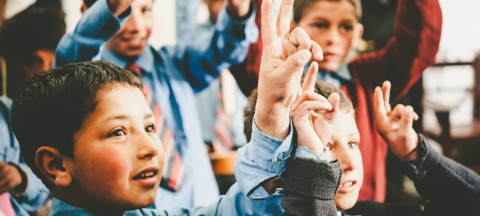 Promoting multilingual approaches in teaching and learning 2019-11-21 Multilingualism is good for us. Not only does speaking more than one language keep our brains healthy as we age, but it has multiple benefits for children too, such as giving them an academic advantage and improving their employment prospects once they leave school. Moreover, multilingualism gives us access to more than one culture, and improves our understanding of our own cultures. But what does this mean for classroom teaching, especially in school contexts that equate English language proficiency with academic success? How can teachers harness the benefits of their students’ multilingualism, while simultaneously helping them to develop the academic language they need to succeed? A team of Australia-based educational researchers has embraced this challenge by working with the British Council to produce a groundbreaking collection of multilingual classroom activities. These activities are aimed at teachers who work with English as a subject or use English as the medium of instruction in low-resource, multilingual classrooms. The team comprised researchers from the University of South Australia, Griffith and Macquarie Universities, all of whom have extensive experience of teaching in culturally and linguistically diverse contexts, including sub-Saharan Africa, northern Africa and southeast Asia. Two team members explain what lies behind the publication. For many years, teachers of English have been told that using student’s home languages in English lessons should be avoided at all costs A growing body of research literature shows that drawing on students’ home language and cultural backgrounds in classroom teaching validates their identities and provides a strong foundation for additional language learning. Yet the reality for many multilingual students, especially English language learners, has been that their home languages are left at the classroom door or regarded as an obstacle to the development of the language of schooling and learning in general. For many years, teachers of English have been told that using student’s home languages in English lessons should be avoided at all costs. Language as a resource Multilingual classrooms are a growing phenomenon around the world, as a result of rapid increases in global mobility and migration. Within these classrooms, students may have different linguistic and cultural backgrounds, may speak one language at home and another language at school, or be learning the language of instruction as an additional language. International agencies such as UNICEF, UNESCO and the European Commission contend that multilingual education can play a significant role in engaging diverse learners. As well as supporting academic success, classrooms that promote multilingualism can foster positive identities associated with their home cultures. This position is supported by Richard Ruiz’s notion of “language as a resource” (1984) which advocates for the use of students’ home languages as resources for learning and teaching. In practice, a language-as-resource perspective implies that teachers should use students’ home languages as a tool for thinking and communication while simultaneously learning and developing proficiency in the language of instruction. Nevertheless, English still overwhelmingly dominates lessons in many classrooms throughout the world where students read, write, listen and speak only in English. Despite considerable research pointing to the importance and benefits of incorporating multilingual pedagogies into classroom practice, there are few materials available to educators that explain how this can be done deliberately and systematically in lesson planning and lesson delivery. Signs of change Happily, in recent years, publications, conferences and professional development materials have advanced thinking about the medium of instruction and ways to approach teaching that challenge the “national/official language-only” view. Using multilingual approaches: Moving from theory to practice A new British Council publication, Using multilingual approaches: Moving from theory to practice, reflects the growing body of research evidence showing that preventing learners from using their home languages in the English language classroom not only impedes learning and denies their linguistic human rights, but also loses valuable opportunities for teachers to draw on their students’ knowledge and experience as resources for teaching. This collection of activities was developed in response to the British Council’s conscious decision to promote multilingual approaches to teaching English internationally. The activities are designed to acknowledge learners’ home languages and cultures when teaching English as an additional or foreign language, or using English as the medium of instruction in multilingual classrooms. The activities are grounded in research-based pedagogic principles, briefly outlined below. Funds of knowledge in the language classroomIt has long been recognised that one of the key characteristics of high-quality teaching is the ability of teachers to engage students’ prior understandings and experiences and background knowledge. This prior knowledge is encoded in their home languages, and therefore it is vital that teachers facilitate the transfer of both concepts and skills from students’ home languages to English.This view of language is complemented by Luis Moll’s notion of ‘funds of knowledge’ (1992), which refers to the rich bodies of cultural knowledge that exist within students’ households and communities. Moll argues that when teachers tap into this type of knowledge by building relationships with their students and their wider social networks, they allow for meaningful learning opportunities. Teaching practices that tap into multilingual ways of reading, writing and speaking allow students to access the cultural resources that enhance the personal significance of their classroom work, as well as expanding access to knowledge through texts in more than one language. Purposeful translanguaging One of the most successful approaches to bilingual teaching and learning has been the purposeful and simultaneous use of two languages in the same classroom, a process that is referred to as translanguaging. The activities in this collection break new ground in being designed to enable teachers to constantly draw on and make use of students’ emergent bilingual skills. The activities are designed in a planned and purposeful way to encourage students draw on the most appropriate linguistic resources they have, allowing teachers to design intercultural and inclusive lessons that support English language learning but also draw on learners first languages and their community and family funds of knowledge.The activities were workshopped with and piloted by teachers in India, who applied them to their own classrooms and provided rich feedback and valuable ideas. ideas. This short film explains more about the process and rationale behind the resource.Project leader, Associate Professor Kathleen Heugh sums up the social significance of the project in her observation that: “Forbidding a child to use his/her language is a violation of their rights, and deeply problematic for their future. We cannot afford to have students marginalized, feeling lost and falling out of the school system. Using students’ home languages, bringing in their own knowledge systems to the classroom should be the most important aspect of any school language policy”. Luis C. Moll, Cathy Amanti, Deborah Neff and Norma Gonzalez (1992) Funds of knowledge for teaching: Using a qualitative approach to connect homes and classrooms, Theory Into Practice, 31:2, 132-141.Richard Ruíz (1984) Orientations in Language Planning, NABE Journal, 8:2, 15-34 URL:https://learningportal.iiep.unesco.org/en/blog/promoting-multilingual-approaches-in-teaching-and-learning
  Lancement du Rapport 2019 sur les données de l’ODD 4 2019-11-20 New report aims to help countries produce and use the global and thematic indicators The need for accurate, current and comparable data on education has never been more urgent, with the prospects of reaching Sustainable Development Goal 4 – a quality education for all by 2030 – far from certain. According to the UNESCO Institute for Statistics (UIS), about 258 million children, adolescents and youth are out of school. The data confirm recent projections showing that, without a shift from ‟business as usual”, one in every six children aged 6 to 17 will still be out of school in 2030 and only six out of ten youth will complete secondary education. The data also highlight the urgent need to improve the quality of education on offer. According to UIS estimates, 55% of children and adolescents of primary and lower secondary school age are not achieving minimum proficiency levels in reading and 60% are not reaching these levels in mathematics. The 2019 edition of the SDG 4 Data Digest reinforces the need for the robust data that are crucial to reach the global education goal. It provides a panoramic view of the current development of the SDG 4 monitoring framework, including proven methodologies for data collection and reporting at the international, regional and national levels. The new report, entitled How to Produce and Use the Global and Thematic Education Indicators, was launched today in Paris during the UNESCO General Conference. The report is currently available in English with French and Spanish versions forthcoming. Support for countries Countries are under intense pressure to produce education data for a wide range of indicators: the 11 indicators used to monitor global progress towards SDG 4, plus the set of 32 thematic indicators to better support policymaking. In response, the Digest presents practical methodologies and strategies that draw on existing information to produce accurate statistics, while highlighting the steady progress on their development and use, thanks to the concerted efforts of governments and other partners worldwide. These efforts are supported by the UIS, which works to build consensus on data across countries through the Technical Cooperation Group (TGC) on the Indicators for SDG 4. The first section of the Digest explains how countries can produce and report the national data needed for the 11 global monitoring indicators. This sets the stage to present the methodologies used to produce the 32 thematic indicators. The Digest also presents a series of regional initiatives to monitor progress towards SDG 4. The section provides insight on how countries in different region are striving to make the greatest possible use of existing data while developing new indicators and frameworks to support critical areas for policymaking. Get the education data you need in the format you want! As the custodian agency for SDG 4 indicators, the UIS offers a range of data products to meet the needs of users. Key products include: UIS Global Education Database covers all levels of education for more than 200 countries and territories. SDG 4 Data Tables can be easily downloaded in different formats. SDG 4 Data Explorer displays data by country, region or year; by data source; and by sex, location and wealth. Users can explore measures of equity that are crucial for the achievement of SDG 4. SDG 4 Country Profiles present the latest results for countries in easy-to-understand charts and graphs. eAtlas for Education 2030 features interactive maps and charts of the global and thematic indicators. URL:http://uis.unesco.org/en/news/launch-2019-sdg-4-data-digest
 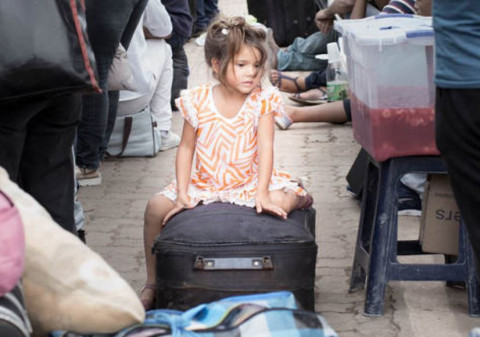 The right to education of people on the move: UNESCO calls on Latin American and Caribbean countries to provide answers beyond migratory emergency responses 2019-11-19 The region is facing educational challenges related to human mobility that must be addressed at the cross-border level, according to the United Nations Educational, Scientific and Cultural Organization (UNESCO), through its Regional Bureau for Education in Latin America and the Caribbean (OREALC/UNESCO Santiago). UNESCO has been leading a working group on human mobility in the region since 2019. The purpose of the entity is to promote these issues, experiences and inputs in spaces of political dialogue that UNESCO creates in Latin America and the Caribbean. 17.10.2019 -The conclusions of the regional forum “Education beyond borders: Regional solidarity for the guarantee of the right to education for people on the move” were released by UNESCO on October 17, 2019. The document issues a call to build cross-border regional educational responses in a complex context of large-scale international movements that cannot be successfully addressed solely through national solutions, UNESCO states. The text, which refers to the meeting held 7-9 August 2019 in Santiago de Chile, contains the points that the participants expressed during the event. These include the need for coordination mechanisms that allow for public policies that go beyond migratory emergency responses; giving priority to formal education systems for educational responses; the need for data that allow countries to plan adequate and timely responses; and progress on mechanisms for recognizing studies and prior knowledge that ensure continuation of studies and the development of individuals on the move through employment. Representatives from Ministries of Education from the region, government institutions responsible for implementing migration policy and international and civil society organizations attended the meeting. The attendees highlighted the need to expand efforts that would allow educational and social environments to become spaces that recognize diversity as an enriching element and fundamental condition for achieving sustainable development. Claudia Uribe, Director of the Regional Bureau for Education in Latin America and the Caribbean (OREALC/UNESCO Santiago), stated during the meeting “there is a generous commitment on the part of destination countries to ensure the right to education of people on the move. However, these efforts require cross-border coordination mechanisms, more funding and a focus on the important needs of formal education systems in order to expand their scope and go beyond emergency responses.” Summary of the meeting in Santiago The regional forum “Education beyond borders: Regional solidarity for the guarantee of the right to education for people on the move” was designed to provide an opportunity for the stakeholders involved in this work to engage in dialogue and to provide a context of regional collaboration and strategic decisions to guarantee the right to education of individuals in a context of mobility. Participants analyzed the main challenges related to the educational response to contemporary human mobility flows and exchanged meaningful experiences for addressing them in Latin America and the Caribbean. During the event, the document Regional Strategy for UNESCO’s response to the situation of people on the move in Latin America and the Caribbean 2019-2021 was presented and modes of collaboration were identified. The forum featured the following sessions: Human mobility and the right to education Discussion of the regional situation of guaranteeing the right to education for people in a context of mobility, considering mobility trends in the region and globally as well as examples of responses. Planning for access to education systems: Regulatory frameworks Challenges related to the development and transformation of legal frameworks that would allow people on the move to access educational systems in the region. This included experiences improving instruments and protocols for complying with international agreements. Planning for access to education systems: Information systems and educational management Promotion of better records for access, pathway and completion of studies for people in a context of mobility. Recognition of studies, degrees, certificates and prior knowledge Regional mechanisms and progress on new tools for promoting recognition of studies for students in host countries. The main challenges associated with educational recognition. Inclusive educational and social environments: The role of local governments and cities Challenges to local governments related to human mobility, identification of opportunities for collaboration between local partners and local governments. Sharing best practices in the region. Inclusive educational and social environments: Safe, inclusive and welcoming educational contexts The factors that allow educational environments to address the challenges posed by migratory flows. Sharing best practices and experiences related to socio-emotional education and psychosocial support. Inclusive educational and social environments: Interculturality Identification of challenges related to interculturality in educational contexts. Dissemination of knowledge on regional efforts to ensure inclusive, safe and healthy social and learning environments based on the needs of people in a context of mobility and the destination society. More information Website: Regional Strategy for UNESCO’s response to the situation of people on the move in Latin America and the Caribbean 2019-2021 PDF: Foro regional: “Educación más allá de las fronteras: Solidaridad regional para la garantía del derecho a la educación de personas en contexto de movilidad. Report (in Spanish) PDF: Context and background: Regional Strategy for UNESCO’s response to the situation of people on the move in Latin America and the Caribbean PDF: Regional Strategy for UNESCO’s response to the situation of people on the move in Latin America and the Caribbean 2019-2021: working document ***** The forum included the participation of representatives of the Education Ministries of Uruguay, Grenada, Peru, Colombia, Chile, Ecuador, Guatemala, Curaçao and Mexico. It was also attended by important regional partners such as the International Organization for Migrants (OIM), the United Nations High Commissioner for Refugees (UNHCR), the United Nations Children's Fund (UNICEF), the International Labour Organization (ILO), the Economic Commission for Latin America and the Caribbean (ECLAC) and the Organization of Ibero-American States for Education, Science and Culture. The Latin American Campaign for the Right to Education, the Caribbean Community (CARICOM), the Andrés Bello Convention, Fundación Santa María, the Continuing Education Network of Latin America and Europe, RET International, the Jesuit Refugee Service, Cooperativa Sociale Mondo Aperto and the Regional Center for the Promotion of Books in Latin America and Caribbean (CERLALC/UNESCO) were invited. The event also was attended by representatives of the International Institute for Educational Planning (UNESCO/IIPE Buenos Aires), coordination experts who publish the UNESCO Global Education Monitoring (GEM) Report, the International Center for the Promotion of Human Rights and UNESCO’s Guatemala, Montevideo, Lima and Beirut Offices and its Paris Headquarters. URL:http://www.unesco.org/new/en/santiago/education-2030/news/the-right-to-education-of-people-on-the-move/
 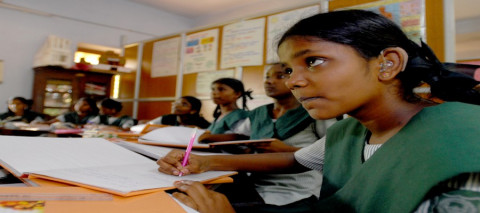 Viewing effective governance and accountability: Through the lens of SDG 4 2019-11-19 by Eric Falt, Director and UNESCO Representative to Bhutan, India, Maldives and Sri Lanka As a bold international framework of unprecedented scale, the 2030 Agenda for Sustainable Development is guiding global development efforts to develop sustainable societies. The 17 Sustainable Development Goals (SDGs) and their targets cover wideranging themes encapsulating the development challenges of the 21st century. Beginning with eradicating poverty, and moving to achieving gender equality, providing quality education, combating climate change, and creating peaceful and inclusive societies among others, the SDGs work for a sustainable future that ‘leaves no one behind’. Therefore, efforts to achieve the SDGs must involve the widest possible range of stakeholders and countries to work together in reaching the pinnacle of human endeavour. With regard to education, SDG 4 was formed with the specific aim of ensuring ‘inclusive, equitable and quality education for all’. As a means of promoting critical thinking, and converting potential into capacity, education is one of the greatest equalizers of our time. Thus, ensuring ‘inclusive and equitable quality education’ and promoting ‘lifelong opportunities for all’ (Goal 4) are among the most critical steps we must take in our journey to achieve the SDGs. Globally, the development discourse tends to focus on lifting people out of poverty. But as our work at UNESCO has convinced us, the challenge of lifting people out of illiteracy is just as great, and the rewards of doing so are as enduring. As one of the signatories of the 2030 Agenda, India committed itself to achieving the 17 SDGs set by the United Nations General Assembly in 2015. Realising the importance of education for national development, in 2010, India joined a group of 135 countries to make education a fundamental right for every child. The Right to Education (RTE) Act, 2009 which came into effect on April 2010, guarantees free and compulsory education to children between the age of 6 to 14 years. Along with the RTE Act, government schemes like the Sarva Shiksha Abhiyan (SSA) and the Mid- Day Meal (MDM) scheme have helped increase access to education in rural and urban India. The SSA scheme aims to universalize elementary education across states, while the MDM programme helps to achieve increased enrolment in primary schools by also providing improved nutritional status to the enrolled students. As has been corroborated by researchers, the MDM scheme has significantly improved school enrolment rates, created employment opportunities and helped with combating malnutrition (Jayaraman and Simroth 2015). In the field of adult education, India’s national Saakshar Bharat Mission – the largest adult education programme in the world – is steadily working towards its goal of helping 80 million Indian adults achieve literacy. Since access to quality education spurs innovation, boosts employment and helps alleviate poverty, it becomes imperative to address the gaps and challenges hindering the effectiveness of education policy and implementation in India. While India has successfully achieved increased enrolment rates over the past decade as published in the Educational Statistics at a Glance 2018 report (Government of India 2018), providing equitable access to quality education for students from different economic and social backgrounds remains a challenge. Furthermore, how these statistics translate into quality education has come under the scanner because of the slow progress of students in performing on reading, writing and arithmetic tests (Annual Status of Education Report 2018). Apart from inter-state disparities in educational achievement, discriminations on the basis of gender, caste and class continue to exist, highlighting the overlapping social and cultural inequalities present across Indian states. The UNESCO 2019 State of the Education Report for India further documented the outstanding progress made in various states, detailed the persisting challenges, and suggested a set of ten recommendations to address them. Therefore, these mutually reinforcing inequalities hinder the cognitive development of children and go against the theme of the SDG 2030 Agenda of ‘Leaving no one behind’. To successfully achieve SDG 4 along with other related SDGs, there is a need to build an education system which addresses these inequalities by ensuring access to quality education regardless of a child’s economic status, social identity or any other vulnerability which might restrict access to quality schooling. The role of effective governance and accountability becomes crucial in order to do so. Here, it is worth mentioning the 11 key principles of effective governance endorsed by the UN Economic and Social committee and set by the UN Committee of Experts on Public Administration (CEPA) and UN DESA (Boukaert et al. 2018). These 11 principles highlight three broad pillars for good governance: effectiveness, accountability and inclusiveness. These principles have been developed to assist countries which volunteer to use these principles in order to help build effective, accountable and inclusive institutions at all levels. These principles apply to all public institutions including the administrative, executive and legislative organs, the security and justice sectors, independent constitutional bodies and State corporations (Economic and Social Council 2018). With regard to providing equitable access to quality education for all in India and realizing other important SDG 4 targets, integrating effective governance and increased accountability into the education system helps in encouraging dialogue between the government and its citizens, which strengthens institutional effectiveness and inclusivity (SDG 16). For example, the rights-based approach undertaken by the Indian government towards education through the Right to Education Act 2009, mandates each state to abide by the set of rules mentioned within the Act. This stipulates certain norms and regulations that are protected within the Constitution of the country, making it easy to monitor the learning conditions and hold school authorities accountable in case of any discrepancies. As a result, this process simultaneously increases the accountability of the government system and empowers citizens to hold their state accountable in case their rights get violated. Integrating effective governance into SDG 4 includes the promotion of sound policy making, monitoring and evaluation systems and regulatory impact analysis (Economic and Social Council 2018). Multi-stakeholder partnerships are equally important in achieving SDG 4, that is, for all ministries, institutions, multilateral and civil society organisations to collaborate and address problems of common interest. Thus, it becomes imperative to integrate effective governance and accountability into the education system in order to move in the right direction and achieve the SDG 4 targets. URL:https://en.unesco.org/news/viewing-effective-governance-and-accountability-through-lens-sdg-4
  With the right data, we can still reach the world’s education goal 2019-11-18 The SDG 4 Data Digest 2019 explores the data methodologies needed to track progress and better direct policies and resources.It is not too late to reach the world’s education goal. At least, not yet. In 2015, United Nations Member States promised to reach Sustainable Development Goal 4 – a quality education for all – by 2030. We are now one-third of the way through the timeframe for its achievement, and it is still possible – just about – to meet the deadline. But without accurate, current and comparable data on education, and without a shift from ‘business as usual’ approaches to the provision and quality of education, the goal could soon be beyond our grasp. Counting children out of school and children not learning Today, around 258 million children are out of school, according to data from the UNESCO Institute for Statistics (UIS). If we continue on our current trajectory, one in every six children aged 6 to 17 will still be out of school in 2030 and only six out of ten youth will complete secondary education.Our data also show that being in school is not enough to guarantee a quality education. According to our estimates, 55% of children and adolescents of primary and lower secondary school age are not achieving minimum proficiency levels in reading and 60% are not reaching these levels in mathematics.These global facts and figures are compelling enough to trigger urgent action. But there is so much more that we do not know, because we are still missing data that could prove crucial for the achievement of SDG 4. As the custodian of SDG 4 data, UIS continues to push for the disaggregated, deep-dive data that show us precisely what is happening and when as children make their way through their schooling, what works and – importantly – where education systems need to change track, target their resources and accelerate their efforts to deliver a quality education for all. SDG 4 Data Digest: Tools help countries produce and use the indicators The 2019 edition of the SDG 4 Data Digest reinforces the need for the robust data that are crucial to reach the global targets for education. It provides a panoramic view of the current development of SDG 4 global monitoring alongside proven methodologies for data collection and reporting at the international, regional and national levels. The new report, entitled How to Produce and Use the Global and Thematic Education Indicators, was launched today in Paris at an event during the UNESCO General Conference.At the UIS, we are concerned that the collection, analysis and use of data are too often seen as ‘nice to have’, if and when resources allow. In reality, they help countries ensure that the money they spend on education has the best possible impact on individual and national well-being. A reluctance to prioritize data because of perceived resource constraints is a false economy that wastes both education investments and opportunities. To put it simply, education systems can only function effectively if their strategies, approaches and funding are built on a solid foundation of data. Data show progress and gaps The Digest aims to support countries as they strengthen this vital foundation, enabling them to produce the data required for international reporting, as well as for their own education priorities. We know that countries are under intense pressure to produce education data for a wide range of indicators: the 11 indicators used to monitor global progress towards SDG 4, plus the set of 32 thematic indicators to better support policy making. Together, these indicators should deliver a full picture of progress and potential setbacks. Yet many countries struggle to produce – let alone make good use of – the data that are required. That is why the Digest offers proven solutions, showcasing practical methodologies that draw on existing information to produce accurate statistics, with no need to ‘reinvent the wheel’. It outlines steady progress on their development and use, thanks to the concerted efforts of governments, donors and technical partners worldwide. It also highlights UIS support for these efforts, and its work to build consensus on the indicators across countries through the Technical Cooperation Group on the Indicators for SDG 4 (TCG). The first section of the Digest explains how countries can produce the national data needed to produce the 11 global monitoring indicators. This sets the stage to present the methodologies used to produce the 32 thematic indicators. The Digest goes on to outline the most effective regional initiatives to monitor progress towards SDG 4. It provides insight on how different regions are striving to make the best possible use of existing data while developing frameworks to support policymaking in areas they see as critical. Bringing together countries and donors One major barrier to the full implementation of SDG 4 monitoring has been the lack of financial support to build strong statistical capacity in low-income countries (read more about our campaign to #FundData). This is why the UIS is working to bring together countries and donors through the Global Coalition for Education Data, which will align financial and technical resources available at the country and international levels while coordinating public-private partnerships at reasonable costs. The aim is to reduce the duplication of efforts, strengthen statistical capacity building, ensure efficient investment of existing resources and improve the functioning and use of country-owned education information systems. The investment case for education has been made repeatedly: its impact on poverty, on equity, on health and nutrition is well known. The challenge now is to ensure that no child is being left behind – and that means ensuring that every child counts and is counted. Get the education data you need in the format you want! As the custodian agency for SDG 4 indicators, the UIS offers a range of data products to meet the needs of users. Key products include: UIS Global Education Database covers all levels of education for more than 200 countries and territories. SDG 4 Data Tables can be easily downloaded in different formats. SDG 4 Country Profiles present the latest results for countries in easy-to-understand charts and graphs. eAtlas for Education 2030 features interactive maps and charts of the global and thematic indicators. URL:https://www.globalpartnership.org/blog/right-data-we-can-still-reach-worlds-education-goal
 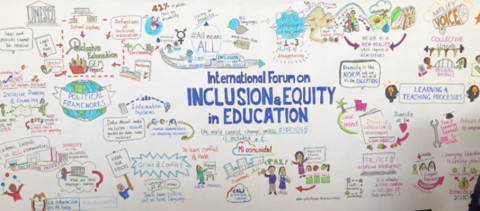 Civil society’s voice is vital in advancing inclusion and equity in education 2019-11-18 Twenty-five years after the Salamanca Declaration, education sector actors met in Cali, Colombia last September to review progress on inclusion and equity in education. Organized by UNESCO, the Cali Forum aimed to reflect on the impact of the Salamanca Declaration, discuss next steps to move education forward towards greater equity and inclusion and secure renewed commitment from all stakeholders. From the outset of the Forum it was apparent there are different interpretations and definitions of inclusive education and inclusion in national frameworks. In most cases, the emphasis is on the recognition of specific groups while others address inclusive education in a broader sense. This diversity of definitions has varying effects on the direction of policies and legal frameworks in different countries. It is therefore essential to have a comprehensive common understanding of inclusion in order to effectively ensure no learner is left behind and "no one is excluded". Accelerating education for people with disabilities in sub-Saharan Africa The subject of several discussions was ensuring no one is excluded in education systems and the education for people with disabilities. Oumarou Mahamadou Manou, representing the Chairman of the West African Federation of Persons with Disabilities (WAFOD) and attending on behalf of the FOAPH-ANCEFA-HI consortium, highlighted the importance of developing and implementing inclusive education policies and sector plans as essential policy framework to ensure inclusion and equity in education systems. He also mentioned the urgent need to make schools more accessible, particularly in sub-Saharan Africa, where facilities remain poor. The education of people with disabilities is a growing issue and civil society is mobilizing to ensure that inclusive education becomes a reality and that no child is left behind. Ensuring inclusion through CSO advocacy Interviewed by ANCEFA during the forum, partners shared their views on how to advance education equity. The assessment of Salamanca 25 years later indicates that there has been progress in inclusive education in some countries around the world, but tremendous efforts are needed because progress is uneven and unsatisfactory. The reality is that civil society, including national education for all coalitions, has played an important role in the gains realized. Civil society must continue to work towards inclusion in education. This should be done in order to support governments in line with the priorities defined in guidance frameworks. Inclusion and equity in education are the guarantee of quality education for all.- Rasmata Ouedraogo (Ministry of Education, Burkina Faso) CSOs are a crucial piece of the puzzle ! A common theme in the conference is the huge gap between policies and practice. Many countries have made huge strides in developing inclusive education policies and yet in reality at least 32 million school-age children with disabilities remain out of school globally. Without national education coalitions and disabled persons organizations pushing for inclusion in their respective countries, policies would simply remain on the shelf without sufficient accountability for their implementation. When different organizations work together their voice unite and they become a much stronger force for change.- Julia McGeown (Humanity & Inclusion)CSOs need to review their individual efforts and develop a report that highlights achievements, what has worked, what has not worked, challenges and what needs to be done differently. This way, they will have a common position on how to support governments to ensure inclusion and equity in education. CSOs need to hold governments accountable and ensure all policies are implemented. There is a tendency of having good policies but no implementation.- Martha R.L Muhwezi (FAWE) Civil society has a role to play... Community awareness and advocacy has led to improvements at the micro level. More needs to be done to include civil society in political forums and global policy dialogues where education system planning is discussed. Although efforts have been made to promote quality inclusive education for all, education systems remain far off track from delivering transformational change. In addition to legislation, policies, programs and practices needing to be strengthened, governments must translate principles into action to create inclusive learning environments. The Cali Forum provided an opportunity for dialogue and exchange to highlight the issue of inclusion and equity in education as part of the Sustainable Development Agenda for 2030, including accelerating progress on SDG 4. We must step up monitoring Governments and partners increasingly recognize the expansive definition of inclusive education. As CSOs, we must step up our monitoring and ask for accountability from governments, to ensure no child is left behind and deprived of their right to quality education. URL:https://www.globalpartnership.org/blog/civil-societys-voice-vital-advancing-inclusion-and-equity-education
 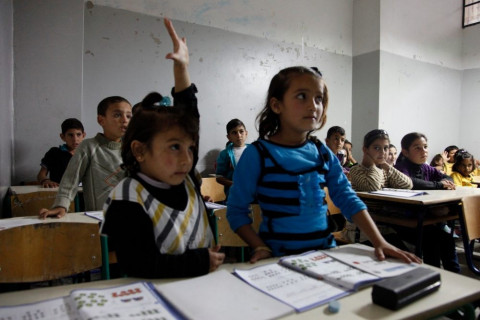 Are Arab countries on track for UN education goals? 2019-11-18 This oped written by UNESCO Beirut Director Dr Hamed al Hamami and published in the Executive Magazine highlights Arab countries' journey towards the achievement of SDG4. Originally published in the Executive Magazine, on 7 August 2019. A region of renowned civilizations and contribution to humanity, the Arab region has become one of paradoxes in recent times: Young, highly educated, dynamic nations, on the one hand, and multiple protracted armed conflicts, high levels of youth unemployment, volatile and vulnerable states of existence, and extreme inequalities and disparities, on the other. While the region indeed has made tremendous achievements toward development goals, many countries have unfortunately seen their developmental gains significantly reversed, primarily due to the protracted nature of multiple conflicts, while others struggle to improve the quality of education and achieve nationally set goals. Available evidence shows that national education systems face significant challenges. Children, youth, and adults in the region are facing unprecedented challenges in terms of learning, employment, and social cohesion. More than 20 million Arab children are out of school or at risk of dropping out. This is coupled with a growing number of youths in the region who are not in education, employment, or training (NEET). In some countries, NEET accounts for up to 45 percent youth. In addition, the quality of education needs major improvement. For example, results in the 2015 TIMSS (Trends in International Mathematics and Science Study) for grade-8 mathematics indicate that while some countries have shown improvement, as compared to 2011 results, six out of the bottom eight countries surveyed are in the Arab region. When it comes to literacy, the number of adults possessing low literacy skills is relatively high in the region (more than 50 million adults) and appears to be on the rise, particularly in crisis-affected countries. In most Arab countries, the expansion of educational opportunities has yet to translate into economic growth. The average rate of youth unemployment in the Arab region is the highest in the world, reaching 30 percent, which is more than double the world average. Steps taken on a long road Cognizant of the above, all governments in the Arab region embraced Sustainable Development Goal (SDG) 4 – Education 2030 as a prime opportunity to transform national education systems into those of resilience, and to contribute to the realization of national development goals and the Agenda 2030 for Sustainable Development as a whole. In this regard, evidence points to three broad-based issues and priorities of common concern: First, migration, displacement, and education—ensuring access to safe and conducive learning environments at all levels, providing opportunities to gain life-saving and enhancing knowledge and skills, supporting teachers and educators, and building resilient education systems; second, quality and relevance of education—ensuring coherent, holistic, systematic, and sector-wide approaches to addressing the dimensions of quality and relevance in education; and third, financing of education—increasing, optimizing use of, and accounting for, investment in education. Almost five years after adopting Agenda 2030 for Sustainable Development, countries have demonstrated a number of key achievements. Arab states have led and remained engaged in policy and technical dialogue at national, regional, and international levels as well as corresponding actions through elaboration of, commitment to, and implementation of, successive roadmaps and commitments. With the Agenda 2030 being country-led, all countries in the Arab region have taken their own initiatives toward achieving SDG 4, and contextualizing, mainstreaming, and integrating countries’ commitments into national processes. An ‘Arab Regional Support Group for SDG 4 – Education 2030 Agenda’ consisting of 23 member states and organizations have been working together since early 2014 and have met five times to take stock of the implementation of the regional roadmap, and to jointly plan for and finance the continuation of initiatives in 2019. The region is confronted with multiple crises that heavily affect the state of education and has been implementing humanitarian response plans for over a decade. While acute educational needs must be met for millions of out of school children, long-suffering teachers, and a dysfunctional education system, countries in crisis and those affected by it equally recognize the need to combine both humanitarian and development interventions. Therefore, SDG 4 provides an excellent opportunity to position itself as the long-term goal toward which countries plan to rebuild national education systems. In spite of numerous challenges confronting many countries in the region, all are determined to realize education as a fundamental human right, and as the main vehicle for individual, societal, and national development. It is, therefore, the role and responsibility of UNESCO to accompany each and every country in the region toward the 2030 target and beyond. URL:https://en.unesco.org/news/are-arab-countries-track-education-goalshttps://www.executive-magazine.com/opinion/are-arab-countries-on-track-for-un-education-goals