
News
Catch up on what’s happening in the world of global citizenship education.
1,668 results found
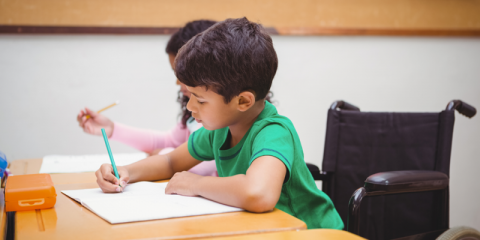 Respecter l'engagement de l'ODD4.a: Donner plus de pouvoir aux apprenants handicapés 2019-10-22 Persons with disabilities are said to be the world’s largest minority, with generally poor health conditions, low education achievements, few economic opportunities and high rates of poverty. This is largely due to the lack of services available to them. With the pledge to leave no one behind in the Agenda 2030 for Sustainable Development, this year’s theme on International Day of Persons with Disabilities on 3 December focuses on empowering persons with disabilities as both beneficiaries and change agents for inclusive, equitable and sustainable development. The term ‘disability’ refers to physical, sensory, cognitive and/or intellectual impairment, and also to mental illnesses and various types of chronic disease. The current reality is that children with disabilities tend not to attend school. As the UNESCO Institute for Statistics showed back in March 2018, in Cambodia 57% of children with disabilities were out school. Conversely, the population aged 15-29 with disabilities who had attended school at all showed the lowest attendance rates of 44% in Viet Nam 2009 and 53% in Indonesia. We know that learners with disabilities require specialized education. But are we considering whether school facilities are adequate enough to accommodate these learners? The Education 2030 Agenda and Sustainable Development Goal 4 have formulated Target 4.a on building and upgrading education facilities that are, among other criteria, disability-sensitive to provide inclusive and effective learning environments – for all. To track this target with regards to disability, the proportion of schools with adapted infrastructure and materials for students with disabilities must be monitored. However, currently available data allows for little interpretation as Member States have yet to collect and submit relevant metrics on adapted infrastructure, in this case for disability. Despite the limited data for the few countries shown in the below figure, they are indicative of the missing infrastructure that would allow children, adolescents and youth with disabilities to attend school. When everyday necessities, even simply going to the washroom, are an impossibility because doorways are impassible, or the road to school cannot be navigated, in addition to the lack of disability-friendly learning materials, let alone assistive technologies, is it surprising that even those who have attended school at some point often do not continue to attend? Target 4.a addresses creating and maintaining welcoming and safe learning spaces for learners with disabilities. It does not pretend to be the entire solution for ensuring disability-inclusive education; we know that children with special needs require specialized education, which in turn requires specialized teacher training, as well as holistically designed policies and plans that ensure a legal and regulatory environment to access education. What is more, we should not forget that ensuring learners are able to access such spaces is another precondition for them to participate. That could mean encouraging parents to have their children attend school, abolishing discriminatory practices in teaching and admissions, and ensuring public transport infrastructure is available to help access schools in the first place. URL:https://bangkok.unesco.org/content/honouring-sdg4a-pledge-empowering-learners-disabilities
  With SDG 4 out of reach, World Bank launches more 'feasible' education target 2019-10-21 WASHINGTON — As the global education targets set by the Sustainable Development Goals slip further out of reach, the World Bank is calling on countries to focus their efforts around a new, simpler target — to at least halve “learning poverty,” defined as the number of 10-year-old children unable to read a simple story, by 2030. More than half of all children in low- and middle-income countries — and nearly 90% of those living in sub-Saharan Africa — are not able to read proficiently by age 10, according to new research by the bank. The bank calls this “learning poverty” and says it is a significant problem because reading is a “gateway” to other subjects and skills; kids who haven’t mastered it by grade four are less likely to catch up. In response, the multilateral development bank launched a new initiative on Thursday calling on countries farthest behind to at least halve their learning poverty rate by 2030, with the ultimate goal of reaching zero learning poverty. The initiative comes as data from the United Nations statistics reveals that progress toward meeting the SDG 4 education targets — which include universal literacy and numeracy — are too far off track to be met by 2030. “More than half of all 10-year-olds in low and middle-income countries can’t read [and] that is unacceptable. Wiping out learning poverty ... is an urgent matter and a key to alleviating poverty in general, boosting shared prosperity, and key to helping children fulfill their potential,” David Malpass, president of the World Bank, said during the launch event. “That’s why we are setting a new target today of cutting at least in half the global level of learning poverty,” Malpass said, adding that while hitting the target won’t be easy, it is “achievable,” and will require “stepped up coordination and resources.” Part of this problem is also that the SDG 4 targets are too ambitious and broad for some policymakers to get behind, according to Jaime Saavedra, global education director at the World Bank. “SDG 4 has a large number of indicators but it’s not good for a whole of government approach, we need something more concrete and which everyone can understand,” Saavedra said. In contrast, halving learning poverty — which will require some countries to triple their rate of progress on literacy — is “tough but feasible,” while also being easy to understand, he said. The target comes with a broader “literacy policy package” that urges countries to set clear literacy goals, and also commit to measuring them, and to improve teacher recruitment, training, and practices. The bank also wants educators to teach early-grade children in their home language since research shows it leads to better learning outcomes. Global education experts welcomed the move but also raised questions about how the new target will align with the SDGs and the work of the U.N.’s beleaguered education agency UNESCO, which is responsible for coordinating and measuring progress on SDG 4. Katie Malouf Bous, senior policy advisor at Oxfam International, said it “shouldn't be allowed to distract attention away from SDG 4, an agenda that ... was agreed through an inclusive consultative process.” David Evans, senior research fellow at the Center for Global Development, said he sees the target as complementary to, but not a replacement for, SDG 4, and stressed the importance of building equity into the target. “It may be tempting for education systems to start with the kids who are easiest to teach … so it would be useful to hear how the bank will seek to avoid leaving the most vulnerable kids behind,” Evans told Devex. According to Saavedra, the learning poverty indicator has “equity embedded in the target” since the objective is to have all 10-year-olds reading, but he acknowledged countries will need to spend more resources in order to reach those farthest behind and ensure equal opportunity. Speaking at the event, UNICEF Executive Director Henrietta Fore said she welcomed the World Bank’s new target but said that early education needs to be prioritized too — and called on governments to commit to providing children with at least a year of early childhood education, which will ensure children are “readier to learn” when they get to school. “The class of 2030 is already in second grade so there is no time to waste,” Fore said. While no one from UNESCO attended the launch, the learning poverty indicator was calculated in partnership with the agency’s Institute for Statistics, according to a press release, and will be supported by a new World Bank partnership with UNESCO to help countries strengthen their learning assessment systems and education data. URL:https://www.devex.com/news/with-sdg-4-out-of-reach-world-bank-launches-more-feasible-education-target-95831
  The 17th Nobel Summit emphasizes peace education 2019-10-16 The first Nobel Summit was organized 20 years back, initiated by Mikhail Gorbachev with resources from the Nobel Peace Prize, which he earned in 1990. Nobel peace laureates have met almost every year since then, to strengthen their engagement for peace, to discuss topical questions of interest to world peace and make suggestions for action. Strong recommendations have been made, not least in relation to non-violence, nuclear disarmament and the relation between peace and the environment. The high-level meeting also gives the participants the possibility to discuss their own on-going projects and create a deeper understanding, cooperation and networks. The 17th Nobel Summit was organized in Mexico, 19. – 22. September this year with the theme Make your mark for peace. 30 laureates met 10 individuals and 20 organizations. I was invited to speak on peace education, which was a top theme this year, but ended up also representing IPB since Lisa Clark, who took over after me as co-president of IPB, last minute had to cancel her participation. Since the meeting was in Merida on the Yucatan peninsula, it was natural that the situation of Indigenous Peoples and what the world can learn from them was high on the agenda. Some 60% of the inhabitants of Yucatan have Maya-Indian ancestors. With the climate and environmental crisis, perhaps we are ready to listen more carefully to old Maya Indian wisdom about the relationship between Mother Earth and us, and see the intimate relations and interdependences that we have allowed ourselves to ignore for far too long? Listening to Rigoberta Menchu Tum, Nobel peace laureate in 1992, speaking about the sacred land of the Maya people and seeing how she operates among her own people with deep respect, care, love, and encouragements, was among my strongest experiences during this summit. We were also taken to visit traditional Maya villages and see their wonderful pyramids, some up to 3000 years old. The Secretariat of the Nobel Summits reminded us of the Earth Charter, developed by the Club of Rome, not least by President Gorbachev, Maurice Strong and Federico Mayor from UNEP and UNESCO respectively. The Earth Charter presents fundamental principles for a just, sustainable and peaceful global society. It should continue to inspire us. Mexico has been at the forefront of nuclear disarmament. The Mexican diplomat Alfonso Garcia Robles got the Nobel Peace Prize in 1982 for his disarmament efforts together with Alva Myrdal. He was one of the initiators of the treaty of Tlateloco in 1967 that established Latin America and the Caribbean as a nuclear weapon-free zone. Mr. Robles was both thanked and honoured during the meeting. And how it felt good to be in a nuclear weapon-free zone! For our survival, the planet as such should urgently become nuclear weapons-free. Mexico also hosted the second of the big meetings on the humanitarian consequences of the use of nuclear weapons. The first meeting was in Oslo and the last in Vienna in December 2014, which led to the UN Treaty on the Prohibition of Nuclear Weapons. The struggle for nuclear disarmament remains central to the work of the Nobel Summits. A special statement was agreed and partly integrated into the final Merida statement. Nobel laureates urge governments to sign and ratify the UN Treaty. The level of violence is lower in Yucatan than in the rest of the country, but still too high, in particular violence against women. Yucatan, like the country and the bigger region, is also struggling with poverty, inequality, joblessness and an insufficient health system. The governor of Yucatan, Mauricio Vila Dosal, made commitments to strengthen his peace efforts, seemingly with great engagement and enthusiasm. Also, the President of Mexico, Manuel Lopez Obrador, honoured the meeting with his presence. He was reminded of his commitment to establishing a commission to work on the prevention of violence. I had a fruitful meeting with the Minister of Education and the minister of Women’s Affairs of Yucatan and their staff together with Kailash Satyarthi, who won the Nobel Peace Prize in 2014 together with Malala Yousafzai. We got a good insight into the challenges of the school system, not least in relation to sexualized violence and pregnancy among schoolgirls. They are all set to start with peace education at different levels of the school system. They were interested e.g. in the relevant normative instruments of UNESCO, in the UNESCO Associated Schools Project and the civil society project Global Campaign for Peace Education, developed out of the Hague Appeal for Peace. Over the last years, it has been conceived as increasingly important to involve young people in dialogues with the Nobel Peace Laureates. This year some 1200 students and teachers participated, half of them from Mexico and the other half from different countries. The students were present in the plenary sessions and organized peace labs and workshops to further deepen their knowledge. I met the students in the two plenary panels I participated in on nuclear disarmament and on peace education, Love of power or power of love. And I contributed to a workshop on the nuclear danger, together with the Peace Boat. The students also developed their own Youth statement. Both students and Nobel laureates supported a Friday School strike for the environment – and a future. Based on preparatory work done by IPB, I had a "strategic change impact meeting” on peace and technology convened by Scott Cunningham and Lisa Short. A mission statement was developed with the view to develop "a social impact community stock exchange” to help amplify grass-root voices for peace, hopefully, to be presented at the next Nobel Summit. On the last day of the Summit, several prizes were given. The Peace Summit Award went to the singer and well-doer Ricky Martin, who answered with a fierce show. This year’s publication on Nobel laureates, Being Nobel, developed by Livia Malcangio of the Permanent Secretariat of the Summit was given to everybody. URL:https://www.peace-ed-campaign.org/the-17th-nobel-summit-emphasizes-peace-education/
  BEAR II project facilitates a workshop to support the planning for national skills competition and also developing career handbook 2019-10-16 As a follow up on the recommendations from the May 2019 skills competition and Career Guidance resolutions, the Entebbe sept workshop was convened. These resolutions were on need to ensure planning for National skills competition and reviewing career guidance handbook. The Workshop brought together participants from Ministry of Education, Principals from BEAR II targeted TVET institutions and other relevant stakeholders. In order to improve on the perception and attraction of Agro TVET, key stakeholders and government of Uganda need to develop and support interventions to address the negative perception and promote skills competition on selected trades on Agro TVET as a means of improving perception on the subsector. To that effects, BEAR II project focuses on promoting the attractiveness of TVET so as to improve the perception of the trainees and other stakeholders on the relevance of TVET in the country’s economic development. In responding to this strategic need above, MoES and UNESCO organised a workshop from 24th -27th to prepare for skills competition for year 2019/2020 and also support development of Career Guidance handbook to support career teachers in guiding and counselling young people in their choice of career in the area of post-harvest management and Agri processing. The workshop brought together 28 participants for the skills competition meeting and 16 participants for the career guidance and counselling tasks handling. The participants of the workshop were drawn from Ministry of Education staff (especially the relevant departments that included; National Curriculum Development Center, Teacher and Instructor Training department, Technical Vocation Education Training department and Career Guidance Department), Ministry of Trade Innovation and Science, Sector Skills Council, Private Sector Actors and head of the targeted Vocation Education and Training Institutions, and Uganda Industrial Research Institute experts. these participants were therefore engaged in various activities around the theme of the workshop. On the first day, the team had opportunities to discuss the skills competition coordination proposal submitted by FONUS (A consulting firm), the guidelines and roadmap for executing skills competition up to the end of 2019, and also the strategies for concluding with the pending skills competition activities beyond 2019. During the last two days, the team produce the first draft of career guidance handbook covering career opportunities in Agro processing and pot harvest management. All the above activities were meant to realise the general purpose of the workshop which were to contribute to the preparation of Uganda for the World Skills competition and also to contribute to improvement of career guidance system in TVET institutions. Meanwhile the specific objectives of the conference were to; sensitize the principals of the targeted TVET institutions on BEAR II project; and skills competition; vet the skills competition proposal submitted by FONUS and also review the career handbook and ensure incorporation of career opportunities related to Agro-processing and post-harvest management. The followings were some of the outcomes of the workshop; The Principals of the targeted TVET institutions and the invited stakeholders were sensitized on BEAR II project, concept of skills competition and the road map for skills competition was also agreed on; the Skills competition proposal submitted by FONUS was discussed and vetted by the participants and finally the career handbook was also reviewed to incorporate carrier options related to Agro-processing and post-harvest management. As a step forward, the following recommendations were agreed on from the workshop; The technical committee are to ensure the launch of skills competition by 1st of November 2019. The career guidance task team should; move towards finalising the draft Career Guidance Handbook by end of October 2019, develop guidelines for using the career guidance handbook by the end of November, support training of Trainer for the use of career guidance handbook by the 30th of December and finally ensure training of teachers on the use of career guidance handbook by 2020. URL:https://en.unesco.org/news/bear-ii-project-facilitates-workshop-support-planning-national-skills-competition-and-also
  #KCONLA2019: Building a bridge to help girls go to school 2019-10-16 As part of UNESCO’s partnership with CJ Group, girls’ education was highlighted at the 2019 KCON event in Los Angeles (KCON LA) to raise awareness on a new project in Viet Nam and the importance of girls’ education. Heekyung Jo Min, Executive Vice-President of Corporate Shared Value at CJ Group, tells us about CJ’s partnership with UNESCO and how the “Bright Girls, Brighter Future” campaign is making a difference. UNESCO and CJ Group ran the “Bright Girls, Brighter Future” campaign at KCON LA. Why it is important to promote girls’ education at KCON LA? How many people have been reached? KCON is a global convention about all things Korean, from pop songs to fashion and food. It is hosted annually across various countries, with the Los Angeles event being the biggest in terms of reach. KCON LA started in 2014 with 40,000 visitors and has continued breaking records with 85,000 visitors in 2018 and 100,000 visitors this year, most being young women aged 18 to 24. Highlighting girls’ education at KCON has the potential to amplify the voices of girls around the world who do not have access to, or can benefit from, education. To raise awareness this year, a UNESCO representative opened CJ Group’s CulturePlex Live Studio Stage at KCON LA with a speech underlining the importance of girls’ education. Throughout the event, attendees were invited to leave inspiring messages for girls, ultimately building an inspiration bridge taking girls to school. Visitors were also invited to contribute financially to girls’ education and the campaign, totaling US$2,800 support by KCON attendees. KCON is a tremendous platform to raise awareness on issues such as girls’ education by engaging popular K-POP artists and KCON participants alike. Through the UNESCO Malala Fund for Girls’ Right to Education, CJ is supporting 12 UNESCO projects in 10 countries. The newest project is in Viet Nam. Could you tell us a bit more about this project? UNESCO and CJ recently launched a project in Viet Nam to improve the access and retention of ethnic minority children, especially girls, in lower secondary education and expand employment opportunities among ethnic minority girls and women. The project is taking place over three years in three provinces (Ha Giang, Ninh Thuan, and Soc Trang) with a high rate of ethnic minority groups and low levels of education. The project entitled “We Are ABLE: Achieving Better Living and Education” aims to ensure that ethnic minority girls benefit from an education and gain the skills and self-esteem needed to be active members of society and have a brighter future. It will include the development of education programmes for girls, textbook provision and basic education awareness campaigns in these provinces. We are also aiming to repair and rebuild school infrastructure that can change the lives of girls, such as bathrooms and water provision. What is upcoming for your partnership with UNESCO on girls’ education? As a global lifestyle company, we are committed to continuing this awareness-raising campaign to empower girls and women around the world. We hope to expand our campaign continuously. We believe that improving girls’ lives through education can lead to healthy and sustainable development, and lasting social change. UNESCO is working to boost girls’ participation in science, technology, engineering and mathematics (STEM) fields through capacity building and research. CJ is also doing work on STEM education with girls in South Korea. Could you tell us more? In Korea, primary and secondary education is mandatory, so the education level is relatively high for all. However, there is a significantly low percentage of women working in STEM fields, such as information and technology (IT), and engineering. While more young women enroll in tertiary education institutions compared to men, only 19% of Korean researchers working in STEM fields are women. To address this, the CJ Welfare Foundation created science camps to engage Korean girls in STEM subjects and boost their skills. This year was our second camp event, which provided a mentorship programme for girls to learn more about science-related careers. The event included the participation of CJ’s research and development specialists to share information about STEM careers, and a visit by Korean girls to our research and development facilities. Society requires creative, interdisciplinary talents with a scientific and innovative mind. We believe it is important to provide opportunities for our youth, especially girls, to gain a diversity of experiences, develop their creativity and follow their dreams. Since 2014, the UNESCO-CJ partnership aims to provide a better educational environment and a brighter future for girls through education. CJ group is a major contributor to the UNESCO Malala Fund for Girls’ Right to Education, which expands girls’ access to quality education, especially in countries affected by conflict and disaster. URL:https://en.unesco.org/news/kconla2019-building-bridge-help-girls-go-school
 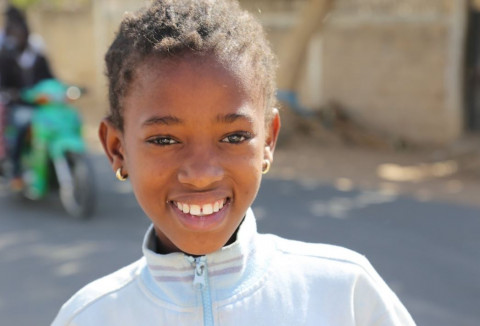 Fighting teaching practices that reinforce gender bias in school 2019-10-16 In 1995 at the World Conference on Women in Beijing, countries unanimously adopted the Beijing Declaration and Platform for Action – the most progressive blueprint ever for advancing the rights of not only women but girls. The Beijing Declaration is the first to specifically call out girls’ rights. On December 19, 2011, United Nations General Assembly adopted Resolution 66/170 to declare October 11 as the International Day of the Girl Child, to recognize girls’ rights and the unique challenges girls face around the world. The International Day of the Girl Child focuses attention on the need to address the challenges girls face and to promote girls’ empowerment and the fulfilment of their human rights. This year, under the theme, “GirlForce: Unscripted and unstoppable”, we celebrate achievements by, with and for girls since the adoption of the Beijing Declaration and Platform for Action. Impact of teachers on a child’s life Teachers are often significant players in the early development of children. They are key to achieving equitable and inclusive education systems that deliver learning. They also take up the guardian role when children attend school right from early childhood education to university. This essentially means that teachers have the power to influence how children think, act, perceive, interpret, and articulate thoughts and experiences in the early stages of life. Even in adulthood, people will remember a punishment or praise that their teachers gave them in their school days. In the book ‘Becoming’ Michelle Obama – former US first lady and founder of the Let Girls Learn Initiative – recalls how embarrassed she felt when she could not pronounce the word ‘white’ in an English class prompting her teacher to order Michelle to sit back down. “I was sure my teacher had now pegged me as someone who could not read or, worse, did not try to” writes Michelle Obama. A hot-cheeked young Michelle further narrates how the two best pupils in her class could literally read everything correctly, making her conclude that her inability to read ‘white’ appropriately could have been “a sign that the two were marked for greatness when the rest of them were not.”Closer to home in Africa, renowned author and feminist Chimamanda Ngozi Adichie in her book ‘We should all be Feminists’ underscores how African education systems have reinforced gender biases and discrimination towards girls. “We teach girls to shrink themselves, to make themselves smaller. We say to girls, you can have ambition, but not too much. You should aim to be successful, but not too successful. Otherwise, you would threaten the men”, writes Ms. Adichie. While some may disagree with Chimamanda and other writers on the gender bias of the education we deliver to children, and especially in Africa, it is imperative that we do not ignore teaching practices that may consciously or unconsciously ingrain gender discrimination, bias and reinforce patriarchy in children’s way of life and thinking. Addressing gender bias in school Often, the term ‘gender’ is misconceived as ‘women issues’. However, as the Forum for Africa Women Educationalists (FAWE) describes it, gender is the roles and responsibilities of women/girls and men/boys that are defined in our families, societies, cultures, including characteristics, attitudes and behaviors expected of each sex. FAWE also defines gender bias as a preference or prejudice toward one gender and results in unequal expectations, language use and treatment. Gender bias and stereotyping happens at the early stages of children’s learning. Some common teaching practices that reinforce gender bias against girls in the classroom include: delegating group leadership positions to boys only, constant use of ‘he’ in all learner activity references, use of African proverbs that depict girls as inferior and dependent to males. In addition, illustrations used in pictures, text and drawings that portray women and girls doing conventional socially assigned roles, such as cooking, and boys doing white collar jobs, such as doctors and pilots, breed patriarchal narratives to the place of girls in society. The gender biased references and illustrations have a long-lasting effect, especially when applied in the early stages of learning. This therefore calls for pre-training and in-service training of teachers to ensure they are gender sensitive and responsive in imparting new knowledge to children. It is important that teachers are cognizant of gender-friendly classroom setup and teaching methodologies. The school infrastructure, both inside the classroom and in the school environment, should be responsive to the different needs of both girls and boys. The practical tools that teachers can use to address gender biases in and around the classroom include the Revised Gender Responsive Pedagogy Toolkit developed by FAWE in collaboration with UNESCO ICBA and UNICEF WCARO and the Early Childhood Education Gender Responsive Pedagogy designed by VVOB and FAWE. FAWE, VVOB and GPE also held a joint webinar on the Early Childhood Education GRP toolkit that further explains how to shape children’s ideas around gender roles and practices, both in and out of the classroom. URL:https://www.globalpartnership.org/blog/fighting-teaching-practices-reinforce-gender-bias-school
  UN General Assembly discusses findings from UNESCO’s Report on Education for Sustainable Development 2019-10-15 On 14 October 2019, UNESCO presented the report on the implementation of Education for Sustainable Development (ESD) in the framework of the 2030 Agenda for Sustainable Development at the United Nations General Assembly. At the 74th session of the Second Committee of the UN General Assembly (Economic and Financial Committee), representatives of member states and the UN system discussed ways towards the achievement of sustainable development, including the implementation of international commitments on climate change and agreements on financing for development, as well as efforts for advancing education for sustainable development worldwide. As part of the discussions, Ms. Marie Paule Roudil, Director of UNESCO New York, presented the Report on the implementation of Education for Sustainable Development in the framework of the 2030 Agenda for Sustainable Development, in accordance with General Assembly resolution 72/222. The report offers a review of the implementation of Education for Sustainable Development, in particular through its Global Action Program, in the framework of the 2030 Agenda. It also provides an overview of the draft framework for education for sustainable development for the period 2020–2030, entitled “Education for Sustainable Development: Towards achieving the Sustainable Development Goals (ESD for 2030)”. It further makes recommendations for education for sustainable development implementation in the future. In her presentation, Ms. Roudil shared the “solid progress on the implementation of education for sustainable development, as well as the strengthened international recognition of its importance”. Substantial progress has been achieved in all five priority areas of the Global Action Program, namely policy advancement, transformation of learning environments, capacity-building of educators, youth empowerment and sustainable solutions at the local level. To sustain this momentum beyond the Global Action Program ending in 2019, UNESCO developed a framework through broad consultations with various stakeholders. Ms. Roudil explained that the new ESD for 2030 framework aims to “strengthen education for sustainable development in an effort to build a more just and inclusive world”. The framework will emphasize the learning of knowledge, skills, values and behaviors that can empower every learner to contribute to sustainable development. It will be officially launched at the Global Conference on Education for Sustainable Development, to be held in Berlin, Germany in June 2020. Ms. Roudil reiterated UNESCO’s commitment to harnessing partnerships for education. As the UN specialized agency entrusted to lead and coordinate the achievement of the education goal, UNESCO will continue to support member states and other stakeholders “to make sure education helps us achieve the world we want; to transform lives and build a sustainable future for our planet for all”. This report, amongst others presented on sustainable development, was unanimously welcomed at the General Assembly. This demonstrates a clear acknowledgement of education’s key role in the 2030 Agenda, as well as of UNESCO’s efforts to champion education for sustainable development. The Group of 77 and China will also introduce an updated General Assembly resolution on education for sustainable development to the Second Committee. Member states will negotiate and adopt this resolution later this year. URL:http://www.unesco.org/new/en/unesco-liaison-office-in-new-york/about-this-office/single-view/news/un_general_assembly_discusses_findings_from_unescos_repor-1/
 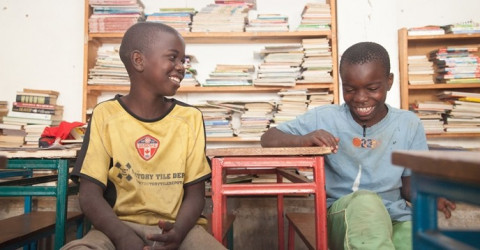 Giving teachers a voice on their professional development in Zambia 2019-10-15 According to UNESCO’s 2016 Education Policy Review, in 2010 only 15% of Zambia’s Secondary School teachers were qualified to teach, with STEM subjects being particularly affected. Even though the Ministry of General Education (MoGE) already launched a Fast Track Training initiative for STEM subjects in 2012, teacher quality remains one of Zambia’s key education priorities. As the Government has decided to strengthen continuous professional development (CPD) for teachers to ensure they remain skilled throughout their career, the Capacity Development for Education (CapED) Programme is supporting the development of a National CPD teacher framework in collaboration with the Teaching Council of Zambia (TCZ) and other stakeholders. Since there is little evidence of teachers’ participation in policy-making, the development of the CPD framework is also an opportunity to involve teachers in social dialogue with the government. In light of this, CapED held a workshop on CPD and social dialogue in September. The meeting provided a platform to: (1) share findings on CPD practices in Zambia, (2) build a common understanding on why the country needs social dialogues and (3) ensure a sound foundation on the development of a CPD framework and the institutionalization of social dialogues. Participants benefitted from the experience of Uganda, where CapED has actively contributed to the development of CPD and social dialogue. The General Secretary of the Ugandan National Teacher’s Union and experts from IICBA and the University of Kampala shared lessons learned and highlighted key issues that should be taken into consideration as Zambia embarks in this process. Similarly, delegates from Malawi presented their approach to developing a CPD framework. The lively discussions involved government officials, as well as representatives from civil society organizations, the private sector, teacher unions, universities, TCZ, UNESCO, and the Independent School Association of Zambia. Based on these exchanges, participants agreed on the CPD teacher framework’s outline. They concluded that to ensure ownership and sustainability, the development process must be as consultative as possible, allowing teachers, MoGE, and TCZ to contribute to the development process. For CPD to be operational it will also be necessary to strengthen the CPD management system especially by TCZ and create a costed CPD implementation plan, which will serve as a management and monitoring tool. Participants also called for an in-depth mapping of social dialogue in Zambia’s education sector and endorsed the need for a national framework for social dialogue together with a costed implemented plan. Social dialogue is one of the strategies to attain SDG4.c, which states that, “as teachers are a fundamental condition for guaranteeing quality education, teachers and educators should be empowered.” CPD is also part of SDG4.c. The target calls for socio-economic and political rights for teachers and for governments to strengthen policy dialogue mechanisms and to make teaching an attractive, first-choice profession with continuous training and development. The Permanent Secretary for Administration of the MoGE officiated the meeting and expressed his gratitude to UNESCO and CapED for supporting the ministry strengthen teacher quality. He stated that CPD is one of the effective ways to improve education, as it targets self-development, and eventually institutional development. “Despite the immense contribution by stakeholders […] there is currently no framework to regulate and coordinate CPD activities for teacher,” he added. The workshop was a big step forward for Zambia in their CPD and social dialogue development process. Keeping up this momentum, consultations with teachers on the draft CPD framework will take place in 2019 and a national validation workshop will follow. Going forward, both frameworks will need to be in line with the draft national education policy, which is close to finalization. In Zambia, CapED works to improve the quality of teachers through teachers’ professional standards, social dialogue, continuous professional development and upgraded pedagogies. URL:https://en.unesco.org/news/giving-teachers-voice-their-professional-development-zambia
 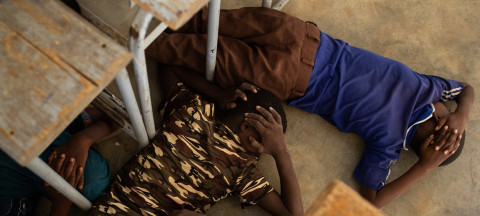 School closures triple in Central and Western Africa as education comes under fire 2019-10-14 A surge in “deliberate” attacks against students, teachers and schools in West and Central Africa has led to a tripling in school closures in the last year and left almost two million youngsters “robbed of an education”, the UN Children’s Fund (UNICEF) said on Friday. In a new report detailing threats of violence against schools across the region and issues as a ‘Child Alert’, the UN agency warned that a generation of children risks being denied the right to learn. “Nearly two million children are out of school due to conflict, so it is not an easy number,” UNICEF Goodwill Ambassador, Muzoon Almellehan, told journalists in Geneva. “It is important to highlight those challenges, to highlight the struggle of those people. They need us, they need our attention.” From Burkina Faso to Nigeria, more than 9,200 schools shut Data gathered by UNICEF to June indicates that 9,272 schools have been closed in Burkina Faso, Cameroon, Chad, Central African Republic, the Democratic Republic of the Congo, Mali, Niger and Nigeria as a result of insecurity - three times the number at the end of 2017. “Schools are being shut down,” according to UNICEF Deputy Executive Director, Charlotte Petri Gornitzka. “Over the past two years, the number of schools that have been shut down has tripled; over 9,000 schools due to the insecurity have been attacked.” The UNICEF report notes how spreading insecurity across north-west and south-west Cameroon has left more than 4,400 schools forcibly closed. In Burkina Faso, more than 2,000 schools are closed, along with more than 900 in Mali, owing to increasing violence in both countries. In the central Sahel region, moreover, Burkina Faso, Mali and Niger have witnessed a six-fold increase in school closures owing to attacks and threats of violence in just over two years, from 512 in April 2017, to more than 3,000 by June this year. School closures in the four countries affected by crisis in the Lake Chad Basin – Cameroon, Chad, Niger and Nigeria – remained at around 1,000 between the end of 2017 and June 2019. Education is crucial when you’ve fled violence – UNICEF Goodwill Ambassador Just back from visiting a camp for people displaced by violence in central Mali, Ms. Almellehan insisted in Geneva that for many people, herself included, education was vitally important in giving children hope for a better future. “I had to flee my homeland in Syria in 2013 and I also had to live in refugee camps,” she explained. “It wasn’t easy for me and also I can feel like those children who can’t go to school, because education is something really, really important to me, myself.” One direct result of children not getting an education is that they are more vulnerable to recruitment by extremists or abuse at their hands such as forced marriage, the UNICEF Goodwill Ambassador insisted. “When a child is not at a school, especially if the child suffers from a very bad economic situation, when they are in poverty, when they don’t have enough awareness, all of that can affect that child and can lead that child to being exploited easily,” she said. On a wider level, the lack of schooling “is casting a foreboding shadow upon children”, their families, their communities and society at large,” UNICEF said in a statement, noting that more than 40 million six to 14-year-olds are already missing out on school in Central and West Africa. The agency is working with education authorities and communities to support alternative learning opportunities including community learning centres, radio school programmes, technology for teaching and learning, and faith-based learning initiatives. It is also providing tools for teachers who work in dangerous locations, and psychosocial support and care for schoolchildren emotionally scarred by violence. $221 million appeal across seven countries only 28 per cent funded “Now more than ever, governments must reaffirm their commitment to education and protect spending on education for their youngest citizens,” the UNICEF report insists. “Now is the time for renewed efforts to make sure the potential of a generation of young people is not wasted,” it emphasized, highlighting a funding gap of 72 per cent of the $221 million required for educational programmes across seven countries in the region. URL:https://news.un.org/en/story/2019/08/1044821
  Situation analysis of SDG4 with a gender lens 2019-10-14 In 2018, for the United Nations Girls’ Education Initiative (UNGEI), UNESCO Bangkok and UNICEF EAPRO commissioned an analysis of Sustainable Development Goal 4 from a gender lens to dissect relevant and available data on boys and girls, men and women. These data sheets are a first step in demonstrating applying a gender lens in the analysis of SDG4 data as disaggregated and nested analyses will result in more specific and nuanced recommendations. Following can be downloaded fact sheets for eight targets of SDG4. Target 4.1 Target 4.2 Target 4.3 Target 4.4 Target 4.5 Target 4.6 Target 4.7 Target 4.c URL:https://bangkok.unesco.org/index.php/content/situation-analysis-sdg4-gender-lens