
News
Catch up on what’s happening in the world of global citizenship education.
1,668 results found
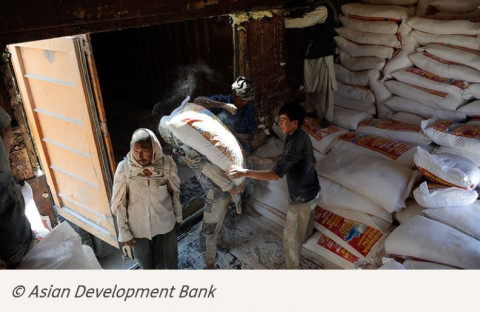 Uzbekistan ratifies the Protocol of 2014 to the Forced Labour Convention 2019-11-17 Uzbekistan becomes the 40th ILO member State having ratified the Protocol On 16 September 2019, Uzbekistan deposited its instrument of ratification of the Protocol of 2014 to the Forced Labour Convention, 1930, thereby becoming the fortieth country worldwide to ratify the Protocol. Through the ratification of the Protocol, Uzbekistan marks the ILO’s Centenary by expressing a strong commitment to tackle all forms of forced labour, including trafficking in persons. This ratification is also a crucial step towards the objective of 50 ratifications by the end of 2019. The Protocol, adopted by an overwhelming majority by the International Labour Conference in 2014, calls on ratifying States to adopt effective measures to combat forced labour, including debt bondage, forced domestic labour or trafficking in persons, and to protect victims and ensure their access to remedies and compensation. By ratifying the Protocol, Uzbekistan is moving ahead towards the achievement of decent work and the delivering of the 2030 UN Sustainable Development Goals, in particular SDG target 8.7. The Protocol will enter into force for Uzbekistan on 16 September 2020, one year after its ratification. URL:https://www.ilo.org/moscow/news/WCMS_719392/lang--en/index.htm
 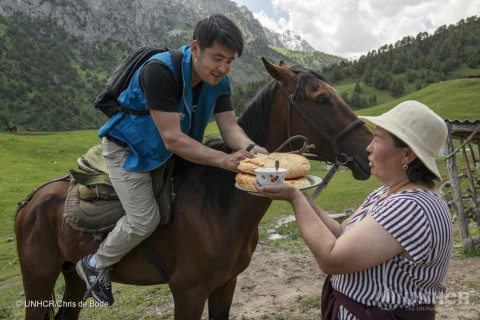 Kyrgyz Human Rights Lawyer Wins UNHCR Nansen Refugee Award 2019-11-17 A lawyer, whose work has supported the efforts of the Kyrgyz Republic in becoming the first country in the world to end statelessness, has been selected as the 2019 winner of the UN Refugee Agency’s Nansen Refugee Award. Azizbek Ashurov is welcomed with traditional bread and horse’s milk, as he leads the Ferghana Valley Lawyers Without Borders mobile team on a visit to a community of formerly stateless persons in a remote area of Kyrgyzstan. A lawyer, whose work has supported the efforts of the Kyrgyz Republic in becoming the first country in the world to end statelessness, has been selected as the 2019 winner of the UN Refugee Agency’s Nansen Refugee Award. Azizbek Ashurov, through his organization Ferghana Valley Lawyers Without Borders (FVLWB), has helped well over 10,000 people to gain Kyrgyz nationality after they became stateless following the dissolution of the Soviet Union. Among them, some 2,000 children will now have the right to an education and a future with the freedom to travel, marry and work. Statelessness affects millions of people worldwide, depriving them of legal rights or basic services and leaving them politically and economically marginalized, discriminated against and particularly vulnerable to exploitation and abuse. “Azizbek Ashurov’s story is one of great personal resolve and tenacity,” said Filippo Grandi, the UN High Commissioner for Refugees. “His commitment to the cause of eradicating statelessness in Kyrgyzstan – an achievement secured in partnership with the Kyrgyz government and others across the country – is a compelling example of the power of an individual to inspire and mobilise collective action.”- Filippo Grandi, the UN High Commissioner for Refugee As part of the Soviet Union, with no internal borders in place, people moved across Central Asia with internal documentation, acquiring residency and getting married. After the dissolution of the USSR in 1991 and the formation of new states, many people became stranded across newly established borders, often with now invalid Soviet passports or no means to prove where they were born. This left hundreds of thousands of people stateless throughout the region, including in Kyrgyzstan. Women were disproportionately affected, often left without citizenship after marrying and settling outside of their own state before the dissolution of the Soviet Union and the establishment of new borders. As a result of hereditary citizenship laws, their statelessness was passed onto their children. Motivated by his own family’s difficult experience of achieving citizenship after arriving from Uzbekistan in the aftermath of the dissolution, Ashurov helped to found FVLWB in 2003 to offer free legal advice and assistance to vulnerable displaced, stateless and undocumented people in the southern part of Kyrgyzstan. “I cannot stand still when I see an injustice,” said Ashurov. “Statelessness is injustice. A stateless person is not recognized by any state. They are like ghosts. They exist physically, but they don’t exist on paper.” “Our role in reducing statelessness is to help people do what they cannot do themselves. We don’t give them citizenship, we give them back a right that they should have had from birth.”- Azizbek Ashurov “I realised that if it was this difficult for me, with my education, and as a lawyer, then imagine how hard it must be for an ordinary person,” he said. As more and more people approached FVLWB for help with citizenship issues, he turned the organization’s focus onto statelessness, working with others to map cases across the country for the first time and setting out to tackle the devastating problem once and for all. Ashurov and FVLWB formed mobile legal teams which travelled to remote areas of the south of the country to find vulnerable and socially marginalized groups. In their mountainous country, the mobile legal teams relied on a battered four-wheel drive or travelled on horseback. His close work with the Kyrgyz authorities, including on the launch of a temporary ‘amnesty’ for those without crucial papers, helped large numbers of stateless people to gain citizenship. “Our main method was to work with the government,” said Ashurov. “We managed to get their attention and make them our friends. We were little warriors – but behind us was a big tank.” “Similarly to Kyrgyzstan, a number of states in the wider region have initiated campaigns through which some 46,000 stateless people have so far been identified and over 34,500 cases have been successfully resolved to date.” Notes to Editor Media materials including photos and b-roll video are available at the following link: https://www.unhcr.org/media-nansen-refugee-award-2019 For media enquiriesStephen Pattison, pattison@unhcr.org, +41 79 500 8774Babar Baloch, baloch@unhcr.org, +41 79 513 9549 About UNHCR’s Nansen Refugee Award: UNHCR’s Nansen Refugee Award honours extraordinary service to the forcibly displaced. Recent winners include South Sudanese surgeon Dr. Evan Atar Adaha, Sister Angelique Namaika from the Democratic Republic of the Congo, and Zannah Mustapha, a lawyer and mediator from Borno state in north-eastern Nigeria. The award includes a commemorative medal and a US$150,000 monetary prize generously donated by the governments of Switzerland and Norway. In close consultation with UNHCR, the laureate uses the monetary prize to fund a project that complements their existing work. The Nansen Refugee Award program is funded in partnership with the Swiss Government, The Norwegian Government, the State Council of the Republic and Canton of Geneva, the Administrative Council of the City of Geneva and the IKEA Foundation. The 2019 Nansen Refugee Award Ceremony The 2019 Award ceremony will take place on October 7 at the Bâtiment des Forces Motrices in Geneva. It will feature a performance by Venezuelan singer Danny Ocean and a keynote address by Nadine Labaki, the Lebanese director of the Cannes Jury Prize winner, and Oscar-nominated film, Capernaum. It will be hosted by award-winning South African TV presenter Leanne Manas. Other performers joining them on the night will be Swiss musician Flèche Love and German poets and stage performers Babak Ghassim and Usama Elyas. About UNHCR UNHCR, the UN Refugee Agency, leads international action to protect people forced to flee their homes because of conflict and persecution. We deliver life-saving assistance such as shelter, food and water, help safeguard fundamental human rights, and develop solutions that ensure people have a safe place to call home where they can build a better future. We also work to ensure that stateless people are granted a nationality. For more information about UNHCR, visit https://www.unhcr.org/about-us.html URL:https://www.unhcr.org/centralasia/en/11163-kyrgyz-human-rights-lawyer-wins-unhcr-nansen-refugee-award.html
 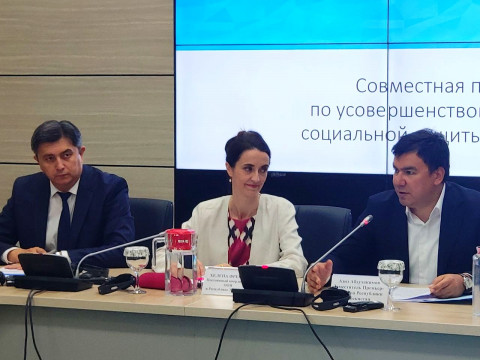 Government of Uzbekistan and United Nations launch joint initiative to accelerate social protection for the most vulnerable 2019-11-16 TASHKENT, 19 September 2019 – Aziz Abdukhakimov, the Deputy Prime Minister of Uzbekistan, and Helena Fraser, United Nations Resident Coordinator, spearheaded discussions on the issues of social protection in the country. Parliamentarians, representatives of ministries and UN agencies including UNICEF, UNDP and ILO participated in the meeting. In 2018, the UN Secretary-General launched a fund to accelerate progress towards Sustainable Development Goals around the world. This SDG Fund is a financing mechanism to support countries to deliver on their commitment to ‘leave no one behind.’ The first allocation from the Fund will support initiatives to develop and implement social protection measures, in order to reduce and prevent vulnerability. Across the globe, UN teams in 114 countries worked with respective Governments to apply for this fund. Only 24 of these teams made it through, and one of them is Uzbekistan. . “Despite good initial efforts by countries to nationalize the SDGs by identifying priorities in domestic contexts, it is widely acknowledged that the ambition of Agenda 2030 requires a rapid acceleration of efforts and results. This means getting the right economic, social and environmental policies in place and taking them to scale as quickly as possible,” said Helena Fraser, United Nations Resident Coordinator in Uzbekistan. “Here in Uzbekistan, we believe investing in a robust, coherent social protection system that draws on best global standards and experience will help Uzbekistan’s ambitious national development agenda to succeed while protecting the most vulnerable.” In partnership with Government, the UN team in Uzbekistan has developed a joint programme on social protection which prioritizes institutional reform and will ensure pilot programmes benefitting people with disabilities. In Uzbekistan, social protection functions are currently distributed across multiple ministries and agencies, and although Uzbekistan has invested about 8-9% of its GDP in social protection and committed to SDG targets on social protection, gaps in the system have been growing in recent years. Most people with disabilities are not adequately covered by social protection. Social allowances have decreased considerably with two-thirds of eligible low-income families with children not receiving any support. Only 10% of eligible people have access to social allowances and active labour market programmes, and 30% of persons of pensionable age have no access to income security. “The lack of integration at policy and institutional levels is a root cause of ineffectiveness and inefficiencies. This means that social protection cannot be effectively provided to any group,” said Sascha Graumann, Representative, UNICEF. He added that “in practice, this means that people in need cannot obtain the services or support they are entitled to and don’t even know where to turn to secure their entitlements. Creation of a single body would enable an integrated approach to address the needs of individuals, families and children.” URL:http://www.un.uz/eng/news/display/343
 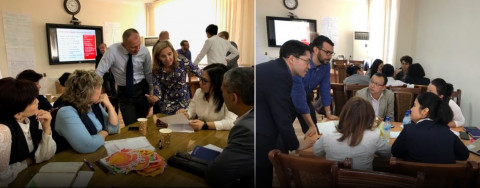 The United States and the Ministry of Public Education partner to improve early grade reading and math skills in Uzbekistan 2019-11-16 A team of five U.S. education experts have arrived in Uzbekistan to work with education experts from Uzbekistan’s Ministry of Public Education (MOPE) to develop reading and mathematics assessments for students in grades 2 and 4. The data from this assessment, which is supported by the United States Agency for International Development (USAID), will be used to conduct a national-level survey of how well students are developing foundational skills in primary school. The survey results will provide Uzbekistan a comprehensive set of data on student outcomes that will inform strategies to improve teaching and learning so that all students have the opportunity to succeed. The Uzbekistan and U.S. team will develop more than 28 assessments for math and reading in eight local languages (Uzbek, Russian, Karakalpak, Kazakh, Tajik, Kyrgyz, Turkmen and English). Forty staff from the central ministry and regional offices will be participating in the 8-day exercise, which will use the Early Grade Reading Assessment (EGRA) and Early Grade Math Assessment (EGMA) as foundations for evaluating students’ skills and competencies. These assessments are the first component of the $50 million, five-year Development Objective Agreement (DOAG) that was signed between the Ministry and USAID on September 28, 2019, as the Ministry places greater emphasis on a competency-based approach to education. Minister of Public Education Sherzod Shermatov addressed participants, noting “This is the first international assessment taking place in Uzbekistan that will help get an accurate gage of the learning outcomes in primary schools. This will assist the Ministry in developing new methodologies for improving the education system.” USAID and MOPE elected to conduct a comprehensive, nationwide survey to gather as much data as possible so that specific, targeted programs can be developed. This assessment is only one component of the overall education assistance the United States will provide to Uzbekistan. USAID has enlisted RTI International to collaborate with MOPE during the workshop by providing reading, mathematics and assessment expertise. In November 2019, RTI International will work with MOPE to conduct a small-scale pilot of the EGRA and EGMA instruments, and then, based on that pilot, conduct the national-level in 2020. URL:https://uz.usembassy.gov/the-united-states-and-the-ministry-of-public-education-partner-to-improve-early-grade-reading-and-math-skills-in-uzbekistan/
 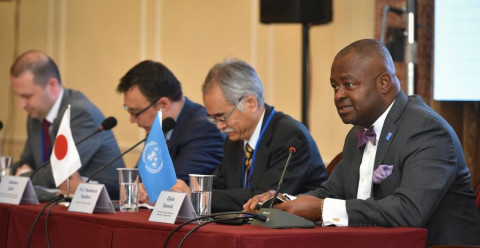 ПРООН начинает кампанию «Предупреждение насильственного экстремизма, способствующего терроризму в Центральной Азии» и проводит первое совещание по составлению карт доказательств и исследовательской базы 2019-11-16 13 September 2018 Bishkek – The Regional Dialogue devoted to mapping the research in the area of Violent Extremism Conducive to Terrorism in Central Asia was officially commenced by Mr. Ozonnia Ojielo, UN Resident Coordinator / UNDP Resident Representative in the Kyrgyz Republic, H.E. Mr. Yoshihiro Yamamura, Ambassador Extraordinary and Plenipotentiary of Japan to the Kyrgyz Republic and Zakir Chotatev, Deputy Director of State Agency for Religious Affairs of the Kyrgyz Republic. The Regional Dialogue was the first among five regional dialogues to be hosted by the Central Asian countries. The dialogue series is part of the regional UNDP initiative aimed at prevention of violent extremism conducive to terrorism in Central Asia, and generously funded by the Government of Japan at the amount of US$ 6.4 million. The initiative focuses on both programmatic activities in select Central Asian communities and research. The Bishkek Regional Dialogue was the first step towards providing a platform for Preventing Violent Extremism (PVE) practitioners and expert community to work together and thereby contribute towards broader PVE research efforts in the Central Asia region. The initiative is spearheaded by the UNDP country office in Kazakhstan and jointly implemented with UNDP offices in the Kyrgyz Republic, Tajikistan, and Turkmenistan, with a strategic support from the UNDP Istanbul Regional Hub. “Violent extremism is a challenge for Governments of Central Asia that they tackle in multiple ways. The workshop gathers practitioners and professionals to design the right solutions and support national institutions to address this challenge effectively”, said UNDP Resident Representative Dr. Ozonnia Ojielo in his welcome speech. In his opening speech, Ambassador Yoshihiro Yamamura mentioned that "Countering terrorism is an important task for both Japan's diplomacy and the international community. The fight against terrorism is one of the basic principles of Japan's international cooperation. I express the hope that due to the assistance to the social development of youth in cooperation with UNDP, the risk of radicalization of citizens will be reduced, which in turn will contribute to the maintenance of stability in the countries of Central Asia". The intensive technical discussions of among 60 PVE researchers, experts and practitioners from around the globe representing UN agencies, academia, and think tanks, civil society organizations, and other partners from Kazakhstan, Kyrgyzstan, Tajikistan, Turkmenistan, Uzbekistan as well as Eurasia, Africa, Europe, and America facilitated: The discussion of the state of knowledge on violent extremism dynamics in Central Asia and across the globe, Establishment of linkages between expert community and the identification of synergies between ongoing and future researches, The mapping of research gaps in the PVE area and the prioritization of upcoming research plans. In his closing remarks, UN Resident Coordinator and UNDP Resident Representative for Kazakhstan Mr. Norimasa Shimomura mentioned that the Regional Dialogue is essential in further accelerating/strengthening regional cooperation among knowledge community and outlined such further steps will calibrate achieving tangible results for the benefit of people in most vulnerable communities in Central Asia. URL:https://www.kg.undp.org/content/kyrgyzstan/en/home/presscenter/pressreleases/2018/09/undp-commences-preventing-violent-extremism-conducive-to-terrori.html
 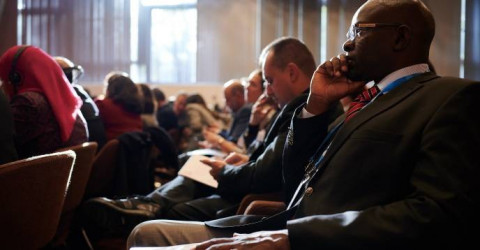 Global meeting of education ministers and university leaders paves way for greater inclusion and mobility in higher education 2019-11-14 For the first time in UNESCO’s history, ministers of education and university leaders came together to envisage international measures to improve inclusion and mobility in higher education. “In the field of higher education, multilateralism and UNESCO in particular, have a key role to play,” said UNESCO Director-General Audrey Azoulay as she opened the meeting. Over 100 ministers and 100 university representatives that are part of the UNESCO Chairs programme convened at UNESCO on 13 November during the Organization’s General Conference in Paris. They examined ways governments and higher education institutions can work together to meet the pressing challenge of creating a more inclusive global campus that can handle rapidly growing enrolment in higher education and increasing student mobility. They also envisaged ways for the world’s higher education sector to counter increasing inequalities and include marginalized groups. “We need to take actions to enhance international cooperation in higher education, reinforce knowledge sharing, academic exchanges and mobility, and create a fair, transparent and inclusive global campus that offers quality, inclusive and lifelong learning opportunities for all,” argued Stefania Giannini, UNESCO Assistant Director-General for Education. “One of the challenges we have in education is the democratization of the credentialing process,” said Tina Beaudry-Mellor, Minister of Advanced Education Saskatchewan, Council of Ministers of Education, Canada. A rapidly changing landscape The global higher education landscape is rapidly changing with increasing internationalization, diversification of providers, and new modes of learning. Some 220 million students are currently enrolled in higher education worldwide, twice as many as ten years ago and further growth is expected, especially in Africa. However, increased enrolment is not a reliable indicator of progress in achieving the internationally agreed 2030 Agenda’s goal of ensuring that educational systems “leave no one behind” and providing equitable, affordable quality higher education. Institutions face the challenge of providing quality education to an increasingly diverse student population, including non-traditional learners and disadvantaged groups such as migrants, refugees and indigenous peoples.“The Qualifications Passport was a door opener for me. I fled the war in Syria to Greece, and I then received my qualification recognition and was able to pursue my studies in Norway,” said Anwar Horani, a Syrian refugee in Norway. Increased mobility among students The past decades’ unprecedented increase of enrolment in higher education is matched by growing student mobility leading to the gradual emergence a global campus of learners, faculty and researchers. In the decade leading up to 2011, the number of learners choosing to study abroad more than doubled to 4.3 million students – a figure that is conservatively estimated to double again by 2025. “Student mobility should become the norm, and not an exception. It is our duty to make it easier for qualifications to be recognized across borders,” said Iselin Nybø, Minister for Research and Higher Education of Norway. Yet many students still face obstacles in having their qualifications recognized when returning to their home country or moving to a new country. Lack of recognition of qualifications constitutes a major obstacle in students’ pursuit of further studies or employment. Today more than half of the world’s foreign students are not merely studying away from their home country, but in a different continent or region. “In too many institutions of higher education, structural barriers make a university education available only to those born into the most privileged groups of society,” said Fernando Reimers, Professor of International Education at Harvard University (USA), and Member of UNESCO’s Futures of Education Report Commission. “Addressing the challenge of inclusion will require in many places expanding access to higher education.” To meet these new challenges, UNESCO is preparing the adoption of a Global Convention on the Recognition of Qualifications concerning Higher Education at the General Conference underway until 27 November. The new Convention aims to facilitate student mobility and improve access to higher education across regions and continents. “The Global Convention on the Recognition of Higher Education Qualifications will be clear evidence that multilateralism, despite its critics, is the most appropriate system for the interconnected world in which we live,” said Ms Azoulay. UNESCO has also launched a Qualifications Passport to facilitate mobility for refugees with qualifications. The qualifications passport is currently being piloted in Zambia. “This passport can play a key role in supporting the integration of refugees by recognizing the studies they completed in their countries of origin,” said Ms Azoulay. Zambia’s Minister of Higher Education for his part said, “we are proud to pilot the Qualifications Passport for Refugees. We are working with UNESCO to make sure that refugee learners are given a chance to pursue their education and careers.” By convening policy-makers and universities to this unprecedented meeting, UNESCO aims to foster political will, international cooperation and capacities in higher education to achieve the 2030 Sustainable Development Agenda and gain understanding for the Global Convention’s added value in facilitating this process. Ministerial meeting on inclusion and mobility in higher education UNESCO and Higher Education Global Convention on the Recognition of Qualifications concerning Higher Education Qualifications Passport URL:https://en.unesco.org/news/global-meeting-education-ministers-and-university-leaders-paves-way-greater-inclusion-and
 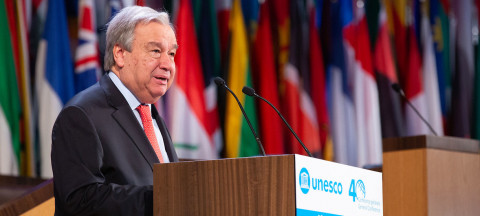 Quality education an ‘essential pillar’ of a better future, says UN chief 2019-11-13 Mr. Guterres, who noted that one-fifth of young people are out of work, lack education or adequate training, praised UNESCO’s fundamental role in coordinating and monitoring global efforts, such as the agency’s initiative on the future of education. The theme was taken up by Tijjani Muhammad-Bande, President of the UN General Assembly, in his opening remarks to a ministerial meeting on education at the Conference. Mr. Muhammad-Bande referred to estimates showing that some 265 million children are out of school. The number is projected to fall to 220 million over the next decade, but he declared that the illiteracy figures forecast for 2030 remain a scandal: “We must remove all barriers to education. We must ensure, at a minimum, universal access to basic education for every child, everywhere.” He also highlighted the importance of educating children effectively, and equipping them with the necessary analytical and critical thinking abilities, in “an ever-changing and more complex world”. Recalling his former experience as an educator in his home country of Nigeria, Mr. Muhammad-Bande called for more efforts to ensure that teachers are adequately qualified, because “no educational system can rise above the quality of its teachers”. Other important measures cited by the General Assembly President include strong curricula that fully integrate Information and Communications Technology (ICT); ensuring that girls complete at least 12 years of education (which, according to the World Bank, would add some $30 trillion to the global economy); and the effective monitoring and evaluation of learning. Mr. Muhammad-Bande called on nations to meet their commitments to education spending, and for donor countries to increase international aid directed towards education. ‘Powerful agents of change’ As well as the difficulties in accessing quality education, Mr. Guterres also outlined several other challenges faced by young people: the fact that millions of girls become mothers while they are still children; that one quarter are affected by violence or conflict; and that online bullying and harassment are adding to high levels of stress, which see some 67,000 adolescents die from suicide or self-harm every year. World leaders, and others who wield power, he continued, must treat young people not as subjects to be protected, but as powerful agents for change, and the role of the powerful is not to solve the enormous challenges faced by young people, but rather to give them the tools to tackle their problems. Mr Guterres underscored the importance of bringing young people to the table as key partners, and praised UNESCO’s efforts to include their voices, which include holding a major event at the General Conference, and the Youth Forum. URL:https://news.un.org/en/story/2019/11/1051171
  5 Reasons why Civil Society is Key to Achieving SDG4 2019-11-12 The Sustainable Development Goal 17 highlights the need to “revitalise the global partnership for sustainable development”. While civil society should be one of the main partners in achieving the SDGs, our experience during the recent High-Level Political Forum tends to show that we are given very little space within the United Nations system. Furthermore, the SDG Summit imposed stronger conditions for civil society representatives to attend, with unacceptable delays in confirming registration of participants. At the same time, the UN silently entered into a strengthened partnership with the World Economic Forum, giving the private sector preferential access to the UN System, and openly promoting an increased participation of private providers in education. We believe a renewed partnership with education civil society is needed, and here are five reasons why. 1. Education civil society is already working in partnership all around the world The education civil society movement has recognised the importance of working together; at national, regional and global levels, networks have developed and broadened. Education networks are increasingly seeking out opportunities to participate in multi-sectoral platforms, while also inviting organisations from different sectors to participate in dialogue and joint action, which is yielding results. Cross-sectoral dialogues have been initiated which are already achieving positive change. In Bangladesh, civil society campaigned for and supported the delivery of strengthened school feeding programmes to end classroom hunger, and health education programmes in schools – including sexual and reproductive health. In climate-vulnerable countries including Papua New Guinea and Sri Lanka, and recently Mozambique, education campaigners work closely with environmental NGOs to ensure children and adults have access to education for sustainable development, and to raise awareness of climate change, environmental preservation and food security. 2. Civil society can assess the quality of the partnerships The underlying idea in the realisation of human rights is that there is a shared responsibility to achieve the necessary conditions of dignity, protection and development of all individuals and peoples. That is why States have the international legal responsibility of securing sufficient financial resources to respect, promote and fulfil human rights and especially the right to education for all.Partnerships should be measured by both quantitative and qualitative means and it is crucial that the qualitative measures capture both the quality of the partnership itself and the quality of the impact generated by the partnership towards achieving the remainder of the goals.Specific measures to determine what makes a partnership effective and criteria for what constitutes a partnership should be developed at the national level and not digress from, global and thematic indicator frameworks. All partnerships with national governments should be transparent and adhere to international commitments and treaties, including to The Universal Declaration of Human Rights, The Convention on the Rights of the Child, The New York Declaration, The Global Compacts for Migration and Refugees. In the human rights framework, international cooperation is indispensable for the less developed countries to achieve the Sustainable Development Goals (SDGs). For their part, these have the obligation to allocate up to the maximum of the available resources for that purpose. A revitalised and all-inclusive global partnership for sustainable development is important for achieving all the SDGs. When it comes to education and lifelong learning, the partnership with civil society is crucial for an inclusive approach that would leave no one behind and boost the full potential of education to contribute to the implementation of all goals. Civil society demonstrates the ability to work across sectors and to engage with a complex and multithemed process. 3. Civil Society can strengthen accountability of States and international organisations Civil society stakeholders take on a variety of functions in the implementation process of education – they engage with decision-makers at different levels; support and advice governments and hold them accountable; advocate for education among different actors. The 2018 Global Action Week for Education, entitled “Accountability for SDG4 through Citizen Participation” focused on holding governments and the international community to account for implementing the full SDG4 agenda – asking governments to “Keep Your Promises” targeting particularly pledges made towards funding SDG4, which must be implemented effectively, ensuring that children and adults around the world can receive quality public education. Finally, none of the potential benefits of partnerships frees the state from fulfilling its obligations regarding the financing of education. These obligations require the implementation of budgetary mechanisms in four dimensions: increasing the share of the budget going to education, increasing the size of the overall budget through increasing tax revenues, increasing the sensitivity of spending, meaning the ability to analyse spending within the education sector through an equity lens, and increasing citizen scrutiny of the budget. 4. Civil society ensures an inclusive and human-rights based approach In many countries civil society is an irreplaceable carrier of educational work for marginalised and disadvantaged groups, playing an important role in service delivery and is the main partner for many governments in areas like literacy. Civil society helps education to be organised in an integrated and holistic manner, incorporating formal, non-formal and informal learning, and recognising a diversity of ways of learning and knowing. Civil society organisations implement concrete measures, programmes and projects; build on the experience on the ground and help to reach and empower vulnerable groups and communities. Gender equality has long been integrated with education campaigning, particularly on issues such as child marriage and school-related gender-based violence. Similarly, civil society networks and organisations representing persons with disabilities are deeply embedded within the education community and have been instrumental in pushing for inclusive education systems. The right to education normative framework contemplates the state obligation called “Availability”, which implies that education should be free and government-funded and that there should also be adequate infrastructure and trained teachers able to support education delivery. Education civil society’s advocacy for free, quality, inclusive public education particularly looks at the privatisation and commodification of education which have worsened inequity, as well as deepened broader economic inequality. 5. Civil society supports data collection and independent measurement of the progress towards the SDGs In several countries civil society supports data collection efforts and monitoring processes, not least by the participation in the preparation of VNRs. The production of shadow reports gives a more balanced vision of real progress and helps challenging the often too perfect reports produced by governments. It is therefore of utmost importance to strengthening civil society capacity to monitor and evaluate equity and quality in education and training and to ensure more transparent reporting for public accountability. And yet, civil society and academic freedom is under threat in many countries, especially those working in international development and for the protection of human rights. Over a hundred governments have introduced restrictive laws over the past couple of years that have significantly closed down the space for civil society organisations in different parts of the world. Some of them face severe challenges, including violence, harassment and imprisonment, and recently the situation dramatically worsened in Brazil for example. While this trend is a reason for broader concern about democracy and human rights, it specifically undermines the SDGs and their social dimension, and directly jeopardises efforts to achieve quality education and lifelong learning for all, since partnership is decisive when aiming for this goal. Authors: Maryline Mangenot, Luis Eduardo Perez Murcia, Vernor MuñozQuoted sources: EASG position papers URL:https://www.campaignforeducation.org/en/2019/10/01/5-reasons-why-civil-society-is-key-to-achieving-sdg4/
  UNESCO at the 2019 Geneva Peace Week 2019-11-11 The 2019 Geneva Peace Week took place at the Palais des Nations (the United Nations Office in Geneva) and the Graduate Institute in Geneva from 4 to 8 November 2019. UNESCO, whose mission is to build peace in the minds of men and women, participated in the weeklong event, bringing the photo exhibition Les Mains de la Paix (The Hands of Peace) and the workshop Intercultural Competencies + Youth = Peace to Geneva, otherwise known as the Capital of Peace. The exhibition Les Mains de la Paix by Séverine Desmarest (on display until 14 November at the Passerelle, Palais des Nations) presents a series of portraits of famous or anonymous personalities, who work assiduously in favour of peace. The diversity of the range of their action illustrates the vastness of the territories yet to chart in order to establish UNESCO’s mission: “Since wars begin in the minds of men and women, it is in the minds of men and women that the defenses of peace must be constructed.” Fighting poverty, conflict prevention, sustainable development, equal opportunities, advocating for women’s rights, education and childhood protection, represent some of the struggles towards a new humanism. Mr. Vincent Defourny, Director of the Geneva Liaison Office, sat together with a group of students from University of Geneva who visited the exhibition to engage in a conversation on UNESCO’s role in building peace. Mr. Defourny highlighted that UNESCO’s scope of work extends well beyond cultural heritage sites, which is usually people’s immediate association with the Organization. Just like UNESCO’s Man and the Biosphere Program, the nature is in equilibrium when there is diversity in the ecosystem, so is peace achieved when there is cultural diversity in the world. Furthermore, UNESCO firmly believes that knowledge and information equality contribute to peace. The General African History program addresses the imbalance of knowledge on the history of the African continent by assembling African researchers and scholars to publish a complete collection of eight volumes for open access. The promotion of intercultural competencies is another essential component in peacebuilding—for conflict prevention and reconciliation—to increase the resilience of individuals and communities and to promote a culture of peace. One of UNESCO's approaches to peacebuilding among the youth is the dissemination of knowledge about cultural diversity and the evolving notion of cultures and their interdependence. Ms. Amina Hamshari, Program Specialist in Intercultural Dialogue at UNESCO, led a workshop named Intercultural Competencies + Youth = Peace to highlight the importance of promoting dialogue and fostering mutual respect. She presented a UNESCO publication Writing Peace to the audience, who were intrigued by the idea that learning how to write “peace” in different languages can open doors to better cross-cultural understanding. Peace is not simply the absence of conflict, it is also the harmonious coexistence among peoples of different backgrounds and this concept should be taught to the youth, who are the next generation of peacemakers. UNESCO’s Global Citizenship Education program, for example, is a response from the Organization to the world’s most lingering obstacles to peace: human rights violations, inequality and poverty. Geneva Peace Week offers an opportunity to connect and highlight the work of different stakeholders and to expand the space for building peace and resolving conflict through dialogue and negotiation; it also emphasizes that every person, actor and institution has a role to play in building peace and resolving conflict. URL:https://en.unesco.org/news/unesco-2019-geneva-peace-week