
News
Catch up on what’s happening in the world of global citizenship education.
1,668 results found
 SDSN Publication Identifies Four Steps to Fight SDG Data Gaps 2019-11-11 Story Highlights The report ‘Counting on the World to Act – A Roadmap for Governments to Achieve Modern Data Systems for Sustainable Development’ details an action plan for governments and development partners for building and leading national data ecosystems. The recommendations have been designed for national statisticians, chief data scientists, chief data officers, ministers of planning and others concerned with evidence-based decision-making in support of sustainable development. A publication by the Sustainable Development Solutions Network (SDSN) and the Thematic Research Network on Data and Statistics (TReNDS) identifies four building blocks for innovative and inclusive national data systems for SDGs. The recommendations respond to main data challenges identified in the report, including acute capacity gaps, lack of political leadership and inadequate financing. The report titled, ‘Counting on the World to Act – A Roadmap for Governments to Achieve Modern Data Systems for Sustainable Development,’ suggests an action plan for governments and their development partners aimed at supporting the delivery of the SDGs by 2030 through building and leading a new data ecosystem. The recommendations have been designed for national statisticians, chief data scientists, chief data officers, ministers of planning and others concerned with evidence-based decision-making in support of sustainable development. The report shows that while there are some signs of progress, such as growing evidence of satellite imagery and other innovative techniques being used to augment traditional statistical methods, “persistent” data gaps and lags remain in many countries. For instance, countries in Africa and Asia, on average, have data available to monitor only 20% of SDG indicators, and only 35% of sub-Saharan African countries have poverty data collected since 2015. The authors also note that policymakers struggle to accurately track the estimated 25.4 million refugees missing from national statistics worldwide, and to monitor shoreline change to curb erosion rates within 24% of the world’s sandy beaches. The publication underscores that world leaders and their development partners need better information to assess progress, make real-time course corrections – explained as redirecting services and investments in response to most pressing needs – and craft forward-looking projections. According to the authors, this requires that intra-national datasets can be compatibly integrated as parts of planetary-scale evaluations. To that end, the report proposes four building blocks for an effective and inclusive national data system: Strong leadership and governance with an empowered national statistician or relevant national data coordinator who is open and enabled to collaborate with third parties, and is actively encouraging a more inclusive international statistical system; Common principles, standards and policy frameworks to ensure data comparability and the capacity to integrate data from different sources, as well as a supportive environment for collaboration; An open, user-centric system that actively supports public and private data demands, collaboration and innovation at local, national and international levels; and A “robust” funding model that ensures the long-term production of vital data. The publication details how collaboration among a broad set of actors must occur across all stages of the data process, from collection and cleaning through dissemination and analysis, as well as the institutional arrangements, roles and responsibilities, and incentives necessary to catalyze this multi-stakeholder collaboration. The recommendations provided are inspired by best practices and examples from Bangladesh, Colombia and the Philippines, among others, which are presented to illustrate the power of governments to make needed changes even when constrained by resources. [Publication: Counting on the World to Act – A Roadmap for Governments to Achieve Modern Data Systems for Sustainable Development] URL:http://sdg.iisd.org/news/sdsn-publication-identifies-four-steps-to-fight-sdg-data-gaps/
  Regions Identify Barriers to Gender Equality in Beijing+25 Review Meetings 2019-11-08 Story Highlights The UNECE region called for increased action to encourage women and girls to enter male-dominated fields, and identified a lack of financing for gender equality and women’s empowerment as one of the greatest barriers to gender equality. In a Declaration adopted at the Africa regional review, Ministers note with concern the inequality of opportunities faced by women, which exacerbates their vulnerability to poverty, and the burden of unpaid care work, higher unemployment and working poverty faced by women in Africa. The meetings are part of a series of regional reviews ahead of the Beijing Platform for Action's 25th anniversary in 2020. In anticipation of the 25th anniversary of the adoption of the Beijing Platform for Action during the Fourth World Conference on Women, regions have begun reviewing progress towards gender equality according to the Platform’s 12 critical areas of concern, and its role in achieving the 2030 Agenda for Sustainable Development. The outcomes of each regional meeting will contribute to the global review of the Beijing Platform for Action taking place at the 64th session of the Commission on the Status of Women (CSW 64) in March 2020. The Beijing Platform for Action focuses on 12 critical areas: women and poverty, education and training of women, women and health, violence against women, women and armed conflict, women and the economy, women in power and decision-making, institutional mechanisms, human rights of women, women and the media, women and the environment, and the girl child. To date, the European and African regions have held their preparatory meetings, with upcoming meetings scheduled for Asia and the Pacific, Latin America and the Caribbean, and Western Asia. The UN Economic Commission for Europe (UNECE) held its review meeting from 29-30 October 2019, in Geneva, Switzerland, co-hosted with the UN Women Regional Office for Europe and Central Asia. Discussions called for “faster and stronger progress” for women and girls, and “the urgent realization of women’s and girl’s human rights” and gender equality. Participants recognized the region’s focus on combating violence against women, women’s economic empowerment and political participation. Meeting co-chair Pascale Baeriswyl, State Secretary of the Federal Department of Foreign Affairs of Switzerland, emphasized women’s rights as a development issue, telling delegates that without fulfilling SDG 5 (gender equality), “no other SDG will be achieved by 2030.” Åsa Regnér, UN Women, identified Beijing+25 and the SDGs as a “unique opportunity to accelerate efforts, strengthen our partnerships and mobilize all of society” to fulfill longstanding commitments to women and girls. Participants said progress in women’s political participation “remains uneven and particularly low at the local level,” but recognized an increase in the representation of women in national parliaments over the past five years in the UNECE region. Finland, Norway and Sweden each have more than 40% women among members of parliament, and an additional 16 countries have more than 30% women. Albania, France, Italy and Montenegro showed more than a 10% increase in the number of women parliamentarians. On gender equality in education, participants recognized a need to adopt equitable and comprehensive policies to prevent gender discrimination and dismantle barriers to education and lifelong learning. They also called for increased action to encourage women and girls to enter male-dominated fields, as the subjects studied by women and men at the tertiary level “reflect stereotypes of ‘masculine’ and ‘feminine’ subject areas.” Women remain a minority among information and communications technology (ICT) students in the region as well as in the engineering, manufacturing and construction (EMC) fields. On other issues, participants: concluded that progress to prevent and combat violence against women “remains weak,” and emerging challenges, such as cyber-stalking and trolling, require adequate policy responses; recognized efforts to support women’s inclusion in the workforce but said gaps in policies and their implementation impede progress; identified a lack of financing for gender equality and women’s empowerment as a major barrier to gender equality; and recognized insufficient gender disaggregated data collection as a key barrier to evidence-based policymaking. They also concluded that climate change and environmental protection represent the areas with the least advances across the region, with few countries adopting meaningful policies and laws in these fields. [UNECE Press Release] [UN Women Press Release] [UNECE Press Release on Gender Equality in Education] [UNECE Press Release on Gender Equality in Political Representation] The Africa regional review took place from 27 October to 1 November 2019, in Addis Ababa, Ethiopia, co-organized by the UN Economic Commission for Africa (UNECA), UN Women and the African Union Commission (AUC). The ministerial segment of the meeting called for moving from commitment to action and seizing opportunities to advance women’s economic empowerment. Thokozile Ruzvidzo, UNECA, recognized the region’s progress over the last 25 years but called for moving “much faster to address systemic challenges.” She said digital technologies have the potential to increase productivity for women and contribute to protecting their working conditions, urging Ministers to embrace, harness and scale up such technologies. The meeting also discussed the need to invest in women’s economic empowerment and women’s health, and recognized a need to mobilize increased resources to design and implement appropriate policies. Participants agreed on the ‘Addis Ababa Declaration on Beijing+25,’ by which Ministers and government representatives reaffirm their commitment to realizing the 2030 Agenda, the AU’s Agenda 2063 and other instruments aimed at promoting and realizing gender equality and women’s empowerment. They observe that quality education is “a necessary precondition” to address Africa’s high levels of unemployment and informality, and note that promotion of continued education for girls, including persons with disability, is being addressed and incentivized in a number of countries. The Declaration recognizes progress in, inter alia: maternal mortality; advocacy on elimination of violence against women; and legislative, policy and programmatic efforts to fulfill women’s right to education. The Declaration notes with concern the inequality of opportunities faced by women, which exacerbates their vulnerability to poverty, and the burden of unpaid care work, higher unemployment and working poverty faced by women in Africa. The Declaration also expressed concern on: women’s tenure security and rights; women’s representation and participation in decision-making at all levels, including in climate change prevention response and mitigation; and the production, use and management of sex-disaggregated and gender-sensitive data. [UNECA Press Release] [UNECA Press Release on Day 2] [UNECA Press Release on Opening] The UN Economic Commission for Western Asia (ESCWA) held an expert group meeting to discuss the regional report on progress in September 2019, and will hold a high-level conference on progress on 28 November 2019. The UN Economic and Social Commission for Asia and the Pacific (ESCAP) will hold its review meeting from 27-29 November 2019, preceded by a CSO Forum for the review from 24-26 November, in Bangkok, Thailand. The UN Economic Commission for Latin America and the Caribbean (ECLAC) has begun collecting reports from Member States in preparation for a regional report. [ECLAC Webpage on Regional Review] CSW 64 will convene from 9-20 March 2020, in New York, US. [ENB coverage of the Fourth World Conference on Women in 1995] Related Events: Beijing+25 Regional Review Meeting - Arab Region Beijing+25 Regional Review Meeting - UNECE Region Beijing+25 Regional Review Meeting - Asia Pacific Region CSW64 / Beijing+25 URL:http://sdg.iisd.org/news/regions-identify-barriers-to-gender-equality-in-beijing25-review-meetings/
 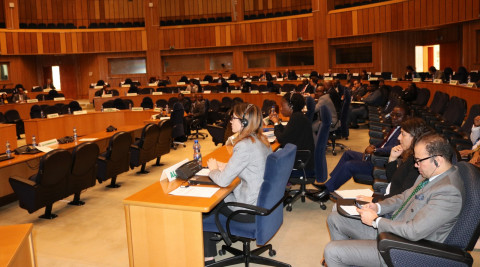 Living Together in Peace: UNESCO Showcased its contribution to Peace and Security in Africa 2019-11-08 Living Together in Peace: UNESCO Showcased its contribution to Peace and Security in Africa UNESCO Liaison Office to ECA and AUC in Addis Ababa took part in the African Union Peace and Security Council Open Session under the theme: “Living Together in Peace” on 5 November 2019 in Addis Ababa, Ethiopia, in which it reiterated its long-standing commitments to peace building. Peace building is at the heart of UNESCO’s mission that it promotes through education, sciences, culture and communication and information programmes. Moreover, the United Nations (UN) General Assembly during its meeting on 8 December 2017, call for UNESCO to cooperate with other relevant bodies in facilitating the celebration of the “International Day of Living Together in Peace’’. On the Open Session, Mr. Albert Mendy, Education Specialist for UNESCO’s Addis Ababa Liaison Office read the message of Ms. Audrey Azoulay, Director General of UNESCO in which she noted, “In a world where we regularly find ourselves witnessing tensions, acts of hatred, rejection of others and discrimination, the quest for peace and the desire to live together in harmony are more fundamental than ever.” She further stressed UNESCO’s and United Nations commitment in working on a daily basis to empower people to achieve peace, not only because peace is one of the main objectives of the 2030 Agenda, but also because it is a prerequisite for sustainable development and the common good. A good example of UNESCO’s contribution to awareness, training, prevention, conflict resolution but also to promoting living together while supporting the African Union is in its efforts at regional integration through the BIOPALT project or Lake Chad Biosphere and Heritage, on "Applying the model of cross-border biosphere reserves and World Heritage sites to promote peace in the Lake Chad Basin through the sustainable management of its natural resources." The project aims to promote coexistence and the peaceful settlement of conflicts in the sub-region, including the establishment of multi-actor consultation platforms within the framework of the proposal for biosphere reserves whose spatial zoning is done on the basis of consensus decisions of communities on the way natural resources are managed. “Peace requires ever more active investment, enlightened leadership, powerful educational values and a progressive media world. The organization's long-standing commitments to the development of education and science, the enrichment of cultural creativity, heritage and the cultural future, including a dynamic and focused global media structure peace, can in fact be seen as an active, flourishing and sustainable contribution to world peace”. Albert Mendy, UNESCO Education Programme specialist informed the delegates. The BIOPALT project has components that address a water resources and cultural issues. In regard to the water resources component, UNESCO's tool known as the PCCP "Potential Conflict to Potential Cooperation" is being used to strengthen the capacity of actors (institutions, civil society and individuals) in negotiation and consensual management of water resources. The Culture component of BIOPALT focuses on promoting intercultural and intergenerational exchanges in the form of cultural activities. The classification of Lake Chad on the World Heritage List under the name of the "Cultural Landscape of Lake Chad". In addition there is the classification of several cross-border spaces under the UNESCO International Label "Cross-Border Biosphere Reserve". These re-organized, rehabilitated and better integrated spaces will now be co-managed by all the players of the five basin countries, with a view to sustainable development for the benefit of living together in peace. In other regions in Africa, UNESCO is promoting Media and Information Literacy (MIL) among policy makers, journalists and Citizens online and offline. This includes support to the development of a national MIL policies and strategies in Member States and developing an open online course for the youth. In addition, it provides support to training institutions that can continually build on the skills and attitudes of journalists and citizens to be media and information literate. UNESCO has resources that help develop this competence at national and individual levels including policy and strategy guidelines for policy makers, curriculum for teachers and media educators, guidelines for broadcasters, online courses and campaign elements for citizens and the youth, online multimedia resources too and more In the African Union Peace and Security Council Open Session, Dr. Admore Kambudzi, Director of the African Union Commission’s Peace and Security department, reiterated the need for a multi-stakeholder approach to dealing with violence on the African continent in his opening remarks. He recognized growing intolerance, violence and rising challenges to respect for human rights, which threaten peaceful coexistence and respect of diversity. He further stressed the need for the recognition of the “International Day of Living Together in Peace” celebrated every year on 16 May which provides a platform for further enhancing efforts of the international community to promote peace, tolerance, inclusion, mutual understanding and solidarity. The open session meeting, taking place at the African Union Commission headquarters in Addis Ababa, stressed the need for a comprehensive multi sectoral approach to solving and preventing conflicts, which encompasses political, economic, social, educational, religious and cultural dimensions of renouncing violence and of promoting the culture of peace, tolerance, amnesty, and respect for diversity. URL:https://en.unesco.org/news/living-together-peace-unesco-showcased-its-contribution-peace-and-security-africa
  Is Kindness the Secret to Achieving the Sustainable Development Goals? 2019-11-07 There is no mention of kindness—the act of giving without expecting anything in return—in the ambitious 2030 Agenda for Sustainable Development, which was adopted by 193 countries in 2015. While this may have been a surprising omission, the Agenda is still remarkable in that it unites all United Nations Member States in striving to achieve the 17 Sustainable Development Goals (SDGs), not just those countries traditionally classified as “developing” or “least-developed”. The Agenda represents the recognition that “we are all in the same boat” and that we need to work together to build a better world. In many ways, with the introduction of the SDGs, we have started to recognize the strong interdependency among all beings living on this planet, and how one person’s or country’s actions can affect others living thousands of kilometres away. Climate change is one example of this interdependency. One country’s actions can trigger extreme events such as droughts and floods, thus hindering the entire world’s progress towards achieving the SDGs. The degree and intensity of interdependency among various SDGs and among living beings in general pose a moral and behavioural dilemma. We all recognize that we live on a planet with finite resources. According to the Global Footprint Network, our current level of consumption requires 1.7 Earths, and will require two Earths by 2030. With this astonishing burn rate, the redistribution of resources among individuals within and between countries is crucial to achieving the SDGs. This brings me to the importance of kindness, which, by its neurobiological nature, improves the happiness and well-being of the receiver and the giver. The act of giving is key, but the act of refraining from decadence can also be seen as an act of kindness. If we continue with the present mindset that we must produce more to narrow the inequality gap, we are doomed to failure. We must instead start to learn to share and come to terms with the notion that monetary wealth alone is not the key to happiness. There are enough studies demonstrating that there is indeed a ‘bliss point’, beyond which a marginal increase in happiness is reduced with each extra dollar of material wealth. This is not to be confused with socialism or communism but is rather what Immanuel Kant called the “moral imperative” of every individual. The act of giving is key, but the act of refraining from decadence can also be seen as an act of kindness. It is important to recognize that monetary wealth is indeed important for a multidimensional understanding of well-being, as the economists Amartya Sen, Joseph Stiglitz, and many others have argued. Since well-being is multidimensional, and individuals have different degrees of preferences across the various dimensions of well-being, trade-offs are a grounded reality in our day-to-day decision-making. Such decision-making is a bit more complex than what is proposed by the rational model of the present neoliberal economic system. On the contrary, people’s decision-making is highly irrational, as clearly demonstrated in Dan Ariely’s Predictably Irrational: The Hidden Forces That Shape Our Decisions (2008) and Daniel Kahneman’s Thinking, Fast and Slow (2011). But what I propose here is that although we perceive the emotional brain as irrational, recent neuroscientific research suggests that it plays a significant role in decision making. If this is the case, then this dimension, whether we call it irrational or emotional, could actually be seen as humanity’s saving grace. This will only be possible, however, if the emotional brain is trained. The good news is that people are empathetic by nature. This natural trait, however, has been suppressed by the external environment to which we are subjected today. The fast pace of life, increasing employment insecurity, the stress of needing to excel at all times and, more recently, the increasing frequency of extreme events driven by climate change have all dampened our sensitivity to the plight of other beings. We need to bring back our natural tendency to practice kindness. Training young people in Social and Emotional Learning (SEL) can help spark acts of kindness. In the last few years, SEL has emerged as a set of competencies (Durlak et al, 2011) through which individuals recognize and regulate emotions, identify positive purpose, demonstrate empathy for others, take constructive action and promote human flourishing. One such framework, called EMC2 (Singh and Duraiappah, 2019), seeks to provide explicit training in four competencies, namely, empathy (E), mindfulness (M), compassion (C) and critical inquiry (C), to encourage kindness and promote prosocial behaviour. Empathy is the general capacity to recognize emotion and resonate with others’ emotional states, such as happiness, excitement, sorrow or fear. Empathy is naturally embedded in the human brain within the “mirror neuron network” (Baird et al, 2011) and forms the basis of societal structure. Mindfulness is self-regulation and the building of conscious awareness that arises from paying attention to the experience of right now. (Jon Kabat-Zinn, 2013). It is designed to cultivate awareness of a) where attention resides; b) how emotions and feelings are experienced in the body; and c) how thought, beliefs, values, and emotions may influence one’s ability to pay attention and regulate emotion. ⓒ UN Photo/Caroline GlucCompassion, like kindness, is the ability to take positive action to alleviate suffering in the other. It requires behavioural action motivated by the need and desire to improve the other’s well-being, and is the fundamental basis of promoting prosocial behaviour. Critical Inquiry is the continued ability to question and evaluate decisions, actions and behavioural change through observation, experience, thinking, reasoning and judgment. A call to action for global youth to increase and celebrate their acts of kindness is a powerful counterstroke to the daily dose of negative news and information we receive through our media platforms. Each of the SEL competencies must be practiced and experienced to be learned; the beauty of this learning experience is that it builds kinder individuals. Research shows that the act of giving actually produces the feel-good neurotransmitter serotonin, thus increasing happiness (Luks, 1988). Continued acts of kindness set into motion an upward spiral of happiness, and reverse the downward spiral of depression and reduce levels of the negative neurotransmitter Gamma-Aminobutyric Acid (GABA) (Esch and Stefano. 2011). A call to action for global youth to increase and celebrate their acts of kindness is a powerful counterstroke to the daily dose of negative news and information we receive through our media platforms. In many ways, acting out of kindness is a way to protest the present trend of pursuing happiness by increasing personal consumption and trying to capture as much as one can for oneself. Kindness—the word that is missing from the 2030 Agenda—might be the only means by which we can achieve our goals! References Baird, A. D., Scheffer, I. E., & Wilson, S. J. Mirror neuron system involvement in empathy: A critical look at the evidence. Social Neuroscience,6(4), 327-335, (2011). Available at: https://www.tandfonline.com/doi/abs/10.1080/17470919.2010.547085 Durlak, J. A., Weissberg, R. P., Dymnicki, A. B, Taylor, R. D., and Schellinger, K. B. (2011). The impact of enhancing students' social and emotional learning: a meta-analysis of school-based universal interventions. Child Dev. 82(1):405-32. Available at https://casel.org/wp-content/uploads/2016/06/meta-analysis-child-develop... Esch, Tobias, and George B Stefano. “The neurobiological link between compassion and love.” Medical science monitor: international medical journal of experimental and clinical research vol. 17,3 (2011): RA65-75. doi:10.12659/msm.881441. Kabat-Zinn, Jon, Full catastrophe living: using the wisdom of your body and mind to face stress, pain, and illness (New York, Bantam Books, 2013). Luks, Allan, "Doing Good: Helper's High," Psychology Today 22, no. 10 (1988). Singh, N., C., & Duraiappah, A.K., (2019) EMC2 – a whole brain framework for social and emotional learning. Position Paper UNESCO MGIEP. URL:https://www.un.org/en/un-chronicle/kindness-secret-achieving-sustainable-development-goals
  How civil society pushes the SDG 4 agenda forward at global, regional and national levels 2019-11-06 Learn more about the several exchanges and meetings which are taking place to identify common challenges and opportunities for civil society in achieving SDG 4. The Asia South Pacific Association for Basic and Adult Education (ASPBAE) also contributed to this blog. Across the Movement, focuses and priorities may vary according to regional and national contexts, and regional and inter-regional meetings are an opportunity to identify common areas of strategic focus and to learn from each other’s context-specific priorities and expertise. It has been a busy few past months for the Global Campaign for Education (GCE) as two of our Civil Society Education Fund (CSEF) and member regional coalitions, the African Campaign Network for Education for All (ANCEFA) and the Asia South Pacific Association for Basic and Adult Education (ASPBAE), hosted meetings with their members and global partners including the Global Partnership for Education (GPE) in their respective regions. This culminated with the Global GCE Secretariat hosting an Inter-regional meeting which brought together the aforementioned regional organizations as well as the Arab Campaign for Education for All (ACEA) and the Latin American Campaign for the Right to Education (CLADE). These days of exchange and engagement helped identify common challenges and opportunities for civil society in achieving SDG 4, with cross-cutting themes like education financing and raising concerns around the shrinking of civil society space and maintaining the right to education in emergency contexts. Challenges to achieving the SDG 4 agenda Pushing the SDG 4 agenda, and advancing the right to a free, quality public education for all, remains the common thread of course, along with a strong focus on inclusion and quality. Though as many of the spotlight reports highlight, challenges remain. In Africa, the persistence of challenges to accessing education for marginalized groups was highlighted through discussions and presentations of case examples of activities to strengthen advocacy for inclusive education. Teaching quality was also identified as a major issue, directly linked to a large deficit of qualified teachers. In sub-Saharan Africa, only 64% of primary school teachers and 50% of secondary school teachers have received the minimum required training. This rate is the lowest in sub-Saharan Africa, where the average teachers have 60 students according to UNESCO's 2019 Global Education Monitoring (GEM) Report. ASPBAE members described similar challenges in achieving SDG 4 in their respective contexts. These include the difficulty to ensure equity and inclusion for people with disabilities, ethnic minorities and migrants. School-related gender-based violence was also recognized as a crucial issue in many areas. For example, in the Philippines, E-Net, with allied networks and its persons with disabilities (PWD) members, successfully lobbied the Parliament and the Department of Education to include the allocation of PhP50 million (US$1 million) in the national budget for 2019 for the procurement and development of textbooks and other instructional materials for children with disabilities (specifically for deaf, mute, and blind children) and another PhP25 million (US$ 500,000) for capacity building of public school teachers in promoting child rights, inclusion and positive discipline in everyday teaching. These are in line with the continuing advocacy of E-Net Philippines on inclusive and equitable education. Currently, E-Net and the PWD cluster are working with different units of the Department of Education in developing appropriate learning materials. Similarly, in Mongolia, the AFE Coalition successfully pushed the government to adopt a new law on bilingual education, which targets specifically the Kazahk minority where school dropout rate is high due to difficulty of coping with the language of instruction. Through this law, the coalition hopes to ensure teaching is done in the mother tongue during the early years of schooling. The Coalition is also heavily involved in the local education group (LEG) and had actively participated in the education sector implementation review process, among other policy engagements. For CLADE in Latin America, one of the main issues remains addressing structural barriers to achieving inclusive quality education for all, namely racial and ethnic discrimination, and particularly against indigenous people, as well as gender-based discrimination and violence. Education in emergencies: a rising concern "For ACEA, education in emergencies has been the main focus of work in the Arab region for a while," ACEA's Fotouh Younes explained during the inter-regional meeting in Johannesburg. Egypt, Palestine, Somalia, and Syria are directly affected by conflict and other countries are surrounded by various crises as well as experiencing a massive influx of refugees. Inclusion and non-discrimination are viewed through the lens of education in emergencies and so is education financing. A key question was how to ensure that there is funding available to address issues of inclusion in emergencies. In crisis, education is not a priority in governments' budgets, while the situation of access to education for refugees is dire: according to UNHCR 61% of refugee children attend primary school compared to the global average of 92%. At the secondary level, this figure drops to 23% compared to 84% globally and only 1% of refugees attend university compared to 37% of students globally. Insecurity is also a rising concern in Africa. Indeed, internal conflicts and terrorist attacks that cause population displacement dramatically affect education outcomes. Threats against teachers, attacks on school infrastructure, and the use of schools for military purposes have disrupted the education of more than 400,000 children in West Africa and forced more than 10,000 teachers out of work. Rapidly shifting political situations and the rising crisis in several countries have had an adverse impact on education in Asia and in the Pacific as well, with ASPBAE having to increasingly focus on education in emergencies. Nani Zulminarni, President of ASPBAE and Director of Women Headed Family Empowerment (PEKKA) put an emphasis on the issue of gender-responsive education in contexts of emergencies and crisis. The Afghanistan National Education Coalition (ANEC) discussed the establishment of the Education in Emergency Working Group (EiEWG), which is actively working towards improving education services in emergencies. In Latin America, the crisis revolves around social conflicts and threats to citizen participation. Thus, CLADE focuses on strengthening democracy by deepening the civic aspects of education, promoting policy debates and discussions and deepening the collaboration with social movements from other sectors. An intersectoral approach is necessary to counter the growing trend of criminalization of dissent, repression of activists and militarization of schools. Education financing: a cross-cutting priority Education financing remains a key priority across levels and regions. During ANCEFA’s regional meeting, a capacity-building session on education financing and related issues of privatization confirmed ANCEFA's position aligned with that of GCE in favor of strengthening public education and against the rampant privatization and commodification of education. During the ASPBAE meeting, several factors were identified in assessing the trends in private sector involvement, namely the domestic tax base, the rising debt crisis especially debt that is illegitimate or accrued in non-transparent ways, the IMF’s Wage Bill Management policy and the growing public funding/aid allocated to for-profit education providers. As David Archer, from ActionAid International, stated during ASBAE’s regional consultations, "the Global Partnership for Education is a very useful platform which can be utilized to generate policy discussions that are in favour of education as a public service." Indeed, GPE adopted a Private Sector Engagement Strategy that reaffirms its commitment to education as a public good and as a fundamental human right. Transitioning to Education Out Loud The meetings included a session aimed at preparing the closure of the Civil Society Education Fund (CSEF) and sustaining a strong engagement with GPE, especially through CSO representation on the GPE Board and Committees and through the newly introduced Education Out Loud fund. GPE, Oxfam Ibis, which manages Education Out Loud on behalf of GPE, and GCE discussed this new funding opportunity with education coalitions and explained the expectations on both sides. These exchanges reaffirmed that GCE remains more than ever anchored in regional networks and national coalitions as defined in the GCE 2019-2022 Strategic Plan, which brings an undeniable added value to advocacy efforts at the national, regional and global levels. URL:https://www.globalpartnership.org/blog/how-civil-society-pushes-sdg-4-agenda-forward-global-regional-and-national-levels
  Fear against violence hinders girls’ education 2019-11-05 Concerns for their daughters’ safety are forcing parents to discourage them from pursuing higher education, say members of a social welfare organisation. This fear must be removed through awareness programmes and new policies initiated to promote women’s safety. Education is a fundamental right. To make sure that every child in this country is able to get free and compulsory education, the government of India constituted the Right to Education Act. But still, 100 per cent literacy has not been achieved, and especially among girls, the literacy rate is even lower. There are a lot of social constraints that hold women from pursuing education. Particularly among the marginalised and the minority communities, girls are denied education and married at a young age. According to the 2011 census, the rate of illiteracy among the Muslims in India is 42.72 per cent. If this figure is broken down into male and female segments, the illiteracy rate among women is higher (48.1) than men (37.59). There are activists and organisations constantly working to achieve 100 per cent literacy rate. The Covai Post spoke to some of the office-bearers of the Coimbatore chapter of Jamaat-e-Islami Hind (JIH), an organisation working for the welfare of the Islamic community. Zaheena Ahamed.N, President of JIH said,” In this modern world, education becomes mandatory for everyone. Girls must be educated compulsorily so that they stand on their own feet.” Zaheena said many girls, especially in the rural areas, are denied higher education as parents are anxious about the safety of their daughters. “The government must initiate awareness programmes to eradicate this fear among the parents so that the girls are given education. May be girls can be taught self-defence so that they become bold enough to face any kind of difficulty”. Khadeeja Khaja, the State President of the women’s wing of JIH told The Covai Post, “Education must be equal to all irrespective of gender. If a man is educated, he alone benefits, if a woman is educated, it benefits the entire family and in turn the society.” She said development of a country is dependent on the educational growth of women. So if issues of safety acts as a hurdle for girls’ education, then that must be removed. New policies must be formulated to ensure protection of women. Only then, parents will have no hesitation in allowing their daughters to pursue higher education.” A. Juwauriya, State President of the Girls Islamic Organization, Coimbatore, told The Covai Post, “Our organisation is the girls’ wing of the JIH which includes members between 15 and 28 years. “Education is essential for girls and it is the only tool to build self-confidence in them. Islam says that girls ought to be educated, and the religion does not hinder the progress of women, but social constraints, do. Parents fear that their daughters can be harassed by men.” However, she said that there is a considerable awareness among the parents nowadays. But that is only 75 per cent. The rest still remain anxious. “We conduct many programmes that bring out the talents of young girls. We also encourage and counsel the girls so that they pursue education. In my opinion, parents must be counseled too about the need for education. It’s only then girls would be released from the familial restrictions” URL:https://www.covaipost.com/coimbatore/fear-against-violence-hinders-girls-education/
  Education and inclusion should be human rights priorities, UN Assembly hears 2019-11-04 UN Member States agreed seven decades ago to a set of inalienable rights to ensure the dignity of everyone. On Friday, the newly-installed General Assembly President recalled their collective responsibility through the Human Rights Council to “actualize that shared vision for a better world.” Based in Geneva, the Human Rights Council is a 47-member UN body tasked with promoting and protecting human rights globally, with countries elected to serve by the Assembly in New York. “Let us not forget: a just world is a safe world”, Assembly President Tijjani Muhammad-Bande stressed before the Council’s annual report was formally delivered, adding that “we can only ensure peace and development if human rights are upheld”. Noting that the 2030 Agenda for Sustainable Development is built upon “a foundation of human rights”, he pointed out that since its adoption, the Council has mandated the Office of the High Commissioner for Human Rights (OHCHR) to convene dialogues on the Sustainable Development Goals (SDGs). Encouraging everyone to view the SDG’s “through a human rights lens”, he drew attention to education, one of his key priorities, linking SDG 4 to articles in the Convention on the Rights of the Child, the International Covenant on Economic, Social, and Cultural Rights, and the seminal Universal Declaration of Human Rights. Yet, Mr. Muhammad-Bande noted that “despite being anchored in these texts”, there is much to do to reach the SDG 4 targets on quality education and lifelong learning and urged for “a rights-based approach towards implementation”. Prioritizing inclusion To achieve all 17 Goals, he maintained, “we must ensure that all stakeholders are included…so that we leave no one behind” and made “inclusion a priority for the session”. Citing the displaced, people with disabilities and indigenous persons, among others, he spelled out: “We will not have a UN that excludes”. “In 2019, this is simply a no-brainer: the rights of women, everywhere, must be upheld”, he underscored. Recalling that 20 November will mark the 30th anniversary of the Convention on the Rights of the Child, he stated, “the notion that ‘children are people, too’, serves as a reminder to us all that the rights of children everywhere must be upheld so that children do not just survive, but also to thrive”. “The Report of the Human Rights Council aligns not only with the aforementioned priorities of education and inclusion, but to all of the priorities I have set for the seventy-fourth session, including: peace and security through conflict prevention; poverty eradication and zero hunger; and climate action” the PGA flagged. He said that most of the violent conflicts today have “had their origins in violations of, or disregard for, human rights”, pressing that it is “incumbent upon each Member State…to uphold equal dignity and human rights for everyone, everywhere”. “There is no alternative to protecting the rights of the people we serve”, he concluded. ‘Even greater responsibility’ of members For his part, Human Rights Council President Coly Seck presented an overview of the themes the Council had prioritized and underscored the important role of each country. “By becoming a member of the Council, these States have an even greater responsibility to achieve their objectives in the promotion and respect of human rights”, he asserted. He also noted the “high degree of harmonization and mutual respect” between “the two processes in Geneva and New York” and urged for continued “coordination and cooperation” for the protection of human rights. URL:https://news.un.org/en/story/2019/11/1050431
  What you need to know about the Convention against Discrimination in Education 2019-11-02 Since its adoption by UNESCO’s General Conference in 1960, the Convention against Discrimination in Education has been at the forefront of the Organization’s standard-setting instruments in the field of education. It has so far been ratified by 104 Member States and UNESCO is now urging the remaining countries to do so with its #RightToEducation campaign. What is the Convention against Discrimination in Education? The Convention reaffirms that education is not a luxury, but a fundamental human right. It highlights States' obligations to ensure free and compulsory education, bans any form of discrimination and promotes equality of educational opportunity. The treaty comprehensively covers the right to education and is the only one entirely dedicated to it. The Convention is recognized as a cornerstone of the Education 2030 Agenda and a powerful tool to advance inclusive and equitable quality education for all. What does the Convention guarantee? States that have ratified the Convention are under the obligation to implement the right to education as it is elaborated in the text including, among other provisions, the obligation of the state to provide free and compulsory education.The main provisions of the treaty include: Primary education free and compulsory Secondary education in its different forms, generally available and accessible to all Higher education equally accessible to all on the basis of individual capacity Equivalent standards of education in all public educational institutions of the same level and conditions relation to quality Opportunities for continuing education Training opportunities for the teaching profession without discrimination. The Convention also ensures: Education shall be directed to the full development of the human personality and to the strengthening of respect for human rights and fundamental freedoms The liberty of parents to choose for their children’s education in conformity with their moral and religious beliefs The right of members of national minorities to carry on their own educational activities. Why ratify the Convention now?As a standard-setting Organization, UNESCO encourages Members States to ratify normative instruments in order to achieve universal adherence to its norms and standards. This Convention is the first and only legally binding international treaty exclusively dedicated to the right to education and is considered to be a foundation of the Education 2030 Agenda. Ratifying the Convention: Shows the adherence of the country to rights set forth by the Convention, including the fundamental principles of non-discrimination, equality of treatment and of educational opportunities Ensures the respect of all rights laid down in the Convention Joins the community of States that are already party to the Convention and adopt the same normative framework Participates in the strengthening of international norms and standards in education Gives higher visibility to the Convention, and raises awareness The Convention does not admit any reservation, meaning that ratifying States cannot decide to exclude certain aspects or provisions from the legal effect of the Convention; therefore, the Convention is fully applicable to all its State Parties. Read the full text of the Convention. Join UNESCO’s #RightToEducation campaign. URL:https://en.unesco.org/news/what-you-need-know-about-convention-against-discrimination-education
 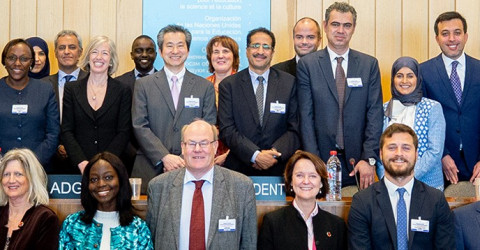 A call for action and passion to raise political support for Education 2030 2019-11-01 Keep hammering the evidence that education equals progress across the Sustainable Development Goals, urged UNESCO’s Assistant Director-General for Education Stefania Giannini, an appeal echoed by top UN officials at the opening of the sixth meeting of the SDG-Education 2030 Steering Committee on 11 March 2019 at UNESCO Headquarters. “The Steering Committee is a global think tank for education. It has a political, technical and advocacy responsibility to raise up education as a basic human right and key driver for sustainable development,” she said. “It is only through determination, cooperation and engagement that we will succeed in moving forwards, leveraging the knowledge, capacities, and networks that each of you represents.“ Counting 32 Members, the Committee, co-presided by UNESCO, is a unique consultation and coordination mechanism for education in the 2030 Sustainable Development Agenda. It brings together representatives from Member States, multilateral institutions, regional organizations, civil society networks, teacher organizations, foundations, private sector and youth. This sixth Committee meeting, organized by UNESCO and co-chaired by Japan, takes place at a crucial crossroads, ahead of the UN High-Level Political Forum in July, which will review SDG4, and the SDG Summit in September. Keep the pressure United Nations Deputy Secretary-General Amina Mohamed stressed in a video message “the importance of the Committee for guiding the implementation of SDG4 and all its connections to the other 16 goals. This involves prioritizing, collaborating and advocating around a shared vision.” “Our imperative is clear: to mobilize the political will, policies, capacity and financing that will make progress possible,” she said. “Each member of this Committee has a voice and a role. I urge you to keep the pressure on political leaders to show, in all the upcoming forums, that they are serious about meeting this challenge.” United Nations Under-Secretary General for Economic and Social Affairs, Mr Liu Zhenmin, also underscored the crucial role of the Steering Committee in the follow-up and review of SDG4 and the 2030 agenda. “Success in delivering on SDG4 would contribute considerably towards achieving other goals – reducing inequalities, building knowledge to increase ambition of climate action, and empowering people toward the jobs of the future,” he said. Speaking with one voice Ms Giannini stressed that the Brussels Declaration, adopted at the Global Education Meeting in Brussels in December 2018, provides the shared vision and direction to speak with one voice in this decisive year for education. She urged the education community to act in coordinated and concerted ways, warning that “fragmentation can and never will be the solution.” The Brussels Declaration sets inclusion as the driving principle of all policies, and spells out 8 priority areas to unlock progress in the next four years. A panel on follow-up to the Brussels meeting noted the positive ways in which the Brussels Declaration is informing policy, including at EU level. Speakers referred to it as a “practical tool and reference,” a means to rally and strengthen the education movement, and commended its emphasis on teachers, as well as on the inclusion of refugees in education systems. Aligning policies and priorities In a series of presentations, regional organizations and Member States explained how they are aligning policies and priorities with the SDG4 agenda. Colombia’s Minister of National Education of Colombia, Maria Victoria Angulo Gonzalez, stated that the SDG agenda is pivotal for planning the education sector. She described her Government’s comprehensive approach to equity and inclusion, encompassing legal reforms, intersectoral strategies and programmes at all levels. These include the promotion of early childhood care and education, rural education, school nutrition and attention to global citizenship in curricula. Many national presentations highlighted the challenges of literacy, teacher training, curriculum innovation, skills training, migration and financing. They noted the complexity of translating the broad scope of SDG4 into policy and difficulties in meeting the demand for more and better data to monitor SDG4 targets. Running for 2 days, the committee is discussing its joint submission to the High Level Political Forum, and key areas for engagement, joint work and advocacy, with a view to reinforcing coordination around SDG4 at national, regional and global level. URL: https://en.unesco.org/news/call-action-and-passion-raise-political-support-education-2030
  This is how we can eliminate learning poverty for children by 2030 2019-11-01 Learning to read is a milestone in every child’s life. Those of us who are parents, teachers, and older siblings, can fondly remember the first time your daughter, student or brother was able to read a sentence and how proud and happy that made you feel. Reading is a foundational skill. It is a precondition for active participation in society – a gateway to all other learning outcomes. It is also associated with the mastery of other cognitive domains like science, math and humanities. Finally, it is critical to acquire the skills of creative thinking and computational skills, allowing the expression and communication of ideas across time and space. Most of us reading this, in this very moment, take reading for granted. Yet, if you think about it for a bit, you might realize that reading is not that easy. You are now distinguishing drops of ink (or pixels) organized as a character associated with a sound, which combined with others make a word. Our brain then processes words through grammar rules to form sentences, whose meaning depends on context. When you read: “Sam said to his friend: Let’s hit the road!”, you understand that he wanted to get into the car and start a trip, not that he wanted to smash the pavement with a hammer. Reading, and understanding the ideas transmitted by what you are reading, is a complex task. Yet, children can learn it. As a matter of fact, all children can learn to read. Even in languages with more complex rules. For instance, Spanish is easier than English, as there is a one to one correspondence from sound to character: the sound f is always captured in the letter “f”, and only in the letter “f”; but in English it is captured in the letter “f” as in “fish” or in combination “gh” as in “enough”; but not always because “gh” does not sounds like f in the word “ghost”. Yet we expect that by the end of primary school, kids will be able to read fluently, at certain level of complexity and speed, and understand what they are reading. Is that happening? Let’s set a relatively low bar and argue that all children should be able to read and understand a simple text by age 10. Using international and national assessments, in joint effort with UNESCO, we have assessed how many children cannot pass this relatively low bar in each country. In Ireland, that number is 2%. In Finland 3%; in Singapore 3%; in Portugal 6%. Reading is almost universal for young children in these countries, as in many other rich countries. On average, in rich countries only 9% of children cannot read a text by age 10. But that is where the good news ends. In the developing world, in all low- and middle-income countries, more than half of children cannot read and understand a simple text by age 10. We call that the rate of “learning poverty”. More precisely, on average learning poverty in these countries is 53%. In poor countries alone, that share increases to an astonishing 89%. Learning poverty is distributed extremely unequally – the XXI century co-exists with the XIX century. Have you read? How can higher education best be used to tackle poverty? These countries spend the most on education We need an education revolution – and it starts in your local community This high level of learning poverty is a simple and direct way to understand the learning crisis that we are living in, which the World Bank first acknowledged in the 2018 World Development Report. Children who do not master reading skills by their 10th birthday will find it difficult to catch up and are not likely to continue learning in higher school levels or even stay in school for long. All other educational outcomes are at risk, their life prospects are at risk. A skill that many of us take for granted is in fact a privilege that is denied to millions of children across the world. Learning poverty is morally and economically unacceptable. Morally unacceptable, because millions of children are being left unable to participate in an economy that is becoming more prosperous and wealthy. We have the technology to provide basic education services and globally, the resources are available, yet that prosperity is not being shared. And it is economically unacceptable, because even if we care only about competitiveness and growth, if human capital is not accumulated, it is impossible for a country to thrive in the global economy. World Bank research shows that in rich countries, 70% of wealth is derived from accumulated human capital. In poorer countries, it is only 40%. Eliminating learning poverty is as urgent as eliminating extreme poverty, stunting or hunger. The international development community and most countries have agreed to a series of targets on education. The Sustainable Development Goal (SDG) 4 aspires to “ensuring free, equitable and quality primary and secondary education for all” by 2030, among many other educational outcomes. Are we on the right track to achieve at least quality primary education for all? Well, no. With quality primary education, all children would learn to read; learning poverty would tend to zero. However, under a “business as usual” scenario – that is, if progress continues at the rate achieved during 2000-2015 – by 2030 learning poverty will fall only to 43%. The high levels of learning poverty, and the slow rate of improvement are an early warning that most educational targets included in the SDG 4 are at risk of not being fulfilled. Eliminating learning poverty for all children by 2030 will require improvements at a rate and scale that is unprecedented. This doesn’t mean we should stop striving for this goal. Focusing on eliminating learning poverty will require that all actors in the educational system (teachers, principals, the local and central bureaucracies, ministers, and many others) internalize that the purpose of the job they hold is to make sure each and every child learns. And governments and societies have to put the financial and political commitments needed, and the necessary human resources to assure a quality education for all children. They all deserve the joy of reading. They all deserve a brighter future. URL:https://www.weforum.org/agenda/2019/10/ending-learning-poverty-the-call-of-our-times/