
News
Catch up on what’s happening in the world of global citizenship education.
1,668 results found
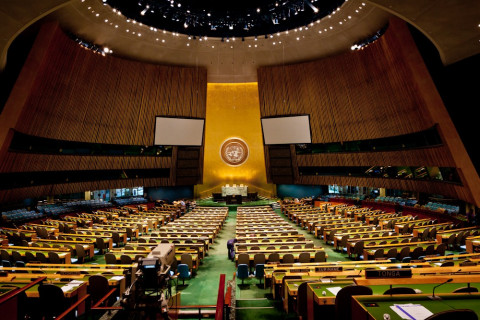 Education events at UNGA 2019 2019-09-20 Many education-related events will take place during the 74th United Nations General Assembly (UNGA) in New York City next week. Here is a short list of the key ones. As has been the case in previous UN General Assembly meetings, the urgent need to meet SDG 4 on education will be a focus at several events in New York next week. GPE is hosting two high-level events and will participate in many more through our Chief Executive Officer Alice Albright, our Chief Technical Officer Jo Bourne, and others. The list below is not exhaustive, so please check on the UNGA guide for more details. Monday, September 23Ending learning poverty: What will it take to end the learning crisis and achieve SDG 4?11:00 am - 12:00 pm - Grand Hyatt Hotel - Hosted by the World BankAccording to the latest research by the World Bank, only half of children in low- and middle-income countries can read and understand a short story by late primary age. Accelerating SDG 4 is as important as accelerating other development objectives. This event will explore actions needed to end the learning poverty. Global launch of the Education Workforce Report5:15 - 6:30 pm - Cornell Club - Hosted by the Education CommissionRegister to attendThe Education Commission will launch its new Education Workforce Report. The report introduces new approaches to rethink how we design, train and develop the education workforce in order to deliver quality education. A networking reception will follow the launch. Tuesday, September 24Education as the Great Equalizer12:00 - 4:00 pm - Scandinavia House - Hosted by Oxfam and the Global Campaign for Education-USRegister to attendOxfam teams up with the Global Campaign for Education-US to organize a high-level conference that will touch on education as a key to fighting inequality in individuals’ income and wealth. Speakers will break down all elements of inequality, particularly gender, and emphasize how education can serve as an equalizer within society. During the event, Oxfam will launch a new report called “the Power of Education to Fight Inequality.” GPE event: Education Data Solutions Roundtable technical meeting3:00 - 5:30 pmLaunched at the GPE Financing Conference in February 2018, the Education Data Solutions Roundtable is a public-private effort that aims to leverage local, private, and development partners’ expertise to improve the availability and use of education data in developing countries. The members of the roundtable will meet to review the final outcomes report with recommendations that aim to address the key data challenges in education. GPE Reception - Innovating for education: Accelerating progress towards SDG 46:00 - 8:30 pm - UNICEF HouseThe reception will gather high-level speakers, including GPE leadership, in order to highlight the importance and impact of fostering innovation in the education sector to deliver results for SDG 4. GPE will showcase its efforts in harnessing innovation to improve education for millions of children through its latest initiatives: the Knowledge and Innovation Exchange (KIX), Education Out Loud and the Education Data Solutions Roundtable. Wednesday, September 25Leave no one behind: Accelerating the SDGs through quality education10:00 am - 12:00 pm - UNICEF House - Hosted by Education Cannot Wait and the Education CommissionRegister to attendTo emphasize the power of quality education, Education Cannot Wait and the Education Commission partner with Global Citizen in convening youth advocates, celebrity champions, world leaders, policy makers, and stakeholders from the private sector for a discussion. The goal is to accumulate support for education in conflict settings as well as innovative financing solutions for lower- and middle-income countries. The futures of education: Learning to become1:15 - 2:45 pm - UN Headquarters - Hosted by UNESCO and PortugalRegister to attendUNESCO will launch its new “Futures of Education” project and establish a high-level International Commission. The commission will be responsible for a 2021 report, which consists of an agenda for policy debate and action. Additionally, Portugal will co-organize a side event that provides an opportunity for Heads of State and Government to share perspectives on education and learning. URL:https://www.globalpartnership.org/blog/education-events-unga-2019
 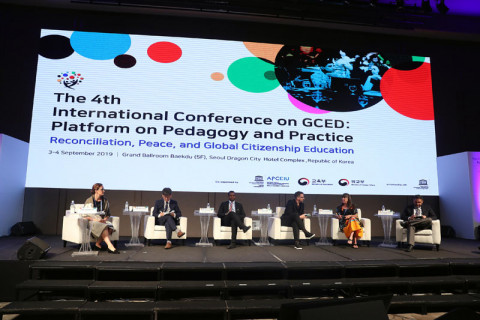 The 4th International Conference on Global Citizenship Education: Reconciliation, Peace, and Global Citizenship Education 2019-09-19 The 4th International Conference on Global Citizenship Education took place from September 3rd to September 4th at Seoul Dragon City Hotel. The conference was co-organized by the Asia-Pacific Centre of Education for International Understanding under the auspices of UNESCO (APCEIU), the Ministry of Education and the Ministry of Foreign Affairs of the Republic of Korea, in partnership with UNESCO. Under the main theme of ‘Reconciliation, Peace and Global Citizenship Education’, the conference explored GCED’s potential for building and maintaining long-lasting peace particularly in post-conflict societies and highlighted the need to promote the use of transformative pedagogy while also systematically mainstreaming GCED in terms of policy, curriculum and teacher training to fully harness its potential. At this year’s conference, over 700 education policy-makes, teachers, experts from the academia and the private sector, representatives from international and civil society organizations and youth representatives came to participate from 77 countries. Distinguished guests among the participants included Kim Sung Geun, Deputy Minister of School Innovation of the Ministry of Education of Republic of Korea, Kim Joon Hyung, Chancellor of Korea National Diplomatic Academy, Stefania Giannini, Assistant Director-General for Education, UNESCO, and Nihal Ranasinge, Secretary of the Ministry of Education of Sri Lanka. The International Conference on Global Citizenship Education sets itself apart with its interesting session composition that fosters active participation from the participants. Rather than unilateral presentations made by the speakers, the conference included a wide range of sessions from plenary sessions that offer an overall view of the conference, to various concurrent sessions with panel discussions, case presentations and participatory workshops. Through these sessions, the conference served as a discussion platform that not only emphasizes the importance of GCED itself, but also the connection between reconciliation and GCED, as well as how GCED can make a tangible contribution to the reconciliation process. Notably, this year’s EIU/GCED Best Practice Awards Ceremony was held during the conference, through which the awardees shared their cases with the other participants, encouraging the practice of GCED. After the opening ceremony, the first day’s events kicked off with a keynote speech by Prof. Lim Jie-Hyun, a history professor at Sogang University, under the theme of ‘Reconciliation, Peace and Transnational Perspectives on GCED’. Through his speech, Prof. Lim pointed out how collective distortion of memory that stems from nationalism can bring conflict and discord. He then put forward the formation of a global ‘mnemonic solidarity’ that transcends national boundaries as the main agenda for world peace and reconciliation in today’s era. The first plenary session featured a discussion among several expert panels under the theme of ‘Promoting GCED in the context of a difficult past and process of reconciliation’. This panel discussion highlighted the need for historical settlement and social consensus for reconciliation in order for a post-conflict society to make its way towards true cohesion by examining various cases of the Republic of Korea, Colombia, the Republic of South Africa, Canada and Rwanda. The second plenary session entitled ‘Realizing GCED’s potential for reconciliation: fundamental questions on learning and transformative pedagogy’, consisted of panel discussions and question and answer with GCED experts from Canada, Oman, Ethiopia and Malaysia. Throughout the session, the panels communicated with the audience on GCED’s capacity to transform education and bring about change on both the individual and the community, while insisting that GCED, as a transformative pedagogy that transforms attitudes and behaviors, should align itself with local communities and international affairs. At the following ‘GCED Play’, a group of elementary students performed a play around the theme of non-violence within classrooms and reconciliation. The play, as a product of the students’ creative efforts and the assistance of School Life and Culture Division, Korean Ministry of Education and the Foundation for Preventing Youth Violence (FPYV), delivered messages of reconciliation over school violence and adults that teach discrimination to children. Concurrent session 1, which was the last session of the first day, composed of free discussions on transformation from educators’, learners’ and communities perspectives under the main theme of ‘GCED transformative pedagogy from various perspectives for reconciliation’. At the participatory workshop facilitated by Suseong-gu Office, a local government in the Republic of Korea, for instance, the GCED Maker Clubs dealt with various topics such as the students’ definition of GCED and GCED’s relationship with Korea-Japan relations through a number of formats including skit and gallery walk. The second day started with a special dialogue between Cho Heeyeon, the Superintendent of Seoul Metropolitan Office of Education and Jun Morohashi, the Head of Executive Office and Regional Programme Coordinator of UNESCO Asia-Pacific Regional Bureau for Education. The Superintendent shared the Seoul Metropolitan Office of Education’s efforts for peace education and the global citizenship he experienced in regards to how an Iranian national under the threat of religious persecution, acquired refugee status with the help of his fellow students and the Office of Education. The following session entitled ‘Voices of Youth’ was a talk concert where youth speakers shared their experiences of GCED practice with the participants. The speakers, all participants of the UNSECO APCEIU’s 2019 GCED Youth Leadership Workshop left a deep impression upon the other participants through their stories of realizing the need for global citizenship and practicing it in the wake of events such as school closures and Russia-Ukraine crisis. The second concurrent session included diverse sessions on learning space, historical issues and transformative pedagogy and GCED in the digital age under the theme of ‘innovating GCED’s transformative pedagogy; trends that will bring about reconciliation’. The last concurrent session entitled, ‘systemic approach to mainstream GCED’, featured sessions on the role of policy facilitating GCED to be integrated into the education system, GCED curriculum development and teacher training. Specifically the session on policy provided much insight to the participants on what makes an effective policy by exploring education policies in South America, Southeast Asia and South Africa. At the closing ceremony, the very last session of the conference, Choi Soo-Hyang, the Director of Division for Peace and Sustainable Development of UNESCO’s Education Sector reflected on the lessons of the International Conference through her closing remarks, expressing her hopes that GCED would evolve as an international education movement with various names and forms in the near future. This year’s conference was highly credited for providing a basis for the educational community within the international community with the sharing of GCED practices as its medium and serving as a bridge between the developed and the developing countries, thus opening a sustainable platform for international cooperation on GCED. You can find more detailed information on the Conference at: http://gced.unescoapceiu.org/conference URL:The 4th International Conference on Global Citizenship Education: Reconciliation, Peace, and Global Citizenship Education > APCEIU News - APCEIU (unescoapceiu.org)
 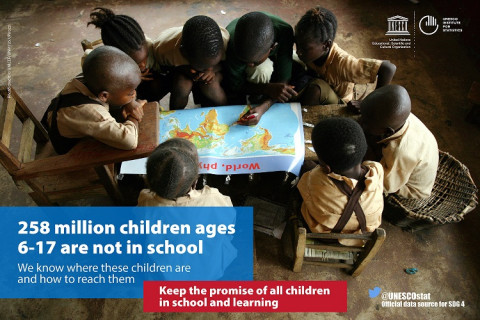 UIS Releases New Education Data and SDG 4 Indicators for 2018 School Year 2019-09-18 Focus on out-of-school children New data on the world’s out-of-school children reveal little or no progress for more than a decade, with about 258 million children, adolescents and youth out of school in 2018: around one-sixth of the global population of this age group. Published by the UNESCO Institute for Statistics (UIS), the data reinforce concerns about the prospects of reaching global education targets by 2030.While the number appears to have dropped from 262 million in 2017 as reported last year, the fall is largely due to a methodological change in the way the indicators are calculated. Children of primary school age who are in pre-school, who were previously included in the total, are no longer counted as being out of school. The latest figures are part of the annual UIS education data release, which includes 33 of the 43 global and thematic SDG 4 indicators. The UIS has updated its global education database for the school year ending in 2018, which includes historical time series, regional averages and indicators on key policy issues related to school access, participation and completion by education level, learning outcomes, equity, teachers and education financing (see our paper on the release). Population-based indicators, such as out-of-school children and enrolment rates, have been revised for all years using the 2019 Revision of World Population Prospects of the United Nations Population Division. Education indicators based on economic data have been also updated using the most recent 2019 data produced by the International Monetary Fund (IMF) and the World Bank.For the first time, the UIS is publishing SDG indicator 4.2.3: percentage of children under 5 years experiencing positive and stimulating home environments. Based on a methodology approved by the Technical Cooperation Group on the Indicators for SDG 4 (TCG), the UIS has produced this indicator using household survey data mainly for low- and middle-income countries. No progress in reducing out-of-school rates The new data on out-of-school children also highlight the gap between the world’s richest and poorest countries (see table below). According to UIS data, 19% of primary age children (roughly 6 to 11 years old) are not in school in low-income countries, compared to just 2% in high-income countries. The gaps grow even wider for older children and youth. About 61% of all youth between the ages of 15 and 17 are out of school in low-income countries compared to 8% in high-income countries.Notes: GPIA = adjusted gender parity index (female/male out-of-school rate). Male and female out-of-school numbers may not add up to the total number because of rounding. Source: UNESCO Institute for Statistics database. Girls continue to face the greatest barriers. According to UIS data, 9 million girls of primary school age will never spend a day in school compared to about 3 million boys. In sub-Saharan Africa, which has the highest rates and numbers of out-of-school children, 4 million girls will never set foot in a classroom compared to 2 million boys.As the custodian agency for SDG 4 data, the UIS has released the new data to inform discussions at the UN General Assembly, which will begin meeting on 17 September in New York from to examine progress towards the SDGs and the funding needed to achieve them. The data demonstrate the pressing need for more action to reach the still achievable goal of a quality education for all, and for more and better data to monitor progress on education access, completion and quality. Until recently, all children of primary age (roughly 6 to 11 years) who were not enrolled in primary or secondary school were counted as being out of school. This included primary-age children who were still enrolled in pre-primary education. By removing this relatively small group of children (most of them in high-income countries), the total number of out-of-school children of primary age has been reduced by about 4.6 million. URL:http://uis.unesco.org/en/news/uis-releases-new-education-data-and-sdg-4-indicators-2018-school-year
 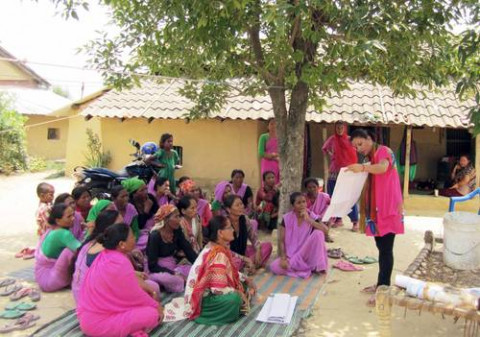 UNESCO-supported CLCs to engage in Civic Education 2019-09-18 UNESCO has been promoting Community Learning Centres(CLCs) since 1999 to ensure literacy for all people and realize the potential of community-based learning. To date, 2,151 CLCs are operating throughout the country. With the aim of enhancing the capacity of CLC management and functions, the Centre for Education and Human Resources Development (CEHRD), UNESCO and UNDP have begun the process of working together to build the capacity of the CLCs on management and operations and to assist citizens to obtain information on civic education. The process was initiated at a workshop held on August 5-9, 2019, which was attended by 26 participants, including chairpersons and facilitators of CLCs in Bhaktapur District. Speaking at the inaugural session, Baburam Paudel, Director-General, CEHRD, said CLCs have been playing an important role in supporting the Government’s ‘Literate Nepal’ campaign, and have the potential to make a similar impact on voter education during elections. Balaram Timilsina, Chief of Education Unit at UNESCO Office in Kathmandu, said the workshop had two major goals – to strengthen CLC management and functions, and discuss and find ways to engage them in civic education in addition to their existing roles. Kundan Das Shrestha, Senior Electoral Advisor, UNDP ESP, said voter education was important in ensuring that elections are free and fair. He added that CLCs could play a role to ensure that citizens have the information they require to make informed choices during elections. “Every election in Nepal is an opportunity for women to assert their right to take on leadership positions,” he said. “CLCs can play an important role in encouraging women by informing them about how they can participate, both as voters and candidates, under the existing laws.” The sessions discussed electoral knowledge and the role CLCs could play to spread this information in the community. The five-day workshop also had sessions on how CLCs could make plans to mobilize resources, write reports and proposals, and prepare and implement social media and communication plans. At the end of the five days, the CLC representatives at the workshop decided to form a joint committee and make efforts to explain their roles to local governments in the district and also coordinate the voter education work they plan to do during the by-elections. “We believe collaboration among CLCs will facilitate the exchange of ideas,” said Manshobha Suwal, facilitator, Chittapole CLC. URL:http://www.unesco.org/new/en/kathmandu/about-this-office/single-view/news/unesco_supported_clcs_to_engage_in_civic_education/
 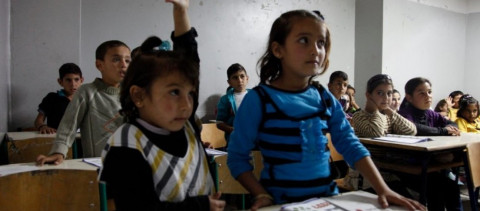 Are Arab countries on track for UN education goals? 2019-09-18 A region of renowned civilizations and contribution to humanity, the Arab region has become one of paradoxes in recent times: Young, highly educated, dynamic nations, on the one hand, and multiple protracted armed conflicts, high levels of youth unemployment, volatile and vulnerable states of existence, and extreme inequalities and disparities, on the other. While the region indeed has made tremendous achievements toward development goals, many countries have unfortunately seen their developmental gains significantly reversed, primarily due to the protracted nature of multiple conflicts, while others struggle to improve the quality of education and achieve nationally set goals. Available evidence shows that national education systems face significant challenges. Children, youth, and adults in the region are facing unprecedented challenges in terms of learning, employment, and social cohesion. More than 20 million Arab children are out of school or at risk of dropping out. This is coupled with a growing number of youths in the region who are not in education, employment, or training (NEET). In some countries, NEET accounts for up to 45 percent youth. In addition, the quality of education needs major improvement. For example, results in the 2015 TIMSS (Trends in International Mathematics and Science Study) for grade-8 mathematics indicate that while some countries have shown improvement, as compared to 2011 results, six out of the bottom eight countries surveyed are in the Arab region. When it comes to literacy, the number of adults possessing low literacy skills is relatively high in the region (more than 50 million adults) and appears to be on the rise, particularly in crisis-affected countries. In most Arab countries, the expansion of educational opportunities has yet to translate into economic growth. The average rate of youth unemployment in the Arab region is the highest in the world, reaching 30 percent, which is more than double the world average. Steps taken on a long road Cognizant of the above, all governments in the Arab region embraced Sustainable Development Goal (SDG) 4 – Education 2030 as a prime opportunity to transform national education systems into those of resilience, and to contribute to the realization of national development goals and the Agenda 2030 for Sustainable Development as a whole. In this regard, evidence points to three broad-based issues and priorities of common concern: First, migration, displacement, and education—ensuring access to safe and conducive learning environments at all levels, providing opportunities to gain life-saving and enhancing knowledge and skills, supporting teachers and educators, and building resilient education systems; second, quality and relevance of education—ensuring coherent, holistic, systematic, and sector-wide approaches to addressing the dimensions of quality and relevance in education; and third, financing of education—increasing, optimizing use of, and accounting for, investment in education. Almost five years after adopting Agenda 2030 for Sustainable Development, countries have demonstrated a number of key achievements. Arab states have led and remained engaged in policy and technical dialogue at national, regional, and international levels as well as corresponding actions through elaboration of, commitment to, and implementation of, successive roadmaps and commitments. With the Agenda 2030 being country-led, all countries in the Arab region have taken their own initiatives toward achieving SDG 4, and contextualizing, mainstreaming, and integrating countries’ commitments into national processes. An ‘Arab Regional Support Group for SDG 4 – Education 2030 Agenda’ consisting of 23 member states and organizations have been working together since early 2014 and have met five times to take stock of the implementation of the regional roadmap, and to jointly plan for and finance the continuation of initiatives in 2019. The region is confronted with multiple crises that heavily affect the state of education and has been implementing humanitarian response plans for over a decade. While acute educational needs must be met for millions of out of school children, long-suffering teachers, and a dysfunctional education system, countries in crisis and those affected by it equally recognize the need to combine both humanitarian and development interventions. Therefore, SDG 4 provides an excellent opportunity to position itself as the long-term goal toward which countries plan to rebuild national education systems. In spite of numerous challenges confronting many countries in the region, all are determined to realize education as a fundamental human right, and as the main vehicle for individual, societal, and national development. It is, therefore, the role and responsibility of UNESCO to accompany each and every country in the region toward the 2030 target and beyond. URL:https://en.unesco.org/news/are-arab-countries-track-education-goals
 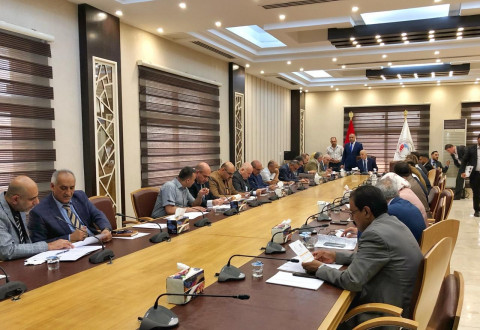 Higher Education at the heart of new cooperation between UNESCO and the Government of Iraq 2019-09-18 Within the framework of Iraq’s National Development Strategy (2018-2022), Iraq’s Ministry of Higher Education and Scientific Research (MoHESR) is taking a leading role to achieve the following strategic development objectives related to Education: Cooperating with regional and international organizations; establishing a partnership with the private sector; quality assurance and accreditation; developing and institutionalizing education programmes; and pushing for legislation in the Higher Education field. In June 2019, the Under-Secretary of MoHESR in Iraq, Dr. Hamid Khalaf, made a request for UNESCO’s support for the Higher Education Quality Assurance (QA) system in Iraq and wished to consult with the Programme Specialist of Higher Education at UNESCO’s Regional Bureau for Education in the Arab States. As a response to MoHESR request, UNESCO Beirut and UNESCO Iraq offices organized a Higher Education workshop on 20-21 August 2019 at the premises of MoHESR in Bagdad. The workshop gathered UNESCO Iraq Director, the Education sector team at UNESCO Iraq, UNESCO Beirut’s Programme Specialist for Higher Education Dr Anasse Bouhlal, and the Under-Secretary of MoHESR. University rectors and advisors also took part in the event. The workshop aimed at sharing with the participants the procedures of internal and external QA systems in the Higher Education sector, and at defining a clear roadmap and activity plan for long-term cooperation between MoHESR and UNESCO in the field of Higher Education. In particular, MoHESR requested UNESCO’s support in the following areas: the development of internal and external QA for Iraqi universities; the establishment of a National Information Center for the Recognition of Higher Education Diplomas and Certificates; assistance of Iraqi universities in achieving SDGs, in particular SDG4. UNESCO Beirut and UNESCO Iraq will work closely with MoHESR to ensure that the objectives of Iraq’s National Development Strategy in the area of Higher Education are fully met. URL:https://en.unesco.org/news/higher-education-heart-new-cooperation-between-unesco-and-government-iraq
 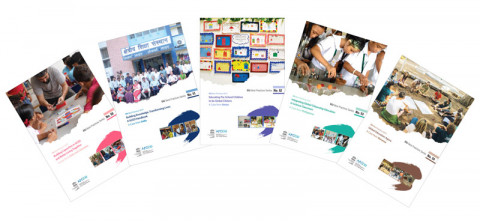 Publication and Award Ceremony of EIU/GCED Best Practices 2019 2019-09-18 Since 2006, EIU/GCED Best Practices have encouraged and supported educators, scholars and activists by sharing specific exemplars and practices on how to design and implement EIU and GCED. This year, 48 submissions from 31 countries have applied and among these, 5 awardees have been chosen to share their genuine stories of commitment as follows; Marcelo Ignacio Trivelli Oyarzun (President, Fundacion Semilla, Chile) : Building Capacities in GCED and Better Living Together Sangeeta Pethiya (Assistant Professor, Regional Institute of Education, NCERT, Bhopal, India) : Building Knowledge, Transforming Lives: A GCED Handbook Khalaf Marhoun Al’ Abri (Assistant Professor, College of Education, Sultan Qaboos University, Oman) : Educating Pre-School Children to be Global Citizens Melandro D. Santos (Master Teacher, Antonio Villegas Vocational High School, Philippines) : Integrating Global Citizenship Education in Science Classroom Tina Trdin (Project Coordinator, Association Lojtra, Slovenia) : Global Education Agora These remarkable 5 awardees and their valuable cases would foster in promoting a Culture of Peace and inspire numerous practitioners who are committed in building a more peaceful and sustainable world. In 3 September 2019, EIU/GCED Best Practices 2019 award ceremony was held during the 4th GCED International Conference in Seoul Dragon City Hotel. The director of APCEIU, LIM Hyun Mook, presented the awards. URL:Publication and Award Ceremony of EIU/GCED Best Practices 2019 > APCEIU News - APCEIU (unescoapceiu.org)
 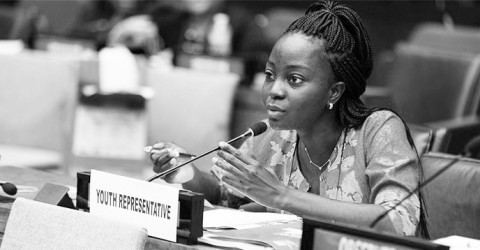 A Message from Youth: Transforming Education! 2019-09-16 My name is Victoria. I come from Nigeria and grew up Lagos State with three siblings. Ever since I remember myself in education, I felt frustrated. I had a learning difficulty and I was feeling less-than because the curriculum does not cater for children with different needs such as those who struggled with reading and comprehension, like me. This not only affected my academic success but also my self-esteem and social-emotional development. In 2013, as a student, I realized the disconnect between what was taught in the curriculum and what were the relevant skills that youth need to thrive in the society. I was bothered by the lack of effectiveness of education to prepare learners to meet the challenges of the present and maximize opportunities of the future. This personal experience made me understand how urgent is the need to invest in quality education.To some extent, Africa has bridged the gap in free basic education but my concern is whether the education we receive is relevant enough to produce the kind of leaders, entrepreneurs, thinkers and doers needed to transform the continent, and the world. This flow of thought inspired me to start OneAfricanChild to serve the educational needs of children, particularly those in disconnected communities so they can build a better future for themselves and the society. In our experience, an interesting way to transform education is by instilling the ideals of global citizenship education in learners through creative learning methods. It is important to meet the learners where they are and engage them in experiential activities using games, simulations, role play and storytelling, so that those who may feel excluded, feel motivated to participate in the learning process. Beyond this, education should facilitate social interaction where learners are at the centre in designing the learning process. Education must inspire curiosity and encourage exploration in learners. Also, by teaching important values of global citizenship to learners such as empathy, resilience and diversity, it is possible to connect to the heart of learners and empower them to take responsibility as active citizens. Since 2017, as UNESCO youth representative to the Steering Committee for Education 2030 (the coordination mechanism for the implementation of SDG4), I have had the opportunity to voice and advocate for the ideas of young people on transforming education as well as their perspectives on how Education can transform lives. Together with four other exceptional youth representatives from different regions of the world we have worked to push for meaningful youth engagement in Education, particularly in the context of the SDG4 Review this year. Meaningful youth engagement in shaping and delivering Education is critical today. It is a make-it or break-it factor that will determine how meaningful and efficient the transformation process will be. Youth represent an important agency in shaping the future of education based on our first-hand experience Spaces and opportunities for youth engagement in transforming Education must be created and sustained at all levels – from the global level and the work around SDG4 to the regional, country and local level where, day-to-day, youth are confronting with issues of access, relevance, equity and inclusion in Education. Youth advisory groups, student councils, online youth education hubs – young people today have the capacity and the willingness to engage in many different ways. It is not enough to give them a seat at the table but to rather engage with them in a continuous and relevant manner. And, in this, it is important to consider that issues affecting young people and education are dynamic, continuously evolving and different from region to region. What is happening in Africa, my region, is different from Europe or Latin America. We need collaboration, empathy and teamwork in order to transform education and young people play an important role in creating an agile, sustainable and lifelong education system that addresses the needs of the future. The success of every society is dependent on its ability to maintain an educated populace overtime. Therefore, we need the connection and experience of young people to recreate the educational experience to meet the demands of today and the future. Empowering more youth to join the teaching profession will go a long way to improve quality education, promote inclusion and ensure equity in education particularly in underrepresented communities. Finally, if we are to provide a sustainable solution to education in a rapidly changing world, we need to leverage on youth-led innovations and assistive technologies that will transform the learning environment for every child. URL:https://en.unesco.org/news/message-youth-transforming-education
 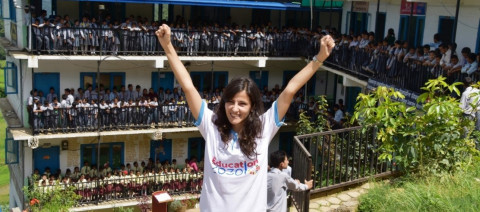 Championing girls’ right to education in Nepal 2019-09-16 "Getting an education has enabled me to live a better life and help my community. I hope to take this idea to different rural remote parts of the country where girls still lack access to basic education” - Bonita Sharma, Female Champions Fellow Context: Although gender parity in school enrolment has been achieved in Nepal, girls tend to drop out of school, especially in higher grades. Factors include living in remote districts, coming from low-income families, early marriage, gender-based violence, and poor learning environments. Women also suffer significantly from lower literacy rates than men. Action: UNESCO is tackling this wide-ranging challenge by establishing the Female Champions Fellowship Programme, providing a leadership platform to young women across the country. The Programme provides educational opportunities to support girls in leading community-based projects. The champions design and lead projects on empowering adolescent girls at community and school level through campaigning flash mobs, social media survey, case stories, peer learning and volunteerism. The training consists of a series of motivation-enhancing exercises such as campaigning strategies, project management, personal development and team building, as well as lectures on various social issues such as, but not limited to, social inclusion and gender equality, sustainable development, women rights and empowerment. Impact: To date, over 150 women, aged 19-25, have strengthened their community mobilization skills, delivering awareness-raising activities directly reaching hundreds of thousands of adolescent girls, students, teachers and community members. Going forward to maintain the programme’s sustainability, the champions will themselves work with marginalized adolescent girls and train them to become champions in the communities. URL:https://en.unesco.org/news/championing-girls-right-education-nepal-0
 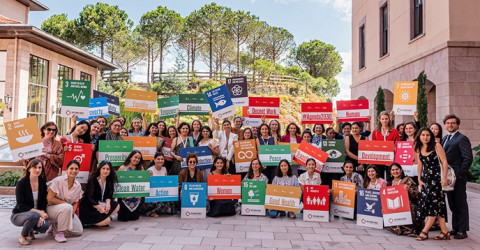 Women’s Empowerment for Sustainable Development 2019-09-16 UNESCO Chair on Gender Equality and Sustainable Development at Koç University organized a Summer Academy on ‘Women’s Empowerment for Sustainable Development’, which was held from 2 to 6 September 2019 in Istanbul. The Summer Academy was aimed at inspiring a new generation of students and professionals on how to address the SDGs and stimulate enriching discussions and innovative strategies. It covered various topics, from the international legal framework of women’s rights and empowerment to violence against women, women and foreign policy and women’s political participation, among others. Speakers from different spheres were invited to give lectures at the Summer Academy, such as academics specialized in the field, UN and GREVIO experts. Among the lecturers was Ms Saniye Gülser Corat, UNESCO’s Director for Gender Equality, who gave a talk on ‘Gender Equality and Education: Key to Sustainable Development’. On 3 September, Ms Corat gave a speech on how empowered women are the key towards sustainable development. She highlighted the importance of education in an ever-changing context affected by mass migration, climate change and continuing violence and discrimination against women. Given UNESCO’s mandate, she emphasized the role that science, culture, arts, technology and communication play in women’s empowerment, and the need for a gender equality lens in all these areas. When discussing the need for quality and inclusive education, Ms Corat reiterated the impact of schools, stating that “teachers, when they are well equipped, can unlock dreams”. She presented a holistic vision of education, where everyone must feel involved, given the crucial impact it has on tackling discriminations, gender equality and sustainable development. Finally, Ms Corat introduced how the digital revolution, despite the numerous opportunities it can present for empowerment, autonomy and new tools for education, also comes with new challenges such as unequal participation in technology design, girls’ lack of confidence in their ability to engage in ‘STEM’ education and unequal access to digital tools. Koç University launched the UNESCO Chair on Gender Equality and Sustainable Development in May 2016. It has since then carried out exemplary research and training on the intersection between human well-being, gender equality and sustainability. URL:https://en.unesco.org/news/womens-empowerment-sustainable-development