
News
Catch up on what’s happening in the world of global citizenship education.
1,668 results found
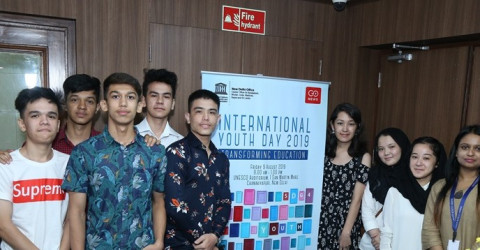 Empowering Youth, Transforming Education 2019-09-15 On Friday 9 August 2019, UNESCO observed International Youth Day (IYD) in New Delhi on the theme ‘Transforming Education’. The event served as a platform to showcase and advocate a series of transformational youth engagement initiatives, many of which are co-managed by UNESCO and its partners. The celebration of IYD was attended by close to 200 people, including youth, the media, and youth-focused civil society organizations, development agencies, and educational institutions. In his inaugural address, Mr Eric Falt, Director, UNESCO New Delhi drew attention to the need for further empowering and mobilizing youth. He noted that in India for instance, ‘it is expected that youth will account for nearly 35% of the country’s population by 2020’, and hence it is important to perceive and nurture young people as ‘equal partners and actors for peace and development’. Mr Falt observed that UNESCO’s observance of IYD in India was an opportunity to showcase how ‘young people, youth organizations and others are revolutionizing educational practices in order to build a better world’. The event included: presentations by the Ideosync UNESCO Information Fellows (who are part of a media fellowship programme for young Indians looking to specialize in communication for social change); a presentation of UNESCO’s Social and Human Sciences Sector’s youth engagement programmes; an overview of the pan-India online essay contest for children and youth launched by UNESCO and Takhte in 2019; a presentation related to heritage education for youth by the civil society organization Itihaas, and finally an overview from PRIA about its ‘Youth and Democracy’ campaign and other youth initiatives. URL:http://www.unesco.org/new/en/newdelhi/about-this-office/single-view/news/empowering_youth_transforming_education/
 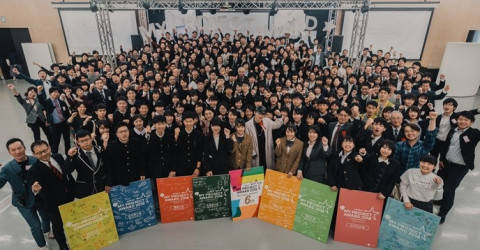 Japanese earthquake and tsunami prompts youth to re-shape their future sustainably 2019-09-12 A project set up in the wake of the devastating earthquake and tsunami in 2011, which destroyed large parts of the Tohoku region of northern Japan, aims to sustainably rebuild one town both mentally and physically. 'My Project' is a learning programme for high school students set up in the town of Otsuchi by Katariba, a non-profit organization which has been running educational activities related to the environment since 2001. It was nominated for the 2018 UNESCO-Japan Prize on Education for Sustainable Development (ESD). UNESCO's ESD programme supports countries to develop and expand educational activities on sustainability issues including disaster risk reduction. On 11 March 2011 the 6.6 magnitude earthquake, the most powerful ever recorded in Japan, claimed around 20,000 lives. In Otsuchi, at 220 km from the epicentre in Fukushima, the disaster claimed 1,600 of the 15,000 then population and destroyed much of the town with 60 per cent of residents losing their home. In the same year Katariba began to build a collaborative after-school centre which is open to every student in the town. They can visit and study at any time as well as meeting volunteers and staff of Katariba to talk about themselves and their lives in the wake of the disaster.'About a year after the disaster we heard from students at the school that they had been supported by others so far but now wanted to save their town by themselves,' says Project team member Manami Yoshida. Building resilience in people and infrastructure 'My Project' was born taking as its starting point building resilience into people and infrastructures based on two principles, 'action' and 'ownership'. It works by encouraging students to identify an issue in their community or a field of interest and design and run a project to solve or further those ideas. 'The future of the environment is uncertain and unpredictable. To build a sustainable society, we need to foster youth who have the power and creativity to face whatever ecological, social or economic issue is in front of them,' said Manami. 'We are looking for students to gain a mindset where they are driven to learn and where they say, "If I change, if I take action, then I can create change in society as well."' One idea to run a study tour to raise awareness about the disaster brought about sustainable lasting change as it became an official government strategy. The student behind the tour now wants to study community revitalization at college. Other ideas have included a greening scheme for land suffering salt damage due to the tsunami and the creation of a system where the general public can use defibrillators in an emergency without special knowledge. 'My Project' has now expanded across Japan and involves not only students but also governments, non-profit organizations and community members. In 2013 an award scheme was established to honour projects starting with just 18 students. This year 3,000 high school students took part. Start Up camps are also held each year where projects are planned and analysed. 'Our goal is to create an ecosystem where everyone can do their own 'My Project'. We aim to invite over 100,000 high school students to the 2020 awards and to collaborate further with more teachers,' said Manami. 'The transformation which students undergo acts as a ripple effect, causing change in their own communities and outside. New skills are learned and mindsets are changed.' Creating a supportive network In Saga, a city on the island of Kyushu which faces issues such as a decline in population and job opportunities, students launched the Sagan Ruby Project to make saleable products like soda and eco-friendly lip balm produced with Sagan Ruby, which is a local grapefruit. The products became popular, stimulating the local community and farming economy as students worked together with local businesses and colleges. 'My Project' also spreads its ideas by creating a supportive networking group for adults. 'By inviting schools and the local community to attend our networking group we hope to make new partnerships. Our aim is to create a network of supporters across Japan,' said Manami. Online support and video materials are provided for those living in remote rural areas. 'My Project' also partners with students globally and has organized exchange programmes for example with the US-based Global Kids which empowers children to take action on critical world issues. URL:https://en.unesco.org/news/japanese-earthquake-and-tsunami-prompts-youth-re-shape-their-future-sustainably
 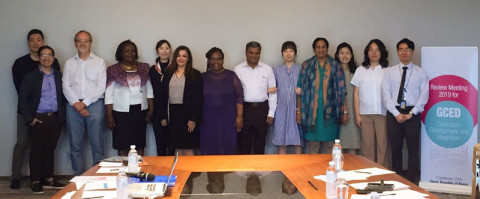 Review Meeting 2019 for GCED Curriculum Development & Integration 2019-09-11 APCEIU convened the Review Meeting 2019 for GCED Curriculum Development & Integration on 5 September 2019. This Meeting intended to provide a venue to share the results of the situational analyses conducted by national experts and international experts and to discuss roadmaps for development of GCED-integrated curricula in their countries--Kenya, Lebanon, Philippines and Sri Lanka. Furthermore, this Meeting also offered the representatives of each of the 4 beneficiary countries an opportunity to build GCED capacities by participating in the 4th International Conference on GCED. Through the Meeting, the participants were able to identify the challenges, the issues and the opportunities for GCED in the implemented and the intended curricula of each of the 4 countries. During the session for developing roadmaps facilitated by Mr Andy Smart from NISSEM* networking group, the participants had a chance to rethink the terminology concerning GCED-integrated curriculum and the importance of content and pedagogy. To conclude the 1st year of this 3-year project fruitfully, the 4 beneficiary countries will accelerate the implementation process from now on. Also, a total of 8 situational analyses reports (2 reports for each country) are expected to be published at the end of this year. *NISSEM: Networking to Integrate SDG Target 4.7 and SEL Skills into Educational Materials URL:Review Meeting 2019 for GCED Curriculum Development & Integration > APCEIU News - APCEIU (unescoapceiu.org)
  UNESCO MGIEP and Lady Gaga's Born This Way Foundation join forces for #BeKind21 and #KindnessMatters 2019-09-11 This is the second year of the #BeKind21 Campaign which is founded on the belief that if one does something consistently for 21 Days, it becomes a habit; it Calls on Participants to Practice Acts of Kindness for 21 Days from 1-21 September 2019. On October 2, 2018, UNESCO MGIEP launched the #KindnessMatters Campaign that aims to mobilise youth led-action for the SDGs through Acts of Kindness. New Delhi, India: UNESCO MGIEP joined Lady Gaga’s Born This Way Foundation for its second annual 21 Days to Be Kind Challenge to encourage young people, families, and teachers to build habits that foster kindness and promote the strength and wellness of their communities. Inspired by the idea that habits are formed by repeating an activity for 21 consecutive days, the challenge calls on participants to practice an act of kindness each day from September 1st to September 21st. The challenge, which will culminate on the U.N. International Day of Peace, is an opportunity for schools and colleges to kick off the new school year by establishing kinder habits that will last all year, and for corporate partners, nonprofit partners, and all other participants to head into the fall with a spirit of compassion and action. “In a world full of rising intolerance, apathy, indifference, social exclusion, fear, gender-based violence, climate change and extremism, we believe that apart from catering to students’ academic needs, it is equally important to hone their social and emotional capabilities to nurture rational, empathetic and compassionate citizens. Encouraging them to be kind is one of the most effective ways of achieving this. To be kind is about giving without any expectations. MGIEP has embarked on this kindness journey with the youth of the world to achieve the UN’s ambitious SDG agenda. We are delighted to partner with the Born This Way Foundation which is doing wonderful work in spreading the message of kindness and this campaign underscores the power of Acts of Kindness, ” said Dr. Anantha Duraiappah, Director, UNESCO MGIEP Last year, UNESCO MGIEP launched the #KindnessMatters for the SDGs campaign campaign on the International Day of Non-Violence or the birthday of Mahatma Gandhi, October 2 last year. The goal of this campaign is to mobilize the world’s youth to achieve the 17 SDGs through transformative acts of kindness We have received close to 5,000 transformative acts of kindness generated through the #KindnessMatters Campaign, it aims to be the foundational step towards the ultimate request (backed by 250, 000 transformative stories of kindness by global youth) for the Member States of the United Nations to Declare a Decade of Kindness for the Sustainable Development Goals – 2020 to 2030. “We were overwhelmed by last year’s response to our BeKind21 Challenge. This year, we hope to build on the excitement we saw from thousands of people and dozens of partner organizations,” said Cynthia Germanotta, co-founder, and president of Born This Way Foundation. “Kindness is a simple yet powerful practice. That’s why we’re inviting everyone to join us in establishing kinder habits and building a culture of kindness by putting kindness into action each day from September 1st to September 21st – being kind to your body, mind, and community.” A growing body of research has demonstrated the tangible benefits of kindness, for communities and for individuals. According to a survey commissioned by Born This Way Foundation, young people who describe their environments as kind are also more likely to be mentally healthy. Performing acts of kindness has also been shown to boost reported levels of happiness, self-worth, and calmness while decreasing symptoms of depression. Participants are encouraged to pledge their participation in the 21 Days to Be Kind Challenge at www.BornThisWay.Foundation.com/BeKind21. Participants who take the pledge will receive daily emails starting on Sept 1st with exclusive kindness suggestions, tips, and inspiration from Born This Way Foundation’s co-founders and partners, and have a chance to be featured on ChannelKindness.org. Here is the UNESCO MGIEP Calendar on Kindness for the SDGs: http://bit.ly/2ZVt12U About UNESCO MGIEP: The UNESCO Mahatma Gandhi Institute of Education for Peace and Sustainable Development (MGIEP) is UNESCO’s category 1 Research Institute that focuses on Sustainable Development Goal (SDG) 4.7 towards education for building peaceful and sustainable societies across the world. In line with its vision of ‘Transforming Education for Humanity’, the institute’s programmes are designed to mainstream Social and Emotional Learning in education systems, innovate digital pedagogies and to put youth as global citizens at the centre of the 2030 agenda for Sustainable Development. For more information, please visit the website. About Born This Way Foundation: Led by Lady Gaga and her mother Cynthia Germanotta, Born This Way Foundation was founded in 2012 to support the wellness of young people and empower them to create a kinder and braver world. To achieve these goals, Born This Way Foundation leverages evidence-based research and authentic partnerships in order to provide young people with kinder communities, improved mental health resources, and more positive environments – online and offline. To learn more, visit https://bornthisway.foundation/. URL:https://mgiep.unesco.org/article/unesco-mgiep-and-lady-gaga-s-born-this-way-foundation-join-forces-for-bekind21-and-kindnessmatters
  مركز الحوار العالمي يناقش أهمية دور المؤسسات الدينية في حماية حقوق الأطفال 2019-09-11 أكدت قيادات ومؤسسات دينية، أهمية حماية حقوق الطفل وتحديد الخطوات لضمان ذلك، وشدد متحدثون في مؤتمر بعنوان: (دور القيادات والمؤسسات الدينية في حماية حقوق الطفل)، الذي عقد في بيروت ونظمه مركز الملك عبد الله بن عبد العزيز العالمي للحوار بين أتباع الأديان والثقافات ومنصة الحوار والتعاون بين القيادات والمؤسسات الدينية المتنوعة في العالم العربي ومؤسسة أريغاتو الدولية، أهمية تنفيذ اتفاقية حقوق الطفل كونها أداة رئيسة للتصدي للتهديدات العديدة التي تواجه الأطفال اليوم.وألقى المونسنيور إيفان سانتوس نائب رئيس البعثة البابوية في لبنان، كلمة أشار فيها إلى (وثيقة الأخوة الإنسانية من أجل السلام العالمي والعيش المشترك)، التي تم توقيعها في أبو ظبي في شهر فبراير الماضي أثناء زيارة بابا الفاتيكان، شدد فيها على أهمية العمل المشترك تحت مبدأ الأخوة الإنسانية، مؤكدًا على عدم توافر بدائل للحوار الذي يؤدي لفهم الآخر ويساعد البشرية على التحرر من الأحكام المسبقة والاحتفال بالحياة وكرامة الإنسان.وتحدث نائب سفير النمسا ستيفان فايت فقال: إنه لشرف كبير لي أن أكون حاضرًا بينكم، وبالنسبة لي وللنمسا فمن المهم أن نعقد مثل هذه الاجتماعات لمساعدة الأطفال، مشيرًا إلى جهود مركز الملك عبد الله بن عبد العزيز العالمي للحوار بين أتباع الأديان والثقافات كمؤسسة ناشطة في العالم أجمع، ونحاول دعم أي مبادرة لإعطاء الطفل الطريق في هذا العالم في حال ضل، مشيدًا بأدوار مركز الحوار العالمي ومنظمة أريغاتو المساعدة على تحقيق ذلك.وألقى عضو مجلس إدارة مركز الملك عبد الله بن عبد العزيز العالمي للحوار بين أتباع الأديان والثقافات الدكتور محمد السماك، كلمة قال فيها: شرَّفني معالي الأمين العام لمركز الملك عبد الله بن عبد العزيز للحوار بين الأديان والثقافات الأستاذ فيصل بن معمر أن أمثله في الترحيب بكم. وأتمنى لهذا اللقاء تحقيق أهدافه الإنسانية النبيلة.مذكرا بتركيز مركز الحوار العالمي الذي تم تاسيسه من قبل المملكه العربيه السعوديه بمشاركة النمسا واسبانيا والفاتيكان على تفعيل دور الأفرادوالقيادات والمؤسسات الدينيه لمساندة صانعي السياسات خاصة المؤسسات الدوليه مثل الامم المتحدة واكد نجاح المركز في استثمار هذه الجهود وخصوصا انها قيم عالميه مشتركه بين الاديان والثقافات ويمكن الاستفاده منها في معالجة المشاكل التي تواجهها البشرية واهمها حماية حقوق الأطفالواعتبر السماك أن الذين رفعوا رايات التطرف والإلغائية للآخر، هؤلاء؛ لم يأتوا من كوكب آخر، ولكنهم خرجوا من بين صفوفنا، كانوا أبناءنا، لكنهم تربوا منذ نعومة أظفارهم على أن الدين هو احتكار للإيمان، وأن الإيمان هو احتكار للحق، وأن كل من هو خارج الدين هو خارج الإيمان ومعاد للحق؛وأكد السماك على أن التيارات المتطرفة في كل دين وحضارة قتلت الرحمة في الإيمان وألغت الروحانية في الدين. وسأل ماذا يبقى من الدين والإيمان إذا جردا من الروحانية والرحمة؟ من هنا مسؤولية علماء الدين في وجوب العمل على إعادة الإيمان إلى قواعده الأساسية، وهي الرحمة والمحبة والحرية وحفظ كرامة الإنسان، بما في ذلك كرامة الأطفال وحقوقهم.وقال محمد أبو نمر، كبير مستشاري مركز الحوار العالمي: يتمثل التحدي الرئيس اليوم في تحديد الدور الأكثر فعالية الذي يمكن أن تلعبه المؤسسات والقيادات الدينية في المساهمة في تنفيذ القوانين والممارسات لحماية حقوق الأطفال. حيث ليس هناك شك في أن المؤسسات الدينية تعتبر لاعبًا رئيسًا لضمان حماية الأطفال وكرامتهم وصحتهم وحقوقهم الأساسية التي توفرها المؤسسات الدينية الخاصة والهيئات الحكومية، مشيرًا إلى أهداف هذا الاجتماع التشاوري الرامية لتفعيل دور القيادات والمؤسسات الدينية لمساندة صانعي السياسات في جميع أنحاء العالم، لتأكيد أن الدين ليس هو السبب في اضطهاد حقوق الأطفال ولكن تكمن المشكلة في بعض الممارسات والتلاعب وسوء تفسير النصوص الدينية وبالتالي العادات والممارسات الدينية المترتبة على ذلك.أما مديرة منظمة أريغاتو الدولية الدكتورة ريبيكاريوس كون التي تحدثت عن الدراسة التي أطلقتها منظمة أريغاتو حول الدين وحقوق الطفل منذ أقل من سنة مع شركاء متعددين من بينهم مركز الملك عبد الله بن عبد العزيز العالمي للحوار بين أتباع الأديان والثقافات، ومؤسسة الرؤية العالمية والأزهر الشريف، قالت: نحن منظمة دولية أسست منذ أقل من عشرين عاما من قبل اليابان ولدينا متطوعين في 55 بلدًا من ديانات مختلفة. ونحن نعمل ونشجع كل الحكومات على اعتماد اتفاقية حقوق الطفل التي صدقت عليها كل الدول باستثناء دولة واحدة، وأعلنت عن المؤتمر الدولي الذي عقد في بنما بحضور أكثر من 500 مشارك والمنظمات المعنية بالأطفال وفي هذا المؤتمر تم التشديد على الدور الأساسي للقيادات الروحية لإنهاء العنف ضد الأطفال، معتبرةً أن الأمم المتحدة لم تنظر أبدًا إلى دور القيادات الروحية بطريقة جدية كما ننظر إليها نحن.وكشفت ريوس كون عن تعاون وتنسيق منظمتها مع مركز الحوار العالمي، في إطار المجلس الاستشاري الخاص في نيويورك، التابع للأمم المتحدة، والذي تم تأسيسه منذ عام وتشارك فيه حوالي خمسين مؤسسه دولية متخصصة في القيم الدينية والإنسانية برئاسة مشتركه لمعالي الاستاذ فيصل بن معمر والسيدة تاركا كانتولا، رئيسة مجلس إدارة المعونات الفنلندية، ويقدم استشاراته لأجهزة الأمم المتحدة المتنوعة؛ لتفعيل دور القيادات والمؤسسات الدينية في مساندة وتقديم المشورة لأجهزة الأمم المتحدة المتنوعة لتحقيق أهداف التنمية المستدامة.ووزعت منظمة أريغاتو نموذجًا عن دراسة بشأن اتفاقية حقوق الطفل، بعنوان:(الدين وحقوق الأطفال: دراسة متعددة الأديان بشأن اتفاقية حقوق الطفل). وسيشرع في الدراسة بتاريخ 20 نوفمبر/ تشرين الثاني 2019م بمناسبة الذكرى الثلاثين لاتفاقية حقوق الطفل. وقد وُضعت هذه الدراسة بعد مشاورة قيادات دينية من أتباع سبع ديانات، والخبراء القانونيين، والقيادات الدينية، وممثلي المنظمات الدينية وخبراء حقوق الأطفال. وعقدت أيضًا مشاورات إقليمية بين أتباع الأديان في أنحاء مختلفة من العالم لضمان إدراج إدخالات وإسهامات متنوعة في الدراسة، ومن المزمع كذلك عقد مزيد من هذه المشاورات. ثم جرى لاحقًا تنظيم مجموعات تركيز مشتركة بين أتباع الأديان في سبعة بلدان ضمت أطفالًا وشبابًا للوقوف على آرائهم ورُؤاهم؛ وذلك بالتعاون مع الممثل الخاص للأمين العام للأمم المتحدة المعني بالعنف ضد الأطفال، ومنظمة الأمم المتحدة للطفولة (يونيسيف)، والشبكة العالمية للأديان من أجل الأطفال، وبدعم من الشركاء، والمنظمة الدولية للرؤية العالمية، ومركز الملك عبد الله بن عبد العزيز العالمي للحوار بين أتباع الأديان والثقافات "كايسيد".وكشفت عملية التشاور الحاجة إلى إدراج القيادات الدينية والطوائف الدينية المحلية كشركاء منذ البداية عند وضع البرامج والاستراتيجيات. وتوصي الدراسة المعنية بالدين وحقوق الطفل باتخاذ إجراءات رئيسة تستهدف القيادات الدينية والمجتمعات الدينية المحلية، لتبني مبادرات تُعنى بالأطفال وتساعد على جعل حقوقهم ورفاههم واقعًا ملموسًا. كما ستُدرج في الدراسة توصيات موجهة خصيصًا إلى الحكومات الوطنية والمدافعين عن حقوق الطفل وغيرهم من أصحاب المصلحة الرئيسيين.وفي ختام المؤتمر؛ تم الإعلان عن توصيات المشاركين التي نصت على: تدريب خبراء من المؤسسات الدينية التربوية وتمكين قدراتها في قضايا الدفاع في قضايا الدفاع عن حماية حقوق الأطفال بالتوافق مع وثيقة الأمم المتحدة للطفولة لحماية حقوق الأطفال؛ والعمل مع القيادات أو المؤسسات الدينية في العالم العربي لتوفير فرص تعليم متكافئة لهم؛ ورفع وعي القيادات والمؤسسات الدينية من أجل العمل مع القيادات الدينية وصانعي السياسات على منع عسكرتهم وتجنيدهم في الصراعات؛ وضرورة تبني المؤسسات الدينية لوسائل التواصل الاجتماعي لمواجهة أضرار ومخاطر التقنية الحديثة على الأطفال، جنبًا إلى جنب مع العمل والتوافق مع مؤسسات التواصل الاجتماعي على إصدار وثيقة أخلاقية مشتركة لحماية حقوقهم على هذه الوسائل؛ التوكيد والتركيز على مسؤولية المؤسسات الدينية في العمل مع الأسرة، بوصفها الحاضن الأول لحماية الطفل ورعاية حقوقه من خلال رفع الوعي لدى الأسرة؛ والعمل مع القيادات الدينية للتأكيد على أن التربية الدينية الوسطية الصحيحة هي حق من حقوق الطفل بالشكل الذي يتناسب مع عمره ومحيطه ويراعى فيها الجانب السلوكي لدى الطفل في الأسرة والمدرسة والمؤسسة الدينية؛ ومخاطبة وتشجيع المؤسسات الدينية المعنية للعمل على تنقية التراث الديني الموجه للطفل والتخلص مما يساء استعماله أو تفسيره ويضر الطفل وحقوقه؛ بالإضافة إلى العمل مع المؤسسات الدينية وصانعي القرار السياسي لمساندة الجهود والحملات التي تهدف لتطبيق القوانين التي لمنع الزواج المبكر والعمالة والعنف الجسدي والجنسي الموجه ضد الطفل.وقد شارك في المؤتمر 40 مشاركًا ومشاركة يمثلون أكثر من 25 مؤسسة دينية وتربوية في العالم العربي، حيث شارك من المملكة العربية السعودية الدكتورة سارة بنت عمر السبتي العبد الكريم اختصاصية في تربية الاطفال، والدكتور عبد الله العباد استاذ مشارك في السياسات التربوية من جامعة الملك سعود. URL:https://www.albawabhnews.com/3686101
  Literacy is key to achieving the SDGs by 2030 2019-09-10 We know that literacy is key to making our world more sustainable, peaceful, and financially secure. Studies have shown that when children receive a quality education, they go on to have more chances in life, such as better health, greater employment opportunities, and increased participation in the political process. Furthermore, reading is considered the essential skill upon which the acquisition of every other skill depends. Indeed, without the ability to read, especially in mother tongues, it would not be possible for people to gain the knowledge and skills that are critical to achieving the Sustainable Development Goals. Over the years, GPE partner developing countries have made great progress in getting children enrolled in school and learning. In Gambia, GPE is supporting the implementation and evaluation of early reading programs in national languages through teacher training, provision of supplementary readers and library books and regular monitoring using a classroom observation tool. For example, in 2011 the government of Papua New Guinea launched the READ PNG program in collaboration with GPE and World Bank. This program helped promote better teaching and learning of reading skills in elementary and primary education. Yet despite the progress being made, 1 in 4 children in low-income countries cannot read or write a basic sentence, and 102 million youth lack basic literacy skills, with women representing nearly two thirds of the world's illiterate. This is why GPE supports strengthening education systems to improve how millions of children learn in close to 70 countries. On this International Literacy Day 2019, we think about the millions of children and adults around the world who haven't been able to learn to read and write. GPE works to get all children in school and ensure that they do not stop learning. We must continue to prioritize and fund education in order to keep our promise of 12 years of quality education for all children, allowing for a better and more prosperous future for all. URL:https://www.globalpartnership.org/blog/literacy-key-achieving-sdgs-2030
 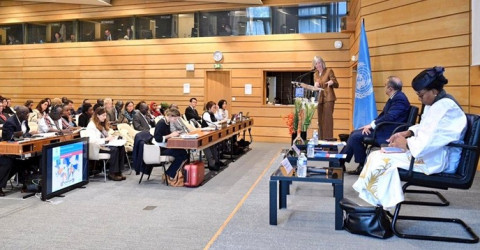 Multilingualism in focus at UNESCO International Literacy Day conference 2019-09-10 “Literacy is the starting point for any form of quality inclusive education and we need to support and scale up the many initiatives across the globe seeking to make literacy a reality for all,” said UNESCO Director-General Audrey Azoulay in her message for International Literacy Day. UNESCO held its International Literacy Day conference in Paris on Monday 9 September, bringing together stakeholders and decision-makers from all over the world. Under the theme of ‘literacy and multilingualism’, participants discussed key issues and ways to improve literacy policies and practices in multilingual contexts in our increasingly globalized, digital world. This was also an opportunity to express solidarity with the celebrations of the 2019 International Year of Indigenous Languages(link is external) and the 25th anniversary of the World Conference on Special Needs Education, at which the Salamanca Statement on Inclusive Education was adopted. At the opening session of the conference, UNESCO Assistant Director-General for Education, Ms Stefania Giannini said:“The relationship between globalization, digitalization and languages is paradoxical. On the one hand, with human mobility on the rise, people are increasingly exposed to multiple languages and use more than one language in life, work and learning. The reality today is that about two in three children grow up in multilingual contexts. But globalization is also threatening diversity, acting as a powerful force towards uniformity. It is this trend that we must counter for multilingualism to flourish, through concrete policies – within and beyond the education sector.” Ms Koumbou Boly Barry, UN Special Rapporteur on the Right to Education, Office of the United Nations High Commissioner for Human Rights (OHCHR) stressed in her opening speech the importance of rights-based approaches to unleash the transformative potential of literacy. She referred to the need for benchmarking the use of mother language and policies that underpin a holistic vision that encompasses quality formal and non-formal education. Background for this year’s theme Our world is linguistically rich with around 7,000 languages spoken, each linked to distinct identities, cultures and knowledge systems. Due to globalization, digitalisation and increasing mobility, today, multilingualism has expanded even further, with many people using more than one language in their everyday lives. Evidence, however, shows that only some of these languages are promoted: a mere 5 percent of the world’s languages are present on the Internet, 2680 spoken languages are in danger of disappearing, and 40 percent of the world’s population lack access to education in the language they speak or understand, affecting the quality of education and learning throughout life. These challenges put at risk the quality of people’s lives as well as linguistic and cultural diversity. On the occasion of ILD 2019, UNESCO called for rethinking literacy in multilingual contexts as an essential element in addressing the global literacy challenges and encouraged the International Community to invest in inclusive literacy policies and practices that reflect the needs and environments of learners, to foster more linguistic diversity and inclusivity in education. During the Conference, a ceremony was also held to appreciate decade-long collaboration of HRH Princess Laurentien of the Netherlands with UNESCO as the Special Envoy on Literacy for Development:“Over the past ten years, you have never ceased to raise the flag around literacy as a right, as a confidence builder, as a transformational force for individuals and families,” said Ms Giannini. In her keynote speech, HRH Princess reaffirmed her commitment to UNESCO’s work to improve literacy, and by saying that “literacy start in the womb”, she highlighted the importance of investing in language development in the earliest years of a child’s life as an effective preventive measure, and enhancing the quality of education by involving children in co-creating education programmes. The conference culminated in a Prize Award Ceremony, recognizing this year’s winning projects from Algeria, Colombia, Indonesia, Italy and Senegal, through five 2019 UNESCO International Literacy Prizes. Expressing her deepest gratitude to each of the five winners for their firm commitment, inspiring innovation, and bold action, Ms Giannini of UNESCO said:“I hope that your programmes and initiatives we reward today will create a positive chain of action to make our world more literate and inclusive, blessed by diversity.” URL:https://en.unesco.org/news/multilingualism-focus-unesco-international-literacy-day-conference
  “The Culture of Dialogue & Tolerance among Youth”: A High-Level panel 2019-09-09 Within the framework of UNESCO’s efforts to spread the culture of peace and dialogue, and in its efforts to achieve SDG4.7 which calls for the promotion of a culture of peace and global citizenship, UNESCO Beirut hosted on 20 June 2019 a high-level panel on “The culture of dialogue and tolerance among youth: the role of religious institutions, the media, and universities”. Held under the patronage of the guest of honor H.E. Layla el Solh Hamadeh, and in partnership with the Lebanese National Commission for UNESCO (LNCU), and the Agence Universitaire de la Francophonie (AUF), the panel was moderated Mr Ghassan Hajjar, and featured distinguished guests: Mufti Malek al-Shaar, Sayyed Jaafar Fadlallah, Monseigneur Michel Aoun, Mrs Laure Sleiman, and Dr Selim el-Sayegh. The event was attended by renowned figures representing religious institutions, universities, media, civil society, and youth. In his welcome note, Dr Hegazi Idriss, UNESCO Beirut’s Programme Specialist for Basic Education & Literacy, highlighted that the high-level panel comes as part of a series of actions and initiatives taken by UNESCO to spread the culture of dialogue and peace in Lebanon and in the region. Idriss mentioned that the youth are an important target and beneficiary of UNESCO programmes as they are agents for positive change in societies, and an important actor in the advancement of the sustainable development goals. Speaking at the opening of the panel, UNESCO Beirut’s director Dr Hamed al Hamami, reiterated UNESCO’s commitment to spread a culture of peace, tolerance, and mutual understanding, especially in the Arab region. Al Hamami said: “Our region is experiencing bitter conflicts, the prevalence of intolerance and violence. Innocent lives have been lost because of extremism and hatred, but hope remains as we witness various positive efforts and initiatives that aim at promoting dialogue and tolerance, thus planting the seeds for peace”. He added: “It is the values of tolerance, mutual understanding, and respect of others that guide our work at UNESCO. UNESCO’s Constitution reads: ‘Since wars begin in the minds of men, it is in the minds of men that the defences of peace must be constructed’. This motto is particularly relevant for our region today, where we shall rethink it and act upon it”. Al Hamami concluded by thanking the guest of honor, Mrs El Solh, for her constant support of UNESCO Beirut. In her speech, the Secretary-General of LNCU, Dr Tala Zein, highlighted the role the LNCU plays in disseminating a culture of peace in Lebanon, especially among the youth. Zein said: “In its activities, LNCU devotes a particular attention for youth. We cooperate with a large array of local, regional, and international partners, be they NGOs, experts, educators, intellectuals, and media professionals, to address the youth through targeted actions and initiatives that aim at strengthening their feelings of belonging, promoting their active social engagement, and consolidating in their minds the values of tolerance, dialogue, respect for diversity, and mutual understanding”. In his turn, Mr Herve Sabourin, regional director of AUF-Moyen Orient, highlighted the importance of this activity for his organization: “This high-level panel is part of a series of initiatives that we and our partner have been taking in recent years to address issues that are highly relevant for our world and region today. Indeed, themes such as intercultural or interreligious dialogue, tolerance and conflict resolution, mediation and education on non-violence and peace, challenge each and every one of us and also challenge the institutions we represent. In the troubled world in which we live, where so many peoples are paying the price of blind intolerance and extremism, to evoke these themes and especially to designate them as major issues in our societies is more than a necessity, it is also a duty". As to the guest of honor, H.E. Mrs El-Solh, she reiterated in her speech the Al Waleed Bin Talal Foundation’s commitment to assist any human being, irrespective of his/her race, gender, and religion, and to spread the culture of peace in the region. Mrs El-Solh highlighted that people are one in their humanity, hence the necessity and the moral duty to respect one another in our diversity. Mrs El Solh thanked UNESCO Beirut for its efforts to improve education in the Arab world, and offered UNESCO Beirut’s director, Dr Hamed Al Hamami, the Al Waleed Bin Talal Foundation’s Appreciation Award. The panelists emphasized the role of academia, the media, and religious institutions in highlighting the common values of humanity and uniting people in the region despite their diversity. The discussion focused on the necessity for religious leaders and media figures not to fall into the trap of sectarian or political strife, and to develop an official discourse that brings people together rather than setting them apart. In parallel to the high-level panel, UNESCO Beirut, in partnership with the Professional Center for Mediation (CPM) at the University of Saint-Joseph, organized a one-day training for youth on “Mediation and Conflict-Resolution Skills”. Targeting 25 young students aged 18-25 from 8 universities in Lebanon, the training introduced participants to the concept of mediation, and equipped them with key skills to engage in such process. The training covered various topics, including: rumors and prejudices as source of conflict, active listening, positive communication, difference between facilitation and mediation, and the phases of a mediation process. URL:https://en.unesco.org/news/culture-dialogue-tolerance-among-youth-high-level-panel
 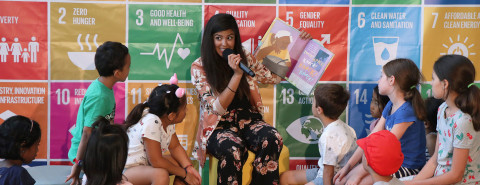 New UN book club helps children deal with global issues 2019-09-09 For children in Chad, getting an education can involve manual labour. That’s because, every year, there’s a chance that the rainy season will destroy their school, and they will have to join their teachers in rebuilding it. This is the story recounted in the children’s book “Rain School”, which is on the reading list of the UN's SDG Book Club. Every day brings news about wars, humanitarian crises, and the climate emergency. These subjects can be a source of fear and nightmares for children, and parents can struggle to find the best way to explain them in a balanced way that does not worry their children even more. The SDG Book Club is one way to help. The Club, which was set up in April by the UN, in collaboration with several book-related partners, selects books which contain messages related to the 17 Sustainable Development Goals (SDGs) at the core of the UN’s 2030 Agenda for sustainable development, with the aim of providing a playful and participative way to learn about the Goals, through stories and characters children can relate to. Book suggestions from around the world are reviewed, and a reading list for children aged between six and 12 is compiled and promoted on the SDG Book Club website and elsewhere, in the six official UN languages (Arabic, Chinese, English, French, Russian and Spanish). “Rain school” illustrates that quality education (Sustainable Development Goal 4) can’t be taken for granted for all children, and shows that, no matter your age, you can take action to improve your life and the lives of others. Another example from the reading list is “Thank you, Omu!”, a favourite amongst the Book Club staff, which tells the story of an elderly woman who cooks a delicious stew which smells so good, that people on the street stop and knock on her door asking for it. The book teaches a lesson about zero hunger (Sustainable Development Goal 2), and about helping and caring for others. Parents can find out more by reading the SDG Book Club Blog, which contains stories from book clubs, educators and parents from around the world, who have used the books to discuss complex issues, like poverty or health, with their children, helping them take concrete steps to help others in their communities. URL:https://news.un.org/en/story/2019/09/1045542