
News
Catch up on what’s happening in the world of global citizenship education.
1,668 results found
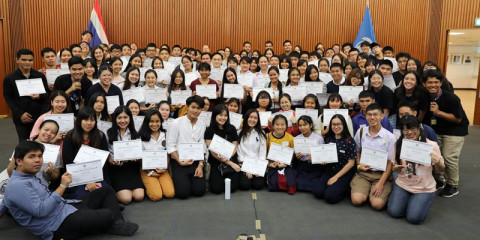 Breaking down barriers holding back young people on International Youth Day 2019-09-09 Imagine you are a young person studying in a small rural town – what would be your response if someone said: “You should join the United Nations” or “Consider an international role”? Rather than being excited, you might just think “impossible”. “I guess no one will deny the benefits of reaching out, especially joining international organizations and events,” said Nopardol Pao, from the NGO Teach for Thailand. “However, it is putting our heads in the clouds to demand that youth do so – there’s a lack of understanding and motivation for them to join in.” Engagement with young people in international forums has always been a challenge, not just to include them, but to see them in leadership roles. Youth agency is crucial because youth are both future leaders and the people whose welfare is most at stake in development outcomes in education, gender equality, the environment and many more areas. In the decades to come, it is young people who will benefit or suffer most because of decisions made today. In Thailand, youth can readily identify barriers to their participation, including language and information disconnects, lack of self-confidence often linked to a lack of respect, and unequal socioeconomic conditions. With all of those challenges in mind, the United Nations Asia-Pacific Interagency Network on Youth and Thammasat University’s School of Global Studies co-hosted a youth summit with the theme “transforming education” for International Youth Day 2019 on 10 August. Out of 1,000 applicants, 100 participants from secondary schools and universities across the country attended. “The disconnect between youth and international organizations is big. There is a lack of explanation and education on how being involved in international events could help them to live a better life,” said Nopardol, guest speaker at the event who shared his experiences as a volunteer teacher in rural areas of the country. “It is not easy for youth to reach out to the UN or other opportunities, as they often believe that the UN is only for professionals with significant academic backgrounds.” There is a certain degree of irony in this observation as the international community is often eager for greater youth engagement and yet cannot always convey that message. “The UN has a very professional image as an authority, so local students might not be confident enough to reach out to such huge organizations,” said Napakorn Saweddit, a Bangkok university student. “In most cases, we wish to join, but we don’t know how and couldn’t believe that we deserve the chance.” A lack of confidence, however, is not necessarily a matter of insecurities, but a product of social forces and systemic bias. “Youth voices seem nothing in our society, not in school or government. The education policies and curricula design have never involved our thoughts,” Napakorn said. “Time goes by, we have become discouraged and tamed, and we cannot believe that we have the right to engage and to express ourselves, or that someone will listen to and value us.” These factors can be aggravated as well by the rural-urban divide and socioeconomic inequalities, in many cases further marginalizing young people who are both most vulnerable and in some ways best positioned to affect meaningful change. “In this case, it is further widening the gap between the youth in cities and in rural areas,” said Thanakrit Srisuwan, a high school student from the southern provinces. “While students in cities receive more opportunity through information and support from schools, rural students are more likely to miss out, and they tend to be even more conservative in stepping out of their comfort zones to compete with others.” Information barriers are another major reason young people are hesitant to engage, as international events, not to mention publications, are mainly in English rather than mother-tongue languages spoken by the youth who are most affected. All of these challenges are context-specific, with no one-size-fits-all solution. Whole networks including government, schools, civil-society organizations and families need to work together to provide support and resources to build youth capabilities and awareness. However, the major key remains to listen to young people. “If you wish to convince and encourage youth to reach out, first you need to step in their shoes and think – why would they be willing?” teacher Nopardol said. “Different regions have their different concerns, we have to put ourselves in their perspectives and to understand their needs, then emphasize how the opportunities can relate to their needs.” All of these considerations are part of UNESCO’s approach to youth engagement, addressing the importance of putting young people at the centre of the dialogue to transform the way the UN works with young people. One of the key principles is to recognize young people’s stake in the issues, and to provide youth-relevant and youth-focused interventions, while including young people and their social networks as leaders and partners. The recent International Youth Day event in Bangkok is a case in point, organized entirely by Thammasat students who brought together their peers and focused on the issues that matter most to them. This is youth leadership, not just participation as an afterthought. Their voices should be heard. URL:https://bangkok.unesco.org/content/breaking-down-barriers-holding-back-young-people-international-youth-day
 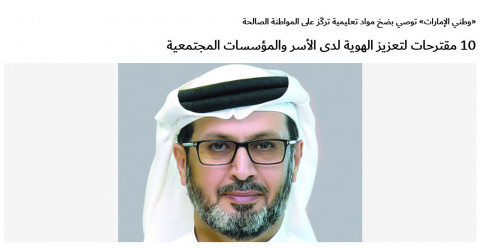 10 مقترحات لتعزيز الهوية لدى الأسر والمؤسسات المجتمعية 2019-09-09 حددت مؤسسة وطني الإمارات 10 مقترحات لتنمية الهوية الوطنية والمواطنة الصالحة لدى الأسر والمدارس والمؤسسات المجتمعية، مستندة الى تقرير أعدته الدكتورة أمل حميد مستشارة الشؤون المجتمعية في مؤسسة وطني الإمارات لرصد المقترحات التفاعلية لتنمية الهوية الوطنية والمواطنة الصالحة عند الفئات المذكورة، وتقوية مبدأ الولاء والانتماء لدى أبناء الدولة.دور الأسرةوأوضح ضرار بالهول الفلاسي المدير التنفيذي لمؤسسة وطني الإمارات أن التقرير يشرح 10 محاور عن دور الأسرة في تنمية الهوية الوطنية، وطرق نشر مفاهيمها والمواطنة الصالحة، وكيفية الحفاظ على الهوية الوطنية والولاء والانتماء في ظل المسؤولية الاجتماعية الوطنية.وقال: إن المؤسسة أصدرت تقريرها تماشياً مع أهداف المؤسسة ودورها المحوري في المساهمة بصون وحماية الهوية الوطنية الإماراتية وترسيخ عناصرها لدى الناشِئة والشباب، وتعزيز مُمارسات الانتماء والولاء الوطني وقِيَم المُواطنة الصالِحة لدى كافّة شرائح المُجتمع والمُؤسّسات.واستعرضت مؤسسة وطني 10 مقترحات لتنمية الهوية الوطنية والمواطنة الصالحة، مطالبة الأسر بتعزيز وتنمية الهوية الوطنية في نفوس أبنائها من خلال ممارسات عملية تعكس حب الوطن والانتماء له، والعمل على نشر مفاهيم الهوية الوطنية والمواطنة الصالحة وما يتعلق بها من معارف وقيم ومبادئ ومهارات في سائر المقررات الدراسية، ولاسيما أن الشريعة الإسلامية هي أساس الهوية الوطنية والمواطنة الصالحة ثم دستور دولة الإمارات العربية المتحدة وما يتضمنه من حقوق وواجبات.بيئة ناجحةودعت ضمن المقترحات التي ساقها التقرير إلى مواصلة ضخ مواد تعليمية تركز على الهوية الوطنية والمواطنة الصالحة خلال المرحل التعليمية المختلفة وعدم الاكتفاء بالمراحل الدراسية الدنيا، وفق أهداف تراكمية المفاهيم وتسلسلها حسب مستوياتها وارتباطها بالمستويات العقلية والعمرية للطالب، مع ضرورة العناية بمن يتولون العملية التدريسية للهوية الوطنية والمواطنة الصالحة من حيث الاختيار والتأهيل والإعداد والعمل على رفع مستوى أدائهم، خاصة بالتدريب أثناء الخدمة على طرق التدريس والإلمام الكافي بالثقافات المحلية والعالمية، وبالنظم السياسية، والإدارية، وباتجاهات المجتمع الذي يعيش فيه الطالب.وشددت المقترحات على أن تكون المدرسة بيئة ناجحة لممارسة المواطنة السليمة، ليتدرب الطلاب على مناقشة القضايا التي تهمهم، واتخاذ القرارات المناسبة ومعالجة الاختلاف في الرأي بينهم، والتعامل مع المخالفين، وتأسيس الجمعيات والروابط الطلابية وانتخاب من يمثلهم فيها، وتكاثف الجهود بين البيت والمدرسة في مسألة غرس الهوية الوطنية والمواطنة الصالحة في نفوس الأطفال والناشئة بالقول، والثقافة، والمسابقات والحوار وبكل ما يمكن أن يوصل إلى ذلك الهدف النبيل لتنمية شعور الاعتزاز عند الناشئة بدولتهم، وأن يبذلوا النفس والنفيس في سبيل حمايته وقد نفذت مؤسسة وطني الإمارات لتطبيق هذا المقترح جدولاً خاصاً بتعديل السلوك لتعزيز ممارسات الانتماء والولاء على المستوى السلوكي للناشئة والشباب، يصلح للاستخدام في المدارس والجامعات عن طريق المعلمين وأولياء الأمور.ثروة حضاريةوأدرجت المقترحات إقامة التواصل الدائم مع الهوية بوصفها «ثروة حضارية» وذلك على أسس علمية رصينة، ومنهجية تحسن قراءة النص وقراءة الواقع، وتفهم حركة التاريخ، وتدرك شروط الواقع و أولوياته، وتتطلع بوعي عميق إلى المستقبل فتربط الماضي بالحاضر، والحاضر بالمستقبل وتتوخى تحقيق تواصل عملي فعال مع الهوية عبر إزالة الكوابح التي تمنع تجددها الدائم، أو تحول دون تنزيل مطلقاتها على واقعنا النسبي والمتحول باستمرار لحقائق حياتية وتصرفات ومناهج سلوك، وخطط عمل لحاضر يتحقق ومستقبل قابل للتحقيق وإسهاماً فعلياً في بناء حضارة الدولة ومجدها.وركزت على ضرورة تكريس قيمة الحوار المعمق والمتواصل بين المثقفين والباحثين، وأعضاء المجالس الاستشارية والمجلس الوطني من أجل صياغة مفهوم للهوية الوطنية، الأمر الذي من شأنه ومن خلال الممارسة أن يتحول إلى مشاركة فعالة لوسائل الإعلام ولمؤسسات المجتمع المدني والمؤسسات الأكاديمية، وإدراج معيار لممارسات الهوية الوطنية والمواطنة الصالحة في الجوائز، وبرامج الأداء المتميز التربوي والحكومي مع عقد مقارنات لما يتم تنفيذه من سياسات وممارسات في جوائز وبرامج الأداء في السنوات الماضية مع توصية بعدم التكتم على المخرجات لأنها وسيلة تعليمية وتدريبية URL:https://www.albayan.ae/across-the-uae/news-and-reports/2019-06-16-1.3584276
 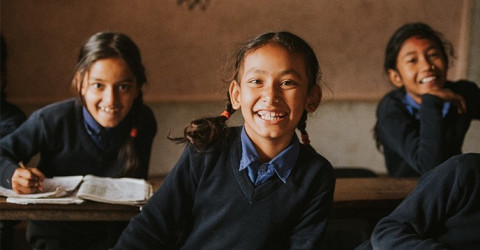 Educating girls and women: an essential brick in building a more peaceful and sustainable world 2019-09-09 How can education advance the status of women and girls worldwide and work towards preventing conflicts, protect the most vulnerable populations and transform societies? This question was at the heart of discussions in Geneva during the Graduate Women International (GWI) 33rd Triennial, Centenary Celebration and One-Day Conference, which was held at the University of Geneva on 25-28 July. The theme of the year, “Peace through Education”, reflects the recognition of education, in particular education of women and girls, as the cornerstone of peaceful, just and sustainable societies. Ms Saniye Gülser Corat, UNESCO’s Director for Gender Equality, delivered the key-note speech on UNESCO’s vision and framework of action on Education and Peace. In her video-message, she mentioned UNESCO’s clear position: “No one is born hating others. No one is born considering that some people are worth less than others. […] We must teach commitment to equality, tolerance, respect and dialogue. We must also expose inequalities at the starting-blocks – particularly intersecting factors of inequalities that affect many of the most marginalized, such as gender, socio-economic status, and geographical location.” Despite the tremendous progress made over the past 20 years, girls are still more likely than boys to never set foot in a classroom. However, the benches at school are the starting point for building peace in the minds of women and men. In this context, gender equality and global citizenship education are key components to make education systems more inclusive and equal for all. To do so, capacity building of learners is essential. “Teachers, when they are well equipped, can unlock dreams. But they need the training and tools to promote equality, […]” said Ms Corat. In this context, UNESCO develops tools that enable teachers to address in classrooms a range of controversial issues, such as intolerance and discrimination based on religion, ethnicity or gender. However, all the problems cannot be addressed by teachers and schools alone. Families, community leaders and young people themselves need to play an active role to engage young women and men in promoting positive values of equality and respect for diversity. Another aspect mentioned by Ms Corat was the digital revolution, which not only creates infinite opportunities, but also brings challenges. In order to achieve a more equal, peaceful and sustainable world, it is vital to help teachers to adapt to the new technologies that are emerging, and UNESCO stands ready to provide them with the knowledge and tools to face the challenges of education in the 21st century. URL:https://en.unesco.org/news/educating-girls-and-women-essential-brick-building-more-peaceful-and-sustainable-world
 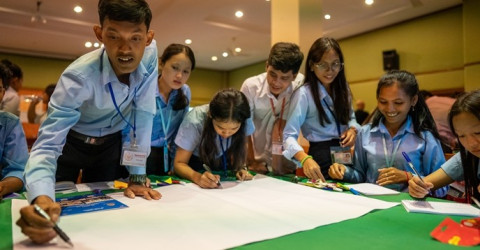 “Amplifying the voices of the voiceless”: UNESCO supports preservation and dissemination of Tuol Sleng archives in Cambodia 2019-09-09 This year marks the 40th anniversary of the end of the Khmer Rouge regime in Cambodia and the opening of the Tuol Sleng Genocide Museum (TSGM). On this occasion, UNESCO supported the TSGM, Ministry of Culture and Fine Arts (MoCFA) of Cambodia in organizing an international conference on the topic of “Genocide, Memory and Peace”, with funding support from KOICA. From 28-30 August 2019, the conference convened experts from over 9 Cambodian and 25 international institutions in Phnom Penh to share experience on the management of genocide-related digitalized archives. The conference also served to inform the process of TSGM becoming a peace education site to support efforts of reconciliation. The Tuol Sleng Genocide Museum was first opened for visitors in 1979 on the site of the former detention, interrogation and extermination center “S-21” in Phnom Penh, operated by the regime of “Democratic Kampuchea”, commonly known as the “Khmer Rouge regime”. From 1975-1979, more than 18,000 prisoners were interrogated, tortured, and murdered on site or in the killing field of Choeung Ek. The conference was organized within the framework of the “Tuol Sleng Genocide Museum Archives Preservation and Digitization Project”, implemented by UNESCO in partnership with the Ministry of Culture and Fine Arts of Cambodia, and with generous support from the Korea International Cooperation Agency (KOICA). When the Khmer Rouge regime ended, hundreds of thousands of pages documenting the Khmer Rouge’s crimes were secured. Today, these archives are housed in Tuol Sleng Genocide Museum, forming the most comprehensive collection of documents of the Democratic Kampuchea prison system. The Museum’s archives were inscribed into UNESCO’s Memory of the World (MoW) Register in 2009. The TSGM archives project seeks to promote peace and intercultural dialogue, facilitate reconciliation efforts, and expand educational outreach, including through the preservation and digitization of the TSGM archives. Once digitized, the 400,000 pages of the archives will be incorporated into a database, facilitating access to rural Cambodians, youth, and international researchers, amongst others. During the opening of the conference, the Secretary of State, H.E. Chuch Phoeurn from Ministry of Culture and Fine Arts, called on “national and international institutions and NGOs, running projects related to the Khmer Rouge regime, to work in collaboration with TSGM, and contribute to youth education on peace and memory in Cambodia.” The work of historians and experts can essentially contribute to this process, explained Mr. Sardar Umar Alam, UNESCO Representative to Cambodia, “presenting historical facts and narratives, educating the younger generation on engaging meaningfully with their past, advocating for truth, and amplifying the voices of the voiceless.” In his keynote address, Dr. Datuk Azemi Abdulaziz, Director General of the National Archives of Malaysia, underlined the value of mass atrocity archives through providing documentary evidence of the past and serving as a “bridge to the present and future”. This connection between past, present and future served as an overarching theme for the three-day conference and guided discussions among experts and exchanges with local university students, who were invited to participate on the second day of the Conference Karel Fracapane, UNESCO Focal Point for Education about the Holocaust and genocide, emphasized the role education can play in this regard: “A lack of acknowledgement and acceptance of violent pasts and related traumas may fracture social cohesion and leave unchecked persisting grievances and divisive stereotypes. Education, specifically history education, can help to inform processes of dealing with violent pasts by creating an understanding of what happened and how this history continues to shape society today.” One participating student explained, “the TSGM archive project will be very helpful for Cambodian education in general. It is often difficult for us to find specific information on Khmer Rouge history written in Khmer. These archives will help us conduct important research on our own history.” The discussions on the second day evidenced the profound effect the digitization project has in fomenting dialogue within Cambodian society: Through the Tuol Sleng archives, the voices of Khmer Rouge victims continue to be heard by the country’s youth. As their fates and individual stories continue to shape Cambodia at all levels of society, access to such resources will allow young Cambodians to position themselves and to engage in proactive dialogues about their country’s past, present and future. UNESCO is committed to promote education about genocides as a means to sensitize learners for the causes, dynamics and consequences of such crimes and to strengthen their resilience against all forms of discrimination. Learn more about UNESCO’s related activities. URL:https://en.unesco.org/news/amplifying-voices-voiceless-unesco-supports-preservation-and-dissemination-tuol-sleng-archives
  Indigenous peoples’ right to education: Overview of measures reported by Member States 2019-09-06 The right to education is recognized as having a key role in achieving the Sustainable Development Agenda. Making education a reality for all is an absolute priority. States need to ensure the right to equitable and inclusive quality education. Inclusive education systems give the possibility to share different cultures and minds and learn from others for a better understanding and a brighter future. Following the result of the Ninth Consultation of Member States on the 1960 Convention and Recommendation against Discrimination in Education, UNESCO is realizing a series of thematic mapping. The first document of this series, focusing on the right to education for indigenous peoples, has just been released. This document provides an overview of the measures supporting the right to education for indigenous peoples reported by 15 Member States during the Ninth Consultation. These national reports provide many varied examples of what can be done in relation to the right to education for indigenous peoples, from constitutional provisions, to practical and concrete policies, including specific budget, curriculum and teacher training adapted to indigenous peoples’ cultural specificities, bilingual and intercultural education. Join UNESCO’s #RightToEducation campaign and help spread the word about this key human right that has the power and potential to transform lives around the world. Read the document Discover the new Right to education handbook URL:https://en.unesco.org/news/indigenous-peoples-right-education-overview-measures-reported-member-states
 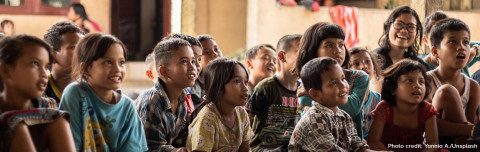 SDG 4 Report Calls to Double Finance for Education Monitoring 2019-09-06 Available statistics show that school completion rates are far from universal, and low-income countries fare poorly in terms of infrastructure in schools (SDG target 4.a), with just 32%% of primary schools having access to electricity, and 60% of upper secondary schools having access to sanitation facilities. The report titled, ‘Meeting Commitments: Are Countries on Track to Achieve SDG4?’, sets out findings by each SDG 4 target. With regard to target 4.1 on school completion, 18% of all school-age children and youth did not attend school in 2017, and global trends suggest there will only be only a slight improvement, with 14% of chilld-age children failing to complete their scho0oling by 2030. On early childhood education (target 4.2), the report notes that just 62% of pre-school-age children in low-income countries are considered to be “on track” with readiness to enter primary school. On literacy (target 4.6), the youth literacy rate is expected to reach 94% and the adult literacy rate 90% by 2030. On education for sustainable development (target 4.7), 60% of reporting countries have “fully reflected” the target in national education policies. The report finds substantial gaps in data available for assessing progress against several SDG 4 targets. Monitoring also has been hampered by the lack of an agreed methodology to measure several SDG 4 targets. To fill the gaps, they recommend that countries prioritize conducting learning assessments, and carry out household or school surveys that provide data on targets that are not currently being monitored by education systems. These include SDG targets 4.3 on tertiary education, 4.4 on relevant work skills, 4.6 on literacy, as well as 4.a and 4.c. The authors call on aid donors to make up the difference between the USD148 million currently spent on such monitoring per year, bringing resources to the USD280 million year that they estimate is needed. The Education for 2030 Framework for Action, a global plan agreed by countries in 2015, urges governments to allocate at least 4-5% of GDP and less than 15% of their national budget on education. However, at present, one in four countries do not meet this minimum recommended level. URL:http://sdg.iisd.org/news/sdg-4-report-calls-to-double-finance-for-education-monitoring/
 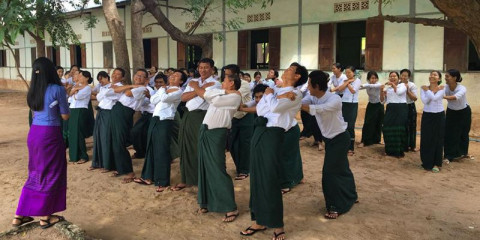 Themes of peace: Education for peace and sustainable development develops 21st-century skills 2019-09-06 In early June, Myanmar unveiled two policies on environmental management and climate change strategy meant to contribute to a more sustainable future. In addition to fast-paced economic change and development, Myanmar is also feeling the negative effects of a changing climate. Although it is nowhere near a top emitter of greenhouse gases, Myanmar is one of the nations worst affected by extreme weather events and climate change. In fact, it has been one of the most natural disaster-prone countries in the world over the last two decades. Building a sustainable future, however, will require more than just progress on the environmental dimension of sustainable development. Conflicts, such as those in Rakhine, Shan and Kachin states, hamper efforts at sustainable prosperity. Myanmar, rich in diversity, also needs to promote respect for diversity, tolerance and non-discrimination. Sustainable development in Myanmar will rely on a peaceful society, but at the same time, the country cannot maintain peace without a sustainable path for growth and development. Education will be the key driver in realizing these mutually dependent goals. Improving education for peace and sustainable development (EPSD) will have lasting impacts on not only the learning outcomes and the quality of education but will contribute to fostering a more inclusive, equal and just society. EPSD encourages a positive school culture and high levels of student engagement, as well as cultivating practices consistent with the values of equality and respect, while developing skills and attitudes that enable citizens to lead healthy and fulfilling lives. Collaboration, problem-solving, information and communications technology (ICT) literacy, as well as social and cultural competencies – all of these are 21st-century values and skills that Myanmar has committed to instilling in youth. In support of the Ministry of Education’s agenda, UNESCO and the Department of Educational Research, Planning and Training recently hosted a Policy Dialogue on Education for Peace and Sustainable Development under Sustainable Development Goal 4.7 and their Contributions to Quality Education. More than 100 participants attended, including high-level officials from the Ministry of Education, parliamentarians, teacher educators, civil society and development partners. As one event in a larger seminar series, education stakeholders had the opportunity to think through improving the quality of education through EPSD and plan methods for implementation. Dr Myo Thein Gyi, the Union Minister of Education, and UNESCO Regional Director Shigeru Aoyagi kicked off the seminar with opening remarks focused on the path forward and regional cooperation. The Minister highlighted links between SGD 4.7 and achieving other Sustainable Development Goals, illustrating the target’s importance for Myanmar’s education reform agenda and National Development Plan. Delivering the keynote address, Dr Felisa Tibbitts, a lecturer at Teachers College at Columbia University, asked participants to consider their personal connections with the concept of peace, describing the advantages and disadvantages of various models of education for peace and sustainable development. A panel comprising representatives from the Department of Basic Education, an Education College and Kalyana Mitta Development Foundation reviewed current government and civil society initiatives that incorporate EPSD at different levels of Myanmar’s education system. The Government and UNESCO are also working together on other initiatives tied to EPSD, including curriculum reforms in progress at Education Colleges. The reform is part of a broader transformation to upgrade the colleges’ current two-year course into a four-year degree programme. With support from UNESCO, members of the Teacher Education Curriculum Core Team – a group of teacher educators developing the revised curriculum – are integrating the concepts of peace and sustainable development into the new educational programme. These core members also attended the seminar to incorporate lessons into future reforms. “I am really glad for the opportunity to participate in this seminar,” said Daw Sandar Myint, a member of the Primary Curriculum Development Team. “As I am from the music department, I plan to teach poems and songs with themes of peace to the children, in order to incorporate EPSD into my syllabus. Through the seminar, I was also able to consider how to practice peaceful living for myself.” Raising awareness and sparking conversation among policy-makers and education stakeholders on topics such as developing teacher policy, strengthening the technical and vocational education and training system, and managing the impact of private tutoring is fundamental to lasting change in a 21st-century education system. This fourth and final policy dialogue is a stepping stone for implementing SDG 4.7, in particular education for peace and sustainable development. Activities like the Policy Dialogue series, focused on strengthening education policy and planning, are a critical component of UNESCO Myanmar’s overarching strategy in assisting Myanmar to achieve accessible quality education that is inclusive, equitable and prepares learners for 21st Century challenges. URL:https://bangkok.unesco.org/content/themes-peace-education-peace-and-sustainable-development-develops-21st-century-skills
 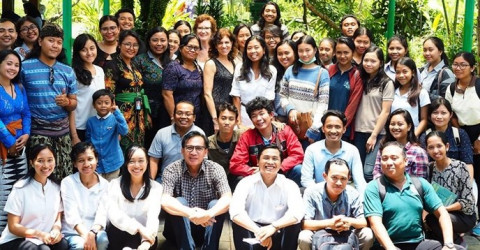 Un programa indonesio en favor de la diversidad lingüística gana un premio de alfabetización de la UNESCO 2019-09-06 BASAbali from Indonesia is awarded the 2019 UNESCO Confucius Prize for Literacy for its programme ‘BASAbali Wiki’. Based on a collaboration of scholars, governments, artists, and community members from within and outside of Bali, BASAbali was created as a digital tool to both preserve local languages and strengthen them by transforming people’s attitudes towards promoting and valuing linguistic diversity. The tool, BASAbali Wiki, is a multimedia, multilingual (Balinese-Indonesian-English) wiki dictionary, encyclopedia and virtual library which intends to revitalize endangered local languages by creating the sense of ownership. Both local Balinese and international communities are invited to contribute to creating the content in whatever way they can in local, national, and international languages. A team of experts contributes to monitoring the relevance and quality of the content. “We realized that to foster literacy, particularly with local languages, we need to do more than just create a body of resources: we needed to engage civil society in developing a norm of literacy and multilingualism”, says Gde Nala Antara, the Chair of the BASAbali Wiki Board. Read to a child in a local language Since the launch in 2011 with interfaces in Balinese, Indonesian and English, BASAbali Wiki has been used by over half a million people. The main target group of the programme is younger generations, especially young women and girls. “Outreach teams particularly target out-of-school youth, women and girls, and those who may be outside the grid but can nonetheless add and use content through an offline function”, says Gde Nala Antara. “Our goal is to have the grandchildren of this generation’s children value literacy and multilingualism. We target children directly, teens and young adults as role models for their younger peers, and young parents who can create an environment of reading, writing , and using local, national and international languages”, says the director of BASAbili Wiki. When material is submitted in one language, users are encouraged to offer translated text in the other two languages. In this way, BASAbali Wiki serves as both a Balinese reference and a translation tool for Indonesian and English languages. The team of experts also provides translation and editing assistance when needed. Over the last five years, BASAbali has succeeded in getting a significant number of young parents, millennials and children involved in the initiative. BASAbali now wants to share the initiative with other language communities, while expanding their dictionary and virtual library, with special focus on youth, girls and underserved communities. Other project plans include creating multilingual books featuring a teen environmental superhero imagined by the children of Bali. To celebrate International Literacy Day, Gde Nala Antara wants to share a simple message: “Give a lasting gift: read to a child in a local language.” This year’s UNESCO International Literacy Prizes will be awarded to laureates from Algeria, Colombia, Indonesia, Italy and Senegal on the occasion of International Literacy Day. The Prize Award Ceremony will take place during the global event for International Literacy Day on 9 September at UNESCO Headquarters. This year’s International Literacy Prizes and global event are organized around the theme of ‘literacy and multilingualism’. Read more: UNESCO International Literacy Prizes International Literacy Day 2019 What UNESCO does for literacy URL:https://en.unesco.org/news/programme-indonesia-promoting-linguistic-diversity-wins-unesco-literacy-prize
 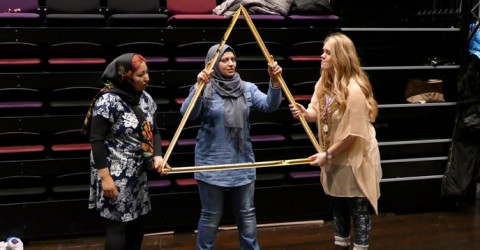 Italian programme wins UNESCO Prize for teaching literacy to migrants through theatre 2019-09-06 Nuovo Comitato il Nobel per i Disabili in Italy has won the 2019 UNESCO Confucius Prize for Literacy for its programme ‘Tell Me’. Nuovo Comitato il Nobel per i Disabili (New Nobel Committee for People with Disabilities) is an italian non-profit organization created by Nobel laureate, Mr Dario Fo, in 1997 to support disadvantaged groups through education, with particular regard to disabled people. In 2016, the committee decided to focus its efforts on the migrant population and launched the programme ‘Tell Me’, an acronym for ‘Theatre for Education and Literacy Learning of Migrants in Europe’. Italy is one of the first countries impacted by migration. The programme aims to contribute to social inclusion of youth and adult migrants, with the priority to learn the language of the host country. “In the wake of a period of raised awareness about the issue of migration, but not solely for that reason, the potential that theatre has to contribute to social inclusion of those whom we like to refer to as new European citizens, seemed evident and indisputable on many levels”, says Nazzareno Vasapollo, the project manager of the Tell Me project. “The difficulty of mastering a language is among the most important causes of material, social and psychological insecurities that a “foreigner” experiences in the integration process in any country”, says Nazzareno Vasapollo. Today the programme is operating in Italy, Portugal, Spain, and Turkey, where it has benefited over a hundred migrants since 2018, many of whom are out-of-school youth. A message about solidarity and a mutual encounter The project moves in three stages, between art, language learning and social inclusion. The theatre is a tool to exchange knowledge and bridge the gap between cultures to facilitate the integration of migrants. The methodology, aligned with the national and European educational frameworks and developed with partners across the field of education and theatre, revolves around storytelling, as a way to gradually transition from the learner’s mother language to the host country’s language. 72 teachers have been trained through workshops so far. Teachers also benefit from an e-learning platform and an online material repository where curriculum documents, methodological guidelines and other materials are available in English, Italian, Portuguese, Swedish and Turkish. For International Literacy Day, Nazzareno Vasapollo wants to address a message to migrants who were forced to go outside of their countries. “The founding fathers thought of a Europe based on the values of solidarity and that no one would be able to defeat them if they are carried out by its citizens, its organizations and its institutions of good will.” The organization intends to carry out the project across Europe, which the recognition of the prize will help with. This year’s UNESCO International Literacy Prizes will be awarded to laureates from Algeria, Colombia, Indonesia, Italy and Senegal on the occasion of International Literacy Day. The Prize Award Ceremony will take place during the global event for International Literacy Day on 9 September at UNESCO Headquarters. This year’s International Literacy Prizes and global event are organized around the theme of ‘literacy and multilingualism’. Read more: UNESCO International Literacy Prizes International Literacy Day 2019 What UNESCO does for literacy URL:https://en.unesco.org/news/italian-programme-wins-unesco-prize-teaching-literacy-migrants-through-theatre
 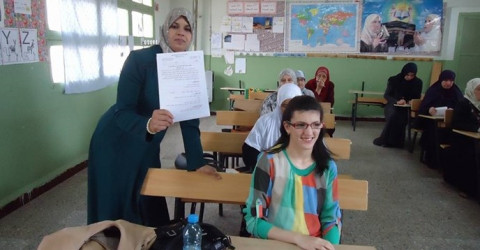 Algeria’s multilingual national literacy strategy wins UNESCO Prize 2019-09-03 The National Office of Literacy and Education for Adults (ONAEA) of the Algerian Ministry of Education is awarded the 2019 UNESCO King Sejong Literacy Prize for its programme ‘Multilingual National Strategy for Literacy’. The ONAEA launched this multilingual programme in 2016 in support of the implementation of the 2008 National Strategy for Literacy, following the adoption of Tamazight as the official national language in addition to Arabic. The strategy includes an 18-month literacy course for adults in both of the official languages, emphasizing the importance of starting to learn in a mother language to acquire further languages and become a lifelong learner. Kamel Kherbouche, Director-General of ONAEA describes the programme as a “logical outcome of a long process, combining literacy and linguistic policies in the country”. Tamazight speakers now have access to literacy programmes in their mother tongue, which facilitates their access to the Arabic language, while Arabic speakers have the possibility to learn Tamazight. Through a bilingual literacy programme, the government aims to improve the relevance of education in Algeria as a multilingual society and expand the reach of its literacy efforts beyond Arabic speakers. In addition to the multilingual aspect of the programme, which also reaches certain nomadic populations, the national literacy strategy has a general resonance among rural populations as well as women, who make about 90% of the participants. Thinking beyond acquiring literacy skills The programme was designed to take into consideration leaners’ profile and their immediate environments. A learner who successfully passes a final exam at the end of the course can pursue further learning through distance education, vocational training at a specialized institution and income-generating activities. Talking about the “post-literacy opportunities” offered to participants, K. Kherbouche explains two options available: to pursue a university level education or to follow a professional training course in order to enter the labor market. He invites everyone to believe in the transformative power of education. Building on these achievements, and with the exposure provided by the 2019 International Literacy Prizes, ONAEA aims to reinforce its partnerships with both public institutions and civil society to encourage more people to take part in literacy programmes. “The access to learning literacy in their mother-tongue will help people to move beyond any stigma or fear of failure,” says K. Kherbouche, looking ahead to a positive future of the National Office’s programme and its slogan “Literacy is a shared responsibility”. This year’s UNESCO International Literacy Prizes will be awarded to laureates from Algeria, Colombia, Indonesia, Italy and Senegal on the occasion of International Literacy Day. The Prize Award Ceremony will take place during the global event for International Literacy Day on 9 September at UNESCO Headquarters. This year’s International Literacy Prizes and global event are organized around the theme of ‘literacy and multilingualism’. URL: https://en.unesco.org/news/algerias-multilingual-national-literacy-strategy-wins-unesco-prize