
News
Catch up on what’s happening in the world of global citizenship education.
1,668 results found
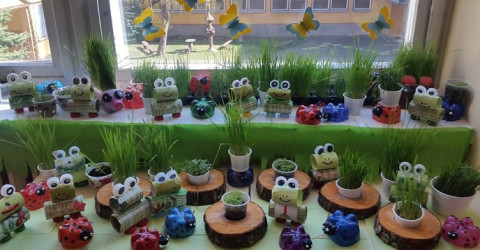 Imagination and energy help schools in Lithuania turn sustainability ideas into action 2019-09-02 A simple but powerful kindergarten experiment in biodegradability is just one of the innovative ways schools in Lithuania are embracing sustainability. The Lithuanian Children and Youth Centre's Sustainable Schools' programme began in 2013 to promote and create awareness about sustainable development through developing school communities that are better able to manage and develop their own resources. The programme was among nominees for the 2018 UNESCO-Japan Prize on Education for Sustainable Development (ESD), part of UNESCO's wider work on ESD. The Lithuanian programme, based in Vilnius, works through the formation of Green Teams of ten people in educational establishments which can include everyone from teachers, students and parents to administrative staff. So far, 139 educational institutions ranging from kindergarten to non-formal settings have signed up to the programme to learn how to improve the quality of life for future generations. Project Manager Lina Blazeviciute said: 'Five years ago the programme started at a very simple level with a website where schools could sign on to evaluate their eco footprint’. 'The first schools started with sustainability ideas like stickers reminding everyone to switch off lights and turn off taps. Now those same schools have moved on to more complex projects such as food gardens and sustainable mobility. For example, last year a school wanted to encourage children to cycle to school. Instead of holding a one-off event they took the children and conducted a careful study of the areas surrounding the school identifying traffic hazards and where bike lanes were needed. They submitted the results to the municipality who made improvements leading to more bike use.' Each school starts the programme with a themed conference with sustainability experts invited and in addition there are two or three training sessions a year for teachers and liaison with universities to keep abreast of research. Participating schools draw up a plan at the start of the academic year, which is submitted, to the programme, which advises, on its content and structure. At the end of the year a report is written showing what has been achieved and the number of participants engaged. Schools are awarded points culminating in an award ceremony where Green, Silver and Gold medals are handed out for achievement. Innovation fills the funding gap 'There are many really innovative ideas,' said Lina. In one experiment with very young children at a kindergarten, they buried an apple core and a sweet wrapper and left them for several weeks returning to find the core had completely disappeared, but the sweet wrapper was still intact giving a simple but valuable lesson in biodegradability. Other schools have started their own food and herb gardens after workshops on building greenhouses and growing vegetables and produce their own juices and healthy breakfasts. 'We are always looking for ways to engage children and make the topics fun and interesting. and here is where we really rely on teachers to do a great job,' said Lina. 'For that reason, we are very interested in new methodologies on to talk about sustainability to children’. Making sustainability the norm Introducing children to the biodiversity, which exists outside their classrooms or houses, is also part of the programme. 'We urge teachers even in urban schools to take children out and get them to discover the richness of their own environment, how many different trees, or insects or animals there might be,' said Lina. The programme also organizes structured biodiversity hikes in natural parts which can attract several thousand participants. The ultimate aim of the programme is simple. 'The next step for us is to ensure that sustainable schools receive proper political attention. We would like that sustainability became the norm rather than the exception. Our government already uses the concept of a 'good school'. Now we want one of the criteria for becoming a good school to be sustainability. We also want to strengthen our international partnerships so that we can share our experiences,' said Lina. URL:https://en.unesco.org/news/imagination-and-energy-help-schools-lithuania-turn-sustainability-ideas-action
 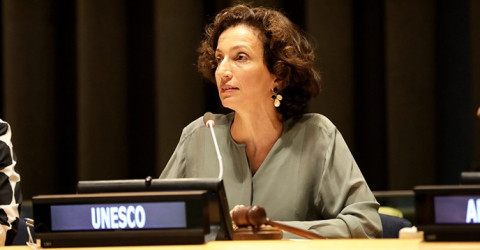 High Level Political Forum: Education is everyone’s responsibility 2019-09-02 The voices of governments, donors, international organizations, youth and teachers struck a common chord in calling for stepped up action to achieve relevant, equitable and inclusive quality education, at an event organized by UNESCO, the Group of Friends for Education and Lifelong Learning and the SDG-Education 2030 Steering Committee on 15 July 2019 during the High Level Political Forum at UN Headquarters in New York. “Education is a fundamental right and the supporting structure for the entire 2030 Agenda,” said UNESCO Director-General Audrey Azoulay, opening the event. “It is urgent that we act together and step up efforts to invest more in education. Governments hold the primary responsibility but civil society, multilateral and international actors must join their efforts to achieve this common goal,” she said, asserting that UNESCO will continue to make education a top priority and to fulfill its global coordination and monitoring role. Government representatives gave examples of how Sustainable Development Goal 4 on education is influencing national policy, demonstrating its relevance to all contexts. The Minister of Research and Higher Education of Norway, Ms Iselin Nybo, highlighted measures to reduce drop out in upper secondary, make lifelong learning more accessible, and integrate sustainable development across all school subjects and in university programmes. To achieve the SDGs and build better societies, she called for the “democratization of knowledge” to ensure that the fruits of research are widely shared. Likewise, Argentina has placed priority on ‘leaving no one behind” through affirmative actions at all levels, from investment in early childhood education and schools with lower results to innovations in teaching and more flexible pathways to the world of work, explained Oscar Ghillione, the country’s deputy Minister of Education. Having hosted the first G20 conference of education ministers in 2018, Argentina is also striving to “place education at the heart of the global debate,” he said. This holds urgency in light of the “simmering education crisis.” To address it, Jaime Saavedra, head of Education Global Practice at the World Bank, called for a “completely different level of political commitment,” warning that “many kids are in learning poverty” as proven by assessments showing that over half cannot understand a simple story. “This is morally unacceptable,” he said. To accelerate progress, Stefano Manservisi, the European Commission’s Director-General for International Cooperation and Development stressed the need to “articulate the global and local level in more effective ways and to avoid harmful competition.” Global action can help to mobilize and sustain national commitment, while impact has to be measured at local level, making support to public policy and plans a starting point for progress. Professor Kaz Yoshida, co-chair of the SDG-Education 2030 Steering Committee, urged countries to pay more attention to the nature of interlinkages with other goals in order to accelerate progress. “We need to go beyond the education sector to reinforce dialogue with other sectors and stakeholders,” he said. This is all the more true in highly disadvantaged contexts. Maggie MacDonnell, laureate of the Varkey Foundation’s Global Teacher Prize for her work in indigenous villages of the Canadian Arctic, gave a sense of what it means to teach in communities that have been structurally oppressed for generations, struggling with poverty, insecurity and high levels of suicide. “How do you build self confidence? You have to teach to their heads, to their bodies and to their hands to pass on skills, but most importantly to teach to their hearts, to inspire hope, to help them to dream again and become a generation of change makers.” Training teachers is a top priority to achieve SDG4, stated Robert Napier, President of the European Students’ Union. If leaving no one behind requires inclusive policies, he warned that “the biggest threat to education is privatization and commercialization. Market needs are driving education rather than education being based on the skills needed to promote sustainable development.” He stressed the social dimension of higher education, urging for more political focus on equity, inclusion and lifelong learning. Moderating the event, UNESCO Assistant Director-General for Education Stefania Giannini wrapped up the event by stressing urgency, accountability, solidarity and political engagement to accelerate global action for education. URL: https://en.unesco.org/news/high-level-political-forum-education-everyones-responsibility
 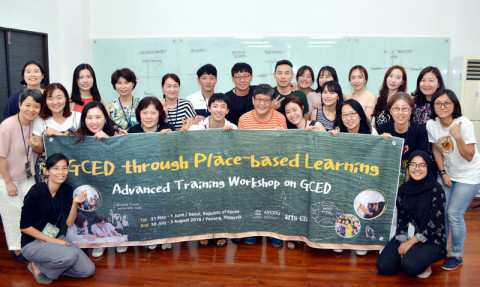 Sharing GCED Action Ideas Utilizing Place-Based Learning Approach 2019-09-02 An advanced training workshop to build capacity of Korean educators on developing and implementing GCED teaching methods was held in Malaysia. Co-organized by APCEIU and Arts-ED, a Malaysian educational NGO, the workshop hosted twenty primary and secondary school teachers from July 30 to August 3 in Penang. With ‘GCED through Place-Based Learning (PBL) Approach’ as the main theme of the workshop, participants explored the utility of PBL as a tool to implement GCED. The workshop featured experience-centered programmes such as PBL case studies, PBL field visits, lectures, and visits to local schools followed by action plan design and presentation. The participants could not only learn about the core principles of PBL but also observe actual cases of implementation at schools and the local community in Penang. They have also visited Chowrasta Market for two days, a famous traditional marketplace of Penang, as a fieldwork, which provided an opportunity to learn and apply PBL tools such as issue mapping and interviewing vendors and customers. Through this year’s workshop, participants had a chance to learn and reflect through case studies and fieldwork on PBL, a transformative learner-centered teaching method, while developing their own GCED projects through group discussion and feedback. Moreover, they visited schools that implement PBL principles to discuss with the Malaysian teachers concrete strategies that utilize local issues. Towards the end of the workshop, each group presented plans for their new projects based on the fieldwork as well as sharing GCED action ideas that utilize PBL approach in their own local context. APCEIU plans to highlight the potentials of PBL as a method to implement GCED while discovering and gathering future outcomes to introduce model cases to the domestic and international audience. URL:Sharing GCED Action Ideas Utilizing Place-Based Learning Approach > APCEIU News - APCEIU (unescoapceiu.org)
 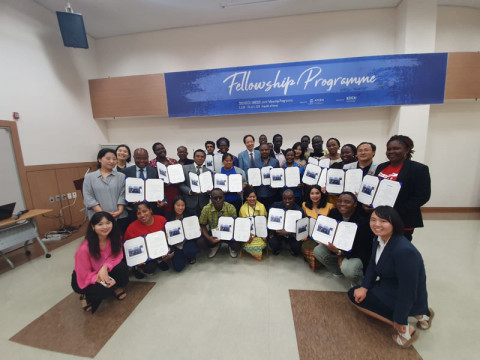 2019 UNESCO/KOICA Joint Fellowship Programme 2019-09-02 Hosting key figures in the education sector, intensive training has been provided for 25 participants from 12 African and 6 Asia-Pacific countries from June 3 to July 29, 2019. Co-sponsored by UNESCO Headquarters and the Korea International Cooperation Agency (KOICA), this programme is into its 13th year of implementation aiming to enhance their capacities and to foster critical perspectives on education development. The training objectives for this year’s programme were to facilitate the development of basic education by building capacity of key educators, to encourage participants to gain a deeper understanding and reflective perspectives on educational development, and to raise knowledge and capacity on Global Citizenship Education (GCED) and girls’ education. During the 57 days of stay in Korea, the participants attended various sessions including lectures and study visits which can be largely divided into two parts: policies and practices for educational development and global citizenship education. As for education development, lectures were mainly on topics such as education and national development, educational policies in Korea, curriculum and evaluation, and the use of computer technology in education. A series of ICT training, especially, equipped them with computer skills enough to produce educational materials for their uses depending on each local context. For the second part, topics such as sustainable development goals, conceptual framework and pedagogical principles of GCED, and girls’ education were also discussed during the lectures. Field visits to different levels of schools and such organizations as National Human Rights Commission of Korea and Seoul Foundation of Women and Family gave the participants a variety of experiences and learning. While hearing the briefings directly from and having in-depth discussions with the officials in the organizations, the participants were able to deepen understanding about the issues of education and sustainable development. Korea DMZ Peace-Life Valley, in particular, provided an opportunity to look beyond the cultural differences into the harmony of nature and human beings and to contemplate the challenges we are facing as global citizens. 2019 UNESCO/KOICA Joint Fellowship Programme, all in all, allowed the participants to strengthen their global competency and to renew their motivation as educators. On the last day, giving a presentation on their own action plans made by synthesizing what they have learned from the lectures, discussions, and visits, every participant took a step forward to implement their initiatives and to produce the ripple effect in their home countries. URL:2019 UNESCO/KOICA Joint Fellowship Programme > APCEIU News - APCEIU (unescoapceiu.org)
 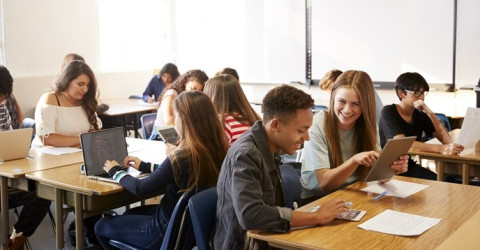 International Youth Day 2019 celebrates transforming education 2019-08-28 The International Youth Day celebrations kick-started online on Thursday, 8 August 2019 on the theme of “Transforming Education”. Organized jointly by the UN Department of Economic and Social Affairs (DESA) and UNESCO, the event heard from a fresh list of youth speakers from all corners of the world thanks to its online format and was moderated by Victoria Ibiwoye, Youth representative of the SDG-Education 2030 Steering Committee. 2019 is the year for galvanized action around the education sustainable development goals, from the first commemoration of an International Education Day on 24 January, to the focus on SDG4 at the High-Level Political Forum in July. This year also marks the 20th anniversary of International Youth Day, a powerful moment to hear youth voices highlighting the importance of ensuring quality education that is inclusive and equitable, which prepares young people to be active, engaged citizens and learners throughout their lives. Justine Sass, Chief of Education for Inclusion and Gender Equality at UNESCO set the stage by introducing UNESCO’s work on inclusive education as a process beyond the physical delivery of education. Inclusion also relates to education’s impact on other development outcomes as well as the recognition of the diversity of all learners. Youth speakers championing inclusive quality education called for all learning differences to be welcomed, with special mention of learners with disabilities, and indigenous, migrant and refugee youth. In particular, the need for mental health support for marginalized groups was highlighted throughout the interventions, bringing attention to the importance of psychosocial support in achieving the education goals. Seqininnguaq Poulsen, the Arctic youth focal point from Greenland spoke about how little mental support is given to indigenous youth, leading to high school dropout rates. Likewise, DoBrain founder, Yejin Choi, talked about the need for greater and more equitable access to cognitive development assessment and tools in early childhood education, which is currently only accessible to higher income families. Daniela Bas, Director of Division for Inclusive Social Development (DISD) at DESA, closed the event with a passionate call for education systems that continue to provide upward social mobility, form global citizens, and help youth learners adapt to technological change to find decent jobs. The UN International Youth Day is celebrated every year on 12 August. URL:https://en.unesco.org/news/international-youth-day-2019-celebrates-transforming-education
 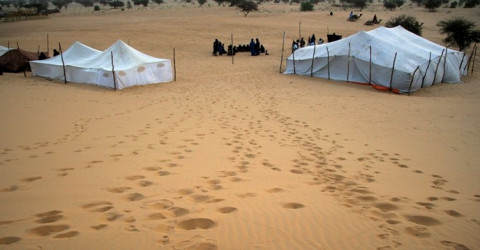 Promoting prevention of violent extremism among Malian migrants 2019-08-22 An estimated 763 million people live outside the region where they were born and currently, we are witnessing the highest levels of displacement on record, with 65.6 million people being forcibly displaced worldwide according to UN statistics. In Mali, the armed conflict that broke out in the northern part of the country in 2012, between the Government and insurgents, including radical extremist groups, caused a migration crisis. According to recent UN and Government figures, over 135,000 Malian refugees have migrated to neighbouring Burkina Faso, Mauritania and Niger, with many more internally displaced within Mali. These migrants, especially those who are young with low literacy skills, can be vulnerable to radicalization and to being recruited by violent extremist groups. Prevention through education is key. In 2017, UNESCO’s Capacity Development for Education Programme (CapED), supported Mauritania’s Ministry of Islamic Affairs and Original Education, in charge of literacy, and the Ministry of Education and vocational training, in charge of non-formal education (NFE), develop a national plan for the integration of Global Citizenship Education (GCE) and Prevention of Violent Extremism (PVE) in literacy and NFE programmes. The plan defines the concepts, methodology, scope and strategies for the successful integration of GCE-PVE education into education programmes, as well as providing monitoring and evaluation tools. With support from CapED, the Government also developed modules, textbooks and teaching guides for adult education and out-of-school children that include concepts on respect for diversity, gender, critical thinking, technology and media, social justice, and citizen engagement. The modules, which were adopted nationwide by the Mauritanian government, are currently also being used by the International Organization for Migration (IOM) and UNICEF in literacy and NFE classes for Malian migrants in the Southern Mauritanian Mbera refugee camp, close to the Malian border. Going forward, during 2019, UNESCO will support the MoE to develop a school charter (charte de l’école) with a special focus on promoting global citizenship education. This charter will be presented during a national event to different social actors, the local education group, as well as relevant ministries. Moreover, UNESCO will support the MoE to design a training module for literacy and NFE facilitators with a special focus on GCE-PVE education. In addition, to coordinate with different agencies and promote knowledge sharing, UNESCO is liaising with the regional cluster Office in Mauritania and the G5 Sahel group to support different actions regarding GCE-PVE education in the country based on CapED’s experience. URL:https://en.unesco.org/news/promoting-prevention-violent-extremism-among-malian-migrants
 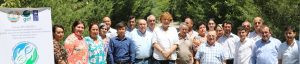 Development of biocultural community protocols as part of the Nagoya Protocol 2019-08-19 On July 23-24, 2019, the UNDP Country Office in Tajikistan in partnership with the National Center for Biodiversity and Biosafety of the Committee for Environmental Protection under the Government of the Republic of Tajikistan (NCBB) held a two-day training seminar for trainers on the topic “Development of protocols of the biocultural community (CBP) as part of the implementation UNDP / GEF project “Strengthening Human Resources, Legal Framework and Institutional Capacity for the Implementation of the Nagoya Protocol”. URL:http://ekois.net/razrabotka-protokolov-biokulturnogo-soobshhestva-v-ramkah-realizatsii-nagojskogo-protokola/
 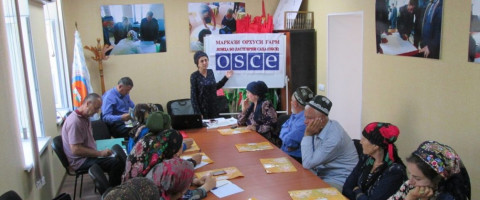 Access of the rural population to environmental information 2019-08-19 On July 11, an information session was held at the Garm Aarhus Center in the Navabad jamoat of the Rasht district on the topic “Principles of the Aarhus Convention and the promotion of a green economy”. 22 jamoat activists took part, including 15 women and 7 men. URL:https://www.aarhus.tj/2019/07/28/dostup-naseleniya-selskoi-mestnosti-k-ecologicheskoi-informacii/