
News
Catch up on what’s happening in the world of global citizenship education.
1,668 results found
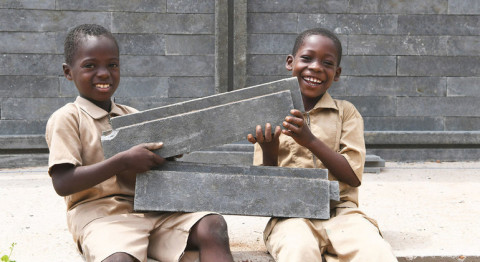 Easing ‘classroom crisis’ in Côte d’Ivoire, brick by (plastic) brick 2019-08-05 In an innovative partnership, the United Nations Children’s Fund (UNICEF) and a Colombian social enterprise announced on Monday that it had broken ground on a first-of-its-kind factory to convert plastic waste in Côte d'Ivoire into modular, easy-to-assemble, low-cost plastic bricks for classrooms in the West African country. “This factory will be at the cutting edge of smart, scalable solutions for some of the major education challenges that Africa’s children and communities face,” said UNICEF Executive Director Henrietta Fore. “Its potential is threefold: more classrooms for children in Côte d’Ivoire, reduced plastic waste in the environment, and additional income avenues for the most vulnerable families.” Côte d'Ivoire needs 15,000 classrooms to provide children with a place to learn. Partnering with plastic and rubber waste recylcing company Conceptos Plasticos, UNICEF is using recycled plastic collected from polluted areas in and around Abidjan to build 500 classrooms for more than 25,000 children over the next two years, with the potential to increase production beyond. “One of the major challenges facing Ivorian school children is a lack of classrooms,” said UNICEF Representative Aboubacar Kampo, who has championed the project from its inception. Classrooms either don’t exist or are overcrowded, making learning a challenging and unpleasant experience. “In certain areas, for the first-time, kindergartners from poor neighborhoods would be able to attend classrooms with less than 100 other students”, he elaborated. “Children who never thought there would be a place for them at school will be able to learn and thrive in a new and clean classroom.” While more than 280 tons of plastic waste are produced every day in Abidjan alone, only about five per cent is recycled. The rest ends up mostly in low-income communities’ landfill sites in. Plastic waste pollution exacerbates existing hygiene and sanitation challenges And improper waste management is responsible for 60 per cent of malaria, diarrhea and pneumonia cases in children – diseases that are among the leading causes of death for Ivorian children. The bricks will be made from 100 per cent plastic and are fire resistant. They are 40 per cent cheaper, 20 per cent lighter and will last hundreds of years longer than conventional building materials. They are also waterproof, well insulated and designed to resist heavy wind. When fully operational, the factory will: Become a formalized recycling market. Recycle 9,600 tons of plastic waste a year. Provide a source of income to women living in poverty in. “Sometimes, embedded deep within our most pressing challenges are promising opportunities,” said Ms. Fore. To date, nine classrooms have been built in Gonzagueville, Divo and Toumodi using plastic bricks made in Colombia, demonstrating the viability of the construction methods and materials. “By turning plastic pollution into an opportunity, we want to help lift women out of poverty and leave a better world for children”, said Isabel Cristina Gamez, Co-Founder and CEO of Conceptos Plasticos. Alongside investment to build in Côte d’Ivoire, plans are also under way to scale this project to other countries in the region, and potentially beyond. West and central Africa accounts for one-third of the world’s primary school age children and one-fifth of lower secondary age children who are out of school. “This project is more than just a waste management and education infrastructure project; it is a functioning metaphor—the growing challenge of plastic waste turned into literal building blocks for a future generation of children”, concluded the UNICEF chief.URL:https://news.un.org/en/story/2019/07/1043351
 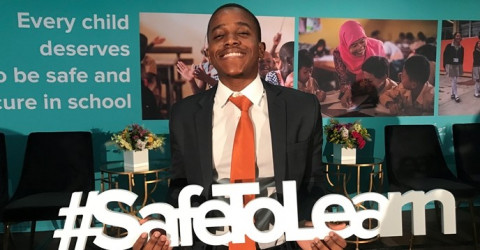 Global leaders commit to end school violence and bullying 2019-08-03 UNESCO placed learner well-being at the heart of education at a Safe to Learn Leaders Event on 15 July, during the High-Level Political Forum in New York. Joining senior leaders from governments and UN agencies from across the world, UNESCO underscored its commitment to addressing all forms of school violence and bullying. Violence in educational settings is a daily reality that denies millions of children and young people the fundamental human right to education. Almost one in three students (32%) has been bullied by their peers at school at least once in the last month and a similar proportion are affected by physical violence, according to UNESCO’s Behind the Numbers report. This has a significant effect on students’ mental health, quality of life and academic achievement. Speaking at the Safe to Learn event, UNESCO Assistant Director-General for Education, Stefania Giannini, outlined its approach to ending the crisis. “We have established a specific objective of addressing violence and bullying in schools as part of UNESCO’s new initiative, Our Rights, Our Lives, Our Future, reaching 20 million children and young people in 31 Sub-Saharan Africa countries,” Ms Giannini said. “We will also support targeted and intensified support in a dozen focus-countries to support ending school violence, and we are launching a new study on the role of teachers in addressing school violence and bullying. Further, as part of the G7 and UNESCO meeting in France this July, Ministers of Education agreed to support the adoption a new UNESCO international day against bullying and cyberbullying.” Safe to Learn is a five-year initiative to end violence in schools by 2024(link is external). It works by bringing together partners from the education, child protection and violence-prevention communities, ensuring that these groups connect their efforts and build on each other’s strengths to make schools safer. UNESCO is an official partner in the Safe to Learn campaign, and a member of the Global Partnership to End Violence Against Children. The Safe to Learn event was co-hosted by Henrietta H. Fore, UNICEF Executive Director and Board Chair of the Global Partnership to End Violence Against Children, and Martha Delgado, Deputy Minister for Multilateral Affairs and Human Rights in Mexico. It featured high-level speakers including the Minister of Women’s Empowerment and Child Protection from Indonesia, Dr Yohana Susana Yembise, Permanent Secretary at the UK Department for International Development, Matthew Rycroft, UNICEF Youth Advocate from Jamaica, Charles Young, CEO at the Global Partnership for Education, Alice Albright, and Global Director for Education at the World Bank, Jaime Saavedra. The commitments made at the Safe to Learn event were far-reaching, including a US $5 million contribution to the End Violence Fund by the UK Department for International Development (DFID), and concrete plans by Ghana, Mexico, Oman and the Republic of Indonesia to protect learners in schools. UN and multi-lateral agencies, non-government organisations and civil society promised accelerated support to reduce school violence, including from Education Cannot Wait, Global Partnership for Education, Civil Society Forum, World Bank, World Council of Churches, World Vision and the UN Special Representative of the Secretary General on Violence Against Children. URL:https://en.unesco.org/news/global-leaders-commit-end-school-violence-and-bullying
 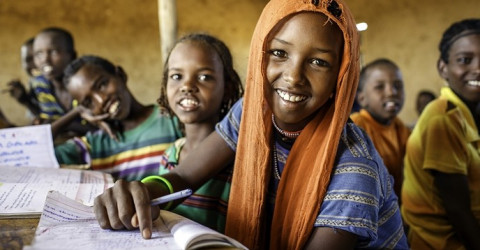 Putting health and education on the agenda at the G7 2019-08-03 Civil society organizations from across the world convened in Paris earlier this month to agree on a common advocacy approach for G7 countries that would reduce global inequalities through health and education. The meeting formed part of the G7 Civil Society Summit, also known as the C7, where civil society organizations from the G7 member countries promote recommendations by non-State actors on far-reaching themes such as health, security and social cohesion. Speaking at the 3 July meeting, Chief for UNESCO section for Health and Education, Christopher Castle, addressed the development challenges in health and education. “Tackling inequalities in education and health requires a concerted push to support the health, education and other sectors to work together to deliver a learner-centred approach. Ensuring that girls and young women are not left behind means removing all barriers to their right to education, including, for example, the provision of water and sanitation facilities, private safe latrines, and the commodities required for them to manage their menstruation in a healthy way,” Mr Castle said. Participating in the first roundtable discussion at the C7 event (held from 1 – 3 July), and in response to a question moderated by a journalist from France24, Mr. Castle pointed to the data concerning continued high HIV infection rates disproportionately affecting girls and young women, and of the urgency for schools to provide good quality comprehensive sexuality education. “UNESCO and others are responding to a growing call from countries who are intensifying their efforts to reduce early and unintended pregnancies, and high levels of HIV, by supporting the delivery of sexuality education starting at an early age.” He added, “Countries understand that failure to address early and untended pregnancy, child marriage, HIV and school violence and bullying threatens the achievement not only of the sustainable development goal on education, but the other goals as well.” During the French G7 Presidency, the C7 was spearheaded by Coordination SUD. Its work focuses on combating equality in gender equality, climate and the environment, education, health, food security, agriculture and nutrition, peace and security, development finance and tax justice. URL:https://en.unesco.org/news/putting-health-and-education-agenda-g7
 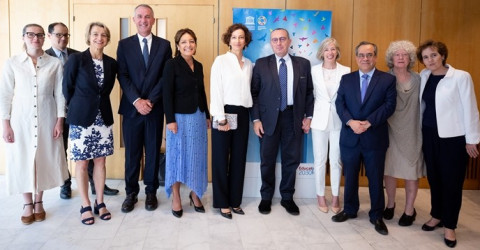 Paris Outcome Statement - Multilateral education partners’ commitment to joint action for SDG 4 acceleration 2019-08-03 Under the banner of “Jointly Accelerating Progress for SDG 4”, UNESCO convened the Meeting of Principals of Global Multilateral Education Partners that took place on 4 July 2019 at UNESCO Headquarters in Paris. The meeting was held back to back with the G7 education ministerial meeting and attended by the Principals of UNESCO, UNICEF, the Global Partnership for Education, European Commission’s International Cooperation and Development, Education Cannot Wait and the Education Commission, the UN Special Envoy for Global Education and high officials of the World Bank, ILO and UNHCR. Opening the meeting, the Director-General of UNESCO, Ms Audrey Azoulay, underscored the urgency to act now to realise the ambitious SDG 4–Education 2030 agenda. “We all know how far we are from achieving SDG 4. If we want to succeed, we have to multiply our efforts and undertake more coordinated collective action to support and assist countries worldwide,” she emphasized. She further stressed that the role of multilateral education partners in this endeavour is to join forces, provide leadership and common knowledge to bring the international community back on track to meet its education commitments by 2030. In the resulting Paris Outcome Document, the participants commit themselves to maintain the strategic dialogue among the principals of multilateral education partners through a joint action platform, which will be closely linked to the SDG-Education 2030 Steering Committee and contribute as a group to the latter’s multi-stakeholder consultation and coordination mechanism. They also agreed to align their work on seven priorities to improve efficiency and accountability, including joint advocacy, capacity development and data harmonization. The Principals welcomed the proposal by Mr Gordon Brown, the UN Special Envoy for Global Education, to establish the SDG global education forum among multilaterals and bilateral donors, aiming to scale up support and financing for education. The forum will be co-chaired by Ms Graça Machel (former Minister of Education of Mozambique), Mr Tharman Shanmurgaratnam (former Deputy Prime Minister of Singapore), the UNESCO Director-General and the UN Special Envoy for Global Education. The first meeting will be held, back to back with the next meeting of the Principals of Multilateral Education Partners, during the United Nations General Assembly in September 2019. The meeting was attended by Ms Audrey Azoulay, UNESCO Director-General; Ms Stefania Giannini, UNESCO Assistant-Director General for Education; Mr Gordon Brown, United Nations Special Envoy for Global Education; Mr Stefano Manservisi, Director-General for International Cooperation and Development of the European Commission; Ms Henrietta Fore, UNICEF Executive Director; Ms Alice Albright, Chief Executive Officer of the Global Partnership for Education; Mr Jaime Saavedra, Head of the Global Practice of Education of the World Bank Group; Ms Yasmine Sherif, Director of the Education Cannot Wait; Ms Liesbet Steer, Director of the Education Commission; Ms Ita Sheehy, UNHCR Senior Education Advisor; Mr Oliver Liang, ILO Head of the Public and Private Services Unit; among others. URL:https://en.unesco.org/news/paris-outcome-statement-multilateral-education-partners-commitment-joint-action-sdg-4
 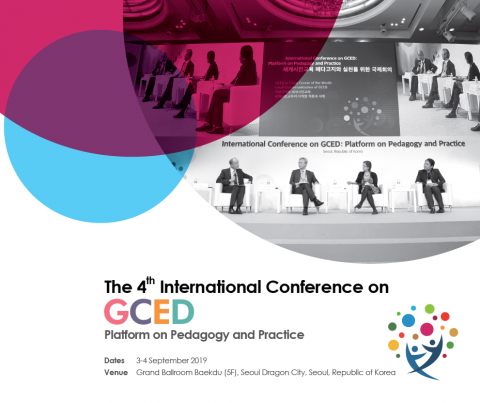 The 4th International Conference on GCED: Platform on Pedagogy and Practice 2019-08-03 Co-organized by the Asia-Pacific Centre of Education for International Understanding under the auspices of UNESCO (APCEIU), the Ministry of Education, and the Ministry of Foreign Affairs of the Republic of Korea, and in partnership with UNESCO, the 4th International Conference on GCED: Platform on Pedagogy and Practice will be held on 3-4 September 2019 at Seoul Dragon City Hotel Complex (Yongsan) in Seoul, Republic of Korea. Global Citizenship Education (GCED) aims to equip learners of all ages with knowledge, values, skills, and attitudes so that they can live together peacefully and become active and responsible citizens who will work together to tackle today’s pressing challenges. Through GCED, learners nurture respect for diversity and foster solidarity on the basis of a sense of belonging to a common humanity. With its incorporation under target 4.7 of Sustainable Development Goals (SDGs), it has been given fresh impetus as one of the key topics to be mainstreamed in education at all levels by 2030. As a result, APCEIU has organized an International Conference to promote GCED global implementation network, an educational goal adopted by the UN and UNESCO. APCEIU has organized annual international conferences on GCED since 2016. The conferences have dealt with topics ‘GCED for SDGs: From Commitment to Action,’ ‘In Pursuit of GCED in a Challenging Environment,’ and ‘GCED in Every Corner of the World: Local-Contextualization of GCED.’ The 4th International Conference on GCED in 2019 will focus on ‘Reconciliation, Peace, and Global Citizenship Education.’ This conference aims to demonstrate GCED’s unique potential in relation to reconciliation and solidarity, and that this potential can be fully harnessed first through promoting the use of transformative pedagogy, and second, by systematically mainstreaming GCED in terms of policy, curriculum and teacher training. Approximately more than 600 people policy makers, teachers, and experts from academia, international organizations, and NGOs are expected to participate. URL:The 4th International Conference on GCED: Platform on Pedagogy and Practice > APCEIU News - APCEIU (unescoapceiu.org)
 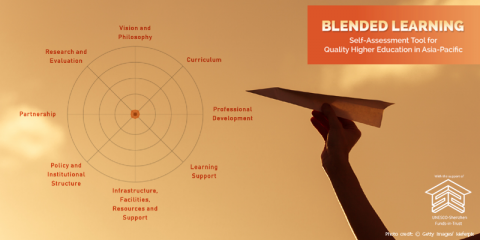 Blended Learning for quality higher education: Introducing a new self-assessment tool for Asia-Pacific 2019-08-02 Blended learning – the deliberate combination of online learning with face-to-face classroom-based learning – is opening new educational opportunities for students across the Asia-Pacific. With generous support from the Shenzhen Funds-in-Trust, UNESCO Bangkok developed a new online self-assessment tool for Higher Education Institutions (HEIs) to enhance their understanding of blended learning and promote the quality of higher education in the Asia-Pacific. University staff can evaluate their institution’s approach to blended learning, identify gaps and improve blended learning strategies. The self-assessment tool is an important means to promote a more holistic approach to blended learning throughout the region. A customized report with recommended resources will be provided upon completion of the self-assessment. The new self-assessment tool is based on a UNESCO publication with the Faculty of Education and Human Development at the Education University of Hong Kong and the experiences of two universities in Cambodia and Sri Lanka. Blended Learning for Quality Higher Education: Interview with Professor LIM Cher Ping Professor Lim is a Chair Professor of Learning Technologies and Innovation, The Education University of Hong Kong, SAR China & Visiting Professor, Center of Higher Education Research, Southern University of Science and Technology (SUSTech), Shenzhen, China UNESCO: Professor Lim, for people who aren’t experts in the field, can you describe what blended learning is and the transformative potential of integrating ICT into higher education systems? Blended learning mixes and matches online and face-to-face learning to optimize the learning experiences and engagement of students. Online learning empowers students to monitor and manage their own learning; competencies that are pertinent to be lifelong learners. By supplementing face-to-face lessons with quality online learning, blended learning provides access to quality higher education to rural and marginalized communities. Can you give examples about learners who would benefit most from blended learning? The Faculty of Education and Human Development at the Education University of Hong Kong worked with the Directorate General of Higher Education (Cambodia) and UNESCO (Bangkok) to close the urban-rural quality gap of higher education teaching and learning by adopting the blended learning approach. Quality online learning resources and lessons were co-developed by the urban university (Royal University of Phnom Penh) with input from the two provincial universities (Svay Reing University and University of Battambang). These quality online learning resources and lessons supported the face-to-face lessons to enhance the access to quality higher education teaching and learning of the provincial universities in the rural areas of Cambodia. In this example, the students from both urban and rural universities who are the main beneficiaries of blended learning benefited the most. The co-design and development of the online learning resources and lessons built the capacity of the teaching staff for teaching and learning. What is the significance of UNESCO’s new Blended Learning Self-Assessment Tool for higher education institutions to plan and implement blended learning? The new Blended Learning Self-Assessment Tool sends a loud and clear message to higher education institutions that introducing an innovation into an institution requires a systemic change; a holistic approach towards strategic planning is crucial to enhance access to quality higher education. It is only when such an approach is adopted that the potential of blended learning for the achievement of Sustainable Development Goal 4 (SDG4) is more likely to be fulfilled. Do you have any suggestions to share with the users to make good use of the book and online tool? The book and the online tool serve as a set of guidelines, promising practices and lessons learnt rather than a set of prescriptions for strategic planning. The book and the online tool should not be restricted to only the institutional leaders, they must be available and accessible to all staff members to establish buy-in to the strategic plan being formulated. URL:https://bangkok.unesco.org/content/blended-learning-quality-higher-education-introducing-new-self-assessment-tool-asia-pacific
 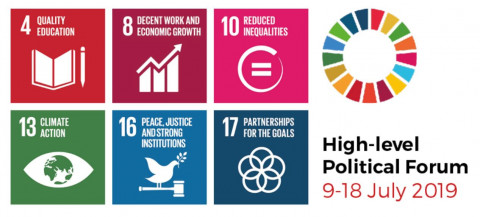 HLPF 2019 Spotlight reports: Looking at 2030 2019-08-02 All around the world members of our network worked on Spotlight reports for the High Level Political Forum (HLPF) to assess the status of the Sustainable Development Goal 4 (SDG4) on education in their countries or regions. Beyond the questioning around civil society’s relevance during HLPF, preparing spotlight reports is a useful exercise for civil society to better challenge their governments’ actions towards achieving SDG4 and provide evidence-based policy recommendations. Though the common agreement is that there is still a long way to go to achieve free, quality, inclusive public education for all, countries and CSOs face specific challenges that demand targeted solutions, and overall a renewed commitment from States to better invest in education and the future of younger generations. As our Vice-President Madeleine Zúñiga declared during the official SDG4 review “We are convinced that education is a powerful instrument to transform lives and, therefore, transform the world, but not any education, but that which is an instrument of sustainable development, social justice, authentically democratic societies, global citizenship, the culture of peace that the whole world requires.” – and this is what the spotlight reports below highlight. Below are the available reports for 2019 across the GCE network. Sub-Saharan Africa Burkina Faso Spotlight Report on SDG 4 Ghana Spotlight Report on SDG 4 (Link to the shadow report on all the SDGs here) Mozambique Report on SDGs Asia Asia South Pacific Association for Basic and Adult Education (ASPBAE) Regional spotlight report Australia Spotlight Report on SDG 4 here and the full version here Bangladesh Spotlight Report on SDG 4 Cambodia Spotlight Report on SDG 4 India Spotlight Report on SDG 4 Indonesia Spotlight Report on SDG 4 Japan Spotlight Report on SDG 4 Kyrgyzstan Spotlight Report on SDG 4 Mongolia Spotlight Report on SDG 4 Nepal Spotlight Report on SDG 4 Pakistan Spotlight Report on SDG 4 Papua New Guinea Spotlight Report on SDG 4 Philippines Spotlight Report on SDG 4 Sri Lanka Spotlight Report on SDG 4 Timor Leste Spotlight Report on SDG 4 Vanuatu Spotlight Report on SDG 4 Vietnam Spotlight Report on SDG 4 Latin America Brazil Spotlight Report on SDG 4 Chile Spotlight Report on SDG 4 Dominican Republic Spotlight report on SDG 4 Guatemala Spotlight Report on SDG 4 Nicaragua Spotlight Report on SDG4 (read our blog about Chile and Guatemala participation at the HLPF). Middle East and Arab World Iraq Spotlight Report on SDG 4 Tunisia Spotlight Report on SDG4 URL:https://www.campaignforeducation.org/en/2019/08/01/hlpf-2019-spotlight-reports/
  UN-Cameroon, Cameroon Government Hold Side Event on Education Reforms 2019-07-25 An event on the sidelines of the 2019 session of the UN High-level Political Forum on Sustainable Development (HLPF) considered the implementation of fundamental education reforms in Cameroon.The event took place on 17 July 2019, organized by the Permanent Mission of Cameroon to the UN and UN-Cameroon (the UN system in Cameroon), focused on access and quality of education, as well as on equity, in terms of inclusiveness. It also underscored the need for reforms at multiple levels to sensitize donors, governments and civil society regarding the urgency of investing in education. Panelists detailed significant progress in Cameroon regarding the expansion of access and reduction of gender disparities in schools, despite increased student enrollment. They cited a new education strategy aligned with SDG 4 (quality education). Speakers noted that poor effectiveness and low retention impede achieving universal education. Alamine Ousmane Mey, the country’s Minister of Economy, Planning and Regional Development, highlighted key aspects of education reforms in his country, namely promoting free tuition for primary education and reform of textbooks. He said low teacher retention is a challenge, and he called for more partnerships and support from all stakeholders to promote universal education. Allegra Maria Del Pilar Baiocchi, UN Development and Humanitarian Coordinator in Cameroon, lamented security threats due to terrorism, noting that “education is under attack” in some areas of the country. She called for more financial support to overcome such challenges. Baiocchi also mentioned the Education Cannot Wait global fund, which aims to transform the delivery of education in emergencies. Joseph Oye, Sightsavers, discussed improving education for displaced children, refugees and children with disabilities. Pointing to the many organizations working on SDG 4 in Cameroon, he also stressed that challenges include data gaps and lack of teacher specialization, for example on children with disabilities. During the discussion, participants called for disaggregated data by gender, particularly related to disabled female students, and methods to enhance SDG implementation in an integrated manner. URL:https://sdg.iisd.org/news/un-cameroon-cameroon-government-hold-side-event-on-education-reforms/
  Universities Declare Climate Emergency Ahead of Climate Action Summit 2019-07-25 10 July 2019: Universities and other institutions from six continents have declared a climate emergency in a letter detailing a three-point plan to address the climate crisis ahead of the UN Climate Action Summit in September. The letter is part of ‘The SDG Accord,’ the university and college sector’s collective response to the SDGs. The letter explains that young people must have the knowledge, skills and capacity to respond to the climate challenge, and outlines support for: mobilizing additional resources for climate change research and skills creation; committing to carbon neutrality by 2030 or 2050 at the latest; and increasing the delivery of environmental and sustainability education across curricula, campuses and community outreach programmes. The letter recognizes the need for a drastic societal shift to address the climate threat, and calls on governments and other education institutions to join in declaring a climate emergency and taking actions to address climate change. The letter, organized by The Alliance for Sustainability Leadership in Education (EAUC), Second Nature and the UN Environment Programme’s (UNEP) Youth and Education Alliance, marks the first time higher education establishments have collectively committed to address the climate crisis. It was shared during a 10 July 2019 meeting of the Higher Education Sustainability Initiative, ahead of the UN Secretary General’s Climate Action Summit on 23 September 2019. The letter was signed by universities from, inter alia, Kenya, China, France, the UK, the US, the United Arab Emirates (UAE) and Mexico, and global education networks, such as the Global Alliance and the Globally Responsible Leadership Initiative, which have committed to carbon neutrality. Currently, 87 institutions representing more than 1,360,000 students, and 34 networks representing more than 7,800 institutions have signed the letter. Examples of best practices for sustainability on college campuses include: Kenya’s Strathmore University, which runs on clean energy and has set up a 600 kilowatt photovoltaic (PV) grid tie system; Tongji University in China, which has invested in a sustainability education curriculum and is encouraging other education institutions to do the same; the University of California in the US, which has committed to a system-wide goal of becoming carbon neutral by 2025; and American University and Colgate University in the US, both of which have already achieved carbon neutrality. The aim of the initiative is to get as many networks and institutions as possible on board to showcase commitments made towards achieving SDG 4 (quality education) and SDG 13 (climate action). The hope is that over 10,000 institutions will sign the letter before the end of the 2019. EAUC represents over 200 institutions with a combined total of two million students, nearly 400,000 staff and a spending budget of over GBP 25 billion. Second Nature aims to accelerate climate action in and through higher education by mobilizing higher education institutions to scale campus climate initiatives and create innovative climate solutions. URL:https://sdg.iisd.org/news/universities-declare-climate-emergency-ahead-of-climate-action-summit/
 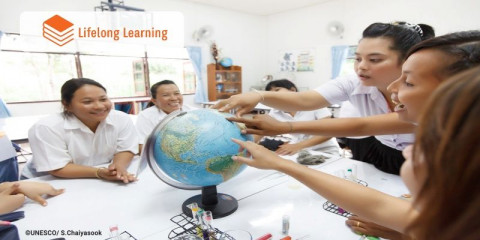 The Launch of the Online Course on Community Learning Centres and Lifelong Learning in Asia and the Pacific 2019-07-25 Lifelong learning (LLL) is a process that integrated one’s life and learning altogether. LLL applies to people of all ages in all contexts, including formal and/or non-formal schools, workplaces, homes, and communities to continue learning and improving his or her knowledge, skills, and competencies. This process allows individuals who come from lower socioeconomic status to receive a second chance of schooling in order to pursue his or her career. The Non-Formal Education and Literacy Team of UNESCO Bangkok Regional Office organized a two-day workshop to launch its new online course on Community Learning Centers and Lifelong Learning in Asia-Pacific from July 11 to 12, 2019, in Bangkok, Thailand. The event inspired participants to live up to the global commitment in SDG 4, which is ensuring “inclusive and equitable” and “lifelong learning opportunities for all.” Over 50 Ministry of Education officials and non-governmental organizations (NGOs)’ representatives from 14 Asia-Pacific countries participated in the event. The online course introduced participants to the benefits of LLL programmes, encouraging individuals’ legislative body to create platforms and enhance partnerships to continue promoting LLL in their communities. Photo credit: Pornpilin Smithveja Mr. Shigeru Aoyagi, the Director of UNESCO Bangkok, expressed the growing concern of adults’ illiteracy and the lack of governments’ efforts to address such dire issues: “More than 758 million adults are still illiterate globally, with 63% of these adults living in Asia. Less priority is given to adult learning and non-formal education sector, with nearly half of countries worldwide still spend less than 1% of their public education budget on adult learning.” Due to the rapid changes of technological advance and artificial intelligence, these adults often have limited access to education, which has little relevance to their lives. Consequently, this challenge makes it difficult for them to gain necessary knowledge and skill sets to compete in the job market. He called for a unified regional effort to ensure the education these adults received will address the challenges and shifts around the world. In 2018, UNESCO Bangkok, a regional knowledge hub, cooperated with the Government of Japan to identify 11 essential topics on adult education and LLL. These topics were developed into 11 modules, which contain 30 short videos. These modules cover the basic concept of LLL, how to create effective leadership and governance, financing of adult education, issues and solutions for learners with different needs, and equivalency programmes/national qualifications framework, among other significant topics. The modules offer good practices and case-studies across the Asia-Pacific region for reference of promoting and creating LLL programmes. The workshop offered eight of the 11 learning modules. Each session was an hour long, allowing participants to actively engage in learning and exchanging experiences with one another. Through these sessions, participants had opportunities to share their non-formal education, adult education and LLL policies and systems, community learning centers’ structures, monitoring and evaluation process, and their unique challenges. These conversations support each other’s efforts toward strengthening existing or creating a new holistic platform for LLL. Participants also discussed ways to collaborate with all stakeholders, including learners, governments, NGOs and the private sector, toward promoting and stimulating LLL from the bottom. This two-day workshop was part of a larger dialogue and commitment of governments toward achieving SDG 4 by 2030. Nevertheless, everyone can be a part of this change. The online course is publicly available and accessible to anyone, and those who completed the course will receive a certificate of completion and appreciation by the UNESCO Office. These videos have been translated into different languages with support from partners in Lao PDR, Myanmar, Thailand, and Viet Nam. URL:https://bangkok.unesco.org/content/launch-online-course-community-learning-centres-and-lifelong-learning-asia-and-pacific