
News
Catch up on what’s happening in the world of global citizenship education.
1,668 results found
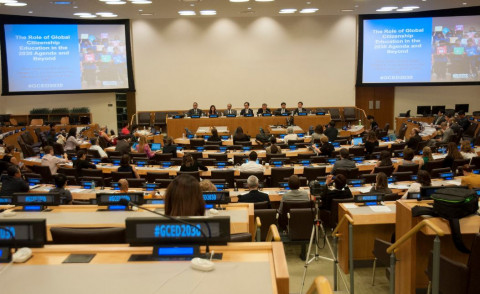 Engaging Stakeholders on GCED at the UN High-Level Political Forum 2019-07-18 This July, APCEIU is co-organizing and co-sponsoring four UN High-Level Political Forum Side Events on Global Citizenship Education with various institutions and government organizations at the UN Headquarters in New York. They are as follows: 1) Education for Global Citizenship: Empowering Our Interconnected World On 9 July, an event was held at the Permanent Mission of the Republic of Korea to the UN, entitled, "Education for Global Citizenship: Empowering Our Interconnected World". The objective of this side event was to highlight best practices and to share effective strategies for the advancement of Sustainable Development Goals. The event was co-organized by the NGO Steering Committee for an International Day of Education for Global Citizenship, UN DPI NGO Executive Committee and IVECA International Virtual Schooling. APCEIU co-sponsored this side event with other organizations, such as Permanent Mission of Austria to the United Nations, Permanent Mission of the Republic of Korea to the United Nations, Permanent Mission of Tunisia to the United Nations, Bridge 47 and more. 2) The Role of Transformative Education in Dealing with the Challenges of Our Times On 16 July, with the Permanent Mission of the Republic of Korea to the United Nations, Permanent Mission of the State of Qatar to the United Nations, United Nations Development Programme (UNDP) and other UN organizations, APCEIU will co-organize this side event regarding transformative education. It is expected that this side event will highlight various dimensions of transformative education, and will explore best practices and learn how to benchmark them in this globalized world. 3) Global Citizenship Education - Why is it important? Insights and cross cutting practices On 18 July, APCEIU, along with Finland, Fiji, Bridge 47 and Fingo will co-organize this event to explore GCED as a key to transforming societies in a meaningful and sustainable way. Speakers will be invited to discuss on how different dimensions of GCED will all connect to achieving Agenda 2030 and how it will be integrated as a fundamental part of formal and non-formal education practices and policies. Its aim is also to exchange best practices, consider challenges, and forge new partnerships for the implementation of Global Citizenship Education and Target 4.7. 4) 2019 Annual Celebration for International Day of Education for Global Citizenship On the evening of 18 July, APCEIU, along with many stakeholders at the UN, will co-sponsor the Annual Celebration for International Day of Education for Global Citizenship. This annual event provides a strong platform for global citizens around the world to assemble and share progress made in the previous years. This year’s event will spotlight SDG 4-Quality Education, in particular, SDG 4.7, and reaffirm the collective commitment for establishing International Day of Education for Global Citizenship at the United Nations. URL: Engaging Stakeholders on GCED at the UN High-Level Political Forum > APCEIU News - APCEIU (unescoapceiu.org)
 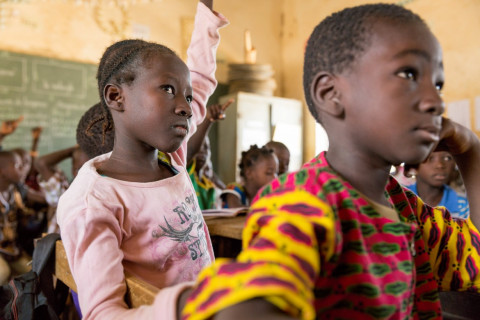 12 key findings from GPE’s Results Report 2019 2019-07-16 The Global Partnership for Education (GPE) released its Results Report 2019, which monitors the progress of the partnership against its goals and objectives as stated in GPE 2020, their 5-year strategy. Top 6 findings on GPE’s goals 1. More children are completing basic educationAn estimated 4.9 million more children completed primary school and 2.6 million more completed lower secondary school over the previous year. In countries affected by fragility and conflict, the primary completion rate is still lagging but showing progress. 2. The opportunity gaps between rich and poor children, and between rural and urban children, are large but narrowingIn countries affected by fragility and conflict, for example, 42 rural children completed lower secondary school for every 100 urban children in 2018, compared with 39 in 2017. In the same countries, 20 children from the poorest households completed lower secondary school for every 100 children from the richest households in 2018, compared with 18 in 2017. 3. GPE partner countries are building stronger systems to assess learning48% of partner countries now have a learning assessment system that meets quality standards, compared with 40% in 2015. Building these systems is crucial to ensure that governments know what is working to improve learning, what is not, and where to direct resources. 4. Parity between girls and boys completing school is improving, but still elusive at the lower secondary levelThe proportion of partner countries that are approaching equal numbers of girls and boys completing school rose to 67% for primary, and to 54% for lower secondary. 5. Many education systems face challenges in efficiencyAcross 25 partner countries, more than a third of all education spending covers the costs of repetition and dropout. Moreover, teachers are often not distributed evenly within countries, resulting in certain regions being disadvantaged. 6. Countries affected by fragility and conflict face more acute challenges in multiple areasLess than 70% of children complete primary school in partner countries affected by fragility and conflict, compared to nearly 77% in partner countries overall. Gender disparities, and especially girls’ disadvantage, are more pronounced in fragile countries. These countries are also much more likely to have larger class sizes, and less likely to have education plans that include strategies for overcoming constraints. Countries affected by fragility and conflict also face acute challenges to mobilize domestic resources for education. Top 6 findings on GPE’s objectives 1.GPE partner countries are developing stronger education sector plans100% of education sector plans of partner countries now meet quality standards, up from 58% in 2015. GPE support to plan quality during this time has included the Education Sector Plan Preparation and Appraisal Guidelines developed with UNESCO’s International Institute for Educational Planning, the education sector plan development grant, a new quality assurance process, and a GPE funding model requirement concerning the quality of the plan. Still, one-third of education sector plans, mostly those in countries affected by fragility and conflict, are rated as “not achievable,” meaning that they do not include sufficient analysis of the financial constraints and implementation challenges to overcome. 2. Local education groups are becoming more inclusive59% of local education groups now involve teacher organizations, and 89% involve civil society organizations – up from 56% and 87% respectively in 2017. This means that the policy dialogue and sector planning process in many partner countries is more reflective of the views of all stakeholders. 3. GPE grants emphasize learningAs of June 2018, 40% of active implementation grants were allocated to activities that aim to improve learning, amounting to an investment of almost US$600 million. Of GPE’s three strategic goals, partner countries allocated the largest amount of grant funding to learning. In addition, 88% of implementation grants supported activities related to learning assessment. 4. GPE provides strong support to countries affected by fragility and conflictAs of June 2018, 65% of all active implementation grants were for countries affected by fragility and conflict, in line with GPE’s mission to focus on the most marginalized children. GPE provides a comprehensive suite of support to these countries, including three special funding mechanisms, and assistance with developing transitional education plans. 5. Monitoring of plan implementation can be improvedMonitoring of the implementation of education sector plans is poor. Fewer than half of partner countries organized a joint sector review in 2018, and just over a quarter of these reviews met quality standards. 6. More aligned and harmonized aid modalities are neededWhile all GPE grants are aligned to national sector plans, two-thirds use stand-alone mechanisms that are poorly aligned with national systems. More aligned and harmonized modalities, both in GPE grants and in the financing and projects of donors who are GPE partners, would significantly increase GPE’s ability to contribute to successful education sector plan implementation, and thus system strengthening. URL:https://www.globalpartnership.org/blog/12-key-findings-gpes-results-report-2019
 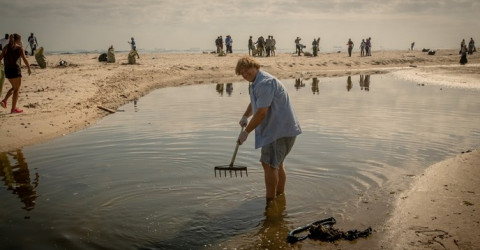 UNESCO prizewinner uses AI tool to detect and collect trash worldwide 2019-07-15 Not everything that looks like trash is trash. That was the fundamental challenge when a UNESCO prizewinner from Estonia, the Let’s Do It Foundation, had the idea to create an image-based trash detection system using Artificial Intelligence (AI). In recent months, the laureate of the 2018 UNESCO-Japan Prize on Education for Sustainable Development (ESD) has been busy inventing an algorithm refined enough to distinguish trash in geolocated images and videos. The AI tool called WADE (Waste Detector) has been developed in collaboration with Microsoft and the data science company SIFR. The Foundation works by mobilizing millions of positive-minded, action-oriented people to tackle environmental and social problems related to mismanaged solid waste. The Let’s Do It received the Prize for two grassroots initiatives World Cleanup Day and Keep It Clean, which address the global problem of mismanaged waste and stimulate sustainable social and environmental change. World Cleanup Day’s aim is to inspire volunteerism in local communities around the world; develop and empower a network of leaders; and empower countries, particularly developing ones, to deal resiliently with litter now and in the future. National and regional leaders – 'cleanup advocates' – build local networks to run nationwide cleanups in which anyone can participate by using a mobile app which maps waste around the world. From its start in Estonia ten years ago World Cleanup has evolved to become a worldwide movement with around 36 million volunteers in 169 countries. Preparations are underway for the next World Cleanup Day(link is external) on 21 September 2019. Trash is difficult to detect Of the newly refined WADE system Technology Manager Kristiina Kerge said: 'Trash is actually a complicated object to detect. Imagine a restaurant table with cans of soda on it, people having fun, eating and drinking. In that context, cans are not trash. When those cans are discarded on the street, they can most likely be considered trash. 'In fact, trash is a word people use for an object that lacks purpose, and the purpose of an object is often not obvious in the images we use for teaching an algorithm to spot trash.' WADE allows for the identification and mapping of waste much faster and more accurately than people can. 'We started with a sample of images, trained the model, and analyzed the results. Based on the results, we determined what images we had to add to the next iteration of training,' said Kristiina. 'Now for example, citizens using 5 different mobile apps can map 121 waste points per day. At the same time, WADE is able to analyse more than 8 million images a day. Collecting data about mismanaged waste is important not only for visualising the global trash problem but also to give academics, policy-makers, educators and businesses information about where the hotspots are, why they are there and what might be the solutions to stop waste ending up in nature or on streets.' In the coming months, the Foundation will be focusing on engaging stakeholders to start using WADE, with the aim to make at least 1 billion people in the world aware of the trash problem. The data collected by WADE will be integrated into ESD train-the-trainer programmers giving trainers visualisation tools to better explain the extent of the waste problem and also localise it in order to find solutions. Join the trash detection movement 'Collecting reliable data about waste, specifically about mismanaged waste, has been a challenge in the past but I hope that when we bring new innovative solutions to data collection and visualisation, it helps to bring more data scientists and citizens to join us making waste visible,’ said Kristiina. A detailed open source overview of the work behind the algorithm can be found here and the code itself is available on GitHub. To work with WADE contact kristiina@letsdoitworld.org. URL:https://en.unesco.org/news/unesco-prizewinner-uses-ai-tool-detect-and-collect-trash-worldwide
  5 questions for a youth education advocate 2019-07-15 "The right to education should not depend on the size of anyone's wallet or socioeconomic background, and therefore we need to continue our fight towards ensuring that education is seen as a public good" Meet Robert Napier from Malta, youth and student representative at the Global Education Meeting 2018. He is a passionate young leader who is the President of the European Students’ Union (ESU). Robert has been involved in the student movement for more than four years and has served on the National Students’ Council in Malta as Social Policy Commissioner, Secretary-General and President. His main areas of work within ESU are Social Dimension (including Sustainable Development Goals), the Bologna Follow Up Group, the cooperation with other organisations such as the Council of Europe, EUROSTUDENT, the E4 Group and UNESCO, as well as the European Education Area. Ahead of his participation at the “Relevant, equitable and inclusive quality education for all: an imperative for the 21st century” event at the High-level Political Forum in New York on 15 July, Robert answered five questions on the youth perspective of Sustainable Development Goal 4 (SDG 4). How do you see the right to education being threatened today ? The threats to education are various; from the privatisation of the sector to inequalities in access and completion to restrictions on academic freedom and institutional autonomy, just to mention a few. Education is a basic human right, however many still fail to see this reality. By adding barriers for accessibility, both direct and indirect, we are depriving individuals of reaching their potential and being catalysts of change in this world. The right to education should not depend on the size of anyone's wallet or socioeconomic background, and therefore we need to continue our fight towards ensuring that education is seen as a public good for which governments take the necessary responsibility. UNESCO is working on a global higher education convention that will allow learners more mobility, and allow for their qualifications to be recognized across borders – how do you see this helping youth? In this day and age, mobility is an essential tool in order to foster constructive dialogue exchange in a multicultural environment. Intercultural competence and understanding, as well as democratic values and skills and language competences are needed in the globalised world and the key for development of a society where everyone can live together peacefully. I believe that such global convention will help improve the quality of education by increasing international outlooks and circulating knowledge, as well as building intercultural understanding, independence, and transversal skills in students. What does inclusion in higher education mean to you? Inclusion has many facets, but unfortunately often we only scratch the surface and think we are speaking of holistic inclusion. To start off inclusion in higher education means the removal of access and transition barriers, as well as barriers that exist or co-exist within the higher education society on a day to day basis. To speak of holistic inclusion, the inclusion and involvement of students, as well as their representation, must be ensured within all levels of the education community. This includes accommodation support, if needed, provision of practical information and support, with the process of adaptation, which requires good introductory activities and measures to promote the inclusion of all, regardless of the individual profile or background. We’re not on track to meet the education goals – in your opinion, what should be considered priority to succeed? The realisation that we are not on track is already a very good step forward because there is nothing worse than being delusional about where we stand. I think we need to start by focusing on peer support from one country to another. We need to be brave enough to realise that admitting that we are not on track is not something to be ashamed of but rather something we should use to learn from one another. Certain countries have made massive strides when it comes to education, and others have over focused on trivial issues that do not solve the bigger picture. Personally, I believe that our primary aim should be to leave no one behind, which means that a lot of effort is needed to reduce the inequalities that exist and give everyone the right to access quality education. We need to change the mentality to be centered around education. I dare say that SDG 4 is the most crucial of all SDGs, as it is only through the power of education that we can resolve all other issues. So if you ask me, I would say that if need be, drop everything else, and focus everyone's energy on creating quality education. The rest of the Goals will be attained through the transformation that education will bring about. What can young people do to put pressure on governments to keep on track? Young people and civil society in general play a crucial role in keeping governments grounded and in check. I strongly encourage young people to join forces with Civil Society Organisations and fight for the bigger picture. As a young person, I understand the struggle of remaining hopeful, especially in turbulent times when nothing seems to be on track. However, remember that your voice is crucial and strong. It might not feel that way, but we are the strongest voice and governments do listen when we speak. Do not let any government convince you that you are the future - you are the present, and the only ones with enough energy, determination and power to bring about the right change. What we sow now, we'll reap tomorrow - so let's make sure to be better human beings and prepare a better world for ourselves today, and for our kids tomorrow. URL:https://en.unesco.org/news/5-questions-youth-education-advocate
  UNDP Calls for Youth-Inclusive Approach to Prevent Violent Extremism 2019-07-14 23 May 2019: A UN Development Programme (UNDP) report calls for increased investment in ensuring the participation of young people in decision-making and governance. The report emphasizes the central role of youth in preventing and responding to violent extremism. The authors drew on case studies from Kosovo, Pakistan and Yemen, among several other sources. The 2030 Agenda for Sustainable Development includes several targets and provisions relevant to the inclusion of youth and the prevention of violence. Within SDG 16 (peace, justice and strong institutions), SDG target 16.1 calls for reducing all forms of violence and related death rates everywhere. SDG target 16.7 focuses on ensuring responsive, inclusive, participatory and representative decision-making at all levels. SDG target 16.a focuses on strengthening relevant national institutions to prevent violence and combat terrorism and crime. Additional provisions throughout the 2030 Agenda address the need to include youth and provide for their needs, such as paragraph 23, calling to empower several groups of vulnerable people. Youth participation has not yet translated into policy influence for preventing violent extremism. The report titled, ‘Frontlines: Young people at the forefront of preventing and responding to violent extremism,’ is based on a global survey of youth, focus group discussions with youth on their perceptions and aspirations, in-depth interviews with practitioners, and case studies on the positive role of youth in preventing violent extremism in Yemen, Pakistan and Kosovo. The survey finds “increased and substantive” youth participation in initiatives contributing to the prevention of violent extremism. However, the authors state, this momentum has not been translated into significant policy influence or support for youth participation on the ground. Two key challenges in engaging youth are a lack of funding for youth initiatives, and an absence of meaningful consultation with youth in initiatives to prevent violent extremism. The report recommends beginning by recognizing that young people, their organizations and networks bring particular strengths to preventing violent extremism and peacebuilding efforts, and that these strengths should be nurtured and supported. The report also finds that initiatives focused on women are less common than male-focused initiatives. UNDP Administrator Achim Steiner said it is vital to “better understand and nurture youth-led action on the ground” in order to design and support effective approaches to prevent violent extremism and uphold human rights. Steiner explained that the report aims to support a “paradigm shift in thinking about youth’s role in preventing violent extremism” to find more effective approaches. Indeed, youth are “our biggest help,” said Jayathma Wickramanayake, the UN Secretary-General’s Envoy on Youth. She called for building on youth’s aspirations and efforts to build resilience and social cohesion. The report is intended to inform inter-agency collaboration on youth and the prevention of violent extremism. It also contributes to implementation of the UN Secretary-General’s Plan of Action to Prevent Violent Extremism (2016) and the UN Youth Strategy (2018), as well as UN Security Council resolutions on youth, peace and security. The Government of Norway provided support for the report. URL:https://www.undp.org/content/undp/en/home/news-centre/news/2019/young-people-key-to-preventing-violent-extremism.html
 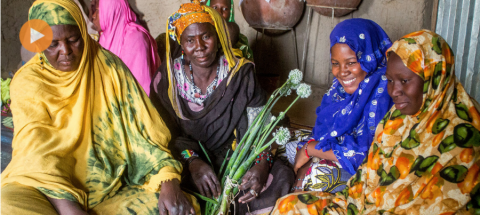 Inclusion, empowerment and equality, must be ‘at the heart of our efforts’ to ensure sustainable development, says UN chief 2019-07-12 The women of Bokiat Village, Timbuktu, present fresh onions from their vegetable garden where UNICEF, with the support of Sweden, rehabilitated a manual water pump. (13 March 2019) The world’s people are demanding “transformative change that is fair and sustainable,” Secretary-General António Guterressaid on Tuesday, calling on government leaders to use the upcoming slate of key United Nations meetings in September to “kickstart a decade of delivery and action for people and planet.” His call for concrete action was the cornerstone of his address to ministers attending the High-level Political Forum on Sustainable Development(HLPF) – the main UN platform monitoring follow-up on States’ actions towards towards the Sustainable Development Goals (SDGs). Mr. Guterres observed that the HLPF was “zeroing-in” on the power of SDG action “to support empowerment, equality and inclusion”, and urged the participants to “ratchet up the ambition and highlight the imperative of inclusion”. “The evidence is clear: Development is not sustainable if it is not fair and inclusive – and rising inequality hinders long-term growth,” he said. Alongside the impacts of globalization and rapid technological change, “inequality raises economic anxiety, erodes public trust, and undermines social cohesion, human rights, peace and prosperity”, according to the UN chief. Meanwhile, “mounting evidence” illustrates the “transformative results of equality and inclusion”, particularly of women, in higher gross domestic product, greater stability, and enhanced private sector performance and institutional effectiveness, he pointed out. “For all these reasons, the 2030 Agenda places the goals of inclusion, empowerment and equality, leaving no one behind at the heart of our efforts”, Mr. Guterres stated. Yet, four years after its adoption, “we are not yet on track and must step it up”, he said, citing extreme poverty, inequality, global unemployment, gender inequality and climate change, among others. Agenda 2030 and the ‘Inclusion Imperative’ And in all these areas, he acknowledged, “the poorest and most vulnerable people and countries will suffer the most”. The UN chief drew attention to “four key conclusions” to advance the “Inclusion Imperative”, beginning with "dramatically" scaling up SDG investments as "our best tool of prevention". Five high-level critical meetings in September:The Climate Action Summit.The Sustainable Development GoalsSummit.A High-Level Meeting on Universal Health Coverage.A High-Level Dialogue on Financing for Development.Review of commitments to small island developing Statesand their accelerated modalities of action pathway (SAMOA). Secondly, he emphasized that “global climate action must be advanced in a manner that reduces inequality”, including by shifting to a greener economy that could create 24 million jobs globally by 2030 while safeguarding the 1.2 billion jobs that depend on a stable and healthy environment. Next, he said that “We must step up implementation of the Global Compact for Safe, Orderly and Regular Migration”, as people whose contribution to sustainable development, in countries of origin and destination, “is absolutely critical”. And fourth, leaving no one behind and achieving the SDGs “is inherently linked to human rights, diplomacy and prevention”, according to the UN chief, who reinforced the need for “a strengthened global commitment to end conflicts and displacement and tackle root causes”. He stressed that the conclusions emerging from the Forum “are rooted in the pressing need to address the Inclusion Imperative and provide us with important insights as we look ahead to September”. 'We can do better' In her opening remarks, Inga Rhonda King, President of the Economic and Social Council (ECOSOC) summarized the first five days of the Forum, saying that countries had been mobilized around the 17 SDGs, voluntary national reviews had been shared by 142 countries, SDG progress had been tracked and children had spoken about the future they want. While acknowledging the hard work of many countries, she contended that “we need to do more, to do it faster and to be more transformative”. She urged the participants to “understand how we can do better, advise each other and forge new partnerships”, noting that “our conclusions will reverberate in the September SDG Summit.” Ms. King assured the group that their ideas would be included “on how to make this Forum even more vibrant and action-oriented” during the upcoming General Assembly. “I hope that our discussions will encourage our Heads of State and Government to come back in September ready to announce ambitious acceleration actions”, she said in closing. 'Make it count' “We have eleven years to deliver” on the 2030 Agenda, General Assembly President María Fernanda Espinosa, opening the Ministerial Segment. “Let’s use the coming days to lay the groundwork not only for the SDG Summit, but indeed for the whole of high-level week”, she said, referring to the Assembly’s annual general debate, and adding that we have “five days to make it count”. Ms. Espinosa underscored the import of addressing urgent challenges “as they pave the way for longer-term risks and opportunities”, including the need to be “fully inclusive” and to empower girls and women.. She detailed that she has been working with Member States to ensure their their contributions to the 2030 Agenda, including the preparations for this HLPF and September’s SDG Summit. “That has been the overarching vision and the driving force” behind the “priorities set out for this session”, she explained. Ms. Espinosa also encouraged participants to use the September high-level week, at which time five summit-level meetings will be convened, “to be more ambitious and to announce accelerated measures and specific steps that respond to the urgency of the challenges we face”. Those meetings “represent a key opportunity to demonstrate that multilateralism works – that it can deliver tangible benefits to people’s lives”, Ms. Espinosa spelled out. The goals under review at the Forum focus on education, economic growth, inequality, climate change and peaceful, just and inclusive societies. Diplomatic achievements of the century Together with the Paris Agreement on climate change, the 2030 Agenda is one of the “most important diplomatic achievements of this century”, Ireland’s former president Mary Robinson told the Forum. Pointing out that both concluded in 2015, she called them “tangible proof of the benefits of multilateralism and a rebuke to the narrow agendas of nationalism, isolationism and self-interest”. If implemented in full, the Chair of the Elders – a group of independent global leaders founded by Nelson Mandela who work for human rights and a sustainable future – maintained they are “a pathway to a world where poverty, inequality and conflict will not blight the life chances for millions of people currently denied the opportunity to enjoy their fundamental rights and freedoms”. Noting the Intergovernmental Panel on Climate Change (IPCC) report, she reminded the meeting that staying at or below 1.5°C warming above pre-industrial standards was “the only safe level for the whole world” because warming to 2°C would “cause considerable risk to the planet”. “We can no longer afford to regard the 2030 Agenda and the Paris Climate Agreement as voluntary”, flagged Ms. Robinson, citing a UN report in May detailing the loss of biodiversity and potential extinction of one million species. She stressed that the full implementation of both reports has become imperative “to secure a liveable world for our children and grandchildren”. “We have a global crisis and we must treat it as such”, she stated, saying that the HLPF “provides an opportunity to take an honest look at what all States have achieved and what more we need to do on the SDGs, so that when world leaders convene in New York in September for the SDG Summit, they can come with more than just words”. A former UN High Commissioner of Human Rights, Ms. Robinson underscored the importance of working together, saying: “We will not overcome the key existential challenges facing our world today, from nuclear weapons to climate change, if we spurn cooperation”. “This High-Level Political Forum is a moment to be bold and to demand real ambition from leaders”, she asserted, adding that “playing safe or doing business as usual will not deliver the results the world needs”. Limit global warming Delivering the final keynote speech, IPCC Chair Hoesung Lee stated that “climate action and sustainable development are inseparable” and presented three points of linkages between the two. First, he flagged that “the current warming is already producing negative impacts on natural and human systems, seriously impeding progress toward some SDGs”. Second, he noted the “ambitious” climate goal of limiting global warming to below 2 degrees Celsius “creates a trade-off for some SDGs and balancing the goals will be a challenge”. And finally, he detailed that while climate actions produce “new opportunities for the economy, environment and society”, they are contingent upon “international cooperation, with social justice and equity being core aspects of climate-resilient development pathways”. Mr. Lee informed the HLPF that currently, the global average temperature is one degree Celsius higher than the preindustrial level, noting, however, that “the warming is not uniform”. “Most land regions are experiencing warming greater than this one-degree average”, he said, spotlighting that “the Arctic temperature is two to three times higher”. Moreover, he conveyed that “up to 40 per cent of the world’s population lives in areas where the warming already exceeds 1.5 degrees Celsius above the preindustrial level for at least one season”, which has caused notable disruptions in human livelihoods. In summary, Mr. Lee advocated for collective efforts “at all levels”, to limit global warming to 1.5C, which should take into account equity and effectiveness, “to strengthen the global response to climate change and achieve sustainable development and poverty eradication”. “The result will be a cleaner, sustainable, more productive, and stronger global economy”, he concluded. According to IPCC, by limiting warming to 1.5 degrees rather than 2 degrees C, we will have: 50 per cent fewer people exposed to water shortage. 50 per cent less impact on insects, plants and vertebrates in their climatically determined geographic range. 10 million fewer people exposed to the risk of sea level rise. Ten-fold decrease in the risk of the sea ice free Arctic in the summer. One-third reduction in the risk of decline in crop yields The number of possible partners on the Global Goals journey are “legion”, according to the SDG Advocate, including bankers and investments bankers, insurance companies and pension providers “who are starting to see that sustainable investment can be profitable and will be the key to financing the future of the Goals”. Singling out rising global hunger, greenhouse gas emissions and lack of essential health services, his next key word “urgency” pressed for a harder focus on all SDG targets, “to exploit their deadlines”. “They make urgency real and tactile and measurable”, Mr. Curtis stressed. “That’s what they’re for”. His third word was “opportunity”. “This is what the Goals give us”, he said, “a unique opportunity”. The SDG roadmap can guide us, “negotiated with the passion and determination and imagination” to end inequality and injustice, he argued. In closing he said “now” was the moment “to go for broke with deep urgency, with radical partnerships and with a sense of this unique human opportunity.” “And you are the generation of people with power in the United Nations and power in every country in the world, who could and must make it happen”, concluded the SDG envoy. Three little words Screenwriter for Four Weddings and a Funeral, Notting Hill and Bridget Jones's Diary, among others, SDG Advocate and renowned filmmaker Richard Curtis delivered a keynote speech underscoring that the UN “carries their hopes and dreams for a better world”. He selected “three key words” surrounding the SDGs, beginning with partnership. “There are so many possible partners for the Goals”, Mr. Curtis said. “No-one denies we’re all in a boat on a wild sea” with everyone’s skills available: “Some to build the boat, some to guide it, some to row the boat, some when the boat sinks, like [Syrian swimmer] Yusra Mardini, to grab the ropes and swim the boat to safety”. UN Photo/Eskinder Debebe Inga Rhonda King, President of the Economic and Social Council (ECOSOC), and María Fernanda Espinosa, General Assembly President, at the podium of the opening of the High-level Segment of the ECOSOC and the Ministerial Segment of the High-level Political Forum on Sustainable Development. URL:https://news.un.org/en/story/2019/07/1042581
  #CommitToEducaction - qualitative reforms in education are underway worldwide, July 2019 2019-07-11 Sustainable Development Goal 4 (SDG 4) is shifting and widening the global debate on education We are seeing many countries adopt SDG 4 as a framework for designing education policies that are promoting more inclusion and equity, that are improving national learning assessments, and that are introducing pedagogical reforms. In addition, the concept of lifelong learning is increasingly entering into political debates on education. SDG 4 is influencing the scope and reach of education policies globally because its aspirations are relevant to all countries SDG 4’s focus on inclusion and equity is relevant to all countries – low, middle and high-income - because to different degrees, every education system confronts challenges of inequality, be it social disadvantage, gender, disability, migration or geographical isolation. SDG 4 spans the entire education system, from early childhood to higher education, from literacy to technical and vocational education and training, calling for a system-wide approach. SDG 4’s emphasis on quality is both about proficiency in core subjects and the acquisition of new competences and skills for personal fulfillment, empowerment and sustainable development. SDG 4’s emphasis on lifelong learning - the digital revolution is permeating our lives, reshaping all societies by displacing jobs and creating new employment niches. It is a given today that people need opportunities to acquire new skills throughout life and to have second-chance opportunities to pursue their education. Global trends do not capture positive changes that are happening at country level, testifying to national commitment and effortsto take ownership of SDG 4. New analysis of Voluntary National Reviews submitted to the High-level Political Forum (HLPF) and a questionnaire survey led by the Global Education Monitoring Report (GEMR) show that many countries are aligning education sector strategies with SDG 4. All regions have translated the global goal into regional implementation roadmaps that identify priorities and set targets. This has been a process of political and social dialogue, and of peer learning – between governments, multilateral partners, civil society, teacher organizations and other stakeholders. The GEMR survey finds that SDG 4 is interpreted slightly differently by some countries, specifically in terms of the meaning of inclusion or lifelong learning. It is clear however, that the goal has provided the impetus for countries to adopt a wider vision of education, to amend legislation, strengthen policies on inclusion and equity, monitor learning outcomes and introduce pedagogical reforms, including new skills for digital competences, citizenship and sustainable development. Survey results also find that the challenge of achieving SDG 4 has driven increased interest in regional and global collaboration. While not in the global figures these are positive developments that reflect the ambition to transform education, not only to leave no one behind but to ensure that everyone gains the knowledge and skills to shape their lives and that of their communities in healthy, resilient and sustainable ways. URL:https://sdg4education2030.org/committoeducaction-qualitative-reforms-education-are-underway-worldwide-july-2019
  OECD Publication Analyzes Teachers’ Knowledge and Skills, Observes Increased Focus on Global Issues 2019-07-11 The Organisation for Economic Co-operation and Development (OECD) has published a reflection on gaps and asymmetries in teachers’ training in information and communication technologies (ICT) across OECD countries, as well as changes to class composition and curricula brought by migration. The report argues that investing in teachers’ training and integrating global issues in curricula will be essential to ensure quality education for youth, to equip them with the skills they will need to adapt to the fast-changing, globalized job market. The report is based on the third edition of the OECD’s Teaching and Learning International Survey (TALIS), which aims to help strengthen the knowledge and skills of the teaching workforce and to support its professionalism. The third edition of the TALIS features insights from 260,000 teachers and school leaders at 15,000 primary, lower and upper-secondary schools from 48 OECD countries and economies. The survey analyzed professionalism by exploring five pillars: the knowledge and skills required to teach; the perceived prestige of the profession; career opportunities; the collaborative culture among teachers; and the level of professional responsibility and autonomy of teachers and school leaders. Just over half of teachers across OECD countries received training in the use of ICT for teaching as part of their formal education or training. The publication, titled ‘Teachers and School Leaders as Lifelong Learners’, focuses on the knowledge and skills required to teach. The report notes that just over half of teachers (56 percent) across OECD countries received training in the use of ICT for teaching as part of their formal education or training, and less than half of teachers felt well prepared when they joined the profession. ICT training is lowest in Sweden (37 percent) and Spain (38 percent) and highest in Chile (77 percent) and Mexico (77 percent). About 18 percent of teachers across the OECD express a high need for professional development in ICT skills for teaching. However, the vast majority of teachers and school leaders who participated in the survey said that their schools are open to innovative practices and have the capacity to adopt them. The report also found that migration flows have changed the makeup of classrooms. Almost one-third of teachers in OECD countries work in schools where refugees make up at least one percent of the student population, and 17 percent of teachers work in schools where at least 10 percent of students have a migrant background. The majority of school leaders (95 percent) report that their teachers believe that children and young people should learn about commonalities among people of different cultures and state that they teach their students how to deal with ethnic and cultural discrimination. In addition, 80 percent of teachers report working in schools that have integrated global issues throughout the curriculum. [OECD Press Release][Report Summary] URL:http://sdg.iisd.org/news/oecd-publication-analyzes-teachers-knowledge-and-skills-observes-increased-focus-on-global-issues/
 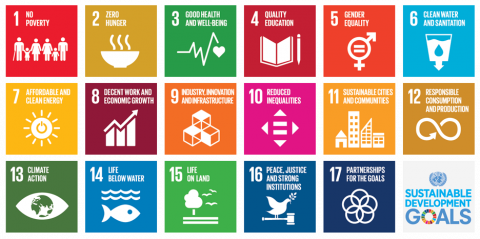 Co-facilitators Issue SDG Coverage Map of UN Bodies 2019-07-11 A mapping of SDG coverage by the UN General Assembly (UNGA), UN Economic and Social Council (ECOSOC) and other UN bodies and fora in light of the 2030 Agenda has been shared with governments. The co-facilitators of this intergovernmental process also set out possible criteria for reducing overlaps and duplication between intergovernmental UN bodies and forums. Discussions on alignment and coherence between UN organs started in 2016 during the 70th session of the UNGA, and continued during the subsequent UNGA sessions, with the Permanent Representatives of Czech Republic and Timor-Leste facilitating consultations during the 73rd session. On 28 June, the co-facilitators shared a draft note outlining conclusions from preceding informal consultations and expert-level informal-informal consultations held to date. Per the note, delegations have outlined the importance of the “full and effective implementation of the 2030 Agenda” with a focus on poverty eradication in all its forms and dimensions. They also decided to update the mapping of SDGs and targets, which had originally been prepared under the leadership of Colombia during UNGA 70. The initial mapping had shown, among other observations, that the majority of SDGs contain targets either covered in existing UNGA and/or ECOSOC agendas, or that could be covered by making use of existing agenda items. It also found that the targets of SDGs 6 (clean water and sanitation) and 12 (responsible consumption and production) are “largely uncovered under the UNGA and ECOSOC agendas.” The co-facilitators included the updated and “simplified” version of the mapping as an annex to their note, explaining that the newer version looks at how the SDGs, rather than their targets, are addressed by the agendas of various UN bodies. Taking the form of a table, the document includes, for each SDG, relevant information related to the work of the UNGA’s Second Committee (Economic and Financial), Third Committee (Social, Humanitarian and Cultural), other committees, ECOSOC, and ECOSOC subsidiary bodies. According to the co-facilitators, the mapping does not include the UN High-level Political Forum on Sustainable Development (HLPF) since it has the mandate to cover all SDGs and to oversee a network of follow-up and review processes at the global level. Neither does it include ECOSOC’s High-level Segment or Integration Segment, which have an annual theme identical to the HLPF’s, and may address issues related to any SDG. The co-facilitators also shared, as a second annex to their note, a document comprising possible criteria for reducing overlaps and duplication. For example, the document states that an overlap or duplication might be justified if an item relates to an issue mandated to be mainstreamed in the work of all UN bodies (such as gender mainstreaming) or the item is a cross-cutting issue (such as financing). URL:http://sdg.iisd.org/news/co-facilitators-issue-sdg-coverage-map-of-un-bodies/
 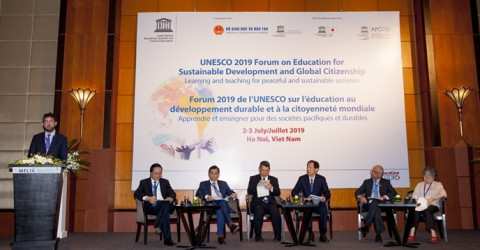 UNESCO forum on three dimensions of learning timely for humanity and the planet opens in Ha Noi 2019-07-11 “This forum takes place at a significant time,” said UNESCO Assistant Director-General Stefania Giannini, in a message officially opening the UNESCO 2019 Forum on Education for Sustainable Development and Global Citizenship in Ha Noi, Viet Nam on 2 July 2019. “Next July 9, the UN High Level Political Forum in New York will review Sustainable Development Goal 4 for the first time since its adoption in 2015. This will be a platform to reaffirm the centrality of education for building a better world, and in particular by empowering children and youth with the awareness, skills and values to appreciate our shared humanity and planet. This stands at the heart of education for sustainable development and global citizenship,” she said. As the lead agency to achieve the Sustainable Development Goals (SDGs) through Education for Sustainable Development (ESD) and Global Citizenship Education (GCED), UNESCO has brought together more than 350 experts, practitioners and policy-makers from 100 countries for the two-day forum which will explore the theme Learning and teaching for peaceful and sustainable societies: From early childhood to primary and secondary education. UNESCO presented new publication ESD and GCED Up Close, which explores a holistic approach to education that emphasizes three dimensions of learning - the cognitive, socio-emotional and behavioural - and is based on the results of a recent UNESCO study to examine policies and curriculum documents from ten countries. The forum addressed if and how these three dimensions of ESD and GCED are reflected in pre-primary, primary and secondary education, highlighting improvements to be made and challenges to overcome. All speakers at the opening acknowledged the important role the three dimensions of learning play in achieving a sustainable future. Minister of Education and Training, Viet Nam, Phung Xuan Nha, said Viet Nam had begun radical and comprehensive educational reform in 2013. 'Our aim is not only to integrate sustainable development into education but also to mobilize education as an inclusive means of implementing all SDGs. However, we are still facing many questions with regard to day-to-day implementation." He added: “I hope this Forum will offer many shared experiences and initiatives and that new perspectives, approaches, and partnerships will be gained.” Deputy Minister of Foreign Affairs, Viet Nam and President of Viet Nam National Commission for UNESCO, Dr Le Hoai Trung, also affirmed: “Past achievements in social and economic development and international integration show that it is the human factor, not natural resources, that is the deciding element for sustainable development for every nation. This also means that the constant reform and renewal of education is an effective means to usher in human beings for a new age, endowed with courage and intellect to overcome the global challenges in an era of international integration.” As a keynote speaker, Minister of Education, Bhutan, Jar Bir Rai, pointed out that imbalances in economic advancement and the degradation of the natural environment could be said to have resulted in global conflict. “The imbalance in our cognitive, psychomotor and affective domains: the so called the three domains of learning could be the reasons for many catastrophic disasters that have become the reality of today. It has become important for us to reflect on the present we have created and the future we want to design. And those involved in education have a much higher responsibility than we imagine.” Using interactive plenaries and concurrent workshops, the forum session organized to expand and reinforce partnerships and networking opportunities around the theme, inviting debate and fostering dialogue as well as sharing practical information, best practices and knowledge. Participants presented innovative and promising approaches on how to address gaps and fully harness the potential of the three domains of learning in order to achieve the 2030 Agenda for Sustainable Development, and in particular Target 4.7, which relates to ESD and GCED. 35 active members of UNESCO’s Associated Schools Network (ASPnet) including teachers and students from three countries (Burkina Faso, Trinidad and Tobago, Viet Nam) are also attending the event, along with eight ESD youth leaders from all regions. The forum is organized by UNESCO in cooperation with the Ministry of Education and Training of Viet Nam and the Viet Nam National Commission for UNESCO. Additional support is provided by the Ministry of Education, Culture, Sports, Science and Technology of Japan, the UNESCO Japanese Funds-in-Trust for the Global Action Programme on ESD, and the Asia-Pacific Center of Education for International Understanding. The event will be followed up by a final meeting of the Global Action Programme (GAP) Partner Networks to review and analyse the past five years which were the follow up to the UN Decade for ESD (2005-2014). The meeting will also discuss next year's launch of ESD for 2030 which will replace the GAP. URL:https://en.unesco.org/news/unesco-forum-three-dimensions-learning-timely-humanity-and-planet-opens-ha-noi