
News
Catch up on what’s happening in the world of global citizenship education.
1,668 results found
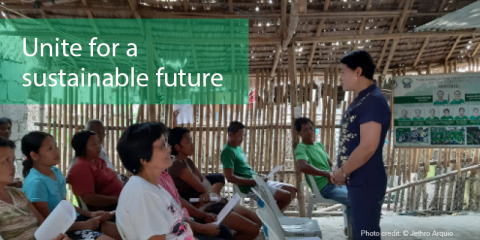 Building a rapport: Community-based education for sustainable development 2019-07-25 When the fisherfolk community of Cadiz City in Negros Occidental was first approached by the Philippine Normal University Visayas (PNU Visayas), they resisted. The university wanted to provide aid, but not in the way most were used to: it was not food, nor money – it was education. “If you’re not bringing something tangible, they will not listen to you,” said Anna Liza G Santillana, Director of the Centre for Environment and Green Technology Education at PNU Visayas. “This is how it is in the Philippines.” However, Dr Santillana saw how the livelihoods of the fisherfolk could be transformed by changing practices of illegal fishing and rehabilitating mangroves in their area to mitigate disaster risks. Mangroves act as natural buffers against typhoons and storm surges that often plague the Cadiz City coastline, making it beneficial for communities to learn to plant and sustain them. “I was happy to have the fisherfolk leading the rehabilitation of the mangrove area,” Dr Santillana said. Although the initial response was negative, she pushed forward in the attempt to gain the community’s trust, visiting the community, sitting on the roadside having a coffee and chatting, and developing a rapport. It took several months to earn their trust. PNU Visayas then invited staff from the Department of Agriculture, as well as local government units and organizations, to give lectures in the community to help the fisherfolk unlearn illegal fishing practices, relearn how to fish more sustainably, and to rehabilitate mangroves in their area that had been slow to replenish after Typhoon Haiyan. A small community learning centre was established for meetings and learning activities. From an initial group of four fisherfolk, the local learning project has expanded to include 45 members of the community. The fisherfolk community in Cadiz City is a testament to the power of education in transforming societies for a more sustainable future. With a commitment to this idea, Dr Santillana shared her experiences as one of the participants and facilitators at a capacity-building workshop on community-based Education for Sustainable Development (ESD) held in Cebu in April. Organized by the College of Education at University of San Jose – Recoletos, the workshop involved many educational institutions in Visayas as both co-organizers, facilitators and participants. These institutions, including Cebu Normal University, Cebu Technological University, PNU Visayas and schools under the Department of Education, are working with communities to utilize education to transform the lives of people in the communities. The Cebu workshop was organized as part of a pilot process under the project of UNESCO Asia-Pacific Regional Bureau of Education entitled “Promoting Community-based ESD”. Supported by the Government of Japan, this project is working with non-formal and community educators to promote ESD in the local context for sustainability and wellbeing. Three learning modules have been developed in expert meetings, which are being piloted in five countries across Asia-Pacific – India, Japan, Lao PDR, Mongolia and Philippines. The modules are designed to guide non-formal and community educators in the processes of reflection, sharing and taking action. The “Reflect” module helps learners, who are also trainers in this model, to use a self-reflective approach in understanding the realities of their community and concepts of ESD in their local context. “Share” then enhances the capacities of trainers to communicate with other community educators their reflections and understandings of ESD. The third module “Act” helps trainers design, plan, implement and evaluate their community-based ESD actions. Also as part of the pilot process, the Non-formal Education Development Centre (NFEDC) in Lao PDR is working with communities in the villages of Ban Hom and Ban Simmano in Vientiane prefecture. “The Lao team is the first to implement something like this,” said Soukanya Manivanh, Deputy Head of the Section of Literacy and Equivalency Education at NFEDC. “We’re implementing it and along the way, learning how to do it at the same time.” In Ban Hom and Ban Simmano, the main source of income is agriculture. As the excessive use of pesticides has damaged residents’ health, the community needed to change, but did not know how. The NFEDC stepped in to help. At a gathering of village heads, community members and educators, a needs assessment was conducted. Participants learned to reflect on and analyze what was needed in the communities, which concluded less pesticide use as well as proper waste management. Then, workshops were organized to guide participants through the Reflect-Share-Act process, after which they developed action plans for the communities. “We let them do it by themselves,” Mr Soukanya said. He added that one of the main challenges for such initiatives in Lao PDR was the lack of funding. “There is a limitation in terms of budget,” he said. “In the government, many people may understand the need for sustainable development, but still don’t know how to do it.” Because of this, the government seldom prioritizes the allocation of funds for sustainable development projects. The cases in the Philippines and Lao PDR recognize the difficulties in approaching communities to integrate ESD and promote sustainable development, but also hope to inspire others to become more involved in such efforts. For example, Dr Santillana is currently collecting the indigenous knowledge and stories of fisherfolk communities in the local language to be used as teaching and learning materials in local schools. “We won’t only let them know about the mangroves,” she said, “but we want to really inculcate the values.” Mr Soukanya is also positive for the future in terms of changing mindsets towards sustainability. Since sustainable development is a new concept, not only for communities, but also for Lao people in general, awareness must be raised among all. He stresses that it will not happen overnight. “We need to take time,” he said. “The main thing is developing the understanding of the community.” URL:https://bangkok.unesco.org/content/building-rapport-community-based-education-sustainable-development
 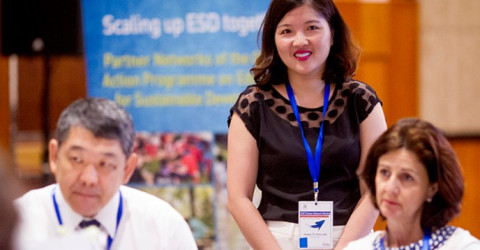 Lessons learned in five years of the Global Action Programme on Education for Sustainable Development 2019-07-25 Some 60 Key Partners of the Global Action Programme (GAP) on Education for Sustainable Development (ESD) met in Ha Noi, Vietnam, from 4 to 5 July 2019, for a final annual meeting of the GAP Partner Networks under the theme: 'Lessons learned from five years of the GAP'. The GAP has engaged a broad range of partners to facilitate and support learning and training on ESD since 2015. Comprised of 97 key stakeholders, the GAP Partner Network has served as a forum for peer exchange and support to meet target 4.7 of the 2030 Agenda for Sustainable Development: 'Ensuring that all learners acquire the knowledge and skills needed to promote sustainable development'. The two-day meeting reviewed the achievements and challenges of Key Partners since the GAP began in 2015 and discussed on-going activities of the Partner Networks until the end of 2019. The findings of the 2015-2018 GAP review were presented in a short publication entitled Education for Sustainable Development: Partners in Action. The report confirms that GAP Key Partners have made continuous progress since the 2017 GAP Mid-Term Progress Report, exceeding their 2019 targets in four out of five Priority Action Areas: policy, learning environments, educators and communities. 'I am impressed by the fact that over one million youth were trained by all the networks together and over 26 million learners were engaged. Incredible stories emerged out of that process and the depth of such training motivated more youth to take action' said Tariq Al-Olaimy, from 3BL Associates (Bahrain), one of the Youth Leaders present at the meeting. Key Partners have spearheaded innovative pedagogies, expanded ESD beyond the classroom into many other kinds of learning settings, and built new partnerships beyond the education sector. In doing so, they have been able to capitalize on the momentum created by the adoption of the SDGs. As the GAP comes to an end and the new ESD for 2030 framework (adopted by the 206th Executive Board) starts, partners see greater potential for ESD in non-formal and informal education, and at sub-national and local government levels. More guidance and evidence-based resources will allow them to continue to improve the quality and scope of their actions. Key Partners also had the opportunity to provide suggestions to UNESCO on elements for the implementation roadmap of the new ESD for 2030 framework, including on issues such as ESD nationwide initiatives, monitoring and evaluation, advocacy and evidence-based research. URL:https://en.unesco.org/news/lessons-learned-five-years-global-action-programme-education-sustainable-development
  Promoting transformative action for peace and sustainability through education 2019-07-22 In the rural villages of Maharashtra state in western India where Manisha Gangode lives, girls’ movements are restricted. They are not allowed to roam around or speak to boys. Many young girls are forced, long before they are adults, to marry a boy of her parents’ choosing. However, as part of a project supported by the Asia South Pacific Association for Basic and Adult Education (ASPBAE) and UNESCO Institute for Lifelong Learning, a group of young marginalized girls in villages just like Manisha’s have come to realize that they have the agency to learn, question, and change their worlds. They have become Shodhini. “Shodhini” is a Sanskrit word meaning female researcher, a title proudly adopted by the young women participating in the Youth-led Action Research (YAR) on girls’ education. In this research process, the young women learned to do many things they had never done before. They conducted a census of the girls in their respective villages and analyzed the results, calculating the percentages of out-of-school girls and child marriages. The YAR project also triggered action based on the data compiled by the young women. Manisha and her friends presented their reflections and analyses on girls’ education and livelihoods before the village council, lobbying for the construction of a library in the village. They now participate in village council meetings and organize women’s meetings, advocating and providing support for other young marginalized women. This process of reflection, analysis and action that the Shodhini go through is the very heart of Education for Sustainable Development (ESD) and Global Citizenship Education (GCED), both of which are expressed in Target 7 of the Sustainable Development Goal 4 (SDG 4). Often referred to as SDG 4.7, the target states that we must “by 2030 ensure all learners acquire knowledge and skills needed to promote sustainable development”. ESD and GCED empower us to engage with and transform our society as citizens of our community, our country, and the world. As a crucial part of the SDG 4 on inclusive and equitable quality education and lifelong learning and an enabler of all SDGs, transformative education like ESD and GCED is a key instrument in shaping a sustainable future. The aspiration of transformative education is highlighted in the upcoming international framework for ESD entitled “Education for Sustainable Development: Towards Achieving the SDGs (ESD for 2030)”. This framework builds upon the lessons learned and experiences of UNESCO’s many years as the lead UN agency in ESD promotion. After the UN Decade of Education for Sustainable Development (2005-2014) and the Global Action Programme (GAP) on ESD (2015-2019), UNESCO will be moving forward with this new framework, which has been endorsed by UNESCO’s Executive Board and will be discussed at UNESCO’s General Conference and the United Nations General Assembly later this year. ESD for 2030 emphasizes, as the YAR project illustrates, that community is where transformative action for sustainability takes place. In this framework, community is seen as a platform for all sustainability actions and the nodal priority area of action for ESD. In this regard, ESD can be utilized to identify shared values and issues that collectively concern the community. From this perspective, UNESCO Bangkok has initiated the project “Promoting Community-based Education for Sustainable Development” with the generous support of the Government of Japan. The aim of this project is to enhance capacities of community and non-formal educators to guide learners through the process of taking action for sustainability. With the expertise of many partner organizations, preliminary learning modules were developed to help navigate this reflection to action process. The modules are currently being piloted in five countries: India, Japan, Lao PDR, Mongolia, and the Philippines. In one of these pilot projects, marginalized farmers and educators in the communities of Karnataka in southern India are looking to change their unsustainable harvesting practices. By drawing on examples from their familiar forest environment and from locally sourced learning materials in their own language, they are able to apply the transformative learning process in contexts that are relevant to them. They can then easily guide others through the same process in order to change their livelihoods for the sustainability of their own communities. UNESCO Bangkok has been leading the way in bringing these main tenets of ESD—the importance of transformative action and community—to the forefront. Projects such as YAR and the community-based ESD project are particularly pertinent as they are grounded in transformative action at the community level in the context of people’s real lives. Moving forward, we must continue to work together for the sustainable development of our communities and our world. The Shodhini do not only learn about their own communities, but they also reach out to girls in other villages so that they too can feel empowered to take life into their own hands. Similarly, we must all continue on in our efforts, but of course, we cannot do it alone. Bringing about change is no easy feat, but it is all the more attainable if we, like the Shodhini, come together to take collective action to build a peaceful and sustainable future. URL:https://bangkok.unesco.org/content/promoting-transformative-action-peace-and-sustainability-through-education
 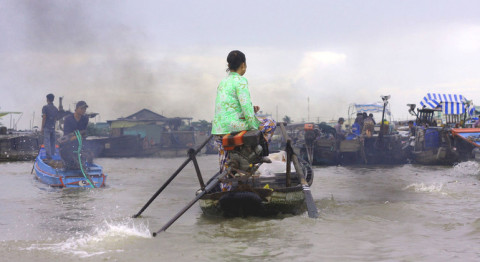 Asia and Pacific on course to miss all Sustainable Development Goals, says UN region chief 2019-07-22 Unless progress is accelerated, Asia and the Pacific are on course to miss all of the 17 Goals of the UN’s 2030 Agenda for Sustainable Development, the Executive Secretary of the UN regional commission for Asia and the Pacific (ESCAP), told UN News at the Organization's Headquarters last Wednesday, July 17. Under-Secretary-General Armida Salsiah Alisjahbana was in New York to take part in the High-Level Political Forum on Sustainable Development, the main UN platform for monitoring the progress that countries are making towards the Agenda, which is the UN’s blueprint for ending poverty and preserving the planet. ESCAP’s latest Sustainable Development Goals Progress Report shows that, when it comes to some of the Goals, the region is actually going backwards. These are the goals related to access to clean water and sanitation (Goal 6), decent work and economic growth (Goal 8), and responsible consumption and production (Goal 11). There are, said Ms. Alisjahbana, several reasons for this: “There is water scarcity, because of the pressure of urbanization, and the management of natural resources and the environment are making the situation worse. As for moving towards sustainable consumption, that has to do with behaviour and lifestyle. With increasing wealth you consume more, but what you consume is something that is actually not sustainable. Governments, said the head of ESCAP, must ultimately be responsible for investments in sustainable development. Investing in basic infrastructure costs money, but there is a considerable multiplier effect, that has a positive effect on the economy. Countries with smaller financial resources should look at raising money through fiscal reforms rather than looking for aid, and risking becoming dependent, she added. The Progress Report complains about a lack of data, an important point because, says Ms. Alisjahbana, without the correct data you can’t track progress, or evaluate the best actions to take going forward. Improved data must go hand in hand with improved capacity for analysing data, which means national statistical offices, and SDG monitoring. Despite the many challenges facing the region’s efforts to achieve the Goals, Ms. Alisjahbana remains optimistic. The situation, she believes, can be turned around, through better cooperation, as well as the abundant talent and expertise found in the region. URL:https://news.un.org/en/story/2019/07/1042741
 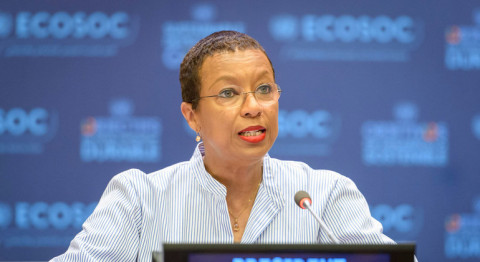 Top UN sustainable development forum closes with galvanized effort toward ‘empowerment, inclusiveness and equality’ 2019-07-22 In closing the High-level Segment of the Economic and Social Council (ECOSOC) on Friday, President Inga Rhonda King assured participants that the session had contributed significantly to advancing the 2030 Agenda for Sustainable Development. By “increasing awareness and galvanizing efforts towards empowerment, inclusiveness and equality”, the entire ECOSOC system has worked “to address gaps and challenges, provide integrated policy recommendations, and review progress”, which are all “at the heart of the 2030 Agenda”, she said. Ms. King pointed out that the High-level Segment also included the ministerial segment of the High-Level Political Forum (HLPF), which she referred to as “the premier global forum for follow-up and review of sustainable development”. “I am confident that our deliberations on the theme during this cycle have moved us all to double our efforts to accelerate implementation of the 2030 Agenda for Sustainable Development towards the achievement of the Sustainable Development Goals”, she spelled out. Ms. King noted that “the transformative nature of the 2030 Agenda” has been emphasized, by rising and adapting to the demands it places on development actors “to think and work differently”. She flagged the discussions underscoring the need for an integrated approach to achieve the SDGs and “to reduce inequality, end deprivations, and leave no one behind.” “We have seen that reaching to the local level, empowering people, giving them voice and including them in decision-making leads to better outcomes, with stronger support to implementation”, underscored the ECOSOC President. “And we have heard that we must commit to, and undertake, deliberate, decisive, transformative actions to accelerate implementation and achieve the SDGs by 2030”. Looking ahead The High-level Segment broadened the discussion around the 2030 Agenda by looking at long-term trends and scenarios, which Ms. King credited to General Assembly resolution 72/305, calling it “a great accomplishment”. The morning session looked at 2030 and beyond to examine “Visions and projections for the future of the SDGs”, the 2019 ECOSOC theme. “We heard that the world is at a turning point” she said. “Several mega trends are unfolding that will greatly impact on the delivery of the SDGs by 2030 and beyond. Some bring immediate threats – such as the looming debt crisis or uncertainties on growth or inequality-; others bring existential threats such as climate change, pollution or biodiversity loss. Others bring both threat and opportunities such as population trends, urbanization -- or technologies, which need to be carefully managed so that it supports the common good.” Education, she said was a major key to success: “And we know that solutions are multilateral. But we are still a bit uncertain about how exactly we can achieve some of the in-depth transformations we need to realize the SDGs – notably in the way we live, work, produce and consume. We need more reflection and exchange. ECOSOC and the HLPF can serve as platforms to nurture this conversation. Another key message of Friday’s deliberations, said the ECOSOC President, was, that “governments must reinvent themselves” and be more agile. “We need a government that can react swiftly to urgent trends while keeping the compass on the long term. We need a government that engages and listens to people. Participation is facilitated by new technologies and other developments." She added that “we also need to find ways to engage the poorest and most vulnerable in the decisions that impacts on their lives.” She concluded her address by thanking everyone for their commitment to sustainable development. Changing ‘human society’ - UNDESA chief For his part, the chief of Economic and Social Affairs, Liu Zhenmin, called the 2030 Agenda a sustainable process that truly “changes human society and protects the global environment”. He spoke at length about major challenges to achieving the SDGs goals, citing economic conditions, employment and inequality, climate change, population growth and migration, and technological change as major risk factors. Mr. Liu said that by 2030, nearly 1.8 billion people, or one-third of the adult global population will face long-term employment risks. On climate change, he pointed out that after several years of decline, the concentration of carbon dioxide in the atmosphere has rebounded. The rapid advancement of science and technology may play a decisive role in achieving the SDG, according to Mr. Liu, who underscored that the international community must recognize that this is often a double-edged sword. Priority must be given to identifying and developing the latest technologies that are conducive to ensuring food, housing, health and energy security, This would narrow technical inequalities that lead to inequality, and instead allow science and technology to advance on the right path to bringing benefits to all. URL:https://news.un.org/en/story/2019/07/1042951
 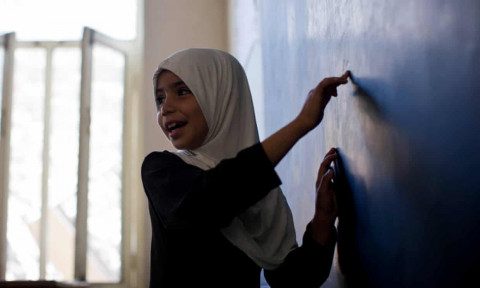 World leaders have 'a lot to answer for' over damning figures on education 2019-07-22 Former prime minister of New Zealand Helen Clark condemns complacency as Unesco data shows one in six children won’t be in school by 2030 URL: https://www.theguardian.com/global-development/2019/jul/09/world-leaders-damning-figures-education-helen-clark
  2019 SDG Report Urges Deeper, More Ambitious Response 2019-07-22 9 July 2019: The UN Department of Economic and Social Affairs (DESA) released ‘The Sustainable Development Goals Report 2019,’ which finds progress in a number of areas, but stresses that “monumental challenges” are making progress slow and uneven. The annual report concludes that a “much deeper, faster and more ambitious response is needed” to unleash the economic and social transformation necessary to achieve the SDGs. DESA launched the report on 9 July 2019, on the sidelines of the UN High-level Political Forum on Sustainable Development (HLPF). It was prepared by the UN Statistics Division within DESA, based on data available as of May 2019 on selected indicators from the global SDG framework. On human well-being, the report states that the world is “moving too slowly in our efforts.” At current rates, the report predicts that 6% of the world’s population will still live in extreme poverty by 2030 (SDG 1). Global hunger is increasing (SDG 2), half of the world’s population lacks essential health services (SDG 3), more than half of children do not meet reading and mathematics standards (SDG 4) and women “in all parts of the world continue to face structural disadvantages and discrimination” (SDG 5). Further, poverty, hunger and disease remain “concentrated in the poorest and most vulnerable groups of people and countries,” and inequality is increasing among and within countries (SDG 10). People living in fragile States, for instance, are “twice as likely to lack basic sanitation” (SDG 6). The most urgent area for action is climate change, the impacts of which will be catastrophic and irreversible. Despite concrete action to protect our planet, the report states that the natural environment “is deteriorating at an alarming rate.” Land degradation affects one-fifth of the world’s land area, ocean acidification is accelerating, sea levels are rising, and one million plants and animals species risk extinction. The report states the “most urgent area for action is climate change” (SDG 13), cautioning that the impacts of climate change will be “catastrophic and irreversible” and will “affect the poor the most.” In addition, nine out of ten urban residents breathe polluted air (SDGs 11) and the global material footprint is “rapidly growing,” outpacing population and economic growth (SDG 12). The report identifies areas that can drive progress across all the SDGs. It recommends focusing on: financing; sustainable and inclusive economies; more effective institutions; resilience; local action; harnessing science, technology and innovation (STI), with an increased focus on digital transformation; and better use of data. In all actions, the report stresses the importance of policy choices that leave no one behind and effective international cooperation that supports national efforts, with a commitment to crisis prevention and diplomacy. The report underscores the importance of investing in accurate and timely data collection and analysis to inform decision making and ensure full implementation of the 2030 Agenda for Sustainable Development. Further, the report states that examining interlinkages across the Goals offers opportunities to accelerate progress. For example, climate action requires a shift towards clean energy (SDG 7), changing production and consumption patterns (SDG 12) and reversing forest loss (SDG 15). Similarly, promoting sustainable agriculture (SDG 2) offers an opportunity both to reduce hunger (SDG 2) and poverty (SDG 1). Launching the report, DESA head Liu Zhenmin highlighted positive trends, including a decrease in extreme poverty by one-third since 2000 (SDG 1) and a decrease in under-five mortality by nearly half since 2000 (SDG 3). Liu cautioned, however, that “not all trends are moving in a satisfactory direction.” He said “climate change continues to be the main obstacle to our shared prosperity,” and also expressed concern about increasing inequality. URL:http://sdg.iisd.org/news/2019-sdg-report-urges-deeper-more-ambitious-response/
 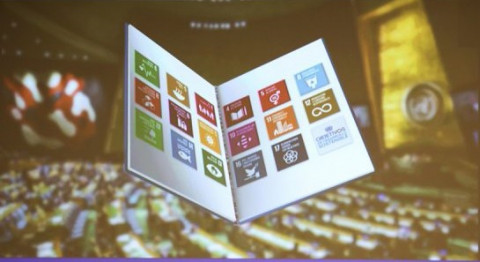 Seven Countries Present Second Voluntary National Review of SDG Implementation 2019-07-22 15 July 2019: Seven UN Member States reported on progress in implementing the SDGs in their countries, during the 2019 session of the UN High-level Political Forum on Sustainable Development (HLPF). Ministers from Azerbaijan, Chile, Guatemala, Indonesia, the Philippines, Sierra Leone and Turkey presented their voluntary national reviews (VNRs), and addressed questions from other Member States as well as stakeholder groups. The seven governments were sharing their second VNRs, with each having done so previously either in 2016 or 2017. In the first panel, Azerbaijan reported that it produces disaggregated data for 88 SDG targets. The minister shared progress on the six SDGs that are the subject of in-depth review during the 2019 HLPF, and highlighted that in 2020 Azerbaijan will host the Second Baku Forum on Sustainable Development. In questions from the floor, other governments asked: how the 2030 Agenda can support regional stability for Azerbaijan, to which Azerbaijan said there can be no development without peace; and how the government plans to engage the private sector in SDG implementation, to which Azerbaijan said it has created an agency for the development of small and medium-sized enterprises (SMEs). Azerbaijan also responded to a comment by Armenia, noting Armenia’s “occupation of our territory” and “ethnic cleansing.” Questions from civil society organizations (CSOs) addressed inclusion of persons with disabilities, how the government plans to involve marginalized communities such as older persons and LGBTI people in SDG implementation and policies relevant to their lives, and the “criminalization” of non-governmental organizations (NGOs). Azerbaijan did not respond to any of these interventions. The VNR process is as important as the product. The Philippines highlighted its long-term national plan titled, ‘Ambisyon Natin 2040,’ with which the SDGs are “in sync.” The minister said VNRs help the country maintain urgency for implementing the 2030 Agenda for Sustainable Development, and the VNR “process is as important as the product.” He provided highlights of efforts related to the six SDGs under review in 2019. Among these, he noted that in 2018 the country had an all-time high per capita gross domestic product (GDP) and low unemployment, and launched a green jobs act, promoted business models that include disadvantaged groups, and expanded maternity leave (SDG 8). He also reported faster income growth for the poor (SDG 10), fewer people affected by disasters (SDG 13) and a reduction in bribery (SDG 16). He said the government has created a website for SDG engagement. Questions from Member States addressed: alignment of the long-term vision with the medium-term national plan; involvement of civil society and trade unions in SDG reporting; and best practices in SDG monitoring and review, to which the Philippines said its yearly social economic report monitors each year’s achievements in the development plan. Thailand echoed the Philippines’ view that the VNR process is as important as the product. CSOs highlighted the government’s rejection of International Criminal Court (ICC) investigations and its denouncement of a UN report on human rights in the country, which the minister described as an instance of “Western” human rights standards being imposed on a developing country. CSOs also asked how the Philippines will include marginalized sectors, when the “current development paradigm violates the right to development for indigenous peoples.” The minister said civil society members were involved in crafting the VNR. Sierra Leone said that in February 2019 it launched a new operational SDG blueprint, the medium-term national development plan until 2023, which also integrates the African Union’s (AU) Agenda 2063. The minister said Sierra Leone has created a mechanism for CSO engagement in the SDGs, which made the second VNR much easier to prepare. He said the government has identified SDG 4 (quality education) and SDG 16 (peace, justice and strong institutions) as the country’s “accelerators.” He said justice and strong institutions are “areas where we have made tremendous progress,” including a large increase in the number of underprivileged people benefiting from legal representation and alternative dispute resolution, which has reduced the number of people incarcerated for no just cause. He also reported on efforts to establish a peace and reconciliation commission. The minister noted some areas for improvement such as the income share for the bottom segment of the population: this is “a work in progress and we have to do something about it,” he said. In comments from the floor, fellow Member States: praised Sierra Leone’s decision to spend 21% of its national budget on public education for all, and welcomed the CSO engagement platform; asked how the 2030 Agenda can help strengthen the country’s macroeconomic output; inquired about addressing the needs of adolescent girls in public education; and asked how the government could inspire other African countries in their post-conflict reconstruction efforts. CSOs asked how the government plans to address the inequalities resulting from forbidding pregnant girls to attend school. They also asked for practical plans regarding climate change, child marriage, and violence against women. Sierra Leone said: domestic resource mobilization will be a cornerstone for raising resources going forward; it will continue to engage and share its story at the international level as “the SDGs are not just one country’s business”; it has a cluster for women and girls in its national plan and clear strategies on the way forward, including awareness of sexual and reproductive health; and CSOs are fully part of both SDG implementation and VNR reporting. He noted that a number of CSOs are part of the country’s HLPF delegation. Chile emphasized the contribution of the private sector and CSOs to its SDG implementation. She said that as the host of the upcoming 25th session of the Conference of the Parties (COP 25) to the UNFCCC, Chile will focus on biodiversity, the transition to clean energy, e-mobility and circular economy, as well as public-private collaboration on climate change. She also highlighted efforts to reduce emissions and the country’s plans to close coal plants. Member State delegations asked Chile how it identifies and quantifies vulnerable groups, and what factors have enabled it to expand the use of renewable energy. CSOs asked how Chile is providing sexual education for those 14 years old and younger in order to reduce pregnancy rates. In general comments about the VNR presentations, CSOs expressed concern about the time allocated for discussion, and noted that “some SDGs have been left behind” in the reviews. In the second panel, Indonesia reported on progress in mainstreaming the SDGs into the national development agenda. The minister said there is a national SDGs roadmap 2017-2030, and a medium-term development plan for 2020-2024 will be released soon. He said Indonesia’s first VNR experience had shown the need to involve stakeholders, and this second VNR process was underpinned by inclusiveness and leaving no one behind, including persons with disabilities. He highlighted both online and offline consultations, which, he said, showcased 43 “SDG best practices” from both state and non-state actors. The minister also noted challenges with access to and quality of public services, and availability of adequate, up-to-date and disaggregated data and information. Member States asked Indonesia how it will further reduce deforestation, and how it made progress on action against childhood stunting, praised the strong role of the Supreme Audit Institution (SAI), and asked how the government plans to address greenhouse gas (GHG) emissions from the energy sector. Turkey said its 2016 VNR had set a road map for achieving the SDGs, including a phase for stocktaking to assess its baseline in terms of national policies, legislation and practices. The minister reported that 218 indicators were assigned to government ministries, and that in 2019 the SAI began an assessment of Turkey’s readiness to implement the SDGs. He said the second VNR had presidential-level political ownership and featured partnerships with CSOs, academia and the private sector, for a total of 2,000 individuals and institutions were involved the VNR process. He said major achievements included performance in eradicating poverty, and that the government found that success depends on the ability of several partners to act collectively. The Earth Negotiations Bulletin reports that Guatemala said it has incorporated 99 of the 169 SDG targets in its National Development Plan. The minister also announced a tax reform aimed at mobilizing financial resources for the SDGs; a national strategy on the role of stakeholders in SDG implementation; and efforts to reduce corruption. During the remainder of the 2019 HLPF, 40 national governments presented their first-ever VNRs. Summaries of these sessions are provided by the Earth Negotiations Bulletin. URL:http://sdg.iisd.org/news/seven-countries-present-voluntary-national-reviews-of-sdg-implementation/
 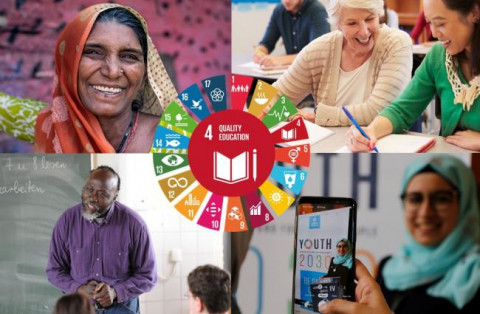 Eight reasons to #CommitToEducation 2019-07-18 Globally, the world is not on track to achieve Sustainable Development Goal 4 (SDG 4), with the risk of leaving hundreds of millions of children, young people and adults behind on every continent in 2030. Out-of-school rates have stagnated at all levels 64 million children of primary school age (6 to 11 years) 61 million of lower secondary school age (12 to 14 years) 138 million of upper secondary school age (15 to 17 years) are still denied the right to education and rates are significantly higher in rural and poor households. The rich are five times more likely to complete secondary school than the poor, reflecting an important equity challenge. According to new projections by the UNESCO Institute for Statistics and the Global Education Monitoring Report, without a radical shift in education policy and investment, more than 220 million children, adolescents and youth will still be out of school in 2030. Despite progress, many countries are still far from achieving gender parity 1/3 have not reached parity in primary education 1/2 have not reached parity in lower secondary education 3/4 have not reached parity in upper secondary education Too few are starting early Evidence shows the benefits of early childhood education and care on well-being and impact of future learning, especially for the most disadvantaged. Participation in organized learning, however, remains far from universal, ranging from under 50% in least developed countries to 95% in Latin American and Caribbean, Europe and North America. Too few are acquiring a minimum level of education needed to lead healthy lives, secure decent jobs and participate in society SDG 4 shifts the ambition from previous international commitments by affirming that everyone is entitled to a minimum of twelve years of free and compulsory education. But only half of all adolescents and youth complete secondary school. This figure drops to 18% in low-income countries and 1% for the poorest girls in these countries. Added to this, 750 million adults – two thirds of whom are women – are illiterate, with the lowest rates in Southern Asia and Sub-Saharan Africa. Enrolment in tertiary education – essential for gaining advanced skills needed to meet the needs of sustainable development - stands at 38% with large regional variations. Being in school does not equal learning for all More than 617 million - six out of ten - children and adolescents worldwide do not achieve minimum proficiency in reading and mathematics. Most of these children are in school, underscoring the urgent need to improve education quality while broadening access so that no one is left behind. Furthermore, disparities in learning start young and widen as children get older or drop out altogether. Too many teachers lack the minimum required training Although comparative data on trained teachers needs to be interpreted with caution, lack of teacher training and professional development severely inhibits the achievement of SDG 4. Sub-Saharan Africa faces the biggest challenges, with 50% of teachers with the minimum required training at secondary level, and 64% in primary. This proportion has been declining since 2000, a result of hiring contract teachers without qualifications to cover gaps at lower cost. School environments are not conducive to learning Learning environments are not safe and free from violence, school bullying is pervasive across all regions and countries of different income levels, affecting student’s well-being and capacity to learn. Schools lack the basics for example, in sub-Saharan Africa, less than one half of schools have access to safe drinking water, electricity, the internet, and computers. Furthermore, the lack of appropriate hygiene and sanitation facilities continues to put girls’ education at risk, especially in adolescence. Educational institutions are also under threat. More than 14,000 attacks have taken place over the past five years across 34 countries on students, personnel and institutions in many parts of the world, highlighting the urgent need for more concerted efforts to make schools safe spaces and protect education. Strengthening partnerships is vital to support implementation The 2030 agenda is about solidarity and partnership. Country ownership is a basic principle of the SDGs but the international community has the responsibility to steer the process, provide strategic guidance and coordinated support. The global SDG-Education 2030 Steering Committee and regional committees that are in place provide the foundation for increasing joint action for education in the years ahead – to learn from each other's experiences, develop joint initiatives ensuring complementarity and synergy. URL:https://sdg4education2030.org/eight-reasons-committoeducation-sustainable-development-goal-4-july-2019
 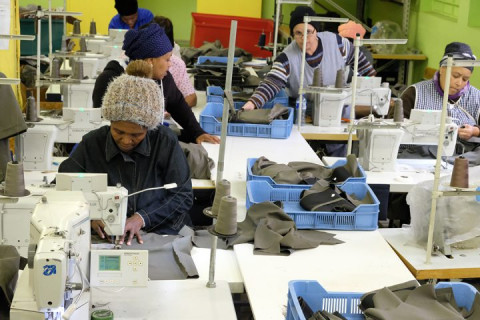 UNDP Multi-Dimensional Poverty Report Reveals Wide Inequalities Among the Poor 2019-07-18 11 July 2019: The UN Development Programme (UNDP) has released its 2019 report on multi-dimensional poverty, which uses ten indicators to assess the severity and nature of deprivation around the world. The report goes beyond income to consider indicators of health, education, threat of violence, quality of work and standard of living, thus providing a single “headline measure” of countries’ progress on at least seven different SDGs. The report titled, 2019 Multidimensional Poverty Index: Illuminating Inequalities, was produced jointly by UNDP and the Oxford Poverty and Human Development Initiative (OPHI). It draws on a study of 101 countries, of which 31 are low-income countries, 68 are middle-income, and two are high-income, covering more than three-quarters of the global population. The report shows that 1.3 billion people are considered to be “multi-dimensionally poor” according to the ten indicators; a person is considered to be multi-dimensionally poor if they experience deprivation across one-third of these indicators. The report finds that the experience of poverty can differ within the same household, and that half of those considered to be multi-dimensionally poor are children and young people under the age of 18. Deprivations declined the most in the poorest 40% of the population; in these cases, development did not leave the poorest behind. Key findings from the report include that large variations persist within countries, and that two-thirds of the world’s multi-dimensional poor live in middle-income countries. The report provides further analysis on ten selected countries that have a total of two billion people; of these, India, Cambodia and Bangladesh had reduced their MPI values most quickly. Overall, deprivations in the ten countries declined most among the poorest 40% of the population, showing that development, in these cases, did not leave the poorest groups behind. The report devotes a section to progress toward SDG 1 on ending poverty, in particular, SDG target 1.2 on ending poverty “in all its forms, everywhere.” The indicator for SDG target 1.2 is that countries will reduce “at least by half” the proportion of men, women and children of all ages living in poverty in all its dimensions according to national definitions. The Multi-dimensional Poverty Index (MPI) replaces the Human Poverty Index (HPI) that UNDP previously applied to assess levels of poverty. The HPI reflected aggregate scores, whereas the MPI provides a scoring at the individual level, based on the kinds of deprivations that they face. An advantage of the MPI is that data can be disaggregated by indicator to show how the nature of poverty varies across different regions, ethnic groups, age cohorts and other defining features. OPHI explains that the MPI captures relevant goals and targets under SDG 1 on ending poverty, SDG 2 on food security, SDG 3 on health, SDG 4 on education, SDG 6 on water and sanitation, SDG 7 on energy, and SDG 11 on sustainable cities and communities. UNDP and OPHI will launch the findings of the report at a side event at the 2019 session of the UN High-level Political Forum on Sustainable Development (HLPF) on 17 July. The two organizations will also launch a handbook on 18 July, which explains how countries can build a national MPI and use it to inform their efforts toward the SDGs. URL:http://sdg.iisd.org/news/undp-multi-dimensional-poverty-report-reveals-wide-inequalities-among-the-poor/