
News
Catch up on what’s happening in the world of global citizenship education.
1,668 results found
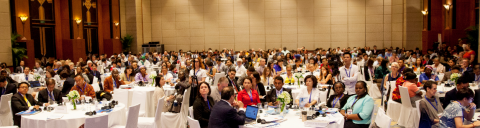 APCEIU calls upon the collective efforts of GCED & ESD at the UNESCO 2019 Forum 2019-08-18 The UNESCO 2019 Forum on Education for Sustainable Development and Global Citizenship took place on 2-3 July 2019 in Hanoi, Vietnam, under the overarching theme “Learning and Teaching for Peaceful and Sustainable Societies: From early childhood to primary and secondary education”. This Forum was organized by UNESCO, in cooperation with the Ministry of Education and Training of Viet Nam and the Viet Nam National Commission for UNESCO, with the additional support of the Ministry of Education, Culture, Sports, Science and Technology of Japan (MEXT), the UNESCO Japanese Funds-in-Trust for the Global Action Programme on Education for Sustainable Development, and the Asia-Pacific Centre of Education for International Understanding (APCEIU). The Forum was kicked off with the opening and congratulatory remarks by the representatives of the organizers. APCEIU Director, Mr Hyun Mook Lim, in his remarks, highlighted the common vision of ESD and GCED which aims to make our world more just, inclusive, peaceful and sustainable. On top of that, he urged the collective efforts of ESD and GCED in a holistic way to mainstream them into curricula and policies despite some differences between them. Also, APCEIU organized concurrent session 5.2 entitled “The role of teacher training in promoting the social and emotional and behavioural dimensions of learning of ESD and GCED”. By bringing a panel of experts and practitioners together, the session provided rich insights based on the research results from the experiences in teacher exchange which had impacts on minds and attitudes of teachers and students. Furthermore, while sharing progress, achievements and challenges, the panelists discussed how we could make difference in teacher training to transform the learners’ mindset more effectively, with a focus on the international teacher exchange as one of the innovative ways in teacher training. The 2-day meeting comprised of a myriad of sessions such as panel discussions, town hall meetings, workshops and etc., addressed how the cognitive, socio-emotional and behavioural dimensions of Education for Sustainable Development and Global Citizenship Education are reflected in pre-primary, primary and secondary education. With approximately 340 stakeholders from the fields of GCED and ESD across the globe, this Forum successfully concluded pledging to get together again at the Forum in 2021. The upcoming Forum will be devoted to reviewing the global progress made in the areas of ESD and GCED enshrined in Target 4.7 of the Sustainable Development of Goal (SDG) 4 on Education. URL:APCEIU calls upon the collective efforts of GCED & ESD at the UNESCO 2019 Forum > APCEIU News - APCEIU (unescoapceiu.org) Photo credit: UNESCO HQ
 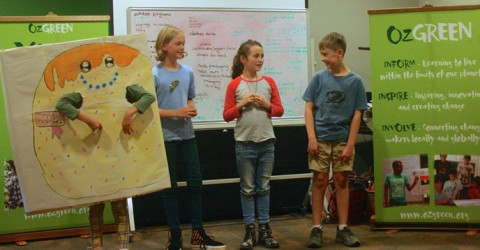 Youth take the pulse of the planet and create change in their own communities 2019-08-12 'What we do is to unashamedly focus on those people who can bring real change in their communities and the world and help them kindle that flame,' said Sue Lennox, co-founder and former CEO of the Global Rivers Environmental Education Network (OzGREEN) which runs the Youth Leading the World (YLTW) programme. The YLTW programme, which was nominated for the UNESCO-Japan Prize on Education for Sustainable Development in 2018, uses citizen science, education for sustainable development (ESD) and participatory leadership to inform, involve and connect young changemakers within communities and across the globe so that they can then go on to launch their own tailormade schemes. 'What we like to think of as our trademark is moving people from inaction to a place where they can start imagining and creating a different world,' said Sue. 'We help get them started on that journey. After all they know what change is needed in their own region.' 'What is exciting is that we have proven YLTW to be transferable and have trained over 1000 local facilitators to run the initiative in their own region. Training facilitators online and in person has made YLTW accessible even to people in remote areas globally,' she said. Three ways to transformative learning YLTW is based on transformative learning and works in three ways, starting with putting the most up to date environmental information in front of people. 'This is what we call taking the pulse of the planet and all the information we give is grounded in evidence and sound science. Invariably the response from facilitators is that they never realised how serious the global situation was,' said Sue. 'It is a great reality check for those living a privileged life.' The second stage using strategic questioning involves giving young people the skills to become innovators and shift their communities towards sustainability and fairness. The third stage is the one most important to young people and that is connecting with others in their own communities and further afield. For Sue the magic of this stage is putting young people from Australia together with people in Bangladesh or Central America or Africa to use the methodology and training to initiate their own projects in very different contexts. 'This brings profound change because often young people feel isolated and this prevents them from stepping up. Connecting with others gets them really excited,' she said. The YLTW project includes an annual 3-day youth congress run simultaneously in multiple interconnected locations. So far, the project has directly involved over 17,000 youth from around 100 regions globally. People emerge from the congress with a personal plan to reduce their own eco footprint with targets to meet in bringing about change in their own communities. 'We get them to identify their biggest concerns and then flip that around and help them build a vision. Last year the biggest concerns were climate change and lack of leadership,' said Sue. Pace of change is quickening 'The rate at which young people fuelled by the seriousness of the situation are stepping up to do something is quickening, as is the coming to life of the global movement,' said Sue who has been working in ESD for more than 30 years. ‘In 2018 we established the YLTW Global Council, made up of experienced Facilitators from around the world. They are guiding the way forward.’ Actions young people choose to put in motion might include getting their schools to go solar by involving staff, parents and student bodies and searching for funding. Or it may be a specific project such as in Canada where young people concerned about the disappearance of bees learned about keeping them and set up a series of hives in public spaces. Two of the most ambitious projects have involved river health. In partnership with local NGO the Sankat Mochan Foundation, OzGREEN has helped establish a science research centre in Varanasi, India, which works with young local people to improve the health of the sacred River Ganges and the communities worst affected by sewage pollution. 'One of the biggest successes here has been getting young local women involved in a context where that is not the norm. A highlight last year was seeing young village girls stand up and speak passionately about their issues of concerns and what they are going to do about it," said Sue. Much closer to home in Bellingen where the YLTW project is based, young people have been working with OzGREEN to monitor the health of their local river and report to their local community. In 2015 a major biodiversity tragedy in the local river of the same name, decimated a unique and ancient species of turtles. The turtles were dying in adulthood from a previously unidentified virus. Working in partnership with conservation organizations and local schools, community volunteers began monitoring the health of the entire river basin on a monthly basis, publishing and sharing their data with the community and the scientists who are leading the recovery of the turtles. For the future, she believes the key is to build on their strong base making the online facilitator training accessible to more areas of the world. 'We know we have a powerful model for change and that we are able to convey that to the generation that will bring it about,' said Sue. Education for Sustainable Development (ESD) empowers people with the knowledge, skills, attitudes, values and behaviour needed to think and act for a sustainable future. It is also about including sustainable development issues, such as climate change and biodiversity into teaching and learning. UNESCO promotes ESD at all levels and in all social contexts through its Global Action Programme. URL:https://en.unesco.org/news/youth-take-pulse-planet-and-create-change-their-own-communities
 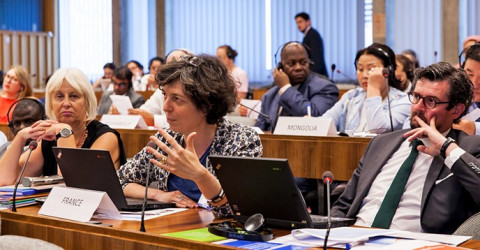 UNESCO hosts international workshop to train policy-makers to address antisemitism in and through education 2019-08-08 Antisemitism is a global human rights issue. Education is a powerful tool to address and prevent it. Based on this premise, UNESCO in partnership with the OSCE Office for Democratic Institutions and Human Rights (ODIHR) and the World Jewish Congress (WJC) – hosted a two-day workshop to strengthen the capacity of policy-makers and education stakeholders to address contemporary antisemitism in and through education, in Paris, France 10 – 11 July 2019. Following a first workshop (held on 21-22 May 2019 in Warsaw, Poland), the ‘International workshop on addressing antisemitism in and through education’ marked the second in its series and the first of its kind – that is with a global reach – to be hosted by a United Nations agency. The workshop brought together government officials and education stakeholders from 27 countries across all UNESCO regions: with representatives from Afghanistan, Armenia, Austria, Azerbaijan, Burkina Faso, Cote d'Ivoire, France, Gambia, Germany, Grenada, Ireland, Latvia, Maldives, Mali, Mauretania, Mongolia, Mozambique, Nepal, Romania, Russian Federation, South Africa, Spain, Sri Lanka, Tajikistan, Turkey, Uruguay and Zambia. This diversity in country and stakeholder representation underlines the global interest in confronting antisemitism, which statistics have proven to be on the rise worldwide and prevalent regardless of the presence of a Jewish community. In his opening remarks, Alexander Leicht, Chief of the Section of Global Citizenship and Peace Education at UNESCO stated, “antisemitism is a complex phenomenon that has mutated over time and that often takes tacit and coded forms. Via social media, antisemitic messages can spread freely and anonymously, creating a situation in which open antisemitism has become increasingly mainstreamed and socially acceptable. Education is a powerful tool to address this concerning trend”. Hence, UNESCO’s work and commitment to promoting education as a tool to build resilience of learners to antisemitic stereotypes, to raise awareness for the harmful effects of discriminatory rhetoric and to empower them to reject all forms of prejudice is fundamental. Christie Edwards, Deputy Head of the ODIHR Tolerance and Non-Discrimination Department, further underlined the important role of education in addressing antisemitism: ‘Education policymakers’ role in the fight against antisemitism cannot be understated. We hope that ODIHR and UNESCO’s efforts to strengthen the capacity of education to address antisemitism will encourage decisive action towards creating safer and more tolerant societies. A new generation of learners empowered to recognise and reject antisemitism in all its forms will be crucial to combating this prejudice.” The workshop commenced with a session open to Permanent Delegations and invited guests, which included a round table discussion on “Why is it important to address antisemitism globally?”, with contributions from Malek Boutih, Ethics advisor at Paris Saint-Germain Football Club, Menachem Rosensaft, General Counsel of the World Jewish Congress, and Robert Williams, Chair of the International Holocaust Remembrance Alliance Committee on Antisemitism and Holocaust Denial. Aimed at education policy-makers, notably those responsible for curriculum development and teacher training, the workshop sought to define key concepts related to Global Citizenship Education (GCED) and the prevention of violent extremism through education (PVE-E), as well as enhance the understanding of antisemitism, and reflect on the possible role of education in preventive efforts. The two-day workshop introduced participants to educational approaches and practices that strengthen learners’ resiliency in the face of violent extremism in general and antisemitism in particular; as well as provide them with the opportunity to exchange ideas on implementation strategies at the sub-regional and country levels, commonalities and country-specific approaches. In this context, participants were presented with the UNESCO/OSCE guidelines for policymakers on “Addressing Antisemitism through Education” as well as with the website “AboutHolocaust.org”, a joint initiative by the World Jewish Congress and UNESCO to address Holocaust denial and distortion online. In addition, as part of the workshop, participants visited the Memorial de la Shoah and attended an evening reception in the presence of Beate and Serge Klarsfeld, UNESCO Honorary Ambassadors and Special Envoys for Education about the History of Holocaust and Genocide Prevention. In the last session, participants had an opportunity to discuss the linkages between policy-making and educational practices toward addressing antisemitism through education at their national level, with a view to develop follow-up activities. In an effort to reach more countries, it is envisioned that this series of international capacity building workshops will continue, with a third workshop in the near future. URL:https://en.unesco.org/news/unesco-hosts-international-workshop-train-policy-makers-address-antisemitism-and-through
  German NGO clears headspace for students to innovate on sustainable development 2019-08-08 ‘We are trying to break the rules in a constructive way and free some space in school timetables and students' minds to see what sustainability ideas they fill it with’ said Silke Ramelow, Chairwoman of BildungsCent, an NGO working to change teaching and learning through education for sustainable development (ESD). Their transformational projects, which take place in schools across Germany, include, among other things, an activities box for schools, an art project, which allows students to build a creative approach to solving climate change, and 'SWAP' which turns the tables by having students teach their teachers on sustainability topics. BildungsCent has been working for close to 20 years and came into force after the 2000 PISA study (Programme for International Student Assessment). Germany surprisingly failed to score as well as expected and it was understood that schools would have to change their approach in order to give students an education fit for the future. In 2008, with climate change becoming an ever more urgent topic, the German Government released funding to improve sustainable development education. ‘There was a need in general for future-oriented education that was connected to real-life experience rather than one that was solely oriented around passing exams. We were already working with schools so were well placed to partner with the Ministry of Environment to address the need for change in relation to the teaching of sustainable development,’ said Silke. Their highly successful programme AktionKlima! which reached 2,200 schools began simply by giving them large green boxes - the ‘KlimaKiste’ (climate box) - filled with tools, inspiring materials and further information to engage children in recording their surroundings with respect to sustainability. ‘We offered such a large portfolio of possibilities through the programme that everyone could find their own starting point. We were already changing the conversation by offering a positive approach rather than one that focuses on an impossible problem and calls for rebuilding the entire school!’ she said. The programme, which was nominated for the UNESCO-Japan Prize on ESD in 2018, placed advisers in schools for 4-month projects and after that time offered further help and support. This was followed up with a mobile version of the climate box, which students could take to marketplaces or town halls, thus involving public stakeholders in their activities. Around 500 schools worked with as many partners on this stage of the project and reached businesses and municipalities as well as individuals. Sowing the seeds of lasting change The next project, KlimaKunstSchule (ClimateArtSchool) involved 50 artists going into 200 schools to work directly with students. ‘We wanted to see what happened when students were introduced to the creative process not necessarily to produce an art work but to explore how to think differently about problems and solutions to climate change and protection,’ said Silke. ‘The change in thinking was remarkable with students suddenly opening their minds and asking themselves "what can I do about this?"’ The transformative process, which created new narratives and changed the way students viewed themselves was taken a step further with ‘SWAP’. ‘We became more courageous and decided to work with 5 schools training the students to teach their teachers on different sustainability topics,’ said Silke. ‘We ran workshops for the students only and asked them what they thought about how they were taught about green issues. They said the main problem was that their teachers did not have sufficient knowledge on the subjects they were trying to teach.’ Their first topic under the heading of biodiversity was plastic in the seas with students receiving guidance on content and teaching methodology, mixed media and on developing a learning plan and schedule. ‘At first there was a period of cognitive dissonance with teachers not finding their new role and adapting to new routines but as things evolved the level of content and the methods used were both wonderful. The students and teachers really changed during the process. The level of innovation was high with students using props such as vegetable bags made from netting filled with fabric animals to illustrate the serious consequences of plastic in the sea on plants and animals,’ she said. The next topic to be tackled in the same way will be food and climate change. ‘It is amazing how much can be achieved in just two days of workshops with 8 to 15 students per school,’ said Silke. Another interesting idea has been to hold a ‘Primary School University’ where the difficult and demanding topics related to sustainable development are addressed in primary schools. Lectures are organized and implemented by the students and supported by BildungsCent. Scientists and other experts are invited to explain these topics and parents are welcome too. ‘Our work is really about making new and free space for students to find out what their deep needs are in relation to sustainability. ‘Our aim is to provide schools with inspiration and concrete opportunities for action. Change in terms of sustainability is not only about new content. To become effective, new content needs new and unconventional forms and methods.’ URL:https://en.unesco.org/news/german-ngo-clears-headspace-students-innovate-sustainable-development
  ‘Let’s Talk!’ Campaign to reduce early and unintended pregnancy launched 2019-08-08 “When a young girl gets pregnant, it means the system has failed her. We have failed her,” said UNESCO Regional Director for Southern Africa, Prof. Hubert Gijzen at the launch of the ‘Let’s Talk!’ Campaign in Johannesburg, South Africa on 31 July 2019. ‘Let’s Talk!’ is a social and behaviour change campaign to reduce early and unintended pregnancies (EUP) across 21 Eastern and Southern African countries. “In the ‘Let’s Talk’ Campaign, we have a tremendous opportunity to re-write the narrative,” said Prof. Gijzen. “From blaming the girl child, to equipping her and the boy child with knowledge and tools necessary for pregnancy prevention. We have an opportunity to admit that yes we have failed our youth especially the girl child. But now we are prepared to fix the system. So that no more injustice is done to girls. We know we can do better because girls deserve better,” he said. Prof. Gijzen emphasized how accessing sexual and reproductive health and rights (SRHR) and timely comprehensive sexuality education (CSE) can change the trajectory of adolescent girls’ lives. Officially launching the Campaign, South African Minister of Basic Education, Angelina Motshekga said EUP has adverse impacts on educational opportunities, achievements and future of adolescents, especially the girl child. She reiterated the need for coordinated efforts to accelerate progress in the prevention and management of EUP in the country as well as regionally. If young people in East and Southern Africa, who account for 32 per cent of the region’s total population, are to fulfil their potential they must be healthy, educated and empowered. "We come to this matter with a sense of urgency. We have to do more and we have to commit to ending early and unintended pregnancies," said Dr. Julitta Onabanjo, UNFPA Regional Director for East and Southern Africa. “Only by investing in girls will we be able to create an inclusive society and economy, and harness the demographic dividend for Africa,” she added. The ‘Let’s Talk!’ Campaign will be implemented until December 2020, and envisions an Eastern and Southern Africa region where all adolescents are empowered and have the knowledge, information, agency and support to prevent early and unintended pregnancy and reach their full potential. Over 150 participants from 13 Eastern and Southern African countries attended the launch, including members of the SADC Parliamentary Forum, Lesotho Minister of Education and Training and Zimbabwe’s Deputy Minister of Primary and Secondary Education. #LetsTalkEUP Ambassador, renowned DJ Zinhle, performed a song which produced exclusively for the Campaign at the launch. The song features the Campaign pillars of health, education and rights, within the context of EUP. It aims to engage and excite young people across the region, building upon DJ Zinhle’s immense popularity and appeal. The launch introduced the Campaign to the high-level stakeholders and raised awareness on the magnitude of EUP, as well as the need to implement preventative actions to address its devastating social and economic impacts, especially for the lives of adolescent girls and young women, but also men and boys and society as a whole. URL:http://www.unesco.org/new/en/harare/about-this-office/single-view/news/lets_talk_campaign_to_reduce_early_and_unintended/
 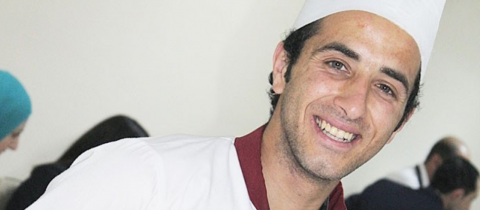 A Syrian student aspires for a brighter future 2019-08-08 Abdulrahman Naseb, 24, has overcome a lot in his short life. Originally from Syria, he came to Jordan at the height of the crisis with a dream of becoming a pastry chef. As the years ticked by, Abdulrahman began to feel hopeless; he did not hold any credentials and life as a Syrian in Jordan was not easy. Finally, in 2018 he heard about a technical and vocational education and training program being offered at Luminus Technical University College (Al Quds College), in Amman. Through a project implemented by UNESCO, scholarships were being offered to Syrian and Jordanian students, funded by the Government of the Republic of Korea. Applicants did not require successful Tawjihi (high school accreditation) scores to participate and among the diploma programmes being offered was a Hospitality Course. “I needed to prove to myself that life doesn’t stop without Tawjihi and to remember that you must work hard to achieve your goals. It was important to stop looking at this as an obstacle and start looking at it as an opportunity”. Abdulrahman was accepted into the Hospitality course and chose to specialize as a dessert and pastry chef. “I have mastered cookies and am still learning cheesecake, one version of which is difficult. I never look at things as impossible; eventually, if you keep trying, there is nothing too difficult”. Abdulrahman completed his course work in October 2018 and then went on to his practical training which concluded last month. “During my practicum, Executive Chef Ms. Dareen Salah became a mentor to me. I continue to consult her about my career and take her suggestions”. At a new restaurant opening soon in the Abdali Boulevard, Abdulrahman will begin working as a pastry chef. He feels excited but also some level of trepidation. In the past, he has been treated poorly by some would-be employers. “At one recent interview, the employer was speaking unkindly to me. Finally, he said he would give me the job but then offered me a salary that not even a child would accept”. As he waits to begin his new role, he works on the side as a clown, performing at parties and events. Abdulrahman’s ultimate goal is to continue to his education so that he can pursue his craft working as a pastry chef in a high-end, five-star hotel. Despite all of the adversity, Abdulrahman has never stopped dreaming. Abdulrahman’s scholarship is one of the 250 scholarships offered under this project, supporting access to meaningful, accredited post-basic education for 75 vulnerable Jordanian youth and 175 Syrian refugee youth in Jordan. The UNESCO Amman office has been taking a leadership role in ensuring the implementation of the 2030 Agenda for Sustainable Development in Jordan. Sustainable Development Goal 4 focuses on ensuring inclusive and quality education for all and promoting lifelong learning. The project is managed by the TVET and HE portfolio-Education Unit at UNESCO Amman office. URL:https://en.unesco.org/news/syrian-student-aspires-brighter-future
 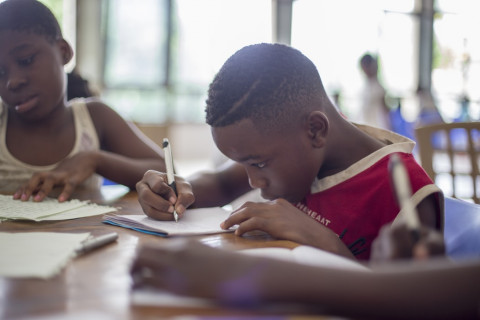 UNESCO Reports Large Increase in Migrant and Refugee School-Age Children 2019-08-05 The UN Educational, Scientific and Cultural Organization (UNESCO) has released its annual report on the state of education around the world. The 2019 report focuses for the first time on the theme of migration and displacement and finds that the numbers of migrant and refugee school-age children have grown by 26% since the year 2000. SDG target 4.5 calls for ensuring equal access to education for the vulnerable. This target is measured by SDG indicator 4.5.1, on parity related to education of people affected by conflict, among other groups for which data can be disaggregated. The report was launched during an event in Ramallah, Palestine. The 438-page report titled, ‘Migration, displacement and education – Building bridges, not walls’, highlights examples of effective work in providing education to children affected by conflict in different parts of the world, or who have come from such backgrounds. Case studies feature such efforts in Canada, Chad, Colombia, Ireland, Lebanon, the Philippines, Turkey and Uganda. For example, Lebanon, which hosts more refugees per capita than any other country in the world, has doubled its schools’ capacity in the wake of the Syrian crisis, opening its classrooms to 214,000 students – almost one-third of its pre-existing cohort of 750,000 students. The report calls on governments to address the education needs of migrant and displaced populations with the same attention they would give to their own people – protecting their right to education, planning for their education needs, and including them in national education systems. It also calls for representing migration and education histories accurately to challenge prejudices and build inclusive societies, and invest in teacher education to build their ability to work with diverse, multilingual and multicultural student populations. In a foreword to the report, Helen Clark, former Prime Minister of New Zealand and Chair of the Global Education Monitoring (GEM) Advisory Board, emphasizes that education must be “a key part of the response to migration and displacement,” and that education has the power to overcome stereotypes, prejudice and discrimination. The report calls on countries and development partners to give greater support to the Technical Cooperation Group (TCG) on SDG 4, which is convened by UNESCO and the UNESCO Institute for Statistics. The TCG acts as a platform for countries to cooperate on measuring progress toward SDG 4 (quality education). URL:http://sdg.iisd.org/news/unesco-reports-large-increase-in-migrant-and-refugee-school-age-children/
 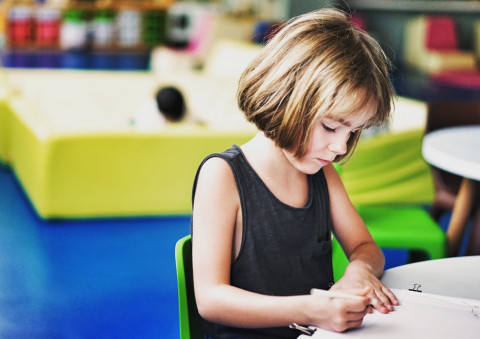 This English Region Is Planning a World-First for Climate Change Teaching 2019-08-05 The North of Tyne region in northern England is apparently one to keep an eye on when it comes to driving forward the fight against climate change. The combined authority has announced plans to make it the first place in the world to have a UN-accredited teacher for climate change in every state primary and secondary school. “This is our opportunity to be the first region in the world to meet the UN sustainable development goal,” said Jamie Driscoll, new mayor of the North of Tyne combined authority, who declared a climate emergency on his first day of taking office in May. It’s also a manifest commitment to give every child a world-class environmental education, and to make such progress so soon is fantastic,” he added in a statement published on Tuesday. Kids will get lessons of global warning and the climate crisis, their impact, and strategies for mitigating and adapting to the impact. The project is being led by Dr. Meryl Batchelder, a teacher a Corbridge Middle School in Northumberland, who said that educating children is the best way to promote understanding of the environmental problems facing the world. “The Industrial Revolution started in the North of Tyne and now the Green Revolution begins in the North of Tyne,” said Batchelder, who’s also a UN Sustainable Development Goals ambassador. “Education on climate change is essential for everyone in the north-east to understand the seriousness of the situation,” she said, adding that it would mean “that all schoolchildren will be given accurate, relevant information on the causes and effects of global heating.” “Pupils also need to be aware of possible climate change mitigation strategies and adaptation measures,” she said. She said that students would become more climate conscious with the help of the teachers — and could be the drivers of the green solutions of the future. The combined authority has teamed up with a UN teacher training scheme called EduCCate Global, which approached them to ask for support for a regional launch of the Climate Change Teacher Course, according to the authority’s statement. The eventual aim of the initiative is to have a UN-accredited climate change teacher in every school across the UK. They’re trained up with an online course that takes about 15 to 20 hours, and covers areas like climate change science, adaptation planning, health, forests, climate change finance, and international negotiations. The first 80 UK teachers have already completed the course, according to education specialist Melanie Harwood, while a further 1,973 UK teachers are working towards it — and up to 50 teachers a day are reportedly signing up. “Young children are far more vulnerable to climate-related disasters and associated health risks than any other social group,” Harwood added. “We need to give them the tools to understand the effects of a changing climate so that they can take well informed and effective action in the future.” “In these days of a climate emergency, now more than ever, teachers all need the knowledge… to ensure to deliver clear climate literacy to all their pupils,” she said. The move comes after more than two-thirds of teachers in the UK polled this year reportedly said they wanted to see more teaching on climate change in British schools. URL:https://www.globalcitizen.org/en/content/north-tyne-climate-change-teaching-schools-un/
 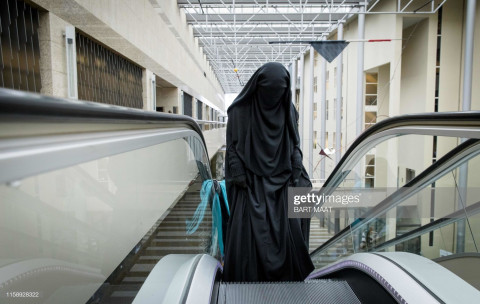 The Netherlands' New Burqa Ban Could Stop Girls From Going to School 2019-08-05 Human rights advocates are concerned that the Netherlands' burqa ban might stop Muslim women from entering public spaces, including schools. The government announced on Thursday that burqas, niqab face-veils, motor helmets, and ski masks are all officially banned in public spaces. The law doesn’t apply to public streets but also includes hospitals, government buildings, and public transportation. Offenders are subject to a 150 euro ($166) fine. The ban will affect an estimated 150 burqa and niqab-wearing women in the Netherlands, according to DW, and girls will be affected by the ban as early as middle school. The burqa is not mandatory for all Muslim women, but some choose to wear them once they have reached menstruating age. Schools become unsafe environments when teachers or officials can target and punish students for expressing their beliefs, Philippe Nassif, advocacy director for the Middle East at Amnesty International, told Global Citizen. As a result, parents might be more inclined to keep their daughters at home because they could become targets for bullying or because they can’t practice their beliefs freely and fairly, he said. In school, if a student refuses to abide by the dress code and is punished, it might make a scene; if they obey it, they can feel shamed publicly by their peers, Nassif explained. “People have the right to exercise freedom of expression under international human rights law,” he said. “They have the right to express their religion and practice their beliefs freely without any kind of harassment or any kind of discrimination.” Outlawing religious clothing hinders the economic and social integration of Muslim women, increases discrimination, and can place Muslim girls under psychological distress that disrupts their ability to perform at school. Prominent Dutch officials, transportation officials, and health officials have all said they will not enforce the burqa ban, but the government has not shown signs of amending the law anytime soon. Prime Minister of the Netherlands Mark Rutte’s coalition government passed the burqa ban in 2016 in response to the growing popularity of right-wing Paty for Freedom leader Geert Wilders, who opposes a dominant presence of Islam in the country, according to the Guardian. Wilders told the Associated Press that the next step is to make sure that headscarves are also criminalized. The Netherlands is the latest European country to introduce a ban on religious clothing in recent years following France, Germany, Belgium, Austria, and Denmark. France’s ban has already proved to negatively impact Muslim girls' educations. After France enacted a headscarf ban, researchers found that the rate at which Muslim girls dropped out of school increased by 6%, and they took longer to complete secondary education. After the ban, they were also prone to have more children. When Austria prohibited headscarves in schools in May, Shauna Pomerantz, associate professor in the Department of Child and Youth Studies at Brock University, condemned the law. Pomerantz, also the author of Girls, Style, and School Identities: Dressing the Part, told Global Citizen that bans on religious clothing lay the groundwork for hatred, fear, and racism, while teaching young people that differences are bad and Muslim girls are dangerous. The Dutch government insists the ban doesn’t target any religion and that people are free to dress as they want, and will evaluate the law after three years. URL:https://www.globalcitizen.org/en/content/netherlands-enforces-burqa-ban-public-schools/
 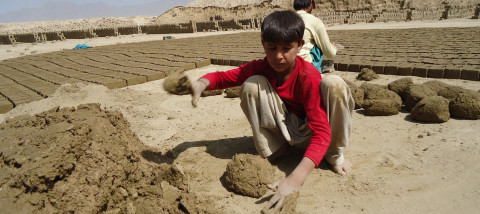 Extreme Poverty Is Forcing Afghan Children to Give Up Their Education to Work 2019-08-05 More than half of Afghanistan’s people are unable to meet their basic needs, living on less than a dollar a day — the amount of money determined as required to survive — according to Shubham Chaudhuri, the former World Bank country director for Afghanistan. “I think the state of poverty in Afghanistan today is that it is deep and it is widespread," he told the Associated Press, revealing that more than three-quarters of the population are close to reaching that same level of great financial decline. The increased financial struggle the country is experiencing, as well as the closure of hundreds of schools due to violence conflict, and poor enforcement of labor laws have led to an increase in child labor. Last year, the United Nations reported that more than 2 million children in Afghanistan, between ages 6 and 14, perform some type of child labor. "My children wake up early in the morning and right after prayers they come here for work, so they don't have time for school," Atiqullah — who works at a brick factory with his family, including his 10-year-old son, Kamran — told the Associated Press. A recent World Bank report said that political stability and an increase in security in the country could help bring skilled workers back from overseas and encourage investment. But the country's future remains unclear. Much of the billions of dollars in aid that the United States and other governments have provided has not reached the country’s people or its mos vulnerable. Instead, it has ended up lining the pockets of rogue militia leaders. Afghanistan had the slowest economic growth rate in all of South Asia in 2018 due to drought, ongoing fighting, and rampant corruption. And violent conflict, as well as extreme poverty, has pulled many of the country’s children out of school. These children now spend their days begging on the street or forced into child labor in order to survive. Both children and adult laborers work in harsh conditions. Many villagers work in brick kilns in the stifling summer heat to pay off loans, provided by brick factory owners, used to fulfill basic needs. According to brick laborers, a family of 10 working in the factories can bring in an average income of $12-18 a day, fluctuating based on their overall productivity. While Afghanistan does have child labor laws, they are not strictly imposed, especially in villages where the people are severely economically disadvantaged. Working alongside Atiqullah’s family in the brick kilns is 65-year-old Jan Agha, who has been labored away in an effort to pay back loans he took out of necessity for three decades — he said does not see an end in sight for his family. Now his four sons join him at work, and he believes that life will be the same for the next generations of his family. "We always think about our future. We don't know how long we will live with economic problems like this, when we will be able to live our own lives, when we will be able to breathe in freedom. Right now we live like slaves,” he said. But for Afghan’s poor, it is the only way to endure until the country’s economic and political situation improves. "These days if you don't work, you cannot survive,” Atiqullah said. URL:https://www.globalcitizen.org/en/content/afghanistan-child-labor/