
News
Catch up on what’s happening in the world of global citizenship education.
1,668 results found
 UN Opens Platform to Collect SDG ‘Acceleration Actions’ Ahead of Summit 2019-06-17 In preparation for the SDG Summit in September 2019, the UN has set up an ‘SDG Acceleration Action’ platform, where countries and other actors can register voluntary initiatives that contribute to accelerating implementation of the 2030 Agenda. The platform was announced in an information note circulated by UN General Assembly (UNGA) President Maria Fernanda Espinosa Garces, ahead of a 14 June briefing on the scope and format of Summit activities. The September 2019 session of the UN High-level Political Forum on Sustainable Development (HLPF), also referred to as the SDG Summit, will be convened by the UNGA at the level of Heads of State and Government. It is mandated to follow up and review progress on the implementation of the 2030 Agenda and its 17 SDGs. Convening from 24-25 September 2019, the Summit is part of the UNGA’s high-level week for the 74th session. As indicated in the modalities for the Summit, voluntary actions and commitments by countries and other actors will be announced before and during the Summit, and the closing session will recapitulate the acceleration actions that have been announced in the course of the Summit. Actions can be announced by national, local and regional governments, the UN system, other intergovernmental organizations, international and regional financial institutions, and major groups and other stakeholders, individually or in partnership. To register a voluntary action on the ‘SDG Acceleration Action for the SDG Summit’ platform, users are asked to provide: A description of the action, its expected impact, and deliverables; A list of partners; Resources mobilized towards the action; Start and completion date for the initiative; and The specific SDGs and targets covered by the commitment. Actions need to be SMART (Specific, Measurable, Achievable, Resource-based, with Time-based deliverables). The Information Note calls specifically for actions that contribute to policy coherence and reflect interlinkages among SDGs. The platform also allows users to report on the implementation of their commitment, according to the Information Note. Espinosa informed Member States of a briefing on 14 June 2019 at 3 pm regarding the scope and format of the activities of the SDG Summit. Also briefing Member States during the meeting will be: the president of the UN Economic and Social Council (ECOSOC), the UN Deputy Secretary-General, and the UN Secretary-General’s Special Envoy for the Climate Action Summit. The meeting will include updates from the co-facilitators of preparations for the individual events convening during the high-level week. URL:http://sdg.iisd.org/news/un-opens-platform-to-collect-sdg-acceleration-actions-ahead-of-summit/
 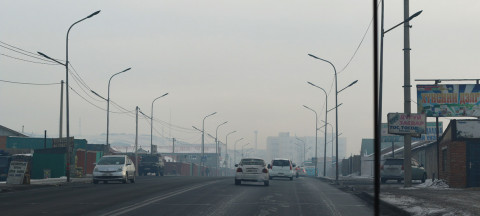 With a premature death every five seconds, air pollution is violation of human rights, says UN expert 2019-06-14 An independent UN expert said on Monday that the failure of governments across the world to ensure clear air, constitutes a “violation of the rights to life, health and well-being, as well as the right to live in a healthy environment.”Ahead of the 2019 World Environment Day on Wednesday, which has air pollution as its theme, David Boyd, the UN’s Special Rapporteur on human rights and the environment, called on states to take urgent action to improve air quality in order to fulfill their human rights obligations. Air pollution is a deadly, man-made problem, responsible for the early deaths of some seven million people every year, around 600,000 of whom are children. It is estimated that 90 per cent of the world’s population breathe polluted air. Every five seconds, somebody around the world dies prematurely as a result. In a statement, Mr. Boyd said that uncontaminated air is a core component of the right to a healthy environment, together with clean water and adequate sanitation, healthy and sustainably produced food, a non-toxic environment, healthy biodiversity and a safe climate. “The right to a healthy environment is fundamental to human well-being and is legally recognized by over 150 States at the national and regional levels. It should be globally reaffirmed to ensure the enjoyment of this right by everyone, everywhere while upholding the human rights principles of universality and non-discrimination.” Mr. Boyd described the efforts of China, host of this year’s World Environment Day, to tackle air pollution, as a “success story.” Although the Chinese capital, Beijing, has become synonymous with dirty air over the past few decades, a concerted effort by local and regional authorities has seen an improved situation in recent years, with the concentration of fine particulates – the tiny, invisible airborne particles that are largely responsible for deaths and illnesses from air pollution – falling by a third. © UNICEF/Bindra The UN expert reiterated his recommended measures for reducing air pollution, contained in a report presented to the UN Human Rights Council in March. These include monitoring air quality and impacts on human health; assessing sources of air pollution; establishing air quality legislation; and developing air quality action plans. “In celebration of World Environment Day, I urge States to take bold action to beat air pollution, improve health, address climate change, and fulfill their human rights obligations,” the expert said. World Environment Day, celebrated since 1974, is the United Nations day for encouraging worldwide awareness and action to protect the environment. It is organized around a theme that addresses a particularly pressing environmental concern. In a video message released ahead of the Day, UN Secretary-General António Guterres said that, as well as claiming millions of lives every year, and damaging children’s development, many air pollutants are also causing global warming. Mr. Guterres called climate change an “existential threat,” and pressed the international community to “tax pollution, not people” and stop building coal plants.
 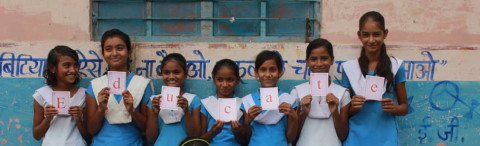 How data is focusing efforts to educate girls in India 2019-06-14 Good intentions are not enough. In tackling the multitude of challenges faced in developing countries, only with a forensic, disciplined approach can dramatic impacts be achieved with limited resources. And crucially, technology and the facility to collect, analyse and act upon large amounts of data can play a pivotal role in reaching ambitious goals for development and social advancement. This is the philosophy and approach of Safeena Husain, the founder of Educate Girls an organisation that aims to bring Indian girls back into the classroom. Husain’s work vividly highlights how the use of data and technology can transform the chances of reaching a target with limited resources. Every day in India, more than 4 million girls aged between seven and fourteen fail to show up at school. Why? In almost every case, the reason is simply their gender. As Husain puts it, for many families, “it’s rooted very much in a mindset where you believe that a goat is an asset and a girl is a liability.” Too often, sending a girl to school is seen as a waste of time. Even worse, she might develop a mind of her own and start answering back. And if she starts at school then subsequently drops out, then so what? It is ingrained negative attitudes to girls’ education that Husain argues must be challenged because the benefits can lift the whole community: An educated girl is less likely to be married off while still in her childhood,; She is likely to earn between 10 percent and 20 percent more than one who is not; Educating girls “positively impacts nine of the 17 sustainable development goals,” Husain pointed out. “Climate scientists have recently rated girls’ education as number six of actions to reverse global warming. This is phenomenal because at number six it is rated higher than solar panels and electric cars. You wouldn't think about that intuitively, but as fertility rates go down when girls are educated, that actually reduces carbon emissions significantly.” Immunisation rates go up 40 percent if the mother is educated; And critically, an educated girl is more than twice as likely to ensure that her children are educated. Educating a girl “is something we just have to do once… So, as long as we make it happen for her, she is going to make sure that the education outcomes are achieved for her own children and for generations to come,” says Husain. “With girls education and investments, we have an opportunity to close the gender and literacy gap today in the world.” Summary Every day, more than 4 million school-age girls in India skip school. Educate Girls, a non-profit organisation, has set itself the target of getting 1.6 million of those girls back into education within five years. It is an immense challenge. But, technology and data analysis are helping it target its resources to greater effect. Educate Girls founder Safeena Husain shared her data and analysis approach at a Wheeler Institute for Business Development event at LBS. The Institute builds awareness and to help solve the most pressing global issues by building an alliance of thinkers and practitioners. “So, as long as we make it happen for her, she is going to make sure that the education outcomes are achieved for her own children and for generations to come.” Isn’t the solution simple? Build more schools, train more teachers and provide midday meals? Clearly, such measures are going to help. But they are not enough. In 2010, India’s Right to Education Act, offering free and compulsory education came into force. Yet research in 2017 showed that many children still lacked basic skills in literacy and numeracy: girls were faring worse than boys. Educate Girls has looked at the problem in a different dimension: rather than simply provide more resources, see what is actually effective; concentrate on outcomes rather than inputs. Reflecting this approach, it launched the world's first Development Impact Bond through which funding was linked to the outcomes of its operations, not its activities. Educate Girls makes heavy use of technology and data – both for identifying where needs are greatest and what strategies yield the greatest impact. First is the issue of finding out how many girls are out of school and where they live. “We go door-to-door and find every out-of-school girl,” says Husain. “All of our field staff have smartphones with an Android app. This app has digital maps; it has survey questions; it has prompts… All the data we collect is in real time. We can build maps very quickly of where the out-of-school girls are… how many there are in each area so we can make planning much more focused based on the data that is coming out. “This survey is at 100 percent saturation. If a district we are going to has 1,000 villages, we go to every single household in that district. It means we have phenomenal data. “Once we have mapped out where out-of-school girls actually are, then we can start neighbourhood meetings, individual counselling of parents – really talk to them to bring their girls back into the school system. We handle the whole enrolment process… We work with school management committees to make sure there is the right infrastructure such as separate toilets for girls.” In 2007-08, when Husain was setting up Educate Girls, only about 40 percent of schools had a separate girls’ toilet. And how does all this data help? “I have data covering close to 4 million households,” says Husain. “Now, we can use advanced analytics to predict, and our predictions show that 40 percent of out-of-school girls in India are concentrated in 5 percent of villages.” This is an immensely powerful piece of information. India has 650,000 villages. When Educate Girls targets a village, it identifies an individual or individuals who will become advocates of the project – “positive deviants” in Husain’s words, “Young, educated passionate individuals who don’t want to accept the status quo and want to be gender champions.” It is they who will challenge the ingrained mindset that is preventing so many girls from becoming educated. They will become part of what the organisation calls Team Balika. “We currently have 13,000 villages and 13,000 Team Balika volunteers working with us,” said Husain. “Over the past 11 years, we have brought about 380,000 out-of-school girls back into the school system.” Achieving its target of bringing 40 percent India’s out-of-school girls back into education within five years will involve a massive expansion of the organisation’s activities. That’s where the analytics come in, says Husain: “The trick is working out which 5 percent of the villages we should focus on and then we can bring 1.6 million girls back into the school system – which means I need to scale from 13,000 to 35,000 villages and find 35,000 volunteers.” “We are getting larger and larger data sets. We are making predictions. They help us target geographies much faster. It helps us see correlations. There are about 263 indicators in our algorithm, and the majority are economic and social marginalisation… We can map for the whole country and say where we should be going.” That wealth of information can be shared with the government and other agencies involved in welfare and human rights issues, helping them to identify areas of greatest need. Educate Girls’ activities are supported by IDinsight, a non-profit that uses data to help organisations tackling poverty. It estimates that that Educate Girls would be able to reach around 1,000,000 out-of-school girls with its current expected budget and previous approach. However, by using the predictions generated by machine learning, it will be able to reach around 600,000 additional girls for roughly the same cost. Data collection and analysis can pinpoint the areas into which Educate Girls should go. But, what of the effectiveness of its efforts once it arrives in a village? With learning data for a quarter of a million children Educate Girls can quickly identify the schools which are doing best and which are doing badly. Then it can ask what explanations there might be. Is it classrooms, is it facilities, is it the number of teachers? For example, Educate Girls found that in some areas, some teachers appeared to be getting great results while others weren’t. Because results could be analysed and compared at a very granular level, an important finding emerged: the pupils of a teacher who taught in the village where he or she lived achieved far better results than pupils whose teachers came from outside. “Because they were from the same village, the teachers didn’t just run the classes,” observes Husain. “At exam time, they went to the student’s home. They said: ‘Are you doing okay? Can I help you? Are you stuck somewhere? Can I help you revise?’” Also, through classroom observation, and by seeing where pupils perform best, Educate Girls can help teachers up their game. Again, data gives important insights. The use of technology and data to target resources and evaluate outcomes has been key in the organisation’s success. If Husain has a regret it is only that Educate Girls didn’t see the potential earlier. “We could have automated stuff rather faster,” she says. “If there had been the opportunity, I would have invested much more heavily in the technology.” URL: https://www.london.edu/lbsr/one-of-the-best-investments-a-country-can-make-educate-girls
 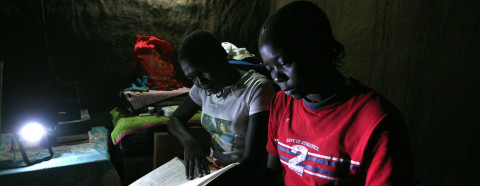 From philanthropy to profit: how clean energy is kickstarting sustainable development in East Africa 2019-06-13 Until recently, Namacurra district, in the Zambezia province of Mozambique, some 1,500 km from the capital Maputo, did not have any basic services – such as schools, health centres, or even energy – connecting the region to the electricity grid would be extremely time-consuming, and costly. But a new UN-backed clean energy initiative looks set to change the outlook for Namacurra, and, within a matter of months, kickstart sustainable development for the benefit of the thousands of people, relocated to the area following the devastating rains of 2015, and it could herald an improved outlook for other economically disadvantaged parts of Africa. The United Nations human settlements programme, UN-Habitat, and Portuguese energy company EDP, are constructing a solar energy system to supply 12 classrooms – which have been built to withstand 180 km per hour winds – with clean, renewable energy. This will have a huge impact on the community because, as well as enabling some 1,300 students to study at night, people living in the area will, for a small fee, be able to charge their mobile phones, and access the internet. They will also stand a better chance of surviving, when the next cyclones and floods hit the country: Mozambique has developed an early-warning system, with SMS alerts sent out by the government, but this only works in communities with access to energy. “As long as you can provide this service at a school, people will at least have access to communication with the outside world, which is the main handicap when an emergency strikes, recounts Juan Hurtato Martinez, UN-Habitat architect and manager of the project. “So, it ensures that, in an emergency, they can receive the alarms quickly." Scaling up across east Africa Although the impetus for the project comes from EDPs philanthropic arm, the company sees it as a sensible investment in Africa, in line with the UN’s call for companies to play their part in the move to a “green economy,” that is not reliant on fossil fuels such as coal and gas. "The African continent is surely the continent with more natural resources – such as the sun, wind, water, biomass and others – that allow the use of renewable energies,” says Guilherme Collares Pereira, Director of International Relations at EDP. “Therefore, it makes total sense to intervene in the market that has resources and that has the needs.”Renewable energies can enable universal energy access to be achieved Guilherme Collares Pereira, Director of International Relations, EDP Some 600 million people in Africa are without access to electricity, Pereira points out, and it is “more than proven that renewable energies can enable, in a cheaper, faster and more efficient way, universal energy access to be achieved.” The project in the district of Namacurra is one of six, in Kenya, Tanzania, Mozambique and Malawi, that will be receiving support from EDP. At the Kakuma Refugee Camp in Kenya, which hosts more than 186,000 people, a mini-grid will supply pay-as-you-go electricity to refugees according to their consumption needs. “It is a very interesting approach that can be replicated throughout the camp,” says Pereira, “but it can also be replicated in other refugee camps, not only in the Horn of Africa but all over the world.” Sustainability as a business opportunity For EDP, the 2030 Agenda is an opportunity, says Pereira. “Ten years ago, when we began involvement with these projects, we were guided more by our corporate responsibility policy, but nowadays it is more about business.” In 2018 the company decided to invest €12 million in companies that are already working with renewable energy in East Africa. “At the moment, they are not as profitable as traditional EDP businesses,” he notes, “but this is a journey, and we are discovering how the process develops. So, in the next couple of years, when we are ready, we can invest in more companies and grow them in preparation for entry into other markets.” “The potential is enormous: renewable energy technology is getting better, more efficient and more resilient. There is also an abundance of mechanisms and even financing from countries and the international community to support these projects. Everything is in place for its growth and it is imperative that the private sector enters this market."
 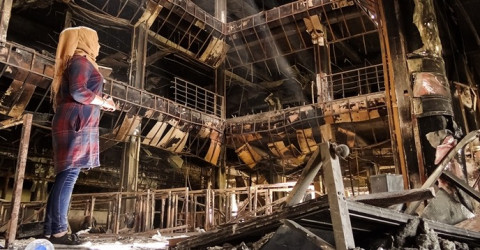 New data reveals attacks against education around the world 2019-06-13 New and updated data of the Global Coalition to Protect Education from Attack (GCPEA) shows that more than 14,000 armed attacks on education took place in the last five years in 34 conflict-affected countries. The GCPEA, of which UNESCO is a founding member, released the new data ahead of the fourth anniversary of the Safe Schools Declaration. High-level representatives from over 90 countries are gathering in Palma de Mallorca, Spain on 28-29 May 2019 at the Third International Conference on Safe Schools to mark the occasion and encourage other states to endorse the Declaration. “The fact that more than 14,000 attacks have taken place over the past five years across 34 countries is shattering,” said UNESCO Assistant Director-General for Education Stefania Giannini, speaking at the Conference. The Conference provides a forum to share experiences, raise awareness, and increase the visibility of the Declaration and the Guidelines. It is also an occasion to encourage future cooperation and deeper gender responsive implementation of the Declaration and the Guidelines. The new GCPEA data reveals that there were some 10,000 attacks on schools, including buildings that were bombed, damaged or used by armed forces or groups. Nine countries each suffered more than 500 attacks on schools. Higher education facilities have come under siege in at least 20 countries around the world. The research also found that in at least 30 countries, schools were used for military purposes. Girl and women students and teachers were also directly targeted in at least 18 countries through bombings of girls’ schools, abduction, rape, and harassment. To date, 89 countries - almost half of all UN Member States - have endorsed the Safe Schools Declaration, and committed to taking concrete action to end targeting of schools and universities, students and staff. ”The Palma Conference is an opportunity to build on this tremendous momentum and encourage all UN members to join the Declaration and ensure that the right to education can become a reality for all,” said Diya Nijhowne, GCPEA Executive Director. As the UN agency with a mandate in higher education, UNESCO is appealing to all countries to protect education at all levels, including higher education, from attack during armed conflict. “Attacks against education are attacks against knowledge and the power it brings to transform lives, to build the future,” said Ms. Giannini. “The need to protect education in contexts of crisis and conflict - and to make it a force for reconciliation - has never been more urgent.” In 2018, UNESCO launched the “Revive the Spirit of Mosul” initiative to rebuild the heritage and revitalize the educational and cultural institutions of Mosul. The Organization will invest its technical expertise and mobilize funding to support the country rebuild the education sector. UNESCO will also focus on the rehabilitation and modernization of the University of Mosul’s library, which was destroyed during the war. URL:https://en.unesco.org/news/new-data-reveals-attacks-against-education-around-world
  Global Index Finds No Country is Gender Equal 2019-06-12 3 June 2019: Equal Measures 2030 has released the 2019 SDG Gender Index, which finds that nearly 40% of women and girls, or 1.4 billion people, live in countries that are “failing on gender equality.” The Index reports that the world is furthest behind on SDGs 5 (gender equality), 9 (industry, innovation and infrastructure), 13 (climate action) and gender equality issues related to gender data and public finance, under SDG 17 (partnerships for the Goals). The index report titled, ‘Harnessing the Power of Data for Gender Equality: Introducing the 2019 EM2030 SDG Gender Index,’ examines the state of gender equality across 129 countries. The Index features 51 indicators across 14 of the 17 SDGs and 51 targets linked to gender issues. The Index ranks countries on a score of 0 to 100. The global average of countries’ performance is 65.7 out of 100, or “poor.” Denmark scored 89.3, making it the highest-ranked country on the Index. Australia, Canada, Finland, Germany, Ireland, Norway, the Netherlands, Slovenia and Sweden are the other top-ranking countries. The bottom ten countries all appear on the Organisation for Economic Co-operation and Development’s (OECD) list of fragile states. They are: Sierra Leone, Liberia, Nigeria, Mali, Mauritania, Niger, Yemen, Congo, Democratic Republic of the Congo and Chad.Some countries perform better than would be expected based on their GDP. Overall, higher-income countries rank as having greater gender equality than lower-income countries. However, the Index finds that some countries perform better than would be expected based on their gross domestic product (GDP) per capita, including Finland, Georgia, Greece, Kyrgyzstan, Malawi, Rwanda, Slovenia and Viet Nam. The report suggests further research to understand what budget decisions, laws or policies have enabled these countries to stretch their resources further than might be expected. Other countries have lower gender equality scores than their countries’ income levels might predict, such as Botswana, Iraq, Malaysia, the Russian Federation, South Korea, Switzerland, Turkey and the US. The report emphasizes that no one country is the world’s best or worst performer across all Goals or all indicators, as there are “pockets of progress” even among the Index’s lower performing countries and regions. For instance, Denmark, the top overall performer, places 14th on SDG 4 (quality education), in part because the country has a lower percentage of women who have completed secondary school than other countries that score more highly on SDG 4. Women are more likely to have family planning needs met in Brazil, China, Costa Rica, Nicaragua, Thailand and Uruguay, than in Canada, Denmark, the Netherlands, Norway and Sweden. Colombia’s coverage of social assistance among its poorest people is better than in the US. Kenya has “very high rates of women using digital banking,” higher than 75% of the world’s countries. The Index finds that SDG 5 (gender equality) is one of the goals with the lowest overall scores, with 60 countries scoring “very poor” and 24 countries receiving a “barely pass.” The indicators that most contribute to the poor average scores related to political representation (the indicator on percentage of parliamentary seats held by women and the indicator on percentage of ministerial/senior government positions held by women). The Index also uncovers weaknesses in gender equality related to women’s engagement in the digital economy, equitable access to the internet, parity in science and technology fields, and girls’ and women’s vulnerability to climate change, among others. The report finds that countries have performed best on the gender equality-related issues to which coordinated and concerted funding and policy focus have been directed over the past 20 years. These areas include SDG 2 (zero hunger), SDG 3 (good health and well-being), SDG 4, SDG 6 (clean water and sanitation). The report states that this finding suggests a “hopeful message about the power of international efforts and public investment.” Within this context, the report suggests that increased political, programmatic and financial investment in women and girls can help reach the gender-related SDGs. The Index concludes that “no country has reached the ‘last mile’ on gender equality.” The majority of the world’s women and girls live in countries that are failing on gender equality or that are “barely” passing on gender equality. The report emphasizes that even the countries that score the highest have “more to do,” especially on the more complex issues like gender-based violence, gender pay gaps, equal representation in powerful positions, gender budgeting and public services, and climate change. Equal Measures 2030 plans to update the report’s baseline picture in 2021 and then regularly update the Index through 2030. Equal Measures 2030 works to ensure that girls’ and women’s movements, champions and advocates have the data they need, when they need it and in a form they can use to guide and drive policy, law and budget decisions to meet existing commitments in the SDGs to achieve gender equality. [Publication: Harnessing the Power of Data for Gender Equality] URL:http://sdg.iisd.org/news/global-index-finds-no-country-is-gender-equal/
 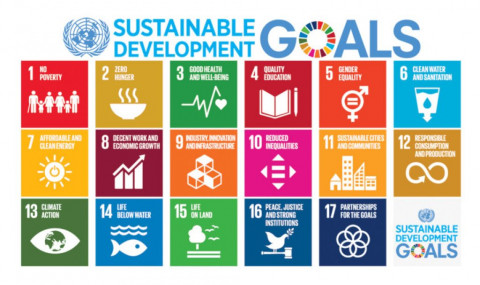 UN Officials Highlight Findings of 2019 SDG Progress Report 2019-06-12 20 May 2019: UN Member States heard a briefing on the Special Edition of the UN Secretary-General’s annual SDG Progress Report. An advance, unedited version of the report was released earlier in May. Based on the report’s findings, Liu Zhenmin, UN Under-Secretary-General for Economic and Social Affairs, stressed the urgency to step up efforts, adding that the SDG Summit in September 2019 should send a clear message that world leaders are committed to taking action to meet the SDGs. The UN system’s Task Team on the UN High-level Political Forum on Sustainable Development (HLPF) contributed to the preparation of the report. The Task Team is co-chaired by the UN Department of Economic and Social Affairs (DESA) and the UN Development Programme (UNDP). During the briefing organized by UN Deputy-Secretary-General Amina Mohammed on 20 May 2019, in New York, US, Liu noted that the report was based on the global SDG indicator framework and on information collected by organizations in the UN system. He said the report addresses gaps and identifies cross-cutting actions to achieve progress. Highlighting observations from the report, Liu referred to a shift in development pathways to generate the transformation required to meet the Goals by 2030, and said this shift is not occurring at the speed or scale required. As a result, he said: the SDG target to eradicate extreme poverty might not be reached by 2030, and children are over-represented among the poorest people; people with disabilities and those living with HIV/AIDS continue to face multiple disadvantages; gender inequalities persist; and for many small island developing States (SIDS), extreme environmental and climate vulnerability is exacerbated by their economic exposure. This exposure relates to less diversified economies, high debt burdens and a lack of access to concessional finance. Liu added that 14 out of the world’s 20 most water-stressed countries are in the Arab region; and landlocked developing countries (LLDCs) face infrastructure deficits, with only 52% of their population having access to electricity, compared with the world average of over 87%. Other key findings of the report are provided in this SDG Knowledge Hub summary. Achim Steiner, UNDP Administrator, noted that while the Secretary-General’s report provides empirical data on progress, localization of the SDGs will determine their success. At the national level, Steiner said progress is defined by informed and well designed policy-making, and governments should have the institutional capacity and ability to deliver integrated solutions. He added that the ability to connect various levels of governments through the SDGs is an “accelerator.” Steiner also noted an “unevenness” in addressing the ambition to leave no one behind, which he said “remains fundamental to the success of SDGs.” He remarked that a deliberate risk management approach and building resilience can impact development gains, and called for development to be more “risked informed.” Steiner identified enablers that can drive progress, including data, which he described as “a multiplier” to deliver on the SDGs and the 2030 Agenda. He also called for harnessing science, technology and innovation (STI) to accelerate development, and for mobilizing financing, noting the importance of international cooperation, official development assistance (ODA), and connecting access to finance and those left behind. The 20 May briefing also updated Member States and stakeholders on the 2019 Global Sustainable Development Report (GSDR). URL:http://sdg.iisd.org/news/un-officials-highlight-findings-of-2019-sdg-progress-report/
 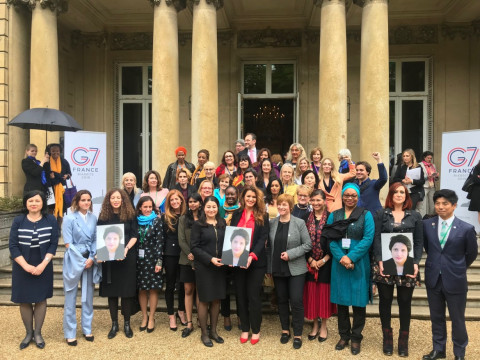 “Inequality is not inevitable”: Challenging gender discrimination through the G7 2019-06-12 “The barriers to gender equality are many, the solutions are complex, but the time for action is undoubtedly now. We are armed with the knowledge and tools for change and must challenge perceptions that inequality is inevitable; for it is only as permissible as we allow it to be”. Girls and women still face too many obstaclesDespite global momentum and progress, women and girls are still the subject of rhetoric, rather than revolutionary change. Tangible impact in the day-to-day experience of women and girls is sorely lacking and undermined by social, political and structural issues that prevent sustainable change. That is why the statistics continue to raise the alarm: Education is the foundation for gender empowerment and equality, yet one in every five children, adolescents and youth are out of school - 130 million of which are girls. Close to 15 million girls under the age of 18 are married each year, most often sacrificing their schooling. Maternal mortality is still one of the leading causes of death for 15-19 year-olds. One in three women has been, or will become, a victim of physical or sexual violence in their lifetime. Reviewing the legal framework for gender equalityIt is within this context that our CEO spent two days with the Council, an amazing group of bold and brave women and men that shone a light on the possibility of a different future and gave cause for optimism. “While there were moments I felt like we would never break through the pervasiveness of gender inequality, the tenacity of the people on this group gives me hope to believe otherwise”, Alice reflected.The Council are supporting the creation of a ‘package of gender progressive laws’ that lay the foundations for gender inclusive and equitable societies, to form part of wider initiatives to tackle gender injustices.Over the course of the two days the Council discussed the need for G7, and all other countries, to review their legal frameworks, repeal discriminatory laws and fully finance and implement progressive legal frameworks that instil equity and inclusion. Strong accountability and governance mechanisms, including support for civil society, will be the key to success and must be measured and reported on transparently. Beyond laws, a focus on implementationGPE is pushing strongly for the recognition that laws alone won’t be sufficient to achieve transformative change, highlighting that laws are an imperfect litmus test of progress towards equality.In high-level meetings with other Council members, G7 Gender Ministers and the Women7, GPE emphasized that even with the best laws on paper, their implementation lags behind all over the world. This implementation is also contingent upon a conducive environment and addressing the root causes of inequality - such as negative norms, attitudes and behaviors. Alongside Katja Iversen, CEO of Women Deliver, Alice also noted the centrality of education and health to the empowerment, well-being and overall prosperity of women, girls and their societies a whole.Together, for example, we are pushing for world leaders to adopt laws, policies and programs that lead to universal access to education and health, and to change systems to make education and health responsive to the needs of all genders. What's next?On July 5, 2019, Alice will represent the Council at the joint Development and Education G7 Ministers meeting – an exciting opportunity to advance support for gender to be at the center of education, for a scale-up of education support to Sahel Countries and for strong political commitment on the need for trained teachers.In their closing statement, the Council said: “This is not a women’s issue, it is everybody’s issue. We urge G7 leaders to be as brave as women and girls are every day.”We will carry this message with us right up to the G7 leaders’ Summit in August, where we will fight for every child to have a trained teacher and for every girl to realize her full potential through education. URL:https://www.globalpartnership.org/blog/inequality-not-inevitable-challenging-gender-discrimination-through-g7
 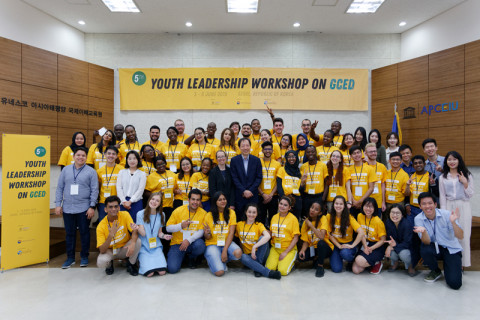 The 5th Youth Leadership Workshop on Global Citizenship Education 2019-06-12 Monday 3rd June marked the beginning of the 5th Youth Leadership Workshop on Global Citizenship Education (GCED), organized by APCEIU in partnership with the GCED Youth Network. Inviting 42 participants from 37 countries in Asia-Pacific, Africa, Europe, Arab States, and Latin America and Caribbean regions, the Workshop lasted for a week aiming at deepening youth leader’s’ understanding of global citizenship and human rights. The Workshop also served as a platform for the youth participants to network, exchange ideas and discuss contemporary global issues. The Workshop was structured in five key segments: Narrative building for global citizenship, story sharing, study visits, reflections and developing youth advocacy. The Workshop began with learning about the foundations of global citizenship through the series of lectures and discussions on introducing various perspectives and critical issues on global citizenship. Having learned about the key concepts in GCED, the program followed with several sharing activities where participants had the chance to see how global citizenship education is implemented in different NGO’s and social activists’ projects. Participants themselves also had an opportunity to share their own initiatives and projects to further showcase the diverse ways of how global citizenship and human rights are promoted. The Workshop also included study visits to relevant sites such as Women & War Museum, Democracy & Human Rights Memorial Hall, and Seoul Upcycling Plaza. Throughout the Workshop, participants were regularly involved in reflection exercises to allow them to think critically about what they have learned and experienced during the workshop. The Workshop concluded with participants splitting into regional groups to establish action plans for advocacy for GCED. On the last day of the Workshop, all groups presented their plans which were further discussed by all participants, Youth Network members and APCEIU. URL:The 5th Youth Leadership Workshop on Global Citizenship Education APCEIU > APCEIU News - APCEIU (unescoapceiu.org)
 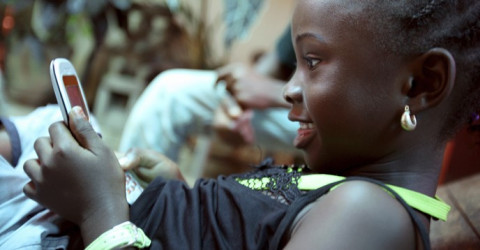 First UNESCO recommendations to combat gender bias in applications using artificial intelligence 2019-06-11 Beginning as early as next year, many people are expected to have more conversations with digital voice assistants than with their spouse. Presently, the vast majority of these assistants—from Amazon’s Alexa to Microsoft’s Cortana—are projected as female, in name, sound of voice and ‘personality’. ‘I’d blush if I could’, a new UNESCO publication produced in collaboration with Germany (link is external) and the EQUALS Skills Coalition holds a critical lens to this growing and global practice, explaining how it: reflects, reinforces and spreads gender bias; models acceptance of sexual harassment and verbal abuse; sends messages about how women and girls should respond to requests and express themselves; makes women the ‘face’ of glitches and errors that result from the limitations of hardware and software designed predominately by men; and forces a synthetic ‘female’ voice and personality to defer questions and commands to higher (and often male) authorities. The title of the publication borrows its name from the response Siri, Apple’s female-gendered voice assistant used by nearly half a billion people, would give when a human user told ‘her’, “Hey Siri, you’re a bi***.” Siri’s submissiveness in the face of gender abuse – and the servility expressed by so many other digital assistants projected as young women – provides a powerful illustration of gender biases coded into technology products, pervasive in the technology sector and apparent in digital skills education. According to Saniye Gülser Corat, UNESCO’s Director for Gender Equality, “The world needs to pay much closer attention to how, when and whether AI technologies are gendered and, crucially, who is gendering them.” The publication shares the first United Nations agency recommendations regarding the gendering of AI technologies, imploring companies and governments to: end the practice of making digital assistants female by default; explore the feasibility of developing a neutral machine gender for voice assistants that is neither male nor female; programme digital assistants to discourage gender-based insults and abusive language; encourage interoperability so that users can change digital assistants, as desired; and require that operators of AI-powered voice assistants announce the technology as non-human at the outset of interactions with human users. UNESCO uses the example of digital voice assistants to demonstrate that in a world awash in AI technology, the teams building this AI technology must be more gender-balanced. Today women make only 12 percent of AI researchers, represent only 6 per cent of software developers, and are 13 time less like to file an ICT (information, communication and technology) patent than men. Addressing gender inequalities in AI must begin with more gender-equal digital skills education and training. A dedicated section of the publication explains how to make this a reality, providing 15 actionable recommendations. Finally, the report shares a new and paradoxical finding: Countries that score higher on gender equality indices, such as those in Europe, have the fewest women pursuing the advanced skills needed for careers in the technology sector. Conversely, countries with lower levels of gender equality, such as those in the Arab region, have the largest percentage of women pursuing advanced technology degrees. As an illustration, in Belgium only 6% of ICT graduates are women, while in the United Arab Emirates this figure is 58%. This paradox is explored in detail and underscores the need for measures to encourage women’s inclusion in digital skills education in all countries. URL:https://en.unesco.org/news/first-unesco-recommendations-combat-gender-bias-applications-using-artificial-intelligence