
News
Catch up on what’s happening in the world of global citizenship education.
1,668 results found
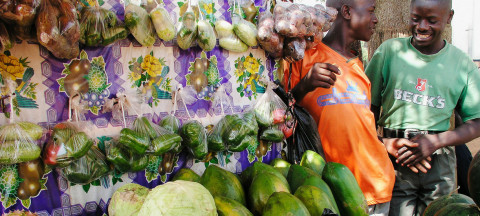 ‘From farm to plate’, first-ever World Food Safety Day demonstrates the need to take unsafe food off the menu 2019-06-11 Unsafe food kills an estimated 420,000 people every year, the head of the World Health Organization (WHO) said on Thursday, just ahead of the first-ever UN World Food Safety Day. Children under-five are the most at risk, carrying 40 per cent of the foodborne disease burden, amounting to 125,000 deaths every year. “These deaths are entirely preventable,” said Tedros Adhanom Ghebreyesus. Unsafe food – contaminated by bacteria, viruses, parasites or chemical substances – also causes nearly one-in-ten people, or some 600 million, to fall ill globally each year. “World Food Safety Day is a unique opportunity to raise awareness about the dangers of unsafe food with governments, producers, handlers and consumers”, he stated. Just as food safety contributes to food security - human health, economic prosperity, agriculture, market access, tourism and sustainable development - unsafe food hinders these resources by straining health care systems and harming national economies, tourism, trade and development. In many low- and middle-income economies, unsafe food that has caused workers to suffer illness, disability and premature death, costs $95 billion in productivity annually, WHO estimates. Improving hygiene practices in the food and agricultural sectors helps to reduce the emergence and spread of antimicrobial resistance along the food chain and in the environment, the UN explained. ‘No food security without food safety’The theme of this year’s first commemoration on Friday is that “food safety is everyone’s business”. Cognizant of the urgent need to raise awareness, promote and facilitate actions for global food safety, the General Assembly decided to designate 7 June as World Food Safety Day. The UN has designated WHO and the Food and Agriculture Organization (FAO) to lead efforts in promoting worldwide food safety. Together they are joining forces to assist countries in preventing, managing and responding to risks along the food supply chain by working with food producers, vendors, regulatory authorities and civil society – regardless of whether food is domestically produced or imported. “Whether you are a farmer, farm supplier, food processor, transporter, marketer or consumer, food safety is your business,” said FAO Director-General José Graziano da Silva. “There is no food security without food safety”. The UN agencies underline that safe, nutritious and sufficient food is a key to promoting health and ending hunger, which are two of the main aims of the Sustainable Development Goals (SDGs). To make a sustained difference to food safety: Governments must ensure safe and nutritious food for all. Agriculture and food producers need to adopt good practices. Business operators must safely prepare, transport and store food. Consumers need timely, clear and reliable information on nutritional- and disease-risks associated with their food choices. UN organizations, governments, regional bodies and the private sector must work together on food safety issues. Safe food contributes to a healthy life and its production improves sustainability by enabling market access and productivity, which drives economic development and poverty alleviation, especially in rural areas. Investing in consumer food safety education can potentially reduce foodborne disease and return savings of up to $10 for each dollar invested, according to the UN agencies. Worldwide activities for World Food Safety Day are aiming to inspire action to help prevent, detect and manage foodborne health risks. “From farm to plate, we all have a role to play in making food safe”, concluded the WHO chief. URL: https://news.un.org/en/story/2019/06/1039901
 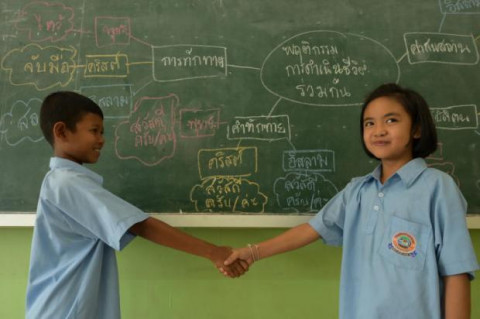 Playing the 'global citizen' game 2019-06-10 Tak students learn to embrace migrant children as five schools follow Unicef's lead in promoting a more inclusive education Watcharapong, 16, lives in a small wooden hut on the banks of the Moei River along the Thai-Myanmar border in Mae Sot district of Tak. His Myanmar father and mother work on the Myanmar side as wage workers while his younger sister works as a waitress at a casino there. Every day, Watcharapong and his other sister Araya, 12, walk on an earthy pathway for about half an hour to Baan Ta Art School, which is a buffer school, in the district. A buffer school provides knowledge about Asean, and teaches one Asean language depending on the country where the school is close to -- in this case the language is Burmese. What is special about this school is that even though it is situated on Thai soil, about 88% of its students are Burmese nationals....[Read more] URL: https://www.bangkokpost.com/news/special-reports/1675748/playing-the-global-citizen-game
 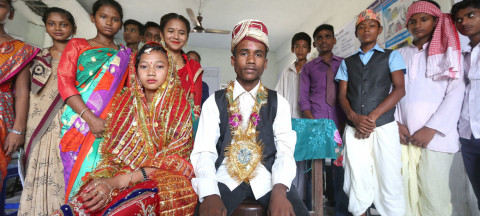 Around 23 million boys have married before reaching 15; ‘we can end this violation’ says UNICEF chief 2019-06-10 An estimated 115 million boys and men around the world were married as children, 23 million of them before the age of 15, according to the first-ever analysis on child grooms, launched on Friday by the UN Children’s Fund (UNICEF). Using data from 82 countries, the in-depth study brings the overall number estimated child marriages to 765 million, UNICEF revealed. “Marriage steals childhood”, said Executive Director Henrietta Fore. “Child grooms are forced to take on adult responsibilities for which they may not be ready”.Marriage steals childhood – UNICEF chief The study discovered that child marriage among boys spans sub-Saharan Africa, Latin America and the Caribbean, South Asia, East Asia and the Pacific.According to the data, 28 per cent of the males in the Central African Republic were married as children, ranking it first in male child marriages. At 19 per cent, Nicaragua was the second and Madagascar the third, at 13 per cent.“Early marriage brings early fatherhood, and with it added pressure to provide for a family – cutting short education and job opportunities”, the UNICEF chief elaborated. Notwithstanding the new information, girls remain disproportionately affected, with 1-in-5 young women between the ages of 20 and 24, married before their 18th birthday, compared to 1-in-30 young men. While the prevalence, causes and impact of child marriage among girls have been extensively studied, little research exists on child marriage among boys. It is clear though that children most at risk come from the poorest households, live predominantly in rural areas and have little to no education. “As we mark the 30th anniversary of the adoption of the Convention on the Rights of the Child, we need to remember that marrying boys and girls off while they are still children runs counter to the rights enshrined in the Convention,” reminded Ms. Fore.“Through further research, investment and empowerment, we can end this violation”, she asserted. URL: https://news.un.org/en/story/2019/06/1039971
 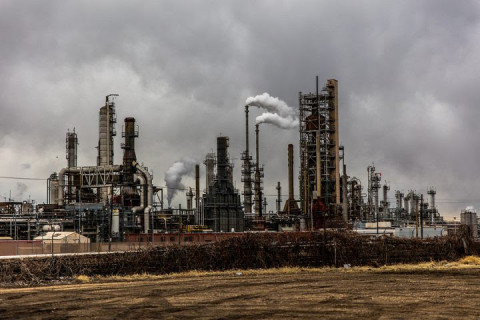 World Environment Day 2019 Seeks to ‘Beat Air Pollution’ 2019-06-10 5 June 2019: The 2019 World Environment Day was marked by campaigns to fight air pollution around the world, as the UN and governments highlighted that seven million people, including 600,000 children, die annually from causes related to poor air quality. David Boyd, UN Special Rapporteur on human rights and the environment, issued a statement calling on governments to treat the issue urgently, as part of their human rights commitments. Global celebrations of World Environment Day were co-hosted by the Government of China and the UN Environment Programme (UNEP) in Hangzhou. Li Ganjie, Minister for Ecology and the Environment, China, chaired the event, which was attended by more than 1,100 participants. The UN estimates that a premature death from air pollution occurs every five seconds. Boyd linked the issue with the right to a healthy environment, which, he noted, is recognized by more than 150 States. His report on the issue, released earlier in 2019, outlines steps for States to take, including, inter alia: monitor air quality and the impacts of poor air quality on human health; assess the sources of air pollution; make information publicly available, including through public health advisories; and establish laws, policies and standards for air quality. He praised China’s efforts in addressing air pollution, noting that particulate matter (PM) in the atmosphere has recently declined by one-third. Han Zheng, Vice-Premier, China, delivered a greeting from Chinese President Xi Jinping, calling for continued global efforts to protect the environment and promote sustainable development. Han recognized the efforts of Zhejiang Province, where the city of Hangzhou is located, in implementing a rural village reconstruction and restoration programme, which won a UN Champions of the Earth Award in 2018. Che Jun, Party Secretary, Zhejiang Province, recounted to guests how the Hangzhou Steel Group, which had heavily polluted a district in Hangzhou with its production, was forced by the government to shut down its production base but managed to transform its business to concentrate on environmental protection, digital technology, and tourism within a couple of years, leading to a significant increase in profits. Joyce Msuya, Acting Executive Director, UNEP, shared a message from UN Secretary-General Antonio Guterres that underscores the global costs of air pollution, estimated at USD 5 trillion annually. Guterres calls on governments to tax pollution, end fossil fuel subsidies, and stop building new coal plants. Msuya recognized the Chinese government’s allocation of more than USD 10 billion from 2013-2018 to fight air pollution. Li highlighted eight measures taken by China since 2013 to fight air pollution: launching a national air pollution prevention action plan; restricting industry activity and shutting down outdated production facilities; optimizing the energy structure and setting targets for coal consumption, including control and quality standards; promoting clean energy development and electric vehicle transport; setting up regional joint management mechanisms for air pollution control; enforcing legal regulations and amending the Law on the Prevention and Control of Atmospheric Pollution; enforcing air pollution controls through legal and judicial action; and encouraging public participation in green lifestyles and reporting of illegal pollution activities. Ban Ki-moon, President and Chair, Global Green Growth Institute (GGGI) and former UN Secretary-General, remarked that air pollution cannot be dealt with alone, and called on all nations to work in solidarity. He warned that, “climate change is approaching faster than we think,” and urged immediate action, reminding delegates that nature “cannot be negotiated with.” Li Haisheng, Head, National Joint Research Center for Tackling Key Problems in Air Pollution Control, and President, Chinese Research Academy of Environmental Sciences, presented the newly-released Air Quality Improvement Report 2013-2018, which comprises a review of achievements, measures, challenges, and results in terms of air pollution control. He highlighted that the report reflects progress on air quality achieved with government leadership, business participation and citizen inclusion, adding that, while significant progress has been made on reducing air pollution, there is still a “tremendous challenge” to be addressed. Numerous other activities and launches took place around the world to mark the Day. In India, for example, the government launched its comprehensive action plan to clean up air quality in Agra, where the Taj Mahal monument is located. The plan commits to addressing the sources of air pollution in the area, including from road dust, vehicle emissions, burning of garbage, and construction and demolition activities. India’s Ministry of Environment, Forests and Climate Change launched a National Clean Air Programme earlier in 2019. Elsewhere, World Environment Day was marked by UNEP’s ‘mask challenge’ campaign, in which people all over the world take a photo of themselves wearing a mask and share this on social media. UNEP highlights that air pollution can be effectively tackled by phasing out fossil fuels, using renewable energy sources, and fighting deforestation, adding that such action will also contribute to achieving the SDGs. URL:http://sdg.iisd.org/news/world-environment-day-2019-seeks-to-beat-air-pollution/
 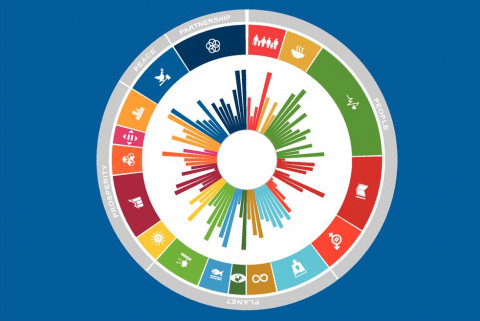 OECD Finds Advanced Economies Need to Accelerate SDG Implementation 2019-06-05 20 May 2019: The Organisation for Economic Co-operation and Development (OECD) has released an updated assessment of each OECD country’s progress towards the SDGs. Overall, the report finds that OECD countries need to accelerate efforts to leave no one behind, particularly to achieve SDG 1 (no poverty), SDG 5 (gender equality) and SDG 10 (reduced inequalities), and to achieve certain educational and employment outcomes, healthy behaviors, violence and safety, and human rights. The third edition of the yearly report titled, ‘Measuring Distance to the SDG Targets 2019: An Assessment of Where OECD Countries Stand,’ assesses OECD country performance across the SDGs and their targets. On average, most OECD countries are closest to achieving SDG 7 (affordable and clean energy), SDG 11 (sustainable cities and communities) and SDG 13 (climate action). Countries are also performing well on SDG 6 (clean water and sanitation), SDG 12 (responsible consumption and production), SDG 14 (life below water) and SDG 15 (life on land). Most OECD countries have widespread access to basic sanitation (SDG target 6.2), electricity (SDG target 7.1) and mobile networks (SDG target 9c). OECD countries have met targets on maternal and infant mortality (SDG target 3.1 and 3.2) and reducing deaths from AIDS, tuberculosis, hepatitis B (SDG 3 target 3.3) and road accidents (SDG target 3.6). Countries have also made progress on adopting renewable energy sources (SDG target 7.2).More than one-third of SDG targets cannot be assessed in OECD countries. On other targets, the report finds that countries are “moving in the wrong direction,” and are furthest from reaching SDG 2 (zero hunger), SDG 5, SDG 10 and SDG 16 (peace, justice and strong institutions). In addition: One in seven people in OECD countries live in poverty (SDG target 1.2); Vaccination coverage is decreasing in 13 countries, posing risks to diseases previously eradicated (SDG target 3.8), and obesity has risen in one-third of OECD countries (SDG 3); One in four 15-year-olds and adults lack basic numerical competency (SDG target 4.1) and 14% of youths are not in education, employment or training, with higher percentages in Italy, Turkey, Chile, Mexico and Spain (SDG target 4.3); On gender equality, women hold fewer than one-third of seats in national parliaments, on average, in OECD countries, and no country has achieved equal representation (SDG target 5.5); Six percent of women across the OECD report being subjected to violence by a partner in the last 12 months, making all of the countries far from SDG target 5.2 to eliminate all forms of violence against women and girls; Medium-term gross domestic product (GDP) and productivity growth (SDG 8) are “on the wane” in many countries; and In two-thirds of OECD countries, the number of threatened species has increased (SDGs 14 and 15). The report raises concerns about data gaps, noting that “more than one-third of SDG targets cannot be assessed in OECD countries.” Available data only allowed for assessing 105 of the 169 targets. Data coverage is best on SDGs 3 and 4, and it is poorest on the “environment-related” Goals, particularly SDGs 12 and 14. The report finds that more than half of the SDG targets require a transboundary effort, meaning that achieving these 97 targets in one country will have an impact on neighboring countries, other countries or on global goods, such as climate change and sustainable fishing. However, indicators are only available for 31 of these targets, with the result of “considerable data gaps for understanding the global and inter-connected aspects of the 2030 Agenda and its implementation.” Out of the 97 transboundary targets, 50 are means of implementation targets relating to financing and supporting developing country efforts to achieve the SDGs. Transboundary targets are also heavily concentrated in the planet-related Goals, the authors note. Speaking at the report’s launch, OECD Secretary-General Angel Gurría said the SDGs and the objective of leaving no one behind are a promise and responsibility to future generations, and “we are very far from being able to declare mission accomplished.” He called on countries to redouble their efforts and work together to ensure that the SDGs are achieved within the deadline. URL: http://sdg.iisd.org/news/oecd-finds-advanced-economies-need-to-accelerate-sdg-implementation/
 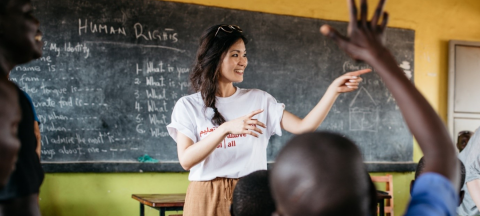 Global Citizenship Education in Practice – The EAA Experience 2019-06-05 Global citizenship education (GCED) is critical to sustainable development. It encourages the acquisition of skills, values, attitudes and behaviours that empower learners to assume active roles to face and resolve global challenges, and to become proactive contributors to a more peaceful, tolerant, inclusive and secure world. GCED has three core dimensions of learning. First, cognitive skills that enable the acquisition of knowledge, understanding and critical thinking about global issues, as well as the interdependency of countries and different populations. Second, socio-emotional learning that encourages a sense of belonging to a common humanity, sharing values and responsibilities, as well as empathy, solidarity and a respect for diversity. Third, behavioural skills to act responsibly at a local, national and international level to build a more peaceful and sustainable world. GCED supports SDG Target 4.7, which focuses on the knowledge and skills needed to promote sustainable development. While definitional approaches provide much needed conceptual frameworks for what we mean by ‘global citizens’, it is equally important to understand some of the ways by which individuals go through their personal transformation to become ‘global citizens’. Being a global citizen requires a process to understand, empower and act. Too often, theory fails to turn into practical sustainable change. Education Above All (EAA) Foundation’s, four programmes support projects in a range of areas that provide valuable lessons for promoting global citizenship, and good examples of linking theory and practice. 1. EAA’s Reach Out to Asia (ROTA) Programme has a focus on youth empowerment with initiatives on integrating training, dialogue, and action to foster global citizenship among young people across various contexts. Its MENA Youth Capacity Building in Humanitarian Action (MYCHA) Initiative has trained youth to design and implement positive contributions in crisis-affected settings. ROTA’s EMPOWER initiative has supported young people to form youth-led clubs, identify issues facing their community, and develop their own service projects to address these issues. The ROTA International Volunteer Trips use intercultural exchange to broaden young people’s global perspectives on citizenship. Each of these initiatives has increased youth perception that their actions can make a difference, and encouraged their service to society. A key lesson is that taking action is essential because it builds transformational leadership skills and provides opportunities for youth to deepen skills through multiple practice opportunities for learning, action, and reflection. 2. Al Fakhoora has a similar focus on the agency of youth and works to provide them with the skills, knowledge, and experience to become civic-minded individuals who act in the broader interest of their communities. Its focus makes a crucial connection that global citizenship requires civic mindedness. Al Fakhoora has provided Gaza-based students with a comprehensive, multi- stage civic leadership programme to become positive, inspirational global citizens. An analysis of the structure of that programme provides some wider lessons for supporting youth living in conflict/post conflict settings, as well as how a GCED-focused curriculum can inspire and empower students to become agents of change within their own communities. The Al-Fakhoora approach includes both theory and actualization, based on the belief that knowledge without practice leads to unfulfilled potential. Another core lesson is that local context matters, and youth needs vary across regions, requiring a flexible tailored approach to curriculum rather than a ‘one size fits all’ approach. This flexibility has enabled the programme to be adapted when applied in partnerships with UNDP and SPARK in the contexts of the West Bank, Turkey, Lebanon, Jordan and Iraq. 3. Educate A Child (EAC), launched in 2012 with the initial goal of enrolling 10 million out of schoolchildren (OOSC), works with partners in different contexts to reach the OOSC in marginalized communities. A number of EAC projects in India (Educate Girls), Pakistan (ILMPOSSIBLE), and Uganda (Building Tomorrow), have promoted global citizenship through youth volunteers sensitizing and mobilizing local communities on the need for education for their children. The volunteers are trained in skills such as community mobilization, empathy, problem solving, decision-making and leadership. The volunteers - known as Team Balika in India, ILM Ambassadors in Pakistan and BT Fellows in Uganda - work with families, communities, schools and education programmes to identify out of school children and then enrol them into an education programme. The youth have gained useful skills such as critical thinking and communication that empower them to serve their communities and look for solutions to local problems. The acquired skills are beneficial to the individual too, as they help build confidence when they apply for college or in their work place. 4. In Northern Uganda and South Sudan, the Protect Education in Insecurity and Conflict programme (PEIC) worked to provide art based workshops in Bidi Bidi Refugee Settlement in Northern Uganda, and with the Whitaker Peace and Development Initiative to ensure that youth living in conflict-affected communities had knowledge of human rights, the rule of law and the importance of the right to education. The programme also developed advocacy skills to give them voice and to build peace. The PEIC experience showed that whilst the current focus of SDG 4.7 on curriculum, teachers and the classroom is crucial, it is also important for global citizenship to have a wider reach through volunteering peacebuilding programmes that are outside the formal classroom. Participant agency and control over defining values such as tolerance, diversity and peace through ‘a bottom up’ approach rooted in local contexts is also essential to ensure a deeper commitment to values of global citizenship by the whole community. EAA’s field-based experiences provide a ‘snap shot’ of ‘promising practices’ of what global citizenship programmes can achieve through partnerships and concerted field-based programmes. As well as the individual lessons learned within each of the programmes, a more general lesson is that global citizenship in practice, which pays attention to local contexts and takes seriously the voices and experiences of those who are on their own journey to becoming global citizens, will be the basis for a sustainable world. URL: https://learningportal.iiep.unesco.org/en/blog/global-citizenship-education-in-practice-%E2%80%93-the-eaa-experience
 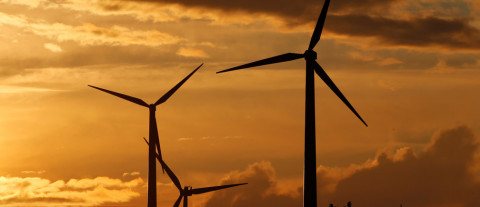 Bill Gates: This is what we need to do to tackle climate change 2019-06-04 Wind and solar power generation is expanding around the globe at record rates, allowing more people to get their electricity from clean, renewable sources than ever before. This is great news.And here’s better news: We can do even more. By investing in energy innovations, we can build on the progress we’ve made deploying current technology like renewables, which will help accelerate the transition from fossil fuels to a future of reliable and affordable carbon-free electricity. This would be an incredible achievement and the most important step we can take to prevent the worst impacts of global warming. Here’s why: While electricity generation is the single biggest contributor to climate change—responsible for 25 percent of all greenhouse gas emissions and growing every day—it’s an even bigger part of the solution. With clean electricity, we can do more than light our homes and power our grid. We’ll unlock a source of carbon-free energy to help power the sectors of the economy that produce the other 75 percent of greenhouse gas emissions, including transportation, buildings, and manufacturing. Think electric cars and buses; emission-free heating and cooling systems in our homes and businesses; and energy-intensive factories using more clean power to make products. So, what will it take to reach the goal of zero carbon electricity generation? We must solve two challenges. The first challenge will come as no surprise. We need to do more to harness the power of the sun and wind. And thanks to falling prices for solar panels, wind turbines, and other technologies, deploying renewable energy systems is more affordable than ever before. The second challenge is probably less obvious and more difficult. We need big breakthroughs in technologies that will allow us to supply the power grid with clean energy even during windless days, cloudy weather, and nighttime. Usually, you back up renewable sources with fossil fuels like natural gas that can quickly and reliably provide power when it’s needed. To reach zero carbon emissions, however, we need to find a way to use more clean energy sources as a backstop. While I wish there could be a single, magic bullet solution to this problem, there isn’t one right now. What will be required in the years ahead is a diverse and flexible mix of energy solutions—a Swiss army knife of energy tools—to support a future of renewable energy generation to meet our needs. Some of these solutions already exist. Others will require more innovation. All can help us make the transition to low-cost, carbon-free power. This is something a growing number of states across the U.S. are recognizing as they adopt 100 percent carbon-free standards for electricity. Here are three key solutions we’ll need for the transition to clean electricity: 1. Improved energy storage systems: The sun and the wind are incredible energy sources. Finding ways to store that energy to use after the sun sets and the wind stops blowing is a big challenge we need to solve. We do have ways to store energy for a matter of hours—like lithium ion batteries—that are becoming cheaper every year. What we don’t have are reliable and widely useable ways to store renewable energy sources for days, weeks, or months. We need to be prepared for seasonal changes (when we have short days during the winter) or worse case scenarios when there are long periods of cloud cover or no wind for weeks or months. Fortunately, there’s a lot of creative thinking to solve these challenges. I am an investor in a group called Breakthrough Energy Ventures (BEV) that is backing a number of companies exploring ways to store energy. Here are some key areas of innovation: Hydro: The most common form of energy storage today is pumped hydro, which uses electric motors to pump water uphill to a reservoir. When the water is released from the reservoir, it flows downhill and generates electricity through hydroelectric turbines. The challenge with this approach is that it only works in geographies with high elevations and low elevations. A new company called Quidnet Energy, supported by BEV, is trying a different approach that is lower cost and can be built in flat areas. Quidnet’s system uses renewable energy to pump water into underground wells, creating huge amounts of pressure. When that energy is needed, the pressure is released, pushing the water up the well and through a turbine, generating electricity. Batteries: Lithium-ion batteries, like you would find in a laptop, mobile phone or electric car, are one of the fastest growing storage solutions. But they work best for short-duration storage. Form Energy, a BEV-backed company, is creating a new class of batteries that would provide long-duration storage at a lower cost than lithium ion batteries. Thermal storage: Thermal-powered storage technologies have the potential to offer a flexible and reliable power backup for the grid. One of the most effective ways to store heat is in molten salt. Malta, Inc., a BEV company, has developed a molten salt thermal technology that operates like a heat pump. Renewable energy stored as heat in molten salt. In discharge mode, the system works as a heat engine, using heat to produce electricity. Zero-carbon fuels: There are other exciting potential storage solutions as well, including zero-carbon fuels produced with wind and solar power that can be turned back into electricity or used to decarbonize other sectors. 2. Carbon capture and storage and nuclear: I often hear that lower cost solar and wind power along with the emerging breakthroughs in energy storage mean that these sources will be enough to get us to a carbon-free power grid. But because the world must balance the need to eliminate carbon emissions with economic growth, we should also consider what solutions would be most affordable. A recent study from researchers at MIT found that supporting renewable energy with a mix of clean energy solutions—including nuclear and carbon capture and storage (CCS)—would make carbon-free electricity up to 62 percent cheaper than using renewables alone. Nuclear power is already a source of carbon-free electricity, producing about 10 percent of the world’s power. It would also serve as a very reliable source of clean energy to complement renewables. But high costs and safety concerns have slowed the growth of nuclear power. With innovations in nuclear power we can create a new generation of nuclear energy that would be safer, produce less waste, and be lower cost. There are several nuclear technologies that should be explored. One of them, a company I helped start called TerraPower, uses an approach called a traveling wave reactor that is safe, prevents proliferation, and creates very little waste. To make these innovations a reality, we need governments—especially the U.S.—to step up and commit new funding for nuclear energy research and demonstrate that there is a future for nuclear energy. Another way we can get zero-carbon electricity is carbon capture, utilization, and storage, which separates and permanently stores CO2 pollution from an energy plant’s exhaust to keep it out of the atmosphere. This technology is especially important in places where there isn’t good renewable energy potential, or where it would be too costly to retire and replace existing power plants. Have you read? This Greek island runs entirely on wind and solar power This chart shows how quickly the cost of renewables is falling This is why oil companies and utilities are buying into renewables 3. High-voltage, long-distance transmission lines: Renewable power resources like wind and solar are often located far from the cities or industrial areas where energy demand is the greatest. Connecting our renewable energy supply with demand will require us to build transmission lines that can handle large amounts of power over very long distances. High-voltage direct current (HVDC) transmission technology—as opposed to the alternating current power lines most electric grids in the U.S. use today for transmission—would help us integrate renewable energy into our world’s power supply. Expanding HVDC lines, however, will not only require new investments in our power grids, but also supportive national and local policies to support their construction. Research and development at U.S. Department of Energy national laboratories like the Pacific Northwest National Laboratory and the National Renewable Energy Laboratory is helping lay the groundwork for how we can design, build, and operate a 21st-century grid. It’s easy to be overwhelmed by climate change and what to do about it. Global greenhouse gas emissions, for example, went up again last year—another reminder that we must act quickly if we want to prevent the worst-case scenarios of our warming planet. Still, as I learn about all the new ideas to address this challenge, I am optimistic that with the right mix of solutions we can deploy right now and new innovations we can build a path to a carbon-free future. URL:https://www.weforum.org/agenda/2019/05/a-critical-step-to-reduce-climate-change?fbclid=IwAR0WiBdheymkzQcIlcrO26W5Cvt0vX3UJt6AX_nn4rHEjFqufPn_3HWPDrQ
 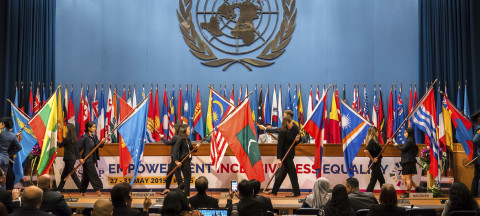 Asia-Pacific ‘regional parliament’ underway to advance equality, empowerment, for more than four billion citizens 2019-05-30 The top United Nations body in the Asia-Pacific region opened its annual session this week, calling for greater empowerment of disadvantaged and marginalized groups if the region is to achieve the ambitious 2030 Agenda for Sustainable Development, and fulfill its promise to leave no one behind. According to a study by the UN Economic and Social Commission for Asia and the Pacific (ESCAP), forming the basis for intergovernmental discussions, while the benefits of economic growth and social progress have reached rural areas, persons with disabilities and women in many countries, the divide between the haves and the have-nots, is widening. “In recent decades, quality of life has improved for most people in the region, yet, growing inequalities present a threat to further advances”, said UN Secretary-General Antonio Guterres in a video message for Monday’s opening session in Bangkok, Thailand. “The challenge is to ensure that socio-economic progress reaches those left behind,” he added. Recalling his recent visit to the South Pacific, where he saw the “brutal” impact of the global “climate emergency”, Mr. Guterres called on countries to redouble efforts to combat climate change in Asia and the Pacific. “This is a battle we can and must win,” he underscored. Informally dubbed the “parliament” of the Asia-Pacific region, ESCAP – the UN’s socio-economic development arm for the area, which is home to more than 4 billion people, or nearly two-thirds of the world population – is a forum for Governments and other stakeholders to discuss key sustainable and inclusive development issues. Established in 1947, it comprises 53 Member States and 9 associate members, stretching from the Pacific island of Tuvalu in the east, to Turkey in the west, and Russia in the north, to New Zealand in the south. ‘Opportunity’ to reaffirm ‘shared responsibility’ Addressing the opening session, Armida Alisjahbana, the Executive Secretary of ESCAP, urged countries to build on past successes and shape future priorities. “Since this Commission first met in 1947, our countries have travelled a long journey,” she said, noting that many consider Asia-Pacific region as the “engine” of the world economy. “We have yet more to offer. We can provide the global leadership to collectively achieve a transformed and resilient society in our region [and] respond to challenges that transcend borders and accelerate progress towards the Sustainable Development Goals (SDGs).” In her policy statement, Ms. Alisjahbana outlined five key areas central to achieving that transformation: strengthening social protection; strengthening resilience to international trade tensions; fighting environmental degradation; improving resilience against disasters; and “unleashing” the potential of new technologies as a “force for good”. “I am committed to working with all Member States to achieve transformed and resilient societies in our region. The evidence indicates we can be more effective if we empower citizens to support this transformation”, she concluded. The opening session also heard a special address by Her Royal Highness Princess Maha Chakri Sirindhorn of Thailand – a UNESCO Goodwill Ambassador for the empowerment of children through education, as well as an FAO Goodwill Ambassador for zero hunger – in which she highlighted the importance of integrated and people-centred approach to development and that it should endure. Development work should integrate dimensions and issues including healthcare, education and employment, she said, adding that “development work should not last only a few years but go on as long as possible.” Mongolian Foreign Minister elected Chair Also on Monday, the Commission elected Damdin Tsogtbaatar, the Foreign Minister of Mongolia, as Chair of its 75th session. In a speech following his election, Mr. Tsogtbaatar reiterated the importance of sustainable development, underscoring that the session is an “opportunity to accelerate the pace of implementation, shape policies and integrate the national strategies to reduce gap between rich and poor and threats from climate change.” The opening day also saw ESCAP Executive Secretary Ms. Alisjahbana sign four Memoranda of Understanding with the regional and global organizations on strengthening cooperation in the areas of disaster resilience, early warning systems, renewable energy, research and evidence-based policy making. Concluding on Friday, 31 May, the seventy-fifth session of ESCAP also includes the Commission’s high-level general debate on the theme “empowering people and ensuring inclusiveness and equality,” the meeting of the Special Body on Least Developed, Landlocked Developing and Pacific Island Developing Countries, a roundtable discussion with sub-regional organizations in the Asia-Pacific region, and a number of side events hosted by UN Member States and partner organizations. URL: https://news.un.org/en/story/2019/05/1039341
  UN Women announces global intergenerational campaign to bring women’s rights and empowerment to the forefront 2019-05-30 To mark the 25th anniversary of the groundbreaking Beijing Platform for Action in 2020, campaign “Generation Equality: Realizing women’s rights for an equal future” will catalyze global actions on gender equality (New York, 6 May)—To mark the 25th anniversary of the Beijing Declaration and Platform for Action, considered the blueprint on women’s rights and empowerment, UN Women today announced its new multigenerational campaign, “Generation Equality: Realizing women’s rights for an equal future”. In 2020, it will be 25 years since world leaders adopted the Beijing Declaration and Platform for Action, which set out how to remove the systemic barriers that hold women back from equal participation in all areas of life, whether in public or in private. Developed at the Fourth World Conference on Women in Beijing, China, the Beijing Declaration and Platform for Action is a visionary agenda for the empowerment of women and girls, everywhere. It was adopted by 189 governments committed to taking strategic, bold actions in 12 critical areas of concern: poverty, education and training, health, violence, armed conflict, economy, power and decision-making, institutional mechanisms, human rights, media, environment, and the girl child. Nearly 25 years later, the promise of the Beijing Platform for Action remains unfulfilled. The Generation Equality campaign will bring together the next generations of women’s rights activists—many of whom may not have been born in 1995—with the gender equality advocates and visionaries who were instrumental in creating the Beijing Platform for Action more than two decades ago, to accelerate efforts to make gender equality and women’s rights a lived reality. The campaign will galvanize attention and action on key issues including equal pay, equal sharing of unpaid care and domestic work, an end to sexual harassment and all forms of violence against women and girls, health-care services that respond to their needs, and their equal participation in economic and political life and decision-making in all areas of life. Speaking about the anniversary and the new campaign, UN Women Executive Director Phumzile Mlambo-Ngcuka said, “Today, nearly 25 years after the historic Beijing Conference, the reality is that not a single country can claim to have achieved gender equality. Despite some progress, real change has been too slow for most women and girls in the world, and we see significant pushback in many places against their leadership and agency. As a result, women continue to be discriminated against and their contributions undervalued; they work more, earn less and have fewer choices about their bodies, livelihoods and futures than men; and they experience multiple forms of violence at home, at work and in public spaces. Generation Equality is a campaign for swift systemic change, with political will and bold, decisive actions taken on the laws, policies and outdated mindsets that must no longer curtail women’s voice, choice and safety.” The 25th anniversary of the Beijing Declaration and Platform for Action in 2020 is a unique time in history to rally around finally realizing the human rights of all women and girls and will be organized as a global mobilization. It will also bring together other key moments in the 21st century women’s rights movement including the 20th anniversary of UN Security Council resolution 1325 on women, peace and security; the 10th anniversary of UN Women’s establishment as the global champion for the empowerment of women and girls; and the 5th anniversary of the global Sustainable Development Goals, which put gender equality at the heart of sustainable development. UN Women stands at the centre of mobilizing governments and civil society to keep the promises of the Beijing Platform for Action to all. High-profile events, meetings and activities will mark the Generation Equality campaign, including national reports by governments providing a detailed picture of progress made and challenges that remain in achieving women’s rights and gender equality, along with regional inter-governmental meetings and high-level forums. In 2020, the 64th session of the UN Commission of the Status of Women will assess progress in the implementation of the Beijing Declaration and Platform for Action. A high-level meeting of the UN General Assembly is expected to be held in September 2020. Plans are also underway for a Global Gender Equality Forum, which will galvanize civil society activists from the world over in the summer of 2020. Webpage: http://www.unwomen.org/en/get-involved/beijing-plus-25 See also the page for the 64th session of the Commission on the Status of Women, which will focus on the review and appraisal of the implementation of the Beijing Declaration and Platform for Action Social media: Follow @UN_Women on Twitter and stay tuned for the #GenerationEquality campaign URL: http://www.unwomen.org/en/news/stories/2019/5/press-release-global-intergenerational-campaign-for-beijing25
  Strengthening gender responsive pedagogy for STEM in Uganda 2019-05-24 In Uganda, girls are particularly under-represented in science, technology, engineering and mathematics (STEM) education. There is low enrolment, poor performance, and high numbers of dropouts. In 2014, a government report revealed a severe drop between 2009 and 2014 in the percentage of girls passing biology and mathematics examinations. This gender gap reduces the number of women who pursue STEM careers. For instance, currently less than a third of science researchers in Uganda are women. Although the Ugandan Government has put measures in place to address this gap, such as the 2018 Gender in Education Policy, the performance of girls and women in national STEM examinations continues to be poorer than that of boys and men. Gender bias amongst teachers remains prevalent and is a significant barrier to achieving gender equality as teachers play a pivotal role in setting norms. There is now a push in Uganda to provide continuous professional development for teachers to improve their teaching quality, gender responsiveness, and inclusiveness, especially in STEM. The Capacity Development for Education Programme (CapED) is supporting Uganda with this commitment by developing national guidelines on how to implement gender responsive pedagogies. This is in line with Uganda’s new National Teacher Policy, which was developed with CapED support, and launched in April 2019. The guidelines provide teachers with basic knowledge of gender concepts and equip them with the skills they need to use these pedagogies in teaching and learning activities, such as lesson plans, activities, and classroom layout. This will enable both girls and boys to fully participate in STEM learning, improve their performance, encourage them to pursue scientific subjects, and potentially support them in their careers. The guidelines also focus on governance and curriculum and detail the roles and responsibilities of stakeholders, as well as how to monitor and evaluate the implementation of the pedagogies. Developing the guidelines involved holding consultations with relevant stakeholders such as schoolteachers and school heads. The document also incorporated the Forum of African Women Educationalists’ (FAWE) training model on gender responsive pedagogy, designed to help teachers and school managers explore gender issues in school and classroom settings. In November 2018, the guidelines were developed and piloted by training 94 primary and secondary school science teachers in the use of appropriate gender responsive pedagogies and up-to-date STEM teaching skills. The next step will take place in May 2019, when CapED, in collaboration with the Ministry of Education and Sports, among other partners, will strengthen the capacities of approximately 478 STEM teacher educators on the implementation of the gender responsive pedagogies. Looking ahead, the guidelines will be officially published for wider dissemination. CapED Uganda: Improving the quality of teachers in Uganda through teacher policies, professional frameworks, social dialogue, and gender responsive pedagogy.