
News
Catch up on what’s happening in the world of global citizenship education.
1,668 results found
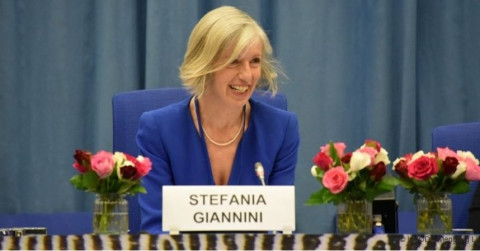 A call for policy-makers to build bridges between the education and the justice sectors 2019-05-24 “If we are to prevent crime and promote peaceful and just societies, it starts on the benches of schools - schools are the place where we experience from the earliest age respect, fairness and accountability.” With these words, UNESCO’s Assistant Director General for Education, Stefania Giannini, challenged schools to take the lead in shaping children’s ethical and civic development, not just their academic development. Addressing participants during a high-level side event to the 28th Commission for Crime Prevention and Criminal Justice (CCPCJ), Ms. Giannini argued, “By engaging and empowering young people, education sows the seeds of peaceful, just and inclusive societies. Our message is that schools must lead by example. If they do not tackle intolerance and hate at their roots, they become breeding grounds for these problems.” She also stressed that schools must be transparent, just and accountable, a point that is underscored in UNESCO-UNODC’s recent publication Strengthening the Rule of Law through Education: A Guide for Policymakers. Responding to the question “Don’t some governments see education as a means of getting children to obey the rules, whether those rules are good or bad?”, Ms. Giannini stressed that education on the Rule of Law nurtured critical thinking, not blind obedience, adding: ‘”Global Citizenship Education is about empowering young people to drive change.” Victoria Ibiwoye the Director of OneAfricanChild Foundation for Creative Learning, and Youth Representative to the SDG-Education 2030 Steering Committee, echoed this point, praising education’s capacity to transform the outlook of individuals, particularly the most disenfranchised: “I understand the need to exercise my civic rights because I have seen and felt what it feels like to be deprived of quality and inclusive education. I have also seen the power of education breaking the cycle of poverty, transforming lives and building resilient societies.” Bruno Derbaix, a leading voice on global citizenship education, and author of the book ‘Schools for Active Citizenship’, pointed out that schools are the first place children encounter the principles of justice and citizenship, and lamented that they rarely provide an ideal model of society for their pupils. “Hypocrisy is doing a lot of damage. Teachers regularly extol the importance of human rights values like freedom and equality, but schools do not put them in to practice on an everyday basis. When pupils behave disruptively, teachers do not take the time to make sure of the facts or have a frank discussion with the students…they do not realize this is an opportunity for an exchange with the class on the principles of citizenship.” Lucie Angers, Director and General Counsel at the Department of Justice of Canada, reported that a ‘Whole School’ approach to bullying, including the pupils in resolving the problem had had positive outcomes in her country. This approach also taught students how learnt legal norms evolve by allowing them hands-on experience of law making: “This goes to the very heart of what it is to live in society.” Marco Teixera, head of the Doha Declaration Global Programme emphasized the critical importance of fostering dialogue between the education and justice sectors in the context of the 2015 Doha Declaration on crime prevention and criminal justice that recognizes the critical importance of education for justice. He urged policy-makers to work with the widest range of stakeholders possible to make the principles of justice more accessible to young people: “Our partnership, in cooperation with UNESCO, continues to develop innovative tools and resources to promote a culture of lawfulness around the world.” The event was organized in the context of the UNESCO/UNODC partnership on Global Citizenship Education for the Rule of Law: Doing the Right Thing, that aims to strengthen the capacity of educators to promote the rule of law through education. • Education for Justic initiative• Strengthening the Rule of Law through Education: A Guide for Policymakers• Global citizenship education for the rule of law: Doing the right thing URL : https://en.unesco.org/news/call-policy-makers-build-bridges-between-education-and-justice-sectors
  Interview: improving the quality of education through digital technologies 2019-05-24 The Omar Dengo Foundation’s National Programme of Educational Informatics in Costa Rica was awarded the 2015 UNESCO-King Hamad Bin Isa Al-Khalifa Prize for the Use of Information and Communication Technologies (ICT) in Education.Created in 1988 by the Ministry of Education of Costa Rica and the Omar Dengo Foundation, the National Programme for Educational Informatics (PRONIE MEP-FOD in Spanish) promotes the improvement of the quality of education through digital technologies.Leda Muñoz, Executive Director of the Omar Dengo Foundation, spoke to UNESCO about how the programme has evolved since it was awarded the Prize. Almost four years after winning the Prize, how has it impacted you and your work?The Prize was a very important incentive to complete and accelerate a rigorous process of renewing and upgrading our pedagogical model for educational informatics. Educational Informatics is part of the official curriculum of the Ministry of Education of Costa Rica, reaching over 3,200 schools and over 87% of students nationwide. Its objectives are to promote the development of cognitive and social competences in students from K 12 (kindergarten) to 9th grade, through strategies based on the digital technologies, such as programming (coding) and project-based learning. Could you tell us more about the beneficiaries of the programme?The new program is allowing all students, regardless of their geographical location or socioeconomic status, to learn and experience critical topics for the Fourth Industrial Revolution, such as robotics, big data, and the fundamental concepts of computational thinking.This large-scale programme is closing educational gaps between the rural and urban schools, and between high and low socioeconomic families, in a country with large disparities. What are the recent developments and the next steps in your activities?We have already started to implement the new pedagogical proposal, in a gradual process of scaling it up. Four hundred schools are already engaged with the new proposal, and our goal is to reach 100% of all schools and students by 2021. How do you think innovative technologies can be used to enhance learning and education?The main idea is to identify attractive and meaningful uses of technologies, as powerful tools to think, to create and to collaborate. As explained by Nicholas Carr (writer on technology, economics, and culture), the scope of the tool is defined by the use given to it by the user. To use the tool simply to replace or upgrade the previous tool --say a book or a blackboard-- will hardly change the learning outcomes. But if ICTs are used as part of a better and coherent pedagogical proposal, the learning outcomes should be improving. It is really about getting tools to do what we need or want, and not vice versa. Digital technologies and related services have given to the educational system the extraordinary opportunity to move from a standardized, synchronized and localized educational offer, focused on the passive transfer of information from the teacher to the student, to a more personal, ubiquitous and synchronic offer, designed to promote thinking, self-learning, creativity and collaboration. This will strengthen knowledge use and integration, moving from “more content” to “more concepts” and deep thinking, a critical shift to the educational system. Learn more about UNESCO’s ICT in education Prize. URL : https://en.unesco.org/news/interview-improving-quality-education-through-digital-technologies
  Namibian project team launches educational initiative on the Holocaust and genocide 2019-05-20 With the support of UNESCO and the U.S. Holocaust Memorial Museum (USHMM), a team of Namibian educators from Museums’ Association of Namibia (MAN) has developed an impactful project in support of education about the Holocaust and genocide in Namibia: To kick off the project, the team inaugurated the USHMM traveling exhibition entitled “Deadly Medicine: Creating the Master Race” on 24 April 2019 at the Gallery of the Namibian Arts Association in Windhoek. The event was attended by students, lecturers, and staff from the National Institute for Educational Development (NIED) and representatives of the UNESCO Office in Windhoek. The exhibition was brought to Namibia on an initiative of the MAN and the South African Holocaust and Genocide Foundation, with the support of International Holocaust Remembrance Alliance (IHRA) and the USHMM. It explores the Nazi regime’s pseudo “Science of Race” and its implications for medical ethics and social responsibility and challenges viewers to reflect on the present-day interest in genetic manipulation that promotes the possibility of human perfection. “There is a significant historical connection between the Nazi’s ‘Science of Race’ and the history of racial discrimination in Namibia”, explains Ndapewoshali Ashipala from the Museums’ Association of Namibia. “Some of the initial ‘research’ that later informed the Nazi’s pseudo-science and backed the Nazi ideology of racial superiority, was conducted in today’s Namibia under German colonial rule. Some practices developed at this time were later also applied in the Apartheid regime.” Jeremy Sylvester, Director of the Museums’ Association of Namibia, underlined this connection during his address at the inauguration of the exhibition, pointing out the role of German anthropologist and doctor Eugen Fischer: “Fischer came to Namibia and conducted research in Rehoboth, which was later used to reinforce the German ‘concept of race.’” Before coming to Namibia, the exhibition was displayed by the South African Holocaust and Genocide Foundation in various locations in South Africa in 2018. Educational work around the exhibit was supported by UNESCO and the USHMM through the International Conference on Education and the Holocaust (ICEH), a capacity-building programme organized jointly by both institutions in 2015 and 2017. The Conference aims to globally advance the institutionalization of education about the Holocaust and genocide. Namibia participated with a team of educators in both conferences and was joined by a South African team in 2017. As direct outcome of their participation in the first ICEH in 2015, the Namibian team is now working on finalizing its exhibition on the 1904 genocide against the Herero and Nama, entitled “The Ovaherero and Nama Genocide– Learning from the Past”, which received support from the Ministry of International Relations and Cooperation. The exhibition will be displayed in all 14 Namibian states and visited by school groups. To accompany the exhibition, the team is developing a teachers’ handbook, which will also be made available for regional education departments and will serve to supplement the current Namibian school curriculum. •More on Education about the Holocaust and genocide URL: https://en.unesco.org/news/namibian-project-team-launches-educational-initiative-holocaust-and-genocide
 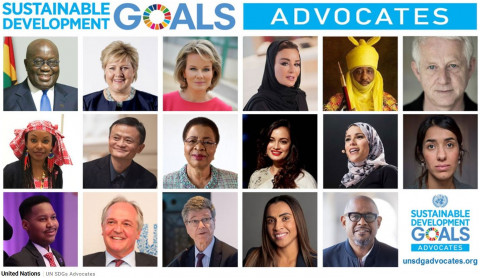 New SDG Advocates sign up for ‘peace, prosperity, people’ and planet, on the road to 2030 2019-05-20 As the UN and partners around the world push towards reaching the Sustainable Development Goals (SDGs) by 2030, six new influential public figures came on board as official SDG Advocates on Thursday, committing themselves to the pursuit of the 17 goals on behalf of “peace, prosperity, people, planet, and partnerships.”“We have the tools to answer the questions posed by climate change, environmental pressure, poverty and inequality”, said UN Secretary-General, António Guterres. “They lie in the great agreements of 2015 – the 2030 Agenda for Sustainable Development and the Paris Agreement on climate change.”“But tools are no use if you don’t use them. So, today, and every day, my appeal is clear and simple. We need action, ambition and political will. More action, more ambition and more political will,” said the UN chief. The six new Advocates are:•His Royal Highness Muhammadu Sanusi II, Emir of Kano (Federal Republic of Nigeria).•Hindou Oumarou Ibrahim, Activist, Environment and Indigenous Rights (Republic of Chad).•Dia Mirza, Actress and Film Producer, UN Environment Program Goodwill Ambassador for India (Republic of India).•Edward Ndopu, Founder, Global Strategies on Inclusive Education (Republic of South Africa).•Nadia Murad, Nobel Laureate, Chair and President, Nadia’s Initiative, UN Office on Drugs and Crime Goodwill Ambassador (Republic of Iraq).•Marta Vieira da Silva, Footballer, Orlando Pride, UN Women Goodwill Ambassador (Federative Republic of Brazil). They are joining and overall group of 17, who are all committed to raising awareness, inspiring greater ambition, and pushing for faster action on the SDGs, which include the end of extreme hunger, poverty, and quality healthcare for all. The Advocates represent the universal character of the SDGs themselves, hailing from Governments, entertainment, academia, sport, business and activist organizations around the world. “By joining forces to achieve our goals, we can turn hope into reality – leaving no one behind,” said Co-Chair of the SDG Advocates group, Prime Minister Erna Solberg of Norway. “This is a time of great hope for the world. If we work smartly together and stay on course, we can raise millions out of poverty and significantly expand basic social services for many more by the 2030 end date of the SDGs,” added Co-Chair of the SDG Advocates and President of Ghana, Nana Addo Dankwa Akufo-Addo. Mr. Guterres has appointed some members of the previous group of SDG Advocates as SDG Advocate Alumni and said on Thursday he was looking forward to their ongoing support and engagement. URL: https://news.un.org/en/story/2019/05/1038202
  Aid to education falls slightly in 2017, shifts away from primary education 2019-05-16 In 2017, aid to education totaled US$ 13.2 billion, down 2% or US$288 million compared to 2016. The figures, released by the Global Education Monitoring Report, published by UNESCO, show the levels of aid to education continue to stagnate, growing by only 1% per year on average since 2009. These figures raise questions about the global commitment to achieving SDG 4, the global education goal. An increasingly fragmented architecture for financing education is not helping. A new multilateral mechanism, the International Financing Facility for Education, which aims to lower the cost of borrowing for education for middle income countries, is expected to be announced later this month. It is an addition to the Global Partnership for Education, which provides grants to low income countries, and the Education Cannot Wait fund, which focuses on emergency contexts. Manos Antoninis, director of the Global Education Monitoring Report says the commitment isn’t there. “There has been big talk about big ambitions ever since 2015 when our new education agenda was set, and yet donors are shifting money around, tinkering with different ways to spend a fixed sum, but not giving more.” Donors have not kept their promises to keep to the UN target of 0.7% of gross national income to foreign aid. Doing just that and allocating 10% of that aid to primary and secondary education, would have been enough to fill the US$39 billion dollars annual financing gap. Yet, education has become less of a priority for development partners, with the share of education falling from a peak of 10.7 % of total aid in 2007 to just 7.1% in 2017. Of the top ten OECD donors to education, the United Kingdom is the only G7 country dedicating the UN target figure of 0.7% of its gross national income to foreign aid. Much of the cut to total aid to education can be explained by the United Kingdom decreasing its aid to education by 29%, of which 60% was a drop in its allocation to basic education. From being the second largest donor to total basic education in 2016, it has fallen to fourth place in 2017 with US$ 517million. Overall, Germany tops the donor scoreboard for aid to education, disbursing US$2 billion in 2017, followed by the United States with $1.5 billion and France with US$1.3 billion. France was the donor that increased its funding the most from 2016 to 2017, by a total of US$207 million. This is in line with the announcement that France would increase its official development assistance to 0.55% of its gross national income by 2022. However, 58% of Germany’s and 69% of France’s aid is directed at scholarships and imputed costs for students from developing countries to study in their tertiary education institutions. If these items were excluded, the remaining aid to education would have decreased even more over the past year, by 5% or US$534 million, as aid to higher education increased, while aid to secondary education fell by 2% and aid to basic education by 8% between 2016 and 2017. Antoninis says the trends are alarming. “A drop in aid to education could be something to celebrate if it looked like it was due to governments needing less, but this doesn’t seem to be the case. Governments in low income countries spend, on average, 16% of their budgets on education, far more than richer countries, and are off track meeting even the 2015 target of universal primary education. With no action from donors to support them, it’s even less likely that our ambitious education goal will be reached”. URL :https://en.unesco.org/news/aid-education-falls-slightly-2017-shifts-away-primary-education
 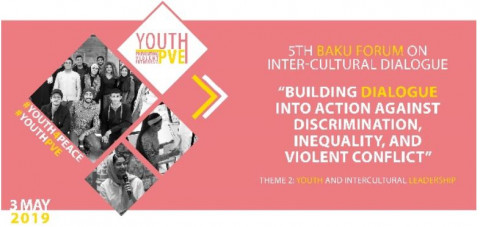 Youth Countering Hate Speech and Discrimination at 5th Baku Forum 2019-05-13 02 May 2019The 5th Baku Forum on Intercultural Dialogue (May 2-3, Azerbaijan) brought together youth from across the world to discuss inclusive approaches to promote peace and embrace diversity. In accordance with the Forum’s mission of putting “dialogue into action against discrimination, inequality, and violent conflict,” six young peacebuilders shared their initiatives on building bridges and understanding amongst cultures during an interactive panel organized by UNESCO. “Intercultural dialogue entails the respectful exchange of views between individuals with different ethnic, cultural, religious and linguistic backgrounds and heritage on the basis of mutual understanding and respect. Though we are young people coming from different countries and backgrounds, we face similar issues linked to violence, discrimination, and stereotypes. It is therefore important to have honest and courageous conversations to connect with others, and be more empathetic. This process of intercultural dialogue and learning is key towards a culture of peace” – Deepak Ramola, young panelist & #YouthOfUNESCO. The session was opened by Mr Farhad Hajiyev, Deputy Minister of Youth and Sport of Azerbaijan, who shared with the panelists that youth are the key for preventing violent extremism . Representing youth from every corner of the globe, the panel showcased the stories of Deepak Ramola (India), Marva Langevine (Guyana), Monday Collins (Uganda), Hezha Mohammedkhan (Kurdistan region of Iraq), Haneen Thabet (Jordan), and Bushra Ebadi (Canada). The panelists plunged into an insightful dialogue on youth civic engagement, intercultural dialogue, and how digital spaces and social media can address discrimination and hate speech while preventing violent extremism. “Our organization works on an initiative called Tour in Maan, where we invite influencers from Jordan who visit the city and publish their experience on their accounts on social media platforms with some photos and quotes. This shows how social media can also be used to share positive messages and counter negative narratives.– Haneen Thabet, beneficiary of the UNESCO-UNOCT Project on Youth Peacebuilding All panelists agreed on the importance of integrating cultural understanding and intercultural dialogue into their local work, as stereotypes continue to affect young people in all parts of the globe. “I am a first generation Afghan-Canadian, and I have never been “Canadian” or “Afghan” enough, so part of my work is to address these forms of discrimination”, said Bushra. Deepak mentioned his initiative Under the Hijab, created to stop discrimination against women who wear the hijab, while Hezha, a 10th UNESCO Youth Forum participant, spoke about methods to prevent cyberviolence and to encourage peacebuilding in the Arab region. Monday told us how he has been able to overcome his background as a former child soldier, “I decided that I would move beyond this stereotype, and that is why I was motivated to work with young people in peacebuilding and conflict resolution, and I use my life experience to be a positive example. “After discussing the role that young people can play in countering hateful rhetoric online, the panelists encouraged everyone to not only stand up to harmful stereotypes, but to also actively work to ensure they do not use them to define an individual.The six peacebuilders then met with other young participants in order to discuss follow-up actions and potential joint initiatives on intercultural dialogue and peacebuilding. They proposed to work together towards better social media regulation in order to prevent hate speech and online violence. They will also advocate for safe youth spaces and the role of education, including media and information literacy for youth.-- In parallel of UNESCO’s youth panel, UNESCO’s partner UNOCT had a session on preventing violent extremism through youth vocational training. Speaking on behalf of UNESCO’s Social and Human Sciences Sector, the Assistant Director General Nada Al-Nashif, participated in the discussion and emphasized on the work being accomplished through the collaborative efforts of UNESCO and UNOCT in their joint project “Preventing Youth Extremism through youth empowerment in Jordan, Libya, Morocco and Tunisia”. She finally encouraged the participants not to lose sight of the importance of the youth, peace, and security agenda.--Learn more about UNESCO’s panels during the 5th Baku Forum: https://en.unesco.org/news/building-dialogue-action-5th-world-forum-intercultural-dialogue URL :https://en.unesco.org/news/youth-countering-hate-speech-and-discrimination-5th-baku-forum
  « Nous et les autres. Des préjugés au racisme » : Une nouvelle exposition s’ouvre au Musée de la mémoire et des droits de l’homme de Santiago (Chili) 2019-05-10 After the opening of the first major temporary exhibition “Us and Them – From Prejudice to Racism" at the Musée de l’Homme in Paris in March 2017, the travelling exhibition has now been launched at the Museum of Memory and Human Rights in Santiago, Chile. This new exhibition, open to the public from 25 April to 29 September 2019, was inaugurated by the Ambassador of France in Chile, Roland Dubertrand; the Director of the Museum of Memory, María Luisa Sepúlveda and representatives of various institutions and organizations. On the topic of migration, a key issue in our contemporary societies, the exhibition aims to draw the visitor’s attention in the fight against racial practices and to make them reflect on their own racial prejudices. It also promotes the recognition the equality of rights. For Francisco Javier Estévez Valencia, the Executive Director of the Museum of Memory, Chairholder of the UNESCO/Madanjeet Chair on promoting tolerance and non-violence in Chile and Latin America through education and co-winner of the UNESCO-Madanjeet Singh Prize for the Promotion of Tolerance and Non-Violence in 2014, it is crucial to consider migration as a human right that has to be protected. Using audiovisual and interactive technologies, the exhibition highlights the construction of racial prejudices through the “categorization” process, which has historically led to the institutionalization of racism in our society. Examples such as colonial expansion, nationalism, underlying mechanisms of discrimination and racial domination can be perceived. The exhibition also questions the construction of an “anti-racist” society and all the mechanisms put in place to prevent and change practices of individual or collective exclusion. With the support of UNESCO and the French Institute of Chile, this innovative exhibition is an opportunity to remind us that racism is a social construction that has led to many crimes which that continue to this day. Therefore, through the International Coalition of Inclusive and Sustainable Cities – ICCAR, launched in 2004, of which the city of Santiago is a member, UNESCO engages in concrete action in the fight against discrimination and racism at the local level. URL:https://en.unesco.org/news/us-and-them-prejudice-racism-opening-new-exhibition-museum-memory-and-human-rights-santiago
 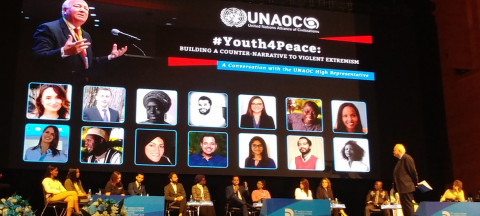 Engaging world’s youth vital to preventing violent extremism, building sustainable peace, UN official tells Baku Forum 2019-05-10 The spotlight for the second and final day of the 5th World Forum on Intercultural Dialogue in Baku, Azerbaijan, shined brightly on youth, with a lively discussion on the vital role young people play in countering and preventing violent extremism. “Youth engagement has become a crucial factor in the global efforts to prevent violent extremism and to build sustainable peace”, said the moderator, Miguel Moratinos, the High Representative of the United Nations Alliance of Civilizations (UNAOC), moderator of the event.“They are not only our present, but our hope for the future,” he stated. With a focus on education and intercultural and interfaith dialogue, Youth4Peace: Building a Counter-Narrative to Violent Extremism featured panelists of diverse backgrounds sharing how their work is making a difference, ensuring that young people’s voices are being heard at the policy level so that youth are seen as champions of change, not just victims or perpetrators of violence.‘Better to light a candle than to curse the darkness’ From France, astrophysicist Fatoumata Kebe said she had founded Ephemerides, a programme that provides astronomy classes for high school students from disadvantaged background. Although she has worked with NASA, her heart lies in teaching math, physics and chemistry to girls in Mali.“Only 30 per cent of them have the opportunity to attend school and there, they are not offered science, so I teach them about the solar system”, she said.She also teaches astronomy to marginalized youth in Paris, including by taking them to meet with staff in the aerospace field.For his part, Jorge Antonio Chavez Mazuelos, International Relations Master of Arts Candidate at Central European University, spoke passionately about the importance of social inclusion to fight terrorism. “My father was a police officer whose life was darkened by violence”, he said, noting that in his native Peru, victims of violence are given education rather than monetary reparations.Jorge founded USIL Ambassadors, Peru´s largest international university club, where he organizes social and cultural activities, and channels study and work abroad scholarships.He took to heart his father’s wisdom that it was better to light a candle rather than curse the darkness, saying “When we educate, we empower victims of violence and turn on a lighthouse for a whole community”. Meanwhile, Liyanaarachchige Neluni Tillekeratne, Co-National Director of Sri Lanka Unites, explained that after the civil war in the north, her country tried to reconcile all communities.“A youth movement was set up 10 years ago as war ended”, she said and since that time, it has “turned thousands of youth into peacebuilders” by implementing cross- and inter-cultural ideologies to create meaningful relations and friendships “across ethnic and religious lines”. After the recent violence in Sri Lanka, in which suspected terrorists detonated suicide bombs on Easter Sunday and killed more than 250 people at churches and hotels across three cities, Liyanaarachchige said: “Thousands of our youth stood up and said violence has no place in Sri Lanka and we are now setting up a culture of peace”.Sara Zaini, Co-Founder and Director of School and Content Development for Emkan Education underscored the importance of early education.“We were not pleased with the education our children in Saudi Arabia were receiving”, she asserted. “We wanted to give them better opportunities, so almost five years ago, we started a programme to become agents of change there”. Sara elaborated on implementing the Swedish approach of Kunskapsskolan, where through a portal, students collaborate and work with people and ideas from other countries, cultures and languages.“This helps to teach critical thinking and offers a platform to engage with counterparts around the world, she said, urging others to “embed change you desire in your community”. ‘Engage and listen to youth on their own terms’In a side event on youth engagement and vocational training, Sevil Alirzayeva, Chief of Staff at the UN Office of Counter-Terrorism (UNOCT), spoke about the alarming rise in hate speech, xenophobia and other forms of bigotry.“The international community must stay united and cannot relent in its efforts to prevent and counter terrorism in all its forms and manifestations”, she affirmed.Noting that today nearly half the world’s population is 24 years-old or younger, Ms. Alirzayeva stated that UNOCT prioritizes engaging and empowering youth in the context of counter-terrorism, “especially preventing and countering violent extremism”. Because young people are affected by terrorism in multiple ways, from being targeted by terrorist propaganda and preyed upon by recruiters to becoming collateral victims of attacks and suffering direct and indirect political, social and economic cost and consequences of terrorism on their communities and societies, she said that they have as much, if not more, of a stake in counter-terrorism, and “we need to engage them more effectively and sincerely”.“We need to engage youth as partners in building resilience, as positive change-makers, because young women and girls, young men and boys, are central to creating a safer, more inclusive and prosperous world”, she stated.“If we want to counter the manipulative messages of terrorists to lure young people, we have to engage and listen to them on their terms”. ‘Sustainable peace requires an inclusive approach’Speaking on behalf of the UN Educational, Scientific and Cultural Organization (UNESCO), Nada Al-Nashif, Assistant Director-General for Social and Human Sciences stressed the importance of fostering youth participation in decision-making and in processes for ensuring peace and security. Noting that violence, discrimination, hate speech and violent extremism threatens the fundamental rights of citizens all over the world, she said that one of the reasons violent extremism persists is that “youth have been excluded from decision-making processes and have had little opportunity for civic engagement”.“We must, therefore, provide our youth with the opportunities, and support needed to develop the skills and capacities necessary to overcome the push and pull factors towards violent extremism”, she asserted.“Sustainable peace requires an inclusive approach to create an environment where youth feel included and engaged as change-makers.” Nihal Saad, Chief of Cabinet and Spokesperson for the High Representative, UNAOC said the Alliance considers young people essential partners in “fostering mutual understanding between peoples of different cultures and religions, highlighting the will of the majority to reject violent extremism and embrace diversity”.“UNOAC has a strong focus on youth-led preventative actions”, she said, noting several examples, including by leveraging new technology.“Young media makers are encouraged to create content on issues related to migration, diversity and social inclusion for the PLURAL+ Youth Video Festival”, Ms. Saad gave as just one example. Launched in 2009, UNOC and the International Organization for Migration (IOM) work with a network of more than 50 partner organizations globally to empower youth to explore pressing social issues. According to Farid Jafarov, Executive Director of Azerbaijan Youth Foundation, “the most widespread form of terrorism in the modern world is nationalism and religious terrorism”.For eight years the Foundation has supported youth organization projects for young people aged 16-29 to combat religious extremism, radicalism and domestic violence. URL:https://news.un.org/en/story/2019/05/1037861
 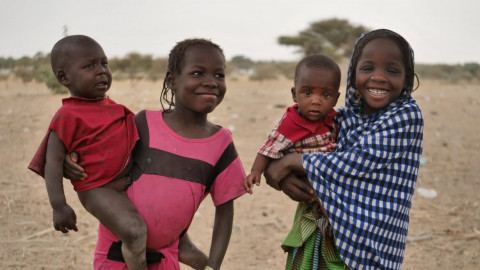 Defending the right to education for displaced women and girls 2019-05-10 A young woman passionate about education pleads for African countries to ensure that the right to education for displaced girls is upheld by adding her voice during an NGO forum in Sharm El Sheikh last month.May 06, 2019 by Diana Kwoba Adweya, Forum for African Women Educationalists (FAWE) Last month, I participated as a FAWE youth representative in an education session on securing the right to education for displaced women and girls. It was the only session on rights-based education during the NGO Forum that preceded the 64th ordinary session of the African Commission for Human and Peoples Rights (ACPHR).Although ACPHR oversees all human rights, its focus on the right to education hasn’t been explicit. So the forum was an opportunity to position education in emergencies high on its agenda at the continental level and ensure that it continues to occupy a space on the ACPHR platform with policy makers and civic actors. At the forum, it was striking to see the persistent commitment of civil society organizations and how each one understood and actualized the global commitment to human rights. For example, there are some individuals who sacrificed their very high offices of power and influence in order to found organizations that fight for the rights, justice and inclusivity of vulnerable and marginalized populations.Activism it seems needs a backbone, one that is able to survive the trying storms of political threats, uncertainty and unending protocols and procedures that sometimes make the desirable change seem unachievable.I instinctively found myself wondering whether I too would give up so much for the sake of defending the rights of the marginalized and vulnerable. As a youth who is passionate about education, I firmly believe in the values enshrined in the African Charter on Human and People’s Rights and the newly launched Kampala Convention for the protection of people who are internally displaced in Africa. This is why FAWE added her voice to the NGO Forum to speak up about education and defend it as a human right, particularly for children and youth displaced by conflict and crisis.The Forum facilitated a multi-stakeholder and intergenerational dialogue among civil society, youth, ministers responsible for human rights, academics and regional organizations both within and outside Africa, and the African Centre for Democracy and Human Rights Studies (ACDHRS). An educated girl is a powerful womanIn Africa, girls and women experience various vulnerabilities – for example accessing education, health services or even employment. These intensify exponentially during conflict and crisis. In these situations, educating girls and women becomes not only a livelihood strategy but also a path to conflict resolution by imploring the youth to use alternative ways of seeking change without violence in order to build peace, social cohesion and strong citizenship.Research overwhelmingly suggests that educated populations are less likely to engage in violent acts than those less educated, and that there is a direct correlation between education and levels of income, where those with low levels of education are likely to earn less and more prone to violence than those with higher levels of education. Calling for more female teachers during crisesIt is essential that more female teachers are available, in particular in refugee camps, to cushion the vulnerable girls and ensure that no girl is left behind, while efforts are made to integrate refugees, IDPs and returnees into the national education systems in the host countries.However, this requires adequate funding if the right to education for displaced persons is to truly become a reality. Higher risk of child marriage during conflict In Africa forced displacement is largely due to conflict, natural disasters, human rights violations or political instability, and has resulted in more than 12 million displaced persons and an estimated 6.2 million refugees and asylum seekers across the continent.The education session at the forum provided a space to highlight the key factors that limit girls and women’s access to education in conflict and crisis.The session also highlighted the misconceived strategies that families employ to keep their girls safe – for example, girls are married off to ‘influential’ elders or military leaders based on the assumption that this would guarantee protection for the girls’ and family - although these may ultimately undermine the girls’ rights.The reality in many cases is that girls can end up being subjected to violence and exploitation. Growing civil society’s space to ensure education remains a right for IDPsProviding for the education of displaced children and youth requires long term strategies that take into account the various needs of refugees.Many civil society actors called for this, as CSOs occupy a unique space in terms of knowledge on laws and regulations on human rights, networks and evidence and the ability to monitor and report violations.CSOs were encouraged to work with governments on access to education for displaced women and girls and draw the attention of governments to factors that hinder this right.Ultimately, CSOs are also pushing for governments to resolve conflicts, address the crises and ensure adequate conflict prevention mechanisms are in place.It’s also important that interventions be guided by regional and global rights-based instruments that have a gender component such as the African Charter on Human and People’s Rights, the Maputo Protocol, the 1961 AU convention governing specific needs of refugees, the Kampala Convention, and the Convention on the Elimination of all Forms of Discrimination Against Women (CEDAW) among others. More voices are needed to fight for rights-based educationThe forum led to a number of resolutions and recommendations, but very few focused on education in emergencies.Thankfully, African governments were called on to ratify the African charter on rights and welfare of the child to allow for registration of births and deaths, which is a fundamental first step to plan for their access to a quality education.However, youth empowerment was not given the focus so desperately needed. My message to regional rights bodies is that they need to include our voices more so that quality education remains a right for displaced persons, and so that we can not only have a positive impact on crisis and conflict prevention but also participate in peace negotiations.We must do all we can to avoid more migration driven by conflict and crisis, and to build a world where more African children and youth, particularly girls, have access to quality education. URL:https://www.globalpartnership.org/blog/defending-right-education-displaced-women-and-girls
 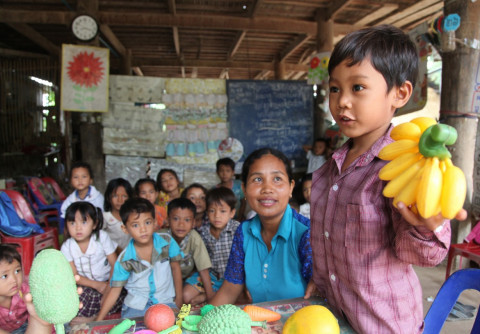 Act now! Investing in the foundations of learning for all children 2019-05-07 A new report by UNICEF highlights that at least 175 million of the pre-primary school-age children in the world are not enrolled in preschool. How can we address the challenges that prevent children from having access to early education?by Jo Bourne, Global Partnership for Education and Ted Chaiban, UNICEF Children between the ages of three and six might seem like they are only just beginning life’s journey. But in fact, more than 85% of their brain development is already in place. Each and every day is critical to their development. They are learning new ideas - colors and shapes, letters and numbers - as their brains and bodies grow.These early days represent a critical window of opportunity to set the foundations for lifelong success, at school and in life.What we do now will have a life-changing effect on the children of tomorrow. It compels us to act – and to act differently.We know that quality pre-primary education is one of the most effective investments for success in school and later in life. Yet, despite the proven benefits of pre-primary education, millions of children are missing out on this precious opportunity. The new report ‘A World Ready to Learn: Prioritizing Quality Early Childhood Education’ by UNICEF highlights that half of the pre-primary school-age children in the world –at least 175 million – are not enrolled in any pre-primary program. So, how do we unlock the life-changing benefits of early childhood education? We raise the profile of pre-primary education in the decision-making process of governments We progressively grow access We simultaneously improve quality We invest - early, equitably and smartly And we act now.There is no doubt that the path to universal pre-primary education is rife with resource constraints and competing priorities. But analyses of progress in countries like Nepal, Mongolia and Ethiopia show that providing universal access to pre-primary education is a reachable target. And it requires practical and bold approaches that address country realities. The Sustainable Development Goals issued a bold challenge to the global community to provide all children with quality pre-primary education by 2030. Millions of children are ready for pre-primary education today. It is crucial to embark on the path towards realizing this vital opportunity now and provide all children the opportunities they deserve. Raise the profile As countries work towards building systems that can deliver quality pre-primary education, stakeholders – such as Ministries of Education and Finance – are faced with tough challenges. When deciding where to direct their investment and attention within education, pre-primary often loses out. To give each child a better chance at success, we must work together to raise the profile of pre-primary education within education sector plans and policies.We must do this urgently and accelerate efforts to address access and learning gaps by making at least one year of pre-primary education a routine part of education systems. Grow access Currently, access to early childhood education is highly unequal in almost every country, with attendance rates for children in the richest quintile in low income countries 8 times higher than those of the poor. When a country’s goal is to scale up the pre-primary education system quickly, there is a strong temptation to first provide services to the children easiest to reach, such as those typically living in urban areas or from wealthier households.This ‘business as usual’ approach will not fulfill the promise of universal pre-primary education - it will worsen existing gaps between the disadvantaged and their peers. Equity and expansion must therefore go hand in hand.Governments must put in place policies that maintain a universal commitment and prioritize the poorest and hardest-to-reach children at the start of the road to universality, not at the end. In countries not on track to achieve the universal target, they must prioritize the implementation of a single year of free pre-primary education, with an aim to expand this to more years as the system’s capacity grows. Improve qualityAttending a pre-primary program is of limited value to a child unless that program is of a sufficiently high standard. Many factors contribute to quality pre-primary education: a developmentally appropriate curriculum, engaged families and communities, an efficient quality assurance system, equitable planning and resource management, and most importantly a competent and motivated workforce.Globally, the supply of pre-primary teachers will need to double by 2030 to meet the SDG target of universal coverage with an ideal PTR of 20 to 1. More urgently, low-income countries will need eight times as many pre-primary teachers as they currently have.We will need new solutions and interim plans to fill these gaps. We must invest in quality as the system grows – not after – striking a balance between expanding access and maintaining quality so that pre-primary education results in real benefits for all children. Strengthening the governance and implementation capacity of the pre-primary system across all levels of government is critical to ensure the learning outcomes of children. Invest early, equitably and smartlyIf countries want to ensure universal access to pre-primary, it is imperative for governments and donors to dedicate and increase financing. The UNICEF report recommends that governments should aim to allocate at least 10% of education budgets to pre-primary education.And donors should lead by example by devoting at least 10% of their education aid to pre-primary education, catalyzing and complementing public resources.We must agree on a common vision for early childhood education among governments, donors and partners that complements funding and technical assistance available where and when it is most needed. Pre-school children in Sibiti, South Of Congo, 2019. CREDIT: © UNICEF/UN0282817/Frank Dejongh Act nowTo achieve universal pre-primary education by 2030 - to give every child a fair chance in life - we must act now. The need is urgent — and “business as usual” is not good enough. At our current pace, tens of millions of children will still be denied the early education they need and deserve. We must not let them down.All data in this blog comes from UNICEF's new global report on early childhood education, A World Ready to Learn: Prioritizing Quality Early Childhood Education. URL: https://www.globalpartnership.org/blog/act-now-investing-foundations-learning-all-children