
News
Catch up on what’s happening in the world of global citizenship education.
1,668 results found
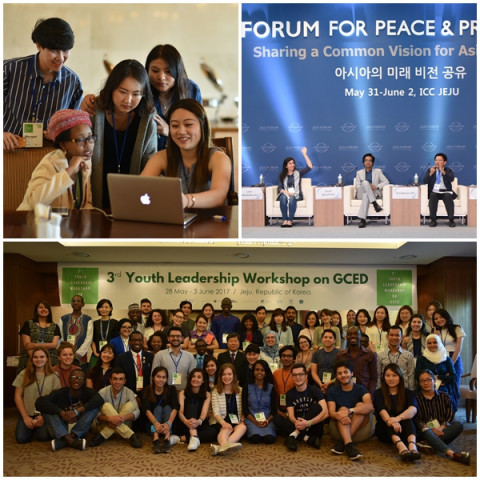 A Global Forum for Youth Leaders to Share Initiatives on GCED 2018-12-26 The 3rd Youth Leadership Workshop on GCED was held from 28 May to 3 June 2017 in Jeju, Republic of Korea. During this workshop, 50 youth leaders/activists from 42 countries participated in various forms of programmes, including plenary sessions on GCED, workshops for Youth Advocacy and study visits to understand GCED local initiative. Facilitated by APCEIU and core members of GCED Youth Network, this workshop was a forum for participants to actively share and engage with each other based on their local youth activities. Starting with the sessions on ‘Introduction of GCED’ by Director CHUNG Utak and Office of Education and Training, various workshops under the main theme of “Deepening the Understanding of GCED Advocacy” were held. For the session of “Youth Inspirational Speakers on GCED” by GCED Youth Network, youth leaders took part in various interactive exercises to understand GCED through sharing their own GCED activities and ultimately respect the difference of each other through GCED. Following this, participants had a session to ponder over the advocacy in GCED and its implementation strategies during the group activities. As a part of the session, “GCED Advocacy”, which was led by the GCED Youth Network introduced Youth Advocacy Toolkit and internalised advocacy strategies to efficiently implement GCED as a youth leader. In order to explore the local initiatives and develop a strategic planning for GCED, the youth activists participated in study visits to two different places in Jeju. Participants chose one of the options to experience and deepen their understandings of local initiatives on GCED based on the following themes: 1) “Understanding GCED Local Initiatives” - Global Inner Peace, A Civil Society Organization on Global Issues; 2) “Creative Ways for the Sustainable Future” - Jaejudo Joa, A Cultural Group for Sustainable Marine Ecosystem through Beachcombing. By exploring GCED in local settings, the youth leaders had a priceless opportunity to relate their own experience with the different areas of Jeju to find methods to implement GCED in their home countries and share their activities on social media. After the study visit, participants gathered at Ttarabi Oreum and participated in the Peace Campaign by writing peace messages and flying kites. On June 1, the participants in six groups presented their outcomes to promote GCED by different thematic issues followed by action plans on specific topics: 1) Human Rights - Sexual Human Trafficking, 2) Leadership Development - Social Entrepreneurship, 3) Peace & Conflict - Act for Tolerance, 4) Cross-Cultural Understanding - Dialogue for Peace 5) Environmental Sustainability - Design a Sustainable Future with Comunidade da Mare 6) Gender Equality - Sanitary Pad, Right for Every Girl. Each group gave a speech on the above topics, composed of the background, target group, plans/timeline, method, evaluation/monitoring and organisational approach. To find the solutions to each issue, youth leaders had discussions to share their ideas and come up with group outcomes which are to be implemented and reproduced after the workshop as follow-up activities. On the last day, the youth activists participated in a session on “The Role of Youth and Culture in Shaping a Peaceful and Sustainable Future” in Jeju Forum for Peace and Prosperity. In this session organised by APCEIU and Jeju Special Self-Governing Province, two of the Workshop participants shared their youth and culture activities representing youth leaders across the globe as panelists. Her Excellency Puan Maharani, Coordinating Minister for Human Development and Culture of Indonesia, His Excellency Hamat Bah, Minister for Tourism and Culture of The Gambia, Mr. Eduardo Mendez, Executive Director of Simon Bolivar Music Foundation in Venezuela and Mr. Daniel Lindemann, TV personality in Korea from Germany Culture also joined the session as panelists. At the closing ceremony, Director Gwangjo KIM from UNESCO Bangkok commented that “It is important to take actions as global leaders and bring the issues forward to implement GCED in your own community.” Director CHUNG concluded this workshop by saying that “It is surely expected that the outcome of workshop will be implemented in your programmes of diverse regions and APCEIU will continuously support youth activities through GCED Youth Network.” URL:A Global Forum for Youth Leaders to Share Initiatives on GCED > APCEIU News - APCEIU (unescoapceiu.org)
 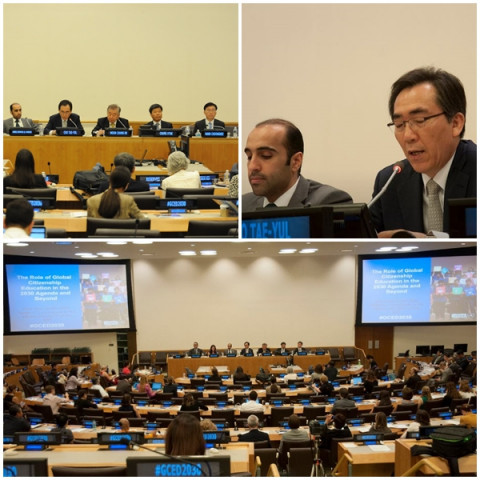 Value of GCED for the United Nations highlighted in 2017 UN GCED Seminar 2018-12-26 On 19 June 2017, APCEIU, together with the Permanent Missions to the United Nations of the Republic of Korea and Qatar, as well as the World Federation of United Nations Association (WFUNA) co-organized the 2017 UN Global Citizenship Education (GCED) Seminar at the United Nations (UN) Headquarters in New York. With the title “The Role of Global Citizenship Education in the 2030 Agenda and Beyond” the seminar focused on answering the question of how does Global Citizenship Education (SDG Target 4.7) contribute to the values and visions of the United Nations. An annual event since 2015, the discussions in the 2017 also touched on best practices that contribute to the realization of SDG Target 4.7, the Sustainable Development Goal for GCED. Ambassador Cho Tae-yul, Permanent Representative of the Republic of Korea to the United Nations, emphasized on the significance of GCED with the current global challenges faced mutually by humanity, and its role in realizing the mission of the United Nations. “GCED educates people to become active and responsible global citizens…towards sharing and realizing the universal values and visions which the United Nations upholds.” Ambassador Cho further mentioned that GCED contributes to the UN beyond its inclusion in the SDGs as it serves as, “…an important element of the UN’s holistic approach, strengthening the nexus among peace and security, development and human rights.” He further addressed that in line with the mainstreaming action needed at the United Nations, the “Group of Friends on Global Citizenship Education” was established, co-chaired by the Republic of Korea and the State of Qatar. The inaugural meeting of the group was held last 1 June where 60 representatives from 35 UN Member States as well as UN Department of Public Information, UNESCO and UN Alliance of Civilizations participated. As a reply, Ambassador Abdulrahman Yaaqob Y. A. Al-Hamadi, Deputy Permanent Representative of the State of Qatar to the United Nations, expressed their pride in co-chairing the group, a common platform for member states and key stakeholders to discuss challenges and opportunities to promote GCED. Ambassador Al-Hamadi also stressed the various efforts of Qatar to promote GCED, including through its support of intercultural dialogue, and the organization of the 2017 World Education Summit for Education (WISE) with the theme “Co-exist, Co-create, Learning to Live and Work Together”. The WISE will be held in Doha from 14 to 16 November 2017. In the opening remarks, Utak Chung, Director of APCEIU, explained that in light of the effort to prevent violent extremism, the implementation of GCED is crucial. He mentioned the full commitment of APCEIU in implementing GCED, shown in its various efforts such as the annual UN GCED Seminar, building capacities of teachers, development of curricula and policy guidance on GCED, and opening of platforms such as the International Conference on GCED and the GCED Global Network to exchange ideas and develop strategies for GCED. On a similar note, Bonian Golmohammadi, Secretary-General of WFUNA, highlighted their work on GCED, towards the goal of empowering young people to become global citizens that contribute and engage with the work of the UN and the realization of the SDGs. On a special video message, Madame Irina Bokova, Director-General of UNESCO, expounded that the inclusion of GCED in the SDGs is recognition of its role to support an education that meets the needs and challenges of the 21st century, “…convinced that (GCED) is essential to empower learners with skills and values they need to be positive change actors.” Furthermore, she recognized the leadership role of APCEIU in the promotion of GCED, working closely together within UNESCO towards stronger and more efficient programming. For the keynote speech, Moon Chung-In, Special Advisor to the President of the Republic of Korea for Unification and National Security Affairs and Distinguished Professor of Yonsei, drew the backdrop of the Korean case of GCED, a retrospection of how GCED came into being in the Korean context despite many challenges. Historical memory of poverty and rapid development has caused the Korean society to develop a certain culture that includes attitudes such as low empathy and high nationalism, a major barrier to GCED. As such, he put emphasis on the importance of taking history and culture into account, as is underlined in the GCED textbook developed through a consortium between various provincial offices of education in the Republic of Korea. The panel discussion included presentations from practitioners of GCED including Karen Bryner, Director of Educate-A-Child Technical Department, Education Above All; Lily Gray, Liaison Officer, UNESCO Office in New York; Han Kyung-Koo, Professor, Seoul National University; Mareike Hachemer, Teacher and Member of the Global Goals Educator Task Force; and Theresa Ridings, Student Cohort, Lehigh University’s Global Citizenship Programme. Panelists discussed about their activities on GCED, and perspectives that they apply in doing so. The role of teachers has been stressed, in that they need to become global citizens first and to be provided with resources and capacities developed. Students beyond the formal education sector needs to be offered with opportunities on GCED, lest the cycle of marginalization will continue. As well, the message of the complementarity between national citizenship and global citizenship was an important topic in the discussion. In the words of Han Kyung-Koo, “I believe that a good patriot can be, and should be, a really good global citizen. National citizenship is not an event, it is a process, and so is global citizenship.” At his closing remarks, Ambassador Hahn Choonghee, Deputy Permanent Representative of the Republic of Korea to the United Nations, put stress on the value of GCED beyond Target 4.7, as it achieves the ultimate goal of building peace through the United Nations. “I do not think that GCED is just a sub-target…rather it is our over-arching and ultimate goal for all SDGs, even the whole process of the United Nations. This is a common undertaking and it will be this solemn responsibility of our generation for our next generation’s children.” Related Link:http://webtv.un.org/search/the-role-of-global-citizenship-education-in-the-2030-agenda-and-beyond/5477618357001?term=Global%20Citizenship URL:Value of GCED for the United Nations highlighted in 2017 UN GCED Seminar > APCEIU News - APCEIU (unescoapceiu.org)
 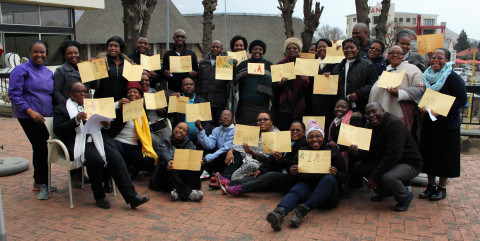 평화의 문화를 위한 세계시민교육 교사워크숍, 아프리카 레소토에서 개최 2018-12-26 Co-organized by Asia-Pacific Centre of Education for International Understanding (APCEIU) and Lesotho Distance Teaching Centre (LDTC), Workshop in Lesotho on GCED took place between 12 and 14 of July 2017 at Maseru, the capital city of Lesotho.As a post-Fellowship Programme, Fellowship Good Practices & On-site Training (Fellows in Action 2017) was launched this year to identify exemplary initiatives led by alumni of the UNESCO/KOICA Joint Fellowship Programme. The Programme is designed to provide support to the alumni of the Fellowship Programmes to share their good educational practices in local contexts, applying the knowledge and skills gained from APCEIU’s two-month training in Korea. The case of Ms. Nomsa Mpalami (2015 Fellowship Participant from Lesotho), ‘teacher training on peace education for non-formal educators in Lesotho’, has been selected as one of the three good practices, and the Workshop was implemented to further encourage her efforts to enhance the capacity of teachers in non-formal sector on GCED (Global Citizenship Education) and peace education. The Workshop invited 30 non-formal educators from different regions of Lesotho to learn about GCED with a focus of peace education and PVE (Preventing Violent Extremism) with sessions and lectures on conceptual framework of peace education led by Dr. Yonas Adeto (Institute of Peace and Security Studies, Addis Ababa University), discussion and dialogue on ways of dealing with conflicts and methods of conflict transformation in their own contexts facilitated by Ms. M. Mohasi (Transformation Resource Centre, Lesotho), and workshops on creating learning materials on peace and conflict transformation reflecting the lessons learned, which will be used as teaching and learning resources for their learners. The learning materials created by the participants will further be polished and edited to be published as booklets on peace education by the publication department of LDTC, which will be disseminated throughout the country, including schools, community centers, libraries and other institutions where teachers can utilize them as teaching and learning materials.
 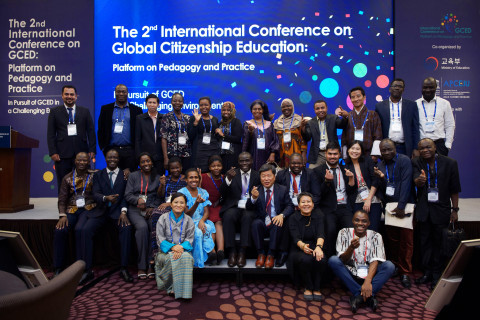 The 2nd International Conference on GCED: In Search of Solutions to Tackle Global Challenges 2018-12-26 With the rise of radicalism and nationalism, we have faced the increasing number of hate crimes against specific race, ethnicity, gender or cultural group and, consequently, an antagonistic atmosphere has been prevalent across the globe. Under these circumstances, there has been an ongoing demand for rethinking the role of Global Citizenship Education(GCED). In response, APCEIU held the 2nd International Conference on GCED from 13 to 14 September 2017 in Seoul to gather GCED practitioners and experts all over the world. Under the overarching theme of ‘in pursuit of GCED in a challenging environment’, this Conference was co-organized by the Ministry of Education of the Republic of Korea in partnership with UNESCO HQ. This Conference successfully provided a platform where participants discussed the challenges we have face globally, nationally and locally when it comes to implementing GCED and reflected upon the direction of GCED. During the two-day conference, more than 400 educators, policy makers, scholars and youth representatives from 60 different countries had attended. Kim Sang-kon (Deputy Prime Minister and Minister of Education of the Republic of Korea), Norbu Wangchuk (Minister of Education of the Kingdom of Bhutan) took part in the Conference. This Conference attempted to provide interactive sessions which encourage participants to actively participate in, consisting of various plenary sessions and concurrent sessions. The plenary sessions intended to give an integrated overview on the theme of the Conference, while the concurrent sessions consisted of diverse programmes as panel discussions, case presentations, participatory workshops, theater and debate chamber. Beyond its emphasis on the importance of global citizenship, this Conference enabled discussions on how to make the world more peaceful, inclusive and sustainable and how GCED can address current imperatives. The first day of the Conference was initiated by a panel discussion which brought together a panel of experts and practitioners from respective fields of GCED. Entitled ‘how can we pursue GCED in a challenging environment’, the panel discussion touched upon the challenges that they have faced and the achievements made by tackling these challenges in each field, region and practice. The plenary session 2 took the format of a town hall meeting in which every participant exchanged their perspectives and actively debated with each other. More than 400 participants shared their views and ideas through Mentimeter, the real-time online voting tool. In the concurrent session 1 titled ‘exploring practices of GCED and their impact,’ participants discovered how GCED has been practiced and what kind of difficulties it has been facing specifically throughout primary and secondary education, higher education and civil society organizations. This session encompassed practices on GCED in all types of education-formal, informal and non-formal.The second day kicked off with the plenary session 3, which was led by a brief performance that embodied an ethos of global citizenship. The topic was ‘GCED in Action’ and the performance was given by the Philippine Educational Theater Association (PETA). The session was designed to provide hands-on experience wherein the audience can feel the importance and message of GCED through the medium of theater. Furthermore, as GCED is considered to be delivered through diverse mediums such as participatory activities, the concurrent session 2 attempted to focus on democratic dialogism, transformative pedagogy and how to teach controversial issues. In addition, comprised of distinctive three sessions, each session in the concurrent session 3 addressed supportive conditions to scale up GCED. Each session covered education policies, curricula and teacher education respectively, shedding light on the challenges that we have faced in implementing GCED and sharing the recommendations suggested by experts in their fields. The youth debate chamber, a special session, was organized during the concurrent session 3. Under the motion of ‘Can global identity and national identity coexist? ,’ the four debaters were divided into two groups which held different views-pros and cons. The audiences were required to cast their votes in favor of the side they support two times-in advance of the debate as well as after the debate, and the side that obtained the biggest number of votes in the end won the debate. Interestingly, the result of the initial vote was reversed at the moment of the final vote. Subsequently, Cho Heeyeon, the Superintendent of Seoul Metropolitan Office of Education gave a special lecture on ‘Global Citizenship Education for Empathy & Coexistence’, which introduced the process and accomplishments of GCED in the context of education in Seoul. The 2nd International Conference on GCED provided opportunities to exchange and deduce various ideas to effectively resolve issues by which GCED is currently confronted. The Conference (except concurrent sessions) was live-streamed online for those who were interested in GCED. URL:The 2nd International Conference on GCED: In Search of Solutions to Tackle Global Challenges > APCEIU News - APCEIU (unescoapceiu.org)
 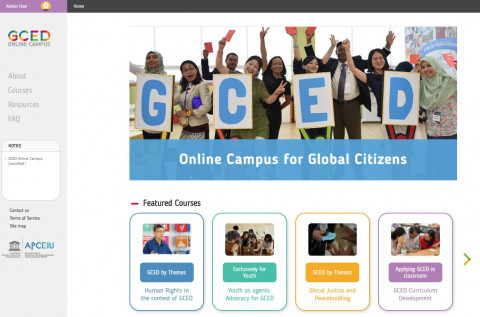 GCED Online Campus: Online Courses for Global Citizens has Launched! 2018-12-26 APCEIU has launched its e-learning platform on Global Citizenship Education ‘GCED Online Campus’ which offers various online courses on GCED to educators worldwide. (http://www.gcedonlinecampus.org/) As an e-learning platform on GCED, the online courses are expected to serve as a channel to introduce GCED to educators with its transformative approaches, as well as to deepen their understanding on thematic issues and practical knowledge. Two online courses titled ‘Glocal Justice and Peacebuilding’ and ‘Cultural Diversity and Intercultural Understanding’ are offered from 12 November 2017 till 10 December 2017, targeting educators who are interested in GCED and wish to deepen their understanding on the thematic issues of GCED, justice & peacebuilding and intercultural understanding. ‘Glocal Justice and Peacebuilding’Led by Dr. Toh Swee-Hin, the course invites educators, professionals and peacebuilders working in formal as well as non-formal educational contexts to learn about the relationship between conflicts and social justice at local and global levels. The course introduces peacebuilding initiatives to transform conflicts in both South and North contexts, identifies the root causes of conflicts and finally explores strategies that will allow nations and citizens to breed a Culture of Peace.(For more information, click here) ‘Cultural Diversity and Intercultural Understanding’The course ‘Cultural Diversity and Intercultural Understanding’ is offered by APCEIU’s partner institution, The Network University (TNU). The course is led by a team of three instructors, Ditta Dolejsiova Trindade, Gerd Junne, and Vic Klabbers. Targeting education and development practitioners, social and youth workers as well as policy-makers and civil servants, the course will enrich the participants with critical understanding on the importance of cultural diversity and intercultural understanding in a globalized world. In addition to getting acquainted to various theories, the participants will also work on their development strategy which can be utilized in their own context even after the course. Starting with the opening of the two courses, more courses will be launched soon after. Courses from GCED 101, an introductory course to GCED, to advanced courses on thematic issues and pedagogical approaches will continue to interest potential participants. Moreover, various types of resources on GCED are also available on the website, including lesson plans, and teaching materials on GCED to be used by teachers around the world. GCED Online Campus is open to all educators who are interested in and ready to learn about GCED. Please visit the website for more information on GCED Online Campus and the courses currently being offered (http://www.gcedonlinecampus.org/). URL:GCED Online Campus: Online Courses for Global Citizens has Launched! > APCEIU News - APCEIU (unescoapceiu.org)
  UNESCO’s progress report on Education for Sustainable Development and Global Citizenship Education highlights critical need for teacher training 2018-12-17 UNESCO released the findings of the 6th Consultation on the implementation of the 1974 Recommendation concerning Education for International Understanding, Co-operation and Peace and Education relating to Human Rights and Fundamental Freedom titled: “Progress on Education for Sustainable Development and Global Citizenship Education”. The report provides a summary analysis on the self-reported responses from 83 countries that participated in the 6th Consultation on the implementation of the 1974 Recommendation, covering the period of 2012 to 2016. As endorsed by the UNESCO Executive Board (199 EX/Decisions 14.III) in 2016, UNESCO uses its quadrennial reporting mechanism for the 1974 Recommendation to collect data and report on indicator 4.7.1(link is external). For the 6th Consultation data collection process, UNESCO revised the reporting guidelines and questionnaire in order to align them with the concepts in the global indicator for Target 4.7, indicator 4.7.1. As a result, the structure of the report is designed to focuses on the extent to which the Guiding Principles of the 1974 Recommendation, covering key topics of Education for Sustainable Development and Global Citizenship Education, are mainstreamed in (a) national education policies, (b) curricula, (c) teacher education and (d) student assessment. One of the key findings of the report highlights the insufficient teacher training programmes on the Guiding Principles of the 1974 Recommendation. According to the data provided by the 83 participating countries, both pre-service and in-service teacher training programmes on the Guiding Principles are reported as less than sufficient level. Globally, 75% of countries (61 countries) reported that the Guiding Principles are “somewhat reflected” in pre-service teacher training. The rate is highest in Africa (92%) while Asia and the Pacific countries have the highest (23%) rate of “not at all reflected”. Figure: Countries reporting on reflection of the Guiding Principles in pre-service teacher training, by region (in %)This trend is striking as country responses also indicate a relatively high level of policy commitment to the Guiding Principles, which could indicate a readiness to invest in teacher training in order to implement the Guiding Principles but also possible challenges in taking forward the high level of policy commitment. Based on self-reported responses by 83 countries to the 6th Consultation questionnaire, UNESCO has developed a methodology for the measurement and reporting of indicator 4.7.1 of Target 4.7. The methodology was endorsed by the Technical Cooperation Group (TCG) on the Indicators for SDG 4-Education 2030 during its fourth meeting in Dubai, United Arab Emirates, in January 2018. Currently, UNESCO is in the process of developing the questionnaire for the 7th Consultation that will be launched in 2020. Download the report
 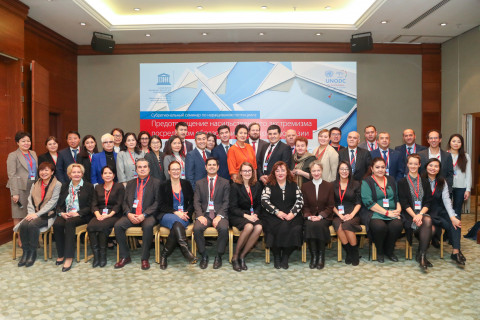 Предотвращение насильственного экстремизма посредством образования в Центральной Азии 2018-12-17 The UNESCO Almaty Cluster Office in Kazakhstan, Kyrgyzstan, Tajikistan and Uzbekistan and UNESCO Headquarters, in collaboration with the United Nations Office on Drugs and Crime (UNODC), held a Sub-regional workshop on the prevention of violent extremism through education on 13-15 November in Almaty.UNESCO’s approach to preventing violent extremism through education is related to its work on Global Citizenship Education (GСED). Based on its long-standing commitment to peace and human rights education, GCED strives to foster respect for all, create a sense of belonging to humanity and help learners become responsible and active citizens. Thus, the GCED creates conditions for strengthening learners' commitment to renouncing violence and promoting peace and creating conditions for protection from hatred, discrimination and violent extremism.The workshop was organized within the framework of the partnership of UNESCO and UNODC on “Global Citizenship Education for the Rule of Law: Doing the Right Thing”.The purpose of the workshop was to strengthen the capacity of education stakeholders to implement educational measures and approaches that help to prevent violent extremism in an effective and appropriate manner. More specifically, the workshop provided a common discussion platform for a clearer understanding of the issues of violent extremism in the Central Asian region, and allowed to discuss new tools and innovative approaches. Workshop participants also identified follow-up activities to be implemented with the Education Sector in view of supporting national prevention efforts. During the workshop, participants visited the Nazarbayev Intellectual School and Almaty State College of Tourism and Hospitality Industry and observed classes on Global Citizenship Education and values.The workshop brought together education stakeholders from all over Central Asia, including representatives from the ministries of education and community development, universities and research institutes, as well as youth organizations and civil society. International experts, UNODC, UNESCO as well as other UN agencies and international organizations also took part in the event.Related Links: More information on UNESCO’s work in the Prevention of Violent Extremism through Education. More information on UNESCO/UNODC Initiative on Global Citizenship Education for the Rule of Law: Doing the Right Thing Training Teachers to Prevent Violent Extremism Among Youth in Tajikistan Prevention of Violent Extremism Through Education and Internet - UNESCO contributed to the High-Level International Conference Media coverage of the workshop:KazInform, BAQkz, 24kz, Egemen Qazaqstan, Turkystan URL:http://en.unesco.kz/preventing-violent-extremism-through-education-pve-e-in-central-asia
 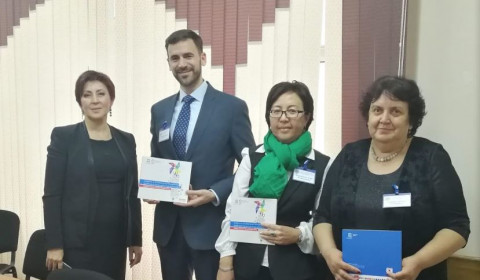 UNESCO advocates for a system-wide change as a means of effective implementation of SDG4 2018-12-14 UNESCO Representative and Participants of the Symposium are holding the new publication Guidelines on Developing and Strengthening Qualifications Frameworks in Asia and the Pacific © UNESCO How education systems of the Commonwealth of Independent States (CIS), including countries of Central Asia, should develop and contribute to the achievement of Sustainable Development Goals (SDGs)? How education standards should be improved? What are the mechanisms for regional partnerships among countries in order to achieve SDGs? The 5th Congress of Teachers and Educators of the CIS Member States “Development of educational systems in CIS countries in the context of SDGs” answered these and other important questions in Bishkek, Kyrgyzstan, on October 11-12. The congress, organized by the Ministry of Education and Science of the Kyrgyz Republic, intended to establish conditions for regional synergy and identification of new mechanisms for cooperation among the CIS member states in the field of education. On behalf of UNESCO, Mr. Wesley Teter from the Section for Educational Innovation and Skills Development of the UNESCO Asia-Pacific Regional Bureau for Education, made two presentations on how mainstreaming competencies for sustainable development in education systems and developing national qualification frameworks (NQFs) could contribute to the implementation of all SDGs. In particular, the UNESCO’s first presentation suggested that effective implementation of SDG4 could be done through a system-wide change by embedding inclusion, equity and gender equality in education policy and plans, making effective use of ICT to facilitate access and participation in learning, etc. Approaches and guidelines to develop and enhance NQFs were also presented during the Symposium. In total, 450 participants attended from CIS and other countries, including the President of the Kyrgyz Republic, its former President Roza Otunbayeva, and Minister of Education and Science of Kyrgyzstan. URL:http://en.unesco.kz/unesco-advocates-for-a-system-wide-change-as-a-means-of-effective-implementation-of-sdg4
  Стратегическая встреча профессионалов образования в Алматы 2018-12-14 The UNESCO Almaty Cluster Office for Kazakhstan, Kyrgyzstan, Tajikistan and Uzbekistan (UNESCO Almaty) is organizing e the Sub-Regional meeting on Education 2030: Implementing the Sustainable Development Goal 4 (SDG4) in Central Asia" in Almaty, Kazakhstan, on 22-24 February 2017. High-level policy-makers from Kazakhstan, Kyrgyzstan, Tajikistan, Uzbekistan, Turkmenistan and Mongolia will meet with experts from international agencies, civil society, private sector and universities from Central Asia to identify Sustainable Development Goal (SDG4) implementation strategy options and to establish a working group for sub-regional cooperation. Central Asian countries are faced with geopolitical challenges, which limit their access to global implementation initiatives and regional assistance networks on Education 2030. Hence, this meeting aims at connecting the implementation of global and Asia-Pacific education strategies with aspirations of Central Asian states. During the meeting, the Central Asian countries will have an opportunity to discuss the planning, implementation and monitoring of the SDG4-Education 2030 agenda, while taking into consideration sub-regional specificities.Participants will communicate with sub-regional, regional and global actors to identify available resources as well as capacity development and data needs in Central Asia. The 2016 Global Education Monitoring Report “Education for people and planet: Creating sustainable future for all” will also be launched at the event. This report analyses complex links between education and major development sectors, with an implication for education policy. Related link URL:http://en.unesco.kz/sub-regional-meeting-education-2030-implementing-the-sustainable-development-goal-4-in
 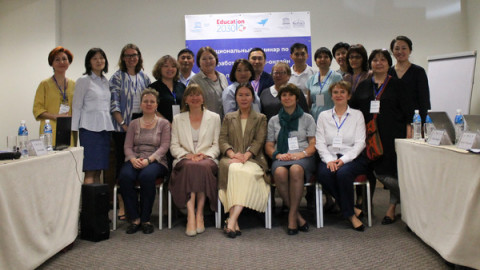 Developing Online Curriculum on Education for Sustainable Development and the 21st Century Competences 2018-12-13 On 14-15 June 2018, in Bishkek, UNESCO Almaty Cluster Office, in cooperation with the National Commission of the Kyrgyz Republic for UNESCO, organized the National Workshop on Developing Online Curriculum to Mainstream Education for Sustainable Development and the 21st Century Competences. The workshop launched a project on mainstreaming ESD and the 21st century competencies, with financial support from Estonia. The project will contribute to promoting quality education through the use of Information and Communication Technologies (ICT). In particular, it will provide digital content on Education for Sustainable Development (ESD) for secondary education in order to improve access to information and promote interactive learning and strengthening teacher competencies in ESD and ICT in education. Experts from the Ministry of Education and Science, universities, civil society, international agencies, including UNESCO, UNICEF, Open Society Foundation, and Asian Development Bank, as well as international experts from Estonia and Russia participated in the meeting. Ms. Larisa Rozhdestvenskaya from Tallinn Russian Gymnasium shared the Estonian experience in promoting e-learning and developing online initiatives and materials at education institutions. The discussions helped contextualize the project implementation within the global trends, the existing ESD practices in Central Asia, national strategies and on-going initiatives in Kyrgyzstan and plan the way forward. In particular, participants suggested possible ways of introducing socio- emotional competencies for youth to live healthy lives and become active citizens into the curriculum of educational institutions. They identified factors necessary for changing the way of thinking, persistence of behavior, learning approaches, communication skills, etc. As an outcome of the meeting, a working group was established to develop online content to mainstream ESD and the 21st century competencies at the secondary education level in Kyrgyzstan. One additional positive sides of the seminar was providing a common platform for cooperation among the various stakeholders to gain a better understanding of the issues, needs and prospects of introducing ESD and ICT in education in Kyrgyzstan. URL:http://en.unesco.kz/developing-online-curriculum-on-education-for-sustainable-development-and-the-21st