
News
Catch up on what’s happening in the world of global citizenship education.
1,668 results found
 Asia-Pacific showing ‘decisive leadership’ on road to 2030 Sustainable Development Goals, deputy UN chief tells key forum 2019-03-28 Nations across Asia and the Pacific need to take bold action to ensure empowerment, inclusiveness and equality if the region is to realize the ambitious 2030 Agenda for Sustainable Development, a major UN conference has heard.Speaking at the opening of the Asia-Pacific Forum on Sustainable Development (APFSD) in Bangkok, UN Deputy Secretary-General Amina Mohammed expressed her admiration for the development progress made within the vast region so far.“Your governments have taken on the challenge of the 2030 Agenda with decisive leadership…making significant investments to enhance data and statistical coverage, take partnerships to scale and promote people-centred policies, strategies and programmes,” she said in a keynote address.Such efforts to reach the 17 Sustainable Development Goals (SDGs), however, are facing “major obstacles” she added, pointing to rising inequalities.“Inequality of wealth, of access to basic services, and inequality in the ability to withstand setbacks and respond to the ravages wrought by climate change, are all on the rise,” said Ms. Mohammed.According to the UN Economic and Social Commission for Asia and the Pacific (ESCAP) – which organized the Forum – the region’s women and girls have been the worst impacted, more than half of whom remain excluded from critical decision-making, and in some countries, close to a third of all young people lack jobs, education or training. URL:https://news.un.org/en/story/2019/03/1035551?utm_source=UN+News+-+Newsletter&utm_campaign=4437cd13e7-EMAIL_CAMPAIGN_2019_03_28_12_00&utm_medium=email&utm_term=0_fdbf1af606-4437cd13e7-106981809
  Ensure sustainable education 2019-03-27 Mere acquaintance with the problem is not sufficient. Education policies and systems must transform to ensure adequacy in offering knowledge, skills, values and attitudes Envisioning the ideology of development that leads to the comprehensive progress of a nation is not an easy task. When newly independent nations went ahead with borrowed plans and programmes of development, not all of them led to real development. Developmental strategies were invariably launched with high expectations — that they would prepare the ground for the weak, deprived and ignored to lead a dignified human life, one that is free from poverty, hunger and ill-health. Scientific and technological advances of the 20th century paved the way for such a transformation. Human beings acquired knowledge, skills and technical know-how, sufficient enough to let every human being lead a “humane” life. Unfortunately, human greed, tendencies to accumulate and exploit natural resources and inadequacies inherent in the various plans and programmes have led to a situation where the very existence of mankind is under threat. Thankfully, the global community is seized of the concerns and has taken several initiatives to retrieve the situation. It was in 2015 that the UN General Assembly set 17 Sustainable Development Goals (SDGs) to be achieved by the global community by 2030. It is also referred to as the ‘2030 Agenda for Sustainable Development’. The UNESCO’s publication of 2018, titled, ‘Issues and Trends in Education for Sustainable Development’, while talking about Education for Sustainable Development (ESD), summarises it comprehensively: “In short, sustainable development must be integrated into education, which must be integrated into sustainable development. ESD is the holistic and transformational education and concerns learning content and outcomes, pedagogy and the learning environment.” In essence, ESD is wholesome education that empowers and equips the learner to comprehend and put to practice a “balanced and integrated approach to economic, social and environmental dimensions of sustainable development.” It is implicit that education policies and systems must transform themselves to ensure adequacy in offering knowledge, skills, values and attitudes. These efforts need to “ensure inclusive and equitable quality education and promote life-long learning opportunities for all.” Of the 17 SDGs identified, education appears at SG-4. The 10 targets included under SDG-4 clearly reveal the pivotal role of education in inclusive growth and development. Education has to now prepare and equip people to address issues like poverty, hunger, ill-health, environment, climate change, gender equality, management of water and sanitation and energy issues among others as listed among the 17 SDGs. It has to do this in full consciousness that even those who leave schooling after a couple of years are prepared sufficiently to contribute effectively in the achievement of SDGs. This can be achieved tangibly by putting focus on the four pillars of education as articulated in the Delors Report of 1996. “Learning to know” is the key. One must also now be familiar with the instruments of learning, which themselves may be undergoing changes and transformation. It has to be life-long learning and, therefore, ESD includes learning to learn. “Learning to do” encourages accepting and performing one’s own obligations, skillfully, to save, nurture and nourish the environment. Young people need to gain formal and informal experiences, alternating with study and work. “Learning to live together” was never that significant and critical as of today as in times of ever-growing mobility of human beings and coming together of people of diverse ethnic, linguistic, religious and cultural backgrounds. ESD must provide opportunities to understand other people, skills of managing conflicts and respect for pluralism, mutual respect and peace. “Learning to be” is essential for personality development, ability to act with “greater autonomy, discretion and personal responsibility.” Here again, these four pillars provide the base for ESD and, simultaneously, ESD can do much more in achieving the fifth pillar of education: “Learning to transform oneself and society to empower people with the values and abilities to assume responsibility for creating and enjoying a sustainable future.” For the last two decades, discussions normally have centred on the four pillars. The fifth probably makes it far more comprehensive. The first UN Conference on Human Environment (UNCHE), that focussed on international environmental issues, was held in Stockholm, Sweden from January 5 to 16, 1972. In the background was a proposal made by Sweden in 1968 that the UN organise an international conference to study environmental issues and prioritise consensus that requires international action and cooperation. Its final declaration indicated growing interest — or concern — on the finite nature of Earth’s resources and the need for global cooperation to safeguard these as it was the responsibility of human beings to maintain the sensitive bond between man and nature. This conference led to the creation of UNEP in December 1972. The task assigned was to promote sustainability and safeguard the natural environment. The final declaration includes the importance of environmental education. The declaration had a great global impact. People began to realise and personally experience how rivers were getting polluted, deforestation was creating serious concerns, wildlife species were rapidly getting extinguished, air pollution was getting uncontrollable and much more. Several national and global initiatives followed the Stockholm conference. The second global environmental conference was held in Rio de Janeiro from June 3 to14 in 1992. Change was visible; it was “UN Conference on Environment and Development” UNCED. The Brundtland Commission report of 1987, titled, ‘Our Common Future’, is normally considered the reference point in most initial deliberations on matters related to sustainable development. The report put it: “Sustainable development is development that meets the needs of the present without compromising the ability of future generations to meet their own needs.” Looks so very simple as it ought to emerge from traditional wisdom. There are four dimensions of sustainable development, which, too, can be easily comprehended: Society, environment, culture and economy. And these are not independent but intensely interdependent. It is also now well accepted that “many crises facing the planet are interlocking crises that are elements of a single crisis of the whole” and of vital need for active participation, human activity and endeavour in all sectors. All these endeavours link seamlessly to the 17 SDGs. Challenges of poverty, hunger and health deserve obvious priority in global efforts. Initiatives in these three sectors require a concrete base of elementary education that was realised and resolved in March 1990 in Jomtien. The first four SDGs say it all. Target 4.7 of the SDG-4 expects the following by 2030: “Ensure that all learners acquire the knowledge and skills needed to promote sustainable development, including, among others, through education for sustainable development and sustainable lifestyles, human rights, gender equality, promotion of a culture of peace and non-violence, global citizenship and appreciation of cultural diversity and of culture’s contribution to sustainable development.” This practically defines the canvas before curriculum developers and authors of textbooks. ESD now needs a new generation of curricular models, textbooks, other textual materials, pedagogical initiatives and practices. It requires an attitudinal transformation and a pragmatic value system that appeals to the young and the old alike and equips them in competence, commitment and performance in contributing to the cause of sustainability. Globally, numerous initiatives are in progress. They are often encouraged by UN agencies, including UNESCO. The Mahatma Gandhi Institute of Education for Peace and Sustainable Development, established in 2012 in New Delhi as a UNESCO Grade 1 institute, is conducting several studies and initiatives on embedding ESD in textbooks. Peace and global citizenship will also be included. The institute brought together a global community of authors and practitioners “who focus on value-based and purpose-driven education.” Along with eminent curriculum development experts, it prepared a curricular framework that “looks at sustainable development as integral to all subjects.” The outcome: ‘Textbooks for Sustainable Development A Guide to Embedding’ came out in 2017. It states: “This publication is designed as a guide for stakeholders in textbook development — education ministers, national curriculum authorities, textbook writers and publishers — to help them produce a new generation of textbooks.” In ESD, mere acquaintance with the problem is not sufficient. Let the students and teachers find solutions, locate solutions and “live” solutions. The challenge before the teacher or teacher educator is to “engage students intellectually and emotionally in sustainable development”; let them realise that the issue under consideration really “matters to them.” Mere intellectual awareness, and that too for just passing an examination, can no more be the objective of education and certainly not of the ESD. To achieve an attitudinal transformation is a tough task in every instance. It applies to ESD as well. There is a way out if there is an emotional connect with the people and planet. The UNESCO-MGIEP is working on two hypotheses: First, a whole brain approach is necessary to produce an emotionally and intellectually resilient intellect. Second, the education system needs to adopt the whole brain approach. Early findings indicate that schools adopting the whole brain approach show promising results in producing emotionally resilient students. With the right and appropriate use of internet, better avenues to communicate with friends, greater opportunities to co-create curriculum with the teacher could relate learning to life and more importantly, make it interesting, likeable and useful. A new climate of collaborating, not competing, can indeed lead to a peaceful and harmonious world. (The writer is the Indian Representative on the Executive Board of UNESCO) URL:https://www.dailypioneer.com/2019/columnists/ensure-sustainable-education.html
 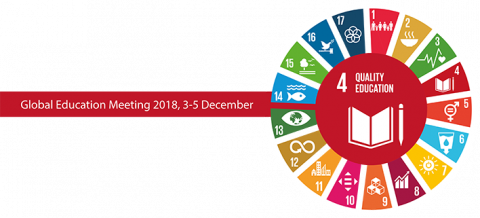 UNESCO convened international community at Global Education Meeting 2019-03-26 The Global Education Meeting was held in Brussels, Belgium from 3 to 5 December 2018. The Global Meeting was convened by UNESCO in its mandated role as lead agency and coordinator of the Education 2030 Agenda, with the kind support of the Government of Belgium. The Meeting reviewed progress towards the global education targets and commitments in the 2030 Agenda for Sustainable Development. It brought the global community together to take stock of progress and identify strategic priority areas requiring political guidance and intervention for the effective achievement of the global Education 2030 Agenda. URL:https://en.unesco.org/themes/education/globaleducationmeeting2018
  "Global Citizenship Education" as the main part of the curriculum 2019-03-25 An UNESCO workshop on Global Citizenship Education was held in Geneva, Switzerland. Experts from Uganda, Columbia, Mongolia and Cambodia shared their view on the challenges and opportunities facing Global Citizenship Education. Measures such as promoting teachers’ awareness, training specialists for curriculum and teaching materials development were approved in consensus. URL: http://www.xinhuanet.com/politics/2016-12/02/c_129387680.htm
 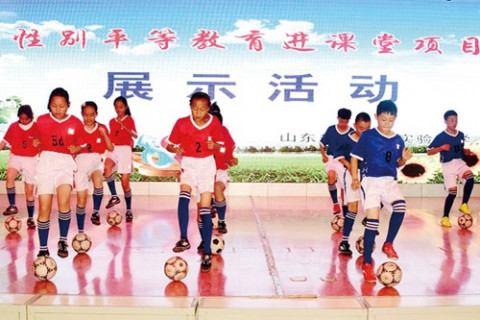 From school to enterprise : a lecture about gender equality in Shandong, China 2019-03-25 The “international Standard of Social Gender Equality and Its Practice in China” report was issued in Shandong Heze University. This was an attempt to educate college students on basic state policy of gender equality. Shandong provincial government is making progress in advocating gender equality in the area of family, higher education and enterprises.URL:http://paper.cnwomen.com.cn/content/2018-11/29/054751.html
 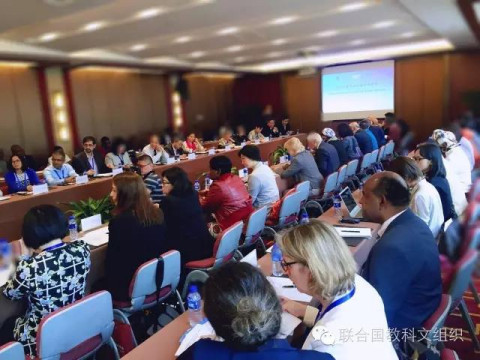 International education workshop for girls and women was opened in Beijing 2019-03-25 In order to implement the 2030 Agenda for Sustainable Development, promote gender equality in education and promote the development of international education for girls and women, the international education workshop for girls and women jointly organized by the Ministry of Education and UNESCO opened in Beijing on June 4. URL:http://www.moe.gov.cn/jyb_xwfb/gzdt_gzdt/moe_1485/201606/t20160606_248299.html
 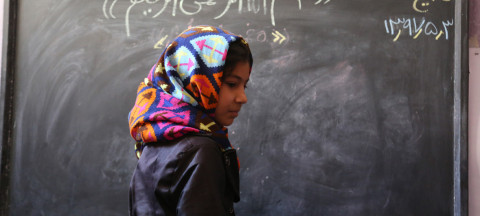 UN global education envoy urges new funding for ‘lost generation’ of children forced out of classrooms by conflict 2019-03-25 A child’s “real passport” to the future – education – should be stamped in the classroom, not at a border checkpoint, UN Special Envoy for Global Education Gordon Brown said on Tuesday. Ensuring that the world’s children have a place in school classroom is essential to achieve the Sustainable Development Goal (SDG) 4, which calls for quality education for all by 2030. Speaking to journalists at UN Headquarters in New York, Mr. Brown warned that “99 per cent of the world’s young refugees who are now becoming the invisible generation will never get a place in college or higher education; and only 20 per cent will get a secondary education”. “It’s time the world woke up to the horror of so many children devoid of hope,” he stated. Highlighting the urgency of the situation, Mr. Brown said there are perhaps 75 million children caught in conflict. “[They] are broken by the absence of hope, the soul crushing certainty that there’s nothing ahead for which to plan or prepare, not even a place in a school classroom.” He lamented the desolation of a “lost generation” and made an urgent appeal for new funding for more than 30 million displaced and refugee young people. Recounting the situation of the Maria refugee camp in Greece, where “no formal education is on offer to any of the hundreds of children who are there”, Mr. Brown told journalists the story of two young boys – one only 10 years old – who attempted suicide in the camp. Mr. Brown said that “at that age, their lives should be full of hope and excitement at every new dawn – but instead young people are so devoid of hope, that they attempted to take their own lives”. “A lost generation is not only identified by empty class rooms and silent playgrounds and short unmarked graves; a lost generation is one where hope dies in those who live”, he added.Noting that the Security Council was currently on the difficult circumstances in Yemen affecting millions of children, Mr. Brown, the former British Prime Minister, also highlighted the escalating crisis in Venezuela, the half a million out of school children alone in Central African Republic (CAR), the need to reopen a 1,000 schools in Afghanistan – where there are still 3.7 million out of school children – and the ongoing refugee challenge being driven by situations in, among others, Myanmar, Sudan and Syria. On a positive note, Mr. Brown announced that the Education Cannot Wait Fund (ECW) – which was set up in 2016 to provide opportunities for displaced children in crisis – will launch on Thursday a programme for safe and reliable education for half a million children in Afghanistan, including more than 320,000 girls. URL: https://news.un.org/en/story/2019/02/1033091
 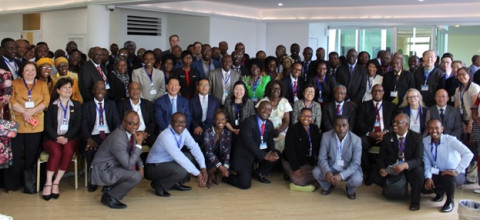 UNESCO-China Funds-in-Trust Project Phase II Rallies Partners for Synergies in Teacher Development in Africa (Addis Ababa, 18-22 March 2019) 2019-03-25 UNESCO International Institute for Capacity Building in Africa (IICBA) is hosting a week-long event on the occasion of the concluding meeting of phase 2 of the UNESCO-China Funds-in-Trust (CFIT) Project, co-organized with the UNESCO Headquarters Teacher Development Section and the International Task Force on Teachers for Education 2030 (Teacher Task Force). At the opening ceremonies on Monday, 18 March 2019, all speakers expressed their gratitude to the Government of China for its financial and technical contribution for the initiation and implementation of the project and its impact in the ten beneficiary countries. Ms. GUO Wei, from China National Commission for UNESCO, conveyed the appreciation from the Government of China of the results achieved, and their commitment to continue supporting quality education in Africa under Education 2030. Dr. Yumiko Yokozeki, Director of IICBA, welcomed all delegates and recalled that IICBA is coordinating the Teacher Development Cluster of the African Union Continental Education Strategy for Africa (CESA 2016-2025) which has benefited tremendously from the realization of CFIT project. Ms. Ann Theresa Ndong Jatta, Director of UNESCO Regional Office for Eastern Africa, emphasized the needs to align all interventions with the ongoing reforms in the United Nations, the countries and the continent, which requires better communication and visibility. Dr. Edem Adubra, Chief of Section of UNESCO Headquarters Teacher Development Section and the Teacher Task Force, who moderated the session, situated the series of meetings around the CFIT project within the framework of Delivering Teacher Development Programmes in Africa as ONE under the umbrella of CESA 2016-2025. Mr. LIU Xiangdong, Counsellor, Political Section and Mr. ZHANG Chaoyu, Second Secretory, Cultural Section of the Embassy of People's Republic of China in Ethiopia, and Dr. DU Yue, Director of International Cooperation and Partnership for Africa Division, UNESCO also attended the event. UNESCO-CFIT project on "Enhancing Teacher Education for Bridging the Education Quality Gap in Africa" was launched in 2012, with a total support of 12 million USD, and implemented in 10 African countries: Côte d’Ivoire, Congo Republic, Democratic Republic of Congo, Ethiopia, Liberia, Namibia, Uganda, United Republic of Tanzania, Togo and Zambia. The UNESCO-CFIT project is one of the initiatives of UNESCO to accelerate progress towards the attainment of Education for All (EFA) goals and since 2015, the Education 2030 Agenda. The aim of this project was to enhance the capacity of lead teacher education institutions in the targeted countries to provide quality teacher education and training, with particular focus on the Integration with ICT and improving networks of teacher education institutions to promote knowledge-sharing on successful and effective strategies and practices. This week-long meeting aims to review the implementation and achievements of the CFIT Phase II project in the 10 beneficiary countries, to discuss other ongoing teacher-related initiatives in Africa, and to reinforce coordination and synergy for greater impact of various projects under CESA 2016-2025 framework. In addition, three other consultation meetings are also happening this week: Consultation Workshop and Expert Group Meeting on Developing an International Guidance Framework for Professional Teaching Standards, Meeting of the African Regional Focal Points of the International Teacher Taskforce on Teachers for Education 2030, and MasterCard Meeting on Secondary Education in Africa: Preparing Youth for the Future of Work. Participants include UNESCO-CFIT country representatives, Teacher Task Force sub-regional focal points, experts on teaching standards, UNESCO Regional Directors and programme specialists, secondary school teachers and CESA Teacher Cluster Members. Click here for Presentations of the Workshop
  教育如何推动法治? 2019-03-24 Public trust in institutions is in decline, and institutions need to grow out of their traditional roles and forge a new engagement model that puts people at the centre, according to the Edelman Trust Barometer. The new joint publication by UNESCO and UNODC Strengthening the Rule of Law through Education: A Guide for Policymakers explores the role that education institutions can play in promoting the rule of law and building new forms of engagement based on global citizenship, human rights and inclusion -- all of which are vital to take forward the Sustainable Development Goal 4 on education, at the heart of the 2030 Agenda for Sustainable Development. Why is it important to promote the rule of law through global citizenship education? Education institutions have an important role to play in forging this new engagement model with young people and in cultivating a sense of shared responsibility for our common future. This is why a key pillar of global citizenship education is learning about the rule of law. The rule of law is essential to develop trustworthy institutions and relationship of mutual trust in institutions, by ensuring they are held accountable, transparent and accessible to all. Promoting the rule of law requires systems, such as governance and justice that safeguard human rights and also citizens that are empowered to participate and engage constructively in society. Education systems that uphold and promote respect for the rule of law, in adherence with international human rights and fundamental freedoms, nurture mutual trust between learners and public institutions. Moreover, education that adheres to the principles of the rule of law can help develop learners’ ability to critically understand essential elements of accountability, equality and fairness. For instance, schools can model a culture of transparency by having a policy of sharing school data with the public (open school data). Promoting the rule of law through education also helps learners acquire the knowledge, skills, values and attitudes they need to contribute constructively to society. It allows them to positively shape public institutions and their policies, thereby encouraging non-violent and peaceful avenues of civic engagement. How can the UNESCO/UNODC guide help policymakers and educators? Strengthening the Rule of Law through Education: A Guide for Policymakers is intended for education policymakers and other professionals working in the formal education sector, within and outside Ministries of Education, and who are seeking to promote the rule of law and a culture of lawfulness. The guide may also be of interest to professionals working in non-formal education settings or other sectors – namely the justice, social and health sectors - in the area of crime and violence prevention, who are seeking to work more closely with the education sector. In particular, the guide offers: An explanation of key concepts, such as the rule of law and a culture of lawfulness, as well as outlining the role of education in upholding and promoting the rule of law; Guidance on how the education sector is able to strengthen and promote the rule of law, for instance, by speaking to the real learning needs of children and youth, and by ensuring that places of learning “practice what they preach”; A map of the necessary support systems needed to strengthen the rule of law at the school and classroom levels and outside formal education settings, including curricular support, classroom pedagogies, teacher training and development and school-family-community partnerships. To address the needs of this diverse mix of education stakeholders and professionals, the guide blends both theory and practice, and draws on examples from around the world. A unique partnership that adds value By combining their resources and expertise, UNESCO and UNODC are seeking to build the capacities of educators, teachers and policymakers to plan and undertake educational activities that empower learners to take constructive and ethically responsible decisions and actions in their daily lives that support justice, human rights and strong institutions to defend them. The policy guide will be released as part of the WISE@Paris Forum on “Education Futures: Fostering Learning Societies. The WISE@Paris Forum brings together teachers, policymakers, and influential experts from all sectors to build the future of education through empowerment and partnership. In the framework of the WISE@Paris events, UNESCO, UNODC and WISE have joined forces in organizing a panel session at UNESCO on Global Citizenship Education for Peaceful and Inclusive Societies, held on 20 February 2019 (4pm-5.30pm) at UNESCO headquarters. The session brings together a range of perspectives, to explore how education can foster ethically responsible citizens that actively contribute to building peaceful and inclusive societies. Speakers include H.E. Mrs Erlinda Hándal Vega, Deputy Minister of Science and Technology, Ministry of Education, Science and Technology from the Republic of El Salvador, Professor Fethi Mansouri, Founding Director of the Alfred Deakin Institute for Citizenship and Globalisation at Deakin University, Australia and UNESCO Chair on Cultural Diversity and Social Justice as well as Ms. Onyinye Ough, Executive Director, Step Up for Social Development & Empowerment in Nigeria. The event is organised in the context of the UNESCO/UNODC partnership, which aims to contribute to advancing the implementation of the 2030 Agenda for Sustainable Development, in particular Sustainable Development Goals 4 and 16, which call for quality education and the building of peace, justice and strong institutions. URL:https://en.unesco.org/news/how-education-can-strengthen-rule-law
  Interview: Education about the Holocaust and genocide in Argentina 2019-03-22 “Reflecting on difficult pasts allows learners to raise questions about life in Argentina today,” says Samanta Casareto, member of the Philosophy and Letters Faculty at the University of Buenos Aires. Together with Damian Szvalb and Maria Celeste Adamoli, from the Education and Memory Program of the National Ministry of Education, Maria Jose Kahn, from the ESMA Memorial Site Museum and Jonathan Karszenbaum from the Buenos Aires Holocaust Museum, she has developed a project to advance the institutionalization of education about the Holocaust and genocide in Argentina. In support of this goal, the team has organized teacher workshops and is developing educational materials on how memory sites in Argentina can contribute to teaching and learning about these important topics. The project is the outcome of the Argentinian participation in the 2017 International Conference on Education and the Holocaust (ICEH), organized by UNESCO and the U.S. Holocaust Memorial Museum (USHMM). Why is it important to teach and learn about the Holocaust and genocide in Argentina? Argentina is traditionally an immigration country. In the early 20th century, most people who lived in Argentina were not born there. Many immigrants came from European countries. Many of them had fled war and mass atrocities, including genocide. The heritage of these groups is still very present in our society today. We have shops owned by immigrants from Armenia with inscriptions that commemorate the mass atrocities committed by the Ottoman Empire during the First World War. Argentina has the largest number of Holocaust survivors in Latin America. Mass violence is also a part of Argentina’s national history. From 1976-1983, Argentina was under the control of a civic-military dictatorship under the leadership of General Videla. During this period, society was exposed to state-sponsored terrorism and forced disappearances. Many opponents of the military regime were detained and killed in one of the 340 clandestine prisons. Even though this happened 40 years ago, it remains a very contemporary issue. The fates of many victims of the military regime remain unknown. There are also about 500 children who were born in clandestine prisons and who were separated from their families. Many of these children are still unaware of their true identities. In addition to this more recent history, scholars are now beginning to question more critically the time of Spanish imperial rule and mass violence committed by the Argentinian State against native populations. All of these examples show that the experience of genocide and mass violence is very much intertwined with our national history. This is why it is very important to teach about it and to understand the drivers behind mass violence and why genocides happen. The reflection on social practices in the past also allows us to raise questions about life today and to examine topics related to societal diversity, respect and coexistence. How are education about the Holocaust and genocide currently addressed through the national education system? Given the importance of the topic in our national context, teaching and learning about the Holocaust and genocide is already quite well institutionalized in Argentina. Since 2006, Argentinian provinces are encouraged to incorporate lessons on the recent past, human rights, and the defense of the rule of law and democratic values into their school curricula as per article 91 of the National Education Law 26206. The history of the Holocaust and genocide is also included in the list of Priority Learning Subjects (NAP) taught in all provinces as well as in Resolution 80/09 and Resolution 269/15 of the Federal Council, in which all Ministers of all Argentinian provinces are represented. These lessons are included in history and social science classes, but also citizenship education classes on the secondary education level. Many universities also offer courses on memory and history that cover the Holocaust and other genocides. For example, the La Plata National University offers a Master’s program in Memory and the Tres de Febrero University built a Center of Research in Genocide Studies. Twelve years ago, 24 March was declared a federal holiday in Argentina. This day marks the beginning of the Argentinian civic-military dictatorship and commemorates its victims. Many teachers use this occasion to explain to their students why this day is important. On that day, some schools also participate in marches in commemoration of the victims. These extracurricular activities significantly contribute to learners’ understanding of their national past and the consequences of mass violence. The federal government of Argentina has been involved in this subject for many years. The Federal Ministry of Education has established an Education and Memory Program, dedicated to supporting and advancing education about violent pasts, including the Argentinian civic-military dictatorship and mass atrocities committed in other countries. The Argentinian Minister of Education is the Argentinian focal point of the UNESCO Latin American Network on Education about the Holocaust and Other Genocides and Argentina is also a member of the International Holocaust Remembrance Alliance. Through these memberships, the Argentinian government is committed to support policies, research and education in support of upholding the memory of the victims of the Holocaust and other genocides. How does your project contribute to further advance education about the Holocaust and genocide in Argentina? In October and November 2018, we implemented three intensive workshops with secondary school teachers in three Argentinian provinces: Cordoba, Tucuman and Ciudad de Buenos Aires. The workshops focused on how memory sites, such as museums and memorials, can contribute to education about the Holocaust and genocide in Argentina. We particularly focused on education about the Holocaust as a tool to introduce lessons about state-sponsored mass violence in Argentina. Each workshop was attended by 60 social science teachers who had been selected in cooperation with the respective provincial Ministries of Education. During each workshop, we worked with a local memory site of a former clandestine detention center: ESMA in Buenos Aires, La Perla in Córdoba, and Escuelita de Famaillá in Tucuman. Through our project, we try to connect these memorial sites with teachers and schools and show them how they can profit from one another. Traces of memory can be found in many places in Argentina. They do not always refer to the same history. Many clandestine centers from the time of the State-sponsored terrorism period have been turned into memorials and there are also Holocaust museums. All of these can provide valuable learning environments. Which tools and methods have you introduce to the educators that have attended your workshops? What has been their general feedback? All workshops were structured similarly. In the first session, we provided participants with a detailed overview of the history of the Holocaust and looked at several other historical examples of genocide and mass violence. We wanted to ensure that teachers were familiar with the processes that can lead to mass violence and understood how this knowledge can help to prevent future genocides. We also used images and testimonies in these sessions. In the second session, we asked the teachers to share their personal experiences with teaching about these topics. Many teachers supported the idea that teaching about the past is of high relevance to help students understand and respond to contemporary challenges in Argentina, such as police violence, discrimination against the economically disadvantaged or immigrants, the rise of far-right political parties in Latin America and violence against women. Students are exposed to these problems every day. Participating teachers reported that their students frequently reproduce violent language and practices that they witness, while others are themselves victims of discrimination. Teachers also mentioned denial as a common theme, including Holocaust denial and distortion and the denial of the crimes committed during the Argentinian military dictatorship. In response to this, we hope to provide teachers with tools to support their efforts in countering these worrisome tendencies. An essential part of the workshop was the visit to a former local clandestine prison. For each workshop, we organized a session with the people working in local memorials and museums who explained how these spaces could be used to teach and learn about the history of the military dictatorship and civic responsibility today. How will you build on the success of your workshops? Now that the workshops are over, we are starting to look toward the future. We would like to reach more teachers. That is why we are developing a teachers’ guide focused on the ways in which to incorporate lessons about the Holocaust and genocide into school and extracurricular activities. In cooperation with the Federal Ministry of Education, we are planning to share this guide with all provincial Ministries of Education and to publish it online. This guide will include a section that clearly outlines how education about the Holocaust and genocide can contribute to the prevention of future genocides. We are convinced that the phrase “Never Again” has to be supported by a concrete agenda and we are hoping that our guide can help frame this agenda. We also plan to further expand our project. One step will be to incorporate approaches linked to new technologies, such as social media and digital maps. We would like to create an interactive online map that provides an overview of various memorial sites in Argentina, including Holocaust memorials and museums as well as Jewish cemeteries and synagogues. In addition, we are planning to organize workshops in more provinces and to continue our cooperation with civil society. The Federal Ministry of Education has expressed their continued support of this project, including these additional workshops. How has the support of UNESCO and the USHMM been beneficial for the success of your project? The support from UNESCO and the USHMM has been very valuable from the start. During the International Conference on Education and the Holocaust (ICEH) in December 2017, we were able to meet with the social media team of the USHMM, who taught us about using online tools in support of education about the Holocaust and genocide. This triggered our idea of incorporating a social media aspect into our project. Now that we have created a foundation through our first workshops thanks to the support from UNESCO and the USHMM, we can start to make this happen. URL:https://en.unesco.org/news/interview-education-about-holocaust-and-genocide-argentina