
News
Catch up on what’s happening in the world of global citizenship education.
1,668 results found
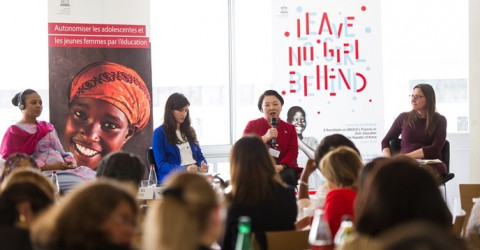 Republic of Korea highlights the transformative power of girls’ education 2019-04-25 Young girls now tell me that they are not too young to lead, they are not too young to be part of change’, said Bonita Sharma, UNESCO Female Champion from Nepal, during an event entitled Leave No Girl Behind held at UNESCO on girls’ education with the support of the Ministry of Foreign Affairs of the Republic of Korea and the Korean National Commission for UNESCO. While much progress has been achieved to reach gender parity in education, the journey to school still remains fraught for girls in many settings. This is particularly the case for adolescent girls who face challenges that significantly affect their educational opportunities, including early and forced marriage, exposure to violence, and lack of sanitation facilities in schools to address menstrual hygiene. The event highlighted the importance of investing in girls’ education from various angles, including through cross-sectoral action, community-level and youth engagement, policy formulation and partnerships. ‘We are focusing our efforts in favour of better policy, better data and more empowerment for girls and women through education’, said Stefania Giannini, UNESCO’s Assistant Director-General for Education, sharing UNESCO’s vision to accelerate its commitment to girls’ and women’s education. Lalla El Oumrany, representative of the Ministry of National Education in Mali, emphasized the importance of cross-sectoral action in addressing challenges faced by adolescent girls. This is a core component of UNESCO’s work in Mali – bringing together the education, health, gender, youth and employment sectors to facilitate the healthy transition of girls into adulthood through quality education. ‘While adolescent years are important, it is important to recognize that the socialisation process of girls and boys start in their early years of education and this influences the dreams and futures they envision for themselves’, said Justine Sass of UNESCO. ‘Girls’ education should become a national priority rather than an educational priority’, said Pauline Rose, professor at the University of Cambridge. She urged to invest in gender-responsive approaches in the early years of education, especially as, according to research, the poorest girls do not receive more than 5 years of education. The Republic of Korea (ROK) is conscious of the transformative power of education, especially for girls, having achieved fast economic growth after the Korean War through the quick reconstruction of its education system. ‘The Korean government reaffirms its strong commitment to gender equality in education so that no girls are left behind’, said Seok-in Hong of the Ministry of Foreign Affairs of the ROK. ‘Girls’ education is a very important issue for us’, shared Heekyung Jo Min of CJ CheilJedang. ‘We strive to best utilize our platforms to raise awareness among our clientele composed mostly of girls and women.’ As a long-standing partner of UNESCO, CJ reached as much as 2.2 billion people through just one concert last year alone, and many more through its entertainment and media platforms. Held on the sidelines of the 206th session of the Executive Board, the roundtable brought together 150 stakeholders, including partners, donors, civil society organizations, private sector, government representatives and Bonita, a young woman and change-maker from a UNESCO project in Nepal. This event was particularly timely, given the planned launch in July of UNESCO’s revised vision for its commitment to girls’ education. ROK has been a continuous partner of UNESCO, in particular supporting projects on girls’ education across the Asia-Pacific and Africa regions. Contributions also include those made by CJ to the UNESCO Malala Fund for Girls’ Right to Education and by the Korea International Cooperation Agency to the Joint Programme on Empowering Adolescent Girls and young Women through Education. URL:https://en.unesco.org/news/republic-korea-highlights-transformative-power-girls-education
 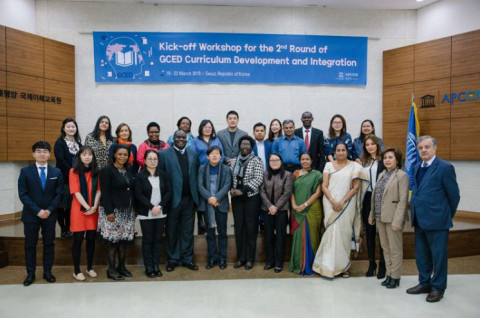 Kick-Off Meeting for GCED Curriculum Development and Integration 2019-04-24 From the 19th to 22nd March, APCEIU held a Kick-off Workshop to launch the 2nd round of GCED Curriculum Development and Integration project. For the last 3 years, from 2016 to 2018, APCEIU has successfully finished the 1st round of GCED Curriculum Development and Integration project for four countries, Cambodia, Colombia, Mongolia, and Uganda. The 2nd round project, for the next 3 years, involves four new participating countries which are Sri Lanka and Philippines from Asia, Kenya from Africa, and Lebanon from Arab States. In the first year, MOU will be concluded with the respective MOEs (Ministries of Education), and there will be situational analysis and local capacity building workshop for tailored assistance to each country. A total of 30 people attended the workshop, including the 2nd round countries’ MOE officials, researchers and relative people from the major partner organization, 1st round government officials, and APCEIU staff. Respective participants of the 2nd round successfully kicked off the project by sharing their 3 year plan and discussing detailed implementation strategy of the first year. Particularly in this workshop, a workshop program was held to not only establishing a cooperative system between the 1st round and 2nd round countries, but also, strengthening the competence for the both round countries. The agenda of the Kick-off Meeting was as follows: Introduction to the GCED Curriculum Development and Integration project Sharing project contents and achievements of the 1st round countries Methodology for the development of GCED and its application on domestic curriculum Monitoring of GCED curriculum development and guide for evaluation Experiencing GCED teaching method Discussion for establishing specific action plans for each country Reviewing delivery system for national curriculum and monitoring system Sharing key documents and materials for status research Discussing about plan and role division to hold local capacity building workshop This meeting was able to reaffirm on-going effort of GCED advocacy in the participating countries and secure continuous partnership between APCEIU and the relevant institutions for the next three years. URL:Kick-Off Meeting for GCED Curriculum Development and Integration > APCEIU News - APCEIU (unescoapceiu.org)
  Education for Digital democratic citizenship in the Internet era 2019-04-24 On 2 April 2019, ETUCE held in Berlin the third workshop in the joint ETUCE, EFEE (European Federation of Education Employers) and ESHA (European School Heads Association) project EU CONVINCE (EU Common Values Inclusive Education), supported by the German project partner, GEW. The main conclusions were that sufficient and up-to-date school infrastructure and equipment, as well as sufficient and relevant teacher training and technical support in the classroom are key to implementing education for digital democratic citizenship. Moreover, participants highlighted that curricula lack a positive approach as regards the use of ICT in education. Around 40 participants from Belgium, Croatia, Cyprus, Denmark, France, Germany, Greece, Italy Ireland, Latvia, Lithuania, The Netherlands, Poland, Portugal, Romania, Slovenia, Spain and Turkey, took part in the debates of the workshop. Presenting the preliminary results of the projects online survey among ETUCE, EFEE and ESHA member organisations, project researcher Dominque Danau, reported that the main challenges in teaching digital democratic citizenship and e-safety include the scarce availability and access to teaching materials and evidence on how to cope with (mis)information from media sources in the classroom and how to teach critical thinking, as well as the fact that critical thinking/understanding does not prominently feature in education curricula. Elizabeth Milovidov from the Council of Europe, offered an insight into various materials and guides produced by the experts of the Council of Europe in the framework of Digital Citizenship Education Project Citizenship Education Project, including well-being online, e-presence and communication. Complementing these presentations, Dr. Catherine Lowry-O’Neil, School for Lifelong learning of ‘Waterford Institute of Technology’(Ireland), highlighted the importance of strengthening media literacy and ICT critical thinking to promote social inclusion and prevent indoctrination and radicalisation of students. In smaller working groups, participants discussed challenges related to the responsible use of ICT and social media in the context of democratic digital citizenship and provided good practises and solutions, including digital parental education and participatory approaches based on dialogue between students and teachers. ETUCE, EFEE, and ESHA representatives from Denmark, Croatia, and Belgium, presented additional good practises, as well as Martin Schmalzried from COFACE Families Europe. The good practises from the workshop will be included in the Massive Online Open Course (MOOC) prepared by the European Inter-University Center for Human Rights and Digitalisation in the framework of the EU CONVINCE project, which takes place from 19 April to 9 June 2019. The project concludes with a final conference in Warsaw, Poland on 14-15 November 2019. URL: https://www.csee-etuce.org/en/news/archive/3052-education-for-digital-democratic-citizenship-in-the-internet-era
 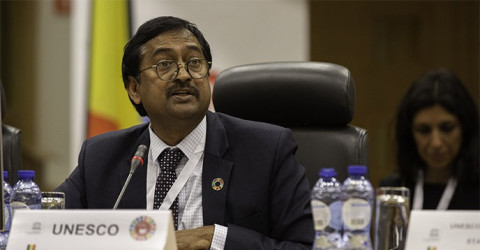 Q&A with the Director of Leading Education 2030 2019-04-22 Meet Jordan Naidoo, Director of Division for Education 2030 Support and Coordination at UNESCO, following his participation at the Comparative and International Education Society (CIES) 2019 he answered three questions on Sustainable Development Goal 4 (SDG4) and UNESCO’s role and expertise. As Director of the Division for Education 2030 at the UN lead agency for education how do you view the last four years since the adoption of the 2030 Agenda for Sustainable Development? This year on January 24, the UN celebrated the first International Day of Education. We are seeing SDG4 taking root in national policies and regional strategies, and in civil society movements. But despite advances, we are globally not on track to achieve SDG4 targets by 2030. UNESCO convenes the multi-stakeholder SDG-Education 2030 Steering Committee which plays a key role in the global review of progress on education in the 2030 Agenda for Sustainable Development. Over the past three years, we have also convened regional SDG4 meetings in Amman, Bangkok, Buenos Aires, Cochabamba, Nairobi, Strasbourg involving governments, civil society, multi-lateral agencies, private sector, academia, youth to review progress and share experiences and solutions. Regions have challenges that are distinctive to the region, but some of the challenges transcend regional boundaries just as some country challenges transcend country boundaries. With the support of partners, most of the regions have developed regional coordination mechanisms, implementation road maps, and regional monitoring frameworks demonstrating the value of partnership and a commitment to collective action. At global level, the result of the Global Education Meeting (GEM) in December 2018 led to the outcome statement endorsed by Ministers and representatives of governments and others stakeholders. The Brussels Declaration provides key messages and priorities for collective focused attention and action. What are some of the key levers and issues to promoting SDG4?Even limited monitoring of Agenda 2030 overall and of SDG4, specifically, over the past 4 years, indicates lagging progress. Much greater effort is needed to ensure education truly empowers learners to address the social, cultural, environmental and economic challenges of our times, to take informed decisions and to become active responsible global citizens. Learning must reinforce an individual’s resilience and empathy, nurture an ability to appreciate diversity and change, and contribute to building sustainable societies. Digitalization has affected almost every sphere of our lives, not our private lives but also world of work. Most commentators on the future predict that two thirds of all jobs that will be available for students in 15 years do not exist yet. Most new jobs are expected to be much more knowledge-based and highly demanding service oriented jobs. The skills mismatch is a global one, calling for more inclusive, future focused quality lifelong education and training systems, and flexible workplace pathways. Noting this context and the discussions in various SDG consultations have recognised the need to develop a dedicated strategy on the future of education. UNESCO is launching its The Futures of Education project, which aims to generate global engagement and debate on learning and knowledge in relation to the multiple possible futures of humanity and of the planet. What challenges would you highlight in our collective effort “to ensure inclusive and quality education and promote lifelong learning for all”? From the global perspective, I see three major challenges: coordinating collective action among a multiplicity of actors; mobilizing adequate financing to meet the scale and scope of the SDG agenda; and addressing gaps related to three primary enabling conditions—human capacity, effective institutions and last but not least, political will. The mobilization around SDG4 should be welcomed – this ambition of this goal requires transformations in how we work together and more resources. We are witnessing multiple efforts to mobilize resources, to raise awareness, to galvanize stronger political will, to establish new mechanisms to deliver better and differently. In line with its mandated role on the coordination of SDG4, UNESCO has a responsibility to countries, to insist that we act together based on the comparative advantage of each institution, to communicate clearly and have the capacity to explain the benefit of new modalities. Even as we increase resources to meet the scale and scope of the agenda, we must be aware that fermentation of the global architecture carries a real risk of undermining all our efforts to realization of SDG4. URL:https://en.unesco.org/news/qa-director-leading-education-2030
 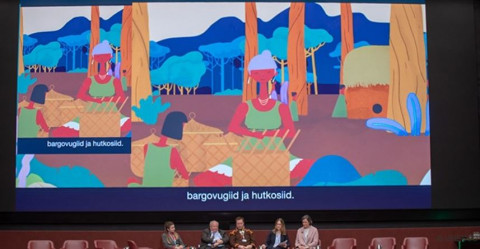 Indigenous languages matter for peace and development 2019-04-19 While promoting linguistic diversity and multilingualism in cyberspace, we discover every day new users and partners. The participation of indigenous people must be an integral part of the sustainable development processes. A key message drawn from the High-level panel, organized by UNESCO during the WSIS Forum 2019 on 10 April 2019 in Geneva, is that promoting linguistic diversity and multilingualism through ICTs contributes to the preservation, access and promotion of the invaluable traditional knowledge imbued in languages. In order to achieve fruitful results and produce effective language technologies, it is key that indigenous peoples and indigenous language users in the first place are involved in their elaboration. Linguistic digital divide The panelists addressed key issues related to the growing digital divide between speakers of dominant and minority languages, caused by the limited availability of resources, as well as lack of access to, technologies for indigenous language users. Only few language technologies have been developed in lesser-used, minority languages – from basic ones such as grammar and spell checkers, to complex ones such as automatic summarization, search engines, speech recognition, etc. The Sami Parliament, in cooperation with the Arctic University of Norway (Tromsø), is engaged in initiatives for the creation of free and accessible technologies for Sami speakers, including computer and phone keyboards, spelling and grammar checkers, machine translation systems. Sharing such practices, knowledge and strategies represents a way forward to reduce the digital exclusion of indigenous peoples: ‘We are trying to develop a momentum among all indigenous people in the world to urge major tech companies to take their responsibilities; it is our hope that governments will commit themselves to improve the situation for indigenous language users, by implementing legislations that secure and support the digital inclusion of indigenous languages’ Lásse-Ivvár Erke – Eirik Larsen, Political Advisor of the Sami Parliament in Norway Another relevant initiative was launched by WIPO through the Open Access Policy developed in 2016 to promote the translation and reproduction of publications available on its website in different indigenous languages. As noted by Rebecka Forsgren, indigenous fellow at WIPO, this contributes to the promotion of their traditional knowledge and protection of their intellectual property. Challenges There are a series of political, cultural, socio-economic and technical challenges that prevent the development and mainstreaming of language technologies in minority, lesser-user languages. As stressed by Professor Joseph Mariani, Director of Research Emeritus, Mechanical and Computer Engineering Laboratory (LIMSI), French National Center for Scientific Research (CNRS, France), developing language technologies requires two fundamental ‘ingredients’: language resources (corpora, dictionaries, terminology databases, etc.) and language technology evaluation. Most technologies are presently based on Artificial Intelligence Machine Learning, which requires large amounts of data (billions of words, thousands hours of speech), and the larger the data, the better the systems. Rich datasets are not available for all languages, nor speakers of minority languages have the right means or set of skills to develop strategies for the promotion of their own languages online. For this reason, strong documentation efforts are needed in order to ensure inter-generational transmission. In today’s world, ICT literacy and access to broadband connectivity are prerequisites for the fulfillment of human rights and for participation in society. Several indigenous communities inhabit isolated rural areas and struggle on a daily basis to have access to electricity and internet, the content of which is still 50% in English language and therefore inaccessible for these groups. This proportion markedly contrasts with the number of languages spoken offline. To this regard, spoken language interfaces are especially interesting, as they only require simple, cheap, largely available cell phones, and can be used by those who are not able to read or write. Concurrently, private-sector organizations are increasingly supporting multilingualism by shifting their focus from languages ranked according to countries with the highest GDP, to developing language technologies in multiple languages, including minority ones and from low GDP countries. As stressed by Emily Taylor, CEO of Oxford Information Labs, Internationalized domain names (IDNs) have a great potential to increase linguistic diversity in the cyberspace. Since 2011, UNESCO has collaborated with EURid to produce the World Report on IDNs, with the support of Verisign and the regional ccTLD organisations. The Way forward: a Multi-stakeholder partnership Equipping indigenous language users with the necessary tools to benefit from latest digital developments requires the joint-efforts of multiple stakeholders, from indigenous language users themselves, to the public and the private sector, academia, and civil society organizations. Multi-stakeholder partnership is one of the key pillars on which the Action Plan for IYIL2019 is based. It is critical to think collectively and concretely about how to adjust technological developments and AI to serve all languages. In view of the fact that 95% of languages in the world are spoken by only 6% of the world population, there is need for new research directions and business strategies to reduce the cost for developing indigenous language technologies, and to encourage knowledge-sharing practices and their mainstreaming at the international level to enhance profit as well as contribute to global development. UNESCO, as lead agency for the organization of the International Year of Indigenous languages, works closely with Member states, UN Agencies, the members of the Steering Committee for the organization of the International year, and other partners, for the successful implementation of the Action plan for IYIL2019. A series of activities and initiatives have been put in place and are planned according to the following five intervention areas: Increasing understanding, reconciliation and international cooperation among different stakeholders: organization of the global launch events of IYIL2019 in Paris (28 January 2019) and New York (1 February 2019), regional events, global conference; Creation of favorable conditions for knowledge-sharing and dissemination of good practices (High-level dialogue on ICT for all, WSIS Forum 2019; UNESCO-WIPO side event on indigenous languages); Integration of indigenous languages into standard-setting (Action plan for IYIL2019); Empower through capacity-building (Hackathon on indigenous languages in Singapore, March 2019) Growth and development through the elaboration of new knowledge (Call for Research Papers IYIL2019; upcoming World Report of Languages 2019). Additionally, several concrete measures to promote access to knowledge in cyberspace, including for indigenous language users, are proposed by UNESCO within the framework of the implementation of 2003 Recommendation concerning the promotion and use of multilingualism and universal access to cyberspace. More information about the IYIL2019: https://en.iyil2019.org/ @IYIL2019 https://twitter.com/IYIL2019 https://www.instagram.com/indigenouslanguages/ #indigenouslanguages; #WeAreIndigenous URL:https://en.unesco.org/news/indigenous-languages-matter-peace-and-development
 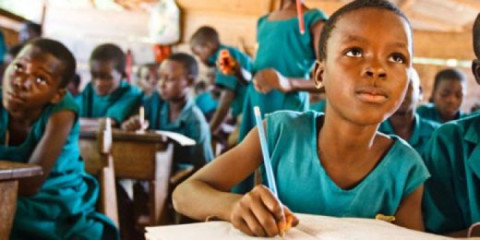 Girl child education is beyond getting girls to schools 2019-04-18 The United Nations Children’s Fund (UNICEF) on Tuesday, says that girl child education is beyond getting girls into schools.Dr Zakari Adam, Chief of Field Office, UNICEF Kaduna stated this at a two-day meeting of High-Level Women Advocates (HILWA) in Northern Nigeria, holding in Kaduna.HILWA is UNICEF’s Nigeria intervention project, currently in 14 states, funded by the UK Department for International Development (DFID) to advocate for women education and empowerment in their respective state. According to him, it is not enough to get the girl child to school, but ensure that the girls are safe, learn and complete all levels of education to live a quality life.“The girls also need to learn socio-emotional and life skills, necessary to navigate and adapt to the changing world, make decisions about their own lives and contribute to the development of their communities and the world.”Adam explained that the meeting was organised for the women to review progress, challenges and draw action plans that would improve access to opportunities and quality education for girls and young people. He urged the women to continue to enhance girls’ access to quality education and increase women participation in decision making at different levels of authority, governance and management in their states.“I am particularly excited about this meeting because of the caliber of women present here who from all intent and purposes are committed to promoting girl’s education especially in Northern Nigeria.“I have no doubt in my mind that your capacities and capabilities which you have demonstrated over the years will be reinvigorated in these few days to come,” he added. On her part, Mrs. Azuka Menkiti, Education Specialist, UNICEF Abuja, explained that the key objectives of the group were to promote girls’ education and that girls were safe and secure while in school.“We also expect the group to ensure that more female teachers were employed with some as headteachers, education secretaries and directors in education agencies.“This is because research has shown that female teachers had more impact on learning outcomes for both boys and girls, including enrollment and retention of girls in schools,” Menkiti said.She added that the meeting provided an opportunity for the group to share experiences on what went well and what went wrong as well as build their capacity for better performance and develop action plan for 2019. Participants at the meeting were from Adamawa, Bauchi, Gombe, Jigawa, Kebbi, Katsina, Kano, Niger, Plateau, Sokoto, Yobe and Zamfara states.
 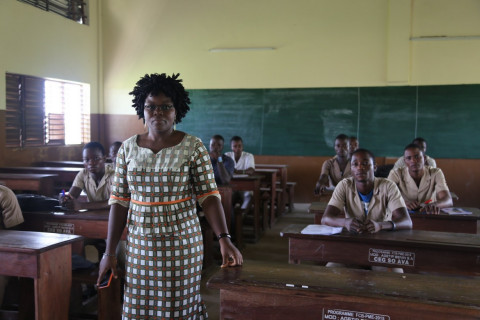 We must support our teachers 2019-04-17 Effective teachers are the most important factor contributing to students' learning. Are we supporting our teachers to be as good as they can?by Silvia Montoya, UNESCO Institute for Statistics It seems so obvious: without good teachers, there cannot be good education. But when you look more closely at the conditions in which millions of them work, you could be forgiven for thinking that this message isn’t getting through.The latest data release from the UNESCO Institute for Statistics (UIS) offers some sobering facts and figures for the annual CIES Conference in San Francisco this week. The Conference will focus on ‘Education for Sustainability’, and it seems to me that you cannot sustain anything in education – not even one single school class – without a good teacher who is driving the pupils’ learning.The big question is: are we supporting our teachers to be as good as they can? According to UIS data in our eAtlas of Teachers, the answer ranges from maybe to not really. So, what do teachers need to ensure good learning? More than half of children and adolescents worldwide – or 617 million – are not learning basic skills in reading and mathematics according to UIS data, which show that the vast majority are in school. Quality education begins with qualified teachers who deliver good lessons so that students can learn. This is why Sustainable Development Goal 4.c (SDG 4) calls on countries and development partners to substantially increase the supply of qualified teachers by 2030.To measure progress towards this target, SDG Indicator 4.c.1 tracks: the proportion of teachers in: (a) pre-primary education; (b) primary education; (c) lower secondary education; and (d) upper secondary education who have received at least the minimum organized teacher training (e.g. pedagogical training) pre-service or in-service required for teaching at the relevant level in a given country. As a statistician, I cannot help but see a mismatch between the target, which refers to qualified teachers, and the indicator, which refers to minimum teacher training. Countries have different definitions of what it means to be ‘trained’, making it difficult, if not impossible, to draw international comparisons. Some countries require an advanced university degree that can span five years of education. For others, a three-month training program seems to be enough.So the data must be treated with caution: an impressive-looking proportion of trained teachers in one country could mask lower requirements than another country. This is why the UIS is working with partners, including Education International, the UNESCO Teachers Task Force and the Global Partnership of Education, to develop standards to compare teacher qualifications across countries. While the methodological work continues, the data clearly show that sub-Saharan Africa has the lowest percentages of trained teachers (see Figure 1). It is also the region with the lowest levels of learning. 1. Teachers need to be properly qualified and trainedFigure 1. Percentage of trained teachers in primary education. Moreover, the percentage of trained teachers has been steadily falling across sub-Saharan Africa. In 2017, 64% of primary teachers were trained compared to 85% in 2000.At the secondary level, the rate fell from 79% in 2005 to 50% in 2017. During this period, many countries in the region undertook a massive expansion of their education systems and hired more trained and untrained teachers. So while the rates of trained teachers fell, it is possible that the actual number increased. 2. Teachers need to be properly paid for achieving good learningTeachers deserve salaries that recognize their unique contribution to the well-being of entire societies. On the finance side, we do not have enough data to draw regional averages, but we do have some national data on teacher salaries as a percentage of total education expenditure. According to the latest available data (2017), the percentage in low- and middle-income countries ranged from more than 72% in Guatemala to 42% in Peru.However, just because countries devote a great deal of their education spending to teachers it does not mean that those teachers are getting the pay they deserve, especially when they face very difficult working conditions, as reflected by pupil-teacher ratios (PTRs). 3. We need enough effective teachers to teach all children wellWhich brings us to the third component needed for sustainable teaching: a sufficient supply of good teachers. UIS data show an extraordinary range of pupil-teacher ratios around the world, from an astounding 58 primary pupils per teacher in Rwanda to just 9 in Cuba. Of the 20 countries with the highest number of pupils for every teacher, 16 are in sub-Saharan Africa.While smaller ratios in the world’s richest countries and massive ratios in the poorest countries are no surprise, a number of low- and middle-income countries manage fairly well. Costa Rica, Georgia and Lebanon, for example, have a dozen or fewer pupils for every teacher. But what is clear is that many countries desperately need more good teachers who deliver effective lessons– and particularly at the primary and lower secondary levels where children need more one-to-one support. 4. Teachers need decent classroom conditionsFinally, we have to consider the classroom conditions facing teachers and their students. Imagine teaching a class of more than 50 pupils without electricity, drinking water or access to basic handwashing facilities and toilets?The latest UIS data on SDG Indicator 4.a.1 show that far too many teachers are facing some dire classroom conditions. For example, two out of three primary schools in least developed countries don’t have electricity and only 43% have handwashing facilities. Less than half of primary schools in sub-Saharan Africa have access to clean drinking water let alone access to Internet or computers. URL:https://www.globalpartnership.org/blog/we-must-support-our-teachers?audience-profile=international-organization&utm_source=Global%20Partnership%20For%20Education&utm_campaign=ff8d475cc2-English%20Campaign%20-%202019-04-16-02-00-02&utm_medium=email&utm_term=0_90856a3035-ff8d475cc2-173964393
 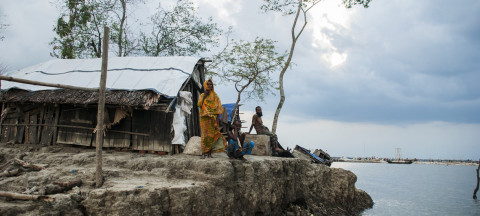 ‘The clock is ticking’ on meeting the Sustainable Development Goals, says UN deputy chief 2019-04-15 Pointing to climate change, inequalities and other serious challenges, United Nations Deputy Secretary-General Amina Mohammed told a forum on Thursday Development that “the clock is ticking” down, to making the 2030 Agenda for Sustainable Development. “Climate change is ravaging the planet… staggering numbers of children and youth – especially girls and young women – still lack access to basic education and healthcare services, [and] people in many countries are starved of economic opportunities, decent work and social protection measures”, she told the 2019 ECOSOC Partnership Forum, where governments, business representatives and other influencers met to discuss how partnerships can best advance and the 17 (SDGs). Under the theme, “Partnerships Driving Inclusive Implementation of the SDGs”, the Forum will capture key policy messages to inform the High-level Political Forum (HLPF) in in September. “Our task is immense, but many of the pathways to change are in plain sight”, she asserted, adding that while “success is still possible”, it requires difficult conversations around “the need to fill partnership skillset gaps, tackle financing shortfalls, and address data deficiencies”. The economic, social and environmental dimensions of sustainable development call for “a fully integrated approach” that engages everyone. “Partnerships are critical for achieving progress across the full agenda” stressed Ms. Mohammed, calling SDG 17 on partnerships, “the ‘connective tissue’ which will ensure an integrated and holistic approach to sustainable development”. The deputy UN chief shared four points for discussion, beginning with a commitment between the UN, governments, private sector and civil society to work together in a more coordinated and integrated way. “The transformation we need requires us to acknowledge that everyone is a development actor,” she argued. “Governments alone cannot achieve the SDGs”. Secondly, she pointed to the need to prioritize investments in platforms and coalitions that engage a larger ecosystem of partners. “Investments in cross-cutting, high-return priorities have strong potential to unlock progress across multiple SDGs”, she stated, flaggin a range of areas, from quality education and health services to zero-carbon energy and environmental conservation. Ms. Mohammad’s third point focused on leadership, innovation and strategic collaborations “at the local level”. “We must draw on the knowledge and experience of local communities and actors on the ground to ensure that we replicate and scale up the most promising models”, she emphasized. Ensuring that the process to socialize the SDGs and strengthen ownership is “inclusive, transparent and accountable”, was her final point. “All stakeholders, big or small should find a place to play their role and make their contribution”, she maintained. She urged everyone to “reflect honestly about where we are falling short, because those shortcomings are also where the opportunities lie to make a difference”. “Only with this kind of pragmatic approach will we realize our aspiration of leaving no one behind”, said Ms. Mohammed, with the reminder that promoting equitable access and equal participation by all, including the most marginalized, “is a fundamental ethic of the SDG era”. Turning to capacity-building for vulnerable groups, she encouraged the forum to apply “a lens of inclusion and empowerment” to ensure that they “are put in the driver’s seat for SDG implementation”. Recalling that young people, particularly women and entrepreneurs, are at the forefront of SDG progress, the Deputy Secretary-General concluded: “Let’s make sure we listen carefully to their vision and draw inspiration from their determination and commitment to creating a better world”.
 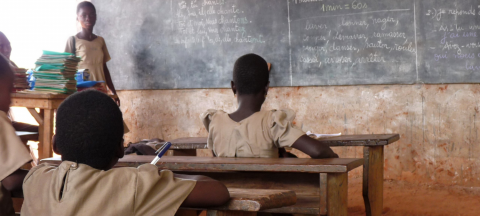 School grants and education quality: Lessons from the field 2019-04-11 The introduction of fee-free education, combined with the trend towards decentralization of education and school autonomy, have led to a change in the way school are financed. Schools which previously had very little or no say regarding their own financial management now receive grants directly from the central authorities. These grants schemes are aimed at increasing access and equity, improving educational quality as well as administrative efficiency and participation at school level. In some countries (e.g. Ethiopia), the focus can be explicitly put on the improvement of educational quality, covering areas such as the teaching-learning process, the school environment, leadership and management, community empowerment, student achievement and the school’s capacity to manage change. HOW SCHOOL GRANTS CAN IMPROVE EDUCATIONAL QUALITY Theories of educational management contend that school grants can contribute to quality in education in the following areas: Administrative efficiency. Direct transfers to schools reduce bureaucracy and the danger of any “loss” to different administrative levels. Schools no longer need to wait for decisions about the allocation of funds from regional or district offices and should therefore be able to fix minor problems more quickly. Relevance. By empowering school actors to manage their own finances according to their needs and priorities, grants should result in spending that is more relevant than when it is controlled by administrative actors who are far away from the school and less aware of its specific problems. Teaching and learning. School grants help provide adequate teaching and learning materials such as books, stationery, and blackboards. The funds can also be used to cover fees to administer exams and develop teacher capacities through training programmes. School infrastructure. The grants can contribute to the maintenance and improvement of the school buildings, classrooms and lavatories, transport to schools, as well as utilities, including electricity, heating, and water. Participatory decision-making. School grants may help to encourage the involvement of all school actors including teachers, parents, students, School Management Committees (SMCs) and the entire school community in the decision-making processes related to school improvement. LESSONS FROM IIEP’S RESEARCH IIEP’s research* has shown that the actual impact of school grants policies on educational quality is not as straightforward as educational management theories might suggest. School grants have been very successful in some respects, yet many challenges remain. School grants have improved school maintenance and utilities. In many cases, the spending guidelines explicitly state that school grants should contribute to the maintenance and improvement of the school infrastructure and some more specific programmes focus solely on this purpose. A utility grants scheme in Lesotho, for instance, has the distinct aim of maintaining school facilities and paying utility bills. This has enabled schools to be kept in a reasonably good condition. In Mongolia, a significant proportion of the school grants is used to cover utility bills, especially electricity and heating. Overall, school grants have had a positive impact on the quality of teaching and learning. Most school grants programmes aim to improve teaching and learning materials. One head teacher in Ethiopia said: “The school grant is used for all the expenses related to the improvement of the teaching and learning activities. It is used to purchase books, reference materials, pens, materials for the preparation of teaching aids, and the like.” In Indonesia, grants have helped provide additional lessons, extra-curricular activities, as well as new teaching aids and additional teacher allowances, which have increased teacher motivation. However, in several countries, the school grant amount is insufficient to support effectively schools in precarious conditions. In some cases, school grants have improved participatory decision-making processes. All school grants schemes are supposed to involve a variety of different school-level actors. Indeed, in Uganda, budget-related decisions are made by the school financial committees (SFCs), made up of the heads of department for each subject, and by the SMCs, consisting of members of the founding body, former pupils, members of the local council and the local administration, teachers, and parents. In many cases in other countries, however, only few school-level actors, such as the head teachers and the treasurers of the SMCs/Parent–Teacher Associations (PTAs), are involved in school decision-making processes. In terms of greater autonomy and relevance of school spending through school grants, the results have been mixed. Some school-level actors have expressed their appreciation of a higher level of autonomy and flexibility in using the grant according to their needs. In Vanuatu, for instance, schools are able to choose how to spend the money freely, as long as they respect certain authorized and prohibited areas of expenditures. They can also choose to save money. Yet, in many other cases, school autonomy has remained very limited and the guidelines for spending have not always corresponded to the schools’ actual needs. In several cases, an important share of the grant is also used for teachers’ salaries, leaving little resources for other items of expenditure. In most cases, the funding formula also considers all pupils and schools as the same, and does not take into account their different characteristics and potential needs. Moreover, the grant amounts are often found to be insufficient to cover the salaries of volunteer teachers, improve school administration, and solve other problems, such as a lack of adequate classrooms. Administrative efficiency remains a significant challenge. In many countries, school grant transfers have frequently been delayed or even cancelled. In some cases, the schools have not received the full amount. These problems constrain efficient planning in the use of the funds, and affect teaching and learning processes, as well as the motivation of teachers and learners. PLANNING AHEAD IS CRUCIAL IIEP’s research shows that school grants have to some extent helped achieve the availability of basic level resources at school level, improve the quality of school environments and contribute to increased teachers’ and students’ motivation. Yet, the potential of school grants to improve quality and learning must be questioned. Although financial support is crucial to ensure good teaching and learning conditions, education quality also depends on other factors, such as teacher training and professional development. Having this in mind, for school grants to have a substantial impact on educational quality, it is essential that the policy be designed and implemented in a way that allows the successful achievement of this objective. URL:https://learningportal.iiep.unesco.org/en/blog/school-grants-and-education-quality-lessons-from-the-field
 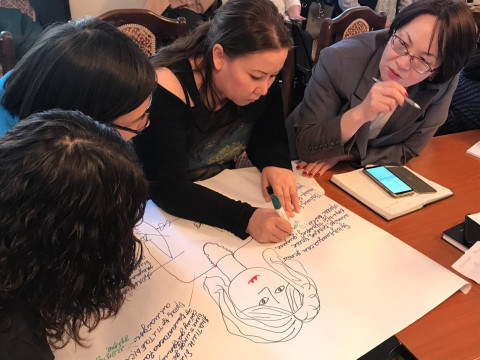 Критическое и стратегическое мышление для устойчивого развития 2019-04-11 On March 26, 2019, UNESCO Almaty Cluster Office conducted a training workshop for teachers and alumni of Kazakh State Women's Teacher Training University in the framework of their Interactive meetings on Current Education Trends. In this workshop, participants were introduced to concept of Education for Sustainable Development (ESD). The main objective was to familiarize participants with the key competencies that are important for the achievement of all SDGs, as well as educational approaches and tools for the implementation of these competencies. Key competencies include strategic and critical thinking, communication and cooperation, and other skills necessary for sustainable development. Meirgul Alpysbayeva, National Education Officer at UNESCO Cluster office in Almaty, started the workshop with introducing key terms and concepts and highlighted the role of key competencies for sustainable transformation of societies. Saule Zeinolla, ESD Consultant of UNESCO Almaty conducted practical sessions on teaching methods of mainstreaming these competencies. As a result, participants of the workshop could come to specific projects that would help their learners develop key competencies through reverse brainstorming and other interactive approaches in ESD. URL:http://en.unesco.kz/critical-and-strategic-thinking-for-sustainable-development