
News
Catch up on what’s happening in the world of global citizenship education.
1,668 results found
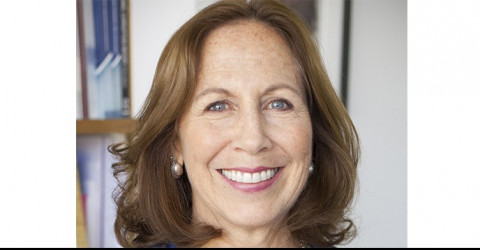 Q&A with the Director of UNESCO’s International Institute for Educational Planning 2019-05-03 Meet Suzanne Grant Lewis, Director of UNESCO’s International Institute for Educational Planning (IIEP), following her participation at the Comparative and International Education Society (CIES) 2019, she answered three questions on Sustainable Development Goal 4 (SDG4) and UNESCO’s role and expertise. How have the last four years been for education since the adoption of the 2030 Agenda for Sustainable Development? IIEP focuses on how the SDG4 vision and commitment takes concrete form in policy and practice. The education sector planning process is an important means to advance this. It is important to understand that SDG4 is not a national plan or an international benchmark. Rather SDG4 presents a vision for the development of an inclusive, learning system. It is also a tool for advocacy, to mobilize resources, and, quite importantly, it is an expression of political commitment. SDG4 is a source of inspiration for national visions, policies, and plans. While IIEP has been preaching sector-wide planning for years, the Education 2030 Agenda really demands this. For countries, educational planning is more than a simple technical or mechanical process. At its best, it is both visionary and pragmatic. From the country perspective, it is not the plan document per se that should be the focus but the process of planning, which is understood to be fundamentally a political exercise, constrained by financial, human and physical resources and informed by evidence. SDG4 poses several challenges for countries among these challenges are increased number of actors, complexity of partnerships, financing, and the need for better data, information, and evidence. UNESCO, and its institutes, is supporting countries as they translate SDG4 into policies and practice. What are some of the key levers and issues to promoting SDG4? To strengthen systems, it starts with understanding the strengths and weaknesses of a public administration. There is much discussion about the implementation gap, that is, the gap between a policy goal and policy in practice or said differently, the gap between what is planned and what happens on the ground. It is critically important that we strengthen systems, through strengthening the capacity of individuals working in them, through institutional support, and through the continued production of global public goods, such as internationally comparable statistics prepared by the UNESCO Institute for Statistics and the critical, independent analysis provided by the Global Education Monitoring Report, that serve as valuable resources for countries. Strengthened capacity makes a difference and, we have found, results in greater ownership, initiative and innovation. Also important is facilitated peer learning across country cohorts combined with formal training. What are the main challenges “to ensure inclusive and quality education and promote lifelong learning for all”? Country level efforts to translate the SDG4 vision are undermined by the regional and global threats such as, continued demographic growth, climate change, migration, and peace and security. Within education systems, these threats are creating additional impediments to the expansion and improvement of the teaching force. Teachers are at the heart of the learning process. They strongly influence the quality of education that children receive at school. Effective teacher management is therefore essential to the success of any education system. The growth of internally displaced populations, migrants and refugees further complicates things. Today, we in the United Nations promote the Comprehensive Refugee Response Framework. It calls for integrating refugees into public schools. But it is a tall ask for host country governments. There is very little evidence or advice, let alone funding, to guide their efforts. There are promising efforts to work at the humanitarian – development nexus, with widespread recognition that we no longer have a linear humanitarian to development continuum, if we ever did. We need to work at this nexus to ensure that the educational needs of children affected by crisis, be it conflict or climate-induced disasters, are attended to. This is part of the promise of SDG4. URL:https://en.unesco.org/news/qa-director-unescos-international-institute-educational-planning
 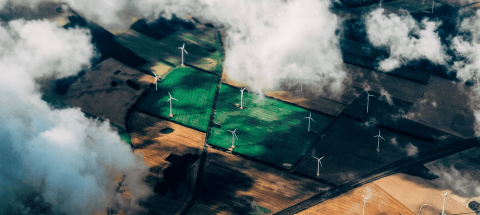 ‘Do everything in your power to tackle climate change’ UN chief urges on Mother Earth Day 2019-05-03 Marking International Mother Earth Day, the UN on Monday debated how best to build “an equitable and sustainable future” for all, through enhanced education and climate action, on the road to a key international summit on the issue due to take place in September.Billed officially as an Interactive Dialogue on Harmony with Nature, the UN General Assembly session involved Member States and top officials discussing the need to take urgent action against the pace of global warming, in line with the 2015 Paris Agreement, to keep carbon dioxide emissions to well-below two degrees Celsius. In a tweet to mark Earth Day, UN chief António Guterres said it was vital “every day” to “commit to taking better care of our planet. Please do everything in your power to tackle climate change – the defining issue of our time”, he said.“Climate change is one of the largest threats to sustainable development globally,” said the concept note prepared for the General Assembly meeting, “and is just one of many imbalances caused by the unsustainable actions of humankind, with direct implications for future generations.” Only we can prevent ‘irreparable damage’President of the General Assembly, Maria Fernanda Espinosa, said that taking care of nature was, in essence, “taking care of people”. She also noted the importance of respecting life-cycles of the natural world, and contributing to biological diversity so that the world can “continue and prosper”.“We are the last generation that can prevent irreparable damage to the planet and to its inhabitants” she tweeted. “We are at a crossroads; this is the moment in which we decide the path we wish to take, to avoid reaching a point of no return in global warming. We already know the results of inaction.” Day honours ‘life and sustenance’ earth providesThe international day recognizes a collective responsibility, as called for in the 1992 Rio Declaration, to promote harmony with nature and the Earth to achieve a just balance among the economic, social and environmental needs of present and future generations of humanity.It also provides an opportunity to raise public awareness around the world to the challenges regarding the well-being of the planet and all the life it supports.To boost ambition and accelerate actions to implement the Paris Agreement on Climate Change, the UN Secretary-General will host the 2019 Climate Action Summit on 23 September, to meet the climate challenge. URL:https://news.un.org/en/story/2019/04/1037061
 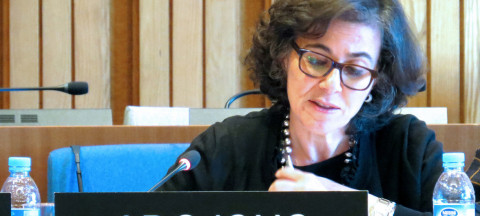 Inclusion, equality a must for ‘long-lasting peace and sustainable development’, UN official tells high-level event in Baku 2019-05-03 Exclusion and deep inequality will forever thwart “long-lasting peace and sustainable development”, a high-level official from the United Nations cultural agency said on Thursday at the 5th World Forum on Intercultural Dialogue. If societies are not inclusive, they will be weaker, less resilient and more vulnerable to violence”, Nada Al-Nashif, Assistant Director-General for the Social and Human Sciences at the UN Educational, Scientific and Cultural Organization (UNESCO), told the High-level Panel at the UN-backed conference in Baku, Azerbaijan. She underscored the need to not only fight against social, economic and political inequalities, but also to change mindsets, which aligns perfectly with UNESCO’s mandate “to build the defenses of peace in the minds of men and women”.While the agency’s mission “has not aged a day”, she acknowledged that “we have to follow a fast-changing world”. According to Ms. Al-Nashif, this puts in question the relevance of old institutions to tackle current challenges, such as violent extremism, the migrant and refugee crisis, and the rise of hate speech in social media. Citing events “from Sri Lanka to Libya, and in many spots in-between”, she said that the UN will be strengthening the role of diplomacy and dialogue.“This calls for revitalized partnerships – from Member States to the private sector, from universities to civil society – so that we can work together to build innovative projects for inclusion, to scale our impact on the ground”, she asserted. A new focus must be concentrated on building resilience, preventing conflict, learning lessons and empowering individuals with new skills that pay “particular attention and support” to young people. “In a world where ignorance of ‘the other’ is on the rise, we must more than ever find new ways to empower young women and men as change-makers in their communities, providing them with the necessary skills and intercultural competences to become engaged global citizens, who promote peace in their everyday life”, she underscored. According to Ms. Al-Nashif, a UNESCO priority is to promote girls’ education, because “access to and the quality of educational opportunities for girls remain major issues”, constraining their transformative power to advance the Sustainable Development Goals (SDGs)”.“The Baku Forum is an outstanding opportunity to reaffirm the principles and practices of inclusive dialogue for more effective and more impactful multilateralism”, she concluded. A passion for tourism “Tourism is my passion”, said Manuel Butler Halter, Executive Director of the UN World Tourism Organization (UNWTO), it is “a matter of the heart”.“I believe that tourism is a facilitator of intercultural understanding and peace” because it makes people more open-minded, he said, adding that meeting people from diverse backgrounds and different cultures “helps us to see ourselves from a different perspective”. It also fosters trust because “we realize that despite the cultural difference, all humans really are the same”, he continued.Tourism is a facilitator of intercultural understanding and peace. Meeting people from diverse backgrounds and different cultures helps us to see ourselves from a different perspective – UNWTO Executive Director Manuel Butler Halter Finally, the UNWTO official credited tourism for making us “more creative because learning about other cultures forces us to think differently and consider new ideas”.And so, Mr. Halter deduced that “the more people travel, the more inclusive our societies become”. He did, however, acknowledge that uncoordinated tourism can harm the environment, which is why UNWTO promotes sustainable tourism, in line with the SDGs.Because “tourism by its nature”, has links with many fields, from trade and social development to environmental protection, security and health, Mr. Halter expressed certainty that it could “directly or indirectly contribute to all of the 17 SDGs”. Highlighting SDG 8, on decent work and economic growth, he said that globally, one-in-10 jobs is connected to the tourism industry. With tourism also accounting for more than 40 per cent of half of the poorest countries’ GDPs, he stressed “I think it is key to include locals in the value chain”. Economy, youth and exclusionEvinj Hasanova, Azerbaijan’s Deputy Minister of Economy, spoke about how the young nation has reduced poverty from almost 42 per cent to five per cent.“This is less than in some developed countries with more economic resources and GDP per capital”, she told the panel. Inspired by the comprehensiveness of SDGs, she spoke at length on how her government has nationalized the goals, including by creating a high-level Council to coordinate their implementation. “And we have started the process with the UN residential office,” she said. For his part, Aaron Greenberg, Senior Regional Advisor for Europe and Central Asia, Child Protection at the UN Children’s Fund (UNICEF), underscored the importance of investing in early childhood development. Noting that the investment does not have to be in monetary terms, Mr. Greenberg stressed that children must be raised in a way that prevents them from suffering psychological disorders later in life that would perpetuate a cycle of violence and poverty “I do not believe there is any other way that is surefire than investing in younger children today for getting equitable outcomes in the future”, he stressed.Meanwhile George Bouma, Head of Sustainable Development in the UN Development Programme’s (UNDP) Istanbul Regional Hub, spoke about underlying causes of inequalities that are creating “a crisis of opportunities”. He painted a picture of exclusion and mounting inequality fueled by an increase in populism and flawed political systems globally, attributing rising disenfranchisement to political, economic and social factors.“The private sector has a role to play in creating jobs and moving people from the social welfare system to more productive employment”, he said. URL:https://news.un.org/en/story/2019/05/1037801
 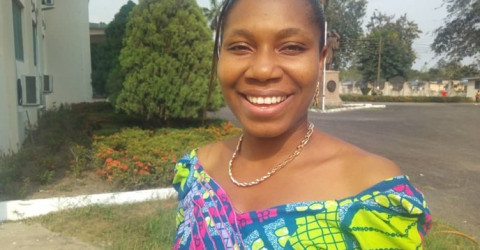 A young woman takes action for girls’ education in Ghana 2019-05-03 Gifty Nordzi is a Girls’ Education Officer in the Ajumako-Enyan-Essiam district in Ghana. She works for the Girls’ Education Unit of the Ministry of Education on issues concerning schoolgirls, such as gender-based violence or teenage pregnancy. Gifty dreams of reducing teenage pregnancy in her district, and for that she is leaving no resource mobilization opportunity unexplored. Learning how to make a differenceDropouts due to teenage pregnancy can be found in Gifty’s district, and throughout Ghana. These girls face reduced opportunities to fully realize their economic and social rights. As part of a project under the UNESCO-HNA Partnership for Girls’ and Women’s Education, the UNESCO Office in Accra has been cooperating with the Ghana Education Service to build the capacity of the Girls’ Education Unit to address challenges facing girls and their education, such as teenage pregnancy. Along with 21 other district Girls’ Education Officers, Gifty attended a recent workshop to build her skills in project design, proposal writing, resource mobilization and effective communication. Gifty gained valuable knowledge that she applied immediately: “I learnt that we can do a whole lot even without money. I also reflected and identified a lot of unproductive things I was doing and this made me re-strategize.” The lack of available means at the District Education Office fueled her determination to find ways to finance her projects herself. Fundraising for girls’ education Through her newly acquired skills, Gifty felt empowered to communicate and meet with potential donors more regularly. She even developed several proposals that she shared with potential donors. She also wrote reports illustrating her activities for her previous sponsors. One day, a rural bank to which she had sent one of her proposals contacted her. They were interested in funding her project to raise awareness about, and to prevent, teenage pregnancy. Gifty organized a learning festival for all senior high school students in the district to mark the celebration of Girls’ Education Week and the International Day of the Girl Child. The event included many sensitization and interaction opportunities with female role-models and was the largest attended educational event in district. Gifty was able to mobilise non-monetary resources for the event, receiving buses from schools, refreshments, and volunteer speakers at the event. “What we learnt at the workshop is really working,” she said. Gifty intends to continue sharing what she learned during the workshop with teachers, education officers and community members and will start monitoring her activities for evidence-based reporting. She also intends to train more young girls to be ambassadors and extend their influence beyond the district. Under the UNESCO-HNA Partnership for Girls’ and Women’s Education, the project “Enhancing the quality and relevance of education for adolescent girls through gender-responsive teaching and learning” (2015-2020) is coordinated by UNESCO HQ in Ghana and Ethiopia, with technical support from UNESCO-IICBA. As part of the project in Ghana, activities build the capacity of Girls’ Education Unit staff of the Ghana Education Service under the Ministry of Education, enabling them to effectively coordinate interventions on girls’ education in the country. URL:https://en.unesco.org/news/young-woman-takes-action-girls-education-ghana
 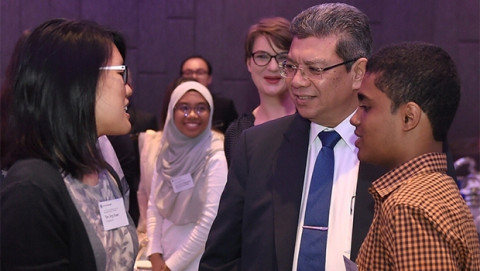 Equipping young Asians to work against extremism 2019-05-02 Young people from Commonwealth countries in Asia have been learning how they can take action to prevent and counter violent extremism and build peace in their communities. Aspiring leaders and change-makers aged between 18 and 25 took part in a five-day workshop in Brickfield, Malaysia, to equip themselves with skills to help shape their communities in positive ways. The workshop was run by the Commonwealth Secretariat and the Royal Commonwealth Society. Entitled ‘Youth Summit on International Peace and Security and Building Community Resilience from the Ground Up’ the aim is to build the capacity of young people to empower communities and instil resilience to extremism.Opening the workshop, Malaysia's Minister for Foreign Affairs, Saifuddin Abdullah, said young people have a vital role to play in promoting peace and preventing violence among their peers. The workshop made it possible for young leaders to connect with each other, share their experiences, confront the challenges, explore solutions and develop the necessary skills and tools to make change happen.Steven Sim Chee Keong, Malaysia's Deputy Minister of Youth and Sports, spoke about the importance of political engagement and active citizenship in building peace. He acknowledged that politics can be messy and discouraging at times, but advised participants to bear in mind that “ .. the answer to bad politics is not no politics – it’s good politics". Urging them not to discount their impact just because they are young, he pointed to examples of young people who have been elected to parliament and even hold ministerial positions in Malaysia. The workshop also included a day-long simulation of the Commonwealth Heads of Government Meeting (CHOGM) in which debates focused on international peace and security. Through this activity, the participants gained insights into the workings of the Commonwealth and learned how its commitment to respect, rule of law and consensus building make it an effective organisation. URL:http://thecommonwealth.org/media/news/equipping-young-asians-work-against-extremism
 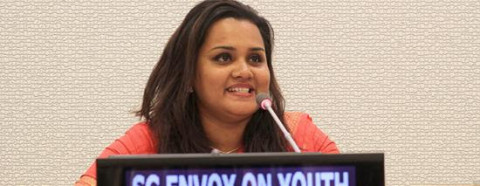 2019 UN Youth Forum Calls for Greater Access to Education, Decision Making 2019-05-02 9 April 2019: Youth participants from around the world interacted with policymakers and decision makers on young people’s challenges, potential, and needs during the 2019 Youth Forum of the UN Economic and Social Council (ECOSOC). Curbing unemployment, poverty, and illiteracy were among the most pressing challenges identified. Youth participants and ministers of youth highlighted successful initiatives and national strategies that address them. The 2019 ECOSOC Youth Forum took place from 8-9 April 2019, at UN Headquarters in New York, US, on the theme, ‘Empowered, Included, and Equal.’ The event was structured in both plenary and breakout sessions on regional priorities and the SDGs to be reviewed by the High-level Political Forum (HLPF) in July 2019: SDG 4 (quality education); SDG 8 (decent work and economic growth); SDG 10 (reduced inequalities); SDG 13 (climate action); and SDG 16 (peace, justice and strong institutions). According to data published by the UN on the occasion of the Forum, the 1.8 billion young people “drive” the SDGs: SDG 1 (no poverty): the International Labour Organization (ILO) said that in 2017, an estimated 16.7% of employed youth in emerging economies/developing countries earned less than USD 1.90 per day. SDG 2 (zero hunger): the World Food Programme (WFP) mentioned that every USD 1 invested in school meals programmes brings a USD 3-USD 10 economic return from improved health, education, and productivity. SDG 3 (good health and well-being): the UN Children’s Fund (UNICEF) noted that adolescent girls are disproportionately affected by HIV, accounting for nearly two thirds of all new HIV infections among adolescents. SDG 4: the UN Educational, Scientific and Cultural Organization (UNESCO) data show that 750 million adults (two-thirds of whom are women) remain illiterate. SDG 5 (gender equality): ILO data reflect that young women earn around 22% less than young men, mainly because childcare and other household responsibilities interfere with them taking on higher paying tasks. SDG 6 (clean water and sanitation): the World Health Organization (WHO) and UNICEF revealed that 12% of schools have limited sanitation services. SDG 8: ILO data show that youth comprise 40% of the 202 million unemployed people globally. SDG 9 (industry, innovation and infrastructure): the International Telecommunications Union (ITU) noted that youth represent almost one-fourth of all individuals using the Internet worldwide. SDG 10: the UN Department of Economic and Social Affairs (DESA) reported that the net income of combined social assistance and housing benefits is systematically lower for 20-year-olds than for the average recipient. SDG 11 (sustainable cities and communities): the UN Development Programme (UNDP) announced that by 2050, 66% of the world’s population will live in cities, which will make job creation “critical” for 73 million unemployed youth. SDG 12 (responsible consumption and production): if current consumption/production patterns continue, by 2050 the world will need the equivalent of almost three planets worth of resources to sustain the current way of living. SDG 13: UNDP said almost half a million youth globally have taken action on climate change. SDG 16: WHO noted that, globally, nearly one in three adolescent girls aged 15-19 years has been a victim of emotional, physical and/or sexual violence perpetrated by their husband or partner. Against this backdrop, Maria Fernanda Espinosa Garces, President of the UN General Assembly (UNGA), called for “truly” inclusive intergenerational action to unleash the economic potential of “climate-smart” action, which is estimated at USD 26 trillion by 2030. She also emphasized the need for “more jobs, better jobs, and greener jobs” for youth.Engaging youth globally is essential for the well‑being of the entire world. Jayathma Wickramanayake, UN Secretary-General’s Special Envoy on Youth, mentioned that the UN Secretary-General had identified youth mobilization as one of the priorities for his 2019 Climate Action Summit and called on world leaders to “come with a plan” instead of a speech. She emphasized that the inputs of young people are “especially important” in the UN reform process. She further mentioned that young Rohingya refugees have shown that, despite trying circumstances, “young people are the motor of keeping life going, no matter what.” Yolanda Joab, Founder and Executive Director of Island PRIDE (Promoting Resilience through Involvement, Development and Education), said decisions at the HLPF and the Climate Action Summit must increase space for young people to participate in decision making at all levels, particularly those from the Pacific, “as one cannot talk about climate change without talking with those affected by it first.” During an interactive roundtable on means of implementation, Carlos do Canto Monteiro, Deputy Minister for Youth, Cabo Verde, stressed the importance of supporting youth through entrepreneurship, training, internships, and educational reform. He gave the example of Cabo Verde, where the government reserves USD 6 million annually for youth projects and USD 1 million for professional training, and provides 60% of salaries to the country’s internship programme. In addition, he noted, 20% of the national budget is allocated to education, with Cabo Verde ensuring subsidized and free preschool education access through 12th grade. Guillermo Rafael Santiago Rodríguez, Director General, Institute of Youth, Mexico, described a USD 2 billion training programme in partnership with Microsoft geared at ensuring that 120,000 people are equipped with technology skills, as well as Mexico’s efforts to open 100 universities in remote areas. Curtis Perry Okudzeto, Deputy Minister for Youth and Sports, Ghana, presented a “skills corps” project that offers job training to 1 million youth. Igor Zhdanov, Minister for Youth and Sports, Ukraine, spoke about the ‘Ukrainian Pact for Youth: 2020,’ a platform for dialogue on youth unemployment that unites 120 companies from all regions of the country, creating 32,000 new internships and jobs, as well as 600 partnerships with the educational sector. Nasser Al-Sheikh, Ministry of State for Youth Affairs, Kuwait, emphasized the key role of data in updating youth policies. Layne Robinson, the Commonwealth Secretariat, called for intergovernmental organizations to provide context‑specific training programmes for government officials to ensure that everyone working with youth is equipped with the knowledge and skills necessary for the SDGs’ advancement. Yavuz Selim Kiran, Deputy Minister for Foreign Affairs, Turkey, proposed the establishment of a UN youth institution, extending Turkey’s offer to host it. During a roundtable discussion on the HLPF (also described as ‘SDG Summit’) to be held under UNGA auspices in September 2019, Sheila Gweneth Carey, co-facilitator for the political declaration of the SDG Summit and Permanent Representative of the Bahamas, invited Youth Forum participants to share their expectations for the Summit. Issues highlighted by youth included the need to ensure: the rights and participation of indigenous youth in SDG implementation; women’s access to reproductive health and education; the inclusion of migrant youth in educational systems; training for young people focused on providing them with the required skills to adapt to the changing labor markets; the involvement of young people in public-private partnerships (PPPs); and active engagement of youth in policy making. Delivering closing remarks, UN Secretary-General Antonio Guterres pledged that the UN will work with youth to deliver on youth’s hopes. He said young people are a “lightning rod” for change, as they show the courage and persistence that is often lacking among older generations. “Because it is your future, your livelihoods, your freedom, your security, your environment,” Guterres urged, “you must not take no for an answer.” He highlighted that, through the UN Youth Strategy launched in September 2018, the UN aims to increase action to address the needs, build the agency, and advance the rights of youth. He further invited participants in the Youth Forum to engage in the Youth Day taking place before the Climate Action Summit in September 2019. If we are to achieve the SDGs, the UN Secretary-General stressed, governments, civil society, and international partners must scale up their investments in young people, ensuring they are “educated, empowered and employed.” He further emphasized that engaging youth globally “is essential for the well‑being of the entire world.” Guterres closed the meeting by mentioning that the key messages and outcomes of the Youth Forum will be shared with decision makers and policymakers in the series of meetings aimed at catalyzing greater ambition and action to achieve the goals of the Paris Agreement on climate change and the 2030 Agenda for Sustainable Development. The high-level meetings that will take place in September 2019 in New York include the Climate Action Summit (23 September), the SDG Summit (24-25 September) and the High-level Dialogue on Financing for Development (FfD) (26 September). URL:http://sdg.iisd.org/news/2019-un-youth-forum-calls-for-greater-access-to-education-decision-making/?fbclid=IwAR1rKpfwe_nCrHY4hHHOEelleaXNZgEX7TQtW69U42CECYSkQJnIxqrGpvk
 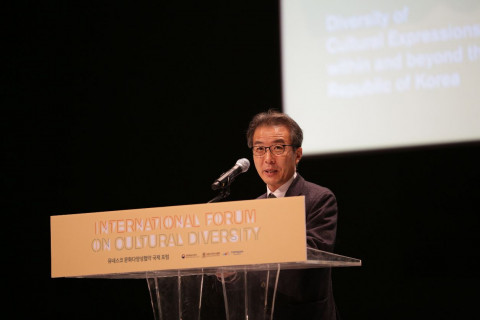 유네스코 문화다양성협약 국제포럼 개최 2019-04-30 - Reviewing the status of implementation of the 2005 Convention- Suggesting directions for domestic cultural diversity policy On April 18, the Korean National Commission for UNESCO held an International Forum on the UNESCO Convention on the Diversity of Cultural Expressions, in cooperation with the Arts Council Korea and the Ministry of Culture, Sports. The venue was the National Museum of Modern and Contemporary Art in Seoul. The forum was designed to increase local understanding of the concept of cultural diversity and to raise awareness of current international discussions regarding issues associated with the interpretation of cultural diversity, so that local organizations can implement cultural diversity projects with greater knowledge and awareness. Approximately 200 people attended the conference, including academics, civil society activists, and interested members of the general public. The forum focused on progress and challenges in the implementation of the UNESCO Convention on the Protection and Promotion of the Diversity of Cultural Expressions (the 2005 Convention), and offered an overview of the Global Report on the implementation of the 2005 Convention, which was published by UNESCO last year. Two experts who participated in the drafting of the Global Report gave presentations at the forum. Andrew Firmin, Editor-in-Chief of CIVICUS’ State of Civil Society Report, presented on sustainable cultural governance and civil society participation, and Sara Whyatt, former Deputy Director of PEN International, gave a presentation entitled "the freedom to imagine and create." Lectures and discussions were also held on cultural diversity issues specifically within the Korean context. Professor Han Kyung-Koo from the College of Liberal Studies at Seoul National University, was among several professors, from the Republic of Korea and other countries, who discussed the Convention on Cultural Diversity in the Korean context, and the interpretation and practice of cultural diversity in Korean society. Mr. Kwang ho Kim, the Secretary-General of the Korean National Commission for UNESCO, said, "I plan to provide more opportunities for discussion on the subject of cultural diversity in the future, to foster a richer, more nuanced discourse on this subject than currently exists within Korean society.” The 2005 Convention is an international convention adopted in 2005 for the purpose of the conservation, protection and promotion of diversity of cultural expressions. A total of 146 countries are currently party to the convention. The Republic of Korea became the 110th country to ratify the convention, in 2010, and is now a member of the intergovernmental committee for the convention, representing the Asia-Pacific region together with China and Indonesia. URL:https://www.unesco.or.kr/eng/news/notice/view/14/page/0
 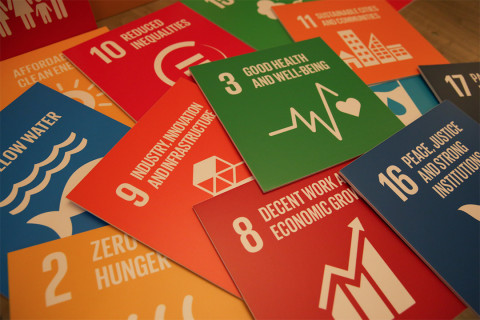 Arab Forum Reviews SDG Progress, Crafts Messages for HLPF 2019-04-30 12 April 2019: The Arab Forum for Sustainable Development (AFSD) reflected on progress towards the five SDGs that will be reviewed at the July 2019 session of the UN High-level Political Forum on Sustainable Development (HLPF), in addition to Goal 17, which is reviewed each year. AFSD-19 focused on the theme, ‘Empowering People and Ensuring Inclusiveness and Equality in the Arab Region.’ The UN Economic and Social Commission for Western Asia (ESCWA) organized the AFSD, which convened from 9-11 April 2019 in Beirut, Lebanon. Over 300 participants attended the Forum.In an opening address, UN Deputy Secretary-General Amina Mohammed said that the world is “not on track to deliver on the ambitions we set for ourselves,” but emphasized that the world is “determined to carry everyone along in our journey to 2030 and leave no one behind.” She said the Arab region, like many others, faces challenges including “insufficient growth, unemployment, inequality, climate change and natural disasters,” as well as challenges related to poverty, education and gender equality. Mohammed said the UN is working to achieve “more cohesive, adaptable and accountable UN country teams” to help support SDG implementation. In her opening remarks, ESCWA Executive Secretary Rola Dashti announced the launch of the Young ESCWA initiative, which aims to be an incubator for innovative solutions to improve the lives of people in the Arab region, including its youth. She said ESCWA aims to involve young people in internal reforms to revitalize ESCWA and increase its effectiveness and efficiency. AFSD-19 reviewed global and regional progress on the 2030 Agenda for Sustainable Development, and addressed progress on the five Goals under review in 2019: SDG 4 (quality education), SDG 8 (decent work and economic growth), SDG 10 (reduced inequalities), SDG 13 (climate action) and SDG 16 (peace, justice and strong institutions). On education, the AFSD discussed supporting and building institutional capacity to promote environmental education and to enhance knowledge to support informed decisions on the environment as well as to create a generation conscious of environmental problems. On climate change, participants discussed the effects of climate change, including the region’s moderate vulnerability, and the need to strengthen resilience, reduce disaster risk, especially for vulnerable communities, develop informed mitigation measures, and promote research on adaptation monitoring tools and measures. AFSD-19 also supported promoting policy coherence for climate action, such as enhancing the interlinkages between climate change and water, energy and sustainable food systems, and financing climate actions, including by mainstreaming climate activities in budget allocations. Participants reflected on national, regional and global follow-up and review processes, including voluntary national reviews (VNRs). Dashti said Arab States’ VNRs show that most States have adopted long-term development plans and more inclusive approaches. Countries shared lessons learned on VNRs, including the importance of: establishing an institutional structure for sustainable development that is linked to coordination committees and thematic task forces to facilitate the development of VNRs; and assigning a ministry as a focal point to coordinate national efforts with other ministries and stakeholders. Participants also discussed opportunities for engaging different stakeholders, including during initial consultations on the scope and priorities of the VNR report, during data collection and during the formulation, review and approval of the report. In 2019, Algeria, Iraq, Kuwait, Mauritania, Oman and Tunisia will present VNRs from the Arab region. On messages for the 2019 HLPF, participants recognized the need for a new positive narrative on youth, including clarifying opportunities for youth to contribute to accelerating achievement of the SDGs. Participants supported the role of parliaments in monitoring progress towards the SDGs, and emphasized the need to involve parliaments in the VNR process and to promote partnerships between parliaments and other actors to enable parliaments to fulfill their oversight role and promote transparency and accountability. Participants further supported organizing a regional parliamentary forum on the 2030 Agenda in the Arab region. The AFSD-19 also discussed messages related to national public resources and financing for the SDGs, including the importance of addressing tax evasion and illicit financial flows, the need to stimulate the private sector and find innovative ways to bridge funding gaps, and the potential for international trade to become an engine for sustainable development. The AFSD-19 reflected on a number of additional messages, including addressing conflict; promoting access to information and communications technology (ICT) and promoting digital education to accelerate development; and spreading the social protection floor. In advance of the AFSD, the 2019 Regional Forum on Sustainable Development (RFSD) for Europe convened from 21-22 March 2019 in Geneva, Switzerland. The UN Economic and Social Commission for Asia and the Pacific (ESCAP) held its regional forum (APFSD-6) in Bangkok, Thailand, from 27-29 March 2019. URL:http://sdg.iisd.org/news/arab-forum-reviews-sdg-progress-crafts-messages-for-hlpf/
 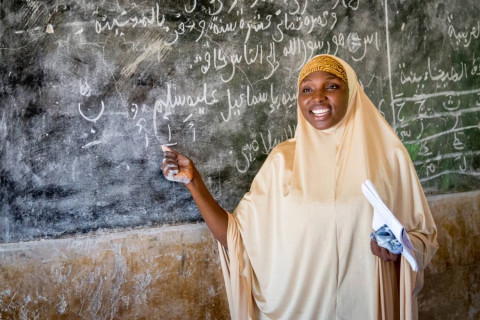 Female teachers: the not-so secret ingredient to educate more girls 2019-04-29 Increasing the number of female teachers is only part of the challenge; placing them in areas with high levels of under-educated girls is just as importantby Alice Albright (CEO of the Global Partnership for Education and a member of the G7 Gender Equality Advisory Council) Suwaiba Yunusa was the only female teacher at Janbulo Islamiyya Primary School in the Nigerian state of Jigawa in 2016. In fact, with a shortage of qualified female teachers, the school’s leadership was grateful to have even one.As in other northern Nigerian states – where girls make up the biggest portion of children not in school – educators in Jigawa State recognized that with female teachers, girls are more likely to go to, stay in and perform well in school. Even one female teacher like Suwaiba gave parents greater confidence to send their daughters to school. For the students, she was a role model and trusted advisor.Suwaiba herself was inspired by female teachers to continue her studies and turn to the teaching profession. “Growing up I had two women teachers,” she said. “I remember thinking I wanted to be like them. Now I am. So, I know how important it is when the girls come up to me and say, ‘When I grow up I want to be a teacher like you.’” International Women’s Day, which we observe today, is a perfect moment to reflect on how important female teachers are in a world where 132 million girls are out of school and where they are 1.5 times more likely than boys to be excluded from primary school.Education to achieve gender equality will also be on the agenda of this year’s G7 -- a group of countries with the largest economies in the world. It’s a strong indication of the increased political commitment for education and gender equality by global leaders.Girls face a multitude of barriers that keep them from going to and completing school and the Global Partnership for Education works with governments to tackle these issues. Among them are early marriage, poverty, pressure to put girls to work, stubborn bias against girls and women, long treks to and from school, conflict and fragility, threats of sexual violence, a lack of sanitary facilities as well as not enough female role models Indeed, countries with more female school teachers in the early grades tend to have higher enrollment rates for girls in secondary school. The challenge is all too obvious in most developing countries that struggle to educate girls and face acute shortages of female teachers. In some countries, fewer than 25 percent of primary school teachers are women.But increasing the number of trained female teachers is only part of the challenge. Placing them in under-served, typically remote areas with high levels of under-educated girls is just as important.In Afghanistan, women make up one-third of all teachers nationwide, but the geographic distribution is starkly uneven. While in some areas, less than two percent of teachers are women; in others, women are nearly three-quarters of the teacher workforce. To address the imbalance, Afghanistan’s Ministry of Education, working closely with the Ministry of Women’s Affairs, encourages female teachers with stipends to upgrade their skills. It also offers incentives such as housing and salary supplements, provided the teachers relocate from urban to rural areas.In Nepal, the government’s decade-long investment in getting more female teachers to underserved areas has paid off. Nearly all Nepalese children, including girls, are now in primary school. More girls move on to secondary school and Nepal has achieved gender parity in education – that is, girls and boys there go to school in equal numbers.As the only female teacher at Janbulo Islamiyya Primary School, Suwaiba understood how powerful and critical her role was. “I keep thinking about the future,” she said. “I know that someday, as more and more girls go to school and complete their education, there will be more of us. I can’t wait for that day to come.” URL:http://news.trust.org/item/20190306133724-r5b91
 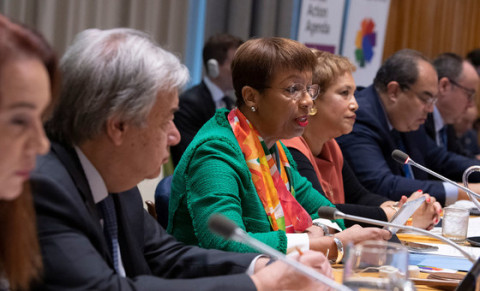 ‘Critical moment’ for sustainable development, UN chief tells major financing forum 2019-04-25 Ministers, senior UN officials, high-level finance officials, civil society, business representatives and local authorities, are meeting at UN Headquarters for the four-day FfD Forum, as it is known for short. Mr. Guterres said climate change, greenhouse gas emissions and technologies disrupting labour markets, were a major challenge, saying “We are here today as part of an effort to coordinate an urgent global response to reverse these trends”.“Simply put,” he spelled out “we need more money to implement the Sustainable Development Goals”.Noting that development aid remains essential, “especially for the poorest countries”, the UN chief shone a light on the importance of countries themselves generating more funding, including by increasing tax revenue and the impact of investment.“National policy frameworks are key to reducing risks, creating an enabling business environment, incentivizing investment in public goals, and aligning financial systems with long-term sustainable development”, he stated. ‘Broad transformation’ neededInga Rhonda King, President of the Economic and Social Council (ECOSOC) opened the meeting by highlighting that while progress has been made, “we have not seen the broad transformation that we need, to achieve the SDGs by 2030”.Pointing to economic and other risks, she homed in on “climate change, from the Caribbean to the Sahel”, which has actively reversed development gains; rising debt levels, which stifle investment in sustainable development; and increasing trade tensions dampening economic growth and inequalities within countries.To address these risks, Ms. King stressed the need to: renew commitments to global multilateral cooperation; align financing frameworks to integrate the 2030 Agenda into national development strategies; and accelerate the financing of sustainable development.“This Forum represents a critical milestone that sets the tone for the year ahead” she said. Wanted: 600 million ‘decent jobs’María Fernanda Espinosa, President of the General Assembly, noted that while global economic growth has remained steady, it was not enough just to support the 2030 Agenda.She underscored the need to generate “600 million new decent jobs” up to 2030, which requires policies to take advantage of public and private SDG funding; mobilizing national resources by targeting tax policies, and more international tax cooperation to deal with tax evasion. “A sustainable development future requires investing now, in the present”, she maintained. “Now it is time to act, to take decisive steps to make the promise to ‘free the human race from the tyranny of poverty’ a reality and contribute to make our Organization more relevant for all”. ‘A delicate moment’ for the economy“The world economy right now is at a delicate moment”, said the Deputy Managing Director of the International Monetary Fund (IMF), Tao Zhang, echoing the outcome of the World Bank and IMF’s spring meetings in Washington last week.While global expansion continues, he stated that it was at a slower pace than anticipated.“We need to do better”, he spelled out, noting that stronger medium-term growth will be “essential for developing countries” to achieve the SDGs.He detailed three “complimentary and reinforcing areas of policy action” to address this, namely, domestic policies to build resilience and promote inclusion; upgraded international cooperation; and the commitment to work together on broader global challenges. Actions required todayFrom the World Bank, Mahmoud Mohieldin, Senior Vice President for the 2030 Development Agenda, UN Relations, and Partnerships, said that “business as usual, simply put, will not get us into ending extreme poverty by 2030”.“There will be hundreds of millions of people will be suffering from extreme poverty by 2030 if business remains as we do it today”, with nine-out-of-ten of those affected, in Africa. “Actions are required today”, he exclaimed.As an outcome of the spring meetings he said “we need bold and urgent reforms in development policies and financing” to achieve job growth opportunities and sustainability in the next decade. Youthful demographicsDelivering a keynote address, Tharman Shanmugaratnam, Deputy Prime Minister of Singapore and Chair of the G20 Eminent Persons Group on Global Financial Governance highlighted the importance of mobilizing young people.Noting that the size of the “youthful bulge” in our populations “vastly exceeds what we’ve seen before”, he said “the largest challenge” was that “we are not prepared to create the jobs required” for them.We are ill-prepared by “every measure” of education, skills development and ability to provide young people with decent jobs”, he lamented.Mr. Shanmugaratnam painted a picture of a failure to create jobs intersecting with other global challenges, such as climate change, loss of the world’s biodiversity and the spread of infectious disease, as having consequences that would surpass just economic costs. URL: https://news.un.org/en/story/2019/04/1036681