
News
Catch up on what’s happening in the world of global citizenship education.
1,668 results found
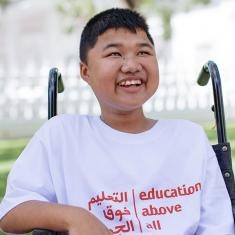 Education in the 2030 Agenda: Leaving No One Behind 2019-03-22 On March 6 in Geneva the Education Above All Foundation in partnership with the Permanent Missions of the State of Qatar, Argentina, Belgium, Japan, Singapore, Uruguay, and support from the Office of the United Nations High Commissioner for Human Rights, GCPEA, Right to Education Initiative, and Child Rights Connect has conducted a side-event on the margins of the 40th Session of the Human Rights Council Education in the 2030 Agenda Leaving no one behind: Children with disabilities, girls, forcibly displaced children and minorities. The side event was enormously successful, as participants and panellists reflected on the protection of the right to education of the most vulnerable and marginalized, as well as suggested ways forward based on best practices.Some of the presentations from ILO, Plan International, Right to Education Initiative, Global Education Cluster and Lead Researcher on GEM 2019 can be found here : https://educationaboveall.org/#!/news/education-in-the-2030-agenda-leaving-no-one-behind
 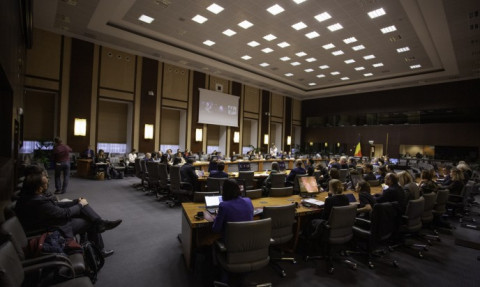 Global Education Meeting emphasizes the importance of lifelong learning 2019-03-20 Some 350 ministers, officials, representatives of development agencies and other partners from around the world joined the Global Education Meeting in Brussels from 3 to 5 December 2018 to review progress on the global Education 2030 Agenda. Developing education systems that enable people to learn throughout life and through multiple pathways was high on the agenda in Brussels. Key messages and commitments on lifelong learning and related topics such as adult education and literacy and the recognition, validation and accreditation of non-formal and informal learning were also highlighted in the meeting’s outcome statement; they include: Reaffirmation of the fundamental role of education, training, lifelong learning, higher education and research as key drivers for sustainable development, including for climate change adaptation and mitigation, and [a] call for strengthened collective action on SDG 4 within the 2030 agenda. Commitment to include migrants, displaced persons and refugees in education and training systems and to facilitate the recognition of their qualifications, learning and skills. Commitment to open, flexible and responsive education and training systems that support the development of a broader range of knowledge, skills and competencies, from early childhood to adulthood. Ensure publicly funded, relevant initial and continuous professional development for teachers, educators, trainers and school leaders. Reaffirmed commitment to eradicate illiteracy through formal and non-formal education and ensure equitable access to digital literacy, as well as media and information literacy as a continuum of proficiency levels within a lifelong learning perspective. Commitment to supporting lifelong learning opportunities for all to ensure necessary competencies for personal development, decent work and sustainable development, with attention to climate change, adaptation and mitigation. Recognition of the importance of skills acquired through non-formal and informal education and learning. The UNESCO Institute for Lifelong Learning is in the process of developing both a handbook on lifelong learning to help guide Member States in implementing relevant policies and plans and the 2019 Global Report on Adult Learning and Education (GRALE 4), which will shed light on the current state of adult education around the world. URL:https://en.unesco.org/themes/education/globaleducationmeeting2018
 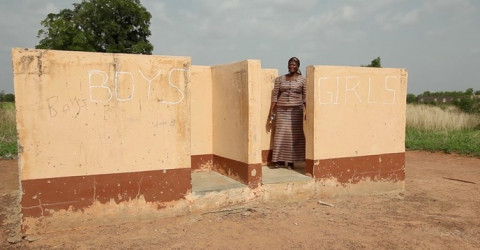 ¿Qué hace que un aula sea buena? Nuevos datos del IEU sobre las condiciones escolares 2019-03-20 New data from the UNESCO Institute for Statistics (UIS) reveal serious disparities in the schooling conditions facing children and teachers – from access to electricity, clean drinking water and single sex-toilets to Internet access and computers. Classroom conditions are key in providing a quality education for all. For children who struggle to enrol in school, for example due to poverty or discrimination on the grounds of gender or disability, poor school conditions can further undermine their chances of a quality education. What are the new data looking at? The UIS data reveal serious disparities in primary school conditions that, in turn, shed light on the global learning crisis that affects 617 million – or six out of ten – children and adolescents. The data cited below are for primary schools in 2017 (unless otherwise stated). The areas covered are: Electricity Internet Computers Adapted infrastructure and materials for students with disabilities Clean drinking water Single-sex toilets Basic handwashing facilities How many primary schools have electricity? Electricity is one of the most basic essentials for any school. Worldwide, an average of 69% of primary schools have power, falling to an average of around 34% for least developed countries. At the regional level, sub-Saharan Africa has the most limited access, at around 35%. Within the region, the lowest levels of access are found in Niger and Sierra Leone, where about 5% and 4% respectively of schools have electricity. What is the status of internet access in primary schools? Internet access in primary schools stands at just over 46% (2016) worldwide, falling to about 16% for LDCs, in stark contrast to the average for Northern America of more than 99%. The lowest percentages are found in Myanmar (0.2%) and Sierra Leone (0.3%). The data also reveal disparities between neighbouring countries, with access in Kyrgyzstan at around 42%, compared to more than 90% in Uzbekistan. How many students have access to computers at school? The global average is around 48% but hide an ever-widening and global digital divide, with entire populations of children missing out on tools that are not only vital but also seen as commonplace elsewhere. In the least developed countries, it falls to just over 23% while the averages for Northern America and Europe is well over 98%. Again, schools in Myanmar have little or no access to computers (about 1%) and Niger also faces serious challenges (just over 2%). How many primary schools have adaptations for children with disabilities? In general, such adaptations are limited. The rates vary considerably among some 40 countries with available data. Less than 5% of schools are equipped with adapted facilities for children with disabilities in some countries, including Burkina Faso, Cook Islands, Dominica, Liberia, Sierra Leone and Zambia. The rates range from about 17% to 30% in El Salvador, Latvia, Marshall Islands, Morocco, Peru and Rwanda, while countries with strong policies in place, such as Finland, have rates of 100%. How many students have access to clean drinking water? While many of the countries that provide data report rates of 100%, the global average stands at 79%, constrained by the far lower averages for least developed countries (59%) and countries in sub-Saharan Africa (44% in 2016). What is the situation of single-sex basic sanitation facilities?Single-sex basic sanitation facilities can play a vital role in the creation of a safe and supportive school environment, particularly for girls. The global average of primary schools with single-sex toilets stands at around 82%, falling to 57% for least developed countries. A closer look at the national figures reveals a number of champions in developing regions, such as Azerbaijan, Cabo Verde, Djibouti, Gambia, Ghana, India, Jamaica, Malaysia, Mauritius, Morocco, Mozambique, Rwanda, Samoa and Sri Lanka – all with 80% or more of schools equipped with single-sex toilets. But there are concerns elsewhere, such as in Eritrea (27%) and Senegal (just 9%). How many students can wash their hands at school? Handwashing facilities are essential for the health of students and teachers alike. The data reveal significant disparities: globally, 66% of primary schools have handwashing facilities, but the average in LDCs is 43% and rates are very low in some countries, such as Afghanistan (4%) and Eritrea (3%). About the UIS global education databaseThe UIS global education database provides the most comprehensive data set on education in the world. And it continues to expand. Most recently, country-level information has been added to provide a more complete and timely picture of the education situation facing children, youth and adults the world over. The data update spans all of our indicators – from pre-primary to tertiary education – and of course, the global and thematic indicators used to monitor progress towards Sustainable Development Goal 4 (SDG 4 (link is external))With the new data release, the UIS aims to ensure that all of UNESCO’s partners – including countries, donors, UN agencies, civil society groups and engaged citizens – have the latest available data to better direct policies and resources to reach every child. This is particularly timely in a year when progress towards SDG 4 will be under close scrutiny at the next High-Level Political Forum (link is external) on Sustainable Development in July 2019 URL: https://en.unesco.org/news/what-makes-good-classroom-new-uis-data-school-conditions
  ESD Success Story 2019-03-19 In order to further promote the experience of Education for Sustainable Development (ESD) in some advanced countries, UNESCO has continuously collected the progress of ESD in various countries through questionnaires and field trips in the past few years, and has begun to edit ESD Success Story. UNESCO hopes that the rest of the world will pay more attention to and learn from the outstanding experiences of ESD in the following countries. URL:http://www.esdinchina.org/newsitem/274204970
 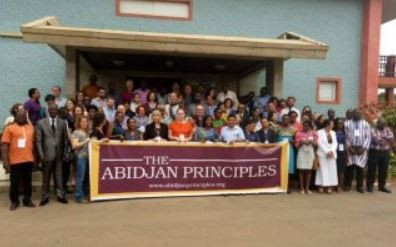 اعتماد الخبراء لمبادئ أبيدجان الجديدة بشأن الحق في التعليم والجهات الفاعلة الخاصة 2019-03-18 A group of human rights experts from around the world adopted the Abidjan Principles on the right to education today, following three years of consultations, reflection, and drafting. The Abidjan Principles seek to strengthen existing efforts to ensure that everyone’s right to education is protected in the context of growing, and often unregulated private actor involvement in education. Professor Ann Skelton, chair of the Drafting Committee, and who holds the UNESCO Chair of Education Law in Africa, said: ‘Until today, those responsible for ensuring the right to education lacked clarity on what international human rights law says about private actor involvement in education, often leading to inadvertent and preventable adverse impacts.’ ‘The Abidjan Principles compile and reassert the legal obligations of states in one document. They have been developed to respond to the well-evidenced, detrimental impacts that are often the result of the commercialisation of education.’ Echoing this, Dr Kombou Boly Barry, the UN Special Rapporteur on the right to education, and one of the experts who was consulted, said: ‘The Abidjan Principles are legally rigorous and tackle the very real challenges in providing inclusive free, quality public education, making them indispensable to any state that takes the right to education seriously.’ The Abidjan Principles unpack states’ obligation to provide public education, to respect liberties and dignity in education, and to regulate private actors in education. Samuel Dembele, the chair of ANCEFA, commented, ‘The Abidjan Principles arm us with the necessary tools to tackle the issue locally, while also connecting to the larger, systemic challenges presented by the privatisation of education.’ As well as their utility for states, the Abidjan Principles will be invaluable to those striving to hold states accountable when they fail to ensure that private actors respect the right to education. The deputy mayor of Grand-Bassam, where the meeting took place, Siaka Traoré, declared: ‘Grand-Bassam is proud to have hosted this validation conference for the guiding principles for the implementation of the right to education, which will allow us to move faster towards the free quality education for all. It was a true pleasure for me to take part in the opening and closing ceremonies.’ The drafting of the Abidjan Principles was led by a drafting committee made up of nine internationally-renowned experts. A further 20 experts were present in Abidjan to review and adopt the text. Additional experts who were not able to be in Abidjan are expected to sign the text soon, which will also be open to endorsements from civil society organisations and other actors. The final text of the Abidjan Principles will be available after copy-editing around mid-March. Launch events will be organised throughout 2019. Details will be shared at www.abidjanprinciples.org Media contacts: For press releases in other languages, images, and videos www.abidjanprinciples.org/media Sylvain Aubry (FR/EN), Legal and Policy Adviser, Global Initiative for Economic, Social and Cultural Rights: +254 7 88 28 96 34 / +33 7 81 70 81 96 / sylvain@globalinitiative-escr.org Delphine Dorsi (FR/EN/ES), Director, Right to Education Initiative: delphine.dorsi@right-to-education.org Salima Namusobya (EN), Executive Director, Initiative for Social and Economic Rights: dir@iser-uganda.org Rubeena Parker (EN), Head of Research, Equal Education Law Centre: rubeena@eelawcentre.org.za Solomon Sacco (EN), Deputy Director, Law and Policy Programme, Amnesty International: solomon.sacco@amnesty.org URL: https://www.right-to-education.org/news/new-landmark-abidjan-principles-right-education-and-private-actors-adopted-experts