
News
Catch up on what’s happening in the world of global citizenship education.
1,668 results found
 93 million children with disabilities ‘among the most likely to be left behind’: UN rights chief 2019-04-04 States should do more for an estimated 93 million children with disabilities who are “among the most likely to be left behind and the least likely to be heard”, UN High Commissioner for Human Rights, Michelle Bachelet, said on Monday. Speaking at a Human Rights Council event highlighting how disabled youngsters are more exposed to violence, abuse and neglect, Ms. Bachelet explained that they have the same rights as all children. Their empowerment depends upon these rights being realized, she said – particularly the equal right to education – before highlighting how learning gives everyone the potential to escape poverty and exploitation. “Children with disabilities must have a say in all matters that affect the course of their lives…They must be empowered to reach their full potential and enjoy their full human rights – and this requires us to change both attitudes and environmental factors.” Ms. Bachelet insisted. Discrimination against children with disabilities can begin as soon as they are born, the High Commissioner noted, from authorities choosing not to register births, to separating them from families and placing them in care institutions. Another key factor preventing the inclusion of disabled youngsters in their communities, and their ability to exercise their rights, is ongoing segregation into special schools, institutions and sheltered homes. “This is a legacy of a model which has caused exclusion and marginalisation,” said Catalina Devandas Aguilar, Special Rapporteur on the rights of persons with disabilities. “We can no longer have children being hidden away and isolated, children with disabilities must have the opportunity to dream of a full and happy life,” she added. Addressing the Council, Ms. Aguilar insisted that children with disabilities “face stigma, discrimination, prejudice and barriers. They are abandoned, neglected, socially excluded, segregated, over protected, not given accessibility and the services and support they need.” In addition to these challenges, she said one in three school-age children with disabilities do not have a primary education, while a child with learning difficulties is almost five times more likely to suffer sexual violence than their peers. /p> Echoing her message, Moldova children’s rights advocate Dumitriţa Cropivnitchi from the non-governmental organization Lumos, described her experience of discrimination, linked to disability. “Because of my disability, at the age of five, I was sent to live in an institution as it was the only place I could receive an education,” she said. Can you imagine what it would be like, she added, "for a five-year old to be sent to a huge cold building, that smelt of porridge, and to have her parents replaced by educators, to share a room with 11 others, clothes and live by the rules of the institution?” After staying there for five years, Ms. Cropivnitchi returned home and benefited from reforms that introduced mainstream schools that she could attend, including one in her village. “It is indisputable that childhood is meant to be the most beautiful yet also, the most vulnerable stage in life,” she told the Human Rights Council. “During childhood, a child is dependent on adults. Children with disabilities can continue to be dependent and vulnerable their whole life… I ask myself now, how is this correct', she said, to do this to "the thousands, millions of children around the world?” URL:https://news.un.org/en/story/2019/03/1034011
 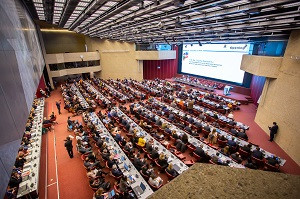 UNECE Regional Forum 2019: shifting from intentions to action 2019-04-03 How can we turn intentions into action? At the 2019 Regional Forum, 850 key stakeholders demonstrated their readiness to act for the Sustainable Development Goals (SDGs) – not with lip service but concrete solutions. Gathering in Geneva on 21-22 March 2019, change makers from governments of 50 nations, international organizations, civil society, academia and the private sector engaged in intense discussions to move ahead with the ambitious 2030 Agenda on Sustainable Development. UN Deputy Secretary-General Amina J. Mohammed, who has made it a priority to be present at all five Regional Forums, emphasized that “the Regional Forums are critical tools to maintain the ambition, review progress and exchange practices to implement the 2030 Agenda for Sustainable Development.” Making reference to school children marching for a healthy planet, she made a strong appeal to all participants that “the power to make that happen is not in their hands. It is in ours. Therein lies our duty to them.” Albania’s Minister of Health and Social Protection, Ms. Ogerta Manastirliu, chaired this year’s Regional Forum. She emphasized that “achieving the SDGs should be considered as an integrated process, rather than working in an isolated sectorial approach.” Stressing the importance of mainstreaming gender, she stated: “We need strong women everywhere – not only on this podium. We can’t deliver on the seventeen Sustainable Development Goals if we don’t give primary attention to Goal number 5. Albania’s government cabinet has more women than men.” Close alignment with High-level Political Forum (HLPF) During the High-level Policy Segment of the Regional Forum, country representatives discussed how Voluntary National Reviews (VNRs) can serve as drivers of SDG implementation. The 2030 Agendaencourages member States to review their national experiences in implementing the SDGs, including successes, challenges and lessons learned. 2019 marks the first four year, complete cycle of the global SDG review process. 48 UNECE member states have conducted Voluntary National Reviews during this first cycle. Closely aligned with the issues addressed at the High-level Political Forum (HLPF), the peer learning round tables focused on the implementation of the following five SDGs under in-depth review at the 2019 HLPF: SDG 4 (quality education), SDG 8 (decent work and economic growth), SDG 10 (reduced inequalities), SDG 13 (climate action) and SDG 16 (peace, justice and strong institutions). Country representatives and other stakeholders shared concrete case studies from their national experience, proposed solutions to identified problems and discussed how best practices can be adopted by peers. Participants also had the opportunity to engage in dialogues on pressing questions: How can we use technology, digitalization and artificial intelligence to accelerate SDG progress? How can we make better use of data and statistics to measure progress in SDGs? Alongside the formal agenda, several pre-meetings channelled and coordinated the inputs of civil society, youth and volunteers to the Regional Forum. Eighteen side events offered further space for interactive discussions on current challenges, including how to ensure equal pay for work of equal value, how to harmonise economic growth and environmental sustainability, and how to foster labour inclusion of persons with disabilities. Connecting the dots: strengthening cooperation On the Forum’s second day, the keynote speaker Ms. Eeva Furman, Director of the Environmental Policy Centre at the Finnish Environment Institute SYKE, made a strong call for improved cooperation between sustainability scientists and policy makers. She emphasised that not a single country has achieved high levels of well-being in an ecologically sustainable way. As a co-author of the Global Sustainable Development Report 2019, Ms. Furman highlighted the report’s key findings including the identification of six areas for systematic transformation. Michael Møller, Director-General of the United Nations Office at Geneva, emphasized: “The Forum has once again demonstrated the vital role that regional actors play in this necessary shift of gear. The scope of our ambition may be global, but the real action of implementation happens on the ground, in national, regional, and local contexts.” “We need to respond to the challenges by creating broad spaces for policy discussion and exchange of experiences that are a good match for the features of the 2030 Agenda. Spaces that encourage breaking down sectoral barriers, stimulate innovative responses and draw in all the stakeholders across the region. This has always been the ambition of the Regional Forum” stressed UNECE Executive Secretary Olga Algayerova at the closing. A fast-growing platform Taking place for the third time, the Regional Forum is a fast-growing platform for meaningful exchange: the number of participants but also of pre-meetings and side events is unprecedented. The preparation of the Forum had involved colleagues across the regional UN system and exemplifies successful regional cooperation between a wide range of UN agencies. Accelerating SDG progress in countries and the region The Regional Forum feeds both into national and global processes. Discussions from round tables foster mutual learning and help countries accelerate national progress in implementing the 2030 Agenda. The Chair’s summary of the Regional Forum will provide the region’s official input for the High-level Political Forum (HLPF). For further information please visit: https://www.unece.org/rfsd2019.html URL:http://www.unece.org/info/media/news/general-unece/2019/unece-regional-forum-2019-shifting-from-intentions-to-action/doc.html
 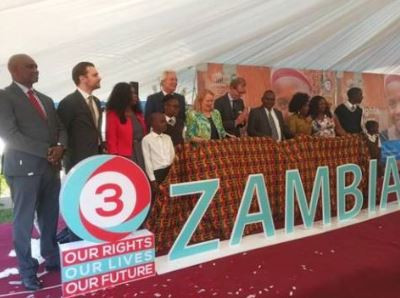 Zambia Scales up Comprehensive Sexuality Education via O3 Project 2019-04-03 UNESCO, Swedish International Development Cooperation Agency (Sida) and Zambia’s Ministries of Higher and General Education signed a cooperation agreement to launch the “Our Rights, Our Lives, Our Future” (O3) project for Zambia on 20th March 2019 in Lusaka. “We are not signing just another project,” said UNESCO Regional Director for Southern Africa, Prof. Hubert Gijzen. “We are signing up for the Zambia component of a regional flagship programme. We are signing up to a partnership; we are signing up for a fight — a fight against HIV, Early and Unintended Pregnancy (EUP), and Gender-Based Violence (GBV); a fight for adolescents and young people and particularly for young women and girls. We are signing up to hope and commitment to end AIDS as a public health threat by 2030,” he added. The O3 project seeks to improve sexual and reproductive health, gender, and education outcomes for adolescents and young people in sub-Saharan Africa through sustained reductions in new HIV and other sexually transmitted infections, early and unintended pregnancy, and Gender-Based Violence. It comes as a successor to the recently-completed national project on “Strengthening Comprehensive Sexuality Education (CSE) Programmes for Young People in School Settings in Zambia” which UNESCO had been supporting through Zambia’s Ministry of General Education to implement CSE in national schools. This earlier project aimed to strengthen the delivery of CSE targeting 10 – 24 year-olds (including Young People Living with HIV (YPLHIV) and young people with disabilities) in Zambia through increasing access to high-quality and age-appropriate sexuality education and health services. The Permanent Secretary for the Ministry of Higher Education Mr Mabvuto Sakala, who also represented the Permanent Secretary for the Ministry of General Education Dr. Jobbicks Kalumba at the ceremony, said the Government is aware that the country continues to face considerable challenges around Sexual and Reproductive Health and Rights (SRHR) and the well-being of young people. He further stated that the Government was grateful for the generous support of the Swedish Government and UNESCO in the implementation of CSE, assuring that Zambia remains committed to and will continue implementing CSE in schools in order to achieve better sexual and reproductive health outcomes among its adolescents and young people. Sweden’s Permanent Secretary for International Development Cooperation Mr. Per Olsson Fridh also reaffirmed Sweden’s commitment to supporting CSE programmes stating that the O3 project will aim to reach 100% of grade 5-12 learners in primary and secondary schools in Zambia by 2023 through strengthened life skills-based HIV and sexuality education curricula. In addition, the project is expected to reach and build the capacity of practicing teachers, including guidance and counseling teachers, through in-service training modalities to deliver CSE at classroom level. Speaking at the same occasion, UN Resident Coordinator, Ms. Janet Rogan said young people are not only the future but the present as well. She added that improving their healthiness will enable them to make full contribution to the development of Zambia and Africa as whole. The O3 project is in line with Zambia’s National General Education Policy; UNESCO strategy on education for health and well-being; the 2016-2021 UNAIDS Fast-Track Strategy (specifically result areas 3 and 5); the Swedish International Development Cooperation Agency Strategy for Sexual and Reproductive Health and Rights (SRHR) in sub-Saharan Africa (2015-2021); and the 2016 Political Declaration on HIV and AIDS. The project has been conceptualized in alignment with the country’s thematic focus on creating a resilient, diversified economy for sustained advanced growth and social economic development as articulated in the 7th National Development Plan (2017-2021). For more information, please contact: a.mwewa-saili@unesco.org. URL:http://www.unesco.org/new/en/harare/about-this-office/single-view/news/zambia_scales_up_comprehensive_sexuality_education_via_o3_pr/
  A momentum for efforts on inclusion in education 2019-04-03 UN report on disability and development Despite the progress made in recent years, persons with disabilities continue to face numerous barriers to their full inclusion and participation in their communities, and in society as a whole. This is the key message of the first flagship report on disability and development on the “Realization of the Sustainable Development Goals by, for and with persons with disabilities”, launched on 3 December at the United Nations Headquarters on the occasion of the 2018 International Day of Persons with Disabilities. UNESCO contributed to the report, in particular on its chapter on Education. “A range of obstacles – mainly cultural, social, and financial – still prohibit people with disabilities from exercising their right to education”, stated Florence Migeon, a UNESCO representative working on inclusion in education. Yet, the 2030 Agenda for Sustainable Development recognizes that persons with disabilities should have access to life-long learning opportunities. The Report proposes a wide range of actions, such as strengthening national policies and the legal system, making schools and educational facilities accessible, providing adequate training to teachers, engaging civil society and local communities. U NESCO’s actions UNESCO has been accelerating its efforts to develop and implement inclusive education policies and programmes that ensure equality of educational opportunities for all. In 2017, UNESCO published a Guide for ensuring inclusion and equity in education to support countries in embedding inclusion and equity in educational policy. With the European Agency for Special Needs and Inclusive Education, UNESCO developed an online resource base entitled Inclusive Education in Action (IEA), which aggregates comprehensive information on a wide-range of relevant topics as well as a unique collection of case studies to help inform policies, programmes and practices on inclusion. IEA is currently accepting submissions for case studies. To renew the commitment of the international community to inclusion in education, UNESCO will hold an International Forum on Inclusion and Equity in Education on the theme Every learner matters in June 2019. The forum will also commemorate the 25th anniversary of the Salamanca World Conference on Special Needs Education, which in its Statement, declared: “All children should learn together, wherever possible, regardless of any difficulties or differences they may have. Inclusive schools must recognize and respond to the diverse needs of their students”. A Guide for ensuring inclusion and equity in education Education for persons with disabilities Inclusive Education in Action resource base IEA open call for case studies URL:https://en.unesco.org/news/momentum-efforts-inclusion-education
 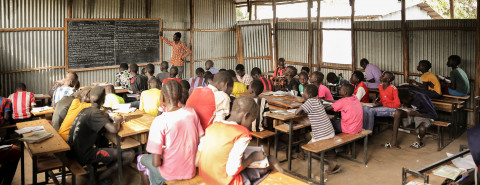 Education remains an impossible dream for many refugees and migrants 2019-04-02 The older refugee and migrant children get, the less likely it is that they will get a quality education: less than a quarter of the world’s refugees make it to secondary school, and just one per cent progress to higher education. Even for migrants who settle in wealthy, developed host countries, accessing university is an uphill struggle. For many young migrants in the UK, even those who have the legal right to remain in a new country, the idea of going to university is almost an impossible dream: not only are they are charged “overseas student” fees, which can be around double those of “home” students but, until recently, they were denied access to student loans, which puts up another barrier to entry. However, a ray of hope has been provided by Chrisann Jarrett, who is herself a young migrant (she was born in Jamaica and moved to the UK at the age of 8). Whilst still a teenager, Chrisann set up Let Us Learn, a campaign for equal and fair treatment for young migrants. In an interview with UN News, Chrisann explained how a 2015 court victory against the UK Government has made a big difference to many young UK-based students born abroad. “We recognized that over 2,000 students were being stopped from going to university because of their immigration status. So, despite being lawfully resident in the country, they were being told that they couldn’t move forward with their education aspirations. In 2015, the Supreme Court agreed that this was discriminatory, and we managed to influence government policy, which means that hundreds, if not thousands of young migrants are able to access a student loan and go to university, which previously wasn’t the case.” Ms. Jarrett said that the campaign was a cause worth fighting for, allowing potential talent, that would otherwise have been overlooked, to develop for the benefit of the migrants, and the countries in which they live. Migration has become one of the central themes of political discourse and media coverage in the UK and other European countries over recent years, making it easy to forget that 92 per cent of young refugees are hosted in developing countries. These states have scant resources to ensure that they get an adequate education, and need support in order to be able to include refugee children in their school systems.This is why Education Cannot Wait, the first global fund dedicated to education in emergencies and protracted crises, was set up in 2016. Hosted by the UN Children’s Fund (UNICEF), Education Cannot Wait brings together public and private partners to mobilize the funding needed to deploy immediate and sustainable programmes tailor-made to the educational needs of children affected by conflict. One such examples is in Ethiopia’s refugee-hosting regions of Gambella and Benishangal-Gumuz, which received a $15 million grant from the fund, to pay for new schools and teachers. Most of the children there fled from violence in South Sudan, and schools can play a significant role in helping them to find stability and support. URL: https://news.un.org/en/story/2019/03/1034141
 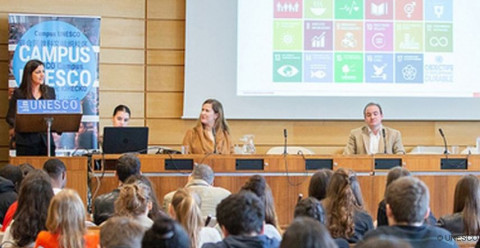 300 middle school and high school students participate in UNESCO CAMPUS on artificial intelligence 2019-03-30 The 22nd of March 2019, UNESCO hosted 300 young people between the ages of 14 to 17 at its headquarters for a debate about artificial intelligence. Each month, CAMPUS UNESCO is an opportunity for young people to discuss major global issues with civil society experts and UNESCO teams. The objectives of this month’s animated discussion were: demystifying the challenges of artificial intelligence (AI), clarifying the issues surrounding AI, and listening to young people’s questions about governance, ethics, the future of employment and the sustainable solutions offered by AI. "Will man ever be overtaken by machines?", "Can artificial intelligence be trusted?", “Can artificial intelligence have a negative impact on our privacy?”, between fear and hope, students called on Nicolas Miailhe, co-founder of The Future Society and The AI Initiative – a think-tank specializing in the impact and consequences of artificial intelligence on our daily lives – to answer questions about their hopes and fears. Far from being idealistic, N. Miailhe openly discussed the challenges of making the concept of artificial intelligence accessible and gave his vision for the future of this technology. Beyond the complex robotic aspect and its feats of algorithmic prowess such as facial recognition, AI can also act as a force for social good. For example, echoing UNESCO’s mandate, the Women's WorldWide Web (W4) Foundation – Europe’s first crowd-funding platform – proves that AI can be a sustainable solution to societal, economic and environmental challenges. Knowing that about 90% of future jobs will require computer skills, W4 President Lindsey Nefesh-Clarke, presented her organization’s actions to promote women’s and girls’ equal access to information and communication technologies (ICT). This interesting debate ended with the intervention of Sasha Rubel, focal point for research on artificial intelligence within the Knowledge Society Division at UNESCO. She highlighted the potential of this technology to help achieve the Sustainable Development Goals in a way that respects legal and ethical frameworks. Since 2014, 72 CAMPUSES raised awareness to over 22,500 young people on major issues such as sports and citizenship, peace, sustainable development, human rights, girls’ education, genocide, freedom of expression, and cultural heritage. More than 110 civil society experts, journalists, researchers, sportsmen, artists, navigators and entrepreneurs have joined the UNESCO teams helping youth achieve a better understanding of major contemporary issues. The UNESCO CAMPUS initiative is supported by the ENGIE Corporate Foundation UNESCO CAMPUS photo album on AI URL:https://en.unesco.org/news/300-middle-school-and-high-school-students-participate-unesco-campus-artificial-intelligence
 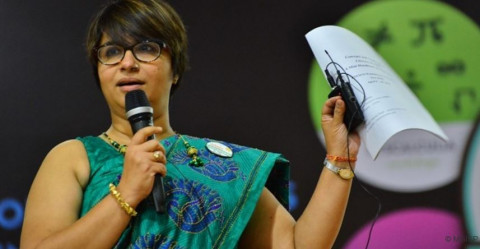 When neuroscience meets AI: What does the future of learning look like? 2019-03-29 Meet Dr. Nandini Chatterjee Singh, a cognitive neuroscientist at UNESCO MGIEP (Mahatma Gandhi Institute of Education for Peace and Sustainable Development) where she has been leading the development of a new framework for socio-emotional learning. MGIEP focuses on mainstreaming socio-emotional learning in education systems and innovating digital pedagogies. Dr. Singh answered five questions on the convergence of neuroscience and Artificial Intelligence in learning, ahead of the International Congress on Cognitive Science in Schools where she will be speaking this week. What are the links between neuroscience and Artificial Intelligence when it comes to learning? The focus of both neuroscience and AI is to understand how the brain works and thus predict behaviour. And the better we understand the brain, the better designs we can create for AI algorithms. When it comes to learning, the neuroscience - AI partnership can be synergistic. A good understanding of a particular learning process by neuroscience can be used to inform the design of that process for AI. Similarly, if AI can find patterns from large data sets and get a learning model, neuroscience can conduct experiments to confirm it. Secondly, when neuroscience provides learning behaviours to AI, these behaviours can be translated into digital interactions, which in turn are used by AI to look at learning patterns across large numbers of children worldwide. The power of AI is that it can scale this to large numbers. AI can track and search through massive amounts of data to see how that learning happens, and when required, identify when learning is different or goes off track. A third feature is that of individualized learning. We increasingly also know that learning has a strong individual component. Yet our classrooms are structured to provide common learning to all children. Sometimes these individual differences become crucial to bring out the best in children, which is when we might tailor learning. Neuroscience research on individual differences has shown that detailed information on that individual can reveal a wealth of information about their learning patterns. However, this is extremely cost and labour intensive. Yet, this detailed learning from neuroscience can be provided to AI in order to scale. AI can collect extensive detailed data at the personal level, to design a path to learning for that child. Thus, what neuroscience can study in small groups, AI can implement in large populations. If we are to ensure a world where every child achieves full potential, such personalized learning offers a great promise. How do we create a structure around AI to ensure learning standards globally? One thing AI capitalizes on and constantly relies on is large volumes of data. AI algorithms perform better if they are being fed by continuous distributed data. We need to keep in mind that humans are the ones designing these algorithms. This means that the algorithms will only do as well as the data that they have been trained on. Ensuring that we have access to large amounts of data that comes from various situations of learning is crucial. What sometimes becomes an issue for AI algorithms is that most of the training data has been selected from one particular kind of population. This means that the diversity in the forms of learning is missing from the system. To return to reading and literacy as an example, in neuroscience, a large part of our research and understanding of how the brain learns to read has come from individuals learning to read English and alphabetic languages. However, globally, billions of people speak or read non-alphabetic languages and scripts that are visually complex, which are not really reflected in this research. Our understanding is built on one particular system that does not have enough diversity. Therefore, it is important that AI algorithms be tested in varied environments around the world where there are differences in culture. This will create more robust learning models that are able to meet diverse learning requirements and cater to every kind of learner from across the world. If we are able to do that, then we can predict what the learning trajectory will look like for children anywhere. Human beings have similarities in the way they learn, but pedagogies vary across different situations. In addition, those differences must be reflected in the data provided. The results would be much more pertinent if we are able to capture and reflect those differences in the data. This will help us improve the learning of AI, and ultimately understand how the brain works. We would then be better suited to leverage the universal principles of learning that are being used across the world and effects that are cultural in nature. That is also something that we want to hold on to and capitalize on in trying to help children. People designing AI algorithms so far have not given a lot of attention to this, but they are now beginning to consider it in many places across the world. How do you see AI’s role in inclusive education today, especially in the context of migration? Societies have become multicultural in nature. If you go to a typical classroom in many countries, you will find children from diverse cultures sitting in the same learning space. Learning has to be able to meet a variety of needs and must become more inclusive and reflect cultural diversity. Innovative pedagogy such as games, interactive sessions and real-life situations are key because they test learning capabilities focused on skills that children should acquire. AI relies on digital interactions to understand learning and that comes from assessing skills and behaviours. We now recognize that what we need to empower our children with are skills and behaviours – not necessarily tons of information. Digital pedagogies like interactive games are among the ones emerging rapidly to assess children’s skills. They are powerful because they can be used in multicultural environments and can assess different competencies. They are not necessarily tied to a specific language or curricula but are rather performance-based. How do you assess children for collaboration in a classroom? In the context of migration and 21st century skills, these are necessary abilities and digital games provide a medium to assess these in education. When such interactive games are played by children across the world, they provide digital interactions to AI. AI might discover new patterns and ways to collaborate since children have ways of doing things that are often out of the box. A skills-based approach can be applied anywhere, whether it is in a classroom in India, France or Kenya. In contrast, curriculum-based methods are context-specific and show extensive cultural variation. What are the risks and the challenges? Data protection and security is of course still a huge issue and is the biggest challenge in this sphere. We have to ensure that children are never at risk of exposure and that the data is not misused in any way. This is something that needs more global attention and backing. Another crucial point is that learning assessments should not be restricted to just one domain. There are multiple ways, and time and space to learn. Learning is continuous in nature and should be able to be adapted to the child’s needs at that particular point. The assessment should also be continuous in order to get a full picture of the improvement that the child is demonstrating. If there is no improvement, then we can provide interventions to help and find out why learning is not happening. From what we know from neuroscience, the earlier you can provide intervention, the better is the chance of the child to be able to change and adapt. The ability of the brain to learn and change is much easier and faster in childhood compared to adulthood. Yet, we want to be cautious about the conclusions we draw about how to intervene with children. Poor academic performance might have a social or emotional reason. Thus, learning today needs to be multi-dimensional. Along with academic competencies, social and emotional skills also need to be assessed. If this information is used wisely, it can provide a lot of insight about the child’s academic and emotional well-being. Based on the combination of the two, the right intervention can be provided. Unless multiple assessments all converge on the same result, the child’s learning abilities should not be labeled. AI gives a great opportunity to conduct multi-skills assessments, rather than just one. And that is something that we should leverage, rather than abandon. The standards for the baselines for the algorithms must be properly taken into consideration for any type of assessment. They must come from a large quantity of distributed data in order to provide more accurate results. That is something that we should not compromise under any condition. How is the teaching community responding to this new way of learning and assessing? There are teachers who worry about the future of learning but that is also because they do not necessarily have the full picture. People working and promoting the use of AI in learning must play a crucial role in telling teachers that they will not be obsolete. Teachers will be more empowered and be able to meet the needs of every kind of learner in their classrooms. The ideal world would be to have one teacher per child but that is of course impossible. AI is a tool to guide teachers when it comes to finding the right intervention for a student that might be struggling to learn. That intervention comes from data that has been checked for bias and diversity and does not use ‘a one size fits all ‘approach and therefore teachers can be more certain that it will fit the needs of the child. AI gives the opportunity for the teacher to tailor learning for the child. In addition, we do not really know all the different kinds of learning. Sometimes we have to be prepared to learn from children themselves. Children can give us insights into the different ways that learning actually happens, and teachers should be able apply them back into the classroom. Teachers are extremely powerful individuals who are able to shape the brains of so many children. If they are doing a good job, they are making individuals for life. UNESCO MGIEP focuses on mainstreaming socio-emotional learning in education systems and innovating digital pedagogies. Based on the neurosciences of learning, the Institute’s flagship Rethinking Learning programme aims to equip young learners with competencies to address current global issues and in turn develop more peaceful and sustainable societies. Find out more. URL:https://en.unesco.org/news/when-neuroscience-meets-ai-what-does-future-learning-look
  You(th) Speak on Education at the United Nations on 8 April 2019 2019-03-29 About 263 million children, adolescents and youth worldwide - one in every five - are out of school: 64 million of primary aged children, 61 million of lower secondary school age and 138 million of upper secondary age. This violates a fundamental human right and stalls progress towards all the Sustainbale Development Goals. Youth from disadvantaged backgrounds and/or low-income countries are far less likely to complete secondary education or gain skills for work through technical and vocational education and training, further deepening inequalities and exclusion. Youth account for the majority of the forcibly displaced, at a record level since WW2, with many seeing their educational opportunities cut short. The digital revolution, combined with the interdependent and global nature of issues, from climate change to rising intolerance and violent extremism are increasing pressure on education systems to transform, and to give students the knowledge, competences and values they need to navigate a world of increasing complexity with opened mindsets and a sense of shared responsibility. In this framework, the implementation of the Sustainable Development Goal 4 (SDG 4) is of utmost importance, as inclusive access to quality education and life-long learning opportunities have reciprocal linkages with almost all other SDGs and will play a key role in building peaceful, sustainable and resilient societies. In this regard, the ECOSOC Youth Forum’s breakout session on the SDG 4, organized by UNESCO, together with the United Nations Major Group for Children and Youth (UN MGCY), SDG-Education 2030 Steering Committee, OHCHR, UNFPA, UNHCR and UNICEF, will highlight the key role of education within the 2030 Agenda. The discussion will bring together young people from across the world as dynamic, resourceful, and powerful agents of change in their communities. Education is an investment in the future of both young people and society as a whole. "You(th) Speak on Education" will aim to reflect a youth perspective on SDG4 and its targets. URL:https://en.unesco.org/news/youth-speak-education-united-nations-8-april-2019
  Education data on Global Partnership for Education's partner countries 2019-03-29 Explore global education statistics on challenges and results organized by theme, including specific data for Global Partnership for Education partner countries. Child labor Disability Domestic financing Early childhood care and education Economic development Education planning Enrollment Environment External financing Fragility and conflict Gender GPE grants Health Inequality Learning and literacy Lower-secondary school completion Mother tongue Out-of-school children Peace and tolerance Poverty Primary school completion Refugees Secondary education Teachers Technology URL:https://www.globalpartnership.org/data-and-results/education-data
 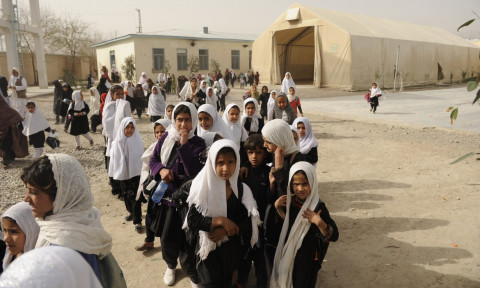 Afghanistan: Reaching the most vulnerable children with community schools 2019-03-28 Global Partnership for Education(GPE) is supporting the Government of Afghanistan to make education more accessible for children in remote and insecure areas, an important contribution to strengthen the country’s fragile education system.According to government estimates, 20% of Afghanistan’s 2.5 million school-aged children and youth are out of school. Most of these children are girls, children in remote and insecure areas, and children from vulnerable groups, which are the focus of GPE’s support for Afghanistan.With robust education policies and strategies, and the capacity to implement them, the government and its development partners can build on the gains achieved by GPE’s support to deliver lasting results in education that can help break the inter-generational cycle of poverty and contribute to peace and security.Afghanistan became a GPE partner in 2011. From the outset, GPE’s support focused on disadvantaged children in remote rural areas in 13 provinces, especially those affected by security and political instability, including Helmand and Uruzgan. These areas have the country’s lowest education and economic indicators, and high gender inequality.Since 2011, GPE has worked closely with the government and other partners to bring them together for joint education planning. The results of this effort show that GPE’s well-established processes to support the government in planning and delivering education services are effective.But significant challenges remain for working in one of the world’s harshest terrains for development. The next phase of GPE’s support will be integrated with the World Bank–administered Afghanistan Reconstruction Trust Fund to make donor support more coordinated in helping to advance the government’s economic development priorities. URL:https://www.globalpartnership.org/blog/afghanistan-reaching-most-vulnerable-children-community-schools