
News
Catch up on what’s happening in the world of global citizenship education.
1,668 results found
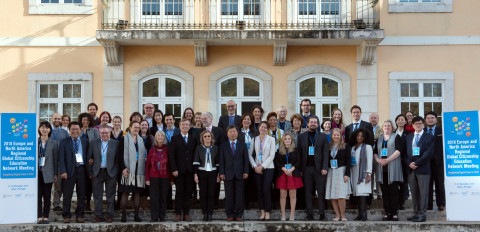 Strengthening Regional Action for GCED: Europe and North America Regional GCED Network Meeting 2018-12-28 Asia-Pacific Centre of Education for International Understanding (APCEIU) under the auspices of UNESCO, UNESCO Venice Office and the Global Education Network Europe (GENE) co-organized the 2018 Europe and North America Regional GCED Network Meeting in cooperation with UNESCO Headquarters on 21-22 November in Lisbon, Portugal. The meeting brought together about 50 participants from GCED-implementation institutions from the government, academia, civil society and international organizations in the region. In their welcoming remarks, the co-organizers, including Director of APCEIU Mr Utak Chung, identified the aim of the conference in deepening the understanding of GCED in the region and providing a platform to discuss avenues of future collaboration and effective ways of strengthening networking for GCED within and beyond the region, recognizing that the meeting is the first of its level on GCED to bring together representatives of different sectors in the region. The first session touched upon the overview of GCED in both the global and regional contexts. Ms Lydia Ruprecht, Team Leader of Section on Education for Global Citizenship, UNESCO Headquarters, took the lead to present on the significance of GCED in the global education agenda and UNESCO’s efforts to realize GCED and SDG 4.7. Mr Utak Chung then took the stage to explain GCED in the global agenda and the global activities of APCEIU. After which, representatives of UNESCO field offices and APCEIU briefed the participants on respective regional GCED networks of Asia and the Pacific, Latin America and the Caribbean, Africa and Arab States, where speakers touched upon challenges, on-going actions to future actions. Then, representatives of the networks and institutions related to GCED in Europe and North America shared their activities and experiences. The next session was dedicated to review of the current status of GCED implementation in Europe and North America, serving as an opportunity to know who is doing what in the region, sharing their activities on GCED and recommendations for a possible regional GCED network in Europe and North America. The session also showcased a wide variety of initiatives being implemented in the region for GCED by different actors. Following the session, participants were divided in several groups by sector and had group discussions on the challenges and remaining gaps in GCED implementation in the region. Through the discussions, participants identified the need to develop new pathways for partnership within and beyond the region. On the second day, participants discussed the ways of strengthening GCED implementation both globally and regionally through the Europe and North America Regional GCED Network, sharing the needs and possible contributions to the network. The two day meeting was concluded with the establishment of a network steering committee with participation from 15 organizations to bring the recommendations of the meeting to action. On 23 November 2018, Mr Utak Chung presented on the network meeting outcomes as well as APCEIU initiatives on GCED at the 2018 GENE International Conference. URL:Strengthening Regional Action for GCED: Europe and North America Regional GCED Network Meeting > APCEIU News - APCEIU (unescoapceiu.org)
 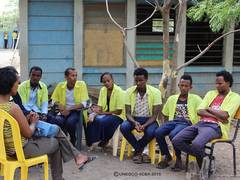 Workshop on education’s key role in the prevention of violence in Sub-Saharan Africa 2018-12-28 The emergence and spread of violent extremist groups have created climates of fear and insecurity and are adversely affecting peace efforts and human rights in Africa. Education was recognized as one of the most effective measures to create peaceful and conducive environments and to resist violent extremist ideologies. This follows the adoption of UNESCO’s Executive Board Decision on “UNESCO’s role in preventing violent extremism through education” and the “Plan of action to prevent violent extremism” announced by the UN Secretary-General in 2016. This week, UNESCO – IICBA (International Institute for Capacity Building in Africa), together with UNESCO HQ and the UNESCO Asia-Pacific Center for International Understanding(APCEIU) are organizing a capacity-building workshop on the prevention of violent extremism through education (PVE-E). Hosted by the African Union in Addis Ababa, the gathering will bring together 30 policy-makers, teacher trainers and teachers from eight African countries (Ethiopia, Kenya, Nigeria, Somalia, South Sudan, Uganda, Tanzania and Djibouti) in order to support national efforts to integrate Global Citizenship Education (GCED) in African education systems. During a three-day workshop, the participants will acquire a basic understanding of key concepts and educational measures that contribute to the prevention of violent extremism in Sub-Saharan Africa. They will also identify priority areas of intervention and pedagogical approaches that can help build learners’ resilience to violent extremism and nurture a culture of peace. This will include special training sessions on how to create safe spaces for discussing contentious issues and the basics of socio-emotional learning, as well as the importance of media and information literacy. In addition, participants will have an opportunity to discuss and explore the local challenges of teacher support in preventing the spread of violent extremism at schools and ways to best overcome them. This is the first capacity-building workshop on the prevention of violent extremism through education organized in Sub-Saharan Africa that will help contextualize the two UNESO Guides on PVE-E for teachers and policy-makers and identify which specific drivers of violent extremism to address in Sub-Saharan African context.
  UNESCO publishes new guidance tool for policy-makers on the prevention of violent extremism through education 2018-12-28 UNESCO just released its new guidance tool Preventing violent extremism through education: A guide for policy-makers. The new publication will help policy-makers within ministries of education prioritize, plan and implement effective actions for the prevention of violent extremism through education, and contribute to national prevention efforts. Member States acknowledged the importance of preventing violent extremism through education and requested UNESCO’s assistance in this endeavour. It also marks UNESCO’s effort to contribute to the implementation of the UN Secretary-General’s Plan of Action to Prevent Violent Extremism. ‘’Inclusive, equitable and quality education is one of the most powerful tools against the spread of violent extremist ideologies,” said Irina Bokova, UNESCO Director-General. “We need a specific type of education to create the conditions that can build learners resilience to hateful narratives and strengthen their commitment to non-violence and peace. This new UNESCO document offers guidance to help Member States deliver education programmes that build young people’s resilience to violent extremist messaging and foster a positive sense of identity and belonging.” Together with the Teacher’s Guide on the Prevention of Violent Extremism, this Guide for policy-makers outlines measures that can be taken within education systems to address challenges posed by violent extremism. For example, the development of inclusive education policies and non-discriminatory educational contents; the promotion of safe learning environments; the development of confident and well-trained teachers and, finally, the establishment of empowering partnerships. The document also presents modalities of implementation and includes frequently asked questions. The Guide will be shortly issued in French and then in other UN languages. Both guidance tools, A Teachers Guide on the Prevention of Violent Extremism and Preventing violent extremism through education: A guide for policy –makers, serve as a basis for UNESCO capacity building workshops on the prevention of violent extremism through education. URL:http://www.unesco.org/new/en/media-services/single-view/news/unesco_publishes_new_guidance_tool_for_policy_makers_on_the
 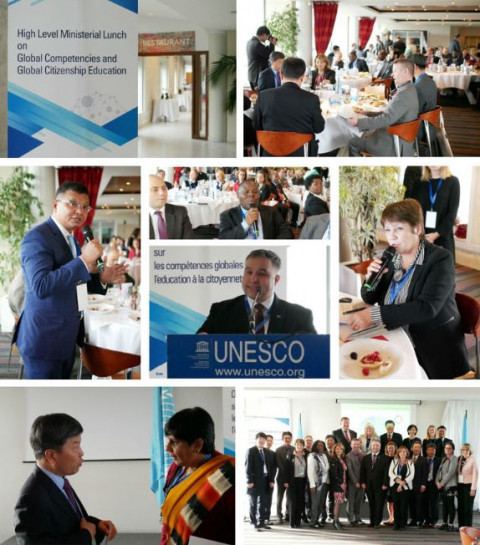 Leadership on GCED shown at High-Level Side Event during the 39th Session of the UNESCO General Conference 2018-12-28 On the occasion of the 39th Session of the UNESCO General Conference, a High-Level Ministerial Side Event took place with the title of ‘Dialogue on Global Competencies and Global Citizenship Education’ on 2 November at the UNESCO Headquarters. This side event was hosted by the Ministry of Education of the Republic of Korea and the Council of Ministers of Education of Canada, with the partenership of APCEIU and Global Affairs Canada. The dialogue attracted about 110 high-level participants, including 36 education ministers of Member States, as well as ambassadors from permanent delegations and senior officials from around the world. They gathered to discuss transformative and innovative education strategies to promote global competencies and global citizenship education. Ambassador Elaine Ayotte, Permanent Delegate of Canada to UNESCO welcomed the ministers and high-level officials to the dialogue by emphasizing the commitment of Canada and Korea to education and the realization of Education 2030 by saying “Canada and Korea, although different, have many common positions in the field of education. I believe that the reason why our two countries are here today is because Education 2030 agenda is a cornerstone for both our countries, which reaffirms the importance of providing opportunities to achieve education for the better.” Also, Ambassador Lee Byeong Hyun, Permanent Delegate of the Republic of Korea to UNESCO highlighted the role and need of GCED in a rapidly changing world and urged the efforts of stakeholders by saying “We need to mobilize resources and make the best use of those resources to transform learning environments. This requires collective endeavors of all stakeholders involved in the process, including teachers, communities and policy makers to promote global citizenship education beyond classrooms.” Followed by opening remarks, Mr Qian Tang, Assistant Director-General for Education of UNESCO highlighted the important role of the Republic of Korea and Canada in promoting GCED and contributing to the realization of SDG 4.7. As well, he thanked APCEIU for its invaluable contribution to GCED. Showcasing the two countries’ work on global competencies and global citizenship education, education ministers from Canada opened the floor to share best practices. Honorable Dale Kirby, Minister of Education and Early Childhood Development of Newfoundland and Labrador, and the Honorable Sebastien Proulx, Minister of Education, Recreation, and Sports of Quebec introduced 6 components of Canada’s Global Competencies (►Critical thinking and problem solving, ►Innovation, creativity and entrepreneurship ►Learning to learn/self-awareness and self-direction ►Collaboration ►Communication ►Global citizenship and sustainability) and shared education reforms in Canada that aim to put global competencies and foster global citizenship at the forefront of education. On behalf of the Honorable Deputy Prime Minister and Minister of Education of the Republic of Korea, Kim Sang-Kon, Mr Yeonghan Choi, Director General of International Cooperation Bureau of the Ministry of Education of the Republic of Korea, talked about lessons learned and challenges in implementing Sustainable Development Goal 4 and Global Citizenship Education. He shared that despite rapid economic development of the country, there are still limitations in the implementation of GCED in the Republic of Korea, but strongly pointed out that this is the future of education for the country. “At this point where the country has flourished, the only way towards further development is to enhance the capacities of the future generations to be sensitive with global challenges and to creatively find solutions.”, mentioned Mr Choi. He also shared the partnership effort with APCEIU in promoting GCED in transforming education in the Republic of Korea towards fostering global citizenship. He introduced initiatives such as the GCED Lead Teachers and International Teacher Exchange Programme, and other programmes that promote international cooperation for education in the Asia-Pacific and beyond. After the presentations from Canada and Korea, the participants were invited to a dialogue moderated by John McLaughlin, Deputy Minister, Department of Education and Early Childhood Development of New Brunswick. The discussion questions focused on challenges and successful initiatives or strategies in developing GCED in schools. Honorable Joof Batlara, Minister of Higher Education of Gambia asserted the political and religious challenges Gambia faces should be tackled with education, especially through GCED to sustain peace. Honorable Benghabrit Remaoun Nouria, Minister of National Education of Algeria shared the serious social issues in Algeria such as social and political turmoil and extreme violence, and highlighted that GCED represents the need to transform education in Algeria. Also, she applauded the work of UNESCO to provide tools and materials on GCED, such as the 『GCED Topics and Learning Objectives』, supported by APCEIU in 2014. The high-level participants had an opportunity to share their experiences and expertise on policy frameworks and implementation of GCED through this dialogue. Honorable Mr Hang Chuon Naron, Minister of Education, Youth and Sport of Cambodia shared a current initiative in Cambodia, called “New Generation Schools” which provided resources, equipped teachers and updated methodology that allow students to work in a team and promote collaborative learning. He further mentioned that Cambodia is cooperating with APCEIU to integrate GCED in their national curriculum, which will help students to face and tackle global challenges. Also, Honorable Mr John Chrysestom Muyingo, Minister of State for Higher Education of Uganda mentioned Uganda took the initiative of integrating GCED in the national curriculum in Uganda, a collaborative initiative with APCEIU. Even though the curriculum was not yet wholly changed, it gave an opportunity for schools to complement with new materials for learners and teachers, and to educate trainers. The High-Level Ministerial Side Event contributed to the continued discussion on global competencies and global citizenship education, an integral part of the discussions and debate during the 39th Session of the UNESCO General Conference. Being part of the strategic objectives of UNESCO in the next biennium (2018-2019), the high-level side event was an important opportunity to enhance partnership amongst different stakeholders, particularly with ministries of education, towards realizing SDG 4.7. URL:Leadership on GCED shown at High-Level Side Event during the 39th Session of the UNESCO General Conference > APCEIU News - APCEIU (unescoapceiu.org)
 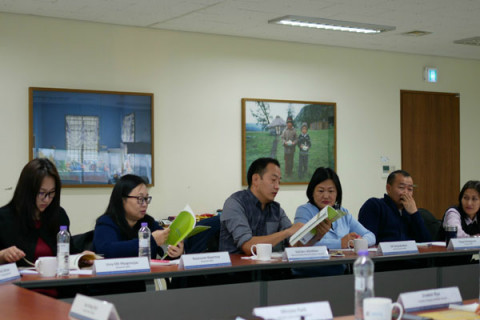 Enhancement Workshop on GCED Curriculum Development and Integration for Mongolian Project Coordinators: A Synergy between Mongolia’s Passion and Korea’s Expertise 2018-12-28 An enhancement workshop for the Mongolian GCED curriculum developers was held by APCEIU on 15 to 18 November. Seven participants, including researchers at the Mongolian Institute for Educational Research (MIER), a professor at the Mongolian National University of Education, and a teacher at a GCED model school, attended the workshop as representatives of the GCED curriculum development project team in Mongolia. For the workshop, Seoul Ancheon Elementary School and the Korea Institute for Curriculum and Evaluation (KICE) provided special cooperation. Mongolia has been developing and disseminating GCED curriculum in collaboration with APCEIU since last year, and its major outcome, a teacher’s guide on GCED will be published next year. In support of the project, the purpose of the workshop was to provide an opportunity for the Mongolian project team to collect resources and feedback from GCED experts and schools in Korea for the development of the Mongolian teacher’s guide on GCED. In his welcoming remarks, Utak Chung, Director of APCEIU, expressed thanks to the Mongolian government’s wholehearted support and the project team’s devotion in the GCED curriculum development. He wished for the workshop to provide upmost valuable supplementation to the development of the Mongolian teacher’s guide on GCED, and to serve as an opportunity to deepen the solidarity between the two countries under GCED. Throughout the 4-day workshop, the participants deepened their understanding on GCED through hearing the experience on the development of the GCED curriculum guide in Korea, receiving lectures on transformative pedagogies for GCED, visiting a GCED research school, and engaging in consultation with Korean GCED Lead teachers and curriculum developers from KICE. With the invitation by the Seoul Ancheon Elementary School to the report meeting on the GCED research school activities, workshop participants gained on-site experience by closely observing GCED classes in play and exchanging dialogue with teachers and students at the school. Sid Sanjaabadam, Research Director of MIER, proclaimed as the spokesperson to use the acquired experiences and resources to enhance the Mongolian teacher’s guide on GCED. Also, she hoped for the outcomes of the Mongolian team’s endeavor to reciprocate as valuable resources to Korea, creating a cycle of mutual support and cooperation between the two countries. URL:Enhancement Workshop on GCED Curriculum Development and Integration for Mongolian Project Coordinators: A Synergy between Mongolia’s Passion and Korea’s Expertise > APCEIU News - APCEIU (unescoapceiu.org)
  UNESCO will award its Literacy Prizes on 7 September 2018-12-27 UNESCO will award its Literacy Prizes on 7 September on the eve of International Literacy Day, celebrated every year on 8 September. The theme chosen for 2018 focuses on literacy and skills development. The award ceremony of UNESCO’s International Literacy Prizes, at UNESCO Headquarters (5 to 6 pm, 7 September), will conclude the Organization’s global celebration of International Literacy Day. Earlier in the day, an International Conference on Literacy and Skills Development will bring together stakeholders and decision-makers from all over the world to examine how integrated approaches to literacy and skills development can help close the literacy gap and improve learners’ ability to meet the needs of today’s increasingly globalized and digitized employment market. Globally, at least 750 million people still lack basic literacy skills. Two-thirds of the people concerned are women and 102 million of them are youth aged 15 to 24. At the same time, many of the 192 million unemployed worldwide are unable to find a decent livelihood due to the lack of foundational skills, including literacy, and failing to meet the skill demands of the rapidly changing labour market. These challenges are at the heart of this year’s International Literacy Day, which will seek to identify effective, combined approaches to literacy learning and skills development so as prepare and support life-long learning, improve lives and livelihoods. “It is through literacy that every one of us can become the master of their destiny,” declared Director-General Audrey Azoulay. Acquiring this fundamental skill marks a first step toward freedom, liberation from social and economic constraints. Literacy is the cornerstone of individual and collective development. It helps break the vicious circles of social and gender exclusion.” “While considerable progress has been achieved in recent decades,” she adds. “We have yet to create a world in which every individual disposes of the basic skills they need. UNESCO is committed to working on the redefinition of literacy policies to foster innovative educational practices. On this Day, I invite all the actors in education and beyond to commit themselves to bringing us closer to the achievement of full literacy.” The International Literacy Prizes ceremony will celebrate the laureates and their programmes, examples of best practices in advancing literacy and skills development: The three awards of the UNESCO Confucius Prize for Literacy, supported by the Government of the People’s Republic of China, rewarding work that benefits rural populations and out-of-school youth, particularly girls and women, will be given to: Consolidated teaching of literacy and ICDL (International Computer Driving License) basic computer skills (Iran), a programme by the Literacy Movement Organization, which promotes literacy and computer skills for children and adults, focusing on women and girls in rural areas, minorities, factory workers, and people in detention. National Open University of Nigeria - Nigerian Prisons Study centres and inmates General Education Programme (Nigeria), a programme of the Nigerian Prisons Service that seeks to change attitudes, values and behaviours through literacy, and technical and vocational trainings for inmates to facilitate their social reintegration. Spanish as a second language for adult immigrants (Spain), a programme by The Foundation Elche Acoge that promotes social and workplace integration for immigrants, through Spanish classes and other activities that improve language and skills learning. The two UNESCO King Sejong Literacy Prize awards for mother-tongue literacy education and training, sponsored by the Republic of Korea, will be given to: Accelerated Education for Marginalized Women and Girls (Afghanistan), a programme created by Aid Afghanistan for Education immediately after the Afghan war to provide learning opportunities for women and girls outside of the formal school system. It gives people a second chance to complete their high school education and vocational training enabling them to find work or establish their own businesses. Programa Aprender Siempre (Uruguay), a programme by the Ministry of Education and Culture of Uruguay that offers flexible citizenship education to prisoners in a framework of lifelong learning, along with literacy and technical and vocational education and training. URL: https://mp.weixin.qq.com/s/q6ADoFWLn3Sv5Mh6cpDbfw
 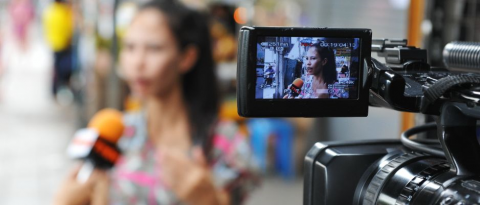 UNESCO Co-Chair on “Media and Gender” Unveiled at China Women’s University 2018-12-27 Gender equality is essential to achieving the United Nation’s Sustainable Development Goals (SDGs). This is especially pertinent today, as China is faced with the challenge of achieving balanced growth and equitable development that benefit all people from all regions of the country and all segments of society, especially girls and women. Despite women often being dominant when it comes to making number one hit songs, gender equality in media still has a long way to go. According to the Global Report on the Status of Women in the News Media (2011), in relation to media organizations, “men hold the vast majority of the seats on governing boards and in top management across seven regions, at 74.1% and 72.7%”. In the Who Makes the News, Global Media Monitoring Project (2015), it is written that and “76% of the people heard or read about in the world’s news are male. The world seen in news media remains largely a male one.” The UNESCO Chair on Media and Gender was thus established, on the one hand, to provide evidence and evidence-based suggestions to promote the gender equality in and through media and communications; on the other hand, to empower girls and women through capacity building among media professionals, especially in disadvantaged regions. The Chair was originally hosted at the Communication University of China (CUC) in 2005. Yesterday, China Women’s University (CWU) officially join in the UNESCO Chair Programme as a Co-Chair on Media and Gender, which marks the beginning of the cooperation between CWU and CUC on improving women’s equality in and through media and communications. “We have every confidence that the combined expertise and efforts from both Universities will largely enhance the institutional capacity of the Chair in advancing gender equality and women’s empowerment in and through media and communications in China,” Ms. Marielza Oliveira, Director of UNESCO Beijing Cluster Office, said at the unveiling ceremony. In her speech, she also mentioned the need to pay special attention to the media professionals in disadvantaged regions in China. Ms. Li Ruiying, Broadcasting Tutor of CCTV, highly agreed with this point. Mr. Chen Wenshen, Communist Party Secretary of CUC, also highlighted, “the establishment of the Co-chair can further expand the social and international influence of the two universities in the fields of higher education, communication and information and women's development.” Since its establishment, the Chair’s team have carried out extensive research, teaching, training, academic exchange and cooperation in the field. In recent years, the Chair has transformed a number of UNESCO global initiatives on gender and media into actions in China, such as the annual celebration of Women Make the News. “Platform for academic research and social collaboration on Media and Gender … will contribute to spread the stories, rich experiences and specific positions of Chinese women to the world,” said Prof. Liu Liqun, Chair-holder of UNESCO Chair on Media and Gender and President of CWU. “We will further enhance the communication and cooperation with UN agencies and women's organizations from other countries, and strive to promote gender equality, women's all-round development, and world peace,” stressed Mu Hong, Chief of Liaison Department of the All-China Women’s Federation (ACWF). The Chair has been playing a significant role in the field of media and gender studies in China. The Chair has carried out over 30 important research projects, and published more than 30 publications and over 100 academic papers. In addition, nearly 100 people completed their study in Communication Studies with a focus on Media and Gender Studies in the past years. Launched in 1992, the UNITWIN/UNESCO Chairs Programme, which involves over 700 institutions in 116 countries, promotes international inter-university cooperation and networking to enhance institutional capacities through knowledge sharing and collaborative work. Through this network, higher education and research institutions all over the globe pool their resources, both human and material, to address pressing challenges and contribute to the development of their societies. Appendix: UNESCO Chair in China (updated in September 2018) UNESCO Chair in Plant Biotechnology (1992), Peking University, Beijing (62) UNESCO Chair in Cultural Management (1998), Southeast University (S.E.U.), Nanjing (411) UNESCO Chair in Continuing Engineering Education (1999), Tsinghua University, Beijing (429) UNESCO Chair in Higher Education (1999), Peking University, Beijing (461) UNESCO Chair in Copyright and Neighbouring Rights (2001), The Renmin University of China, Beijing (552) UNESCO/ EOLSS Chair in Science and Technology Policies (2001), Zhongshan (Sun Yat- Sen) University, Guangzhou (633) UNESCO Chair in Teacher Education (2004), The East China Normal University, Shanghai (664) UNESCO Chair on Cooperation Between Higher Engineering Education and Industries (2005), Beijing Jiao-Tong University, Beijing (672) UNESCO Chair on Media and Gender (2005), Communication University of China / China Women’s University, Beijing (690) UNESCO/COUSTEAU Ecotechnie Chair (2005), Yunnan University (709) UNESCO Chair in Entrepreneurial Education (2010),the Zhejiang University, Hangzhou (892) UNESCO Chair in Technical and Vocational Education and Training (TVET) and Lifelong Learning (2011), The Hong Kong Institute of Education (915) UNESCO Chair in South-South Cooperation on Science and Technology to Address Climate Change (2012), Beijing Institute of Technology, China Science and Technology Exchange Center (963) UNESCO Chair in Comparative Education (2012), University of Hong Kong (976) UNESCO/IOC Chair on Ocean and Urban Development (2014), East China Normal University (1042) UNESCO Chair on Ceramic Culture: Preservation and Creativity (2017), Jingdezhen University (1219) UNESCO Chair on Industrial Heritage (2017), Huazhong University of Science and Technology (1241) UNESCO Chair on Peace Studies (2017), Nanjing University (1242) URL: https://mp.weixin.qq.com/s/rWpS28IzlSbISR9SPPNH7A
 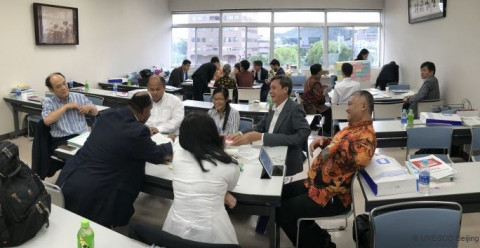 加强社区参与,促进可持续发展教育 2018-12-27 On 10-14 September 2018, the Regional Workshop on Enhancing Community Engagement for Education for Sustainable Development (ESD) towards achieving Sustainable Development Goals (SDGs) was held in Okayama, Japan. More than 40 participants from 16 Asian countries shared their experience in promoting ESD and SDGs, reviewed the Community Learning Centres (CLCs) guide and teacher education resources, and shared on the follow up country action plans. The 5-day workshop was organized by UNESCO Beijing Cluster Office, New Delhi Office and UNESCO Regional Bureau for Education, in partnership with Okayama University, Okayama City, Okayama ESD Promotion Conference and Asia-Pacific Culture Center for UNESCO (ACCU), with support from Japanese National Commission for UNESCO and ESD Resource Center of Japan. Senior officials from the Ministries of Education and national institutions from 16 countries have gained firsthand exposure to Okayama City’s experiences built on strong political commitment, solid partnerships, and effectively localized and engaged education institutions and local communities that promoted SDGs under existing mechanism and platforms in Education for Sustainable Development. Okayama City has had successfully developed a unique model to promote CLCs and localized and institutionalized SDGs through ESD platform. In 2016, the Okayama City’s ESD project was awarded the UNESCO-Japan Prize on ESD, in recognition of successfully institutionalizing ESD at local level. The project was recognized for its ‘whole city’ approach to ESD involving schools, the government, corporations, NGOs and other civil society associations. In Okayama City, ESD begins in elementary schools and extended to all levels of education, where pupils have many chances to visit local farms, meet with elders who have specialized knowledge of the local area, take part in rice planting, work with non-profit organizations and more. Okayama University, as a leader of the Okayama ESD Project, takes a UNESCO Chair in the promotion of ESD. It makes great effort in the experience dialogue and knowledge sharing at national and international levels. This regional workshop organized jointly by UNESCO and Okayama University, is a showcase of the commitment of UNESCO and its Member States to the enhancement of quality education for sustainable development within the framework of the UNESCO Global Action Programme (GAP) on ESD and SDG4-Education 2030 Agenda. UNESCO promotes the access to ESD at all levels and in all social contexts, as a key contribution to the realization of SDGs at national levels. Target 4.7 of SDG 4 on education specially addresses ESD and related approaches. The participants in the workshop will bring back what they have observed and learnt in Okayama to their respective countries and communities, to support their people developing knowledge, skills, values and behaviors needed for sustainable development. Read more:UNESCO ESD Thematic pageGlobal Action Plan on Education for Sustainable DevelopmentOkayama ESD Promotion Commission URL:https://en.unesco.org/news/enhancing-community-engagement-education-sustainable-development
  Spotlight on GCED: APCEIU and IBE show why it is more important now than ever 2018-12-27 The Asia-Pacific Centre of Education for International Understanding (UNESCO-APCEIU) and IBE-UNESCO held a Global Citizenship Education (GCED) workshop with eight education experts from Mongolia, Uganda, Colombia, and Cambodia on 8-10 November. Jointly led by Mr. Kim, head of Office of Research and Development, UNESCO-APCEIU and Mr. Opertti, coordinator of the Innovation and Leadership in Curriculum Learning and Assessment program, IBE-UNESCO, it took place at IBE-UNESCO’s headquarters in Geneva. Two international experts from Chile and the United States (US) also provided global input and expertise. Watch our global experts.Global citizenship is a hot topic. Indeed, recent research shows many countries see themselves as global citizens more than citizens of their own countries*. “Given the constant challenges all citizens face in today’s world, it is more important now than ever that we address key issues including human rights, peace, gender equality and sustainable development through education. We are delighted that APCEIU is leading the way and has partnered with us to ensure that global citizenship becomes embedded in curricula globally,” says Mr. Opertti, who leads the GCED work at IBE-UNESCO. The four countries in attendance, covering three continents, have laid the foundations for global citizenship education in their respective regions. At the workshop, the in-country experts presented the results of the analysis of the implemented curriculum, the challenges, issues, and opportunities to strengthen global citizenship education. The objective is to develop roadmaps to guide implementation in the four countries, as well as global guidance. The two international experts Sergio Riquelme Munoz, a specialist in comparative education from Pontificia Universidad Católica de Chile and Felisa Tibbits, founder of Human Rights Education Associates (HREA), and lecturer in comparative education at Columbia University, US, provided broader global insights.This GCED work underlines IBE-UNESCO’s mandate to strengthen the capacities of member states to design, develop, and implement curricula that ensure the equity, quality, development-relevance, and resource-efficiency of education and learning systems. GlobeScan conducted a poll between December 2015 and April 2016 for the BBC World Service among more than 20,000 people worldwide. 18 countries where this question was asked in 2016, the poll suggests more than half (51%) see themselves more as global citizens than citizens of their country, against 43 percent who identify nationally. Related links:http://www.unescoapceiu.org/en/index.phphttp://www.globaleducationmagazine.com/global-citizenship-education/http://blogs.edweek.org/edweek/global_learning/2016/10/building_empathy_in_children_lessons_from_early_childhood_education.htmlhttps://www.washingtonpost.com/news/worldviews/wp/2016/10/05/theresa-may-criticized-the-term-citizen-of-the-world-but-half-the-world-identifies-that-way/
  Education to prevent violent extremism in West Africa and the Sahel 2018-12-27 UNESCO (Dakar, Headquarters and IICBA), the UNESCO Asia-Pacific Centre for International Understanding (APCEIU) and the Organisation Internationale de la Francophonie (OIF), represented by its Institut de la Francophonie pour l’éducation et la formation (IFEF), organized a capacity-building workshop on prevention of violent extremism through education (PVE-E) in West Africa and the Sahel. This event took place in Dakar, Senegal, from 9 to 11 May 2017. In today’s globalized and interconnected world, the growing threats and acts of violent extremism in West Africa and the Sahel create climates of fear and insecurity, which are adversely affecting peace and development efforts. Providing young people with knowledge, skills and values for them to nurture respect for all, building a sense of belonging to a common humanity and helping them to become responsible and active citizens is critical for a more just and sustainable world. UNESCO, APCEIU and IFEF jointly organized in Dakar, from 9 to 11 May 2017, a workshop aiming at strengthening capacities of education policy makers (Parliamentarians, Permanent Secretaries and Chiefs of Cabinet of Ministries of Education, senior officials in charge of teacher education or curricula) and senior teacher trainers to design and implement relevant and effective policies and practices that contribute to prevention of violent extremism (PVE) and eventually to sustainable peace in West Africa and the Sahel. About forty participants from Burkina Faso, Côte d’Ivoire, the Gambia, Guinea-Bissau, Liberia, Mali, Mauritania, Niger, Senegal and Sierra Leone attended this workshop as well as education, PVE-E experts. First, presentations on international and regional normative instruments as well as on security and peace situation in the West African region and the Sahel provided an overview of the context. Then, in addition to the Clearinghouse on Global Citizenship Education (GCED) hosted by APCEIU, two tools on PVE-E developed by UNESCO were introduced: (1) a Guide on PVE for education policy makers, to support national efforts to integrate GCED into their education systems, and (2) a Teachers’ Guide on managing classroom discussions in relation to the PVE. OIF also presented the #LibresEnsemble (FreeTogether) Initiative launched to give a voice to young people to express their views on citizenship, freedom, diversity, living together, etc. through social media and education, as well as cultural, economic and artistic activities. Building on these tools and examples of PEV-E approaches and practices in formal, non-formal and informal education settings, country delegations drafted a roadmap for integration of PVE into education policies and practices, considering the context, the needs and capacities of respective countries. At the end of the workshop, participants expressed their commitment to reinforce advocacy amongst high-level authorities in their country, to suggest law and legal frameworks on PVE-E, to integrate PVE into education sector plans, curricula, education personnel training (formal, non-formal and informal) and to further involve communities. The organizers will ensure follow up on recommendations by developing a platform for exchange and experience sharing, establishing an exchange network, supporting countries in ownership and adaptation of the tools developed by UNESCO and OIF (pedagogical guide and #LibresEnsemble). "The most remarkable result is that everyone has had a prospective look. We hope that this way, national visions and strategies will gain ground and will really transform this reality. " said Mamadou Ndoye, former Minister of Education of Senegal and moderator of the workshop.