
News
Catch up on what’s happening in the world of global citizenship education.
1,668 results found
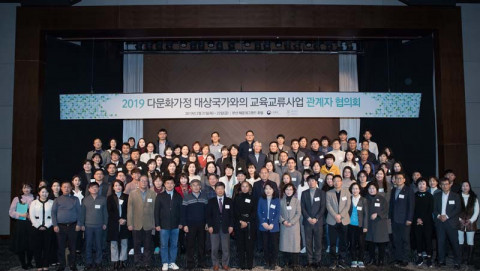 Consultation Meeting with Relevant Organizations for the 2019 Asia-Pacific Teacher Exchange for Global Education 2019-03-11 Organized by APCEIU, the Consultation Meeting with Concerned Organizations for the 2019 Asia-Pacific Teacher Exchange for Global Education(APTE) was held on 21-22 February 2019 at Haeundae Grand Hotel in Busan, Republic of Korea. The Asia-Pacific Teacher Exchange for Global Education is a bi-lateral teacher exchange programme between the Republic of Korea and 7 Asia-Pacific countries(Cambodia, Indonesia, Malaysia, Mongolia, Philippines, Thailand, and Vietnam), hosted by the Ministry of Education(MOE) of the Republic of Korea and implemented by APCEIU. The 2019 APTE, in which a total of 180 teachers from the 8 countries and 47 host schools from 16 MPOEs of the Republic of Korea will participate this year, has been officially launched with the kick-off of the Consultation Meeting. The opening ceremony was filled with the congratulatory remark by Mr. KIM Seokjun, the Superintendent of Education of Busan Metropolitan Office of Education, the welcoming remark by Ms. SHIN Meekyung, the Director of the Educational Internationalization Division of the MOE Korea, the opening remark by Mr. CHUNG Utak, the Director of APCEIU, and the keynote speech by Ms. KIM Insun, the Head Director of Haemill School. Through her keynote speech, Ms. KIM Insun emphasized the importance of the roles of schools and teachers in growing students as global citizens with open minds and global competency, and pointed out the significance of the APTE as a platform of the co-development of students and teachers of the participating countries. The participants of the 2019 Consultation Meeting have successfully shared the outcomes of the 2018 APTE and the plan of the 2019 APTE. Especially, this year’s Consultation Meeting provided the participants with the opportunity to construct a better network for the implementation of the APTE, by accumulating ideas and suggestions on the betterment of the Programme. Meanwhile, Mr. Oh Joon, the former Ambassador of the Republic of Korea to the United Nations in 2013 to 2015, delivered a special lecture on Global Citizenship Education, which addressed the significance and challenges of the Global Citizenship Education in the globalization era. The lecture also emphasized the key implications of the APTE which particularly contributes to the goal 4.7(promoting GCED) and 4.c(enhancing the quality of teaches through international cooperation) of the SDGs. URL : Consultation Meeting with Relevant Organizations for the 2019 Asia-Pacific Teacher Exchange for Global Education > APCEIU News - APCEIU (unescoapceiu.org)
  Celebrating the 70th Anniversary of the Universal Declaration of Human Rights in Samoa - Statement of UNESCO and OHCHR 2019-03-04 “The idea of human rights, is that each one of us, no matter who we are or where we were born is entitled to same basic rights or freedom.” 2018 marks 70 years since the Universal Declaration of Human Rights was adopted by the United Nations General Assembly at its third session on 10 December 1948 as Resolution 217 at the Palais de Chaillot in Paris, France, as a common standard of achievement for all peoples and all nations. The Universal Declaration of Human Rights is a milestone document in the history of human rights. The Declaration sets out universal values and a common standard of achievement for all peoples and all nations. It establishes the equal dignity and worth of every person. Thanks to the Declaration, and States’ commitments to its principles, the dignity of millions has been uplifted and the foundation for a more just world has been laid. Seventy years after the adoption of the Universal Declaration of Human Rights, UNESCO as well as the Office of the High Commissioner of Human Rights in Suva, strives daily to improve knowledge and understanding of all human rights for the Pacific people: whether civil, cultural, economic, political or social. Four human rights fall within UNESCO’s direct competence, namely, right to education (Article 26), right to take part in cultural life (Article 27), right to freedom of opinion and expression (Article 19), and right to enjoy the benefits of scientific progress and its applications (Article 27). Education for and on human rights have become a priority for UNESCO which is now recognized as a leader in this field within the United Nations system. UNESCO also works to mainstream human rights in all its areas of action and the pursuit at further integrating a human rights-based approach into its programmes, thereby increasing its contribution to the advancement of human rights. Speaking on the issue, Ms Nisha, Director of the Office and UNESCO Representative to the Pacific States, said, “In today’s context when both wealth and inequalities are growing and the world is marked by a high population dependency rates, the application of human rights-based approach to the implementation of the 2030 Agenda becomes critical. The pursuit of the sustainable development goals or the SDGs must be through the lenses of human rights, which include socio-cultural, political and labour rights, to ensure growth with equity. The voluntary national reports, therefore, should draw on feedback from the human rights mechanisms and conventions-related committees of UNESCO and the ILO and actions taken on them to enhance coherence, efficiency and accountability in reporting on the principles of the 2030 Agenda.” “The UDHR, which is rooted in the principle that “all human beings are born free and equal in dignity and rights”, has provided hope and protection for untold numbers of vulnerable people and communities for seven decades,” said Ms Chitralekha Massey, the Representative of OHCHR Regional Office for the Pacific, adding, “We urge women, men and young people in Samoa and in the Pacific to Stand Up for Human Rights and continue playing their roles to prevent the principles of UDHR from being eroded and let it remain relevant to everyone, every day.” UNESCO Office for the Pacific States with the support of the Office of the United Nations High Commissioner for Human Rights (OHCHR), Samoa Observer and Apollo Cinema hosted an event to celebrate the 70 years of the Universal Declaration of Human Rights in Samoa. This event featured a series of speeches and discussions on UDHR with perspectives from diverse stakeholders. The discussions touched upon a wide range of topics from addressing emerging challenges to human rights in Samoa and the Pacific to the role of the United Nations in supporting countries to promote human rights. The celebration was also highlighted by the movie screening of WARU. This 2017 feature film was directed by eight Māori women who each contributed a 10-minute segment of events circling around the tangi of a small boy (Waru) who died at the hands of his caregiver. The interconnected stories show the shared humanity rooted in universal values. When people stand up for their rights and those of others, all of us are protected. Paula Jones, one of the eight directors, was present at the event to share her stories and thoughts behind this powerful movie that demonstrates the strength of community to resolve human rights challenges. She is the Director of Whitiora Productions Ltd and New Zealand Māori film-maker. Over the last 20 years, she has directed and produced a wide range of works from truancy and street kids, to a biopic on Transgender community worker Mama Tere; from women in gangs to using rats to clear land mines in Cambodia. The power of the Universal Declaration is the power of ideas to change the world. It inspires people to continue working to ensure all people can gain freedom, equality and dignity. At its 70th anniversary, let us take the chance to celebrate the gift of the Universal Declaration and to reaffirm the enduring human rights principles and standards it has helped establish. URL: http://www.unesco.org/new/en/apia/about-this-office/single-view/news/celebrating_the_70th_anniversary_of_the_universal_declaratio/
  The essential ‘soft skills’: Global citizenship education at the heart of learning to live together 2019-02-26 About 246 million children and adolescents experience school violence and bullying in some form every year, according to the UNESCO Institute for Statistics. We know most of these victims are bullied because of their physical appearance, national origin, gender or sexual orientation, but this isn’t the answer to why victims are bullied. Why do perpetrators exhibit such an intolerance for diversity, so much that they infringe on their victims’ rights to education and health? The main reason boils down to the fact that bullies lack certain ‘soft skills’ – including social and cultural competency, empathy, collaboration, communication and, quite possibly, problem solving. That in essence is the definition (or at least one definition) of global citizenship education (GCED), which UNESCO promotes to reduce intolerance and disrespect for diversity – the root causes of bullying, school violence, and other forms of prejudice and violence – by instilling a sense of belonging to a broader community and humanity as a whole. GCED’s goal is to teach individuals to have empathy, a capacity of understanding from different points of view, respect for differences and appreciation of diversity. Based on this knowledge and understanding, the vision is to encourage learners to take concrete action to pave the way towards a more just and sustainable world. Within the Asia-Pacific region, a wide range of stakeholders have committed to promoting GCED. From ministries of education to private-sector businesses, groups have come together to discuss what it means to be a global citizen and how to implement this concept into formal and informal learning spheres. As a result, themes of global citizenship have been incorporated into schools’ curricula and programmes have been implemented to enhance global citizenry. For example, curricula in India feature several key GCED elements: nurturing respect for all, appreciating diversity, developing a sense of belonging to common humanity and sustainable development, and developing a culture of respect and dialogue. Similarly, in Indonesia, GCED values such as teamwork, tolerance, concern for the environment, empathy, cultural sensitivity and political participation are taught through various subjects, including natural science, social science, Indonesian language, physical education and sociology. GCED is also being implemented in institutions of higher education. For example, in China, at the Southern University of Science and Technology (SUSTech) in Shenzhen, there is a focus on being a global university. Along with multiple exchange programmes, the university promotes global and regional issues through its Regional Cultural Festival and World Earth Day. In another example, the Philippines Normal University (PNU) integrates GCED and Education for Sustainable Development (ESD) into its curriculum for pre-service teachers. Overall, there are many actors implementing diverse GCED initiatives, yet there are still many areas that need to be clarified through research in order to effectively implement national and regional strategies. There is a need for evidence-based resources for GCED pedagogy; specifically, we still do not know what factors help develop critical soft skills such as empathy and communication skills. Additionally, a clear monitoring and evaluation framework for the region and for individual countries is missing, while strategies for financial and human support conducive to effective and sustainable implementation needs to be developed. Furthermore, because teachers are front-line implementers of GCED pedagogy in formal learning spheres, there is a need to increase their capacity and ability to incorporate such concepts into existing curricula. Work is underway as national and regional leaders meet periodically to discuss progress made and the way forward to implement GCED on a broad scale. On May 3-4, 2018, UNESCO Bangkok, UNESCO Jakarta and the Asia-Pacific Centre of Education for International Understanding (APCEIU) organized the 2018 Asia-Pacific Regional GCED Network Meeting in Jakarta, Indonesia. This meeting brought together key players to identify good practices, challenges and opportunities in the Asia-Pacific region. At the meeting, a GCED framework comprising inputs (including curriculum, teacher training courses, materials and methods, and learning assessments); processes (the ways GCED is actually implemented and the expected transformation between educators and learners); and outcomes (individual learning outcomes and the overall impact on society) were identified and discussed. The conclusion: there is a significant amount of information, research and resources related to developing and assessing GCED inputs, but a number of gaps still exist related to measuring processes and outcomes. In terms of GCED processes, teachers are already overloaded; how is it possible to incorporate GCED in classrooms without putting too much pressure on teachers to radically change their approaches? Additionally, it is challenging to identify which ‘teacher factors’ (ie, teachers’ value systems, mindsets and behaviours) promote effective implementation within the classroom. An observation study is currently underway to identify these factors, although it will be challenging to operationalize the findings of these studies to effectively promote GCED within all classrooms. Specific GCED outcomes are categorized under three learning dimensions: cognitive, socio-emotional and behavioral competencies. The cognitive dimension includes acquiring an understanding of local, national and global issues; the socio-emotional dimension is related to experiencing a sense of belonging to common humanity as well as developing empathy and respecting diversity; and the behavioral dimension is comprised of acting at local, national and global levels to bring about a more peaceful and sustainable world. In traditional learning assessments, the cognitive dimension and, to some extent, the socio-emotional dimension can be measured. For example, the PISA 2018 measures knowledge, cognitive skills, social skills and attitudes (the last two being assessed only in a student questionnaire). However, experiencing a sense of belonging to a common humanity is not specifically assessed, not to mention being difficult to measure through traditional learning assessments. Similarly, the desired behavioural outcomes of GCED, such as getting engaged and taking action are not assessed and difficult to accurately measure. Indeed, it is possible to ask learners about their level of engagement in a questionnaire; however, individuals can be tempted to exaggerate their values and behaviours because of social desirability bias, which would ultimately raise questions about the validity of the questionnaire. Further complicating the measurement of outcomes is the fact that promoting a culture of peace, non-violence and an appreciation of diversity must be examined within national contexts. In short, it is not possible to develop a universal assessment of GCED that is appropriate for every learner and context. The GCED Network Meeting in Jakarta concluded with the adoption of a foundation document that lays the steps in creating an Asia-Pacific Regional GCED Network. This Network will allow partners from the region to collaborate, consult and share information with each other surrounding five action areas for GCED implementation: policy, capacity building, teaching and learning materials, research and advocacy. Over the next five years, the Network will undertake activities to promote GCED, including supporting a review of national education policies and practices with a GCED lens and hosting more meetings involving ministries of education and parliamentarians to develop leadership at the national level. In terms of local capacity building, the Network will collaborate in organizing workshops for teachers and promote the use of existing capacity building training platforms and materials. Additionally, the Network will conduct research to understand how the rapport between teachers and learners influences GCED outcomes. Separately, research about the ‘teacher factors’ conducive to promoting GCED in the classroom will continue, with further work to be developed on how to operationalize the findings of the study. Finally, the Network will research how to promote GCED that reflects various cultural backgrounds. For more information on GCED and for related resources see the UNESCO Clearinghouse on Global Citizenship Education. URL:https://bangkok.unesco.org/content/essential-soft-skills-global-citizenship-education-heart-learning-live-together
  Discover the new Right to education handbook 2019-02-25 Education is a fundamental human right of every woman, man and child. However, millions are still deprived of educational opportunities every day, many as a result of social, cultural and economic factors.UNESCO and the Right to Education Initiative (link is external) (RTE) recently released the Right to education handbook, a key tool for those seeking to understand and advance that right. It is also an important reference for people working towards achieving Sustainable Development Goal 4 by offering guidance on how to leverage legal commitment to the right to education. Why is this handbook important? The aim of this handbook is to make sure that everyone enjoys their right to education. Its objective is not to present the right to education as an abstract, conceptual, or purely legal concept, but rather to be action-oriented. It provides practical guidance on how to implement and monitor the right to education along with recommendations to overcome persistent barriers. It seeks to do this by: Increasing awareness and knowledge of the right to education. This includes the normative angle of the right to education, states’ legal obligations, the various sources of law, what states must do to implement it, how to monitor it, and how to increase accountability. Providing a summary of current debates and issues regarding education and what human rights law says about them, including on forced migration, education in emergencies, the privatization of education, and the challenge of reaching the most marginalized. Providing an overview of the UN landscape and its mechanisms, including a clear understanding of the role of UNESCO and more generally the United Nations, as well as all relevant actors in education, particularly civil society. Who should use this handbook?The handbook was developed to assist all stakeholders who have a crucial role to play in the promotion and implementation of the right to education. This includes: State officials, to ensure that education policies and practices are better aligned with human rights. Civil servants, policy-makers, ministers, and the ministry of education staff, officials working in ministries and departments of justice, development, finance, and statistics, as well as National Human Rights Institutions. Parliamentarians, their researchers and members of staff will find this handbook useful in evaluating and formulating education, human rights, and development legislation, and in implementing international human rights commitments to national law. Judges, magistrates, clerks, and lawyers and other judicial officials can use the material to explain the legal obligations of the state and how to apply them. Civil society including NGOs, development organizations, academics, researchers, teachers and journalists will benefit from this handbook as it includes guidance on how to incorporate the right to education in programmatic, research, and advocacy work. Those who work for inter-governmental organizations, including at key UN agencies, will find this handbook useful in carrying out the mandate of their organizations. Private actors, multilateral and bilateral donors, and investors can use this handbook to ensure their involvement complies with human rights and that they understand and can apply their specific responsibilities.How to use this handbook? The handbook was designed to be accessible. Each chapter starts with the key questions addressed in the chapter and ends with a short summary consisting of key points and ‘ask yourself’ questions, designed to make the reader think deeper about issues raised in the chapter or to encourage people find out more about the situation in their own country.For more than 70 years, UNESCO has been defending and advancing the right to education, which lies at the heart of its mandate. It recently ran a digital campaign on the #RightToEducation to mark the 70th anniversary of the Universal Declaration of Human Rights. What UNESCO does for the right to education What you need to know about the right to education What can I do to help advance the right to education? WATCH: what UNESCO does to uphold the right to education URL: https://en.unesco.org/news/discover-new-right-education-handbook
 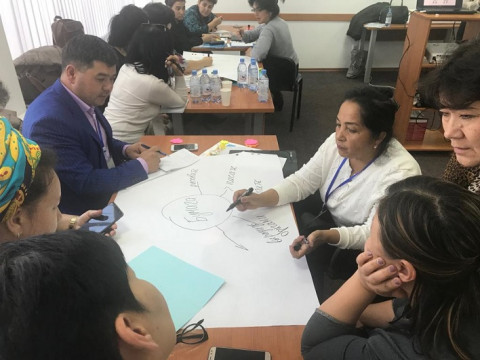 UNESCO Almaty organized sessions on Education for Sustainable Development for OSCE Regional School on Multilingual and Multicultural Education 2019-02-22 The OSCE High Commissioner for National Minorities, in cooperation with the National Center for Professional Development “Orleu” of Kazakhstan, organized a Regional School on "Multilingual and Multicultural Education for Integration and Sustainable Development. Key Aspects of Effective Implementation" from 3 to 7 December 2018 in Almaty. Within the framework of this Regional School, UNESCO Almaty organized practical sessions on Education for Sustainable Development (ESD).The objectives of the School included the promotion of balanced multilingual and multicultural education programs for sustainable development, the promotion of multilingual and multicultural education on competency-based approach for advancing SDG4, etc. More than 120 participants, including teachers, principals, teacher educators and trainers, representatives of the ministries of education and science of Central Asia, Mongolia, Georgia and international experts from Ukraine and Estonia as well as representatives of international organizations attended the School.The sessions on ESD by UNESCO were organized in the framework of The School’s Group 4 "Multicultural Education in the Context of Sustainable Development Goals (SDG4) and Global Citizenship Education ". For these sessions, UNESCO presented practical and interactive methods for mainstreaming Education for Sustainable Development, including Disney’s three chairs method, reverse brainstorming, etc. Based on the example of exercises for developing problem-solving and collaboration skills and various topics of ESD and GCED, practical approaches on mainstreaming key competencies for sustainable development were demonstrated. As part of the Group 4 work, other experts also presented the courses such as "Culture of good neighborhood" as the best practice from Ukraine in implementing ESD and GCED, "Stereotypes and their impact on perception", etc.As a result of the joint work, draft guidelines and methodological materials have been developed for assisting countries in implementing multilingual programs at different levels of education, taking into account ESD, the mechanisms for further cooperation between members of the regional network of schools, universities and teacher training centers have been adopted and agreed by participants of the School.Related information: Improving Multilingual and Multicultural Education in Central Asia URL:http://en.unesco.kz/unesco-almaty-organized-sessions-on-education-for-sustainable-development-for-osce
  APCEIU and UNESCO Almaty Office launched the GCED Clearinghouse web site in Russian language 2019-02-22 The GCED Clearinghouse, a global database on GCED, was jointly set up by UNESCO and APCEIU to facilitate information sharing and enhance knowledge and understanding of GCED.The GCED Clearinghouse is an information hub where people can find various GCED materials in an organized and clear manner. There is a wide range of information produced by international organizations, such as UN and UNESCO declarations and recommendations, policy papers and guidelines, conference proceedings and reports, scholarly articles, and teaching and learning materials. Although the Clearinghouse mainly serves as an online database for GCED resources, it also introduces up-todate news and events on GCED around the world and provides a list of organisations and programmes which might be of interest to users. The database is intended for use by policymakers, education ministry officials, curriculum developers, researchers, educators, parents, learners as well as general public. GCED Clearinghouse provides a wide range of GCED resources from policies, case studies, teaching and learning materials, and journal articles, from all over the world.The Clearinghouse database basically follows an online library style, but provides a list of categories far more detailed and focused than conventional libraries. Since the Clearinghouse is equipped with a highly subdivided and sophisticated search engine, users can easily refine their searches not only by typing in basic information such as title, author, year of publication, and keywords, but also by using advanced categories such as region/country, language, resource type, format, theme, and level of education. For instance, the user can learn about the main thematic areas of GCED by navigating the site with the category “theme”, which on its own can be subcategorised into sustainable development, international understanding, globalisation, inclusiveness, peace, and much more. In order to increase the accessibility and availability of the GCED Clearinghouse to wider audiences, UNESCO and APCEIU launched Russian website and increased the number of resources in Russian language, adding to the existing multilingual resources.UNESCO Almaty has been an active advocate of GCED with its commitment to the promotion of Culture of Peace and the extensive network within the Central Asian region. It is believed, therefore, that the collaboration between APCEIU and UNESCO Almaty Office will make an extensive contribution to achieving the mission of the GCED Clearinghouse, providing comprehensive data and information exchanges on GCED. URL: http://en.unesco.kz/apceiu-and-unesco-almaty-office-launched-the-gced-clearinghouse-web-site-in-russian
 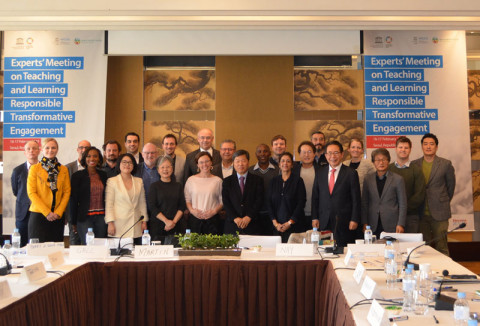 Experts’ Meeting on Teaching and Learning Responsible Transformative Engagement 2019-02-21 Expert’s Meeting on Teaching and Learning Responsible Transformative Engagement was convened by UNESCO HQ, APCEIU, and Ban Ki-Moon Centre for Global Citizens for two days, on 16 - 17 February 2019 in Seoul, Republic of Korea.Experts from various fields such as education policymakers, educators and youth leaders discussed responsible and effective engagement for transformative purposes including for and by whom, and across a range of contexts in relation to education in order to make a change. In addition, they delved into pedagogical tools and teaching supports to empower learners to move from learning to action.The final report encapsulating discussions during the Meeting will be published within this year. URL:Experts’ Meeting on Teaching and Learning Responsible Transformative Engagement > APCEIU News - APCEIU (unescoapceiu.org)
 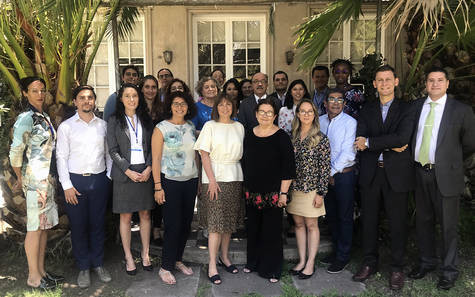 Meeting of the SDG-E2030 Regional Steering Committee for Latin America and the Caribbean 2019-02-20 The Regional Bureau for Education in Latin America and the Caribbean (OREALC/UNESCO Santiago) organizes this meeting as the follow up to the commitments agreed within the framework of the “Cochabamba Agreements: Regional Solidarity for Achieving SDG4-E2030 in Latin America and the Caribbean” adopted at the II Regional Meeting of Ministers of Education, held in Cochabamba, Plurinational State of Bolivia, on July 2018. As a result of the ”Cochabamba Agreements”, the ministers entrusted OREALC/UNESCO Santiago to facilitate the establishment and functioning of a coordination mechanism that will promote the implementation of the Roadmap and ensure representation, coordination and communication between the Ministries of Education of the Member States and other relevant regional actors. As agreed, this regional coordination mechanism is composed of a Regional Steering Committee, four Working Groups and an Executive Secretariat, a role assigned to OREALC/UNESCO Santiago. The Regional Steering Committee’s role is to ensure strong regional coherence, coordination (within the region and between regional and global levels) and collective work, so that countries and education partners in LAC move together towards achieving the E2030 targets. The aim of the meeting is to operationalize the SDG-E2030 regional coordination mechanism, define the main lines of action for regional cooperation that will jumpstart the formation of the working groups, and formulate an action plan for 2019-2021 in the context of the Roadmap approved in the last ministerial meeting. General objectiveTo constitute the SDG-E2030 regional coordination mechanism, form working groups and formulate an action plan for the period 2019-2021 in the context of the SDG-E2030 Roadmap approved during the II Regional Meeting of Ministers of Education of Latin America and the Caribbean held in Cochabamba, Plurinational State of Bolivia, in July 2018. Specific objectives To share results and documents from the II Regional Meeting of Ministers of Education of Latin America and the Caribbean (2018). To report and assess the progress made on the coordination of the Education 2030 agenda in Latin America and the Caribbean for 2017-2018. Operationalize the committee according to its terms of reference and agree on a calendar of meetings for 2019. Analyze trends and emerging issues related to the implementation of the SDG-E2030 Agenda in the region. Initiate and define the tasks of the working groups with the identification of priority themes and actions to be implemented within the framework of the E2030 regional roadmap. Design an action plan for the period 2019-2021 within the framework of the SDG-E2030 Roadmap for Latin America and the Caribbean. URL:http://www.unesco.org/new/en/santiago/education-2030/i-meeting-sdg-e2030-regional-steering-committee/
 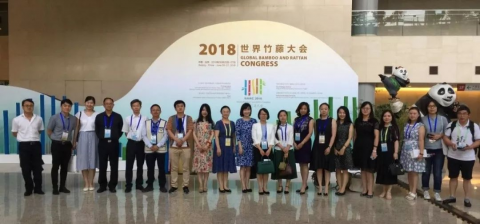 Linking Bamboo and World Heritage with Creativity : UNESCO & INBAR joint session at the Global Bamboo and Rattan Congress draw to a successful close 2019-02-12 On 26th June, the UNESCO & INBAR (International Network for Bamboo and Rattan) joint session at the Global Bamboo and Rattan Congress “Linking Bamboo and World Heritage with Creativity” draw to a successful close at the National Convention Centre in Beijing. 28 representatives from 22 organizations participated in the session, including the Ministry of Culture and Tourism, the pilot World Heritage sites of Shilin (South China Karst), Chishui (China Danxia), and Ya’an (Sichuan Giant Panda Sanctuaries), Chengbu Miao Autonomous County of Shaoyang Municipality of Hunan Province, Beijing Gugong Cultural Promotion Co., Ltd, Jingdezhen Ceramic Culture Tourism Group, Shanghai Academy of Fine Arts, Tsingyuan Culture Heritage and China Youth Development Foundation Mercedes-Benz Star Fund. The session consisted of 2 parts, in the first session of “setting the scene”, Ms. Li Yanxia, the Senior Officer of Global Programme of INBAR, Ms. Zhang Xiaoli, the Consultant of Management Section, Intangible Cultural Heritage Department of the Ministry of Culture and Tourism, and Ms. Lu Ye, Project Officer for Culture at UNESCO Beijing Office gave interpretations on the concepts of “Bamboo and Rattan”, “Intangible Cultural Heritage” and “World Heritage Sustainable Livelihood” respectively, which are the guiding concepts of the whole session. From the adaptation of bamboo and rattan industry to the social-economic development, Ms. Li Yanxia introduced the role of bamboo and rattan industry in promoting the United Nations 2030 Agenda for Sustainable Development Goals. Ms. Zhang Xiaoli introduced the efforts made and achievements obtained in intangible cultural heritage safeguarding in recent years in China, and the initiatives and practices in addressing the challenges within the context of industrialization and urbanization. Ms. Lu Ye mainly introduced the concept of the World Heritage Sustainable Livelihood activity under the UNESCO-China Youth Development Foundation Mercedes-Benz Star Fund Cooperation Project, and the contribution and potentials through combining the power of heritage sites, traditional practice and creative industries to promote heritage and sustainable socio-economic developments. In the round-table discussion session, the representatives presented the works of their respective fields, their challenges faced and cooperation needed, the relationships between intangible cultural heritage, cultural creativity, World Heritage and sustainable development were discussed, and directional recommendations were made towards multi-stakeholder cooperation in the future. Mr. Fang Kai, the Standing Committee Member of County CPC Committee, Deputy County Chief of Chengbu Miao Autonomous County of Shaoyang Municipality of Hunan Province presented the poverty alleviation concept of “ecological development” and the development status of the local bamboo industry, expressing the will to promoting the poverty alleviation of Chengbu through expanding cooperation. Subsequently, Mr. Liao Chaolin, the Deputy Director of Chishui Scenic and Historic Area Management Bureau and Ms. Yang Changqin, ICH transmitter, Mr. Ang Gui from Shilin Scenic and Hitoric Area Management Bureau and Ms. Chen Nan, the Trustee of Human and Environment Linkage Programme introduced respectively the implementing status of the UNESCO World Heritage Sustainable Livelihood activity, including the preliminary accomplishments and future plans. From the aspect of the role of universities in promoting intangible cultural heritage continuation and training transmitters, Prof. Jin Jiangbo from Shanghai Academy of Fine Arts introduced the activities implemented by his university, such as training ICH transmitters through ICH training classes and teaching cooperation on national and international levels, as well as innovative activities introducing ICH and creativity to primary schools and communities. Mr. Liu Zili, the President of Jindezhen Ceramic Culture Tourism Group then gave a talk on how Jindezhen, based on the transmission of porcelain craftsmanship, has established a hybrid cultural and creative industrial park to revive traditional porcelain craftsmanship among young generation. Ms. Chen Yuanyuan, the Vice CEO of Beijing Gugong Cultural Promotion Co., Ltd, talked about the concept of approaches of the Palace Museum exploiting creative products based on its collections, with examples of the products produced. At last, on behalf of the Star Fund, Ms. Zhang Xiaoju, the Senior Manager of Media Relations and Corporate Social Responsibility, introduced the aspiration of Mercedes-Benz in promoting World Heritage conservation, and its main focuses in social responsibilities, expressing the hope of promoting World Heritage Sustainable Livelihood, by enhancing the long term cooperation with the UNESCO and making use of the commercial resources and platform of Mercedes-Benz. This session enabled a dialogue between multiple parties, it is not only important to enhancing the horizontal connections between World Heritage sites, but also providing a platform to expand the cooperation between the cultural and creative industries and private enterprises. Just as Ms. Azoulay, the Director-General of UNESCO, pointed at the opening ceremony of the 42nd session of the World Heritage Committee, “…proud of the diversity and richness of World Heritage. Heritage conservation is an approach of cooperation, is a partnership”. As the follow-up of the session, the activity shall further study and enact an action plan to facilitate the establishment of multi-stakeholder partnerships, and provide more good practices to World Heritage conservation and sustainable development. URL: https://mp.weixin.qq.com/s/Gh5lVIitSL4QbyCn1jeTuw
 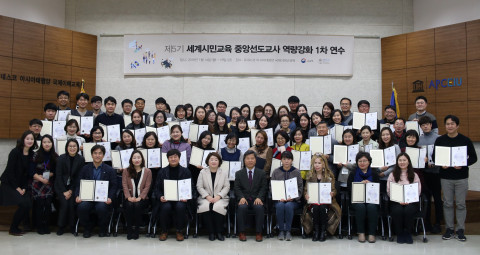 1st Capacity-Building Training Workshop for the 5th Batch of the National GCED Lead Teachers 2019-01-24 Co-organized by Ministry of Education and APCEIU, ‘Capacity-Building Workshop for the 5th Batch of the National GCED Lead Teachers’ was held from 14th to 18th of January, 2019, awarding a letter of appointment to 67 teachers who successfully completed the workshop. Those are representative teachers appointed by 17 MPOEs (Metropolitan and Provincial Offices of Education) to play pivotal roles in disseminating and implementing global citizenship education (GCED) in Korea. GCED Lead Teachers Programme in Korea has been jointly organized by the MOE and APCEIU since 2015 to effectively spread GCED in Korea, which was adopted as the global education and development agenda by the global community in the same year. As of 2018, over 2,500 Lead Teachers including 230 National and 2,290 Provincial GCED Lead Teachers have been actively involved in GCED activities nationwide. Taking into account the participating teachers’ passion, interest, and rich experiences on GCED, this workshop not only provided lectures for in-depth understanding of the concepts and themes of GCED, but also enabled them to actively participate in the sharing GCED practices, developing action plan, and exploring implementation strategies that reflect the context of their respective regions. As National GCED Lead Teachers, participants will organize delivery training workshops targeting Provincial GCED Lead Teachers and general school teachers, conduct field-based research on GCED, carry out various GCED activities, and manage the teachers’ study associations and supervise their colleague teachers. With these roles, participants are expected to broaden their GCED practices in their schools and local communities, and ultimately to contribute to the promotion of quality global citizenship education in Korea. Participants will be invited back to APCEIU during 8-9 August 2019 for the 2nd Capacity-Building Workshop to share practices in their own region and to examine the future direction to further implement GCED nationwide. URL:1st Capacity-Building Training Workshop for the 5th Batch of the National GCED Lead Teachers > APCEIU News - APCEIU (unescoapceiu.org)