
News
Catch up on what’s happening in the world of global citizenship education.
1,668 results found
 UNESCO projections show countries are off track in meeting their education commitments for 2030 2019-07-11 Almost five years since the UN adopted Sustainable Development Goals for the target date of 2030, UNESCO projections show that the countries of the world will fail to meet the educational commitments of that agenda, Sustainable Development Goal 4, unless there is serious progress over the coming decade. UNESCO projections ahead of the UN High-level Political Forum that is to examine progress in achieving the Sustainable Development Goals, show that when all children should be in school, one in six 6 to 17-year-olds will still be excluded in 2030. Projections also show that 40% of children worldwide will fail to complete secondary education, a figure that is forecast to reach 50% in sub-Saharan Africa where the proportion of trained teachers has been declining since 2000. The new projections (Meeting Commitments: Are countries on track to achieve SDG 4?) were produced by the UNESCO Institute for Statistics and the Global Education Monitoring Report. The figures are all the more worrying considering that SDG 4 calls for effective learning, not just for school enrolment. At current trends, learning rates are expected to stagnate in middle-income countries and drop by almost a third in Francophone African countries in 2030. Furthermore, without rapid acceleration, 20% of young people and 30% of adults in low-income countries will still be unable to read by the target date for the elimination of illiteracy. The 2030 Agenda for Sustainable Development emphasizes leaving no-one behind, yet only 4% of the poorest 20% complete upper secondary school in the poorest countries, compared to 36% of the richest. The gap is even wider in lower-middle-income countries. In 2015, UNESCO’s Global Education Monitoring Report identified an annual funding deficit of $39 billion to achieve SDG 4 but aid to education has stagnated since 2010. “Countries need more and better data to target policies and make the most of every dollar spent on education,” said the Director of the UNESCO Institute for Statistics, Silvia Montoya. “Data are a necessity – not a luxury – for all countries. Yet today, fewer than half of countries are able to provide the data needed to monitor progress towards the global education goal. What is the point in setting targets if we can’t track them? Better finance and coordination are needed to support countries, fix this data gap and, most importantly, make progress before we get any closer to the deadline.” A complementary publication by the Global Education Monitoring Report (Beyond Commitments: How countries implement SDG 4) analyzes policies that countries claim to have put in place since 2015 to achieve educational targets, highlighting the need to align national education plans with SDG4. Manos Antoninis, Director of the Global Education Monitoring Report: “Countries have interpreted the meaning of the targets in the global education goal very differently. This seems correct given that countries set off from such different starting points. But they must not deviate too much from the promises they made back in 2015. If countries match their plans with their commitments now, they can get back on track by 2030.” The Report shows that many countries have prioritized equity and inclusion since 2015 to meet their obligation. Thus, school vouchers are issued to indigenous students in Bolivia, tuition fees have been abolished for the poorest in Vietnam, and conditional cash transfers are given to refugee children in Turkey, and to children with severe intellectual disabilities in South Africa. Learning has been prioritized too, with a third of countries introducing learning assessments to look at trends over time, and one in four countries using learning results to reform their curricula. The weakest synergies between countries’ plans and their education commitments are seen in the lack of cross-sectoral collaboration, which can typically only be found in attempts to link early childhood education and health care, and, later on, education and the labour market. URL:https://en.unesco.org/news/unesco-projections-show-countries-are-track-meeting-their-education-commitments-2030
 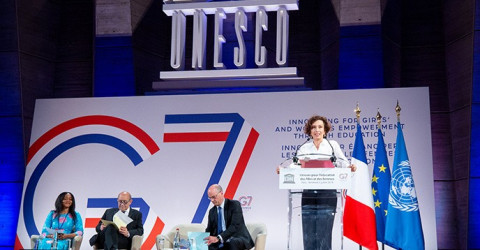 UNESCO Director-General welcomes increased commitment from education stakeholders gathered at UNESCO for the G7 meeting 2019-07-11 The Director-General welcomed the increased commitment from Ministers of Education and multilateral actors, expressed at several important events at UNESCO on 4-5 July 2019: In its capacity of global coordinator to achieve the UN 2030 Agenda goal of universal quality education (SDG 4), UNESCO brought together major multilateral education partners (including UNICEF, World Bank, European Commission, Global Education Partnership, Education Cannot Wait, Education Commission, WHO, UNHCR, ILO...). They agreed on a common framework for action focusing on capacity building, learning outcomes, teacher training, sharing and collection of data, and financing. This coordination meeting was held with the participation of the United Nations Special Envoy for Education, Mr Gordon Brown; Director-General for International Cooperation and Development (DEVCO) at the European Commission, Mr Stefano Manservisi; UNICEF Executive Director, Ms Henrietta Fore; President of the Global Partnership for Education, Ms Alice Albright; Director-General of the World Bank's Pole of Expertise in Education, Jaime Saavedra; Director of Education Cannot Wait, Ms Yasmine Sherif, Director of the Education Commission Ms Liesbeth as well as representatives of the World Health Organization, UNHCR and ILO, among others. Participants backed a proposal by Special Envoy Gordon Brown to organize a biannual forum co-chaired by UNESCO, bringing together international institutions and bilateral donors. © UNESCO The Director-General also welcomed the increased commitment from the Ministers of Education and Development of the G7 and G5-Sahel countries, meeting under the French Presidency at UNESCO on 5 July. Their joint communiqué calls for radical changes to improve the governance of education systems, recruitment and training of teachers for quality education. UNESCO welcomes the call by Ministers to make girls' and women's education the priority for future investment at the G7 Leaders' Summit from 26 to 28 August 2019 in Biarritz, France. In particular, the new UNESCO GEM report, Building Bridges to Promote Gender Equality, presented at the meeting, shows that the number of illiterate adult women in low-income countries has increased by 20 million since 2000. UNESCO presented its new global initiative, "Her Education, Our Future", launched at the joint G7 - UNESCO conference on innovation for the empowerment of girls and women through education. The initiative is based on three pillars: better data, better policies, better teaching and learning practices. On this occasion, UNESCO launched a new Interactive Atlas on girls’ and women’s education. These various events are part of the coordination process led by UNESCO as the United Nations lead agency for education. The Director-General stressed the urgent need to act so that no one is left behind: "Education for girls and women is a fundamental right and an accelerator for sustainable development. It is the backbone of the entire 2030 Agenda, and without quality education for all, none of the other objectives can be achieved. The Director-General calls on all Member States to mobilize with UNESCO for the High-Level Political Forum in New York this week and for the Summit on the SDGs at the United Nations General Assembly in September. Latest UNESCO projections from the Global Education Monitoring Report show countries are off track in meeting their education commitments for 2030, unless there is serious progress over the coming decade. URL:https://en.unesco.org/news/unesco-director-general-welcomes-increased-commitment-education-stakeholders-gathered-unesco-g7
 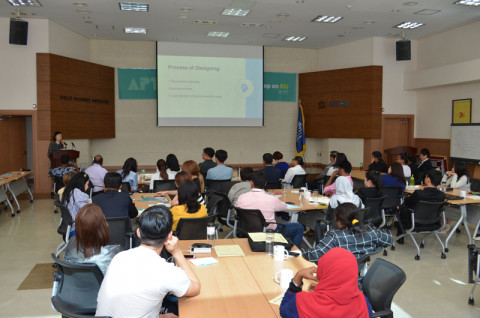 The 19th APTW: GCED in the 21 Century 2019-07-11 29 teachers, educators and policy-makers from 21 countries in the Asia-Pacific region attended the 19th Asia-Pacific Training Workshop on EIU in Seoul and Inje, from 20 June to 28 June 2019. The Workshop focused on deepening the participants’ knowledge of key concepts and pedagogies of GCED so that they can design and implement GCED projects in their local contexts. Recognizing the closely interconnected and interdependent society with the complicated challenges we face as global community such as inequality, violence, intolerance and environmental crises that are being exacerbated by the unsustainable development and ways of life, the Workshop aimed to deepen the participants’ knowledge on the issues and to empower them to realize their roles as agents of change to bring transformation in the society through education for the betterment of all. To do so, the 9-day-long workshop consisted of three main sessions - lectures, hands-on activities, discussion and interactive workshops - in order to encourage the participants to share ideas about how to deal with common challenges of the global and local community: sustainable future and education, the 21 century competency and teachers’ roles, global/glocal justice, human rights, intercultural dialogue, gender equality, as well as pedagogies of GCED. Along with those sessions, a joint seminar with Korean GCED Lead Teachers deepened the participants’ knowledge on GCED, by sharing innovative cases of GCED in the Republic of Korea. Another portion of the workshop was held in Inje in order for the participants to further explore issues of sustainability and peaceful co-existence. The attendees visited the Eul-ji Observatory Tower, the 4th Tunnel and Seo-hwa-ri village, witnessing how the local community in Inje has contributed to establishing sustainable and inclusive communities in the local area, as part of overcoming historical division in the Korean peninsula. The last session in Inje enabled the participants to lead inter-cultural classes with students of Shin-Nam High School, thus enhancing their skills at implementing EIU with people from different countries. On the last day of the Workshop, the participants synthesized what they have learned from the lectures, discussion and visits and crafted action plans that they could hypothetically implement in their organizations. Their action plans had a wide range of target groups - including local communities, teachers, universities - in order to develop and tailor teacher training courses, GCED curriculum and community-engagement programmes by their national or regional contexts. All in all, the 19th APTW was filled with the participants’ increased motivation and competency to carry out their own initiatives on GCED and further disseminate global citizenship education in the Asia-Pacific region. URL:The 19th APTW: GCED in the 21 Century > APCEIU News - APCEIU (unescoapceiu.org)
 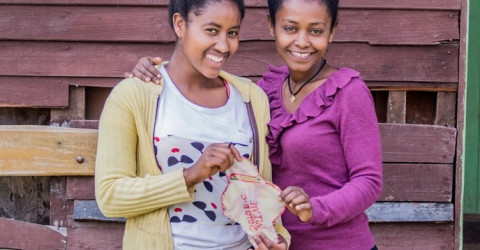 Boys and girls make menstrual pads at their school’s gender club in Ethiopia 2019-07-08 Tenaye Ashenafi’s first experience with menstruation did not go very well. She ran back home after being ridiculed by her peers at school, and showed her blood-stained clothes to her mother. Her mother gave her pieces of “gabi”, a traditional cotton blanket to use during her menstruation period. “Even my mother did not know about sanitary pads”, Tenaye says. Many girls like Tenaye are forced to miss school during their menstruation. Talking about menstruation is considered a taboo and girls often face stigma and discrimination during this time. This prevents girls from receiving adequate guidance to support them through the challenges of puberty. In Ethiopia, only 54% of girls complete primary school, many dropping out because of cramps or embarrassing mishaps during their period according to a 2017 UNICEF report. Gender club Simret Getaneh joined Tenaye’s school as a mathematics teacher in 2015. She was one of the participants of the Gender-Responsive Pedagogy (GRP) training organized in the school as part of a UNESCO project in Ethiopia. The training built teachers’ competencies, with a focus on how to include gender considerations into lessons and learning activities in the classroom and co-curricular activities. Soon after, Simret took over the leadership of the gender club, which had been inactive. “Most of the students here are from low-income families,” says Simret. “They cannot afford to buy sanitary pads.” Sanitary pads and other sanitary products and materials were provided to the school as part of the project. The next time Tenaye’s clothes were stained, she went to speak to Simret who encouraged her to join the gender club to learn about menstruation and sanitary pads. Simret taught the members of the gender club how to use sanitary pads and make reusable ones by using pieces of cloth and other materials. Girls choose the color of their cloth, cut them into shape and sew them together. Some even sew their names on their pads. Engaging boys Simret encouraged boys to join the club. She had learned at the training that for a school environment to be gender-responsive it must involve both girls and boys. Much has changed at the school: boys used to sit separately in class, but now they are helping girls make reusable sanitary pads at the gender club. Merid, aged 17, is a member of the gender club. He attended a life skills training organized as part of the project where he learned about gender equality, including the role of boys and men. “I like to work with girls and help them to minimize the cost for their menstrual pads, as they do not have to worry about this and can focus instead on being successful in their studies”, says Merid. Creating teacher-mentors In Ras Desta Primary School, girls are often forced to drop out of school due to early or arranged marriage. Simret has provided continuous mentorship to girls – speaking to them about early marriage and the importance of completing their education. “Dropouts due to early marriage have decreased with the activities of the gender club’, shared Simret. ‘Many girls choose to continue their education.” All 117 teachers, including 56 women, at Ras Desta Primary School were trained on GRP. Simret is one of many teachers making a significant impact on girls and their education, according to Merinda Teklu, the school Director. “Most of the girls used to miss class during menstruation because they could not afford sanitary pads, but now they have learned to make sanitary pads and have good mentors at the school.” Tenaye, Simret and Merid’s school is one of the participating schools under the project, and it is showing promising results. More girls are successfully passing their national primary school examinations. The rate of girls completing their primary education has increased by close to 10% within a year, from the 2016-17 to the 2017-18 academic year. Out of these, three girls received a scholarship, a benefit only conferred to boys previously. The UNESCO-HNA Funds-In-Trust project in Ethiopia aims to enhance the quality and relevance of education for adolescent girls, and ensure that all girls have access to and transition through the full education cycle successfully, so that they can lead better lives. The project is implemented by the UNESCO Liaison Office in Ethiopia, under the UNESCO-HNA Partnership for Girls’ and Women’s Education. The UNESCO International Institute for Capacity Building in Africa (IICBA) is providing technical backstopping in institutional capacity-building for gender mainstreaming in education, GRP and teacher training. Watch: Meet Eden, Blen and Hareg: three Ethiopian girls who value their education Read: Two girls speak about gender equality at their school in Ethiopia URL:https://en.unesco.org/news/boys-and-girls-make-menstrual-pads-their-schools-gender-club-ethiopia
 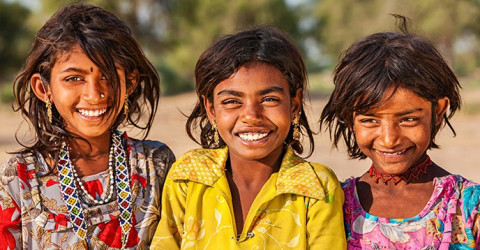 While recognizing progress on parity in access to education, UNESCO calls for increased efforts on quality and completion to ensure equal opportunities for girls and boys 2019-07-08 First ever breakdown shows over half of G7 aid to education goes to achieving gender equality, but results lag Paris, 04 July— In spite of significant progress in parity in access to schools between boys and girls on average globally over the last 20 years, the number of illiterate adult women in low income countries has grown by 20 million since 2000, according to the latest Gender Report produced by UNESCO’s Global Education Monitoring (GEM) Report team. The Report “Building bridges for gender equality,” is published on the occasion of the G7 Development and Education Ministerial Meeting and the G7-UNESCO International conference taking place at the Organization’s Headquarters. It presents the first ever breakdown of G7 aid to education. It shows that 55% of that aid goes to achieving gender equality, with Canada leading the pack in terms of prioritizing gender equality in its education aid at 92%, followed by France and the UK that tie at 76% of their respective education development aid. The new Report also highlights important disparities and unequal progress in different regions. One third of countries have not achieved gender parity in primary education. Half the world’s nations fail to provide lower secondary education to as many girls as boys, according to the Report, which also points out that only one in four countries have equality in upper secondary education. Sub-Saharan Africa is far behind in all education levels and the Arab States for the first time lag furthest in achieving gender parity in primary education, possibly because of conflict. Central and Southern Asia have made great progress, led by rapid change in India. “Tackling inequalities head-on is the only way we are going to achieve a quality education for all,” said the Director-General of UNESCO, Audrey Azoulay. “We welcome the G7 decision to focus on girls’ education, a core priority of UNESCO for the next six years. This is a positive development not only for the realization of a fundamental human right for girls and women, but for all who work to achieve sustainable development and peace.” The Report analyzed the 20 countries with the largest gender gaps in education and identified their policies for gender equality. Cash and in-kind rewards for families whose children attend school are the most popular policies, implemented in three out of four national plans. Only one in five countries took measures to reform their curricula and textbooks, ensure girls’ participation in science, technology, engineering and mathematics, or provide safe access to schools. Educational plans in Angola, the Central African Republic, Djibouti and Mauritania made scant references to gender inequalities in education, but those of Niger, Guinea and Somalia have strong roadmaps for change. “We can try and improve education systems as much as we want but real change is unlikely to happen unless we also tackle negative gender norms and attitudes in society,” cautioned Manos Antoninis, Director of the Global Education Monitoring Report. “Over a quarter of people still think that it is more important for a boy to go to university than a girl. We have to empower girls, educate boys and men and identify new role models if we are to challenge the status quo successfully.” Societal change is all the more necessary to achieve parity, considering the Report’s finding that 117 countries and territories still allow a girl to marry and that four countries in sub-Saharan Africa enforce a total ban against girls returning to school after pregnancy. Inequality is also present in educational systems where teaching generally remains a female profession with men in charge. In 28 mostly high-income countries, 70% of lower secondary school teachers are female, but only 53% of head teachers are. Inequality affects girls and women in technical and vocational programmes, which remain male bastions. Just a quarter of those enrolled in engineering and in information and communications technology programmes are women. Gender inequality continues hampering the development of girls and women to the detriment of societies as a whole. UNESCO calls for greater political commitment to gender equality in the form of laws and policies. On July 5th, UNESCO will launch a global initiative Her Education, Our Future to galvanise cooperation around three main pillars: better data, better policies and better practices for girls’ and women’s empowerment through education. As part of its advocacy for reform, UNESCO has produced and made available online an interactive map with information on the status of national constitutions, legislation and regulations on gender equality in countries around the world (available as of 5 July https://en.unesco.org/education/girls-women-rights). **** For more information and interviews, contact Kate Redman k.redman@unesco.org(link sends e-mail) +33(0)671786234 G7 donor Share of direct aid to education targeted at gender equality Disbursement - Direct aid to education (US$ millions) Canada 92% 206 France 76% 524 United Kingdom 76% 916 Germany 64% 941 United States 42% 1556 Italy 40% 100 Japan 6% 559 URL:https://en.unesco.org/news/while-recognizing-progress-parity-access-education-unesco-calls-increased-efforts-quality-and
  First ever consensus on Artificial Intelligence and Education published by UNESCO 2019-07-08 UNESCO has published the Beijing Consensus on Artificial Intelligence (AI) and Education, the first ever document to offer guidance and recommendations on how best to harness AI technologies for achieving the Education 2030 Agenda. It was adopted during the International Conference on Artificial Intelligence and Education, held in Beijing from 16 – 18 May 2019, by over 50 government ministers, international representatives from over 105 Member States and almost 100 representatives from UN agencies, academic institutions, civil society and the private sector. The Beijing Consensus comes after the Qingdao Declaration of 2015, in which UNESCO Member States committed to efficiently harness emerging technologies for the achievement of SDG 4. Ms Stefania Giannini, Assistant Director-General for Education at UNESCO, stated that ‘’we need to renew this commitment as we move towards an era in which artificial intelligence – a convergence of emerging technologies – is transforming every aspect of our lives (…) we need to steer this revolution in the right direction, to improve livelihoods, to reduce inequalities and promote a fair and inclusive globalization.’’ The Consensus affirms that the deployment of AI technologies in education should be purposed to enhance human capacities and to protect human rights for effective human-machine collaboration in life, learning and work, and for sustainable development. The Consensus states that the systematic integration of AI in education has the potential to address some of the biggest challenges in education today, innovate teaching and learning practices, and ultimately accelerate the progress towards SDG 4. In summary, the Beijing Consensus recommends governments and other stakeholders in UNESCO’s Member States to: Plan AI in education policies in response to the opportunities and challenges AI technologies bring, from a whole-government, multi-stakeholder, and inter-sectoral approach, that also allow for setting up local strategic priorities to achieve SDG 4 targets Support the development of new models enabled by AI technologies for delivering education and training where the benefits clearly outweigh the risks, and use AI tools to offer lifelong learning systems which enable personalized learning anytime, anywhere, for anyone Consider the use of relevant data where appropriate to drive the development of evidence-based policy planning Ensure AI technologies are used to empower teachers rather than replace them, and develop appropriate capacity-building programmes for teachers to work alongside AI systems Prepare the next generation of existing workforce with the values and skills for life and work most relevant in the AI era Promote equitable and inclusive use of AI irrespective of disability, social or economic status, ethnic or cultural background or geographical location, with a strong emphasis on gender equality, as well as ensure ethical, transparent and auditable uses of educational data The Consensus also details its ambitions for UNESCO to act as a support system for the capacity building of education policy-makers to implement the recommended measures, and to act as a convener for financing, partnership and international cooperation together with other international organizations and partners active in the field of AI in education. Suggested implementations for the Director-General of UNESCO include the establishment of an ‘AI for Education’ platform that would supply crucial resources for open consultation, such as open-source AI courses & tools, policies and best practices. Together with UNESCO Member States, the DG is encouraged to develop guidelines and further resources for effective and equitable use of AI in education. The Consensus also recognizes the pressing issue of country and regional divides in AI development, and tasks partners and international organizations to monitor and assess the impact of these divides, keeping in mind the risk of polarization between those who have access to it and those who do not. Together with partners, international organizations, and the key values that UNESCO holds as pillars of their mandate, UNESCO hopes to strengthen their leading role in AI in education. As Ms Giannini has said; ‘’implementing AI in and for Education is about shifting from competition to cooperation. The Consensus adopted today will guide our actions.’’ The Beijing Consensus is available in the six official languages of the UN. URL:https://en.unesco.org/news/first-ever-consensus-artificial-intelligence-and-education-published-unesco
 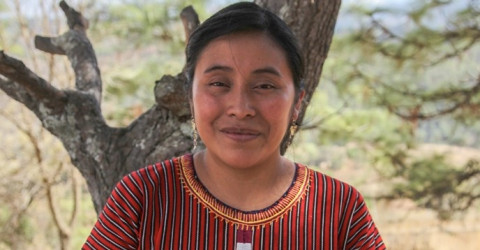 How Isabel was empowered to continue her education in indigenous Guatemala 2019-07-08 “I grew up in a modest family and married at the age of 15, so I could not finish school. But I was able to continue my studies at the Center,” said Isabel Aracely Tzoy Tzoc. Like her, most girls and women in Guatemala are unable to access or complete their education. Numerous obstacles such as poverty, the distance to school, early marriage and pregnancy, and traditional gender stereotypes limit their educational opportunities. In the municipality of Santa María Chiquimula, Department of Totonicapán, there are just over 18% of girls enrolled at middle school level (corresponding to ages 13-16). This figure drops significantly at secondary level (corresponding to ages 16-18), with only 1.36% of girls enrolled. Among the most marginalized are girls and women who live in remote mountainous areas, accessible after one hour by foot from Santa María Chiquimula. It is in this context and location that the UNESCO Malala Center was established in 2018. Supported by the UNESCO Malala Fund for Girls’ Right to Education, the Center provides girls and women information on flexible educational opportunities, and offers participation in various personal development workshops. Isabel, now 27, has benefitted from the programmes of the Center. Soon after getting married, Isabel suffered from domestic abuse and endured physical and psychological violence from her husband. Her son Cristóbal, aged 10, started reproducing violent behavior in pre-school. She managed to escape from the marriage at age 23 and set out to continue her education. Last year Isabel heard about the UNESCO Malala Center in Santa María Chiquimula through the Educational Center Fe y Alegría, a partner in the project. She participated in the Center’s activities, including the health and well-being programme, and feels as she has gained self-esteem. “Although talking about gender-based violence is difficult for me, taking part in the workshops has helped me cope, and I can now say that I am living a life free of violence”, she said. “It gave me value as a human being, and a drive to keep learning.” Isabel is now studying at middle school level with the National Institute for Radiophonic Education, another key partner in the project. She is planning to complete her secondary level studies, and become a doctor so she can secure a future for her son. The Center in Santa María Chiquimula is one of the two UNESCO Malala Centers established as part of a project in Guatemala. The project aims to establish a local educational model in rural areas that are sustainable and replicable, and build on indigenous girls’ needs and contexts. The educational programmes offered by the Centers are being implemented in indigenous languages, draw on indigenous culture, and build skills for personal and socioeconomic development. To carry out the project, UNESCO is working with the National Literacy Committee(link is external) (CONALFA), the Ministry of Education and organizations such as the National Institute for Radiophonic Education(link is external) (IGER) and Fe y Alegria(link is external), in cooperation with the municipalities of intervention. More information: UNESCO Malala Fund for Girls’ Right to Education Paving the way for women's education in indigenous communities of Guatemala Spreading hope for women’s education in Guatemala Girls’ and women’s voices help shape the UNESCO Malala Centers in Guatemala URL:https://en.unesco.org/news/how-isabel-was-empowered-continue-her-education-indigenous-guatemala
 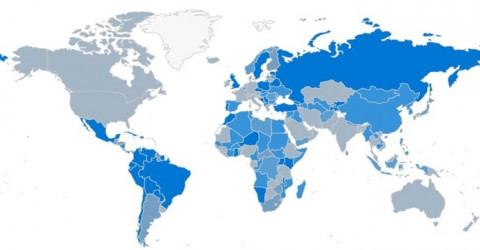 UNESCO launches Interactive Atlas of girls’ and women’s right to education 2019-07-08 On 5 July, UNESCO is launching a new Interactive Atlas of girls’ and women’s right to education as part of the Her education our future Initiative. The Atlas is a monitoring and advocacy tool, aiming to enhance public knowledge of the status of national constitutions, legislation and regulations related to girls’ and women’s education rights, as well as to monitor progress. More than 70 years after the recognition of the right to education in the Universal Declaration of Human Rights, many girls and women cannot exercise their right to education due to gender inequality and discriminatory practices. Poverty, early marriage, and gender-based violence are just some of reasons behind the high percentage of out-of-school and illiterate girls and women globally. Strengthening the right of girls and women to quality education through the implementation of international instruments is key to eliminate discrimination and to realize equality of rights between genders. This cannot be achieved without solid national legal frameworks that are rights-based, gender responsive and inclusive. The international community has reacted to pervasive discrimination by adopting international human rights legal instruments such as the UNESCO Convention against Discrimination in Education or the UN Convention on the Elimination of all forms of Discrimination against Women(link is external). This commitment has been further reaffirmed by the Sustainable Development Goals, notably target 4.5, which explicitly requires States to eliminate gender disparities in education and ensure equal access to all levels by 2030. Indicative strategies include the necessity to strengthen national legislation related to gender equality in education. The Interactive Atlas developed by UNESCO will enable better follow up of changes in the national normative frameworks that regulate girls’ and women’s right to education. This interactive tool currently uses 12 indicators to measure the status of national legal frameworks on girls’ and women’s right to education. Based on the information collected and feedback received from States, the Atlas will be further developed and updated periodically until 2030 – the deadline set for Sustainable Development Goal 4. This first iteration includes information and data on 196 countries for the first three indicators and on 35 countries for the others, but the ambition is to expand to cover all States. Access UNESCO’s Atlas of girls’ and women’s right to education URL:https://en.unesco.org/news/unesco-launches-interactive-atlas-girls-and-womens-right-education
 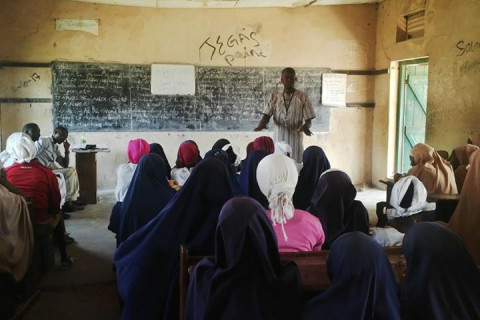 SDG 4 Background Note Sets Scene for Review of Progress 2019-07-08 June 2019: The UN Department of Economic and Social Affairs (DESA) issued a background note in preparation for the upcoming review of SDG 4 (quality education), which will take place as part of the July 2019 session of the UN High-level Political Forum on Sustainable Development (HLPF). The note provides information on global progress toward SDG 4 and other education-related SDG targets, and offers 13 recommendations for improving countries’ performance, as well as “guiding questions” for the review meeting. The note highlights that global progress has been made, especially in the area of primary and lower secondary school completion, but progress has stalled in recent years, and more than half of children and adolescents are not meeting minimum proficiency standards in reading and mathematics – including 20% of students in Organisation for Economic Co-operation and Development (OECD) countries. Among adults, around 750 million adults are illiterate; half of these adults live in Southern Asia and one-quarter in sub-Saharan Africa, while two-thirds of illiterate adults are women. Monitoring progress remains a challenge, and the note draws attention to ongoing efforts to improve monitoring and reporting on inequalities in education through the World Inequality Database on Education (WIDE) platform. Among the recommendations, the note suggests: ensuring the right to safe, quality education and learning through life; providing greater support and resources for the professional development of teachers; eradicating illiteracy through formal and non-formal education and training; and including migrants, displaced persons, returnees, asylum seekers, refugees and stateless persons in education and training systems, and facilitating recognition of their qualifications. The note also calls on countries to adhere to the international benchmarks of allocating at least 4-6% of GDP and at least 15-20% of public expenditure to education, in order to meet SDG 4 targets. The authors note that countries that have achieved higher standards of education have high and universal expectations of students and focus on good teaching; these countries also target resources to struggling students and schools, and have long-term, coherent education strategies. Other SDG targets that relate to education address health and wellbeing (SDG target 3.7), gender equality (SDG target 5.6), decent work (SDG target 8.6), responsible consumption and growth (SDG target 12.8), and climate change mitigation (target 13.3). The HLPF’s in-depth review of SDG 4, the first such review since the Goals took effect in 2016, will take place on 9 July 2019. [SDG 4 Background Note] [HLPF Programme] URL:http://sdg.iisd.org/news/sdg-4-background-note-sets-scene-for-review-of-progress/
  Education under attack: Six portraits 2019-07-04 Shattered glass. Rubble from shell-smashed ceilings strewn across floors. Walls pockmarked by bullets. These rooms are no place for a child. Except, they are supposed to be. Because they are classrooms, or what is left of them. Around the world, attacks on children continue unabated, as warring parties flout one of the most basic rules of war: the protection of children. Children living in countries at war have come under direct attack, have been used as human shields, killed, maimed or recruited to fight. As a result, millions of children are being robbed of a safe place to learn and to play with friends. Without help, many will be robbed of their futures, too. “I can’t stand the fighting”: Ehsanullah, AfghanistanUNICEF/UN0309055/Kocic Ehsanullah is one of nine children, but the only one attending school right now. He usually helps his father on the farm after school, meaning that there’s little time for him to play with his friends. Ehsanullah lives in Zheray, a district in the southern province of Kandahar. The journey from the capital Kandahar City to Zheray passes through green landscapes dotted with the grapevines and pomegranate gardens it is known for locally. As you approach Zheray, single story houses made of mud come into view, surrounded by narrow, winding roads and walkways. “I can’t stand the fighting. It destroyed our school.” Zheray has been relatively calm over the past few years. But earlier fighting has taken a heavy toll on the district’s children, who were left with few options for an education after their local school was destroyed by shelling in 2007. Ehsanullah and his family were forced to flee to nearby Arghandab, where he was able to attend school for the first time. “My first year was so good,” he says. “We had a proper building for our school.” But on returning to Zheray, Ehsanullah found the contrast between the two schools striking. While the school had reopened, an establishment that once served around 1,300 students now had less than 400 pupils – and some classrooms remain unusable. “Our school was burned, destroyed”: Kayenat, AfghanistanUNICEF/UN0309024/Kokic Kayenat says her family fled intense fighting in the Shinwar district of Nangarhar province, in eastern Afghanistan, two years ago. “Our school was burned, destroyed,” she says. By the time they left, though, Kayenat couldn’t attend classes anyway. “Girls weren’t allowed to go to school.” Her story is a familiar one in a country where, despite progress improving access to education over the past decade, girls and children with disabilities remain especially vulnerable. About 60 per cent of children not in education in Afghanistan are girls. Those who defy the norms or the armed groups that don’t want them in school risk being abducted, or even murdered. Faced with an impossible choice between his children’s education and their safety, Kayenat’s father decided the family should leave their hometown for Jalalabad, the provincial capital. But even as the situation felt increasingly hopeless, Kayenat remained determined to one day get back to school. Since she enrolled at a temporary learning space established by UNICEF, she is feeling more hopeful about her future. She says that she’s doing well in math and Pashto language classes. The most important consideration for a future career? For Kayenat, it’s finding a job that allows her to support her siblings. “I want to be a kindergarten teacher”: Diana, UkraineUNICEF/UN0243118/Morris VII Photo Thousands of miles away, in Ukraine’s Donetsk region, lives Diana, 14. Her home is near the so-called contact line, which divides government and non-government areas and where fighting is the most severe. She has to pass through a checkpoint to get to school, or just to get to the local store. The other children in her village aren’t allowed to visit her home because it’s considered too dangerous. “During the day, there’s no shooting, at least not in our direction,” Diana’s mother, Natalia, says. “At night we’re so tired that we don’t hear anything.” It’s hardly surprising that Diana is exhausted. Since her school in Horlivka was shelled, she has been waking up at 5.30 a.m. every morning to get to her new school – a route that can take up to two hours each way. For children like Diana who live in or near the conflict zone, the threat of being hit by a shell looms over their journey to and from school every day. But it hasn’t stopped Diana dreaming about what she wants to do after she graduates. “I want to be a kindergarten teacher,” she says. “I like taking care of children. I get along with them well”. “I want to be a coal miner”: Yura, UkraineUNICEF/UN0243156/Morris VII Photo Like Diana, Yura, who lives in the town of Novotoshkivske, is also pretty set on his future plans. “I want to be a coal miner,” he says, explaining that his dad is getting ready to start work at a nearby mine. Yura says he enjoys English class and computer studies. He also likes to play in the park and collects chestnuts. But just like Diana, Yura has seen – and heard – the devastating effect the conflict has had on education in eastern Ukraine. A little over four years ago, his school was hit by four shells and a tank round. The building was obliterated. “It’s just adults playing their games” “It wasn’t just the school: the whole town was shelled,” Yura’s older sister, Masha, recalls. “I was scared. It was so loud that I couldn’t hear anything for a while afterward,” she says, adding that her ears felt like they were blocked. Masha says their youngest brother cries when he hears loud noises, so she brings him candies and tells him not to worry, that “it’s just adults playing their games.” “I felt like I’d never be able to achieve my dreams”: Bintu, NigeriaUNICEF/UN0311778/Kokic Bintu has seen for herself the devastating impact that conflict has on education – and the hope that school can offer. She lives in the town of Banki, in northeast Nigeria, southeast of the Borno state capital of Maiduguri. Fighting has decimated Banki’s infrastructure. The outskirts of the town are deserted – it’s too dangerous for people to live there. Bintu remembers the day, four years ago, when her life was turned upside down. “I was going to school before the conflict started, but then the insurgents came,” she says. “I was in school in the morning and then went home. Then they came and we all ran, everyone ran.” “They burned the school down. I was so upset, I felt like I’d never be able to achieve my dreams.” Bintu says she spent the next two years with her uncle in Cameroon but wasn’t able to go to attend classes there. “Life was very difficult…I was missing my friends so much,” she says. About a year ago, though, Bintu was given a chance to dream again. She returned home from Cameroon and enrolled in her newly rebuilt school in Banki. “I’m so happy to be back in school because I’ll be able to get an education. And I’m learning something new.” “If I don’t come back to teach, who will?”: Hawa, NigeriaUNICEF/UN0311775/Kokic Like Bintu, Hawa also lives in northeast Nigeria. And like Bintu, she couldn’t be clearer about the connection between education and a more hopeful future. Hawa fled her hometown of Gwoza at the bottom of the Mandara Mountains when it was captured by militants in 2014. She returned when Gwoza was retaken by Nigeria’s military the following year, a year later, but in that short time away violence had upended her world. She lost her father, her school, and, for a time, her hope for the future. “The militants destroyed everything in the school. I thought that my future was over,” she says. Fast forward to today and a more optimistic picture emerges. Hawa still doesn’t know what happened to some of her friends, and while life for those who returned remains precarious, they now have better access to services – including education. The local school has been rebuilt, new classrooms are being set up and the space is once again brimming with young people’s voices. For Hawa, all this is an opportunity give back. Hawa says she now helps her sister and four brothers with their homework. “If I learn, then so will the younger children in the community. Ultimately, she would like to become a teacher, so other children can have the same opportunity she had. “I’m passionate about this because of the way the teachers have taught me,” she says. “And if I don’t come back to teach, who will?” -- With additional reporting from Toby Fricker and Murtaza Mohammadi URL: https://www.unicef.org/stories/education-under-attack-six-portraits