
News
Catch up on what’s happening in the world of global citizenship education.
1,668 results found
 UNESCO and the Republic of Serbia help people have fuller advantage of information flows 2021-05-03 As Internet use and access to information continue to rise at a rapid rate, so does the amount of beneficial and harmful content. The concerns are dual. They are obviously about the dangers of harmful content itself to all people. There are also worries about how the detrimental content crowd out and makes it difficult to identify beneficial content. What started as trickle of digital pollution decades ago, is now a flood that is becoming increasingly harder to handle. The impact to the world is an environment in which people are confronted with disinformation on a daily basis and where lies can cost lives. This will be treated at the thematic webinars on 27 and 29 April 2021 presenting various experiences, innovation and policy dialogue on media and information literacy from experts and practitioners. The webinars are open to the public and will discuss UNESCO’s and the Republic of Serbia’s jointly launched publication: Media and Information Literate Citizens: Think Critically, Click Wisely (Second Edition of the UNESCO Model Media and Information Literacy Curriculum for Educators and Learners). The four webinars will cover issues such as: Media and information literacy as a prerequisite to tackle disinformation and conspiracy theories Policies and practices: Futures media and information literacy Media and information literacy as a backbone for intercultural dialogue, and anti-hate speech Media and information literacy by design: can media, artificial intelligence and libraries help? The publication is meant to counteract this spread of disinformation in a sustainable manner and to help people to have fuller advantage of new information flows. It promotes media and information literacy at the root, which is an effective way to change toxic online and offline behaviours that are nowadays prevalent on many digital platforms and at various parts of society. It was launched on 22 April 2020, by high-level speakers from UNESCO, Serbia, the European Commission and the African Union. Disinformation is always harmful. But lies on a mass scale, a disinfodemic, is particularly potent during a pandemic, where “fake news” can prevent people getting treatment or acknowledging they are even ill. COVID-19 saw a wave of such falsehoods spread across the world, which hampered the effectiveness of governments’ measures around the world. "We are always running behind lies, we never manage to catch up, neither to lies or rumours and sometimes it can be counterproductive to try to do away with them with a counterargument, because the counter argument will just fuel the fire." -- Audrey Azoulay, Director-General of UNESCO Mr Xing Qu, in his introductory remarks highlighted that: “Media and Information Literacy has the potential to empower citizens with the necessary competencies to address key issues of our time”. He continued in noting the timeliness and relevance of the updated Media and Information Literacy Curriculum in responding to the COVID-19 disinfodemic. This sentiment was echoed by the Prime Minister of the Republic of Serbia, Ms Ana Brnabić, who drew from personal experience when recounting that: “All of the 'fake news' that was coming up on a daily basis, driven both from some media outlets as well as, and perhaps much more so from the social networks, meant that for all of those involved in the fight against COVID found the struggle twice as difficult.” COVID-19 hasn’t created the problem, but it has exasperated it and shone a light on just how important action is on the issue. According to ITU, some 70% of all youth globally are now online. Unsurprisingly, this acknowledgement is acutely felt by the youth, who have grown up digitally native and potentially more aware of the digital problems than with its wealth of benefits. "Today, in the European Union, over 40% of young people consider that critical thinking, media and democracy are not taught sufficiently in school. This is why we are now increasing our efforts to support media literacy through various funding instruments and initiatives, and even by our EU law." -- Vera Jourova, Vice President and Commissioner of the European Commission H. E. Dr Monique Nsanzabaganwa, Deputy Chairperson, African Union Commission, supported this approach at the event. "Education should more actively help learners to develop the ability to critically approach, filter, and assess information, and more importantly, to identify disinformation. Online and offline safety is paramount in achieving these, as more children use the internet for learning. They become increasingly vulnerable to online forms of exploitation and abuse." -- Monique Nsanzabaganwa, Deputy Chairperson, African Union Commission Join the 27 and 29 April 2021 webinars to continue this urgent international dialogue here. Related Links: Media and Information Literacy Event website Media advisory URL:https://en.unesco.org/news/unesco-and-republic-serbia-help-people-have-fuller-advantage-information-flows
  Students Take Actions toward Environmental Sustainability through Sustainable Fashion 2021-05-02 More than 135 junior and high school students (including 107 female students) from countries across Southeast Asia participated in the online celebration of Earth Day and Girls in ICT Day’s 10th anniversary on 22 April 2021. The students learned about environmental sustainability, the importance of the STEAM approach (Science, Technology, Engineering, Art and Mathematics), the necessity to possess basic digital skills in an ICT-led (Information and Communication Technology) workplace and daily life. They also learned about sustainable lifestyle options such as sustainable fashion alternatives with eco-print, natural dye technique, and natural-based fibre fabrics. Watch What can we do together to address the plastic waste issue in the ocean? Dr Cristina Romera Castillo, the 2020 L’Oréal - UNESCO International Rising Talent, spoke at the event, stressing actions that we can do together to address the plastic waste issue in the ocean. The ocean condition has worsened with the waste produced due to the COVID-19 pandemic, such as single-use masks and packaging for sanitary reasons. During a mini talk show, Dr Ai Sugiura, Programme Specialist for Science Policy and Capacity Building at UNESCO Jakarta, called for adopting sustainable actions to tackle global issues and contribute to attaining the Sustainable Development Goals. Mr Mohamad Fikri, the representative from Fondation L’Oréal Indonesia, promoted L’Oréal’s science programme and encouraged the students to participate in their green initiatives. He took note that L’Oréal has worked together with UNESCO for more than 20 years to help women in science solve the great challenges facing humanity, including the environmental issue around the world. Ms Jasmine Tang from Empire Code Loves Back identified the importance of digital platforms to promote a sustainable lifestyle. She highlighted the significance of digital skills for students to open many future pathways. She also offered free access to Loves Back’s learning platform to registered participants until 31 May 2021. Mr Puthut Ardianto, the chair of the Association of Indonesian Eco-Printers (AEPI), shared how eco-printed, natural-dyed, or natural-based fabrics were a more environmentally friendly alternative for a sustainable fashion. AEPI, the association for eco-printers in Indonesia that counts more than a thousand members across Indonesia, was launched during this event. The important take-home messages during the event were: raising awareness on our impact on the environment even when we chose organic or natural products; demystify science and digital skills – science is about understanding our natural environment and our place in it, while digital skills are tools to help us learn and advance. At the end of the event, UNESCO also invited students to participate in the Short-Silent Video Competition on Sustainable Environment during COVID-19 Pandemic. Dr Hans Thulstrup, Officer in Charge UNESCO Jakarta, closed the event by reiterating the message that “Science” or “science-based methodologies” are simply a systematic way of seeking to understand nature and a way to answer questions about our environment - not something to be scared of. This online celebration and the competition calls for contribution to the acceleration of 2030 Agenda implementation in Asia and the Pacific, especially on SDG 4, SDG 9, and SDG 13. Get free online training on Content Creating Skills by Loves Back! Register now! For further information about the competition, please check: https://bit.ly/earth-SSVC-TOR and contact Dr Ai Sugiura (a.sugiura@unesco.org(link sends e-mail)). The important take-home messages during the event were: raising awareness on our impact on the environment even when we chose organic or natural products; demystify science and digital skills – science is about understanding our natural environment and our place in it, while digital skills are tools to help us learn and advance. At the end of the event, UNESCO also invited students to participate in the Short-Silent Video Competition on Sustainable Environment during COVID-19 Pandemic. Dr Hans Thulstrup, Officer in Charge UNESCO Jakarta, closed the event by reiterating the message that “Science” or “science-based methodologies” are simply a systematic way of seeking to understand nature and a way to answer questions about our environment - not something to be scared of. This online celebration and the competition calls for contribution to the acceleration of 2030 Agenda implementation in Asia and the Pacific, especially on SDG 4, SDG 9, and SDG 13. Get free online training on Content Creating Skills by Loves Back! Register now! For further information about the competition, please check: https://bit.ly/earth-SSVC-TOR and contact Dr Ai Sugiura (a.sugiura@unesco.org(link sends e-mail)). URL:https://en.unesco.org/news/students-take-actions-toward-environmental-sustainability-through-sustainable-fashion
 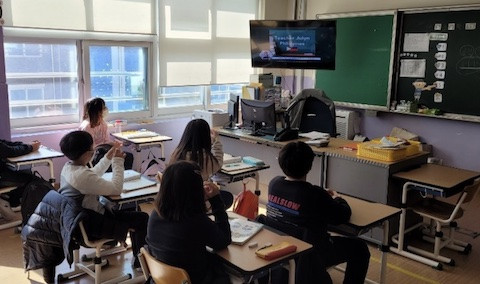 Launching of the 2021 Online APTE Programme 2021-04-29 2021 Asia-Pacific Teacher Exchange for Global Education (hereinafter, APTE) is held in a form of online exchange from April 2021. Schools in Korea and the Asia-Pacific region become one-to-one partner and conduct virtual classes and educational activities online. In consideration of the pandemic situation, Online Exchange Programme is launched in 2021. It is meaningful to spread the impact of the educational exchange from teacher-to-teacher exchange to school-to-school exchange, compared to the face-to-face exchange programme which focuses on the individual teachers’ inbound and outbound activities. For the first half of this year, 10 schools in Korea and the other 10 schools in the partner countries (3 schools in Malaysia, 4 schools in Thailand, 3 schools in the Philippines), 20 schools in total participate in this programme. Each participating school in Korea and the partner countries will organize an ‘APTE study group’, and the member teachers of the study group will conduct virtual classes and educational projects related to GCED. Online Exchange Programme is expected to minimize learning loss in the pandemic crisis and to be an opportunity identifying a new possibility of non-face-to-face educational exchange. Hosted by Ministry of Education Korea and organized by APCEIU, APTE is a teacher exchange programme between Korea and Asia-Pacific countries. It was launched in 2012, and has continued for 10 years in cooperation with ministries of education in the partner countries. APTE is carried out bilaterally, dispatching Korean teachers to the schools of the partner countries and inviting teachers of the partner countries to Korean schools. Participating teachers conduct classes on their own cultures and their major subjects. Until 2020, 1,249 teachers from 9 countries has participated in this programme. URL:http://www.unescoapceiu.org/post/4159
  Tanzania embarks on Sustainability Starts with Teachers programme 2021-04-29 Tanzania is the eighth country to join the Sustainability Starts with Teachers (SST) programme. A virtual workshop held on 27 and 28 April 2021 kick-started the implementation of the programme in Tanzania. Over 50 Teacher Educators, Technical Vocational Education, and Training educators attended the event from all corners of the country, senior government officials and Education for Sustainable Development (ESD) experts. Participants developed a common understanding of the context for ESD in the country, shared ideas for the implementation of the SST programme, including its vision, objectives and expected impact. In his opening remarks, Dr Lyabwene Mtahabwa, Commissioner for education in the Ministry of Education, Science, and Technology highlighted that the importance of ESD is recognized in the country’s policies and reflected in curricula in a cross cutting manner. He cited a number of policies and frameworks that provide a conducive environment for the SST programme and commented that ESD should start at an earlier age to develop the values, dispositions and behavior needed to embark in sustainable development. Participating teacher educators highlighted systemic shortcomings in relation to ESD integration in schools and teacher education institutions curricula and practices. The main constraining factors raised, include the general lack of understanding of ESD principles, which leads to a lack of supporting structures within institutions. Participants also pointed at poor implementation plans, resistance to transform to ESD amenable pedagogies and an exam-oriented system that appears to promote rote learning as other constraints to ESD integration in the education system. The gaps and opportunities presented during the workshop inspired participants in developing initial ideas of their own institutions’ "Change Projects”. These are institutional transformative initiatives in Teacher Education and TVET institutions supported by the SST programme. Tanzania will be joined by, Malawi and Eswatini in the Regional Training Course on ESD starting in September 2021. Traditionally the course is held at Rhodes University but due to the Covid-19 pandemic, this year’s course session will be conducted online. The course will give participants an opportunity to present and further develop ESD Change Projects in their institutions. URL:https://en.unesco.org/news/tanzania-embarks-sustainability-starts-teachers-programme
  Bridge 47 MOOC: Introduction to Global Citizenship Education 2021-04-29 Bridge 47, EADI and Centro per la Cooperazione Internazionale – International Cooperation Centre (CCI-ICC) are delighted to announce a joint MOOC (Massive Open Online Course) on the topic of global citizenship education (GCE). The MOOC will provide a solid introduction to GCE. It will cover the basic concepts, the approaches, and the possible applications of GCE. The course is free and open to learners from all over the world with an interest in the topic. An opportunity to learn: The nine Modules are convened by academics and practitioners and the coordinators of the Knowledge Exchange Partnerships of Bridge 47. Six modules form the course “Introduction to Global Citizenship Education”, each featuring a video lecture, and recommended reading material. Participants who complete the six modules with self-evaluations will be issued with a certificate. It is also possible to take the course without self-evaluations. Three additional informative modules present the theme of how to develop appropriate, inclusive models for dissemination, teaching, and research of GCE in global society through the experience of the Bridge 47 regional European Knowledge Exchange Partnerships. The language of instruction is English. Trainers of the course: Sara Franch (University of Bolzano), Marco Oberosler (CCI-ICC), and Gabriel Echeverría (CCI-ICC). Knowledge Partnerships Coordinators: Antonio Sianes (Fundación Etea, Universidad Loyola Andalucía), Andrea Bullivant (Liverpool World Centre), Gabriel Weibl (formerly of Comenius University at Bratislava). Registration: Registration for the MOOC has opened! You can access it here: https://www.cci.tn.it/CCI/Formazione/E-learning WHO IS THIS COURSE FOR? The course is suitable for: Students and citizens Development NGO’s decision makers and practitioners Civil Society Organization’s decision makers and practitioners Education institutions, professors, trainers FORMAT OF THE MODULES Video Lecture: Each session is around 15 minutes consisting of slides and presentation by the trainer. Readings: In PDF version, from open access sources to go further into the theme discussed in the lecture. Self-evaluation and reflection exercise: to allow you to evaluate your own learning. Final self-evaluation and satisfaction survey: to receive an Attendance Certificate. COURSE CONTENTS Module 1: Global Citizenship Education: contested, complex and ambiguous (Sara Franch, University of Bolzano) - Sets out the terminology of global citizenship education. What is global? What is citizenship? Provides an overview of the main debates of each concept. Module 2: Global Citizenship Education: contested, complex, and ambiguous (Sara Franch, University of Bolzano) - Explores the concept and typologies of global citizenship, linking it to the concept of global citizenship education. Module 3: Approaches to Global Citizenship Education (Gabriel Echeverría, International Cooperation Centre) - Explains the differences between soft and critical approaches to global citizenship education. Module 4: Approaches to Global Citizenship Education (Gabriel Echeverría, International Cooperation Centre) - Examines decolonization in the context of global citizenship education and the spaces for reform. Module 5: International Migration and Global Citizenship Education (Gabriel Echeverría, International Cooperation Centre) - Explores contemporary challenges posed by international migration from the perspective of global citizenship education. Module 6: Media Literacy and Global Citizenship Education (Marco Oberosler, Centro per la Cooperazione Internazionale) - Examines the correspondences between media literacy and global citizenship education as laid out by UNESCO and others and explores how they could reinforce each other. Completion of the MOOC must be done in a maximum of 90 days. After that, it is necessary to register again For further information, please, contact EADI: postmaster@eadi.org URL:https://www.bridge47.org/news/04/2021/bridge-47-mooc-introduction-global-citizenship-education
 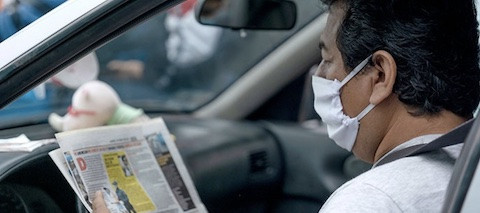 2021 World Press Freedom to promote Information as a Public Good in a severely challenged media landscape 2021-04-28 UNESCO and the Government of Namibia will host the World Press Freedom Day Global Conference in Windhoek from 29 April through 3 May, World Press Freedom Day. The laureate of the 2021 UNESCO/Guillermo Cano Press Freedom Prize will be honoured during the conference, on 2 May. Professional journalists and other media stakeholders at the Conference will call for urgent measures to counter the threats that are weakening independent and local news media around the world, a crisis worsened by the COVID-19 pandemic. They will put forward solutions to bolster media viability, push for greater transparency from social media companies, and measures to improve the safety of journalists and support independent media. Participants are also expected to urge governments to invest in media and information literacy training to help people recognize, value, and defend fact-based journalism as an essential part of information as a public good. Some 40 sessions will be held during the 5-day conference including three thematic discussions on issues currently affecting media viability, the transparency of online platforms, and ways to strengthen media and information literacy. Hage Geingob, the President of Namibia, and UNESCO Director-General Audrey Azoulay will address the conference on 2 May, alongside senior African government officials and UN Secretary-General Antonio Guterres (through a video message). Keynotes and interviews with over 250 world-renowned journalists, media and tech leaders, experts, policy makers, and activists will be held during the event which be an opportunity for registered participants to network, and interact with speakers, and access an offering of podcasts, films, and artistic contributions on a conference online platform. Notable speakers will include: Joseph Stiglitz (USA), Nobel Memorial Prize in Economic Sciences Irene Khan, UN Special Rapporteur on the Promotion and Protection of the Right to Freedom of Opinion and Expression Agnès Callamard, Secretary General, Amnesty International Maria Ressa (Philippines), CEO of Rappler Swe Win, Editor in Chief of Myanmar Now, recognized media outlet for its collaborative and investigative reporting on human rights abuses. Julie Owono, Member of Facebook’s Oversight Board. Executive Director of Internet sans Frontiers Miranda Johnson, The Economist, Deputy Executive Editor Stephen Dunbar-Johnson (USA), President, International of The New York Times Sir Nicholas Clegg, Vice-President for Global Affairs and Communications at Facebook Notable programme highlights will include: Six Regional Forums on specific, regional aspects of press freedom and ways to tackle current trends and challenges. The Forums build on the regional seminars that followed the UNESCO’s first African press freedom seminar in Windhoek in 1991. A one-on-one dialogue about information as a public good with Joseph Stiglitz, Nobel Memorial Prize in Economic Sciences and Miranda Johnson, Deputy Executive Editor of The Economist. 30 April: Presentation of key findings from UNESCO’s global study on online violence against women journalists, a trailblazing research project that assesses the scope and impact of the new frontline of media safety through big data analyses and an in-depth literature review. Link for registration here The digital revolution has weakened business models of most independent media and damaged their viability. The loss in revenue in 2020 is estimated to total US$30 billion. Local news 'deserts' are becoming ever more common as media outlets close, merge, or downsize in many parts of the Global North and South, and political interest groups take control of struggling media outlets. Due to the COVID-19 disruption, two-thirds of staff and freelance journalists worldwide have also suffered pay cuts, lost revenue, job losses, cancelled commissions or worsening working conditions, according to a survey carried out by the International Federation of Journalists IFJ. A survey by the International Center for Journalists and the Tow Center at Columbia University found that over 40% of surveyed journalists reported losing more than half their income. The COVID-19 pandemic has seen a steep rise in the in attacks on journalists and a weakening in regulations protecting freedom of expression. UNESCO’s forthcoming study on online violence against women journalists shows that 73% of the women journalists surveyed had experienced online violence relating to their work. Online violence, often in the form of coordinated misogynistic attacks, goes from hateful language to threats of sexual or physical violence. According to the International Press Institute, countries have reported more than 400 media freedom violations linked to the COVID-19 crisis, including restrictions on access to information and excessive regulations against alleged fake news, ostensibly meant to address COVID-19 related disinformation. The role of journalists in producing and sharing factual information is essential to all members of society. Whether exposing corruption, alerting us to conflicts or debunking disinformation on COVID-19, the information they provide must be recognized as a public good. This year’s celebration of World Press Freedom also marks the 30th anniversary of the Windhoek Declaration, developed by African journalists pressing for a free, independent, and pluralistic African press at a seminar organized by the UN and UNESCO in Windhoek in 1991. The declaration which triggered the proclamation of the 3rd May as World Press Freedom Day by the UN General Assembly. The Award Ceremony of the UNESCO/Guillermo Cano World Press Freedom Prize will take place on 2 May. The Prize, unique in the UN system, honours a person, organization or institution that has made an outstanding contribution to the defence and, or promotion of press freedom anywhere in the world, especially in the face of danger. Related links Programme Read our FAQs Read the concept note Visit World Press Freedom Day website UNESCO/Guillermo Cano World Press Freedom Prize Register your World Press Freedom Day event URL:https://en.unesco.org/news/2021-world-press-freedom-promote-information-public-good-severely-challenged-media-landscape
 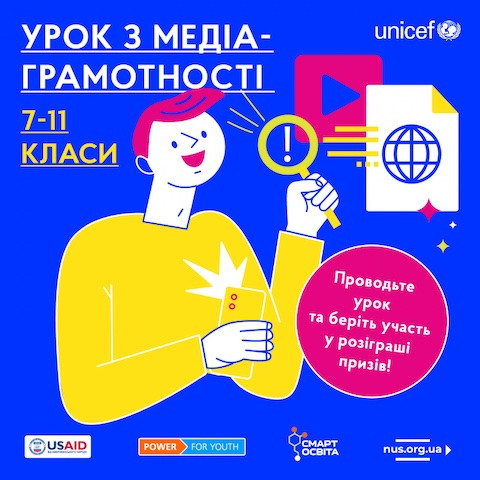 UNICEF developed media literacy lesson 2021-04-28 The United Nations Children's Fund (UNICEF) and non-governmental organisation Smart Osvita have designed a media literacy lesson for 7-11 grade students. The lesson is based on the BreaktheFake educational series with Ukrainian superstars recognising and refuting the myths about COVID-19 and vaccination. Those teachers who will use the lesson plan will receive a certificate from UNICEF and a chance to win prizes. To participate in the draw, the teachers must conduct a lesson and fill out the form by May 20 at the link. Teachers can use the plan to conduct the entire lesson online or offline. They can also incorporate particular exercises from the plan into their classes in various disciplines, that require media literacy skills, such as history, law, biology, and others. The lesson aims to develop the ability to identify fakes and resist their negative influences. A UNICEF-supported U-Report youth survey found that only 14 per cent of adolescents and young people always check the information. At the same time, young people spend much time on the Internet and consume significant amounts of content every day. Educational videos are a crucial component of the lesson. Six series explain the origin of fakes, the nature of conspiracy theories, marker words in posts to look for, helpful methods to verify a photo or video, and why bloggers shouldn't always be trusted. Ukrainian stars Jerry Hale, Alla Kostromichova, Anna Trincher, Alina Pash, Kostya Klepka and Dasha Kvitkova are the videos' main characters. Nikita Dobrynin serves as the educational series host. Experts of Ukrainian key fact-checking organisations created the series. The lesson was developed by Marina Dashko, a teacher-methodologist, author of educational materials on media literacy. The project was supported by the United States Agency for International Development (USAID) and ING Bank. URL:https://www.unicef.org/ukraine/en/press-releases/unicef-developed-media-literacy-lesson
 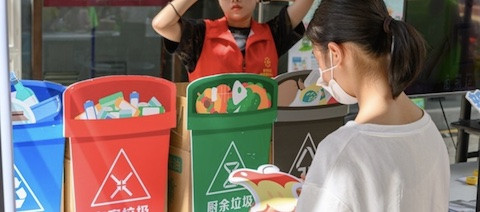 Redesigning lifestyles, consumption and production through Education for Sustainable Development 2021-04-28 The climate crisis, biodiversity loss and other environmental challenges we are currently facing show the need to change our current lifestyles, production and consumption habits. To build a more sustainable world and achieve the necessary transformation, attitudes and behaviours need to change. Education is particularly relevant for achieving responsible sustainable consumption and production because it can provide people not only with the simple learning about these issues, but also empower people to take action and call for responsible practices from businesses and governments. According to Vibeke Jensen, Director of the Division for Peace and Sustainable Development, at UNESCO Headquarters: “Sustainable living means understanding how our individual and collective life choices impact the world around us and finding ways for everyone to live better. To build a more sustainable world, knowledge, values, attitudes and behaviours need to change drastically at the individual and societal level. “ The sixth online workshop of the series on the transformative power of ESD for the world beyond COVID-19 focused on Sustainable Lifestyles, in particular how ESD help accelerate transformation towards more sustainable economies and societies and promote sustainable consumption and production. Panelists focused on the following questions, sharing their views and experiences from different perspectives, including the individual level, schools and the private sector: What is the role of education, in particular Education for Sustainable Development, to promote alternative lifestyles/livelihoods in response to consumerism? How can ESD promote reflection on new lifestyles that combine well-being, quality of life, responsible production and respect for nature and other people? Consuming sustainably and avoiding food waste The panel discussions started with Palmiro Ocampo, chef and founder of the NGO Ccori Cocina Optima, from Peru. Palmiro who has founded 1087 restaurants in Lima, Peru, is a passionate advocate for sustainability, ending hunger and malnutrition. He is the presenter of ‘Cocina Con Causa’ (Kitchen with a cause), a Peruvian television series which taps into Peru’s gastronomic boom to make viewers aware of good nutrition for the development of the country’s people and its communities at large. By applying the concept of optimal cuisine, Palmiro has been helping to promote food optimization and to reduce food waste in Peru. Promoting sustainable lifestyles through a whole school approach Schools can promote sustainable lifestyles and support Education for Sustainable Development by applying the whole school approach. Bridget Ringdahl, who has been implementing the International Eco-Schools programme in South Africa for the past 17 years, joined the workshop and shared her experience as a project manager of the Water Explorer Programme and “Global Search for Sustainable Schools Project”. Bridget explained how it is possible to teach about complex issues such as the climate crisis by implementing practical activities with the students, such as building solar ovens. This kind of activity allows going beyond the simple provision of knowledge and focusing on concrete solutions. The whole school approach also engages parents and the local communities within the school environment. Engaging the private sector to produce sustainably While people can adapt their personal lifestyles with new attitudes and by consuming differently, it is practically impossible to promote a structural change towards sustainability if the private sector does not adapt its offer and production. During the workshop, Mr Yann Le Tallec, Director Government and Public Affairs in Europe, the Middle East and Africa from the LEGO Group shared how the company is transitioning to sustainability. By listening to societies’ demands, and in particular by reading letters sent by children, the company decided to start with sustainable packaging. Another example from the private sector was brought by Ms Lisa Fiedler, the Head of VAUDE, a German company that makes functional and innovative products for mountain and biking sports activities. Beyond its business activities, the company also has an education component, the ‘Academy for sustainable business’, through which it helps other companies to join the transformation for a sustainable economy. Promoting new values to establish new ways of living Lifestyles as well as personal choices are influenced by culture and values shared by societies. According to Tom Green, Ecological economist and Senior Climate Policy Advisor at the David Suzuki Foundation, our economic and policy frameworks have for too long ignored ecological realities. By focusing too much on economic growth and wealth creation, this model is causing grave social injustices while it underestimates values such as empathy and sustainability:“If Education for Sustainable Development is to succeed, it needs to equip learners to better understand the limitations of our economic models and of the skewed rules of market economies, to assess interlinkages between humans and ecosystems. People need to be equipped to examine how laws and regulations might be rewritten, how government budgets might be reallocated, and to participate and collaborate in the much-needed course correction.” More on UNESCO’s work in education for sustainable development URL:https://en.unesco.org/news/redesigning-lifestyles-consumption-and-production-through-education-sustainable-development
  MIL curriculum ready for piloting in schools of Bosnia and Herzegovina 2021-04-28 "After few years of preparation and work, all our efforts are coming to fruition. Thanks to the partnership with UNESCO, the necessary material to allow students of primary and secondary schools in Bosnia and Herzegovina to receive an education in Media and Information Literacy is ready. We hope, they will help in making them active citizens and aware of the information, media and platform environment that surrounds them," said Emir Vajzovic from the Faculty of the Political Sciences at the University of Sarajevo and UNESCO’s long-standing partner in the country. The MIL curriculum and accompanying material for teaching have been developed by the University of Sarajevo, together with the respective Ministries of Education in 2 cantons and 1 entity, to support the piloting of Media and Information Literacy (MIL) in formal education in Bosnia and Herzegovina, within the framework of the UNESCO EU-funded project "Building Trust in Media in South East Europe and Turkey - Phase 2." The piloting is planned to begin in 30 schools across the country at the end of the year 2021, preceded by librarian and teacher training programmes. The MIL curriculum was developed based on the UNESCO MIL curricula and includes 12 modules adapted to the local context and supportive of digital transformation in teaching and learning. The MIL curriculum can be used in a way to allow teachers and librarians to use MIL in innovative ways in cross-curriculum approach in terms of method and content. Its overall objective is to foster education based not only on transfer of information and knowledge but that involves creation, thinking, and critical awareness. The curriculum is published in an online edition, as well as printed in 400 copies. -- Emir Vajzovic, Faculty of the Political Sciences at the University of Sarajevo In parallel to this work and in order to have the support of the authorities of the country in this endeavour, a National MIL Policy and Strategy and MIL Position Paper have been drafted following five cross-sectoral multi-stakeholder consultations that took place throughout November and December 2020, as the final stage of the consultation process that started in 2018."The aim of the workshops was to include a variety of stakeholders to initiate the articulation of specific cantonal/entity/national policies and strategies on the integration of MIL into formal, non-formal, and informal education systems, as well as across the society," explained Emir Vajzovic. The consultations gathered experts across disciplines, academics from public universities in the country, representatives of civil society organizations, and librarians of primary and secondary schools in the Sarajevo Canton and from the University of Sarajevo. In addition, one more position paper has been developed within the project to address the role of CSOs in the implementation of MIL policies and strategies in the country. The approval of the relevant Ministries of Education at canton and entity levels has been received for the piloting of librarian and teacher training to take place in 30 schools in the country, in the Sarajevo Canton (5 primary and 5 secondary schools), Herzegovina-Neretva Canton (5 primary and 5 secondary schools) and Republika Srpska (5 primary and 5 secondary schools). The librarian and teacher training programmes will be conducted as of the academic 2021/2022 year. Along with the piloting of MIL in formal education, the second phase of the UNESCO EU-funded project “Building Trust in Media in South East Europe and Turkey” is also piloting MIL in informal education by collaborating with youth organisations in South East Europe and Turkey. In addition, the project aims to support quality journalism in the fight against disinformation, as well as self-regulation mechanisms to ensure professional standards in media. URL:https://en.unesco.org/news/mil-curriculum-ready-piloting-schools-bosnia-and-herzegovina
  Circularity to Restore the Earth 2021-04-26 Speech prepared for delivery on International Mother Earth Day at the third presentation of the Environmental Resilience lecture series, co- organised by the Institute of International and European Affairs and the Environmental Protection Agency – Ireland. In these trying times, when we talk about resilience, most people’s minds turn to how to respond to and recover from the COVID-19 pandemic. It is true that the pandemic brought a lot of suffering. Millions of people have died. The global economy contracted 4 per cent in 2020. Livelihoods have collapsed, with an estimated 120 million pushed into extreme poverty last year. But resilience goes far beyond COVID-19. This pandemic is but one symptom of our planet’s ailing health. Today, on International Mother Earth Day, we have to think hard on how to radically alter our relationship with nature for the better. Today, we have to turn our minds to solutions to the three planetary crises that threaten our collective future. The climate crisis. The biodiversity and nature crisis. The pollution and waste crisis. It is only in addressing these three closely connected crises that we can truly build resilience. And, as unsustainable consumption and production is the core driver of these crises, we can only build resilience if we make the entire global economy circular. I will shortly get to the tremendous potential of circularity to create a prosperous, sustainable and peaceful planet, and the specific actions we can take. First, though, let me run briefly through why we have no option but to change. Our climate is in serious trouble. Atmospheric greenhouse gases are higher than they have been in 800,000 years. As a result, the planet is warming. We have already seen disruptive changes in precipitation. Melting of ice sheets and glaciers. More frequent and more intense extreme weather events. We know we have not done enough, even with the Paris Accord and its goals to limit global warming to under 2oC and pursue 1.5oC. New net-zero commitments covering most of the world’s emissions are coming online, targeting 2050. But current policies are sending the planet hurtling towards a temperature increase in excess of 3oC this century. Meanwhile, nature and biodiversity are in serious and accelerating decline. Humans have altered 75 per cent of the terrestrial surface and 66 per cent of marine areas. Around 1 million out of 7.8 million species face extinction. Around 10 per cent of forests have been lost since 1990. Again, we have not done enough. In 2010, we agreed on a series of biodiversity targets to be reached by 2020. We met none of them. The bottom line is that we cannot survive without nature and biodiversity. We cannot grow food, regulate the climate, filter water and so much more without it. Finally, humanity’s toxic trail of pollution and waste is growing. Every year, pollution causes about 9 million premature deaths, primarily from dirty air. Up to 400 million tonnes of heavy metals, solvents, toxic sludge and other industrial wastes enter the world’s waters annually. An estimated 2.01 billion tonnes of municipal solid waste were generated in 2016; this is expected to grow to 3.4 billion tonnes by 2050 if we keep going as we are. Have we done enough? You know the answer. These three crises have devastating economic and social implications. In the Sustainable Development Goals, we have set lofty ambitions to create a planet of peace and plenty. But the accelerating planetary crises are undermining hard-won development gains and impeding progress. For example, even small increases in temperature increase risks to health, food security, water supply and human security. In 2018 alone, damages from climate-related natural disasters cost about USD 155 billion. Already, the loss of animal pollinators, critical to more than 75 per cent of food crops, threatens annual global crop output worth between USD 235 billion and USD 577 billion. Meanwhile, since the mid-twentieth century, at least 40 per cent of all intrastate conflicts have been linked to the exploitation of, and competition for, natural resources. The burden of this environmental decline is felt disproportionally by the poor and vulnerable. And future generations will suffer even more. The way we produce, use and discard is responsible for these crises. At the heart of these crises lies our unsustainable modes of consumption and production. Metals. Wood. Food. Fibre. Electronics. You name it, we waste it. We are throwing away money, throwing away resources, throwing away our chance for a future of human health, prosperity and equity. Only a root and branch transformation of the way we produce and consume will enable humanity to achieve well-being for all within the Earth’s finite capacity. So, it is time to change our ways, starting this year. Through a green pandemic recovery. Through stronger Nationally Determined Contributions that make the Paris Agreement goals reachable. Through an ambitious new biodiversity framework, under which commitments are made and actions taken by the whole of government, economy and society. Scaling up circularity and sustainable consumption and production (SCP) has to be at the heart of these processes. In every single sector, circularity and SCP can deliver enormous environmental, economic and social benefits. Consider just some of the following. Applying circular closed-loop approaches and demand side measures to the processing of steel, aluminium, cement and plastic could achieve as much 56 per cent of the EU’s 2050 emissions reductions for industry. The global clothing industry emits more greenhouse gases than international flights and maritime shipping combined. It is responsible for growing land conversion. By developing circular design measures, using secondary raw materials, and providing consumers with easy access to re-use and repair services, the circular economy can cut these emissions and the use of land to grow materials. Promoting reparability, upgradability, availability of spare parts, software support and material recovery in electronic equipment can contribute substantially to the fight against climate change and reduce the need to gouge new materials from the Earth. Collection and recycling only applies to 17.4 per cent of e-waste globally produced. In this regard, UNEP is supporting Nigeria – a major importer of used electronics – to develop a circularity model for the electronic value chain, which can be replicated across Africa. Circularity can also build the resilience of our economies. The pandemic has shown the fragility and the limited flexibility of many global supply chains. For example, countries such as Myanmar, Cambodia and Bangladesh, for whom textile products represent around 84 per cent of exports, have seen orders worth USD 1.4 billion cancelled during the pandemic. Current industrial agricultural models, meanwhile, rely on fossil fuels, practices that damage ecosystems, supply chains that involve long-distance transport, and seasonal foreign workforces. As a result, lockdowns stressed food supplies in many places. Circularity can provide credible solutions to strengthen such fragile systems. In food systems, for example, large-scale investment in regenerative, peri-urban production can bring food closer to consumers, reduce environmental impact and fragilities. As the Ellen MacArthur Foundation’s research has highlighted, a circular scenario could lead to a 50 per cent reduction of pesticides and synthetic fertiliser use by 2030 in Europe, compared to 2012. At the same time, it would result in a 12 per cent drop in household expenditure. Friends and colleagues, with many benefits up for grabs, we are seeing a surge in circularity related initiatives. The EU’s Circular Economy Action Plan foresees a cleaner and more competitive Europe. The African Circular Economy Alliance is concentrating on a low-emission and climate resilient model that emphasizes green innovation and job creation. The Latin American and Caribbean Circular Economy Coalition and the Global Alliance on Circular Economy and Resource Efficiency, both launched in February 2021, are working in the same space. There are many country-level initiatives and promises. Cities are also doing a great deal. The City of Phoenix, for example, increased recycling of its waste to 36 per cent by mid-2019, from only 20 per cent in 2015. In Accra, Ghana, 95 per cent of all electronic and electrical waste, much of it from Europe, is collected. As most of this collection is informal, with attendant health impacts, efforts are underway to train workers to safely and effectively recycle this waste. But we need to accelerate the transition. So, let me offer up four suggestions on how we can create the necessary conditions to shift to circularity. First, governments should use the pandemic recovery to shift gears to circularity in 2021. UNEP research shows that some investment has already gone to a green recovery. In 2020, about USD 86.1 billion was announced globally for green transport infrastructure. This is a smart move, as a shared and circular mobility system would mitigate all three crises and potentially reduce the cost of travel by 70 per cent. Green building investment received USD 35.2 billion, largely for building upgrades and energy efficiency. Such funds could also promote new building techniques or more circular use of building materials. Investment in green research and development stood at USD 28.9 billion in 2020. These investments can be instrumental in supporting innovative technologies and solutions that support circularity in agriculture, industry and other areas. However, we must realize that according to a UNEP assessment, only 2.5 per cent of all spending and 18 per cent of recovery spending made in 2020 is likely to reduce greenhouse gas emissions. We need more. Second, we have to reform economic and financial systems. Again, we are seeing movement on this front. No debt and equity instruments related to the circular economy existed in 2017. But by mid-2020, ten public equity funds on the circular economy had been launched. According to the Ellen MacArthur Foundation, assets managed through such funds grew from USD 0.3 to USD 2 billion in the first half of 2020, outperforming other funds in the same category. Other financiers are seeing the way the market is moving. Since 2019, at least ten corporate bonds to finance circular economy activities have been issued. Since 2016, there has been a tenfold increase in the number of private market funds investing in circular economy activities. A similar trend is unfolding in bank lending, project finance and insurance. Recent research from UNEP’s Finance Initiative tells us the finance sector needs to do three key things to speed up reform. Integrate the transition to a circular economy into the organization’s strategy. Identify risks and opportunities related to linear business models versus circular ones. Disclose the level of financing for circularity on the balance sheet. Such business and investor leadership is essential, but we also need incentives and regulations to create the right conditions. A major impediment to sustainable design practices is that sustainable products and services are often more expensive. Businesses offering repaired or refurbished products struggle to compete with newly manufactured products, with labour costs rendering their margins too slim. So, we need to ensure that taxes and incentives drive businesses and others to adopt circular solutions. This starts with putting a price on carbon, phasing out harmful subsidies and redirecting the subsidies towards supporting solutions that contribute to a circular and regenerative economy. Shifting taxation from production and labour to resource use and waste is important. Taxation can be used as a disincentive, for example by adding a tax to products that do not include recycled content. Third, we need to improve the ability of small and medium enterprises (SMEs) to deal with external shocks by helping them move to circularity. Across OECD countries, SMEs account for 99 per cent of all businesses. In many regions and cities, SMEs have been the main drivers of job creation. They are the engines of many economies. But the pandemic has shown how vulnerable SMEs are to global shocks. SMEs are 8 per cent more likely to have temporarily shut down than larger firms. They are 9 per cent more likely to experience a fall in sales than large firms. The longer the crisis persists, the more likely that decreased liquidity will translate into insolvency and firm exit. UNEP has started working with Kenya, South Africa and Tunisia to support industries, and particularly SMEs, to shift to new circular business models. But given SMEs’ central role in our economies, we should all engage in removing the three key barriers they currently face in adopting circular business models. There are financial barriers. So we need public and private financial institutions to identify innovative solutions that unlock sources of capital for SMEs. There is a lack of government support. We need stronger policy signals and support to reward SMEs, such as targeted funding opportunities, training or public procurement. There is a lack of technical skills. We need to invest in creating institutions that can support SMEs on adopting circular business models, for example by expanding the Resource Efficient and Cleaner Production network – a network of institutions that UNEP and UNIDO initiated. Four, we have to manage the shift to support industries, people and resource-producing countries. If we want the transition to a circular economy to stick and be fair, it must create new and decent jobs, and protect the world’s poor and vulnerable. The good news is that production in a circular economy is more labour-intensive than in a linear economy. The Club of Rome found that full adoption of circularity would create over a million jobs in just five European nations by 2030. But there will also be losses as certain sectors wind down. Countries can build on the experience of managing transitions for workers, such as in The Netherlands. From 1963 to 1974, the country closed 12 coal mines and committed to finding fair and just solutions for the 50,000 workers affected. It is also important to consider the implications for low-income, resource-dependent countries. For these countries, governance strategies can capture a greater share of value of resources, and diversify their economies, including into emerging sectors such as recycling and renewables. Trade agreements can help by integrating support for circularity into development assistance, such as Aid for Trade. This assistance could help countries transition to circular economies and take advantage of the opportunities presented by the shift to circularity in major trading partners. Friends, Shifting to circularity is a complicated task. And it is one that needs a whole-of-society approach. Today, we have assessed the role of governments, the private sector and financial institutions. But we should not forget that labour organizations, scientific and educational bodies, media, households and civil society groups are also well positioned to initiate the transformation to circularity. They should all be empowered to be part of the solution. A carefully managed transition to circularity and sustainable consumption and production will be critical as we seek to deliver on the Sustainable Development Goals, the Paris Agreement, and the biodiversity and pollution agendas. It will be essential to recover from the pandemic in a way that does not store up more problems for the future. It will be essential to lift people out of poverty in a way that keeps our species within planetary boundaries. It will be essential to the resilience of our economies. Thank you.Inger Andersen, Executive Director URL:https://www.unep.org/news-and-stories/speech/circularity-restore-earth