
News
Catch up on what’s happening in the world of global citizenship education.
1,668 results found
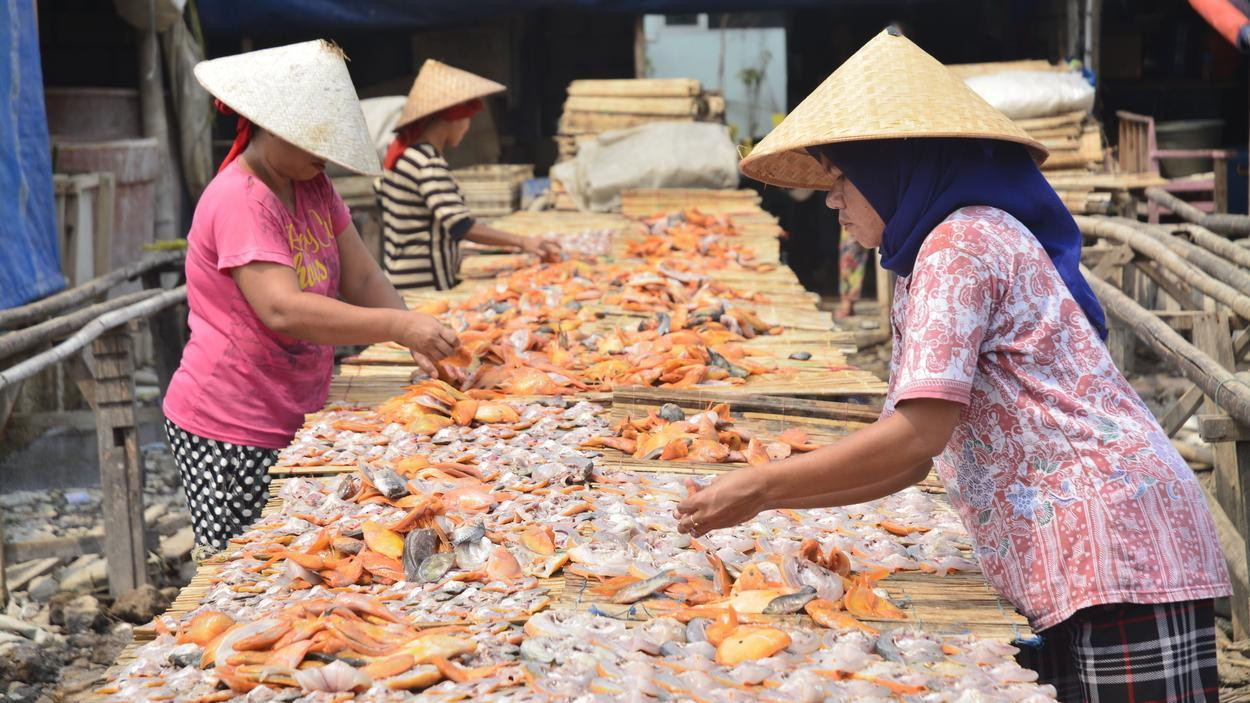 “Let us commit to action”: UN regional leaders call for concrete steps to integrate human rights standards into business practice 2021-06-08 A leading regional forum has urged a renewed commitment from business and governments to accelerate progress towards the achievement of the global development goals. Regional Heads from eight UN organisations released a joint video statement calling for the “principled collaboration of business and the international community,” to address growing gaps in social justice, public health and environmental progress. The UN leaders urged delegates at this year’s Responsible Business and Human Rights Forum to take “tangible, meaningful steps” on responsible business practices, women’s empowerment, protection of migrants’ rights, climate action, human rights due diligence and the use of data in the monitoring of international standards on labour and the environment. “Let us commit to action for an economic development that is inclusive and safeguards our environment,” the statement said. The Forum takes place on the eve of the 10th anniversary of the United Nations Guiding Principles on Business and Human rights – considered a foundational guide to global human rights standards for business. Over forty-six scheduled panel sessions featuring more than 200 experts will assess progress and responses to business and human rights challenges including eradicating the worst forms of child labour, eliminating violence and harassment in supply chains and ensuring women’s empowerment to create more inclusive value chains, among others. The event comes as many nations in the Asia Pacific region are grappling with the serious public health and economic consequences of a damaging phase in the pandemic. Discussions will also reflect on the impact of COVID 19 on progress toward the 2030 Agenda for Sustainable Development. While the pandemic has highlighted pre-existing protection gaps, the Forum will also examine a wider context of issues relating to responsible business, including climate change and environmental degradation, biodiversity loss, rising inequality, shrinking civic space and lack of accountability, among others. The need for structural and systemic change to realize sustainable development for all has become increasingly urgent. Due to COVID-19 restrictions, the Forum will be virtual this year, gathering participants on a dedicated internet platform. More than 2000 delegates from governments, business, civil society organizations and workers’ groups have signed up for this year’s event. Hosts of the UN Responsible Business and Human Right Forum include the International Labour Organization (ILO), the International Organization for Migration (IOM), the United Nations Development Programme (UNDP), the United Nations Children’s Fund (UNICEF), the United Nations Economic and Social Commission for Asia and the Pacific (ESCAP), the United Nations Entity for Gender Equality and the Empowerment of Women (UN Women), the United Nations Environment Program (UNEP), and the UN Working Group on Business and Human Rights (UNWG). The event is sponsored by the European Union (EU) and The Swedish International Development Cooperation Agency (SIDA). For more information or to follow discussions live, see http://www.rbhrforum.com/ For media enquiries, please contact:Pete Forster: T:+61 417 805 890; E:forsterw@iloguest.orgMinji Kwag: E: minji.kwag@unwomen.org URL:https://www.unescap.org/news/let-us-commit-action-un-regional-leaders-call-concrete-steps-integrate-human-rights-standards
  UNESCO’s “Digital Creativity Lab” funds 4 new projects to address digital gap in the creative sector 2021-06-07 Cultural and Creative Industries (CCIs) are among the most hit by the COVID-19 crisis, and the pandemic witnessed a massive migration of cultural activities to online and hybrid forms. As the pandemic triggered the digitization of culture, new challenges are posing to the diversity of cultural expressions with amplified gaps in access, creation, and remuneration. The International Year of Creative Economy for Sustainable Developmentoffers a timely opportunity to broadly reflect this new reality on unprecedented challenges and opportunities. Against this backdrop, UNESCO is launching a new project “Digital Creativity Lab” with the funding from the Republic of Korea to address the digital skills gap in the cultural and creative industries and to strengthen policy frameworks. The UNESCO Korea Funds-In-Trust (KFIT) for the Development of Cultural and Creative Industries has, for over a decade, invested in the development of creative sectors. Building on this momentum and fully embracing the expanding digital environment, KFIT is now shifting its strategic turn toward supporting cultural entrepreneurship in the digital era. Inspired by the “Content Korea Lab” initiated by the Ministry of Culture, Tourism and Sport of the Republic of Korea, “Digital Creativity Lab” will support training programmes that strengthen digital skills and competencies in the CCIs. The UNESCO “Digital Creativity Lab” will fund 4 new projects, which are: Protecting Musicians’ Intellectual Property in Digital Platforms in Indonesia, led by UNESCO Jakarta Office Digital Transformation of Cultural and Creative Industries in the Republic of Moldova, led by UNESCO Venice Office Strengthening digital capacity for cultural and creative entrepreneurs in Mekong cluster, led by UNESCO Bangkok Office Strengthening Digital Literacy Skills and Competencies and Promoting Gender Equality in Cultural and Creative Sectors in Central Asia, led by UNESCO Almaty Office These projects range from supporting actions to protect musicians’ intellectual property in digital platform, piloting a 3 month-long creative digital incubation programme for female creative professionals aged under 45, and analyzing data on women working in the digital cultural and creative sectors followed by the online training programme to strengthen digital skills and competencies. With this new initiative, it is expected to pilot innovative practices in developing countries to implement the 2005 Convention in the Digital environment. For more information on Korea Funds-in-Trust (KFIT), see this brochure. To see an Open Roadmap for the implementation of the 2005 Convention in the Digital environment, click here. URL:https://en.unesco.org/creativity/news/unescos-digital-creativity-lab-funds-4-new-projects
  Bridging the gender digital divide: AI Hackathon with Microsoft supports girls’ digital skills 2021-06-07 Computer science? That’s boy stuff. Or so Hesme, aged 15, believed when she switched schools in 10th grade. “I thought I’d be terrible at it”, she says. Her former school in Durban, on the coast of South Africa, didn’t offer comprehensive science, technology, engineering or math (STEM) classes. When she moved to Curro Heritage House High School, STEM classes were a regular part of the curriculum. She was nervous about that – but when her brother dared her to take a computer science class, she accepted the challenge to prove him wrong. Hesme loved her computer science class. “It became my passion”, she says now, in her final year of high school. As the only girl in the class, at first, she felt intimidated but ended up thriving. The COVID-19 pandemic has exposed a deep-rooted gender digital divide as a number of countries are increasingly moving to distance and hybrid learning solutions, most often leaving girls behind in their education paths. In a context where 2 billion women are offline, contributions from half of the world’s population will continue to be left out if these gaps are not closed and more girls are empowered to leave their digital footprint. You can’t be what you don’t see A critical first step is to expose girls to positive female role models in STEM fields. Girls who know a woman in a STEM profession are significantly more likely to feel confident when doing STEM coursework (61%) than those who don’t know a woman in a STEM profession (44%). When asked to describe a typical scientist, engineer, mathematician or programmer, 30% of girls sketch out male personas. Even adult women do the same (40%) — including 43% of the women who work in STEM themselves. UNESCO works to engage female role models, including teachers, to close digital and STEM gaps in the classroom through initiatives such as YouthMobile, which was mobilised to support this virtual AI Hackathon. “We don’t have older girls showing that they are capable”, says Karla, a senior from the High School of Math and Natural Sciences, in Osijek, Croatia, a small town on the Drava River. Her team placed third in the hackathon. Perhaps they exist, she says, but “they’re not speaking up about it, and showing the rest of us what they are doing”. Curtailing girls’ education ultimately impacts the entire world. In an era when jobs increasingly require digital skills, educating girls can boost local and regional economies and fight poverty. But it’s not happening fast enough. A Hackathon as an intervention to interest girls in AI The all-girls edition of Imagine Cup Junior virtual AI hackathon held by Microsoft and UNESCO, under the theme AI for Earth, engaged girls aged 14-18 in designing artificial intelligence solutions to respond to global challenges and in particular, save a species. When the call to try out for an all-girls artificial intelligence (AI) hackathon came out, Hesme immediately began writing the application letter. “I was just sitting in class, writing, and all my passion came out”, she says. Soon after, she received good news: Hesme was chosen to be on a five-girl team representing South Africa. During the two-day virtual event, Hesme and other girls attended talks from women in STEM fields and participated in hands-on workshops. They worked together on practical exercises designed to teach them how AI could be used to solve real-world problems using AI prediction modelling and techniques, such as decision trees and random decision forests. Hesme and her team won second place for their AI solution aiming to save African wild dogs – a species endangered by habitat loss, disease, predator hunting, and humans.“AI captured my heart”, says Hesme, whose team competed against 16 others from 11 countries across Europe, Africa and the Middle East. Impact: the tech appeal for girls In 2018, Microsoft commissioned research to investigate girls’ attitudes toward STEM, expecting negative results. “But surprisingly, we found that actually they were quite positive about STEM and technology,” says Alexa Joyce, Microsoft’s Future-Ready Skills Director, who answered questions and shared advice during the hackathon for girls looking to change the world through AI. “Typically, you hear, ‘Oh, girls think technology is hard or boring.’”, she says. Instead, girls were clearly interested in using technology to be creative and address issues that would impact the world. It was the application of the technology — not the technology itself — that fascinated them. Today, Hesme is developing her own AI-based app to help people like herself — diagnosed as being on the autism spectrum — to better cope when interacting with the world. She plans to get a higher-level certificate in AI next year before going on to study computer science at university. The gender gap in education is serious. More than 130 million girls were already being denied education before COVID-19 hit. And as schools around the world closed, UNESCO estimated that 11 million additional girls are at risk of never going back to school. UNESCO partnered with Microsoft on the hackathon under UNESCO’s Global Education Coalition’s Gender Flagship which unites more than 70 institutions from the United Nations, civil society, academia and the private sector to generate solutions to help minimize the effects of COVID-19 on education and gender equality. Read the original version of the article on Microsoft’s website More on the hackathon: Girls design artificial intelligence solutions during virtual hackathon held by Microsoft and UNESCO Keeping girls in the picture campaign UNESCO’s work on gender equality in education Photo: CECIL BO DZWOWA/Shutterstock.com URL:https://en.unesco.org/news/bridging-gender-digital-divide-ai-hackathon-microsoft-supports-girls-digital-skills
 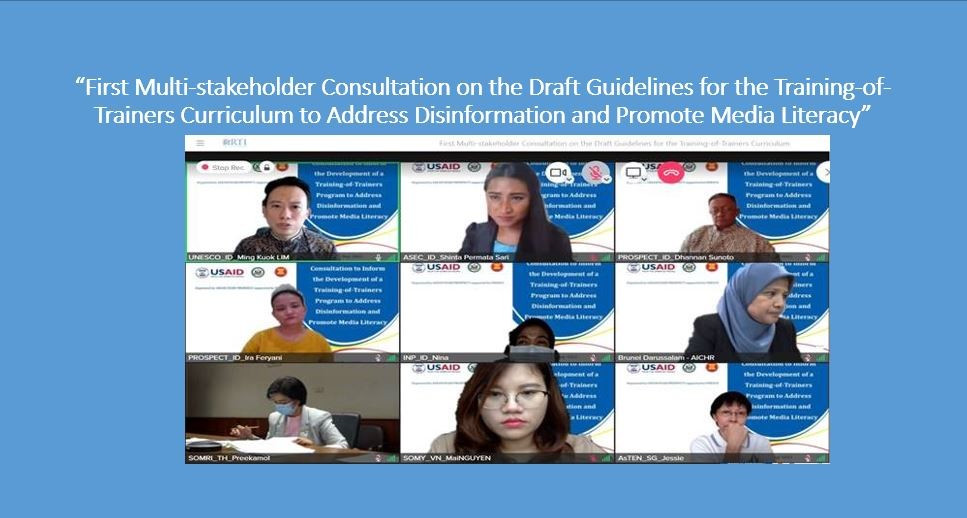 UNESCO Shares Resources on Fighting Disinformation at ASEAN Consultation 2021-06-04 A cursory look at the headlines of news articles from Southeast Asia will quickly reveal that the phenomenon of “fake news” is a topic of concerns in every country in the region. There is a need to address the spread of disinformation and misinformation holistically in the region including stronger awareness-raising, better policy, as well as more education and training. This was the main objective of the “First Multi-stakeholder Consultation on the Draft Guidelines for the Training-of-Trainers Curriculum to Address Disinformation and Promote Media Literacy” which took place on 25 May 2021. The event was organized by ASEAN Secretariat with support from ASEAN-USAID PROSPECT project. It is part of a series of activities designed to familiarize participants of a draft guidelines, including the concepts and training modules for the training-of-trainers (TOT) programmes, designed to counter disinformation in ASEAN countries. UNESCO was invited to share the “Journalism, ‘Fake News’ and Disinformation” handbook as a main resource material for this initiative. The popular handbook which is available in 23 different languages including Bahasa Indonesia, Khmer, Malay, Myanmar, Tetum, Thai, Vietnamese, as well as English. It consists of both theoretical and hands-on practical modules, making it an ideal starting point to understand the phenomenon of disinformation and misinformation for educators and journalists. During the 31st ASEAN Summit in November 2017, ASEAN Leaders highlighted the importance of combating “fake news” across the Member States and at the 14th Conference of the ASEAN Ministers Responsible for Information (AMRI) held in early 2018, ASEAN officials endorsed the Framework and Joint Declaration to Minimize the Harmful Effects of Fake News. UNESCO advocates for large scale Media and Information Literacy programmes to mainstream critical thinking as the first line of defence against disinformation while at the same time respecting the freedom of opinion and expression and press freedom including during the current COVID-19 pandemic. Additionally, UNESCO has produced a variety of resources for different stakeholders on this issue including policy briefs, audio resources and infographics. URL:https://en.unesco.org/news/unesco-shares-resources-fighting-disinformation-asean-consultation
  Call for proposal: Conducting Capacity Building of Media Professionals on Conflict-Sensitive Journalism and Countering Hate Speech 2021-06-02 Under the component of the Peace Building Fund project entitled "Young Women and Men as Stakeholders in Ensuring Peaceful Democratic Processes and Advocates for the Prevention of Violence and Hate Speech", UNESCO Dakar office, which oversees The Gambia, seeks to conduct a capacity building exercise for media professionals on conflict-sensitive journalism and countering hate speech. The two-year project is being implemented by the UN System in The Gambia in line with Peace Building Fund project’s broad goal of addressing hate speech and countering fake news and misinformation of young people through the media and local community structures. Within the framework of this Request for Proposals, the UNESCO Dakar office seeks to contract an organization capable of conducting capacity building for media professionals on election reporting with a focus on conflict-sensitive journalism, disinformation and countering hate speech. Interested entities are invited to submit a single application package, in electronic format, to the following e-mail address: mailto:dak.procurement@unesco.org, with a copy to: mailto:l.jahateh@unesco.org no later than midnight (GMT) on June 16th, 2021. The subject line of the e-mail transmission should quote the following reference: DAK/CI/2021/RFP/019 For more information, please consult the call for proposal: Download the call for proposal URL:https://en.unesco.org/news/call-proposal-conducting-capacity-building-media-professionals-conflict-sensitive-journalism
  Africa joins the global community to promote ESD for 2030 2021-06-02 More than 350 delegates including high-level Education for Sustainable Development (ESD) experts, academics, ambassadors, chief executive officers of corporations and policy makers participated in the Africa Regional Meeting on ESD for 2030 held on 26 May 2021. The meeting followed the World Conference on Education for Sustainable Development (ESD), hosted by Germany from 17-19 May 2021. Participants attended the regional meeting agreed to take forward commitments made by the Member States at the World conference. Speaking during the virtual regional meeting, UNESCO Regional Director for Southern Africa, Prof. Hubert Gijzen emphasized the importance of education in building a sustainable world. Education is the most powerful weapon you can use to change the world and Education for Sustainable Development equips learners with the skills to contribute to a more sustainable world.-- Prof. Hubert Gijzen He urged delegates to turn the outcomes of the Global conference into concrete actions that can implemented. The regional meeting took stock of the achievements, lessons learned, available resources and partners related to ESD in Africa. It also reviewed region-specific needs and approaches for ESD for 2030 and encouraged Member States in the region to commit to the implementation of ESD for 2030, in particular to develop and launch their country initiatives. The meeting highlighted ESD activities in the Africa region and the commitment of Member States in Africa to the five action areas of Education for Sustainable Development. These are: advancing policy through mainstreaming ESD; transforming learning and training environments through the adoption of whole-Institution approach; building capacities of educators and trainers; empowering and mobilizing youth; and accelerating sustainable solutions at local level. A panel session moderated by Dr. Dimitri Sanga, Director the UNESCO Regional Office in Dakar, Senegal, featured panellist from Cameroon, Mozambique, Nigeria, Senegal and Uganda. Some of the highlights included: responses by organization to ameliorate the challenges of recycling waste in local educational context, capacity building of school administrators and teachers on how to integrate ESD into their teaching; creation of ecological tools and advocating for the environment; the linking of ESD to sustainable development goals and national development plans; and promotion of ESD policies. In her closing remark, Ms. Ann Therese Ndong-Jatta, UNESCO Regional Director for Eastern Africa stressed that ESD is more than environmental education. She said it includes an understanding of the essence of education, and achievement of societal transformation through the rethinking of education to ensure quality, relevance, inclusion of all learners through the adoption of a multi-sectoral approach to the delivery of Education for Sustainable Development. URL:https://en.unesco.org/news/africa-joins-global-community-promote-esd-2030
 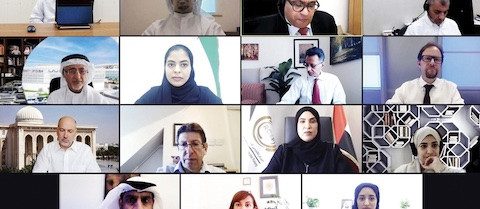 UAE universities play a pivotal role in achieving the 2030 Sustainable Development Goals 2021-06-02 The higher education sector in the United Arab Emirates is built on a solid foundation and plays an important role in consecrating sustainable development plans for 2030, as the country embraces more than 1,200 accredited academic programs in various disciplines in licensed educational institutions, and has the largest number of foreign university branches in a single country in the world. This is what the Minister of Education and Learning in the UAE, Hussein bin Ibrahim Al Hammadi, affirmed, stating that the institutions are characterized by the diversity of their educational systems, with a common national base that they have to abide by through the application of licensing and academic accreditation standards, and the fulfillment of the specifications of the different levels of qualifications, defined by the national system. The minister made these remarks during a national workshop titled “The Role of Higher Education Institutions in Achieving the Sustainable Development Goals (SDGs) in the UAE” which was implemented by the Regional Center for Educational Planning in partnership with the Ministry of Education, UNESCO, the UAE National Commission for Education, Culture and Science, the UNESCO Regional Office for Arab States in Beirut and the UNESCO Sub-regional Office for the Gulf states, with the participation of 13 universities in the country. The workshop aims to provide representatives of higher education institutions in the UAE with various and general aspects of the sustainable development goals and their relationship to the diverse work of universities, and to provide representatives of higher education institutions in the UAE with practical information on how to contribute to the achievement of the sustainable development goals and the role they can play. In his opening speech, Minister Hussain bin Ibrahim Al Hammadi said that the vital role of higher education institutions is not limited to achieving quality and comprehensive education only, but that it rather extends its impact by achieving the various goals, through teaching, learning, research outputs, campus initiatives and higher education institutions, to facilitate social, environmental and economic development. He noted that higher education institutions have become one of the most important incubators of ideas and solutions to global problems, mainly with their central location between government networks, civil society and industry partners, which means that they have enormous potential to generate a positive impact. He also stressed that the steps taken by the Ministry of Education and the setup of an education road map that derives from national visions and targets, their path, tasks and goals, and that is in line with the 2030 Sustainable Development Goals, is unfolding according to a well-established and clear methodology with specific features, and is bearing fruit as it stems from a deep vision and extensive studies. He also pointed out that the national strategy for higher education in the UAE aims to develop an innovative and high-quality educational system in both academic and professional tracks, that achieves effective research outputs and contributes to supporting the knowledge economy. He added: "The National Strategy for Higher Education 2030 is based on 4 main axes, which are quality, alignment, efficiency and innovation. The UAE has the largest number of foreign university branches in one single country in the world, which contributed to achieving global competitiveness indicators through the proportion of non-citizens students in the UAE”. Thirteen universities participated in the workshop, and five universities in the country, namely the Emirates, Khalifa, Zayed, the American University of Sharjah, and the Higher Colleges of Technology in Sharjah, presented specialized presentations, in which they reviewed their strategies and their connection with the national strategies and the sustainable development goals in order to integrate these goals in the universities societal programs, activities and research programs, and how to implement these goals at the levels of the university building, the student activities and academic and research programs, so that the challenges of implementing these goals are overcome nationally, regionally and globally. The universities also presented their strategic and technical partnerships in this field. For her part, Mahra Al-Mutaiwee, Director of the Regional Center for Educational Planning, said that with the launch of the sustainable development goals, many universities at the national, regional and global levels have begun to review their agendas, plans and strategies, to start putting forward and implementing initiatives and projects that are consistent, and work to support the implementation of the sustainable development goals. She stated that universities have begun coordinating their activities with the sustainable development goals, highlighting the effective role played by higher education institutions in addressing urgent challenges in the world, and noting that the international community is aware of the essential importance of higher education to achieve all 17 Sustainable Development Goals (SDGS), which aim to eradicate poverty, protect the planet, promote gender equality, defend and promote cultures and cultural understanding. She also said that universities are dedicated to helping the world achieve those goals. On her side, Salma Al Darmaki, Secretary-General of the National Committee for Education, Culture and Science, stressed that this workshop represents a qualitative and distinct initiative to motivate and encourage higher education institutions, to develop plans and programs aimed at contributing to achieving all sustainable development goals without being limited to the fourth goal of quality education. She considered that the role of higher education institutions is fundamental and is not limited to research and innovation, but rather includes the human element which is more important, since students are the future leaders who will continue to work to achieve the goals of sustainable development. The more their understanding and awareness for these goals, the more it will reflect positively on the way they deal with them in the future. Dr. Anasse Bouhlal, higher education program specialist at the UNESCO Regional Office for Education in the Arab States in Beirut, gave aspecialized presentation on the importance of the role of higher education institutions in achieving sustainable development goals, and reviewed regional experiences in this field as well as strategies for integrating sustainable development goals into the university’s plans and programs, with regard to scientific research programs and their role in addressing the challenges that impede the achievement of sustainable development goals at the national, regional and global levels. He also highlighted the efforts of countries in this field, and reviewed the the UNITWIN/UNESCO Chairs Programme, and how national, regional and international universities are relating to this programme. Giving an overview of UNESCO Chairs and their importance in supporting scientific research, and the mechanisms and strategies for joining them, he underlined how they can benefit the university and the state. URL:https://en.unesco.org/news/uae-universities-play-pivotal-role-achieving-2030-sustainable-development-goals
 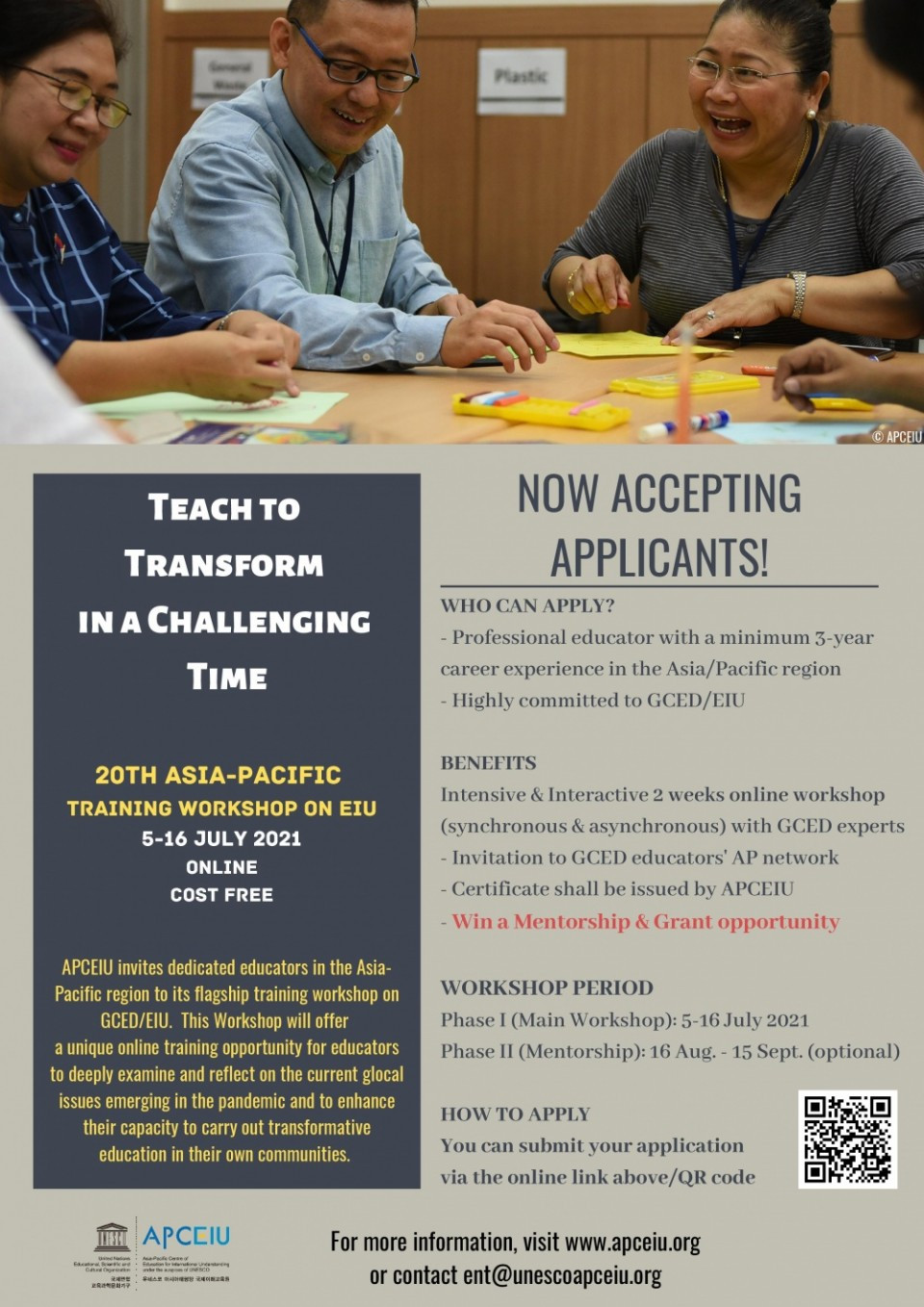 [Call for Application] 20th Asia-Pacific Training Workshop on EIU - Teach to Transform in a Challenging Time 2021-06-02 APCEIU invites dedicated educators in the Asia-Pacific region to its flagship training workshop on GCED/EIU. This Workshop will offer a unique online training opportunity for educators to deeply examine and reflect on the current glocal issues emerging in the pandemic and enhance their capacity to carry out transformative education in their own communities. Please see the attached concept note for more information. Application Period: 31 May (Mon.) ~ 20 June 2021 (Sun.) Application Link: https://forms.gle/FNUEqvDnV3Lkg2nv5 URL: http://www.unescoapceiu.org/post/4168
 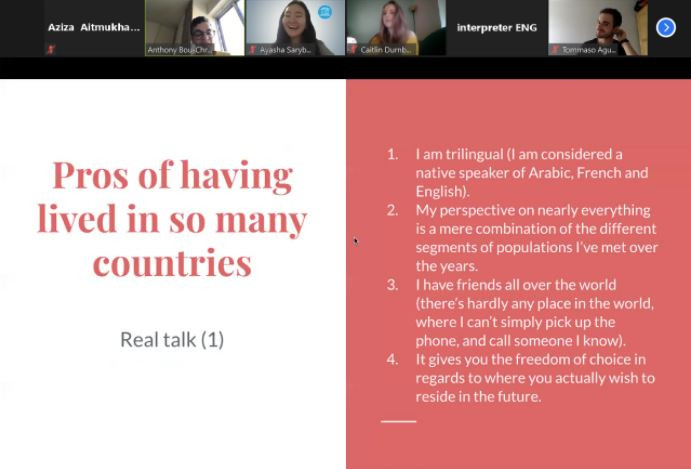 Молодые люди с 4 континентов встретились вместе для дискуссии как жить и учиться вместе 2021-05-31 The UNESCO and LingoBridge's team celebrated World Day for Cultural Diversity for Dialogue and Development by organizing an event that brought together young people worldwide including, Kazakhstan, Kyrgyzstan, Turkmenistan, the USA, and Italy, Bulgaria to promote cross-cultural understanding and international dialogue. Three speakers with broad experience of living and studying in international and multicultural environments were invited to share their stories and ideas about exploring the world. The speakers highlighted the significance of developing cultural awareness and the benefits of interacting with people across cultures. They also touched upon matters of the comfort zone and shared their thoughts on why it is essential to get comfortable being uncomfortable.Caitlin Durnbaugh from the United States has recently graduated with a Bachelors of Science in Human Development & Family Studies as well as a Bachelor of Arts in Spanish. She traveled more than 6000 km to Spain to witness different cultures and a pace of life. She says, “This exposed me to a blend of cultures ranging from Islamic and Arab influences of the South, to Spanish and European influences of the North. It is this trip in particular that changed the direction of my career to return to Europe and serve for NGOs in refugee relief.”Anthony Bou-Chrouche represented North America and the Middle East. He is a native speaker of English, French, and Arabic. He was born in Lebanon and lived there until his family immigrated to Canada because of the war. By the time Anthony turned 16, his family had to move to Dubai due to personal circumstances. Now he is enrolled in the Joint Honours program in Political Science and Economics at the University of Ottawa. Having extensive experience of living in three countries, he made some recommendations on how to adjust to an unaccustomed environment. Anthony also explained the adaptation graph he drew based on his observations.Tomasso Aguzzi is a Ph.D. candidate within the Innovative Training Network MARKETS program (EU-MSCA Fellowship) at Tallinn University of Technology (TalTech), Estonia. He holds a double MSc degree in Global Studies from the University of Vienna, Austria, and Roskilde University (RUC), Denmark, as well as a bachelor’s degree in International Development and Cooperation from the University of Bologna, Italy. He lectured at Ablai Khan University of International Relations and World Languages and worked at the Eurasia Foundation of Central Asia in Almaty, Kazakhstan. During the meeting, everyone was impressed by his wide traveling experience.The speakers and participants also played Kahoot, prepared by Anthony Bou-Chrouche, and tested their geography, general-knowledge skills, and how well they listened to the speakers. We also looked at where the meeting attendees would like to study; the destinations included the USA, some European countries such as Italy, France, Germany, Asian countries (Japan, China), but the most creative and unexpected place to study appeared to be the moon. Lessons learned from the meeting: The pros of living and studying in a different country outweigh the cons. Therefore, step out of your comfort zone, explore the world and meet new faces. Studying abroad broadens your international connections, which in turn helps you build up a sense of empathy. The cultures can be very different, but it is noteworthy to realize that we all share the same values and goals; we all want to love and be loved, be safe and happy. Befriend locals, allow yourself to adapt to a new environment, and get the most out of every single experience. Living in a country where you do not speak the language can be challenging. The advice is to find friends who can speak both the language you know and the local language so that you can get insights into the mother tongue of the locals step by step.Going abroad to study is life-enriching and can inevitably broaden the horizons and open up one’s eyes! The best part of exposing yourself to an entirely different culture is being able to gain new perspectives and sharing your background and culture to promote understanding and peace.Happy World Day for Cultural Diversity for Dialogue and Development! URL:http://en.unesco.kz/youth-from-4-continents-met-together-to-celebrate-world-day-for-cultural-diversity
 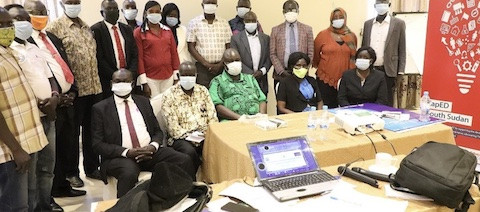 South Sudan on Course to Develop Technical and Vocational Education (TVET) Qualification Framework 2021-05-30 Representatives of government ministries, international and national NGOs in National TVET Qualification Framework and TVET Quality Assurance Guidelines development workshop/18 May 2021 © UNESCO Juba Office. Improving quality of TVET in South Sudan through a national TVET qualification framework The Ministry of General Education and Instruction (MoGEI) in partnership with the United Nations Educational, Scientific and Cultural Organization (UNESCO) organized a one-day workshop on The Development of South Sudan National TVET Qualification Framework (SSDNTQF) and TVET Quality Assurance Guidelines on Tuesday 18 May 2021. The workshop provided a forum for TVET stakeholders in South Sudan to discuss and reach a common understanding of the features of the two instruments – TVET Qualification Framework and TVET Quality Assurance Guidelines. Officials from different relevant ministries including international and national NGO partners participated and contributed in the workshop. The meeting kicked off with virtual experience sharing from TVET experts from Ghana, South Africa, and the Section for Youth, Literacy and Skills Development, Division for Polices and Lifelong Learning Systems in the Education Sector at UNESCO Headquarters. Speaking during the workshop, Mr. Tap Raj Pant, the Head of the Education Unit in the UNESCO Juba Office, reiterated UNESCO commitment to accompany South Sudan to develop the TVET sector, particularly in the areas of policy development, quality assurance framework, curriculum, legal framework, and establishment of functional TVET centers of excellency at the sub-national level. On their part, the co-chairs of the Ad Hoc TVTET Coordination Committee (one from the Ministry of General Education and Instruction and the other from the Ministry of Labour) thanked UNESCO for its support to TVET in South Sudan, without which TVET would have remained in the very fragmented state. “The development of the NTVETQF opens the way for harmonization of standards across the country”, said Mr. Taban Kazo, co-chair of the Ad Hoc TVET Coordination Committee representing the Ministry of General Education and Instruction. The workshop concluded with a roadmap towards the development of TVET qualification framework as the outcome. UNESCO support to this workshop and other initiatives to develop the TVET sector in South Sudan has been made possible through the generous contributions from the governments of Finland, Norway, Sweden, and Dubai Cares to UNESCO global Capacity Development for Education (CapEd) programme. The contents of this webnews are the sole responsibility of UNESCO and do not necessarily reflect the views of the CapEd donor community. For more information, please contact:Tap Raj Pant, UNESCO, +211 920001102; Email: tr.pant@unesco.org(link sends e-mail)Bharati S. Pokharel, UNESCO, +211 920001239; Email: bs.pokharel@unesco.org URL:https://en.unesco.org/news/south-sudan-course-develop-technical-and-vocational-education-tvet-qualification-framework