
News
Catch up on what’s happening in the world of global citizenship education.
1,668 results found
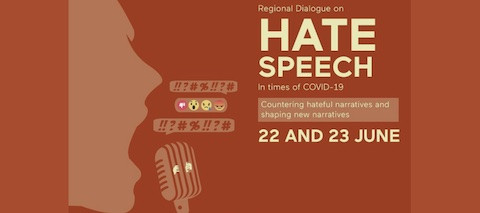 Hate speech amid COVID-19 2021-06-25 UNESCO New Delhi organized a two-day regional dialogue, “Hate speech in the times of COVID-19”, on 22 and 23 June, with the aim of promoting dialogue around the growing issue of hate speech during the global pandemic. The dialogue mobilized a variety of experts from around the world to contribute to the discussion. Speakers included representatives from academia, law, civil society, governments, media organizations, journalists, social media companies, and development partners. Over the two days, speakers deliberated on the root causes, manifestations and risks of hate speech around the world, and exchanged best practices in countering and addressing hate speech through various sectors. The first panel, given the task of setting the context and deconstructing hateful narratives, agreed on the importance of local and bottom-up research to understand and respond to structural, historical and nuanced drivers of hate, including in South Asia. Speakers pointed to shifts in discussions about hate speech, including the recent growth in hate speech detection through algorithms used by artificial intelligence, while pointing to the need for human-centric debates and solutions. The second panel, tasked with capturing key solutions and strategies for promoting peaceful narratives, stressed the need for a multi-layered and multi-disciplinary endeavour. Speakers representing both traditional media and social media channels spoke about the important role of journalists and media professionals in shaping communications and promoting through their work high standards and fact-based reporting and media content. Growing levels of hate speech and polarization present us with an urgent challenge to promote and protect the freedom of expression while standing firm against all forms of intolerance.-- Eric Falt, Director of UNESCO New Delhi Building resilience to and awareness of hate speech through education, particularly through media and information literacy, and educating youth on their online and offline responsibilities and rights, were pointed out as a key interventions in this work. Panellists also shared experiences in the use of innovative methods, such as comedy and counter messaging campaigns to promote tolerance. Finally, both discussions emphasized the important role of decision-makers in promoting inclusive public policies that move beyond regulation of content to promoting freedom of expression and the shared values of tolerance and acceptance in societies. The dialogue concluded with reflections on the need for stronger partnerships and renewed commitments from all sectors to mobilize and stand up against hate speech, particularly in the midst of recent and new manifestations of hate during the COVID-19 pandemic. Through this multi-sectoral effort to tackle hate speech, UNESCO and its key partners can contribute to building more peaceful societies. Useful links: Global citizenship education Preventing violent extremism through education UNESCO publication – Countering online hate speech URL:https://en.unesco.org/news/hate-speech-amid-covid-19
 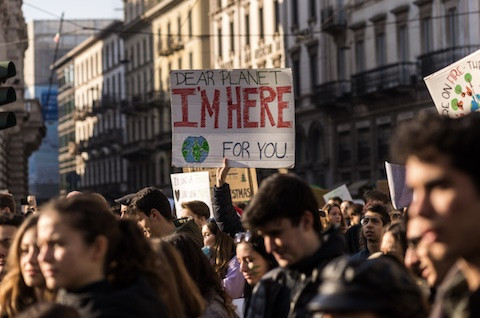 A year in the life: ALE, GRALE and the Futures of Education 2021-06-25 We have reached a moment of potential transformation in adult education. We need to seize it, argues Paul Stanistreet The next year will be formative for the field of adult learning and education (ALE). Preparations are underway for the seventh International Conference on Adult Education (CONFINTEA VII), in all likelihood in summer 2022. Meanwhile, the fifth Global Report on Adult Learning and Education (GRALE) is being finalized, to be published in late spring next year. Add to this UNESCO’s Futures of Education commission, which will report at the end of this year, and the fast-approaching midway point in the 2030 Agenda for Sustainable Development, and it is clear that this is a moment of potential change in education, and in adult education in particular, which I believe we need to grasp. The enormous challenges presented by the COVID-19 pandemic, the changing work environment, demographic shifts and, most critically, the climate crisis, mean that more of the same is no longer an option we can responsibly pursue. It is early days in the drafting of GRALE 5 but there are intriguing and important themes emerging that point to a new direction for adult education and lifelong learning. The report has taken active citizenship education as its thematic focus, a response, in part, to GRALE 4 that found that citizenship education was neglected in comparison to adult education for vocational purposes and basic skills education. But the choice also reflected UIL’s perception, driven in part by an understanding of the above challenges, that citizenship education, and in particular the emerging notion of global citizenship, was critical to all our futures, and to the future of the planet. Global citizenship education (GCED) represents UNESCO’s response to the challenge of ensuring peace and planetary sustainability, and a fairer, more equal world. The idea is to empower learners of all ages to understand that these are global and not only local issues and to become active promoters and civically minded advocates of more peaceful, tolerant, inclusive, secure and sustainable societies. GCED builds on UNESCO’s historic commitment to peace and human rights education, and its humanistic understanding of the value of education. But it does so in a way that challenges us to think beyond the human and to see human futures as inextricably linked to the future of the natural world in which we live and of which we are a part. Honouring both UNESCO’s humanistic traditions and the need to move beyond them in some respects is one of the conceptual challenges facing the Futures of Education Commissionas it shapes its final report. One strand of the commission’s still-emerging thinking has involved reframing the four pillars of learning set out in UNESCO’s 1996 Delors Report – learning to know, learning to do, learning to live together and learning to be – in terms of what Noah Sobe terms‘commoning actions and strengthening the common good’. Of course, it remains to be seen what the commission puts in its final report, but the idea of reorientating learning towards the common good and joint endeavour speaks both to the social purpose origins of the adult education movement in civic learning and collective action and to the challenges of the present, most notably the biggest challenge of all (overshadowing even the pandemic, which has absorbed all our attention for the past 18 months): climate change. This thread of ideas, in one form or another, also runs through the early draft of GRALE 5, which points to the need to adjust the focus of adult education provision towards common action and common, global goods. Adult education is not, and should not be, all about private benefits or economic development. It is, most crucially, about building the capacity for common action and giving people, to paraphrase cultural theorist Raymond Williams, ‘resource of hope’ rather than reasons to despair. As the Futures of Education Commission recognizes, this is the educational challenge of the next decades, and it is the challenge in particular of adult education. This perspective, as the Futures of Education commission also notes, is an immensely discomforting and provocative one. It requires us to rethink old models of endless economic growth, to challenge entrenched patterns of inequality, reproduced and, in many cases, exacerbated through the pandemic, and to view education not as a means of control or cultural reproduction but as a vehicle of progressive change. It means refining our conception of ‘development’ and rethinking our humanism in a way that transcends the human. We have got used to thinking nothing can change. The world is maddeningly unequal and unfair. Resisting the forces that arrest progress is exhausting. Despair is the default for many millions of people. Hopelessness, to quote David Graeber, has become boring. But, of course, change is possible. Things do change, even things that seem unchangeable, but only through determined collective action and a willingness to think big. It is still possible to meet the goals of the 2030 Agenda for Sustainable Development and to reverse much of the damage we have done to the environment. But it will only happen through the kind of education that transforms our perspective on what is possible, that joins our efforts and gives us hope of something better. One of the key messages of GRALE 5 will be that we need to rebalance adult education participation towards education for active citizenship, and towards global citizenship, in particular. I see considerable hope in this, especially given the pivotal moment represented by CONFINTEA VII. The world can change, if we seize the opportunity. Perhaps the main lesson of the pandemic is this: a better, fairer, more sustainable future is possible, but only if we work together and, truly, leave no one behind. Paul Stanistreet is Head of Knowledge Management and Communications at UIL URL:https://thelifelonglearningblog.uil.unesco.org/2021/06/21/a-year-in-the-life-ale-grale-and-the-futures-of-education/
  En contextos de desinformación y plataformas informativas dudosas, los medios independientes han estado a la altura en tiempos de pandemia 2021-06-24 Press Freedom Day and Week 2020 In a conversation with the Razones Editoriales program on Radio Universidad de Santiago, UNESCO Santiago Information and Communication Coordinator Nicolás del Valle, an academic at the university, stated that the major challenges in information systems have come in the area of controlling the proliferation of fake news and the full development of journalism in a context of restricted human rights. The interview came within the framework of the partnership between the Universidad de Santiago de Chile and the UNESCO Santiago Information and Communication Sector to broadcast content during World Press Freedom Week, held from May 4 to 8, 2020. UNESCO Santiago ran an awareness campaign over social networks during the week and an interview on the university radio station. Actions were focused on promoting journalism and freedom of expression during the COVID-19 pandemic. Nicolás del Valle spoke about the major challenges facing journalism in unprecedented times, with a worldwide pandemic in progress. "Amidst disinformation and the emergence of dubious news platforms, independent media have stepped up to the challenge, particularly community and university news sources." -- Nicolás del Valle Similarly, Del Valle added that –since the Chilean social crisis of October 2019– the local media had faced significant shortfalls in the financing, aggravated by the concentration of ownership in the media sector. Here, he stated that the COVID-19 factor had accelerated the displacement of media financing models, which “sets and medium and long-term challenge for us about what the financing system is and how we as a country want to address an integrated information and communications policy to think about more equitable and inclusive distribution.” Listen to the full interview on Radio Universidad de Santiago Further information: Día Mundial de la Libertad de prensa 2020. Por un periodismo valiente e imparcial Premio UNESCO Guillermo Cano por la Libertad de Prensa 2020 URL:https://en.unesco.org/news/amidst-disinformation-and-dubious-information-platforms-independent-media-step-times-pandemic
 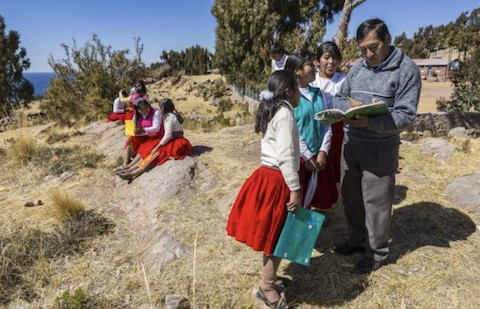 Teaching in the local language: Teacher training in question 2021-06-22 Millions of children around the world do not speak the same language at school and at home. While many countries have policies supporting the use of local languages in the classroom, implementing bilingual or multilingual education remains a challenge. In Latin America, the training of indigenous teachers is a key issue, as shown by a recent comparative study by the IIEP-UNESCO Bueons Aires office. Multilingualism: A reality in many parts of the world It has long been known that children learn best in their first language. In contexts where several languages coexist, bilingual or multilingual education is a strategy recommended by the United Nations to achieve equitable, inclusive and quality education by 2030. In India, teachers work in classes where up to 20 different languages are spoken. In Africa, it is estimated that only 5-15% of students know the official international language before they start school. As for Latin America, Spanish or Portuguese coexist with indigenous languages in communities that are still the most disadvantaged within education systems – both in terms of access to education and learning outcomes. One of the reasons for this is the lack of attention paid to the training of indigenous teachers. This is the subject of the comparative analysis of educational policies (in Spanish), carried out by Sylvia Schmelkes and Ana Daniela Ballesteros for the IIEP-UNESCO Buenos Aires office. The cases of Peru, Bolivia, Mexico and Colombia are studied in more detail. "The poor planning of indigenous peoples' education, manifested in the neglect of bilingual teacher training ... explains, but does not justify, the serious educational situation in which [these communities] find themselves.”Sylvia Schmelkes and Ana Daniela Ballesteros Rethinking and strengthening indigenous teacher training The model of bilingual intercultural education has been widely developed in the educational and linguistic policies of Latin American countries over the last 25 years. The aim has been both to combat discrimination against indigenous populations and to preserve the languages and culture of the communities. The continent is home to some 560 languages in total, most of which are in decline and some in serious danger of extinction. Indigenous communities represent at least 45 million people. This corresponds to 8% of the continent's population but 14% of the poor and 17% of those in extreme poverty. Despite policies that favour the training of indigenous teachers, the continent continues to suffer from a large deficit of qualified teachers who are able to speak the local language in addition to the official national language and to teach in bilingual schools. Among the many obstacles mentioned in the report are: historically weak basic education in indigenous communities due to lack of resources; difficulties related to language harmonization and teaching materials, as some languages are not documented; and what the authors call the "colonization of the consciousness" of indigenous populations in general, and of teachers in particular. "During their time in an assimilationist education system, many indigenous teachers have learned to devalue their language and culture, to integrate as much as possible into the dominant culture,” the authors explain. “And, as a result, to refuse to teach their culture and language in the classroom.” Despite the specific historical and cultural context of Latin America, similar obstacles can be found in many other parts of the world, hindering the effective integration of local languages and cultures into education systems. On the IIEP Learning Portal, discover a selection of resources from our library on language of instruction and learning outcomes. In Colombia, a system by and for indigenous people Among the national policies analyzed in the report, the Colombian case is particularly interesting and successful. As an alternative to the 'ethno-educational' model that had been prevailing in the country, a truly indigenous education system (Sistema de Educación Indígena Propia) was created in 2007 through the initiative of the communities. It was recognized by the Colombian government two years later. Within this framework, the Autonomous Indigenous Intercultural University (Universidad Autónoma Indígena Intercultural), based in the Cauca region in the southwest of the country, trains indigenous teachers for all levels of education, with its own curricula and content. It has developed courses of four to eleven semesters for different professional, technical or university qualifications, recognized by the State. For example, it has developed a 'Community Pedagogue' or a 'Mother Earth Revitalization Professional' titles. "Indigenous Colombians have struggled for many years to have their own needs, values, and rights recognized. The content of the programmes is based on these community and family needs," explains Ana Daniela Ballesteros. However, the approach is not closed and manages to articulate this approach with more universal educational objectives. As such, it is considered good practice. URL:http://www.iiep.unesco.org/en/teaching-local-language-teacher-training-question-13800
  Modern technologies in inclusive education during the COVID-19 pandemic 2021-06-22 The COVID-19 pandemic has exacerbated inequities in access to educational opportunities of marginalized populations, especially people with disabilities. While many countries in the world have taken a number of measures to address these inequities through a range of open and distance learning (ODL) solutions, emerging evidence indicates that these solutions have rarely been inclusive of students with disabilities. To support countries and other global initiatives to incorporate a strong disability inclusive perspective to COVID-19 response and recovery, the United Nations Partnership on the Rights of Persons with Disabilities (UNPRPD) launched the Global Programme Supporting Disability Inclusive COVID-19 Response and Recovery at National Level. This global programme, entitled ‘Building Back Better for All’, has enabled research investigations that leverage the experience of UN agencies, organizations of persons with disabilities and broader civil society. In 2021, IITE, the UNESCO International Institute for Educational Planning (IIEP) and UNESCO Headquarters (HQs) joined forces to contribute to the successful implementation of this programme. In January-June 2021, IITE and IIEP jointly undertook a research project aimed to increase national understanding of the range and reach of inclusive open and distance learning (ODL) solutions applied for students with disabilities in Rwanda and Mauritius and the barriers to their implementation during the COVID-19 pandemic, and inform upcoming national education COVID -19 recovery initiatives. To achieve the project’s tasks, IITE and IIEP conducted rapid assessments of the implementation of inclusive ODL solutions by inclusive, special schools, and resource centers in Rwanda and Mauritius to address the negative effects of the COVID-19 pandemic on learning for students with disabilities, as well carried out a case study in Mauritius to collect and analyze best practices in this field. Based on the findings of the conducted analysis, IITE and IIEP developed a Case Study ‘COVID 19, technology-based education and disability: The case of Mauritius. Emerging practices in inclusive digital learning for students with disabilities’ and the Analytical Report on ‘A rapid assessment of the development and implementation of inclusive open and distance learning solutions for students with disabilities served by inclusive, special schools and resource centres in Rwanda and Mauritius’. On June 15 2021, IITE and IIEP organized an international webinar on ‘Technology-enabled inclusive education: Emerging practices from COVID-19 for learners with disabilities’ with the participation of 230 experts from different countries. The webinar allowed to present key research results and recommendations related to the implementation of technology-enabled ODL initiatives and to have an open discussion about lessons learned in order to explore ways to enhance future initiatives. In June 2021, based on the gathered data from the rapid assessment and case study reports, IITE and the Division for Education 2030 Support and Coordination at UNESCO HQs prepared a Policy Brief on ‘Understanding the impact of COVID-19 on education of persons with disabilities: Challenges and opportunities of the distance education’. The Policy Brief included conclusions and recommendations developed based on the findings of recent studies undertaken in the COVID-19 context in Africa (specifically, in Rwanda and Mauritius), Asia (Bangladesh) and South America (Colombia) regarding inclusive education for learners with disabilities. The activities performed by IITE, IIEP and UNESCO Headquarters within the UNPRPD programme contribute to strengthening global collaboration and creating an encouraging ecosystem for ongoing ODL and help promoting the idea of the development of a system–wide educational reform where multiple channels to diverse learning opportunities are recognized and learning beyond formal education is encouraged. Webinar Information Note URL:https://iite.unesco.org/news/modern-technologies-in-inclusive-education-during-the-covid-19-pandemic/
  Calling All Teachers: Join the Global Schools initiative of the UN Sustainable Development Solutions Network Read more: www.opportunitiesforyouth.org 2021-06-22 CALL FOR TEACHERSGlobal Schools launches its call for the third cohort of the Global Schools Advocates Program to build the capacity of primary and secondary school teachers to integrate sustainability in school communities.June 16, 2021: The Global Schools, an initiative of the United Nations Sustainable Development Solutions Network (UNSDSN), is launching another call for Global Schools Advocates to build the capacity of educators to integrate Education for Sustainable Development (ESD) in classrooms and schools. All primary and secondary teachers worldwide are invited to apply, including the 45,000+ teachers already in the Global Schools network of 1,000+ schools in 80+ countries. Selected teachers will be invited to undergo a free online training course on the SDGs and Education for Sustainable Development, where they will learn about the 2030 Agenda for Sustainable Development, the SDGs, the role of schools and educators in achieving the SDGs, and how to incorporate these topics in lesson plans and school activities. After completing the course, the Global Schools Program will support teachers by giving them free resources to assist them in building a long-term school strategy and implementing ESD in their classroom and school community.The Advocates Program will allow teachers to act as action planners and connectors within their school communities to bring the SDGs and Education for Sustainable Development (ESD) within school lesson plans, activities, curriculum, and operations. Submit your application by 11:59pm EST on Wednesday, July 14th, 2021.BENEFITS OF PARTICIPATIONFree training course on the SDGs and Education for Sustainable Development;Ability to join an incredible network of like-minded teachers working to implement activities and lessons on the SDGs within their classrooms;Opportunity to serve as a Mentor Advocate for future cohorts;Certificate of Completion granted after the completion of the entire program;Monthly online professional development workshops and conversations with experts on the SDGs and education. Ability to act as a leader in your community and school by developing a long-term plan of ESD integration;Recognizable title (SDSN Teachers Advocate, SDG Teaching Advocate, etc.).ELIGIBILITYTeach at any primary or secondary school worldwide (teachers employed through volunteering programs such as UN Volunteers, Fulbright, Teach for All, etc. are also eligible). Possess a high level of English to complete the Advocates Training and engage with the global network.Commit a minimum of 5 hours per week for this role.DOCUMENTSPlease read the following documents with more information before applying. URL:www.opportunitiesforyouth.org
  Call for Abstracts: Water and Climate Change Conference - Accelerating Youth Action on Climate Change in Namibia, 11 August 2021 2021-06-22 The United Nations Educational, Scientific and Cultural Organization (UNESCO) Windhoek Office, in partnership with the University of Namibia (UNAM) and Namibia University of Science and Technology (NUST), is organizing a Water and Climate Change Conference to accelerate youth action on innovative solutions to address prevailing water challenges and climate change. The main objective of the conference will be to promote awareness and empower young people in advocating and initiating climate change adaptation and mitigation actions for water security in their respective communities. The conference will also be used as a platform to bring together young professionals in water management to establish the UNESCO Intergovernmental Programme (IHP) youth network in Namibia. SUBTHEMESThis call is open to all young professionals under 35-years of age or youth-led organisations in the fields of hydrology, environmental and/or any other related sciences. The subthemes are as following:•Theme 1: Water-related Disasters and Hydrological Changes•Theme 2: Groundwater in a Changing Environment•Theme 3: Addressing Water Scarcity and Quality•Theme 4: Water and Human Settlements of the Future•Theme 5: Ecohydrology, Engineering Harmony for a Sustainable World•Theme 6: Water Education, Key to Water Security MODALITYThe conference will invite 30 youth representatives to present innovative solutions for water challenges and climate change. Due to the current COVID-19 pandemic, the Conference will be hybrid - face-to-face and online. A physical meeting will be held in Windhoek, limited to 50 participants (COVID-19 permitting). The event will be livestreamed through Zoom and Facebook, and open to all for participation. ABSTRACT SUBMISSIONAbstracts of not more than 500 words should be submitted through the link below:http://bit.ly/unesco_youth_conferenceSubmission deadline: July 15th 2021 For any enquiries on the Conference, please contact: Siying TanTel: +264 81 2676234 | Email: s.tan@unesco.org URL:https://en.unesco.org/news/call-abstracts-water-and-climate-change-conference-accelerating-youth-action-climate-change
  Strengthening the relationship between independent fact-checkers and media outlets: a promise of quality journalism 2021-06-21 "Social media increasingly rely on independent fact-checkers to help them free their platforms of disinformation. But, while fact-checkers seek to help users trust quality information, their relationship with traditional media becomes strained when fact-checkers question the work done by journalists. Strengthening the relationship between independent fact-checkers and traditional media has therefore become a new focus of our work in a project to build trust in media," said Adeline Hulin, Project Officer at UNESCO EU Liaison Office in Brussels. Fact-checking was traditionally viewed as a part of journalistic pursuit performed within newsrooms as quality control to verify content produced by journalists. Following the advent of social media and migration of public debates to online space, fact-checking also became the focus of independent organisations aiming to improve accountability related to claims on the veracity of information published on social media. accountable for their claims. However, as the number of independent fact-checkers grew internationally, their relationship with media outlets has been on the wane. This is the case in South East Europe, where media have occasionally objected to how the fact-checking process is undertaken and how their reporting is removed from social media following the flagging by some fact-checkers. We have received a large number of complaints and objections from the media regarding fact-checking platforms in BiH. In their complaints, media object to the methodology and selective approach of fact-checkers and ask us to protect them as they claim that this approach introduces censorship, but also self-censorship of journalists and editors out of fear of penalties in the form of reduced reach on Facebook and, consequently, decreased earnings and news visibility.-- Dženana Burek, Executive Director of the Press Council in Sarajevo With this in mind, the UNESCO EU-funded project "Building Trust in Media in South East Europe and Turkey - Phase 2" dedicates a part of its activities to establishing innovative solutions to install a dialogue and cooperation between media and fact-checkers. Firstly, the project is working with partners to pilot a mediation system between fact-checkers and media outlets to encourage cooperation between the two. In Turkey, for instance, UNESCO’s media NGO partner P24 recommends establishing a system of contact between media outlets and fact-checkers to enable fact-checkers that identify problematic content in journalistic articles first to communicate this to the media outlet. “With such mechanism, fact-checkers could ask media to correct those claims it put forward and the media would be able to contact fact-checkers ahead of the publication of news,” said Özgun Özçer, Project Coordinator of P24. “The system will consist of establishing a contact fact-checker for each newsroom and vice-versa,” he explained. Secondly, UNESCO is supporting in South East Europe the development of fact-checking units within newsrooms. In Serbia and Montenegro, UNESCO is partnering with a media outlet that does fact-checking and a member of the International Fact-Checking Network, to support fact-checking skills and units in newsrooms working closely with media outlets. The aim is to provide in-depth training on fact-checking, as well as mentoring, to 2 media outlets in Serbia and 2 in Montenegro with the objective of supporting the development of new fact-checking units. Finally, the UNESCO project is supporting press and media councils in the region to encourage fact-checkers to adhere to media self-regulation and to journalistic and professional standards. Many fact-checkers have their code of ethics and practices, such as the ones of the International Fact-checking Network, but the adherence of fact-checkers to existing media self-regulation mechanisms at national level is an additional way to reinforce cooperation between media and fact-checkers and enable resolution of disputes. In some countries press councils are now welcoming fact-checkers as members. This puts fact-checkers under the same ethical standards as media, ensuring that in potential disputes the press council would be able to handle the complaints. UNESCO and the European Union, DG Near, launched the second phase of the project Building Trust in Media in South East Europe and Turkey in November 2019. In addition to enhancing fact-checking in media outlets, the project, among others, works with youth through SEE Youth Newsroom and supports the piloting of ethical audits within media to combat online disinformation. LINKS: Building Trust in Media in South East Europe and Turkey – Phase 2 UNESCO supports fact-checking workshops for journalists and representatives of civil society in Turkey UNESCO launches a Youth Newsroom for South East Europe and Turkey Ethical audits: a powerful tool for enhanced transparency and good governance URL:https://en.unesco.org/news/strengthening-relationship-between-independent-fact-checkers-and-media-outlets-promise-quality
  The Information for All Programme of UNESCO tackles disinformation through impactful projects that promote access to information and digital literacy 2021-06-19 As the COVID-19 pandemic has so vividly shown, access to information has the potential to save lives. This health crisis has underlined how media and information literacy can address surges in disinformation. It has highlighted the importance of making reliable information readily available in multiple languages, including indigenous languages. It has also underscored that immediate measures must be catered to those most in need, including persons with disabilities. The Information for All Programme of UNESCO (IFAP) deals with all these issues. It aims to build inclusive knowledge societies, where technological progress and digital opportunities are part of everyone’s daily lives. These are the words of Mr. Xing Qu, Deputy Director-General of UNESCO, at the 32nd Meeting of the Bureau of the Intergovernmental Council for IFAP held virtually on 15 and 16 June 2021. The IFAP Chair, Ms. Dorothy Gordon of Ghana, emphasized that the Programme can fast-track policy consensus and contribute towards health, education, justice and reducing inequalities. With a mandate that is today more important than ever, IFAP harnesses opportunities offered by technology to share experiences and lessons learned from high-level events, studies and capacity building initiatives that promote digital inclusion, are based on sound data, and contribute to progress towards the Sustainable Development Goals. It is in this context and under this driving motive that experts and Government representatives from 22 UNESCO Member States work together through IFAP. Belgium, Ghana, Jamaica, Malaysia, the Sultanate of Oman and the Russian Federation compose the Programme’s leadership – its Bureau. They jointly carry out the crucial mission of this unique Intergovernmental Programme of UNESCO, which has been assisting UNESCO Member States in building inclusive knowledge societies throughout its two decades of existence. At its 32nd meeting, the IFAP Bureau assessed the positive impact of two projects funded and co-funded by the Programme between 2020 and 2021 in response to COVID-19. In partnership with the UNESCO Institute for Information Technologies in Education in Moscow, IFAP built capacities of teachers, educators and decision-makers in nine countries of eastern Europe and central Asia. The project aimed to facilitate online learning and impart media and information literacy skills to address misinformation and disinformation. IFAP was also part of the “UNESCO Caribbean Artificial Intelligence Initiative”, raising awareness of the challenges and opportunities of artificial intelligence in Caribbean Small Island Developing States. Offering training tailored to the Caribbean context, this project has helped pave the way for public policies that support the ethical use of ‘AI’. As UNESCO is establishing cross-cutting strategic objectives to guide its actions over the next eight years, IFAP must act as an enabler for the Organization’s communication and information priorities, working in a transversal manner to contribute to UNESCO’s assistance to Member States in achieving the SDGs, underlined the IFAP Chair. And, to do so, IFAP is renewing its Strategic Plan for 2022 to 2025 in alignment with UNESCO’s Medium-Term Strategy. To better serve Member States’ needs and guided by the IFAP Bureau, IFAP Secretary Ms. Marielza Oliveira is strengthening and standardizing IFAP’s internal processes, increasing the Programme’s effectiveness, efficiency and outreach. However, developing this plan is only one part of the process. To achieve these goals, IFAP also needs resources – including both greater visibility and resource mobilization. “We need more commitment, from more Member States – so that we can continue funding projects and activities like those that the IFAP Bureau considered at this meeting,” said UNESCO Deputy-Director-General Qu, calling on more UNESCO Member States to join in those who have actively contributed to the Programme’s success. In November this year, UNESCO Member States will be electing up to 16 IFAP Council Members at the 41st General Conference of UNESCO. It is the IFAP Bureau’s hope to see a great number of Member States present candidatures and join IFAP because the success of this Intergovernmental Programme depends on this ongoing engagement – the ability of delegates and experts to encourage their Governments to build knowledge societies across the globe, based on access to information for all. URL:https://en.unesco.org/news/information-all-programme-unesco-tackles-disinformation-through-impactful-projects-promote
 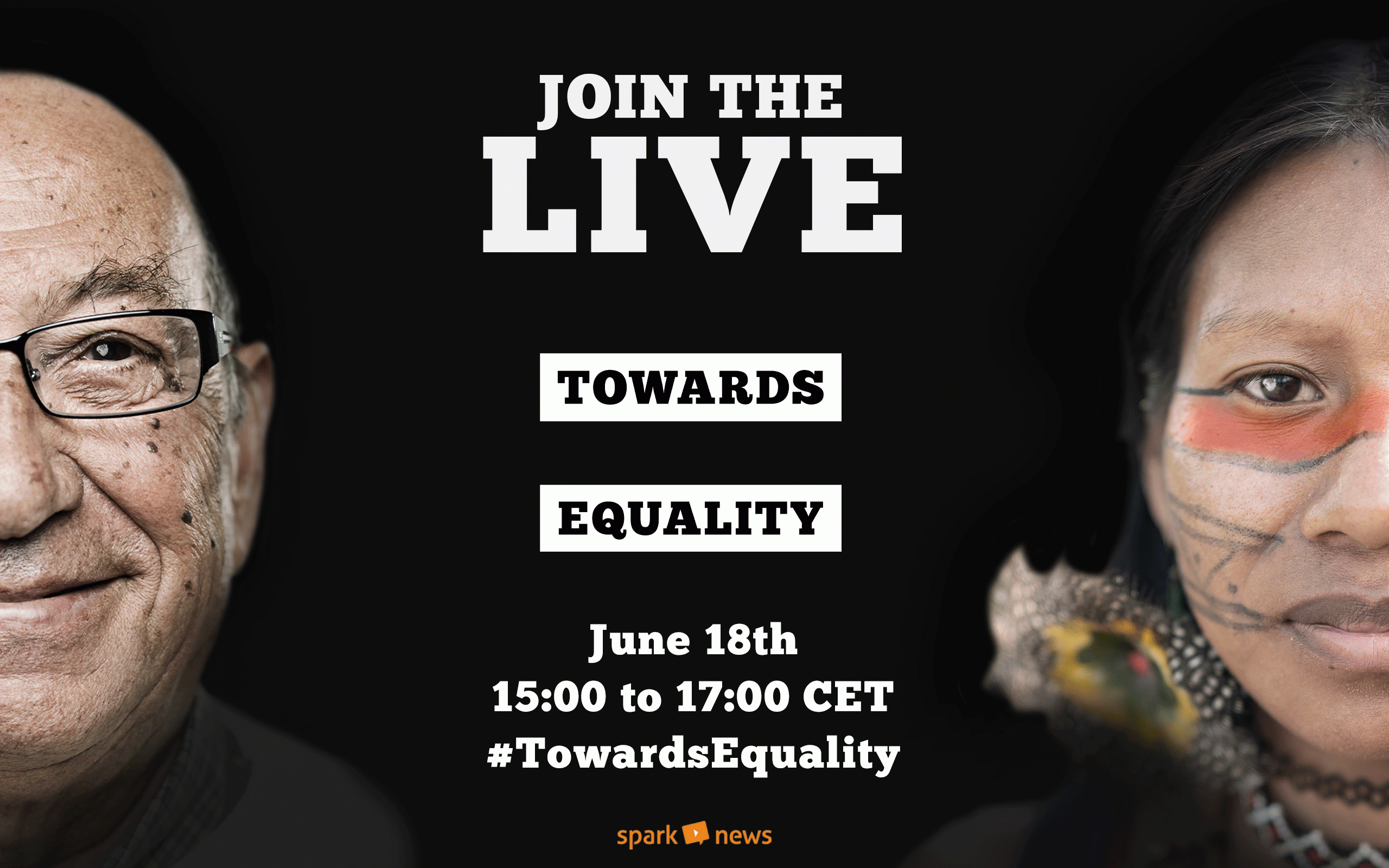 Towards Equality, join the live for a more incluisive world 2021-06-19 What is Towards Equality? From health to the economy, security to social protection, the impacts of the Covid-19 pandemic have been exacerbated for women and girls. Preexisting inequalities have been greatly amplified on various levels: work, mental and physical health, childcare, violence against women, just to name a few, and could have set gender equality back decades, according to experts. But rather than being the root cause, Covid-19 has in fact aggravated and made visible long-standing gender inequalities in all regions of the world. Inequalities that more than ever weigh on our societies’ ability to face tomorrow’s challenges. Ensuring through concrete actions and initiatives equal access to education, health care and opportunities in all sectors of the economy and professional fields, including those in decision-making positions, for all girls and women, is not only a duty but could help build a more inclusive and altogether better world. On June 18, 15 international news outlets will highlight the challenges and solutions to reach gender equality and build stronger societies. Women, men, representatives of the civil society or public institutions, innovators or change makers, leading experts or renowned gender equality figures will also join forces during a 2-hour live broadcast and through a social media campaign #TowardsEquality. A short video by Anastasia Mikova, co-director of the beautiful documentary ‘Woman’, will help further amplify their voices. This unique editorial collaboration will take place just a few days before the Generation Equality Forum (June 30-July 2), held by UN Women and the French government , that will bring together governments, corporations and change makers from around the world to define and announce ambitious investments and policies. The media, given its wide reach and influence, is a key lever in bringing these issues, as well as solutions addressing these issues, to the attention of the general public. But we will not stop here, and will take the topic of gender equality beyond the news pages to social media platforms used by so many today. URL:https://en.unesco.org/news/towards-equality-join-live-more-incluisive-world