
News
Catch up on what’s happening in the world of global citizenship education.
1,668 results found
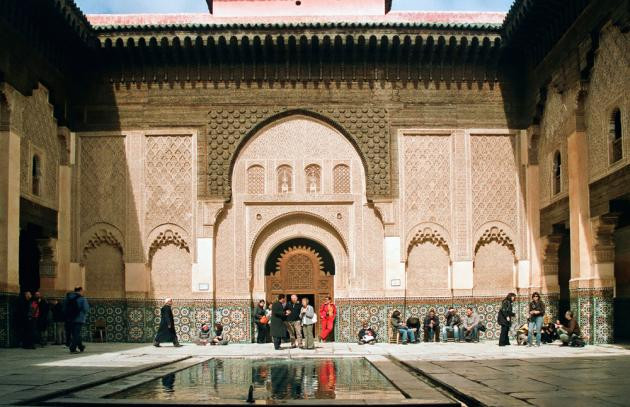 Forum international de politique éducative de l'IIPE-UNESCO : « L'enseignement supérieur doit s'adapter aux besoins des personnes » 2021-07-19 Flexible learning pathways (FLPs) are an important new policy direction in higher education systems worldwide. As the sector rapidly expands and students become more diverse, FLPs support students with everything from getting in to getting out of higher education. They can also help address equity and fairness, and prepare students for the realities of a changing world. New directions in higher education How to support flexibility for students in higher education was the focus of IIEP-UNESCO’s recent online International Policy Forum. From 6-8 July 2021, policy-makers, experts, and researchers from over 80 countries discussed how to improve the effectiveness of FLPs in a series of panels and parallel workshops.The forum was also an opportunity to share new research findings from IIEP’s multi-year international study on flexible learning pathways in higher education to advance the United Nation’s Education 2030 Agenda. Exploring the broad question of how national policies influence institutional practices to foster flexibility, the research zoned in on experiences from Chile, Finland, India, Jamaica, Malaysia, Morocco, South Africa, and the United Kingdom. “Higher education remains central to IIEP’s research to deliver on the global Sustainable Development Goals. Today, we are ready to share and discuss the findings with a truly international public of policy-makers.” -- Paul Coustère, Director a.i, IIEP The global picture Occurring amid the COVID-19 pandemic, the Policy Forum was an opportunity to discuss the rapid, global change facing the sector, as well as where it will go next. It also showed how prescient FLPs are: evidence is increasingly showing that institutions that already embraced flexibility were better equipped to face the crisis, which has affected some 220 million post-secondary students worldwide. “Higher education institutions that have been offering flexible approaches in the delivery of education are better equipped to respond to crisis. We need higher education systems that can accommodate these new realities.” -- Michaela Martin, Team Leader a.i, Research and Development, IIEP Aside from the current crisis, FLPs can help higher education institutions adapt to other global shifts. For example, the ongoing industrial revolution – and the development of artificial intelligence – requires a radical new approach to upskilling and reskilling, and therefore a more flexible approach to accessing higher education than taking part in full degree programmes. “There is a need for most of the working population to have their qualifications upgraded and skills as well as knowledge enhanced in line with the industrial 4.0 revolution.” -- Noraini Ahmad, Honourable Minister of Higher Education, Malaysia To help facilitate this, Institutions must embrace new technological developments to facilitate flexibility in terms of where, when, and how students learn. The current COVID-19 crisis advanced the practice of online learning; however, major questions still stand. How can FLPs truly benefit all students and ensure the relevance of higher education for years to come? Moreover, as IIEP’s Martin said, “the challenge now is to move from remote teaching to quality e-learning.” “Higher education is expanding in all world regions. However, it has been done at the expense of the most vulnerable. Not all segments can benefit from higher education.” -- Francesc Pedró, the Director of the UNESCO Institute for Higher Education in Latin America and the Caribbean. Supporting entry to higher education Diverse entry pathways are one of the most important ways to support the policy objective to improve availability and accessibility of higher education. To broaden access, successful recognized prior learning (RPL), for example, needs both national policies, funding and institutional investment. The variety of open universities, open studies, MOOCs, and micro-credentials shared during the Forum illustrated how to widen access and develop skills in new, shorter, and more accessible yet certified formats. “The time has come for micro-credentials. There is a demand for new competencies. People need to train, and retrain. We need to find new access to higher education and avoid this meritocracy trap.” -- Peter van der Hijden, Higher Education Strategy Advisor, Brussels, Belgium. However, quality assurance and recognition remain a challenge in many countries. And, with the proliferation of programme options, better information and individualized support is needed to help students make informed study choices and reorient when needed. Technology-based solutions Technology-enhanced learning empowers students to have choices in the pace, place, and mode of delivery. As mentioned, the pandemic has accelerated this shift to online learning at momentous speed. While its impact is still being explored, one thing is for sure: this mode of learning is here to stay. Therefore, moving from remote teaching to quality e-learning and defining quality standards for it is indispensable. Addressing disparities in technological access and recognition of online learning are also a work in progress, and the latter requires quality assurance in the same manner as face-to-face learning that will need to be organized between institutions, governments, and quality assurance agencies. Flexible progression through higher education Transfer policies in higher education are necessary to allow students to reorient their studies and increase their chances of succeeding in higher education. To help foster seamless transfers and recognized prior learning processes, national qualifications frameworks aligned with quality assurance will play a fundamental role. Guidance during one’s study, flexibility in the pace of learning, and combining work-based learning and traditional study are useful ways to adapt to the needs of diverse learners. “As the road to higher education can no longer be confined to only one pathway, diversification should be the new practice. Students need to be able to decide which course they want to embark in and when and where they want to study.” -- Mazlan Yusof, Secretary General, Ministry of Higher Education, Malaysia The way forward Higher education is a sector on the move, constantly evolving and adapting to changing realities, whether it be in what students want to learn or what the job market demands. Going forward – even when the current crisis subsides – flexibility will remain the policy target. “We need to stop and think and change. Today’s universities are not the same as yesterdays. It is not just about bachelors or masters, that is over, that is last century. We need to think about what people need.” -- Peter Wells, Chief of Higher Education Section, UNESCO Only by embracing change, and letting go of what higher education may have looked like in the past, will the sector remain relevant, equitable, resilient, cutting-edge, and a means for people to lead fruitful lives and contribute meaningfully to society. The challenge now is to strengthen governance and instruments that further enhance flexibility, and to balance regulation and quality standards with autonomy to create the higher education systems of tomorrow. The event was a collaborative effort between IIEP, the Commonwealth Tertiary Education Facility, the Malaysian Ministry of Higher Education, the Department of Higher Education (JPT), the Universiti Sains Malaysia, the Malaysian Qualifications Agency, and the Malaysian National Commission for UNESCO. URL:http://www.iiep.unesco.org/en/higher-education-needs-adapt-peoples-needs-iiep-international-policy-forum-13849
 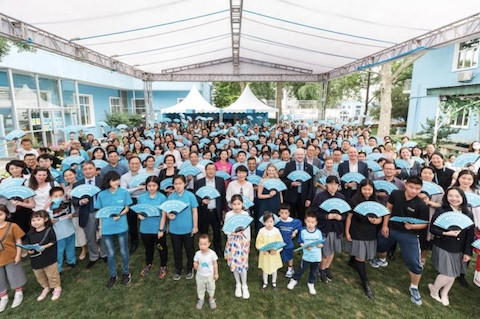 UNICEF launches new Country Programme with the Government of China 2021-07-18 Beijing, 1 June 2021 – On 1 June UNICEF China hosted youth, partners and guests to celebrate past achievements and launch the new UNICEF and Government of China five-year country programme for children in China for 2021-2025. The event coincided with International Children’s Day. UNICEF’s results for children in China between 2016-2020 include the adaption and expansion across China of the ‘Barefoot Social Workers’ model, developed with China’s Ministry of Civil Affairs to strengthen the social service workforce for child welfare and protection. A second example is the UNICEF-supported Conditional Cash Transfer programme, which improved the uptake of nine essential health services by women and young children. Vulnerable groups benefited most from this programme. “Over the last five years, UNICEF China has kept its commitment to children’s rights at the centre of its work. We are proud of our impact. With the Government of China, we have improved the health, development and protection of children, with a focus on reaching the most vulnerable” said Cynthia McCaffrey, UNICEF Representative to China. Details of these results, and many more, can be found in the new publication launched at the event: ‘UNICEF China 2016-2020: Five Years of Results for Children in China’. As part of UNICEF’s work to engage children and young people, UNICEF hosted a debate during the launch event between youth representatives from Tsinghua University High School International – Chao Yang and the Affiliated High School of Peking University. The subject of the debate was who plays the most important role in achieving the Sustainable Development Goals. In launching the new UNICEF and Government of China five-year country programme for children in China for 2021-2025, UNICEF unveiled three of its priority advocacy areas for children in China:Healthy weight: Creating a food environment that enables and empowers children, parents and caregivers to make healthy dietary and lifestyle choices. Early childhood development: Helping parents support their children in the crucial years from pregnancy to 3 years of age, to give girls and boys the best start in life. Mental health: Encouraging conversations about mental health with and among children – particularly adolescents – to reduce stigma, foster peer support, and get children and young people the mental health support they need. A recent article by Ms. McCaffrey on children’s mental health can be found here. For more information on these priority issues, and UNICEF’s key messages: Healthy weight, early childhood development, and mental health. URL:https://www.unicef.cn/en/press-releases/unicef-launches-new-country-programme-government-china
 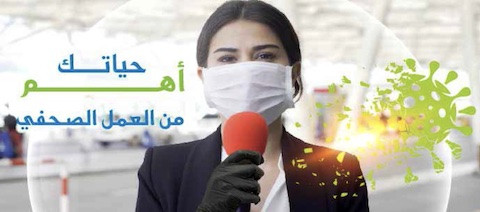 Iraq: UNESCO, journalists and public authorities join hands to tackle the ‘disinfodemic’ 2021-07-13 In the first months of the COVID-19 pandemic, rumors and inaccurate facts about the virus circulated in Iraq. Among these, stories about alleged treatments of COVID-19 such as herbs and nicotine led to reports of a rise in purchases of these products. A doctor even started to use non-certified substances to treat patients in his clinic. To strengthen capacities to debunk these rumors and prevent their dangerous consequences on citizens’ health and in certain cases on social stability, UNESCO, in partnership with the Iraqi Communications and Media Commission (CMC), the Iraqi Journalists Syndicate, Coalition 38, the Media and Culture Office of the Prime Minister, and the Media and Communications Committee in the Iraqi Parliament, as well as relevant experts in the field of safety of journalists, has trained 1,360 journalists in fact-checking, professional and health reporting and safety. The training was part of the #CoronavirusFacts project funded by the European Union. Equipped with better skills and networks to detect and debunk disinformation, these journalists actively started to report on and call out inaccuracies circulating in the public discourse and produce fact-based stories about the pandemic to help citizens make evidence-based decisions about their health. The journalists trained under the project have continued to exchange on disinformation linked to COVID-19 through ten dedicated fact-checking pages on Facebook which now have garnered around 13,000 members within the journalism community in Iraq. A smaller group of 25 journalists trained, mostly women, also went on to establish the web-based Iraqi Young News Agency (IYNA) specifically aiming to capture and report on mis- and disinformation on COVID-19 circulating both in the public space and in media reports and to offer support to other news agencies to provide fact-based information linked to the pandemic in Iraq. UNESCO and the CMC have continued to support this news agency to strengthen and sustain their operations as they establish themselves and expand reporting during this critical time-period. As a group of young female journalists we are trying to reach out to female journalists and the public with the necessary information on the vaccines and the pandemic (…) We have debunked more than 10 stories of misinformation around COVID-19 and published the verified information.-- Sana Hassan, Editor in Chief of the Iraqi Young News Agency Early on during the project, alerted by the articles calling out disinformation and willing to tackle the rise of disinformation, the Iraqi Ministry of Health also took action to further enhance facts-based communication on COVID-19 and publicly emphasized the need to rely on international medical protocols against the pandemic. In June 2020, the Ministry of Health, the Ministry of Finance, and the Iraqi Council of Representatives, asked UNESCO if the authorities’ media and public information staff could be allowed to join journalists in the ongoing #CoronavirusFacts project trainings. The trainings sessions provided by UNESCO to the official media staff, help the media and public information staff to enhance their skills in terms of fact-checking and the media coverage of the Pandemic.-- Hussuian Zamil, Media and Communications Director, Governmental Committee to respond to COVID-19 As a result, approximately 250 public information officials of the Ministry of Health, the Ministry of Finance, the Council of Representatives, the Ministry of Youth, the Ministry of Interior, the Media Office of the Prime Minister and the CMC have since been trained together with journalists, fact-checkers and content producers under the project. The joint trainings have created synergies by enhancing information exchanges between authorities and media professionals both through the sharing of experiences as part of the trainings, but also by establishing direct contacts that enhance access to official COVID-19 information and channels for verification of facts going forward. It was such a useful training course, it enabled me to identify the information on COVID-19 and recognize misinformation. I am now able to use the techniques of fact-checking and train my colleagues a well.--Raed Al Zaidi, journalist from Babylon On 21 February 2021, the Iraqi Prime Minister’s Office set up a special committee aimed at fighting disinformation and supporting fact-checking related to COVID-19 to be headed by the CMC and consisting of Public Information officers of several ministries. Building on the previous collaboration n under the #CoronavirusFacts project, UNESCO was asked to support the new committee with guidance and capacity building for their staff. The above activities are some amongst several others under the #CoronavirusFacts project in Iraq. Some of these include public information campaigns raising awareness on COVID-19 safety measures and the fight against misinformation broadcasted on the main TV and radio channels as well as on social media platforms. Overall, the visual material reached over 3 million TV viewers. UNESCO and the CMC have also worked closely together to strengthen the tools for fact-checking of Arabic online content which remains underdeveloped in comparison to tools available to for example English and French speakers. With the newly gained skills, tools and knowledge, and the newly formed contacts and networks across Iraq, the project will also leave a legacy impact of increased resilience towards the spread of disinformation during future crisis. About the #CoronavirusFacts project Based on the central tenet that information is the opposite of disinformation, the UNESCO project #CoronavirusFacts leverages the pivotal role of freedom of expression and access to information to address information needs in times of COVID-19 and to tackle the massive wave of disinformation which threatens to impact democracy, sustainable development and stability around the world. Funded by the European Union, the project which has activities both at the global level, in four regions and in nine countries, supports professional, diverse and independent media’s capacity to report on the pandemic; strengthens local fact-checking organisations to debunk misinformation; and empowers youth and other citizens to critically process what they read and hear linked to COVID-19 through training in media and information literacy. Due to unprecedented challenges for the media and digital technology sectors, UNESCO has created a Resource Center of selected responses to COVID-19. To learn more, visit https://en.unesco.org/covid19/disinfodemic/coronavirusfacts URL:https://en.unesco.org/news/iraq-unesco-journalists-and-public-authorities-join-hands-tackle-disinfodemic
  Gatekeepers of memory: Genocide archives vital to remembrance, research and education 2021-07-13 When Norng Chann Phal finally confronted his accused perpetrator in the Extraordinary Chambers in the Courts of Cambodia, there remained a shadow of uncertainty. He had been 9, and his brother only 6, when they were prisoners at the Khmer Rouge’s notorious S-21 prison, and the accused did not recognize him at the trial decades later. It was only through the archives at the Tuol Sleng Genocide Museum, on the site of the former interrogation and detention centre, that the truth was ascribed to the atrocity crimes perpetrated there. The regime murdered both of Mr. Norng Chann Phal’s parents at the nearby Choeung Ek killing fields on the delusional charges that they were spies or traitors. “The archives are the key tool to remember the victims who lost their lives during the regime,” Hang Nisay, Director of the Tuol Sleng Genocide Museum, said. “This brings the victims justice, not only by bringing a perpetrator to trial, but mentally to heal their feelings and so that they will be recognized by the community around them and the younger generation.” Reflecting on the role of archives, and marking the 100 days of remembrance of the Genocide against the Tutsi in Rwanda in 1994, on 22 June 2021 UNESCO and the UN Department of Global Communications organized a virtual panel discussion on “Memory at risk: the importance of genocide archives for justice , remembrance, research, and education”. Moderated by James Smith, CEO and Co-Founder of the Aegis Trust, the discussion brought together directors of archives, researchers and human rights advocates, working with documentary heritage related to the German Nazi regime, the Khmer Rouge regime in Cambodia, the 1994 genocide against the Tutsi in Rwanda and the crimes committed by ISIL (Da’esh) against the Yazidi people in Sinjar, Iraq. The evidence of these horrific crimes bears witness to the lives of each victim, family and community, whose memory must not be erased from history. “The first beneficiaries of archives are still the families of the victims,” Floriane Azoulay, Director of the Arolsen Archive and International Center on Nazi Persecution, said. “Documentary records played a really important role in finding the missing persons and seeking compensation. Now we are helping families mend the holes in their family histories. We still receive 23,000 enquiries per year.” Preserving, protecting and transmitting these records also forms the basis of research and education about genocide and other atrocity crimes, to equip people with the knowledge, skills, values and attitudes that can help to prevent violence in the future. As well as honouring victims and survivors, accurate historical accounts are fundamental to conflict transformation processes, better understanding the complex histories related to genocide, and seeking justice. “The documentation and collection of evidence and testimonies of survivors ensures that these crimes are not forgotten and that there is recognition of the genocide,” said Abid Shamdeen, the Executive Director of Nadia’s Initiative, who advocates for Yazidi survivors alongside Nobel Peace Prize Laureate and Goodwill Ambassador for the Dignity of Survivors of Human Trafficking, United Nations Office on Drugs and Crime, Nadia Murad. “In the case of Yazidis, there was public evidence in real time as ISIL (Da’esh) communicated about what they were doing over technology.” Archives have been central to remembrance in Rwanda, and the subject of recent research on the involvement of the French government. Based on archival records in France and Rwanda, two independent research reports have contributed greater transparency to the processes leading up to and during the 1994 genocide, including to the controversial public debate about the involvement of the French government. Vincent Duclert, head of the French historical commission on France, Rwanda and the genocide against the Tutsi, said the essential role of the commission had been to contribute to historical clarity against the backdrop of charged political debates. More than 60,000 pages of documents and 8,000 audiovisual recordings, including from both survivors and perpetrators of the 1994 genocide, have been collected in the context of the community-based Gacaca Courts. As Jean Damascene Bizimana, Executive Secretary of the National Commission for the Fight against Genocide in Rwanda, pointed out during the panel discussion, the historical records are still being used in judicial proceedings seeking justice for the victims. The accuracy and transmission of historical accounts takes on additional importance as disinformation, “fake news” and conspiracy theories proliferate worldwide. Archives as repositories of authentic historical information are an essential counterbalance to narratives that seek to distort or deny genocidal pasts and the experiences of victims and survivors. The panel discussion was jointly organized by UNESCO and the United Nations Department of Global Communications-mandated outreach programmes on the Holocaust and on the 1994 Genocide against the Tutsi in Rwanda as part of the United Nations online series “Beyond the Long Shadow”. UNESCO supports Member States in the preservation and protection of documentary heritage through the Memory of the World programme and promotes genocide remembrance and education through the Organizations programme on Global Citizenship Education Photo: Arolsen Archives URL:https://en.unesco.org/news/gatekeepers-memory-genocide-archives-vital-remembrance-research-and-education
 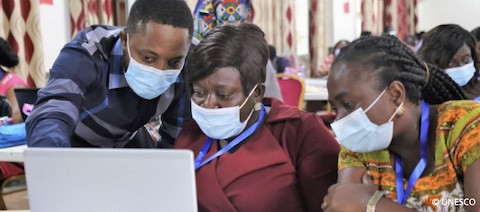 Emergency Remote Teaching for Teachers in Greater Accra 2021-07-13 Training Consultant Michael Selom taking teachers through how to navigate the Moodle Platform UNESCO in partnership with the Ghana Education Service (GES), Centre for National Distance Learning and Open Schooling (CENDLOS) and Ghana National Association of Teachers (GNAT) has launched a 3-day Emergency Remote Teaching (ERT) training for JHS and SHS teachers in the Greater Accra Region on Tuesday, 6 July 2021 at GNAT Regional Hall in Accra. This training will be replicated in the Ashanti, Northern and Western regions by August 2021. The ERT training is one of the activities being implemented under the UNESCO-Korea Funds in Trust (KFIT) Project. The opening session was addressed by Mr Benjamin Gyasi (Chief Director, Ministry of Education), Mr Abdourahamane Diallo (UNESCO Country Director), Mrs Ama Serwah Nerquaye Tetteh (Secretary General, Ghana National Commission for UNESCO) and Mr Ransford Lolih (GNAT Greater Accra Regional Chairman). They all underscored the importance of enhancing the capacity of teacher in digital literacy as this will enable them effectively facilitate teaching and learning during normal times as well as during crises situations that result in school closures. In his speech, Mr Gyasi indicated that ICT in Education is a key strategy that has been captured in Ghana’s Education Strategic Plan (2018-2030) for achieving the SDG 4. He has therefore lauded the initiative by UNESCO through the KFIT Project to enhance the capacity of teachers. The training was organized in a hybrid format: a blend of in-person and virtual training for 100 teachers per session. The training which brought teachers across all the districts in the Greater Accra took participants through practical sessions on creating online/virtual classrooms using Moodle and other Learning Management Platforms. Other topics included how to use ICT to support teaching and learning, Using ICT to support Assessment, Use of the internet for teaching, Using search engines to identify curriculum resources among others. We started with the “knowing your device” training and from there I learnt to take my password seriously. I also learnt how to create a personal website and create courses on a learning management system.-- Abigail Okang, Junior High School teacher from LEKMA ‘2’ Junior High School Though the first training could only take 50 in person and 50 online participants because of COVID-19 and technical restrictions, over 900 teachers have expressed interest through the various online platforms. This affirms the urgent need for government and other stakeholders to provide the requisite resources for the training of about 450,000 in-service teachers in leveraging ICT to improve teaching and learning in Ghana. To achieve this there will be the need for continuous investment and improvement in existing ICT infrastructure (devices, network connectivity) provision of electricity, reduction in data cost for educational purposes among others. The remaining 150 teachers are scheduled to be trained by the end of August 2021. The ERT Modules will however be hosted by CENDLOS till the end of the year and can be accessed by teachers online and their queries would be addressed through a Helpdesk designated for remediation and other learning support needs. The ERT training is one of many initiatives under the KFIT Project: ICT in Education in Africa by which UNESCO is supporting the Government to enhance the capacity of teachers across the country to effectively facilitate teaching and learning during crises period such as being experienced under the COVID-19 pandemic. Other activities include the ongoing support for review of the Government’s ICT in Education policy and support to CENDLOS to establish a national Open Educational Resources (OER) platform to enable educators and learners to have unrestricted access to relevant educational resources to improve teaching and learning. These interventions are situated within UNESCO’s education sector support to the Member States, which predates the COVID-19 pandemic. However, this support has been scaled up through the Global Education Coalition initiative which UNESCO launched in March 2020 to mobilize support from the private sector, international bodies, and foundations for the Member States to ensure continuity of learning during and beyond the pandemic. This training will be replicated in the Ashanti, Northern and Western regions by August 2021. The ERT training is one of the activities being implemented under the UNESCO-Korea Funds in Trust (KFIT) Project. More informationICT in EducationICT Transforming Education in Africa ERT Online RegistrationERT Course Portal URL:https://en.unesco.org/news/emergency-remote-teaching-teachers-greater-accra
  Insecurity in northern Mozambique continues to forcibly displace thousands 2021-07-11 This is a summary of what was said by UNHCR spokesperson Babar Baloch – to whom quoted text may be attributed – at today's press briefing at the Palais des Nations in Geneva. UNHCR, the UN Refugee Agency, remains gravely concerned for the safety of civilians in northern Mozambique as armed conflict and insecurity in the coastal city of Palma continues to displace thousands of people, two and a half months after a brutal attack by non-state armed groups. People are fleeing daily in a desperate search for safety both in Mozambique and across the border in Tanzania. Those fleeing have told UNHCR staff that the situation in Palma remains very unstable, with regular gunfire at night and torching of houses. Some 70,000 people have fled Palma since 24 March, bringing the total number of displaced in Cabo Delgado province to nearly 800,000 according to humanitarian estimates. UNHCR continues to advocate for the internally displaced to receive protection and assistance in Mozambique and for vulnerable people seeking safety in neighbouring Tanzania to access asylum. The ongoing insecurity has forced thousands of families to seek refuge in the south of Cabo Delgado and Nampula provinces. The districts of Nangade, Mueda, Montepuez, Ancuabe, Metuge, Balama, Namuno, Chiure, Mecufi, Ibo and Pemba continue to register new arrivals every day. Thousands of others are reported to be stranded in very insecure areas around Palma with restricted humanitarian access. However, UNHCR and partner agencies were recently allowed access to some remote areas to help displaced people living in dire conditions. UNHCR continues to work with partners to assess their needs and provide life-saving assistance. We have distributed relief items to some 10,000 displaced people. Many others have attempted to cross the river that marks the border with Tanzania to seek international protection. According to Mozambican border authorities, more than 9,600 of them have been forcibly returned through the Negomano border point since January this year. Some 900 were pushed back into Mozambique in just a few days from 7 to 9 June. UNHCR teams have been supporting people arriving in a desperate condition, many separated from their family members. Those pushed back from Tanzania end up in a dire situation at the border and are exposed to gender-based violence and health risks as many are sleeping in the open at night in extreme cold without blankets or a roof over their heads. There is an urgent need for emergency relief items including food. UNHCR reiterates its call for those fleeing the conflict to have access to territory and asylum, and, in particular, for the principle of non-refoulement (no forced return) to be respected. Refugees must not be forced back into danger. URL:https://www.unhcr.org/news/briefing/2021/6/60c312e94/insecurity-northern-mozambique-continues-forcibly-displace-thousands.html#_ga=2.75711645.982380942.1625975801-329418574.1625975801
 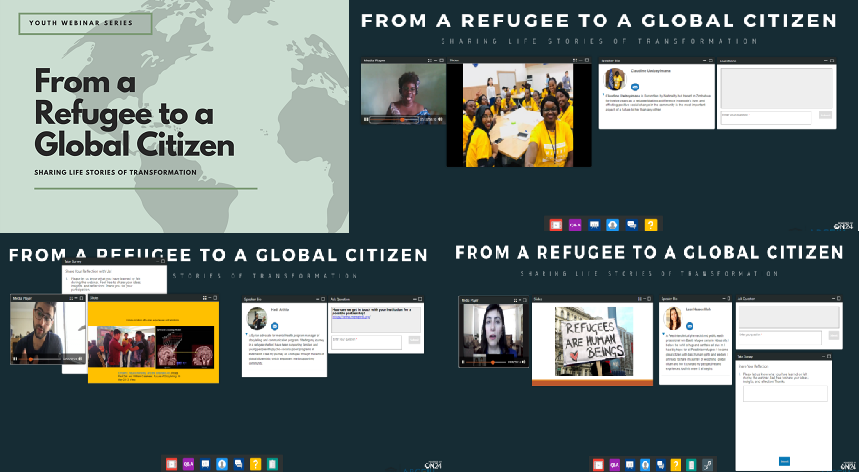 [APCEIU] '난민에서 세계시민으로' 웨비나 시리즈 진행 2021-07-10 UNESCO APCEIU has successfully held a youth webinar series under the theme of 'From Refugees to Global Citizens' over three weeks from 22 April to 5 June 2021. Through the webinars, three alumni of APCEIU's 'Global Youth Leadership Workshop on GCED' were invited to share their life journey as refugees from the perspective of a global citizen. Based in Zimbabwe, the first speaker who has experienced living as a refugee for twelve years shared her story on her efforts to bring positive social changes in her community. The second speaker shared his life story related to the development and organization of a storytelling and communication program for psycho-social support of Syrian families and young people. Last but not least, the third speaker revealed her desire for all Palestinian refugees to become global citizens with fundamental human rights and freedom through working as a clinical pharmacist and public health professional at Balata refugee camps and shared her changed perspectives and experiences as a global citizen. Through the webinars, the speakers have shared their own stories as global citizens, particularly their efforts to influence changes into their communities while fighting against prejudices and obstacles, and how they conquered the challenges and realized their aspirations in their own ways. Upon the conclusion of the webinar series, the participants of webinars shared that they were inspired and empowered by the stories of young global leaders who were not defeated by their circumstances, but instead kept trying and succeeded to transform themselves into inspiring global citizens. URL:http://www.unescoapceiu.org/post/4190 VOD upon registration:1st speaker2nd speaker3rd speaker
 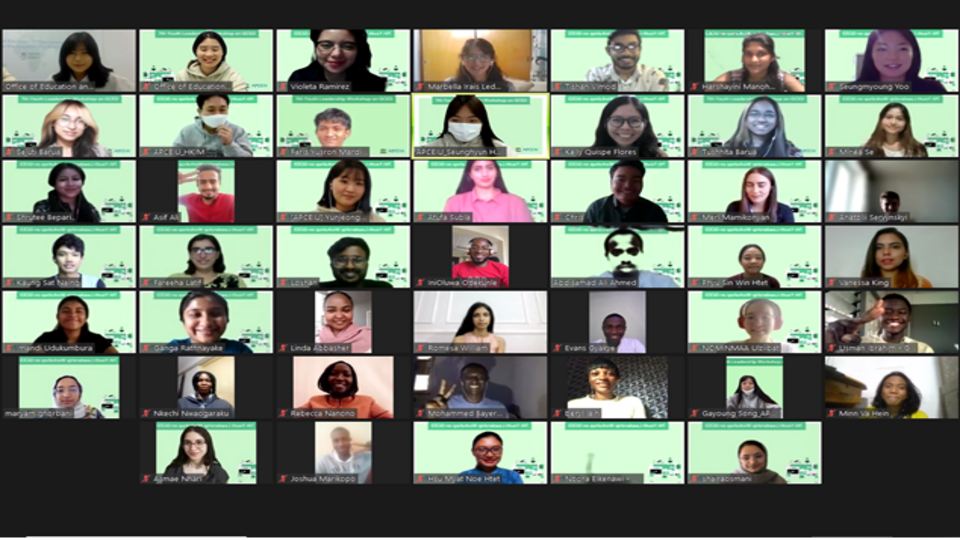 제7차 세계시민교육 청년 리더십 워크숍 성료 2021-07-09 From 7-18 June 2021, APCEIU has run its 7th Youth Leadership Workshop on GCED for 50 youth leaders from 28 countries in Asia, Africa, Latin America and Europe. With this year’s theme, ‘MIL(Media and Information Literacy) and Youth Empowerment’, the Workshop has been held under the title of ‘Being a global citizen in the digital age’, offering various lectures, presentations, and cases all around the world, on the MIL and global citizenship for young people. Experts in the field of MIL and GCED from the globe, including Dr. Amie Kim, Mr. Fabrice Teicher, Dr. Hans Schattle, Dr. Ellen Helsper, Mr. Dylan Wray, and Ms. Lisa van Wyk joined the Workshop as facilitators, providing lectures and presentations on the themes and engaging dialogue with the participants. Youth speakers in different parts of the world have shared their cases and stories on MIL and global citizenship exchanging a variety of applicable strategies and tips and soliciting new ideas and approaches with the participants. Participants have learned and shared their perspectives on what is required for responsible global citizens particularly in the context of pandemic as well as in the digital era where they live in now. They all agreed that critical and reflective digital competency as well as active and responsible engagement in the society are critical, and as young leaders, they should become agents of innovation and change, playing roles as a channel for communication and solidarity among global citizens. Despite the time difference, all participants have enthusiastically participated in synchronous and asynchronous sessions, including small group gatherings for rich discussions and idea sharing, throughout the 2-week period of the training. The Workshop was concluded on the 18th June 2021 with the workshop closing and certificate conferment ceremony by Dr. LIM Hyun-Mook, director of APCEIU. The participants who have successfully completed the Workshop are eligible to apply for APCEIU’s mentorship and grant competition, where they could get mentoring from experts and receive small grant fund to support their projects in local communities. The winners of the competition will take part in the mentorship programme for 2 weeks in July and execute their projects in consultation with mentors and APCEIU till October 2021. The mentorship and grant system is a new initiative of APCEIU to further support the capacity-building of its workshop participants and to maximize the multiplying impact of the Workshop in participants’ communities and beyond. URL:http://www.unescoapceiu.org/post/4185
  Fighting Gender-Based Violence: GBV Elimination Fund in Rural Nepal 2021-07-08 According to the 2016 Nepal Demographic and Health Survey, one in five women aged 15-49 have experienced physical violence in their lifetime, while one in four married women have experienced spousal, physical, sexual, or emotional violence. UNFPA estimated that there were 15 million additional cases of gender-based violence (GBV) for every three months of lockdown. It also states that in Nepal, “women and girls may be at higher risk of intimate partner violence and other forms of domestic violence and also face increased risks of other forms of GBV, including sexual exploitation and abuse.” To address these issues, in 2010, the Government of Nepal in 2010 enacted the GBV Elimination (GBVE) Fund Regulation which established a fund at the federal level. After federalization, the government amended it in 2019 to establish it at all three levels of government—federal, provincial, and local. Following the amendment, in 2020, the Ministry of Women, Children, and Senior Citizens (MoWCSC) introduced guidelines to facilitate the provision of grants from this fund to provincial and local governments. Many local level bodies, however, have not taken advantage of these grants. On 18 June 2021, the UNESCO-UNFPA-UN Women Joint Programme, with support from KOICA, organised its second Community of Knowledge (CoK) in partnership with the Forum for Women, Law, and Development (FWLD), entitled “Establishment of GBV Elimination Fund at Local Level and its Effectiveness,” to share the experiences of local governments in establishing GBVE funds. Deputy Mayors from three target municipalities of the Joint Programme participated – Sabina Chaudhary, Deputy Mayor of Ramdhuni Municipality in Sunsari, Sarita Upadhyaya, Deputy Mayor of Mangalsen Municipality in Achham, and Tara Khati, Deputy Mayor of Budhiganga Municipality in Bajura. All three expressed that there was still a lot of confusion surrounding the implementation of the guidelines, but that coordination with government officials has helped. They explained that GBV survivors can register their request for relief services directly at the municipality with full confidentiality. The municipal-level Relief Committee then analyzes the request and responds accordingly. This includes providing survivors with psycho-social and legal counseling, as well as referral services to safe houses or other service providers such as NGOs and health care entities. All three deputy mayors allocated a separate budget to contribute to the GBVE Fund, in addition to the token grant provided by the federal government, with plans to further expand this budget. They also committed to administering a budget for the Fund on behalf of the local level, which is required by the GBVE Fund Regulation to allocate their own resources under their own laws. Sindhu Pathak, from the MoWCSC GBV Fund Department, explained that the Fund is easier to establish in municipalities where representatives are aware and sensitive to GBV-related issues. Though only 60 out of 753 local levels have established the Fund so far, the MoWCSC has issued circulars to all local levels requesting them to set one up, with the Ministry ready to provide any support required. “If the Fund is not created at local levels, victims will have to depend on the federal government to receive any response or relief services. Since it is not possible for all victims to have access to federal level funds, this situation may re-victimize GBV survivors.”-- Sindhu Pathak, Officer at GBV Fund Department of MoWCSC Lastly, Fulmaya Chaudhary, Sub-inspector of Rautahat Police, Women, Children, and Senior Citizen Service Center, shared her experiences of working in a municipality that has not yet established the GBVE Fund. GBV cases have increased during the pandemic and there are no places for victims to go for response services. Minimal support from a few NGOs and civil society organizations has not been enough. In light of this, Fulmaya Chaudhary hopes her local level representatives will establish the Fund as soon as possible. “It is absolutely essential that local governments take the initiative and establish the GBVE Fund. I hope that the local representatives in Rautahat will take inspiration from the other local levels where the Fund is already established, like the ones present today in this program.” -- Fulmaya Chaudhary, Sub-inspector of Rautahat Police, Women, Children and Senior Citizen Service Cent Overall, the speakers shared two main recommendations: 1) The federal government should conduct programs to build local-level capacity in relation to establishing and implementing the GBVE Fund; and 2) Support needs to be mobilized through media platforms to raise awareness on the existence and importance of the local level GBVE Funds. The session, broadcast live on Facebook, has received 47,000 views, 783 likes, 144 comments, and 31 shares to date. Attendees shared constructive and positive comments, including the importance of coordination between the federal and local governments as well as service providers and civil society networks. About the UNESCO-UNFPA-UN Women Joint Programme “Empowering Adolescent Girls and Young Women through the Provision of Comprehensive Sexuality Education and a Safe Learning Environment in Nepal” is a Joint Programme led by UNESCO, UNFPA, and UN Women with support from KOICA aiming to empower girls and young women through an integrated approach to education, health, and gender equality. For more inquiries, contact the UNESCO Office in Kathmandu at kathmandu@unesco.org URL:https://en.unesco.org/news/fighting-gender-based-violence-gbv-elimination-fund-rural-nepal
  Lebanon, Oman, Jordan and Syria expose their plans on ESD for 2030 during Arab Regional Technical Meeting 2021-07-08 The UNESCO Regional Bureau for Education in the Arab States held on June 9, 2021, the Arab Regional Technical Meeting on Education for Sustainable Development (ESD) for 2030 as a virtual event, building on the UNESCO World Conference on ESD held on 17-19 May 2021. This regional event welcomed more than 370 participants from the region and all over the world. Experts from UNESCO and the Ban Ki-Moon Center, governmental officials from Lebanon, Jordan, Oman and Syria, and youth representatives from Organisation De Developpement Durable (ODDD) brought up informative and insightful discussions on leveraging ESD for the 2030 framework in the Arab Region. The meeting, moderated by Mona Zoghbi from UNESCO, provided a timely platform for participants to discuss region-specific needs and approaches for ESD for 2030; and for representatives of Ministries of Education or of the National Commissions of UNESCO in the countries of Lebanon, Oman, Jordan and Syria to introduce their country initiatives of ESD for 2030 in order to leverage ESD at the national level and to discuss the way-forward actions with UNESCO. According to the discussions, Lebanon is currently drafting inclusive plans towards sustainable development in general and ESD in particular. Jordan has focused on ensuring its policy, environmental and institutional frameworks are conducive to the commencement of the 2030 Agenda’s robust implementation, building on achievements and successful mechanisms. Oman has also started its pursuit of ESD by establishing a national working group to focus on the five priority action areas in alignment with the “Oman Vision 2040”, which aims at achieving quality education systems, computerizing schools, building educators’ capacities, activating the role of youth, and building partnerships with local communities. The Syrian Arab Republic is also working on introducing new concepts on sustainable development into the curriculum. In addition, Ms. Monika Froehler from the Ban Ki-moon Centre for Global Citizens was invited to share the vision and approach of the Centre with regards to education, and to provide policy recommendations to the national education authorities in the Arab region on ESD. Ms. Froehler pointed out that ESD for 2030 provides an opportunity for various stakeholders to work together, pushing forward the changing potential brought by education. On his part, Mr. Eliesh Sahyoun from ODDD highlighted the importance of empowering young people to meaningfully contribute to the discussions, decisions and actions on ESD at both national and regional levels. Finally, Mr. Salim Shehadeh from UNESCO introduced the way-forward and the prospective actions regarding the ESD for 2030 and emphasized the long-term technical support from UNESCO. UNESCO will be continuously collaborating with the national authorities in these Arab countries on developing their national ESD initiatives. ESD leads a powerful change in the education system beginning from schools and stretching to lifelong learning and non-formal education, and it is at the core to reimagine education and the foundation for the required transformation. Realizing the potential brought by the ESD requires national commitment and multi-stakeholder partnership for more effective and creative action. URL:https://en.unesco.org/news/lebanon-oman-jordan-and-syria-expose-their-plans-esd-2030-during-arab-regional-technical