
News
Catch up on what’s happening in the world of global citizenship education.
1,668 results found
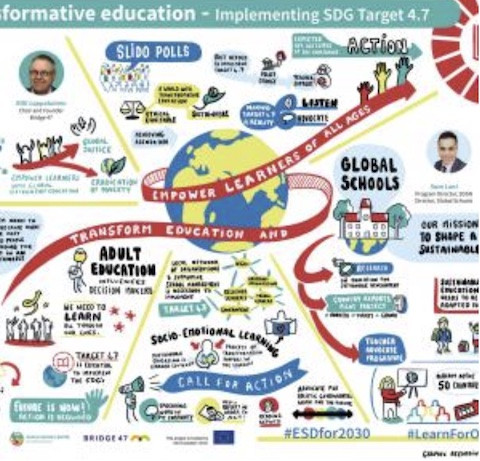 Transformative education is the key to achieve Sustainable Development Goals 2021-05-20 Bridge 47, in partnership with the Ban Ki-moon Centre for Global Citizens, participated in this week’s UNESCO World Conference on Education for Sustainable Development. The joint session entitled ‘Transformative Education – Implementing SDG Target 4.7’ took place at the SDG Market Place during the first day of the conference. “Bridge 47 are delighted to participate in UNESCO World Conference on Education for Sustainable Development with our partners in the Ban Ki-moon Centre for Global Citizens. In order to achieve the transformative vision of Agenda 2030, we must change the way we think and act” pointed out Rilli Lappalainen Director of Sustainable Development for Fingo and Chair and Founder of Bridge 47, who was co-moderating event with Monika Froehler, CEO of the Ban Ki-moon Centre for Global Citizens. The participatory session explored how Mission 4.7 and Bridge 47 advocate for the implementation of SDG Target 4.7 and examined best-practices globally. The event demonstrated how Target 4.7 seeks to ensure that all learners acquire knowledge and skills needed to promote sustainable development, including among others through education for sustainable development and sustainable lifestyles, human rights, gender equality and Global Citizenship. Speakers for Mission 4.7 were Sam Loni, Program Director of the UN Sustainable Development Solutions Network (SDSN) and Director of Global Schools and Amanda Abrom, Program Manager, Global Schools, SDSN. Jose Roberto Guevara, President of the International Council for Adult Education spoke of behalf of Bridge 47. “We should make sure that the commitment to lifelong learning is an active and ongoing commitment. Target 4.7 is not just a single target: it's the heart of the SDGs because it recognises the substance of what needs to change if we are truly achieve sustainable development. More importantly, Target 4.7 recognises that solutions aren’t just about more of the same. We need to rethink the methods and essence of the current education system in line with the principles of sustainable development”, said Robbie Guevara. The notion of jumping from the local to the global was critically discussed by the speakers. “There is need to build partnerships with the Global South opposed to just zooming in from the local to the global. The model of ESD that we are advocating for is about acting now. That's why we wanted to test this in classrooms around the world. The preliminary results show an improvement in how children learn and act” according to Sam Loni of SDSN. This virtual exhibition included online booths and live sessions, where various stakeholders from all over the world showcased innovative projects and collaborated on good practices regarding the implementation of Target 4.7. For further information on the event, see here. You can watch the session here. URL:https://www.bridge47.org/news/05/2021/transformative-education-key-achieve-sustainable-development-goals
  Q&A: Inoculating against COVID-19 misinformation 2021-05-19 Misinformation and conspiracy theories about COVID-19 and the response are virulent and harmful, with life-threatening consequences for individuals and communities around the world. Amplified online and via social media, false narratives about the pandemic build on and reinforce existing prejudice and ignorance, undermining trust in science and fuelling hate speech. In the recent Cambridge University study ‘Towards psychological herd immunity: cross cultural evidence for two pre-bunking interventions against COVID-19 misinformation’, Melisa Basol and Dr. Jon Roozenbeek of the University’s Social Decision-Making Lab examine two ‘pre-bunking’ interventions – the Cambridge’s GoViral! game and UNESCO’s #ThinkBeforeSharing infographics – concluding that both increased people’s perception of the manipulation related to misinformation, increased their confidence in spotting misinformation, and reduced their reported willingness to share it. These pre-bunking approaches provide key insights on developing critical thinking competencies that complement and reinforce UNESCO’s Education and Media and Information Literacy initiatives strengthening resilience against mis- and disinformation and hate speech. In line with these efforts, UNESCO is also preparing an advocacy document for educators based on the #ThinkBeforeSharing campaign to assist with addressing conspiracy theories in education contexts. Across the world, the pandemic has shown that people are extremely susceptible both to simple falsehoods about COVID-19 and elaborate conspiracy theories. In your research, you are looking at ‘misinformation’ from a psychological perspective: what is misinformation, why is it attractive to so many people, and what makes it so dangerous? We define misinformation as information that is false or misleading (e.g. by leaving out important context), intentionally or unintentionally. Misinformation about the virus can spread in a similarly contagious way to the virus itself. During the pandemic, there have been many instances of misinformation causing real harm, ranging from drinking methanol and burning down 5G towers to refusing masks and vaccinations, which has led to numerous deaths. Misinformation seems to be particularly attractive during times of high uncertainty; at the beginning of the pandemic, nobody really knew exactly how deadly COVID-19 was, whether healthcare systems would collapse, etc., which opened the way for people to fill in the gaps, for example by peddling fake cures or spreading conspiracy theories. What makes misinformation so dangerous is the pace and depth at which it travels. Research shows that false or unverified information can travel faster and further than any other information and that even after misinformation is debunked, people can continue to believe and rely on it. The study focuses on ‘pre-bunking’ or ‘inoculation theory’ to prevent the spread of misinformation, including conspiracy theories. How does ‘pre-bunking’ work, why is it effective and what can people do to build their resilience to misinformation? The current scholarship on combating fake news offers two main approaches. One is more reactive and includes efforts of debunking and fact-checking. However, a growing body of research underlines the cognitive hurdles when it comes to undoing the harm of misinformation. For instance, once false information is out there, it tends to stick. It’s difficult to catch up, correct and stop people from relying on it. To understand how such psychological resistance against misinformation can be achieved, we turned to inoculation theory. Inoculation theory, often regarded as the grandfather theory of persuasion, was developed by William McGuire and colleagues in the 1960s. It suggests that the process of building resistance against persuasion follows the biological analogy of an immunization process. Just as a small dosage of a weakened strain triggers the antibody production against the pathogen, pre-bunking – pre-emptively debunking weakened forms of persuasion – can help to build resistance against future persuasion attacks. The study considers Cambridge University’s GoViral! game and UNESCO’s #ThinkBeforeSharing campaign as the two ‘pre-bunking’ interventions. What makes these interventions effective inoculating people against misinformation, what are the differences that should be noted, and what further steps should be considered in future interventions? Inoculation or pre-bunking interventions usually contain two key elements: a warning of an impending persuasive attack, and a pre-emptive refutation. Both the game and the #ThinkBeforeSharing infographics contain these elements by first warning readers/players of the threat of COVID-19 misinformation, and then refuting it before people actually encounter the misinformation online. Our research shows that both interventions improve people’s ability to spot COVID-19 misinformation in social media content and improves their confidence in their ability to do so. Study participants who played Go Viral! also indicated being less willing to share COVID-19 misinformation with others post-intervention. The main difference between the interventions is that the #ThinkBeforeSharing infographics are what’s called a ‘passive’ pre-bunking intervention, whereas the game is an example of ‘active’ inoculation. In passive interventions, people are provided with the refutation without having to explicitly engage in generating their own counterarguments against the misinformation. Conversely, active inoculation interventions prompt people to actively refute the ‘weakened dose’ of misinformation; in the game, this works by letting players make choices and gain or lose ‘likes’ based on their performance. In terms of the results, we find that both the infographics and the game work as intended, but the effect sizes for the game are larger. Also, we followed up with our study participants one week after the initial study, and found that the ‘inoculation’ effect was mostly retained for game players, but had pretty much (although not entirely) dissipated for infographics readers. To us, this shows that both interventions are useful in their respective context; the game may have more longevity than the infographics in terms of conferring resistance against misinformation, but the intervention is much longer (five to seven minutes) and not everyone wants to play a game (although it does make the topic of misinformation more engaging and fun), whereas reading the infographics takes less time and is more easily implemented in social media environments. In your opinion, how could pre-bunking as a preventive measure against misinformation be mainstreamed for more people, and especially students? How could teachers and trainers be best equipped to develop these skills and competencies? There is a degree of overlap between pre-bunking and media literacy; while Go Viral! was not designed explicitly for use in education, we of course encourage this. Like the #ThinkBeforeSharing infographics, the game was designed to be freely accessible to all, and in as many languages as possible. Rather than telling people what to believe and share online, the game allows players to ‘learn by doing’. Thus, the game could be featured as part of media literacy curricula to demonstrate and inoculate against common misinformation techniques that make content go viral. The game features three such techniques: using emotional language to evoke strong emotions like fear or outrage, the use of fake experts to artificially boost the credibility of false claims, and spreading conspiracy theories that place the blame for a particular problem on a small, secretive and nefarious group of people. These techniques are commonly found in online content, and we see the game as a useful tool for educators to teach students about how to spot and resist manipulative content when navigating the internet. For younger children, we’ve also developed ‘junior’ fake news games such as Bad News Junior for the US and UK-oriented education systems. Inoculation against misinformation depends on developing critical thinking skills and tools. How can behavioural psychology inform media information and literacy and education that inoculates against misinformation and conspiracy theories? A large literature exists on the benefits of simulations and games in achieving educational outcomes. Systematic reviews have pointed to the fact that serious games like Bad News can boost motivation and facilitate learning and understanding through increased cognitive engagement. This is partly due to the fact that games enhance motivation by letting people immerse themselves into a virtual identity and tap into basic psychological needs of competence (understanding, learning, goals, challenges), autonomy (flexibility to choose, create your own path) and relatedness (feedback, interaction). We very deliberately choose to focus on inoculating people against the ways in which people are commonly deceived or manipulated online. If you can recognize manipulation techniques in content, you’re better equipped to make your own judgement as to how reliable it is. Over the course of numerous studies, this method has been shown to be a robust way of improving people’s general resilience against misinformation. This approach is also more scalable than focusing on individual conspiracies or examples of misinformation. Educators seeking to design a media literacy course might be interested in seeing how this approach might be applicable to what they’re doing. In addition to ‘pre-bunking’, what measures could complement this strategy or make up for limitations in inoculation as an approach, and how could people take up and implement these measures in their online activities? There are numerous approaches unrelated to inoculation/pre-bunking that are currently being implemented on social media platforms, such as providing accuracy prompts and social norms interventions. Outside of behavioural science, calls to look at social media companies’ attention-based algorithms as possible amplifiers of misinformation are becoming more and more prevalent. Also, educational and fact-checking initiatives are gaining popularity worldwide.We see inoculation interventions as one component of a multi-layered defence system against misinformation, so we are generally happy to see these developments take place. More on UNESCO’s #ThinkBeforeSharing campaign URL:https://en.unesco.org/news/qa-inoculating-against-covid-19-misinformation
  International Research Centre on Artificial Intelligence launches call for AI powered solutions for sustainable development 2021-05-19 The International Research Centre on Artificial Intelligence (IRCAI), a Category 2 centre under the auspices of UNESCO, is launching a call for proposals for the top 100 projects harnessing Artificial Intelligence (AI) to meet the Sustainable Development Goals. Themes range from education, healthcare and climate to assistive technologies and circular economy. The top 10 projects will receive support through training, advisory, networking and mentoring activities across IRCAI partners. The Center is partnering with Village Capital to support the Top 10 projects with an investment readiness training session and social finance to provide training on innovative finance and outcome measurement. The selected submissions will be presented in IRCAI’s Global Top 100 List to showcase researchers, entrepreneurs and thinkers, as well as projects using AI to make significant impact. In addition, IRCAI will publish a report highlighting 10 of the most compelling cases and solutions of Artificial Intelligence and their contribution to sustainable development. It will celebrate leaders that make change possible and describe the mindset and strategies that drive them in their work. Under the auspices of UNESCO, IRCAI was launched on 29 March 2021 with the aim to advance research on the use of AI to achieve the Sustainable Development Goals (SDGs) by showcasing relevant projects across the world. More information on the Call for Proposal and additional information on how to nominate a project can be found here. Submissions are open until 30 June 2021. Related links Call for Proposals on IRCAI Global Top 100 International Research Center on Artificial Intelligence under the auspices of UNESCO UNESCO Artificial Intelligence URL:https://en.unesco.org/news/international-research-centre-artificial-intelligence-launches-call-ai-powered-solutions
 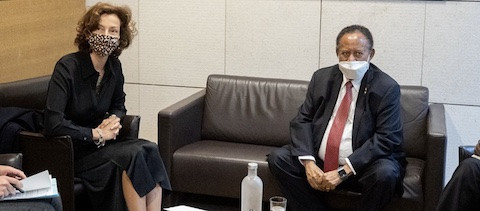 Sudan Conference: UNESCO intensifies cooperation on press freedom, a key driver of democratic transition 2021-05-19 Meeting in Paris ahead of the International Conference convened by France to Support the Sudanese Transition, Abdalla Hamdok, Prime Minister of Sudan, and the Organization’s Director-General Audrey Azoulay agreed to reinforce ongoing cooperation to support press freedom and media development, key pillars of the democratic transition underway in the country. Press freedom is a cornerstone of any democratic society, and a key driver of the democratic transition in Sudan. UNESCO is committed to provide its expertise and guidance for a safe press environment. Working closely with Sudan since 2019, we have put together a Media Reform Roadmap to be implemented over the next 3 years, and we stand ready to step up our efforts.-- Audrey Azoulay, UNESCO Director-General On 25 September 2019, the Prime Minister of Sudan requested UNESCO's support to introduce media reforms as part of the transitional process during the UN General Assembly Event on Media Freedom, when he announced Sudan's signing of the Global Pledge for Media Freedom spearheaded by Canada and the United Kingdom. In response, UNESCO launched a first assessment of the country’s media environment using its Media Development Indicators. In September 2020, the outcomes of these consultations were consolidated and published in the form of a Media Reform Roadmap. The next stage of UNESCO’s cooperation with Sudan in this area will consist of implementing the Roadmap over the next three years. The areas to be reinforced in line with the Roadmap concern: legislative reform, institution building, training and employment of media professionals, and investment in technical infrastructure. Since 2019, Sudan established a National Team for Media Reform, comprised of media experts, media owners and managers, journalists, officials of the Ministry of Culture and Information and civil society representatives who took part in the assessment of the media landscape. UNESCO is promoting the participation of women in the media and has supported safety training for over 250 women journalists. UNESCO has also trained security officers on freedom of expression and the safety of journalists. Also in February 2020, UNESCO launched an assessment of internet development in Sudan based on its Internet Universality Indicators, which is scheduled to be completed by the fourth quarter of 2021. This project is funded by the Swedish International Development Cooperation Agency (SIDA) through UNESCO's International Programme for the Development of Communication. Financial support for these activities has been sourced through UNESCO's Multi-Donor Programme on Freedom of Expression and Safety of Journalists. Throughout 2020, UNESCO launched a series of capacity-building sessions for over 300 Sudanese journalists to address disinformation and prevent violent extremism and hate speech. UNESCO is seeking additional support to build capacities of the media and strengthen national institutions such as the Sudanese National Commission on Human Rights. URL:https://en.unesco.org/news/sudan-conference-unesco-intensifies-cooperation-press-freedom-key-driver-democratic-transition
 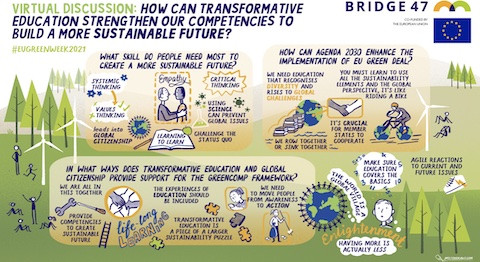 EU Green Week Event Emphasises Transformative Education as Crucial to Strengthening Europe’s Green Competency Framework 2021-05-16 Graphic Recording by Jem Milton - www.jmiltondraws.com Yesterday, the Bridge 47 Network, a coalition of people from across continents, held a virtual discussion as part of EU Green Week 2021, emphasising Transformative Education’s role in strengthening Europe’s Green Competencies to achieve the Sustainable Development Goals (SDGs) set out in Agenda 2030. This multi-stakeholder event brought together representatives from the European Parliament, the Commission, Member States and Civil Society to highlight the interconnectedness of EU priorities under the Green Deal and Agenda 2030 in the area of education, and the role of transformative education in building and maintaining momentum to reach these goals. Transformative Education, as captured in SDG Target 4.7, is lifelong learning designed to equip people with the knowledge and skills needed to promote sustainable development, through the development of key competencies such as critical thinking and global citizenship. Rilli Lappalainen, Chair and Founder of Bridge 47, President of CONCORD Europe and Director of Sustainable Development for Fingo, said:“Transformative education equips learners with the competencies needed to become active global citizens and true agents of change. To achieve a sustainable and just future for all, we must build bridges between different types of transformative learning, such as education for sustainable development and global citizenship education, and ensure this learning is lifelong and takes place everywhere.” Mr. Aleš Ojsteršek, Head of Educational Development Unit, Ministry of Education, Science and Sport of Slovenia, welcomed the discussion on transformative education’s role in strengthening green competencies, and highlighted the importance of Member State collaboration and contribution to achieving a more sustainable future:“Skills and competencies are fundamental to the capacity of people and countries. Implementation of key competencies in support of sustainable development can help Member States’ progress towards the Sustainable Development Goals. Member states have a crucial role to play in making sure everyone has the skills and competencies required to make this transformative Agenda reality.” The panellists highlighted that Agenda 2030 is an important framework in EU’s current work on Green Competencies and will guide the way forward. Speakers underlined the importance of multi-stakeholder dialogue and collectively challenging the usual ways of doing things, among others in the current process on preparing a Council Recommendation on Education for Environmental Sustainability. Slovak Member of the European Parliament, Martin Hojsik (Renew), said:“We have many strategies in place. Now is the time to create coherence between these strategies, and to implement. We need to work together across sectors and internationally to move from strategies to action" URL:https://www.bridge47.org/news/05/2021/eu-green-week-event-emphasises-transformative-education-crucial-strengthening-europes
  UIL Blog: Learning, caring and engaging: Adult education and sustainable development 2021-05-16 The UNESCO World Conference on Education for Sustainable Development is an opportunity to create a culture of sustainable living. But it will only be successful if we find better ways to support and strengthen adult learning and education for sustainable development, argues Christiana Nikolitsa-Winter The UNESCO World Conference on Education for Sustainable Development takes place from 17 to 19 May 2021. While education at all levels has experienced unprecedented interruption due to the COVID-19 pandemic, the impact on adult learning and education (ALE) has been little considered, certainly when compared to schools and universities. While the pandemic has highlighted the importance of ALE in coping with and emerging from the crisis, it has also deprived adults around the world of access to education, and presented providers with difficult challenges in maintaining their learning offers, with a particularly, and by now depressingly familiar, negative impact on the poorest and least-advantaged. It is important that we reflect on this and consider, in particular, the key role of ALE in sustainable development and how we can foster it. I would like to reflect briefly on the role of ALE in education for sustainable development (ESD) and in building bridges to a future that is safe, fair, inclusive and sustainable. Sustainable development begins with education. Agenda 21, adopted at the United Nations Conference on Environment and Development in 1992 in Rio de Janeiro, recognized the critical role that education plays in the transition to sustainable development. Education is an essential tool in making individuals aware of the issue of sustainability and providing them with related skills, while encouraging them to take actions and find solutions to the local and global challenges we face. In addition, education for sustainable development and citizenship education are strongly linked. Yet, although the question of sustainability has risen to the top of policy agendas worldwide, policy action is limited, particularly in adult learning and education. Adults are not explicitly mentioned in the 2030 Agenda for Sustainable Development. Nonetheless, Sustainable Development Goal (SDG) 4 includes adults as one of the target groups of actions in education by speaking about lifelong learning and ‘all learners’. ALE supports individuals to gain skills and attitudes needed to care for themselves, for each other, and for society, the environment and the planet. It empowers learners to engage actively in all three dimensions of sustainability: social, economic, environmental. It encourages us to reflect and find ‘solutions’ which lead to changes of attitudes and behaviours on issues such as justice, exclusion, peace, poverty, gender, equity, demographic changes, unemployment, environmental protection and climate change. ALE plays a role in achieving not only SDG 4 – and especially SDG 4.3 to 4.7 – but almost all SDGs, by promoting learning to live together, a major pillar of education for sustainable development as well as a major challenge. Moreover, ALE aims to develop responsible and caring citizens. SDG 4.7 on the acquisition of knowledge and skills for sustainable development brings together ESD and global citizenship education (GCED), as both have the same focus: to create just peaceful and sustainable societies. Therefore, citizenship education in ALE is a pillar of ESD. Adult education includes formal and non-formal programmes that drive towards responsible citizenship and environmental sustainability. It enables the development of competences, to take better, more responsible actions to foster healthy ecosystems. It promotes more environment-friendly lifestyles and encourages communities to manage local and global environments in sustainable ways. It provides scientific evidence to raise awareness of the fact that we cannot achieve the Sustainable Development Goals without addressing the threats we face on our planet The major challenges our societies are facing in the twenty-first century and for achieving the 2030 Sustainable Development Agenda can only be effectively addressed with adults’ learning, caring and engaging, and with robust partnerships across the 2030 Agenda. Yet, poor access to adult learning and education remains one of the great social injustices of our time and there are significant skills gaps that urgently need to be addressed. Member States need to act rapidly and make citizens understand sustainable development issues and take responsible actions. The UNESCO World Conference on Education for Sustainable Development will strongly engage Member States to put in place regulatory frameworks to develop opportunities for living and acting in a culture of sustainability. But if we want to succeed, ALE must play a key role in these frameworks. Christiana Nikolitsa-Winter is a Programme Specialist at UIL and part of the GRALE editorial team URL:https://thelifelonglearningblog.uil.unesco.org/2021/05/13/learning-caring-and-engaging-adult-education-and-sustainable-development/
 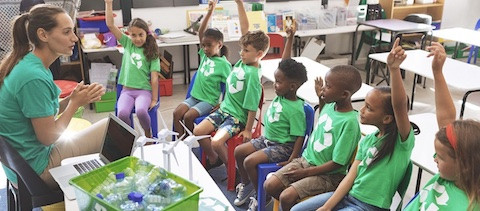 UNESCO urges making environmental education a core curriculum component in all countries by 2025 2021-05-14 Education is not giving students sufficient knowledge to adapt, act and respond to climate change and environmental crises, according to a new report published by UNESCO on the eve of the World Conference on Education for Sustainable Development, which will take place on line from Berlin (Germany), from 17 to 19 May. The study, Learn for Our Planet, analyzed educational plans and curricula frameworks in close to 50 countries across all regions. More than half make no reference to climate change while only 19% speak about biodiversity. The study notes a lack of attention to socio-emotional skills and action-oriented competences that are central to environmental and climate action. In an on-line survey of some 1,600 teachers and education leaders conducted for the study, one third of respondents indicated that environment-related issues were not part of teacher training. Education must prepare learners to understand the current crisis and shape the future. To save our planet, we must transform the way we live, produce, consume and interact with nature. Integrating education for sustainable development into all learning programmes must become fundamental, everywhere.-- Audrey Azoulay, UNESCO Director-General UNESCO has therefore set a new target: to make environmental education a core curriculum component in all countries by 2025. The Organization is working with its 193 Member States to support curriculum reform and track progress to ensure everyone acquires the knowledge, skills, values and attitudes to introduce positive change and protect our planet’s future. The World Conference will bring together some 2,500 participants, including 81 education ministers and leading players committed to the transformation of education so that all learners can address the climate crisis, biodiversity loss and all other sustainable development challenges. It will aim to create strategies for the integration of education for sustainable development into every level of education and training, in line with a new framework. Over three days, sessions will focus on optimal ways to harness education to address interconnected global challenges such as climate change, biodiversity loss, green and circular economies, technological advancement and building resilient relationships with the planet through education. It will look at ways to reinforce the capacity of educators, empower youth and take local actions through education for sustainable development. All participants will be called upon to commit to the Berlin Declaration on Education for Sustainable Development that will outline a range of policies encompassing teaching, learning, professional training and civic engagement. High-level participants scheduled to attend the conference: Audrey Azoulay, Director-General, UNESCO Angela Merkel, Chancellor, Germany Amina Mohamed, Deputy Secretary-General of the UN Patricia Espinosa, Executive Secretary, UNFCCC Princess Lalla Hasnaa, President, Mohammed VI Foundation for Environmental Protection, Morocco Laurent Fabius, President of COP21 (France) Alexander Gerst, European Space Agency Astronaut and advocate for sustainability (Germany) Jeffrey Sachs, Director, the Center for Sustainable Development, Columbia University and President, the UN Sustainable Development Solutions Network Andreas Schleicher, Director of Education and Skills and Special Advisor on Education Policy to the Secretary-General, Organization for Economic Cooperation and Development (OECD). In the lead-up to the Conference, people have been adding their voices to a global campaign launched by UNESCO to call for changes in education so we can all #LearnForOurPlanet, for our own survival and for the future of life on earth. UNESCO is the leading United Nations organization on Education for Sustainable Development, which aims to ensure that all learners acquire the knowledge, skills, values and initiative to act for the planet and live sustainably. In 2019, the UN General Assembly adopted a resolution calling on the international community to scale up education for sustainable development in order to achieve the 2030 Agenda. The resolution recognized UNESCO’s leadership in this field. The conference is organized in cooperation with Germany’s Federal Ministry of Education and Research and with its generous support. URL:https://en.unesco.org/news/unesco-urges-making-environmental-education-core-curriculum-component-all-countries-2025
  Global citizenship and liberation history in secondary curricula in Southern Africa: Review report launched 2021-05-14 The UNESCO Regional Office for Southern Africa (ROSA) in partnership with the SADC Secretariat commissioned a review of national curricula in SADC Member States to determine the level and kind of integration and teaching of Global Citizenship Education (GCED) and Southern African liberation history (SALH) in secondary school curricula. The desk review revealed that the curricula of all 13 countries covered reflected some form of GCED components, whereas SALH education was minimally taught and if taught, it was presented with a national rather than a regional focus. The study identified best practices for integrating GCED and SALH in the curricula in SADC. It provides recommendations for UNESCO, SADC and governments on strengthening GCED and SALH education in the secondary school curricula. The review report, available in three languages (English, French and Portuguese), is accessible here. The study covered secondary schools curricula in Angola, Democratic Republic of Congo, Eswatini, Lesotho, Malawi, Mauritius, Mozambique, Namibia, South Africa, Seychelles, United Republic of Tanzania, Zambia and Zimbabwe. UNESCO and the SADC Secretariat promote regional integration, social cohesion, and peaceful coexistence in the region, targeting especially youth through teaching of Southern African Liberation History (SALH), which is part of the broader concept of Global Citizenship Education. This work supports the integration of global citizenship values and competences among youth, both in formal and non-formal education settings. The aim of the study was thus to investigate how the concepts and related values of GCED and SALH have been integrated in the curriculum to educate future citizens who can think locally, regionally and globally as members of the Southern African Development Community (SADC). The study was conducted to further allow UNESCO the SADC Secretariat and the national stakeholders to identify suitable entry points to integrate GCED and SALH into the curricula. It examined how GCED and SALH education were taught in secondary schools and the extent to which the two concepts were articulated in terms of learning objectives and values. Specific emphasis was placed on GCED as a pedagogical approach based on human rights and a concern for social justice, which enables individuals to act collaboratively and responsibly to find global solutions to global challenges and to strive for the collective good for all. Emphasis was further placed on SALH education with a view to ascertaining how Ubuntu (Humanity), inclusivity and how the liberation movement ideology of African oneness could be used to achieve similar learning outcomes as those of GCED. The role of education is central to harness universal values to build peace, solidarity, and regional integration on the continent. The review further examined the extent GCED and SALH education learning outcomes were precise, measurable, and clearly defined in the curriculum. URL:https://en.unesco.org/news/global-citizenship-and-liberation-history-secondary-curricula-southern-africa-review-report
  With UIL support, six countries develop their education systems from a lifelong learning perspective 2021-05-14 On 21 and 22 April 2021, the UNESCO Institute for Lifelong Learning (UIL) brought together representatives of six UNESCO Member States – Cambodia, Kenya, Namibia, the People’s Republic of China, the Philippines and Viet Nam – to discuss the development of education systems from a lifelong learning perspective. The online meeting built on previous capacity-building workshops by UIL and Shanghai Open University (SOU) in 2018 and 2019 and showed impressive progress in advancing national policies and lifelong learning implementation strategies despite the challenges of the COVID-19 pandemic. The follow-up meeting was organized to provide country teams with the opportunity to share their progress, exchange ways to overcome the challenges presented by the COVID-19 pandemic and reinvigorate the process of making lifelong learning a reality in UNESCO Member States. One delegate, Mr Mok Sarom, Deputy Director General of Education in Cambodia’s Ministry of Education, Youth and Sport, commented: Experiences from the UIL meeting on lifelong learning helped me understand and appreciate systematic educational differences and increase my professional awareness. Indirectly, my work will increase the number of youth and adults with strong literacy, numeracy and soft-skills, combined with technical and vocational skills, for employment and entrepreneurship in the Kingdom of Cambodia. Presentations showed that several themes were key to all participating countries, such as the development of national qualifications frameworks and the recognition, validation and accreditation (RVA) of learning outcomes, the building of learning territories (including learning cities), the provision of lifelong learning through community learning centres, the strengthening of advocacy for and understanding of lifelong learning, and the inter-governmental and sub-national coordination of lifelong learning. UIL shared recent and current projects linked to these cross-cutting themes and SOU described how it has continued to provide lifelong learning opportunities during the COVID-19 pandemic. By the conclusion of the meeting, representatives of the six countries had planned a series of priority actions to further the development of their education systems from a lifelong learning perspective. Mr Li Jiacheng, Deputy Director of the Shanghai Municipal Institute for Lifelong Education in the People’s Republic of China, said:It is very exciting listening to, talking with, and working with the colleagues from UIL and different countries! As lifelong learning is so important for human being, we need to work together with the belief of making learning a reality. UIL will support the countries’ priority actions in the coming months. In November 2021, the series of capacity-building workshops will continue with the third instalment, again co-organized by UIL and SOU. It will take place online. URL:https://uil.unesco.org/lifelong-learning/uil-support-six-countries-develop-their-education-systems-lifelong-learning
  UNESCO and partners host high-level meeting and discussed the advancement of gender equality and inclusion in Latin America and the Caribbean 2021-05-12 Paris/Santiago, 11 May– Two studies on gender equality and inclusion were presented today at a high-level event comprising of experts and authorities from the Latin American and Caribbean region. The first report, Todos y todas sin excepción was produced by the Global Education Monitoring (GEM) Report, the Regional Bureau for Education in Latin America and the Caribbean (OREALC/UNESCO Santiago) and the Laboratory of Education, Research and Innovation in Latin America and the Caribbean (SUMMA). The Report urges countries in the region to prioritise disadvantaged children and young people, to promote inclusion in education, not least in the face of COVID-19. The report shows how gender intersects with poverty, ethnicity, and location to exacerbate disadvantage and its impact on education. The second study produced by the GEM Report, entitled: A New Generation: 25 years of efforts for gender equality in education shows that globally, 180 million more girls have enrolled in primary and secondary education since 1995. It takes stock of progress in girls’ education over the last two and a half decades since the Beijing Declaration and Platform for Action, a landmark commitment by 189 countries to advance the rights of girls and women. In Latin America and the Caribbean, there has been good progress in girls’ education with nearly all children going to primary school. In Guatemala, for example, the rate at which the poorest girls are finishing primary school increased by nearly two and half times in just 15 years, almost closing the gap with boys. Great progress has occurred at the upper secondary level in countries like Mexico where the percentage of girls enrolling increased from 38% in 1995 to 84% in 2018. Costa Rica has also seen a big increase in secondary school enrolment for girls - from 38% in 1995 to universal access in 2018. However, there are 6 countries in the region where less than half the women complete upper secondary school: Haiti, Guatemala, Suriname, Honduras, Uruguay and Nicaragua. But large gender disparities persist particularly for disadvantaged learners. In Belize, for instance, hardly any poor rural young women have completed upper secondary school. But overall, it is young men who are more likely to be disengaged from education and leave school early. Globally, three times more women are also now enrolled in universities than two decades ago. There are now less men than women enrolled in tertiary education in practically every country in the region. “The world has changed a lot in the past 25 years, when girls were struggling to have their right to education fulfilled. Today, more girls enrol in schools and universities than boys. Does this mean we have achieved gender equality in education? We may have come a long way but parity does not mean equality” said Manos Antoninis, Director of the Global Education Monitoring Report. “A gender equality in education agenda for the next 25 years requires a fresh approach, including in Latin America and the Caribbean.” Claudia Uribe, Director of OREALC/UNESCO Santiago stated: “Twenty-five years since the historic Beijing Declaration and Platform for Action girls face far fewer barriers to schooling. However, there are other factors that keep them from reaching their potential, such as cultural norms that set low expectations for them in education." Much of the slow progress in gender equality in education is due to persistent negative gender norms in society. In rural areas of many low- and middle-income countries, girls are often expected to get married and to take on domestic roles, which act as a barrier to their education, as among indigenous girls in Guatemala and Mexico. Javier González, Director of SUMMA, added: “Entrenched gender norms in our Latin American societies are often detrimental to the education of both girls and boys. Unfortunately, schools often perpetuate this vicious circle from one generation to the next, rather than breaking it. Our study detects the existence of gender discrimination, prejudice and stereotypes in curricula and textbooks in many countries. To address this situation, we must not only address these elements, but also train and support our teachers to promote a more inclusive culture." The report calls for action in the following areas: Eliminate gender disparity in education access, participation, and completion in countries where girls are less likely to be enrolled and complete school. All pregnant girls and young parents must be supported to go to school. Despite the global decline, early pregnancy rates remain high across the region. In Argentina, a holistic approach combining two laws, flexible learning programmes, nurseries in schools, re-entry programmes for vulnerable children and non-formal alternative secondary education programmes has helped protect pregnant girls’ and young parents’ right to education; meanwhile the adolescent fertility rate fell from 61 in 1995 to 49 in 2018. All teachers and career counsellors must have training to prevent negative gender stereotypes spilling over into teaching and students’ subject choices. Globally, the percentage of females studying engineering or ICT is below 25% in over two-thirds of countries. In Colombia for example only 10% of girls expect to work in science and engineering professions compared to 25% of boys. Few women pursue careers in ICT. Curricula and textbooks must represent females in a way that does not perpetuate gender stereotypes. Textbook reviews in many countries found that text and images do not portray women in active social and economic positions but in traditional home-bound roles. In Peru, despite initiatives, such as the use of inclusive language in communication guidelines and improved balance in representations of men and women, textbooks still reproduce traditional gender roles. All students must have access to comprehensive sexuality education, which has been shown to prevent school-related gender-based violence by promoting understanding and respect of students’ gender identities. It also leads to a reduction of the prevalence of early pregnancies. Grassroots organizations in Nicaragua work on the intersection of gender and disability, providing comprehensive sexuality education and training on responses to gender violence. Encourage more women in leadership positions to help change social and gender norms – and act as role models for female students. Negative stereotyping of women as unsuited to be leaders are reinforced by a scarcity of female teachers in higher education. Globally, women make up 94% of teachers in pre-primary but only 43% in tertiary education. Even fewer women hold leadership positions in universities and in education administration. Overall, Brazilian women are as qualified as men, or more so, to occupy leadership positions in tertiary education, yet only 28% of federal university presidents were women in 2018. URL:https://en.unesco.org/news/unesco-and-partners-host-high-level-meeting-and-discussed-advancement-gender-equality-and