
News
Catch up on what’s happening in the world of global citizenship education.
1,668 results found
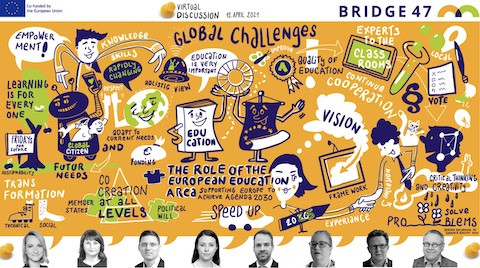 Underpinning the Role of the European Education Area in Supporting Europe to Achieve Agenda 2030 2021-04-26 Last week, over 70 EU policy and decision makers, education experts and civil society representatives came together for a multi-stakeholder panel discussion on how the European Education Area (EEA) could help Europe on its path to achieving Agenda 2030. Organised by Bridge 47, the event was moderated by Bridge 47 Chair Rilli Lappalainen, and co-hosted by MEP Dace Melbārde (ECR) and MEP Michaela Šojdrová (PPE), who set the tone with their opening remarks:MEP Dace Melbārde (ECR) highlighted the European Education Area (EEA) as an ambitious and timely initiative, but one where more work needs to be done to align the EEA to Agenda 2030, as meeting SDG Target 4.7 is not optional if we want to achieve Europe’s Green Agenda. MEP Michaela Šojdrová (PPE) affirmed the importance of quality education in the face of current and future challenges, suggesting that the EEA is well placed to support Europe to achieve its Agenda 2030 goals. Panel Questions Opening the panel discussion, speakers and audience were asked to identify, in one word, the purpose and role of education today, responding with a first reaction with some key words such as: empowerment, critical thinking, self-efficacy, resilient society, development of skills and competencies, active citizenship and competencies. The panellists, MEP Victor Negrescu (S&D), MEP Irena Joveva (Renew), Gyula Cserey, Head of Unit EAC A1 (DG EAC), Janine Costa, Education Attaché for the Portuguese Permanent Representation to the EU, and Nils-Eyk Zimmermann, Secretary of the DARE Network had a fruitful discussion around two key questions:What skills and competences are needed today to equip citizens for global challenges? MEP Victor Negrescu pointed out that “there’s an understanding that today’s classrooms look like the classrooms of 30 years ago, and very few changes have been made”. “We need a clear assessment of what education is today, and what it will be tomorrow” he emphasised. “We have to improve infrastructure, invest in training for teachers, have adequate resources for education to ensure teachers and professors are paid fairly, introduce robotics and AI, speak about green education, and make sure that education is adapted to our current needs, but also with an orientation to future needs and challenges.” Ms Janine Costa suggested “skills and competencies are fundamental to the capacity of people and countries. Education and training systems should provide individuals at all stages of life the opportunity to develop key competencies to cope with current and future transformations in society. These competencies should be developed from a lifelong learning perspective, in formal, non-formal and informal learning contexts.” In what ways can a common, holistic educational vision for Europe support the achievement of Agenda 2030? MEP Irena Joveva indicated that "since education is a prerequisite to achieving any goal in the future, we should be more ambitious and double down on the Commission’s proposed actions such as education for climate coalition and provide adequate funding for educational systems". However, she emphasised that "identity comes spontaneously through enrichment in society, so should invest more in the cross border cultural sector instead of forcing European identity in textbooks over other identities. We have seen growing totalitarian models inside the EU, so it’s important to educate young people about our current challenges such as the climate crisis, democratic backsliding, the role of media, recent modern history, critical thinking and reflection on the digital environment and our place within it." Mr Gyula Cserey outlined "the Commission's holistic approach to education is inspired by the multi-dimensional approach in the UN sustainable development goals. Firstly, we view education for personal fulfilment and employability as supportive of one another, and want to ensure we have good policy coherence between all our policy priorities. Secondly, we want to ensure we have commonality in everything we do in Europe, across all levels, and ensure whole education and training ecosystems are on board. Where these two components come together are in the effort to create a true culture of Lifelong Learning at all levels, through formal, non-formal and informal opportunities". Mr Nils-Eyk Zimmermann highlighted that "two years ago, Fridays for Future and Greta Thunberg reminded us that education is not just an issue for the young. We need to emphasise a Lifelong Learning perspective, which I don’t see this reflected in the EEA as it primarily focuses on formal and higher education. I encourage parliamentarians to take non-formal education and education for democratic citizenship, civic education, more seriously. We need to prepare citizens for a transition. In civil society, civic engagement is a non-formal learning space. Let’s look for cohesion between other programmes build synergies.” Open Discussion In the open discussion, MEP Victor Negrescu and MEP Irena Joveva explored citizenship education as a tool which could inform citizens of their rights and responsibilities, and the important balance of students learning about the EU and citizenship, while allowing room for critical reflection. MEP Dace Melbārde highlighted the benefits and challenges of seeking balance amongst diverse needs in education, and how education could benefit from increased partnerships with different sectors. In response, Mr Nils-Eyk Zimmermann emphasised the need to overcome prejudices that sometimes come with soft-skills and non-formal education, and how we should challenge civil society to step up and take a bigger role in education. Ms Janine Costa invited participants to look at Member States’ reaction to the Commission’s communications on the EEA, and how Member States and the council want to frame cooperation in education and training over the next decade, which would be from an inclusive, holistic and lifelong learning perspective. It was highlighted that many participants resonated with the critical thinking aspect of skills and competencies needed, as well as global citizenship and breaking silos. In response to a question from a participant on what could be done to achieve the EEA ambitions sooner, MEP Victor Negrescu and MEP Irena Joveva affirmed the important role of Member States to ensuring EEA targets were achieved. Negrescusuggested Member States needed to recognise the changes needed and implement recommendations coming from the commission, and how we needed to allocate adequate resources to achieve this. From a Member States perspective, Ms Janine Costa stressed that EU level targets are EU level references for Member States, and it’s important that Member States can establish their own national targets linked to EEA targets. Mr Gyula Cserey added that it’s important to maintain the momentum behind education and training that has been built so far to meet our EEA target by 2025. Closing Remarks A graphic recording of the event, created by Gabriele Schlipf, was shared with panellists and participants to close the event. URL:https://www.bridge47.org/news/04/2021/underpinning-role-european-education-area-supporting-europe-achieve-agenda-2030
  Inspirando a las niñas a aprender: Cuatro historias para celebrar a las niñas en las TIC 2021-04-24 Girls around the world are using innovation and technology to solve problems, to unite communities and as a force for good and equality. And yet, women and girls are still under-represented in STEM fields. In an increasingly digitized world economy, the gender digital divide has severe repercussion for girls’ and women’s rights. To bridge this gap, at least three things need to happen: facilitate equal access to digital technologies and the internet for girls and women; encourage and invest in girls and women to build their ICT skills; and enable women and girls to take up leadership roles in tech. On International Girls in ICT Day, 22 April, join us to celebrate girls in tech, support technology education and skills training, and encourage more girls and young women to pursue STEM careers. From creating open-source ventilators in Afghanistan to unifying and amplifying the voices of young activists in Chile, and working to end child marriage in Georgia, here are some girls and young women changemakers who inspire us. Building a low-cost ventilator prototype in Afghanistan Somaya Faruqi. Photo: Digital Citizen Fund When ventilators were becoming scarce due to the COVID-19 pandemic, Somaya Faruqi and Afghanistan’s Girl’s Robotics Team developed a prototype ventilator to support the country’s health care system. “The former Governor of Herat requested our team join the challenge to build up an open-source ventilator. We had limited access to the market didn’t have the right materials, there were travel restrictions and we didn’t even have a budget. Still, we participated with the help of our coaches, experts and mentors,” Somaya says. “We designed an open-source ventilator based on the MIT design. And, we proved that if there is opportunity for young women, they can change their lives and their community” For Somaya, supporting other girls in STEM and paving the way for equality in the industry is a top priority. And that means supporting and encouraging the dreams and ambitions of girls and young women like herself. “It’s important to have the input of the younger generation, as they are the future and they have a lot of creative ideas that can benefit everyone. It can change their lives if someone believes in their dreams,” she says. Standing up against online violence in Kenya Kathy Gitau, 22, was elected as Vice President of Maseno University, Kisumu Kenya, in 2019. Photo: UN Women/Luke Horswell Kathy Gitau, 22, witnessed violence in her home growing up, and was told only certain jobs and roles are right for women. When she wanted to become Vice-President of the Student Union at her University, she was discouraged by others who believed that to reach decision-making roles, women had to offer sexual favours. “It makes you lose focus. It makes you think ‘let’s call it quits,”, Kathy says. “I don’t want anyone to suffer the same things I have.” After learning about the global and growing problem of cyber-bullying and technology-based violence against women, she decided to speak up and make her university a safer space. “Technology based violence is violence and discrimination propagated through technology, such as cyber bullying and cyber-attacks. People can hide behind pseudo accounts and names,” she says. “This problem has become global because everyone is connected by technology and the audience is everywhere.” Now, Kathy and her university have created support groups for those who’ve experienced online abuse, and continue to raise awareness on their campus, and in high schools across Western Kenya. Uniting activists across Chile Julieta Martinez. Photo: UN Women/Lupita Valdés As a speaker for youth festivals and a member of UN Women’s Beijing+25 Youth Task Force, Julieta Martinez, 17, connected with girls from across Chile and the world to learn from their experiences. She heard from many that the lack of safe spaces for girls to network and work towards their dreams was holding them back. Julieta took action. She founded the Tremendas platform to create spaces and opportunities for girls and young women to connect and combine their talents and knowledge to support social causes. Julieta believes that the unity and togetherness of activist communities is an incredible force for good. “To facilitate equality and inclusion, we need above anything else patience, respect and tolerance,” she says. “We need to listen to each other, first of all, to understand that there are different opinions and perspectives and that everyone's scope of action is different.” Julieta and the many Chilean girls she collaborates with recognize that young people need to be the driving force of solutions to global problems. “Just as we are part of the problem, we are part of the solution and we are certain that the time to act is now,” she says. “We cannot continue wasting time because if the future is truly ours, the decisions are up to us. This has to be an intergenerational dialogue (...) We, the youth, are not only the future, we are also the present.” Using tech and data to combat child marriage in Georgia Mariam Lomtadze. Photo courtesy of Mariam Lomtadze At a young age, Mariam Lomtadze was told science and technology were inappropriate for a girl. Rather than dissuading her interest in STEM, the criticisms sparked Mariam’s activism for gender equality. Now, she uses her skills in science and technology to address gender inequalities. At 17, Mariam participated in a Hackathon hosted by UN Women to visualize gender data. She and her team focused on early and forced marriages, because it happens to so many girls in their country, Georgia. “Presenting gender data in an innovative, easily understood manner helps us raise people’s awareness of important issues like gender inequality,” Mariam says. “As more people are exposed to gender equality problems, it makes it easier to find lasting solutions.” Mariam’s team created an app to show how early marriage creates obstacles for girls’ career prospects. In the app, which featured characters who represented young girls from all different regions of Georgia, users played as fairy tale heroines and answered scenario questions to play out their futures, which in many cases were not “happily ever after”. Through the game, users could see different scenarios for girls lives, and how they would be better off without early and forced marriage. “Talking about early and forced marriage is the starting point for resolving it,” Mariam says. “It is also important to show the affected girls – those who either married early or are facing the threat of [forced marriage] – that they are not alone.” URL:https://www.unwomen.org/en/news/stories/2021/4/compilation-stories-to-celebrate-girls-in-ict
  UNESCO’s Story for Development celebrates persons with disabilities’ achievements 2021-04-24 Supported by the Nippon Foundation, UNESCO’s Story for Development is an online platform dedicated to the inspiring stories of person with disabilities around the world. The platform identifies and creates an online registry of persons with disabilities’ success stories and their impact in the political, economic, academic and social spheres in their respective communities. UNESCO is renewing its call for submission of stories reflecting the lives of persons with disabilities around the world on its dedicated platform, Story for Development. Testimonies of persons with disabilities are celebrating their incredible achievements that spans all walks of life; from sports to music and disaster reduction and tells us how accessibility and inclusion are indispensable to sustainable development and social progress. Supported by the Nippon Foundation, Story for Development is the first platform dedicated to successful persons with disabilities around the world, located through self-identification and recommendations of different stakeholders. It brings together an interactive collection of stories submitted by persons with disabilities, with links to their written words, audio-files and videos. We invite all persons with disabilities to share their stories, not only to inspire those who are in a similar position or face similar obstacles, but also to make their voices heard by wider audiences and actors working in the public and private spheres globally. Toshiya Kakiuchi, a Japanese entrepreneur with a physical disability, recounts his success in the business world on Story for Development - a project that he developed during his time as a student, now expanded nationwide to universities in Japan. "Mirairo Inc. was established in June 2010. Our first line of work was to create barrier-free maps for universities. In the second year, we also began universal design consultation from the perspective of people with disabilities." -- Toshiya Kakiuchi, a Japanese entrepreneur with a physical disability Believing that “hardware cannot be changed, but the heart can,” Kakiuchi and his colleagues at Mirairo have been providing universal design consulting services to more than 600 companies, organizations and schools in Japan; these services raise awareness about the approaches necessary to facilitate inclusion and accessibility for persons with disabilities. "What made me think of this business was that through starting universal design consulting, I realized that it was difficult to physically change environments due to budget and space constraints, however, just by changing the response of [the] staff, we were able to resolve many problems relevant to accessibility for persons with disabilities." -- Toshiya Kakiuchi Born with Down syndrome, Adedamola Roberts is a five-time Special Olympics Gold Medalist in swimming. In 2003, Roberts attended his first Special Olympic World Games in Ireland, where he was disqualified in track and field due to lane violation. Saddened by the incident, he returned home only to be awarded a medal by Nigeria, which served as an impetus of encouragement that led to his success when he abandoned track and field for swimming. "I took up another sport—swimming—and with a great coach by my side and my team, I have participated in more international events and won gold medals in 2007, 2011, 2015, and 2019 Special Olympics World Summer Games. These triumphs has given me a sense of purpose while adding value to society. I am happy to keep inspiring parents, coaches and others with a disability that they can achieve greatness." -- Adedamola Roberts Beyond the world of sports, Zainab Chinikamwalla visited Benetech’s office in the San Francisco Silicon Valley in 2013 to learn about its initiative, Bookshare - the largest online accessible library of copyrighted content for people with print disabilities. Herself with severe visual impairment, Chinikamwalla recognised the potential of Bookshare in providing access to persons with print disabilities in India; a year later, she joined Bookshare’s office in India and contributed to its growth since its infancy. At the time, she writes, there were only 100,000 accessible books available to persons with print disabilities, but now there are more than half a million books, with 1,500 in Hindi and some hundreds in other Indian languages. "As [Bookshare’s] Head of Membership, Asia and Africa, I am proud to make opportunities for people to study independently because when I was in school, I did not have that option." -- Zainab Chinikamwalla Story for Development’s collection of stories constitutes an important set of case studies and data, which allows interested bodies and organisations to make informed decisions regarding policies, community actions, and business plans for the provision of new products and services. The online platform contributes to the empowerment of persons with disabilities, promote universal human rights and liberties and the values of the United Nations in a truly global initiative. Story for Development allows concerned persons and organisations to engage in a unique network, to enjoy worldwide visibility and to enhance corporate social responsibility. Photo credit: © 2021 Mirairo Inc. URL:https://en.unesco.org/news/unescos-story-development-celebrates-persons-disabilities-achievements
  Q&A: UNESCO and the Office for Climate Education - boosting climate action through learning 2021-04-23 2021 is an important year for climate action. The UNESCO World Conference on Education for Sustainable Development(ESD), in May and COP 26 in November will be crucial to strengthen climate change education worldwide and empower people to build sustainable societies. Education is key to promote climate action, which is why UNESCO and France have jointly established in 2020 the Office for Climate Education (OCE), a centre aiming to enhance climate change education worldwide. On the occasion of Earth Day, UNESCO Assistant Director- General for Education Stefania Giannini and the president of OCE Eric Guilyardi joined in conversation about education and climate action. Climate change is one of the greatest challenges of our times. 2020 was one of the hottest years on record, according to an analysis by NASA, and since the late 19th century the earth’s average temperature has risen by more than 1.2 degrees Celsius. Ms. Giannini, how can education contribute to climate action? Ms Giannini: Humans are increasingly influencing the earth’s temperature by burning fossil fuels, deforestation and farming livestock. The only way to counter climate change is to transform our lifestyles and establish sustainable patterns of production and consumption worldwide. Climate change education has been increasingly recognized as a priority for Climate Action by the international community. The Paris agreement, the UN Convention on Climate Change as well as the Action for Climate Empowerment Agenda all recognize education as crucial to promote climate action. Climate change education is part of UNESCO’s Education for Sustainable Development programme, which aims at transforming societies by transforming education. It focuses on empowering people with the necessary knowledge, skills, values and attitudes needed to live more sustainably, including by raising awareness on the causes and effects of global warming, promoting problem-solving and critical thinking skills to encourage people to take action. How is UNESCO acting in this area? Ms Giannini: We have been working to make education a central and more visible part of the international response for climate change. As part of the Organization’s Strategy on Climate Change, we advocate for Climate Change Education, produce and share knowledge, provide country support, policy guidance and implement projects on the ground. We also provide data on country progress and facilitate dialogue and exchange of experiences and best practices. For example, UNESCO co-organized with the UNFCCC the 8th Dialogue on Action for Climate Empowerment in 2020 and developed a guide to provide countries with advice on how to integrate Action for Climate Empowerment in their respective Nationally Determined Contributions (NDCs), which are at the heart of the Paris Agreement and reflect countries efforts to reduce national emissions. Another example is the Getting Climate Ready Project, through which UNESCO has been supporting schools to become climate friendly and UNESCO You-CAN, the organization’s youth network for climate action. What are the perspectives to take forward climate action through education? Ms. Giannini: This year is particularly important for climate change education. At the World Conference on Education for Sustainable Development, we hope to mobilize government’s support and engagement to the new global framework of Education for Sustainable Development, ‘ESD for 2030’, that includes climate change as a key issue. At COP 26, a new work programme on Action for Climate Empowerment, which includes education, is expected to be adopted. We hope that governments will commit to Education for Sustainable Development and foster the collaboration between the education and the environment sectors. At the initiative of the French government, the Office for Climate Education (OCE) was recently established as a UNESCO center. Mr. Guilyardi, could you please tell us why this centre was established and what are its main objectives and activities? Mr. Guilyardi: The Office for Climate Education (OCE) was established in 2018 under the auspices of the French Foundation ‘La main à la pâte’. Our aim to educate the younger generations about climate change, its causes and consequences, by providing primary and secondary teachers with tools and resources and to enhance international cooperation between scientific organizations, education institutions and NGOs. In 2020, OCE became a category 2 centre of UNESCO, which will allow it to increase the scope and impact of its actions. Despite the challenge that climate change represents, our educational resources and activities are aimed towards action, hope and positive thinking. We promote the use of active pedagogies and an interdisciplinary approach to climate change education that takes into account global and local realities. Since its establishment, OCE has been implementing a systemic vision articulated around 4 axes: Producing, adapting and disseminating free, open and multilingual pedagogical resources on climate change, based on the IPCC reports. Providing educators and teacher trainers around the world with professional development workshops and support. Facilitating cross collaboration between various actors such as scientific institutions, NGOs and ministries of education to implement operational projects on the field. Assisting education systems as well as policy-makers in the integration of climate change into the school curricula. What are the challenges to implement climate change education? Mr. Guilyardi: A first challenge is the absence of climate change topics in most of the school curricula. Therefore, teachers cannot be provided with appropriate professional development and education schools. Secondly, school systems are often organized in a disciplinary way, especially at secondary level. We know that climate change education needs an interdisciplinary approach, and this fragmentation may be an obstacle. Social acceptability is no longer an issue since most of the stakeholders are now convinced of the challenges posed by climate change and the importance of education. But, from the students and teachers’ points of view, a new difficulty appeared: Eco-anxiety. Teachers have a difficult role to play, they need to raise awareness among students on the real and important challenges posed by climate change, while promoting a positive vision of their future. A “critical mind with a hopeful heart”. We need to support teachers both to acquire a better knowledge of climate change issues and to get more familiar with the specific pedagogical approaches required by climate change education: inquiry based science education, critical thinking, project-based learning, interdisciplinarity, etc. How can schools get involved with the Office for Climate Education (OCE)? Mr. Guilyardi: OCE promotes a horizontal working approach. We create educational resources for and with teachers, therefore our team is always looking forward to collaborating with schools to see how we can best support the climate education needs of teachers around the world. For example, we are currently inviting schools to use our recently launched educational kit, called The Climate in our hands. The first volume of this project is dedicated to the theme of Ocean and Cryosphere and is composed of a collection of educational resources for primary and secondary school teachers which include; a handbook, a summary of the IPCC special report, video expert interviews, animations and science based experiments. All these resources are cost-free, multilingual and royalty-free and can be used by teachers for distance or physical learning at schools to generate knowledge and inspire climate action. Schools can also participate in the implementation of field-projects, in partnership with our local partners (for the moment in Latin America and France, but in the future in other regions of the world). Ms. Giannini and Mr. Guilyardi, what would UNESCO and OCE recommend to strengthen climate change education in the future? Mr. Guilyardi: A lot of initiatives exist worldwide and can provide sources of inspiration. What is missing is that all stakeholders – policy-makers, curriculum developers, teachers, school administration teams etc. build coherent, efficient and systemic actions to support climate change education at a large scale. Ms. Giannini: Indeed, there is a real need to build systemic actions and this is only possible with government’s support. At the UNESCO World Conference on Education for Sustainable Development in May, we hope to enhance policy commitment through the ‘Berlin Declaration’, which will include a call for urgent action to accelerate sustainability and climate action through education. Through its new global framework ESD for 2030, we are also launching ‘country initiatives’, which aims to mobilize several stakeholders, including youth, educators, policy-makers, civil society and the private sector at the national level to ensure a coherent and coordinated approach while promoting sustainability through education. We will then take the outcomes of the World Conference forward to COP 26, where we aim at enhancing the commitment of the education and environment sectors to address URL:https://en.unesco.org/news/qa-unesco-and-office-climate-education-boosting-climate-action-through-learning
  Digital Literacy takes center stage at the 3rd National Teacher Education Symposium, Uganda 2021-04-20 Participants observing the national anthems at the opening ceremony of the symposium © Uganda Ministry of Education and Sports UNESCO supported the Ministry of Education and Sports of Uganda to hold its 3rd National Teacher Education Symposium under the theme: “A digitally competent teaching force for the 21st Century.” The three-day symposium from 24 to 26 March was launched by the First Lady and Minister of Education, Mrs. Janet Kataaha Museveni. The symposium was attended physically by 200 participants and virtually by about 300 participants. Under the sub-themes of digitized delivery of teaching and learning tasks, ICT and continuous assessment and; ICT as an effective interactive pedagogical tool for teaching and learning, one of the main resolutions from the symposium is that the ministry takes the bold step of beginning to digitize the teaching content for teacher training in Uganda. In this symposium, it was interesting to see the different initiatives the teacher training institutes have adopted in the drive to embrace digital technologies for teaching and learning, occasioned by the COVID-19 pandemic that saw all education institutions closed for about a year. UNESCO provided technical and financial support toward the third teacher symposium. The symposium is now an annual event where teacher issues are discussed and workable solutions adopted in view of SDG 4 c target. It features teachers, teacher educators, private sector, education development partners and UN agencies. UNESCO was represented during the symposium by the National Project Coordinator, Mr. Charles Draecabo who chaired the special panel discussion on the digital literacy. In his opening remark, Mr. Draecabo observed that ‘’In today’s digital world, nearly every career requires digital communication at some point, so equipping students with the skills to effectively and responsibly find, evaluate, communicate, and share online content is key to their futures. But the benefits of teaching your students digital literacy skills begins in the classroom right now”. URL:https://en.unesco.org/news/digital-literacy-takes-center-stage-3rd-national-teacher-education-symposium-uganda
  Inclusion in early education in Singapore: towards more equitable foundations 2021-04-18 Just last month the Singapore Government made a welcome announcement. From the second half of 2023, all pre-schools will have an inclusion coordinator. This new role in schools will identify and provide support for children with developmental needs from the very early years. This is much needed. According to the charity Serving People with Disabilities (SPD), 4,000 children in the country have been diagnosed with special developmental needs every year since 2015. Early identification of these developmental issues has the power to foster inclusion and help support a child with special needs to reach their full potential. Yet, there are still many barriers within education systems that make it harder for children to learn. These challenges can have severe consequences later on in life from restricting opportunities to increased poverty for the most marginalised. The inclusion coordinators in Singapore will have an important role to play in identifying children who have developmental needs. These can vary from physical conditions, such as muscular dystrophy, sensory issues such as vision, or hearing loss and various neurodevelopmental disorders and intellectual disabilities in addition to language developmental delays. It is intended that these coordinators will ensure children are properly assessed and then will connect parents and teachers with the best early intervention support and resources. Ensuring this type of support in every pre-school classroom has the potential to maximise the prospect of inclusion of each child. But there are risks. On the one hand, it is important that data is collected to identify children who need support and also to understand the true scope of the issue. On the other hand, these assessments can do harm by labelling children and categorising them. Putting children in boxes could lead to further stigmatisation, trigger lower teacher expectations and peer rejection. It can also lead to poor and minority students being overrepresented in special education. For example, students with immigrant backgrounds are more likely to be misdiagnosed as having special education needs, when literacy tests are not done in their home language. Portugal adopted a non‐categorical approach in 2018. Its method moves away from the idea that we need to diagnose children medically and put them in groups accordingly in order to intervene. It focuses instead on ensuring that all children learn even if that entails following different learning paths. For children with special needs the curriculum is therefore flexible and adapted to their abilities. An example that is not prescriptive and involves the wider community can be found in India’s Madhya Pradesh state, where an early intervention programme identifies, screens, treats and rehabilitates children under the age of five with developmental delays or physical disabilities. Its early intervention clinics bring together a range of specialists from the community, such as in public health, family welfare, women and child development who provide continuous and broad support to families who need it. They provide a range of services from the early years, such as individualised training programmes developed by a multi-disciplinary team, all the way to vocational skills training for adolescents. The government of Singapore’s Inclusive Support Programme will be piloted in a few preschools. Assessments of children who require early intervention support will be followed up by services that will benefit them. Pre-schools will be resourced with full-time early intervention professionals who will work with early childhood teachers allowing children to receive continuous support in their own school setting. To match best practice, it is important that any approach is holistic and that inclusive education is not seen as the responsibility only of specialised teachers but of the entire school community. One of the gaps identified in supporting children with special needs is properly trained teachers. The UNESCO 2020 Global Education Monitoring Report on inclusion and education shows that 25 per cent of teachers in 48 education systems reported a high need for professional development on teaching students with special needs in 2018. When teachers are trained, 90 per cent of children with dyslexia can be educated in mainstream classrooms. What is better is that approaches for these students can benefit all those who are learning to read. Many children with disabilities and special education needs are defined by what they lack as opposed to what they have. They are forced to confront many barriers that societal norms throw their way. But they have the potential to thrive, if given the right type of support from the very early stages of their education that does not stigmatise them. Reducing inequality among students starts with supporting the youngest children in being ready for school early on. Inclusivity should be the foundation of the education system; if children feel that their voices are heard and their needs are met, they will thrive. URL:https://gemreportunesco.wordpress.com/2021/04/15/inclusion-in-early-education-in-singapore-towards-more-equitable-foundations/
 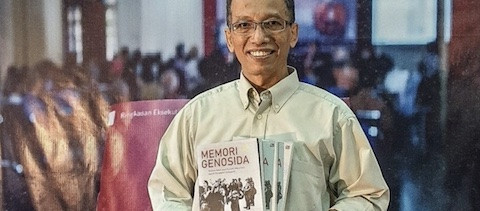 Q&A: Promoting Holocaust and genocide education in Indonesia 2021-04-16 Baskara T. Wardaya is the Director of the Centre for Democracy and Human Rights Studies (PUSDEMA) at Sanata Dharma University in Yogyakarta, Indonesia. In 2017, he participated with a project team of Indonesian educators in the International Conference on Education and the Holocaust, a capacity-building programme organized by UNESCO and the U.S. Holocaust Memorial Museum, which seeks to advance Holocaust and genocide education worldwide. Dr. Baskara has continued to promote Holocaust and genocide education in Bahasa Indonesia and has now published a book on memory and genocide for Indonesian audiences, entitled Memori Genosida. Q: Can you explain why you decided to publish a book about genocide and memory, with a particular focus on the Holocaust, in Indonesian? How does this topic resonate with Indonesian audiences? A: First of all, we all know that the Holocaust is not just a problem for the victims and their families. It is a problem for humanity. It is a problem for all of us. Because of that, everyone – including us Indonesians – needs to learn about it and from it. We need to learn as many lessons as possible from the Holocaust. Since it seems that many Indonesians are still not quite familiar with the Holocaust, we want to offer them some help to learn about it. Q: How does this book project link to your participation in the 2017 International Conference on Education (ICEH) and the Holocaust organized by UNESCO and the U.S. Holocaust Memorial Museum (USHMM)? A: When in 2017 I attended the ICEH in Washington DC with the other members of my project team, we found that the topics and the methods being used were very interesting and useful. Inspired by the conference, we began to talk about holding a similar project, but within the Indonesian context, especially the Indonesian historical context. We then submitted a proposal for the project to the ICEH committee. After some revisions and discussion, the proposal was accepted. UNESCO and USHMM were willing to help us with advice and finance. We were very grateful. Much of the contents of the book stem from discussions we have had during the seminar and workshop for Indonesian teachers, students and human rights scholars, organized as an immediate follow-up project to our participation in the ICEH. Some of the participants became contributors. Q: Which themes do you and the contributors highlight and discuss in the book? How do the themes of the book relate to the Indonesian context? A: The book, titled “Memori Genosida” [English: “Genocide Memory”], presents the reader with multiple perspectives on the Holocaust and genocide, stressing the complexity of related histories. For one, the Holocaust did not happen suddenly. It happened gradually, especially when people began to view those who were different from them as “the other” and began to discriminate against them. Further, those who participated in the violence during the Holocaust were not necessarily “monsters”; they could be ordinary people who saw injustices around them but did nothing. Three, if that is the case, something similar to the Holocaust could happen not only in Europe but also everywhere, including Indonesia. It could happen not only in the 1930s or 1940s, but also today. As an archipelagic nation, Indonesia is very diverse ethnically, linguistically, religiously, etc. Because of this, Indonesia is at a heightened risk of conflicts, caused by voices that emphasize these differences. We have seen this happening in the past. That is why we need to educate one another to not discriminate against people who are different from us ethnically, linguistically or religiously. We also need to prevent injustices around us before they are too late to stop. This book was especially written for young Indonesians, such as high school students and university students, in close collaboration with high school teachers and university professors. But also wider audiences will benefit from it. Since some of the contributors to this book work on the impact of the human rights violations that took place in Indonesia during the anti-communist purge of 1965, reading and discussing literature on the Holocaust helps us in putting the violence of the purge into a broader perspective.The book was presented to Indonesian and international audiences at a virtual book launch on 26 March 2021. Participants from across Indonesia took part in the event, which included presentations by local teachers, lawyers and human rights scholars, including the only female commissioner of the Indonesian National Human Rights Commission. UNESCO promotes education about the Holocaust and genocide worldwide as part of the Organization’s Global Citizenship Education programme. Within the framework of the International Conference on Education and the Holocaust, UNESCO and the U.S. Holocaust Memorial Museum support education stakeholders around the world to develop and implement context-sensitive educational approaches to deal with violent pasts and prevent genocide. The two training programmes in 2015 and 2017 led to the development of 16 Holocaust and genocide education initiatives in 17 countries. Funded by the Government of Canada, UNESCO and the U.S. Holocaust Memorial Museum are now launching a new project cycle, to be implemented over the next three years. Learn more. UNESCO’s work on education about the Holocaust and genocide International Conference on Education and the Holocaust URL:https://en.unesco.org/news/qa-promoting-holocaust-and-genocide-education-indonesia
 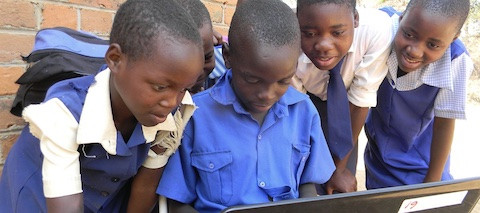 UNESCO launches UNICEF learning passport platform and discusses the potential of learning platforms for inclusive and quality education 2021-04-15 UNESCO together with High Life Foundation participated in a radio discussion on learning platforms on the occasion of the launch of UNICEF’s Zimbabwe Learning Passport. The Learning Passport addresses the challenges faced by millions of children and youth worldwide to access continued, quality education in times of crisis and when access is limited to traditional learning. The discussion evolved around key questions such as: Why are learning platforms critical to education? What is the role of technology within the education space? Can intended school results still be achieved using digital learning platforms? Contributing to the discussion, UNESCO Regional Office for Southern Africa Education Specialist, Julia Heiss said the COVID-19 pandemic had brought to the fore the potential of online learning platforms to sustain continuity of learning. COVID reminded us of the potential role of learning platforms. We now live in a knowledge society triggered by the technological revolution and the emergence of the concept of the online classroom.-- Julia Heiss She added that millions of learners now have access to technology and learning platforms will play a role in improving access to education. Learning platforms can help in providing alternative pathways to education especially in instances when conventional forms of education are compromised such as during the COVID19 pandemic. Learning platforms complement conventional forms of education and in the years to come will constitute a major part of the teaching and learning agenda.-- Julia Heiss She also pointed out the limits of learning platform and on line learning. Technology and online platforms cannot however replace teachers and their pedagogical competences neither can they replace schools or higher education institutions as places for social learning.-- Julia Heiss Julia Heiss said UNESCO continues to invest in capacity building and training of teachers and was in the process of training over 2000 Zimbabwean teachers in open and online teaching through digital platforms, WhatsApp and radio lessons. This UNESCO Rapid teacher training programme on open, distance and online learning will be rolled out until August 2021. The training will also be made available to many more teachers through a MOOC. Chiedza Juru from Highlife Foundation said the COVID-19 pandemic had shown that learning cannot only take pace in schools. We need to shift our mindsets and … parents must embrace technology in education, this is also important for the world of work.-- Chiedza Juru URL:https://en.unesco.org/news/unesco-launches-unicef-learning-passport-platform-and-discusses-potential-learning-platforms
  Share your favourite transformative learning practices with Bridge 47 community! 2021-04-15 As part of the work around the global Network, Bridge 47 is now preparing a publication on Transformative Learning for Powerful Networks that will offer a collection of case studies of examples of meaningful change brought about by global citizenship education and transformative learning practices. The 10 selected case studies will come from the work of organisations, initiatives and movements from all over the world, including, but not limited to, the members of the Bridge 47 network. The publication will present five case studies of implementation of educational approaches that focus on bringing about deep learning and change for involved individual participants and participating communities. The publication will also feature five examples of how GCE/transformative learning methods can be productively used for organisational transformation and/or meaningful community engagement. If you believe that you know of an organisation (other than your own) whose transformative practices you believe deserve to be noticed, please let us know about them through filling out this short questionnaire. We are particularly interested in identifying candidates from the Bridge 47 Network, but we are also happy to receive any other suggestions. Limitations of space prevent us from including all the suggestions, but for those that we will not be able to include in the printed publication we will create entries about them in the Bridge 47 online library. Please share your case studies here. Deadline for submissions is 26 April. If you have any further questions, please direct them to Rene Suša at renesusa@gmail.com. URL:https://www.bridge47.org/news/04/2021/share-your-favourite-transformative-learning-practices-bridge-47-community
 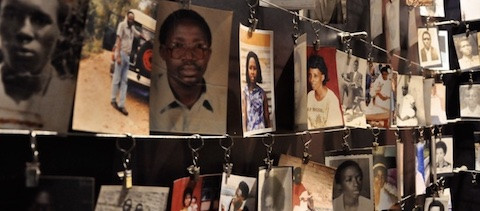 UNESCO and UN launch project to strengthen genocide education in Africa 2021-04-15 The legacies of violent pasts affect societies in all regions of Africa and across the world. Strengthening context-sensitive approaches to genocide education and mass atrocity prevention in the region, UNESCO and the UN are launching a new education project tailored to the needs of teachers and teacher trainers. Following an initial consultative process and curriculum review in six pilot countries, the project will produce a teachers’ guide on educating about mass atrocities in African contexts, to be disseminated via regional and national workshops for teachers and teacher trainers. On 25 March, education stakeholders from Kenya, Namibia, Rwanda, South Africa, South Sudan and Zimbabwe joined the inception meeting to learn about the project’s framework and objectives and discussed local and regional challenges related to violent pasts and the impact on education systems. Framing the discussion, Freddy Mutanguha, Executive Director of Aegis Trust and Director of the Kigali Genocide Memorial, spoke about his work in Rwanda and the wider legacy of colonialism and genocide across Africa. Following his presentation, participants from all six countries exchanged ideas about the important role of education in dealing with difficult local histories and strengthening social cohesion and peace today, while stressing the need to embed related efforts in existing education frameworks. The project posits teachers as agents of change and facilitators of learning about mass atrocity and global citizenship. Educating about genocide and other violent pasts can be a challenge for teachers: it entails extremely complex historical processes and confronts educators with navigating related political debates and conflicting narratives. Likewise, teachers need to develop awareness of their own biases, especially if the history they are teaching is lived experience, or within living memory. Access to guidance materials, relevant resources and training is therefore crucial to build the skills and confidence of educators in this respect. The project is the first of its kind implemented by UNESCO and the UN with a strict regional focus. Countries around the world are marked by violent pasts and at potential risk of conflict and genocide. Localized approaches are needed to effectively address regional dynamics and historical specificities. Jointly coordinated by UNESCO International Institute for Capacity-Building in Africa (IICBA), UNESCO Section for Global Citizenship and Peace Education, and UN-mandated Outreach Progammes on the Holocaust and the 1994 Genocide against the Tutsi in Rwanda, the project will rely on the insights and expertise of regional and international stakeholders, scholars and experts in the field of genocide and global citizenship education, as well as peace and human rights education. Project partners include the Office of the United Nations Special Adviser on the Prevention of Genocide and Global Action against Mass Atrocity Crimes (GAAMAC). The event was attended by Yumiko Yokozeki, Director of UNESCO IICBA; Maher Nasser, Director of the Outreach Division, United Nations Department of Global Communications; and Cecilia Barbieri, Chief of Section for Global Citizenship and Peace Education, UNESCO. The project on genocide and global citizenship education in Africa is being piloted in Kenya, Namibia, Rwanda, South Africa, South Sudan and Zimbabwe. Find out more about global efforts undertaken by UNESCO and the UN to educate about violent pasts and prevent future genocide. UNESCO’s work in education about the Holocaust and genocide URL:https://en.unesco.org/news/unesco-and-launch-project-strengthen-genocide-education-africa