
News
Catch up on what’s happening in the world of global citizenship education.
1,668 results found
 Are countries ready to build learners’ resilience in times of crises? 2020-11-25 The COVID-19 pandemic has exposed our world’s fragility and interdependence, affecting every country, community and family, resulting in an unprecedented global social and economic crisis. Impacting nearly 1.6 billion learners, shutting down schools overnight and transforming public health and education systems everywhere: COVID-19 has forced us to rethink, among other things, the way we teach and learn, the way we work, the way we communicate and the way we consume. Since the start of the new academic year, and with an increase in school dropout rates coupled with continued uncertainty, many schools have been struggling to ensure that learning never stops. Therefore, it is necessary – more than ever before – to make learning feel relevant again. This implies making greater efforts to foster the cognitive, social and emotional skills as well as the responsible behaviours that prepare young people to prevent and face future crises. However, according to a recent study published by UNESCO, countries are most likely not fully prepared for the task. The study, ‘Educational content up close: Examining the learning dimensions of Education for Sustainable Development and Global Citizenship Education’ (now also available in French and with statistical data), reveals disparities in the emphasis placed on the social-emotional and behavioural dimensions of learning relating to global citizenship education (GCED) and education for sustainable development (ESD), from the pre-primary level to upper secondary. What does this mean in practice and for learners in COVID times? The study, which looks at ten countries from UNESCO’s five world regions that have comparatively strong policy commitments to both GCED and ESD - Costa Rica, Japan, Kenya, Lebanon, Mexico, Morocco, Portugal, Republic of Korea, Rwanda and Sweden – reveals, despite governments efforts to ensure a balance between all learning dimensions across all educational levels, there is still a relative decline of social-emotional and behavioural dimensions of learning as students progress from pre-primary to upper secondary. This is not only challenging because these dimensions are important in their own right, but because nurturing the social-emotional skills of children and young people is paramount, especially in times of crisis wherein many have experienced isolation and anxiety. That said, it is equally important to find a balance between these three dimensions of learning because learning generally improves when the social-emotional aspects of a learner are engaged, or when participatory and action-oriented pedagogies are used to engage students in ways that they find meaningful and memorable. In Kenya, where schools will remain closed until January 2021, as a result of the pandemic, GCED and ESD are already seen as critical in helping to address COVID-19 related societal tensions and stresses, political polarization, violent extremism, social injustice and conflict. Expert contributor to the study, M Mary Kangethe, who is an Education Programme Director in Kenya and a member of the country's National Commission for UNESCO, has witnessed up close the positive effects of holistic learning promoted through GCED and ESD. Ms Kangethe sees its importance in countering the range of damaging effects caused by the long-term absence of children from school. Ms Kangethe emphasised that: ‘The classroom in Kenya is a relatively open space; we encourage schools to allow children to ask questions and to really express their views. Teachers in turn have to be role models for their students. It is our hope that this avenue will be adequately utilised as schools re-open to strengthen children’s resilience to deal with the pandemic.' The assumption of the study – validated in UNESCO-MGIEP’s publication Rethinking Learning- is that if GCED- and ESD-related education policies and programmes do not promote a diverse experience but rather disproportionately emphasize academic achievement alone or just social and emotional learning, they are less likely to trigger the changes that are needed to prepare students to thrive in an increasingly unstable and complex world. The report therefore recommends that ESD and GCED stakeholders ensure that all three dimensions of learning are given greater and appropriate attention in the syllabi, textbooks, teacher guidelines and recommended pedagogies of all relevant subject domains. UNESCO’s Issue Note on Nurturing the social and emotional wellbeing of children and young people during crises which draws together best practices, practical tips and links, provides additional guidance on how to take this recommendation forward. UNESCO’s Mahatma Ghandi Institute of Education for Peace and Sustainable Development publication Rethinking Learning: : A Review of Social and Emotional Learning for Education Systems’, reviews the latest research on Social and Emotional Learning (SEL), its impact on student health and school climate and its transformative role in building happier classrooms. URL:https://en.unesco.org/news/are-countries-ready-build-learners-resilience-times-crises
  UNESCO reaffirms commitment at high-level UN event to address antisemitism 2020-11-25 On 17 November, UNESCO participated in an online high-level event on ‘The role of the United Nations in Combating Antisemitism’, organized by the World Jewish Congress and the Permanent Mission of the Federal Republic of Germany to the United Nations on the sidelines of the 75th session of the United Nations General Assembly. Global surveys show an increased proliferation of antisemitism in many parts of the world. This alarming trend has been further accelerated in the context of the COVID-19 pandemic and rising disinformation worldwide. Conspiracy theories and deliberate denial and distortion of the history of the Holocaust are among the most prevalent forms of contemporary antisemitism. Against this context, the event brought together representatives of the United Nations, UN agencies and the European Commission as well as Permanent Missions to the United Nations to discuss and coordinate strategies to address antisemitism within and beyond the United Nations system. In her opening remarks, UNESCO Director-General Audrey Azoulay underlined the need for a common and coordinated approach. ‘Antisemitism does not only harm Jewish people, it also undermines human rights in general,’ she said. ‘This is why the war against antisemitism should not be waged by Jewish institutions alone. The entire international community must take action.’ ‘UNESCO, with its mandate on education, is at the forefront of efforts to combat antisemitism,’ Ms. Azoulay added. ‘We know that fighting prejudice, respecting difference, appreciating diversity are values that can be learned.’ Over the past years, UNESCO has taken concrete action to strengthen education systems against this worrying surge of hatred, prejudice and violence. At the online event, UNESCO Programme Specialist Karel Fracapane presented UNESCO’s human rights-based approach to addressing antisemitism in and through education, which is embedded in the Organization’s programme on Global Citizenship Education and linked to activities on the prevention of violent extremism. Recent activities include guidelines for policymakers and international capacity-building workshops, to which UNESCO will add curricula for teacher trainers, to be published with the Organization for Security and Co-operation in Europe (OSCE) Office for Democratic Institutions and Human Rights next week. Together with its partners at the Holocaust and the United Nations Outreach Programme and the World Jewish Congress, UNESCO will launch a new series of activities to strengthen educational responses to Holocaust denial and distortion. Ms Azoulay joined Amb. Michaela Küchler, President of the International Holocaust Remembrance Alliance, Maram Stern, Executive Director of the World Jewish Congress, Tatiana Valovaya, Director-General of the UN at Geneva, Miguel Moratinos, High Representative for the UN Alliance of Civilizations, and Amb. Gilad Erdan, Permanent Representative of Israel to the United Nations, to reiterate UNESCO’s continued commitment to address and prevent antisemitism in and through education. UNESCO’s activities cater to global audiences and support Member States in the development of national strategies and programmes. This need for national responses was recognized by Permanent Missions at the event: Representatives of the Permanent Missions of Albania, Argentina, Austria, Bosnia and Herzegovina, Brazil, Canada, Cyprus, Czech Republic, Denmark, Estonia, France, Greece, India, Israel, Italy, Latvia, Republic of Bulgaria, Romania, Slovakia and Uruguay pledged to strengthen their efforts to address and prevent antisemitism. URL:https://en.unesco.org/news/unesco-reaffirms-commitment-high-level-event-address-antisemitism
  Realizing the rights of the child through environmental education 2020-11-21 The UN Human Rights Council has adopted a historic Resolution to include the right to a healthy environment as integral to the Rights of the Child, with environmental education identified as a key enabler. 1.5 million children under the age of five die per year because of air and water pollution, exposure to toxic substances, together with other types of environmental harm. Children are the most vulnerable group to environmental harm, which also will contribute to disease, disability and early mortality throughout their life. It is also children who will be left with the disastrous effects of the climate crisis and biodiversity loss. The Resolution, adopted at the 45th session of the Human Rights Council, on ‘Rights of the child: Realizing the rights of the child through a healthy environment’ urges States to take measures to ensure the rights of children and future generations in the face of environmental harm. This includes ‘recognizing a right to a healthy environment’ in national laws and policies, and ‘ensuring that the best interests of the child is a primary consideration with respect to environmental decision-making’. Central to the Resolution is ensuring that education addresses environmental issues including climate change by integrating them in all levels of education to increase understanding and respect for the nature and prepare children for the future decisions they will have to make. This strengthens the implementation of Article 29 (1) of the Convention on the Rights of the Child on the aims of education which states that a child’s education shall be directed to “...the development of respect for the natural environment.” In addition, the Resolution calls for training of teachers to allow them to carry out effective teaching on environmental issues and challenges. “As the lead UN agency for Education for Sustainable Development, UNESCO welcomes enshrining of environmental education into the rights of the child,” said Vibeke Jensen, Director of UNESCO’s Division for Peace and Sustainable Development. “To prevent the climate crisis and achieve all 17 Sustainable Development Goals, we need to recast our relationship with the world we live in. That begins with education.” Achieving sustainable development requires a global change of mindsets, beliefs and behaviours, and education is vital to this task. Education for Sustainable Development (ESD) offers a framework for transforming learning to reorientate the human relationship with the natural environment and prepare individuals to take informed decisions and make responsible choices for environmental integrity. It builds the skills and attitudes needed to question the way we think, the values we hold and the decisions we make in the context of sustainable development. As such, the Resolution helps reinforce the objectives of the new global ESD for 2030 framework that will be officially launched in May 2021 in Berlin, Germany. It also echoes and aligns with UNESCO Director-General Audrey Azoulay’s call at the United Nations Summit on Biodiversity in New York on 30 September for a restoration of the relationships between people and nature, in part through education, and the amplification of the power of youth. UNESCO is a collaborating partner of the Children's Environmental Rights Initiative, a global coalition working to ensure children’s right to a safe and healthy environment, and welcomes this resolution as part of the global framework to enhance the integration of environmental issues in education. URL:https://en.unesco.org/news/realizing-rights-child-through-environmental-education
 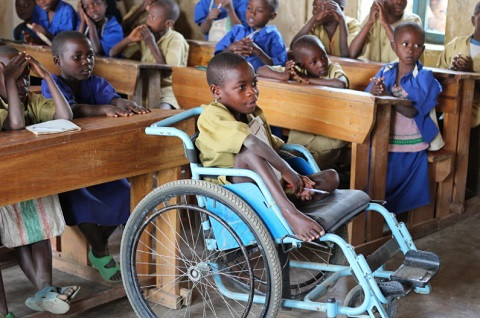 Global Education Monitoring Report 2020: Education for all 2020-11-20 By Senator Dr Gertrude Musuruve Inimah, Kenya Parliament, representing persons with disabilities, and co-chair of the International Parliamentary Network for Education Inclusion, the theme of the Global Education Monitoring Report 2020, is another way of saying ‘Education for all’. Both the connotative and inferential meaning of this theme is that education is mandatory and a right for everyone and no child should be denied of it because of race, gender, abilities or socio-economic background. It is also the principle that I have dedicated my life to achieving as a teacher, university lecturer and author of books on sign language for learners and teachers guides. My latest book, my autobiography, which is yet to be published, titled: From Cancer to Disability to Parliament, is a tale that depicts that, whatever one goes through, education is a social, political and economic game changer. Acquiring a disability as a result of cancer treatment did not stop me from reaching out to the world to encourage, mentor and be there for those who might be going through the challenges and pains I went through. As a Senator in the Parliament of Kenya, representing persons with disabilities, I have always legislated on inclusion of persons with disabilities in education and the world of work. I have lived in both worlds and I am alive to the discrimination and exclusion that people with disabilities face. I experience societal discrimination as well, despite the fact that I am a parliamentarian. Parliamentarians in partnership to deliver the promise of SDG 4 It is important to deepen parliamentarians’ understanding of the importance of leaving no one behind. Growing and deepening political understanding of, and commitment to, inclusive and equitable quality education for all will accelerate progress towards Sustainable Development Goal 4. Parliamentarians help create policies and laws that could make the promise of SDG 4 achievable after all. I became founding Co-Chair of the International Parliamentary Network for Education (IPNEd), the first global parliamentary network dedicated to education launched in September 2020, because I believe in its vision, mission and the objectives it has with regard to achieving parity in education among all children regardless of their background. It brings together parliamentarians, civil society, scholars and like-minded people across the globe. The Network has active members in 35 parliaments from across 6 continents. As a co-chair of IPNEd, I endeavour to work with my distinguished co-chair, Hon Harriet Baldwin, together with the entire IPNEd team and like-minded organizations, to deliver the promise of leaving no child behind. We must all be alive to the glaring truth that education cannot wait and we must be counted as a generation that has made a whole lot of difference in the life of children with disabilities and other marginalized children. Education lights every stage of the journey to a better life Having been raised in a low socio-economic background, I experienced a bout of challenges as a student. I walked about 10 kilometres to school, while most of my classmates took a van, school bus or were dropped at school. I ate a banana for lunch or food remains from home while most of my peers ate school lunch and bought snacks in the school cafeteria. My parents could not afford to pay for the bus or meals but they were very encouraging. They are the reason I worked hard in education. They constantly reminded me that through education my future will be bright. When I was pregnant before going to college, my parents did not condemn me. They took care of my baby while I pursued with my studies to become a teacher. As soon as I finished my college, I was able to take care of my daughter and support my parents. The first project I ever did in life when I finished college and started working was planting tea leaves for my parents so that they could have a monthly income in their old age. I was able to help them have a permanent house, electricity and water. I take care of my widowed mother and other widows in my community on a monthly basis. I use my own resources to support girls’ and boys’ education in my community who go through what I went through when growing up because I am alive to the fact that education lights every stage to a better future. In my early career as a teacher I taught a range of students and saw the clear gaps in learning that Deaf learners experienced due to the linguistic challenges many experienced. I decided to study special education and linguistics in 1998-2003 to address the pedagogical gaps. While I was studying my Masters, I authored several books and instructional materials that would help Deaf learners in Kenya learn English. In 2013, when I was in the middle of my doctoral studies, I was diagnosed with Ewing’s Sarcoma, a rare type of bone cancer that necessitated going through a radical limb saving surgery that saw me lose half of my femur bone and part of my pelvis. I was fitted with a hemi pelvic prosthesis to help my mobility. I thank God for giving me a second chance to be alive and fight for inclusion, mainstreaming and equal opportunities for people with disabilities as well as being a mentor and source of inspiration for cancer survivors. Even before I got a disability, I had interacted with people with disabilities, I knew the challenges they went through. It gives me pleasure championing for their inclusion socially, economically and politically. It gratifies my heart. Disability intersects with other characteristics to exacerbate exclusion from education When disability intersects with other characteristics such as gender, ethnicity and poverty children with disabilities fall even further behind. The 2020 Gender Report, which builds on the 2020 GEM Report, highlights that girls with disabilities are the most likely to face the most extreme forms of exclusion in education. The COVID-19 pandemic has erected new barriers to the challenge. The 2020 GEM Report found that around 40% of low and lower-middle income countries did not support learners at risk of exclusion during school closures. As a result, children’s marginalization has intensified. Despite states throughout the world ratifying the UN Convention on the Rights of Persons with Disabilities, which enshrines the right to inclusive education, many governments are yet to establish and effect this principle in their laws, policies and practices. Legislation offers a route to inclusion Only 68% of countries have a definition of inclusive education in their laws and policies. Parliamentarians have the platform to legislate on inclusive education and ensure that governments are responsive to ensuring that no child is left out. In our Parliament, I sponsored the Kenyan Sign Language Bill, which is progressing well to becoming law and will provide for the use of sign language in schools. I am sponsoring three other bills that seek to improve the rights of children, youth and adults with disabilities. Around the world, IPNEd is connecting and will continue to connect with parliamentarians to similarly press for greater inclusion and investment in education. The COVID-19 emergency has given new urgency to this mission. We must act now to prevent a lost generation of learners. I urge my fellow parliamentarians to join us by affirming IPNEd’s Declaration so that we can work together, across geographical and political divides, to ensure that no child is denied their right to quality education. URL:https://gemreportunesco.wordpress.com/2020/11/18/global-education-monitoring-report-2020-education-for-all/
 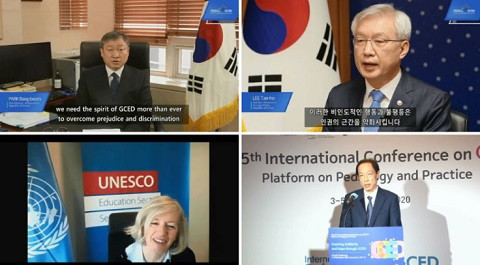 The 5th IConGCED Opened Dialogues to Revive Global Solidarity in Times of Pandemic 2020-11-19 The 5th International Conference on GCED (IConGCED) was held online from 3 to 5 November 2020. This Conference was co-organized by the Asia-Pacific Centre of Education for International Understanding (APCEIU), the Ministry of Education, and the Ministry of Foreign Affairs of the Republic of Korea, and in partnership with UNESCO, Under the overarching theme of “Fostering Solidarity and Hope through GCED,” the Conference provided a venue for dialogues to examine the role of GCED in response to the pandemic and revitalise global solidarity. Over 1,300 education policy makers, educators, stakeholders from academia, international organisation and civil society organisation, and youth members from 111 countries attended the conference virtually. Distinguished guests among the participants includes the Vice Minister of Education of the Republic of Korea, PARK Baeg-beom, the 2nd Vice Minister of the Foreign Affairs of the Republic of Korea, LEE Tae-ho, and the Assistant Director-General for Education of UNESCO, Stefania GIANNINI. Professor Lynn DAVIES from the University of Birmingham stressed that “we must understand the process of how injustices occur and consider strategies to prevent the repetition of injustices” in her keynote speech on global solidarity against all forms of systematic discrimination, exclusion and phobia. Professor CHOE Jae from Ewha Womans University addressed the lessons we should learn from the pandemic and endeavours to create a better future in his keynote speech. He asserted that “while the pandemic may not destroy our human race, climate change can do,” as he emphasized the urgency of “ecological turn,” cognitive shift towards ecological thinking. During the first panel discussion, a wide range of experts from the fields of peace and conflict resolution, media & information literacy (MIL), teacher association, and environment explored the primary issues raised by the recent pandemic from the GCED perspective. The panelists addressed several problems resulting from the inaccessibility of education, one of many unforeseen side effects of the pandemic. Consequently distance learning is in demand, but teachers are also facing limitation in their delivery of pedagogies and developing educational contents beyond the basic introductory level course. As such, while the online platform has opened a new window of opportunities for learning, the experts anticipated that we must also prepare ourselves for the dangers posed by unchecked digital space. On the following day, educators from South Korea and South Africa were invited to share their local practices of facilitating education for anti-discrimination and social justice. In the first special talk titled “Transforming a crisis into an educational opportunity: Critical reflection on discrimination and inequality in our own society,” the Korean educators discussed how they fostered a learning environment where students may inquire and discuss social injustice and inequality issues by observing the impact of the pandemic in their daily lives. Meanwhile, in another special talk titled “No story left behind - Storytelling and social justice,” South African educators shared a compelling case of imbuing a message of social transformation to the younger generation and contextualizing seemingly abstract notions of social justice based on individual stories of racism and social inequality. In Session 3 titled “Transformative Engagement and Education for Sustainable Development,” panelists discussed a diverse range of educational practices in Central America, Africa, and the Middle East. While emphasizing that local effort for sustainable development can stir a global momentum for change, the experts shared their transformative experiences of implementing school rules for living together with students to apply their commitment to action. In one instance, an educator from UNESCO ASPnet in Lebanon shared his experience of motivating students to add environmentally conscious features to the building (e.g. roof to collect rainwater) to foster the physical transformation of school space towards sustainability. He stressed that it is important to inspire students to take interest in sustainable development by changing their school environment. Meanwhile, the experts also examined key emerging concepts of digital citizenship and its relevance to GCED. During the session, a mini workshop was also facilitated for the participants to get a first-hand experience of critical media & information literacy amidst the overwhelming tide of fake news. The last day of the Conference comprised of a variety of activities through a virtual expo session where various GCED related studies, publications, projects were introduced. This special session included promotional video clips to introduce “Emerging Issues in Times of the Multiple Pandemics: The Korean Experience” published by APCEIU, “NISSEM Global Briefs 2020,” and so on. In the closing session, under the title of “Next Normal” we make”, representatives from UNESCO HQ, UNESCO Group of Friends for Solidarity and Inclusion with GCED, Kenya Ministry of Education, Department of Education and Training of Victoria State in Australia, academia, and youth were invited as panelists to discuss the vision of GCED for this pandemic era and beyond. In particular, Ambassador H.E. Tamara SIAMASHVILI of Permanent Delegation of the Republic of Serbia to UNESCO noted that “experts and practitioners should raise public awareness of GCED and strengthen advocacy through collaboration.” The moderator, Director LIM Hyun Mook from APCEIU, concurred that the role of GCED in times of pandemic is critical more than ever and concluded on a positive note that “there is still a lot we can do to actualize the full potential of GCED into reality.” Despite the limitations posed by the pandemic, the Conference was able to draw a great degree of attention from the participants around the world. By hosting a virtual conference, the 5th IConGCED contributed to creating a new platform to revisit the role of GCED and revive global solidarity in this pandemic era. URL:The 5th IConGCED Opened Dialogues to Revive Global Solidarity in Times of Pandemic > APCEIU News - APCEIU (unescoapceiu.org)
 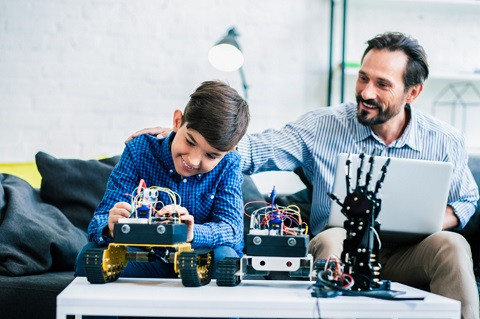 Simple STEM Activities To Do At Home 2020-11-18 By Hermann Samano The COVID-19 pandemic has upended education for teachers, parents, and students alike, but before that revolution, there was another one just as profound. Long before parents were asked to double as in-home teachers, educators were focusing on STEM education, turning their sights to the important fields of science, technology, engineering, and math. The importance of STEM education is difficult to overstate, and the vitality of these fields is only expected to increase in the years and decades to come. With the world currently undergoing an information-based paradigm shift, the jobs that survive the coming artificial intelligence disruption will be the ones that harness creativity in new and profound ways. Whether your kids are learning at home on a full-time basis or supplementing their classroom time with screen time, there are some wonderful STEM activities families can do at home. Some of these activities can be done in the great outdoors, where children can revel in the beauty of nature and parents can get some much needed fresh air. Others are indoor activities, perfect for rainy days and those dark winter nights. What they all have in common is that they make learning fun. If you want to spark a lifetime love of learning in the next generation, mixing enjoyment with education is always a great place to start. With that in mind, here are some of the best and most creative indoor and outdoor STEM activities for parents, children, and the entire family. Science Activities From the smartphones in our pockets to the satellites circling overhead, science plays a vital role in modern life. The importance of science is only expected to increase, so get your kids ready with these fun scientific activities and experiments. Solar system mobile – The universe is a fascinating place, and the solar system we live in is no less interesting. Even the youngest children can construct a miniature model of the eight (or nine) planets, and all you need are a few simple materials. A bug zoo – You do not have to go far to find exotic wildlife; there are fascinating creatures in your own back yard. Just grab some jars, bottles, and other containers and let the kids build an extensive bug zoo for their bedrooms. Testing soil and gardening – Planting a garden in the back yard is a great way to let your kids stretch their scientific wings. Let the kids test the relative merits of various types of soil, using seeds you buy online or get at the local garden center. Growing crystals – Growing crystals in solution is a wonderful science experiment, one you may remember from your own elementary school days. You can buy ready-made kits for growing crystals, or you can find the materials you need at home. Technology Activities You do not see a lot of children programming computers, but kids have a natural affinity for technology. These days even young kids carry powerful computers in their pockets, so coding for kids is not as outrageous a concept as it might seem. Here are some fun technology activities for kids of all ages. Simple coding exercises – These days kids do not have to be programmers to complete simple coding exercises, so look for activities that spark curiosity and a desire to learn even more. App building – If your kids love using smartphone apps, imagine how excited they will be to create an app of their own. Using relatively simple tools kids can craft their own apps, testing the results as they go. Hold a homemade robot contest – Building robots at home is a great technology activity kids and their parents can enjoy. You can purchase robot building kits or find plans online and build your own mechanical creations from the ground up, and when you are done you can set up battles or contests to see which member of the family built the best automaton. Engineering Activities From STEM activities for kindergarten and STEM activities for elementary school to STEM activities for middle school and STEM activities for high school, there is no end to the fun and the learning. Engineering does not have to be dull and boring; it can be engaging and exciting. Here are some of the best engineering activities to enjoy in the comfort and safety of your own home. Build your own rocket – If your kid dreams of being an astronaut one day, building a DIY rocket is sure to spark their creativity. You do need high explosives or special equipment to launch a homemade rocket; you can make your own ship using simple products around the house. Delicately balanced sculptures – Engineering and art are not mutually exclusive, so why not combine the two. Building a delicately balanced sculpture can reinforce important lessons in engineering, and give your child a beautiful decoration for their room. Absorbency and spills – Chances are your kids have spilled their fair share of grape juice and milk, so why not make the next mishap a learning experience? When the liquid hits the floor, gather a variety of cleaning materials and test the absorbency of each, calculating rates of absorption, checking for residue, and keeping copious notes on the results. Mathematics ActivitiesMany children struggle with mathematics, but in many cases that is a failing of the educational system and not an inherent deficit in the kids themselves. It is easy to make math seem mysterious and out of reach, but the field is actually the most practical of all. Mathematics plays a role in every aspect of adult life, from buying a home and getting a mortgage to shopping at the grocery store. Here are some fun mathematics activities to try at home. Cooking and baking – Following a recipe is a mathematical exercise, so let your kids help out in the kitchen. Pepper the preparation with questions like “what is half of half a cup?”, “how many teaspoons in a tablespoon?” and “how can you calculate the baking time for that delicious cake?”. Online shopping – If you love to shop online, let your kids sit in on the transactions. From assessing shipping charges to calculating percent off offers, these exercises will build math skills for the next generation. Common Benefits of STEM From STEM toys that can entrance and entice the youngest children to STEM activities that spark curiosity and foster a love of learning, science, technology, engineering, and math can play a powerful and productive role in the education of students. By making learning fun, educators, parents, and society at large can use STEM as a kind of shortcut, and as a stand-in for schooling that will stand the test of time. All of this may be true, but the real benefits of a STEM education go far beyond the current generation. Indeed, the true potential of science, technology, engineering, and math are rooted in the future, a future that will likely be dominated by machine learning, artificial engineering and technological advances the current generation can only dream about. Experts predict that the rise of artificial intelligence, machine learning, and robotics is likely to be as disruptive as the industrial revolution of the late nineteenth and early twentieth century, if not more so. Like previous disruptions in the social order, the industrial revolution improved many lives, but it also put millions out of work. Now a new revolution is hurtling our way, and the devastating impact on employment is being widely predicted. When that future is fully realized, whole classes of workers will be permanently displaced, but others will find a rich field of employment opportunities in its place. Those successful workers will need to be adaptable, intelligent, and highly educated, and they will likely emerge from the fields of science, technology, engineering, and math. Children who are well-grounded in STEM education from an early age should have the best shot at success, and parents and educators can lead the way. Parents can start the education at home, even before their youngsters leave for kindergarten. Through the use of STEM toys, parents can foster a curiosity that will last a lifetime, and those early experiences will feed on one another and pile up through the years. The learning can continue through subsequent ages, with STEM projects that can be done at home, in the grocery store, and even on vacation. Something as simple as computing discounts on a shopping trip can be informative, while later and more complicated STEM projects can reinforce those lessons and provide even greater benefits. The job of every parent is to prepare their kids for the next stage in life. Whether that next stage is moving on to kindergarten, moving out to college, or somewhere in between, lessons in STEM are sure to serve them well. Giving your child a firm grounding in the tenets of science, technology, engineering, and math will prepare them for a future filled with artificial intelligence, factory running robots, machines that learn, and other 21st century advances. URL:https://porch.com/advice/home-stem-activities
  “World in 2030” Public Survey: climate change and biodiversity loss biggest concern by far, multilateralism and education most important solutions 2020-11-17 The results from UNESCO’s ‘World in 2030’ Public Survey – held from May until September this year – are in. An inclusive international call for input launched by the Strategic Transformation Support Unit, it attracted responses from more than 15000 people around the world. The results are already informing UNESCO’s reflections to ensure its programmes are responding to the real-world needs of citizens around the world over the coming decade. "At a time of massive disruption linked to the COVID-19 pandemic, our goal was to listen to the challenges being faced by people all over the world, and they have told us loud and clear. Our programmes to address climate change, reduce violence and promote equality, especially through education, are of paramount importance. However, greater efforts are needed to address people’s specific concerns, and multilateralism is the way to do this. Restoring confidence in multilateralism requires the implementation of concrete and impactful projects, and this is at the heart of our Organization's role." ─ Audrey Azoulay - UNESCO Director-General Survey respondents called out climate change and loss of biodiversity, violence and conflict, discrimination and inequality, and lack of food, water and housing as the four biggest challenges to peaceful societies leading up to 2030. Education in its various forms came out on top as a crucial solution to the many difficulties we face. And while people overwhelmingly extolled the importance of global cooperation, very few felt confident that the world can effectively overcome its common challenges. Climate change and biodiversity loss the most crucial concern for peaceful societies this decade International awareness of the threats posed by climate change and biodiversity loss is higher than ever. The crises loom at global, regional and local scales, and international cooperation will be vital to stem current trends. This was reflected in survey results, with the most respondents by far flagging this challenge as the most urgent, impacting populations internationally and close to home. People were most worried about increasing natural disasters and extreme weather, biodiversity loss, risk of conflict or violence, impacts on oceans, and, critically, less and less hope to solve the problem. To address the challenge, respondents favoured investment in green solutions, education on sustainability, promoting international cooperation, and building trust in science. These results indicate that UNESCO’s work in climate change and biodiversity, as well as disaster risk reduction, education for sustainable development, ocean health and open science are valuable tools in the fight against climate change and biodiversity loss. Innovating and learning key to tackling violence, inequality & deprivation Other top challenges that people indicated were important to them included: Violence and conflict: respondents were concerned about radicalization and terrorism, the risk of global conflict and nuclear weapons, and violence against minorities and vulnerable groups. Violence against women and girls came in fourth position globally but was the top concern for respondents in Latin America. Discrimination and inequality: top concerns included violence against women and minorities, increasing hate speech & online harassment, and discrimination against women and LGBT people. Four in ten (38%) reported feeling that intercultural or religious tensions are getting worse. Lack of food, water and housing: the top concern by far was a lack of safe drinking water, but respondents were also worried about the impact of natural disasters and climate change, and a lack of healthy or good quality food. Interestingly, young people (under 25) cited concerns about discrimination and inequality more often than respondents from older age groups. There was also more concern about violence against women and LGBT people in this age bracket, a trend reiterated in responses from women. Discerning these patterns helps identify which challenges are the most important to engage on with youth, who, as the future leaders of society, were seen as perhaps the most important target group of the survey. As such, a considerable effort was made to engage young people, including through collaboration with SHS youth networks, UNESCO Chairs and ASPNet Schools, and promotion on social media. This resulted in more than half of respondents being under the age of 35. The survey was likewise translated into 25 languages with the help of National Commissions and Field Offices, who also dispersed it through their networks. Respondents of all ages appealed for global cooperation and legal frameworks against violence and hate speech, support for technological solutions to and associations working on deprivation, and promotion of gender equality and respect for all cultures. Fittingly, education was again a top solution, with calls for teaching peace, non-violence, cultural tolerance, human rights, science and technology. Education and global cooperation essential solutions to our many global challenges In fact, education was consistently highlighted as a solution, from teaching about critical thinking, respect, online ethics and media literacy, to promoting health, civics, heritage and gender equality. This reflects a collective conviction in the importance of education not only as an end in and of itself, but as a valid and wide-reaching solution to our many and varied global challenges. Education was also considered the area of society which will most need to be rethought in light of the COVID-19 crisis, lending credence to education programmes like the Futures of Education initiative. A total of 95% of respondents felt that global cooperation was vital for overcoming our challenges (including 80% who said it was “very important”), and most respondents were concerned about the impacts of challenges on the world as a whole. While this is reflective of strong global solidarity and the enduring relevance of multilateralism, there appears to be considerable concern regarding their effectiveness, with only one in four respondents feeling confident that the world would be able to address its challenges, including only 4% who said they were “very confident”. Challenges and lessons in the time of COVID-19 Alongside education and global cooperation, respondents also pointed to the relationship between humans and nature, along with scientific cooperation and the sharing of research, as important areas of society to be rethought in view of the pandemic. The emergence of COVID-19 has brought to the attention of many the links between public health and environmental management, including the spread of zoonotic diseases. Similarly, the issue of scientific cooperation and the sharing of research, which UNESCO is addressing through the development of a new Recommendation on Open Science and a joint appeal for open science, has become more eminent as scientists around the world share knowledge on the virus, and the global pursuit of a vaccine continues. The COVID-19 crisis has also highlighted the importance for many of international cooperation on global challenges: in addition to health and disease, climate change and loss of biodiversity, migration and mobility, and lack of food, water and housing were just three areas pinpointed as in need of effective international cooperation. While engaging in many concrete actions, UNESCO’s response to the COVID-19 pandemic has also paid particular attention to strengthening international cooperation – work that must continue if faith in the multilateral system to address these major challenges is to be restored. Numerous issues highlighted by the pandemic were also reflected in respondents’ concerns about health and disease, disinformation and freedom of expression, lack of decent work and opportunities, and political participation and democratic principles. Health and disease was ranked higher as a challenge by respondents from Asia and those who identified as indigenous, coming in second place overall. People cited concerns about the reliability of information and deliberate spread of falsehoods, poor leadership, corruption and lack of political accountability, attacks on the media, inadequate education systems, inequality in the labour market, and the global decline of democracy. In addition to those already discussed, solutions included support for quality journalism and fact-checking and strong legal penalties and frameworks for the spread of disinformation. Old issues in a contemporary context: migration, technological change & the preservation of culture Finally, respondents were also asked for feedback on the issues of migration and mobility, artificial intelligence and new technologies, and traditions and cultures at risk. When faced with the challenge of migration and mobility, people were most concerned about the human rights of migrants and refugees, the political backlash in countries receiving migrants, human trafficking or sexual exploitation of migrants, and climate change making the situation worse. They called for effective global and regional coordination on the issues, focus on development in source countries, respect for cultures and diversity, and support for integration into host communities. When considering the emerging challenges posed by artificial intelligence and other new technologies, people were most concerned about online privacy and surveillance, ethical issues, cyberwar and new forms of conflict, and new cybercrimes. They called for education on ethics, online safety and privacy, a global ethical framework, promotion of an ethical, transparent and human focus, and prevention of online crime. Those identifying as indigenous ranked the risks for traditions and culture higher than others. When dealing with this challenge, people were most concerned about cultural heritage and practices disappearing, globalisation leading to loss of heritage or identity, young people’s disinterest in their cultural heritage, and lack of support for creative industries. They called for the integration of culture and heritage into education systems, the promotion of intercultural exchange and respect of diversity, the engagement of young people with their traditions, and the safeguarding of cultural heritage sites and practices. Orienting UNESCO’s strategic direction for the World in 2030 The World in 2030 survey was developed by the Strategic Transformation Support Unit, with the financial support of the Canadian Commission for UNESCO, in the view of enriching UNESCO’s current reflections on the future of its programme over the rest of the decade. This reflection has also been supported by the results of a very successful staff survey, inputs from Young UNESCO, and the work of the Director General’s High Level Reflection Group. The reflection process is an important part of the Organisation’s Strategic Transformation, which is entering its final phase. This process will ultimately culminate next year in the approval of UNESCO’s Medium-Term Strategy for 2022 – 2029, an invaluable roadmap in this vital decade leading up to 2030. URL:https://en.unesco.org/news/world-2030-public-survey-climate-change-and-biodiversity-loss-biggest-concern-far
 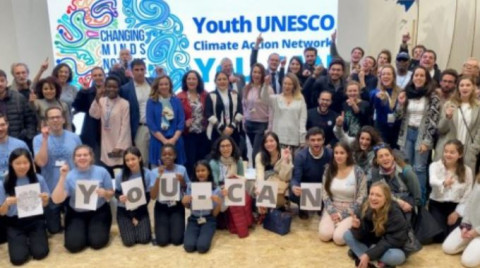 UNESCO embraces the momentum of global youth action on climate change 2020-11-17 Photo: A large group of youth, including young members of the UNESCO Man and the Biosphere programme (MAB Youth) programme, came together at the COP25 in Madrid in 2019 to attend the launch of the Youth UNESCO Climate Action Network (YoU-CAN). Results of UNESCO’s World in 2030 Survey show that climate change is the most important topic the world needs to address in the coming decade. For UNESCO, this means doubling down on its climate action and transforming its operations to find new and innovative ways of addressing the issue. The Youth UNESCO Climate Action Network (YoU-CAN) can help UNESCO in this effort, as a hub of knowledge, a pool of potential partners, a source of innovative projects, and a resource for transdisciplinary climate solutions. Strengthening strategic partnerships and meaningfully engaging with youth are complementary pursuits – mutually compatible ways of making UNESCO more dynamic, agile and engaged. Born of the Strategic Transformation’s working group on partnerships and officially launched last December at the UN Climate Change Conference (COP25) in Madrid, YoU-CAN is an excellent example of how innovative thinking can help put this into practice. Peter Dogsé, Co-Chair of the UNESCO Task Team on Climate Change, explains: “The ambition behind YoU-CAN is to promote and support youth climate action networks around the world. Young people are increasingly driving the change needed and YoU-CAN will recognize and support their mobilization and advocacy efforts to address the climate crisis”. Youth ownership driven by a group of diverse young people Successful youth engagement calls for meaningful collaboration and partnership. In line with UNESCO’s Operational Strategy on Youth (2014-2021), YoU-CAN aims to improve youth ownership in UNESCO’s activities. “Youth ownership is very important, especially for addressing climate change. No other organization in the UN system offers young people so many pathways for engagement. UNESCO can build on their knowledge and innovative ideas in all its fields of competence and can count on their incredible energy as advocates,” says Alexander Schischlik, Chief of the Youth and Sport Section, Social and Human Sciences Sector. To this end, an Ad-Hoc Steering Group of youth network representatives was established in July 2020, following consultations with UNESCO Sectors and Field Offices and a thorough selection process conducted by YoU-CAN’s project team. This Steering Group is composed of three representatives per region, keeping in mind UNESCO's global priorities Gender Equality and Africa, and Small Island Developing States among its priority targets. Accompanied by the UNESCO Secretariat, its role is to advance the operationalization of YoU-CAN until it is formally replaced by a youth-elected body to run the Network. “The Climate emergency is everyone’s urgency. We have just one planet; one home where we can live. It’s time that we turn words into action. The knowledge, expertise and drive of youth are some of our greatest assets, and definitely put us in a better position for building a climate-resilient future. That future begins with us today. As a young, multidisciplinary team, our Steering Group has an opportunity to make YoU-CAN an innovative and comprehensive tool to both strengthen the voices of young people and tackle climate challenges.” – Statement from the YoU-CAN Ad-Hoc Steering Group The youth-led Steering Group started its work in August 2020 and will be establishing a strategic direction, a governance structure, and an outline of operations for YoU-CAN. The diverse profiles of these fifteen young professionals, scientists, activists, students and volunteers contribute valuable and complementary expertise, in order to develop the network in accordance with needs on the ground. Photo: YoU-CAN Ad-Hoc Steering Group (left-right): Neeshad Shafi, Curmira Gulston, Daniel Mahadzir, Ana Karen Proa, Irène Colonna d’Istria, Chamsia Ibrahim, Ismail Farjia, Robert Sakic Trogrlic, Joy Chiadika, Aeljandro Quecedo del Val, Meng Wang, Gabriela Martínez Mendieta, Malek Abidi, Toru Tanigaki, Michèle Okala Abega. Finding solutions together with youth “YoU-CAN is pivotal. Young people form the backbone of UNESCO, and they will be its future. It is strategically important that UNESCO embrace the passion and motivation of the world’s youth, to help the Organization think outside the box and find new solutions to the world’s very complex challenges,” says Nicole Webley, Youth Focal Point for the Natural Sciences Sector. While supporting the Strategic Transformation’s pursuit of a strengthened partnership culture, YoU-CAN will also help advance UNESCO’s Strategy for Action on Climate Change (2018-2021). It will facilitate, amongst many other things, sharing and upscaling of ideas, collaboration between networks and organizations, and wider implementation of successful grassroots projects. Crucially, it will provide youth with a safe space to communicate and generate solutions to a global issue that can be, in some cases, politically fraught. Not only this, networking can be a practical way for young people to participate in this important work in a way that circumvents many of the challenges and inequalities they are faced with. The power of youth networks to help create the “Next Normal” “Recognizing that the youth of today are some of the strongest voices for social change and particularly for climate action means that connecting and supporting these voices is vital. Establishing such a large network will help the global youth movement to maintain its momentum for advocacy and activism, as well as for seeking and implementing practical solutions to climate change,” says Kristina Balalovska of the Youth Team, Youth and Sport Section, Social and Human Sciences Sector. Numerous such challenges have revealed themselves acutely during the COVID-19 pandemic. According to the project team, two key attendant issues that must be considered by YoU-CAN relate to, firstly, how the pandemic has influenced climate debate and action, and secondly, how COVID-19 has disproportionately impacted young people. Climate change has continued unabated despite COVID-19 lockdowns, and the fight against it has been hampered by impacts of the pandemic. There has similarly been deterioration in environmental protection around the world, not to mention issues like increased waste associated with single-use products. Despite this, there have also been global calls to use the crisis recovery as an opportunity to “build back better”, like UNESCO's Next Normal campaign. This momentum, which follows in the wake of a global youth uprising on climate issues, cannot be wasted, and YoU-CAN can be an incredibly pertinent and powerful tool to this end. COVID-19 has also brought to bear many of the challenges faced by youth around the world, including precarious access to education, employment, and social safety nets. Global lockdowns have increased precarity in youth employment which, hand-in-hand with associated vulnerability in housing, food security and so on, present a barrier to effective youth engagement in climate action. At the same time, young people have also spearheaded exemplary actions to fight the pandemic and its consequences. YoU-CAN represents a highly relevant way of handling such challenges, by strengthening supportive networks that link young people from all walks of life and valorizing their work. “Youth engagement in climate action is more prevalent – and vital – now than it has ever been. Around the world, young people have been actively contributing to recovery measures and calling for change from governments, the private sector, and the international community. They are the drivers of a sustainable future, and their ability to access capacity building, networking and collaboration opportunities is critical. YoU-CAN can help to create such synergies and enable their voices to be heard,” says Manon Frezouls, YoU-CAN coordinator. For queries regarding the YoU-CAN initiative, or if you wish to be involved in or support YoU-CAN, you can contact the project team at you-can@unesco.org YoU-CAN’s project team is a cross-sectoral team made up of members from the Social and Human Sciences (SHS) and Natural Sciences (SC) Sectors. The Project Team includes Manon Frezouls, Kristina Balalovska, Nicole Webley, Peter Dogsé, Alexander Schischlik, and Claudia Maresia. UNESCO’s Field Offices also played an integral role in the creation of YoU-CAN and will continue to do so during its operationalization. Useful resources Youth UNESCO Climate Action Network YoU-CANUNESCO Declaration of Ethical Principles in relation to Climate Change.UNESCO Strategy for Action on Climate Change (2018-2021)UNESCO Operational Strategy on Youth (2014-2021)Changing minds, not the climate: UNESCO mobilizes to address the climate crisis URL:https://en.unesco.org/news/unesco-embraces-momentum-global-youth-action-climate-change
 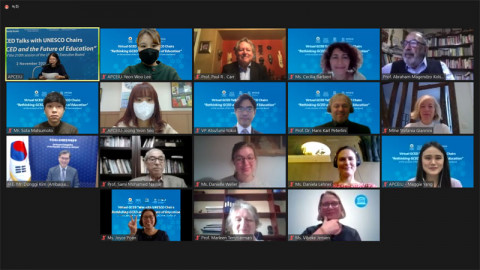 Virtual GCED Talks with UNESCO Chairs: ‘Rethinking GCED and the Future of Education’ 2020-11-16 On the occasion of the 210th Session of UNESCO Executive Board Meeting, the Virtual GCED Talks with UNESCO Chairs was held under the theme ‘Rethinking GCED and the Future of Education’ on Monday, 2 November 2020. The event was organized by the Permanent Delegation of the Republic of Korea to UNESCO, in collaboration with the Group of Friends for Solidarity and Inclusion with Global Citizenship Education (Afghanistan, Armenia, Austria, Bangladesh, Colombia, Italy, Jordan, Kenya, Kuwait, Philippines, Republic of Korea, Senegal, and Serbia), UNESCO and APCEIU. The Talks successfully facilitated a wide-ranging dialogue among the distinguished panelists consisted of six UNESCO Chairs and professors in GCED-related areas, such as human rights, peace, sustainable development, gender equality, and cultural diversity. The panelists also represented six different regions across the globe: Africa, Arab-States, Asia, Europe, Latin America, and North America. The event served as a momentum to address the current situation and challenges faced by different regions around the world amid the pandemic and to explore untapped resources and ideas for collective and transformative actions to tackle those challenges. The Talks was opened by the Ambassador and the Permanent Delegate of the Republic of Korea to UNESCO and Chair of the Group of Friends for Solidarity and Inclusion with Global Citizenship Education, H.E. Mr Kim Dong Gi. Ambassador Kim Dong Gi stated that GCED is the most effective way to build defenses of peace in the minds of men and women, especially during this time of pandemic when racism and discrimination are aggravated. The Ambassador also briefly introduced the Group of Friends for Solidarity and Inclusion with GCED in which APCEIU contributed to its launch in May 2020. The speech was then followed by the opening remarks of Madame Stefania Giannini, Assistant Director-General for Education of UNESCO. While reaffirming the significance of GCED, Madame Stefania Giannini reminded the participants of UNESCO's efforts to enhance ‘Education for All’ and highlighted the role of young people in making changes in society as they are the future leaders of this planet. Following the inspirational opening remarks, the panel discussion was initiated by the moderator, Ms Cecilia Barbieri, Chief of the Section of Global Citizenship and Peace Education, Division for Peace and Sustainable Development of UNESCO. The list of the distinguished panelists of the discussion is as follows: Prof. Marleen Temmerman (Aga Khan University, Kenya) - UNESCO Chair on Youth Leadership in Science, Health, Gender and Education Prof. Sami Mohamed Nassar (Cairo University, Egypt) - Professor of Education, Graduate School of Education, Cairo University Prof Atsufumi Yokoi (Okayama University, Japan) - UNESCO Chair in Research and Education for Sustainable Development, Vice President for Global Engagement Strategy of Okayama University Prof. Dr. Hans Karl Peterlini (Alpen-Adria-Universitat Klagenfurt, Austria) - Professor of Intercultural Education and Head of the Austrian Course in Global Citizenship Education Prof. Abraham Magendzo Kolstrein (Universidad Academia de Humanismo Cristiano, Chile) - UNESCO Chair in Human Rights Education Prof. Paul R . Carr (Universite du Quebec en Outaouais, Canada) - UNESCO Chair in Democracy, Global Citizenship and Transformative Education Three key guiding questions were presented to engage the panelists on the discussion around the idea of envisioning the future of GCED. The questions that were posed during the panel discussion encompassed a broad range of ideas from the current situation in the context of the COVID-19 pandemic to strategic directions of UNESCO in the upcoming future. Based on the questions above, the panelists exchanged their thoughts on various topics including but not limited to rights to education, social injustice, widened social gap, equal access to the public health system for girls, digital divide, and planetary ethics. During the panel discussion, participating students from the UNESCO Chair-hosting universities also had the opportunity to raise their questions regarding the pertinent issues within the unprecedented crisis such as the new learning environment of universities, the role of education as a tool to navigate the societal panic, and teachers’ impartiality under the huge influence of social media and mass information. The youth’s engaging questions and the panelists’ insightful responses based on their interdisciplinary knowledge and experiences have further enriched the quality of the discussion and provided fresh points of view that can be reflected by the participants throughout and beyond the Talks. The Talks was wrapped up with a closing remarks by Mr Lim Hyun Mook, Director of APCEIU. Expressing his sincere gratitude towards all the distinguished speakers and panelists, he reiterated the role of GCED in tackling problems such as hate, discrimination and extreme violence that are exacerbated amidst the COVID-19 pandemic. He further pledged APCEIU’s unwavering support for the realization of GCED in the region and beyond. URL:Virtual GCED Talks with UNESCO Chairs: ‘Rethinking GCED and the Future of Education’ > APCEIU News - APCEIU (unescoapceiu.org)
  Experts review assessment of global citizenship education and Southern African liberation history in school curricula 2020-11-14 UNESCO Regional Office for Southern Africa, in partnership with SADC hosted a meeting to review the findings of a desk based study conducted to ascertain the level of integration of Global Citizenship Education (GCED) and Southern African Liberation History (SALH) in secondary school curricula in the SADC countries. The study was conducted by a team of consultants from the Human Rights Documentation Centre of the University of Namibia. The virtual meeting brought together history, GCED and curriculum development experts from the SADC region to provide their views on the study findings, which are based on an analysis of curricula from 13 SADC countries namely Angola, Democratic Republic of Congo, Eswatini, Lesotho, Malawi, Mauritius, Mozambique, Namibia, South Africa, Seychelles, United Republic of Tanzania, Zambia and Zimbabwe. The study has provided evidence that all 13 countries reviewed have in one way or the other integrated GCED in their syllabi and curricula. GCED is mainly taught at the secondary school level in subjects such as Life Orientation, Social Studies, Heritage, Civic, History and Geography. The study revealed that most countries teach liberation history within the national boundaries and little about the regional dimensions which limits its potential to develop values such as solidarity , tolerance and a peaceful living together. Misheck Munthali, Director of Teacher Education and Development at the Ministry of Education in Malawi said, “We should indeed move strongly from theory in the curriculum to the practical issues of lived global citizenship (and the values entailed)”. Dylan Wray, Director of Shikaya and history teacher from South Africa noted the importance of learning each other’s history. If we learn each other's history and the connections in our regional history – we can limit xenophobia.-- Dylan Wray, Director of Shikaya Echoing this, another expert argued that the initiative could lead to an Africa where peace and security are engendered towards sustainable economic growth, sustainable development and global competitiveness. The experts made recommendations on the way forward to strengthen GCED and SALH in education systems in SADC countries. As a next step, UNESCO will commission the development of a Roadmap, which will provide guidance on the integration of GCED and SALH in schools programmes as well as teaching and learning practices in SADC countries. UNESCO and SADC promote regional integration, social cohesion, and peaceful coexistence in the region, targeting especially youth through the teaching of GCED and SALH. URL:https://en.unesco.org/news/experts-review-assessment-global-citizenship-education-and-southern-african-liberation-history