
News
Catch up on what’s happening in the world of global citizenship education.
1,668 results found
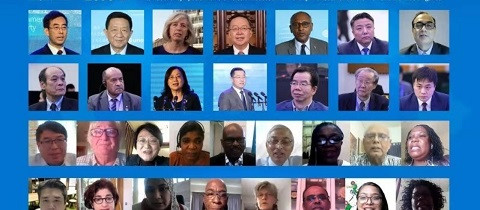 International Symposium on the Role of Education in Poverty Alleviation 2021-04-04 Sharing the experience of poverty alleviation through education and promoting global 2030 agenda for sustainable development On 31 March, the International Symposium on the Role of Education in Poverty Alleviation was held in Beijing, Peoples’ Republic of China. The conference focused on the United Nations Sustainable Development Goals, discussed the relationship between education and poverty reduction, focus on SDG1 and SDG4 and shared China’s successful practices and experience in poverty alleviation through education. The symposium was guided by the 4 Ps of Sustainable development, planet, prosperity, people and partnerships to leave no one behind. Education as key to achieving all the SDGs and 2030 Agenda for Sustainable Development. The Opening session of the symposium was moderated by Mr Qin Changwei, Secretary-General of the China National Commission for UNESCO and warmly welcomed all the participants from China and around the world. Mr. Tian Xuejun, Vice Minister of Education of China and Chairperson of the Chinese National Commission for UNESCO, Mr. Firmin Matoko, Assistant Director-General for Priority Africa and External Relations at UNESCO, and Ms. Stefania Giannini, Assistant Director-General for Education at UNESCO, delivered opening remarks at the event. Mr. Tian pointed out that poverty is a common challenge for the human race, and poverty eradication is deemed as the top priority in the UN 2030 Agenda for Sustainable Development. The Chinese government has been continuously engaged in tackling poverty and has formulated a roadmap of poverty reduction with Chinese characteristics in which education plays a key role. China’s poverty reduction strategic plan targeted all sectors including education that has significantly contributed to improved schooling conditions in impoverished areas, designed a comprehensive system to subsidize students with financial difficulties, prioritized TVET and adult education for impoverished population, and mobilized the expertise and strengths of higher education institutions to promote industry-driven development that helps poverty-stricken areas achieve common prosperity. Mr. Tian emphasized that the Chinese government is willing to adhere to the principle of building “a community of shared future for mankind”, to strengthen international cooperation, especially with the member states of UNESCO, and to intensify support to developing countries in sharing experience and effective practices for poverty eradication so as to advance the implementation of the 2030 Agenda. Mr. Matoko expressed appreciation for the great success of poverty reduction in China. He pointed out that developing quality education for all plays a key role in socio-economic development. As evidence suggests, education has the greatest potential to break the cycle of transmission of poverty between generations. One of the most important factors contributing to China's success in poverty alleviation is the development of quality education. China’s experiences in linking education and poverty alleviation demonstrated the important role of education and skills training in poverty eradication. He believed that China, as one of the key partners and founding Member States of UNESCO, will contribute significantly to the world with experience and best practices in poverty alleviation through education an achievement that is human centered and a shared prosperity with the rest of the world. Ms. Giannini commented on the timeliness of this symposium and spoke of the significance of equitable, inclusive and quality education in poverty alleviation. She praised China's support for the UNESCO Global Education Coalition for COVID-19 Response and the nation’s efforts in ensuring learning continuity during the pandemic. Experts and officials from international organizations, UNESCO, Non-Governmental organizations and countries participated at the global symposium agreed that China has achieved SDG1 10 years ahead and made significant contribution to the global poverty reduction strategy and targets. China’s experience can provide useful guidance for other developing countries to achieve the UN Sustainable Development Goals by 2030. The participants at the global symposium discussed critical link between SDG1 and SDG4. It was suggested for China to share its experience, prosperity and practices in poverty alleviation through education, increase exchanges and cooperation with other nations, so as towards a joint exploration of paths of poverty reduction for the international community. Prof. Khan, moderator for the first session of the symposium under the theme of global policy dialogue on linkages between education and poverty alleviation. He highlighted the unique model and critical linkage between education and poverty alleviation and China’s success story must be shared with the rest of the world. Professor Zhou Zouyu, Vice President Beijing Normal University, moderated the second session that focused on Innovations and best practices on the contribution of education towards poverty alleviation for sustainable development. Prof. Zhou reaffirmed Beijing Normal University’s commitment towards poverty alleviation and deployment of university experts in rural parts of China. Professor Zeng Xiadong from INRULED moderated the third session on sharing key findings of the final report on education for poverty alleviation under the framework of 2030 Agenda. Mr. Liu Changya, the Director-General of the Department of Development Planning of Ministry of Education, made the keynote presentation. He presented the core policy priorities, strategies and key achievements of China the contribution of education to poverty alleviation. Professor Wang Li and Deputy Director of INRULED presented the key findings of the final report with the case studies highlighted the 5 key factors (5D) in poverty alleviation through education, which are: 1. Determined Leadership, 2. Detailed Blue print with key targets, 3. Decentralized delivery, 4. Development oriented and human centered and 5.Data-based governance. The symposium was hosted by the UNESCO Category II Centre - the International Research and Training Centre for Rural Education (INRULED), with support from the Chinese National Commission for UNESCO, Beijing Normal University, and the UNESCO Beijing Cluster Office. More than 100 education officials and experts including 20 experts from UNESCO and other international organizations, Non-governmental organization, Ministries of Education participated in the Symposium. The participants and presenters were from Asia and the Pacific, Europe, Africa, North America. URL:https://en.unesco.org/news/international-symposium-role-education-poverty-alleviation
  New online toolkit for comprehensive sexuality education 2021-04-04 Life skills education, relationship and sexuality education, family life education, or HIV education. Countries use many different names, but the objective remains the same, providing all young people with evidence-based, age-appropriate information to help them develop the skills and values they need to grow up healthy and happily. To help those designing or reviewing such programmes, UNESCO has developed an online toolkit. It brings together and distils evidence on effective CSE programmes, and points to relevant resources to refer to for different stages of CSE programme design, implementation, monitoring, and evaluation. The toolkit provides information that is useful for designing a CSE programme at a national level as well as at local or school level including how to get started, what program design, management and assessment should look like, the kind of teacher training and support that needs to be in place, and what community engagement looks like. Comprehensive sexuality education (CSE), as it’s called at a global level, is central to health and well-being. Good quality CSE includes education about human rights, human sexuality, gender equality, puberty, relationships and sexual and reproductive health. It is essential for young people to be able to protect themselves from unwanted pregnancy, HIV and sexually transmitted infections, to promote values of tolerance, mutual respect and non-violence in relationships, and to support a safe transition into adulthood. “The importance of comprehensive sexuality education to a young person’s development cannot be underestimated. It improves knowledge and positive self-image, increases awareness and appreciation of gender equity and sexual rights and builds self-efficacy and agency. It has a positive impact on healthy values about bodies, puberty, relationships, sex and family life,” said Arushi Singh, Programme Specialist in the UNESCO section of Health and Education. “This toolkit supports the creation of a good quality comprehensive sexuality education program, while not ignoring the critical step of involving the whole school community in its development, management and monitoring, as well as the training and support that teachers need to deliver it.” The toolkit is hosted on the newly revamped website of the UNESCO Health and Education Resource Centre. Maintained by UNESCO’s International Institute for Educational Planning, this online library provides access to more than 6,000 downloadable resources: research papers, evaluations, tools and guidance to support ministries and other stakeholders to develop effective education policies and programmes to promote better health and wellbeing for all children and young people. View the toolkit UNESCO’s work in education for health and well-being URL:https://en.unesco.org/news/new-online-toolkit-comprehensive-sexuality-education
 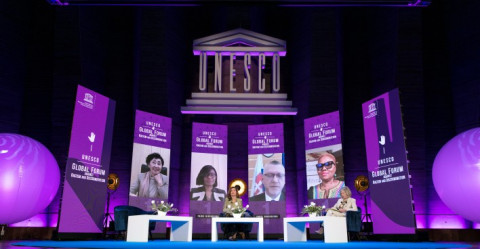 #كافحوا_العنصرية: اليونسكو تدعو إلى اتخاذ إجراءات حازمة لمكافحة العنصرية والتمييز 2021-04-04 "Fighting racism is part of UNESCO's DNA. It's history. We are working to erect effective bulwarks against racism in people’s minds." -- Audrey Azoulay, Director-General of UNESCO With these words, Audrey Azoulay, Director-General of UNESCO, opened the first Global Forum against Racism and Discrimination, co-hosted with the Republic of Korea, mobilizing a powerful global effort to step up UNESCO’s actions to tackle the alarming increase in racism and discrimination in all regions of the world. Organized on 22 March 2021, in the context of the International Day for the Elimination of Racial Discrimination, the Forum was a direct response to the strong ‘Global Call against Racism’ adopted by UNESCO Members States. © UNESCO Bringing together Ministers from several countries – including France, Mexico, Republic of Korea, Slovakia, South Africa, and the United Arab Emirates – experts, practitioners, and champions, the Forum built concrete insights and solid commitments through which UNESCO will construct an ambitious new Roadmap against racism and discrimination. The Roadmap aims to mobilize UNESCO’s crosscutting expertise, based on solid evidence-based social and human science research, to tackle the legal and institutional foundations which continue to perpetuate discrimination, and change mindsets to favour inclusion and mutual respect. It will position UNESCO to effectively combat racism and discrimination within the post-COVID context, building on its more than 70 years of moral and intellectual leadership on the issue, and leveraging its strong capacity to find intersectoral solutions through existing work on global citizenship education, the promotion of cultural diversity, the fight against hate speech, the combatting of mis and dis-information, and the mobilization of the social and human sciences to understand the problem. "We need to look deeper than just the individual racist attack. We need to focus on racism at the institutional level. We need to get the laws right" -- Denise Yvonne Aki-Sawyerr, Mayor of Freetown, Sierra Leone The discussions at the Forum underscored that whilst racial discrimination remains prevalent and pervasive in contemporary societies, strong and independent national institutions can help to provide solid legal and regulatory protections to counter discrimination. The importance of practical approaches to support such efforts, such as UNESCO’s forthcoming scanning exercise and integrated anti-discrimination toolkit, was repeatedly underlined. "Racism and discrimination are a clear challenge, and it is a challenge that requires an immediate response. To this end, there is a need more than ever for international cooperation and the support of multilateral institutions, including UNESCO." -- H.E. Choi Jongmoon, Vice Minister of Foreign Affairs, Republic of Korea "We need to develop an official mechanism and enact legislation for banning discrimination and realizing equality." -- H.E. Young-ae Choi, Chairperson of the National Human Rights Commission of the Republic of Korea Panelists addressed the mutability of racism, and the need for policymakers to understand emerging forms of discrimination that require innovative responses to be effectively tackled. COVID-19 has exposed many of these new manifestations of racism, not least those related to inequities in the access to, and benefits from, digital technologies. Calls were made for a strong ethical foundation to ensure technological progress is inclusive and absent of bias, and the work UNESCO is advancing to prepare a new normative standard on the ethics of artificial intelligence was strongly welcomed in this regard. "It goes back to human decency and respect. We need to treat people as we want to be treated. If we start off with that notion "Treat my human fellow being as I want to be treated" we'll be halfway towards winning the battle." -- Martin Luther King III The importance of forging partnerships and coalitions across different sectors and levels of government was also highlighted. Broad recognition was made to the critical nature of such collaboration for tackling the compounding effects of racism with other forms of discrimination, particularly that leveled on the grounds of gender. Additionally, the importance of providing support to local decision makers as those who are on the frontline of tackling racism and discrimination was stressed, and the essential role that networks such as UNESCO’s International Coalition of Inclusive and Sustainable Cities provide in this regard was recognized. Martin Luther King III, emphasized the importance of strong collaboration in his intervention, saying ‘we must create a partnership. For it is when you bring all the stakeholders together that it becomes possible to develop strategic plans and effect change.’ "Racism does not only hurt those directly affected; it challenges the trust and cohesion that holds our societies together." -- Gabriela Ramos, UNESCO Assistant Director-General for Social and Human Sciences Closing the Forum, Gabriela Ramos affirmed that the Forum had equipped UNESCO with the strong insights and ideas needed to take forward this critical agenda through the new UNESCO Roadmap against Racism and Discrimination. She committed to continue the process of inclusive partnership to ensure the Roadmap represents an ambitious, intersectoral vision and practical strategy, echoing the words of Stefania Giannini, UNESCO Assistant Director-General for Education, and Firmin Edouard Matoko, UNESCO Assistant Director-General for Priority Africa and External Relations, who also participated in the Forum. Accompanying the Forum, the Republic of Korea launched a social media campaign using the Forum’s hashtags #FulfillTheDream #FightRacism, bringing together a significant number of Ambassadors of the Group of Friends for Solidarity and Inclusion with Global Citizenship Education in UNESCO to reaffirm their commitment to this important issue. UNESCO intends to make the Global Forum against Racism and Discrimination an annual occurrence, providing an opportunity for the organization and its partners to take stock of progress at the same time next year. Watch the Forum on YouTube Programme Concept Note More on UNESCO’s work to foster inclusion and non-discrimination More on the International Day for the Elimination of Racial Discrimination URL:https://en.unesco.org/news/fightracism-fulfillthedream-unesco-calls-strong-action-against-racism-and-discrimination
 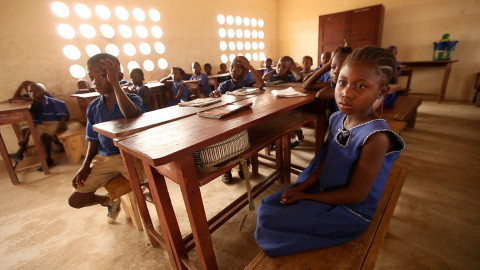 How will countries make up for lost learning during the pandemic? 2021-04-02 As one lockdown week morphs into another, the learning of millions of students continues to be disrupted. UNESCO figures show, on average, two-thirds of an academic year has been lost worldwide due to COVID-19 school closures. The learning loss is enormous. The question now in everyone’s mind is: How do we help students who have fallen behind to catch up? One way of addressing this crisis might be to repeat the entire academic year, as some are calling for. The government in Kenya has already decided to do just this, believing that having students repeat the entire year puts them all on equal footing. Another approach is to reduce and synthesize the curriculum so that students are able to focus on a few subjects and learn them well, as Odisha, India, and Ontario, Canada, have done. Bangladesh has announced its recovery programme, which includes an abridged syllabus for the next two years, focusing on key subjects such as math, Bengali, English, and science in secondary schools. Catch-up and remedial forms of education have been the focus of much discussion over the past several months — but what type will these be, and how much will they cost? According to a joint McKinsey-UNESCO toolkit, there are two ways to look at this. The first is to allow students more time to learn. This could be through summer classes, weekend catch-up, or adding extra time at the end of the day. In the Philippines, for example, schools ran summer classes in 2020 to recover time lost. A second approach involves dedicated attention through smaller breakout groups or one-to-one tutoring for the most disadvantaged learners. In the United Kingdom, the government announced £350 million ($490 million) would be allocated to a National Tutoring Programme, which will provide intensive catch-up for the most marginalized students. In Ghana, the School for Life programme uses peer tutoring to increase students’ progression through school. In Italy, the government has already implemented a programme in middle schools where university students volunteer to tutor disadvantaged students one-to-one. The impact so far has been positive. Teachers are seeing growth in students’ academic performance and improved socioemotional skills and psychological well-being, especially among students from immigrant backgrounds. Accelerated education programmes, which condense several years of schooling into a few months, is another option. These programmes were established for children who have had their education interrupted or never started due to conflict, poverty, and marginalization. In Ethiopia, the Speed School Model condenses the first three years of primary school curriculum in nine to 10 months. In Nepal, marginalized girls from the Musahar community, which has untouchable status, participate in a nine-month accelerated education programme that helps them catch up; over 80% transition into mainstream school. All these approaches require increased investment in education. The Institute for Fiscal Studies in the U.K., for example, has warned that the £1.5 billion ($2.1 billion) the Department for Education has pledged is inadequate to help the most disadvantaged students. The problem is that education budgets around the world are shrinking. A new report we released jointly with the World Bank found that two-thirds of low- and lower-middle-income countries have cut their public education budgets since the onset of the pandemic, compared with one-third of upper-middle and high-income countries. These moves are inconsistent with the increased annual funding gap that learning losses due to school closures will create in poorer countries, adding up to as much as $200 billion per year as UNESCO’s “Global Education Monitoring Report” calculated in September. Achieving Sustainable Development Goal 4 by 2030 will be impossible unless things turn around. The argument for finding the funds for these programmes now is that remedial and catch-up programmes are assumed to be half the price of second-chance programmes, helping learners who have dropped out of the system. We estimated that, while the cost of remediation and catch-up programmes for low- and lower-middle-income countries is around $35 billion, investing now, rather than waiting, could reduce education recovery costs by up to 75%. It remains a struggle to convince governments that investing in education will have cumulative effects and should remain a top priority. This is a message that the education community should express clearly. Children and young people have made enormous sacrifices to keep the older generations safe from this virus. As a society, we must ensure that they don’t pay an even higher price by compromising their potential and future livelihoods. We owe it to them to invest in their education. Originally published on Devex – 23 March 2021 URL:https://gemreportunesco-wordpress-com.cdn.ampproject.org/c/s/gemreportunesco.wordpress.com/2021/03/25/how-will-countries-make-up-for-lost-learning-during-the-pandemic/amp/
  School managers in Mongolia discuss possibilities for integrating MIL components into school curricula 2021-04-01 26 March 2021, 40 urban and rural secondary school principals and managers participated in an online consultation workshop to learn about the Media and Information Literacy Curriculum developed by the Press Institute of Mongolia with the support of UNESCO and the Swedish International Development Agency (SIDA), and discuss how to implement the Curriculum in secondary schools. The consultative workshop was part of a three-year project implemented by the Press Institute and the Mongolian National Commission for UNESCO, with the support of SIDA and UNESCO Beijing Cluster Office. The project intends to equip policymakers and media professionals with advanced knowledge of Media and Information Literacy (MIL) policies and best practices, and improved capacities to respectively adapt and apply MIL curricula and policy in Mongolia. Professor Shahbaz Khan, Director of UNESCO Beijing Cluster Office and UNESCO representative to China, DPRK, Japan, Mongolia, and ROK, opened the meeting by stressing the special importance of Media and Information Literacy in times of COVID-19. “More than ever before, we need critical knowledge that allows us to identify the nature of information and protect ourselves from disinformation. MIL helps to build citizens’ resilience to ‘disinfodemic' as well as support their creative use and production of verified information”, said Professor Khan. Mrs. Uyanga, Secretary General of the UNESCO Mongolian National Committee expressed concerns about closed schools and children spending most of their time on the Internet. “These are times we urgently need to pay attention to promoting MIL at all levels”, said Mrs. Uyanga. Despite the increasing awareness among major stakeholders in Mongolia concerning the importance of MIL, general education curricula still only focuses on elements of digital literacy, with few cross-curricular components of MIL, which are not aiming at a systematic development of MIL relevant knowledge, skills and attitudes either. A baseline survey conducted by the Press Institute among schoolchildren in Mongolia in 2019 revealed that MIL relevant learning opportunities offered through school education lag significantly behind children’s real needs and their information and communication experiences. “The kids are ahead of us in terms of information technology, and the teachers are only worrying about their students having access to all kinds of unfiltered information. Before this consultative workshop I thought that information on social media can only be verified by IT professionals. I feel grateful and at the same time encouraged that the teachers can learn and teach their students about different types of media and information”, said Ts.Oyunjargal, Director of School No.1 of Sukhbaatar province. During the first two years of the project implementation, the project advanced knowledge and understanding of MIL, and brought consensus on the urgency of policy level efforts to strengthen MIL across society among multiple stakeholder groups. A tailored MIL curriculum has been developed and successfully tested among teachers both in formal, non-formal and informal education sector in Mongolia. A workshop for media organizations, journalists, and media practitioners has also been organized during the project implementation period, in order to attract their attention and enhance their awareness about their role and possibilities for promoting MIL. Based on project activities, a national MIL network was formed to facilitate exchanges among government, media, and civil society stakeholders, and to synergize MIL relevant activities at a national level. The third year of the project envisages further training for secondary school teachers to facilitate integration of MIL curricula into teaching practices, small grant programs for media professionals to encourage production and distribution of MIL contents through mainstream media, as well as strategy development workshops/meetings with the MIL National Network members to define vision, strategic goals, roles and responsibilities, and action plans for policy advocacy. For more information about UNESCO's work on media and information literacy and relevant resource, please visit: https://en.unesco.org/themes/media-and-information-literacy. URL:https://en.unesco.org/news/school-managers-mongolia-discuss-possibilities-integrating-mil-components-school-curricula
 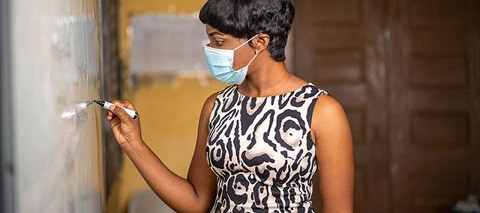 One year into COVID, UNESCO convenes global meeting of education ministers to ensure learning continuity 2021-03-30 UNESCO maps national plans to vaccinate teachers One year into the COVID-19 pandemic, 85 education ministers highlighted measures to keep schools open, address learning losses and adapt their education systems at an event convened by UNESCO on 29 March 2021. Close to half the world’s students are still affected by partial or full school closures and over 100 million additional children will fall below the minimum proficiency level in reading as a result of the pandemic. In the face of a prolonged crisis, we must redouble our mobilization and target the right priorities, those that will allow us to truly make education a common good, a fundamental right. The first of our principles is that schools are irreplaceable, as the pandemic has shown. The second is that more than ever we need resilient and innovative school systems to face present and future shocks. The third is that no screen can ever replace a teacher.-- Audrey Azoulay, UNESCO Director-General While the protection of teachers is essential for schools to reopen safely, a survey conducted by UNESCO and the International Task Force on Teachers for Education 2030 finds that only 17 countries out of 149 prioritize teachers in the first phase of vaccination efforts. Another 20 countries include teachers as a priority group for the 2nd phase of vaccinations. Meanwhile 56 countries do not prioritize teachers in national vaccine rollout plans. Stronger support to protect and train teachers was highlighted across the three parallel sessions of the conference. In the first roundtable on keeping schools open and supporting teachers, ministers emphasized the need for schools to become more resilient and flexible. They described measures in place for prevention and control, including testing within schools, teacher vaccination plans, investments in mental health and the importance of stronger partnerships with ministries of health. In the second roundtable on mitigating school and university dropout and learning loss, ministers stressed the focus on equity, a redoubling of investments in remedial education, strengthening social services, prioritizing the youngest children and funding formulas to reach the farthest behind. In the third roundtable on digital transformation and the future of education, ministers highlighted the importance of teacher training and professional development; public-private partnerships and societal engagement to promote 21stcentury skills and youth employability. In his message at the event, echoing the themes of the conference, UN Secretary-General Antonio Guterrres said, “At this pivotal moment, I am calling on all countries (to) use the recovery to narrow education divides, expand digital connectivity and reimagine education.” The Director-General of the World Health Organization Tedros Adhanom Ghebreyesus warned that “Without universal access to education and health services, the inequalities which have expended even further during the pandemic will continue to grow. WHO recognizes the central role schools play in safeguarding student health and well-being,” a theme underlined during the conference. The Africa Union’s Commissioner for Education, Science, Technology and Innovation, Professor Sara Anyang Agbor, Commissioner for Education, Science and Technology emphasized that “The consequences of COVID 19 have reinforced the importance of transforming Africa’s education systems through digital transformation, referring to the AU’s framework encompassing online learning, teachers, skills, school connectivity and on and offline safety.” To support national strategies, UNESCO, UNICEF & World Bank announced a joint mission “Recovering Education 2021” focusing on three priorities: ensuring all children and youth are back in school and receiving comprehensive support including health, nutrition and psycho-social support; accelerating learning and breaking down the digital learning divide; and preparing and empowering all teachers. Map 1: Interactive and static maps showing school closures Map 2: Prioritization of teachers in COVID-19 vaccine rollout (unesco.org) URL:https://en.unesco.org/news/one-year-covid-unesco-convenes-global-meeting-education-ministers-ensure-learning-continuity
 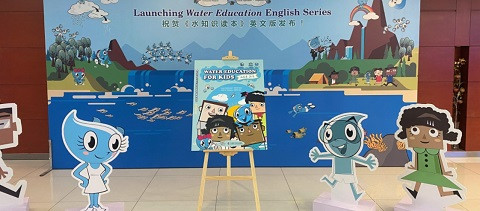 Launching Water Education English series 2021-03-30 The book cover of the Water Education English series Vol. 1 is revealed at IWHR meeting room reveal © IWHR The International World Water Day, 22 March, has been celebrated every year since 1993 to focus on the importance of freshwater. It commemorates water and raises awareness of the global water crisis. The core focus of the observance is to support the achievement of Sustainable Development Goal 6: Water and Sanitation for all by 2030. To commemorate this year's World Water Day, UNESCO, in collaboration with the China Institute of Water Resource and Hydropower Research (IWHR), held a ceremony to officially launch the Water Education English series. The event brought together key actors of the water sector and environmental groups to highlight the importance of water education. In 2008, UNESCO worked with IWHR to develop cartoons on water as extracurricular reading materials for school children. The series constructed a fascinating world of facts, figures, anecdotes, experiments, poems, and games. These materials were distributed widely to many schools in various settings (urban and rural) to improve the understanding of water education in China. A decade into this publication, the Water Education Chinese series remains one of the most widely used extracurricular readings on water education. In 2020, UNESCO, through its Nairobi Office, approached IWHR to translate and update these Water Education Chinese Series into English. The launching ceremony was opened by Ms. Ann Therese Ndong-Jatta, Director of UNESCO Regional Office for Eastern Africa. She emphasized the need for people worldwide, especially in Africa, to acquire water literacy in order to respond to water-related challenges. She gave a brief overview of the work of UNESCO on water, and expressed her expectation for further collaboration in having the series translated into different languages. Achieving water sustainability is one of the greatest challenges of our time, particularly, during the current global pandemic. Climate and health crisis, ecological degradation, human rights violations, are all water-related challenges.-- Ms. Ann Therese Ndong-Jatta, Director, UNESCO Regional Office for Eastern Africa The President of IWHR, Dr. Kuang Shangfu, introduced the Water Education English series and expressed IWHR continued willingness to collaborate with UNESCO in deploying science and technology to achieve SDG 6 targets. Giving her special remarks at the session, Ms. Shamila Nair-Bedouelle, UNESCO Assistant Director-General for Natural Sciences, acknowledged the joint efforts of IWHR and UNESCO. “I believe that the vivid stories, animations, and experiments in the series would encourage curiosity, and foster awareness on water.” Introducing critical thinking and problem-solving approaches in water education, especially at the basic level, is fundamental to building the capacities of students to participate in identifying and resolving water-related challenges.-- Ms. Shamila Nair-Bedouelle, UNESCO Assistant Director-General for Natural Sciences The Chinese Vice Minister of Water Resources, Mr. Tian Xuebin, a noted in his address that the Water Education series is a combination of culture and education, which has won the hearts and minds of the youth in China. This plays a positive role in raising their awareness in cherishing and caring for water resources. The launch of the Water Education English series fully reflects the common will of the Chinese government and UNESCO in making positive contributions to global water education. To promote human-water harmony and the safe use of water resources, the onus lies in people, and the essence lies in the transformation of human behavior and attitude towards water use, which requires the promotion and collaboration of all aspects of society, especially starting from the youth.-- Mr. Tian Xuebin, Vice Minister of Water Resources, China Following this launching ceremony, UNESCO will roll out training for school teachers in partnership with water-related stakeholders in Africa. URL:https://en.unesco.org/news/launching-water-education-english-series
 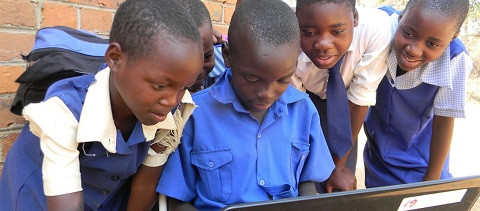 Sustainability Starts with Teachers programme kicks off in Malawi 2021-03-30 Malawi launched the Sustainability Starts with Teachers (SST) programme with a two-day workshop on 23 and 24 March 2021. Held in the midst of the Covid-19 lockdown, the virtual workshop was attended by 55 Teacher educators, Technical Vocational Education, and Training (TVET) educators from all corners of the country, senior government officials and Education for Sustainable Development (ESD) experts. This workshop kick-started the implementation of the programme in Malawi. Participants were able to develop a shared understanding of the context for ESD in the country, initiate the implementation of the SST programme, sharing its vision, objectives and expected impact as well as discussing the implementation processes of the programme. In his opening remarks, Director of Technical Services in the Ministry of Education Science and Technology, Dr. Godfrey Kafere highlighted that ESD is recognized and integrated in a number of national frameworks including the National Development Plan Vision 2030, Malawi’s Vision 2063, National Education Sector Investment Plan (2020-2030) and the TEVT strategic plan (2018-2023). Despite the enabling policy framework, government through various speakers acknowledged systemic weaknesses in teaching sustainability issues in school and teacher education institutions. The main constraining factors raised include the general lack of understanding of ESD, which leads to a lack of political will, and supporting structure within institutions. Participants also pointed at poor implementation plans, resistance to transform to ESD-compliant pedagogies and an exam-oriented system that appears to promote rote learning as other constraints to ESD integration in the education system. The gaps and opportunities presented during the workshop inspired participants in developing their own institutions’ "Change Projects”. These are institutional change initiatives in Teacher Education and TVET institutions supported by the SST programme. Malawi will be joined by, Tanzania and Eswatini in the Regional Training Course on ESD starting in September 2021. Traditionally, the course is held at Rhodes University but due to the Covid-19 pandemic, it will be online. The course will give participants an opportunity to present and further develop their ESD Change Projects. URL:https://en.unesco.org/news/sustainability-starts-teachers-programme-kicks-malawi
 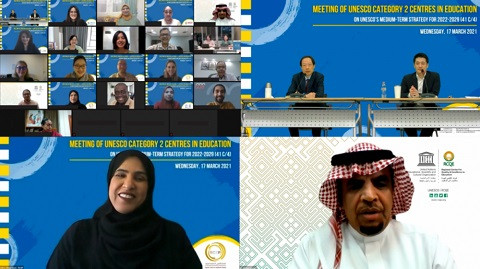 2022-2029 유네스코 중기전략(41 C/4)을 위한 유네스코 교육 카테고리 2센터 회의 2021-03-27 Under the leadership of APCEIU, the Meeting of UNESCO Category 2 Centres in Education on UNESCO's Medium-Term Strategy for 2022-2029 (41 C/4) was held virtually on Wednesday, 17 March 2021. UNESCO is currently preparing the draft Medium-Term Strategy for 2022-2029 (41 C/4), which will be adopted by its Member States during the 41st UNESCO General Conference scheduled for November this year. The Member States are paying special attention to 41 C/4 as the document sets UNESCO's future activity goals and identifies key areas of work. It also presents the direction of education, especially during the current pandemic situation. To further improve the UNESCO's draft 41 C/4, APCEIU and 11 UNESCO Category 2 Centres in Education have been working on drafting recommendations over the past two months where each Centre provided recommendations based on their respective expertise. The UNESCO Category 2 Centres in Education, together with Ms Astrid Gillet, Chief of Education Sector Executive Office of UNESCO, were then gathered in the meeting held on 17 March 2021. During the meeting, the participating Centres had the opportunity to reaffirm the details of draft 41 C/4 and shared their respective opinions regarding the recommendations that have been prepared collectively. The participating Centres also examined the various topics covered in draft 41 C/4, ranging from global citizenship education, early childhood education, environmental education, adult education, higher education, and vocational education, and discussed what efforts were needed to implement each recommendation. Following the robust discussion, the participating Centres unanimously adopted the final recommendation (The adopted recommendation is attached to this article). The recommendation adopted over the meeting has been submitted formally by APCEIU as the Category 2 Centres in Education representative to UNESCO. UNESCO will then reflect the recommendations to its medium and long-term strategies. The meeting has been very fruitful as it has not just gathered the UNESCO Category 2 Centres in Education to work together in preparing recommendations but also laid an important foundation for continued cooperation in the future. List of participating organizations: United Nations Educational, Scientific and Cultural Organization (UNESCO) Asia-Pacific Centre of Education for International Understanding (APCEIU) Regional Centre for Adult Education (ASFEC Sers Ellayan) Early Childhood Development Regional Centre (ECDRC) International Centre for Higher Education Innovation (ICHEI) Institute of Early Childhood Development (IECD) Institute for Educational Planning and Administration (IEPA) International Mother Language Institute (IMLI) International Research and Training Centre for Rural Education (INRULED) Office for Climate Education (OCE) Regional Centre for Educational Planning (RCEP) Regional Centre for Quality and Excellence in Education (RCQE) South Asian Centre for Teacher Development (SACTD) URL:http://www.unescoapceiu.org/post/4147
 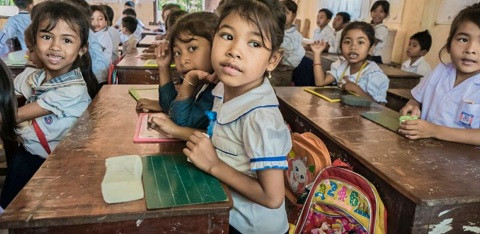 Easier said than done: Working towards gender equality while facing traditional gender norms 2021-03-27 For policy-makers, integrating gender equality into their work and lives is easier said than done. Traditional gender norms are still prevalent across all aspects of society, including workplaces and in the home. Even in the education sector, which has a particular role in shaping and transforming social norms for just and equitable societies through education, persistent negative norms hamper efforts to promote gender equality. To strengthen education policy-makers’ knowledge and capacities, and mobilize action in the education sector, UNESCO Bangkok recently held the Online Regional Training on Gender Equality in and through Education for gender focal points of the Gender in Education Network in Asia-Pacific (GENIA). Fourteen focal points, nominated by their Ministries of Education from across the Asia-Pacific region, came together twice a week from 8 October to 1 December 2020 to share their experiences and engage with learning content from the UNESCO GENIA Toolkit. In commemoration of International Women’s Day, UNESCO interviewed three gender focal points who attended the training to learn how they integrate gender equality in their work and lives. Meet Sinith Nham – Deputy Director General of the Policy and Planning Department, Ministry of Education, Youth and Sport, Cambodia; Dockeo Phonthachit – Deputy Director General, Department of Student Affairs, Ministry of Education and Sports, Lao PDR; and Lilian Wilson Tu’ihalamaka – Assistant Deputy Chief Executive Officer at the Ministry of Education and Training, Tonga. How do you work towards gender equality? Sinith: I respect and value gender, especially when I develop plans, write reports, and work on projects. Gender equality is being addressed through the implementation of the Gender Mainstreaming Strategic Plan in Education and other national policies and plans. The Master Plan for Capacity Development in the Education Sector also recognizes that an effective education system requires “mechanisms in place to support gender mainstreaming, equity and other cross-cutting issues”. What are challenges you face as a gender focal point? Lilian: Not being able to convince decision-makers to include gender issues in education regulations, frameworks, policies, corporate plans, curricula and annual management plans.Dockeo: I find myself with less experiences in gender equality work. In my limited capacity and analytical skills in gender work, I find it important to gain knowledge from trainings and receive technical assistance from gender experts as to empower myself to work towards advancing gender equality in education sector development. What are challenges do you face as a woman or man in this field? How has your gender impacted you personally and professionally? Dockeo: As a mother and my family’s eldest daughter, I am expected to be the family caretaker, taking responsibilities in household decision-making and financial management. I feel so much pressure because I have so many dependents. I have to learn to be very patient. As a woman at work, sometimes my voice is not heard. However, I believe that there are opportunities where I can raise my voice and share my opinions.Lilian: In my workplace, as a woman I experience not being given equal opportunities to carry out specific roles. What did you gain from the GENIA Training? Lilian: I have learned a lot from this training, especially in understanding the terminology, designing and implementing the national education sector plans, and mainstreaming gender.Dockeo: I have learned a great deal on gender and gender equality and how important they are in education. As an educator, I have increased my understanding that there are opportunities to value gender work in the national education sector development plan, which will guide improvement of gender equality from a grassroots level. I am now more aware of advocating for recognition of gender sensitivity at work and even at home. I hope to utilize the knowledge and experiences from the training to improve my capacity and share with my colleagues at work.Sinith: What I have learned from the training, especially the sessions on gender mainstreaming strategic plans, localization tools, and training at national and sub-national levels, substantially improving my work. What is needed to achieve gender equality? Lilian: Gender equality can be achieved when there is a political will. High-level support is vital in attaining gender equality.Dockeo: Everyone has the right to receive equal opportunities to access education and basic needs. People need to recognize that gender equality is the responsibility of everyone.Sinith: We have to educate ourselves to remove negative biases from the socially constructed mental schemes. Recognizing stereotypes and their possible adverse effects is essential for a more efficient appraisal of opportunities. What advice would you give to your younger self from a gendered perspective? Dockeo: I would tell my younger self to be gender sensitive to eliminate discrimination and raise awareness among youths to prevent school-related gender-based violence and to promote gender equality.Lilian: Gender equality is definitely not all about women and girls. It’s about women and men, girls and boys, alike. Sinith: We have the power to do what our hearts desire and achieve what we want regardless of our gender. Main Photo credit: ©Shutterstock/Agent Wolf URL:https://bangkok.unesco.org/content/easier-said-done-working-towards-gender-equality-while-facing-traditional-gender-norms