
News
Catch up on what’s happening in the world of global citizenship education.
1,668 results found
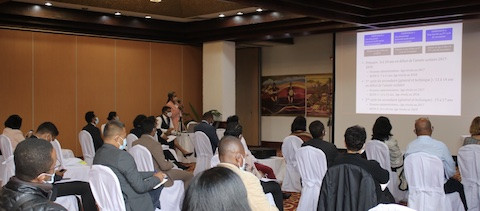 School exclusion in Madagascar during COVID-19 2021-04-15 On March 4th, UNESCO Madagascar presented the results of the study "Analysis of Out-of-School Children Data and the Impact of the COVID-19 Pandemic in Madagascar," conducted within the framework of the Global Out-of-School Children Initiative (OOSCI), for the UNESCO Institute for Statistics (UIS). With 258 million children, adolescents and youth out of school worldwide, according to the UNESCO Institute for Statistics (UIS), many countries are still struggling with the lack of education. In response to this situation, UIS has launched five country studies, including one in Madagascar - a country where legislation emphasizes compulsory school attendance from age 6. Results of the study in Madagascar:The percentage of children not in school by level:- Preschool (under 5 years old): 40% representing between 285,000 and 316,000 children- Primary: 22% to 27% representing between 751,000 and 921,000 children- Lower secondary: 30% to 40% representing between 741,000 and 1 million children- Upper secondary: more than 60%, or nearly 1.4 million adolescents The issues related to late entry, high school re-sits and dropouts at the primary level are among the most important problems of the Malagasy education system. Children enrolled in primary school are at greater risk of dropping out, where they have only a 33% chance of reaching the final grade. However, once students reach lower secondary school, they have a 73% chance of reaching the last grade, and those who reach upper secondary school have an 87% chance of reaching the last grade. The proportions of out-of-school boys remain higher than those of girls in the 5-14 age groups, but girls are more likely to be out of school once they are older than 15. Across all dimensions of exclusion, out-of-school children are more likely to come from the poorest households, to be orphans, to have disabilities, and to live in rural areas or in certain regions in the south and southwest of the country. Several demand and supply factors may explain school exclusion. At the household level, economic difficulties in the household, the low perception of the direct benefits of education combined with the need for labor in agricultural activities or herding, particularly for boys, explain a large part of the phenomenon of children not attending school. Early marriages, on the other hand, are a source of school dropout for young girls. As for schools, the cost of education, the distance from the school and the existence of incomplete schools with a discontinuity in educational offerings, the low qualification of teachers, and the existence of community teachers paid by parents have a significant influence on non-enrollment and dropout. These data were collected in close partnership with the Malagasy Ministry of National Education, the Ministry of Technical and Professional Education and the National Statistics Institute in Madagascar, and will be taken into consideration for policy and planning purposes and to facilitate synergies between the different stakeholders involved. URL:https://en.unesco.org/news/school-exclusion-madagascar-during-covid-19
 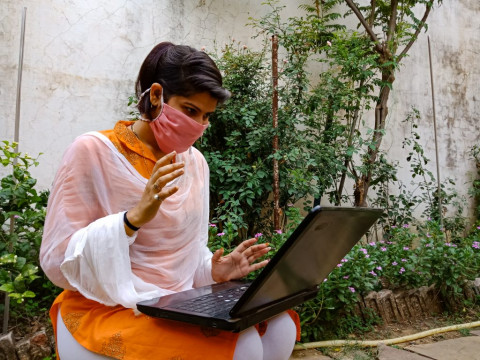 ALE for change and a future worth living in 2021-04-15 We will only achieve the Sustainable Development Goals if we focus more policy attention on adult learning and education. CONFINTEA VII could be a catalyst for this change, argues Rajesh Tandon Over the past 12 months of the pandemic, millions of citizens around the world have ‘unlearned’ old ways of being, while learning new behaviours. For rural communities in India, lockdown created greater reliance on local sources of food, water and preventive health care. For urban communities, the restrictions caused huge disruption as people’s very lives and livelihoods depend very largely on mobility, ‘out-sourcing’ and co-habitation. Millions of workers returned to their families in rural areas as employment was suddenly cut off. Many millions acquired digital hardware for the first time and learned to ‘get online’. Families, communities and societies continue to learn new ways of being in order to navigate the changes affecting them. These new ways of being, in effect, create new changes in communities and societies. If change is inevitable and necessary for the evolution of life and community, so too is the criticality of learning to navigate change. It is in this context that the forthcoming UNESCO conference on adult learning and education (ALE) needs to be placed. CONFINTEA VII is scheduled to be held next June in Morocco, with a focus on ALE in meeting the 2030 Agenda for Sustainable Development. Directing more policy attention to ALE is essential in achieving the 17 Sustainable Development Goals (SDGs) and ‘building back better’ after the pandemic. When UNESCO began to convene consultations on adult education in 1949 (CONFINTEA I, Denmark), the challenges the world faced after the war required the spread of foundational literacy skills among a large number of citizens. Functional literacy remained the focus of much of the deliberation in CONFINTEA II (Montreal, 1960) and CONFINTEA III (Tokyo, 1972). However, two significant shifts began in Tokyo. First, the conference included a focus on ‘functions of adult education and in the context of lifelong education’; making a clear link between adult education and lifelong learning, though it was not yet articulated in these terms. Second, an international network of civil society organizations focused on adult education was born: the International Council for Adult Education (ICAE). These developments began to shape expanded meanings of adult education beyond the limited focus on functional literacy. CONFINTEA IV (Paris, 1985) included deliberations on the contribution of adult education in addressing critical challenges of ill-health, poverty, women’s exclusion, etc. This articulation, supported actively through emerging research from academia and field actions by civil society, began to demonstrate that adult education was an ongoing learning process, both in formal and informal spaces. The Paris conference adopted a declaration of the ‘right to learn’ as a fundamental right for all citizens. Notice that it is not limited to the ‘right to education’! Stimulated by the strong practical and analytical programmes of national, regional and international networks of civil society focused on adult education, CONFINTEA V (Hamburg, 1997) brought a much-expanded focus on adult education, taking ‘adult learning as a right, a tool, joy and shared responsibility’ as its motto. Civil society participation had developed considerably as CONFINTEA V was one of the early UN conferences at which official delegates and civil society participants joined together in deliberations and consultations in the same forum. Preparing for the twenty-first century, this conference benefitted from the release of the report of UNESCO’s International Commission on Education, chaired by Jacques Delors, in 1996. This report addressed adult education but broadened its focus to consider ’learning throughout life’. It described its purpose as fourfold: ‘learning to know, to do, to be, and to live together’. The UNESCO Institute for Lifelong Learning (UIL) acted as the anchor for these deliberations, before and after the CONFINTEA V. In preparation for CONFINTEA VI (held in Belém, Brazil) in 2009, new global developments in technology, migration, climate change and the UN Millennium Development Goals were considered. The financial crisis of 2008 added new dimensions to conference deliberations. In light of widespread unemployment and structural shifts in the global economy, the relevance of ALE in vocational education, skilling and re-skilling and professional renewal was recognized in Belém. Its theme of ‘living and learning for a viable future’ had suddenly become very relevant, viewed through the lenses of climate change and the economic challenges facing humanity. Therefore, as UNESCO and its partners in governments, business and civil society prepare for CONFINTEA VII in 2022, there is an opportunity to harness the accumulated experiences of the past seven decades to address 2030 Agenda and the task of rebuilding post-pandemic. Several issues require urgent attention: In the face of the global spread of the pandemic, the importance of global interdependence for the survival of people and planet has been strongly demonstrated. But, growing economic inequality and ‘vaccine nationalism’ mitigate against collaboration and partnership, the spirit of SDG 17. Investment in the public provision of primary health care (especially its preventive and promotive aspects, adopted since the World Health Organization’s Alma Ata Declaration of 1976) has been shown to be crucial in preparing families and communities, and is essential is if SDG 3 on health and wellbeing is to be realized. Access to digital technology (in its hardware, software and humanware aspects) has been found to be so uneven that a whole generation of students in schools and colleges is at risk of slipping behind. Online learning alone cannot be panacea for education. SDG 4 on education, and especially Goal 4.7 on sustainable development and global citizenship education, mandates the integration of lifelong learning approaches into all forms of education. Despite enormous progress since 1949, women’s learning and empowerment has faced set-backs during the pandemic. The new World Economic Forum Global Gender Gap Report 2021 shines light on educational setbacks in economic, political and social spheres. Taken together, SDG 4 on education and SDG 5 on gender equality are essential underpinnings to the achievement of other SDGs. UNESCO’s Commission on the Futures of Education will soon release its final report, adding a new dimension to the four mentioned above: ‘Learning to become’. If the pandemic has taught one lesson to us all, it is to mobilize our own collective capacities and social networks to address the challenges ahead. Therefore, ‘learning to become’ may well be the message for ALE in the post-pandemic era. In order for this realization to be mainstreamed, an integrated understanding of learning – from classroom to college to work to life – needs to be promoted so that formal and structured educational opportunities harmonize with and build on informal and everyday experiential learning, both lifelong and life-wide. Adult education cannot be merely a chapter or a department or a programme of governments’ educational policies. Adult learning and education must weave through all sites and issues where change is required and attempted. Can CONFINTEA VII spread such an understanding among educators, policy-makers and practitioners? That is the challenge ahead, and it is an essential one. Rajesh Tandon is UNESCO Co-Chair on Community-based Research and Social Responsibility of Higher Education, and Founder President of PRIA India Posted on April 13, 2021 by Paul Stanistreet URL:https://thelifelonglearningblog.uil.unesco.org/2021/04/13/ale-for-change-and-a-future-worth-living-in/#more-844
 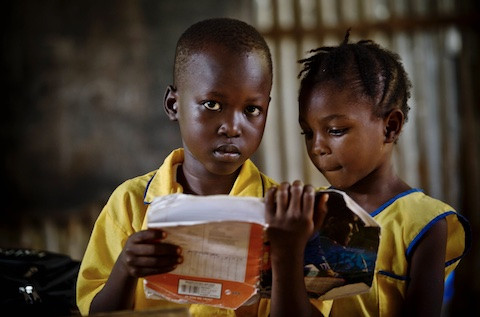 We are proud of the first ever policy on inclusive education in Sierra Leone: the National Policy on Radical Inclusion in Schools 2021-04-14 By Dr David Moinina Sengeh, Minister of Basic and Senior Secondary Education of Sierra Leone and Chair of the Advisory Board for the GEM Report I became the Minister of Basic and Senior Secondary Education of Sierra Leone in November 2019, just a few months before Covid-19 disrupted education systems around the world. Sierra Leone is no stranger to dealing with viruses. The lessons learnt during the deadly 2014 Ebola crisis helped the country address the current education challenges more effectively. This time around, the virus has enabled us to think further how to do things differently, particularly for children who have been adversely affected, starting with building a more inclusive and equitable education system. It inspired much of the direction and content in our new inclusive education policy, validated by education stakeholders and approved by the Cabinet of Sierra Leone. There has been great progress in education in Sierra Leone since 2018. More children are enrolled in schools than ever before, particularly girls. Thanks to the government’s Free Quality School Education programme, 700,000 more students have enrolled in school, with girls in senior secondary school showing the largest proportional increase. The decision in 2020 to overturn the policy that previously banned pregnant girls from attending school also led to a spike in female enrolment. However, the most marginalised students in the country continue to be excluded from education, due to intersecting disadvantages such as poverty, social norms and stigma. They tend to be children with disabilities, from rural and underserved areas and from low-income households. Poverty remains the most significant barrier to education. The disparities are huge. An estimated 36% of households in the poorest wealth quintile have out-of-school children, as opposed to 6% in affluent households. Hardly any poor rural girls, compared to 42% of urban wealthy boys, had graduated from secondary school in 2017. Hence, girls are also less likely to go to university. Education is one of the best routes out of poverty. This is why in 2020, the Government of H.E President Bio asked me to challenge my team to design a new education policy with the aim of removing the barriers that prevent the most disadvantaged children from reaching their full potential. The idea solidified on engaging local and international stakeholders including reading the recommendations in the 2020 GEM Report, which recommends explicit polices and legislation on inclusion. Our new policy is the culmination of a year-long consultation process that saw us travel around the country to speak with adolescent girls affected by the 2010 ban on pregnant girls from school, children with disabilities, students in rural areas, parents, families, teachers, communities and local education officials. They all gave their time and openly answered our questions. Their views, knowledge, and experience as well as those from civil society, have formed the basis of the first ever National Policy on Radical Inclusion in Schools in Sierra Leone. The ultimate goals of the policy are enrolment, retention and successful transition of all students in pre-primary, primary and senior secondary education; regardless of disability, gender, pregnancy or parenting status, geographic location, and socio-economic background. In practice, this goal means actively enabling those from marginalised and excluded groups to enter and remain in school until they graduate. It means adapting the education system to better meet their learning needs – ensuring school is a place of dignity, safety, and respect for all – while systematically reducing cultural, policy and practical barriers to education. Finally, it means developing the institutional structures, staff and tools necessary to support the implementation of this radical inclusion policy in schools. While the policy follows the call of the GEM Report to widen the definition of inclusion to cover all learners at risk of exclusion, and not just one group, our priority will be disadvantaged girls. The policy aims to create opportunities for them to pursue an education through grants, scholarships, and community support programs. More safe schools will be built in rural remote communities to enable children, particularly girls, living in these locations to access education. Vulnerable learners may require resources to enable school attendance, such as sanitary towels, transportation, and priority in school feeding programmes. Greater access to sexual and reproductive health services will be critical, as, too, will be the provision of comprehensive sexuality education across core subjects. Families and communities will be engaged to provide support for their children at home and at school, including for parent learners. The latter is particularly important because adolescent pregnancy and child marriage in Sierra Leone are among the highest globally, with an estimated 19% of girls aged 15 to 19 having had a live birth in 2017. There are immense disparities as well, with 18% of girls from the wealthiest households giving birth compared to 40% among those from the poorest households. The stigma, discrimination and lack of integration mechanisms for pregnant and young parent learners still remain a barrier to their full participation in school. This policy will enable pregnant girls to return to school after giving birth and provide support programmes to help them catch up from lost lessons and graduate. An exciting component of the policy is the appointment in every school of a Girls’ Champion, a teacher who will support girls and advocate gender inclusivity by mitigating abuse and exploitation throughout the school while promoting a girl-friendly learning environment. Children with disabilities in Sierra Leone are also often denied their right to education. Even when they are in class, they are less likely to complete their primary education and transition successfully to secondary school. This policy will improve the learning environment for children with disabilities (physical, cognitive and psychosocial) by eliminating barriers to full inclusion, starting with physical barriers as many schools are inaccessible to students with disabilities. Out of all 11,168 schools in Sierra Leone, only 10% have ramps (Annual School Census, 2019). Through this policy, schools will ensure ramps are provided and toilets are more easily usable. Teachers will also be trained to be more aware of the needs of students with disabilities in inclusive classrooms. Children with and without disabilities need to learn side-by-side, helping to break the cycle of stigma, discrimination, and marginalisation. The policy fosters an on-going partnership and engagement between special needs and mainstream education with proper early screening and assessment of children’s abilities. The policy allows for the development of individual learning plans for children with cognitive disabilities, with the involvement of parents and specialists. Continued access to assistive technologies and referral to supportive services will enable these children to have an education of higher quality. A policy is only as effective as its implementation. Resources will be allocated equitably; more teachers will be trained in inclusive education and teaching assistants will be hired especially in classes where there are children with disabilities. Monitoring and evaluation to determine what is working and what needs to be improved will be a critical determinant of the success of this policy. Education is viewed as the bedrock of long-term sustainable growth and socio-economic development of any country, helping to shift people out of poverty and create new opportunities to reduce inequitable income distribution and increase choices. This is more so in Sierra Leone under the leadership of H.E President Bio and this new Policy on Radical Inclusion in Schools will guide the government’s actions over the next five years towards a more inclusive and equitable education for all students. We are hoping it will bring Sierra Leone closer to achieving SDG 4, even with the constraints that Covid-19 has imposed. URL:https://gemreportunesco.wordpress.com/2021/04/08/we-are-proud-of-the-first-ever-policy-on-inclusive-education-in-sierra-leone-the-national-policy-on-radical-inclusion-in-schools/
 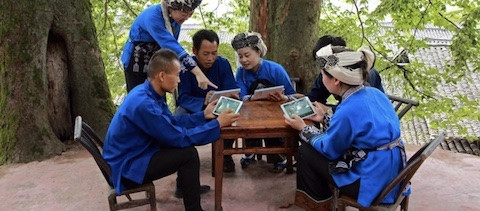 The Open University of China awarded UNESCO Prize for its use of AI to empower rural learners 2021-04-13 The “One College Student Per Village” programme at the Open University of China (OUC) is one of the laureates of the 2020 UNESCO King Hamad Bin Isa Al-Khalifa Prize for the Use of ICT in Education. The innovative programme provides an example of how Artificial Intelligence (AI) and associated technologies can create quality education opportunities for learners from remote areas and improve social and economic development in rural communities. The programme was established in 2004 with the support of the Chinese Ministry of Education in response to the shortage of higher education resources and slow economic development in China’s rural and remote areas. Since then, it has not only improved local educational infrastructure and put in place distance learning programmes, but also integrated AI and Virtual Reality (VR) techniques, which significantly enhanced learners’ experiences and engagement. Mobile learning and smart classrooms In its efforts to provide quality learning experiences, the OUC set up over 500 cloud-based classrooms and smart classrooms in poorer areas in 31 provinces, municipalities and autonomous regions. Online and offline learning environments have been created for local learners and the content adapted to their needs. “As local residents are mainly engaged in agriculture, forestry, animal husbandry and fishery, the University developed learning resources, which can be easily accessed via mobile applications from anywhere, including while working in the field or on the farm,” says Hou Songyan, associate researcher at the OUC. Huang Haiyang, a student from Tiandong County in the Guangxi Autonomous Region, shared his experience of how the tools are making a difference in his work. “Since I can look through the information and related knowledge from my smartphone, it makes it easier for me to know how to control insects before they do harm on my fruit trees,” he says. “And when I get confused with how to use the pesticide, I can go to the smart classrooms to ask for help from my online tutor.” Since the beginning of the COVID-19 pandemic, these classrooms have conducted over 2,000 live teaching sessions for more than 270,000 participants. 300 additional online courses and 100,000 “mini-lectures” were also opened to the general public. The series of lectures have generated nearly 100,000 views to date. Using AI to create adaptive learning environments The Smart Learning Platform enables teachers to create customized learning plans for students based on the profile of each learner and analyze their progress using big data. Using AI, the platform guides students along different learning paths. It can distinguish learners’ intentions using voice and semantic analysis and can text learners and give feedback to their questions to help with their study. It also lightens the workload of teachers by completing more routine tasks. Automatic assessments and automated essay scoring (AES) give students instant feedback and provide them with relevant learning resources. “This saves me a lot of time so that I can spend more time on preparing and reflecting the lectures and conducting academic research, etc.,” says Li Ganged, a teacher at the OUC. “Automated essay scoring is efficient in that I don’t have to mark these assignments myself but I can get a clear picture of where learners need help.” In addition, Virtual Reality (VR) is being integrated into the programmes. Not only does it enable to illustrate and visualize abstract course content, but it also increases learners’ engagement and motivation. “In the Forestry programme, the VR can supply vivid virtual experiment just like in the real world on how to prune fruit trees,” says Hou Songyan. “The VR experience makes learning easier and more fun.” Bridging the gap between rural and urban areas To date, 29 programmes have been implemented using AI, covering over 1,500 OUC study centers nationwide. A total of 825,827 learners have been enrolled, 529,321 of whom have graduated. For Hou Songyan, the impact of students who graduated from the OUC on the local economy of rural and remote areas is already visible. “More contributions are made to the local economic and social development by those who have graduated from the programmes and been using their knowledge and skills in the local rural poverty alleviation and rural revitalization effort.” Moving forward, the OUC will expand its potential target audience beyond the disadvantaged groups in rural and remote areas to include all members of society in the rural revitalization strategy. At the same time, the university plans to offer a wider range of programmes, degrees and diplomas, including short-term vocational training, and use AI techniques for knowledge mapping, automatic content generation, and smart answering chatbot technology to ensure round-the-clock online learner support. “We do believe that AI will become an integral part of the future of education,”, says Hou Songyan. “It is a great honor for the Open University of China to receive this Prize. With this encouragement, the Open University of China will pay more attention to the use of digital technologies, especially cutting-edge technologies like big data, cloud computing, blockchain, AI, 5G, etc., in our future educational delivery, continue providing quality education programmes to people in remote and rural areas, and strive for the UN 2030 Agenda for Sustainable Development.” UNESCO’s ICT in Education Prize UNESCO’s work in ICT in education URL:https://en.unesco.org/news/open-university-china-awarded-unesco-prize-its-use-ai-empower-rural-learners
  Digital learning is the way forward: high population countries rally around UN initiative 2021-04-12 Ministers from the E-9 high population countries expressed political commitment to scale up digital learning and skills and close the digital divide in order to accelerate progress towards the global goal on education (SDG4), in a virtual consultation held on 6 April 2021. The meeting was organized by the Government of Bangladesh and UNESCO, with the support of UNICEF, Generation Unlimited, the Global Education Coalition and the Malala Fund. It marks the first phase of an initiative spearheaded by the United Nations on digital learning and skills in the wake of COVID-19, setting the ground for a launch event with Heads of State in the next three months. UN Deputy Secretary-General Amina J. Mohammed recalled that before COVID-19, access to quality education was already profoundly unequal. “As we look to the future, it is clear that there is no going back to the education we had before the emergency (…) If we are to realize the ambition of SDG4, then we need to pursue pandemic recovery efforts that transform education.” She affirmed that this Initiative is an opportunity to narrow digital inequalities, reach the most marginalized, empower girls and young women and prepare workforces for the future, stating that the collective leadership of the E-9 offers a blueprint for scaling up progress in many countries. The E-9 countries are home to half the world’s learners and have an established history of cooperation, providing a springboard to drive global educational progress. In several of the countries, schools remain fully or partially closed, making remote solutions the only means to ensure learning continuity. Setting the tone of the meeting, Dr Dipu Moni, Minister of Education of Bangladesh and Chair of the E-9, noted that despite the best efforts of governments, remote learning is fraught with challenges, ranging from lack of infrastructure, connectivity and contents to inadequate teacher training. Over the past year, she said that the digital divide has widened the gap between urban and rural students, and between boys and girls. She stressed that strong political commitment and support from private sector partners is essential to ensure more inclusive and sustainable education systems. For this, “we need investments, we need technical support, we need to innovate a digital education system which is affordable.” Presenting the Initiative, UNESCO and UNICEF underscored the importance of strong public-private partnerships and global solidarity to reach every child and youth with digital learning by 2030. UNICEF Executive Director Henrietta Fore affirmed that the ambitious initiative necessitates a diverse range of partners under the leadership of each country, noting that financial and technical resources are increasingly being galvanized globally to connect learners and schools to the internet and support digital learning. “Under your collective leadership we must seize this once-in-a-generation opportunity to leapfrog children and youth into the future they want and deserve,” she said. Stefania Giannini, UNESCO Assistant Director-General for Education, stressed the need to nurture strong and enabling ecosystems involving governments, universities, business and centres of excellence to scale up digital learning. She said that the Global Education Coalition and Generation Unlimited offer strategic alliances to power this initiative, and stressed the role of South-South cooperation among the E-9 to share solutions and narrow digital inequalities. Taking the floor in succession, all countries described national initiatives to reach students during school closures through television, radio and the internet. Welcoming the digital learning initiative, they recognized that the pandemic was the opportunity to transform education and build more inclusive and equitable systems. Bangladesh emphasized the need to develop a distance learning ecosystem that reaches all learners, evaluates learning outcomes and brings on board multiple partners including telecommunication operators. Citing several initiatives to promote digital technologies in education, support teachers and extend connectivity, Brazil encouraged joint investment in quality research to remedy imbalances among the E-9 countries. India highlighted the need to promote a culture of innovation and entrepreneurship. The country has made digital learning a pillar of its national education policy and is strengthening its national digital architecture to support teaching and learning. China described measures to promote online teaching environments and educational innovation, and to encourage private investment in digital education. During the pandemic, the country conducted large scale online education and shared its expertise with developing countries. Going forward, it encouraged policy dialogue, mutual learning and technology sharing to close the digital gap. Indonesia said that teachers had become more confident in using technology, a key ingredient in fostering an innovative culture, referring to crowdsourcing models and online courses to support them. Nigeria stressed the compelling need for collaboration to upgrade infrastructure facilities, invest in the digital skills of teachers, make affordable devices available to all and expand broadband access. Pakistan said strides had been made to enhance access to remote learning, including through public-private partnerships, and stressed that digital learning is a necessity, with a target set to connect every school, child and youth to the internet. Several partners expressed their support to the Initiative. Mr. Ziauddin Yousafzai, Co-Founder of the Malala Fund, drew attention to the gender divides in digital access and emphasized collaboration and collective targets, expressing confidence that “digital learning will help materialize the common dream of getting every girl and boy into school.” Dr. Jaime Saavedra, Global Director of Education at the World Bank, stressed the urgency to recover learning in 2021 through joint work at country level on remedial education, teachers and technology. The meeting also hosted a marketplace showcasing promising local and global digital learning solutions with the goal of initiating strategic public-private sector partnerships. Several partners from the Global Education Coalition held exhibits, including Blackboard, Khan Academy, Pix, YOMA, Profuturo, Technovation and Worldreader, along with the Learning Passport. URL:https://events.unesco.org/event?id=62071070&lang=1036
  Experts review Draft Roadmap for integrating Global Citizenship and Liberation History in teaching and learning in Southern Africa 2021-04-12 25 experts met on 8 April 2021 to review the Draft Roadmap for integrating Global Citizenship and Liberation History in teaching and learning in Southern Africa. The Draft Roadmap provides guidance on the integration of Global Citizenship Education (GCED) and Southern African Liberation History (SALH) in the region. The experts commended the draft document and suggested to strengthen particular thematic areas such as the role of women in the liberation history. They recommended both co-curricular activities on GCED and SALH as well as mainstreaming of some topics in the core curricula. They also proposed extending the scope of the Roadmap to earlier levels of education as well as to provide guidance on strengthening GCED and SALH in assessment and teacher education. The UNESCO Regional Office for Southern Africa, in partnership with the SADC Secretariat is promoting regional integration, social cohesion, and peaceful coexistence in the region, targeting especially youth through the teaching of Southern African Liberation History, which is part of the broader concept of Global Citizenship Education. UNESCO aims to support Member States in their efforts to provide learners, throughout life, with the knowledge, skills, values, attitudes and behaviours needed to ‘live together’ in increasingly diverse societies, and engage with the world as responsible global citizens. At a regional meeting on GCED held in Johannesburg, Southern Africa in October 2019, participants recommended UNESCO to “commission a comparative mapping study to review GCED content, practices and articulation in curricula and teacher education and in the region”. As a follow up to this recommendation, UNESCO ROSA in collaboration with the SADC secretariat commissioned a review of national curricula in 13 SADC Member States to determine the level/kind of integration and teaching of GCED issues and values, and of Southern African liberation history, in particular on secondary school level. The study recommended that SADC countries should teach GCED and SALH with a regional perspective which will lead to common goals and values being adopted in the region. As a follow up, UNESCO commissioned a Roadmap for integrating Global Citizenship and Liberation History in teaching in learning in Southern Africa which is what was reviewed at the meeting on 8 April 2021. URL:https://en.unesco.org/news/experts-review-draft-roadmap-integrating-global-citizenship-and-liberation-history-teaching-and
  Grandir à l’heure des fake news 2021-04-12 Hopping from one social network to another, young people in the Middle East and North Africa (MENA) region now get their information from YouTube, Instagram and Facebook. To be able to distinguish between reliable information and fake news while navigating this flood of information, it is urgent to develop critical thinking. Hadil AbuhmaidA doctoral candidate at the School of Journalism and Communication, University of Oregon, United States, she is co-author of How The Middle East Used Social Media in 2020 an annual review. Some days ago, my nephew asked me who my favourite YouTuber was. Without hesitation, I said “no one”, because I rarely watch YouTube. He gasped and asked, “Then what do you do on your laptop all day?” Well, I am a 34-year-old Ph.D. student, not an 11-year-old. But his reaction reflects the power and influence that platforms like YouTube have on many young people around the world – including the Middle East, the region where I am from and which I continue to study. In one of the most youthful regions in the world – where over twenty-eight per cent of the population is between 15 and 29 – it should come as no surprise that nine out ten young adults use at least one social media platform to converse, access information, and share content, according to the 2019 Arab Youth Survey. Juggling between multiple platforms “I check my Facebook and Instagram about fifty times a day,” Tabarek Raad, 28, a translator from Basra, Iraq, said. “I use these two social media accounts to connect with friends and keep myself in the loop of what’s going on in the world,” she added. Using social media platforms to check the latest news, watch and interact with friends’ stories, share something, or just passively browse through the newsfeed, is universal among youth everywhere today. But what is interesting about internet users in the Middle East is that they have an average of 8.4 social media accounts, according to GlobalWebIndex (GWI), the market research firm. Mohammed Haraba, 28, who works for a large oil company in Al-Ahsa, Saudi Arabia, has nine social media accounts – including WhatsApp, Snapchat, Instagram, and Facebook. “I check WhatsApp every hour, unless I am too busy. It is the only platform on which family and friends gather. I don’t know anyone who doesn’t have an account,” he said. Facebook, which used to be Haraba’s main platform for socializing four years ago, now ranks low on his list. With over seven out of ten Arabs using Facebook and WhatsApp, the platform still has a big presence in the region, with 45 million Facebook users only in Egypt, Statista reports. Social media platforms are now the dominant source of news for young Arabs. Statistics from the Arab Youth Survey show that in 2020, seventy-nine per cent of young Arabs receive their news from social media, compared to only twenty-five per cent in 2015. “Facebook is one of my main sources of news and communication with friends. I check it more than ten times a day,” Pamella Hadawar, 24, from Palestine said. “And depending where the news comes from, I check with other news agencies and sources to make sure it is accurate.” This trend has resulted in a decline in news consumption through newspapers and television. Saudi Arabian youth, for example, reported an almost thirty per cent decline in TV news watching in the past four years. An infodemic The widespread use of social media in the region is both fascinating and scary – with information bombarding us constantly, it has become harder to filter the content. Fake news and misinformation have become especially prevalent during the pandemic. False and inaccurate news has spread even more rapidly on social media, resulting in an infodemic. The deluge of information has been overwhelming for some. “I used to get most of my news from Twitter, but I deactivated my account when the pandemic started,” says Tala Zabalawi, 31, a digital marketing specialist in Amman, Jordan. “It was so stressful to read about the pandemic, that I decided to focus on happy thoughts instead.” The growth of media consumption and the increasing affordability of new technologies point to an even further expansion in the use of social media in the MENA region. Big tech companies have been quick to take advantage of this emerging market. This has initiated an important discussion around media literacy. Realizing the value of media education for young adults, several organizations in the region have been offering training and workshops to increase awareness. Other initiatives – like Jordan’s Fatabayyano platform in Arabic – offer fact-checking services. This is a start. In order to develop critical thinking that allows us to distinguish between truth and lies, between facts and opinions, we need the widespread introduction of media education, particularly in schools. UNESCO combats the disinfodemic Read more: Zoomers, in their own words, The UNESCO Courier, July-September, 2020The health crisis: Fertile ground for disinformation, The UNESCO Courier, July-September 2020Developing a critical mind against fake news, The UNESCO Courier, July-September 2017 Subscribe to The UNESCO Courier for thought-provoking articles on contemporary issues. The digital version is completely free.Follow The UNESCO Courier on: Twitter, Facebook, Instagram URL:https://en.unesco.org/courier/2021-2/growing-age-fake-news
  Données ouvertes sur les écoles : mode d’emploi 2021-04-12 Open school data is a powerful tool. When used properly, open data can promote citizen control over the transfer and use of financial, material, and human resources. Open data can hold local and school authorities to account, improve service delivery, and detect malpractice at the school level – and most importantly, enable citizens to stand up for their right to a quality education. There are a variety of open school data initiatives operating around the world. IIEP-UNESCO, as part of its long-standing research in this area, has explored many of them in-depth. Now, a new guide for educational decision-makers, planners, and managers goes behind the scenes to illustrate – in concrete, applicable terms – how to foster effective and usable open school data. “The publication is designed to be a key resource for education actors seeking to confront corruption head-on, and remove it as a barrier to the attainment of equitable and inclusive quality education for all,” says author Muriel Poisson and IIEP expert on ethics and corruption in education. Open School Data: What planners need to know addresses five key questions: from how to choose the content and format of data, to how to link them with accountability, while also understanding inherent risks. Covering Australia to Zambia, these questions are brought to life with real-world examples and lessons from 50 countries and several hundred interviews with school-level actors. The book also argues that education authorities have much to learn from the experience of civil society in the area, emphasizing the need to shift from an administrative approach to a more citizen-centred perspective. Voices of impact The book features a number of interesting voices and testimonies, which highlight the impact of open school data: “With the Dapodik system in place, it is much more difficult for schools to inflate their student numbers. For each student, schools have to submit many variables including their demographic background, family background, academic progress, and even the distance between the student’s home and her/his school. It is much more difficult to manipulate students’ data now.” -- A provincial district representative in Indonesia. “Previously, school management decisions had been taken by a handful of school staff without really involving parents or the community, even though everyone in Malawi knew this type of arrangement was conducive to corruption.” -- A project manager from the non-governmental organization LINK in Malawi, which decided to use open school data to encourage collaborative planning approaches. “We became more conscious because we are being checked. We managed the resources better based on needs, pursued the right strategy, and improved governance of resources. If you don’t do that, the collected data will show it.” -- A secondary school teacher in Bangladesh. At the same time, the book does not ignore the risks that sometimes accompany the disclosure of school data. This can include misinterpretation or over-simplification of complex issues, possible stigmatization or school competition, and issues around data privacy and overall security, among other issues. One policy officer in Australia also raised the issue of the inherent shortcomings of data: “Schools are complex places that are hard to ‘capture’ through any data sets. Our principals tend to be passionate educators who know that what schools deliver is not solely based on a list of data. They change lives and My School can’t accurately represent all that is done.” -- A policy officer in Australia. Seven steps to design and implement open school data initiatives Making school data public is an important step in itself – but it is not enough to provoke significant changes in education systems. A number of other steps must be taken – both before and after publication – to bring open school data to the attention of citizens. As this can raise many questions for planners, the book proposes practical guidelines on how to design and implement open school data policies. It also includes a useful checklist, outlining what needs to be done and by whom. Design a clear open data policy framework: Review motivations for an open school data policy, clarify roles and responsibilities, and set expectations building on a theory of change. Prioritize data that can lead to positive change: Select meaningful data highlighting the current situation of schools and consider indicators that are comparable over time and between schools. Set up a strong information management system: Introduce open school data initiatives as part of existing educational management information systems (EMIS), organize technical trainings to teach school staff how to monitor data, and disseminate information in a timely manner. Present data attractively: Make sure data are accessible both online and offline in public areas where they are easy for all to view. Provide explanations to avoid misinterpretation, use simple language and incorporate tables and graphics. Make sure data are accessible to all: Send school report cards to all school principals, adopt legal provisions regarding the disclosure of data, and conduct advocacy campaigns in local languages to alert citizens. Strengthen stakeholder capacities to act on information: Enhance awareness among school administrators and teachers of the core principles of open school data, inform citizens about their rights and entitlements about education, and organize information sessions for pupils. Support efforts to improve accountability and fight corruption: Select data that can shed light on areas most vulnerable to corrupt practices, clarify the consequences of corrupt practices, and make the objectives of an open school data initiative evolve over time, from an information and communication tool to one of accountability. By taking these recommendations into consideration, open school data policies and initiatives can have greater success and impact in the education sector. And once the initial foundation is laid for open school data, its architects can find ways to evolve and further engage with users over time. For example, the publication suggests incorporating private schools into databases, designing data presentations for different formats (e.g. mobile, tablets, and computers), developing interactive tools that allow users to engage in more complex data presentations, or creating a dedicated space for students to discuss issues related to open school data. URL:http://www.iiep.unesco.org/en/open-school-data-heres-your-go-guide-13721
  Building resilience in vulnerable communities 2021-04-11 Girls and young women in vulnerable communities around the world often do not have access to quality education and distance learning opportunities and have therefore been disproportionately impacted by the COVID-19 pandemic. UNESCO estimates that 11 million girls might not return to school this year due to the disruption caused by COVID-19, threatening decades of progress towards gender equality. As well as being excluded from education, the crisis puts girls at risk of adolescent pregnancy, early and forced marriage and violence. For many of them, school is a lifeline that provides not only education but meals, emotional support and essential health-related guidance. The University of Cape Coast (UCC), Ghana seeks to address these challenges by supporting young women and out-of-school girls in managing their health and engaging in new livelihood opportunities. The UCC initiative forms part of UNESCO-UNEVOC’s COVID-19 response project – Strengthening the Responsiveness, Agility and Resilience of TVET Institutions for the Post-COVID-19 Era. The project supports UCC’s interventions in two key areas. First, to train community health workers and volunteers who can gain competence to undertake temporary engagement in the community, with a focus on supporting the needs of girls and young women. Second, to transfer entrepreneurial skills to pregnant adolescents and teenage mothers through engaging in local micro ventures that are relevant during the pandemic. Christina Boateng, UNEVOC Centre Coordinator at UCC says, “In one of the districts we work in, because of school closures and closure of businesses during the pandemic, there has been a sudden upsurge of teenage pregnancy – over 300 girls in the district”. The initiative sees healthcare workers and volunteers organize clinics in their rural communities and provide counselling, nutritional support and mentoring to vulnerable, at-risk girls. Training healthcare workers and volunteers Around 50 healthcare volunteers have been selected from the community for training in counselling, communication and cultural competency to work with adolescent girls in all aspects of their lives, including economic, social and health. The training “will equip the volunteers with health assessment skills,” Ms Boateng notes. This type of training improves volunteers’ chances of earning a living", Ms Boateng says. “It helps them gain skills they can use in their next project, or they can use the training certificates if they plan to look for employment.” The programme also focuses on teaching entrepreneurial skills to pregnant teenagers and young mothers to enable them to set up their own micro businesses from which they can earn money for their upkeep. “We are teaching them how to use foodstuffs available within their local community to prepare food and drinks and even baby food. They can eat these for their own nutrition or sell some for income” explains Ms Boateng. “They will also learn how to prepare and sell household cleaning agents and hygiene products – hand sanitizers for instance, utilizing opportunities brought about by the pandemic,” she adds. Learn more about UNESCO-UNEVOC’s COVID-19 response project URL:https://unevoc.unesco.org/home/building_resilience_in_vulnerable_communities
 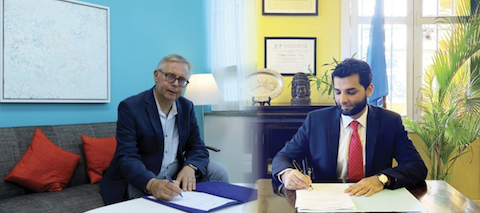 Sweden and UNESCO launch a new initiative to support media development in Cambodia 2021-04-09 Mr Björn Häggmark, Sweden’s Ambassador to Cambodia and Mr Sardar Umar Alam, Country Representative of UNESCO to Cambodia 08 April, Phnom Penh – Today Sweden and UNESCO signed an agreement to initiate the project “Strengthening Media Development and Freedom of Expression”, to be implemented in partnership with UN Human Rights. Sweden will contribute 23 million Swedish Kronor (around USD 2,5 million) to UNESCO. This new strategic agreement includes activities that will be implemented in the next three years, which aim to foster a safe, free, pluralistic, and independent media environment conducive to greater freedom of expression and access to information in Cambodia. UNESCO’s work will focus in strengthening the legislative framework and media sector while addressing the urgent needs derived from the Covid-19 pandemic. This includes ensuring greater access to critical information, advocating for higher standards in ethical and professional reporting and promoting professional journalism to counter disinformation. “This contribution is an important part of Sweden’s development cooperation with Cambodia which focuses on human rights, democracy and rule of law. We are happy to partner with UNESCO Cambodia to build the capacities of the media sector to raise the professional standards of journalism and establish mechanisms for the safety of reporters. Special attention will be given to female journalists, who are particularly vulnerable in the media profession and lack equal professional development opportunities in the sector,” explains Mr Björn Häggmark, Sweden’s Ambassador to Cambodia. The rapid adoption of the internet and mobile technologies in Cambodia, and their growing number of users, especially among the youth, pose an opportunity for civic participation and engagement in society, economic activities, and development. However, these changes also bring challenges such as proliferation of disinformation, privacy issues, and the risk of leaving behind those who lack capacities to ICTs and access the internet. UNESCO will focus in promoting Media and Information Literacy, and equipping the public, with a special focus on youth, with the necessary skills and knowledge to interact in the online world in a safe and effective manner. Mr Sardar Umar Alam, Country Representative of UNESCO to Cambodia, highlights the importance of the agreement with Sweden: “The initiative will further strengthen the freedom of expression and access to information ecosystem in Cambodia by advocating for a more robust legislative framework for media development, providing platforms and spaces for dialogue and public discourse, and fostering a vibrant media environment, thereby promoting democratic values, good governance and sustainable development”. Aiming at the Peaceful, Just and Inclusive pillar of the 2030 Agenda, this project directly contributes towards the realization of SDG 16, which focuses on advancing government accountability, building the rule of law and sustaining peace, and in particular, SDG 16.10, which aims at “ensuring public access to information and protect fundamental freedoms, in accordance with national legislation and international agreements”. URL:https://en.unesco.org/news/sweden-and-unesco-launch-new-initiative-support-media-development-cambodia