
News
Catch up on what’s happening in the world of global citizenship education.
1,668 results found
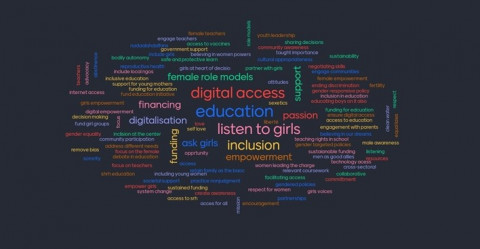 Girls and women leading the charge to ensure #LearningNeverStops 2021-03-27 Every year, the Commission on the Status of Women serves as an important forum for women’s empowerment, gathering dedicated champions for gender equality from all over the world. Its 65th session (CSW65) put the spotlight on the critical role girls and women play as leaders and decision-makers in all aspects of public life. To highlight the leadership role of women and girls in education, UNESCO, the Group of Friends for Education and Lifelong Learning, the UN Girls’ Education Initiative (UNGEI) and Plan International held a virtual event on the sidelines of CSW65. The event brought together key stakeholders to discuss in depth how to build back equal through gender-transformative education systems. Today, the world is facing an education crisis disproportionately impacting certain groups of populations more than others. Over 11 million girls and young women may not return to school following the pandemic, according to UNESCO estimates. This is in addition to the 128 million girls who were already out of school before the pandemic. “Education remains one of key enablers for women and girls to realise their full potential and lead the change”, said Miroslav Klíma, Deputy Permanent Representative of the Czech Republic to the UN and Co-Chair of the Group of Friends for Education and Lifelong Learning. “We must take a stand to protect girls’ and women’s education today to give them an opportunity to be leaders and change-makers tomorrow.” Girls and women leading the charge To address the challenges faced by girls and women across the world during the COVID-19 pandemic, and especially those impeding on their learning, girls and women like Tania Rosas, Kadiatou Konate, Rangina Hamidi, Zoe Simpson, and Nada Al-Ahdal are acting for girls’ continued learning and return to school, access to health and nutrition, and leadership. “Access to technology is one of the strongest elements for the democratization of education, and will be necessary for all girls to continue their education”, said Tania Rosas, founder of the El Origen Foundation supporting indigenous and refugee learners in Colombia. Recently launched by the Foundation, the O-lab application is a tool developed by girls for girls, providing both online and offline safe training opportunities. Kadiatou Konate, founder of the Club of Young Girl Leaders in Guinea and an activist from a young age, has been promoting education through awareness-raising initiatives across Guinea. She is hoping for “a better world where gender and sex will not be fixed barriers and potential will rise above these considerations”. “If I, as a girl, was not given the opportunity of education, I would not have become the Minister of Education today”, said Rangina Hamidi, Minister of Education of Afghanistan, stressing the key value of girls’ education and female role models in decision-making positions. “It is incredibly important to have role models in leading positions so that girls can look up to these women and believe that they too can potentially one day lead important institutions. Until and unless we create spaces for women to lead, it will be difficult to promote girls’ education because many don’t see the value and impact in educating a girl.” Summarizing this first discussion, moderator Rita Bissoonauth from the African Union International Centre for Girls’ and Women’s Education highlighted the need for safe teaching and learning environments, role models, female teachers, proper infrastructure and peer support. Transformative education for girls’ leadership We must use this crisis as a moment to build back equal and establish a new normal for girls, and ensure that education does not perpetuate unequal power structures, but rather serves as a force to accelerate sustainable gender equality and full inclusion -- Stefania Giannini, UNESCO Assistant Director-General for Education What does ‘building back equal’ mean? “Building back equal is taking this crisis as an opportunity to establish measures that promote resilience, to take deliberate efforts to remove gender bias and discrimination and promote equality in and through education, and to address the barriers and bottlenecks to girls’ education”, said Vibeke Jensen, Director for Peace and Sustainable Development at UNESCO, and currently leading UNESCO’s Global Education Coalition’s efforts to build back equal. Calling to rethink and restructure education delivery, Zoe Simpson, Executive Director of the Women’s Centre of Jamaica Foundation and UNESCO Prize laureate spoke about the particular needs of young mothers. “Continuing education is a non-negotiable for all adolescent mothers”, she said. “The reality of adolescent mothers is that their attention will be divided between book and baby. Academic content must therefore be digitized for ease of access.” Thubelihle, aged 19, is a young woman who completed secondary school in 2020 during the world’s largest education disruption in history. She shared her experience in moving from a classroom to learning from home and balancing her education with house chores. She also called for better delivery of girls’ rights to comprehensive sexual and reproductive health services, especially amid the pandemic. Participants responded to a survey on three actions to take to build back equal. Moderator for the second discussion, Geoff Adlide of the Global Partnership for Education also stressed the importance to hardwire gender equality within all education work and “lift education financing across the board” and. Financing was also a core theme of remarks made by Rose Campbell, Chief Executive Officer of Plan International UK, who said “we must come together urgently and increase funding for education to get girls back into school.” “As a girl who has experienced the life-changing impacts of education, and who works for girls in my community, I am ready to be a partner with all the women to lead the charge”, said Nada Al-Ahdal, human rights activist and founder of the Nada Foundation. “Are you willing to pass the torch and take this partnership forward?” More information: Watch the recording Campaign: Keeping girls in the picture URL:https://en.unesco.org/news/girls-and-women-leading-charge-ensure-learningneverstops
 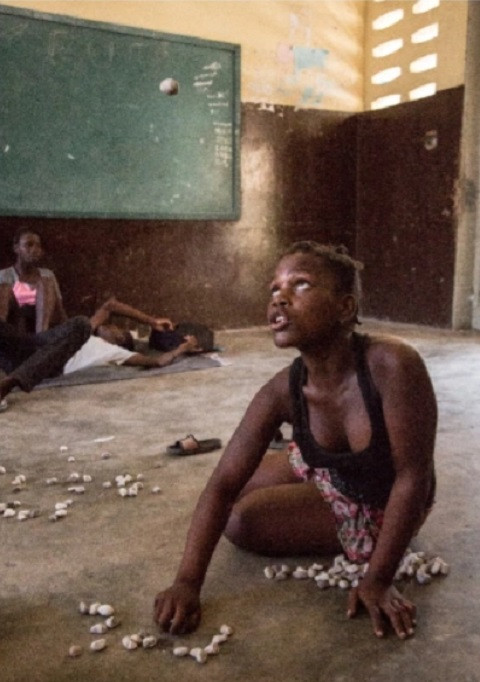 Latin American and Caribbean Countries Must Address Structural Discrimination to Create Educational Opportunities for All 2021-03-25 Latin America and the Caribbean is characterized by wide and persistent disparity by ethnicity. By most measures of well-being, including education, ethnic groups tend to fare worse than the rest of the population. The various forms of direct, indirect, and systemic discrimination have contributed to exacerbate inequalities and exclusion, especially in the context of the COVID-19 pandemic. As we commemorate the International Day for the Elimination of Racial Discrimination, which is celebrated on 21 March every year, we look at the exclusion of Afro-descendants and indigenous peoples in the region, and call for combating racism and ensuring educational opportunities for all. The region has the highest concentration of Afro-descendant populations in the world, with estimates ranging from 120 million to 170 million. Brazil is home to the majority of the Afro-descendant population in the continent, with 112 million, equivalent to 55% of its population. Despite the fact that one in four Latin Americans identifies as Afro-descendant, Afro-descendants continue to face a situation of structural inequality. They also suffer continued exclusion in education. The probability of Afro-descendants completing secondary education was 14% lower than that of non-Afro-descendants in Peru and 24% lower in Uruguay in 2015. A similar situation is experienced by indigenous peoples, who despite representing only 8.3% of the population in 2010, constituted 17% of the extremely poor in Latin America. In addition, their school attendance, educational attainment, and literacy rates are lower than those of the general population. The 2020 GEM Report Latin America and the Caribbean-Inclusion and education: All means all, published in association with SUMMA and the Regional Bureau for Education in Latin America and the Caribbean OREALC/UNESCO Santiago reminds us that attendance was lower in 7 of 11 countries with data among 12- to 17-year-old Afro-descendants than for their non-Afro-descendant peers. In Uruguay, Afro-descendants were 24% less likely to complete secondary education than their non-Afro-descendant peers. In Panama, 21% of indigenous males aged 20 to 24 had completed secondary school, compared with 61% of their non-indigenous peers in 2016, while in Paraguay and Honduras, 32% of indigenous people are illiterate. The region has made progress in recognising the rights of indigenous and Afro-descendant peoples in their legal frameworks, but there are still many challenges to overcome. Despite the fact that several countries in the region have approved educational inclusion policies that recognise different multicultural and intercultural processes, racial discrimination continues to be present inside and outside the classroom. School segregation emerges as one of the major challenges for inclusion in Latin America and the Caribbean. Segregation by ethnicity is even more widespread in the region than segregation by socio-economic status. Teacher bias is detrimental to student learning. In São Paulo, Brazil, grade 8 mathematics teachers were more likely to give white students a passing grade than their equally proficient and well-behaved black classmates Another challenge relates to the fact that the composition of the teaching force does not reflect the diversity of the classroom. The representation of indigenous peoples and Afro-descendants in the teaching profession remains exceptionally low in several countries in the region. In Argentina, the participation of people of African descent in higher education institutions is remarkably low, with the exception of non-teaching staff in junior positions. In Costa Rica, a 2013 Decree promoted the training of teachers from indigenous communities through scholarships and other support measures for studies and professional development, but sufficient teacher diversity has not yet been achieved. Community organisations play a key role in democratising education and promoting inclusion in education. One example highlighted in the Report is Ecuador, where people of African descent participate in the development of ethno-educational policies. But despite these efforts, racial discrimination is still present in all spheres in society. © UNICEF/ UNI96612 Tackling the causes of structural discrimination and inequality is essential to create educational opportunities for all. The International Day for the Elimination of Racial Discrimination is an opportunity to call on the countries of Latin America and the Caribbean to strengthen their commitment to the fight against racism and racial discrimination. This commitment is particularly important as we commemorate the twentieth anniversary of the Durban Declaration and Program of Action where States recognized that people of African descent, indigenous peoples, Asians, migrants and refugees are victims of past and contemporary forms of racism, racial discrimination, xenophobia and related intolerance, reaffirmed the value of cultural diversity and agreed on measures of prevention, education and protection aimed at the eradication of racism, racial discrimination, xenophobia and related intolerance at the national, regional and international levels. Eliminating the barriers that limit the full inclusion of indigenous peoples and Afro-descendants in Latin America and the Caribbean must be one of the priorities for the near future, especially once the pandemic is over. The GEM Report for Latin America and the Caribbean calls for greater inclusion in education and urges countries in the region not to forget the most disadvantaged in the context of the COVID-19 crisis. The Report reminds us that the pandemic will have three types of immediate and long-term consequences for inclusion in education: consequences from loss of learning, from current and future recession and from interruption of support services. All of these will have a bigger impact on disadvantaged learners. Before the pandemic, connectivity problems in rural areas disproportionately affected indigenous populations and people of African descent. In 2018, one in five indigenous Mexican children between the ages of 3 and 17 had no electricity, television or internet access at home. Even where internet connections are available, they are often not strong enough for data downloads or video calls. A report prepared by ECLAC on Afro-descendants and COVID-19 shows that the highest proportion of the population with Internet access at home in Colombia is among non-Afro-descendants (57%), a proportion that is about 1.5 times higher than that of their Afro-descendant peers (37%). Governments across the region have made efforts to target interventions to disadvantaged learners during the pandemic. They have prioritized affordable internet access and universal access to computing devices, and have provided support to teachers, parents, and students. But even though Latin America and the Caribbean countries have been proactive in their attempts to achieve learning continuity and to target efforts to the learners most likely to be adversely affected by the pandemic, the impact of the pandemic on education will be lasting. URL:https://gemreportunesco.wordpress.com/2021/03/23/latin-american-and-caribbean-countries-must-address-structural-discrimination-to-create-educational-opportunities-for-all/
  The Role of ALE: Our Stories, Our Voice 2021-03-25 Work on promoting adult learning and education is expanding and there are some encouraging signs. With the 2030 Agenda for Sustainable Development approaching its half-way point, next year’s seventh International Conference on Adult Education (CONFINTEA VII) will be a pivotal moment, writes Christiana Nikolitsa-Winter This week, more than 300 representatives of civil society organizations and other stakeholders met online to kick off a five-year global campaign to promote adult learning and education (ALE) and make it more visible. ‘We are ALE’ aims to strengthen the voice of ALE and enable civil society organizations to speak with one voice in their advocacy. It is one of a number of positive interventions aiming to move ALE up the agenda of national and international education policy. This is essential, as, across the globe, investment in ALE is shrinking and action on ALE on the decline, despite what the pandemic has taught us about its value and usefulness. In many places around the world, the great work of previous decades in building a strong ALE sector is being undone. Considering the challenges we face, from the climate crisis to the technological transformation of the workplace, and the as yet unfulfilled potential contribution of ALE to the 2030 Agenda for Sustainable Development, the need for a strong voice on ALE is acute. This means combatting the idea that learning and education is about school and formal education only. It must be lifelong and include not only formal but also non-formal sectors. We are adults for most of our lives, after all, and it is important that we have access to the education we need throughout our lives to make a full contribution to the development of our societies. Consequently, ALE is a core component of lifelong learning. Furthermore, it must comprise all forms of education and learning, ensuring that adults participate not only in the world of work, but across wider society. So, what do we know about global progress on ALE? In 2016, the third Global Report on Adult Learning and Education (GRALE 3) found that the most marginalized, disadvantaged and poorest people are persistently excluded from ALE activities. This message was reinforced in 2019 by GRALE 4 which identified deep inequalities in participation, with vulnerable groups excluded, ALE underfunded, and the wider role of ALE, particularly in supporting active citizenship, neglected. While the overall picture is disappointing, there are significant regional variations, which underscore the importance of renewing our efforts in this area. For example, an OECD report, published in April 2020, found participation in adult learning in Latin American and the Caribbean to be more than 10 percentage points below the OECD average, and particularly low among women. However, here as elsewhere, we see a familiar pattern: those who benefitted least from education as children and young people are also those least likely to access education as adults, leaving out the most vulnerable and lowest-skilled. An Education Committee report in the United Kingdom of Great Britain and Northern Ireland, published in December 2020, demonstrated the extent of the lost opportunity. It showed that adults who gain Level 3 qualifications (equivalent to A-levels, the French Baccalaureate or the German Abitur) experience a 10 per cent increase in earnings and are more likely to be employed, and highlighted research into the impact of community learning on mental health that found that 52 per cent of learners with mental health problems no longer had clinically significant symptoms of anxiety and depression by the end of their course. On 8 March 2021, a cross-section of high-profile British public figures put their names to a letter highlighting the importance of adult education and lifelong learning and calling for an increase in state investment. These issues are even more urgent given the likely post-pandemic decline in participation in adult learning predicted by the European Commission’s technical report, Adult learning and the business cycle. It is important that nation states take action to prevent this.ALE has a key role to play in re-skilling and up-skilling adults and supporting personal development and social cohesion. For example, not only has the pandemic made us more dependent on digital and online technologies, for work and education, it has also highlighted that many adults lack both the infrastructure and the knowhow to access the digital world. ALE has a critical role to play in closing the digital divide. Similarly, in our increasingly fragmented, polarized societies, beset by ‘fake news’ and disinformation, ALE for active citizenship is crucial in promoting social cohesion and resolving conflict. ALE also has much to offer the 2030 Agenda for Sustainable Development, and not only to Sustainable Development Goal (SDG) 4 on education (and specifically targets 4.3 to 4.7). It is critical too to enabling progress on reducing poverty (SDG 1), improving health and well-being (SDG 3), and gender equality (SDG 5) to name just three areas of action under the agenda. However, we are some way still from achieving this potential and including ‘all learners’ within a lifelong learning framework, as SDG 4 demands. CONFINTEA VII, scheduled to take place in Morocco in 2022, is an important platform and an opportunity to renew Member States’ commitment to ALE. It will include government and civil society representatives from the 196 UNESCO Member States in efforts to strengthen partnerships and shape policy directions for ALE within a lifelong learning perspective, in the context of the SDGs and beyond. The CONFINTEA VII outcome document, an up-dated framework for action, will encourage Member States to put in place regulatory frameworks to develop opportunities for living and acting in a culture of human rights, justice, and sustainability, as well as for keeping pace with the development of information technology and finding inclusive, sustainable solutions for those who need them the most. UNESCO has been pleased to support ‘We are ALE’ and civil society moves to strengthen the voice of ALE. I hope these efforts will resonate with preparations for CONFINTEA, as well as other work in the field to renew and rebuild ALE. To paraphrase the UK’s landmark post-war 1919 Report on adult education and reconstruction, ALE is a ‘permanent necessity’, an inseparable aspect of citizenship that should be ‘universal and lifelong’, and an indispensable ally for all those concerned with addressing our current challenges through learning and education. As our minds again turn to renewal and reconstruction in the wake of the pandemic, it is essential that this argument is made and heard. Christiana Nikolitsa-Winter is a Programme Specialist at UIL and part of the GRALE editorial team This entry was posted in Education 2030 and tagged #WeAreALE, 2030 Agenda for Sustainable Development, adult education, adult learning and education, ALE, CONFINTEA VII, lifelong learning, SDG 4 by Paul Stanistreet. Bookmark the permalink. URL:https://thelifelonglearningblog.uil.unesco.org/2021/03/23/the-role-of-ale-our-stories-our-voice/
  First Steps Together: Bridging Museums of Latvia and the Sustainable Development Goals 2021-03-23 Author: Inga Sergunte In the beginning of 2020, the Latvian Museum Association and the National Library of Latvia started a joint initiative: a program of educational events to raise awareness of the Agenda 2030 and the Sustainable Development Goals (SDGs) among the museum professionals of Latvia. Our goal was to start from the basics – to encourage our colleagues to become familiar with the concept of the sustainable development (which was not really on the agendas of museums) and to establish a common understanding of how the SDGs relate to the cultural sector, more specifically the museum sector. Through stakeholder mapping, we realized that the respective Ministry of Culture and the State Culture Capital Foundation of Latvia were not yet ready to engage in supporting our initiative as there was no clear commitment for the Government to engage the cultural sector with the SDGs. Our grant proposal to organize the first webinar on the SDGs for Latvian museum professional was not approved. Luckily, the Latvian National Commission for UNESCO told us about the Center for Education Initiatives (CEI) and their work on Education for Sustainable Development and Global Citizenship Education as part of the Bridge 47 project. Meeting with Daiga Zake from CEI and working with CEI was the turning point for us. Together we kicked off a series of informative and inspiring events that successfully brought the issues of sustainable development to Latvian museum community’s attention. We organised our first webinar on Equality, Diversity and Inclusion in Museums on 18 May 2020 which was International Museum Day. It was facilitated by the Serbian Researcher and Museologist Dr. Višnja Kisić. As our webinar was promoted as a part of the International Council of Museums programme for International Museum Day, 120 participants from over 10 countries registered. After the webinar, with great advice and support from CEI and the Latvian Platform for Development Cooperation, we created the very first comprehensive guide on museums and sustainable development in Latvian language with a focus on the importance and strength of cooperation and partnerships for a sustainable future. The guide was launched online on 24 November 2020. Thanks to the support from CEI and Bridge 47, three museums of Latvia collaborated with scientists in developing three new educational programmes related to different dimensions of sustainable development. These programmes were presented to the Latvian museum community as well as our guide on museums and sustainable development and possible implementation ideas. As a result of this, Latgale Culture and History Museum created a workshop on sustainable economic growth; Latvian Railway History Museum ran a lecture on sustainable transport; and the National Library of Latvia held a permanent exhibition – an escape-room game on printed vs digital books. All of the projects provided a great chance for the museums to access external expertise and to look at their collections from new perspectives. We hope that the three project examples have also inspired the rest of the Latvian museums to open up their archives and programmes for new approaches and voices. We are now working on our programme for the 2021 International Museum Day. Looking back a year ago when we just started our initiatives aiming to engage museums of Latvia with the SDGs, we see how important it has been for us to work together with our education sector colleagues and partners. Collaboration and partnerships are really a superpower. With the first webinar, first publication in Latvian and first interdisciplinary projects for museums on sustainable development, one can undoubtedly say that sustainable development has become one of the main agenda of the museums here in Latvia. This evidence was crucially required for museums to secure the funds that support the cultural sector and other partners. The bridge has been made. URL:https://www.bridge47.org/blog/03/2021/first-steps-together-bridging-museums-latvia-and-sustainable-development-goals
  UNESCO launches the Global Task Force for Making a Decade of Action for Indigenous Languages 2021-03-23 The Global Task Force for Making a Decade of Action for Indigenous Languages was officially launched today by UNESCO with the participation of representatives of Member States, indigenous peoples’ organizations, three-party United Nations mechanisms, the United Nations Department for Economic and Social Affairs (UNDESA), and the Office of the United Nations High Commissioner for Human Rights (OHCHR). The Global Task Force sets up a solid pathway for ensuring indigenous peoples’ right to preserve, revitalize and promote their languages, and mainstreaming linguistic diversity and multilingualism aspects into the sustainable development efforts. Acting as an international coordination mechanism, the Global Task Force will help to prepare, plan, implement and monitor activities in the framework of the upcoming International Decade of Indigenous Languages (2022-2032). The establishment of the Global Task Force is a key milestone in the preparations of the International Decade, and your active participation will be fundamental to successfully mobilize and coordinate international cooperation for the planning of the International Decade and of the Global Action Plan that will guide its implementation. This work will include facilitating stakeholder dialogue and identifying concrete, long-term and sustainable measures to protect and promote indigenous languages in all levels of society.-- Xing Qu, Deputy Director-General of UNESCO In proclaiming this Decade, the international community is recognizing that indigenous peoples represent a distinct group whose human right to language should be promoted and protected. This proclamation is also a call for action – the preservation of indigenous languages not only requires greater awareness but also concrete commitments.-- Nada Al-Nashif, Deputy High Commissioner of Human Rights The International Decade of Indigenous Languages now offers a great opportunity to promote and implement indigenous peoples’ linguistic rights through activities that focus on policy development and implementation.-- Elliott Harris, Assistant Secretary-General for Economic Development During the International Decade, global attention on the critical situation of many indigenous languages will be raised at international, regional and national levels, and resources will be mobilized for the preservation, revitalization and promotion of indigenous languages. The United Nations General Assembly proclaimed the period 2022-2032 as the International Decade of the Indigenous Languages (IDIL2022-2032) and invited UNESCO to serve as the lead UN Agency for its organization, in cooperation with the United Nations Department of Economic and Social Affairs (UNDESA) and other relevant agencies including The Office of High Commissioner for Human Rights (OHCHR). The Global Task Force provides an international framework for inclusion, openness, participation and multistakeholder engagement in the International Decade. The Global Task Force is composed of representatives of: National governments from each electoral group of UNESCO; Indigenous peoples’ organizations from seven socio-cultural organizations; Representatives of the three-party UN mechanisms such as the Permanent Forum for Indigenous Issues, Expert Mechanism for the Rights of Indigenous Peoples, the Special Rapporteur on the Rights of Indigenous Peoples, and UN system entities including UNESCO, UNDESA, and OHCHR. Members are appointed for a three-year period rotating between the Steering Committee (one year) and Advisory Group (two years). The work of the Steering Committee and Advisory Group will be supported by the Ad-hoc group(s) tasked to consult other stakeholders on the technical, regional or specific thematic aspects and issues. The Multi-stakeholder consultative meeting will take place once in three years providing a forum for strategic dialogue among a wide range of stakeholders. The international governance mechanism will build its work on the lessons learnt from the International Year of Indigenous Languages (IYIL2019), the International Decade of the World’s Indigenous Peoples (1995 – 2004), the World Conference on Indigenous Peoples and its Outcome document, and the World Conference Against Racism and its Action Plan, as well as other international normative frameworks. The principles of rotation, orientation towards action, participation and international cooperation will be applied by stakeholders over the 10-year period. In the long-term, the Global Task Force for Making a Decade of Action for Indigenous Languages will lay a solid foundation for the development of consensus as well as a drive consolidated actions to advance the rights of indigenous peoples and language users around the world. URL:https://en.unesco.org/news/unesco-launches-global-task-force-making-decade-action-indigenous-languages
 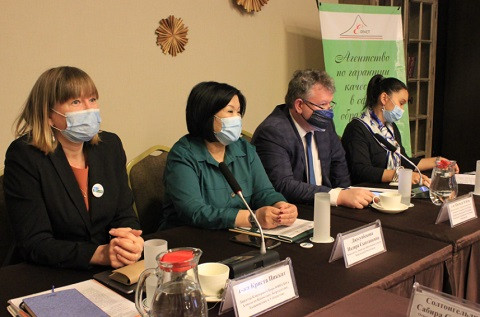 От понимания к действиям: учителя и учащиеся школ Кыргызстана уверенно реализуют Образование в интересах Устойчивого Развития 2021-03-21 “We must act! Act and protect our nature! " calls on one of the schoolgirls of the pilot schools which tested online materials within the framework of the UNESCO project on the Development of online curriculum for mainstreaming cross-cutting competencies for sustainable development in Kyrgyzstan. And this is exactly what the learning materials for 21st century skills development are aimed at, when we not only know about the challenges of our times, are able to empathize, but also take an active position and do something to prevent or solve pressing problems of our society locally and globally.45 teachers from 15 pilot schools were trained by a team of national trainers on the concept of Education for Sustainable Development (ESD) in 2020 and were able to conduct 124 lessons with their 5-6 graders during the first half of the 2020-2021 academic year. And this is only part of the achievements of the joint hard work of the team, presented by the Agency for Quality Assurance in Education "EdNet" during the wrap-up meeting on the project "Development of online curriculum for mainstreaming cross-cutting competencies for sustainable development in Kyrgyzstan" on March 17, 2021 at the Garden Hotel in Bishkek.The wrap-up meeting was opened with welcoming remarks by the Deputy Minister of Education and Science - Ms. Nadira Syntashevna Dzhusupbekova, Director of the UNESCO Cluster Office for Kazakhstan, Kyrgyzstan, Tajikistan and Uzbekistan (UNESCO Almaty) Ms. Krista Pikkat and H.E. Mr Heiti Mäemees, Ambassador of the Republic of Estonia to the Republic of Kazakhstan, the Kyrgyz Republic, the Republic of Tajikistan, the Republic of Turkmenistan. The participants noted the importance of the project not only for equipping students with the 21st century skills that are critical for the achievement of the Sustainable Development Goals, but also the importance of disseminating the project experience and its materials throughout the country in preparation for PISA-2025. The beneficiaries of the project -trainers, teachers and school directors- confirmed the uniqueness and usefulness of the training materials and expressed their hope for the further systematic use of online modules in schools of the republic.The meeting provided an opportunity to present the results of more than two years of work both on the part of the organizers, trainers and experts of the project, but also from the perspective of teachers and students. It was especially gratifying to see the heads of schools from Naryn, Osh, Chui oblast and Bishkek in person and present certificates for the advanced training course in ESD, “I Promote ESD2030” badges to all teachers and students and laptops for 6 teachers, who won the competition for the best practices in ESD!Another important result of the project was the professional teacher training course that was developed specifically for the Republican Institute for Teacher Training. This will be used to train teachers on the implementation of education for sustainable development (ESD) throughout the country.Background: The project "Development of online curriculum for mainstreaming cross-cutting competencies for sustainable development in Kyrgyzstan" has been implemented by UNESCO Almaty since 2019 with the financial support of Estonia in cooperation with the Ministry of Education and Science of the Kyrgyz Republic. The first phase of the project (2019) was implemented jointly with the Center for Social Integration Policy. The second phase of the project (2020-2021) was implemented by the Agency for Quality Assurance in Education "EdNet". In addition, the key partners of the project were the Republican Teacher Training Institute under the Ministry of Education and Science of the Kyrgyz Republic and the Mahatma Gandhi Institute for Education for Peace and Sustainable Development (India), the Laboratory for Innovation Projects (Belarus), PF "Mondo" (Estonia), as well as experts from Lithuania and Russia.Following themes were covered with online modules developed:• Demography and Migration• Healthy lifestyle• Global Citizenship• Media and Information Literacy• Ecology URL:http://en.unesco.kz/from-comprehension-to-action-teachers-and-students-in-kyrgyzstan-confidently-implement
 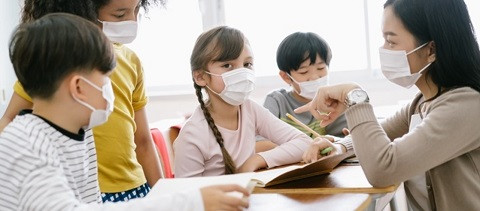 One year into COVID-19 education disruption: Where do we stand? 2021-03-21 Exactly a year ago, the COVID-19 pandemic brought learning to a screeching halt worldwide, creating the most severe global education disruption in history. At the peak of the crisis, UNESCO data showed that over 1.6 billion learners in more than 190 countries were out of school. Over 100 million teachers and school personnel were impacted by the sudden closures of learning institutions. Today, two-thirds of the world’s student population is still affected by full or partial school closures. In 29 countries, schools remain fully closed. The pandemic has exposed and deepened pre-existing education inequalities that were never adequately addressed. As always, it has impacted vulnerable and marginalized learners the hardest. The economic downturn of the crisis is now adding pressure on national education budgets and aid at a time when increased funding is needed for education recovery. Despite critical additional funding needs, two-thirds of low- and lower-middle-income countries have cut their public education budgets since the start of the pandemic, according to a recent joint report by the World Bank and UNESCO. In October last year, UNESCO convened a Global Education Meeting where world leaders and partners expressed their commitments to protect education financing and safeguard learning from the devastating impact of the pandemic. From the onset of the crisis, UNESCO and its more than 160 partners through the Global Education Coalition have been mobilized around three central themes - connectivity, gender and teachers - to ensure that learning never stops during this unprecedented crisis. From keeping schools open to bridging the digital divide – from addressing dropouts and learning losses to calling for more education funding - UNESCO has been leading the way through intensive partnerships and innovations during the past year to prevent a “generational catastrophe” and build more resilient and inclusive education systems. Keeping schools open and supporting teachers Protecting the physical and mental health of students, teachers and school personnel is essential. School closures have brought a major disruption in the lives of children and youth, affecting their socio-emotional development and well-being, as well as their social life and relationships. As two-thirds of the world’s student population is still affected by full or partial school closures, the pandemic is taking a rising toll on their mental health. To enable a safe return to school, the world’s 100 million teachers and educators must be given priority in vaccination campaigns. The pandemic directly affected 63 million primary and secondary teachers. During school closures, they were required to conduct distance teaching with no time to prepare and often with limited guidance and resources. Teachers had to modify curricula and adapt lesson plans to carry on with instruction using high, low and no-tech solutions. They need continued training on remote teaching, available technologies and alternative flexible pedagogies for online, blended and offline learning during future school closures. School dropout and learning loss Lost learning is no longer being counted in days and weeks, but in months. Two-thirds of an academic year has been lost on average worldwide due to full or partial closures. The longer schools stay closed, the higher the risk of children and youth losing out on their future. 24 million children and youth are at risk of dropping out. Teachers require training and support on adjusting curricula and assessment methods to measure and mitigate learning losses and prevent vulnerable students from dropping out. School closures also threaten decades of progress made towards gender equality, placing many girls at heightened exposure to gender-based violence, sexual exploitation, adolescent pregnancy and forced marriage. The closures also cut access to vital services for protection, nutrition, health and well-being. UNESCO and partners launched a campaign last year to ensure that every girl is able to learn while schools are closed and return to the classroom when schools safely reopen. The immediate preoccupations to address include learning loss, how to assess it and offer remedial action. More must be done to counter the exacerbation of existing learning gaps and inequalities, the emergence of new ones, and the risk of increased dropout. The joint Framework for reopening schools by UNESCO, UNICEF, the World Bank and World Food Programme (WFP) serves as an important reference on this issue. Digital transformation and the future of education Approximately half of the world’s population (some 3.6 billion people) still lack an internet connection. This means that at least 463 million or nearly one-third of students around the globe cannot access remote learning, mainly due to a lack of online learning policies or lack of equipment needed to connect from home. Most students do not have the appropriate connectivity, device and digital skills required to find and use educational content dependent on technology. According to UN estimates, nearly 500 million students from pre-primary to upper-secondary school did not have any access to any remote learning—three quarters of those lived in the poorest households or rural areas. This enormous digital divide shows how connectivity has become a key factor to guarantee the right to education. Digital skills and learning must be incorporated into education systems in order address the injustice of the digital divide. This crucial issue is among many currently being debated through UNESCO’s Futures of Education initiative, a global conversation to reimagine how knowledge and learning can shape the future of humanity and the planet. The report is due to come out in November 2021. UNESCO will convene a high-level ministerial event on 29 March to take stock of lessons learnt, the greatest risks facing education today and strategies to leave no learner behind. It will show how the Global Education Coalition has mobilized partners to support learners, teachers and policy-makers with new tools and knowledge. Photo: zEdward_Indy/Shutterstock.com URL:https://en.unesco.org/news/one-year-covid-19-education-disruption-where-do-we-stand
 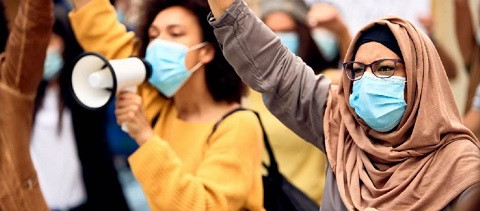 Equality, Diversity and Inclusion - Caribbean youth to lead the fight against racism 2021-03-21 Join the Caribbean #FightRacism Action Week against hate speech, racial discrimination, and exclusion from March 21 - 26 2021! On March 21 in 1960, police opened fire and killed 69 people at a peaceful demonstration in Sharpeville, South Africa, against the apartheid "pass laws". Six years later, on 26 October 1966, the United Nations General Assembly proclaimed that 21 March was the International Day for the Elimination of Racial Discrimination. Promoting a culture of non-violence, resilience and peace through education for mutual understanding and respect is central to UNESCO's work to eliminate all forms of discrimination, including racial discrimination in order to build peace in people's minds. UNESCO in the Caribbean is committed to promoting mutual understanding and intercultural dialogue in a culturally diverse and pluralistic Caribbean sub-region. As the novel coronavirus began to spread in early 2020, so did the stigma against certain ethnic groups leading to hate speech, violence and discrimination against certain ethnic groups and nationalities. In this light, COVID-19 has unmasked vectors of discrimination that our contemporary world is afflicted with and magnified inequalities. Young people from different ethnic backgrounds have therefore faced and continue to face multiple types of discrimination, which further exacerbates the negative impact of the pandemic on the youth population, for example. It is important to examine the impact of the COVID-19 pandemic from an intersectional perspective.-- Carla Moore, Adjunct Lecturer, University of the West Indies In a conversation with UNESCO published in the Jamaica Gleaner, Carla Moore, adjunct lecturer at the Institute for Gender and Development Studies, Mona Unit, at The University of the West Indies, explained why it is important to address intersectionality in the context of exclusion and discrimination in Jamaica, calling for gender equality and meaningful youth participation. Moore underscored that not all the population has been impacted in the same way due to COVID-19. Understanding this phenomenon in the Jamaican context, she argues, requires a different set of lenses such as gender, ethnic origin or class affiliation. Read the full Interview in the UN 75 Magazine here. Youth standing up against racism Against this backdrop, the Social and Human Sciences Sector of the UNESCO Cluster Office for the Caribbean joins the United Nations Human Rights Office of the High Commissioner OCHCR in the fight against racial prejudice under the slogan “Youth standing up against racism”.As part of this global call to youth, UNESCO in the Caribbean is declaring the week of 21-26 March as #FightRacism Action Week to combat racism and all forms of discrimination, promote inclusion, equality and diversity among Caribbean youth. UNESCO is calling on youth to join this week of action as part of the #iRespectU campaign, Equality, Diversity and Inclusion. During this action week UNESCO dedicates its social media channels and the campaign to young people to express their views and speak out against all forms of discrimination, prejudice and exclusion . Folllow @unesco_caribbean to get inspired by the positive actions of young changemakers in the English and Dutch- speaking Caribbean that will be highlighted via an Instagram takeover. By commemorating this International Day, UNESCO reiterates its commitment to enhancing peacebuilding, promoting mutual understanding, and fostering inclusion in Caribbean SIDS, especially with the context of the COVID-19 crisis. Join the #iRespectU campaign to make your voice heard! Download the Social Media templates and join the UNESCO #FightRacism Action Week! Tag your post with #FightRacism and help shape the conversation on Equality, Diversity and Inclusion in Social Media! URL:https://en.unesco.org/news/equality-diversity-and-inclusion-caribbean-youth-lead-fight-against-racism
 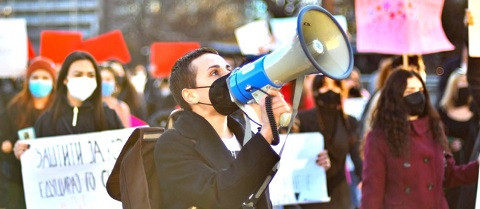 Spotlight on gender equity during and beyond the COVID-19 response 2021-03-21 International Women’s Day, held last 8 March, offered a chance for us to reflect on progress toward achieving gender equality across all areas of development from poverty, health and well-being to decent work and economic growth. Even more, it provided an opportunity to consider how these areas intersect, such as how gender equality in learning and skills development is critical not just for achieving parity in educational outcomes but also for equality in economic opportunities for all young people, especially girls. This was the focus of UNESCO’s recent publication of Synergies for Youth: A Situation Analysis of the intersection of decent work, quality education and gender equality in South-East Europe, and in 2021, the significance of these intersections is perhaps clearer than ever before. More than just shedding a light on existing inequalities, the pandemic has exacerbated them, leaving many young people, especially the most marginalized, out-of-learning and increasing their risk of not returning to school. Especially many girls and young women have unequal access to technology, fewer opportunities than young men to develop digital skills, and lower levels of confidence and perceived competence than boys, as they continue to face prejudice and social norms. The immediate consequences of this gendered, digital divide are significant for girls and young women, as countries have relied heavily on technology to ensure learning continuity in the context of COVID-19. In the long run too, however, marginalized youth and especially marginalized young women will fall even farther behind in learning, labour market access and career opportunities unless priority is given both to closing the digital divide and building young people’s skills. In addition to the potential long-term impact on learning outcomes and earnings, young people, especially young women, are significantly affected by job losses, as the pandemic has had a disproportionate impact on majority-female sectors. Domestic workers, who are primarily women, for example, have been heavily impacted in the region. Many of them are young people and migrants, leaving them without jobs, social security, or the ability to return home. Women who are self-employed have been the most affected. At the same time, prolonged school closures, as well as new, pandemic-related working arrangements also mean that girls and young women are facing increased levels of unpaid care work and exposure to gender-based violence, sexual exploitation and heightened risk of child marriage and early and unintended pregnancy. These risks come alongside a reduction or pause in service delivery, such as for people with disabilities, a decreased ability to seek help, and difficulties in accessing essential health services, including sexual and reproductive health services and gynaecological and obstetric care. While tertiary enrolment may show signs of improvement, the most marginalized young people are not seeing the benefits of these increases. Factors such as socioeconomic status continue to determine participation. Women face discrimination, bias and persistent social norms and remain underrepresented in fields such as science, technology, engineering, and math (STEM), especially ICT. Women participate in the labour force at lower rates than men but are overrepresented among unemployed youth. Young women especially are under-represented among those who are self-employed, highlighting challenges such as lack of skills, poor working conditions in small and medium-sized enterprises, and insufficient policies to support entrepreneurship. The importance of not only acknowledging these intersections among gender equality, education, decent work, and economic growth but also leveraging this interconnectedness to accelerate progress has perhaps never been clearer than in the context of the COVID-19 pandemic. Interventions will be necessary that not only address gaps that existed prior to the pandemic but also respond to the immediate impact and mitigate long-term effects, especially for the most marginalized, including young women. Gender inequality intersects with a broad range of other challenges facing girls and young women in South-East Europe and around the world. The multidimensional manifestation of this exclusion demands cross-sectoral and integrated efforts to bridge these gaps and improve the lives and prospects of not just girls and women but “of everyone, everywhere”. Let us reflect on how COVID-19 has shed light on both the criticality of integrated policies and interventions in realizing the Sustainable Development Goals and the consequences of insufficient action for women and girls. But let us also not overlook the unique opportunity it has presented us to improve safeguards for young people, especially young women, and to fast-track progress toward gender equality now and for the future. This blog was written by Sarah Fuller in memory of Igor Kitaev, with warm gratitude for his mentorship over the past years. Links International Women's Day Synergies for youth: a situation analysis of the intersection of decent work, quality education and gender equality in South-East Europe Sarah Fuller LinkedIn URL:https://en.unesco.org/news/spotlight-gender-equity-during-and-beyond-covid-19-response
 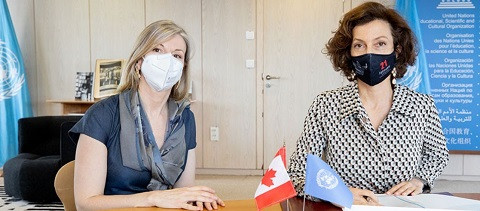 UNESCO and Canada sign grant arrangement to strengthen genocide prevention globally through education and intercultural dialogue 2021-03-19 Countries around the world are still shaped by their violent histories, which put them at higher risk of future conflict and genocide. Highlighting the importance of education and dialogue, Canada is supporting UNESCO with a grant of 2 million Canadian dollars to strengthen the capacities of education stakeholders, dialogue practitioners and policymakers worldwide to address violent pasts and to prevent mass atrocities in the future. The programme ‘Preventing genocide through education – coming to terms with violent pasts’ is being implemented by UNESCO’s Education Sector in cooperation with the United States Holocaust Memorial Museum. In addition to guidance and training on Holocaust and genocide education, the project will include research and advocacy on intercultural dialogue, implemented by UNESCO’s Social and Human Sciences Sector. The grant arrangement was signed by UNESCO Director-General Audrey Azoulay in presence of the Canadian Ambassador and Permanent Delegate to UNESCO Natasha Cayer in a ceremony on 18 March. At the ceremony, Director-General Azoulay stressed the importance of education in coming to terms with violent pasts, and thanked Ambassador Cayer for Canada’s generous support. ‘Learning about violent pasts is more than acquiring historical knowledge. It is an effort towards building more secure and peaceful societies, as understanding the causes and consequences of targeted discrimination, persecution and mass atrocities is a fundamental step towards preventing them from reoccurring. It is a long-term investment towards the realization of human rights and genocide prevention. Thanks to Canada’s support, we will be able to build on past successes and expand our work in this area globally, together with our partners at the United States Holocaust Memorial Museum.” Ambassador Cayer said: ‘Our youth must understand the past in order to help prevent atrocities from happening again in the future. Canada is firmly committed to the protection of human rights and the prevention of genocides, and believes the learning from history helps strengthen critical thinking and inoculates people against disinformation and the conspiracy theories used to dehumanize other people.’ The legacies of genocide and related trauma persist over generations. If left unaddressed, they can undermine social cohesion, fuel hate and incite violence. Education can be a powerful tool to raise awareness about these dynamics and favour dialogue, critical thinking, self-reflection and historical literacy, supporting conflict-transformation processes while also strengthening the resilience of learners to contemporary forms of discrimination and hate speech. Holocaust education can be an important entry point. Learning about the history of the Holocaust can help to sensitize learners to the causes and consequences of genocide, prompt reflections about human right violations in their own countries’ histories and address related vulnerabilities. With the support of Canada, UNESCO and the United States Holocaust Memorial Museum will launch a multi-year international capacity-building programme to present countries in all regions of the world with sustainable, context-relevant educational programmes in support of addressing violent pasts and preventing genocide that favour intercultural dialogue and include gender responsive measures. At its core, the programme plans a one-week international training workshop for ten country teams, which will be supported in the development and implementation of their own educational initiatives assisted also by the development of a policy guide and e-learning course on addressing violent pasts through education. Furthermore, a pioneering research effort into how processes of intercultural dialogue can be rendered more effective for peacebuilding objectives, undertaken by UNESCO’s Social and Human Sciences Sector and the Institute for Economics and Peace, will provide crosscutting guidance to the project’s activities. The project builds on two international capacity-building programmes in 2015 and 2017 that were also supported by Canada. In the ‘International Conference for Education and the Holocaust’ (ICEH), UNESCO and the U.S. Holocaust Memorial Museum trained education stakeholders from 17 countries worldwide. The programmes gave rise to 16 country-specific educational initiatives that collectively reached over 4,600 learners and educators. The forthcoming training programme will bring together participants from countries previously involved as well as those that have not yet participated. UNESCO promotes education about the Holocaust and genocide as part of the Organization’s programme on Global Citizenship Education (GCED), a priority of the Education 2030 Agenda. In this context, UNESCO supports education stakeholders to help learners to become critical thinkers, responsible and active global citizens who value human dignity and respect for all, and to reject antisemitism, racism and other forms of prejudice that can lead to violence and genocide. Learn more Learn more about UNESCO’s work to make dialogue processes more effective for peace, cohesion, and resilience here. URL:https://en.unesco.org/news/unesco-and-canada-sign-grant-arrangement-strengthen-genocide-prevention-globally-through