
News
Catch up on what’s happening in the world of global citizenship education.
1,668 results found
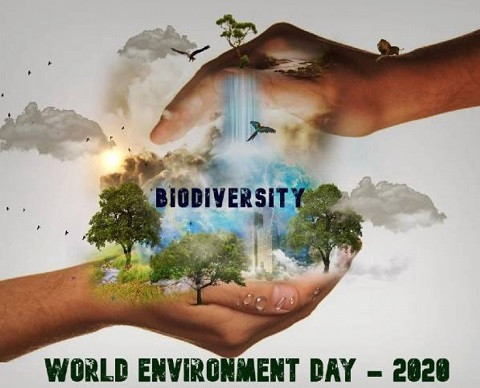 Всемирный день окружающей среды: экологическое образование и повышение осведомленности 2020-07-03 Every year on June 5, World Environment Day is celebrated around the world. Issues of nature conservation have been the most relevant for several decades. This year, this day is dedicated to an important topic - the conservation of biodiversity.The CAREC branch in Uzbekistan took part in several events dedicated to this day and organized by national partners. URL:https://carececo.org/main/news/vsemirnyy-den-okruzhayushchey-sredy-ekologicheskoe-obrazovanie-i-povyshenie-osvedomlennosti/
 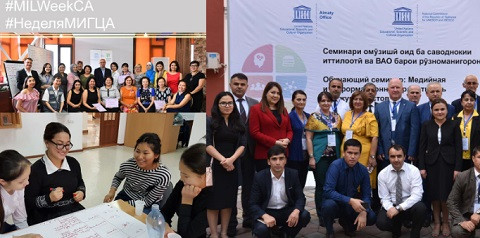 Register for Media and Information Literacy Week in Central Asia 2020-07-03 UNESCO Almaty will support capacity building initiatives of Central Asian institutions within Global Media and Information Literacy week. Media and Information Literacy can help to advance various Sustainable Development Goals (SDGs), such as SDGs 11, 16 and 17, and targets 4.7, 4.c and 5.b, by raising citizens’ critical awareness of information shared and received, how they communicate, their fundamental freedoms and critical thinking that makes societies democratic, peaceful, inclusive, socially cohesive, just, safe and resilient.Media and Information Literacy initiatives commemorates the Global MIL Week celebration led by UNESCO and its partners 26-31 October 2020.Please share how you will celebrate the week by filling out the form available here in Russian. Related link URL:http://en.unesco.kz/central-asia-media-and-information-literacy-week
  Towards resilient education systems for the future – A new joint study launched by UNESCO and IEA 2020-07-03 The International Association for the Evaluation of Educational Achievement (IEA) and UNESCO are launching a study, in partnership with the European Commission, to draw a more comprehensive picture of COVID-19’s impact on global education, entitled “Responses to Educational Disruption Survey (REDS)”. REDS is part of the collective effort under the Global Education Coalition launched by UNESCO that seeks to facilitate inclusive learning opportunities for children and youth in the context of educational disruption and to establish approaches to develop more open and resilient education systems for the future. The pandemic has affected students’ learning efficacy on a global scale never encountered before. Education systems have varied in their responses in this context. Some have introduced home schooling programs and remote learning, offering free online resources, while others are delivering paper-based assignments to students’ homes or using public TV and radio broadcasting channels. What is missing is the first-hand information from schools, collected in a systematic, efficient and scientific manner, that is needed for evaluating the extent to which teaching and learning have been challenged, continued, and adjusted as a result of the current crisis. REDS intends to bridge this information gap by collecting internationally comparable data from governments, school principals, teachers and students, on how they are prepared for distance learning in times of school closures, as well as during a subsequent re-opening phase, and what measures were implemented to provide all students with the opportunity to continue learning. The study seeks to answer the following overarching question: How were teaching and learning affected by the disruptions and how was this mitigated by the implemented measures, across and within countries? Aside from providing insights on the impact of the teaching and learning disruption, the study aims to investigate the contextual factors, issues and implemented measures that may influence the success of distance learning for students across countries. The study will target all different educational levels and will focus on topics around the preparedness for distance learning, available IT and educational resources, perceptions on the success of strategies, student engagement, as well as around inequalities in educational learning opportunities during the disruptions. Additionally, issues concerned with students’ and teachers’ wellbeing will be explored. REDS is designed to serve as a valuable source of information that will inform the policy and practice for more resilient education systems for the future, also in their pursuit of the Sustainable Development Goal 4 on ensuring inclusive and equitable quality education for all, in particular targets 4.1 and 4.4. The insights may also offer an opportunity to rethink the overall purpose, role, content and delivery of education in the future. For this reason, the study also aims to identify sustainable, transformational concepts that emerged from the crisis and may serve as good practice when schools re-open. How to get involved? All interested countries are invited to participate in REDS. We understand the immense pressure currently facing countries, and to encourage wider country participation, we are seeking funds from donor organizations to support countries with participation costs associated to REDS, especially for low-income countries. For the full study proposal or further information please reach out to Huong Le Thu(link sends e-mail) or Dr Andrea Netten(link sends e-mail). Download leaflet and brochure URL:https://en.unesco.org/news/towards-resilient-education-systems-future-new-joint-study-launched-unesco-and-iea
  Youth engagement is key to counter the rise of antisemitism spurred on by COVID-19 2020-06-30 Young people may have been especially susceptible to online hate speech, antisemitism and other forms of prejudice during the pandemic but also held the key to shaping a better post-COVID-19 world, a UNESCO webinar heard. The webinar, jointly organized by UNESCO's Education and Social and Human Sciences sectors on 23 June 2020, was held on the theme of antisemitism which has seen a rise during the COVID-19 pandemic. It is the twelfth in the international webinar series “Inclusion in the time of COVID-19”, which focuses on addressing racism, discrimination and exclusion during the pandemic. Speakers included Ahmed Shaheed, UN Special Rapporteur on Freedom of Religion or Belief (Maldives), Günther Jikeli, Erna B. Rosenfeld Professor, Institute for the Study of Contemporary Antisemitism, Indiana University, Bloomington (USA), Vanessa Hites, Jewish Diplomatic Corps of the World Jewish Congress (Chile), and Pamela Malewicz, Undersecretary for Human Rights and Cultural Pluralism, City of Buenos Aires (Argentina). The ongoing global pandemic has spurred a fast-spreading epidemic of hate speech and disinformation including conspiracy theories with a clear antisemitic motive. Data from the World Jewish Congress shows that in the first months of the pandemic, there was a 30% increase in antisemitic content on social media, a figure which reflects a general trend of growing antisemitism worldwide and related hate crimes worldwide. Günther Jikeli said the uptick in antisemitism was not a coincidence. "Antisemitism is often a dormant feeling or way of thinking. Situations of crisis and uncertainty, like the current one, are especially prone to trigger antisemitism, blaming Jews for what is happening,” he said. He said recent violent extremist attacks with an antisemitic motive in Toulouse, Pittsburgh and Halle revealed the close link between online hate speech and offline violence. “This may include praise and positive reflections among extremist circles, which may lead to more violent attacks against Jews,” he said. Rise in conspiracy theories Ahmed Shaheed, who in 2019 published the first ever UN report on antisemitism, Combatting Antisemitism to Eliminate Discrimination and Intolerance Based on Religion or Belief, said, in addition to the rise of antisemitism, the pandemic had seen a rise in both scapegoating and the spreading of conspiracy theories. Inequalities and rates of infection and death had been exacerbated among several minority communities. “There have been numerous reports of violence and discrimination (…) and other forms of disparate impact on minorities, including on people of Asian descent, refugees, asylum seekers, migrants, and religious minorities as well as other groups exposed to stigma and discrimination, such as LGBTQ people. This includes an increased proliferation of conspiracy theories and scapegoating, connecting the COVID-19 pandemic with antisemitic, anti-Muslim, anti-Christian, anti-Roma hatred and so on.” Conspiracy theories lie at the heart of antisemitism, defined by the International Holocaust Remembrance Alliance (IHRA) as “a certain perception of Jews, which may be expressed as hatred towards Jews.” Contemporary forms of antisemitism such as Holocaust denial and distortion and Israel-related antisemitism, when tensions in the Middle East are used as a pretext to attack Jews collectively, falsely suggest that “Jews” seek power, control or personal profit through an alleged secret plot. Lawyer and human rights activist Vanessa Hites underlined the need for clear responses to antisemitism and other forms of hate speech online and offline. “I don’t think the pandemic has created a new form of antisemitism, but has rather revived existing prejudice and old stereotypes”, she said. She said the pandemic had led to more people spending more time online with greater exposure to hateful discourses. The anonymity of the internet emboldened some while the lack of media and information literacy made young people especially susceptible to disinformation and conspiracy theories. “It is important that young people know their rights online and learn to be responsible for their online behaviour and related actions,” she said. Addressing past and present forms of antisemitism Pamela Malewicz said her city of Buenos Aires had taken a holistic approach, working closely with cultural institutions and museums, such as the Anne Frank House and Holocaust Museum in Buenos Aires, civil society, Jewish communities as well as youth groups to address past and present forms of antisemitism. She emphasized that the shared experience of the pandemic was an opportunity to build empathy and understanding beyond social groups and between persons of different beliefs and identities. Opportunities for change were also highlighted by Vanessa Hites: “Young people have a real opportunity to shape the post-COVID world. Not in a cowardly way, hidden behind screens or disguised by large crowds, but by taking an active role, speaking up and engaging in dialogue with more senior decision-makers.” Ahmed Shaheed reminded the webinar that the recommendations of the 2019 report included strengthening legal protection of Jewish communities, close monitoring of hate speech and hate crimes, victim support, as well as strengthening efforts to address antisemitism in and through education. UNESCO promotes activities to address and prevent contemporary antisemitism within the framework of its programmes on the prevention of violent extremism and Global citizenship education (GCED) which seek to build the resilience of young people to extremist ideologies and prejudice. In the context, UNESCO has published policy guidelines on “Addressing anti-Semitism through education” with the OSCE Office for Democratic Institutions and Human Rights (ODIHR) in 2018 and consequently trained policy-makers from over 60 countries worldwide. For more information, please visit UNESCO’s dedicated website. URL:https://en.unesco.org/news/youth-engagement-key-counter-rise-antisemitism-spurred-covid-19
  Global Citizenship Education and the response to COVID-19 2020-06-30 There are currently two lines of thought about the role of pandemic related education, most importantly our response to the new learning requirements that COVID-19 is posing for individuals, families and communities. On one hand, we have the immediate and very obvious ways in which education could help us to cope with the new situation that COVID-19 presents. For example, we have learned a lot about how to prevent infection in everyday life and have adapted new behaviors. This Includes concepts we have all become increasingly familiar with; such as physical distancing, hand washing, face covering, staying indoors and even working from home where possible. Education has also played a role in teaching us how to better use digital technology, as it enables us to continue learning, schooling, finding a job or working from home. These are some of the immediate and practical effects of education that we have witnessed in the recent months. At the same time, we also need to think about education in the context of other broader, more sustainable education approaches like GCE. Here, there is even more to consider as the role of education is nuanced and of utmost importance. Civic education, for example, can raise awareness about the importance of upholding human rights during the pandemic. This includes awareness towards the ways in which we participate in democratic societies and decision making. Also central is sharing information and raising awareness about the global issues of sustainable development, anthropogenic climate change and environmental degradation that could cause or encourage the spread of new diseases (ie: large-scale deforestation, habitat degradation and fragmentation, agriculture intensification, trade in species and plants, eating habits etc). In these ways, we have identified both practical and theoretical behaviors and skills that education can bring to the public during this time. I would also argue that ultimately, civic education has a duty to raising awareness and taking a realistic approach to what the new measures and new habits mean in the global context. With that in mind, here are a few points that we need to raise awareness about during this time. Physical distancing is a luxury for the few Physical distancing is not possible for many communities and countries, especially in the Global South, but also in remote areas, cities and neighborhoods in the North. It is imperative to note that when preventive measures become social norms that are reluctant to any contextualization or critical reflection, physical distancing can easily lead to social distancing and consequently increase existing gaps in the society or create new ones. Physical distancing, avoiding gathering and working from home are luxuries that millions cannot afford, so calling for such might be cynical. Constricting access to education and employment opportunities For populations that make their daily living working outside, not adhering to physical distancing rules is a matter of survival rather than irresponsible behaviour. Many vulnerable groups have a very high risk of unemployment, as well as threats to their livelihoods (especially for farmers, small and micro enterprises...). Working from home is a kind of ’luxury’ available only for a small number of privileged people and a few countries. Increase of digital and ICT use in education can easily lead to 1) an increased digital gap, and 2) further exclusion and reduced access to education and economic opportunity for many individuals and communities. There are already some estimations that economic consequences will lead to increased inequalities, especially within the countries, since the poorest one will likely be worst hit by pandemic. Increasing threat to democracy The new social norms and economic measures that arise as a response to the pandemic could easily serve to justify exclusion, unnecessary distancing and increased social inequalities. The experiences and analysis up until this point show that girls and women are particularly affected and exposed to exclusion, poverty and violence in the new situation. Many developing countries face additional challenges with increased threats to democracy and human rights – their ways of action and engagement are limited, and authoritarian regimes use the opportunity for further cuts in civic rights, freedom of speech, participation of citizens etc. Vulnerable and marginalized communities, especially in high density, socio-economically unequal and predominantly migrant areas, can be additionally affected by the new measures; the social distance and stigmatization can increase, as well as harassment based on political, racial or religious biases. Further on, access to education and learning opportunities (as well as access to other social services), have become jeopardized especially for vulnerable groups. Taking the Global context into account Ultimately, Global Citizenship Education cannot simply advocate for the new approaches and measures that are suitable for developed countries and communities, but needs to take into account the global context, and what these measures / new ways of behavior / new approaches to learning mean for other regions. This is especially true for vulnerable communities – not only in developing countries, but also for marginalized and excluded individuals and communities in developed European countries. If we are to ignore this, the pandemic could leave many people behind, even after its health consequences are over. We are not in the same boat The recent tweet by Damian Barr “We are not all in the same boat. We are all in the same storm” has been doing the rounds of social media, and his explanation that some are in yachts and ‘some have just the one oar.’ We are in the same storm (corona-storm), but we are hit in a very different way and the consequences make a huge difference. Therefore, GCE that helps us to think about ‘new normal’ must also re-think and critically address the problems of ‘old normal’ - uneven global development, power structures, and socio-economic disparities that lead to increased gaps, widen inequalities and injustice, with every new crises. About the Author:Katarina Popovic is Secretary General at the International Council for Adult Education (ICAE) URL:https://www.bridge47.org/blog/06/2020/global-citizenship-education-and-response-covid-19
 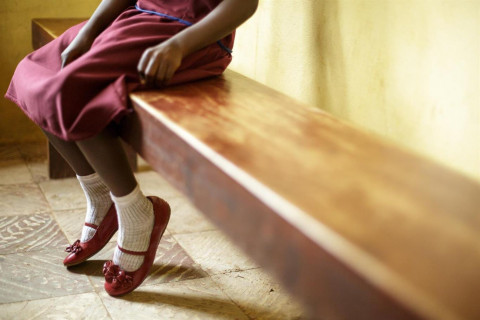 Countries failing to prevent violence against children, agencies warn 2020-06-30 Global status report on preventing violence against children calls for more government action and warns of ‘dramatic impact’ of COVID-19 Half of the world’s children, or approximately 1 billion children each year are affected by physical, sexual or psychological violence, suffering injuries, disabilities and death, because countries have failed to follow established strategies to protect them. This is according to a new report published today by the World Health Organization (WHO), UNICEF, UNESCO, the Special Representative of the United Nations Secretary-General on Violence against Children and the End Violence Partnership. “There is never any excuse for violence against children," said Dr Tedros Adhanom Ghebreyesus, WHO Director-General. “We have evidence-based tools to prevent it, which we urge all countries to implement. Protecting the health and well-being of children is central to protecting our collective health and well-being, now and for the future.” The report – Global Status Report on Preventing Violence Against Children 2020 – is the first of its kind, charting progress in 155 countries against the “INSPIRE” framework, a set of seven strategies for preventing and responding to violence against children. The report signals a clear need in all countries to scale up efforts to implement them. While nearly all countries (88%) have key laws in place to protect children against violence, less than half of countries (47%) said these were being strongly enforced. The report includes the first ever global homicide estimates specifically for children under 18 years of age – previous estimates were based on data that included 18 to 19-year olds. It finds that, in 2017, around 40,000 children were victims of homicide. “Violence against children has always been pervasive, and now things could be getting much worse,” said UNICEF Executive Director Henrietta Fore. “Lockdowns, school closures and movement restrictions have left far too many children stuck with their abusers, without the safe space that school would normally offer. It is urgent to scale up efforts to protect children during these times and beyond, including by designating social service workers as essential and strengthening child helplines.” Progress is generally uneven Of the INSPIRE strategies, only access to schools through enrollment showed the most progress with 54% of countries reporting that a sufficient number of children in need were being reached in this way. Between 32% to 37% of countries considered that victims of violence could access support services, while 26% of countries provided programmes on parent and caregiver support; 21% of countries had programmes to change harmful norms; and 15% of countries had modifications to provide safe physical environments for children. Although a majority of countries (83%) have national data on violence against children, only 21% used these to set baselines and national targets to prevent and respond to violence against children. About 80% of countries have national plans of action and policies but only one-fifth have plans that are fully funded or have measurable targets. A lack of funding combined with inadequate professional capacity are likely contributing factors and a reason why implementation has been slow. The COVID-19 response and its impact on children “During the COVID-19 pandemic, and the related school closures, we have seen a rise in violence and hate online – and this includes bullying. Now, as schools begin to re-open, children are expressing their fears about going back to school,” said Audrey Azoulay, UNESCO Director-General. “It is our collective responsibility to ensure that schools are safe environments for all children. We need to think and act collectively to stop violence at school and in our societies at large.” Stay-at-home measures including school closures have limited the usual sources of support for families and individuals such as friends, extended family or professionals. This further erodes victims’ ability to successfully cope with crises and the new routines of daily life. Spikes in calls to helplines for child abuse and intimate partner violence have been observed. And while online communities have become central to maintain many children’s learning, support and play, an increase in harmful online behaviours including cyberbullying, risky online behavior and sexual exploitation have been identified. “Whilst this report was being finalized, confinement measures and the disrupted provision of already limited child protection services exacerbated the vulnerability of children to various forms of violence,” said Najat Maalla M’jid, Special Representative of the United Nations Secretary-General on Violence against Children. “To respond to this crisis a unified, child rights and multisectoral framework for action for children is critical requiring a strong mobilization of governments, bilateral/multilateral donors, civil society, private sector and children, whose views must be heard and truly taken into account to ensure duly protection and the possibility for all to thrive and reach their full potential.” Accelerating action to protect children WHO and its partners will continue to work with countries to fully implement the INSPIRE strategies by enhancing coordination, developing and implementing national action plans, prioritizing data collection, and strengthening legislative frameworks. Global action is needed to ensure that the necessary financial and technical support is available to all countries. Monitoring and evaluation are crucial to determine the extent to which these prevention efforts are effectively delivered to all who need them. “Ending violence against children is the right thing to do, a smart investment to make, and it’s possible. It is time to fully fund comprehensive national action plans that will keep children safe at home, at school, online and in their communities,” said Dr Howard Taylor, End Violence Partnership. “We can and must create a world where every child can thrive free from violence and become a new generation of adults to experience healthy and prosperous lives.” Editor’s note: The data for the report was compiled through a survey administered between 2018 and 2019 with responses from over 1000 decision-makers from 155 countries. The INSPIRE strategies launched in 2016 call for the implementation and enforcement of laws; changing norms and values to make violence unacceptable; creating safe physical environments for children; providing support to parent and caregivers; strengthening income and economic security and stability; improving response and support services for victims; and providing children with education and life skills. Related links: To download the report (in English only) and executive summary (in English, French, Russian and Spanish), go to: https://who.canto.global/b/SSHOR and use password: 490759. To watch the launch event taking place on Thursday, 18 June from 15:00 to 16:30 CEST, please register at https://bit.ly/2ApZXKa. After registering, you will receive a confirmation email with details on how to access the event. Interpretation will be provided in the 6 UN languages. URL:https://www.who.int/news-room/detail/18-06-2020-countries-failing-to-prevent-violence-against-children-agencies-warn
 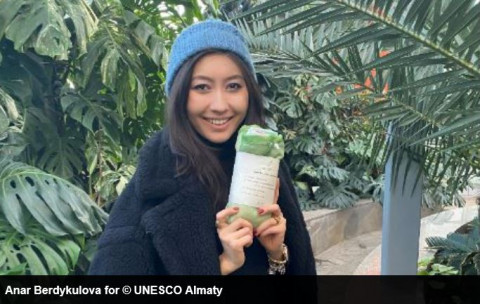 #WED2020: Даже самые маленькие изменения могут иметь большое значение 2020-06-29 A story about young environmentalist from Kazakhstan, Ms Anar Berdykulova, dedicated to celebration of the World Environment Day.The air we breathe, the soil we live on, the trees, which give us oxygen - all constitute the environment. It would have been impossible to survive on the earth if we did not have such a supportive system.However, as we were inadvertently accelerating the industrialization process, people around the world started witnessing how the quality of the surrounding environment is declining. The United Nations designated 5 June as World Environment Day to emphasize that environmental protection is a major issue, which affects the well-being and economic development of people around the world. Protecting our environment and thus protecting ourselves is in the hands of each of us, we can only save our environment through sustainable management and development.Anar Berdykulova is an environmentalist and social media influencer in Kazakhstan. Having won a state scholarship “Bolashak” program, Anar received BSc in Economics from Royal Holloway University of London. She also holds a BA degree in International Relations from Kazakh-American University. She has been continuously taking online courses and taking offline seminars related to environmental topics . After graduating, she worked in the fields of Internationalization of Higher Education and English language at the British Council Kazakhstan and also participated in green teams work to assess the sustainability of the project.Following her natural interest in the environmental issues, Anar embarked on a journey to explore waste prevention and reduction in Kazakhstan. The annual volume of waste generation in the country is equal to 5-6 million tons. Only about 10.5 % gets recycled. The remaining amount goes to landfills. The number of landfills grow and greedily absorb new territories. "We all live in times when each of us should take responsibilities and start making positive changes. Feeling an impact of my small contributions keeps me going." - Anar Berdykulova Being an Eco Ambassador in Kazakhstan, Anar initiated a few projects aimed at waste prevention and minimization (aligned with Waste Management Hierarchy, UNEP) and to increase awareness about responsible consumption and production (addressed at SDG 12). The first project is production of reusable cloth bags made from clean leftover fabric. This way bags have much lower carbon footprint and fabric is averted from going directly to the landfill. Association of People with special needs ‘Kamkor Zhurek’ is a partner responsible for the sewing process. The second project is an Eco Program for Cafes in Nur-Sultan. The goal is to reduce the single-use items, incorporate social responsibility and promote responsible consumption. Anar believes that there should be a quick shift from single-use to reusable and more sustainable alternatives. The reason behind is that globally only 9% of all generated plastic has been recycled (UNDP, 2018). Meaning that if we alter our consumption and drastically reduce the influx of single-use items we will find ourselves in a situation where recycling capacities are able to cope and much less ends up in the environment and helps to preserve biodiversity. In addition, Anar is also a social media influencer, and is committed to promoting her ideas and initiatives. ‘I will always be immensely grateful to my life not only for the opportunity to study abroad but also for the chance I had to meet and experience how people from various countries live. And this career is an opportunity to look at the problem from someone else’s perspective and understand the better ways to communicate ecology related agendas’. In order to share the vision, the young eco-enthusiast accepted the UNESCO invitation for "Story Circles" training to improve her intercultural competences in December 2019 in Almaty and discovered a special perspective that inspired her future work. ‘I’m grateful for receiving an invitation to join the training. That was a great opportunity to look critically at myself. How I convey information. To what extend I allow negative messages to take over. To what extend I refrain from judgment, and how well do I filter prejudice’. Moving forward, Anar said she realized that in order to ultimately create changes in terms of environment protection, we must work on ourselves. She mentioned that we should use social media as a platform to support open-mindedness, mutual respect and acceptance, and further promote the important of sustainable approach to whatever we do. Gaining perspective on environment protection and management is not only a thrilling challenge, but also a unique opportunity to be able to engage and act globally. URL:http://en.unesco.kz/wed2020-every-little-change-can-make-a-big-difference
 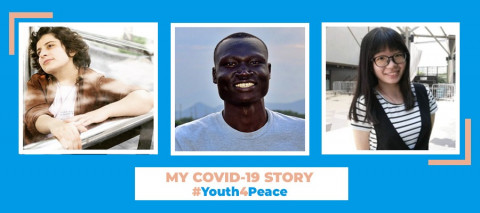 My COVID-19 Story: Peacebuilding Skills 2020-06-29 Throughout the COVID-19 pandemic, social media and online communication have become essential tools for maintaining social connections. In contrast, this crisis has also witnessed an increase in online hate speech, racism, xenophobia, Islamophobia, antisemitism and other violent narratives related to intolerance and discrimination. Despite this, many young people have been independently promoting positive narratives and engaging in peacebuilding activities during the COVID-19 crisis. In April 2020, UNESCO launched the “My COVID-19 Story” campaign to provide a space for young women and men around the world to share their views, experiences and initiatives. Many dimensions have resulted from these 150+ submissions. Youth-Led Transformative Change Several stories reference the hate speech targeting individuals perceived as ethnically Chinese or Asian. Zhong (17), a high school student from China, explains “Misleading, biased information and conspiracy theories have resulted in hatred and racism.” Kellie (12), an IB student from China, similarly describes memes and Twitter hashtags that label Chinese people as murderers. Zhang (19) a student from Singapore, responds to this by interviewing people around the world to create a documentary to “decrease discrimination and xenophobia we see online and in real life.” Aida (19), a politics and international relations student from Kazakhstan, speaks specifically about the disinformation which has “proclaimed conspiracy theories which were playing on our emotions, suggesting that the institutions that were supposed to protect us somehow did not.” Aida understands that she can take action if institutions fail to do so and has begun volunteering for UNICEF Kazakhstan’s informative online campaign to fight disinformation. Empathy, Solidarity and Resilience COVID-19 has given youth the opportunity to strengthen empathy, solidarity and resilience skills to combat COVID-19-related hate speech and disinformation. Adrel (23), a communications coordinator from the Philippines, notes how this crisis teaches empathy: although everyone is confronting the same pandemic “We are stronger when we face tough times together.” Adrel’s recognition of solidarity and teamwork is an important factor in change-making. This is also reflected in the thoughts of Moises (25), a medical researcher and designer from Mexico and Diarra (34), a program manager from Guinea. Diarra believes that solidarity exists because everyone is susceptible to the virus. Madina (25), a Fulbright Fellow and Cultural Ambassador of Kenya to the US, expands upon Diarra’s logic: “The coronavirus doesn’t discriminate...we should all be kind to one another regardless of race, gender, religion...We are in this together.” Ana (22), who works in cultural management in Mexico and Fahsai (17), a student from Thailand, act in solidarity by buying food for isolated community members to build a positive and compassionate environment. Actively building empathy and solidarity, and strengthening resilience, are all various dimensions of the development of peacebuilding skills. Virginia (20), a student from Italy, describes how empathy developed on social media through students sharing difficulties faced during COVID-19. Teenergizer is a positive online community that Yana (22), from Ukraine, founded. Yana leads this online movement that gives youth information on psychological support, COVID-19 safety measures and sexual education. Throughout the pandemic, their broadcasts and training sessions reached over 2 million teenagers. As with other age groups, youth who are most vulnerable must be prioritized. Nhial (21), who is from Kenya and works with Kenya Media, recognizes this need, specifically at Kakuma Refugee Camp & Kalobeyei Integrated Settlement. Nhial collects information about the pandemic from verified sources and posts the information on social media or online education platforms to reduce the “high spread of rumors and misinformation which ultimately cause tensions/panic in the refugee/host communities.” Farkhad (19), from the Kyrgyz Indigo team in Kyrgyzstan, supports the LGBTQIA+ community, another vulnerable population. His team offers online support from psychologists, human rights advocates and lawyers to create a supportive community for LGBTQIA+ when experiencing hatred and violence, especially during this difficult time. All these testimonies show that peacebuilding skills can be learned through lived experiences. The COVID-19 pandemic, although full of hardships, has provided young people with an opportunity to further develop these skills. This universally shared experience of COVID-19 is allowing young people, demonstrating positive resilience, to make transformative change within their societies and to promote PEACE. Be part of the My COVID-19 Story campaign! Write your story! Click here to write it Create your video! How? Sign up and do it here We will share your stories on UNESCO’s social media channels (Twitter, Facebook and Instagram), our website and through our networks across the world. Read more on the My COVID-19 Story campaign See also UNESCO Youth Programme UNESCO-UNOCT Project on the Prevention of Violent Extremism through Youth Empowerment COVID-19 - Protect human health and dignity, respect universal values 'Dangerous speech' fuelled by fear in crises can be countered with education Plan of Action to Prevent Violent Extremism United Nations Guidance Note on Addressing and Countering COVID-19 related Hate Speech UNOCT – Reference Guide. Developing National and Regional Action Plans to Prevent Violent Extremism Secretary-General's statement on the effect of the COVID-19 pandemic on Children The missing peace: independent progress study on youth and peace and security URL:https://en.unesco.org/news/my-covid-19-story-peacebuilding-skills
 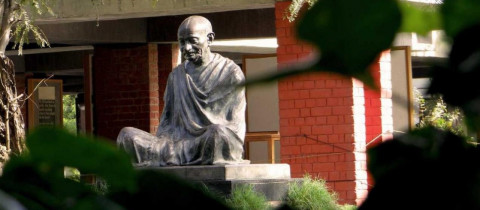 Ahmisa (Non-Violence), Gandhi and Global Citizenship Education (GCED) 2020-06-26 by Mame Omar Diop, Head of Education, UNESCO New Delhi, Satya Bhushan, Assistant Professor, National Council of Educational Research and Training and Varada Mohan Nikalje, Professor, National Council of Educational Research and Training. To read the published version in the SCOONEWS click here Globally, youth must be empowered to be resilient to violence, and to become citizens of the world. Human rights violations, conflicts between countries and escalating intolerance has to be combated. In a globally connected and interdependent world, education needs to focus on not merely cognitive knowledge, but encompass communication skills and create belongingness with humanity as a whole. Global Citizenship Education (GCED) fosters these values. In India, the freedom struggle, spearheaded by Mahatma Gandhi, opposed colonialism and its human rights violation through the unique concept of Ahimsa or non-violence. This was implemented through Satyagraha --holding on to the truth by non-violent resistance to evil, by refusing to submit to the wrong. The word Ahimsa (Sanskrit:ahiṃsā, Pāli: avihiṃsā) means 'not to injure' and 'compassion'. The word is derived from the Sanskrit root hiṃs – to strike; hiṃsā is injury or harm; a-hiṃsā is the opposite of this, i.e. cause no injury, do no harm. Ahimsa is also referred to as nonviolence, and it applies to all living beings—including all animals—in ancient Indian religions. Mohandas Karamchand Gandhi successfully promoted the principle of Ahimsa to all spheres of life, in particular to politics. His non-violent resistance movement was revolutionary; it was for the first time that ahimsa was used as a political weapon to influence the oppressors. It had an immense impact on India, impressed public opinion in Western countries, and influenced several 20th century leaders of various civil and political rights movements such as Nelson Mandela and the American civil rights movement's Martin Luther King, Jr. and James Bevel. In Gandhi's thought, Ahimsa precludes not only the act of inflicting a physical injury, but also mental states like evil thoughts and hatred, unkind behaviour such as harsh words, dishonesty and lying, all of which he saw as manifestations of violence incompatible with Ahimsa. Gandhi believed Ahimsa to be a creative energy force, encompassing all interactions leading one's self to find Satya, "Divine Truth". Gandhi and Global Citizenship For Gandhi, patriotism was the same as humanity. As he put it, “Through the realization of the freedom of India, I hope to realize and carry on the mission of the brotherhood of man. The concept of my patriotism is consistent with the broadest good of humanity at large.” (Young India 4-4-1929)Indeed, one of the challenges that the world faces today is the challenge of transforming the pervasiveness of violence in all its forms into that of a culture of peace; a peace that goes beyond mere absence of war, to include living with justice and compassion, human rights and responsibilities and celebration of diversity. Gandhi’s peaceful, unconventional, non-violent strategy to bring about Independence to India from British colonialism, and his work beyond independence, is akin to the principles of Global Citizenship that is now recognized the world over. Gandhi once stated “It is impossible for one to be an internationalist without being a nationalist. It is not nationalism that is evil it is the narrowness, selfishness and exclusiveness which is evil.” (Young India 18-6-1925). Gandhi himself did not discuss citizenship extensively although his plan for Basic Education or Nai Talim aimed at developing moral citizens for an independent India. He thought of himself as a citizen of the world. Gandhi wrote, “I learnt from my illiterate but wise mother that all rights to be deserved and preserved came from duty well done. Thus, the very right to live accrues to us only when we do the duty of citizenship of the world. From this one fundamental statement, perhaps it is easy enough to define the duties of man and woman and correlate every right to some corresponding duty to be first performed.” The role of education in preventing violent extremism and de-radicalizing young people has only recently gained global acceptance. An important step in this direction was the launch, in December 2015, of the UN Secretary-General’s Plan of Action to Prevent Violent Extremism, which recognizes the importance of quality education to address the drivers of this phenomenon. The United Nations Security Council also emphasized this point in its Resolutions 21789 and 2250, which notably highlights the need for “quality education for peace that equips youth with the ability to engage constructively in civic structures and inclusive political processes” and called on “all relevant actors to consider instituting mechanisms to promote a culture of peace, tolerance, intercultural and interreligious dialogue that involve youth and discourage their participation in acts of violence, terrorism, xenophobia, and all forms of discrimination.” This is possible notably through Global Citizenship Education (GCED), which seeks to nurture a sense of belonging to a common humanity as well as genuine respect for all. GCED is an emerging approach to education that focuses on developing learners’ knowledge, skills, values and attitudes in view of their active participation in the peaceful and sustainable development of their societies. GCED is about instilling respect for human rights, social justice, gender equality and environmental sustainability, which are fundamental values that help raise the defences of peace against violent extremism. Mahatma Gandhi is indisputably India’s gift to the world; the pursuit of peace through the practice of truth (satyagraha), nonviolence (ahinsa), compassion and kindness is his gift to humanity. Though the centrality of education, like nonviolence, is almost conclusive, the type of education that is necessary for peace is what has never been addressed in any serious manner. There is a need for education not as the usual intellectual exercise of regurgitation but a journey through self – of building peace first with the self, before the society. He believed that one has to be rooted in one’s own culture to understand the other. “Gandhi’s intercultural approach to the ideas of civilization and citizenship is a form of cosmopolitanism that refrains from monolithic moralizing and gestures instead towards a comfort with difference, alterity, and otherness”. (Jahanbegloo, 2017). Gandhi said: “I believe that if one man gains spiritually, the whole world gains with him and, if one man falls, the whole world falls to that extent” (Young India, 1924:398). He recognized the interdependence of humanity and the need to identify with the whole of humanity. In a weekly newspaper Harijan that he published, Gandhi wrote: “I am deeply interested in the efforts of the United Nations Economic, Social and Cultural Organization to secure peace through educational and cultural activities. I fully appreciate that real security and lasting peace cannot be secured so long as extreme inequalities in education and culture exist as they do among the nations of the world. Light must be carried even to the remotest homes in the less fortunate countries which are in comparative darkness and I think that, in this cause, the nations which are economically and educationally advanced have a special responsibility.” (Harijan, 16-11-1947, pp. 412-13). The Relevance of Gandhi Today People generally think that we should work to promote the happiness of the majority of mankind;, in particular, they talk of ‘the greater good of the greater number’. Further, happiness is equated with physical happiness and economic prosperity. Gandhi was of the firm belief that such a pursuit breaks the law of morality. When in doubt about one’s duty, or course of action, Gandhi offers a solution: “I will give you a talisman. Whenever you are in doubt, or when the self becomes too much with you, apply the following test. Recall the face of the poorest and the weakest man whom you may have seen, and ask yourself if the step you contemplate is going to be of any use to him. Will he gain anything by it? Will it restore him to a control over his own life and destiny? In other words, will it lead to Swaraj for the hungry and spiritually starving millions? Then you will find your doubts and your self melting away.” (Miething, 2019) This, in a nutshell, is a message at once eternal and contemporary. URL:https://en.unesco.org/news/ahmisa-non-violence-gandhi-and-global-citizenship-education-gced
  Call for nominations: gender equality in technology 2020-06-26 The Equals in Tech Awards are given every year to organizations and individuals working to help girls and women gain equal internet access, digital skills and opportunities in the tech industry. Individuals and organizations can nominate their own initiatives or those of others for an award in the following categories: Access: Initiatives related to improving women’s and girls’ digital technology access, connectivity and security Skills: Initiatives that support development of science, technology, engineering and math (STEM) skills of women and girls Leadership (in two subcategories):Initiatives focused on promoting women in decision-making roles within the ICT fieldInitiatives promoting women’s leadership in technology SMEs Research: Initiatives prioritizing research on gender digital divides and producing reliable evidence to tackle diversity issues within STEM and computing fields. The deadline for nominations is 01 August, 2020. URL:https://en.unesco.org/news/call-nominations-gender-equality-technology