
News
Catch up on what’s happening in the world of global citizenship education.
1,668 results found
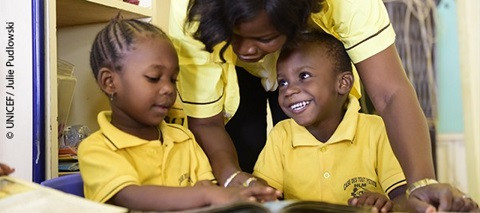 UNESCO and partners launch an early childhood education (ECE) personnel survey related to COVID-19 in Sub-Saharan Africa 2020-06-09 Preschool teacher and child in Senegal © UNICEF/ Julie Pudlowski UNESCO Dakar and partners across 48 countries in Sub-Saharan Africa have launched a survey for early childhood education (ECE) personnel during the COVID-19 pandemic. The survey aims to collect data on how early childhood teachers, teaching assistants, early childhood centre and school directors and principals are responding to the strains of the pandemic, understand the needs of the early childhood education personnel and learn how to support them. Since March 2020 when the novel coronavirus, COVID-19, was declared pandemic, learners, teachers, parents and the entire education community have been gravely affected. The UNESCO Institute of Statistics (UIS) estimates that more than 1.2 billion students have been effected globally and schools in 150 countries have been closed. In Sub-Saharan Africa, over 18.6 million pre-primary school teachers have been affected by the pandemic. Pre-primary education providers must re-think their education modalities and face unprecedented challenges such as health and safety concerns, stress and tenuous employment status. Teachers and centre directors face questions of how to provide continuous education and care admist the closure of their centres, often without having had any prior training on how to employ distance education solutions or the use of information technology. These concerns are further exacerbated by the vulnerable status of pre-primary providers and educators within the overall education personnel structure. The ADEA Inter-Country Quality Node for Early Childhood Development (ICQN-ECD), the Africa Early Childhood Network (AfECN), the Early Childhood Development task team and TALENT within the Regional Coordination Group for SDG4-Education 2030 in West and Central Africa (RCG4-WCA), ILO, UNESCO (including UNESCO IICBA), UNICEF and the World Organization for Early Childhood Education (OMEP), have all collaborated to adapt an ECE personnel survey that was originally launched by UNESCO, UNICEF and other partners in the Asia Pacific region. The findings of the survey will be employed to shed greater light on the situations and needs of the ECE sector and its workforce to respond to children’s education and well-being needs during times of crisis. The Early Childhood Development task team within the RCG4-WCA plans to host a webinar to present and discuss findings with regional stakeholders and will publish a policy brief to unpack key findings. The survey will be online until June 25th and is available in English, French and Portuguese:English: https://forms.gle/79EjxPA2fxhrPzMfAFrench: https://forms.gle/U38S7MtTrhc1Megb7Portuguese: https://forms.gle/RY6ZgbSjzkS4oMUH8 URL:https://en.unesco.org/news/unesco-and-partners-launch-early-childhood-education-ece-personnel-survey-related-covid-19-sub
  How can youth navigate the sea of disinformation to become good digital citizens? 2020-06-09 “Trust in governments, politicians and in all major institutions including schools, doctors and hospitals, is in question. And in that context social media only serves to exacerbate the problem. There are huge challenges for all of us over what to believe and the pandemic has highlighted the fact that even the experts often aren't sure. In this context, it is vital that we support young people to engage as thoughtful and active participants in democracy,” says Joseph Kahne, Co-director of the Civic Engagement Research Group (CERG) at the University of California. Mr Kahne will join Mr Nelson Kwaje who works training youth in healthy online civic engagement in Cameroon, Ethiopia and South Sudan, and other experts exploring those challenges in a UNESCO webinar, The COVID-19 Pandemic of Disinformation and Hate Speech: How can Education and Digital Citizenship help?, held on Friday 5 June 2020. The webinar will look at the dangers of misinformation and disinformation sparked by the COVID-19 crisis and proliferating online, initiatives from young people pushing back in favour of solidarity and citizenship, and the role played by education. Mr Kahne, whose work focuses on school practices and new media in relation to youth civic engagement and who helps coordinate the Teaching Channel’s Deep Dive on Educating for Democracy in the Digital Age which gathers related teacher resources such as the Digital Civics Toolkit, said:“In just the case of the US and the pandemic, it’s hard to know what to believe. Polarisation and partisan identities are now the norm. Education is supposed to be about preparing youth to make and interpret evidence and argument – that can be hard in this environment, but it is important.” He said education that reached out to engage young people in ways that they understood was a powerful counterbalance. “There is strong evidence that young people are open to help in finding out how to establish what is true and in learning the skills to get there. They are definitely not in denial about it,” he said. Learning simple skills from more experienced practitioners such as reading outside and around a main source of information such as a website and giving students the opportunities to practice those skills had been seen to be effective. “You also have to help people to be aware of their own biases and to research opposing and diverse opinions,' he said. 'The positive news is, that when education engages young people through social media in civic and societal issues, their interest increases,” he said. Mr Kwaje leads #defyhatenow Digital Media and Training teams to create a space for people to express their opinions online in a civil way and without spreading disinformation that can lead to violence. He said it was important that online spaces for expression and dissent remained open but changed in nature. His organization works through monitoring the health of civil discourse online, training and advocacy. It then publishes social media health reports which are used to dialogue with policy-makers. Young people are trained in how to make an informed decision online and made aware of the deeper dangers of cyberbullying, trolling and dog whistling among others. “Often the predominant approach to cleaning up the online space is deterrent or involves the mere reduction of harmful content. It can also be more extreme reactions where avenues of legitimate expression and dissent are closed, or the internet is shut down altogether in the name of reducing hate speech which is not a long-term solution. What is more important is to create spaces and avenues that give room to healthy expression, to change toxic spaces, which act as divisive echo chambers that might lead to hatred, to civil spaces. 'When people have access to the right information, feel their voices and legitimate grievances are heard, and that that leads to meaningful changes, they are less susceptible to other less civil means of expression,” he said. “The places where young people spend most time online and where governments and institutions interact are by default very different and the gap is getting wider. It is very naive for policy-makers to ignore the ways that young people use to interact. And the providers could also act more responsibly in how they engage with them.” Both Mr Kahne and Mr Kwaje stressed that young adults, as much as anyone else, sometimes had limited interest in the traditional academic content related to government processes, but were eager to engage when legal and societal issues were made relatable. “Not a lot of young people are reading the constitution every morning,” said Mr Kwaje.” But they can still be interested in information about tax or government corruption when it relates to their lives.” All webinars on COVID-19 education response More on COVID-19 Educational Disruption and ResponseURL:https://en.unesco.org/news/how-can-youth-navigate-sea-disinformation-become-good-digital-citizens
 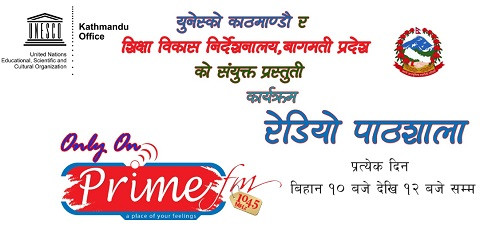 COVID-19 Educational Disruption and Response: Radio Paathshala for students in Nepal’s Bagmati province 2020-06-09 The global COVID-19 pandemic has led to unprecedented levels of disruption to education, impacting over 90% of the world’s student population: 1.54 billion children, including 743 million girls. In Nepal, all educational institutions have also been closed for a long time due to the COVID-19 pandemic. To ensure access to education for secondary level students through distance learning, UNESCO, in collaboration with the Education Development Directorate, Bagmati province, and Prime FM radio, started a radio education programme in mid-May called ‘Radio Paathshala’. The radio program covers thirteen districts of the Bagmati province. Teachers have been providing live broadcast services to support students when they face problems in learning their lessons.In view of the growing number of social media users, the lessons are also being recorded and shared on Prime FM’s Facebook page, where they are easily accessible to students. “UNESCO is always committed to ensuring quality education for all, and this is one of our efforts to come up with the best options for the continuation of learning for students in this crisis period with the whole country in a lockdown situation,” said Balaram Timalsina, Chief of the Education Unit in Kathmandu’s UNESCO Office. UNESCO is supporting countries in their efforts to mitigate the immediate impact of school closures, particularly for more vulnerable and disadvantaged communities, and to facilitate the continuity of education for all through remote learning. URL:https://en.unesco.org/news/covid-19-educational-disruption-and-response-radio-paathshala-students-nepals-bagmati-province
 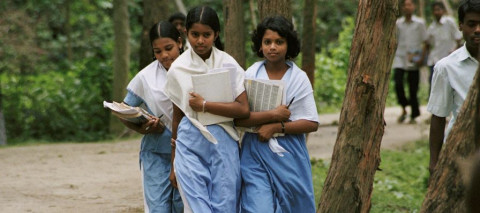 UN agencies empowering children and young people in the face of COVID-19 2020-06-08 Children and adolescents are less likely to get severe disease from COVID-19 according to the latest evidence, however severe cases and death can still occur. Despite the relatively low rates of serious illness, children and adolescents remain an important part of fighting the virus and saving lives, and it is critical that they are supported and empowered to take all recommended hygiene and physical distancing measures. As part of UNESCO’s work in promoting better health and well-being for all children and young people, it has contributed to the development of a practical guide in a ‘questions and answers’ (Q&A) format on children and adolescents and COVID-19. This work was led by the World Health Organization, in collaboration with the Adolescents and Youth Constituency of the Partnership for Maternal, Newborn and Child Health, UNESCO, UNFPA, and UNICEF. The Q&A provide children and adolescents with accurate, non-judgmental information and advice around COVID-19, including how to help stop the spread of the virus, what to do if they develop symptoms of the disease, and how to best manage their health and well-being during the confinement period and after. It considers children and young people as critical actors in the response to COVID-19, not as passive beneficiaries. The closure of schools and transition to home learning has been a source of stress for many adolescents and young people, resulting in anxiety and other mental health issues. Not all adolescents have access to the internet or other means to benefit from distance learning, and some have to care for younger siblings in the home while parents and caregivers go to work. Others are simply struggling to keep up with their education, and to stay motivated. The Q&A encourages adolescents to draw on skills and strategies that have helped them to manage life challenges in the past, including keeping active and staying connected with friends and family. It also helps deal with any concerns about safety as schools prepare to reopen, urging adolescents to follow the guidelines and rules provided by the school. “It is very normal for adolescents and youth to feel anxious about COVID-19 and the resulting confinement, as it is for all of us,” said Dr Anshu Banerjee, Director of the Department of Maternal, Newborn, Child and Adolescent Health at the World Health Organization. “We hope that this Q&A empowers them with new information and ideas about how to cope during this stressful period, and how we can all work together to stop the spread of COVID-19.” Vibeke Jensen, Director of UNESCO’s Division for Peace and Sustainable Development, said:“This Q&A is one small part of UNESCO’s longstanding commitment to engage and empower young people, and to promote safe, inclusive and health-promoting learning environments for all. We know that learning in an environment that is free from fear, harm and discrimination is essential to a good quality education, and to transitioning to adulthood in a safe and productive way.” Q&A: Adolescents, youth and COVID-19 UNESCO Strategy on Education for Health and Well-Being UNESCO’s response to the COVID-19 crisis URL:https://en.unesco.org/news/agencies-empowering-children-and-young-people-face-covid-19
 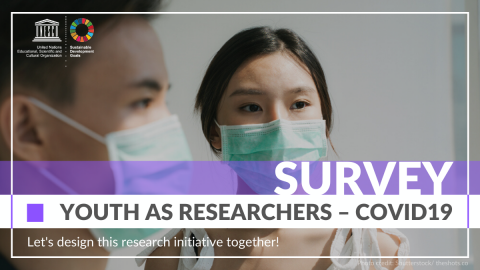 Призыв к молодежи: какое влияние пандемия COVID-19 оказала на молодых людей? 2020-06-05 Help us shape the “Youth As Researchers – COVID19” Project, a new global youth-led research initiative that seeks to answer questions like these. COVID-19 has created an unprecedented health crisis, disrupting the lives of thousands of individuals, as well as their societies. As this pandemic expands, young people have been amongst those mobilizing to shape new forms of solidarity, demonstrating humanism and creativity. Young people are amongst those impacted by the current crisis in terms of mental and physical health, learning and professional development, civic engagement and respect for their rights – on all these fronts young people are also facing important disruptions and changes.UNESCO and the UNESCO Chairs at the National University of Ireland Galway and Penn State University are committed to ensuring that young people have meaningful ways to contribute to sustainable development - ways that are designed and managed by young people as our partners.Be part of the design!If you identify as a young person in your country, we invite you to get involved in designing this research initiative! Your answers to the questions in this Survey will be used to identify the key research questions that need to be answered and to design the research focus. The Survey asks about your experiences with COVID-19 and the things you have seen happening to your friends and other young people.This Survey will only take you 5 minutes.Questions in the English language is available here until 15 June 2020.If you are interested in knowing more about the Youth As Researchers project or how to be involved in the next stage, please contact yar@unesco.org URL:http://en.unesco.kz/call-to-youth-how-are-young-people-being-impacted-by-the-covid-19-pandemic
 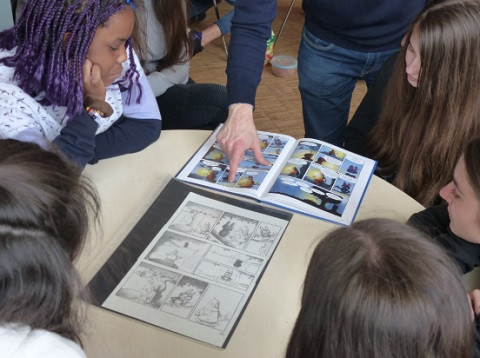 Innovation Stories: Teaching human rights, the abolition of the death penalty with GCE in France 2020-06-04 By ECPM(Ensemble contre la peine de mort) and Marek Kakaščík "The issue of the death penalty is a formidable gateway to discuss other fundamental rights, encouraging young people's awareness and active engagement in global citizenship issues." Although France has already abolished the death penalty, the issue remains as important today as ever. The debate in favour of its reintroduction is a global phenomenon, which does not spare even the most democratic countries in the context of terrorist attacks that have encouraged the radicalisation of citizens on security and identity-based issues. Especially at an age when the distinction between justice and revenge is being conceived, the new generation seems particularly misinformed. Those notions and concepts are sometimes difficult to foresee for a generation that deals with violence on a daily basis in films, video games, social networks, etc., but hasn't, in France, experienced the war, the struggle for the abolition or for many of the fundamental rights that we can be proud of today. The society of the snapshot in which our young people grow up leaves no room for hindsight, second chance, or forgiveness. The judgment is constant and omnipresent without being built. It weakens the values of the French Republic and the European Union and makes living together endangered. The issue of the death penalty is a formidable gateway to discuss other fundamental rights, encouraging young people's awareness and active engagement in global citizenship issues through a reflection on the role of justice, the vicious circle of violence, and the danger of extremism. In collaboration with the educational teams and accompanied by witnesses, ECPM conducts interventions with young people, particularly those from less favoured areas or in situations of delinquency, to open the debate and give them an overview of the human consequences of these death sentences. Through issues such as freedom of religion, freedom of expression, the fight against discrimination… the project aims to foster the emergence of a citizen's awareness of human rights and the democratic values of abolition and empower young people as actors of change. ECPM methodology is built on educational exchanges with former death-row prisoners or personalities committed to human rights, which catalyses the development of critical and autonomous thinking of young people in France. In order to celebrate the National year of comics in France and encourage the mobilisation of young people as actors of their civic engagement, ECPM launched a comics competition in French educational institutions (both formal and informal) in January 2020. Based on the work of Marty Planchais, The little executioner of Montfleury. The most inspired artists were congratulated during an award ceremony. Even though the COVID-19 crisis led to the cancellation of the vast majority of the school interventions, a UNESCO Master class organised in early March. It has been a great opportunity to discuss the discriminatory aspect of the death penalty with young people (with a special focus on racism). In connection with the health situation, ECPM created new tools in order to pursue the objectives of the project. A series of online quizzes were thus published on their website and social media, linked to cross-disciplinary themes such as freedom of speech, Europe day, Africa day, and more. A total of 150 people so far engaged through this activity. Regarding the networking aspect of the project, an innovative learning space is fostered through the exchange of good practices and experiences between French and foreign members of the Teaching Abolition International Network. This platform allows us to share inspirations and key in hand tools ready to be adapted and translated by educational teams on a rarely discussed topic and to include young people target by GCE activities not only as beneficiaries but also as actors of their civic engagement. URL:https://www.bridge47.org/index.php/blog/06/2020/innovation-stories-teaching-human-rights-abolition-death-penalty-gce-france
 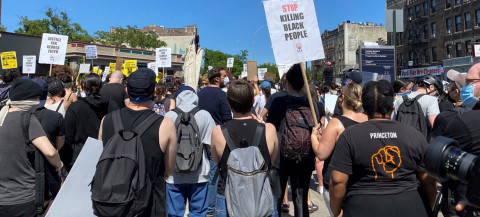 UN appeals for restraint, ‘social cohesion’ as protests across the US continue 2020-06-03 Responding to on-going protests that have spawned violence on all sides across dozens of US cities, the UN Spokesperson on Monday reiterated the Secretary-General’s appeal for grievances to be heard in “peaceful ways”, met with restraint by police and security forces. Outrage began after video footage went viral on social media early last week, showing a white officer in the city of Minneapolis kneeling on the neck of 46-year-old African-American George Floyd for more than eight minutes, during which he appeared to become lifeless, dying in police custody. Tens of thousands have taken to the streets during mainly peaceful protests, but violence by some demonstrators aimed at the police has also seen widespread looting, and increasingly violent policing tactics employed across multiple US cities. “The situation we're seeing today we've seen in different parts of the world before”, Spokesperson Stéphane Dujarric told reporters, adding that UN chief António Guterres’s message has been consistent: “Grievances must be heard, but they must be expressed... in peaceful ways, and authorities must show restraint in responding to demonstrators”. " STOP racism.STOP anti-semitism.STOP xenophobia.STOP intolerance.Join the @UN call to #StandUp4HumanRights and help build a world free of discrimination, hate & violence. pic.twitter.com/rL9PTsp9mE " — UNESCO (@UNESCO) June 1, 2020 As in any country in the world, “diversity is a richness and not a threat, but the success of diverse societies in any country requires a massive investment in social cohesion”, the spokesperson said, responding to questions from correspondents at the regular daily briefing, and pointing to “reducing inequalities, addressing possible areas of discrimination, strengthening social protection, [and] providing opportunities for all”. “These efforts, these investments need to mobilize national governments…local authorities, the private sector, civil society, faith based organizations…society as a whole”, he said. And in cases of instances of police violence, Mr. Dujarric reiterated the UN’s stance, calling for thorough investigations. “We've always said that police forces around the world need to have adequate human rights training, and there also needs to be an investment in social and psychological support for police so they can do their job properly in terms of protecting the community”, the UN Spokesperson said. Violent outbursts The killing of Mr. Floyd has rocked Minneapolis and other cities across the country, with mostly peaceful daytime demonstrations turning violent as night fell, with many curfews being imposed, and largely ignored. Throughout the weekend, reports reverberated of shootings, lootings and vandalism in a host of American cities, including New York, Chicago, Philadelphia and Los Angeles. Meanwhile, riot police fired tear gas and pepper bullets to try to disperse crowds and according to news reports, at least 4,400 people have been arrested. By some accounts, the country is experiencing the most widespread racial turbulence and civil unrest since civil rights icon, Dr. Martin Luther King, was assassinated in 1968. Protest-connected outbreak Although only days ago the COVID-19 pandemic had led to weeks of largely empty streets across the country, march routes in many cities have seen demonstrators ignoring physical-distancing, marching shoulder to shoulder, despite the risk of further transmission. Speaking at a regular World Health Organization (WHO) press conference, infectious disease epidemiologist, Dr. Maria Van Kerkhove, said that physical distancing remains a “very important aspect” to control and suppress transmission. “This is not over yet and we need to ensure that any locations that are considering these mass gathering events”, have “systems in place to prevent and detect and respond to any such cases”, she spelled out. URL:https://news.un.org/en/story/2020/06/1065262
  حملة هاشتاغ # 24 ساعة للتحرك ! 2020-06-02 Our 2017-2020 initiative: Rawabet – Techonological Bridges for Citizen Engagement Rawabet means “Connections” in Arabic. This initiative empowers youth, women and marginalized groups – in particular persons living with disabilities – to thrive in the digital era and use new technologies to promote social and economic rights in Jordan, Tunisia, Egypt and Morocco. Since the beginning of the COVID-19 pandemic, the Tunisian government has issued constant communications to inform Tunisians of how the situation was progressing and the protective measures to be followed. Deaf and hard of hearing people were excluded from these communications as sign language interpretation and subtitling were not provided. We are talking here, according to unofficial figures, about a segment of the people who numbers 70 thousand to 200 thousand people, while the official numbers of the National Institute of Statistics estimated their number in Tunisia in 2014 by more than 20 thousand people. It is only thanks to civil society mobilization, including the Deaf community and Tunisian sign language interpreters that the Deaf and hard of hearing community were able to obtain basic information concerning COVID-19. Despite all efforts, simultaneous translation of the official addresses of the President and the head of government still have not been provided. A one-hour interview scheduled with the head of the government on April 19, 2020, was announced only the day before, and no one was surprised to hear there would be no measures to ensure accessibility. Concerned by the invisibility of Deaf people in Tunisia and by the denial of their right to access to information, the young people of Rawabet decided to act, supported by TUMED Center. The human rights educators began organizing via a Facebook Messenger group conversation. An idea quickly emerged from their exchange: they had to make visible what had been rendered invisible and put pressure on the media and the government to implement this right. Within 24 hours, despite the general lockdown, they used the technological means at their disposal to invade the social media with the demand for a Tunisian sign language interpreter. The Rawabet youth created several hashtags during their Messenger conversations with messages such as: # حق الاصم في النفاذ للمعلومة “right to access to information for Deaf people”# لغة الإشارات حق موش مزية “sign language is a right, not a favour”#الحق_لنفاذ_المعلومة_للجميع “access to information is a right for all” On 18 April 2020 at 11:30 pm, comments on the Rawabet young people’s initiative started pouring in. They contacted their human rights network contacts, associations of the Deaf, and even families and loved ones took part. Word quickly got around, and the next morning, a Deaf person made a Facebook video call asking the Deaf community to join the online campaign. This was followed by a call from a young sign language interpreter and member of the Rawabet group. In a Facebook video she then explained how to proceed. In a few hours, hundreds and hundreds of comments showed up on the national TV channel web page announcing the interview with the head of the government. New hashtags appeared, created by Deaf people themselves, mainly “انا_اصم_حقي_نفهم_الخطابات_بلغتي#” which means “I am deaf, I have the right to understand speeches in my language.” Three hours before the broadcast, we learned that, in contrast to the past, the speech of April 19, 2020 would be simultaneously interpreted in sign language on live TV. It was enormously satisfying to witness this online campaign initiated by Rawabet youth put pressure on the government and support the advocacy carried out for years by Deaf people’s organizations, and more recently by associations of sign language interpreters, to ensure Deaf people’s access to information through Tunisian sign language. The success of this campaign is mainly due to the Deaf community’s impressive mobilization of a massive information operation and the invasion of social networks. As a result, a mere few days later, on April 23 2020, and for the first time in Tunisia’s history, the President of the Republic’s speech was simultaneously translated into sign language. Click here to learn more about Rawabet’s regional initiative Follow Rawabet’s latest actions on Facebook (in Arabic only) URL:https://equitas.org/operation-24-hrs-to-act/
  The impact of the Covid-19 pandemic on prosocial skills 2020-06-02 By Gabriel Bădescu, Babeş-Bolyai University of Cluj, Romania, and GEM Report fellow All over the world, he Covid-19 pandemic has led to school closures. Poorer nations have tended to bring in stricter measures, relative to the severity of their outbreaks, than richer nations. This tendency is expected to continue, since countries with less-developed healthcare systems have to act more cautiously. This raises the questions of what kind of school outcomes are likely to be affected most, and how the most vulnerable students will fare in terms of these outcomes. Prosocial skills – which lead to ‘helping, sharing, donating, co-operating, and volunteering’ – are likely to be among the outcomes affected for many students, and disproportionately so for those with lower socio-economic status. Prosocial skills are important in times of health crisis. Their importance has been documented in various contexts, including communities, firms, volunteer associations, political organizations and schools. Within the context of the Covid-19 pandemic, several studies show that the speed and effectiveness of the process of crisis recovery are strongly influenced by the levels of trust and social capital, which are positively linked with prosocial behaviours. More prosocial people are more likely to follow physical distancing and hygiene recommendations, inform themselves about how they can help others, donate to fighting Covid-19, and buy a cloth face mask. Prosocial skills are important for learning. Developing prosocial skills in school is an important goal by itself, but also a means for making a positive learning environment. Analyses on Programme for International Student Assessment (PISA) 2015 data, which included a new assessment of student collaborative problem solving skills, found that collaborative school environments are positively correlated with science results, as well as with students’ attitudes toward school. They also show that the relationship between collaborative problem-solving performance and socio-economic status is positive in almost every country/economy that participated in the 2015 assessment, and that richer countries tend to have higher means of the collaborative problem solving skill scores. Can online learning develop prosocial skills? Most experts expect that the Covid-19 pandemic will accelerate global educational trends toward distance learning. Recent work found evidence that various web-based technologies afford a compelling multimodal communication that can contribute to prosocial development. However, we know from previous research on ICT approaches in education that several issues must be addressed. Distance learning ignores meaningful child participationFirst, student participation is important both as an aim and as means for learning. Meaningful participation of children is supported by the Convention on the Rights of the Child, which states that children’s views should be sought, heard and taken into account in decisions, in relation to all matters that concern them. However, a recent survey of professionals, contacted through children’s participation and rights networks in 20 European countries, showed that 70% could not identify a single Covid-19 related child participation initiative. Consequently, any new online approaches should incorporate objectives to increase opportunities for children to collectively share their ideas, to ensure that they can highlight concerns, inform decisions, and hold decision-makers to account. Bandwidth impacts interpretationSecond, the quality of internet connection and related services can have important consequences on how students view their peers and teachers, and wider society. Even short delays on conferencing systems tend to shape participants’ views of other people negatively. Therefore, school systems need to ensure access to good quality synchronous teaching. Online learning cuts interactionThird, online learners tend to feel isolated because of their physical separation from other learners and the instructor. Developing learning communities can alleviate the isolation problem and motivate learners to persist in their learning. Several analyses indicate that the development of an online learning community benefits from using both asynchronous and synchronous technologies that create a shared space in which students and instructor interact, that both task-oriented discussions and social interactions should be encouraged, and that students should be assigned tasks that require collaboration.Future research is needed to validate the guidelines for developing prosocial behaviours and collaborative skills, particularly in times of crises such as that of today. The guidelines should be tested and refined to address context-specific needs and for addressing challenges related to the equitable provision of education during times of crisis. Prosocial skills are as important as any others and deserve not to be ignored. URL:https://gemreportunesco.wordpress.com/2020/05/29/the-impact-of-the-covid-19-pandemic-on-prosocial-skills/
 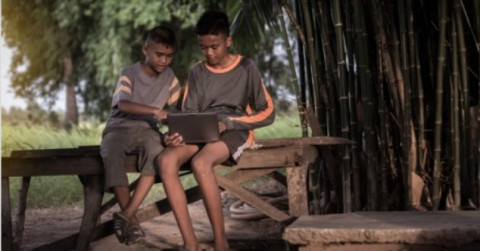 UNESCO helps build ‘neo-infrastructure’ of crisis-resilient education systems in Pacific countries 2020-06-02 Teachers, school principals, curriculum developers and platform managers from Small Island Developing States in the Pacific gained skills to implement distance learning solutions during a series of virtual trainings organized in May 2020 with several partners from UNESCO’s Global Education Coalition, including Moodle, Khan Academy and Lark. Historically, the Pacific region is not immune to educational disruptions caused by natural disasters and epidemics. But the Covid-19 pandemic, which also overlapped with the devastating Cyclone Harald in April, led to the closure of all educational institutions, affecting an estimated 2 million primary and secondary students and 66,000 teachers in 9 island states. Like everywhere, there are consequences on the learning process, but also on the psychological and socio-emotional wellbeing of learners, parents and teachers. Without the technology, content and human “infrastructure” of distance learning, countries will struggle to ensure learning continuity in this unprecedented period. They require support to plan and implement solutions, encompassing national platforms to deliver content, distance learning resources aligned with national curricular; improving teachers’ capacities to set up “Classes at Home” and faciliate remote learning. The online trainings facilitated by UNESCO brought together participants nominated by education ministries from five countries - Nauru, Papua New Guinea, Samoa, Tonga and Kiribati - to acquire practical skills and know-how needed to set up online classes, adapt curriculum and manage online platforms. Teachers’ use of applications to set up online classes at home A first training on the theme “How to setup your remote classroom at home” provided basic tutorials on digital tools and skills to set-up online classrooms from scratch at home using the Lark online tool. In this perspective, the company team offered a comprehensive training on how to use Lark’s main functions including group chat, video conferencing, cloud docs collaboration and the calendar. During the session, the Lark team guided the participants step-by-step on how to set up and use the application for teaching and communicating with students, parents and peers. The activities ranged from learning how to give live streaming lessons to ensuring user security. An online course was also shared with participants by Lark for future use. Curating and aligning open educational resources with national curriculum The following workshop focused on aligning open resources of Khan Academy with the national curriculum of the target countries. The goal of this workshop was to support the countries in curating and developing remotely delivered curricular courses and resources that cover all subject areas and grade levels. A trainer from Bibliothèque sans frontières supported participants to discover the tool and its functionalities, access its open source content and adapt it to the specific needs and curriculum of each country. He provided participants with an array of helpful links, tips and a step-by-step guide before opening the floor for a direct exchange and Q&A. Valerie Taumpson, a teacher at the Arawa Secondary School in Papua New Guinea, said about the workshop: “I was personally very interested as I see the need to make resources available for remote schools. By being able to save our own material for future use, creating and putting together resources will be beneficial for the students and will help them tremendously to learn individually with minimum contacts.” Leveraging open-source Moodle to build national distance learning platforms Moodle platforms are open source learning management systems, which can be adapted to the specific needs of countries. Drawing on the experience in Samoa and Kiribati, where the platforms have already been installed, the third workshop was organized around the use of the Moodle platform to set up remote classrooms and learning spaces at home. The Moodle team showed why and how to use Moodle platforms in day-to-day education practice. Participants not only learned how to set up courses, group chat, quizzes, and calendar, but also found out how to access self-paced, online training for educators and administrators. Mary Cooch from Moodle shared her strategy for the session: “We were conscious that we cannot teach all of Moodle in just two hours, so it is very important that the participants can access our free resources and our free courses to go and learn more.” At the end of the workshop, one of the participants said: “As a principal of an education institution, you have given me a lot of help, since we are currently running our schools using Moodle. I’m very happy with the sites that you are providing for community support and offering self-help guides so that I can use it as part of our staff development and let my staff know about websites like Moodle admin basics and the Moodle community.” Following these trainings, UNESCO will continue to work with partners on strengthening the capacities of teachers and education managers for distance learning, a key to enhancing the resilience of education systems in Small Island Developing States. Contact: f.miao@unesco.org(link sends e-mail); p.awopegba@unesco.org(link sends e-mail) More on COVID-19 Educational Disruption and Response URL:https://en.unesco.org/news/unesco-helps-build-neo-infrastructure-crisis-resilient-education-systems-pacific-countries