
News
Catch up on what’s happening in the world of global citizenship education.
1,668 results found
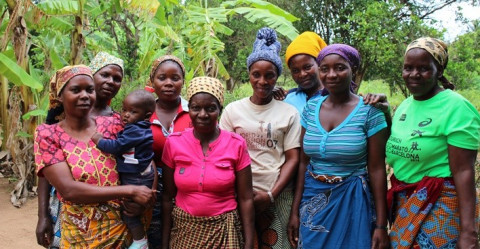 Breaking educational language barriers in Mozambique 2020-05-18 Mozambique is a multilingual country with over 20 spoken languages. While a knowledge of Portuguese is vital to access state services, a comprehensive understanding of local languages is crucial for community participation. Considering only 17% of the population speak Portuguese as their first language, incorporating local languages into adult education and creating opportunities for bilingual teaching is key to providing relevant and inclusive lifelong learning for all. Before the new primary education curriculum for adults and youth was developed in 2017, the only adult education programmes available were limited to basic literacy and numeracy skills. The new curriculum, developed by the National Directorate of Adult Education, with the support of the Capacity Development for Education Programme (CapED), covers six subjects, Portuguese, Mozambican Languages, Natural Sciences, Social Sciences, Mathematics and Life Skills. In 2019, CapED piloted the first year of the curriculum in five districts across four provinces (Gaza, Maputo, Nampula, and Sofala) and is currently training teacher-educators, teachers and adult educators to use the 2nd year of the curriculum. One of the benefits of bilingual teaching is an increased commitment and retention among learners. “Individuals like what they know and are familiar with, they stay more engaged and attentive and feel respected,” explains Alcido Timba, a specialist in bilingual education from the Ministry of Education and Human Development. Another benefit is reducing communication challenges. Zenalda Silvestre Machonga, an adult educator in the community of Nhampequene, teaches her students in both Portuguese and Changana. She explains how she uses both languages in her classes. “I use Changana as a resource to explain things that I feel they do not understand well. For example, I ask them “When the car passes what sensory organs do you use?” They first discuss the topic in their mother tongue and then we discuss in Portuguese. This methodology helps them to participate and to understand the topic.” In parallel to implementing and testing the curriculum, CapED is building the capacities of teacher-trainers on adult education methodology and teaching in Mozambican languages. The Programme is also developing teaching and learning materials in five Mozambican languages, as well as Portuguese, and is supporting the written standardization of 19 local languages in the country. Looking ahead, the outbreak of COVID-19 will impact the implementation of adult education programmes, especially the piloting of the new curriculum. The school and education institution closures that came into force around the country are affecting the education of millions of children, as well as 370,000 adult learners currently enrolled in adult education programmes. As lead partner supporting the development of Mozambique’s new education sector plan, UNESCO is part of the COVID-19 technical team and the cooperating partners group supporting the Ministry of Education and Human Development to develop and implement the country’s COVID-19 Contingency Plan. The Plan provides a strategic framework to safely reopen schools and education institutions, while ensuring the continuity of education opportunities to all, particularly the most marginalized. Capacity Development for Education Programme Participants of the training workshop for the 2nd year of the primary education for adults and youth, Chongoene IFP, Gaza Province © UNESCO URL:https://en.unesco.org/news/breaking-educational-language-barriers-mozambique
  'Dangerous speech' fuelled by fear in crises can be countered with education 2020-05-16 Fear is the biggest motivator in spreading 'dangerous speech' in times of crisis like the COVID-19 pandemic, says Susan Benesch, Founder and Executive Director of the Dangerous Speech Project. The pandemic has generated a new wave of hate across the world amplified by the internet and further exacerbating racism, antisemitism, anti-Muslim hatred, xenophobia and other forms of intolerance and discrimination. Ms Benesch, a Faculty Associate of the Berkman Klein Center for Internet & Society at Harvard University, joined a virtual experts' meeting Education as a tool for prevention: addressing and countering hate speech organized by UNESCO and the United Nations Office on the Prevention of Genocide and the Responsibility to Protect (OSAPG). The virtual meeting from 13 to 18 May brings together more than 20 world renowned experts, including youth representatives, human rights experts and education specialists, to review existing evidence on addressing and countering hate speech, exchange good practices and develop a strategy to boost Member States' capacity to address the phenomenon on and offline through education. Speakers include Dr Ahmed Shaheed, UN Special Rapporteur on Freedom of Religion or Belief. Ms Benesch created the Dangerous Speech Project to explore 'dangerous speech', which she defines as any form of expression that can inspire violence against groups of people, and to find ways to prevent this through education without infringing on freedom of expression. “What is curious about the pandemic is that, in contrast to most situations where one group turns on another, now everyone is equally vulnerable and frightened and for very good reason. The fear of disease, which is an invisible enemy, is especially powerful. Because almost everyone feels afraid, this means even more people are susceptible to dangerous speech which creates a widespread risk that they condone or commit violence against others.” Ms Benesch said the pandemic had not only inspired a surge of attacks against, among others, Asian or Asian-looking people scapegoated for causing or spreading the pandemic but that authority figures were also capitalizing on the need for information, guidance and reassurance to spread disinformation for political means. “Unfortunately, it is easy for unscrupulous politicians to exploit fear to their own ends,” she said. Through her project Ms Benesch works to find educational solutions to dangerous speech and other forms of harmful expression. Research shows that education can diminish early harassing behaviour. She advocates for public education on hate speech and counterspeech, rather than censorship. “Educate before it happens so that dangerous speech can be recognized. It can be used to make someone aware of why someone is using dangerous speech, that it is a lazy political tool that can be used for malevolent ends. We can teach, that in both developed and developing contexts, it is often easier to turn one group against another than fix the true source of discontent, be it building a road or improving healthcare infrastructure,” she said. “People have a strong urge to belong to one or more groups and in order to belong they need to follow the norms of that group. These rules, though they are not written down anywhere, can be incredibly powerful and lead people to behave in harmful ways,” she said. “We need to change those norms in a positive direction. In addition, counterspeech can be an effective way of responding to dangerous speech so that it is undermined.” At the same time, she said it was important that measures against hate speech not be used as a pretext to silence people, especially the same vulnerable groups that such measures should protect. Youth in particular, must be engaged in ways that are meaningful to them, both on and offline. “We need to speak to young people using the mediums they use and engage them through people they respect and will listen to,” she said. The virtual meeting responds to the UN Secretary General's United Nations Strategy and Plan of Action on Hate Speech and is being organized in preparation for the Global Education Ministers Conference and Multi-stakeholder Forum on addressing and countering hate speech through education (date and venue to be confirmed). UNESCO and Global citizenship education URL:https://en.unesco.org/news/dangerous-speech-fuelled-fear-crises-can-be-countered-education
 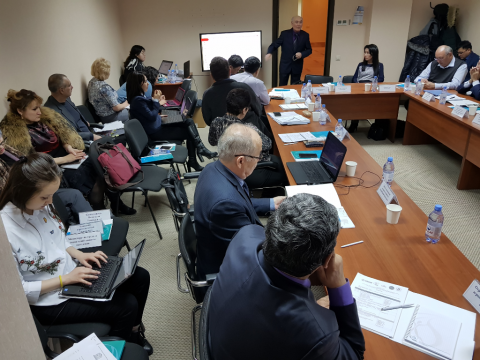 Использование современных IT-технологий для обсуждения вопросов подготовки кадров для водной отрасли с учетом функциональных требований национальной системы квалификаций Республики Казахстан 2020-05-15 On April 22, 2020, in the mode of the ZOOM conference, an online meeting of the Educational and Methodological Association of Educational Organizations (EMAEO), the Project Management Unit (PMU) of the Republican Educational and Methodological Council (REMC) of the Taraz State University (TarSU) named after M.Kh.Dulati was held with participation of the Executive Directorate of the International Fund of Aral Saving (IFAS) in Kazakhstan, the Regional Environmental Centre for Central Asia (CAREC), the USAID project “Smart Waters”, Ministry of Ecology, Geology and Natural Resources (MEGNR) of the Republic of Kazakhstan, Ministry of Labor and Social Protection of Population (MLSPP) of the Republic of Kazakhstan, National Chamber of Entrepreneurs (NCE) “Atameken”, Kazakh-German University (KNU), KazNIIvodkhoz, Kazvodkhoz and basin inspections. The meeting was moderated by the Rector of the TarSU named after M.Kh.Dulati - Doctor of Pedagogical Sciences, Professor M.N. Sarybekov. CAREC ESD Programme Manager T. Shakirova and Director of the CAREC Country Office in Kazakhstan S. Toylybaeva took part on behalf of CAREC. The EMAEO-PMU was established on the basis of the TarSU named after M.Kh.Dulati in 1998. Currently, the EMAEO TarSU is organizing educational and methodological support for educational programs of higher and postgraduate education in the field of the "Water Management" education and training. In the period from 2017 to 2020, members of the EMAEO TarSU, the Executive Directorate of IFAS in Kazakhstan, the OSCE Programme Office in Nur-Sultan, CAREC, the USAID project “Smart Waters”, the UNESCO Cluster Office in Almaty, Kazakh-German University (DKU), KazNIIvodkhoz, “Kazvodkhoz”, basin inspections, the Ministry of Education and Science of the Republic of Kazakhstan, the MLSPP, NCE Atameken, members of the EMAEO of Kazakh universities and a wide range of employers, a lot of work has been done to develop key regulatory documents for the water industry, which is a condition for improving the quality of training for this industry. There is a process of formation of the National Qualification System (NQS) of the Republic of Kazakhstan as a whole. Under the leadership of the Agro-Industrial Consortium in 2018-2019, scientists of the water industry of the TarSU named after M.Kh.Dulati, with participation of the IFAS, the Committee for Water Resources, regional branches of Kazvodkhoz, CAREC, USAID, regional basin inspections for water resources, developed and in December 2019 approved the Sector Qualifications Framework (SQF) “Water Management”, SQF "Agriculture" and SQF "Forestry and the animal world", as well as 40 professional standards for the above sectors, 10 of which relate to the water sector. So that there is no gap between professional and educational standards, as well as a gap between the education system and the labor market, there is an urgent task to harmonize the content of the educational process of higher and postgraduate education with the key requirements of the elements of the NQS of the Republic of Kazakhstan. In accordance with this, Department of Higher and Postgraduate Education (DHPE) MES RK together with JSC “Center for the Development of Labor Skills” developed a Roadmap (RM) for development of educational programs based on the approved 480 professional standards as part of the implementation of the State program for the formation of the NQS RK “Development of labor skills and job stimulation”, implemented by the MLSPP of the Republic of Kazakhstan in conjunction with the NCE “Atameken”. Professional standards are the document where the interests of employers, workers, educational institutions, students, government bodies and other interested parties are concentrated and are the basis for the development of educational programs. Accordingly, universities involved in education and training in the field of "Water Management" need to develop the identical content of specific educational programs. Following the meeting, presentations and discussions, a draft of the meeting Decision was adopted: To identify the following main steps for the formation of the agreed content of educational programs with higher and postgraduate education in the field of preparation "Water Management": 1. EMAEO PMU REMC at the TarSU named after M.Kh.Dulati should develop drafts of educational programs (EP) on the basis of new approved PS; 2. Universities providing training for the water industry should develop and make adjustments to EP taking into account new approved substations; 3. Universities providing training for the water industry should use unified teaching materials for the basic professional disciplines of the educational programs “Hydromelioration” and “Hydrotechnical Construction” developed within the framework of the Water and Energy Program for Central Asia (KAWEP) “Central Asian Knowledge Sharing Network: Partnership Development for regional cooperation on water and energy (CAKN) ”; To accept for use the developed uniform learning outcomes and professional competencies in accordance with professional standards for implemented EPs; Higher education institutions of the Republic of Kazakhstan, which train water specialists should accept recommendations for development of the educational programs with major and additional paths (major and minor); Higher education institutions of the Republic of Kazakhstan, which train water specialists, should accept recommendations for students to complete professional practice; To come up with a proposal to the MEGNR of the Republic of Kazakhstan (CWR), the Ministry of Agriculture of the Republic of Kazakhstan and other interested organizations to organize a departmental order for the preparation of bachelors and masters of water management on the basis of targeted agreements with universities, as well as to involve the business community in the preparation process; To request CAREC within the framework of the USAID “Smart Waters” project to issue the approved new Professional standards and Methodological recommendations for the development of EP according to the Classifier of training areas with higher and postgraduate education; To recommend to the Consortium of the AIC or the ALE “The Association of Water Resources of Kazakhstan”, in cooperation with CAREC to establish an independent center for assessing the qualifications of water management personnel in the Republic of Kazakhstan. To instruct this center to conduct trainings, seminars, as well as examination of PS and EP for water sector; To ask for the assistance of stakeholders represented by research institutes, universities, design, production and non-governmental organizations in the water sector in analyzing the industry to develop elements of the NSC, as well as making suggestions on the list of necessary professional standards for the water sector; Recommend IFAS ED to develop a roadmap for the development of regulatory documents in accordance with the NQS and the SQF for water management. URL:https://carececo.org/en/main/news/ispolzovanie-sovremennykh-it-tekhnologiy-dlya-obsuzhdeniya-voprosov-podgotovki-kadrov-dlya-vodnoy-ot/
  Hong Kong urged to drop prosecutions of leading activists, not to silence peaceful protest 2020-05-15 Independent UN human rights experts urged Hong Kong authorities on Wednesday to immediately drop the criminal prosecution of 15 pro-democracy activists who participated in peaceful protests across the Special Administrative Region of China last year. “Nobody should be subjected to administrative or criminal sanctions for taking part in a peaceful protest, even if the regime governing protests requires an authorization”, said the three Special Rapporteurs. "#HongKong authorities are urged not to silence peaceful protest with criminal charges & to immediately drop the prosecution of 15 activists – UN experts @cvoule @davidakaye & @MaryLawlorhrds. Read https://t.co/O8Da2i6E2B pic.twitter.com/OaPetovuWv" — UN Special Procedures (@UN_SPExperts) May 13, 2020 The experts - Clement Nyaletsossi Voule, Special Rapporteur on the right to peaceful assembly and association; David Kaye, Special Rapporteur on the promotion and protection of the right to freedom of opinion and expression; and Mary Lawlor, Rapporteur on the situation of human rights defenders – act in their independent capacity to monitor country situations or thematic issues around the world. Background to protests The protests were initially sparked in 2019 as a reaction to proposed legislation, which would have allowed the extradition of criminal suspects to mainland China. At their height, nearly two million people took part in them, calling for more democratic participation in public affairs. However, as the standoff between protesters and Hong Kong authorities continued, the number of violent clashes between the police and individuals grew. High Commissioner for Human Rights Michelle Bachelet expressed her concern over the escalation of violence in August 2019, calling on authorities and the people of Hong Kong to engage in an open and inclusive dialogue aimed at peacefully resolving their differences. The experts expressed their concern in a September 2019 press release. The 15 leading pro-democracy activists were arrested in April 2020 and have been charged with various counts of assisting in the organization of “unauthorized” assemblies, or participation in them. Some have also been charged with announcing “unauthorized” marches. “The charges were filed at a time when protests are restricted for COVID-19 prevention. The persons charged are all leading figures in the pro-democracy movement”, the experts said. Their trial is due to begin in the former British colony - that was returned to China in 1997 on the principle of “one country, two systems” - on 18 May. ‘Chilling effect’ of arrests The charges were brought under Hong Kong’s Public Order Ordinance, which establishes an authorization process for assemblies, contrary to international human rights standards, the UN experts say. “We fear the chilling effect these arrests aim to have on peaceful protests in Hong Kong”, they added. Further, the experts said authorities are obligated not to criminalize peaceful protesters or prosecute organizers for acts of violence committed by individual participants. They called for a review of the Public Order Ordinance in line with international human rights standards. The Special Rapporteurs, Independent Experts and Working Groups are part of what is known as the Special Procedures of the Human Rights Council. They are not UN staff and do not receive a salary for their work. They are independent from any government or organization and serve in their individual capacity. URL:https://news.un.org/en/story/2020/05/1063842
  Innovation Stories: Solidarity-Equality-Sameness project from Slovenia 2020-05-15 By PEACE INSTITUTE SLOVENIA and Marek Kakaščík "The project does not treat migrants, refugees, and asylum seekers as passive objects of science, but actively involves them in the educational process and gives them voice." Stereotypes, fear and hate towards migrants, refugees, asylum seekers (ie. “the others”) are in constant rise. It is a phenomenon constructed by the dominant discourse of parliamentary politics, mass mainstream media, and popular culture/lifestyle. State institutions are weak in addressing this problem. The project Solidarity-Equality-Sameness addresses this problem by implementing an innovative educational approach in high schools approaching the most fragile part of the society: high school students and empowering them for critical thinking. The main objective of the project is to inform students on a multifaceted basis about migration with a goal to break stereotypes, fear, and hatred, and empower them to act responsibly towards the migration issue by promoting the concepts of solidarity (pragmatic-daily level), equality (political-ideological level) and the sameness (humanistic-universalist level) both within the school classes, the local environment, and wider society. It is done through the dissemination of knowledge, information, and facts about migrations but also personal experiences of migrants. The key activities of the project include the preparation, implementation, and evaluation of workshops, as well as the preparation of learning scenarios that emerge from the needs and wishes of schools. Key actors in the educational process are students and migrants, refugees, asylum seekers, which together face intercultural differences and stereotypes and reflect the importance of intercultural dialogue and respect for human rights in building a tolerant and solidary society. In the preparation and implementation of workshops, migrants are actively involved with their knowledge and experience. We cooperate with at least 10 migrants from different countries (Syria, Afghanistan, Iraq, Iran, Morocco, Algeria, Ghana, Eritrea, China, Nigeria), who share their knowledge and experience in the design and implementation of workshops so that to best provide relevant information on the conditions leading to migration (structural causes) as well as breaking stereotypes, hatred, and fear by sharing their own stories at the workshops themselves in direct dialogue with students. Topics addressed by the learning scenarios are migration, hate speech, media, social networks, human rights, tolerance, solidarity, stereotypes, nationalism, and racism. The key is that students receive quality information on the basis of which they can form their positions and develop a tolerant attitude towards migrants, refugees, asylum seekers and receive basic conceptual tools for developing critical thinking and acting. The predicted methods that we use to educate and raise awareness of students include frontal education, “live library”, projections of films and video clips with discussions, a "privilege game" workshop, and a "local is global" workshop. However, due to the pandemic COVID – 19 which disabled the normal education process and moved everything online, we have been forced to adjust our methods and approach as well. In close communication and collaboration with both, teachers at one and migrants, refugees and asylum seekers on the other side, we prepared extensive online learning materials, so-called “educational packages” which consist of PPT presentations with all relevant information accompanied with the video statements of migrants, refugees and asylum seekers telling their stories as well as short video films about this issue we produced about the topic in the past. One of the films presented, you can watch another here The project is innovative because it complements the official educational process by enabling a student to establish direct contact with migrants, refugees, asylum seekers thus encouraging them to free themselves from stereotypes, fear, and hatred. Hearing personal stories of migrants, refugees, and asylum seekers is also important because it encourages compassion, solidarity and tolerance towards “the others”. Also, it does not treat migrants, refugees, and asylum seekers as passive objects of science, but actively involves them in the educational process, gives them voice, and visibility and in this way acts emancipatory on everybody. The innovation of the project also lies in the fact that it does not just teach about migration, but develop various approaches through which students in a more plastic way get a picture of migrations as a phenomenon of modern society. In this way, the significance of migration is demystified as something bad, dirty, scary, and this phenomenon is given a different connotation as a phenomenon that is an integral part of this world. The educational model is designed to be easily transferred to other areas/environments and countries because it is based on universal values, programme, and methodology. In every environment, it can be done in the same way together with migrants, refugees, asylum seekers, living in that environment. Although we will, due to the pandemic COVID – 19, implement the project on-line we will, for sure come back to schools after the pandemic will be over and establish direct contact with students and teachers in the future. URL:https://www.bridge47.org/blog/05/2020/innovation-stories-solidarity-equality-sameness-project-slovenia
 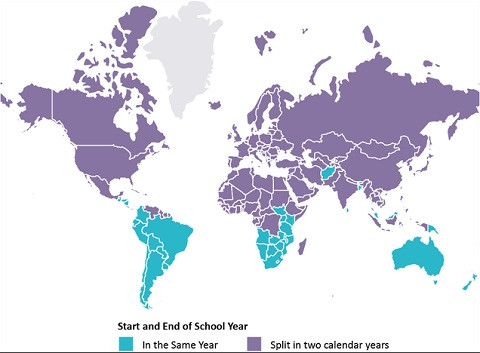 Collecting essential education data during the Covid-19 crisis 2020-05-15 By Silvia Montoya, Director, UNESCO Institute for Statistics (UIS), and Gustavo Arcia, Economist and UIS Consultant Statistical institutes in low- and middle-income countries face significant pressures to collect education data under quarantine. This pressure reflects the need to mitigate the many impacts of the Covid-19 pandemic, which threaten the economic and social fabric, as documented by the Committee for the Coordination of Statistical Activities (CCSA), where all heads of statistical units of the United Nations System convene. Given the difficulties imposed by the Covid-19 crisis, the basic questions for ministries of education, their agencies and statistical institutions are: (i) what data to collect, and (ii) how to collect it, to monitor learning equity. In many countries where the school year is split between two calendar years, there is still about a month of class time left, while in countries where the school year falls within one calendar year, classes are just starting. In the former case, policy decisions on education delivery revolve around temporary measures to bridge the gap between the middle of the second semester and the end of the school year, while in the latter case, decisions revolve around new policies for the incoming school year, such as implementing a reduced curriculum; implementing online and distance education; implementing in-service teacher training on a massive scale; and monitoring student participation and performance on a continuous basis. School year split around the world In both cases, education data need to reflect the consequences of school closures and, where available, distance education – at a time when obtaining accurate headcounts of students and teachers is difficult. There have been negative impacts on equity and inclusion during the pandemic, especially in terms of how learning opportunities are shared, with some children likely to suffer more than others. In these circumstances, statistical institutes need to decide which are the most essential education variables that can be collected for immediate use and to monitor the structural changes affecting learning equity that may remain after the Covid-19 crisis is over. Tracking losses in learning equity and inclusion A short list of essential indicators is needed that should be collected during the pandemic and in the future. A country-level strategy to manage education data in the pursuit of learning equity during and after the Covid-19 pandemic should include – at a minimum – the collection and reporting of data on: Student participation in all platforms of education delivery disaggregated by individual student characteristics, such as gender and poverty Teacher participation in all platform of education delivery disaggregated by individual teacher characteristics, such as gender and contract status Use of quick and short tests for the frequent measurement of student learning. Learning under different scenarios of distance and online education will probably also vary depending on a child’s age. Besides differences in learning between well-off students and students in vulnerable conditions, learning losses could be disproportionately larger in the first two or three grades of primary, as children in later grades are likely to be capable of learning more on their own, requiring less direct contact with a teacher. Due to the differences in mental maturity between younger and older children, maintaining a low pupil-teacher ratio in lower grades could be crucial to recovering learning losses. Hence, learning should also be analysed across children’s ages, and measuring and mapping learning equity should be made a policy priority. The analysis of learning should be linked to the methods of education delivery used in different grades. Access to online education may be less effective among young children than watching canned classes on TV. Analysing the impact of different methods of distance education on the same age group will be useful in establishing clear guidelines for delivery. How should ministries of education, their agencies and statistical institutes collect these data in the midst of the pandemic? First, they may have to focus on only a few key indicators and collect data from samples of the school and student populations instead of the entire education system. Second, oversampling of vulnerable students (i.e. students in poverty, with special needs, and those who use minority languages) may have to be used to monitor equity. Third, a frequent measurement of learning may have to be implemented to allow the system to compare learning under different methods of instruction and anticipate needs for teacher training, instruction platforms and operational performance. The UIS in collaboration with the World Bank and the Global Partnership for Education is in the process of developing short standardized tests to measure learning under a global proficiency framework. These tests will soon be freely available and accessible through the global commons. Finally, further background information may be needed to gain a macro picture on school calendar changes, affected examination schedules, adjusted promotion procedures, and remedial education plans. URL:https://gemreportunesco.wordpress.com/2020/05/14/collecting-essential-education-data-during-the-covid-19-crisis/
 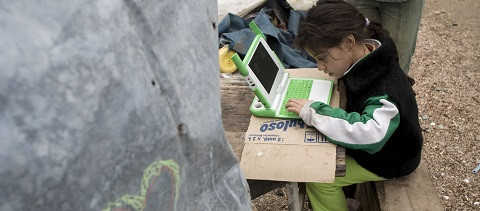 See again the seminar #2 for Latin America: Consequences for girls due to the Covid-19 pandemic 2020-05-14 << Seminar's websiteOn April 29 of 2020, UNESCO, together with the Regional Cluster of Education for Latin America and the Caribbean, held the second session of the series of COVID-19 webinars on education in Latin America and the Caribbean “Leave no one behind in times of the pandemic". On this occasion, the conversation addressed the topics of gender, education and COVID-19, focusing specifically on the consequences of the current educational situation on girls. This session featured presentations by representatives of the Ministry of Education of Argentina, the World Association for Sexual Health, Plan International and UN Women. The event, which brought together over 700 participants from 31 countries, was facilitated by UN Women and Plan International. Janaina Hirata, Regional Specialist in Education in Emergencies of Plan International, highlighted the relevance of incorporating the gender perspective in emergency policies and responses, as well as in the reopening of schools. Andrea Conde, Director of Human Rights, Gender and Comprehensive Sexuality Education of the Ministry of Education of Argentina, explained how the current context can be an opportunity to address historical issues of gender inequalities, such as the burden of care assumed by women within families. In this sense, it is key to consider the importance of solidarity, of redistributing this burden and, through education, of deconstructing the prevailing gender stereotypes in our societies.Esther Corona, vice president of the World Association for Sexual Health, introduced some of the institutional response strategies that have been developed in Mexico and identified short and medium-term challenges. Among them is the need to strengthen multisectoral responses to gender issues in education and the provision of comprehensive sexuality education as part of the alternative education modalities that have been implemented. Finally, from the Regional Education Cluster, Amalia Alarcón, Regional Manager of Transforming Gender and Influence Programs of Plan International, reviewed the regional situation, highlighting the difficulties, barriers and human right violations that girls in the region have experience before, during and after the health crisis, focusing on the main challenges of each stage of the response to guarantee their well-being and right to education. Within this framework, Dana Barón, Migration Advisor at UN Women, highlighted some key messages to strengthen the educational response, addressing its gender dimension. These messages included the need to raise awareness among teachers on the increased risk of gender-based violence and sexual abuse, to advocate for an equitable distribution of household chores, and to involve and discuss with communities the importance of education for girls as part of alternative education programs. At the end of the session, Paula Klenner, Associate Program Coordinator at the UNESCO Regional Office for Education, reviewed the main issues discussed in the event, stating that while many girls will continue their education once schools reopen, some of them may never return to them. This is why educational responses must prioritize the needs of girls, adolescents, and young people, at the risk of reversing 20 years of educational achievement in the region. See the topics of the next seminars URL:https://en.unesco.org/news/see-again-seminar-2-latin-america-consequences-girls-due-covid-19-pandemic
 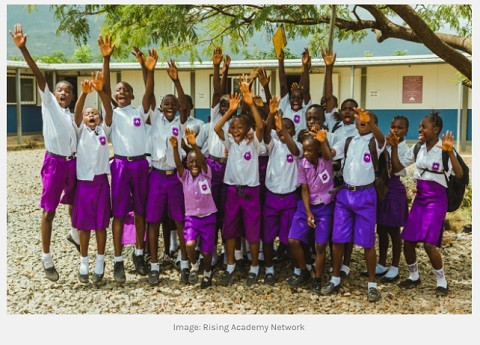 Why non-state education requires support in the current pandemic 2020-05-14 By Alice Doorly, Global Schools Forum (GSF), a non-profit membership organisation working with non-state organisations in developing countries who are serving children from low-income backgrounds. Since March, teachers from three non-state primary schools run by Peepul, serving low-income communities in south Delhi, have been attempting to reach over 1000 students who can no longer attend school during lockdown. Their challenge: to keep every child learning. Initially, only 55% of these children had access to a smartphone to receive lesson content and stay in touch with their teachers. By casting a wider net to neighbours and extended family, this was increased to 75% of students. But a quarter remain without easy access to learning materials, at risk of slipping through the cracks. Many from migrant families have left the city and returned to villages making them more difficult to track down. Even for those with a smartphone, difficulties abound. With incomes squeezed due to economic shut-down, parents who are small daily wage earners face a choice between purchasing mobile data for their child’s education or buying food for the coming days. The challenges faced by these teachers and students reveal a glimpse of a story being replicated the world over in government and non-state schools. Discontinuing education during this period could severely impact children’s learning, yet tried and tested strategies for how to continue are in short supply. The education sector is in largely unchartered territory and non-state schools are no exception. Far from it – instead, they are grappling with risks to their survival that are testing their ability to operate through and beyond the Covid-19 crisis. The non-state sector serves a large and growing share of students, including low-income communities Following several decades of growth in the non-state education sector, today, around 20-30% of children globally are educated outside of government schools. According to 2018 data from the UNESCO Institute for Statistics, 42% of pre-primary, 18% of primary, and 26% of secondary students globally were enrolled in the non-state sector – a vibrant mix of non-profit, for-profit, and faith-based organizations providing schooling and other education services. In low- and middle-income countries, the sector caters for a sizeable share of the poorest students. In India, just under half of children are educated in privately-managed schools, with one third coming from the poorest 40% of the population. Survey data in seven sub-Saharan African cities found that approximately 1.8 million low-income children were being educated in non-state schools, with enrolment in this sector as high as 84% (Kampala) and 60% (Nairobi). In a new global education landscape of school shutdowns and ‘distance learning’, the sector is asking itself the question: how do we ensure continuity of learning specifically for the poorest children? GSF has 50 members spanning 33 countries and collectively running or supporting over 17,000 schools reaching 2.5 million children. In a survey of our members, 72% of respondents described the issue of continuing to educate their students as “extremely challenging”. It is often the poorest students who are hardest to reach, an issue just as pressing for non-state schools as for government schools. The difficulties cited by our members in reaching their students echo those of the education sector at large: limited connectivity, the prohibitive cost of data, little access to devices to sustain online learning, and non-literate parents. On top of this, safeguarding and the well-being of children is a big concern, with our members finding that the changed circumstances are making it increasingly difficult to respond to student safety and wellbeing. Non-state organisations are valuable collaborators in efforts to keep children learning through the crisis In GSF’s member survey, 59% of respondents reported active involvement in community efforts to tackle the pandemic, from disseminating accurate health information and WASH resources, to providing families with food. SEED schools in Lagos, Nigeria, a network of 715 low-cost private schools, have established SEED C.A.R.E.S., a holistic effort to provide crisis support to students, such as food aid to families and resources for remote learning to schools. Spark Schools in South Africa have made all of their instruction materials open source, and Rising Academies developed free, structured curriculum content for delivery via radio and SMS in Sierra Leone and Liberia – Rising on Air. Rising’s response, learning from the Ebola crisis, sought to support governments with a far-reaching low-tech solution that could be mobilised quickly to maintain the connection between schools and children, vital for improving the prospect of children returning to school long-term. So far, Rising on Air materials have been used by governments and partners in 14 countries. Covid-19 is placing the survival of non-state schools at risk Of surveyed GSF members, 62% described ‘continuing to operate’ also as “extremely challenging” in the circumstances. They reported not only battling lost school-fee revenue, but other crucial sources of income at risk, with donors pausing contributions; government subsidies on hold or delayed; and reduced access to capital from financial institutions squeezed by economic shocks. Among respondents, 59% are not receiving additional support from government, investors or donors. The existence of affordable private schools in Bangalore and low-cost private schools in Lagos is ‘hand to mouth’, depending on meagre fees received from parents who may have lost livelihoods. Schools such as these do not have a financial ‘buffer’ – they cannot afford to continue paying rent on premises and salaries for staff. Even when schools re-open, contractions in household income will inhibit the ability of families to pay school fees. During this pandemic, governments and education partners around the world are right to prioritise government schools where the majority of children are educated. But segments of the non-state education sector face closure or collapse without support. Failure of these schools, either now, or in the future, would affect swathes of children and leave public education systems to absorb high numbers of additional students, something we may be seeing early indications of in Peru. Our plea to governments, the private sector and education funders is not to forget the non-state education sector. It is grappling with specific vulnerabilities without the safety net of the public purse to ensure both short-term survival, and continuity of services when schooling resumes. We ask that: Governmentsconsider, in the design of subsidy and support programmes, the unique vulnerabilities of the non-state education sector, and that they provide targeted subsidies for vulnerable households in low-income communities; Private sector institutions – financial institutions, network providers and education technology companies – extend support to non-state providers through: access to credit for low-fee private school providers suffering a fall in revenue; concessions on costs of data – a major barrier to accessing online learning in low-income communities; and expanded access to online learning resources for students and teacher training resources; International education fundersoffer maximum flexibility with existing funding and provide additional short-term funding to ensure survival of grantees and investees and the resumption of services when the pandemic allows. URL:https://gemreportunesco.wordpress.com/2020/05/13/why-non-state-education-requires-support-in-the-current-pandemic/
 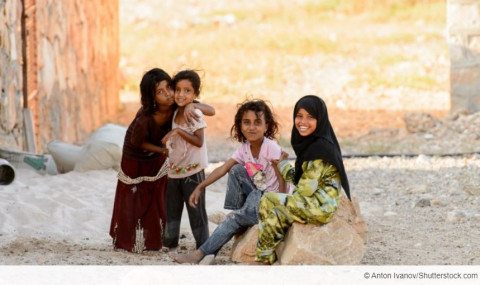 Call for cases: Innovative literacy learning and education for refugees, migrants and internally displaced persons 2020-05-13 UNESCO, with the support of the Swedish International Development Cooperation Agency (SIDA), is conducting a global landscape study entitled ‘From Radio to Artificial Intelligence: Innovative Literacy Learning and Education for Refugees, Migrants and Internally Displaced Persons’. In preparation for the study, UNESCO invites stakeholders to submit promising case studies from around the world in which technology, ranging from low-tech to cutting-edge solutions, is effectively used to support these groups’ literacy learning and education and contributes to their well-being and social integration. The call is addressed to: individuals or organizations involved in the planning, delivery or evaluation of literacy learning and educational opportunities for refugees, migrants and internally displaced persons (IDPs); individuals or organizations using innovative tech solutions to address the unique learning challenges that refugees, migrants and IDPs are facing; individuals or organizations conducting academic research on the innovative use of technologies for literacy and language learning of these specific populations. Download the entire call with links to the online submission form in English, French and Arabic Deadline: 29 May 2020, 12midnight (CEST) Project website Contact:Should you have questions regarding the project, please contact the UNESCO project team: uil-lbs@unesco.org URL:https://uil.unesco.org/literacy/call-cases-innovative-literacy-learning-and-education-refugees-migrants-and-internally
  Universities tackle the impact of COVID-19 on disadvantaged students 2020-05-13 Cooperation between UNESCO and its UNESCO Chairs dealing with human rights and social inclusion issues stems from the need to better understand the social impact of COVID-19 on the most vulnerable segments of the population and the mitigating measures adopted so far. With educational institutions at all levels closing in 191 countries, learning continues through distance and notably digital solutions. Yet, for many students in tertiary education online teaching is not an option. Overcoming digital and economic divides The first obstacle is the digital divide. According to the UN’s International Telecommunications Union, before the COVID-19 outbreak only 47% of the population of developing countries used the Internet - compared to 86% of the population of developed countries. As pointed out by the Chair in Culture of Peace and Education at the Universidad Técnica Particular de Loja (Ecuador) “at least 60% of the student population has been affected by the pandemic, as many do not have the means or the instruments to access online teaching. Given that COVID-19 is having a vast impact on students, timely responses are needed.” Although primary and secondary students seem to be the most affected, the digital divide can also be observed at the university level, even in developed countries. In the words of the Chair in Philosophy for Peace in the University Jaume I (Spain) “as far as education is concerned, COVID-19 is highlighting the great digital divide that still exists today, in the 21st century. At the Universitat Jaume I, according to the students, there are people who are suffering from this situation”. When it comes to the digital divide, “the socio-economic situation of the students and their families is an aggravating factor”, observes the Chair in Democratic Citizenship and Cultural Freedom in the University La Rioja (Spain). Indeed, students in economic distress are more likely to have poor or no internet access - because they cannot afford the cost of a laptop/computer or the internet connection or because they live in regions or neighbourhoods with low connectivity. For instance, according to the UNESCO Chair in Population, Migrations and Development at the Sapienza University of Rome, in Italy about 25% of families do not have a broadband connection and among them 20.6% are in Trentino – in the north - and 35.7% in Calabria – in the south of Italy. These digital and economic divides, combined with a protracted lockdown, will result in affected students lagging further behind. Aware of the existing digital divide, the University La Rioja has taken it into account in the instructions for adapting teaching activities to the non-attendance mode in the 2019/2020 academic year. According to the UNESCO Chair “on one hand, it was made clear that the modifications introduced should take into consideration the technological capacity available in the homes of the students […] On the other hand, if students encounter problems of a technological nature, it is recommended that they inform the teaching staff or the directorate of studies of their degree.” The UNESCO Chairs in the University of Cordoba (Spain) and the University Jaume I (Spain) report that their host universities, in a bid to allow students in economic distress to access online teaching, offered these students the possibility to borrow laptops and 4G USB drives. © Shutterstock.com/Rawpixel.com Including students with disabilities Students with disabilities are amongst the most affected as they require specific support and teaching tools that are not always available in distance learning. The UNESCO Chairs at the University of Zagreb (Croatia) and the University of Padua (Italy) report the specific actions taken by their host institutions. Since the Rector's announcement on distance learning, the Center for e-learning at the computing centre of the University of Zagreb has been monitoring and supporting lecturers in the implementation of online teaching. In order to ensure inclusive distance learning, lecturers are called upon to apply specific instructions and recommendations, such as the Guidelines developed by the Office for Students with Disabilities. The Office was established in 2007 with the aim of giving equal opportunities to students who, due to illness, impairment or disability, had difficulty in fulfilling their daily academic obligations. The Inclusion Office of the University of Padua sensitized all lecturers offering online classes to the needs of students with hearing disabilities, who normally benefit from stenotype services. Furthermore, it published on its website specific guidelines on how to make teaching tools, such as videos and PowerPoint presentations, accessible to students with hearing and visual disabilities. Mitigating loss of livelihood Another vulnerability caused by the crisis with potential indirect impact on learning is the increased economic distress of students due to income loss. For instance, the Chair at the University of Maastricht (the Netherlands) reports that “many of the off-campus and foreign students who usually rely on part-time jobs to cover university tuition, lost their income due to the closure of non-essential economic activities.” In response, the University launched a crowdfunding campaign and offers students the opportunity to get an interest-free loan for a couple of months. The Chair at the University Jaume I reports the latter’s decision to postpone the payment of April tuition fees to more than 5,200 Bachelor and Master students to mitigate the economic impact of COVID-19. UNESCO’s responses Since the very beginning of the pandemic UNESCO has been at the forefront in addressing the challenges related to the adoption of online teaching. In addition to monitoring school closures and their impact on learners around the world, the Organization is focusing on strengthening capacities of distance learning systems to overcome the digital divide through resources providing support to teachers, parents and caregivers, a curated list of distance learning management solutions and an evolving repository of national responses collected from countries. In parallel, the Organization is strengthening its cooperation with the OER (open educational resource) Community to: support openly licensed teaching and learning materials in the framework of the 2019 UNESCO OER Recommendation; identify MOOCs and OERs which can provide online courses and self-directed learning content through both mobile and desktop platforms; support, through the OER4Covid initiative, transition to online learning using OER during the COVID-19 pandemic. This article was prepared with inputs by: the UNESCO Chair on conflict resolution in the University of Cordoba (Spain); the UNESCO Chair on Philosophy for peace in the University Jaume I (Spain); the UNESCO Chair in Democratic Citizenship and Cultural Freedom in the University La Rioja (Spain); the UNESCO Chair in Human Rights and Peace in the University of Maastricht (the Netherlands); the UNESCO Chair in Human Rights, Democracy and Peace in the University of Padua (Italy); the UNESCO Chair on the Free Movement of People, Migration and Inter-Cultural Dialogue in the University of Zagreb (Croatia). Given the scarcity of reliable data, UNESCO sent the Chairs a brief questionnaire to gather information and strengthen the evidence base. Based on their responses, articles will be published online. Information and experience sharing will be pursued, and this dialogue will potentially lead to coordinated initiatives in the post-pandemic phase in order to enhance solidarity and reduce vulnerability in the face of future unexpected and protracted emergencies. URL:https://en.unesco.org/news/universities-tackle-impact-covid-19-disadvantaged-students