
News
Catch up on what’s happening in the world of global citizenship education.
1,668 results found
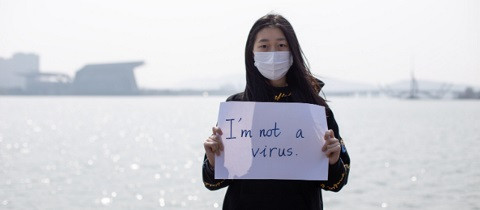 COVID-19-related discrimination and stigma: a global phenomenon? 2020-05-26 COVID-19 has provoked a series of discriminatory acts across continents, with different groups as targets. In this article, 10 UNESCO Chairs dealing with human rights and social inclusion provide insights as to how this global phenomenon manifests itself in their countries. The article is not exhaustive. Its purpose is to help illustrate, through local experiences reported by the Chairs, the plurality of forms that discrimination and stigma related to COVID-19 may take in different contexts. To be effective, responses will need to address the specificities of each manifestation, tackling, in particular, deeply rooted patterns of exclusion. Since the COVID-19 outbreak, “the instability and fear that the pandemic engenders is exacerbating existing human rights concerns, such as discrimination against certain groups”, as pointed out by the UN Secretary-General in a policy brief on COVID-19 and Human Rights. Ms E. Tendayi Achiume and Mr Fernand de Varennes, respectively the UN Special Rapporteurs on contemporary forms of racism and on minority issues, also reported on COVID-19-related attacks against minority groups worldwide. Despite the scarcity of data on this phenomenon, the discriminatory incidents reported in newspaper articles and on social media seem to confirm that this is a global phenomenon. The information received by 10 UNESCO Chairs on the impact of COVID-19 on vulnerable groups illustrates how their respective countries were affected. The COVID-19 outbreak reinforced the targeting of the “other” While the profile of victims varies from country to country, there seems to be a common pattern in discriminatory acts occurring during the pandemic: more often than not the target is generally the 'other', i.e. the foreigner, someone belonging to an ethnic or cultural minority, etc. During the first phase of the COVID-19 contagion, those who suffered the most from discrimination were Asians and people of Asian descent, who were frequently targeted for causing the pandemic and its spread. As reported by UNESCO Chairs from Italy, Spain, Greece, Denmark and the Netherlands, discriminatory episodes consisted of verbal assaults in public places, denigrating campaigns on social media, the boycott of their business activities and, in some cases, difficulties in access to educational institutions. In some contexts, discriminatory attacks spilled over to other groups. According to the UNESCO Chair on Education for Social Justice at the Autonomous University of Madrid, Roma communities in northern Spain were targeted, allegedly as they were the first to be contaminated by COVID-19. Similarly, the UNESCO Chair for the Promotion of the Culture of Peace and Non-Violence at the Manipal Academy of Higher Education in India reported that Muslim communities, who represent the largest minority of the country, have been victims of attacks and other forms of discrimination amidst the pandemic. These episodes started to emerge when the spread of the virus was allegedly associated with a gathering held by a Muslim missionary movement in March. Discrimination and stigma take new forms as the pandemic evolves It has been observed that discrimination evolved in many places in parallel to the pandemic, and that new targets were chosen along the way. If, at the very beginning targets were those erroneously considered as the cause of the disease, the fear of contagion led progressively to attacks also against people who, for different reasons, were particularly exposed to the virus. As quoted by the UNESCO Chair on housing at the University Rovira i Virgili of Tarragona in Spain, the targets of discriminatory attacks changed over the weeks as “another type of stigmatization arose out of the fear of being infected.” In some cases, this fear resulted in threats against healthcare workers and supermarkets clerks who were at risk of being infected in their workplaces. For instance, the UNESCO Chair in conflict resolution at the University of Córdoba reported that healthcare professionals were asked by their communities not to go back to their homes, so as to avoid contaminating their neighbours. In other cases, the fear of contagion led to stigma and discriminatory attacks against the homeless who, due to their predicament, cannot comply with the lockdown, nor apply other basic preventive measures. All these incidents seem to confirm that, in times of crisis and great uncertainty, especially of such magnitude as the one we are currently experiencing, people tend to look for scapegoats in order to vent their frustrations, worries and fears. Countering stigma through enhanced solidarity and awareness-raising As the pandemic escalated, international and regional organizations called on states for solidarity, not only in tackling the health emergency but also its impacts, especially on the most vulnerable. In many countries, responses took the form of mass media campaigns launched by national and local authorities, and civil society. These had the following objectives: to call for citizen’s solidarity and to contribute to changing people’s attitudes towards groups who are at risk of discrimination in a specific context. Tackling prejudices, emerges, therefore as a key intervention, along with other measures providing financial support or aimed at improving access of disadvantaged groups to basic services. The UNESCO Chairs participating in this survey reported the multiplication of such initiatives in their countries. It is worth mentioning the emergence of citizen-driven support and solidarity networks which “play a crucial role in preventing and limiting the effects of social stigmatization and ethnic discrimination associated with the virus” - as pointed out by the UNESCO Chairs at the University Carlos III of Madrid, at the University Rovira i Virgili of Tarragona and at the University of Florence. The UNESCO Chair on Education for Human Rights, Peace and Democracy at the Aristotle University of Thessaloniki reported that in Greece, where the number of immigrants and asylum seekers has been sharply rising since 2015, national NGOs and the International Organization of Migration (IOM) launched campaigns calling for citizens’ support for refugees. See also: UNESCO experts urge collective responsibility to protect vulnerable persons in global battle against COVID-19 COVID-19 - Protect human health and dignity, respect universal values This article was prepared with inputs by: UNESCO Chair in Education for Social Justice at the Autonomous University of Madrid (Spain); UNESCO Chair on housing at the University Rovira i Virgili of Tarragona (Spain); UNESCO Chair in Cultural Rights at the University of Copenhagen (Denmark); UNESCO Chair in Education for Human Rights, Peace and Democracy at the Aristotle University of Thessaloniki (Greece); UNESCO Chair in Human Rights and Peace at Maastricht University (Netherland); UNESCO Chair in Human Rights, Democracy and Peace at the University of Padova (Italy); UNESCO Chair in Population, Migrations and Development at the Sapienza University of Rome (Italy); Transdisciplinary UNESCO Chair in Human Development and Culture of Peace at the University of Florence (Italy); UNESCO Chair for the Promotion of the Culture of Peace and Non-Violence at the Manipal Academy of Higher Education (India); UNESCO Chair in a Culture of Peace and Education at the Universidad Técnica Particular de Loja (Ecuador). URL:https://en.unesco.org/news/covid-19-related-discrimination-and-stigma-global-phenomenon
 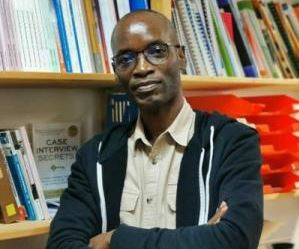 Let Freedom Ring: Educators Democratise Education to Harness Active Global Citizenship 2020-05-26 Here I make good use of one of Martin Luther King’s catchphrases – let freedom ring, to implore educators in the world to use their privileged vocation and role to harness active citizenship. In my view, educators of whatever level are one of the most advantaged individuals who can significantly contribute to changing the world. Why? Every single day in their working lives, educators constantly strive to influence thinkings, doings and relating capabilities of their learners! Unfortunately, thousands if not millions plunder this special calling. Yes, they do! In my adult education work as a village literacy tutor, community educator but also as a lecturer at a public university, I notice and regret the unfortunate occasions when I failed in my duty to create democratic learning spaces for the learners in my responsibility. I am sure; I am not alone in this reflexive intellectual enterprise. As I address fellow educators, it is befitting to challenge the myriad state and non-state actors who are running all sorts of teacher training and professional development schemes in the world to audit their faithfulness to the notion of ‘education and freedom’. Are these schemes supporting educators to proclaim freedom in the classrooms, in the lecturer rooms, in the science laboratories, and in the vocational placements? If, in the last century, we ignored John Dewey, Paulo Freire and similar thought leaders in their plausible thesis on democracy and education, this is no option in this moment in human history. The exponential social, ecological and technological changes are steadily disrupting routines, be they in schools, families, workplaces or community life. The agentic role of students in tackling local and global injustices, inequality and all forms of undemocratic behaviour is now. The only civil choice at the hands of 21st century educators is to harness and nurture students agency. The paradigm of preparing students for the future is obsolete; preparation for the future is desirable but the capabilities to deal with the present is essential. The world needs more of transformational resistance by young people to promote peaceful, inclusive and sustainable societies. The activism by the young Swedish environmental activist, Greta Thurnberg, is a vivid source of inspiration to embrace global citizenship education ideals in all curriculum decisions and activities. Educators have a frontline duty to democratise learning spaces for young people to practice democracy while learning; and to exercise the freedom to think and act on local and global challenges. Of course, to democratise education processes, educators have a burden of dealing with confining policy and institutional structures. We know worldwide, educators’ agency, authority and professional autonomy is under attack. However, this should never be an excuse for unleashing autocratic pedagogical regimes in schools, colleges and universities. Freedom-laden education is mutually beneficial to all actors – students and educators alike. The empowering effect of democratised learning spaces lead to intergenerational social solidarity, responsibility and collective agency for social change. Promoting our students’ transformational resistance is to sow seeds of real social transformation. In our special position in contributing towards active global citizenship, we must be prepared to resist teaching-learning tokenism that often comes with the superficial enlargement of curriculum vocabulary with themes such as participation, learner-centeredness and education for sustainable development. Adding these on cover pages of curriculum documents as well as inserting lines of text in learning materials is mere mockery if we refuse to change our pedagogical lenses and actions. Against all odds, educators need to strive to create empowering education processes. We should seek to substitute routine monologues and lecture with dialogic encounters. We must redefine the relationships with our students. We must co-own and co-manage the processes and actions for knowledge production. With goodwill based on sound epistemological and ideological considerations, it is possible to make a difference. For instance, I find one of the vows in the checklist of active global citizenship learning materials by The Finnish Global Education Network something I can personally try out: I will encourage students to engage in active and respectful dialogue and take responsibility within the boundaries of freedom of expression. I fully acknowledge the huge impediments to democratising education process in many countries particularly those with very hierarchical social relations and power imbalances. I think it is of imperative that, as educators, we re-orient ourselves; search for knowledge and skills to pronounce and proclaim freedom in all our pedagogical decisions and actions. About the Author:Robert Jjuuko is a Ugandan Researcher, Educationist and Development Consultant.WhatsApp +31626423637 | E-mail robert@adultslearnuganda.org URL:https://www.bridge47.org/blog/05/2020/let-freedom-ring-educators-democratise-education-harness-active-global-citizenship
 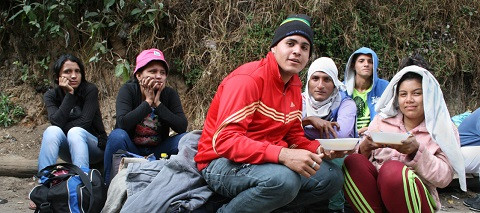 The right to education of Venezuelan migrant and refugee children and adolescents: multidimensional risks and exacerbation of vulnerabilities during the pandemic 2020-05-26 The situation of Venezuelan refugee and migrant families that were in a fragile situation before the pandemic is now aggravated by their loss of employment, difficulties in accessing emergency services and benefits, and lack a of access to healthcare systems. As they do not longer have the livelihoods to stay in their host countries or have been unable to access emergency responses due to the States' pressure and redefinition of priorities, many Venezuelans have decided to return to Venezuela. Throughout different cities in the region, many Venezuelan families are awaiting humanitarian assistance that will provide them with options to return, exposing themselves to risks of infection due to irregular movements between countries and across borders. In educational matters, 100% of the Venezuelan children and adolescents who were enrolled in their host countries are currently out of school and without a certain return. The interruption of learning has also spread among children and adolescents who had already had their studies interrupted when they started their displacement. There are also those who, despite being enrolled in educational centers in their host countries, due to confinement have not been able to begin their school year, losing contact with their educational communities. Despite the efforts of the Ministries of Education to diversify remote education mechanisms towards the inclusion of television channels and radio programs (and beyond the existing web platform,) their current habitability conditions, lack of access to technologies, internet and educational material are barriers that displaced children and adolescents have been experiencing in their attempts to access the educational responses implemented in the host communities. All these factors can put at risk the return of Venezuelan children and adolescents to school. The experience of other crises shows us that the longer learning is interrupted and schools remain closed, the more likely it is that children and adolescents on the move will not return to school. This situation presents unprecedented challenges for the educational systems of our region. In this context, UNESCO proposes five key messages to focus the efforts of the education sector on the objective of guaranteeing the right to education and providing migrant and refugee children and youth with the knowledge and skills necessary to save and sustain their lives through education. Advocacy: Prioritize vulnerable and marginalized groups, especially refugee and migrant children and adolescents, to guarantee the right to quality public education amid reduced funding and fiscal spaces. Policy change: Diversify learning pathways and programs that respond to the needs of students and their contexts. Dialogue and exchange of knowledge and resources: Participate in spaces for political and technical dialogue and share knowledge and resources. Multisectoral response: Reach beyond the thoughts and actions of the education sector, linking it to health, nutrition, social protection and livelihoods. Capacity development: Ensure adequate national competencies to respond now and build resilient educational systems. URL:https://en.unesco.org/news/right-education-venezuelan-migrant-and-refugee-children-and-adolescents-multidimensional-risks
  Привет, CAYNET! 2020-05-26 "Youth is a decisive phase in personal development. It is the age when people venture into the unknown, seeking new horizons; it is a time of encounters, often memorable ones; it is a time of first commitments"- Audrey Azoulay, Director-General of UNESCO.Be confident in yourself and make your dreams come true!Today, it is necessary to realize your role in shaping the life of society. Indeed, it is young people who are considered the main agents of changes and the builders of the future. Have you ever thought about who are you in the society? Do you have leadership skills? Do you have something to say to this world? Then you will be interested to know about our new online-space CAYNET!What is CAYNET?Let's start with the name: CAYNET stands for Central Asian Youth Network. The CAYNET project was developed by the UNESCO Office in Almaty. It covers four countries of Central Asia: Kazakhstan, Kyrgyzstan, Tajikistan and Uzbekistan.People from these countries have much in common. Do you agree? Even the greeting sounds almost the same: people of the Kazakh steppes say “Salem”, under the bright sun, in warm, hospitable Uzbekistan we hear “Salom”, in the realm of natural splendor of Tajikistan, the inhabitants cheerfully say “Solam”, from the shore of warm Issyk-Kul, the sonorous “Salam” is heard. And now they also have a common joint safe space, which is specially designed to develop the potential of young people in these countries, to expand their opportunities and participate in achieving the Sustainable Development Goals (SDGs), as well as to foster intercultural dialogue and build inclusive societies in the region.Why we need it?And the point is to enable all young people, without exception, to be heard. With the help of our network, young specialists can prove themselves, express their points of view and listen to the positions of their peers. The platform will provide the main networking opportunity. This will allow young people to make new friends and integrate their common ideas into the society. The great advantage of the participants of our platform will be the chance to become a global citizen who is able to make decisions and actively participate in the political, legal and social processes of our society. Members of our network will have an opportunity to meet with the international experts, to join free online education, to be supported in the implementation of their own projects within the framework of five main programmes (education, culture, sciences, communication and information) of the UNESCO Cluster Office in Almaty. And most importantly, young participants of the CAYNET project will be able to bring positive transformations in their region and become a UNESCO partner in building a peaceful and fair future.Who is the project focused on?The project focuses on young people aged 15 to 34 years. CAYNET members are promising, proactive, courageous, talented young people, regardless of gender, culture, language or religion! We are very pleased to welcome young people with special needs, who can help us develop an inclusive approach in the development and implementation of youth projects. We are also pleased to invite young people from remote and rural areas who are interested in positive changes in their communities. We invite to cooperation all concerned young women and men. Together we will make this world better!!!And that's not all!On 12 August, 2020, in the framework of the International Youth Day, we are going to officially launch our online platform. But you can already join us, leave your applications and stay tuned.Follow us on the Instagram account - @caynet2030And leave your application to join the network via the link.An incredible and rewarding adventure with CAYNET awaits you! URL:http://en.unesco.kz/hi-caynet
  World Day for Cultural Diversity for Dialogue and Development 2020-05-26 Held every year on 21 May, the World Day for Cultural Diversity for Dialogue and Development celebrates not only the richness of the world’s cultures, but also the essential role of intercultural dialogue for achieving peace and sustainable development. The United Nations General Assembly first declared this World Day in 2002, following UNESCO’s adoption of the 2001 Universal Declaration on Cultural Diversity, recognizing the need to “enhance the potential of culture as a means of achieving prosperity, sustainable development and global peaceful coexistence.” The World Day for Cultural Diversity for Dialogue and Development is an occasion to promote culture and highlight the significance of its diversity as an agent of inclusion and positive change. It represents an opportunity to celebrate culture’s manifold forms, from the tangible and intangible, to creative industries, to the diversity of cultural expressions, and to reflect on how these contribute to dialogue, mutual understanding, and the social, environmental and economic vectors of sustainable development. All are invited to join in, and promote the values of cultural diversity, dialogue and development across our globe. MESSAGE FROM THE DIRECTOR-GENERAL: "Although COVID-19 has not succeeded in curbing dialogue among cultures, the long-term consequences of the crisis, especially in economic terms, might inflict severe damage on diversity, as periods of crisis are conducive to concentration and standardization. It is this insidious threat that looms." — Audrey Azoulay, Director-General of UNESCO, on the occasion of World Day for Cultural Diversity for Dialogue and Development. To learn more please visit this website. URL:http://en.unesco.kz/world-day-for-cultural-diversity-for-dialogue-and-development-2020-05-21
 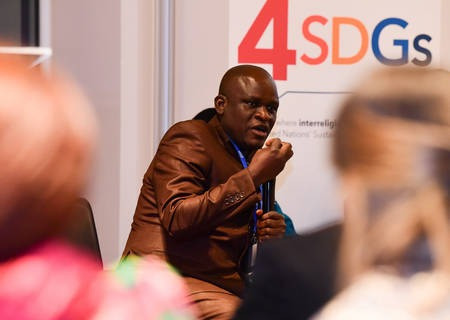 Dialogue4SDGs: Inclusion, Citizenship and Social Cohesion in an Age of Transition 2020-05-25 Dialogue plays a central role in advancing the United Nations Sustainable Development Goals (SDGs). A tool for religious leaders and the development community alike, dialogue improves coordination among individuals and organizations and opens avenues for exchange while promoting values like respect and inclusion. In this panel discussion, four Fellows from very different places share their work and experiences in their communities and discuss how they relate more broadly to issues around the world. They are members of the wider KAICIID community that is establishing connections across countries, borders and religions, creating knowledge and building bridges. In this webinar, the Fellows Sandar Khin, Mugu Zakka Bako, Amanah Nurish and Jeff Berger from Myanmar, Nigeria, Indonesia and the United Kingdom, weigh in on ethnic conflict, protecting the environment, working with religious leaders and much more in the context of dialogue and SDGs 4, 5, 16 and 17. URL:https://www.kaiciid.org/news-events/news/dialogue4sdgs-inclusion-citizenship-and-social-cohesion-age-transition
  UNESCO in Brazil supports Be the One campaign 2020-05-25 On the occasion of the World Day for Cultural Diversity for Dialogue and Development, the offices of the UN, UNESCO, and UNHCR in Brazil joined the campaign Be the One. The project was developed by the Humanity Lab Foundation, in partnership with Warner Music Brasil, and aims at draws attention to the promotion of humanitarian causes and the Sustainable Development Goals. As part of the actions, the Brazilian artist Iza and the North American rapper Maejor release today the song “Let me be the one”. “The initiative brings together artists and international organizations that recognize the urgency of giving voice to raising awareness about the Sustainable Development Goals (SDGs). Today, in particular, we celebrate not only the richness of the world's cultures, but also the essential role of intercultural dialogue to achieve peace and sustainable development”, highlights the Director and Representative of UNESCO in Brazil, Marlova Jovchelovitch Noleto. To launch the official video clip, an online event will take place today (21) with a panel of debate that can be followed by the artists' social media on Youtube, Facebook, and Twitter. The music video for “Let Me Be The One” was recorded in February, before the social isolation due to the COVID-19 pandemic. Cultural diversityCelebrated every year on May 21, World Day for Cultural Diversity for Dialogue and Development was instituted by the United Nations General Assembly in 2002, after UNESCO approve of the 2001 Universal Declaration on Cultural Diversity, which recognizes the need to “enhance the potential of culture as a means of achieving prosperity, sustainable development, and global peaceful coexistence”. The date is also an occasion to promote culture and highlight the importance of its diversity as an agent of inclusion and positive change. It represents an opportunity to celebrate the multiple forms of culture, tangible and intangible, such as the creative industries and the diversity of cultural expressions, as well as serving as a fundamental tool for dialogue, mutual understanding, and the social, environmental, and economic vectors of sustainability and development. URL:https://en.unesco.org/news/unesco-brazil-supports-be-one-campaign
  Transforming Educators into Storytellers for Change 2020-05-24 Last week, IDEAS in Scotland hosted an online training workshop – ‘Novel Ideas: Storytelling Frameworks for Educators in Sustainability & Citizenship’. “Storytelling can be persuasive – the power of a story lies not in whether or not it is true, but in the belief that underpins in.” 35 participants came together online on 13th and 14th May to take part in the creative and interactive training. The group consisted of teachers, trainers and other NGO representatives from across Scotland and other countries including Germany, Bulgaria and Slovenia. Participants represented a variety of organisations and roles within the education and sustainability sectors, all looking to enhance their skills at storytelling for use in their own practice. Facilitated by Bobby McCormack from Irish NGO, Development Perspectives, the training looked at the power of storytelling as a tool for amplifying activist voices and creating change. Using popular culture as touchstones and drawing on current political examples, participants reflected on what makes a story sing and how sharpening and changing their stories could allow their messaging to carry more power and reach farther. By exploring values and frames, participants gained a new set of tools to help them become better storytellers for global citizenship education. Participants came away with an understanding that education’s power in influencing the narrative should not be underestimated, especially when approached collectively. Creating alternative stories by accentuating the values they wish to see reflected in the world is an effective way for educators and organisations to create real change in society. Within the current context of Covid-19 and the prospects of a green recovery, becoming effective storytellers to educate and advocate for a more just and sustainable world is more vital than ever before. Thank you to Bobby McCormack for making the training so engaging, and to everyone who took part for their reflections and creative input over the course of the two days. Check out this video from the training to get an insight into what storytelling means for us in GCE. Want to learn more about how we can influence our future through storytelling? Tune into a radio programme as part of the World Village Festival in Helsinki this Sunday 24th May to hear how stories can get us thinking about our role as active citizens in the global world. Find out more here. More Storytelling inspiration:'Winning the story wars - The Hero's Journey', Jonah Sachs 'A message from the future', Alexandra Ocasio-Cortez URL:https://www.bridge47.org/news/05/2020/transforming-educators-storytellers-change
  UNESCO organized a regional webinar on the impact of COVID-19 on the Higher Education sector in the Arab region 2020-05-24 The COVID-19 outbreak has translated into a major education crisis, causing school and university closure worldwide and disruption of regular education services. In the Arab region, where 13 million children and youth are already out-of-school due to conflict, an additional 100 million learners are now affected by school and university interruption. While many Arab countries have developed distance/remote learning solutions to ensure that learning never stops, major concerns remain as to the implications and effectiveness of distance learning modalities. And while many countries, including in the Arab region, see school and university reopening as desirable for the near future, decisions about Catch Up modalities and the organization of the new academic year (2020/2021) are still to be taken. Against this backdrop, and in the context of the UNESCO’s education response to the COVID-19 pandemic, UNESCO Regional Bureau for Education in the Arab States (UNESCO Beirut) organized on 21 May 2020 a regional webinar about the impact of COVID-19 on the Higher Education sector and the way forward. The webinar was attended by 30 university rectors from Palestine, Tunisia, Yemen, Syria, Qatar, the United Arab Emirates, Iraq, Libya, Mauritania, Jordan. The webinar aimed in particular to facilitate the sharing of experience and good practices among Arab universities, and to explore ways to effectively mitigate the impact of COVID-19 on the Higher Education sector in the Arab region. In the opening of the webinar, Dr Anasse Bouhlal, UNESCO Beirut’s Programme Specialist for Higher Education, presented an overview of UNESCO’s education response to the COVID-19 crisis. He said: “With the outbreak of the COVID-19 pandemic, UNESCO Beirut scaled up efforts to assist Member States in responding to the crisis and developing alternative solutions to school and university closure, so that learning does not stop. The Higher Education sector sent a circular to the Ministries of Education and Higher Education in the region to offer ideas, suggestions, and recommendations on universities’ response to the crisis, and modalities to adapt university curricula and assessment methods to the current circumstances. We also organized, in partnership with UNESCO Regional Bureau for Education in Asia-Pacific (UNESCO Bangkok), an inter-regional webinar on the impact of the COVID-19 crisis on the Higher Education sector in both regions”. Dr Bouhlal added: “Today’s webinar aims to allow for a sharing of experiences, success stories, and best practices among Arab universities, and to allow us to think of the future of education. We also reiterate UNESCO Beirut’s readiness to provide technical assistance to Member States in coping with this crisis”. Then, each university rector presented a brief overview of the challenges remote learning posed, including in terms of teachers’ preparedness for this kind of teaching and assessment modalities. Rectors also presented their university’s plan for reopening and the measures to be taken to ensure students’ health. The webinar allowed for an open debate among participants. At the end of the webinar, Dr Bouhlal offered ideas and suggestions for potential cooperation between UNESCO and Higher Education institutions in the Arab region. URL:https://en.unesco.org/news/unesco-organized-regional-webinar-impact-covid-19-higher-education-sector-arab-region
  The world post-Covid-19 might be the world pre-Incheon – or even pre-Dakar 2020-05-22 By Sheldon Shaeffer, Chair, Board of Directors, Asia=Pacific Regional Network on Early Childhood (ARNEC) Post-Covid-19, the world will not be the same for a very long time. Life may be so different that there might not even be a post-Covid-19 world in the sense of ever returning to any form of normalcy. We should spend more time assessing exactly what effect this pandemic is going to have on the feasibility of achieving SDG 4. It is time that we moved past discussions about the logistics of school opening to the policies needed to address the pandemic’s long-term damage. At least four major implications for education come to mind. First, achievements in virtually all sectors of development will be reversed and even lost. Maternal, child, and infant mortality; immunisation rates; food security; poverty; and school enrolment and completion rates will be affected. Parents may no longer be able to afford to educate their children, and child labour may increase. They may also decide to prolong home schooling in face of successive waves of Covid-19 or other pandemics, while students may decide themselves not to return to school after their extended break. Second, young children will likely be the most harmed by the pandemic. Their nutritional status will be damaged, their sense of security threatened, their health compromised, and their cognitive and social-emotional development seriously disrupted. They will also be more often exposed to toxic home environments – the result of increased domestic violence and poverty – in which many of them will not thrive. Third, early childhood education and development (ECD) will suffer more than other education levels. Government-supported schools and kindergartens will likely keep their teachers (though perhaps with less pay) during the pandemic and into the re-opening. But many non-elite private schools and community-based ECD programmes have already closed; without a salary, staff may leave and the ECD workforce capacity, enhanced over many years, will be seriously eroded. The slow but steady increase in enrolment in ECD programmes around the world over the last two decades may return to the multiple challenges they were facing a decade ago. Fourth, existing disparities in access to social services, including education will be exacerbated: Children with delays and disabilities, who often had extra support and targeted services in their ECD programmes and primary schools, will not find them at home and so will fall further behind. Children living in poverty and those living in rural and remote communities already have less access to the tools required to benefit from distance education than their peers; post-Covid-19, their families will be less able to afford the costs of (re-)enrolling them in ECD programmes and schools. Girls in some contexts will likely be more disadvantaged as well – less likely to go back to school, especially from poor families, with heavier domestic responsibilities and increased chances of pregnancy and early marriage. Children of refugees and migrants may face greater stigmatisation as “bearers” of the virus, less access to technology, and education programmes even less well-funded than before. Ethnic and linguistic minorities will also suffer. Those children who were being taught in the national language will fall further behind, and those being taught in their mother tongue likely do not have online lessons nor printed material in this language for use at home. In addition, education facilities may have suffered from disuse, children’s learning will have been disrupted, and teachers will be demoralised and demotivated; some may have even left the profession. The challenge will be to return to where education was pre-Covid-19 and to become strong enough to progress enough to reach SDG 4. Current discourse focuses largely on immediate responses to the pandemic and the mechanics of re-opening, and not on addressing its longer-term impact. There has been virtually no discussion of solutions to the challenges mentioned above. But some solutions can be imagined; for example: move the discourse around the opening of schools away from logistical issues to its larger challenges, especially those related to increasing inequities and exclusion resulting from Covid-19 assess more exactly the nature and magnitude of the pandemic’s impacts on achieving the SDGs ensure that those most disadvantaged are given high priority as schools and ECD programmes re-open, especially community-based ECD programmes and schools and the most affected families promote education activities (especially those which are low-tech and no-tech) that have proven effective with disadvantaged children during the pandemic; e.g., home based learning kits, supplementary reading materials and exercise books for children without internet access, photos of homework sent to teachers by mobile phone, free educational programme streaming, apps for home based testing and exams, etc. design programmes for disadvantaged and excluded children to guarantee that they resume their education, make up for the disruption they have suffered, and address the gaps that have increased: extra support to children with delays and disabilities extra academic support for students who have not been able to follow mandated online and high-tech distance and online education programmes extra efforts to ensure that girls return to schools psycho-social support to help children better handle the stress, anxiety, and trauma resulting from Covid-19 ensure strong support to teachers in recognition of the challenges they have faced (often with no or reduced pay) and encouraging them to give attention to the most disadvantaged children in the transition back to school. provide support to school leaders who will play an essential role in managing the re-opening of schools with special attention to those in schools in poor/remote/disadvantaged areas adjust government budgets to meet the needs of children who have been the worst affected: ensure that any additional funds for re-opening schools are not simply provided per student but are based on the needs of different locations and groups There is a risk that the losses caused by Covid-19 will take the world back to where it was at the starting point of the Sustainable Development Goals and the time of the Incheon Declaration (2015) or even to Dakar (2000). The hard-won gains, the momentum towards enhanced early childhood development and a greater focus on successful early learning, and the strengthened commitments of many governments towards achieving the SDGs are at high risk of being lost, especially if the points above are not underlined by all as they build back better in the future. URL:https://gemreportunesco.wordpress.com/2020/05/20/the-world-post-covid-19-might-be-the-world-pre-incheon-or-even-pre-dakar/