
News
Catch up on what’s happening in the world of global citizenship education.
1,668 results found
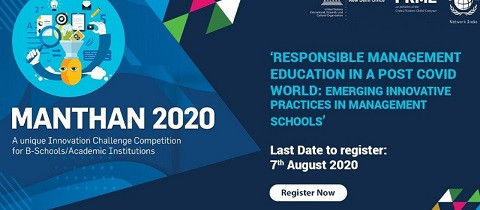 Building resilient education systems for the future 2020-06-26 UNESCO New Delhi and UN Global Compact Network in India have partnered to organize ‘Manthan 2020’ - a unique competition to understand the COVID -19 impact on the education sector. The COVID-19 pandemic has brought unexpected and unprecedented changes that necessitate relevant and timely responses from education stakeholders. School and university closures will not only have a short-term impact on the continuity of learning for more than 285 million young learners in India, but also engender far-reaching economic and societal consequences. Recognizing these imperatives, under Principles for Responsible Management Education (PRME), an initiative of United Nations Global Compact (UNGC), UNESCO New Delhi will act as a strategic partner of the Manthan 2020 and help mobilize the learners community and education stakeholders in India. For further details regarding Manthan 2020 Click Here. URL:https://en.unesco.org/news/building-resilient-education-systems-future
 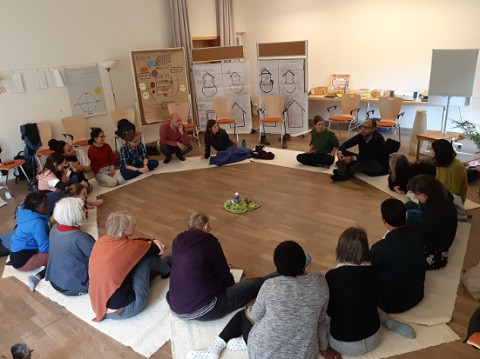 Challenging Global Citizenship Education as we know it: 22 activists completed the Bridge 47 Transformative Learning Journey 2020-06-26 By Marie Wilpers, National officer of VENRO in Germany In October 2019 twenty-two educators, change-makers and activists from 17 different countries from all over the world came together in Germany to embark on an 8-month-long learning journey with the interest and aim of tackling the root causes of global crises through education. They were all keen to make their educational work more transformative, empowering and emancipatory. "It was a rare opportunity to connect with people in a an authentic and nourishing way - having our souls and spirits nourished with adventures in nature and stimulating conversations. I feel part of a community now - one that will continue to inspire me, knowing that out there under the stars some beautiful beings are working for change in their different settings" The Journey was based on the principle of experiential learning through reflected action. It was comprised of physical workshops and webinars, as well as online mentoring, individual research, and an action experiment conducted by the participants in their own working context. It created spaces for participants to reflect upon their own educational practice and underpinning theories of change. By learning from a diverse group of peers and through reflected action participants were invited to move towards a more meaningful and transformative practice – on a personal, organisation and societal level. The journey itself seeked to offer participants a transformative learning experience, by applying holistic, multi-sensual and interactive methodologies and creating immersions into different knowledge and learning systems. We worked e.g. with storytelling, arts, theatre and embodied exercises and left the comfort zone of what we know as conventional Global Citizenship Education. The global COVID-19 pandemic happened in the midst of the course. While it affected everyone differently, it still played a key role in most participant’s personal and professional daily life. Through a series of support calls, new questions that arose were addressed and discussed. It became clear that the Corona crisis is a catalyst for many things – for us to realise what is actually important to us, how solidarity is put into practice, how learning in crisis can provoke societal change – but also how a crisis can be instrumentalized for political interests. After having completed this journey, we envision participants to have an increased ability to be stronger leaders of systemic change in their own organisations, networks and social contexts, and to unfold the transformative and empowering potential of their educational practice. We are thankful for each and every one of the “travellers” who joined the journey and contributed to the individual and collective learning process. We thank Tereza Čajková and Rene Suša for having facilitated the Learning Journey. Their knowledge, experience and commitment made it to what it meant to most participants: a truly transformative learning experience. One of the participants, Ira Vihreälehto, reflects on her experiences in this blog post. Carminda Mac Lorin, who also participated in the TLJ, even wrote a song about the journey. You can listen to the song here while reading the lyrics below. Transformative Learning Journey By Carminda Mac Lorin How could I imagine that I would find whispering My past, our present and their future? You invited us to walk Along all those magic trees, Learning from that secret wisdom That Filip brought with him. Transformating what we see Learning from what's beneath our feet. Dreaming how the world would be Beyond the house of modernity. How could I imagine that Along that elephant parade I would find whispering What I need to build spaces Open to plurality. Now I know that with you I rediscovered the world. Transformating what I see Learning from what's beneath my feet. Dreaming how the world would be Beyond the house of modernity. (I will) keep going through this Transformative Learning Journey, we will keep building the road. I commit to Global Citizenship Education Building peace and hope in the world. URL:https://www.bridge47.org/blog/06/2020/challenging-global-citizenship-education-we-know-it-22-activists-completed-bridge-47
 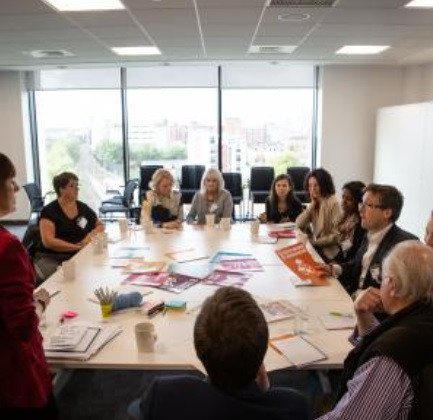 From Traditional to Transformative: Irish Businesses Explore How to Go Beyond CSR 2020-06-26 Last Wednesday on 17 June, businesses from across Ireland came together in an online training event organised by IDEA to learn about the Sustainable Development Goals (SDGs) and their potential to achieve impacts beyond traditional Corporate Social Responsibility (CSR) practices. 'SDGs are more relevant now than ever before and now is the prime window of opportunity to raise awareness and engagement” - Training Participant More than 30 companies joined the Bridge 47 virtual event, ‘Beyond CSR – Sustainability Helping You to Build Back Better’. Participants discovered how to develop a ten-point SDG plan with trainers and sustainability experts Dr. Tara Shine and Madeleine Murray. The training began with Tara pointing out that sustainability is about far more than just environmental issues but rather a ‘happy society, healthy planet and thriving economy’. Striking examples to highlight the different SDGs were employed and hot topics such as the current Black Lives Matter protests were deliberated on. Participants were asked what their main COVID-19 pain points were, from unemployment to reduced hours to small business closures. They learned how these problems related to various SDGs including Goal 8 of Decent Work and Economic Growth and Goal 9 on Industry, Innovation and Infrastructure. It was hoped such illustrations would reinforce the learning for participants of the relevance and interconnections between all SDGs. One participant stated that ‘this has been enlightening in how we can align to all 17 goals’. Empowering employees in lifelong learning and Global Citizenship Education emerged as a key theme. Activities encouraged participants to think critically about consumer and employee attitudes and understanding of sustainable development. There was general agreement that employees cared about sustainable business and it was highlighted that millennials are prepared to make personal sacrifices to make an impact on issues they care about, whether that’s leaving their job if their employer’s CSR values no longer met their expectations or taking a pay cut to work for a responsible company. This implies that employees would be open to education programmes on sustainable development topics. The trainers shared several examples from businesses that have already engaged their staff teams in such learning with the content informed by staff surveys. Throughout the training, participants became equipped with the skills and knowledge to develop impactful strategies to engage with the SDGs. If companies learn to embed CSR effectively into all aspects of business, then it can be transformative. As pointed out by the trainers quoting the writer Damian Barr ‘we are not all in the same boat, we are all in the same storm’ but those that are flexible and adaptable are the companies that will thrive. The impact of the coronavirus pandemic is being felt across all sectors, especially business. This event offered the private sector new ways of learning and thinking about the world. We are keen to engage with as many businesses as possible through Bridge 47 training and events with a view to promoting and supporting more meaningful engagement with the SDGs, raising awareness of the importance and benefits of GCE, and building relationships with potential partners outside our sector. The training was the first of three events being organised by IDEA for 2020 to bridge between civil society and the private sector. Watch this space for details of upcoming events. For further information on the above training or Bridge 47 activities in Ireland, please contact Ji Hyun Kim, Bridge 47 National Officer at ji.hyun.kim@bridge47.org. URL:https://www.bridge47.org/news/06/2020/traditional-transformative-irish-businesses-explore-how-go-beyond-csr
 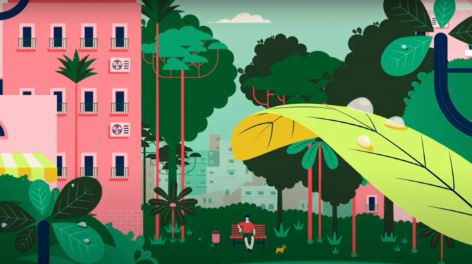 Six Ways Nature Can Protect Us from Climate Change 2020-06-24 This month, the United Nations Environment Programme (UNEP) released a brand-new animation to explain the increasingly popular concept of ecosystem-based adaptation (EbA). Restoring and protecting nature is one of the greatest strategies for tackling climate change, but not just for the obvious reason that it sucks carbon out the air. Forests, wetlands, and other ecosystems act as buffers against extreme weather, protecting houses, crops, water supplies and vital infrastructure. The strategy of using nature as a defence against climate impacts is called called ecosystem-based adaptation (EbA) – in essence, look after nature and it will look after you. Here are six ways that nature can defend us from climate change impacts: Drought To secure water supplies, societies have traditionally used ‘grey infrastructure’ such as pipelines, dams, and man-made reservoirs. However, ‘green infrastructure’ uses natural or semi-natural systems to provide similar benefits with positive long-term environmental consequences. For example, natural wetlands like streams and lakes act as sponges, drawing water down through the ground and recharging groundwater supplies. When healthy, these ecosystems capture water during intense rainfall and store it for times of drought. Similarly, healthy forests recharge groundwater supplies by absorbing water through their roots, and in doing so, filter drinking water for millions of people worldwide, including more than 68,000 communities across the US. The State of Rajasthan, India, endured a devastating drought in 1986. In the following years local communities began to regenerate forests in the region, leading to a rise in groundwater levels by several metres. In Gambia, one of the largest development projects in the history of the country is currently centered around restoring ecosystems to increase water supplies. Wildfire First the Amazon, then California, then Australia – wildfires were catastrophic in 2019. Our preventative efforts to reduce the spread of wildfires often involve the removal of forests to create a firebreak (or ‘fuel break’), a strip of land devoid of flora. But there’s a new strategy for firebreaks that involves more nature, not less. This discovery was made after a severe forest fire in Spain in 2012, where the Mediterranean Cypress trees were able to resist the blaze. The cypresses retain high levels of water in their leaves, even in sweltering heat, and the fallen leaves form a wet environment at the base of the trunk. Plans are now underway to plant the trees as ‘natural firebreaks’ throughout the Mediterranean region. Heatwaves Cities are significantly warmer than the surrounding countryside. This ‘urban heat island effect’ has many causes, including the propensity of concrete and asphalt to absorb heat. In an absurd irony, our air-conditioning systems produce astonishing amounts of carbon emissions, which heat the atmosphere. Our houses stay cool, but the planet doesn’t. Urban tree cover is a win-win solution for our cities. Trees cool the surrounding air by releasing water through their leaves, similar to how humans keep cool by perspiring. Imagine the cooling power of ten air-conditioning units - that’s how much a single healthy tree provides on a sunny day from evaporation alone. And that doesn’t include the shade that trees provide, which according to a study in the US, can reduce the air-conditioning costs of detached houses by 20-30 per cent. Major cities are now turning to nature to cool down. Melbourne, Australia, is on track to plant more than 3,000 trees each year to tackle heatwaves, almost doubling its urban tree cover by 2040. Coastal Flooding By 2050 sea-levels could be so high that 300 million people in coastal communities will face severe floods at least once a year. There are some coastal ecosystems that can act as cost-effective seawalls combatting the two primary threats of rising seas: coastal flooding and shoreline disintegration. Mangroves and coral reefs, for instance, cause waves to break before they hit the shore, lowering both the force and height of the swell, and in the process reducing the likelihood of the sea breaching over into people’s land. A study across 52 sites found that natural habitats were 2-5 times more cost-effective than engineered structures when it came to lowering wave heights. In the town of Kisakasaka in eastern Tanzania, seawater had been creeping into people’s farms and killed the crops. That is, until the villagers fought back and reforested hundreds of hectares of mangroves. Within two years the salt-poisoning of their crops ended and the wells returned to normal. Landslides & Erosion The erratic weather patterns associated with climate change are already exacerbating landslides in many parts of the world. On the Canadian outpost of Banks Island landslides have increased by a stunning 6,000% in the last few decades, largely due to thawing permafrost caused by a succession of hot summers. All landslides are caused by loose soil. There are two ways to prevent them: increase the ‘binding capacity’ of the soil, and reduce soil erosion from surface water runoff. Vegetation does both by absorbing water and anchoring the soil in place. In light of this, the government of Comoros is planting 1.4 million trees to protect people’s farms in mountainous areas. Desertification & Sandstorms Desertification is an ongoing threat in places where the climate is drying, and where there is overgrazing and biodiversity loss. When we cut down forests, the desert further expands due to the way in which trees retain moisture in the ground. Since 1920, the Sahara Desert has expanded by 10%, decimating waterholes and arable land. This was the motivation behind the Great Green Wall in Africa. To halt the spread of the Sahara and its consequent sandstorms, 21 African countries are working together to grow a ‘8,000 km natural wonder’ of trees and shrubs across the width of Africa. The initiative has the potential to create 10 million green jobs by 2030, according to the UN Convention to Combat Desertification. In Sudan, desertification has given rise to violence in some areas, as groups struggle over dwindling resources. In 2017, the government launched a project to help communities adapt to the drying climate by planting ‘shelter belts’, lines of trees or shrubs that protect an area – especially crops – from extreme weather. The project is building climate resilience in the hopes it will instil peace, making shelter belts not only a nature-based solution for climate change, but also a nature-based solution for conflict. Find out more about UNEP’s work in ecosystem-based adaptation here.For more information, please contact Jessica@troni@un.org URL:https://www.unenvironment.org/news-and-stories/story/six-ways-nature-can-protect-us-climate-change
  Building an urban evidence base on the social and economic impacts of COVID-19 in Sub-Saharan Africa 2020-06-24 UNESCO is launching a partnership with the Canadian Covid 19 Social Impacts Network and Metropolis Canada to conduct the project entitled COVID-19 Social and Economic Impacts in Sub-Saharan Africa. The project aims at identifying key issues, indicators and socio-demographics in order to generate evidence-based responses that address the social and economic dimensions of the COVID-19 crisis in Sub-Saharan Africa. The project’s Advisory Committee will include prominent experts such as Michaelle Jean, former Governor-general of Canada and former Head of the International Francophonie, and Tendayi Achiume, UN Special Rapporteur on contemporary forms of racism, racial discrimination, xenophobia and related intolerance. The Chair of the Canadian COVID-19 Social Impacts Network, Dr Jack Jedwab will lead the research team that will document the situation in several African cities with a focus on the following themes: 1) knowledge about COVID-19, 2) fear of contagion, 3) trust in institutions, 4) security, 5) mobility, and 6) discrimination, including racial and gender-based discrimination. The World Bank reported that due to the impact of COVID-19 on the regional growth rate, Sub-Saharan Africa is likely to go through its first recession over the past 25 years. © Shutterstock.com / Kelly Ermis Over the last few months, attention has been raised on the impact of COVID-19 in developing countries, especially in Africa. In the webinar series organized by UNESCO in April 2020 entitled ″Inclusion in the time of COVID-19″, the Mayors of Kampala (Uganda) and Freetown (Sierra Leone), highlighted the importance of a whole-of-community approach in addressing the pandemic. This crisis has simply shown that the already existing structural inequalities, including discriminations, have been exacerbated at all fronts. Vulnerable groups of women, for example, are impacted more by the pandemic, given the gender-based discriminations that they have already been subjected to in terms of education, livelihood and health care. However, as the COVID-19 pandemic is recent, there is a general lack of data on pandemic-related phenomena and on evidence-based responses. In order to fill these gaps, UNESCO is collaborating with these research institutions with the support of its International Coalition of Inclusive and Sustainable Cities – ICCAR in order to build a solid evidence base that will inform policymaking process in the context of the current crisis. URL:https://en.unesco.org/news/building-urban-evidence-base-social-and-economic-impacts-covid-19-sub-saharan-africa
  UNESCO Report on Education reveals lack of education laws to ensure inclusive education during COVID-19 2020-06-24 Only around a quarter of countries in Latin America and the Caribbean have inclusive education laws covering all learners. The new Global Education Monitoring (GEM) report published today, June 23, by UNESCO shows the extent of exclusion in education now further exacerbated by Covid-19. In the Latin America and Caribbean region, only around a quarter of countries have inclusive education laws covering all learners. The 2020 Global Education Monitoring (GEM) Report shows that inequalities will have deepened during the pandemic. It calls on the region to foster more resilient and equal societies by concentrating on those being left behind as schools re-group. Rethinking the future of education is all the more important following the Covid-19 pandemic, which further widened and put a spotlight on inequalities. Failure to act will hinder the progress of societies.Audrey Azoulay, Director-General of UNESCO Exclusion is persistent: This year’s Report, All Means All, is the fourth in the GEM Report annual series, which monitors progress across 209 countries towards the education targets in the Agenda 2030 for Sustainable Development. It will be followed by a regional report for Latin America and the Caribbean this October. The education crisis during Covid-19 was fuelled by deep pre-existing inequalities. Even before the pandemic, almost 12 million children and youth were excluded from education in Latin America and the Caribbean, with poverty the main constraint to access. Education systems are not adapting to students needs, leaving one in four 15-year-old students globally reporting feeling like outsiders at school. The region is one of the most linguistically diverse in the world, but education systems do not always reflect this: In grade 3, students who do not speak the language of the test are 3 times less likely to be able to read a story. Exclusion can be very blatant. Alongside today’s new Report, the GEM Report has launched a new website, PEER*, with descriptions of laws and policies on inclusion in education for every country in the world. PEER shows that many countries still practice segregation in education, which can feed stereotyping, discrimination and alienation: 42% of countries in the region have laws calling for children with disabilities to be educated in separate settings. In practice, not many mainstream primary schools receive students with disabilities; at most 40%, according to the latest comparable data. Covid-19 has given a real opportunity to think afresh about our education systems. Yet, moving to a world that not only values but welcomes diversity won’t happen overnight. There is an obvious tension between teaching all children under the same roof and creating an environment where students learn best. But, if Covid-19 taught us something, it is that failure to act is not an option; there is scope to do things differently if we put our minds to it.-- Manos Antoninis, Director of the Global Education Monitoring Report There is a chronic lack of quality data on those left behind Nine countries in the region do not collect education data on children with disabilities in their Education Management Information Systems. Figures on learning are taken from school even if many are not participating. And learning assessments are often too difficult for some of the most marginalised students: three-quarters of students in the region who did no better on multiple choice questions than random guessing were considered proficient in reading. There are signs of moves towards inclusion through assistive technology. The Report and its PEER website note many countries using positive, innovative approaches to transition to inclusion. In Grenada, five visually impaired students were supported in transferring from special to mainstream schools in 2004, using computers with screen readers, magnifiers, special keyboards and various Braille tools. Two trained professionals and a trained instructor visited the schools and assisted students, who then took the Caribbean Secondary Education Certificate. It was the first time blind students passed an examination at this level. The report includes a set of key recommendations for the next 10 years launched in a digital campaign, All means All, that will help countries achieve the 2030 inclusive education targets. URL:https://en.unesco.org/news/unesco-report-education-reveals-lack-education-laws-ensure-inclusive-education-during-covid-19
  Education in a post-COVID world: Nine ideas for public action 2020-06-24 The COVID-19 pandemic has revealed vulnerabilities; it has also surfaced extraordinary human resourcefulness and potential. Decisions made today will have long-term consequences for the futures of education. Choices must be based on a humanistic vision of education and development, and human rights. The International Commission on the Futures of Education’s new report Education in a post-COVID world: Nine ideas for public action presents ideas for concrete actions today that will advance education tomorrow. “COVID-19 has the potential to radically reshape our world, but we must not passively sit back and observe what plays out,” said Ethiopian President H.E. Ms Sahle-Work Zewde, Chair of the International Commission on the Futures of Education. “Now is the time for public deliberation and democratic accountability. Now is the time for intelligent collective action.” Nine ideas for public action 1- Commit to strengthen education as a common good. Education is a bulwark against inequalities. In education as in health, we are safe when everybody is safe; we flourish when everybody flourishes. 2- Expand the definition of the right to education so that it addresses the importance of connectivity and access to knowledge and information. The Commission calls for a global public discussion—that includes, among others, learners of all ages—on ways the right to education needs to be expanded. 3- Value the teaching profession and teacher collaboration. There has been remarkable innovation in the responses of educators to the COVID-19 crisis, with those systems most engaged with families and communities showing the most resilience. We must encourage conditions that give frontline educators autonomy and flexibility to act collaboratively. 4- Promote student, youth and children’s participation and rights. Intergenerational justice and democratic principles should compel us to prioritize the participation of students and young people broadly in the co-construction of desirable change. 5- Protect the social spaces provided by schools as we transform education. The school as a physical space is indispensable. Traditional classroom organization must give way to a variety of ways of ‘doing school’ but the school as a separate space-time of collective living, specific and different from other spaces of learning must be preserved. 6- Make free and open source technologies available to teachers and students. Open educational resources and open access digital tools must be supported. Education cannot thrive with ready-made content built outside of the pedagogical space and outside of human relationships between teachers and students. Nor can education be dependent on digital platforms controlled by private companies. 7- Ensure scientific literacy within the curriculum. This is the right time for deep reflection on curriculum, particularly as we struggle against the denial of scientific knowledge and actively fight misinformation. 8- Protect domestic and international financing of public education. The pandemic has the power to undermine several decades of advances. National governments, international organizations, and all education and development partners must recognize the need to strengthen public health and social services but simultaneously mobilize around the protection of public education and its financing. 9- Advance global solidarity to end current levels of inequality. COVID-19 has shown us the extent to which our societies exploit power imbalances and our global system exploits inequalities. The Commission calls for renewed commitments to international cooperation and multilateralism, together with a revitalized global solidarity that has empathy and an appreciation of our common humanity at its core. COVID-19 presents a real challenge and a real responsibility. These ideas invite debate, engagement and action by governments, international organizations, civil society, educational professionals, as well as learners and stakeholders at all levels.URL:https://en.unesco.org/news/education-post-covid-world-nine-ideas-public-action
  Sustainability Starts with Teachers start-up workshop set for South Africa 2020-06-24 Sustainability Starts with Teachers (SST), is a capacity building programme for teacher educators on Education for Sustainable Development (ESD). On 23 June 2020, South Africa will host the startup workshop. This is the first virtual workshop of the programme. UNESCO and its partners are working on fostering distance education to ensure learning never stops in the face of the global COVID-19 pandemic. The SST programme will run in 11 countries in Southern Africa over four years. This startup workshop will kick-start the implementation of the programme in South Africa as well as sharing the vision, objectives and expected impact. With funding from SIDA, SST comes as one of the responses to the major issues pointed out in the Global Education Monitoring Report (2016), that teacher education needs to be more adequately aligned with the Sustainable Development Goals (SDGs) and teachers need to be supported to understand and implement Education for Sustainable Development. The programme aims therefore to strengthen implementation of the Sustainable Development Goals (SDGs) in teacher education institutions for teachers and educators from Early Childhood Care and Education (ECCE), primary, secondary and Technical Vocational Education and Training (TVET). Special focus will be on Sustainable Development Goal 4, which is oriented towards the achievement of education quality within a lifelong learning framework. About 75 delegates from various teacher education and TV ET institutions across South Africa as well as ESD experts and representatives from government departments are expected to participate. Key speakers will be from departments of education and environment discussing sustainability challenges in the country in general and ESD as well as SDGs in the school system and Teacher/TVET education curriculum. URL:https://en.unesco.org/news/sustainability-starts-teachers-start-workshop-set-south-africa
  Education stakeholders and media representatives discuss the role of education and digital citizenship in countering disinformation and hate speech during pandemic 2020-06-22 The COVID-19 pandemic has given rise to another form of pandemic which is spread of misinformation and disinformation, wave of hate speech across the world amplified by the internet. To minimize these risks and promote values of solidarity and human rights, it is vital that young people, as well as their educators and parents are supported to acquire core competencies of digital citizenship that will help them not only become more resilient to disinformation, but also engage positively and responsibly in the current online environment. In this context, UNESCO Almaty organized its fourth COVID-19 education response webinar on 12 June to look at the dangers of misinformation, disinformation and hate speech sparked by the COVID-19 crisis and proliferating online and the role of education in countering them.Participants including representatives of ministries of education in Kazakhstan, the Kyrgyz Republic, Tajikistan, Uzbekistan, Moldova, Armenia, as well as journalists and media professionals from the Central Asian region attended the webinar and deliberated on the different aspects of the issue.Ms Sanita Jemberga, lecturer of media literacy at the Stockholm School of Economics in Riga (Latvia), delivered a keynote presentation on “The COVID-19 Pandemic of Disinformation and Hate Speech: How can Education and Digital Citizenship help?”. After a brief explanation of the terms such as ‘disinformation’, ‘misinformation’ and ‘mal-information’ (for UNESCO definitions please see below), which are often confused or conflated, Ms Jemberga emphasized the negative impact of disinformation surrounding the coronavirus. The presentation provided an overview of different waves of misinformation and disinformation during COVID-19, explored the drivers and root causes and conditions conducive to disinformation and hate speech, and underlined the importance of addressing digital citizenship through education. “In Latvia, there is a programme where journalists go to schools and tell the students how they select facts and events that make the news and how they choose their topics,” she said. Photo: Ms Sanita Jemberga ©UNESCO Almaty Following the keynote presentation, Mr Sergey Karpov, Communication and Information Officer at UNESCO Almaty, presented UNESCO’s resources and guidance materials on Media and Information Literacy, Information and Communication Technologies and Digital Citizenship Education. These resources are important in mainstreaming learning that promotes respect for human rights, freedom of expression, and create a culture of global citizenship, which is particular significant for combating disinformation that can lead to violence.The session also provided the opportunity to ministry officials and media professionals to share their experience and perspectives on the issue of disinformation, as well as rethink what educational responses can be taken to foster digital citizenship, address hate speech and minimize risks affecting young people during the current crisis, and in its aftermath.Webinar participants recognized the importance of integrating media and information literacy as one of the key competencies of the 21st century to prevent disinformation, hate speech and violence in the digital space towards responsible global citizenship.The recording of the webinar is available here.** We refer to UNESCO's definition of the following terms: Disinformation: Information that is false and deliberately created to harm a person, social group, organisation or country Misinformation: Information that is false but not created with the intention of causing harm Mal-information: Information that is based on reality, used to inflict harm on a person, social group, organisation or country. For more information about previous webinars: The Vice Ministers of Education in the Central Asian countries agreed on common challenges in distance learning Organization of examinations and e-assessment in the context of distance learning: Estonian and other country experiences UNESCO, UNICEF and WHO support Central Asian countries in planning and managing the reopening of schools URL:http://en.unesco.kz/education-stakeholders-and-media-representatives-discuss-the-role-of-education-and
  [APCEIU Insights] Reflecting on Global Citizenship Education in the Era of the Pandemic 2020-06-21 PAK Soon-Yong (Professor, Department of Education, Yonsei University) With the World Health Organization's official declaration of COVID-19 as a pandemic on March 12, 2020, the scope and speed of the formidable virus have brought about a halt in the daily life of the global village amidst lingering fear in an unprecedented scale.Compared to the recent past experiences of the Zika (2014) and Ebola (2014-2016) viruses, which were also very infectious but regional as they affected mostly Latin America and West Africa and thus did not call for the declaration of a pandemic, the far-reaching case of COVID-19 has brought about an entirely different situation characteristic of a true pandemic.We are indeed witnessing a real and ongoing global crisis as of May 2020. Moreover, a true cause for concern is at hand if we are to take heed of the warnings from the medical community that COVID-19 may be but one of a series of outbreaks of highly infectious collective contamination cases reaching a pandemic scale to follow in the near future. Because the impact of the pandemic is not confined to health issues but causes ramifications in all spheres - including economy, society, politics, and culture - the global community is at a critical juncture where accelerated changes in social and organizational paradigms are called for in the coming months and years. Relevance of GCEDWith regard to Global Citizenship Education (GCED), the timeliness of the pandemic has made it all the more relevant despite the closing down of borders and a shift toward parochial tendencies. Upon first glance, GCED may sound ironic given the present situation where schools delay the start of a new semester and rely on untact online classes even when they are open.However, if we recall that GCED has emerged in recent years amid the growing need for a conceptual framework for educational practices that address the global concerns on the future of humanity, the discussion on how to converge educational values with global circumstances has become necessary more than ever before. This may actually be an opportune time to reflect on the meaning implicated in the term "global citizenship" and ponder the possibilities of GCED, which aims to nurture global citizenship based on school education.As is widely known, GCED began to draw the attention of the international community as the main discourse in education following United Nations Secretary-General Ban Ki Moon's Global Education First Initiative (GEFI) proclaimed in September 2012, which set forth "fostering global citizenship" as one of its three main priorities. Furthermore, international cooperation and commitment to action for realizing the initiative have been widely diffused with the inclusion of GCED as a key target of the Sustainable Development Goals (SDGs) proclaimed at the UN Summit on Sustainable Development in September 2015 and subsequently in the UNESCO Education 2030 Agenda adopted at the UNESCO General Conference in November of the same year. GCED VisionUltimately, UNESCO aims to create a universal, global educational paradigm that is suitable for the "age of the global village" by helping countries integrate GCED into their educational policies and embrace it as an educational mandate of the global community. Core values that run through the definition and role of GCED can be found in "Learning to Live Together" and "Teaching Respect for All," which are emphasized by UNESCO.According to UNESCO, GCED is "a framing paradigm that encapsulates how education can develop the knowledge, skills, values, and attitudes learners need for securing a world which is more just, peaceful, tolerant, inclusive, secure and sustainable. It also acknowledges the role of education in moving beyond the development of knowledge and cognitive skills to build values, soft skills, and attitudes among learners that can facilitate international cooperation and promote social transformation."Nevertheless, GCED is not an entirely new creation that came into being all of a sudden under the above-mentioned international initiatives.In the Republic of Korea, the term "global citizenship" began to appear in the 7th National Curriculum adopted in 1997 to nurture the desirable orientation of the educated person. In addition, a large share of major topics and contents of the learning objectives of GCED had already been covered in depth in the form of peace education, multicultural education, environmental education, and human rights education for quite a long time in Korea. Such learning contents and activities could be found not only within the schools but also in lifelong education institutions, NGOs, and civil society organizations.In this respect, GCED should be regarded less as a means to deliver packaged information, but rather be taken as a series of processes that bring together dispersed efforts by multiple parties in different regions and at different levels so as to address concerns on the future of the earth and humanity. Such an approach may allow more effective and coordinated responses to various forms of global crises. In short, the ultimate vision for GCED is to converge parochial efforts to this end so that the global community can search for a common path that will allow educational solutions to emerge.To this day, there have been ongoing debates among various actors in academia and civil society concerning the plausibility of the "global citizen" concept. It is commonly understood that the concept of global citizenship was conceived from an imaginary sense of solidarity, which transcends spacial, racial, ideological, and linguistic boundaries across regions and states. However, contradictions harboured in the concept of the "global citizen" have been pointed out more often than not. Reconciling the ConflictedThe concept of the "global citizen" presupposes "globalization," a term which manifests both universality and fragmentalization. Such an inherent contradiction within the concept is therefore an unavoidable feature as it encompasses both widespread expansion of, and resistance toward, globalization across far-reaching regions. Furthermore, the most frequently raised issue about the conceptualization of global citizenship is whether the identity of the "global citizen" among individuals could be possible in the absence of a globally governing political structure in the form of a substantive entity. This is also directly related to the problem of how to compromise the cultivation of national citizenship - which is considered as a primary goal in state-led school education - with global citizenship in a post-state, trans-boundary context.It should be pointed out, however, that oversimplifying the usage of the term "global" forces us to think in a manner based on the binary opposition of "nation" vs. "world," which may only incite further misunderstanding of the concept. Conversely, the term calls for our attention to a need to establish a coherent concept by reconciling the seemingly conflicting combination of the "global," a trans-boundary concept, and "citizenship," which is based on a bounded exclusive collective identity.To this end, we need to treat the concept "citizenship" not at the dimension of national identity anchored on an exclusive membership, but with a focus on the sense of responsibility and duty that lead to proper action. In other words, if people conceive the meaning of citizenship around the notion of civic duty instead of civic identity, the term "global citizen" will not appear as disjointed.Civic duty, which is usually mentioned at the national level, means that individuals extend voluntary commitments and perform duties for the greater cause of the collective they belong to. In this regard, it represents the code of action that puts the community first before individuals, and others before one's own self.To apply civic duty to the wider concept of global citizen, we can posit individuals who empathize with global challenges and fulfil duties for the greater cause of humanity as members of the global community. Therefore, global citizenship signifies the ethos embraced by individuals who do not cling to the exclusive collective identity and are willing to extend their boundary of relevance in order to respond to the conditions facing the global village. Global Paradigm ShiftEntering the 21st century, globalization has led to deepening regional interdependence and interconnectedness; an example is the operating principle of a Global Value Chain (GVC). It refers to the mode of global-level cooperation involved in the whole process of value chains from a product's design to production to promotion for sales. But, if a pandemic such as the COVID-19 crisis or a return to nationalism causes border closures, the connecting chains can crumble instantly, putting the whole sequence in a precarious condition. While GVC represents a material link among global actors, global citizenship represents a mental connection. In this context, global citizenship can be regarded as a product of globalization and, simultaneously, a mental mechanism in response to it.The post-COVID-19 world will be a new challenge, as we may witness a new global paradigm to emerge in terms of how we connect with one another. In this respect, GCED, as a conscious effort to exercise the duties of education in helping people attain multifaceted understandings and critical reflections on the conditions confronting humanity in the 21st century, has become all the more relevant. GCED can present significant educational implications for what should have priority, when we are pressed to select a path to secure human sustainability in times of urgent need for international cooperation, such as a pandemic. That is because GCED is oriented to respond to the contemporary era's call to fulfil the duties as members of the global village, and as global citizens, moving beyond immediate national and regional interests.Ultimately, GCED, as an umbrella concept, can shine by integrating diverse educational efforts to achieve a proper understanding of the conditions of humanity and to reflect on the limitations of the current educational terrain that is dominated by statism or nationalism. If it falls short in addressing these issues, it can quickly become relegated to superficial education propaganda, which produces an illusion of pursuing global common good, while still dwelling on the statist paradigm of thinking.In the end, meaningful practice of GCED lies in mapping out a blueprint in the field of education that allows us to advance the awareness of the global community for collaborative responses to global challenges facing the world today and to realize common prosperity based on sustainability and righteousness. GCED forces us to rethink our priorities as it promotes educational values leading to conscious choices that forsake narrow-minded thinking and parochial selfishness centred on one's own culture.Finally, if GCED is to fulfil its manifested role to the fullest extent, it needs to expose the global community to the realities facing our times rather than resorting to simple idealism or imagined solidarity. The value of an abstract concept such as "global citizenship" can only become meaningful when it is followed by practices that GCED undergird. Only then will humanity have a fighting chance against global crises that threaten our very survival for decades to come. Professor PAK Soon-Yong teaches anthropology and education at Yonsei University. He also serves as the President of the Korean Society of Education for International Understanding (KOSEIU), the Editor-in-Chief of the International Journal of Multicultural Education, and a member of the Governing Board of UNESCO-APCEIU. URL:(No.2) Reflecting on Global Citizenship Education in the Era of the Pandemic > EIU in the World - APCEIU (unescoapceiu.org)