
News
Catch up on what’s happening in the world of global citizenship education.
1,668 results found
 What if Kindness Is the New Normal? A Call to Re-Imagine the Purpose of Education in the Post-COVID World 2020-07-08 The United Nations has described the global scale of education disruption from COVID-19 as “unparalleled.” According to UNESCO monitoring, at the peak in early April, national and local closures have impacted about 91.3 percent of the world’s student population. While students across the board have been impacted, it is important to understand the impact on children from marginalized communities in many developing countries, including India, which at 260 million children, has the largest school-age population in the world. As we reached out to students from marginalized communities, stark and growing inequities emerged, including: Loss of income and livelihood due to the extended lockdown. Migration—the emotional toll of this on children will be manifold. Moreover, post-lockdown, many of the migrants may decide to stay back in the villages, which could lead to children dropping out of formal education. Forced to take on adult responsibilities, like taking care of their younger siblings, managing household chores, organizing food, and making decisions on behalf of the family. Misinformation spread through fake news and rumors. There is widespread fake news and rumors floating around that has caused tremendous stress and confusion. Children are asking ‘What will happen to me and my family? Will my parents die? What happens to me if I lose my parents?’ Heightened Violence and Abuse. The Childline India helpline received more than 92,000 SOS calls asking for protection from abuse and violence in 11 days, a somber indication that the lockdown has turned into captivity, not just for women, but also for children trapped with their abusers at home. Gendered Impact. Girls would be expected to take on more adult roles in their families, their education will be deprioritized compared to boys, and they are more likely to face domestic violence and abuse at home. Loss of academic learning. As marginalized populations do not have access to digital resources and tools, there is also the loss of academic learning, furthering the learning gap. Impact of Trauma resulting in Failure to Thrive. The recent news of a 35-year-old migrant laborer who committed suicide because he could not provide for his family (aged parents, wife, and four children) has sent shockwaves across the country. One can only imagine the long-term emotional and mental trauma his children are going to grow up with. All the above outlined challenges faced by children/young people can and will cause tremendous trauma — mental, emotional and psychological. We know that sustained trauma in early-years (0–10 years) results in stunting and failure to thrive and the impact of failure to thrive can be seen for life. Children are going to carry this trauma into schools, and it is going to impact their ability to access content, engage in learning and build healthy relationships. As the impact of the pandemic unfolds, it is becoming abundantly clear that traditional learning models have ill-equipped our children to respond to the current crisis. Some of the structural and systemic challenges in our education systems that have come to the forefront include: 1. The future is already here!The oft-repeated assumption that children would have to face an uncertain job market and a fast-changing world a few years from now is already amidst us, and this uncertain future is unfolding as we speak. 2. Economic growth vs. prioritizing well-being.Today we are rightly being forced to prioritize well-being over economic growth, for ourselves and the planet. Could this be the turning point that decides the new purpose of education in the face of this new reality? 3. Entrenched systemic inequities.When an eighth-grade student who shares one smartphone in a family of four makes a tough choice to buy an internet-pack versus groceries and is then not allowed into her online class for being five minutes late, are we not perpetuating the same systemic biases we held offline to the online world? What could be the role of education in changing this reality? Before we rush towards reactionary solutions, there is a need to pause and reflect on these structural and systemic challenges within our current education system. While it would be easy to replicate old offline models and repurpose them towards the online mode, we must pause to ask the tough question—is this what is needed right now? The way forward: The Need for a Pause Schools cannot go back to “business as usual” at the end of this crisis. They cannot double down their efforts to catch-up to lost time by stuffing syllabi down students’ throats. There is a definite need to re-imagine the role of schools and teachers in the life of children coming from marginalized communities, with the entire ecosystem becoming trauma-responsive and invested in the well-being of all learners. For instance, Dream A Dream has developed the Happiness Curriculum in which mindfulness- and play-based approaches have benefitted 800,000 children across 1024 government schools in Delhi. Each child gets 35-minutes every day of a Happiness Class. During the lockdown, it has been the stories, activities, and mindfulness practices from the Happiness Curriculum that have helped children deal with the anxiety. The mindfulness practices have helped kids to stay grounded and created a sense of calm in their communities and in the lives of their families. To continue to support learners during the lockdown, the government has introduced a new initiative called, “Every parent a teacher, every home a school” and lessons are delivered using a unique Interactive Voice Response (IVR) based system where parents /children can give a missed call to a particular number and then they get a call-back with a story or activity or a mindfulness exercise that the whole family can do together. For instance, when a parent gives a missed call (at no cost to the parent), the parent might get a call back with a recorded voice sharing a Story around friendship from the Happiness Curriculum. This will also include some reflective questions at the end of the story. The whole family can listen to the story together and then reflect on the questions being asked and discuss with each other. Parents and students have loved this idea. As we start preparing ourselves for the post-pandemic world, our invitation is to use this pause to re-imagine how schools and learning ecosystems can be truly transformative for all children. For example, what if learning ecosystems decide to: Spend the first three months when children come back to school only on re-integrating them into the post COVID-19 world, while deprioritizing academic subjects. Have no examinations across the board for one year. Invest in targeted trauma-healing of teachers, resulting in schools becoming more trauma responsive. Support school leaders to re-imagine the school calendar to integrate life-skills and SEL as core components to prepare children for future uncertainty. Change the metric of success of our education systems from academic and economic outcomes to well-being and thriving of all students, communities, and the planet.Considering how our school and societal systems are currently designed, this is not going to be easy. Yet this is the most important call of the moment. Author: Vishal Talreja, Sucheta Bhat URL:https://www.wise-qatar.org/what-if-kindness-is-the-new-normal-a-call-to-re-imagine-the-purpose-of-education-in-the-post-covid-world/
  Global Citizenship Education after the COVID-19 crisis? 2020-07-07 By Marta Estellés, University of Cantabria, Spain and Gustavo E. Fischman, Arizona State University, USA During the COVID-19 crisis, educational responses have been mainly geared towards minimizing the problems derived from school closures and mantaining educational services. While it is understandable to desire the certainity that normality provides, we believe that returning to the pre-existing educational models may not be desirable for the great majority of teachers, students and families. As graffittied on many Hong Kong walls, “We can’t return to normal, because the normal that we had was precisely the problem.” In educational terms, the COVID-19 pandemic implies much more than a disruption to normal schooling that can be solved by the rapid deployment of pedagogical interventions such as digital learning models, alternative scheduling and physical distancing in classrooms and schoolyards. Granted, these were interventions in a time of crisis that may have helped to mitigate the historically unprecedented suspension of schooling for almost 1.6 billion students worldwide. However, they shouldn’t prevent us from ignoring the pre-COVID-19 negligence of most education systems to promote empathy and to encourage democratic forms of engagement and collaboration among citizens and governments from other regions of the world. In this context, it would not be surprising if various educators, policy makers and scholars in the broad field of global education soon start to demand more Global Citizenship Education to address the pedagogical shortcomings revealed by the COVID-19 crisis. Indeed, some have already started. Yet, we wonder: can Global Citizenship Education models provide an adequate response to the COVID-19 crisis? Global Citizenship Education (GCED) has been frequently presented as a pedagogical answer to respond to the challenges derived from globalization: respect for human rights, development of global responsibility, environmental awareness, economic growth, social justice, and so forth. Despite good intentions, most GCED models have been framed as evolutionary and redemptive models, reinforcing neo-liberal perspectives of minimizing both the public sphere and governments’ obligations toward their citizens. With some noted exemptions, GCED models tend to promote an “entrepreneurial self” with the implicit assumption that the responsibility for solving global problems lies exclusively with individuals’ behavioural changes, not as a shared responsibility between citizens, governments and international institutions. However, as the COVID-19 crisis clearly highlights, the problem is not only that there are individuals who are not able to imagine and carry out forms of cooperation with other citizens around the world, but also –and perhaps more importantly– that many governments are not willing, nor demanded, to do so. During this crisis, most governments –regardless of their orientation– did not begin to act until the COVID-19 threat was within their frontiers, framing this challenge as a national battle. However, global cooperation materialized in measures such as sharing reliable information among countries, coordinating the global production of medical equipment or creating an economic safety net could have considerably minimized the spread and the impact of the virus. This pandemic has highlighted how deeply we have internalized the idea that governments must defend the interests of their nations. Challenging national frames is not only a matter of fostering ‘global awareness’. We have never been so aware of the dense bonds that connect us to each other globally, but we still seem unable to articulate alternative ways to cooperatively face global crises. Yet, what makes us reluctant to cooperate with humans from other regions of the world? What motivates us to do it? Proponents of GCED have usually taken for granted that altruistic beliefs and rational ideals modeled after the tradition of the Enlightenment are the main drivers of global citizens’ behaviors. However, emotions and non-altruistic behaviors are also an intrinsic part of our human nature. Ignoring the power of emotions in political decision making is not only naïve, but also extremely impractical for any current civic education proposal that aims to go beyond good intentions. The COVID-19 catastrophe directly highlights the urgency of developing global educational alternatives that go beyond romantized notions of citizenship. Right now, it is our responsibility as teachers, educational researchers, policymakers and concerned international organizations to encourage reflections that expand our possibilities to address the pedagogical dimensions of global civic challenges. URL:https://gemreportunesco.wordpress.com/2020/07/03/global-citizenship-education-after-the-covid-19-crisis/
  Let’s build a better normal 2020-07-07 By Diana Ellis Now, more than ever, we need to discover for ourselves what makes us resilient. What role can Global Citizenship Education play in supporting health and wellbeing through our current crisis? Diana Ellis from WOSDEC, a participant at our Transformative Learning Journey, presents the case for a better normal. ‘We don’t know how lucky we are’. This is a phrase we hear frequently when teachers are exploring global issues with us. It speaks of a deep recognition of privilege – of how profoundly unequal and unfair our world is. Many of us (especially in the global north) have no experience of living in conflict zones, refugee camps, without water or food security, or in areas devastated by extreme weather events. Now, more than ever, we need to discover for ourselves what makes us resilient. And then Covid-19 shows up. The world as we know it has turned upside down. My sense of privilege has taken on a new dimension. I feel so much gratitude for my garden in my ex council house and truly wouldn’t trade it for the fanciest penthouse flat in Glasgow. For some of us, isolation and lockdown are no more than an inconvenience. For others, it’s an extremely challenging time of managing children at home as well as working. At the sharper end there is loss of income, increased violence, and loss of loved ones. However, no matter where we are on the spectrum of experience, we are all more acutely aware of our interdependence, our basic need for human connection, and what it feels like to live with anxiety, fear and uncertainty. Now, more than ever, we need to discover for ourselves what makes us resilient. What makes us resilient? The science of resilience is fascinating. Resilience transcends the global lottery of where you are born, and into what conditions. Resilience is not predetermined, but adverse childhood experiences (ACEs) can affect how we learn, what makes us feel safe, and can even change the biology of young brains, significantly reducing resilience. The good news is that resilience can be learned and developed all through our lives. Resilience can be learned and developed all through our lives. The teaching profession is catching on to the importance of creating a trauma-informed workforce. Thanks to leading developmental psychologists in the field, we now better understand how our bodies respond to stress and how this affects mental health. This awareness is a huge support during these uncertain times. Tigers and teddy bears Suzanne Zeedyk offers many strategies for reducing Corona Virus anxiety and fear . She believes the key is to first understand how anxiety operates in the body, and then find strategies that work for us. She uses child-friendly language as a metaphor for explaining how the two parts of our central nervous system works. Suzanne describes the parasympathetic nervous system (a very primal response) as our sabre-tooth tiger. The tiger is there to protect us in emergencies, to warn our bodies that there is a threat, in order to keep us alive. It is completely normal and we need the cortisol from this tiger in order to fight, flee or freeze in the face of danger. We also have a more recently evolved ‘sympathetic nervous system’, which Suzanne calls the teddy bear. We create our own teddy bears to comfort and soothe us, to keep us calm and safe. Teddy bears produce the feel-good oxytocin, helping us self-regulate and letting our brain know that we’re not in danger right at this moment. Building resilience The current pandemic is an extremely valid anxiety - it is totally normal for our sabre-tooth tigers to be activated right now! But it is uncomfortable and can be scary. If we understand why we feel a bit panicked then we have a sense of agency - we can note it in our experience and this labelling immediately gives us a sense of distance and objectivity. This is the first step to looking after ourselves and helping others - building personal and community resilience. We are all now, adults and children alike, finding out for ourselves what our ‘teddy bears’ are. Speak out and act for a post-Covid-19 world where all systems that sustain life are valued, protected and empowered. Building a better normal As educators and activists for Global Citizenship living in the global north, we have so much to learn from the personal wisdom and collective resilience developed by communities who have been affected by conflict, climate change, poverty and discrimination around the world. Once the immediate danger is passed, what we do to build a better ‘normal’ will depend on our mental health and our resilience. It is this which will take us through this indefinite lockdown and is the foundation for active global citizenship. There is a tangible sense of potential within this new paradigm. This is the time for big ideas; universal basic income, free internet access for all and the circular economy. Post crises evolutionary leaps are possible, as we saw in the post-WW2 UN Declaration of Human Rights. The agency needed to find our teddy bear and calm our sabre tooth tiger is the same agency needed to find a voice, speak out and act for a post-covid19 world where all systems (organic and inorganic) that sustain life are valued, protected and empowered. Now is the time for a Global Citizenship manifesto for a better normal. This article was originally published in Stride Magazine and published here with the permission of the author. URL:https://www.bridge47.org/blog/07/2020/lets-build-better-normal
 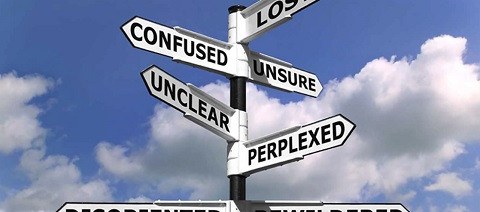 UNESCO urged to take measures to address Climate Change disinformation 2020-07-07 "School Lost and Confused Signpost" by Wonder woman0731 is licensed under CC BY 2.0 Long-term actions to reduce gaps in trust and transparency in climate change discourse can alleviate confusion. These were the points made when UNESCO in partnership with IPS Academy organized a four-part webinar on 15th, 17th, 19th and 22nd of June 2020. Convened with a multi-stakeholder spirit, the series brought together experts from around the world, including academics, policy makers, scientists, storytellers and activists, providing a space to discuss climate change disinformation. The webinar series was inaugurated by UNESCO’s Assistant Director Generals Mr Moez Chakchouk and Ms Shamila Nair-Bedouelle, who highlighted the need to rally multi-stakeholder support to fight falsehoods in climate change. Both Assistant Director Generals highlighted the importance of scientific communication and advocated for the need to initiate inclusive dialogue particularly with the youth. Underscoring this importance, Ms. Nair-Bedouelle noted “young people are the guardians of misinformation and advocates for sound science and must be equipped to take over and transmit this knowledge”. The webinars were structured to set the context, discuss the receiver/demand- and producer/supply-side dynamics of disinformation and converge discussions to agree on a way forward: Webinar 1 laid the groundwork to question the context of false content and climate change. Webinar 2 explored strategies to communicate science to the public. This discussion revealed how governments, scientists and media outlets can generate quality information and ensure that it reaches the public in a form that is easily understandable and that inspires action. Webinar 3 investigated the origins of false information. A dynamic discussion amongst journalists, activists and academics explored the roles of journalism, including investigative journalism, and media and information literacy, as well the ethics needed to generate accurate information. Webinar 4 converged discussions of the previous webinars and reflected on ways to take false content beyond confusion and instead inspire actions that can drive change. The discussion concluded that measures at both the audience/demand- and producer/supply-side are needed to combat disinformation. The webinars noted that following the COVID-19 pandemic, renewed attention has been drawn on how scientific information is generated and communicated amongst different stakeholders and the challenge to avoid both intentional and inadvertent falsehoods. These problems and their detrimental impacts on health provided parallels to the issues faced in the field of climate change, where false information is being used to divert attention away from rational judgement based on scientific information, and instead is pegged on subjective interpretation of short-term weather events. The discussions reiterated the important role of the education system and life-long learning to combat false content on climate change. The webinars also highlighted the role of peer-reviewed science as the basis of climate change policy making. Panellist Dr Astrid Caldas from the Union of Concerned Scientists noted that “Scientific information should not be suppressed but rather be central to government policymaking”, as informed choices by governments are key to tackling climate change disinformation and maintaining accurate data in in the information sphere. The webinars further called for bridging a perceived gap in trust and transparency between the government, climate scientists, media outlets and the public. Speaking at the final webinar, Italian Minister for Environment, Mr Sergio Costa urged stakeholders to develop a formal “pact of environmental communication, where science, politics, ... journalism can be integrated … to build a new green normality”. The discussions also urged UNESCO to: Lead a process so that scientific information would not be suppressed but rather be central to government policymaking. Encourage and build capacities for storytelling amongst information providers and packaging of accurate information for the general public. Develop tools and mechanism for sharing knowledge and leverage the power of new technologies such as AI where feasible. Inspire actions for secondary and tertiary education that would help the youth navigate the information sphere and analyse information so that they can act as their own gatekeepers of disinformation and as advocates for sound science. The spirit of the series was concluded by Mr Shahidul Alam who stated that we need a "synchronized movement that has the power of the people on its side... for our message to succeed we don't merely need to get data... we must rely on trust, reliability of the source and the veracity of the evidence". Amplifying the voices of those left behind and creating a sphere of trust is vital to ensuring viable and accurate information, he added. The webinar also provided an opportunity for the IPS Academy to launch a dedicated Citizens Platform on Climate Change and a Sustainable World with a core intention to fight disinformation. Recordings of the webinars are available here. For more information contact: Bhanu Neupane URL:https://en.unesco.org/news/unesco-urged-take-measures-address-climate-change-disinformation
 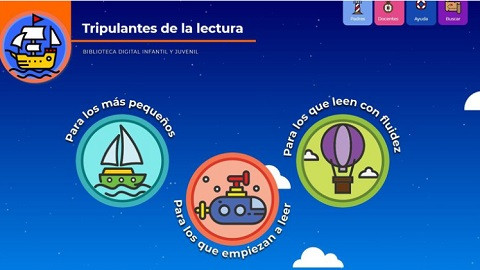 Mexican Ministry of Education: How to get the most out of "Summer Fun" and "Reading Crews" for primary and secondary students 2020-07-04 The Ministry of Public Education (SEP) has created a range of activities following the coronavirus health contingency in Mexico, with special programs such as "fun summer" or "reading crew", they seek to entertain and educate. During this stage of confinement, children and relatives in general should be kept at home to avoid the spread of COVID-19, therefore, the portal invites the little ones of the home to feed their imagination through reading.As a first point, the student or parent must enter the website: http://www.tripulantes.sep.gob.mx/.Once there, you can select the button for the little ones, between three and six years old, which will display illustrated books for better entertainment. URL:https://www.infobae.com/america/mexico/2020/06/30/sep-como-aprovechar-al-maximo-verano-divertido-y-tripulantes-de-la-lectura-para-estudiantes-de-primaria-y-secundaria/
 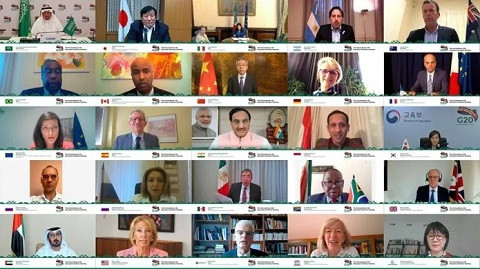 An extraordinary virtual meeting of G20 Education Ministers was held 2020-07-04 By Sobre Tiza The first extraordinary virtual meeting of G20 Education Ministers was held on June 27. Temporary presidency is held this year by Saudi Arabia. This extraordinary meeting was promoted to address the impacts on educational systems around the world caused by the COVID-19 pandemic. URL:https://www.sobretiza.com.ar/2020/06/30/se-llevo-a-cabo-una-reunion-virtual-extraordinaria-de-ministros-de-educacion-del-g20/
 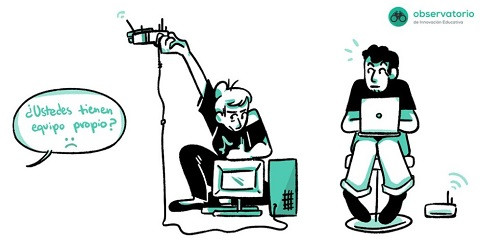 How do teachers perceive the digital preparation of Higher Education in Latin America? 2020-07-04 The COVID-19 pandemic has accelerated technological integration in university education. However, three out of four teachers in the region do not feel prepared to incorporate new digital technologies in the classroom. This according to a regional study carried out by the Inter-American Development Bank (IDB) and the Tecnológico de Monterrey between February and March 2020, in which more than 800 university professors were consulted on the penetration of digital technologies in universities. URL:https://observatorio.tec.mx/edu-news/encuesta-preparacion-digital-docentes-universitarios-america-latina
 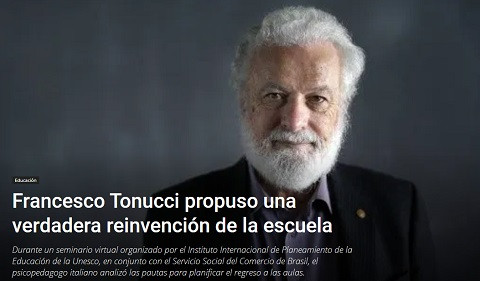 Francesco Tonucci propuso una verdadera reinvención de la escuela 2020-07-04 By Sobre Tiza The Italian psycho-pedagogue Francesco Tonucci proposed a real reinvention of schools for the post-pandemic period and analyzed the guidelines for planning the return to classrooms, during a virtual seminar organized by the Unesco International Institute for Educational Planning (IIPE) in together with the Social Service of Commerce (Sesc) of Brazil. URL:https://www.sobretiza.com.ar/2020/06/29/francesco-tonucci-propuso-una-verdadera-reinvencion-de-la-escuela/
 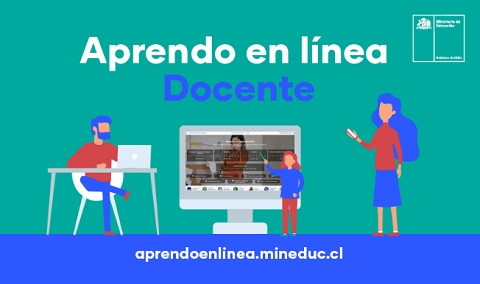 Mineduc lanza portal Aprendo En Línea Docente con más de 20 mil recursos disponibles para facilitar a profesores la aplicación del Currículum Escolar Priorizado 2020-07-03 The Chilean Ministry of Education incorporated a new web resource on the "Aprendo en Línea" platform to reinforce remote learning. Its objective is to support teachers in the application of the Prioritized School Curriculum, which was prepared by the Ministry after the suspension of face-to-face classes as a result of the health emergency. The website will have a total of approximately 20,000 pedagogical resources: 5,500 guides, 3,000 formative evaluation activities, 300 pedagogical files, 300 videos, 30 conference videos and 200 orientation documents, among other digital tools. To access this portal, teachers and managers must go to aprendoenlinea.mineduc.cl and select the “teaching” button, where they will find the subjects and levels that they need to develop. URL:https://www.mineduc.cl/aprendo-en-linea-docente/
  "Time of nature: man, environment and biodiversity" - youth contest of socio-environmental videos 2020-07-03 The State Committee for Ecology and Environmental Protection, in partnership with the Regional Ecological Center of Europe (CAREC), announces youth competitions on the theme: "Time of nature: man, environment and biodiversity."The competition, which takes place as part of the European Union project, UzWaterAware, can be attended by students, students and high school students (10 and 11), students aged 16 to 25 years.The main goal of the competition is to attract young people, parents of senior classes and students, as well as their teachers in the field of environmental protection (EP) and conservation of biodiversity, as well as raising their awareness and drawing attention to problems and solutions in these matters. URL:https://carececo.org/main/news/molodezhnyy-konkurs-sotsialno-ekologicheskikh-videorolikov-na-temu-vremya-prirody-chelovek-okruzhayu/