
News
Catch up on what’s happening in the world of global citizenship education.
1,668 results found
 New drive to protect early childhood education in the context of the COVID-19 crisis 2020-07-18 A UNESCO COVID-19 Education webinar, organized on 15 July 2020, under the high patronage of Princess Laurentien of the Netherlands, UNESCO Special Envoy on Literacy for Development, shed light on the importance of early childhood care and education (ECCE) to ensure that learning and wellbeing of young children is given due consideration when educational and care services are disrupted, with a special attention given to vulnerable young children. More than 1.5 billion students in over 180 countries, of whom 155 million children at pre-school level, are affected by the largest disruption to education since the creation of the United Nations, said Stefania Giannini, UNESCO Assistant-Director General for Education, in the opening of the webinar which attracted more than 1000 participants including global leaders, country policymakers, ECCE practitioners and education partners. Global impact of COVID-19 on early childhood education The closure of schools and other institutions that provide social protection, health, nutrition, learning and socio-emotional nurturing to young children represents an immense threat to their development potential. In response, UNESCO, together with a number of partner organizations, will be launching the #Save Our Future campaign this month to protect and prioritize education as the key to the recovery – and the best investment for our future. This includes early childhood education as “an equalizer and a changer” calling for a paradigm shift in education, Ms Giannini said. The overview of the global impact of COVID-19 on early childhood education presented by Mr Gwang-Chol Chang, Chief of Education Policy Section at UNESCO, showed the findings of global surveys and consultations that UNESCO conducted, in collaboration with UNICEF and the World Bank regarding the impact of COVID-19 on education systems and more particularly on early childhood education. Although, some countries have been taking measures to support families, caregivers and children, such as financial support, psychological counselling, and emergency childcare service available to frontline volunteers, the general observation is that during school closures, pre-primary education was relatively neglected compared to other levels of education. The main challenge, as stated by Her Royal Highness Princess Laurentien of the Netherlands, is that ‘early childhood development has always been a blind spot in our pre-COVID societies and the pandemic has shown how vulnerable young children are’, asking ‘why ECCE is the forgotten child in our societies’. ‘We failed our younger children’ she further deplored. Country experiences A ministerial round-table offered the occasion to Ministers of Education and their representatives from the different regions of the world to present their experiences and priority actions in this area. In Seychelles, for example, the Minister presented an effective communication plan implemented and strong commitment of ECCE leaders which contributed to mobilize and engage all stakeholders while the Minister of Cambodia explained how public-private partnership was built to ensure learning continuity, in the use of online platforms, social medial and TV and Radio channels for children with no access to the internet, and even paper-based material for those who did not have access to any distance learning solution with particular attention to children from vulnerable groups. From the Arab region, the representative of the Minister of Qatar explained that the State has invested in ECCE, by turning to distance education, focusing on support to parents and children and support to children with special needs, through special channels of communication. The Representative from Uruguay explained the new way of learning implemented in the country without compromising health and safety. Finally, Saudi Arabia, as chair of G20 which has ECCE as theme in its agenda, shared the initiative of virtual kindergarten for children 3-6 years of age, initiated before and amplified during the COVID-19 crisis. Call for action Referring to the paradigm shift called upon by UNESCCO’s Assistant Director-General for Education, Princess Laurentien of the Netherlands called on all stakeholders to have a discussion at a strategic level. Early childhood development should no longer be considered only a mere educational issue and should not be put on the sidelines of the discussions and strategy for economic recovery. It should be part of the discussions in multilateral fora because it is a strategic option, the best investment for societies. “Recovery cannot be just about investing in companies - it must also be about investing in the citizens of tomorrow”, the Princess said. Two actions were announced to start with: Train some 200,000 early childhood teachers and educators – including through online and offline platforms and sharing of already available pedagogical resources - with the support of Global Education Coalition. Agree on a global strategy for ECCE with effective collaboration, building alliances and engaging in an innovative dialogue. Reacting to the Call for Action, UN agencies and International NGOs representatives, from UNICEF, The World Bank, WHO, ILO, Right to Play, OMEP, Right to education Initiative, Save the Children and ECDAN, shared insights and commitments in this area, all recognizing that it is critical time to put ECCE as a priority in the agenda for recovery. In her closing remarks Princess Laurentien stressed her impatience for action and call for introspection from ECCE stakeholders and called upon UNESCO, as the lead global UN organization for education, to call for a dialogue on how to act concretely to make ECCE at the core of the discussion on Covid-19 recovery strategies. ‘I shall chair this dialogue immediately after the summer’ she committed. Stefania Giannini confirmed UNESCO's willingness to work with all the partners present to identify and carry out concrete actions and stressed her own impatience to act. She welcomed the fact that the webinar had made it possible to gather the commitment of important stakeholders to work together. The webinar was organized in the context of the Global Education Coalition launched by UNESCO and bringing together more than 140 partner organizations. URL:https://en.unesco.org/news/new-drive-protect-early-childhood-education-context-covid-19-crisis
 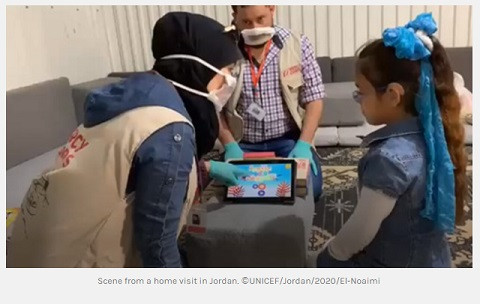 Three innovative responses to COVID-19 that have removed barriers to learning for the most marginalised 2020-07-18 By Janet Lennox and Wongani Taulo Since COVID-19 burst onto the world stage, headlines have mounted about the millions of children suddenly out of school due to the closures during countries’ lockdowns. Lessons from earlier school closures, such as the Ebola crisis in West Africa, tell us that the most marginalised children may be left behind. The 2020 Global Education Monitoring Report also sounds the alarm, warning that educational opportunities continue to be unequally distributed, leaving the most marginalised children at higher risk of further exclusion because of COVID-19-related school closures. That begs the question – what about the 1 in 5 children who were previously out of school or those in school but on the margins, at a high risk of dropout before the COVID-19 pandemic struck? With COVID-19 school closures, the world has witnessed unprecedented efforts among global education actors and government to safeguard the education of children and ensure continuity of learning while children are at home. Innovative remote learning modalities have been explored to reach children wherever they are, and, in the processes, highlighted the fact that learning can take place even beyond the school gates. While some of these strategies have been successful, some have not, and not all children have been successfully reached. However, one point is clear, even when children are not in school, they can still be given opportunities to learn and participate effectively to enjoy their right to education. This now begs the question: can countries’ responses to COVID-19 overcome barriers to learning for all children, beyond those affected by current school closures? Can those remote learning strategies that have proved effective to reach the most marginalised children be adopted and adapted to reach the most marginalised children including those who were out of school pre-COVID-19? Catalyst for change Children with disabilities. According to analysis from 2016 and 2018, certain types of disabilities related to sight, hearing, and mobility may be the single most serious barrier to education, with a school attendance gap of about 30 per cent compared to children without disabilities. Innovative COVID-19 learning strategies have the potential to engage more children, including those who were not reached previously, through schools, including preparing teachers for inclusive learning, or through other flexible pathways. For example, making accessible digital content available on the growing number of online learning platforms and pairing these with tools and resources for learners with disabilities and their parents is an opportunity to promote greater inclusion through the thoughtful use of technology. Accessibility features may include audio narration, sign language video, and simplified text, which can help children with disabilities and those without to tailor their interaction with learning materials to meet their specific learning needs and preferences. In late April 2020, the Ministry of National Education in Turkey launched a mobile application for special education learners – available through the Ministry of National Education website – aimed at ensuring continued learning opportunities for children with hearing or visual impairments, intellectual disabilities, or autism spectrum disorders. As of 2 June 2020, 175,000 users had downloaded the App and 370,000 users were accessing its training videos, recommended activities, special education lessons and supplementary resource books. Refugees. Children who are displaced across or within borders are more likely to have their education disrupted. Only half of refugee children attend primary school, and less than a quarter (22 per cent) are in secondary school. Girls in conflict-affected settings are 2.5 times more likely to be out of school compared to those living outside conflict zones. During the school closures which began in mid-March, UNICEF, and Mercy Corps, have undertaken monthly home visits to almost 700 children with disabilities that are enrolled in school in Azraq and Za’atari refugee camps in Jordan. The focus is on rehabilitation, including physical and speech therapy. As shown in the picture, one innovation has been the use of transparent masks, so that deaf children can still lip read. Printed workbooks for Grades 1 to 6, based on children’s individual learning plans, were provided to all children. Parents have been provided with learning activities delivered through WhatsApp groups with a list of explanatory video recordings, voice recordings, and links to educational apps to support continued learning at home. In addition, in Village 5 of Azraq Camp, all 80 children with disabilities have been provided with a tablet pre-loaded with learning materials, as well as disability accessible apps and free data packages. Language. In North Iraq, the COVID-19 remote learning response plan seized the opportunity to remove language barriers. UNICEF helped education authorities to launch televised lessons via satellite TV for all grades in seven languages and dialects: Kurdish, Soran, Badini, Arabic, Turkmani, Syriac and English. The broadcasts have kept an estimated 370,000 boys and girls learning. For many marginalized children, including those with disabilities and refugees in camps, learning during COVID-19 school closures has presented a critical challenge to these children who were already on the fringe of education systems. These disruptions have sparked experimentation with a whole array of digital and non-digital learning platforms and resources. If used thoughtfully, they have the potential to help reimagine the education system to what we want; one that includes all learners, no matter their identity, background, or ability. URL:https://gemreportunesco.wordpress.com/2020/07/13/three-innovative-responses-to-covid-19-that-have-removed-barriers-to-learning-for-the-most-marginalised/
 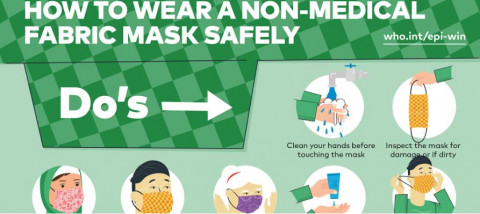 Как безопасно носить немедицинскую тканевую маску? 2020-07-17 The use of masks is part of a comprehensive package of the prevention and control measures that can limit the spread of certain respiratory viral diseases, including COVID-19, the World Health Organization says. Masks can be used either for protection of healthy persons (worn to protect oneself when in contact with an infected individual) or to control the source of infection (worn by an infected individual to prevent onward transmission). There are three types of masks used to prevent the spread of COVID-19. Medical masks (also known as surgical masks): these are made from a minimum of three layers of synthetic nonwoven materials, and configured to have filtration layers sandwiched in the middle. Respirators (also known as filtering facepiece respirators - FFP) and available at different performance levels such as FFP2, FFP3, N95, N99): these are specifically designed for healthcare workers who provide care to COVID-19 patients in settings and areas where aerosol-generating procedures are undertaken. Non-medical masks (also known as fabric masks, homemade masks) can act as a barrier to prevent the spread of the virus from the wearer to others. To use the last type of mask correctly, see the posters below. The posters were prepared by WHO. WHO also notes that the use of a fabric mask alone is not sufficient to provide an adequate level of protection. In addition to wearing the mask, it is necessary to keep a distance of at least 1 meter from others, often wash or disinfect hands, avoid touching the face or mask with your hands. URL:https://en.unesco.org/news/how-wear-non-medical-fabric-mask-safely
  Journée mondiale des compétences des jeunes : développer la résilience en période d'incertitude 2020-07-17 The transition into the world of work is a challenging time for many young people. From having to choose a career path to getting access to training opportunities, many youth struggle to get their first job offer. In 2020, this will be even more complicated because of the COVID-19 pandemic. As the COVID-19 crisis shut schools worldwide, skills development training was also interrupted. Given these precautions to help curb the spread of the virus, many technical and vocational education and training (TVET) institutions turned to distance learning. “Remote education can work for soft skills, such as communication, but delivering and developing practical, vocational skills online presents its own unique set of challenges,” says Naceur Chraiti, Manager of the Platform of Expertise in Vocational Training, at IIEP-UNESCO Dakar. However, changes go beyond just how or where training takes place – the skills youth need are undergoing fundamental shifts. Along with 21st century skills, the current uncertainty within the global economy obliges young people to be more resilient in the face of any future disruption. Job markets are also adapting – and shrinking – with marginalized youth, as well as other vulnerable groups, often facing the highest rates of exclusion. One in six young adults is out of work since the onset of COVID-19 Already before the COVID-19 crisis, young people globally (15-24 years old) were three times more likely to be unemployed than adults. Today, more than one in six young adults is out of work because of the pandemic. This year’s World Youth Skills Day – celebrated annually on 15 July – highlights these challenges, as well as the important role youth will play in shaping the post-COVID-19 world - if they are equipped with the right skills for productive and decent employment and entrepreneurship. Comment from our expert “Changes to the labour market are going to have a lasting impact on TVET systems. They will need to be adaptive and responsive: existing trades will see new skill requirements and new trades and job profiles will emerge because of the COVID-19 pandemic. Both digital skills and the digitalization of TVET are also likely future trends – two areas where technical support of country institutions will be pivotal. Securing financing should be high on the international cooperation agenda for the years to come as a way to ensure sustainable and inclusive socio-economic development.” - Naceur Chraiti, Manager of the Platform of Expertise in Vocational Training, IIEP-UNESCO Dakar Despite the negative headlines of an economic downturn, there are efforts being made around the world to arrest the decline in youth opportunity. Here are three inspiring examples: 1. Niger: Reaping the demographic dividend Youth are a crucial source of development and prosperity – but only when they are provided with the right knowledge and opportunities needed to thrive. This is especially true for countries with a fast-growing youth population like Niger. Over the next decade, the number of children ready for the first grade will double – from 600,000 in 2020, to 1.2 million in 2030. Given this forecast, the government of Niger has made education and vocational training a top priority so that its booming youth population becomes a national asset. In line with this, Niger has allocated 20% of its national budget to education. 2. Mauritania: Closing the skills gapA public-private partnership in Mauritania recently highlighted an innovative approach to addressing the skills mismatch common to many labour markets across the globe. Companies from three top economic sectors (mixed farming, fishing, and construction and public works) identified in-demand jobs that they see as crucial to their future. National vocational training centres will now adapt their programmes so that youth can pursue training for these newly identified career paths - the idea being that by listening to the needs of employers, youth will be in a better position to develop the right skillset in response to the needs of the current labour market. 3. Worldwide: Youth showcase their adaptability From China, Barbados, to South Africa, young people have shared videos with UNESCO-UNEVOC for World Youth Skills Day about how they have continued to learn during the COVID-19 pandemic. Shae White, a chef in the hospitality industry in Barbados, says she had to put everything on hold. “Hotels were pretty hard hit and closed pretty early, and my school was closed as well,” she says. “I had to acclimate myself to online learning, which was a very interesting experience to begin with, but it all paid off in the end.” Qian Jaicong, a student from the Zhejiang Technical Institute of Economics in China, said the internet service crashed several times – leaving her “in the dark” – at the beginning of the pandemic. She thinks people should find ways to cooperate more efficiently online and that the new generations should embrace these new ways of learning. With the right ingredients, youth can build a better future These three stories touch on the many facets of how to address youth employment. They also illustrate how, with the right ingredients, investment in youth, focused engagement, and relevant opportunities all contribute to strengthening the resilience of tomorrow’s workforce. Contact:Naceur Chraiti (Formation professionnelle, PEFOP)mn.chraiti-h-sini@iiep.unesco.org URL:http://www.iiep.unesco.org/en/world-youth-skills-day-building-resilience-uncertain-times-13468
 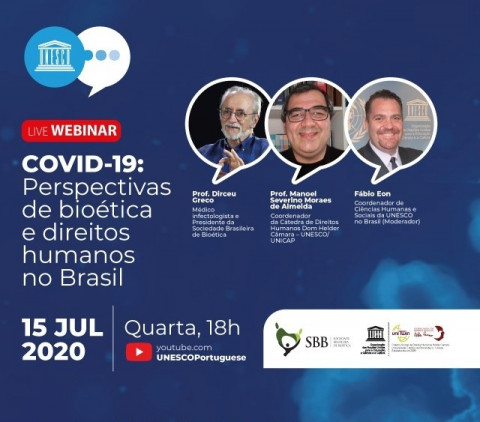 Virtual meeting brought together experts in a debate on ethical challenges in the pandemic 2020-07-16 Webinar promoted by UNESCO in partnership with partner entities discussed on the implications of bioethics and human rights in times of pandemic UNESCO in Brazil, in partnership with the Brazilian Society of Bioethics (SBB) and the UNESCO Chair in Human Rights Dom Hélder Câmara (UNESCO / UNICAP), held yesterday (15) the webinar "Perspectives of bioethics and human rights in Brazil", also broadcast live (also in Libras) by the City Council of Campinas. The virtual meeting aimed to discuss the implications of the COVID-19 pandemic on this topic, especially amid a crisis in which social inequalities in the country are becoming even more evident. The coordinator of Humanities and Social Sciences of UNESCO in Brazil, Fábio Eon, participated in the meeting as a moderator. The debate also had the participation of the infectious disease physician and president of SBB, Prof. Dirceu Greco, the coordinator of the Dom Helder Chair for Human Rights (UNESCO / UNICAP), Prof. Manoel Severino Moraes de Almeida. The webinar was held at the moment when Brazil reaches the mark of 75 thousand victims of COVID-19 and faces numerous challenges as a result of this crisis, such as the increase in cases of domestic violence, the fight against misinformation and fake news and the difficulties in guaranteeing access to education and culture for all. According to the president of SBB, Dirceu Greco, the COVID-19 pandemic highlighted, even more, the social inequalities faced by the country: “the pandemic is opening up social, political and health deficiencies, in addition to exposing the disharmonious relationship between man and the environment environment". The debate also addressed the delicate situation faced by the most vulnerable groups, such as indigenous populations and refugees, in addition to the need to strengthen and improve the Unified Health System (SUS) in Brazil. For Manoel de Almeida, ensuring access to health for these groups is a duty of the State. "We have several challenges concerning indigenous communities, such as the lack of assistance and the lack of State policies", he said. At the end of the meeting, participants expressed their opinions regarding expectations about the post-pandemic world. According to Fábio Eon, this will be a moment of opportunity and possibilities for the construction of a new civilizing pact: “the pandemic will leave us as a legacy the importance of rethinking our notion of humanity and solidarity and will probably reinforce the role of multilateral cooperation in facing global problems”. The webinar "Perspectives of bioethics and human rights in Brazil" had the active participation of Internet users and can be fully accessed through the UNESCO Portuguese YouTube channel. URL:https://en.unesco.org/news/virtual-meeting-brought-together-experts-debate-ethical-challenges-pandemic
 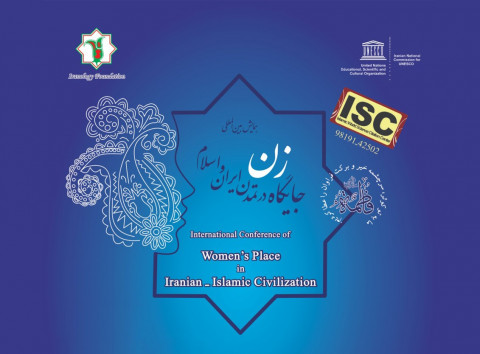 The Opening of the International Conference on “The Place of Women in the Civilization of Iran and Islam” at the Iranology Foundation 2020-07-16 By the efforts of the Iranology Foundation and in cooperation with the National Commission for UNESCO-Iran, an international conference was held virtually on the “Place of Women in the Civilization of Iran and Islam.” The conference aimed to look at the position of women in the area of “Social Responsibility” and “Home as well as Family.” The conference was held on July 4, 2020, in the form of video speeches of the opening speakers and the holding of eight specialized sessions on the following topics: “The Women’s Place in Creation and Genesis”“Women in Achieving Lasting Peace and Progress by Relying on the History and Civilization of Iran and Islam”“Women in Restoring and Promoting Intangible Cultural Heritage”“Women; Self-care and Self-confidence”“Women in Strengthening the Foundation of the Family”“Women in Creative Economics, Entrepreneurship, and Social Responsibilities”“Women and Futurology Studies in Science and Technology, in Islamic and Western Countries”“Women in the Media and Cyberspace: Opportunities and Threats” At the opening of the conference, according to the Public Relations Department of the Iranology Foundation, Ayatollah Seyyed Mohammad Khamenei, the President of the Iranology Foundation, Scientific Secretary, and Members of the Policy Council and the Scientific Committee of the Conference, delivered their statements on this conference. The audio and text files of all lectures and meetings have been uploaded on the Iranology Foundation's website at woman.iranology.ir. Specialized Meeting on “The Role of Women in Achieving Lasting Peace and Sustainable Progress” This specialized meeting, with the participation of Dr Cvetan Cvetkovski, Officer-in-Charge of UNESCO Cluster Office in Tehran; Dr Hojjatullah Ayoubi, Member of the Conference Policy Council and Secretary-General of the National Commission for UNESCO-Iran; Dr Mohammad Mehdi Mazaheri, Member of the Board of Trustees of the Iranology Foundation; Dr Zohreh Poustinchi, Associate Professor of Islamic Azad University, was held virtually on July 7th at the Iranology Foundation. After welcoming and raising the issue by Dr Hojjatullah Ayoubi, Chairman of the meeting, Dr Poustinchi gave a lecture at the beginning of the meeting on “Women in Emerging Social Crisis and the Challenges of Sustainable Development in Iran.” He mentioned the role of women in achieving peace and sustainable progress in the field of the social development process and the emerging foundations of sustainable development and women's affairs in Iranian society. He stated: “The goal of social development is to rethink, make structural changes, and increase the capabilities of people in society, especially the marginal stratum, who are generally women, create as well as meet the needs of all human societies.” Social development is the result of progress in areas such as education, health, well-being, employment, nutrition, housing, and equality in various political, social, as well as cultural spheres, wealth, also the opportunity for equal participation and all kinds of decision-making and meeting the needs of human society. Pointing to the importance of sustainable development in societies, Dr Poustinchi emphasized that: “The crisis of employment, marriage, role-finding, positioning, and so on… can pave the way for the sustainable development of societies with the cooperation and participation of women. Given that in the process of sustainable development and social development as well as achieving lasting peace, societies in transition such as Iran are facing many crises. We need to review and change the legal structures, increase the capacity of the bureaucracy, and be effective in resolving the peaceful issues of differences in roles in various private, administrative, and bureaucratic areas. Increasing the quality of life, in this regard, should be provided as part of the needs of the Iranian women's community. Additionally, women's responsibility in the social structure should be seen as an independent and efficient role. Dr Cvetan Cvetkovski attended the conference via live chat from Paris and spoke on “Women's Participation in the Path to Peace and Sustainable Progress Based on Education, Research, as well as Culture.” Those interested in accessing the conference and informing about the time of holding internal and external lectures, to provide feedback and review of selected articles, can join us through the conference website at woman.iranology.ir. Also, for more information, call the conference secretariat at “021-886087779” and “0910 3167017” or write to “of.pr@iranology.ir.” Learn more URL:https://en.unesco.org/news/opening-international-conference-place-women-civilization-iran-and-islam-iranology-foundation
 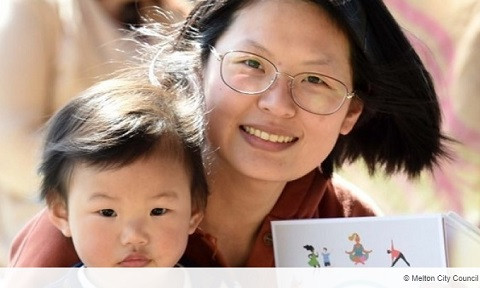 UNESCO/PASCAL Observatory Webinar 'Learning Cities’ COVID-19 recovery: from research to practice - The challenge of inclusion' 2020-07-16 On 17 June 2020, the UNESCO Institute for Lifelong Learning (UIL), together with the PASCAL Observatory, hosted the first webinar of the series entitled “Learning Cities’ COVID-19 recovery: from research to practice”. This session focused on The challenge of inclusion in learning cities, building on the work of the Fourth International Conference on Learning Cities. An introduction to the topic was provided by the Mr Raúl Valdés Cotera of UIL, which was followed by an opening address by Michael Osborne, Professor of Adult and Lifelong Learning at the University of Glasgow, and PASCAL Director of Europe before the session launched into presentations on city initiatives by representatives of Medellín, Mantes-la-Jolie and Melton. UIL Programme Specialist Ms Marie Macauley, who acted as moderator, pointed out that this webinar built on the Fourth International Conference on Learning Cities which was held in Medellín, Colombia in September 2019. She reminded participants that over the past two months UIL has been responding to issues related to COVID-19 in a variety of ways, which had included a previous series of webinars. She added that the new series jointly hosted with PASCAL would focus explicitly on issues of research on learning cities and their practical implications. Raúl Valdés Cotera’s opening remarks reminded participants that the conference in Medellín had had two main objectives. The first was to build a better understanding of inclusion as part of lifelong learning and sustainable development. The second was the chance for cities to share experiences on the implementation of local actions which support inclusion through lifelong learning and which have an impact on vulnerable groups. He stressed that in this new webinar series, the knowledge that PASCAL is able to offer enriches discussions with a very interactive dimension, which can open up a dialogue based on research and also based on practices. Reflecting on the challenges of inclusion, he referred to the many challenges cities face as they grow, particularly issues concerning infrastructure. People come to cities in search of better lives, greater safety, basic services, and decent work. Learning opportunities must be of high quality, inclusive of people from diverse backgrounds and available to all. While cities must concentrate on inclusive physical infrastructure, particularly to include people with disabilities, cities must not forget inclusive learning in all its modalities (formal, informal, and non- formal) and the cultivation of social inclusion across all spheres and spaces (families, communities, workplaces, libraries, museums, digital platforms and beyond). Michael Osborne reminded participants that the PASCAL International Observatory has been working in the field of learning cities for over 20 years. He commenced by referring to research that he had conducted in collaboration with Professor Norman Longworth and other colleagues in Europe, which had provided a foundation for much of PASCAL’s work, emphasising that the concept of the city as a locus of learning is long-standing. PASCAL itself has been operating networks of learning cities for some years. He reported some key concepts underpinning learning city development which were discussed in a Briefing Paper he had written for the Medellín conference with Sergio Hernandez. These concepts include: learning societies; formal, non-formal and informal knowledge; indigenous knowledge; equity; collectivism vs individualism; regulatory and policy frameworks; intersectoral collaboration; knowledge co-construction and a few others. He reported that the aspect of Indigenous knowledge is often missing in conversations around learning cities and cited the case of Victoria in Canada as an excellent example of an exception to this trend. He mentioned a number of other cities around the world which are focusing on specific disadvantaged groups, and offered examples of initiatives specifically designed for migrants, youth, older adults, prisoners, the disabled and people living in slums and deprived neighbourhoods. He also pointed out disjunctions between different city initiatives, noting that smart city debates often do not mention learning at all. He reflected that older adults, the disabled and prisoners are largely left behind in learning city developments and gave the audience some questions to ponder: What levers can cities use to facilitate inclusion in education? How are the needs and demands of excluded groups best addressed in cities? Are there best practices of ‘joined-up’ service delivery to promote inclusive learning? Is inclusion enough, or do we need to change the nature of institutions? What can we learn from responses to COVID-19? UNESCO learning city of Medellín, Colombia Medellín is a member of the Global Network of Learning Cities (GNLC) and has recently joined the PASCAL Learning Cities Network (LCN). Ms Alexandra Agudelo Ruiz, Secretary of Education for the city, began her presentation with an overview of developments. In the 1990s, Colombia suffered from extreme crime, much of which was connected with drugs, and Medellín was considered one of the most dangerous cities in the world. Today, it has improved its health and education services, in line with principles to combat inequity. It has strong education policies in place which have helped to improve the social infrastructure of the city, including high levels of financial investment built upon the core concern of addressing student diversity. Ms Agudelo Ruiz highlighted Medellín’s support for individuals with disabilities from initial to secondary education and minors who are ill and hospitalized. She also reported that some 25,659 children and adolescents in Colombia who need international protection, regardless of their national and immigration status, are offered full education and protection. Finally, Ms Agudelo Ruiz described the strong focus on Science, Technology, Engineering and Mathematics (STEM), with a focus on female students. UNESCO learning city of Mantes-la-Jolie, France Ms Aminata Diawara, Learning City Officer-in-charge, contributed a presentation on behalf of UNESCO learning city Mantes-la-Jolie. She reported that the region surrounding the city was highly affected by COVID-19, with lockdown in place for over two months. It is one of the poorest regions surrounding Paris. There is a strong political commitment, also on the part of the mayor, for developing Mantes-la-Jolie as a learning city, and it was the second city in France to adopt the Learning City framework. Mantes-la-Jolie has regular exchanges with other French learning cities, including Clermont-Ferrand, Evry-Courcouronnes and Montpellier, and is the co-leader of the GNLC cluster “inclusion and equity” cluster. Many interventions have been offered during the COVID-19 pandemic, including several new municipal services such as supplying laptops to 250 families of primary schoolchildren and organising tutoring for families and students by young people. Ms Diawara further reported citizen-based initiatives concerned with the fabrication of masks, and the development of a special platform for community members aged 65+.UNESCO learning city of Melton, Australia Ms Cassandra Connelly, Lifelong Learning Projects Officer for the City of Melton, reported that her city is one of the fastest-growing municipalities in Australia. Formerly a small town, it has now become a bustling suburb of greater Melbourne. Part of this rapid growth has been the need for additional community hubs and places for citizens to gather and learn in a social setting. In order to address community needs and interests, the city is using informal and formal feedback processes and then acts on their results, modifying programmes accordingly. This is done through a programme logic and evaluation system, with a focus on being responsive to need and demand. The governance body, the Community Learning Board, includes individuals from across various sectors of the Council and external stakeholders, and works on economic, social, personal and cultural well-being for all. The creation of the Melton Learning Directory has been one way to reach the community, as has been the annual Learning Festival. The learning team are also seeing an increase in people who have never attended in person engaging in the virtual space. The city is now targeting 200 seniors and people in non-English speaking programmes (NESPs) to have classes around digital literacy through a mobile digital literacy initiative. Debate Ms Macauley opened the debate with topics which had been raised by the audience, such as inclusion in education vs inclusive education; the role of adult learning and education (ALE) in promoting inclusion; pandemic responses and post-COVID-19 perspectives; education in prisons; violence and lifelong learning interventions. Inclusion in education vs inclusive educationThe main responses to questions concerning this aspect addressed rural/urban issues. Medellín provides learning activities in deprived communities using printed materials and radio regardless of geographical location. Also, through technology, there are attempts to reach out to rural deprived areas. Melton, whilst itself not providing opportunities for rural, deprived learners, reported that in Australia at the national level there has been a focus on the use of greater broadband connectivity to increase participation in learning. Mantes-la-Jolie is basically urban and also has no rural deprived areas. However, attention is given to families who do not possess electronic devices. PASCAL emphasised that smaller places are typically ‘left behind’ in many city-oriented initiatives and reported its focus on developing learning communities in such places. The role of adult learning and education (ALE) in promoting inclusionThe focus in many learning initiatives continues to be children and youths, and though a number of cities have considered the involvement of parents and grandparents in family-based learning, the link made to adult learning is often missing. While there have been numerous observations about the digital and internet inequities, there has been less said about the valuable contribution of adult literacy to intergenerational learning. In Melton, a variety of activities have been offered to seniors during the pandemic, for example local performances for adults living in isolation. Online dancing, yoga and technology classes have promoted the engagement of seniors and it has also been important offer training in the use of videoconferencing platforms to facilitate contact with family and friends. The promotion of social life for seniors is also on the agenda in Mantes-la-Jolie in the acknowledgement of the importance of digital tools. In Medellín, the Secretariat of Social Inclusion and Family has designed a programme for elderly people that looks at the learning development of families as well as the provision of food and a safe environment. Pandemic responses and post-COVID-19 perspectiveIn general terms, the COVID-19 pandemic has made inequalities more visible. It has however, helped to highlight the value of intergenerational learning. Some of the best responses to tackling exclusion have been multi-platform radio, TV as well as digital approaches. There are, for example, many new forms of engagement through the YouTube channel and other sources. Michael Osborne reported many very good examples of community development and engagement with older generations and excluded people in Glasgow during the pandemic, and also of adult learning provision though online means. It seems that cities’ provision of education services should be more interrelated with other services, placing learning at the heart of all services. The crisis has provided a concrete opportunity to discuss and evaluate the important inter-relationship between health and education, and in general dialogues between different sectors is crucial to developing better responses to crises. In some cities, non-formal education and family learning have been promoted during the pandemic as a new modality, albeit without much attention to adult learning. However, there are exceptions. In Melton, many teachers have been involved in promoting home activities which benefit all generations, such as cooking or gardening. In Medellin, non-formal education such as training and technical education is very important, reaching over 1.5 million citizens. Mantes-la-Jolie has launched its strategic educative summer with volunteers and different partnerships, aiming to provide activities both in the formal and non-formal sector. Education in prisons; violence and lifelong learning interventions; measurement and monitoring approaches. These topics all received questions from participants though without the possibility to respond at the time. Questions and comments included: Is there evidence of impact of prison-related initiatives? The reason why learning city activities rarely include prisoners in developing countries is that facilitators may interact with persons leaders may wish to hide away in prisons. Can we use the learning cities approach to help reduce the increase of gender-based violence in cities and at home due to COVID-19? Is there any specific inclusion initiative in Medellín with a focus on peacebuilding in deprived neighbourhoods? What indicators have been used to keep track of the relationship between lifelong learning/education programmes and social improvements. How effective are learning cities in improving their collection of data and information on people from different groups including those from marginalised groups as well as their formal and non-formal learning? As Michael Osborne responded, these and other questions raised suggest that participants had identified a very significant and full research agenda for the future. Next UIL/PASCAL webinars are scheduled for the months of July, September, October and November. Mr Raúl Valdés Cotera concluded this session by expressing his thanks to all participants. The summary was prepared by Michael Osborne, University of Glasgow/PASCAL Observatory; with support from Sergio Hernandez, University of Glasgow; Jac Torres Gomez, City of Wyndham; and Leone Wheeler, Australian Community Learning Network/Pascal Observatory. URL:https://uil.unesco.org/lifelong-learning/learning-cities/unescopascal-observatory-webinar-learning-cities-covid-19-recovery
  Rethinking SDGs with GCE: A Conversation with Sandra Boni, Professor at the Polytechnical University of Valencia 2020-07-15 By Sandra Boni Bridge 47 works with many organizations throughout Europe at various levels with the aim of mobilizing them, through GCE, to contribute effectively to global justice and eradication of poverty. This includes several local grassroot partners, such as the popular universities throughout Spain. On May 14, the Iberian Knowledge Exchange Partnership held a webinar with Fundacion Etea and SinergiasED in order to discuss global citizenship education (GCE). We were able to interview Ms. Sandra Boni (S) on her presentation about rethinking Sustainable Development Goals. Interviewer: Christian Bardales (C), Project Assistant, Knowledge Exchange Partnerships Team, EADI. C: Can you tell me a little about your background and how did you got involved in development? S: I have a degree in law and a PhD in human rights and democracy and I was involved with some social organizations in the field of development before joining the university. When I joined the university, I became a part-time lecturer on development issues. After that, a professor. I think I'm linked more in the academic perspective. I'm teaching development and researching development, but I also have strong links with social organizations, development organizations and some public authorities. For example, I’ve carried projects with the local municipal authority of Valencia, the regional government of Valencia, and the Spanish Agency for Development Cooperation. My degree is from the Complutense, which is a university in Madrid. My PhD is in the University of Valencia and I’m actually a professor at the Polytechnical University of Valencia. It is two different universities; University of Valencia is more humanistic, focusing on social sciences and health. The technical one is engineering and this kind of thing. My university is the technical university of Valencia. My family is half Italian and half Spanish, but I grew up mainly in Madrid and then moved to Valencia later on. C: What are Spanish popular universities and how have you incorporated GCE into your curriculum there? S: Popular universities are like schools for older people granted by the local government. It's not a proper university, but a continuing education program for people who normally couldn’t go to school, are unemployed, are patients, or have lots of free time and what to spend time learning. We don’t want to teach our development studies master students only on the university campus, we want to go beyond the campus because we want to incorporate the curriculum into other places in Valencia. We try to work in neighborhoods and build these with local neighborhood actors. In this specific neighborhood, the popular university was one of the more active actors, very dynamic with lots of links with other social organizations, so it was a very good partner to build this curriculum outside our university. Inside university, we also try to innovate and illustrate different ways of teaching. We are really committed to work with this global and local perspective. Our master's program has a global curriculum, our students have an internship program connected with Latin American and other countries, but also, we try to link this global education with local problems and activities in Valencia. We talk about development problems and we use development theories and approaches, but we want to link the local issues and try to explore it with our students, how local problems in a neighborhood are connected with migration or how a community vegetable garden has to do with global issues. This is what we try to do when we connect the local and the global. I think it's different from other masters, at least in Spain, normally the global curriculum is there and maybe the global connections through internships or other teachers, but connecting local narratives to global problems is weaker. C: How do you think the UN’s sustainable development goals could be better implemented? S: Instead of having a list of SDGs with indicators, why don’t we think about it in a different way? We have some SDGs which indicate the direction of our transformation connected to the end of poverty, climate change, addressing inequality, et al. Then we have some that are the areas or sectors that need to be transformed. You can transform education, energy, seas, cities, etc. Then you have two at the top, the conditions that we need for this transformation, peace and partnerships. At the center lies development education strategies or processes. For the master's program, I consider development education strategies or initiatives, connecting the local and global. I need alliances, I need connections with the local actors. I want to transform the educational actors, to push transformation at the university level, the education sector, and SDG 4. I also want to transform the city by bringing this initiative into the city and the local neighborhoods. If I understand SDGs in that way and I connect these SDGs to my developmental education approach, we can better understand the potential of SDGs to achieve transformation. What I’m proposing is a different way of looking at the SDGs and it's not only me. C: What are your thoughts on how to measure the impact of innovative development education or GCE on the achievement of the SDGs? S: The first answer is to do good qualitative research. It’s very easy to think of doing qualitative research, but it has its own methods so you have to do it well. The second question is more about the politics of this. The main center of power in the development sector, the world bank or UNDP or big international agencies, are chaired by economists and they tend to use quantitative methods. This is another kind of problem. Of course, I think that if we want to measure SDGs and the performance of development education innovation connected to SDGs, you can measure them qualitatively or quantitatively. Of course, qualitative may be less comparable, but you can have a different kind of information that is interesting to see, analyze, and measure with different indicators. But for one thing, you need to do good qualitative research, that needs to be stressed and reinforced. The development sector is informed more by economists, but they need to open up to other kinds of measurements that are relevant to understand development. What’s happening now with COVID, how do you understand what's happening now at the level of communities? For instance, which is important in lots of community experiences in developing countries, people help each other. This is not so easy to measure using quantitative methods. Quantitative measures probably can’t reach this information in observations of COVID affected communities. This is a big challenge. C: What else do those involved in GCE research need to consider? S: You can produce qualitative research using interviews, observation, and focus groups. There are a lot of methodologies to conduct research. I wouldn’t call it qualitative, but participatory is another kind of research that's even less recognized by the academic community. The problem for me is not the methods, the problem is which kind of methods have more credibility in the development community in terms of power. Who has the power, who decides what kind of knowledge is valued or good? You look at who’s leading the world bank or who’s behind the big development journals and you see economists mainly and economists tend to not give importance to these different methods. I think a relevant issue in development is who produces the knowledge and if you think that local people are entitled to produce relevant knowledge. It's an issue of justice, who has the right to produce knowledge. This kind of knowledge can be captured using quantitative methods, but in many cases, you need to use qualitative methods to grade this knowledge and to give this knowledge something to say in development debates. C: You mention participatory methods, is this a way to get more local input into the research? S: Yeah, participatory methods are normally easier. You can explain yourself using photos or themes. You don’t need to be an expert in a mathematical model to be part of a participatory method research. I’m not saying everything should be participatory, not at all, because this is complex and many times participatory doesn’t automatically mean a real participatory research. But for sure, using other methods is easier to engage local people outside of normal academia. There are a lot of issues behind this. C: Finally, how has the Bridge 47 Knowledge Exchange Partnership impacted your work and the GCE sector? S: I think we did a good number of webinars, interacted and connected with people from Latin America and Portugal. The webinar was a good exercise to share what we were doing and some knowledge and thoughts while building a community between us and with people from other parts of America, and Spain, and Portugal. Unfortunately, we weren’t able to see each other and have a more personal interaction like in Lisbon. I had a good experience, I shared what I’m thinking, I know other perspectives and it has reinforced the network between us.(Image: canonspace.com) About the Author Sandra Boni is a Professor at the Polytechnical University of Valencia and holds a PhD in Human Rights and Democracy. URL:https://www.bridge47.org/blog/07/2020/rethinking-sdgs-gce-conversation-sandra-boni-professor-polytechnical-university
  ‘Youth Empowerment through Technical and Vocational Education and Training (TVET) in The Gambia’: local stakeholders validate the TVET curricula methodological guidelines 2020-07-15 The Gambian National Accreditation and Quality Assurance Authority (NAQAA) organised a successful workshop for the validation of the TVET curricula methodological guidelines in Banjul, on June 26th and 27th, 2020. It laid the ground work for the next phase of this activity: the development and review of TVET’s curricula in selected areas. 76 stakeholders representing experts, industries, and policy makers from private and public TVET institutions presented their recommendations for the adoption of the methodological guidelines of TVET curricula, in Kanifing, on 26 and 27 June 2020. Social distancing measures, due to the Covid-19 pandemic, were observed, and participants were gathered in groups of less than 10 participants at a time. During the evaluation of curricula submitted by training providers, it was observed that many of those curricula did not meet the required features in terms of format and content. Thus, the development of the methodological guidelines for the Gambian TVET system became of utmost importance to enable learners to perform according to the occupational standards. The Methodological Guidelines will cover, among other things, the following key points: Determination of competencies and learning outcomes, Competency based training (CBT) curriculum and CBT curriculum development process. Photo: Different groups of stakeholders participating in the curricula methodological guidelines workshop. Once again, Gambian partners and stakeholders reiterated their key role in the success of the Youth Empowerment through TVET project through their engagement and collaboration in each stage of the process. The objective is for the methodological guidelines development, led by NAQAA, to promote relevant and quality TVET programmes throughout all skills areas and levels. This will set the stage for the next phase of this project, which will consist in the development of new curricula and the review of existing ones in the skills areas and levels previously highlighted through a needs assessment. This activity is being accomplished in the context of one of the 8 activities of the project Youth Empowerment through TVET in The Gambia, and will contribute to its outcome No. 1: Relevance of the TVET system strengthened through supporting the development of TVET policy and curricula in The Gambia. The 4-year project aims to create an enabling environment that will give young people, especially girls, a better chance at finding decent employment by providing them with lifelong learning opportunities as recommended by Sustainable Development Goals 4 and 8. Related contentUNESCO Alongside Senegal in the Promotion of Artisanship as a Factor for Economic Growth - Recruitment of a Consultant to Support the Development of a TVET Policy in the Gambia - ‘Youth Empowerment through Technical and Vocational Education and Training (TVET) in The Gambia’: local stakeholders validate a TVET curricula needs assessment URL:https://en.unesco.org/news/youth-empowerment-through-technical-and-vocational-education-and-training-tvet-gambia-local-0
 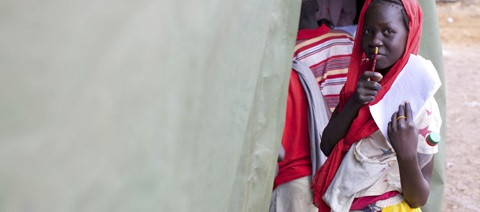 UNESCO and UNHCR call for the inclusion of refugees in the post-Covid-19 education effort 2020-07-15 We must not leave young refugees by the wayside, urged UNESCO and the Office of the United Nations High Commissioner for Refugees (UNHCR) as they pleaded in favour of young refugees’ education during an online debate on how best to provide them with improved learning during and after the pandemic. “Mobilizing for refugees is extremely urgent at a time when they are particularly vulnerable to the Covid-19 crisis and its aftermath,” said UNESCO Director-General Audrey Azoulay, as she opened the meeting. “The Covid-19 crisis is jeopardizing everything we have done for the education of refugees and migrants, their integration and chances of self-realization. We must strengthen our action in favour of the most vulnerable in order to guarantee them this fundamental right.” Canada's minister of international development, Karina Gould, who told the story of her Czech grandparents who became refugees after they fled former Czechoslovakia during World War II, put forward the necessity of “low tech solutions,” considering the digital and technological divide, and lack of communication infrastructures in many countries. Cameroon’s minister of Secondary Education, Pauline Nalova Lyonga Egbe, gave the example of mobile phones which are used by most of the population and which can be used as a cheap medium for remote education. The roundtable was also attended by two young refugee students from Rwanda and Mali now living in Kenya and Burkina Faso, a high ranking official in Kenya primary education and a member of the Pakistan National Assembly in charge of education and professional training, and representatives of the Global Coalition for Education established under the auspices of UNESCO. The UNHCR Special Envoy, actress Angelina Jolie, a long-time advocate for displaced persons, introduced the discussion and summarized its highlights. United Kingdom's Under-Secretary for Foreign Affairs, Baroness Sugg stressed that “education must be prioritized in the global recovery from coronavirus. This epidemic is not just a health crisis, it is an education crisis, especially for refugee children. Without school and an education, they will be unable to rebuild their lives and achieve their full potential.” She announced an extra 5.3 million pounds sterling to be given to UNHCR by the British Government. Concluding the discussion, The High Commissioner for Refugees, Filippo Grandi, warned “the bigger picture remained very grim because of the upcoming impact of the economic crisis on long term international assistance for education.” He stressed that 12% of education activity is supported by international aid. As between 40 and 60 million children might fall into poverty, he added, “we must include those who are among the most excluded, the people on the move.” UNESCO has warned the pandemic risked jeopardizing the progress made in education in recent years, especially for young girls. UNHCR estimates at least 20% of whom are at risk of not resuming their studies interrupted during school closures. However, a number of governments are planning to include refugees in post-pandemic response measures, such as distance education, in line with their commitments under the Global Compact on Refugees. The event was co-sponsored by Canada, the United Kingdom and the global Education Cannot Wait fund, which channelled its second COVID emergency allocation to refugees. URL:https://en.unesco.org/news/unesco-and-unhcr-call-inclusion-refugees-post-covid-19-education-effort